


1
ATTACHMENT INSECURITY AND ITS ROLE IN INTERCULTURAL ROMANTIC
RELATIONSHIPS
INTRODUCTION

2
Intercultural Romantic Relationships: The Role of Attachment Insecurity
Intercultural romantic relationships—typically formed between individuals from different
racial or ethnic backgrounds (e.g., Gaines et al., 2006) but also extending to individuals of
differing cultural backgrounds that are less salient (e.g., Streib, 2015)—are more prevalent now
than ever before (Pew Research, 2019). This type of relationship is seldom the topic of research
and the studies that have been done include conflicting findings, which may be due to unique
factors that individuals bring to each type of relationship. My dissertation examined one potential
factor, attachment insecurity, which is robustly associated with relationship outcomes but has not
been examined specifically within intercultural romantic relationships. This dissertation was
intended as the first step toward understanding the role of attachment insecurity with
intercultural romantic relationship initiation and maintenance. These studies may contribute to a
better understanding of intercultural romantic relationships relative to intracultural romantic
relationships.
Attachment
Attachment develops in infancy as a mechanism that facilitates survival for children who
are vulnerable without the support of a caregiver. Children seek food, shelter, safety, and comfort
from their caregiver and the attachment bond allows children to rely on this caregiver for these
needs. It also helps children understand when the world is safe or unsafe to explore on their own.
Based on the pattern of caregiving that a child receives, different levels of attachment security or
insecurity develop (Ainsworth, 1979; Bowlby, 1968) and remain fairly stable across the lifespan
(see McConnell & Moss, 2011 for a review) and serve as a model for future romantic
relationships (Hazan & Shaver, 1987).
Attachment Security

3
Higher levels of attachment security are most adaptive and allow individuals to thrive in
their adult romantic relationships. Theoretically, higher levels of attachment security present as
individuals who feel safe enough to express their own needs and expectations about the
relationship, and who trust that their partner will be responsive when they need them. Individuals
who are higher in attachment security are more likely to experience higher quality relationships
(e.g., Collins & Read, 1990), to trust their partner (e.g., Mikulincer, 1998), and to use adaptive
strategies to effectively manage conflict (e.g., Pistole, 1989).
Two important aspects of attachment security are the extent to which an attachment
figure acts as a (1) safe haven and a (2) secure base. When an attachment figure serves as a safe
haven, the attached individual sees them as a space of protection and care. One may seek out a
romantic partner after a tough day at work or a fight with a friend to receive comfort and support
for their emotional distress. When an attachment figure serves as a secure base, the attached
individual feels safe to explore their world away from the attachment figure. This is because the
reliable care that the attached individual has learned to expect leads them to trust that care will
consistently be available when called upon and the individual can safely explore their world
away from their secure base. These two factors are a hallmark of higher levels of attachment
security. However, when one develops an attachment that does not have a high level of security,
higher attachment insecurity may develop, which carries forward from childhood into adult
attachment relationships (e.g., Hazan & Shaver, 1987).
Attachment Insecurity
In social psychology, attachment insecurity is sometimes conceptualized as higher levels
of attachment anxiety or higher levels of attachment avoidance. Theoretically, individuals can be
high on both attachment anxiety and avoidance, but these constructs are most productively

4
understood separately, including in this dissertation, because they are theoretically and
conceptually distinct. In contrast, individuals who are low on both attachment anxiety and
avoidance are higher in attachment security.
As pioneered by Mary Ainsworth (1985; 1978) and since supported in the literature by
numerous studies, there are specific patterns of behaviors that children and later adults exhibit
when they develop higher levels of each domain of attachment insecurity. Higher levels of
attachment anxiety develop when a child experiences inconsistent caregiving such as when a
caregiver is sometimes responsive to needs but at other times unresponsive to needs. Under these
conditions, a child learns to be hypervigilant, worried, and fearful; they are unsure of whether
they will be comforted and adequately cared for so they may bid for caregiving in highly
distressing ways in an attempt to connect. Higher levels of attachment avoidance develop when a
child consistently experiences rejection and/or their needs are dismissed by their caregiver.
Under these conditions, a child learns that it is difficult rely on close others, to express emotions,
or to ask for support.
Different studies have offered support for these patterns in adulthood, which has been
synthesized in a textbook on adult attachment (Mikulincer & Shaver, 2007a). This paragraph will
summarize this synthesis. In adulthood, individuals who are higher in attachment anxiety worry
about the availability of their partner, and worry about whether their partner will be responsive,
aloof, or abandon them (e.g., break-up with them). Individuals higher in attachment anxiety are
particularly challenged by uncertainty and sensitive to relationship threat and are frequently
hypervigilant of things that could threaten their relationship (e.g., they experience high levels of
jealousy or anxiety). They also have a poor perception of self-worth, which can challenge the
stability of interpersonal relationships. Adults who are higher in attachment avoidance are more

5
likely to rely on themselves for comfort and support rather than close others. Individuals higher
in attachment avoidance tend to be self-sufficient, are less comfortable with commitment, and
engage in distancing behavior between themselves and close others to maintain independence.
Individuals higher in attachment avoidance value autonomy and freedom and regard the
interdependence that is characteristic of close relationships as confining and emotionally
suffocating. They also have a poor perception of others, which can challenge the stability of
interpersonal relationships.
Attachment insecurity is associated with relationship initiation (the beginning or birth of
a relationship), such as number of second dates (Poulsen et al., 2013) and is a robustly associated
with relationship maintenance (the continuation of a relationship via indicators of relationship
quality such as relationship commitment and satisfaction (e.g., Mikulincer & Shaver, 2007a)).
However, no work has established whether this is true within the context of intercultural
romantic relationships.
Intercultural Romantic Relationships
In the scientific study of relationships, similarity is well established as an important
predictor of relationship outcomes. The Similarity-Attraction Hypothesis (Davis, 1981), developed
when relationship science was in its infancy, posits that partner similarity is positively related to
attraction and negatively related to relationship dissolution (see Montoya et al., 2008 for meta-
analysis). Similarity is an important factor for close relationships because it reduces the
uncertainty that individuals might otherwise experience when interacting with their partners
(Parks & Adelman, 1983). It also facilitates social interactions; for example, by allowing couples
to enjoy time together spent on shared desires and interests (Burleson et al., 1994).
Culture is an aspect of human psychology that shapes our lives and relationships, and
allows individuals to see the world from their own perspective based on the schemas and patterns

6
they have experienced (Campos & Kim, 2017). Due to differences in culture, opportunities for
misunderstanding and conflict may arise more frequently for intercultural couples than is true for
intracultural couples. At first glance, intercultural couples who, by definition, are navigating
differences in attitudes and customs, would seem to be at a central relationship disadvantage.
However, this disadvantage may only be true when the coping resources of an individual are
exceeded, which is a circumstance that is likely true in the context of attachment insecurity.
Attachment insecurity can be classified as an individual level vulnerability that
challenges relationship outcomes. One aspect of the Vulnerability-Stress-Adaptation Model
(Karney & Bradbury, 1995) posits that internal vulnerabilities may contribute to a reduced ability
to maintain high quality relationships or avoid dissolution. It may be that individuals higher in
attachment insecurity faced with initiating an intercultural romantic relationship, or who find
themselves trying to maintain an already established intercultural romantic relationship, are
unable to navigate the uncertainty associated with cultural differences. This uncertainty may
activate their attachment system causing them to be reactive to partners. This would directly
impact their likelihood of initiating or ability to maintain an intercultural romantic relationship
that may feel unfamiliar. In this dissertation, I will be examining both insecure domains and my
predictions for all studies are in the same direction – that attachment insecurity is a vulnerability
for intercultural relationship initiation and maintenance. Although all predictions are in the same
direction, it is important to note that both insecure domains are unique and may have different
mechanisms that drive their links to poorer relationship outcomes. For this reason, I examine
these subscales separately.

7
AIMS OF THE CURRENT RESEARCH
The current research aimed to answer the overarching question: is attachment insecurity
associated with intercultural romantic relationship initiation and maintenance? When met with
the opportunity to initiate or maintain an intercultural romantic relationship, uncertainty may
pose challenges for intercultural romantic relationships that is likely exacerbated for insecurely
attached individuals. Using self-report data from college students, I aimed to examine the
following: the association of attachment insecurity with likelihood of individuals initiating an
intercultural relationship (Study 1); the association of attachment insecurity with individual’s
intercultural romantic relationship quality relative to individual’s intracultural romantic
relationship quality (Study 2); and the association of both partner’s attachment insecurity with
both partner’s intercultural relationship quality and conflict management relative to both
partner’s intracultural romantic relationship quality and conflict management (Study 3).

8
STUDY 1

9
Attachment and Intercultural Romantic Relationship Initiation
Intercultural romantic relationships were only recently legalized with the U.S. Supreme
Court case of Loving v. Virginia (1967). As these relationships became more accepted,
researchers began asking individuals their reasons for initiating1 these relationships. The few
studies that have been done find that individuals give specific reasons for initiating a relationship
with someone from a different culture. The goal of the current study was to examine a factor,
specifically an individual difference factor, that may relate to one’s likelihood of initiating past
and future intercultural romantic relationships.
Previous research on intercultural romantic relationship initiation has asked participants
about their motivations and thoughts about being in a relationship with someone from a different
cultural background. Some individuals report that they were not fully satisfied with their own
culture and found aspects of their partner’s culture as desirable. For example, in Fong and
Yung’s (1995) qualitative study, Asian Americans reported wanting to marry their White partner
to obtain distance from what they perceived as the patriarchal views prevalent in their Asian
culture. Another qualitative study found that women stated that they liked that their partner
brought something “different” to their life (Khatib-Chahidi et al., 1998). Others in intercultural
romantic relationships report that they feel their difference is not as important as their similarity
(Johnson & Warren, 1994).
These reports are in line with the Self-Expansion Model (Aron & Aron, 1986), which
posits that humans use close relationships to expand their horizons and reach new goals.
Generally, embarking on relationships can be a rich opportunity for people to expand
themselves and
1In this dissertation I will use the term “initiate” to refer to the birth or beginning of a romantic relationship. This is
in keeping with how the term is used in the literature on this topic and I would like to remain consistent. At the same
time, based on the measures used in this study, the more accurate term may be “entering” into romantic relationships

10
lest the term “initiate” connotate active pursuit of a relationship.

11
relational self-expansion is a frequently studied aspect of self-expansion that individuals engage
in (Aron & Aron, 1986, 1996, 2006a). Embarking on an intercultural romantic relationship can
also uniquely allow individuals to expand their knowledge and customs of a different culture in
ways that may be regarded as an opportunity to expand the self. Recent research has begun to
examine cultural self-expansion that is specific to intercultural romantic relationships as a source
of self-expansion (West et al., 2022). Alternatively, Social Exchange Theory posits that
relationship initiation will not occur if one perceives the relationship as more costly than
rewarding (see Cropanzano & Mitchell, 2005 for a review). In the scenario outlined by Social
Exchange Theory, the motivation for the natural drive for self-expansion may be infringed upon
if individuals experience higher levels of attachment insecurity (Aron & Aron, 2006a) because
these individuals may perceive a higher level of cost than reward from these relationships.
Individuals higher in attachment anxiety develop an understanding that the way they
expand themselves, or the way they explore their world, is partially dependent on the availability
of their partner because those higher in attachment anxiety believe their secure base is uncertain,
inconsistent, or unreliable (Aron & Aron, 2006b). These individuals may desire to self-expand
initially but may have trouble continuing to grow if they perceive their partner is not available to
meet their needs. Additionally, cultural self-expansion, expanding through the exploration of
cultural difference, is related to more conflict (West et al., 2022) potentially due to the growing
pains that are associated with the beginning of an uncertain relationship. Individuals who are
higher in attachment anxiety may not feel comfortable navigating these conflicts and may prefer
to avoid a relationship that has a high likelihood of such disagreements. A study examining
openness to diversity in terms of general intergroup relations found that individuals higher in
attachment anxiety cognitively appreciated cultural difference but did not feel emotionally

12
comfortable with those differences (Han, 2017). These findings together suggest that individuals
higher in attachment anxiety might want to seek out intercultural romantic relationships as an
opportunity to expand but ultimately end up deciding against this decision because of the
uncertainty associated with cultural difference. Conversely, individuals higher in attachment
avoidance may develop an understanding that they cannot rely on others for self-expansion
because they learned early on in development that close others are unresponsive or dismissive of
their needs and relying on the self or on less threatening close others for self-expansion (e.g.,
friendships) may be preferrable (Aron & Aron, 1986). In the same study of openness to general
diversity, the researchers found that individuals higher in attachment avoidance reported lower
openness to cultural difference, which was explained by a lack of trust for the out-group member
(Han, 2017). Interestingly, some evidence shows that individuals who are primed with security
report more positive evaluations of outgroup members (Mikulincer & Shaver, 2001), possibly
due to reduced feelings of threat (Mikulincer & Shaver, 2007b), which again supports the
premise that attachment insecurity may be a unique threat to intercultural romantic relationship
initiation.
The Current Study
The current study was drawn from my larger online cross-sectional self-report research
study that aimed to understand romantic relationships broadly. First, I examined whether
attachment insecurity (attachment anxiety and avoidance) was associated with likelihood of
initiating an intercultural romantic relationship in the past. Second, I examined whether
attachment insecurity (attachment anxiety and avoidance) was associated with likelihood of
initiating an intercultural romantic relationship in the future. All measures were obtained with
reference to one person’s actions and perceptions within their relationship. There are no partner
nor dyadic data in this sample.

13
H1: I hypothesized that individuals higher in attachment anxiety would have a lower
likelihood of initiating an intercultural romantic relationship in the (a) past and in the (b) future.
H2: I hypothesized that individuals higher in attachment avoidance would have a lower
likelihood of initiating an intercultural romantic relationship in the (a) past and in the (b) future.
Method
Participants
Undergraduates (N = 588) at a large research university on the West Coast of the United
States participated in a larger study on relationships. The current study included participants who
provided data to all questions of relevant demographics, attachment styles, and intercultural
romantic relationship initiation (n = 562)2. The final sample (Mage = 21.12, SDage = 2.91)
consisted of participants who identified as being in a romantic relationship (n = 331) and
individuals who identified as not being in a romantic relationship (n = 231). Additional
demographic information is presented in Table 1.
2Participant removal was based on listwise deletion: 27 participants did not report their age, 21 participants did not
report their ethnicity, 4 participants did not report on any of the attachment items, and 1 participant did not report
their past intercultural relationship likelihood.

Table 1
Study 1 Demographic Descriptives
Relationship Single
Age M SD M SD
21.142.6821.13.21
14
Ethnicity
Black
n
7
%
2.10
n
6
%
2.60
Chinese 51 15.4 50 21.60
Indian 9 2.70 3 1.30
Japanese 2 0.60 2 0.90
Korean 15 4.50 19 8.20
Mexican 73 22.10 39 16.90
Middle Eastern 11 3.30 8 3.50
Multi-Ethnic 57 17.20 33 14.30
Other 4 1.20 9 3.90
Other Latino 9 2.70 5 2.20
Pacific Islander 6 1.80 2 0.90
Southeast Asian 45 13.60 30 13.00
White 42 12.70 25 10.80
Gender n % n %
Men 115 34.74 110 47.60
Non-binary 3 0.01 1 0.40
Prefer not to state 1 0.00 0 0.00
Women 212 64.04 120 51.90

15
Procedure
All measures and procedures were approved by the University Institutional Review
Board. Participants enrolled in the online study using the university’s social science human
subjects research pool through the SONA system and were compensated for their study
participation with extra credit that they could apply to a participating course of their choice.
Upon enrolling in the study, participants were automatically directed to an online consent form.
Inclusion criterion for the larger study was that the participant was at least 18 years of age.
Participants were directed to the online survey if they fit this criterion and consented to
participate in the study. Relationship and demographic questions were asked at the end of the
questionnaire to ensure that self-identification did not influence responses to other study
measures.
Measures
Demographics
Age. Participants were asked to answer, “how old are you?” by selecting a numeric value
from a drop-down menu that ranged from “18” to “41 and above”.
Ethnicity. Participants were asked “What is your ethnicity (indicate more than one if
applicable)?” and were given the following options: Black (1), White (2), Chinese (3), Japanese
(4), Korean (5), Southeast Asian (6), Indian (7), Pacific Islander (8), Mexican (9), Other Latino
(10), Native American (11), Middle Eastern (12), and Other (13). If they indicated more than one
ethnicity, they were coded as belonging to a Multi-Ethnic category (14). For the purposes of
analyses, participants were grouped into pan-ethnic categories that corresponded as closely as
possible to United State Census categories (i.e., Asian, Latino, White, and Other). Individuals
who identified as Chinese, Indian, Japanese, Korean, Pacific Islander, and Southeast Asian were
included in the Asian category. Individuals who identified as Mexican and Other Latino were

16
included in the Latino category. Individuals who identified as Middle Eastern and White were
included in the White category. Individuals who identified as Black, Multi-Ethnic, Native
American, and Other were included in the Other Ethnicity category.
Gender. Participants were asked “which gender do you identify with?” and were given
the following options: Men (1), Women (2), Non-binary or gender nonconforming (3),
Transgender (4), Other (5), and Prefer not to State (6). For the purposes of analyses, participants
were grouped into larger categories (i.e., Men, Women, and Other Gender). Individuals who
identified as non- binary or gender nonconforming, transgender, and other were included in the
Other Gender category.
Attachment Insecurity
Attachment anxiety and avoidance were assessed using the Experiences in Close
Relationships – Short Form (Wei et al., 2007) with responses that ranged from Strongly Disagree
(1) to Strongly Agree (7). Attachment anxiety was computed from six items (e.g., I need a lot of
reassurance that I am loved by my partner). Attachment avoidance was also computed from six
items (e.g., I want to get close to my partner, but I keep pulling away). One anxiety item was
reverse scored (I do not often worry about being abandoned) and three avoidance items were
reverse scored (It helps to turn to my romantic partner in times of need; I turn to my partner for
many things, including comfort and reassurance; I usually discuss my problems and concerns
with my partner). Subscale items were averaged together to create composite scores. Higher
scores indicated higher attachment anxiety (α = .78) or avoidance (α = .81), respectively. This
scale has been reliable in different cultural groups (Wei et al., 2004).
Initiation of Past or Future Intercultural Romantic Relationships

17
Participants were presented with the following definition of an intercultural romantic
relationship and then asked to report whether they initiated any relationships in the past that were
intercultural romantic relationships and their endorsement of initiating an intercultural romantic
relationship in the future. The past question asked, “Based on the definition provided, have you
ever been in an intercultural romantic relationship?”. The future question asked, “Based on the
definition provided, would you be in an intercultural relationship in the future?”. Both questions
were answered on a dichotomous scale, Yes (1), No (0). The definition that was provided for an
intercultural romantic relationship is as follows:
By intercultural, we mean a relationship between individuals of different
races/cultures/ethnic groups. One example would be a relationship between an individual
of Asian background and an individual of Latino background. However, an intercultural
relationship may also be between two individuals of Asian background, for example
someone who is Chinese and someone who is Korean.
Self-identification of intercultural romantic relationship status can better capture couples
who may perceive cultural differences in their relationship that fall outside of census-based
race/ethnic categories (Shenhav et al., 2017).
Data Analytic Plan
All analyses were run using SPSS version 28. First, I examined the descriptive statistics
and bivariate correlations of demographic and key study variables to better contextualize the
data. I also compared key study variables between individuals in a relationship to those not in a
relationship using an independent means t-test. This allowed me to determine whether there were
mean differences in age, attachment anxiety, and attachment avoidance between the two groups.

18
To answer my research questions, I used binary logistic regression, which allowed me to
use the dichotomous variable of intercultural romantic relationship initiation (yes/no) as the
outcome variable. First, I examined whether attachment insecurity was associated with whether
participants have ever been in an intercultural romantic relationship in the past. Second, I
examined whether attachment insecurity was associated with their likelihood of being in an
intercultural romantic relationship in the future. In all models, attachment insecurity was entered
as the predictor variable and intercultural romantic relationship initiation as the outcome
variable. When examining one domain of attachment insecurity as the predictor variable, the
other facet of attachment insecurity was also added to the model to account for variation in the
outcome variable that may be related to both insecure domains. For example, when examining
attachment anxiety as a predictor, attachment avoidance was included in the model to produce
the main effect that is relevant only for attachment anxiety. This same strategy was used in
analyses examining attachment avoidance as the predictor. Higher levels of attachment anxiety
or avoidance represent higher levels of conceptually unique attachment insecurity while lower
levels represent lower levels of attachment insecurity, which can be conceptualized as higher
levels of attachment security. The recommended approach to examining adult attachment is
through a dimensional model rather than a categorical model, (Fraley et al., 2015; Fraley &
Waller, 1998) and statistically adjusting for each allowed for the examination of the unique
variation of the attachment anxiety dimension and attachment avoidance dimension in the
outcome variable.
In these models, I also tested how robust attachment insecurity was as a predictor of
intercultural romantic relationship initiation via sequential testing of sets of important conceptual
variables. The base models included no additional variables except for the alternate attachment
insecurity subscale. Next, I ran the models again with the addition of conceptually relevant

19
demographic variables (age, ethnicity, gender) to determine if any significant models still held
after statistically adjusting for important demographic variation (set one). Gender and ethnicity
were entered into each model as dummy coded variables with Asian and Women as the reference
groups as they were the largest groups in their respective variable. Lastly, to test whether there
were differences between the groups based on participant relationship status, I added current
relationship (yes/no) as an additional variable. This allowed me to determine if any significant
models still held after statistically adjusting for variation from one’s current relationship status
(set two).

20
Figure 1
Study 1 Binary Logistic Regression Conceptual Models
Note. This figure shows the conceptual models for the binary logistic regressions of attachment
anxiety or avoidance with likelihood of initiating an intercultural romantic relationship in the
past or future. Panel A depicts the base model; Panel B depicts the model that includes
demographic variables; Panel C depicts the model that includes demographics and current
relationship status variables.

Table 2
Study 1 Correlation Analyses of Key Study Variables
* p <.05, ** p < .01
21
Results
Bivariate correlations between key study variables are presented in Table 2.
Measures 1 2 3 4 5 6
1. Age 1 .01
-
0.06 -.00 .03 -.06
2. Current Relationship Status 1 -.07 -.27** .15** -.05
3. Attachment Anxiety 1 .31** 0.03 .05
4. Attachment Avoidance 1 -.09* -.05
5. Initiation of Past Intercultural Romantic Relationship 1 .40**
6. Initiation of Future Intercultural Romantic Relationship 1
Descriptive frequencies found that 58.9% of the sample reported that they had initiated an
intercultural romantic relationship in the past (yes = 331) and 41.1% of the sample reported that
they had never initiated an intercultural romantic relationship in the past (no = 231).
Descriptive frequencies also found that 81.9% of the sample reported that they would be
likely to initiate an intercultural romantic relationship the future (yes = 460) and only 18.1% of
the sample reported that they would not be likely to initiate an intercultural romantic relationship
in the future (no = 102).
A cross-tabulation (see Table 3) found that a majority of participants who reported that
they would not be in an intercultural romantic relationship in the future, also reported that they
have not been in an intercultural romantic relationship in the past (85/102). Furthermore, a
majority

22
of participants who reported that they would be in an intercultural romantic relationship in the
future, also reported that they have been in an intercultural romantic relationship in the past
(314/331).
Independent means t-tests revealed that individuals in a current romantic relationship
were not significantly different in age [t(560) = -0.16, ptwo-sided = .87] or levels of attachment
anxiety [t(560) = 1.66, ptwo-sided = .10] relative to individuals who were not in a current romantic
relationship.
Descriptive statistics found that, in the overall sample, the average level of attachment
anxiety was 3.89 (SD = 1.24) while the average level of attachment avoidance was 2.90 (SD =
1.15). In the sub-sample of individuals in a current romantic relationship, the average level of
attachment anxiety was 3.82 (SD = 1.34) while the average level of attachment avoidance was
2.64 (SD = 1.15). In the sub-sample of individuals not in a current relationship, the average level
of attachment anxiety was 3.99 (SD = 1.09) while the average level of attachment avoidance was
3.27 (SD = 1.03).
231
331
562
Table 3
Study 1 Cross-Tabulation of Past and Future Initiation
Future Initiation
NoYesTotal
Past InitiationNo Yes
Total
85
17
102
146
314
460

23
Independent means t-tests revealed that individuals in a current relationship (M = 2.64, SD
= 1.15) reported significantly lower levels of attachment avoidance [t(560) = 6.68, ptwo-sided < .001],
relative to individuals who were not in a current relationship (M = 3.27, SD = 1.03).
Hypothesis Testing
Likelihood of Initiating an Intercultural Romantic Relationship in the Past (Models 1-3)
Attachment Anxiety. Contrary to hypotheses, after adding attachment avoidance to the
model, attachment anxiety was not significantly associated with initiating an intercultural
romantic relationship in the past (OR: 1.12, p = .12; see Table 4 Model 1). This pattern was the
same after adding demographics to the model (OR: 1.13, p = .10; see Table 4 Model 2) and after
adding current romantic relationship status to the model (OR: 1.13, p = .10; see Table 4 Model
3).
Attachment Avoidance. In line with hypotheses, after adding attachment anxiety to the
model, attachment avoidance was significantly associated with a lower likelihood of initiating an
intercultural romantic relationship in the past (OR: 0.82, p = .01; see Table 4 Model 1).
Specifically, with higher attachment avoidance, there was an 18% lower likelihood of initiating
an intercultural romantic relationship in the past. This held after adding demographics to the
model (OR: 0.83, p = .02; see Table 4 Model 2) but did not hold after adding current romantic
relationship status to the model (OR: 0.89, p = .16; see Table 4 Model 3).

Table 4
Study 1 Binary Logistic Regression Analyses for Past Initiation (Models 1-3)
24
Model 1. bS.E. Wald pExp(b) LLCI ULCI
Constant 0.51 0.32 2.59 0.11 1.67
Anxiety 0.11 0.07 2.38 0.12 1.12 0.97 1.29
Avoidance -0.20 0.08 6.44 0.01 0.82 0.7 0.96
Model 2. bS.E. Wald pExp(b) LLCI ULCI
Constant -0.12 0.76 0.03 0.87 0.89
Anxiety 0.13 0.08 2.78 0.10 1.13 0.98 1.31
Avoidance -0.19 0.08 5.23 0.02 0.83 0.71 0.97
Age 0.01 0.03 0.18 0.67 1.01 0.95 1.08
Latino 0.06 0.23 0.07 0.79 1.06 0.68 1.65
White 0.56 0.27 4.14 0.04 1.75 1.02 2.99
Other Ethnicity 0.65 0.24 7.15 0.01 1.91 1.19 3.07
Men 0.07 0.18 0.14 0.71 1.07 0.75 1.52
Other Gender -0.15 0.95 0.02 0.88 0.87 0.13 5.58
Model 3. bS.E. Wald pExp(b) LLCI ULCI
Constant -0.65 0.78 0.70 0.40 0.52
Anxiety 0.13 0.08 2.74 0.10 1.13 0.98 1.32
Avoidance -0.12 0.08 2.00 0.16 0.89 0.75 1.05
Age 0.01 0.03 0.17 0.68 1.01 0.95 1.08
Latino 0.01 0.23 0.00 0.98 1.01 0.64 1.57
White 0.54 0.28 3.83 0.05 1.72 0.99 2.96
Other Ethnicity 0.66 0.24 7.22 0.01 1.93 1.19 3.11
Men 0.13 0.18 0.52 0.47 1.14 0.80 1.63
Other Gender -0.27 0.95 0.08 0.78 0.76 0.12 4.90
Current Relationship Status 0.58 0.19 9.83 0.00 1.79 1.24 2.58

25
Likelihood of Initiating an Intercultural Romantic Relationship in the Future (Models 4-6)
Attachment Anxiety. Contrary to hypotheses, attachment anxiety was not significantly
associated with initiating an intercultural relationship in the future (OR: 1.17, p = .10; see Table
5 Model 4). This held after adding demographics to the model (OR: 1.19, p = .08; see Table 5
Model 5) and after adding current romantic relationship status to the model (OR: 1.19, p = .08;
see Table 5 Model 6).
Attachment Avoidance. Contrary to hypotheses, attachment avoidance was not
associated with initiating an intercultural relationship in the future (OR: 0.85, p = .12; see Table
5 Model 4). This held after adding demographics to the model (OR: 0.87, p = .17; see Table 5
Model 5) and after adding current romantic relationship status to the model (OR: 0.83, p = .08;
see Table 5 Model 6).

Table 5
Study 1 Binary Logistic Regression Analyses for Future Initiation (Models 4-6)
Note. The “.” depicts a lack of variation to compute the
effect.
26
Model 4 bS.E. Wald pExp(b) LLCI ULCI
Constant 1.37 0.40 11.71 <.001 3.94
Anxiety 0.16 0.09 2.78 0.10 1.17 0.97 1.41
Avoidance -0.16 0.10 2.48 0.12 0.85 0.70 1.04
Model 5 bS.E. Wald pExp(b) LLCI ULCI
Constant 2.01 0.87 5.40 0.02 7.45
Anxiety 0.17 0.10 3.09 0.08 1.19 0.98 1.44
Avoidance -0.14 0.10 1.91 0.17 0.87 0.71 1.06
Age -0.05 0.04 2.34 0.13 0.95 0.88 1.02
Latino 0.37 0.28 1.71 0.19 1.45 0.83 2.52
White 0.46 0.34 1.81 0.18 1.58 0.81 3.09
Other Ethnicity 1.18 0.37 10.3 0.001 3.27 1.59 6.74
Men 0.14 0.23 0.37 0.54 1.15 0.73 1.81
Other Gender . . . . . . .
Model 6 bS.E. Wald pExp(b) LLCI ULCI
Constant 2.38 0.90 6.93 0.01 10.78
Anxiety 0.17 0.10 3.14 0.08 1.19 0.98 1.44
Avoidance -0.18 0.11 2.98 0.08 0.83 0.68 1.03
Age -0.06 0.04 2.41 0.12 0.95 0.88 1.02
Latino 0.41 0.29 2.04 0.15 1.50 0.86 2.62
White 0.48 0.34 1.93 0.17 1.61 0.82 3.15
Other Ethnicity 1.20 0.37 10.42 0.01 3.31 1.60 6.83
Men 0.11 0.23 0.23 0.63 1.12 0.71 1.76
Other Gender . . . . . . .
Current Relationship Status -0.37 0.24 2.41 0.12 0.69 0.43 1.10
Discussion
The current study is the first to examine the role of attachment insecurity as it relates to
the initiation of intercultural romantic relationships relative to intracultural romantic
relationships. Two noteworthy patterns emerged. First, attachment anxiety was not associated
with intercultural romantic relationship initiation, but attachment avoidance was associated with
past intercultural romantic relationship initiation. Second, overall patterns differed in their
association with past and future
intercultural
romantic
relationship
initiation.
Altogether,
these
results
suggest
that

27
attachment insecurity may be an important individual difference that can inform understanding
of likelihood of initiating intercultural romantic relationships.
There was no significant effect of attachment anxiety with initiation of an intercultural
romantic relationship in the past. It could be that there is wide variation in attachment anxiety
that the association with intercultural romantic relationship initiation appears insignificant. For
example, it may be that a third variable is influencing the detection of the main effect (e.g.,
personality factors). On the contrary, as predicted, attachment avoidance was significantly
associated with a lower likelihood of initiating an intercultural romantic relationship in the past.
These individuals feel more comfortable with independence and less comfortable with intimacy
and so initiating a relationship of any kind may not be desired by our sample. This could be why
the effect was no longer significant when current relationship status was added to the model.
Initiation of any relationship for those higher in attachment avoidance may be key in this effect.
These findings together suggest that attachment avoidance may be the more problematic
attachment insecurity domain for relationship initiation and provides evidence for why it is
important to examine these domains separately.
There was no significant association of attachment anxiety or attachment avoidance with
likelihood of initiating an intercultural relationship in the future. However, my examination of
the base rates of individuals who reported not being likely to initiate an intercultural romantic
relationship in the future revealed that the numbers were very low. There may not be enough
variability in the sample to determine whether individual differences were associated with a
likelihood of initiating an intercultural romantic relationship in the future. More importantly, it is
possible that individuals self-report high likelihood of initiating intercultural romantic
relationships in the future even if their past behavior does not show a history of doing so. In this

28
scenario, (1) individuals may not have had the opportunity to initiate an intercultural romantic
relationship, (2) individuals may only be open to certain intercultural romantic relationships, (3)
individuals may be engaging in social desirability when self-reporting given the diverse
university population from which this sample was collected, or (4) responses may reflect
individuals’ inaccuracies in affective forecasting.
The current sample of participants may have not had the opportunity to initiate an
intercultural romantic relationship in the past, but they feel they would be likely to do so in the
future. The university where this sample was collected is highly diverse, but it is possible that
some students segregate themselves within the student body. Previous research finds that self-
segregation is common (even in ethnically diverse and desegregated schools) and is a continued
topic of discussion regarding promotion of positive intergroup relations (Conger, 2005; Thijs &
Verkuyten, 2014). Therefore, although the possible dating pool is diverse, the perception of
opportunity to date interculturally may be lower than reflected in population rates. Furthermore,
the mean age of participants was 21-years. As of 2011, the average age of marriage in the U.S.
was 26.5 for women and 28.7 for men (Pew Research, 2011). The participants in this sample
may have a number of years of dating ahead of them and their responses may reflect an openness
to the possibility of an intercultural relationship in the future even though they have not had a
chance to initiate such relationship in the past. On the contrary, some participants may have
regarded themselves as having no potential dating years ahead of them if they are currently in a
serious dating relationship, a domestic partnership, or married.
Another factor that may be relevant for understanding initiation of intercultural romantic
relationships is that participants may only be open to certain intercultural romantic relationships.
It could be that individuals would be likely to date individuals from some out-groups but not
others.

29
This could be relevant for religious background. Participants might be likely to date someone
from a different ethnic group but not another religious domination. Individuals may have not met
the right individuals in the past but are open to specific intercultural dating in the future.
Participants may be engaging in socially desirable ways when self-reporting their
likelihood to date interculturally. Given the diverse university population from which this sample
was collected, it is likely more accepting to be open to diversity in this population. Reporting a
complete unlikelihood of dating someone from a different cultural background could be
perceived as stemming from prejudice or racism. The individuals in this sample may have been
reporting, consciously or sub-consciously, a higher likelihood of initiating an intercultural
romantic relationship in the future than they truthfully feel. In future research on intercultural
relationship initiation, it is important to examine participants through other measures such as
behavioral intergroup interactions or experimentally presenting potential dating options and
determining if participants desire in-group or out-group members differently. This is another
reason why the reports of past behavior may be a more accurate metric for relationship initiation
rather than projected future likelihood.
Lastly, participants may be reporting inaccurately due to affective forecasting. Research
on affective forecasting has found that individuals do a poor job of predicting how they will feel
in the future as measured by comparing one’s prediction compared to how they feel when the
event occurs (Kushlev & Dunn, 2012). It could be that people are optimistic that they would be
likely to initiate an intercultural relationship but when the time comes, they are less likely. Work
also shows that individuals are relatively accurate in affective forecasting the valence of how
they will feel (e.g., negative, or positive) but less accurate at forecasting exactly how they will
feel (e.g., the extent to which they feel negatively; (Mathieu & Gosling, 2012)). Individuals
may have been

30
answering the question at face value, that they would be likely to initiate an intercultural
romantic relationship, but how likely they would be is still unknown.
Strengths & Limitations
To my knowledge, this is the first study to quantitatively examine intercultural romantic
relationship initiation. This study consisted of an ethnically diverse sample of individuals
currently in and not currently in a romantic relationship, which allowed me to determine if
initiation of any romantic relationship was a factor that might contribute to these findings. Lastly,
this study utilized a step-down process to isolate variation in the outcome variable and allowed
me to test whether attachment anxiety and attachment avoidance were associated with
intercultural romantic relationship initiation over and above age, ethnicity, gender, and current
relationship status. Limitations of this study include the following: (1) with the current questions,
I was unable to determine whether individuals who are not currently in a romantic relationship
are unlikely to initiate any type of romantic relationship or if they merely are currently single;
(2), the assessment of initiating an intercultural relationship was a single dichotomous item,
which reduced my ability to determine the degree of likelihood that someone would initiate an
intercultural romantic relationship; (3) I did not examine the role of satisfaction with past or
current intercultural romantic relationship experiences and how this may be related to previous
and future initiation of an intercultural romantic relationship; and lastly (4) this sample was of
college students in a diverse liberal community, which limits generalizability of these findings.
Future Directions
To address the current study limitations, I offer suggestions for future directions. It is
important for future studies to parse out whether individuals are likely (or unlikely) to initiate a
relationship at all or if their unlikelihood is directly related to the initiation of a romantic

31
relationship with someone from a different cultural background. In this study, this was indirectly
addressed by including individuals who were in a current relationship and those who were not in
a current relationship, but future studies should address this more directly. A qualitative
interview approach could be useful as well; this methodology could draw out details on the
considerations that shape whether an intercultural romantic relationship would be initiated or not.
Furthermore, qualitative data could elucidate why individuals have not initiated an intercultural
relationship in the past but might report a likelihood to do so in the future or vice versa. It may
be that past negative experiences reduce one’s future likelihood of engaging with particular
outgroup members. Although this has been done with a few studies cited in this dissertation, the
association of these reports with attachment insecurity is still unknown. Future studies should
also examine how different types of cultural variation are related to romantic relationship
initiation. It could be that some forms of cultural difference, such as different religions, are
perceived as less surmountable than other cultural differences. As such, understanding whether
the degree of difference matters for intercultural romantic relationship initiation is important.
One way to examine this degree of likelihood in future studies would be to assess participant
likelihood via a 0-100 scale, which would increase the variability in participant responses. Future
studies should also consider whether individuals have experience in intercultural romantic
relationships as this may color their view of specific out-group members. Lastly, it would be
interesting to collect data from samples that differ demographically such as their geographic
location, their age, their developmental stage, and their generation to determine if contextual
factors impact participant likelihood of initiating an intercultural romantic relationship.
Conclusion

32
This research lays the groundwork for future studies that can inform understanding of
what allows intercultural romantic relationship initiation with implications for future intercultural
romantic relationship maintenance. Factors that impact likelihood of being in an intercultural
romantic relationship may also apply to cohesion during intergroup interactions, which is a
significant implication of this study. The current study findings suggest that attachment
insecurity may be an important factor in understanding intercultural romantic relationship
initiation, yet much is still unknown regarding these relationships. Study 2 builds on Study 1 by
extending the role of attachment insecurity on relationship maintenance in intercultural romantic
relationships that are already established.

33
STUDY 2

34
Attachment and Intercultural Romantic Relationship Quality
Relationship commitment and satisfaction are two important aspects of relationship
quality. Relationship commitment is one’s dedication and investment to the longevity of their
relationship and their perception of it enduring long-term (Rusbult, 1980). Relationship
satisfaction is a global evaluation that is established when an individual feels content that their
needs are being met by their romantic partner (Fincham et al., 2018). Attachment insecurity is
robustly associated with relationship commitment and satisfaction (Mikulincer & Shaver,
2007a), but this association is unknown within the context of intercultural romantic relationships.
The goal of the current study was to examine whether attachment insecurity was associated with
relationship quality and whether this association varied between intercultural and intracultural
romantic relationships.
Studies of intercultural3 romantic relationship quality to date have yielded mixed patterns
of results. Some find that romantic relationship quality among intercultural couples is lower than
intracultural couples (e.g., Hohmann-Marriott & Amato, 2008). Two studies have found
romantic relationship satisfaction was similar when comparing interethnic to intraethnic couples
(Negy & Snyder, 2000; Shibazaki & Brennan, 1998). Contrary to expectations, at least one study
found that romantic relationship satisfaction was higher for interracial couples relative to
intraracial couples (Troy et al., 2006). This latter pattern has also been replicated in my work on
individuals in intercultural romantic relationships who reported higher average levels of romantic
relationship commitment and satisfaction relative to individuals in intracultural romantic
relationships (Froidevaux & Campos, Under Review). Interestingly, a recent meta-analysis
(Brooks, 2022)
3 For this section I will refer to intercultural couples the way the cited publication does (e.g., interethnic: partners

35
from different ethnic backgrounds).

36
argued that intercultural couples are not at heightened risk merely by being in an intercultural
relationship but that there may be other factors at play contributing to the mixed literature such
as geographic location where data is collected. The current study will examine whether an
important individual difference, attachment insecurity, may also contribute to the mixed findings.
In general, attachment insecurity is negatively associated with relationship quality. Those
higher in attachment anxiety tend to feel ambivalent about their relationship, which hinders their
ability to experience high relationship commitment (Etcheverry et al., 2013) and relates to lower
relationship satisfaction (e.g., Butzer & Campbell, 2008; Tucker & Anders, 1999). Those higher
in attachment avoidance are more comfortable with their independence and thus do not desire to
establish interdependence with a close other (Mikulincer & Shaver, 2007a). Individuals who
experience higher levels of attachment anxiety are more comfortable with more self-disclosure
(Hudson & Fraley, 2017), which can sometimes be perceived as too much too soon for their
partners. In contrast, those who experience higher levels of attachment avoidance feel
uncomfortable with self-disclosure (Pistole, 1993). Both self-disclosure patterns impact intimacy
and relationship quality.
The negative association of attachment insecurity and relationship quality may be
stronger for intercultural romantic relationships relative to intracultural romantic relationships.
Productively navigating differences in cultural background is likely more difficult for individuals
in intercultural romantic relationships who are also experiencing attachment insecurity. This is
because uncertainty and a fear of instability is activating for the attachment system, especially for
those who are higher in attachment insecurity.
The Current Study

37
The current study was drawn from my same larger online cross-sectional self-report
research study as reported in Study 1. First, I examined whether attachment insecurity
(attachment anxiety and avoidance) was associated with romantic relationship commitment and
satisfaction and whether this varied as a function of intercultural romantic relationship status. All
measures were obtained with reference to one person’s actions and perceptions within their
relationship. There are no partner nor dyadic data in this sample.
H1a-H1b: I hypothesized that attachment anxiety would be negatively associated with
relationship commitment (1a) and relationship satisfaction (1b) and that these associations would
be stronger for individuals in an intercultural relationship relative to those in an intracultural
relationship.
H2a-H2b: I hypothesized that attachment avoidance would be negatively associated with
relationship commitment (2a) and relationship satisfaction (2b) and that these associations would
be stronger for individuals in an intercultural relationship relative to those in an intracultural
relationship.
Method
Participants
Undergraduates (N = 588) at a large research university on the West Coast of the United
States participated in a larger study on relationships. The current study included participants who
provided data to all questions of relevant demographics, attachment styles, and relationship
quality (n = 563)4. The final sample (Mage = 21.14, SDage = 2.68) consisted of participants who
identified
4Participant removal was based on listwise deletion: 27 participants did not report their age, 21 participants did not

38
report their ethnicity, and 4 participants did not report on any of the attachment items.

Table 6
Study 2 Demographic Descriptives
InterculturalIntracultural
39
as being in a romantic relationship that began at least 3-months prior to their participation (n =
332). Additional demographic information is presented in Table 6.
Age M SD M SD
20.87 2.27 21.43 3.04
Ethnicity n % n %
Black 3 1.70 4 2.50
Chinese 20 11.60 31 19.40
Indian 5 2.90 4 2.50
Japanese 1 0.60 1 0.60
Korean 7 4.10 8 5.00
Mexican 28 16.30 45 28.10
Middle Eastern 8 4.70 3 1.90
Multi-Ethnic 39 22.70 18 11.30
Other 2 1.20 2 1.30
Other Latino 6 3.50 3 1.90
Pacific Islander 4 2.30 2 1.30
Southeast Asian 31 18.00 15 9.40
White 18 10.50 24 15.00
Gender n % n %
Men 58 33.70 57 35.60
Non-binary 2 1.20 1 0.60
Prefer not to state 0 0.00 1 0.60
Women 112 65.10 101 63.10
Relationship Length n % n %
3 months 27 15.70 16 10.00
6 months 24 14.00 25 15.60
Less than 1 year 37 21.50 25 15.60
1-2 years 30 17.40 37 23.10
2-5 years 42 24.40 40 25.00
over 5 years 12 7.00 17 10.60

40
Procedure
All measures and procedures were approved by the University Institutional Review
Board. Participants enrolled in the online study using the university’s social science human
subjects research pool through the SONA system and were compensated for their study
participation with extra credit that they could apply to a participating course of their choice.
Upon enrolling in the study, participants were automatically directed to an online consent form.
Inclusion criterion for the larger study was that the participant was at least 18 years of age.
Participants were directed to the online survey if they fit this criterion and consented to
participate in the study. Relationship and demographic questions were asked at the end of the
questionnaire to ensure that self- identification did not influence responses to other study
measures.
Measures
Demographics
Age. Participants were asked to answer, “how old are you?” by selecting a numeric value
from a drop-down menu that ranged from “18” to “41 and above”.
Ethnicity. Participants were asked “What is your ethnicity (indicate more than one if
applicable)?” and were given the following options: Black (1), White (2), Chinese (3), Japanese
(4), Korean (5), Southeast Asian (6), Indian (7), Pacific Islander (8), Mexican (9), Other Latino
(10), Native American (11), Middle Eastern (12), and Other (13). If they indicated more than one
ethnicity, they were coded as belonging to a Multi-Ethnic (14) category. For the purposes of
analyses, participants were grouped into pan-ethnic categories that corresponded as closely as
possible to United State Census categories (i.e., Asian, Latino, White, and Other). Individuals
who identified as Chinese, Indian, Japanese, Korean, Pacific Islander, and Southeast Asian were
included in the Asian category. Individuals who identified as Mexican and Other Latino were

41
included in the Latino category. Individuals who identified as Middle Eastern and White were
included in the White category. Individuals who identified as Black, Multi-Ethnic, Native
American, and Other were included in the Other Ethnicity category.
Gender. Participants were asked “which gender do you identify with?” and were given
the following options: Men (1), Women (2), Non-binary or gender nonconforming (3),
Transgender (4), Other (5), and Prefer not to State (6). For the purposes of analyses, participants
were grouped into larger categories (i.e., Men, Women, and Other Gender). Individuals who
identified as non- binary or gender nonconforming, transgender, and other were included in the
Other Gender category.
Relationship Length. Participants reported on the number of months they had been in a
relationship with their partner by choosing one of the following options: 1 month (1), 3-6 months
(2), Less than 1 year (3), 1-2 years (4), 2-5 years (5), over 5 years (6).
Attachment Insecurity
Attachment anxiety and avoidance were assessed using the Experiences in Close
Relationships – Short Form (Wei et al., 2007) with responses that ranged from Strongly Disagree
(1) to Strongly Agree (7). Attachment anxiety was computed from six items (e.g., I need a lot of
reassurance that I am loved by my partner). Attachment avoidance was also computed from six
items (e.g., I want to get close to my partner, but I keep pulling away). One anxiety item was
reverse scored (I do not often worry about being abandoned) and three avoidance items were
reverse scored (It helps to turn to my romantic partner in times of need; I turn to my partner for
many things, including comfort and reassurance; I usually discuss my problems and concerns
with my partner). Subscale items were averaged together to create composite scores. Higher
scores

42
indicated higher attachment anxiety (α = .80) or avoidance (α = .81), respectively. This scale has
been reliable in different cultural groups (Wei et al., 2004).
Intercultural Romantic Relationship Status
Participants were presented with the following definition of an intercultural romantic
relationship and then asked to self-identify whether they were in such a relationship or not. The
question asked, “Based on the definition provided, are you currently in an intercultural romantic
relationship?”. This question was answered on a dichotomous scale, Yes (1), No (0). The
definition that was provided for an intercultural romantic relationship is as follows:
By intercultural, we mean a relationship between individuals of different
races/cultures/ethnic groups. One example would be a relationship between an individual
of Asian background and an individual of Latino background. However, an intercultural
relationship may also be between two individuals of Asian background, for example
someone who is Chinese and someone who is Korean. Given the above definition, are you
currently in an intercultural romantic relationship?
Self-identification of intercultural romantic relationship status can better capture couples
who may perceive cultural differences in their relationship that fall outside of census-based
race/ethnic categories (Shenhav et al., 2017).
Relationship Quality
Relationship commitment and relationship satisfaction were assessed using the
Investment Model Scale (Rusbult et al., 1998) with responses that ranged from Do not Agree at
All (0) to Agree Completely (8). The commitment subscale consisted of seven items (e.g., I am
committed to maintaining my relationship with my partner). The satisfaction subscale consisted
of five items (e.g., Our relationship makes me very happy). Two commitment items were
reverse scored (It is

43
likely that I will date someone other than my partner within the next year; I would not feel very
upset if our relationship were to end in the near future). Subscale items were averaged together
to create composite scores. Higher scores indicated higher relationship commitment (α = .86) or
relationship satisfaction (α = .92), respectively.
Data Analytic Plan
Preliminary Analyses
All analyses were run using SPSS version 28. First, I examined the descriptive statistics
and bivariate correlations of demographic and key study variables to better contextualize the
data. I also compared key study variables between individuals in an intercultural romantic
relationship to those in an intracultural relationship using an independent means t-test. This
allowed me to determine whether there were mean differences in age, attachment anxiety, and
attachment avoidance between the two groups.
Next, I used multiple regressions to determine if attachment anxiety and avoidance were
linearly associated with relationship commitment and relationship satisfaction in the overall
sample. When examining one domain of attachment insecurity as the predictor variable, the other
facet of attachment insecurity was also added to the model to account for variation in the
outcome variable that may be related to both insecure domains. For example, when examining
attachment anxiety as a predictor, attachment avoidance was included in the model to produce
the main effect that is relevant only for attachment anxiety. This same strategy was used in
analyses examining attachment avoidance as the predictor. Higher levels of attachment anxiety
or avoidance represent higher levels of conceptually unique attachment insecurity while lower
levels represent lower levels of attachment insecurity, which can be conceptualized as higher
levels of attachment security. The recommended approach to examining adult attachment is
through a dimensional

44
model rather than a categorical model, (Fraley et al., 2015; Fraley & Waller, 1998) and
statistically adjusting for each allowed for the examination of the unique variation of the
attachment anxiety dimension and attachment avoidance dimension in the outcome variable.
Similarly, when examining relationship commitment as the outcome variable, I added
relationship satisfaction (and vice versa) to the model as a predictor variable so that variation that
is unique to each of these relationship quality facets was persevered in the outcome variable.
Multiple Regression Model 1. Attachment anxiety, attachment avoidance, age, ethnicity,
gender, relationship length, and relationship satisfaction were entered into a multiple regression
model as the predictor variables. Ethnicity and gender were entered into the model as dummy
coded variables with Asian and Women as the reference groups as they were the largest groups
in their respective variable. Relationship commitment was entered as the outcome variable.
Multiple Regression Model 2. Attachment anxiety, attachment avoidance, age, ethnicity,
gender, relationship length, and relationship commitment were entered into a multiple regression
model as the predictor variables. Ethnicity and gender were entered into the model as dummy
coded variables with Asian and Women as the reference groups as they were the largest groups
in their respective variable. Relationship satisfaction was entered as the outcome variable.
Hypothesis Testing
Next, to answer my research questions, I performed hierarchical linear regressions using
the PROCESS Version 3 macro model 1 (Hayes, 2017), which calculates the interaction
coefficient using 1000 bootstrapped samples with a bias-corrected 95% confidence interval.
PROCESS calculated the association between x (predictor) and y (outcome) at each value of a
significant moderator, which was set as 1 standard deviation below the mean (-1SD), the mean,
and 1 standard deviation above the mean (+1SD). This resulted in coefficients that represented
the main effects

45
of each variable collapsing across the other main effects and an interaction coefficient that
related to the dependent variable over and above all main effects. For each model, conceptually
relevant demographic variables (age, ethnicity, gender, and relationship length), the facet of
attachment insecurity that was not the predictor, and the facet of relationship quality that was not
the outcome were included as statistical covariates (see Figure 2 for a conceptual model). Gender
and ethnicity were entered into the model as dummy coded variables with Asian and Women as
the reference groups as they were the largest groups in their respective variable.
Hierarchical Linear Regression Models 1 and 2. For model 1, attachment anxiety was
entered as the predictor variable and for model 2 attachment avoidance was entered as the
predictor variable. Age, ethnicity, gender, relationship length, and relationship satisfaction were
entered as covariates. For both models, intercultural romantic relationship status was entered as
the moderator and relationship commitment was entered as the outcome variable.
Hierarchical Linear Regression Models 3 and 4. For model 3, attachment anxiety was
entered as the predictor variable and for model 4 attachment avoidance was entered as the
predictor variable. Age, ethnicity, gender, relationship length, and relationship commitment were
entered as covariates. For both models, intercultural romantic relationship status was entered as
the moderator and relationship satisfaction was entered as the outcome variable.
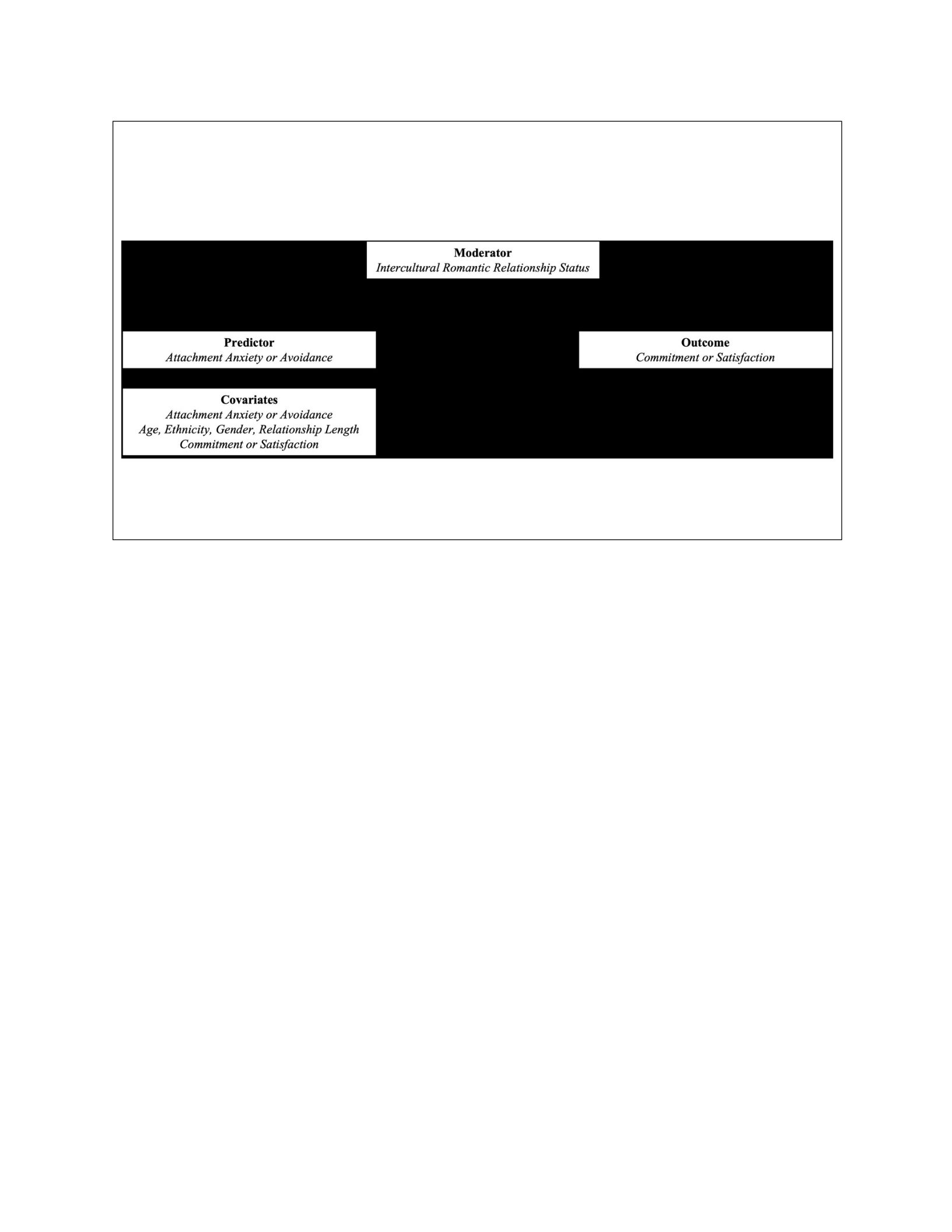
46
Results
Preliminary Analyses
Descriptive statistics and bivariate correlations between key study variables are presented
in Table 7. Descriptive frequencies found that 51.8% of the sample reported that they were in an
intercultural romantic relationship (yes = 172) and 48.2% of the sample reported that they were
not in an intercultural romantic relationship (no = 160).
Figure 2
Study 2 Hierarchical Linear Regression Conceptual Model

Table 7
Study 2 Correlation Analyses and Descriptive Statistics of Key Study Variables
*p < .05, ** p < .01
Note. The upper right half of the table are correlations for the intercultural subsample and
the lower left half of the table are correlations for the intracultural subsample. Bolded cells
represent different patterns that emerged between the groups. The mean and standard
deviations are reported for the overall sample.
47
Moverall (SD) 1 2 3 4 5 6
1. Age 21.14 (2.68) 1 .24** -.12 -.02 .07 .14
2. Relationship Length 3.55 (1.53) .24** 1 -.12 -.23** .25** .16*
3. Attachment Anxiety 3.82 (1.34) -.10 -.17* 1 .30** .03 -.22**
4. Attachment Avoidance 2.64 (1.15) -.11 -.34** .28** 1 -.50** -.58**
5. Relationship Commitment 6.31 (1.57) .12 .32** .04 -.57** 1 .68**
6. Relationship Satisfaction 4.88 (1.02) .13 .19* -.23** -.47** .56** 1
Independent means t-tests revealed that individuals in an intercultural romantic relationship
were not significantly different in age [t(330) = 1.89, p = .06], relationship length [t(330) = 1.64,
p = .10], attachment anxiety [t(330) = -0.72, p = .47], attachment avoidance [t(330) = 1.83, p =
.07], or relationship commitment [t(330) = -0.25, p = .81] relative to individuals in an
intracultural romantic relationship.
However, individuals in an intercultural romantic relationship (M = 5.00, SD = 0.96)
reported significantly higher relationship satisfaction [t(330) = -2.20, p = .03] relative to
individuals in an intracultural romantic relationship (M = 4.76, SD = 1.07).
Multiple Regression Models 1 and 2
Results from the first multiple regression (see Table 8 Model 1) found that attachment
anxiety (b = 0.28, t(324) = 5.82, p < .001) was positively associated with relationship
commitment

Table 8
Study 2 Multiple Regression Analyses (Models 1 and 2)
Model 1
Note. Multiple regression analyses depicting the associations of attachment anxiety and
attachment avoidance with the outcome of relationship commitment (Model 1) and
relationship satisfaction (Model 2).
48
and attachment avoidance (b = -0.42, t(324) = -6.50, p < .001) was negatively associated with
relationship commitment.
Results from the second multiple regression (see Table 8 Model 2) found that attachment
anxiety (b = -0.13, t(324) = -3.93, p < .001) and attachment avoidance (b = -0.18, t(325) = -9.83,
p < .001) were both negatively associated with relationship satisfaction.
Relationship Commitment bS.E. β t p LLCI ULCI
Constant 2.11 0.69 3.04 0.00 0.74 3.47
Age 0.01 0.02 0.02 0.39 0.70 -0.04 0.06
Latino 0.01 0.16 0.00 0.05 0.96 -0.31 0.32
White 0.03 0.19 0.01 0.15 0.88 -0.34 0.39
Other Ethnicity -0.05 0.17 -0.01 -0.3 0.76 -0.38 0.28
Men -0.24 0.13 -0.07 -1.81 0.07 -0.5 0.02
Other Gender -0.41 0.57 -0.03 -0.72 0.48 -1.54 0.72
Relationship Length 0.14 0.04 0.14 3.31 0.00 0.06 0.23
Relationship Satisfaction 0.74 0.07 0.48 10.45 <.001 0.60 0.88
Attachment Anxiety 0.28 0.05 0.24 5.76 <.001 0.19 0.38
Attachment Avoidance -0.42 0.07 -0.31 -6.35 <.001 -0.55 -0.29
Model 2
Relationship Satisfaction bS.E. β t p LLCI ULCI
Constant 3.36 0.44 7.61 <.001 2.49 4.23
Age 0.02 0.02 0.06 1.41 0.16 -0.01 0.06
Latino 0.04 0.11 0.02 0.34 0.73 -0.18 0.25
White -0.06 0.13 -0.02 -0.48 0.63 -0.31 0.19
Other Ethnicity 0.11 0.12 0.04 0.92 0.36 -0.12 0.33
Men 0.05 0.09 0.02 0.52 0.60 -0.13 0.23
Other Gender 0.09 0.39 0.01 0.23 0.82 -0.68 0.86
Relationship Length -0.06 0.03 -0.08 -1.82 0.07 -0.11 0.01
Relationship Commitment 0.35 0.03 0.53 10.45 <.001 0.28 0.41
Attachment Anxiety -0.13 0.04 -0.17 -3.85 <.001 -0.20 -0.07
Attachment Avoidance -0.19 0.05 -0.21 -4.01 <.001 -0.28 -0.10

49
Hypothesis Testing
Hierarchical Linear Regression Models 1 and 2
Contrary to hypotheses, the interaction of attachment anxiety and intercultural romantic
relationship status (ps > .05; see Table 9 Model 1) and the interaction of attachment avoidance
and intercultural romantic relationship status (ps > .05; see Table 9 Model 2) were not
significantly associated with relationship commitment.
Hierarchical Linear Regression Models 3 and 4
Contrary to hypotheses, the interaction of attachment anxiety and intercultural romantic
relationship status (ps > .05; see Table 10 Model 3) and the interaction of attachment avoidance
and intercultural romantic relationship status (ps > .05; see Table 10 Model 4) were not
significantly associated with relationship satisfaction.

50
Table 9
Study 2 Hierarchical Linear Regression Analyses (Models 1 and 2)
Model 1
Relationship Commitment R
.73 R2
.53
F
29.51
p
< .001
△R2
< .001
bS.E. t p LLCI ULCI
Constant 2.19 0.73 3.02 0.00 0.77 3.62
Attachment Anxiety 0.31 0.07 4.45 0.00 0.17 0.44
Intercultural Relationship Status -0.10 0.37 -0.26 0.79 -0.82 0.63
Interaction Term -0.04 0.09 -0.39 0.70 0-.21 0.14
Attachment Avoidance -0.42 0.07 -6.46 0.00 -0.55 -0.29
Age 0.01 0.02 0.24 0.81 -0.04 0.05
Latino -0.01 0.16 -0.08 0.94 -0.33 0.30
White 0.02 0.19 0.13 0.90 -0.34 0.39
Other Ethnicity -0.03 0.17 -0.16 0.87 -0.36 0.30
Men -0.25 0.13 -1.86 0.06 -0.51 0.01
Other Gender -0.41 0.57 -0.71 0.48 -1.54 0.72
Relationship Length 0.14 0.04 3.15 0.00 0.05 0.22
Relationship Satisfaction 0.75 0.07 10.61 0.00 0.61 0.89
Model 2
Relationship Commitment R
0.73 R2
0.53
F
29.50
p
< .001
△R2
< .001
bS.E. t p LLCI ULCI
Constant 2.34 0.72 3.25 0.00 0.92 3.75
Attachment Avoidance -0.44 0.09 -5.12 0.00 -0.61 -0.27
Intercultural Relationship Status -0.33 0.31 -1.07 0.29 -0.95 0.28
Interaction Term 0.04 0.11 0.36 0.72 -0.17 0.25
Attachment Anxiety 0.29 0.05 5.87 0.00 0.19 0.39
Age 0.01 0.02 0.21 0.83 -0.04 0.05
Latino -0.02 0.16 -0.10 0.92 -0.33 0.30
White 0.03 0.19 0.16 0.87 -0.34 0.40
Other Ethnicity -0.02 0.17 -0.12 0.90 -0.35 0.31
Men -0.24 0.13 -1.83 0.07 -0.50 0.02
Other Gender -0.40 0.57 -0.69 0.49 -1.52 0.73
Relationship Length 0.14 0.04 3.12 0.00 0.05 0.22
Relationship Satisfaction 0.75 0.07 10.61 0.00 0.61 0.89
Note. Hierarchical linear regression analyses depicting the interaction of attachment anxiety
(Model 1) and intercultural romantic relationship status, and attachment avoidance (Model 2)
and intercultural romantic relationship status, with the outcome of relationship commitment.

51
Table 10
Study 2 Hierarchical Linear Regression Analyses (Models 3 and 4)
Model 3
Relationship Satisfaction R R2F p △R2
.69 .48 24.63 < .001 < .001
bS.E. t p LLCI ULCI
Constant 3.22 0.47 6.87 0.00 2.30 4.14
Attachment Anxiety -0.16 0.05 -3.29 0.00 -0.25 -0.06
Intercultural Relationship Status 0.06 0.25 0.25 0.80 -0.43 0.56
Interaction Term 0.04 0.06 0.58 0.56 -0.09 0.16
Attachment Avoidance -0.17 0.05 -3.72 0.00 -0.26 -0.08
Age 0.03 0.02 1.58 0.12 -0.01 0.06
Latino 0.05 0.11 0.5 0.62 -0.16 0.27
White -0.06 0.13 -0.44 0.66 -0.30 0.19
Other Ethnicity 0.08 0.11 0.74 0.46 -0.14 0.31
Men 0.05 0.09 0.60 0.55 -0.12 0.23
Other Gender 0.09 0.39 0.23 0.82 -0.68 0.86
Relationship Length -0.05 0.03 -1.64 0.10 -0.11 0.01
Relationship Commitment 0.35 0.03 10.61 0.00 0.28 0.41
Model 4
Relationship Satisfaction R
0.69 R2
0.48
F
24.63
p
< .001
△R2
< .001
bS.E. t p LLCI ULCI
Constant 3.06 0.47 6.53 0.00 2.14 3.98
Attachment Avoidance -0.15 0.06 -2.45 0.02 -0.27 -0.03
Intercultural Relationship Status 0.32 0.21 1.50 0.13 -0.10 0.74
Interaction Term -0.04 0.07 -0.60 0.55 -0.19 0.10
Attachment Anxiety -0.14 0.03 -4.00 0.00 -0.21 -0.07
Age 0.03 0.02 1.62 0.11 -0.01 0.06
Latino 0.06 0.11 0.52 0.60 -0.16 0.27
White -0.06 0.13 -0.50 0.62 -0.31 0.19
Other Ethnicity 0.08 0.12 0.68 0.50 -0.15 0.30
Men 0.05 0.09 0.55 0.58 -0.13 0.23
Other Gender 0.08 0.39 0.20 0.84 -0.69 0.85
Relationship Length -0.05 0.03 -1.60 0.11 -0.11 0.01
Relationship Commitment 0.35 0.03 10.61 0.00 0.28 0.41
Note. Hierarchical linear regression analyses depicting the interaction of attachment anxiety
(Model 3) and intercultural romantic relationship status, and attachment avoidance (Model
4) and intercultural romantic relationship status, with the outcome of relationship
satisfaction.

52
Discussion
The current study was the first to examine the association of attachment insecurity with
relationship quality among individuals in an intercultural romantic relationship relative to
individuals in an intracultural romantic relationship. In the overall sample, attachment anxiety
and attachment avoidance were significantly associated with relationship commitment and
relationship satisfaction, but the strength of these effects did not differ between the two groups.
Additionally, mean levels of attachment anxiety, attachment avoidance, and relationship
commitment, were similar between the two groups but the mean level of relationship satisfaction
was higher for individuals in an intercultural romantic relationship relative to those in an
intracultural romantic relationship. Altogether, these results suggest that intercultural relationship
quality may be more complex than existing literature has revealed.
As expected, in the overall sample, attachment avoidance was significantly associated
with lower relationship commitment and relationship satisfaction. Interestingly, though,
higher attachment anxiety was significantly associated with higher relationship commitment, but
lower relationship satisfaction. This pattern may appear puzzling but it is consistent with the
findings of other studies (Joel et al., 2011). Joel and colleagues suggest that statistically
adjusting for relationship satisfaction produces a positive association between attachment
anxiety and relationship commitment because it adjusts for individuals who feel dissatisfied and
ambivalent about their relationship, which is characteristic of people high in attachment anxiety.
Satisfaction was adjusted for in the current study models and it may be that dissatisfaction in
relationships is driving the association of attachment anxiety with relationship commitment in
the current sample. There is conflicting evidence in the literature that suggests that relationship
quality between intercultural and intracultural couples can differ. The current study aimed
to determine if

53
attachment insecurity was one factor that is relevant to these differences. Contrary to hypotheses,
the associations of attachment anxiety and attachment avoidance with relationship quality were
no different between the two groups. This suggests that attachment insecurity is such a robust
risk factor for relationship quality that it may not be impacted by intercultural romantic
relationship status even after adjusting for important factors such as age, ethnicity, gender, and
relationship length. Thus, even in the face of cultural uncertainty, attachment insecurity does not
seem to differentially impact intercultural romantic relationship quality. This could mean that
perhaps the individuals who were in an intercultural romantic relationship have benefited from
the diverse dating pool where this sample was collected and have found a partner who is a good
match for their levels of attachment insecurity. This may be unique to this sample’s geographic
location as suggested in the meta-analysis by Brooks (2022). It would be interesting to see how
intercultural couples who are also experiencing high attachment insecurity handle low societal
relationship approval. It may be that this type of relationship stressor is too much to bear for
individuals experiencing insecure attachment. This possibility would be in line with the
Vulnerability Stress Adaptation Model. Thus, it may be that the current study included a sample
of intercultural couples who are able to thrive because they are surrounded by an accepting,
diverse, liberal society.
Alternatively, it could be that attachment insecurity truly does not relate to relationship
quality differently between the groups. Instead, individuals in intercultural romantic relationships
may experience different levels of conflict surrounding their cultural differences, which may
contribute to the differences in relationship quality that are noted in the literature. Certain
samples may have couples who report lower relationship quality while other samples report
higher relationship quality depending on how much their cultural differences create strife in their
relationship. It could also depend on the type of intercultural romantic relationships that are

54
being

55
studied. Some intercultural romantic relationships may be more challenging to navigate (e.g.,
religious conversion as a requisite) or those that have had historically challenged intergroup
dynamics (e.g., Black and White couples or German and Jewish couples). Therefore, it may be
important to study the particular challenges that some couples experience.
The current study did not find differences in mean levels of relationship commitment
between the groups and the differences in mean relationship satisfaction suggest that intercultural
couples are more satisfied. Perhaps individuals in the current sample were able to find dating
partners who were a particularly suitable match for them relative to the more limited pool of
potential partners who are similar in their cultural background. Furthermore, as suggested by
Brooks (2022), it may not be that intercultural couples are inherently at risk of lower relationship
quality but instead may experience different levels of relationship quality depending on the
ecological support that is provided for their relationship type. Parental and friend approval of
relationships is a factor that contributes to relationship quality (Sprecher & Felmlee, 1992). The
support and approval in the community where this sample was collected is likely high, which
may be a main factor contributing to these findings.
Strengths & Limitations
This is the first study, to my knowledge, to examine the association of attachment
insecurity with intercultural romantic relationship maintenance. This study consisted of an
ethnically diverse sample of individuals currently in a romantic relationship. Individuals in
intercultural romantic relationships are rarely represented in relationship science but the current
sample consisted of almost 50% who self-identified as being in an intercultural romantic
relationship. Lastly, important statistical variables were included in the models to adjust for as
much variation that may be present between participants that is not relevant for the current
research

56
questions. Limitations of this study include the following: (1) this study examined only
individual level data rather than dyadic level data. It could be that partner-2’s attachment
insecurity is largely influential on partner-1’s relationship quality; (2) I did not have data on the
second partner’s cultural identity which limited my ability to understand what type of
intercultural couples were included in this sample; (3) this study was cross-sectional so I cannot
determine if attachment insecurity is related to relationship quality deterioration. It could be that
individuals high in attachment insecurity feel high levels of relationship quality when their
relationship begins but once their attachment system is activated, they may feel less committed
and less satisfied.
Future Directions
To address the current study limitations, I offer suggestions for future directions. Future
studies would benefit from collecting longitudinal data. It could be that relationship quality is not
differentially impacted by attachment insecurity, but that attachment insecurity is robustly
associated with changes in commitment or satisfaction for many possible relationship
configurations, including intercultural romantic relationships. There may be several growing
pains that partners experience when beginning an intercultural relationship but once they learn
more about each other their relationship commitment and satisfaction may be higher. It also
could be that development stages such as introducing family members, deciding to marry, or
transitioning to parenthood could be more sensitive for intercultural couples because they must
also negotiate their differences in cultural norms and traditions. Thus, future work should also
examine if quality is impacted by the different stages of the relationship. Future longitudinal
studies should also assess behavioral aspects of relationship quality that could provide a fuller
picture to these findings.
Conclusion

57
The results of this study found no evidence that attachment insecurity is a unique
individual difference that relates to intercultural romantic relationship quality differently from
intracultural romantic relationship quality. This study took a first step in aiming to understand
why prior research has found differences in relationship quality between the groups. Future
studies should continue to examine factors that are related to intercultural romantic relationship
quality to better understand the risk and resilience factors for these romantic relationships.
Study 3 builds on Study 2 in two ways. First, Study 3 extends the research questions in
Study 2 by examining them dyadically with the addition of conflict management as the outcome.
As the main aim of Study 3, the outcome variable will change from general relationship quality
to perception of conflict management reported after a standardized conflict interaction task. I will
examine whether actor and partner attachment insecurity are associated with relationship quality
and perceptions of conflict management and whether these associations differ between
intercultural and intracultural couples.

58
STUDY 3

59
Attachment and Intercultural Romantic Relationship Conflict Management
Like relationship quality, conflict management may be an indicator of the stability of a
relationship. Conflict is a rich space to examine couple dynamics because conflict can activate
the attachment system (Mikulincer & Shaver, 2011). According to attachment theory, expressing
feelings and perspectives in the course of resolving conflict can be done in a productive way
(usually for those higher in attachment security) where couples can come back together
afterwards and feel more connected (González-Ortega et al., 2020), as long as resolution
involves productive behaviors and strategies (Feeney & Fitzgerald, 2019). Due to differences
that must be negotiated, there is a possibility of increased misunderstanding and conflict within
intercultural romantic relationships (Frame, 2004). Attachment insecurity is associated with how
couples manage conflict (Feeney & Karantzas, 2017), which may be particularly important for
intercultural couples. The goal of the current study was to examine the association of attachment
insecurity with relationship quality and conflict management among couples in an intercultural
relationship relative to couples in an intracultural relationship.
A conflict is defined as a perceived or real threat to someone’s ability to complete a task
or reach a goal (Fisher-Yoshida, 2005). This can result when two people have motives, goals, or
beliefs that are incompatible. Conflict does not have to be overt; if one’s goals are being
interfered with, there is an underlying conflict that arises for one or both partners (Miller et al.,
2007). The manifestation of conflict can range from an unobtrusive disagreement to physical
violence, the latter being more strongly associated with relationship dissolution (Cate, 1985).
Because conflict is defined as a perceived threat, the ability to be responsive when managing
conflict may be challenging for those struggling with higher levels of attachment insecurity.

60
Attachment insecurity may make it challenging to cope with everyday deviations in
relationship stability that are activated in the context of stress brought on by conflict or
disagreements. Scholars in intercultural communication argue that the way to succeed in
managing conflict in the intercultural context is to keep in mind that behaviors from someone
outside of one’s own cultural group may be driven by their ethnocentric view of the world; that
is, in intercultural communication it is important to acknowledge that another person’s
interpretations of the world may conflict with one’s own (Bennett, 1998). When individuals are
in an intercultural romantic relationship, responsive conflict management may rely on
recognizing that a partner is interpreting the world from a different lens. Individuals who are
higher in attachment insecurity and hypervigilant to relationship threat find it hard to think about
the experiences and views of their partner (Borelli et al., 2020). Higher attachment insecurity
also increases the risk that individuals will engage in attachment related regulation strategies that
are not effective or sustainable for the stability of a relationship (see Mikulincer et al., 2003 for a
review).
Individuals higher in attachment anxiety engage in “hyperactivating strategies” that
involve behaviors, cognitions, or emotions that attempt to establish closeness to a partner. This
closeness calms the attachment system, but it may come at a cost. During conflict, these
hyperactivating strategies tend to be self-focused and do not consider a partner’s needs. In the
short-term these behaviors may result in re-establishment of perceived closeness by the anxious
individual but also result in a reduction in the stability of the relationship in the long-term.
Individuals higher in attachment avoidance engage in “deactivating strategies”, which are
contrary to hyperactivating strategies. Deactivating strategies involve behaviors, cognitions, or
emotions that create distance between the self and the partner. These strategies calm the avoidant
attachment system by providing the individual with more independence. Individuals higher in

61
attachment

62
avoidance value autonomy and freedom, and fear being trapped, or emotionally suffocated. But
as with hyperactivating strategies, deactivating strategies can be individually effective in the
short- term but the distance they create between partners is likely to become unsustainable and is
likely to threaten the relationship.
These regulation strategies may be a dyadic process that can involve specific patterns
between partners. Findings suggest that it is not only higher attachment insecurity within the self
but also having a partner who is higher in attachment insecurity that can be damaging for
relationship outcomes (Beck et al., 2013). Intercultural couples may need to engage in distinct
strategies that bring particularly high levels of responsiveness to the management of their
conflicts. This type of recognition and sensitive management of conflict may be difficult for
those higher in attachment insecurity, and for those with partners who are higher in attachment
insecurity, because their conflict management strategies may involve hyperactivation or
deactivation strategies. For this reason, it is important to narrow in on whether attachment
insecurity is related to how intercultural couples navigate conflict, as responsive conflict
management may be one direct way for these couples to successfully experience higher
relationship quality.
The Current Study
The current study was drawn from my larger virtual cross-sectional study that included
both partners from a couple who joined the research team on Zoom to complete their
participation. The recruitment of couples virtually was done in response to the COVID-19
pandemic and allowed for participation from people who might otherwise not feel comfortable
with in-person lab contact (data collection: 2020 – ongoing). Study 3 allowed for a limited
assessment of actor and partner attachment insecurity with actor and partner relationship quality
and actor and partner attachment insecurity with actor and partner conflict management. These

63
associations were explored within

64
the overall sample and then within the sample of intercultural couples and intracultural couples for
comparison.
Exploratory Aims
I explored all actor and partner paths for attachment anxiety and avoidance as they related
to relationship commitment, relationship satisfaction, unresponsive conflict management and
responsive conflict management.
Method
Participants
Undergraduates (N = 200) at a large research university on the West Coast of the United
States participated in a larger study on relationships. The sample (Mage = 21.48, SDage = 3.03)
consisted of participants and their romantic partners who identified as being in a current romantic
relationship that began at least 3-months prior to their participation, who provided data on the
measures of interest, and who were in a man-woman relationship (N = 172; Ndyad = 86). Of these
man-woman romantic relationships, researchers identified a majority as being intracultural
couples (n = 98, ndyad = 49) and the rest as being intercultural couples (n = 72, ndyad = 36)5.
Participants also identified as Men (n = 86) and Women (n = 86) since I only included mixed cis-
gender couples in the current study. Additional demographic information is presented in Table
11. Data collection of the larger research study is ongoing; since the current sample sizes are
small, this dissertation study is largely exploratory.
I used the APIMPower Shiny App (Ackerman & Kenny, 2016) to determine power given
the current sample size in the ongoing larger data collection. This tool revealed that with the
current sample size of 86 dyad, there was .741 power to detect a beta effect of .20 for each
actor and

65
5 One dyad did not report their intercultural relationship status.

Table 11
Study 3 Demographic Descriptives
Intercultural Intracultural
MenWomenMenWomen
66
partner effect or a partial r of .198 with alpha set at .05. When stratifying the groups, there was a
.379 power for the intercultural sample and a .494 power for the intracultural sample.
I also used the APIMPower Shiny App to determine the sample size required to detect an
effect within the APIM framework when power is at least .80. This tool revealed that to detect a
beta effect of .20 for each actor and partner effect or a partial r of .198 with alpha set at .05, I
would have needed a sample size of 199 dyads.
Age M SD M SD M SD M SD
22.03 3.74 20.78 2.17 22.25 3.52 20.98 2.15
Ethnicity n % n % n % n %
Black 1 2.8 0 0.0 0 0.0 0 0.0
Chinese 0 0.0 3 8.3 13 26.5 12 24.5
Indian 0 0.0 1 2.8 1 2.0 1 2.0
Japanese 0 0.0 1 2.8 0 0.0 0 0.0
Korean 1 2.8 2 5.6 1 2.0 1 2.0
Mexican 11 30.6 6 16.7 19 38.8 18 36.7
Middle Eastern 1 2.8 3 8.3 1 2.0 1 2.0
Mixed-Race 8 22.2 5 13.9 2 4.1 2 4.1
Other 0 0.0 0 0.0 0 0.0 0 0.0
Other Latino 0 0.0 1 2.8 0 0.0 0 0.0
Pacific Islander 1 2.8 0 0.0 0 0.0 0 0.0
Southeast Asian 3 8.3 5 13.9 4 8.2 7 14.3
White 6 16.7 7 19.4 5 10.2 6 12.2
Relationship Length
M SD M SD M SD M SD
In Months 26.47 17.72 26.31 17.84 22.25 3.52 29.12 18.70
Procedure
All measures and procedures were approved by the University Institutional Review Board.
Participants enrolled in the online study using the university’s social science human subjects

67
research pool through the SONA system. Upon enrolling in the study, participants were asked to
send information about the study to their romantic partner. If their romantic partner was also
interested in participating, they were both scheduled for an online study session that took place
on a video-conference call. Inclusion criterion for the larger study was that the participant was at
least 18 years of age. When starting the session, participants joined a Zoom meeting room
separately, and then they consented and released their video data to the researchers. After doing
so, a researcher began recording the session and then led the participants through the study.
Participants were compensated for their study participation with extra credit that they applied to
a participating course of their choice, or they were compensated with an Amazon gift card.
The self-report data relevant to this dissertation was asked prior to a conflict discussion
that the participants engaged in, except for the demographics, which were collected at the end of
the study. The conflict discussion involved participants identifying a conflict that they had
previously experienced in their current relationship. They first wrote this conflict down digitally.
Then the researcher directed the partners to begin discussing the topic they wrote down as freely
as they wanted, which is a method that has been used in other romantic relationship studies
(Williamson et al., 2013). The couple was allotted 5-minutes to discuss the topic. After the
discussion, participants completed questions about their perception of how the conflict was
managed.
Measures
Demographics
Age. Participants were asked to answer, “how old are you?” by selecting a numeric value
from a drop-down menu that ranged from “18” to “41 and above”.

68
Ethnicity. Participants were asked “What is your ethnicity (indicate more than one if
applicable)?” and were given the following options: Black (1), White (2), Chinese (3), Japanese
(4), Korean (5), Southeast Asian (6), Indian (7), Pacific Islander (8), Mexican (9), Other Latino
(10), Native American (11), Middle Eastern (12), and Other (13). If they indicated more than one
ethnicity, they were coded as belonging to a Multi-Ethnic category (14). For the purposes of
analyses, participants were grouped into pan-ethnic categories that corresponded as closely as
possible to United State Census categories (i.e., Asian, Latino, White, and Other). Individuals
who identified as Chinese, Indian, Japanese, Korean, Pacific Islander, and Southeast Asian were
included in the Asian category. Individuals who identified as Mexican and Other Latino were
included in the Latino category. Individuals who identified as Middle Eastern and White were
included in the White category. Individuals who identified as Black, Multi-Ethnic, Native
American, and Other were included in the Other Ethnicity category.
Gender. Participants were asked “which gender do you identify with?” and were given
the following options: Men (1), Women (2), Non-binary or gender nonconforming (3),
Transgender (4), Other (5), and Prefer not to State (6). The final sample consisted of couples
that were made up of man-woman partners.
Relationship Length. Participants reported on the number of months they have been in a
relationship with their partner by choosing a numeric value that corresponded to those number of
months (e.g., 54 months or 4.5 years).
Attachment Insecurity
Attachment anxiety and avoidance were assessed using the Experiences in Close
Relationships – Short Form (Wei et al., 2007) with responses that ranged from Strongly Disagree
(1) to Strongly Agree (7). Attachment anxiety was computed from six items (e.g., I need a lot of

69
reassurance that I am loved by my partner). Attachment avoidance was also computed from six
items (e.g., I want to get close to my partner, but I keep pulling away). One anxiety item was
reverse scored (I do not often worry about being abandoned) and three avoidance items were
reverse scored (it helps to turn to my romantic partner in times of need; I turn to my partner for
many things, including comfort and reassurance; I usually discuss my problems and concerns
with my partner). Subscale items were average together to create composite scores. Higher
scores indicated higher attachment anxiety (α = .78) or avoidance (α = .77), respectively. This
scale has been reliabile in different cultural groups (Wei et al., 2004).
Intercultural Romantic Relationship Status
This study included dyadic data and some dyads included partners who identified with
different ethnic backgrounds6. Therefore, unlike Study 1 and Study 2, an independent coder
identified couples as being intercultural if their reported pan-ethnic backgrounds did not match
or as intracultural if their reported pan-ethnic backgrounds did match. For participants who were
categorized as Multi-Ethnic, an independent coder compared their response to their partner’s
response. If both partners identified as Multi-Ethnic but did not have the same Multi-Ethnic
identities, the independent coder categorized them as an intercultural couple. For participants
who self-reported “Prefer-to-specify”, an independent coder compared their response to their
partner’s response. If each partner of the couple differed in their response based on the pan-
ethnic categories, the independent coder categorized them as an intercultural couple.
Relationship Quality
6Eleven dyads included partners who had conflicting self-reported intercultural relationship status. In the larger
study, the researchers guided the participants through a discussion regarding why they identified as intercultural if at
least one partner identified as intercultural. These data have not been analyzed. Intercultural relationship status was
researcher coded in this study based on couple self-reported ethnicity/race.

70
Relationship commitment and relationship satisfaction were assessed using the
Investment Model Scale (Rusbult et al., 1998) with responses that ranged from Do not Agree at
All (0) to Agree Completely (8). The commitment subscale consisted of seven items (e.g., I am
committed to maintaining my relationship with my partner). The satisfaction subscale consists of
five items (e.g., Our relationship makes me very happy). Two commitment items were reverse
scored (It is likely that I will date someone other than my partner within the next year; I would
not feel very upset if our relationship were to end in the near future). Subscale items were
averaged together to create composite scores. Higher scores indicated higher relationship
commitment (α = .82) or relationship satisfaction (α = .89), respectively.
Conflict Management
Six questions were asked directly after the conflict discussion to examine to what extent
each participant perceived the conflict as being managed. Responses ranged from Not at All (1),
to A Great Deal (5). Using the individual level data, which included both partners, I conducted
an exploratory factor analysis using Principal Component Analysis with Oblimin rotation
(Corner, 2009). Although the sample size was small, the Kaiser-Meyer-Olkim measure of
sampling adequacy was above .70 and Bartlett’s test of Sphericity was significant (p < .001), so I
proceeded with the EFA. Two components had total initial eigenvalues greater than 1 (See Table
12). These two components explained 64.53% of the variance. The screeplot also showed
evidence for two components. The first component included items that reflected unresponsive
conflict management: during the conversation, how thoughtless and inconsiderate was your
partner?; during the conversation, how unsympathetic or critical was your partner?; how
disconnected do you feel to your partner after this conversation?. The second component
included items that reflected responsive conflict management: during the conversation, how
supportive was your partner?;

Table 12
Study 3 Component Loadings for the Conflict Management Scale
Pattern Matrix Component
Loadings
Note. Extraction Method: Principal Component Analysis. Rotation Method: Oblimin with
Kaiser Normalization. Rotation converged in 7 iterations.
71
during the conversation, how much did your partner make you feel accepted for who you are?;
how helpful did you find this conversation?. Items from each subscale were averaged together to
create composite scores. Higher scores indicated higher unresponsive conflict management (α =
.71) or responsive conflict management (α = .70), respectively.
1 2
How unsympathetic or critical was your partner? -0.844
How thoughtless and inconsiderate was your partner? -0.764
How disconnected do you think your partner feels to you after this conversation? -0.727
How much did your partner make you feel accepted for who you are? 0.862
How supportive was your partner? 0.755
How helpful do you think your partner found this conversation? 0.733
Data Analytic Plan
Individual Level Data Analyses
The raw data were structured such that each row of data pertained to one individual and
two rows belonged to one dyad. This data structure is referred to as individual level data. All
individual level data analyses were run using SPSS version 28. Using the entire dataset in the
individual level data structure, I first examined the descriptive statistics and bivariate correlations
of demographic and key study variables to better contextualize the data. I also compared key
study

72
variables between individuals in intercultural romantic relationships and intracultural romantic
relationships using an independent means t-test. This allowed me to determine whether there
were mean differences in demographic variables, attachment anxiety, attachment avoidance,
relationship commitment, relationship satisfaction, and perceptions of unresponsive and
responsive conflict management between the groups. Next, using the entire sample, I ran
multiple regressions to determine if there were any linear associations between the predictors and
outcomes of interest7.
Dyadic Level Data Analyses
Actor Partner Interdependence Analyses. Next, hypothesis testing was conducted with
MPlus version 1.8.9, which used all available values and full information maximum likelihood
(FIML) estimation, a preferred approach for handling missing data. Model fit was assessed using
the comparative fit index (CFI) and root mean square error of approximation (RMSEA). CFI
values of 0.95 or higher and RMSEA values of 0.06 or lower indicate a good fit. To answer my
research questions, I used the actor-partner interdependence model (APIM; Cook & Kenny,
2005) in a structural equation framework. This allowed me to determine if each partner’s
attachment insecurity predicted their own and their partner’s outcome (relationship quality or
conflict management) within the same model. I ran these models within the overall sample to
maximize power and then within the intercultural couple and intracultural couple subsamples.
To run the APIM model, the raw individual level data (one row per person) was
restructured into a dyadic dataset (one row per dyad). This meant that each row included data
from both members of the couple. To distinguish the data, gender was used as the index and only
mixed-
7 I also ran the same multiple regressions within the men subsample and then again within the women subsample to
ensure that nesting within dyads did not impact the pattern of results. The pattern was similar for all three groups

73
and thus the subsample results are not reported.

74
cis-gender men and women couples were included in the analyses. Therefore, in the model,
variables were specific to the men and women within the couple. For example, one row of data
included a variable for men attachment anxiety and another variable for women attachment
anxiety. In APIM analyses, the dyad is treated as the unit of analysis to separate model actor
effects and partner effects within dyads. Following the approach by Campbell & Kashy (2002),
actor effects referred to one partner’s attachment insecurity (either anxiety or avoidance), as a
predictor of their own relationship quality (either commitment or satisfaction) or conflict
management (either responsive or unresponsive). Partner effects refer to one partner’s
attachment insecurity (either anxiety or avoidance) as a predictor of the other partner’s
relationship quality (either responsive or unresponsive) or conflict management. Both partners’
predictor variables were correlated with residuals of both partners’ outcome variables to account
for the interdependence between dyad members (Cook & Snyder, 2005).
(1) In the first model, the predictor variables were attachment anxiety and avoidance, and
the outcome variable was relationship commitment.
(2) In the second model, the predictor variables were attachment anxiety and avoidance,
and the outcome variable was relationship satisfaction.
(3) In the third model, the predictor variables were attachment anxiety and avoidance,
and the outcome variable was responsive conflict management.
(4) In the fourth model, the predictor variables were attachment anxiety and avoidance,
and the outcome variable was unresponsive conflict management.
In the current study, the first actor effect pertained to the man partner’s predictor variable
as it related to the man partner’s outcome variable and the second actor effect pertained to the
woman partner’s predictor variable as it related to the woman partner’s outcome variable. The
first
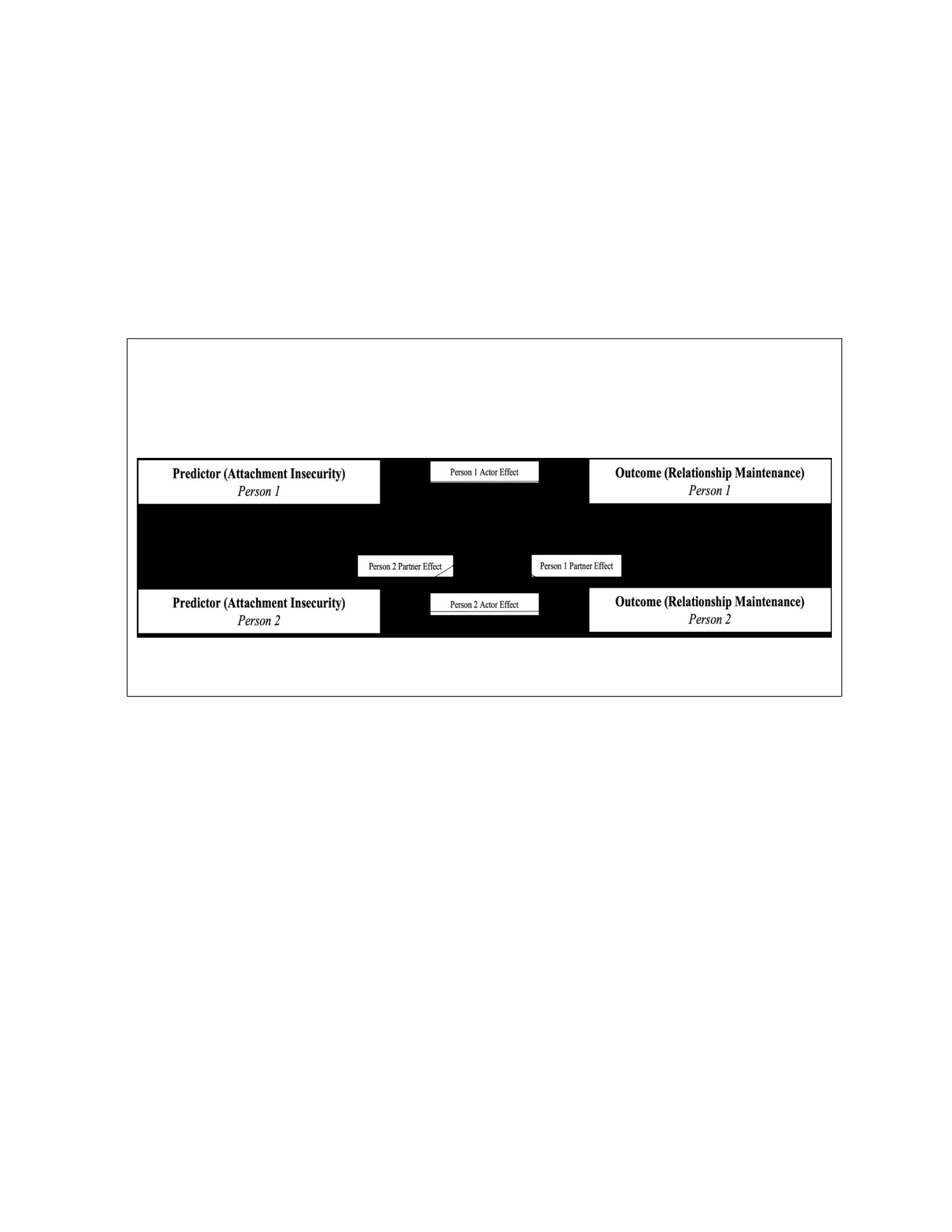
75
partner effect pertained to the man predictor variable as it related to the woman outcome variable
and the second partner effect pertained to the woman predictor variable as it related to the man
outcome variable. This yielded four paths for each model. No additional covariates were added
to the models to maximize statistical power (see Figure 3 for a conceptual model for the actor
partner interdependence model (APIM)).
Results
Preliminary Analyses
Descriptive statistics and bivariate correlations between key study variables are presented
in Tables 13.
Figure 3
Study 3 Actor Partner Interdependence Model (APIM) Conceptual Model

76
Table 13
Study 3 Correlation Analyses and Descriptive Statistics of Key Study Variables
Moverall(SD) 1 2 3 4 5 6 7 8 9
1. Age 21.48 (3.03) 1 -.20 .15 -.07 -.04 .15 .01 -.01 -.06
2. Gender - -.22* 1 -.01 .38** -.10 .03 .15 -.12 -.07
-.19
.07
-.17
-.03
.35**
.43**
3. Relationship 28.17 (18.39) .15 .00
.21*
-.15
.03
-.04
.03
1 -.10 -.10 .28* -.15 .06
Length
4. Attachment 3.73 (1.32) .04 -.02
-.12
.05
-.04
.20*
1.15 .14 -0.05 .08
Anxiety
5. Attachment 2.07 (0.92) .28** .24*
-.14
-.22*
.03
1 -.39** -.40** .11
Avoidance
6. Relationship 7.22 (1.12) .03 -.23*
-.33**
.08
1 .30* -.14
Commitment
7. Relationship 5.32 (0.74) -.01
Satisfaction .70** 1 -.28*
8. Unresponsive 1.41 (0.67) -.02
Conflict Management -.20* -.35** 1
9. Responsive
Conflict
Management
3.50 (0.90) -.09 -.05 -.05 -.19 -.17 .31** .35** -.34** 1
*p < .05, ** p < .01
Note. The upper right half of the table are correlations for the intercultural subsample and the
lower left half of the table are correlations for the intracultural subsample. Bolded cells
represent different patterns that emerged between the groups. The mean and standard
deviations are
reported for the overall sample.
Independent means t-tests revealed that intercultural couples were not significantly
different in age [t(166) = 0.45, p = .65], relationship length [t(168) = 0.99, p = .33], attachment
anxiety [t(168) = 0.97, p = .34], attachment avoidance [t(168) = -0.01, p = .99], relationship
commitment [t(168) = -1.74, p = .08], and responsive conflict management [t(168) = -1.74, p =
.08] relative to intracultural couples.
However, intercultural couples (M = 5.56, SD = 0.39) reported significantly higher
relationship satisfaction [t(168) = -3.70, p < .001] relative to intracultural couples (M = 5.15, SD

Table 14
Study 3 Multiple Regression for Relationship Commitment
77
= .88). Also, intercultural couples (M = 1.23, SD = 0.48) reported lower responsive conflict
management [t(167) = 3.08, p <.001] relative to intracultural couples (M = 1.55, SD = .76).
Attachment Insecurity with Relationship Commitment
Individual Level Data
Results of a multiple regression using the individual level data revealed attachment
anxiety (b = 0.00, p = .98) was not significantly associated with relationship commitment but
attachment avoidance (b = -0.34, p < .001) was significantly associated with lower relationship
commitment (see Table 14).
bS.E. β t p
Constant 7.92 0.29 27.42 <.001
Attachment Anxiety 0.00 0.07 0.00 -0.02 0.98
Attachment Avoidance -0.34 0.09 -0.27 -3.6 <.001
Dyadic Level Data
Results of an Actor Partner Interdependence Model (see Table 15) using the dyadic level
data revealed that, within the overall sample, women and men higher in attachment avoidance
reported lower relationship commitment.
Within the intercultural sample, women higher in attachment anxiety reported higher
relationship commitment; women higher in attachment avoidance reported lower relationship
commitment and had partners who reported lower relationship commitment; and lastly, men
higher

Table 15
Study 3 APIM for Relationship Commitment
Panel A
OVERALL
SAMPLE
Panel BPanel C
INTERCULTURALINTRACULTURAL SAMPLE
SAMPLE
Note. A = Actor Effect; P = Partner Effect. Actor partner interdependence model depicting the
associations of actor and partner attachment anxiety and attachment avoidance with the
outcome of relationship commitment for the overall sample (Panel A), the intercultural sub-
sample (Panel
B), and the intracultural sub-sample (Panel C).
78
in attachment avoidance reported lower relationship commitment. Within the intracultural
sample, women and men higher in attachment avoidance had partners who reported lower
relationship commitment.
Relationship
Commitment Estimate
S.E.
(b) p Estimate
S.E.
(b) p Estimate
S.E.
(b) p
Women Anxiety (A) 0.17 0.21 0.41 0.07 0.10 0.48 -0.03 0.16 0.83
Women Anxiety (P) -0.54 0.38 0.15 -0.01 0.10 0.96 -0.08 0.12 0.51
Men Anxiety (A) 0.00 0.11 0.99 0.30 0.10 0.00 -0.11 0.11 0.30
Men Anxiety (P) -0.11 0.06 0.06 0.12 0.10 0.23 -0.14 0.15 0.36
Women Avoidance (A) -0.11 0.05 0.04 -0.48 0.12 0.00 -0.12 0.25 0.63
Women Avoidance (P) -0.11 0.10 0.25 -0.37 0.13 0.00 -0.44 0.19 0.02
Men Avoidance (A) -0.34 0.15 0.02 -0.28 0.13 0.04 -0.29 0.15 0.06
Men Avoidance (P) -0.06 0.08 0.50 0.13 0.13 0.31 -0.41 0.2 0.05

Table 16
Study 3 Multiple Regression for Relationship Satisfaction
79
Attachment Insecurity with Relationship Satisfaction
Individual Level Data
Results of a multiple regression using the individual level data revealed higher
attachment anxiety (b = -0.07, p = .10) was not significantly associated with relationship
satisfaction but attachment avoidance (b = -0.23, p < .001) was significantly associated with
lower relationship satisfaction (See Table 16).
bS.E. β t p
Constant 6.06 0.19 32.19 <.001
Attachment Anxiety -0.07 0.04 -0.12 -1.66 0.10
Attachment Avoidance -0.23 0.06 -0.29 -3.82 <.001
Dyadic Level Data
Results of an Actor Partner Interdependence Model (see Table 17) using the dyadic level
data revealed no consistent pattern when examining the association of attachment insecurity with
relationship satisfaction.
Within the overall sample, men higher in attachment avoidance reported lower
relationship satisfaction. Within the intercultural sample, women higher in attachment anxiety
had partners who reported lower relationship satisfaction and women higher in attachment
avoidance reported lower relationship satisfaction. Within the intracultural sample, women
higher in attachment avoidance reported lower relationship satisfaction.

Table 17
Study 3 APIM for Relationship Satisfaction
Panel A
OVERALL
SAMPLE
Panel BPanel C
INTERCULTURALINTRACULTURAL SAMPLE
SAMPLE
Note. A = Actor Effect; P = Partner Effect. Actor partner interdependence model depicting the
associations of actor and partner attachment anxiety and attachment avoidance with the
outcome of relationship satisfaction for the overall sample (Panel A), the intercultural sub-
sample (Panel B), and the intracultural sub-sample (Panel C).
80
Relationship
Satisfaction Estimate
S.E.
(b) p Estimate
S.E.
(b) p Estimate
S.E.
(b) p
Women Anxiety (A) -0.04 0.31 0.91 -0.08 0.05 0.08 -0.04 0.1 0.73
Women Anxiety (P) -0.19 0.25 0.45 -0.11 0.05 0.03 -0.11 0.09 0.18
Men Anxiety (A) -0.07 0.07 0.33 0.05 0.05 0.30 -0.12 0.08 0.12
Men Anxiety (P) 0.03 0.09 0.71 0.03 0.05 0.49 -0.11 0.1 0.28
Women Avoidance (A) 0.15 0.08 0.06 -0.15 0.06 0.01 -0.37 0.16 0.03
Women Avoidance (P) -0.12 0.06 0.07 0.06 0.06 0.36 -0.19 0.13 0.16
Men Avoidance (A) -0.26 0.1 0.01 -0.12 0.06 0.06 -0.19 0.11 0.08
Men Avoidance (P) 0.04 0.12 0.75 0.01 0.06 0.93 -0.18 0.13 0.17
Attachment Insecurity with Unresponsive Conflict Management
Individual Level Data
Results of a multiple regression using the individual level data revealed attachment
anxiety (b = 0.02, p = .55) and avoidance (b = 0.05, p = .36) were not significantly associated
with unresponsive conflict management (See Table 18).

Table 18
Study 3 Multiple Regression for Unresponsive Conflict Management
bS.E.βtp
Attachment Avoidance0.050.060.070.920.36
81
Constant 1.21 0.18 6.74 <.001
Attachment Anxiety 0.02 0.04 0.05 0.61 0.55
Dyadic Level Data
Results of an Actor Partner Interdependence Model (see Table 19) using the dyadic level
data revealed that, in the overall sample, women higher in attachment avoidance reported higher
unresponsive conflict management.
There were no significant effects within the intercultural sample and intracultural samples.

Table 19
Study 3 APIM for Unresponsive Conflict Management
Panel A
OVERALL
SAMPLE
Panel BPanel C
INTERCULTURALINTRACULTURAL SAMPLE
SAMPLE
Note. A = Actor Effect; P = Partner Effect. Actor partner interdependence model depicting the
associations of actor and partner attachment anxiety and attachment avoidance with the
outcome of unresponsive conflict management for the overall sample (Panel A), the
intercultural sub-
sample (Panel B), and the intracultural sub-sample (Panel C).
82
Unresponsive
Conflict Management Estimate
S.E.
(b) p Estimate
S.E.
(b) p Estimate
S.E.
(b) p
Female Anxiety (A) 0.09 1.17 0.94 0.20 0.17 0.23 -0.08 0.10 0.40
Female Anxiety (P) 0.18 0.23 0.44 0.19 0.17 0.26 -0.12 0.08 0.16
Male Anxiety (A) -0.01 0.06 0.93 0.05 0.16 0.76 0.07 0.08 0.41
Male Anxiety (P) 0.36 0.34 0.29 -0.03 0.16 0.85 0.06 0.09 0.49
Female Avoidance (A) 0.71 0.31 0.02 0.19 0.17 0.25 0.17 0.15 0.25
Female Avoidance (P) 0.06 0.06 0.29 0.19 0.17 0.24 0.11 0.13 0.41
Male Avoidance (A) 0.12 0.09 0.19 -0.06 0.16 0.73 -0.04 0.11 0.69
Male Avoidance (P) -0.08 0.47 0.87 0.04 0.16 0.82 -0.01 0.13 0.96

Table 20
Study 3 Multiple Regression for Responsive Conflict Management
83
Attachment Insecurity with Responsive Conflict Management
Individual Level Data
Results of a multiple regression using the individual level data revealed attachment
anxiety (b = -0.04, p = .44) was not significantly associated with responsive conflict management
but higher avoidance (b = -0.16, p = .04) was significantly associated with lower responsive
conflict management (See Table 20).
bS.E. β t p
Constant 3.97 0.24 16.62 <.001
Attachment Anxiety -0.04 0.05 -0.06 -0.78 0.44
Attachment Avoidance -0.16 0.08 -0.16 -2.03 0.04
Dyadic Level Data
Results of an Actor Partner Interdependence Model (see Table 21) using the dyadic level
data revealed no actor or partner effects with responsive conflict management within the overall,
intercultural, or intracultural sample.

Table 21
Study 3 APIM for Responsive Conflict Management
Panel A
OVERALL
SAMPLE
Panel B Panel C
INTERCULTURALINTRACULTURAL SAMPLE
SAMPLE
Responsive
Conflict S.E. S.E. S.E.
Note. A = Actor Effect; P = Partner Effect. Actor partner interdependence model depicting the
associations of actor and partner attachment anxiety and attachment avoidance with the
outcome of responsive conflict management for the overall sample (Panel A), the intercultural
sub-sample
(Panel B), and the intracultural sub-sample (Panel C).
84
Management Estimate (b) p Estimate (b) p Estimate (b) p
Female Anxiety (A) 0.21 0.21 0.33 0.03 0.10 0.79 -0.13 0.14 0.37
Female Anxiety (P) -0.16 0.28 0.58 -0.19 0.12 0.11 0.10 0.14 0.47
Male Anxiety (A) -0.06 0.08 0.45 0.21 0.12 0.08 -0.19 0.14 0.20
Male Anxiety (P) -0.02 0.06 0.76 0.13 0.11 0.24 0.01 0.15 0.97
Female Avoidance (A) 0.05 0.06 0.33 -0.18 0.13 0.17 -0.09 0.15 0.52
Female Avoidance (P) -0.02 0.07 0.83 -0.05 0.15 0.73 -0.04 0.15 0.81
Male Avoidance (A) -0.14 0.11 0.20 -0.13 0.15 0.39 -0.14 0.14 0.34
Male Avoidance (P) 0.11 0.09 0.19 -0.23 0.14 0.09 -0.25 0.14 0.09
Discussion
This study is the first to examine actor and partner attachment insecurity as they relate to
actor and partner maintenance of intercultural romantic relationship quality and conflict
management relative to actor and partner intracultural relationship quality and conflict
management. The study of dyadic attachment insecurity in relation to intercultural relationship
outcomes can inform scientific understanding of individual difference processes that may or may
not relate to intercultural relationship outcomes. The current study revealed four noteworthy
patterns that suggest more similarities than differences among these two types of couples. First,

85
mean levels of attachment insecurity, and relationship commitment were no different between
intercultural couples and intracultural couples. Notably, mean levels of relationship satisfaction
and responsive conflict management were higher for intercultural couples relative to intracultural
couples and unresponsive conflict management was lower for intercultural couples relative to
intracultural couples. Second, attachment avoidance seems to be the most robust risk factor for
lower relationship commitment for the overall sample and subsamples. Third, it is unclear how
attachment anxiety is related to any of the relationship outcomes. Fourth, attachment insecurity
did not seem to be associated with conflict management as it was currently examined.
Attachment Insecurity and Relationship Commitment
Contrary to my predictions, attachment anxiety was not bivariately associated with
relationship commitment, nor was it associated in the multiple regression analyses. Interestingly,
in the APIM analyses, there was no significant effect in the overall sample or intracultural
sample but in the intercultural sample, men higher in attachment anxiety reported higher
relationship commitment. Congruence with cis-gendered expectations may be at play with men
higher in attachment anxiety being less congruent with the United States norms of stoic
masculinity. One study found that higher levels of attachment anxiety were associated with
higher levels of perceived femininity (Ciocca et al., 2020). Men who are higher in attachment
anxiety may be more willing to request time together, may be more emotional, and may be more
affectionate or “needy” than the perceived norm. This may contribute to their own relationship
commitment. Similarly, it may be that attachment anxiety tendencies are perceived as in line
with woman gendered norms. Attachment anxiety in women may be perceived as more
acceptable by women and their men partners and thus there may be no effect on relationship
commitment. That being said, this may depend on the specific attachment pairing by gender
within the couple. Overall, these findings

86
contribute to the mixed pattern of results in the literature suggesting that attachment anxiety is
complex and that gendered patterns and cultural patterns may be occurring.
In line with my predictions, attachment avoidance was bivariately associated with lower
relationship commitment for both groups and was associated with lower relationship
commitment in the multiple regression analysis. In the APIM analyses, attachment avoidance
was also fairly consistently associated with lower actor and partner relationship commitment in
the intercultural subsample. The only effect that did not emerge in the intercultural subsample
was men attachment avoidance with their partner’s relationship commitment. Interestingly, this
effect did emerge in the intracultural subsample. Lastly, in the intracultural subsample, women
higher in attachment avoidance had partners who reported lower relationship commitment. This
suggests that there may be gendered effects occurring for attachment avoidance and relationship
commitment, which is supported in the literature (Collins et al., 2002). The current study
expands on these findings by suggesting that gender could also interact with cultural difference
between partners since attachment avoidance seems to be a bigger risk factor for lower
relationship commitment in the intercultural subsample.
The majority of the significant effects emerged within the intercultural subsample. It
could be that some cultures value certain gendered norms in different ways. Some cultures value
patriarchal leadership while others value matriarchal leadership. If a man in the relationship
comes from a culture where patriarchy is valued, they may not cope well with a woman partner
who is more aloof and less attentive (higher in attachment avoidance). It also could be that for
intercultural couples, solving problems is important and studies have found that men put in a
helper role exhibit more positive behaviors than negative behaviors (Verhofstadt et al., 2007).
Men may thrive when given the opportunity to help their partner, but if they or their partner
are higher in attachment

87
avoidance, the ability or inclination to help may be reduced. In also could be that intercultural
couples are already navigating difference and the added stressor of attachment avoidance, which
is the most problematic attachment style for relationship functioning (e.g., Collins et al., 2002), is
more challenging for these couples than intracultural couples.
Attachment Insecurity and Relationship Satisfaction
Attachment anxiety was not bivariately associated with relationship satisfaction for
intercultural couples, but it was for intracultural couples. It also was not associated with
relationship satisfaction in the multiple regression analyses. In the APIM analyses, higher
women attachment anxiety was associated with partners who were less satisfied, but only for the
intercultural subsample. This again may be in relation to gendered and cultural norms that are
expected within the dyad. It may be that intercultural couples are navigating challenges in their
relationship that activate the attachment system of women. The women may be engaging in the
more negative behaviors that are associated with attachment anxiety (i.e., unreasonable requests
for reassurance and jealousy) and impacting their man partner’s relationship satisfaction. It is
interesting that there was no effect for commitment and highlights that future studies should
further understand intercultural couples’ experiences and perceptions of their relationship
differences.
In line with my predictions, attachment avoidance was bivariately associated with lower
relationship satisfaction for both groups. This pattern held in the multiple regression analyses. In
the APIM analyses, attachment avoidance was not consistently associated with relationship
satisfaction in any of the samples. The only change between these analyses was the sample size,
gender stratification, and adjustment of interdependence within the dyad. It could be that the
APIM analyses were under powered to detect effects. It is also possible that avoidance between
partners is so highly correlated that the analyses with both partners produced effects. If so, once

88
the APIM

89
analyses accounted for correlated residuals, it could be that the effects went away. If the APIM
analyses were well powered and produced these results, it may be that there was a selection
effect occurring within this specific sample. These partners attended a lab session together, so it
is likely that they were moderately to highly satisfied in their relationship. Partners who
participate in studies together were less likely to break up in the long-term than participants who
could not recruit their partner to participate in the study with them (Park et al., 2021).
Attachment avoidance may be dampened if relationship satisfaction is so high.
Attachment Insecurity and Conflict Management
Contrary to my predictions, and rather surprisingly, attachment anxiety and attachment
avoidance were not bivariately associated with conflict management for any of the samples.
Furthermore, attachment anxiety and attachment avoidance were not significantly associated
with unresponsive conflict management, but attachment avoidance was significantly associated
with lower responsive conflict management in the multiple regression analyses.
The variation in unresponsive conflict management was so low that it is likely no true
effects would be detected in the current sample. Reporting negatively about a partner (e.g., my
partner was thoughtless) may be more challenging for couples to do, especially those who may
be generally highly satisfied in their relationship. Also, since partners were attending a session
together, perhaps it was socially desirable to report more positively about their partner. Lastly, it
is unlikely that individuals would persist in a relationship with a partner who is unresponsive
during conflict and that they would attend a relationship study with them. Similar to other
negative behaviors and perceptions in relationships (e.g., intimate partner violence), low base
rates can be challenging within general samples of couples. In order to better understand these
lower frequency behaviors and perceptions it may be necessary to focus on couples who
experience higher rates of

90
conflict or distress in order to have a sample that has enough variation in unresponsive conflict
management to detect effects.
No significant effects emerged for attachment insecurity with responsive conflict
management. It may be that the conflict discussion was not perceived as a threat to the
relationship, thus keeping the attachment system calm. It could also be that some couples had
conversations with content that activated their attachment systems while others did not. Couples
who engage in conflict that involves negotiating their cultural differences (i.e., how to interact
with in-laws, which family events to go to), and who are also higher in attachment anxiety, may
have more difficulty managing the conflict responsively while others may have had benign
conversations. This variation in content of the discussions could have cancelled out effects for
responsive conflict management.
Another possibility is that attachment system activation makes it difficult for individuals
to appropriately self-report on how responsive they perceive their partner was during the conflict
discussion. Since the questions were asked immediately after the conflict discussion, individuals
higher in attachment insecurity may have found it hard to reflect on the conflict discussion, and
more importantly, to reflect on how they felt their needs were met. With a lack of emotion
regulation, the self-reported items may represent one’s ability to accurately reflect on their
experience more than their perception of conflict management. Still, attachment insecurity,
attachment anxiety in particular, has been found to be associated with more negative perceptions
of partner’s behavior during conflict (Campbell et al., 2005), and poorer relationship functioning
as a result of conflict (see Feeney & Karantzas, 2017 for a review). That being said, these
findings are often uncovered with objective measures (e.g., physiology), so it is still unclear how
self-report immediately after a conflict is reported by those higher in attachment insecurity. As
mentioned by

91
Feeney & Karantzas in their review, those higher in attachment avoidance dampen their
perception of threat after conflict (as part of their deactivating strategies). This has also been
robustly supported in the literature examining children’s self-report measures compared to their
physiology outcomes (e.g., Dozier & Kobak, 1992). Thus, these exploratory associations should
be further examined.
Another relevant dynamic associated with responsive conflict management is
communication patterns. A common pattern of communication during conflict is termed the
demand-withdraw communication pattern (Christensen, 1987; Heaven et al., 2006) where one
partner demands to be heard by complaining and criticizing, which in turn relates to the other
partner shutting down or walking away and withdrawing. With more withdrawal comes more
demand and the cycle continues. This pattern is the most negative patterns for conflict
management and has been linked to attachment pairings in couples (Domingue & Mollen, 2009).
Some studies have found that there are higher rates of intimate partner violence within
relationships with men who are higher in attachment avoidance who are partnered with women
who are higher in attachment anxiety (e.g., Doumas et al., 2008). Alternatively, couples with a
woman higher in security experienced more positive conflict management (Creasey, 2002).
Some studies have suggested that having at least one partner in the dyad who is higher in security
is beneficial for relationship functioning by buffering the impact of insecurity on outcomes. This
was introduced as the “buffering hypothesis” by Cohen et al. (1992) and has been supported in
studies since then (e.g., Allison et al., 2008). Conversely, a recent study using the actor partner
interdependence model found conflicting findings suggesting there is no buffering effect from
partner security (Lozano et al., 2021). Thus, more work should be done to examine different
aspects of conflict for intercultural and intracultural couples.

92
Lastly, it may be that the laboratory setting and the specific couples in this sample
allowed for unique outcomes. Although online, the study could have functioned as a pseudo
therapeutic moment for couples. In the context of this lab study, conflict may be more pacified,
and managed better than it is outside of the lab. Having a structured conflict discussion may have
allowed partners to put their best foot forward, to regulate their attachment system, and to do the
best at managing the conflict. Importantly, emotionally-focused therapy that is structured and
clinically monitored is highly effective for working through attachment activation between
partners (e.g., Greenberg et al., 1993). It may be that there is a hidden moderating effect based on
level of intensity of the conflict discussion. This may also be relevant if these couples are more
highly satisfied than can be generalized. In the context of intercultural couples, it may also be
that these couples have found ways to navigate their conflict well and thus the laboratory setting
gave them the chance to practice their strategies. In line with self-expansion theory, self-
expansion can be challenging at first but has positive effects later on in relationships. It may be
that the specific couples in this study, especially the intercultural couples, varied in how
accustomed they were to conflict discussions thus producing null effects. It may be that there is
another moderating effect for how comfortable partners feel with engaging in conflict
discussions.
Strengths & Limitations
The current study had several strengths that should be noted. First, the current study
sheds light on the dyadic processes within intercultural couples, a focus that remains all too rare
in the study of intercultural romantic relationships. Second, the current study included an
ethnically diverse sample, which allowed for several different intercultural couples while the
models also statistically controlled for ethnicity. Third, attachment insecurity is robustly
associated with relationship processes but has not been examined comparing intercultural to

93
intracultural couples.

94
Fourth, the current study utilized a standardized conflict discussion to further explore how
attachment dynamics unfold for intercultural couples relative to intracultural couples. This study
contributes to the literature on attachment within intercultural couples and sets the foundation for
future work that further examines these processes.
The current study also has limitations. First, as an exploratory study, the sample sizes are
quite small, which limits my confidence in some of the effects. The results of a power analysis
revealed that the subsamples were underpowered to detect small effects. Second, Study 3
included only self-report data. The larger dataset has behavioral and qualitative data that should
be analyzed to enhance understanding of intercultural relationship dynamics and conflict. Third,
a study requirement was that participants and their partners sign-up together which could mean
there is a selection effect in the sample. This could limit the current study generalizability such
that couples who participate in research studies together have higher relationship quality while
those who cannot obtain their partner’s approval to participate may experience lower relationship
quality or more conflict. Therefore, I offer the following as considerations in future studies on
this important topic.
Future Directions
Future studies should collect a larger sample of couples so that confidence in these effects
can be stronger. The design of these studies should involve quota sampling, that recruits
individuals who fall into specific categories, in order to balance the number of intercultural
couples to intracultural couples in the sample as well as specific ethnic groups. That way, the
sample can be broken down into more homogenous groups to determine if certain intercultural
couples experience attachment insecurity differently than other couples. Interestingly, in the
current study partners sometimes differed on their self-report of being in an intercultural
relationship. Little is

95
known about the factors that lead couples to identify as intercultural. Future studies should
examine what factors individuals use when considering their intercultural relationship status to
determine if these factors contribute to relationship outcomes. Behavioral measures would
contribute to our understanding of attachment, culture, and conflict management. Objective
coders could perceive unresponsive or responsive conflict management differently from
participants who are experiencing attachment system activation. Furthermore, behavioral
measures such as physiological responses to stress could elucidate the attachment conflict
associations. It could be that those who are higher in attachment insecurity are unable to report
on unresponsive or responsive conflict management because their attachment system was shut
down (deactivated) immediately after the conflict discussion. Future work could examine self-
report compared to objective measures of conflict management to expand on these findings.
Lastly, future studies could also examine different reports of conflict management in response to
a standardized conflict task. The TRUST task (Lucas-Thompson et al., 2016) elicits behaviors
between partners that are both positive and negative. This would address the limitation that
conflict content may vary in intensity for each participant.
Conclusion
Overall, these findings support the aims of this study to explore whether some
relationship risk factors may be more problematic for intercultural couples. Society can benefit
from gaining a deeper understanding of factors associated with intercultural relationship
outcomes. In turn, this better understanding may elucidate ways to improve general intergroup
relationships. The findings of this study are exploratory but nonetheless lay the groundwork for
future studies that can uncover a deeper understanding of how intercultural couples thrive.

96
GENERAL DISCUSSION

97
General Discussion
The current research highlights the importance of uncovering factors that relate to
intercultural romantic relationship outcomes relative to intracultural romantic relationship
outcomes. The findings from the three studies of this dissertation provide novel insight into the
association of attachment insecurity with important and well-studied relationship outcomes –
individual relationship initiation, individual relationship quality, dyadic relationship quality, and
dyadic intercultural conflict management. Study 1 found evidence that attachment avoidance was
associated with a lower likelihood of initiating an intercultural relationship. Study 2 found
evidence that attachment anxiety and avoidance were associated with relationship quality,
generally, but that their effects may be more similar than different for individuals in an
intercultural romantic relationship relative to individuals in an intracultural romantic relationship.
Study 3 expanded on these findings by exploring the role of dyadic processes, including conflict
management, that have implications for intercultural romantic relationship quality. Altogether,
these results suggest that attachment avoidance is a particular risk factor for initiating
intercultural romantic relationships, but more work is needed to determine the extent that
attachment anxiety and avoidance are associated with intercultural romantic relationship
maintenance.
Understanding Attachment Avoidance
Attachment avoidance was associated with a lower likelihood of initiating an intercultural
relationship even after accounting for various demographic factors. Current relationship status
did diminish the significant effect, however, suggesting that attachment avoidance may shape
one’s likelihood of initiating any type of relationship. Furthermore, Study 2 and Study 3 replicate
a robust finding in the literature that attachment avoidance is particularly problematic for
relationship
maintenance.
Once
relationships
are
initiated,
attachment
avoidance
was
still

98
associated with lower commitment and satisfaction suggesting that even low levels of avoidance
may be particularly challenging to navigate. In Study 3, attachment avoidance was also
associated with lower responsive conflict management. Higher levels of attachment avoidance
tend to present as a consistent tendency to fear commitment and intimacy and a desire to
maintain distance. These tendencies are likely unsustainable for relationships. It is noteworthy
that, in the APIM analyses, attachment avoidance was not associated with actor or partner
relationship satisfaction, or unresponsive or responsive conflict management for any of the
samples suggesting that future work needs to clarify the findings.
Altogether, these results suggest that there may be fewer individuals in intercultural
romantic relationships who are high in attachment avoidance and that when these relationships
do begin, they may not endure. This might contribute to a wider population of intercultural
couples who are developmentally more stable. More stability in this population would actually
be encouraging for intergroup harmony. There are likely many other factors that can contribute
to the deterioration of intergroup harmony and thus this small reduction in risk is encouraging.
Understanding Attachment Anxiety
Attachment anxiety was not associated with intercultural romantic relationship initiation.
In Study 2, attachment anxiety was associated with higher relationship commitment and lower
relationship satisfaction in the overall sample, but there were no differences in the effects
between individuals in an intercultural or intracultural romantic relationship. In Study 3,
attachment anxiety was not robustly associated with relationship commitment, relationship
satisfaction, unresponsive or responsive conflict management in the regression or APIM
analyses. Putting these findings together, attachment anxiety seems to be complex with
inconsistent implications for relationship processes. Future work should be done that is more
representative of the entire population or that

99
compares attachment anxiety effects across multiple cohorts from different regions of the country
as well as other countries.
Mean Differences in Intercultural Romantic Relationships
One key ancillary finding from Study 2 and 3 was that individuals and couples in
intercultural romantic relationships did not report higher mean levels of attachment anxiety or
attachment avoidance relative to individuals and couples in intracultural romantic relationships.
Importantly, individuals and couples in intercultural romantic relationships reported higher
relationship satisfaction relative to individuals and couples in intracultural romantic relationships
but there was no difference in relationship commitment between the groups for both studies.
Furthermore, intercultural couples reported higher mean levels of responsive conflict
management and lower mean levels of unresponsive conflict management relative to
intracultural couples. It is important to parse out why individuals in these relationships directly
perceive high relationship quality and report conflict management strategies that would suggest
indirect relationship quality.
It could be that the individuals in these datasets have found partners who complement
them and satisfy them because of their cultural differences. Because the data from the current
studies were collected from a diverse population of college students, it could be that the
participants in these studies have had access to a diverse dating pool and found a partner who
meets their needs more than if their dating pool was restricted. Because the population is so
diverse, it could be that the approval of these relationships are high and thus these couples do not
have to navigate as many external stressors (see Vulnerability Stress Adaptation model) as they
might if they were exposed to a less approving environment. An alternative possibility is that
intercultural couples may be experiencing cognitive dissonance and thus reporting high levels of
relationship quality. If it is challenging to navigate cultural differences, partners might feel high

100
levels of satisfaction at the

101
conscious level in order to make sense of their efforts to maintain their romantic relationship in
the face of external challenges. In sum, other psychological processes might be shaping
indicators of high-quality romantic relationships that suggest that intercultural romantic
relationships are worthy of future study.
It is also likely that partners are reporting satisfaction in the moment and since their
partner is there with them, engaging in the tasks, and present, that they feel more satisfied as they
self- report their perceptions. Previous research has found that relationship satisfaction can be
temporal and can fluctuate from higher on days when there is no conflict to lower on days when
there is conflict (Van Doorn et al., 2009). Temporal changes in intimate partner violence are
associated with temporal relationship satisfaction (Ulloa & Hammett, 2015). This may be
particularly relevant for individuals in intercultural romantic relationships who may need to
navigate challenges and disagreements more frequently. Thus, it could be that the level of
conflict that intercultural couples experience is what is most important for relationship
satisfaction. If intercultural couples are not experiencing more conflict, then they may report
higher relationship satisfaction. This may be a contributing factor to the mixed findings that
characterize the research literature on intercultural couple relationship quality.
The results of this dissertation suggest that intercultural couples are able to maintain their
relationships well. It is important to examine factors within this group that allows some of them
to experience high relationship quality and to engage in better conflict management. There is no
indication that attachment insecurity (or security) drives these effects or that individuals and
couples in intercultural romantic relationships are at heightened risk from attachment insecurity.
That said, it is likely that this sample included intercultural couples experiencing low levels of
distress, and this might reduce the activation of their attachment system. Some studies have used

102
threatening primes in order to activate the attachment system and have reliably been able to
access mental representations of attachment figures this way (Mikulincer et al., 2002). Samples
that include intercultural couples experiencing high levels of distress may see different patterns
so a standardized activation would help control for these differences. All of this indicates that the
context of cultural differences may matter when trying to understand the role of psychological
processes.
Future Directions
Our understanding of intercultural romantic relationships and how attachment insecurity
impacts outcomes would be strengthened by qualitative work (such as an interview) that can ask
the couples directly about what they struggle with and how their conflict is handled.
Furthermore, interviews can ask couples about their perception of their cultural differences and
whether cultural differences are relevant for their relationship quality and their conflict
management. More work should be done to further understand the role of internal psychological
processes as well as external stressors that may contribute to intercultural romantic relationship
initiation and maintenance. Low parental approval and low societal acceptance may put
intercultural couples at risk for added conflict and stressors. Questions about social network
approval can be asked directly to participants to determine their perception and experiences with
external stressors. Questions about one’s relationship status (e.g., casually dating, seriously
dating, married, etc.) can also shed new insight on the role of attachment insecurity for
relationship outcomes at different stages of the relationship. For intercultural romantic
relationships, different stages and levels of seriousness may take on heightened importance
relative to their intracultural counterparts. Discussions about making lifetime commitments and
starting a family may spark cultural conversations that may either be navigated successfully or
may create conflict that eventually leads to dissolution.

103
Firsthand insight from participants would help determine the mechanisms driving these findings
as well as the mixed literature. Future studies should conduct these interviews from different
cities across the country and in other countries to determine if social acceptance is key for the
outcomes of these relationships.
Future studies should parse out the interaction of partner-1s attachment insecurity with
partner-2s attachment insecurity to determine if gender and attachment as a dyadic pairing is
what most strongly relates to relationship outcomes. The first two studies of this dissertation
involved individual level data while the third study involved dyadic level data as each partner
individually related to the outcomes. It might be that it is less important to account for each
partner’s level of attachment insecurity independently than it is to understand a couple’s
dynamic. In the case of the demand-withdraw communication pattern, it is the dyadic interaction
that is most informative. It would also be important for future studies to expand on these findings
by understanding why the different domains of attachment insecurity may differ for intercultural
romantic relationships by examining specific mechanisms driving these effects. These findings
are still novel and mixed so future studies should examine if specific pairings of couples are at
more risk for poor relationship outcomes and if this is a gendered pattern that is also dependent
on one’s intercultural romantic relationship status.
It is also important to note that since these studies were designed, Brooks et al, (2018)
have found that the investment model may be interpreted in nuanced ways by those in
intercultural romantic relationships relative to those in intracultural romantic relationships. In
particular, models using APIM analyses may represent intercultural commitment differently than
intracultural commitment. It is possible that measurement error may be contributing to some
of the mixed

104
literature. Future studies should take extra caution, thoughtfulness, sensitivity, and care when
designing studies on intercultural romantic relationships.
A theme through all these studies is that intercultural romantic relationships are not
monolithic. The potential for cultural differences between romantic partners is vast and the
likelihood of individuals being culturally identical is unlikely. Studies 1 and 2 focused on those
who self-identify as belonging to an intercultural romantic relationship broadly (rather than
specific cultural combinations of partners) and Study 3 focused on individuals who were
ethnically different from one another. These studies were thoughtful in their identification of
intercultural couples and transparent about the demographic makeup of couples. Future studies
should continue to examine how general cultural differences relate to relationship initiation and
maintenance as well as whether specific couples are at a disadvantage or advantage. For
example, it could be harder for couples who have multiple cultural differences (e.g., ethnicity,
race, and religion) between them to negotiate all of their different points of view. Or it could be
easier for couples made up of at least one partner who is multicultural because these individuals
have been exposed to differences and may be more experienced in how to navigate different
cultural spaces. It also could be that some couples have differences that are more taxing such as
couples from different socioeconomic backgrounds or couples from different religious
denominations. Future studies could analyze specific research questions grouping couples based
on self-identification and then objective differences on separate facets to determine if the pattern
of results is impacted. Furthermore, reasons for self-identification may also impact the pattern of
results based on how individuals perceive themselves, their partner, and their relationship.
Strengths and Limitations

105
This dissertation included the first studies that examine attachment insecurity as it related
to intercultural relationship initiation and maintenance. These studies used steps of additional
variables to adjust for variation that might have contributed to relationship outcomes. The studies
also included different analytic plans such as logistic regression, multiple regression, and actor-
partner interdependence models. Although the final study was exploratory, all three studies
contributed to a greater understanding of intercultural romantic relationships. These studies were
thoughtful in the identification of intercultural romantic relationships and also recognize the vast
amount of work that can be done to continue to understand the different types of intercultural
romantic relationships.
These studies also included broad limitations that should be noted. Given the location and
age group of the samples, there may be a sampling bias such that only individuals and couples
that were particularly well adjusted self-selected into the study. The samples were collected in a
politically liberal state, within a college student community that is particularly diverse. It could
be that intercultural romantic relationships that are perceived as unique in a community may
experience more external stressors and biases that impact an individual’s likelihood of initiating
an intercultural relationship as well as their ability to maintain it. These couples did not report
higher levels of conflict but with discrimination or low acceptance, conflict could increase
impacting how each partner copes with these negative external factors. Last but not least, the
sample size of Study 3 was underpowered for the analyses. This limited my confidence in the
findings from the APIM model. Despite this, the t-test, correlation, and linear regression analyses
were well powered to start to build an understanding intercultural couple conflict management.
Conclusion

106
Some internal factors may contribute to limitations that some individuals have in
successfully navigating intercultural romantic relationships. The aim of this dissertation was not
to provide evidence that these groups experienced different mean levels of attachment insecurity
but that if attachment insecurity was present that it could pose a particular challenge for
intercultural romantic relationships. This knowledge in itself can help society look internally
about their own perceptions and downfalls that may contribute to their lack of acceptance for
these romantic relationships. The field may want to continue to focus energy on better
understanding ways to mitigate attachment insecurity as well as other risk factors that may
impact intergroup relations. Future studies should also determine if external factors are what
drives some of the mixed findings in the literature, in which case, knowledge of who to surround
oneself with when embarking on these relationships would be beneficial. Based on
recommendations from the meta- analysis of intercultural relationship quality by Brooks (2022),
it is also important to consider the context in which intercultural samples are collected, which is
an important next step of this work. Specific factors may be putting some of these relationships
at risk, which may also be dependent on contextual factors. These findings support the notion
that intercultural romantic relationships are not inherently difficult. This dissertation also
intended to contribute to future research that can examine specific cultural combinations of
partners within intercultural romantic relationships (e.g., White and Black couples compared to
White and Asian couples). All in all, the current work generates new knowledge about
intercultural relationship initiation and maintenance with a distal aim of identifying factors that
support intergroup harmony and general positive intergroup relationships. In my future research I
will continue to examine the challenges and strengths that individuals in intercultural romantic
relationships experience.

107
REFERENCES
Ackerman, R. A., & Kenny, D. A. (2016). APIMPowerR: An interactive tool for Actor-Partner
Interdependence Model power analysis [Computer software]. Available from
https://robert-a-ackerman.shinyapps.io/APIMPowerRdis/
Ainsworth, M. D. S. (1979). Infant–mother attachment. American Psychologist, 34(10), 932.
Ainsworth, M. D. S. (1985). Patterns of infant-mother attachments: Antecedents and effects on
development. Bulletin of the New York Academy of Medicine, 61(9), 771.
Ainsworth, M. D. S., Blehar, M. C., Waters, E., & Wall, S. N. (1978). Patterns of attachment: A
psychological study of the strange situation. Psychology press.
Allison, C. J., Bartholomew, K., Mayseless, O., & Dutton, D. G. (2008). Love as a battlefield:
Attachment and relationship dynamics in couples identified for male partner violence.
Journal of Family Issues, 29(1), 125–150.
Aron, A., & Aron, E. N. (1986). Love and the expansion of self: Understanding attraction and
satisfaction. Hemisphere Publishing Corp/Harper & Row Publishers.
Aron, A., & Aron, E. N. (1996). Self and self-expansion in relationships. Knowledge Structures
in Close Relationships: A Social Psychological Approach, 325–344.
Aron, A., & Aron, E. N. (2006a). Romantic Relationships from the Perspectives of the Self-
Expansion Model and Attachment Theory: Partially Overlapping Circles.
Aron, A., & Aron, E. N. (2006b). Romantic Relationships from the Perspectives of the Self-
Expansion Model and Attachment Theory: Partially Overlapping Circles.
Beck, L. A., Pietromonaco, P. R., DeBuse, C. J., Powers, S. I., & Sayer, A. G. (2013). Spouses’
attachment pairings predict neuroendocrine, behavioral, and psychological responses to
marital conflict. Journal of Personality and Social Psychology, 105(3), 388.

108
Bennett, M. J. (1998). Intercultural communication: A current perspective. Basic Concepts of
Intercultural Communication: Selected Readings, 1, 1–34.
Borelli, J. L., Smiley, P. A., Kerr, M. L., Hong, K., Hecht, H. K., Blackard, M. B., Falasiri, E.,
Cervantes, B. R., & Bond, D. K. (2020). Relational savoring: An attachment-based
approach to promoting interpersonal flourishing. Psychotherapy, 57(3), 340.
Bowlby, J. (1968). Attachment (Vol. 1). Basic Books.
Brooks, J. E. (2022). Differences in Satisfaction? A Meta-Analytic Review of Interracial and
Intraracial Relationships. Marriage & Family Review, 58(2), 129–157.
Brooks, J. E., Ogolsky, B. G., & Monk, J. K. (2018). Commitment in interracial relationships:
Dyadic and longitudinal tests of the investment model. Journal of Family Issues, 39(9),
2685–2708.
Burleson, B. R., Kunkel, A. W., & Birch, J. D. (1994). Thoughts about talk in romantic
relationships: Similarity makes for attraction (and happiness, too). Communication
Quarterly, 42(3), 259–273.
Butzer, B., & Campbell, L. (2008). Adult attachment, sexual satisfaction, and relationship
satisfaction: A study of married couples. Personal Relationships, 15(1), 141–154.
Campbell, L., & Kashy, D. A. (2002). Estimating actor, partner, and interaction effects for
dyadic data using PROC MIXED and HLM: A user–friendly guide. Personal
Relationships, 9(3), 327–342.
Campbell, L., Simpson, J. A., Boldry, J., & Kashy, D. A. (2005). Perceptions of conflict and
support in romantic relationships: The role of attachment anxiety. Journal of Personality
and Social Psychology, 88(3), 510.

109
Campos, B., & Kim, H. S. (2017). Incorporating the cultural diversity of family and close
relationships into the study of health. American Psychologist, 72(6), 543.
Cate, R. M. (1985). The developmental course of conflict in dissolution of premarital
relationships. Journal of Social and Personal Relationships, 2(2), 179–194.
Christensen, A. (1987). Detection of conflict patterns in couples.
Ciocca, G., Zauri, S., Limoncin, E., Mollaioli, D., D’Antuono, L., Carosa, E., Nimbi, F. M.,
Simonelli, C., Balercia, G., & Reisman, Y. (2020). Attachment style, sexual orientation,
and biological sex in their relationships with gender role. Sexual Medicine, 8(1), 76–83.
Cohn, D. A., Silver, D. H., Cowan, C. P., Cowan, P. A., & Pearson, J. (1992). Working models
of childhood attachment and couple relationships. Journal of Family Issues, 13(4), 432–
449.
Collins, N. L., Cooper, M. L., Albino, A., & Allard, L. (2002). Psychosocial vulnerability from
adolescence to adulthood: A prospective study of attachment style differences in
relationship functioning and partner choice. Journal of Personality, 70(6), 965–1008.
Collins, N. L., & Read, S. J. (1990). Adult attachment, working models, and relationship quality
in dating couples. Journal of Personality and Social Psychology, 58(4), 644.
Conger, D. (2005). Within-school segregation in an urban school district. Educational
Evaluation and Policy Analysis, 27(3), 225–244.
Cook, W. L., & Kenny, D. A. (2005). The actor–partner interdependence model: A model of
bidirectional effects in developmental studies. International Journal of Behavioral
Development, 29(2), 101–109.

110
Cook, W. L., & Snyder, D. K. (2005). Analyzing nonindependent outcomes in couple therapy
using the actor-partner interdependence model. Journal of Family Psychology, 19(1),
133.
Corner, S. (2009). Choosing the right type of rotation in PCA and EFA. JALT Testing &
Evaluation SIG Newsletter, 13(3), 20–25.
Creasey, G. (2002). Associations between working models of attachment and conflict
management behavior in romantic couples. Journal of Counseling Psychology, 49(3),
365.
Cropanzano, R., & Mitchell, M. S. (2005). Social exchange theory: An interdisciplinary review.
Journal of Management, 31(6), 874–900.
Davis, D. (1981). Implications for interaction versus effectance as mediators of the similarity-
attraction relationship. Journal of Experimental Social Psychology, 17(1), 96–117.
Domingue, R., & Mollen, D. (2009). Attachment and conflict communication in adult romantic
relationships. Journal of Social and Personal Relationships, 26(5), 678–696.
Doumas, D. M., Pearson, C. L., Elgin, J. E., & McKinley, L. L. (2008). Adult attachment as a
risk factor for intimate partner violence: The “mispairing” of partners’ attachment styles.
Journal of Interpersonal Violence, 23(5), 616–634.
Dozier, M., & Kobak, R. R. (1992). Psychophysiology in attachment interviews: Converging
evidence for deactivating strategies. Child Development, 63(6), 1473–1480.
Etcheverry, P. E., Le, B., WU, T., & Wei, M. (2013). Attachment and the investment model:
Predictors of relationship commitment, maintenance, and persistence. Personal
Relationships, 20(3), 546–567.

111
Feeney, J. A., & Fitzgerald, J. (2019). Attachment, conflict and relationship quality: Laboratory-
based and clinical insights. Current Opinion in Psychology, 25, 127–131.
Feeney, J. A., & Karantzas, G. C. (2017). Couple conflict: Insights from an attachment
perspective. Current Opinion in Psychology, 13, 60–64.
Fincham, F., Rogge, R., & Beach, S. (2018). Relationship satisfaction. Dalam AL Vangelisti &
D. Perlman (Eds.), The Cambridge handbook of personal relationships (hlm. 422–436).
Fisher-Yoshida, B. (2005). Reframing conflict: Intercultural conflict as potential transformation.
Journal of Intercultural Communication, 8(1), 1–16.
Fong, C., & Yung, J. (1995). In search of the right spouse: Interracial marriage among Chinese
and Japanese Americans. Amerasia Journal, 21(3), 77–98.
Fraley, R. C., Hudson, N. W., Heffernan, M. E., & Segal, N. (2015). Are adult attachment styles
categorical or dimensional? A taxometric analysis of general and relationship-specific
attachment orientations. Journal of Personality and Social Psychology, 109(2), 354.
Fraley, R. C., & Waller, N. G. (1998). Adult attachment patterns: A test of the typological model.
Frame, M. W. (2004). The challenges of intercultural marriage: Strategies for pastoral care.
Pastoral Psychology, 52, 219–232.
Froidevaux, N. M., & Campos, B. (Under Review). Intercultural relationship quality: What is the
role of accommodation? Journal of Social and Personal Relationships.
Gaines, S. O., Gurung, R. A., Lin, Y., & Pouli, N. (2006). Interethnic relationships. Close
Relationships: Functions, Forms, and Processes, 171–187.
González-Ortega, E., Orgaz-Baz, B., Vicario-Molina, I., & Fuertes-Martín, A. (2020). Adult
attachment style combination, conflict resolution and relationship quality among young-
adult couples. Terapia Psicológica, 38(3), 303–316.

112
Greenberg, L. S., Ford, C. L., Alden, L. S., & Johnson, S. M. (1993). In-session change in
emotionally focused therapy. Journal of Consulting and Clinical Psychology, 61(1), 78.
Han, S. (2017). Attachment insecurity and openness to diversity: The roles of self-esteem and
trust. Personality and Individual Differences, 111, 291–296.
Hayes, A. F. (2017). Introduction to mediation, moderation, and conditional process analysis: A
regression-based approach. Guilford publications.
Hazan, C., & Shaver, P. (1987). Romantic Love Conceptualized as an Attachment Process. In
Interpersonal development (pp. 283–296). Routledge.
Heaven, P. C., Smith, L., Prabhakar, S. M., Abraham, J., & Mete, M. E. (2006). Personality and
conflict communication patterns in cohabiting couples. Journal of Research in
Personality, 40(5), 829–840.
Hohmann-Marriott, B. E., & Amato, P. (2008). Relationship quality in interethnic marriages and
cohabitations. Social Forces, 87(2), 825–855.
Hudson, N. W., & Fraley, R. C. (2017). Adult attachment and perceptions of closeness. Personal
Relationships, 24(1), 17–26.
Joel, S., MacDonald, G., & Shimotomai, A. (2011). Conflicting pressures on romantic
relationship commitment for anxiously attached individuals. Journal of Personality,
79(1), 51–74.
Johnson, W. R., & Warren, D. M. (1994). Inside the mixed marriage: Accounts of changing
attitudes, patterns, and perceptions of cross-cultural and interracial marriages.
University Press of America.
Karney, B. R., & Bradbury, T. N. (1995). The longitudinal course of marital quality and stability:
A review of theory, methods, and research. Psychological Bulletin, 118(1), 3.

113
Khatib-Chahidi, J., Hill, R., & Paton, R. (1998). Chance, choice and circumstance: A study of
women in cross-cultural marriages. In Cross-Cultural Marriage: Identity and Choice (pp.
49–66). Routledge.
Kushlev, K., & Dunn, E. W. (2012). Affective forecasting: Knowing how we will feel in the
future. In S. Vazire & T. D. Wilson (Eds.), Handbook of Self-Knowledge (pp. 277–292).
The Guilford Press.
Lozano, E. B., Sze, W. Y., Fraley, R. C., & Chong, J. Y. (2021). Dyadic effects of attachment
and relationship functioning. Journal of Social and Personal Relationships, 38(5), 1572–
1595.
Lucas-Thompson, R. G., George, M. W., & Quinn-Sparks, A. R. (2016). Trust: An innovative
tool for investigating marital conflict in response to a novel stressor. Journal of Family
Psychology, 30(5), 625.
Mathieu, M. T., & Gosling, S. D. (2012). The accuracy or inaccuracy of affective forecasts
depends on how accuracy is indexed: A meta-analysis of past studies. Psychological
Science, 23(2), 161.
McConnell, M., & Moss, E. (2011). Attachment across the life span: Factors that contribute to
stability and change. Australian Journal of Educational & Developmental Psychology,
11, 60–77.
Mikulincer, M. (1998). Attachment working models and the sense of trust: An exploration of
interaction goals and affect regulation. Journal of Personality and Social Psychology,
74(5), 1209.

114
Mikulincer, M., Gillath, O., & Shaver, P. R. (2002). Activation of the attachment system in
adulthood: Threat-related primes increase the accessibility of mental representations of
attachment figures. Journal of Personality and Social Psychology, 83(4), 881.
Mikulincer, M., & Shaver, P. (2011). Adult attachment and caregiving: Individual differences in
providing a safe haven and secure base to others. Self-Interest and beyond: Toward a
New Understanding of Human Caregiving, 39–52.
Mikulincer, M., & Shaver, P. R. (2001). Attachment theory and intergroup bias: Evidence that
priming the secure base schema attenuates negative reactions to out-groups. Journal of
Personality and Social Psychology, 81(1), 97.
Mikulincer, M., & Shaver, P. R. (2007a). Attachment in Adulthood: Structure, Dynamics, and
Change. Guilford Publications.
Mikulincer, M., & Shaver, P. R. (2007b). Boosting attachment security to promote mental
health, prosocial values, and inter-group tolerance (Vol. 18). Taylor & Francis.
Mikulincer, M., Shaver, P. R., & Pereg, D. (2003). Attachment theory and affect regulation: The
dynamics, development, and cognitive consequences of attachment-related strategies.
Motivation and Emotion, 27, 77–102.
Miller, R., Perlman, D., & Brehm, S. S. (2007). Intimate relationships. Handbook of Intercultural
Communication, 341.
Montoya, R. M., Horton, R. S., & Kirchner, J. (2008). Is actual similarity necessary for
attraction? A meta-analysis of actual and perceived similarity. Journal of Social and
Personal Relationships, 25(6), 889–922.

115
Negy, C., & Snyder, D. K. (2000). Relationship satisfaction of mexican american and non‐
hispanic white american interethnic couples: Issues of acculturation and clinical
intervention. Journal of Marital and Family Therapy, 26(3), 293–304.
Park, Y., Impett, E. A., & MacDonald, G. (2021). Generalizability of results from dyadic data:
Participation of one versus two members of a romantic couple is associated with breakup
likelihood. Personality and Social Psychology Bulletin, 47(2), 232–240.
Parks, M. R., & Adelman, M. B. (1983). Communication networks and the development of
romantic relationships: An expansion of uncertainty reduction theory. Human
Communication Research, 10(1), 55–79.
Pew Research. (2011). Barely Half of U.S. Adults Are Married – A Record Low.
https://www.pewresearch.org/social-trends/2011/12/14/barely-half-of-u-s-adults-are-
married-a-record- low/#:~:text=Barely%20half%20of%20all%20adults,analysis%20of
%20U.S.%20Census
%20data.
Pew Research. (2019). Eight Facts About Love and Marriage in America.
https://www.pewresearch.org/fact-tank/2019/02/13/8-facts-about-love-and-marriage/
Pistole, M. C. (1989). Attachment in adult romantic relationships: Style of conflict resolution and
relationship satisfaction. Journal of Social and Personal Relationships, 6(4), 505–510.
Pistole, M. C. (1993). Attachment relationships: Self-disclosure and trust. Journal of Mental
Health Counseling.
Poulsen, F. O., Holman, T. B., Busby, D. M., & Carroll, J. S. (2013). Physical attraction,
attachment styles, and dating development. Journal of Social and Personal Relationships,
30(3), 301–319.

116
Rusbult, C. E. (1980). Commitment and satisfaction in romantic associations: A test of the
investment model. Journal of Experimental Social Psychology, 16(2), 172–186.
Rusbult, C. E., Martz, J. M., & Agnew, C. R. (1998). The investment model scale: Measuring
commitment level, satisfaction level, quality of alternatives, and investment size.
Personal Relationships, 5(4), 357–387.
Shenhav, S., Campos, B., & Goldberg, W. A. (2017). Dating out is intercultural: Experience and
perceived parent disapproval by ethnicity and immigrant generation. Journal of Social
and Personal Relationships, 34(3), 397–422.
Shibazaki, K., & Brennan, K. A. (1998). When birds of different feathers flock together: A
preliminary comparison of intra-ethnic and inter-ethnic dating relationships. Journal of
Social and Personal Relationships, 15(2), 248–256.
Sprecher, S., & Felmlee, D. (1992). The influence of parents and friends on the quality and
stability of romantic relationships: A three-wave longitudinal investigation. Journal of
Marriage and the Family, 888–900.
Streib, J. (2015). The Power of the Past: Understanding Cross-Class Marriages. Oxford
University Press.
Thijs, J., & Verkuyten, M. (2014). School ethnic diversity and students’ interethnic relations.
British Journal of Educational Psychology, 84(1), 1–21.
Troy, A. B., Lewis-Smith, J., & Laurenceau, J.-P. (2006). Interracial and intraracial romantic
relationships: The search for differences in satisfaction, conflict, and attachment style.
Journal of Social and Personal Relationships, 23(1), 65–80.

117
Tucker, J. S., & Anders, S. L. (1999). Attachment style, interpersonal perception accuracy, and
relationship satisfaction in dating couples. Personality and Social Psychology Bulletin,
25(4), 403–412.
Ulloa, E. C., & Hammett, J. F. (2015). Temporal changes in intimate partner violence and
relationship satisfaction. Journal of Family Violence, 30, 1093–1102.
Van Doorn, M. D., Branje, S. J., Hox, J. J., & Meeus, W. H. (2009). Intraindividual variability in
adolescents’ perceived relationship satisfaction: The role of daily conflict. Journal of
YOuth and Adolescence, 38, 790–803.
Verhofstadt, L. L., Buysse, A., & Ickes, W. (2007). Social support in couples: An examination of
gender differences using self-report and observational methods. Sex Roles, 57, 267–282.
Wei, M., Russell, D. W., Mallinckrodt, B., & Vogel, D. L. (2007). The Experiences in Close
Relationship Scale (ECR)-short form: Reliability, validity, and factor structure. Journal
of Personality Assessment, 88(2), 187–204.
Wei, M., Russell, D. W., Mallinckrodt, B., & Zakalik, R. A. (2004). Cultural equivalence of
adult attachment across four ethnic groups: Factor structure, structured Means, and
associations with negative mood. Journal of Counseling Psychology, 51(4), 408–417.
https://doi.org/10.1037/0022-0167.51.4.408
West, A. L., Naeimi, H., Di Bartolomeo, A. A., Yampolsky, M., & Muise, A. (2022). Growing
Together Through Our Cultural Differences: Self-Expansion in Intercultural Romantic
Relationships. Personality and Social Psychology Bulletin, 01461672221121508.
Williamson, H. C., Hanna, M. A., Lavner, J. A., Bradbury, T. N., & Karney, B. R. (2013).
Discussion topic and observed behavior in couples’ problem-solving conversations: Do
problem severity and topic choice matter? Journal of Family Psychology, 27(2), 330.

