


1
Chapter 1: Introduction to the Study
The existing political and social turmoil within Sri Lanka has been observed as an
ongoing issue from 1948 to date without a resolution. Despite having obtained its
independence on February 4, 1948, Sri Lanka has yet to enjoy a sustained state of actual
political, sociological, economic growth and development due to ongoing conflicts
between the ethnic majority and minorities (Holt, 2016). This study was authored to
promote a better understanding and encourage post-colonial ethnic harmony in Sri Lanka
by scrutinizing the pre-colonial, colonial, and the post-colonial Sri Lankan forms of
democracy. Polarity management (PM) addresses problems that are considered difficult
or impossible to solve (Jones, 1996), like the conditions in Sri Lanka. But PM theory
does not assess governing and democracy. Because of that, the current study used
polarities of democracy as its theoretical framework that utilizes the PM conceptual
framework.
In shedding light on the problem and the study’s purpose, I sought to answer in
what ways polarities of democracy has detracted or contributed to Sri Lankan pre-
colonial (5 BCE-1505 AD), colonial (1506-1948), and post-colonial (1949-Present)
governance from sustaining a steady state of ethnic harmony to support its future
socioeconomic growth and development. This study was designed to address multiple
periods of Sri Lanka, which were used as individual cases to be scrutinized through the
lens of polarities of democracy as an historical-comparative case study (Bartlett &
Vavrus, 2017). I investigated the data needed and then reviewed it through document

2
analysis that supplied adequate data (V. Jupp, 2006). I considered three periods in history
as trigger points for change.
This study’s significance includes being among the first to explore the pre-
colonial, colonial, and post-colonial periods of Sri Lanka through the lens of polarities of
democracy. The results present new research, contributing to studies already completed.
The study can also support future Sri Lankan leaders seeking social change by allowing
them to be better informed (Midtbøen, 2018). This study’s findings support my efforts to
present, implement, and support multi-ethnic laws for Sri Lanka as obligations to social
justice within Sri Lanka.
Background
The background information included in the study contains various research
addressing Sri Lanka’s ethnocratic regimes and the systematic marginalization of the Sri
Lanka Tamil minority population. The present study, building on preceding research,
offers new perspectives through current materials integrated into the research, enriching
the existing knowledge of the topic. This is the first study using all 10 values of the
polarities of democracy theoretical framework, and its conceptual framework PM,
addressing ethnic separatism within a state. In exploring this topic, I noticed two gaps.
First was the absence of addressing Sri Lanka’s ethnic problem from the polarities of
democracy lens, and second, I noticed a multitude of gaps in the compiled research work
on Sri Lankan studies due to political influences and censorship.
I expanded on these findings and developed the present study to explore Sri

3
Lanka’s persistent ethnic separatism through the lens of polarities of democracy because
ethnic marginalizing is one of the primary causes for insurgencies (Nacos, 2016). The
ongoing political turmoil, the marginalizing of Sri Lankan Muslims, and the lack of
opportunity and growth within the state makes it vulnerable for another insurgency.
Therefore, it is vital for Sri Lanka to seek a resolution to its ongoing ethnic separatism in
sustaining a solid economic and development plan.
Problem Statement
The area of inquiry for this research is how Sri Lanka’s post-colonial ethnic
separatism, which continues to intimidate its ethnic minorities of 29.9%, causing violence
and unrest throughout the nation, hindered its sustained growth and development (see
Figure 1). From the 5th century BC, much of the written evidence found to date depicts a
nation with multiple ethnicities coexisting while sustaining a sound economy until 1815.
Following its independence in 1948, ethnic separatism kept the nation in a state of
political and civil unrest twice in two internal uprisings and one large scale ethnic conflict
from 1983 to 2009. The current phase of history shows ongoing communal unrest,
victimizing the Sri Lankan Muslims from 2009 to 2019 (Rather & Jhariya, 2016).
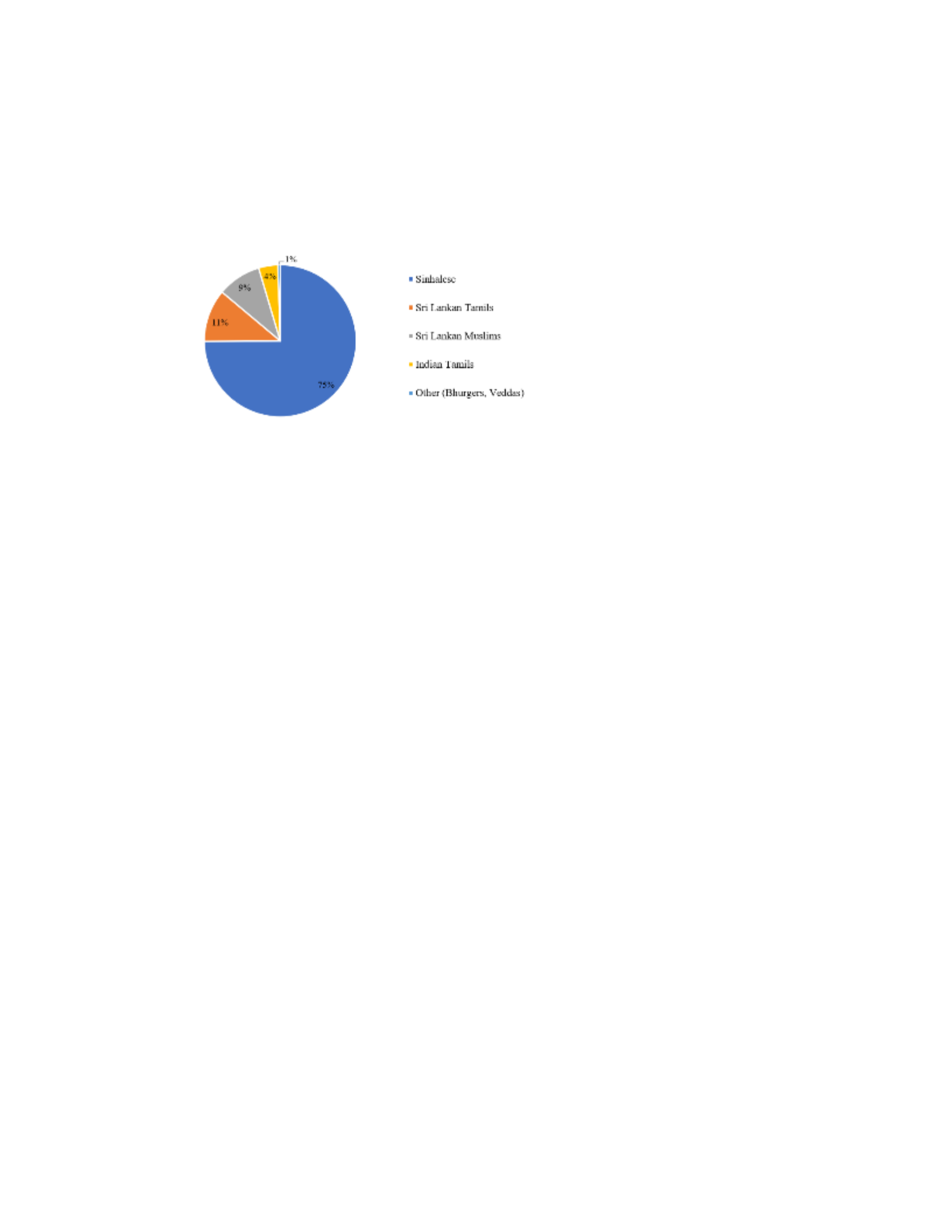
4
Figure 1
Sri Lanka’s Ethnic Distribution
Note. Adapted from Sri Lanka, CIA World Facts Book, 2021. Copyright 2021 by Central
Intelligence Agency.
The growth and development of a nation are dependent on its economy. Ethnic
tension, despite not directly correlated to economic growth, can still affect the economy
by influencing other social institutions that directly impact its economy (Choudhary &
Reksulak, 2011; Sonntag, 2016). The internal struggles, fueled by ethnic unrest in Sri
Lanka since the 50s, caused an eruption of violence in July 1983, affecting its economy
by acquiring a national debt of US$ 68.58 billion and loss in human capital of 65,373,
hindering its future growth and development (UCDP, 2018). However, Sri Lanka has the
potential for securing a strong economy, as it features abundant natural resources and a
favorable geographical location.
The first studies done on this topic from 1948 to 1983 focused on the post-
colonial elitist governing system, the conventional Westminster model, and the enforced
monolinguist, mono-religious, and mono-ethnic policies that marginalized the minorities

5
(Balasundaram, 2016; Barter, 2015; Welikala, 2015). Having significant lapses in
literature from 1983 to 2019, much scholarly research focused on addressing the question
of Sri Lanka’s ethnic separatism from a devolution aspect of distributing power or failed
efforts of reconciliation following the Eelam conflict of 2009 (Amarasinghe et al., 2010).
This study sought to provide an in-depth historical assessment of Sri Lanka’s ethnic
separatism and its evolution, addressing gaps in the literature on the nation’s ethnic
dilemma to further the understand the value of ethnic assimilation through the
management of polarities of democracy.
Purpose of the Study
This qualitative historical-comparative case study’s purpose was to enhance the
understanding of Sri Lanka’s post-colonial ethnic separatism since 1948 by observing
each of three crucial stages of its history, considered as individual cases through the lens
of polarities of democracy in support of the nation’s future growth and development. This
study contributes its findings to writings on polarities of democracy theory as well as
being a guide for present and future leaders of Sri Lanka seeking positive social change.
This study pursued a deeper understanding of the value of ethnic assimilation and
national integration by emphasizing economic value.
Research Question
In what ways have the polarities of democracy detracted or contributed to Sri
Lanka’s pre-colonial, colonial, and post-colonial governance from sustaining a steady
state of ethnic harmony?

6
Conceptual Framework
Polarity Management Theory
I explored, through the lens of polarities of democracy, Sri Lanka’s post-colonial
ethnic separatism, a problem that has persisted for almost a decade. The theoretical
framework for this study is based on the conceptual framework of PM theory. In
addressing PM, Johnson (1996) argued that many of the issues observed in various
stratum as unsolvable are polarities to manage rather than problems to solve. The Sri
Lankan ethnic crises are polarities to manage rather than problems to solve. To visualize
problems, Johnson created PM in which a square is divided into four parts. The right and
left halves of the square are identified as poles, and the upper levels are positive or
upsides, whereas the lower levels are negative or downsides. Once a problem is assessed
as a polarity to manage, both interdependent poles are taken into consideration, and an
effort is placed to balance the polarity pairs, maximizing the upsides while minimizing
the downsides of both poles (Johnson, 2014).
Adhering to the PM concept, Sri Lanka’s growing post-colonial ethnic separatism
is a problem without a solution. Following Sri Lankan independence on February 4,
1948, it has operated as a Democratic Republic with a functional government in the most
undemocratic form (Balasundaram, 2016). A government, by definition, holds the
responsibility of meeting the needs of the governed equally, setting aside ethnicity and
religion (Mikesell, 2017; Slaughter, 2017). Not adhering to this, the post-colonial leaders
favored the Sinhala Buddhists choosing majoritarianism as their governing philosophy.

7
Sri Lanka being a historic monarchy, had maintained sound governance and economic
growth as well as managed to secure ethnic peace among its minorities (Mendis, 1951).
In 1815, the monarchy was ended, and colonialism was ended in 1948 with the promise
of democracy, but the nation has yet to see it in action among its minority population (K.
M. De Silva, 1981). Therefore, it is important to explore Sri Lanka’s existing democracy
through the pre-colonial, colonial, and post-colonial periods. A theoretical framework
such as the polarities of democracy supported this effort.
Polarities of Democracy
The theoretical framework for this study is Benet’s (2013) polarities of
democracy, which recognizes 10 values contained within a democracy. These values are
freedom, authority, justice, due process, diversity, equality, human rights, communal
obligations, participation, and representation. Because of the interdependent nature of
these values, Benet proposed to pair them into five interdependent pairs that include
freedom and authority, justice and due process, diversity and equality, human rights and
communal obligations, and participation and representation. The chosen theoretical
framework provided a tool to compare and assess Sri Lankan pre-colonial, colonial, and
post-colonial periods in seeking the answer to the research question and problem
statement (Benet, 2012).
Nature of the Study
This study observed Sri Lanka’s growing ethnic separatism in three cases, or
periods, to gain a better understanding of the problem through the theoretical framework

8
of polarities of democracy (Bartlett & Vavrus, 2017; Benet, 2012). The design chosen for
the present study was a historical-comparative case study (HCCS). In general, within
qualitative methodology, case studies are most often used to test specific theories and
models and apply their findings to the real world. Document analysis and survey-based
case studies provide for the use of multiple sources while keeping the costs of travel
down; but such case studies are bound to the observation of one-setting (Bartlett &
Vavrus, 2017; Danzl et al., 2016; Kleining & Witt, 2000; Ravitch & Carl, 2016).
A case study is an experimental investigation used to examine a recent occurrence
in depth within its actual setting (Yin, 2009, p. 18). The cases are bound by time and
activity (Creswell, 2013; Stake, 1995; Yin, 2009) as well as definition and context (Miles
& Huberman, 1994). The bounding factor poses a challenge to the present study of pre-
colonial, colonial, and post-colonial periods. However, general case studies not
considering the “dead past” (the time in the past where there were no people to interview)
does contain valuable patterns of real-world phenomenon (Bartlett & Vavrus, 2017, p.
29; Yin, 2009), such as Sri Lanka’s ethnic separatism. Comparative case studies (CCS)
present the best solution, which do not start with a bound case; instead, a case is formed
by drawing information across sites and measures to develop an understanding of how
the situation came to be in Sri Lanka’s separatist ethos (Street & Heath, 2008). CCS
emphasizes how different players adopt the central issue, and how CCS has been altered
in practice, to take into consideration the contextual information as historical
circumstances, or daunting concepts, from one site onto another (Van der Veer, 2016).

9
Considering all factors, I deemed a historical comparative case study an appropriate
design to focus on Sri Lankan history by describing three periods using the polarities of
democracy theoretical framework.
Definition of Terms
The following definitions clarify and restrict the meaning of the terms for the
purposes of this case study.
A Wewa: Sinhalese for a human-made irrigation water reservoir, many such
reservoirs were widespread throughout the country which served in supporting Sri
Lanka’s ancient Argo-economic system (Needham et al., 1971, p. 368).
Bandaranaike - Chellanayagam pact of 1957: Signed on July 26, 1957, is an
agreement between Prime Minister S.W.R.D Bandaranayke and S.J.V Chelvanayakam, to
address the discontent over the Sinhala only Act 1956 (Manogaran, 1987, p. 49).
Black July of 1983: The name given to the anti-Tamil riots in Sri Lanka on July
23, 1983, that became a turning point in Sri Lankan history that became the foundation of
the Eelam conflict (Ananthavinayagan, 2019, p. 49).
Bodu Bala Sena (BBS): Is an ultra-nationalist Buddhist organization founded by
Reverend Kirama Wimalajothi. Today advocating an anti-minority agenda for the
nation’s future, it is led by the radical monk Galagoda Athe Gnanasara (Jerryson, 2017, p.
533).
Burghers: Is a Sri Lankan Eurasian minority group consisting of the most male-
line descendants of Europeans who colonized Sri Lanka from the 16th to 20th centuries

10
(Elsby, 2014; Brohier, 1985, p. 1).
Ceylon Citizenship Act of 1948: First mono ethnic law passed by the post-colonial
legislature of Ceylon. Enacted on November 15th, 1948, denied Indian Tamils of Sri
Lanka their citizenship, making 11% of the total population stateless (Greenwood &
Lauterpacht, 1952, p. 60).
Ceylon: The name by which Sri Lanka was identified during the British Colonial
Period (CIA, 2021, p. n.p).
Chena: An area of virgin or secondary timberland in a tropical region cleared and
cultivated for only a few years and then abandoned (Squires, 2013).
Differential modernization: Is prioritization of modernizing one ethnic group over
the other, due to ethnicity. It is known side effect of British colonization, and a deep-
seated cause for ethnic separatism (Horowitz, 1985, p. 66).
Elahara canal: This is among many of Sri Lanka’s most extensive irrigation
canals located in the Northeast of Sri Lanka (Brohier R. L., 1955).
Gal Oya: A locale in the Eastern Province of Sri Lanka where the first anti-Tamil
ethnic riots occurred (Tambiah, 1996, p. 87).
Gross domestic product: The total value of goods and services of a country during
a given period (Charmes, 2005, p. 70).
Hartal: The first large-scale political action in Ceylon, organized by pro-left
political parties on August 12, 1953, to protest the United National Party (UNP; Mehta,
2010, p. 45).

11
Indian Tamil: Subcategory of the Sri Lankan Tamil minority consisting of Tamil
people from South India brought to Sri Lanka as plantation workers by the British
(Denham, 1912, p. 10).
Janatha Vimukthi Peramuna (JVP): Known as Peoples Liberation Front, is the Sri
Lankan Marxist-Leninist Communist political party founded on May 14, 1965, by
Rohana Wijeweera. Backed mostly by Sinhalese youth, this party deployed two armed
uprisings in Sri Lanka against the ruling administrations of the time (Peebles, 2015, p.
xix; Gunaratna, 1990).
Lankapura: The name used when referring to Sri Lanka in the great Indian epic
story written by Hindu sage Valmiki, the Ramayana (Valmiki, 1894, p. 17).
Lanka Sama Samaja Party (LSSP): The first official political party of Sri Lanka
on, founded December 18, 1935, by Dr. Philip Gunawardena is A Trotskyist political
party that maintains a policy of neutrality that advocates multi-ethnic and multi-cultural
legislatures (Guṇavardhana & Goonewardene, 2004).
Liberation Tigers of Tamil Eelam (LTTE): Known as the Tamil Tigers, was an
aggressive separatist organization based in the Northern Province of Sri Lanka. Having
an international notoriety as a ruthless terrorist organization until 2009 the LTTE led a
26-year insurgency against Sri Lanka, seeking to create a separate state for the Tamils in
Sri Lanka called the Tamil Eelam (Murari, 2012).
National Thowheed Jamath (NTJ): Is the Sri Lankan Muslim jihadist group led by
Zahran Hashim, which was implicated in the 2019 Sri Lankan Easter bombings and is

12
believed to have ties to the Islamic State (Chattoraj, 2021, p. 32).
Pali: An Indic language, closely related to Sanskrit, in which the sacred texts of
Theravada Buddhism are written. Pali developed in northern India in the 5th–2nd
centuries BC (Oberlies, 1971, p. 1).
Ramanna: Another name in Pali for present-day Burma or Myanmar, once
occupied by King Parakramabahu I of Polonnaruwa kingdom (Malalgoda, 1976, p. 164).
Saya: Sinhalese for a Buddhist Stupa (dome shaped structure) in a temple
complex, a Saya consists of a mound-like structure typically claimed to contain sacred
remains of Buddha, a prominent monk, and worshiped by the Buddhists (Snodgrass,
1985, p. 37).
Sinhala Only Act: The 1956 Act No. 33 declared Sinhala, the majority ethnicity’s
language, to be the only official language of Sri Lanka (Ghosh, 1999, p. 35).
Sinhalese: The majority ethnic group of Sri Lanka, with a native language of
Sinhalese-they are predominantly Indo-Aryans (CIA, 2021, p. n.p).
Sri Lanka University Standardization Policy of 1973: A policy introduced in 1973
by the Sirimavo Bandaranaike administration to increase university enrolment among the
majority Sinhalese community, specifically, the Sinhalese Buddhists by limiting the slots
allocated for the Tamils and other minority groups (Pegg, 1998, p. 54).
Sri Lanka: Also known as, the Democratic Socialist Republic of Sri Lanka is an
independent island nation located in Southeast Asia 6°54′N 79°54′E (Gunawardena,
2005, p. 342).

13
Tambapanni: Is a name derived from Tamira Varni or Tamirabarani (in Tamil).
Meaning the color of copper or bronze, the name prince Vijaya gave the location where
they landed, which is suspected to be close to modern-day Puttalam (Barker A. , 2010, p.
4).
Taprobane: Was the name Onesicritus gave to Sri Lanka and used by Ptolemy in
his map, the meaning, according to Charles Pridham (1849), is “the wilderness of prayer”
(p. 1).
Temple and Devale Lands Registration Ordinance of 1856: The ordinance
demanded the Temples register the lands belonging to the Temples and assign officers to
ensure that they were registered. Before the British colonization, every monarch has
enabled land use for the maintenance and upkeep of various temples; under the ordinance
of 1856, many of the temple lands were taken by the crown (De Silva K. M., 1963, p.
312).
The Colebrook & Cameron reforms of 1833: Named after two royal British
commissioners sent to assess the administration of Sri Lanka. The reforms are legal
proposals that radically caused significant social changes in Sri Lanka, especially on land
ownership and agriculture (Nubin, 2002, p. 113).
The Crown Land Encroachment Ordinance of 1841: A British Imposed law that
banned all activities of Chena cultivation, Peeling (hand processing) cinnamon in lands
belonging to the crown (Arunachalam, 1910, p. xxviii).
The Donoughmore Constitution of 1931: The second constitution of Ceylon’s

14
crown colony named after the British commissioner sent to assess the nation and
establish a constitution toward enabling limited self-government. Under this constitution,
the British worked on enculturating in Sri Lanka the British way of life and governance
(Russell, 1982).
The Sri Lanka Freedom Party (SLFP): This is the major political party of Sri
Lanka founded by the late prime minister S.W.R.D Bandaranaike in 1951, today is the
governing political party (Peebles, 2015, p. xxi).
The Waste Land Act of 1840: One of the first laws passed in Sri Lanka by the
British Colonists. It was a radical law which allowed the British crown to cease any land
that did not have ‘good’ (British approved) land deeds. Because of this law, many natives
lost their homesteads and the income from chena cultivation causing a ripple effect
impacting separatism (De Silva K. M., 1967, pp. 46-47)
United National Party (UNP): The main ruling party of post-colonial Sri Lanka
until 1956 today headed by Mr. Ranil Wickremesinghe, the Prime Minister from 2015-
2019 (Peebles, 2015, p. xxii).
Vamsa: The vamsa’s are a collection of texts written between 5th century BC to
14th century AD containing the lineages of past Sri Lankan kings, families, and
communities (Chattopadhyaya & Ray, 2009, p. 54).
Veddas: These are Sri Lanka’s indigenous forest-dwelling people, who claim to
be the original Neolithic community’s decedents (Seligmann & Seligmann, 1911).

15
Assumptions
Assumptions are unexamined beliefs, and it is important to become aware of such
by objectively determining whether they are based on fact, bias, or stereotyping (Khalsa,
2007). There are three assumptions made in this research. The first of which is an
assumption that the literature selected for the study by me is valid. The second
assumption is that the trigger points for changes I consider valuable could be seen
differently by another because I was not present at all the events captured within the
study. The third assumption is that the study’s findings will support Sri Lanka’s future
efforts to introduce ethnic harmony. These assumptions are due to me being Sri Lankan.
Scope and Delimitations of the Study
Scope of the study
The purpose of presenting the scope within a study is to explain the extent to
which the research area was explored and to specify the parameters explored within the
study (Chetty, 2020). The scope of this research is to present an understanding into Sri
Lanka’s post-colonial ethnic separatism by exploring socio-politico-economic
developments in three crucial stages of Sri Lankan history in the pre-colonial, colonial,
and post-colonial periods. These periods encompass a vast pool of data, so the present
study was rescaled to observe the phenomenon 5 years before and after each shift in
periods. I used qualitative document analysis on sources that include gazettes, memoirs,
personal journals, and scholarly journals.
I observed data through five pairs of the 10 values within the polarities of

16
democracy theory. I compared each period, not exploring other aspects that have the
potential to influence ethnic separatism. The study took into consideration only two
factors: ethnic harmony and democracy. This leaves other aspects such as economy,
political mindset, and technology for future research. This limit was done to assess the
levels of democracy and ethnic harmony/disharmony through lens of polarities of
democracy within the chosen periods.
Delimitations
Delimitations define the boundaries of research (Cassuto, 2018). Within the
present study, limitations were balanced by choosing authoritative materials and
providing a thorough analysis of their contents by triangulation, along with findings by
academics of the subject in the United States and Sri Lanka, thereby enhancing the
validity and credibility of the results.
Limitations
Limitations are characteristics that can affect the results (Price & Murnan, 2013).
This study, addressing 5 years pre- and post-shifts within three chosen periods of Sri
Lankan history, was limited due to the small sample size (Baxter & Jack, 2008). There
could be an infinitely possible number of sources containing details of Sri Lankan
history. Choosing only textual materials for this study is also limited to the materials
chosen (Atieno, 2009). Choosing to explore, in depth, 5 years before and after each shift,
further limits the population and the sample of documents analyzed, compared to all
documents globally accessible with modern technology (Libicki, 2016). Due to the

17
periods taken into consideration, the study was limited to a tiny population that could be
interviewed. Further, being a Sri Lankan native and cultivated by the Sri Lankan society,
might have presented some biases toward my choices in choosing literature for the study.
Significance of the Study
Most previous researchers have focused on delayed growth in economic
development and ongoing internal turmoil between ethnicities as the major cause that
hindered the post-war development of Sri Lanka (Adriana, 2014; Athukorala, 2016). This
study is one of the first to discuss this problem through the unifying theory, of polarities
of democracy. This study is also among the first to explore a nation and its ethnicities
through the lens of polarities of democracy which will further test and contribute to the
theory itself (Benet, 2006). The current study places an emphasis on presenting a solution
to Sri Lankan post-war development through historical context (Devananda, 2010). The
significance of this study is also valuable for presenting errors in pre-existing documents.
Summary
In Chapter 1, I introduced the research problem: how Sri Lanka’s post-colonial
ethnic separatism. This continues to intimidate its ethnic minorities of 29.9%, causing
violence and unrest throughout the nation and hindering its sustained growth and
development. I then presented the purpose of this study, which was to explore Sri
Lanka’s ethnic separatism by analyzing the data pertaining to its pre-colonial, colonial,
and post-colonial periods through the Benet’s (2006, 2012, 2014) polarities of democracy
theoretical framework.

18
I also expressed within this chapter that this is one of the first of its kind to
explore Sri Lanka’s condition through the polarities of democracy model making its
findings valuable in furthering polarities of democracy research. I explained the
background studies with regards to the Sri Lankan dilemma and their contribution in
supporting the present study. The present chapter established the use of qualitative
document analysis as the primary form of data gathering to populate a relevant sample,
which, after undergoing a phase of theoretical sampling, was analyzed.
The next chapter, the literature review, will explore search strategies utilized to
acquire the materials, the literature utilized in determining its theoretical framework, and
the gap in the research, while exploring the literature used to assess the study’s
methodology.

19
Chapter 2: Literature Review
The area of inquiry for this research is Sri Lanka’s post-colonial ethnic
separatism, which continues to intimidate its 29.9% ethnic minority, causing violence and
unrest throughout the nation, hindering its sustained growth development. In support of
this purpose, the present historical-comparative case study was aimed to enhance the
understanding of Sri Lanka’s post-colonial ethnic separatism since 1948 by observing
three crucial periods of its history through the lens of polarities of democracy in support
of the nation’s future sustained growth. Because this study takes the form of an historical-
comparative case study, the literature review is its foundation. The literature review will
first explore the search strategies utilized to find the materials, followed by exploring the
literature utilized in determining the study’s theoretical framework along with gaps in the
research. Additionally, the current chapter will explore the literature used to assess the
study, the methodology, and the literature supporting the chosen methodology.
Literature Search Strategy
In obtaining source materials for the present literature review, many searches
were done through various electronic databases to explore accurate details for Sri Lanka
and other nations and their economic indicators using databases such as the CIA World
Factbook, World Bank, International Monetary Fund Country Database. In searching
through online scholarly journals, search engines including Google scholar, JSTOR,
Springer Link, ProQuest, Bellevue University and Walden University Library databases,
EBSCO, International Security & Counter Terrorism Reference Center (EBSCOhost)

20
were utilized. In seeking valued peer-reviewed online journals, SAGE Journals, Walden
University Political Science Complete, Data USA, and Taylor Francis online were used.
Due to this study’s nature and its limitations in utilizing texts to support the study,
Google books, Bellevue University and Interlibrary loans were also used.
To capture Sri Lanka’s ancient details, a short field study was conducted where
documents such as ancient land and title deeds (Sannas), authentic ancient literature
accounting for public life before colonization contained in Ola leaf books were explored
within the temple and museum archives in Kandy and Colombo. Researching the colonial
period, gazettes, newspapers, government records, memoirs, and other documents in the
Sri Lankan national archives in Colombo and Kandy were utilized.
In finding valued journals, texts, and ancient documents, capturing firsthand
accounts of Sri Lanka during the three periods chosen for the study, the keywords used in
the literature review include but are not limited to: Sri Lanka civil war, Sri Lankan
ethnicity, Sri Lanka Vedda, Sinhalese, Tamil, Malay, LTTE, Tamil Tigers, post-colonial
India, Post-Colonial Sri Lanka, post colonialism, Polarity management, and Sri Lanka,
Polarity Sri Lanka, Sri Lanka bombings, post-war trauma, post-colonial trauma, and
JVP. In expanding search criteria, multi phrases or Boolean search phrases, such as ethnic
conflict AND British AND colonization, Decolonization AND federalism, Devolution
AND Sri Lanka, Ethnic conflict AND Sri Lanka were utilized to expand the findings. In
capturing details on topics where there were limited peer-reviewed journals, time-based
journals such as the Royal Asiatic Society, or books written by authorities filled the gap.

21
Theoretical Framework
The present study observes Sri Lanka’s post-colonial ethnic separatism, using
Benet’s (2006, 2012, 2013) polarities of democracy as its theoretical framework. Benet’s
polarities of democracy theory used Johnson’s (1996) PM theory as a conceptual
framework and explained the systematic utilization of polarities of democracy theory in
seeking solutions. Using the conceptual framework and the model of PM, Benet (2012)
outlined 10 polarity values essential in achieving and supporting sustainable just
communities: freedom and authority, justice and due process, diversity and equality,
human rights and communal obligations, and participation and representation.
As noted, the theory of polarities of democracy is grounded in the conceptual
framework of Johnson’s polarity management (see Figure 2). Based on Johnson (1996,
2014), PM deals with lingering problems that are unavoidable and impossible to solve,
because the polarities to manage are a set of interdependent opposite forces. One cannot
observe one aspect as a solution and omit the other or vice versa. In naming some of
these popular polarities, those of optimism-reality, caution-courage, self-other, and
mission-margin, stand foremost. Because of these polarities’ dependent nature, many are
observed as problems individually, and if handled in traditional problem-solving
methods, will become a bigger problem (Johnson, 2014; Levknecht, 2013).

22
Figure 2
Polarity Management and the Infinity Loop
Note. Image reproduced with permission of Polarity Partnerships and the Polarities of
Democracy Institute.
Most individuals are trained to look at only one right answer and become blinded
to the two or more right answers existing within the polarities (Gelfand & Schulte, 2016;
Johnson, 1996, 2014; Levknecht, 2013). When attempting to solve perceived problems
with PM, the first step begins by asking the question: “Is this a problem we can ‘solve’ or
is it an ongoing polarity we must manage?” (Johnson, 2014, p. 90). The second step of
PM is identifying the essential polarity set and naming each of the dependent poles. This
is followed by brainstorming on the content by exploring what should go in each

23
quadrant as well as its higher purpose (positives) and its deep-seated fear (negatives; see
Figure 3; McKanders & Johnson, 2009). Using the presented model will present an action
plan to see early warning signs while giving time to improve and maintain balance to
secure a sound solution (Johnson, 2014).
Figure 3
A Polarity Pair Usage
Note. Adapted from, “Managing the Polarities of Democracy: A Theoretical Framework
for Positive Social Change”, by W. Benet, 2013. Copyright 2013 by Walden University.
Working on a polarity map consisting of four quadrants, with each side having an
upside and downside, the top half of the quadrants, considered the positives, while the
bottom quadrants, or the downside, consists of negatives. Placing the polarities within the
map, using the presented model will present an action plan to see early warning signs
while giving time to improve and maintain balance to secure a sound solution (Johnson,
2014).

24
Application of Polarity Management in Previous Research
The first noted application of the PM theory was in the health care sector in 2013,
when the Center for Polarity Management with Barry Johnson and the Polarity
Partnerships (PPLLC, 2020) supported identifying essential polarities that occur during
health care transformations in 13 organizations (Levknecht, 2013). Because all polarities
work the same way, observing both sides of the polarities supported their efforts to
achieve their desired goals and sustain needed changes over time, paving the way for a
smooth transformation (Levknecht, 2013).
Another occasion PM was used was when a lone-wolf terrorist with the intention
of starting a race war went on a shooting rampage, killing nine members of a prominent
African American Church on June 17, 2015, in Charleston, SC. Law enforcement
officials used PM to avoid such occurrences in the future by strengthening community
relations (Mullen et al., 2017). Here, PM teams, working with law enforcement, using
public safety and individual rights polarities, deployed project illumination, which
resulted in solidifying community-police relationships (Mullen et al., 2017). The most
critical implementation of PM derives from Dr. William Benet choosing to utilize the PM
concept in finding a method to measure democracy. But a prominent call for social
change, at the time of this study, had not been measured (Benet, 2006).
Theoretical Framework: The Polarities of Democracy
The present study observing Sri Lanka’s post-colonial ethnic separatism used
Benet’s (2006, 2012, 2013) polarities of democracy as its theoretical framework. The

25
foundation for polarities of democracy started when Benet (2013) observed that for a
democracy to be a useful tool to achieve positive social change, a unifying theory that
binds the differences within democracy was needed. He began the research for polarities
of democracy in two phases; the first phase was conducted from 2002 to 2006 for his
PhD dissertation. Benet conducted the second phase of the research to support the
Community/University Partnership Project (CUPP) Social Economic Working Group. In
developing polarities of democracy, the theory critical to his findings was taken from
Bohman (2012), who argued that a concept is critical, to the extent that it seeks human
liberation by diminishing authority and increasing freedom.
Embodying the conceptual framework, Benet relied on the new emergent theory
of PM by Johnson (1996), who wrote that the purpose of PM is to leverage the positive
aspects of both poles while minimizing the negative aspects. When there is a sudden push
to the upside, the downside is proportionally affected and vice versa (Benet, 2013;
Johnson, 1996). In establishing this framework, hunting for the needed sets of
interdependent opposites, Benet (2013) used the grounded theory approach. He
scrutinized literature related to democratic theories and concepts. After analyzing the
literature utilizing a complex coding process, 10 predominant values associated with
workplace and societal democracy were identified: freedom, authority, justice, due
process, diversity, equality, human rights, communal obligations, participation, and
representation (Benet, 2013; see Figure 4). Benet (2013) stated that his findings strongly
support the idea that democracy is a concept for the overall workplace or society and
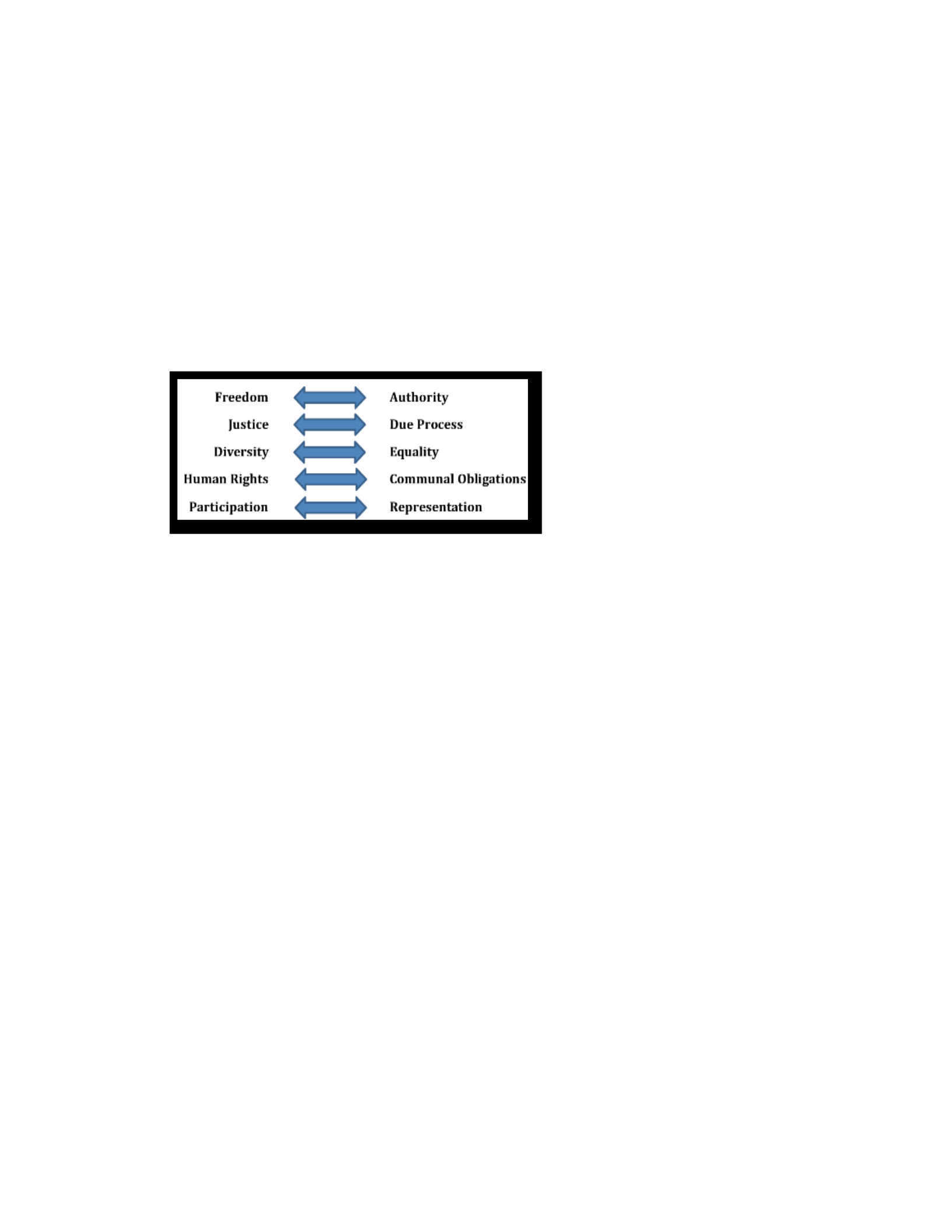
26
stands as a solution to the problem of oppression. When applying his theory, Benet
(2006, 2012) found that it required all 10 values of polarities of democracy to be operated
successfully using five sets of interrelated polarities.
Figure 4
The Polarities of Democracy Model with the Values Arranged
Note. Adapted from “Managing the Polarities of Democracy: A Theoretical Framework
for Positive Social Change”, by W. Benet, 2013. Copyright 2013 by Walden University.
Both Benet (2006, 2013), and Johnson (1996) argued that in the absence of a
polarity structure, neither progressives nor traditionalists will have the language to
maximize the positive aspects of both poles while minimizing the negative aspects. Benet
embedded Johnson’s PM conceptual framework into his theory, which has the language
and the method to measure and observe the interdependent pairs of polarities of
democracy. According to Benet (2013), when used as the theoretical framework,
polarities of democracy will support planning, guiding, and assessing positive social
change efforts, providing a fundamental understanding of creating a just society.
However, when balancing these interdependent polarity pairs, some leeway for human
nature must be taken into consideration (Benet, 2013). A free society, compliant with

27
human nature, systematically pushes individuals toward better rational and moral conduct
through education rather than force (Ebeling, 2019). Nations with higher living standards
such as Switzerland, Norway, New Zealand, and Denmark, have successfully sustained
such free societies with higher rational and moral conduct (De Jong, 2015). Conversely,
nations such as North Korea, Iran, China, and Venezuela, place a higher consideration on
authority. This upward push alone has made them into rogue states (Coe, 2018). Cases
where more emphasis toward freedom with less emphasis toward authority include Libya,
Somalia, and Iraq, which have become failed states because they have chosen anarchy as
freedom, as true freedom contains constraints (Anya & Kelechi, 2020).
Benet’s (2006) polarities of democracy theory was chosen as the theoretical
framework for this study because it focuses on building just communities by addressing
oppression. This causally relates to the ongoing situation in Sri Lanka. Benet’s theory
emphasizes supporting democratizing workplaces and societies to defy social and
environmental issues at the national, state, and local levels (Benet, 2013). Benet’s (2006,
2012, 2013) polarities of democracy provide a sound framework to extend the
understanding of Sri Lanka’s post-colonial ethnic separatism in support of its future
sustained growth. When applying the theory, the values are arranged by their polarity
relationships (see Figure 5). Each of the dependent values that have negative and positive
aspects, must be managed to maximize the positive aspects while minimizing the
negatives.

28
Figure 5
The Participation and Representation Polarity Pair in Depth
Note. Image reproduced with permission of Polarity Partnerships and the Polarities of
Democracy Institute.
Past Research Conducted Through Polarities of Democracy Theory
The polarities of democracy theory established in 2006 captured the interest of
many scholars worldwide seeking social change in their affected regions from 2006-
2021. A total of 21 PhD dissertations were compiled using the polarities of democracy
theory as the framework for those studies. The first was the study by Tobor (2014), who
compiled an ethnographic case study observing the Urhobo Nation and the Amnesty
Program in Niger Delta. Tabor (2014) used the polarities of democracy theory to explore
the Urhobo culture to find if there were values that could support strengthening the

29
amnesty program and avoid an internal conflict with the Urhobo militant veterans (Tobor,
2014).
For his study, Tobor (2014) obtained observations of 20 ‘ex-militants’ and
collected the data through semi-structured interviews in assessing what reasons would
prevent them from resorting to violence. Then he used content analysis to identify the
significant themes. Tobor’s finding showed that values, such as communal obligations,
respect for elders, commitment to social justice and equality embodied within the Urhobo
culture would support Amnesty International and prevent adverse reactions from ‘ex-
militants’ (Tobor, 2014). This study’s findings were used to educate policymakers on the
value of Urhobo culture and extend knowledge on how it may further strengthen the
amnesty program.
The next study was a comparative case study exploring the effects of racism on
social capital in African American communities in America by Strouble (2015), who
utilized data collections from two majority African American communities of Florida,
and analyzed samples taken from twenty residences. Strouble, scrutinized reviews of
local news reports, voter turnout reports, community health assessments, along with
conducting focus groups and semi-structured interviews. He then used the Polarities of
Democracy theory to examine the relationship between racism and social capital
(Strouble, 2015).
When analyzed using inductive coding and pattern matching, the findings of the
study presented two reoccurring themes. One was that the perceived ethnic inequality

30
linked with social capital in the selected communities. The next theme observed by
Strouble was that racism created social capital insufficiencies and a dysfunctional
community culture that reduced the capacity to address common issues. Strouble’s
findings were collectively used in presenting policy recommendations to increase the
participation of African American communal members in the democratic processes
(Strouble, 2015).
The next study utilizing polarities of democracy theory addressed the Niger Delta
Amnesty Program Enactments and its consequences on Nigeria’s Upstream Petroleum
Industry. Ezeocha (2016) developed the study to fill the program’s research literature
gap. Framed under the PM conceptual framework this study utilized the polarities of
democracy theoretical framework and obtained a participant pool of 29 contributors from
the senior ranks of trade unions in the petroleum manufacturing sector, relevant
government agencies, and a district university (Ezeocha, 2016). Face-to-face interviews
and focus group discussions were then conducted with the selected sample. The data were
coded inductively as part of content analysis. When processing the data, it became
evident that the amnesty policy was poorly conceived and implemented, due to negative
consequences arising from its implementation.
Ezeocha (2016) suggested that stakeholders might reduce unintended
consequences and position the Nigerian upstream petroleum sector for sustainable growth
by utilizing study recommendations regarding the faulty policies. The next study utilizing
the polarities of democracy theoretical framework was the work of Kaka (2018) on

31
‘Decentralization of Local Government and Rural Development in Rivers State, Nigeria’.
Kaka’s study investigated local stakeholders’ perceptions of the factors that have
contributed to further policy failures in Nigeria. In obtaining the data, Kaka (2018)
interviewed 22 participants who answered questions regarding why the Community
Development Committees (CDC) failed to promote rural development in the Khana
Local Government Area within Rivers State, Nigeria? Analyzing the data concluded that
the CDCs protected personal and political interests of the elites, excluded the voice of the
local citizens, lacked representation from the minority, and CDC officials mismanaged
funds and resources (Kaka, 2018).
In aligning this study with the previous studies, utilizing the polarities of
democracy theoretical framework, the study compiled by Tabor (2014) and Strouble
(2015) stand most relevant. Because Strouble (2015) addresses racism, which aligns with
ethnic separatism, while Tabor (2014) brings forth the debate of centralization and
decentralization, which is something that occurred with colonial governance. The present
study differs, as it considered all the ten values of polarities of democracy theory and
compared their existence in each chosen period of Sri Lankan history: seeking answers to
the evolution of Sri Lanka’s ethnic separatism.
The Rationale for Choosing the Polarities of Democracy Theory
The evolving problem with Sri Lanka that stands as an obstacle, since its
Independence in 1948, is its lack of ethnic tolerance and the ongoing separatist mentality.
Such is a clear sign of dysfunctional democracy (Balasundaram, 2016). In having faced a

32
decade long conflict with the Sri Lankan Tamils, who are the largest ethnic minority from
1950 – 2009, due to separatist mentality, failed to seek corrective action, showing a lack
of understanding of the five interdependent pairs of the polarities of democracy in Sri
Lanka (Benet, 2013, Ibrahim & Irfan, 2016;). Continued separatism toward Sri Lankan
Muslims, building anti-Muslim legislatures, boycotting trade owned by Muslim
proprietors, spreading anti-Muslim propaganda, and suppressing the Muslims as an ethnic
minority, show Sri Lanka’s lack of understanding of true democracy (Keethaponcalan,
2019).
In explaining such cases as in Sri Lanka, Benet (2013) argues that the concept of
democracy serves as a solution for oppression. But democratization would require ten
values successfully managed, as five sets of interrelated polarities. These ten values are
presented as five interdependent pairs: freedom and authority, justice and due process,
diversity and equality, human rights and communal obligations, and participation and
representation. embodies every aspect of democracy (Benet, 2006; 2012;2013).
Benet also argues that the fundamental purpose of democracy is to overcome
oppression within nations, like Sri Lanka, with matriarchal underpinnings. These factors
present clear answers to the value of choosing the polarities of democracy model as the
theoretical framework for the present study. Scholars of the Sri Lankan ethnic crisis,
despite assessing Sri Lanka’s ethnic separatism through various angles including
political, and sociological, failed to capture it through the lens of polarities of democracy.
In these cases, Benet (2006) argues that when one attempts democratizing without

33
a clear understanding of the polarity nature of the values and the structure, it cannot be
professionally managed. Such is the case of Sri Lanka, evident through the present
research gap on the topic. This study sought to fill the gap by utilizing the polarities of
democracy theoretical framework to observe Sri Lanka’s ethnic dilemma and consider, as
Benet (2006) observes, all the ten values through the five interdependent polarities pairs.
Literature Reviews Related to Key Variables
The current study expands understanding into Sri Lanka’s post-colonial ethnic
separatism since 1948, by observing three crucial periods of its history through the lens
of polarities of democracy. Benet’s theory is used to analyze the results in determining
how polarities of democracy detracted or contributed to Sri Lanka’s pre-colonial,
colonial, and post-colonial governance from sustaining a steady state of ethnic harmony.
Therefore, a more in-depth understanding of democracy is needed because it is the
foundation of the theoretical framework for this study.
Democracy
A democracy, Benet (2013) argues is “the rallying cry for people seeking positive
social change” (p. 1). In defining such, Post (2016) indicated that a “democratic form of
government is one in which the laws are made by the same people to whom they apply”,
making them autonomous (p.2). Democracy is a unique form of authority by majority,
which aspires to realize the value of collective self-determination bound in an endless
knot, mutually strengthening and being incompatible (Post, 2016, p. 26). The exact nature
of democratic governance values and protects the principles of citizen participation,

34
equality, accountability, and transparency (Post, 2016). Scrutinizing these valued entities
encompassed within democratic governance observed, as Post quotes Rousseau (2016),
“the wills of individual citizens and the general will of the collectivity” (p. 27). In getting
individual determination to become general motivation, a democracy asks citizens to
participate in the governing process by standing for election, voting, becoming informed,
debating issues, paying taxes, and even protesting (Christiano, 2018).
Citizen participation is vital for a healthy democracy. Without majority citizen
participation, democracy would be, as Rousseau states according to Post (2016), “a poor
state of oppression”. The next valued entity of democracy: ‘equality’ is defined as the
notion that all individuals are “valued equally, have equal opportunities, and no one
should face discrimination because of their race, religion, ethnic group, gender, or sexual
orientation” (Christiano, 2018). Because of the autonomy and self-determination of the
citizens being vital to operating a democracy, everyone has been given the same rights in
making autonomous participation a valued element of self-governing, which makes it
vital to democracy (Post, 2016, p. 29).
Even with a good body of willing participants with an equal mindset, a democracy
cannot function without the essential values of accountability and taking responsibility.
‘Accountability’ is the ideology that “elected officials must make a decision and perform
their duties for the will and the wishes of the people and not themselves” (Oni et al.,
2019). When considering democratic governance, it is understood to be a condition where
the laws are established by the same individuals to whom they apply. If the elected

35
officials acted differently, it degrades the general will alongside the individual will that
defines democracy (Post, 2016; Shah, 2018). Governments are created to provide services
and goods, and be accountable to the people, because funding for the government to
provide these services and goods is paid for by the people (Mikesell, 2017).
‘Transparency’ is the government's willingness to be accountable to its citizens in
what is happening in the country and daily national decision-making. "In a democracy,
through the press, people can get information about what statements are being made, by
whom and why" (Bell & Machain, 2018). A democracy made through individual will
eventually become general will, so misinformed citizens could improperly direct the path
of the nation and the collective good, making transparency a vital segment of a
democracy (Bell & Machain, 2018).
Conceptions of Democracy
In having presented democracy and its purpose in the simplest form, the scholars
of democracy, including Benet (2013), argue that there are variations of democracy
existing. The most noted variations are the Electoral, Liberal, Majoritarian, Deliberative
and Egalitarian types of democracies, each containing their unique characteristics
observed by various cultures in various forms (Coppedge et al., 2011). The (Table 1)
below summarizes these democracies’ basic guiding principles and questions each
variation of what these democracies focus upon, and their significant conceptions.

36
Table 1
Conceptions of Democracy
Conception or type
Basic principles
Guiding question
Electoral
Competition
Elite
How are officials elected for
public office?
Liberal
Limited government
Civil liberties
Transparency
Is political power
decentralized?
Majoritarian
Majority rule
Does the majority rule?
Deliberative
Government by the people
What role do ordinary
citizens have in politics?
Egalitarian
Government by reason
Does public deliberation
impact political decisions?
When Benet (2006) developed his theory, he took into consideration all the
variations of democracy in developing the means of measuring a democracy. This study
focusses solely on polarities of democracy, exploring the ten values and their application
to the chosen periods of Sri Lankan history.
Freedom and Authority
‘Freedom’, depending on the context, has many interpretations. Freedom is
described as the free capacity for choice, or free will, and the ability to act on one’s own,
without being driven by external forces (Baumeister & Monroe, 2014, Demenchonok,
2019; Omoregie, 2015;). Free will is the foundation of democracy; when an individual
actively participates with others, it becomes the common will that paves the path for
democratic governance (Mehdiyev, 2019). Free will-oriented behaviors such as:
helpfulness, restraint of aggression, learning via counterfactual analysis, thinking for
oneself, effective job performance, and appropriate gratitude allow for a functioning

37
democracy (Bowring, 2015).
Benet (2006) explains the positive aspects of freedom to be: human dignity,
security, self-fulfillment, and the promotion of justice, freedom, and equality for others.
Conversely, the downsides of freedom can be seen as being lazy, resistant to performing
assigned tasks, being unmotivated, argumentative, unresponsive, uncooperative, and
unable to perform tasks well, dishonest, malingering, unreliable, irresponsible, and
noncompliant. Benet (2006) proposes that the downside of freedom from the perspective
of a state is visible to those who are searching; it is the result of "abuse of authority" by
those in positions of authority.
‘Authority’ is commonly understood as lawful power within a democracy. It
derives openly or incidentally from the people. Authority within a democracy is
expressed through the rules of law, constitution, statutes, treaties, executive orders, and
judicial opinions (Wayne et al., 1995; Woods, 2016). ‘Free will’, is considering reason,
personal values, and conscious reflections, while accepting the consequences and moral
implications if in violation of active control of authority (Baumeister & Monroe, 2014).
Freedom demands common sense, with moderation, and restraint or self-control in
ensuring that an individual’s free will does not hinder others. The upsides of authority are
the freedom and the right to control, judge, or prohibit the actions, influence, or control of
others. The downsides of authority, occurs with oppression, including the inability to
seek true freedom, helplessness, exclusive prerogatives, paternalistic behavior, trying to
appear infallible, hiding mistakes, mistrustfulness, limiting the freedom of others,

38
secrecy, withholding information, and the corruption that accompanies power (Benet,
2006).
Considering the relationship between the two, Dai (2009), according to Mills
(1996), argues that while freedom and authority are antagonistic. They are mutually
compatible because authority invades upon freedom and freedom is an inevitable erosion
to authority (Dai, 2009). The purpose of freedom is not to eliminate authority and vice
versa the purpose of authority is not to end freedom; in fact, they complement each other
making both authority and freedom two strong poles of democracy (Benet, 2012; Dai,
2009).
Justice and Due Process
Defining ‘Justice’, the term evolving from Judean literature, has many
descriptions evolving through the ages and the context of which it is applied. The modern
philosophical definition is "how human rights manifested itself in the everyday lives of
people at every level of society” (Hemphill, 2015, p. 2). However, when addressing it
through the scope of democracy Justice is defined as a set of doctrines whose purpose is
to distribute entitlements to valued resources such as: liberties, opportunities, income, and
wealth among a multitude of mediators contending over them (Valentini, 2010; Miller,
2017). One of the main upsides of justice is overcoming oppression, and its downside is
increased oppression.
The notion of ‘Due process’ evolves from the Magna Carta. Within clause 29 of
the Magna Carta, the king promises: "No freeman is to be taken or imprisoned or

39
disseized of his free tenement or his liberties or free customs…. nor will we go against
such a man or send against him save by the lawful judgment of his peers or by the law of
the land" (Holt, 1992, p. 4). Due process states that there should be a balance of power
within the law of the land and serves as individual protection from the law of the land. It
also assures all legal matters be resolved according to the rules and principles established
(Kenton, 2020; Williams R. C., 2010). The upsides of ‘due process’ moderates’ power to
overcome oppression, while regulating the law of the land to provide individuals
protection from risk, over taxation, crime, privacy, and other governmental influence
(Benet, 2006).
When considering the relationship between due process and justice, due process
ensures the right to be treated fairly, efficiently, and effectively when administering
justice. It places limitations on the laws and the legal proceedings to guarantee
fundamental fairness and justice (Ge´linas et al., 2015). If too much emphasis is put on
the due process, it will hinder the application of justice, and if too much emphasis is put
upon justice, it will hinder due process.
Diversity and Equality
Observing ‘Diversity’, Daft (2008) argues that diversity is the differences among
people in terms of age, gender, ethnicity, race, and other dimensions. One of the
dimensions of diversity are genetic differences, people’s world view, and self-image
(Wills, 2020; Daft, 2008). The other dimension is lived life experiences acquired within
an individual’s upbringing and changes throughout their lives (Wills, 2020).

40
These changes have more impact on an individual’s worldview and others’ view
of them. Benet argues, “arduous work, diligence, competitiveness, commitment to
excellence, protection of an individual’s rights and personal beliefs to be forces for
creativity and the upside of diversity”. The downside of diversity is the “creation of rigid
hierarchical relations of power, leading to the institutionalization of dominance and
oppression in both the workplace and society” (Benet, 2006, p. 160).
Assessing the strengths or upsides of equality, Benet (2006), argues that it is a
remedy for the special privileges of the ruling elites with the potential for purging poverty
while elevating self-esteem among all citizens in society. Equality’s downsides lead to
the hardening or lacking essential values needed for growth: motivation, creativity,
challenging work, diligence, and commitment to excellence (Clutterbuck et al., 2016). If
they are not balanced, it will lead to severe discrimination (inconsistent with democratic
workplaces or societies) based on race, gender, and class (Benet, 2006).
Human Rights and Communal Obligations
When observed within the democratic context, a ‘right’ refers to the "freedom
from interference" by an individual or the government (Roberts C. , 2017). Human rights
refer to the rights (Freedoms) belonging to every human, such as the right to life, liberty,
and the pursuit of happiness (Mende, 2019). Each person belongs to a community,
defined as a group of people with shared interests and values, regardless of their
geography, an individual can belong to one or more communities (Flint, 2011). An
individual, being part of a community, is held accountable and responsible to their

41
community, which is understood as community responsibility. Some responsibilities
include cooperation, respect, and participation (Hytten, 2017). Each community is also a
part of other communities, such as family, neighbors, village, city, county, region, and on
a grand scale, the world (Benet, 2006; Ekanem, 2020). A community's obligation is to the
Nation. Such obligations include active participation, voting, and supporting a sound
democratic government (Benet, 2006).
The polarity pair of rights and obligations, despite being the primary polarity for
human rights and communal obligations, is also embodied within the other eight pairs, as
a sub-polarity. By presenting an example, Benet (2006) demonstrates that since both
justice and due process become human rights for the individual worker, they also become
obligations that an organization must seek to ensure for all workers.
The human rights and communal obligations polarity pair in-depth, have
prominence in human development, which is the core element of self-actualization and
self-governance supporting overcoming oppression, and promoting the common good
(Benet, 2006). The downside of this pair leads to discrimination, suppression, and
marginalization of various groups residing within a state or an organization which
degrades democracy (Hans-Otto & Broberg, 2018).
Participation and Representation
A functioning democracy needs informed, organized, active and peaceful citizens
and their participation to maintain its course in supporting the greater good or the public
good (Carson & Elstub, 2019). Participation refers to people’s acknowledgment of their

42
political membership and membership in other social units (Schonfeld, 1975). It is an
instrumental driver of democratic and socio-economic change and acts as a means of
empowering citizens because it requires citizens to participate in decisions that affect
public welfare (Fischer, 2016). Representation encompasses a large part of the
international debate on democracy. Representation according to Pitkin (1967) is “make
present again” (p.241). Within this context Political Representation is the activity of
making citizens’ voices, opinions, and perspectives ‘present’ in public ‘policy-making
processes’ (Dovi, 2018).
When considering the relationship between the two, as Benet (2013) argues,
representative and participation within a democracy are not opposites. Instead, they are
entities that complement one another. The opposite of representation is not participation,
it is exclusion, and the opposite of participation, is not representation, but abstention
(Plotke, 1997). By electing a representative, a citizen cannot abandon the other
responsibilities such as both participation and representation are equally crucial for an
effective democracy (Benet, 2013; Benet, 2006). For a state to address complexity and
changes in sustaining democracy and providing goods and services to its citizens and
communities, it must pave the way for citizen engagement to flourish (Benet, 2006).
Literature Review Related to Concepts
This study considers only the data containing crucial socio-politico-economic
changes that affected each period. It takes into consideration an approximate five-year
period. Because it is more feasible since the events that are crucial to the turning points in

43
Sri Lankan history do not fall into that range.
First 5 Years Pre-Colonial Period Under Study (1444-1449)
By 1444 Sri Lanka’s pre-colonial period had reached a pinnacle. Exploring the
ancient literature such as: The Dipavamsa, Mahavamsa, Chulavamsa, Salalihini
Sandeshaya and The Mandaram Puwatha, indicated that Sri Lanka sustained a sound
socio-politico-economic underpinning evident through the undertakings of the ancient
monarch’s (Henry, 2019; Kumari et al., 2013). Most notable of these are the large-scale
irrigation canals and tanks constructed throughout the nation in support of paddy
cultivation which would have cost billions even then (Mahanama et al., 1837).
Visible ancient ruins of elaborate building and religious complexes, palaces,
public gardens, and advance water management systems, also boast of a solid economic
foundation and advancements in sciences and technology of the time (Geekiyanage &
Pushpakumara, 2013 ). The foundation for this study and its theoretical framework,
polarities of democracy, looking at the precolonial Sri Lankan government, although
being a monarchy it did have a constitution which was later known as the Kandyan
Constitution (D’Oyly, 1833).
The Kandyan constitution contained systematic guidelines on the delegation of
powers, land management, ownership, and other duties of various departments and
administration of justice (D’Oyly, 1833). Exploring the power between the king, his
chiefs, and the sub-chiefs, managing different divisions of the nation shows that the
feudalistic monarchic system of governance was used (De Silva K. M., 1981).

44
Scholars of geopolitics argue that sound functionality of a state is dependent upon
the actions of its cities, towns, villages, and locales, which are the nucleus that influence
all other aspects of governance (Flint, 2011). Sri Lanka’s pre-colonial localities were
communal societies founded on agriculture as its economic foundation which was
specifically rice cultivation.
The literature shows that these communal societies embraced diversity, both
gender and ethnic (Fleet, 1912). This diversity was due to inherent communal aspects of
rice cultivation as written by Hilary Clinton “It takes a village” (Clinton, 2006). The focal
point of the ancient social system; the village council or the Gam-Sabaha, was where
membership consisted of residence in a village regardless of their gender, ethnicity, or
occupation (Krishnamohan, 2016).
The Sri Lankan village council differentiates from the Indian Panchayat. Where
Sri Lankan village council was more methodical and decided over irrigation as well as
village disputes while attending to other village affairs (Appleby, 1962; Brahmanandam
& Ambedkarnagar, 2018; Sirinivasa, 1962; Tinker, 1990). Executing the functions of the
village councils, supporting the nation’s infrastructure and its development, a unique
form of labor was utilized by the pre-colonial Sri Lankan known as Rajakariya or king’s
duty (Jodhka & Shah, 2010). Rajakariya, the labor, which supported Sri Lanka’s ancient
infrastructure, is identified with the polarities of democracy pair as communal obligation
and participation (Benet, 2006; 2012; 2013).
Paddy cultivation, dependent upon water moderation in ancient Sri Lanka was

45
done by capturing, into reservoirs, the eastern and the western monsoon rains that
replenished both in turn every year (Shaw, 2018). Having ample time between these
seasons, the ancient’s utilized it for their Rajakariya where each citizen volunteered time,
to support various undertakings needed for the village, city, and the state (Dayaratne,
2018). These undertakings included building roads, city complexes, irrigation tanks and
painting the village temple complexes as well as supporting the efforts of guarding the
villages and cities (De Silva K. M., 2015).
Binding all segments of the ancient world was Theravada Buddhism introduced to
Sri Lanka in the third century; the advocacy of this philosophy being peace, harmony,
self-control, and moderation, it became the dominant religion of the state (Voss, 2016;
Claveyrolas et al., 2018). Buddhism, a philosophy of acceptance and adaptation, unified
all the ethnicities and other religious traditions of Sri Lanka until the introduction of
Christianity in the mid 1500’s (Ashiwa, 2015).
Pre-Colonial Period Under Study (1500-1505)
Due to constant attacks from Indian invading forces from 933 to 1500 AD, the old
dynamics of Sri Lanka’s glory had slowly faded with time, and the great monarch’s seat
of power had been pushed southwards (Rasanyagam, 2003). Lacking strong leadership to
reclaim the lost territories, these Indian invaders assimilating with the Jaffna kingdom
(1215-1619) continued expanding, further causing the Sri Lankan seat of power to be
migrated southwards (Branfoot, 2015).
This marked the end of the dominant rule by Sinhalese kings, starting the era of

46
south Indian rule of Sri Lanka who later fought other South Indian monarchs for power.
Most devastating of these, was the invasion of Kalinga Magha in 1215 destroying the
infrastructure and the economy that supported the growth and success of the ancient
monarchy (Strathern, 2017). Magha’s occupation saw the dawn of the Jaffna Kingdom
known as Kingdom of Arya Chakravarti (1215 -1624) and gained control of the
northeast, northcentral and northwestern regions of Sri Lanka until it was occupied by the
Portuguese in 1624 (Strathern, 2017).
Last 5 Years Pre-Colonial Period Under Study (1506-1511)
In reaching 1505, when the Portuguese arrived in Sri Lanka, the prominent seat of
power was the kingdom of Kotte. It was founded by descendants of a Tamil merchant
family named Chandra Banu of Yapa Patuna (Jaffna Peninsula) who identified himself as
King Parakramabahu VI (Roberts M. , 1982). However, due to sibling rivalries over the
throne, the kingdom of Kotte was in chaos. At the same time, the growing power of the
Jaffna kingdom now reach its golden years, slowly seeing the downfall of the Sinhalese
kingdoms of the south (Berkwitz, 2016). These factors played crucial roles in events
leading to the Portuguese colonization. Internal turmoil, lack of unity among the existing
kingdoms of Jaffna and Kotte allowed the Portuguese to easily manipulate the Sinhalese
monarchy in securing their strong holds (Strathern, 2017).
First 5 Years of Colonial Period Under Study (1815-1820)
The Sri Lankan colonial era started with the commercialization of Sri Lankan
spices and goods as being part of the East Indian Trading Company, administered

47
successively by the Portuguese, Dutch and British, the dominating sea powers of the time
(Kingwell-Banham et al., 2018; Pieris & Arasaratnam, 2019). Geographically, Sri Lanka
is abundant in valued flora and fauna, which are scarce and highly valued in Europe.
Because they grow throughout the nation, colonists had a low to no overhead cost to
harvest, so Sri Lanka became a fountain of wealth for the colonists that exploited these
resources (Serrao, 2015). Sri Lanka was colonized successively by the Portuguese in
1505, the Dutch in 1658 followed by the British in 1796. Both the Portuguese and the
Dutch were unsuccessful in toppling the Sri Lankan monarchy that reigned over the
Kandyan kingdom. Their influences were contained to the coastal regions (Pieris &
Arasaratnam, 2019). The Portuguese and the Dutch influences are worth noting, as they
not only helped the arriving British to secure dominance of the whole nation by 1815, but
they also contributed immensely to creating the systematic rift between up country
Sinhalese and the low country (Coastal) Singhalese as well as the Tamil population.
The Colonial Period Under Study (1821-1826)
The first of the pre-British colonial influences was the toppling of the Jaffna
kingdom by the Portuguese in 1624. Now isolated, the natives had no alliances to support
their efforts to rid the invading colonial powers of the Dutch or the British (Pieris &
Arasaratnam, 2019). The second pre-British colonial influences were that the Portuguese
and the Dutch, due to the constant threat of being attacked, very rarely wandered inland
or occupied territories beyond the coast.
The Portuguese and the Dutch not having total dominance over the country,

48
maintained old governing methods and traditions as the ‘Rajakariya’ to continue
uninterrupted inland and sheltered the native population from western influences (Pieris
& Naish, 1999). By having a strong navy, the Portuguese were able to continue
exploiting inland resources along the Sri Lankan coastline and secure trading by building
a chain of fortresses (Boxer, 1974). These fortresses, later served as strong holds for the
Dutch and British colonists in maintaining pressure on the natives and disrupting any
efforts of securing support from enemies of the colonists such as the French, Americans,
or Spanish.
The third and most notable influence on Sri Lanka was the introduction of
Christianity. This was done in a brutish manner by the Portuguese, so that even at present
Sri Lankans are indifferent to Christian evangelical efforts (Pearson, 1990). The
introduction of a new ethnicity known as the Sri Lankan Burghers, which was the result
of Portuguese that has sexual intercourse with local women or due to rape (Brohier,
1986). By classification, the Burghers being Eurasian, mixed with the Dutch and the
British were esteemed at a higher level during the Dutch period and reduced during the
British colonial period (Crossette, 1988). This was the first time the natives experienced
social alienation where more privileges were granted to a sub-ethnicity over a majority,
due to their birth and skin-color (Ankony & Kelly, 1999).
The Dutch occupation in Sri Lanka, akin to the Portuguese occupation, has its
foundation in securing exotic Asian, goods such as spices, ivory, silk, gems, and pearls,
from the Dutch East India Company bringing substantial revenue to Europe (Wahab-

49
Salman, 2016). Unlike the Portuguese, the Dutch, gaining more control of the land,
established the first bureaucracy. In doing so, they separated their territories into three
administrative districts: Colombo, Galle, and Jaffna (Pieris P. E., 1995). The Dutch
administering these districts, introduced the title of authority of Mudaliar and a new caste
the Salagama (cinnamon workers) and elevated them as lower country elites, which
competed with the upcountry elites (De Silva K. M., 2015; Roberts M. , 2008).
The Dutch also introduced Roman- Dutch Law, the foundation to Sri Lankan
common law today, and applied it within their dominion. It was the first form of western
law observed by natives (Cooray, 2009). However, despite the Dutch making
considerable contributions, their dominion was contained only within the coastal areas,
while most of the territories continued under village council administration (Jayawardana
& Wijithadhamma, 2015).
The Dutch being experts in water management, specifically canals, like the
ancient rulers of Sri Lanka, supported the lower country rice cultivation and agricultural
efforts (Jayawardana & Wijithadhamma, 2015). The British being the last colonial
masters gave prominence to the southern elites, fathered by the Dutch, and slowly began
a systematic dismantling of the old systems that were dependent on the Kandyan nobility
and the monarchy (De Silva K. M., 2015). The British eventually did away with the
existing monarchy by capturing the king and exiling him. Utilizing the Kandyan
convention of 1815, the British gained total dominion over the whole nation
(Amarasingam, 2015).

50
The British allowed the Kandyan nobility to keep their titles, although their status
and their powers were limited, causing a clash between the Kandyan elites and the
Southern elites now elevated in status (Aldrich, 2016). The main purpose of the British
colonization of Sri Lanka was founded on monopolizing east Indian trade through the
British East India Company; all British undertakings within Sri Lanka was in support of
that effort (Amarasinghe P. , 2018).
The first of the changes that affected the whole nation was the Kandyan
convention, signed by dignitaries and nobles of the Kandyan kingdom on March 02,
1815. The convention was written in both English and Sinhala. The English version
deceitfully favored the British, who gained direct control over every aspect of Sri Lanka,
including local authorities and religion (Godden & Casinader, 2013). The British never
had any intention of keeping their side of the convention, as all they wanted was
dominion to do as they pleased with minimal cost, and the convention provided a means
toward that end.
Last 5 Years of the Colonial Period Under Study (1943-1948)
In the last five years of Sri Lanka’s colonial period under study, Sri Lanka was
governed by the British. They exercised a highly centralized, hierarchical, and
bureaucratic style of administration from 1815 – 1948 and enforced lasting changes
within the Sri Lankan socio-politico-economic infrastructure. The Colebrook-Cameron
reforms of 1829–32 transformed Sri Lanka from having a rational political system, to a
mercantile sovereignty, and then to a governmentality which ended the ancient feudal

51
authority. After the Colebrook-Cameron reforms, the British, enforced the infamous Land
Encroachment Laws, also known as the Crown Land Encroachment Ordinances No.12 of
1840 and No. 9 of 1841 with no time for the natives to comply (Ordinance Nos, 12 of,
1840).
Under these new land enactments, any land that did not have a deed, would be
considered crown property according to the British Law of the Land. The British
confiscated many of the ancestral lands belonging to the Natives. The British then handed
these lands over to British planters who chased away the upcountry villagers from their
ancestral homes, which in turn deprived the native nobles of their property and source of
wealth (Paranage, 2018). Sri Lanka’s economy and infrastructure thus far being bound by
land cultivation and rice paddy cultivation, was decreased dramatically by the British
taking these lands. This also impacted the Buddhists and their institutions that depended
on these lands for sustenance and wealth (Fernando D. , 2016; Peebles, 2006).
The ‘Rajakariya’, the ancient system of community service understood as the
king’s duty, was abolished by the British who needed additional labor for their industries
in tea, rubber, and coconut (Lowe, 2007). In recruiting, local labor, to sustain the systems
of the British, they dismantled the Temple education system and introduced Christian
education. This was done by giving prominence to scholars of western education over
others, which were dominated by Southern families, and Tamils of the lower country,
now westernized through their exposure to the Dutch and Portuguese (Golding, 2018;
Wettewa, 2016;).

52
In the 1920’s animosity toward the colonists spread, with Buddhist monks
alongside foreign supporters, such as Colonel Henry Steel Olcott who founded the
Theosophical Society. The Sinhala Buddhists began calling for independence from
colonization (Tweed, 2015). As first steps toward self-governance, the British
implemented the Donoughmore constitution of 1931 and gave representation to members
of the new elites to represent each ethnic group and to address respective domestic
affairs. The constitution, identified by then minister S.W.R.D. Bandaranaike as the “Do
No More” constitution, because despite the appearance, local members had no actual
power.
First 5 Years of the Post-Colonial Period Under Study (1943-1948)
Having a voice and a platform, new elites from the Jaffna youth congress named
the ‘All-Ceylon Tamil League’ began complaining about vital matters that needed
attention (Jupp J. , 1970). Some of these items included: the abolishment of communal
governments, in favor of individual, representation, elimination of the Caste system,
adoption of national dress, a native language that was not English, and securing a native
government (Mukerji, 1953). The Donoughmore constitution systematically dismantled
every aspect of Sri Lanka’s ancient culture that bound the citizens to each other,
encouraging, as Benet (2006), argues, active participation, and the upholding of
communal obligations.
The growing demand for independence soon began to embody feelings of
nationalism, with local leaders compelling deep debates within the state council. In

53
bringing to light a sensitive but realistic issue, G.G. Ponnambalam debated the question
of the Indian Tamils and their citizenship (Rambukwella H. , 2018). Majority Sinhalese
MPs within the council, opposing citizenship to the Indian Tamils, caused a rift in the
governing body who then fought to create a British style hierarchical cabinet. As a result,
riots began forming everywhere demanding independence and change.
The growing anti-British feelings among the people compelled the British to re-
assess the Donoughmore constitution (Gunaratna, 2018). Seeking a resolution, the British
appointed a commission to address constitutional reforms, named after the British
governor. The commission was known as the Soulbury Commission of 1944. The
suggested reforms focused on the draft made by the board of ministers, headed by D.S.
Senanayake and its chief architect Sir Ivor Jennings, gaining support from the Kandyan
Sinhalese, as the reforms favored the 78% Sinhala majority (Abeyratne, 2015).
Notable Tamil members as G.G. Ponnambalam opposed these reforms. They
claimed discrimination of the Tamils in public Service within the policies of the newly
opened settlements, which favored the Sinhalese (The Soulbury report, 1945). The
opposition claimed that the limitation on the use of ports in the Northern peninsula, as
depicted within the reforms as discriminatory, showing biases in education, medical
services etc., favoring the Sinhalese (The Soulbury report, 1945). Nevertheless, the
Soulbury commission concluded: "the evidence submitted to us provides no substantial
indication of a general policy on the part of the Government of Ceylon of discrimination
against minority communities" (The Soulbury report, 1945, p. 131). The commission,

54
which was drafted July 5, 1944, with the majority Sinhalese supporting it, replaced the
Donoughmore constitution of 1931 and became the first constitution of Independent Sri
Lanka on February 4, 1948.
Post-Colonial Period Under Study (1949-1954)
Neglecting Tamil concerns from 1931 to 1948 during, the process of
implementing the Soulbury Commission, showed the foundation for Sri Lankan
independence in a negative light. The constitution of post-colonial Sri Lanka becoming
the recommendations of the Soulbury commission, contained no charters for human
rights, nor any significant protection for the minorities, which would later prove to
become a grave error on behalf of the Sinhalese policymakers (Devanesan, 2017).
Taking over independent governance, Sri Lanka had two challenges, first to seek
a resolution to Indian Tamil citizenship, next was to establish a national language other
than English. Addressing the first, the lawmakers of the time influenced with post-
colonial insecurities exacerbated by pro-Sinhala Buddhists, invoked Article 29 of the Sri
Lankan constitution, and passed the Ceylon Citizenship Act of 1948, depriving
citizenship to Indian Tamils (Shastri, 2007; Wolozin, 2015;). In disagreement, the Tamil
population peacefully appealed this legislature, but anti-Tamil riots, spearheaded by
radical Buddhist monks, spread throughout the nation, and destroyed any attempt for a
peaceful resolution (Jones D., 2013).
The action of the majority, in neglecting the Indian Tamils their citizenship and
rights, caused a rift inside the Sri Lankan parliament, paving the way for the ultra-

55
nationalist Sri Lankan Tamil movement to break off and establish the Federal Party in
1951 (Balasundaram, 2016). By 1951 the parliamentary majority, under the United
National Party (UNP) was held by Sinhala elite family members who sympathized and
favored Westernization. Recovering from colonization with an intense sense of
nationalism, most of the public, led by Buddhist monks, were against the politics of
westernization and strongly advocated nationalism (Bryce, 1950).
S.W.R.D. Bandaranayke then a member of the parliament, saw this as an
opportunity to compete for power, which was then dominated by family members of the
first Prime minister of Sri Lanka: D.S. Senanayake and their loyalists (Abeyaratne, 2015).
S.W.R.D. Bandaranayke broke off from the UNP and established the Sri Lanka Freedom
Party (SLFP) with the support of the rural population which upheld anti-western, pro
communal, nationalist ideals formed by the monks (Casinader et al., 2018).
S.W.R.D. Bandaranayke was a strong orator, and the symbolic foundation for
uniting the up country, the low country, and the Kandyan Sinhalese majority. S.W.R.D.
Bandaranayke leaving the United National Party changed the tides of Sri Lanka’s post-
colonial governance migrating majority support with him. This caused an imbalance that
further worsened when Prime Minister D.S. Senanayake died due to a riding accident in
1952. Senanayake was a sound political leader that operated quietly behind the curtain,
ensuring that the minorities would, to a certain extent, agree with the majority party
(Patnaik, 2011). D.S. Senanayake gained support from both Tamil leaders including
Ponnambalam, the colonial powers and constitutionalists like Dr. Ivor Jennings.

56
Senanayake’s death marked an end to any form of balanced reforms within post-colonial
governance (Chandrasekaram, 2017).
Following the death of Prime Minister D.S. Senanayake, the colonial Governor-
General of the time Lord Soulbury appointed Mr. Dudley Senanayake, son of late D.S.
Senanayake, as the second prime minister of Sri Lanka on March 26, 1952 (Pieris G. L.,
1996). Suffering from poor health, Dudley Senanayake’s administration (1952-1953)
became unpopular as it soon began to face the economic challenges of a now import
dependent economy (Kadirgamar, 2020). The great shortages in rice imported from India
at the time, compelled the administration to increase the price of rice; Sri Lanka’s staple
diet, with no subsidies (Kadirgamar, 2020). Increases in unemployment, foreign debt, and
loss of import capacity due to changes in trade, caused civil unrest that led to the 1953
Ceylonese Hartal (large-scale political action) and resulted in Prime Minister Mr. Dudley
Senanayake resigning on October 12, 1953 (Kadirgamar, 2020).
The UNP still holding prominence, appointed Sir John Kotelawala as the third
Prime Minister of Sri Lanka. The Kotelawala administration (1953 -1956) managed to
defuse civil unrest by giving partial rice subsidies to those affected and introduced
various foreign policy initiatives. These initiatives not only broadened Sri Lanka’s image
internationally, but in 1955 brought agreements from global economic powers to support
the Sri Lankan economy. The growing internal tensions and Sinhala Buddhist nationalism
was systematically on the rise. The issues from 1948 had created two forces within the
Parliament aligning themselves to safeguard their interests (Bass, 2009; Weerawardana,

57
1952). The pro Sinhala anti-western policy took the side of the Sri Lanka Freedom Party,
while the Tamils, demanding autonomy under a ‘federal system’ aligned with the
Federalist Party. With no sound leadership to mediate concerns, by 1953, Sri Lanka’s
post-colonial national politics, had polarized along Sinhala Buddhist and Tamil
nationalist lines (Kadirgamar, 2020). The polarized politics and the enforced mono-
ethnic, monolinguist and mono-religious legislatures such as the Sinhala Only Act of
1956, and the Standardization Act of 1970 and 1971 heavily restricted many cultural
aspects of the Tamil minority population (Anshiya, 1996; Wickramasinghe, 2012).
Leading to an array of communal violence, the then prime minister S.W.R.D
Bandaranaike attempted reconciliation with the Tamil minority through the proposed
Bandaranaike Chelvanayakam pact of 1957.
But this, failing to take form, added to the growing rate of unemployment,
increased both foreign debt, and losses to local industries which brought about a state of
civil unrest from 1957 to 1982 that eventually led to the Black July Massacre of Tamils in
1983. By 1984 the unrest had escalated to a full-fledged war between the Sri Lankan
government and the Liberation Tigers of Tamil Eelam (LTTE) known as the Eelam
Conflict that ended with militaristic defeat of the LTTE in May 2009.
Last 5 Years of the Post-Colonial Period Under Study (2015-2020)
In reaching 2015, the inability to bring about a sense of ethnic harmony within the
state, negatively influenced each stage of the post-colonial history of Sri Lanka. This
includes two insurgencies by the Janatha Vimukthi Peramuna (JVP), the first in 1971 and

58
the second between 1987-1989, alongside an ethnic conflict from 1983-2009 (Gamburd,
2014). When Sri Lanka gained victory over the Liberation Tigers of Tamil Eelam on May
18, 2009, the ongoing turmoil within the state, having impacted tourism, the economy,
development, and growth Sri Lanka was brought to its knees in every aspect (Graves,
2015). Sri Lanka was left with only a hope of an economically and ethnically stable
future. This hope faded rapidly as the pro Buddhist Rajapaksa Administration (2005-
2015) under President Mahinda Rajapaksa (MR) began to use the Buddhist monk led
Sinhala Hela Urumaya (Sinhalese National Heritage) party, and their extremist wing the
Bodu Bala Sena (BBS) to marginalize the Sri Lankan Muslim population (Gunaratna,
2018; Dharmawardhane, 2015).
On July 28, 2012, the BBS began advocating for special handling of university
admission of students who took Buddhism as a subject, as well as using monks in
government schools to teach history and other classes (Edirisinghe, 2012). On October
14, 2012, storming an evangelical church and threatening a pastor with claims that
Christians were attempting to convert Buddhists by force and treachery, seven people
were arrested on charges of abduction (Fernando J. A., 2012). Between 2013 - 2014, the
BBS began a systematic campaign against processing and distributing halal food products
in Sri Lanka and called to action the prohibition of wearing Burqas and Abayas
(Serasinghe, 2013). The worst of these actions, discriminating against the Sri Lankan
Muslim population, happened on August 2014 where the BBS, inviting radical Ashin

59
Wirathu and the 969 movement of Myanmar to establish a Buddhist alliance in protecting
the Buddha Sasana (Order) (Gao, 2014; Wickramasinghe, 2014).
From 2014 -2015, taking discrimination to the next stage, the BBS, advocating for
violence, began burning Muslim religious sites, rallying in the streets, spreading anti-
Muslim propaganda, and including the Christian minority in their efforts (Gunasingham,
2019; Gunaratna, 2018; Stewart, 2014;). Under President Mahinda Rajapaksa’s (MR)
administration (2005 -2015) which contained most of his family members holding
prominent position within Sri Lankan governance, despite being the obligation of the
state to act, maintained a position of no response to the rampant human rights violations
by the BBS (see Figure 6).
Figure 6
The Rajapaksa Family Rule in Sri Lanka
Note. From, India Today News Article, Familial Rule, ‘Rajapaksa Family Members who
co trol the key levers of power i Sri La ka’, by F. Samath, 2015.Copyright 2015, India
Today, Copyright 2015 by public domain.

60
On March 9, 2013, at the opening of the BBS cultural training center known as
the ‘Meth Sevana’, both the president Rajapaksa as well as his brother, defense secretary
Gotabaya Rajapaksa expressed their support to the BBS as the guest of honor (Haviland,
2013). This televised event clearly indicated to the Muslim and the Tamil minorities
where the Sri Lankan leadership stood when it came to their rights and demands for equal
justice, which further pushed them to band together in silence (DeVotta, 2016).
The war ended in 2009 giving Sri Lanka enough years to address its post war
economy and growth by deploying sound foreign policies and establishing valued
alliances among the global powers (Hensman, 2015). The MR administration,
unfortunately, having total control of the media, presented a fake sense of victory and a
growing sense of nationalism. But defaulting on various human rights agreements with
international organizations such as, the United Nations and Human Rights Watch, this
contradiction lost Sri Lanka valued support from the West (Hensman, 2015).
The administration driven by greed to create elaborate projects, which include
building a second airport and harbor, got caught up in China’s Belt and Road Initiative
and managed to drive the nation further into debt to China (Hillman, 2018). Making
matters worse, President Rajapaksa adamantly attempted to introduce the 18th
amendment, which would grant the presidency extreme powers that include: the ability to
appeal re-election any number of times and gaining full authority over the parliament
(Edirisuriya, 2017). In changing the direction of the Sri Lankan political path, President
Rajapaksa called for a presidential elections two years earlier due to a soothsayer’s false

61
claim than the assigned date to run for his third term would be unlucky (Dibbert, 2015). It
backfired. As the opposition decided to introduce a candidate loved by many as a
moderate politician that equally understood rural and urban needs, as well as a candidate
with a solid post war reconciliation and development plan.
The January 8, 2015, presidential election of Sri Lanka succeeded in ending the
authoritarian Rajapaksa administration as Mr. Maithripala Sirisena won by receiving
57.28% popularity against Rajapaksa 47.58% (see Table 3). The results of the 15th
presidential election in Sri Lanka and the UNP victory were clearly decided upon ethnic
lines (Dominguez, 2015). The election results showed that Maithripala Sirisena had the
popular vote at 51.28%, Mahinda Rajapaksa only had 47.58% (Sri Lanka’s 15th
presidential election Data, 2015).
The regions that gained the winning votes for the Sirisena Administration came
from the areas with majority Tamil and Muslim populations, which included international
votes mailed in from Tamil and Muslim citizens living abroad. The Sirisena
administration 2015 – 2019, maintained an ethnically harmonious government, providing
a secure path toward sound post-war development and reconciliation. The administration
also managed to maintain a low crime and corruption rate for the first time in Sri Lankan
history, but within a few years, internal turmoil between the governing forces began to
surface again (Graves, 2015). In 2016, Rajapaksa, through political influences,
unconstitutionally entered parliament as a Member of Parliament for Kurunegala District.
Using his political influence with loyalist that include the BBS and majority pro-

62
Sinhala Buddhist radical sects within each community, he hurled false accusations at the
Muslim and Tamil minorities (Rambukwella H., 2018). The main debate presented by the
agitators during 2016 -2019, was that the majority Sinhalese are being marginalized by
the minority ethnicities, specifically the Sri Lankan Muslims (Pollmann, 2018).
Using pro-Sinhala media, the majority Sinhalese pro-Rajapaksa, agitators began
televising fictitious programs, masked as documentaries or research work, on how the
minority Muslims are attempting to eradicate the majority Sinhala Buddhist race. One of
the main weaknesses of the Sri Lankan Sinhala majority was their unconditional loyalty
to the Buddhist religion, and their blind obedience to the monks, whom they deem as
authorities (Geiger, 1912). The monks, using this opportunity to their benefit, started
advocating for these topics in the media as sermons. The claims of Muslims destroying
Sinhala heritage and causing impotence among the Sinhalese population soon began to
take a life of its own (Tekwani, 2020).
February 2018 opened another period of communal violence in Sri Lanka. Monks
began burning themselves and angry mobs led by monks, began charging into Muslim
villages. Pro-Sinhala Buddhist factions, backed by the Bodu Bala Sena (BBS), began
violently taking to the streets, targeting the Muslims (Tekwani, 2020). On March 3, 2018,
a simple dispute over an accident, exacerbated by the monks of the BBS, went bad, along
ethnic line on both sides, rapidly progressing to communal violence against the Sri
Lankan Muslims (Gunasingham, 2018; Ruwanpathirana et al., 2018). The pro-Buddhist
radicals, under the guidance of the BBS monks, using this opportunity, began burning

63
down shops, houses and other properties belonging to those of the Muslim ethnicity,
bringing repetition of the Black July of 1983 (Perera A., 2018).
As death rates for Muslims began to rise, President Sirisena declared martial law,
and imposed curfews throughout the whole country, ordering the military, alongside the
police, to secure peace (Gunaratna, 2018). Due to the deteriorating condition within the
country, the international community ‘red flagged’ Sri Lanka as one of the most
dangerous states to travel and unsuitable for investment. Tourism is one of Sri Lanka’s
primary industries, the international community’s ‘red flagging’ of Sri Lanka, added with
widespread power cuts, growing civil unrest, and delays in foreign investments caused
the Sri Lankan economy to plunge (Saxena et al., 2020).
The parliament, also splitting along the same ethnic lines, caused disruption to a
smooth administration, compelling continual parliamentary shutdown, further weakening
the administration, and causing differences between the president and the Prime Minister
(Gamsakhurdia, 2017). Ultimately, President Sirisena, on December 2018, fired the
prime minister, and appointed past president Mahinda Rajapaksa, now an MP, as the
interim prime minister, and then dismissed parliament. The action by the President
caused unrest among the members of the parliament and their loyalists, who expressed
disagreement through riots and protests. The justice department immediately reversed the
executive actions by January 2019. Scholars of insurgencies argue that insurgencies are
grounded on people’s grievances, weak governance, and greed. Sri Lanka’s ethnic
separatism, now marginalizing the Muslim minority population, gave reason for another

64
national tragedy (Jones S. G., 2019).
In March 2019, the ongoing communal violence against the Muslim minority of
Sri Lanka, and persisting weak governance from 2009, gave rise to a new insurgency
(Demuynck et al., 2020). On Easter Sunday, April 2019 the radical Muslim faction
National Thowheed Jamath (NTJ) claimed alliance with the Islamic State of Iraq and the
Levant (ISIL) and conducted a systematic suicide bombing campaign killing 350 people
(Basit, 2019). These bombings, became a huge local and international crisis as the death
toll, including citizens from Germany, Holland, and the United Kingdom placed intense
pressure on the Sri Lankan government. The growing internal turmoil and international
pressure caused President Sirisena to cave and make harsh decisions such as irrationally
dismissing the Inspector General of Police, and replacing the defense secretary, all to no
avail (Basit, 2019).
President Sirisena recovering from this crisis was considered incompetent for
office and ended his career in politics. His unpopularity with the voting populous
determined the next presidential candidate. In 2019 Maithripala Sirisena, lost to Ret. Lt.
Col. Gotabaya Rajapaksa (GR) again on majority ‘Sinhala’ ethnic preference. The newly
elected President Gotabaya Rajapaksa (GR) a pro Sinhala Buddhist is alleged to have
founded and supported the BBS. He is the brother of the past president MR and the last
defense secretary 2005 -2015 (Carothers & O’Donohue, 2020).
Despite their aversion of the Rajapaksa family, the reasons that rallied a majority
of Sinhala Buddhist, in supporting GR, a member of the Rajapaksa clan, was his

65
advocacy to guide Sri Lanka in a new direction. GR, in his candidacy for the presidency,
promised to end political nepotism, corruption, strengthen industries, rebuild broken
international ties, reduce foreign debt, and establish a well-trained workforce.
In taking over the office, Gotabaya Rajapaksa (GR), re-elected his brother
Mahinda Rajapaksa (MR), former president, as the prime minister and appointed other
family members to various high offices of Sri Lanka (see figure 7). GR began placing his
loyal generals into senior positions within the government as well as using the impact of
the Covid-19 pandemic to appoint additional members of his family to positions of
authority (Kodikara, 2021). At the time, most of the prominent positions within the
government were held by the Rajapaksa family, who alone controlled 24% of Sri Lanka’s
finances (see Figure 7). On March 9, 2021, the Rajapaksa family (Clan) majority
Administration, passing Regulations No. 01 of 2021 Prevention of Terrorism Act (PTA)
raised concerns with ‘Human Rights Watch’ and the minority communities of Sri Lanka
(HRW, 2021).
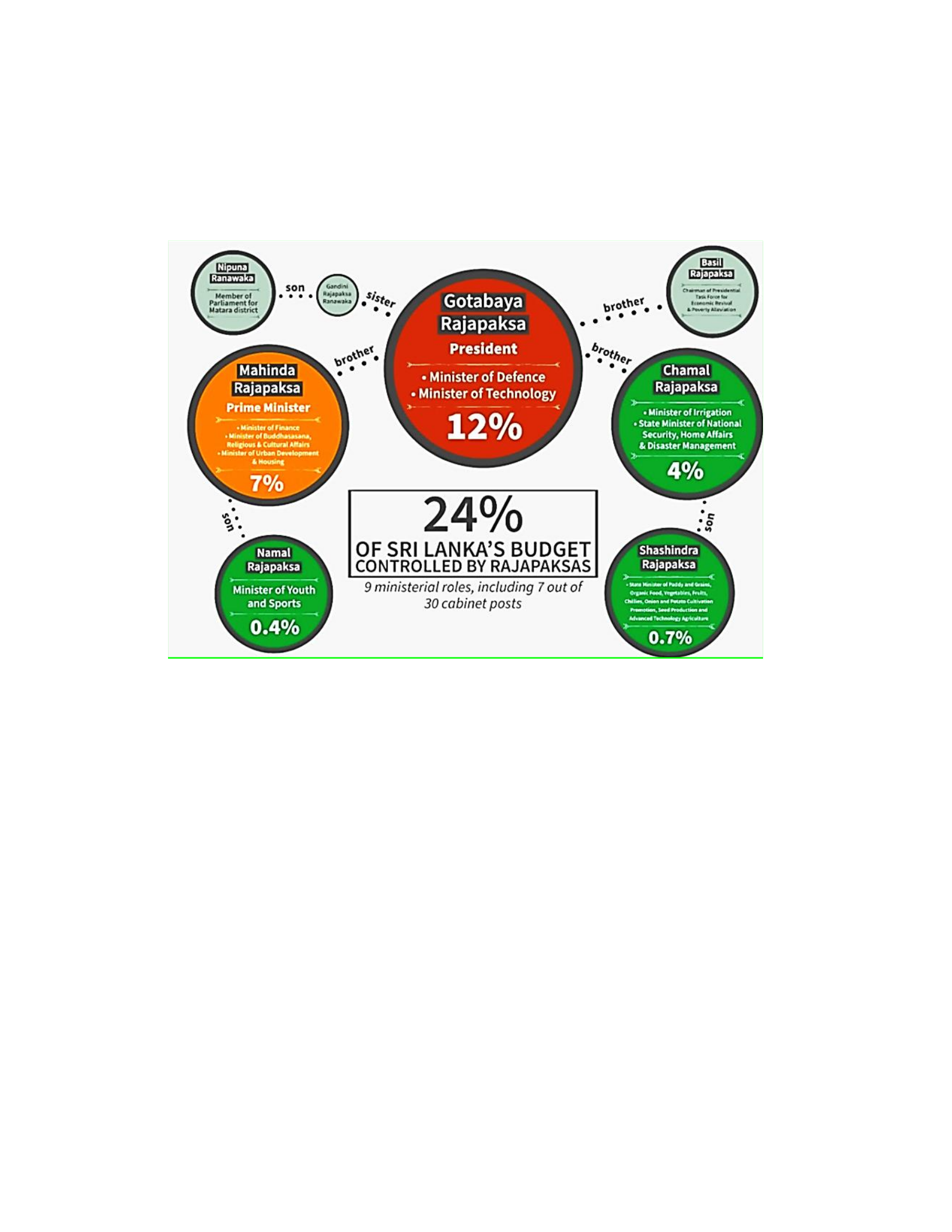
66
Figure 7
Dynastic Politics - Rajapaksa Family Control of Sri Lankan Budget
Note. From Dynastic Politics, in Sri Lanka Campaign website, by R. Thevakumaran,
2021, public domain access.
Because under the PTA the state can easily target religious and racial minorities,
in violation of their basic rights. The PTA allows for “authorities to detain and
“rehabilitate” anyone who “by words either spoken or intended to be read, or by signs, or
by visible representations” (Ganguly & Jayawardena, 2021). They are no longer tried
under a court of law. The violators of PTA will be held in a police facility in Colombo,
known as a notorious torture site, for two years without a trial (HRW, 2021).
On March 12th, 2021, public security minister, Adm. (ret.) Sarath Weerasekara

67
announced, the plans of the PTA to ban Islamic face coverings, which he claimed was
justified on “national security” grounds (Ganguly & Jayawardena, 2021). Minister
Weerasekara stated the intention to “shut down over 1,000 Islamic schools in the
country” a serious violation of the right to religious freedom if such were to be passed
(EU Resolution RC-B9, 2021). Currently, the state has already used the PTA, who were
in violation, in cases including the illegal detention of ‘Hejaaz Hizballah’, a Muslim
human rights lawyer jailed on April 14, 2020, and detaining a Muslim poet ‘Ahnaf
Jazeem’ for publishing a book promoting peace and toleration (Ganguly & Jayawardena,
2021).
Because insurgencies are threats coming within a state and can go on ten times
longer than any inter-state conflicts, they are the worst form of conflicts for a state to
endure (Jones S. G., 2019). If a state actor allows for an insurgency to start, it will drain
the blood and the treasures of governments alongside their outside backers (Jones S. G.,
2019). The scholars of terrorism and insurgencies offer that the lack of opportunity within
a state, and the marginalization or suppression of ethnic minorities are leading causes of
insurgencies (Bongar et al., 2007; Nacos, 2016;). It can be argued that Sri Lanka,
contains both economic and political push factors including ethnic marginalization.
While the present global pandemic has halted a second insurgency in Sri Lanka. There is
a high probability of another ethnic insurgency.

68
The Conclusion to The Literature Review
Sri Lanka's current crushing national debt of 66.58 billion US dollars, with the
parliament in turmoil over ethnic lines, and the impact of the Corvid-19 pandemic, the
gap between imports and exports will continue to suffer more debt (Shepard, 2016). The
Internal Displacement Monitoring Center (IDMC) based in Geneva Switzerland
calculates that approximately 42,000 displaced people following the Eelam conflict,
which are still held in detention, need resettlement. Another 135,000 displaced people
were added to this list in 2017 due to natural disasters in Sri Lanka (IDMC, 2018). The
growing instability within the state, added to friction between the Sri Lankan Muslims
and Sinhalese, places Sri Lanka in a vulnerable position for another ethnic conflict
(Keethaponcalan, 2019).
The evolving problems with Sri Lanka, being its lack of ethnic tolerance and
ongoing separatist mentality is a clear sign of a dysfunctional democracy (Balasundaram,
2016). Sri Lanka’s ongoing debates over contested Sinhala Buddhist identity failing to
restore peace within the state in 2009, have driven rifts between the third largest minority
group: the Muslims, and the fourth: the Christians (Ibrahim & Irfan, 2016). Having
assessed Sri Lanka’s ethnic crisis through the presented texts and journals until reaching
the point of saturation, it was noted that scholars of the topic observed the issue from an
ethnic, political, and sociological angle. From 1956 to 2020 all studies on the topic of Sri
Lanka’s ethnic crisis, being government run, I found serious gaps in the research, failing
to specify a cause or resolution for Sri Lanka’s ethnic crisis. The years 1994 – 2005 did

69
show studies addressing some form of ethnic assimilation and power distribution as a
possible solution, but nothing using the lenses of the polarity management model or the
polarities of democracy theory. Benet’s theory of the polarities of democracy is a
unifying theory that presents itself as a guide to social change.
It presents ten core values of democracy as measurable interdependent pairs of 5
(Benet, 2006; 2012; 2013). These five interdependent pairs being freedom and authority,
justice and due process, diversity and equality, human rights and communal obligations,
and participation and representation, embodies every aspect of what is identified as a
democracy (Benet, 2012; Johnson, 1996). Sri Lanka’s ethnic dilemma is an ongoing
condition due to its lack of having an established functioning democracy. The present
study, in supporting the efforts of filling the gaps in research, sought to observe Sri
Lanka’s ethnic crisis, through the lens of polarities of democracy in support of its
research question.
Summary
The present chapter explains the literature search strategies exploring various
databases and keywords to obtain data in support of this study. This chapter also
defended the value of the chosen theoretical framework by exploring how it has assisted a
multitude of similar studies conducted globally, using the same methodology in the past.
This study explores each selected stages of Sri Lankan history by scrutinizing a multitude
of documents, uncovered growing post-colonial ethnic separatism in Sri Lanka.

70
The chapter also talks about the chosen conceptual and theoretical frameworks,
emphasizing their values and the rationale for utilizing them in the present study. I
discuss how a lack of democracy, as presented within polarities of democracy, caused Sri
Lanka’s ongoing crisis. Considering all ten values and five interdependent polarity pair of
polarities of democracy, show that Sri Lanka, in trying to achieve positives, have only
forced negatives of each of the pairs within the polarities of democracy model.
In chapter three, I will describe the methodology chosen for the study, the
research design, the rationale, the role of researcher, limitations, and the validity of this
study as well as other aspects to be compiled in chapter four.

71
Chapter 3: Research Method
The purpose of this historical-comparative case study was to enhance the
understanding of Sri Lanka’s post-colonial ethnic separatism since 1948 by observing
each of three crucial stages of its history, considered as individual cases through the lens
of polarities of democracy in support of the nation’s future growth and development. The
guiding research question for this study was “In what ways has polarities of democracy
detracted or contributed to Sri Lanka’s pre-colonial, colonial, and post-colonial
governance from sustaining a steady state of ethnic harmony?” This chapter will provide
in depth the research design and the rationale, methodology, my data collection and data
analysis procedures, and various aspects of this study that include presentation of the
results, protection of participant rights, and the researcher’s role. Chapter 3 also includes
the actions taken to address potential ethical considerations that could arise from the
study in support of the research question.
Research Design and Rationale
Research studies conducted to explore what is perceived, and the reality of what is
perceived, have three methods of exploration (Creswell & Poth, 2018). One of these
methods is a quantitative methodology, which involves systematic inquiries using
numbers to uncover patterns and formulate and test hypotheses to uncover patterns. The
second method, qualitative methodology, mainly uses words instead of numbers. It
focuses on a constructivist perspective, where the interpretation of reality is based on the
collected data and the researcher’s perspective (Walliman, 2006). The last is a

72
combination of both qualitative and quantitative and among the most extensive and costly
of all studies as it encompasses both paradigms, compelling two individual studies to be
conducted for each method and later combined (Giddings, 2006; Tashakkori & Teddlie,
2003).
This research conducted in the United States addresses phenomenon in Sri Lanka.
Most of the primary sources for the ancient period under scrutiny such as the ‘Gal Potha’
are available in print and can be explored through document analysis (Erlandson, 1993;
Lavrakas, 2008; Mills & Birks, 2014; Reviere, 2013). Any subjects that could be
interviewed are now deceased. Therefore, I decided that the qualitative methodology was
the most appropriate means of study for the research question (Bowen, 2009; O’Leary,
2014). Using qualitative methodology, grants the freedom of choosing any data and any
analysis method. Scholars have argued that the historical-comparative case study method
is most suited for such efforts (Lange, 2013; Mahoney & Thelen, 2015; Neuman, 2009).
This study, observing multiple sources viewed through multiple periods, followed the
qualitative historical-comparative case study method, with me as the primary
instrumentation in analyzing the data (Denzin & Lincoln, 2011).
Because qualitative research does not confine the researcher to only one medium
of gathering data, having multiple methods to gather data, such as patterns of economic
progress, social development data related to wars, human rights, and human conditions,
will further enhance the present study’s credibility (Creswell & Poth, 2018; Denzin &
Lincoln, 2011). Most studies on ethnicities have used the qualitative case study method.

73
The present study addresses multiple historical periods and multiple cases, directing me
to choose the historical comparative case study (HCCS) method as most appropriate.
Role of the Researcher
A qualitative researcher’s role is crucial, as they are the instrument of data
collection and the human mediator through which the findings of a study derive
(Creswell & Poth, 2018). My role in this study was that of an observer-participant as I
was the primary instrument of data collection and analysis who collected, coded, and
analyzed the data from a multitude of documents to uncover the emerging concepts and
patterns within relevant documents, such as scholarly ancient rock and wall engraving,
palm leaf texts, journals, memoires, and governmental documents.
There is always the potential for researcher bias that could influence the outcome
of the study, making it challenging to maintain objectivity and be open-minded in
thoughts, interpretations, and actions (Creswell, 2009). This potential bias could derive
from being a born and raised in Sri Lanka for most of my young and adult life. That is
why it was essential to utilize introductory field notes, memos, and categorizing field
notes to report and analyze the data. In controlling other researcher biases, I utilized peer
evaluations through my professors and fellow students at Bellevue and Walden
University and gained support and advice from my committee during data collection and
analysis.
Methodology
The methodology for the study is qualitative. Because the present research study

74
addresses Sri Lanka’s pre and colonial past from 5 BC to 1948 AD having no human
participants, I obtained the information from existing sources. These sources include
ancient scrolls, rock carvings, engraved pillars, and paper documents as well as archived
government documents such as gazettes, parliamentary proceedings, journals, and case
studies. The qualitative method provides a structure the researcher can utilize in
analyzing the data (Denzin & Lincoln, 2011). Qualitative research allowed me to gather
data on various patterns of economic progress, social development data related to wars,
human rights, and human conditions (see Creswell & Poth, 2018; Denzin & Lincoln,
2011). Further, most studies on ethnicities have used the qualitative case study method.
Sample and Population
The population is commonly understood to be the collective of whatever
phenomena one would like to study; it can vary from a crowd of people to events or
things (Levy & Lemeshow, 2013). In assessing an entire population, a researcher is
compelled to deal with large numbers of subjects. From those subjects a representative
sample is chosen (Cargan, 2007). Researchers use sampling techniques to help them
choose the correct sample or samples needed for the study to be accurately conducted
(Blackstone, 2012). This study did not use any human participants. The study used
document analyses to obtain the needed samples 280 in total and analyze them until
saturation.
For the precolonial periods, under study, the population is all the information I
could obtain through sources that existed from 1444-1506. The population included rock

75
engravings, rock books, palm leaf books, temple drawings, and other textual carvings in
ivory, and bronze along with academic books on the subjects from which the sample
included textual material written about governance, economics, religion, and social
culture. For the colonial periods under study (1815-1926), the population is all the
information I could find through sources that existed then. The population included
memoires of colonial governors, memoires of government agents, memoires of foreign
visitors, memoires of native officials, government gazettes, parliamentary debates, other
textual engravings in cemeteries and monuments, along with academic books on the
subjects from which the sample included textual material written about governance,
economics, religion, and social culture. In the post-colonial periods under study (1943-
2020), the population is all the information I could find through sources that exist now.
The population included periodicals, scholarly journals, academic research documents,
memoires of foreign visitors, memoires of government officials, government gazettes,
parliamentary debates, online and offline multimedia contents, along with academic
books on the subjects from which the sample included textual material written about
governance, economics, religion, and social culture.
Data Collection Procedures
Qualitative document analysis (QDA) is a form of qualitative research in which
documents are interpreted by the researcher to give voice or meaning (Bowen, 2009).
Document analysis can be used as research on its own to provide background
information, to add context, or to triangulate other types of data (Maccarella, 2018).

76
Within QDA, three primary types of documents are taken into consideration: public
records, personal documents, and physical evidence (Bowen, 2009). The advantage of
document analysis is in its ability to cover a broad range of topics efficiently and cost
effectively (Bowen, 2009). There are potential challenges to appropriate document
analysis due to insufficient detail and biased selectivity. Knowing that, I took this
information into consideration when applying the method. The positives outweighed the
negatives.
QDA begins with the first document and evolves in data collection from findings
within a text source. As more texts are read, information from texts analyzed earlier may
be modified by the researcher (Bowen, 2009). Strict QDA notes that the population and
the sample are not declared until the research is analyzed. Then, using known categories,
the researcher will grow the study as the data are collected and processed until saturation
(Altheide et al., 2008). I used a modified form of QDA. Since QDA disallowed defining
an initial population, it was unfeasible to use strict QDA, which provided no direction.
For data collection, I utilized databases including JSTOR, Google Scholar, and the
resources available from the Bellevue University Library, the Walden University Library,
and the Sri Lankan national archives. Development of modern information technology
has made the world a global village (Walsh, 2018), helping to obtain textual data or
documents, interlibrary loans, various e-books (Libicki, 2016). This provided access to
explore texts needed for this study.
The Google Books search engine also made available in electronic format prints

77
of old manuscripts from libraries such as Cambridge, Yale, Stanford, Oxford, and the
University of Peradeniya Sri Lanka, which also supported the data collection effort. Sri
Lanka contains an elaborate written history starting from the 5th Century BC. Language
and writing, introduced as early as 10 BC, was due to Indian influences and migration
(Bohingamuwa, 2017). The standard texts of Sri Lankan history are the Deepavamsa, the
Mahavamsa, the Chulavamsa, the Rajavalia, and the Mandarampuwatha, which
incorporate the contents of rock engravings, rock books, and palm leaf books among
other sources that were created during the pre-colonial periods under study from (1444-
1506).
For the colonial period under study, (1815-1926), alongside with other
documents, I utilized memoirs and writings by various colonial officers, including
Governor North, Henry Cave, Brohier, John O Doyle, John Ferguson, John Bennett,
James Legge, De Bussche, and James Tennent. Regarding the post-colonial period (1948-
2021) sources used contain peer-reviewed journal articles within the Royal Asiatic
Society of Sri Lanka, Royal Historical Society, Modern Asian Studies, Journal of the
Economics, and Social History of the Orient. I also explored various works compiled by
authorities of the subject that include Dr. Kingsley De Silva, Dr. Navarthne Bandara, Dr.
G.C. Mendis, Dr. Stanley Jeyaraja Tambaiah, Dr. Tessa Bartholomeus, Dr. Adele Barker,
and Dr. John Holt.
Data Analysis
The present study advances the understanding of a post-colonial ethnic harmony

78
in Sri Lanka through the lens of polarities of democracy; it is an historical comparative
case study. The study included document analysis with an evolving sample and
population (Marshall & Rossman, 2011). Scholars of qualitative data analysis argue that
data analysis is the identification, investigation, and clarification of forms and themes in
textual data which a researcher uses progressively to assess how the emerging themes
assist the research question (Bernard & Ryan, 2010; Crinson & Leontowitsch, 2016). I,
being the primary research instrument, in identifying, analyzing, and interpreting patterns
or meaning (i.e., themes) from the data collection, used a structured form of QDA to
explore the data until saturation (Braun & Clarke, 2006).
Data Saturation
Saturation is the point within a research process where no added information is
discovered (Faulkner & Trotter, 2017). QDA is a repetitive process that builds the sample
starting with the first data sources used within the analysis growing with the topics and
patterns that emerge. While this may seem like a challenge for visibly observing
saturation, there is a finer and more individual-oriented standpoint on data saturation
(Saunders et al., 2018). Theoretical saturation uses the development of categories and the
emerging theory within the analysis process as the criteria for collecting additional data
(see Table 2; Saunders et al., 2018). Inductive thematic saturation focusses on detecting
new codes or themes and considers ‘the amount of such codes or themes rather than the
fullness of the existing categories (Saunders et al., 2018). In a priori thematic saturation
the data are collected at the level of lower-order codes or themes to exemplify the theory

79
rather than to build or refine the theory (Saunders et al., 2018). Data saturation is built on
the notion of informational redundancy; such a model is ideal when using a repetitive
data analysis method as QDA bound on themes and categories. Using QDA for data
collection and analysis, I chose the data saturation model to assess saturation for this
study (Suter, 2011).
Table 2
Models of Saturation and their Principal Foci in the Research Process
Model
Description
Principal focus
Theoretical saturation
Related to the development of theoretical
categories; related to grounded theory
methodology
Sampling
Inductive thematic saturation
Related to the emergence of new codes or
themes
Analysis
A priori thematic saturation
Related to the degree to which identified
codes or themes are exemplified in the data
Sampling
Data saturation
Relates to the degree to which new data
repeat what was expressed in previous data
Data collection
Note. Adapted from “Saturation in Qualitative Research: Exploring its conceptualization
and Operationalization”, by B. Saunders, J. Sim, T. Kingstone. S. Baker, J. Waterfield, B.
Bartlam, H. Burroughs, & C. Jinks, 2018, Quality & Quantity, 52. Copyright, 2018 by
Springer.
Data Analysis Procedure
In beginning the data analysis process, I used the 10 values of polarities of
democracy in its 5 interdependent pairs which are: freedom - authority, justice - due
process, diversity - equality, human-rights & communal-obligations, and participation &
representation as the key themes or preliminary codes to gain the needed data (Benet,
2013). The periods chosen for the study expand through multiple centuries. In reducing

80
the data collection to a manageable size, I have limited exploring archival and secondary
material to five years before and after each shift (see Table 3).
Table 3
Sample Data Analysis Plan
Poles of POD
Last 5 years
pre-colonial
First 5 years
colonial
Last 5 years
colonial
First 5 years
post-colonial
Most recent 5
years post-
colonial
Freedom
Yes
No
Yes
Yes
No
Authority
Yes
Yes
Yes
Yes
Yes
Justice
Yes
Yes
Yes
Yes
No
Diversity
Yes
Yes
Yes
No
No
Communal
obligations
Yes
No
No
Yes
No
Human
resources
Yes
No
No
Yes
Yes
Participation
Yes
Yes
No
Yes
No
Representation
Yes
Yes
Yes
No
Yes
Equality
Yes
Yes
No
No
No
Due process
Yes
Yes
No
Yes
No
Note. The table presents hypothetical data regarding how I plan to analyze the data
secured through document analysis.
For the Pre-colonial period, I chose the great chronicles of Sri Lanka which are
the Dipavamsa, Mahavamsa, Chulavamsa (Vamsa) and the Rajavaliya as the foundation
(Fleet, 1912). These four texts contain successive eyewitness accounts encompassing Sri
Lanka’s pre-colonial socio-politico-economic history from the 5th century BC to 1687
AD. Other textual materials including ola leaf books, various rock carvings (Gal Potha)
as well as research literature by Dr. S.U. Daraniyagala, Dr. K.M. De Silva, Dr. P.V.J
Jayasekara, Dr. Raja De Silva, Dr. G.C Mendis, and the Sri Lanka Department of
Archeology were explored to triangulate the findings and acquire other data. When
analyzing the data pertaining to the colonial periods, compiled literary works by various

81
colonial officials, including John Ferguson, Patrick Peebles, Alastair Mackenzie
Ferguson, Henry Parker, William Knighton, Horatio John Suckling, and colonial
Governors Robert Brownrigg, Fedrick North, Edward Barnes, Viscount Torrington,
James. E. Tennant were studied to procure the needed data.
Other textual information contained within colonial gazettes, parliamentary
debates, and various enacted reforms by the colonists, were investigated to triangulate the
findings. Considering the post-colonial period, enacted legislatures by the Sri Lankan
government, parliamentary debates, information incorporated within authoritative
journals such as The Journal of Asian Studies, Asian Survey, International Legal
Materials, Journal of the Royal Asiatic Society of Sri Lanka, The Journal of the Ceylon
Branch of the Royal Asiatic Society of Great Britain & Ireland, India Quarterly were
explored to obtain the needed data.
When exploring the most recent post-colonial period I have studied various
authoritative newspapers, blogs, and internet news sites including TamilNet and the
Colombo page, alongside research literature compiled by authorities of the topic
including late Dr. Y.R. Amarasinghe, Dr. Navaratne Bandara, Dr. Gamini Keerawella,
Dr. Gamini Samaranayake, Dr. N.M. Pereira, Dr. Colvin. R. De Silva, Dr. Stanley
Jeyaraja Tambiah, Dr. Ambalavanar Sivarajah to triangulate the discoveries and procure
data as needed. This study captures the human experiences from three periods of Sri
Lankan history through textual materials to filter the relevancy of what is a viable source,
I considered some guiding questions to reflect on the study’s purpose, research question,

82
and potential (Berkowitz, 1997). The guiding questions used by me during my data
analysis to filter what is relevant or not, aligns with the questions presented as
suggestions by the National Science Foundation (NSF):
• What forms/familiar leitmotifs develop around specific things in the data?
o In what way do these forms (or lack thereof) help to learn or broaden
the study inquiry
• Do these trends have any deviations?
o If yes, what causes can explain the atypical reactions?
• What type of exciting stories come out of the data?
o How can these stories help shed light on the broader issue of the
study?
• Do any of the results / emerging trends imply the need to collect additional
data?
o Do any of the inquiries need to be reviewed?
• Is there a need to update any of the study questions?
o Do the patterns that emerge help other people's findings?
The above questions guided the study. I also developed another set of questions
using the ten values of polarities of democracy to sift through the plethora of data,
reducing it to only relevant sources.
• How did the 10 values of polarities of democracy present themselves during
the Pre-colonial period within a monarchy?

83
o Which values were clearly visible?
▪ Example Justice, Freedom
o If there was a lack in any of the values of polarities of democracy which
ones, were they and why did they cease to exist?
o Were there any factors such as religion, governance, or laws to balance the
interdependent polarity pairs?
• How did the ten values of polarities of democracy present themselves during the
colonial period?
o Which values were clearly visible?
o If there was a lack of any of the values of polarities of democracy which ones
were they, and why did they cease to exist?
o Were there any factors such as religion, governance, or laws to balance the
interdependent polarity pairs?
• Did the ten values of polarities of democracy exist during the post-colonial period?
o Which values were clearly visible?
o If there was a lack of any of the values of polarities of democracy which ones
were missing, and why did they cease to exist?
o Were there any other factors such as religion, governance, or laws to balance
the interdependent polarity pairs?
Taking the information found by answering the questions regarding the ten values
of polarities of democracy, I placed the findings within a frequency table to observe
phenomenon debated within the research question and the purpose statements (see Table
4).

84
Trustworthiness
Qualitative research focuses on capturing values that cannot be measured by
numbers as it deals with the phenomenon of humanity as feelings, needs, wants, and
ideas that develop with one’s upbringing; more is dependent on the data trustworthiness
than on the data itself (Nowell et al., 2017). In assessing the study’s verisimilitude, the
four critical values taken into consideration are its credibility, transferability,
dependability, and confirmability, where credibility addresses the connection “Fit”
between the respondent’s views and the researcher’s representation of them (Nowell et
al., 2017).
Transferability
Transferability addresses the ability of the data to be transferred. Dependability
addresses the ability of the researcher to assure that the research process is logical,
traceable, and well documented (Nowell et al., 2017). Finally, confirmability is how well
the interpretations, and the findings align with the research, compelling the researcher to
demonstrate how conclusions were reached (Nowell et al., 2017). For this study, I used
data triangulation. This is commonly understood as using different participants, methods,
and data sources for the same research question (Bogdan & Biklen, 2007).
I have also established access to primary sources of many of the academic and
historical authorities of Sri Lanka’s post-colonial ethnic crisis, specifically the ones who
worked on the peace process between 1994-2005 including Dr. Navaratne Bandara, Dr.
Gamini Keerawella, Dr. Gamini Samaranayake, and Dr. Y.R Amarasinghe. Using these

85
rare opportunities, I have done peer checks in validating the resources to further secure
credibility (Burkholder & Cox , 2016). While it is impossible to ensure complete
transferability of the data, the way the data is gathered and processed, using qualitative
data analysis supports the efforts of the study to be transferred to a similar study (Bogdan
& Biklen, 2007).
Dependability and Confirmability
In addressing the dependability of the study, scholars of qualitative methodology
argue that credibility and dependability are aligned. If the study has presented its
credibility there is no need to justify further dependability (Morse et al., 2002). In this
study, confirmability is understood to be the ability to replicate works done previously;
the scholars of the methodology argue that it is essential for another researcher to
replicate the work (Lincoln & Guba, 1985). This study contains a frequency table (see
Table 4) as well as an elaborate literature review, and my data sample in chapter 4, to
support the efforts to replicate the study (Lincoln & Guba, 1985). If further data is
needed, I have made available my used dataset within this study (see Appendix A).
Presentation of the Results
A qualitative methodology, which guides the study, is commonly understood as
one of the most useful methodologies for policymakers as it describes the settings in
which policies are implemented (Anderson, 2010). This study is an historical-
comparative case study (HCCS) utilizing qualitative document analysis (QDA) in
obtaining the data, which was analyzed using multiple means to present the findings. For

86
presenting economic data, tables and figures were used. In addressing the theoretical
framework, figures, and tables unique to polarities of democracy model were used to
depict the polarities of democracy concepts. Under this methodology, which has multiple
means of presenting data, the study utilized a frequency table to present data analysis and
figures as well as appendices as needed.
Protection of Participant’s Rights
The purpose of any research is to contribute factual new knowledge in adding,
amending, or denying various debates within the existing pool of academic knowledge
(Bryman & Bell, 2015; Leavy, 2020; Pope & Mays, 2020). Learned lessons from the past
compel that new knowledge, secured for the betterment of humanity, should be obtained
ethically and morally (Baxter & Jack, 2008). Myself, being the primary researcher of the
study, possessing the National Institutes of Health (NIH) training certification awarded
on March 30, 2017, certifies me of having knowledge regarding obtaining information
ethically and morally. To ensure I meet every possible means to ethically obtain the
materials for my study I submitted the details to the Walden University IRB. The
University IRB, in verifying and ensuring that no unethical means of data gathering was
done, assessed my work and granted me an approval number 09-30-21-0710042. The
study adheres to using only textual and documented history of Sri Lanka available in
multiple academic disciplines and does not use any live human participants (Regents,
2019). This omits the study from any concerns of psychological or physical harm to live
participants (Regents, 2019).

87
Transparency is a crucial factor for any study. To maintain transparency, I have
presented all the consents to access reference materials obtained through the proper
channels and presented them within Appendix F and shared it with the IRB and the
dissertation committee (IRB, 2018). The research, in collecting materials needed for the
study, adhered to using commonly accessible textual and digital sources such as Bellevue
University library catalogs, Walden University Library catalogs, EBSCO, JSTOR,
Google Scholar, SAGE Database, Google Books, and my personal Amazon Kindle to
access Amazon’s catalog of books. For archival documents, the study utilized the
resources of the Sri Lankan National Archives in Kandy and Colombo (Endicott, 2010).
As advocated by the authorities of qualitative methodology, the main concern about
ethics is within the analysis process, where the interpretation of data and the relevancy
can compromise its validity (Creswell, 2009).
In addressing this concern, the study utilized methodically repetitive processes of
Qualitative Document Analysis (QDA) guided by a set of questions developed by me
using the National Science Foundation’s suggestions to ensure the correct interpretation
of the findings (Creswell, 2009). With most documents of the study being in electronic
format, data privacy was ensured, since all data were placed securely within a highly
encrypted password protected backup drive locked inside my study table. The other
materials are stored in a metal file cabinet with a lock situated within my home study.
I categorized my home library of around three thousand books by topic for easy
retrieval. When using commonly accessible textual and digital sources, the study strictly

88
adhered to all copyright laws on the usage of public domain and adhered to the American
Psychological Association (APA) standards in obtaining the needed information and
presenting its findings (IRB, 2018). The study also used triangulation to ensure the
validity of facts within 280 documentative materials and include them within the research
of Chapter 4 (IRB, 2018). Because of the above, the study provides full transparency and
a sensible understanding of ethics.
Summary
The current chapter discussed, in depth, the methodology used by me. This
chapter confirmed the use of the qualitative historical comparative cases study method to
address its research question and purpose. This chapter also proposes to use qualitative
data analysis without using live participants, to obtain a growing sample through
document analysis, and then, using the same method of document analysis, to analyze,
code and interpret findings.
The researcher’s role would be that of participant observer as well as being the
instrumentation in which the data would be obtained and analyzed. This chapter, giving a
broad idea of the methodology used within this study, also elaborates on the credibility
and transformability of the study. The chapter addresses the chosen sample, and the
population. It also expands, in depth, the systematic processes followed in obtaining the
ethical standing of the study in support of the IRB process. The next chapter of this study
will concentrate on the data analysis process, which includes an overview, the setting,
data collection and the findings of the materials scrutinized. The next chapter will also

89
elaborate on my data analysis, as well as evidence of its trustworthiness.

90
Chapter 4: Results
The purpose of this historical comparative case study was to enhance the
understanding of Sri Lanka’s post-colonial ethnic separatism since 1948 by observing
each of three crucial stages of its’ history through the lens of Benet’s (2006, 2012, 2013)
polarities of democracy theory to support the nation’s future growth and development.
The three crucial stages of Sri Lankan history taken into consideration, within the study,
are Sri Lanka’s pre-colonial period (1500-1505), colonial period (1821-1826), and post-
colonial period (1949-1954). The research question for the study was “In what ways has
polarities of democracy detracted or contributed to Sri Lanka’s pre-colonial, colonial, and
post-colonial governance from sustaining a steady state of ethnic harmony?” To reduce
the data to a manageable size for QDA, the phenomena was rescaled to observe the same
phenomena 5 years before and after each shift in periods:
• first 5 years of the pre-colonial Period (1444-1449)
• pre-colonial Period (1500-1505)
• last 5 years of the pre-colonial Period (1506-1511)
• first 5 years of the colonial period (1815-1820)
• colonial period (1821-1826)
• last 5 years of the colonial period (1943-1948)
• first 5 years of the post-colonial period (1943-1948)
• post-colonial period (1949-1954)
• last 5 years of the post-colonial period (2015-2020).

91
The chosen 5-year periods before and after each shift was more feasible, since the events
that are not crucial to turning points in Sri Lankan history do not fall into that range. The
study, taking into consideration multiple periods within Sri Lankan history as individual
cases, took the form of an historical comparative case study rather than an ethnographical
case study. The current chapter is a representation of the results of the data collection
procedures, the processes of data analysis, evidence of trustworthiness, and results of the
study.
Pilot Study
A pilot test is a small-scale test conducted to examine the application of theories,
the arguments, and to test the results of the predicted outcomes of a study (Burns &
Grove, 2005). A pilot study can avoid costly, time-consuming problems, and strengthen
the study’s validity and reliability (Harris, 2010; Quinones et al., 1998). At the same
time, scholars argue that despite conducting a pilot study and getting positive results, it
does not prove the workability of the theories presented, nor a successful scale of
implementation (Huey-Tsyh, 2005).
The present historical comparative case study (HCC) exploring Sri Lanka’s pre-
colonial, colonial, and post-colonial periods through the lens of polarities of democracy,
adheres strictly to the use of authoritative textual and archival document data. In building
the sample, and in drawing conclusions by observing parallels within the study as the
primary instrumentation, I used QDA. The entire data sample is presented in Appendix
A. The study, observing events in Sri Lankan history, do not have any potential to

92
change. Because the study observed all data until data saturation through QDA, the
obtained sample represents at least 90% of the population. This study is easily
transferable no matter how many times it is repeated.
Any form of quantifiable data used within the study, such as population
distributions, or economic progressions, were used only to clarify findings, or to
triangulate the findings. They do not have a direct bearing on the conclusions. The
theoretical framework for this study is Benet’s (2006, 2012, 2013) polarities of
democracy. The conceptual framework for Benet’s theory is Johnson’s (1996, 2014),
Polarity Management theory, which requires the use of numerical data or surveys.
Collectively, all the above not only support the research’s validity, but also present
reasoning to not have a pilot study.
The Study’s Setting
The purpose of any research is to add or amend to the existing pool of knowledge,
and it evolves from a researcher’s world view and its orientation as well as their chosen
area of interest (Burkholder et al., 2019). The present study, examining Sri Lanka’s post-
colonial ethnic separatism, became an area of interest from my world view, as a
participant observer of the Eelam conflict (1983-2009), a result of post-colonial ethnic
separatism and the recent marginalization of Sri Lankan Muslims (2009-Present). Sri
Lanka, once hailed as one of the most powerful states in Southeast Asia, which shared
equal economic, and developmental platforms with the West, today is a third world
country with a rapidly growing national debt. Due to ongoing corruption, ethnic

93
separatism, and terrorism, the impacts of the Covid-19 pandemic have exacerbated its
conditions (Arnolds & Jones, 2021).
Insurgencies are commonly understood as a process of alternate state building and
are defined as “a political and a military campaign by a non-state group to overthrow a
regime or secede from a country” (S. G. Jones, 2019, p.9). Known as one of most
persisting form of conflicts, if a regime enables an insurgency, it will take a long time to
suppress or get rid of the malice (Kilcullen, 2013; Martin, 2003; Nacos, 2016). Unlike an
international conflict, an insurgency could persist for more than 10 years while draining
the resources of the state and their external supporters (Kilcullen, 2013). The factors
leading to an insurgency are crucial to both the state actors and the insurgents. During its
initial phase, an insurgency is at its most vulnerable when state actors find an ideal
window of opportunity to direct their efforts to suppress an insurgency (S. G. Jones,
2019). These noted grievances, which give potential to creating insurgencies, include
inequality, authoritarian governments, ethnic and religious diversity, and ethnic
marginalization by a state (Kilcullen, 2013; Martin, 2003; Nacos, 2016).
The efforts of Sri Lankan authorities to force social distancing and delay
vaccinations, causing substantial number of losses in lives, opportunity, and wealth, place
Sri Lanka in a vulnerable position to erupt into an insurgency (O’Donnell et al., 2018). It
is vital that Sri Lanka change its course of action toward its ethnic minorities and seek an
alternate means of establishing a healthy, sustainable, and just democratic governance. In
support of such efforts to guide social change in Sri Lanka, I explored the literature for

94
the current study, and noted that the polarities of democracy theory is a unifying theory
supporting building just communities (Benet, 2006, 2012, 2013). Exploring more
literature on Sri Lankan history, key phrases such as the contested Sinhala Buddhist
identity, negating minority rights, and Ethnocratic legislature began to emerge
repetitively within texts pertaining to the British colonial period (1921-1948) and the
post-colonial periods (1948-1983). But when observing the precolonial period and the
Portuguese and Dutch colonial periods, such phrases were not visible. Instead, unified
efforts by the natives—Sinhala, Tamil, and Muslims—were found to challenge the
invaders, such as Kalinga Maga (5BC-1596 AD), and the Europeans (1597-1796). With
having polarities of democracy as my theoretical framework, I chose the question “In
what ways has polarities of democracy detracted or contributed to Sri Lanka’s pre-
colonial, colonial, and post-colonial governance from sustaining a steady state of ethnic
harmony?” to guide the study.
Demographics
Demographics refer to the characteristics of a population (Salkind, 2010, p. 346).
The current study does not take into consideration any live human participants and
focused on observing various human conditions that existed within three crucial periods
of Sri Lankan history (1444-2020) through textual and documentative materials.
Observing Sri Lanka’s ongoing ethnic separatism through the lens of polarities of
democracy to better understanding the present and the progression of this condition, I
focused on its evolution by highlighting the main political rifts: the decline of the

95
Sinhalese dominion, the fall of the Sri Lankan monarchy, multiple colonial occupations,
the fight for independence, and post-independent governance. Early on as I embarked on
the data collection for this study’s literature review, I noted that exploring such would
include a broad array of topics. Because of that I first broke these rifts in Sri Lankan
history into three segments the —pre-colonial, colonial, and post-colonial periods— and
chose to observe only governance related matters viewed through the lens of polarities of
democracy. To further reduce data to a manageable size, and to avoid periods when
nothing happened, I chose to explore 5 years before and after each rift:
• first 5 years pre-colonial period under study (1444-1449)
• pre-colonial period (1500-1505)
• last 5 years pre-colonial period under study (1506-1511)
• first 5 years of colonial period under study (1815-1820)
• the colonial period (1821-1826)
• last 5 years of the colonial period under study (1943-1948)
• first 5 years of the post-colonial period under study (1943-1948)
• post-colonial period (1949-1954)
• last 5 years of the post-colonial period under study (2017-2022)
The study, attempting to capture various human conditions within the dead past, having
no live participants, included only textual, visual, and documentative materials to build
its sample.

96
Data Collection
In collecting the data, I explored all the textual, visual, and documentative
materials for each period and put them through the repetitive process of QDA obtaining a
sample of 280 authoritative textual documents (see Appendix D). The primary
instrumentation for categorizing and analyzing the data for this study was myself. When
observing the authenticity of gathered data, peer-reviewed journals stood foremost. When
collecting the data an emphasis was placed on maximizing the use of 84 pertinent
scholarly journals. These contained political-sociological-economic contents pertaining to
all three periods relating to the study. Some of these journals I took into consideration
include the Royal Asiatic Society of Sri Lanka, Asian Survey, Indian Journal of Political
Science, and Economic and Political Weekly (see Appendix A).
In building the study sample, and to strengthen the findings with more sources, I
incorporated a large dataset collected in two stages from 1994-2010. The data set was
then re-analyzed and triangulated to update the current data set as well as to assure
reliability and relevancy when applied to the current study. The following pages will
describe, in depth, systematic data collection, the frequency in which the data were
collected, the nature of the data explored in building the sample, and the method in which
they were recorded.
The Nature of the Collected Data
The first academic journal, journal des savants was introduced in January 1665. It
was followed by Philosophical Transactions of the Royal Society in March 1665, which

97
was the first fully peer-reviewed journal. Medical Essays and Observations was on the
English-speaking world. As a result, to capture valued human experiences within Sri
Lanka’s pre-colonial and early colonial periods, 47 authoritative textual works were
explored. These books include the Depavamsa, Mahavamsa, Chulavamsa, Mandaram
Pura Puwatha, and various Sandesh Kawya messages exchanged through the agency of a
messenger (Mukherjee, 1998). Other works by visitors to Sri Lanka include the traveling
Chinese monk Fa-Hien, Ptolemy (Alexander the Great’s General), and the works of Pliny
the Elder. To triangulate finding, as well as to capture new re-occurring themes, research
compiled by past archaeology commissioners including Dr. S. U. Deraniyagala, Dr. Raja
de Silva, Dr. Raj Somadeva, and works of historians such as Dr. K.M. De Silva, Dr. W.I.
Siriweera were scrutinized.
Sri Lanka was colonized by the Portuguese (1505-1655), the Dutch (1660-1796),
and the British (1802-1948). Due to prioritizing the capture and exploitation of the land
over administration and governance, the Portuguese period contained the least number of
textual and other physical contents such as ruins or buildings. The Jaffna fort, being the
last stronghold of the Portuguese, held most of the textual contents within the fort and
was later transferred to the Jaffna library, the national archives in Colombo, and the
University of Peradeniya. When political aggressors set fire to the Jaffna library on June
2, 1981, the Portuguese collection, along with another 95,000 books, rare palm-leaf
manuscripts, and a vast collection of other materials were destroyed (Venkatesh, 2016).
Today, only the contents within the University of Peradeniya library and the national

98
archive in Colombo remain. To capture the contents of the lost collection within the
current study, authoritative literature incorporating details from the Jaffna library, such as
the works of Donald William Ferguson, Paul Edward Pieris, Tikiri Abeysinghe, Chandra
Richard, and George Davison Winius were studied.
The Dutch colonists, on the other hand, governed Sri Lanka (1660-1796) as a
mercantile enterprise comprising of three administrative divisions: Colombo, Galle, and
Jaffna. Like their Portuguese predecessors, the Dutch controlled the Sri Lankan coastline.
The Dutch were adamant in maintaining their lucrative spice trade with Sri Lanka on
behalf of the Dutch East India Company (VOC). Because of this, the Dutch for the most
part, maintained diplomacy with the Kandyan kingdom, which in turn limited conflicts
with the natives giving the Dutch more time to establish themselves (Paranavitana, 1999).
Exposing Sri Lanka to mercantilism, bureaucracy, and revenue collection, the Dutch also
introduced the printing press (Diehl, 1972). With the use of the government press, unlike
the Portuguese, the Dutch produced many records related to various aspects of their
administration. With ample textual material to observe the Dutch colonial period, the data
sample contained archival documents from the governor’s office from 1640 to 1796,
under Colombo Dissave, (The Government office) (Jurriaanse, 1943). The contents of
these documents include Land Tombos (deeds), correspondence with natives, journals
and ledgers, treaties, as well as other documents related to Kandy and the king
(Jurriaanse, 1943).
The British colonization of Sri Lanka (1797-1948) expanding 151 years is the

99
longest colonial occupation in Sri Lanka. The British, like the Dutch, arriving in Sri
Lanka to trade in spices and goods for the British East India company (1600-1874),
extended that effort in 1815 by incorporating Sri Lanka as a colony of the British empire
(Mendis, 2005). To maintain their dominance, the British deployed an extensive ruling
effort incorporating all socio-politico-economic aspects of Sri Lanka and maintained
detailed records of these efforts. Capturing these efforts academically, I took into
consideration various government gazettes, reports, legal documents, censuses, postdated
scholarly journal articles, and research work compiled by scholars including Dr. G. C.
Mendis, Dr. K.M. DeSilva, and Dr. N. DeVotta.
In studying discussions, debates, and edicts pertaining to colonial governance,
Memoirs of governors including James Emmerson Tennent, Governor North, Brownrigg,
Joseph West Ridgeway, William Gregory, and Robert Percival were explored. To
investigate the results of these edicts I added to the dataset reliable works of many
colonists and authoritative colonial officials including the works of J. W. Bennett, D. B.
Augustus, Horatio John Suckling, Henry Marshal, L. E. Blazer, R. L. Brohier, M.
Burrows, D. Butts, Samuel White Baker, and John Ferguson. Taking into consideration
the nature of the British occupation in Sri Lanka from an outside perspective, various
publications by visitors to Sri Lanka were also added. These publications, capturing non-
biased eyewitness accounts of the British colonial Sri Lanka, include the writings of
Carolyn Wilson, François Valentin, Robert Knox, Robert Townshend Passingham and
Jonathan Forbes.

100
Sri Lanka was granted its independence by the British on February 4, 1948. To
acquire literal works for the post-colonial era (1949 – 1954) through document analysis
and view the westernization efforts of the British colonists, who enforced strong record
keeping throughout Sri Lanka’s political-sociological-economical aspects, enabled me to
acquire 56 authoritative documents. These documents, used for the post-colonial periods,
include parliamentary proceedings, Hansard reports, scholarly journals, censuses, country
reports, administrative reports, financial records, and memoires of politicians and
prominent leaders including military leaders from 1948 -2020.
The memoires of military leaders include memoires of General Cyril Ranatunga,
late General D. L. Kobbekaduwa, works of Ret. General. Gamini Angammana, Ret.
General. Kamal Gunaratna, and Ret. Col. Gotabaya Rajapaksa (President of Sri Lanka).
Studying Sri Lanka’s post-colonial governance firsthand. I also explored the memoires of
prominent political leaders of the time such as Dr. N.M. Pereira, Dr. Colvin R De Silva,
Sir Ivor Jennings, and Philp Gunawardena.
The Westminster parliamentary system, which governed post-colonial Sri Lanka
granted substantial authority to the office of the prime minister. I scrutinized the work of
prime ministers Sir John Lionel Kotelawala, S.W.R.D Bandaranaike, Madam, Sirimavo
Bandaranaike. Following the independence in 1948, until 1972 Sri Lanka remained a
commonwealth realm with Queen Elizabeth II. In 1972 Sri Lanka declared itself as a
republic and abolished the Monarchy. Then in 1978 Sri Lanka moved from a
Westminster system to a Presidential system with an executive president as the head of

101
state. To capture details of Sri Lanka’s executive office from 1978 - 2021, I included
authoritative memoires of presidents: J.R. Jayewardene, Ranasinghe Premadasa,
Chandrika Bandaranaike Kumaratunga, Gotabaya Rajapaksa, and Mahinda Rajapaksa.
The developing post-colonial ethnic crisis firstly impacted members of the Sri
Lankan Tamil minority. When collecting data for the post-colonial periods, works by the
members of these ethnic groups were included. These works were compiled by Rajan
Hoole, Daya Somasundaram, K. A. Sritharan, Rajani Thiranagama, Stanley Tambaiah,
Shankar Krishna, and works of the late Hon. Lakshman Kadirgamar.
Since the 1990s, there has been a significant surge in technological advancements.
This has led to numerous entities, including governmental bodies, news media platforms,
university publications, and peer-reviewed journals, to present data through websites
(Libicki, 2016). In Chapter Two, I conducted various web searches to collect data from
96 different websites related to Sri Lanka. Some notable sources included Al Jazeera,
BBC, CNN, the United Nations, the Foreign Policy Journal, Human Rights Watch, the
International Monetary Fund, the World Bank, and the International Center for Ethnic
Studies.
The Locations and the Recording Methods
This study has taken into consideration only textual, documentative data and does
not consider any human participants. I am the primary instrumentation within the study to
analyze the data and interpret the findings as a participant observer. The dataset for the
study was built using qualitative document analysis (QDA).

102
Born and raised in Sri Lanka, its history was a vital part of my education. In
having observed, firsthand, Sri Lanka’s ethnic separatism and its impact from 1983 –
1999, Sri Lanka’s ethnic separatism became a phenomenon of interest to me. The initial
data collection was done within the Global Sri Lankan Congress Youth Front (GSCYF)
from 1994 - 1999 which sought a peaceful means of ending the Eelam conflict by
including the minorities (Orjuela, 2008). The Sri Lankan (GSCYF) spearheaded various
workshops educating Sri Lankan youth on the value of ethnic unity (Malhotra &
Liyanage, 2005). This was done in collaboration with the Ministry of Education,
Colombo University, and the National Integration Program Unit (NIPU) under the Ethnic
Affairs Ministry. As a youth front leader, I collected a large pool of data from 1994 -1999
for presentations, study sessions, and lectures, to be delivered at various locations
throughout the country. In doing so, I exhausted the library catalogues at the University
of Peradeniya, Trinity College Kandy, the British Council as well as the D.S. Senanayake
public library in Kandy.
My hometown was the Historic Kingdom of Kandy, located within a short
distance from other kingdoms of Sri Lanka’s past. Growing up around such history from
1994 -1999 I also explored various sites of interest, collecting as much imagery and
textual data as possible on colonial Sri Lanka, as well as other previous kingdoms. A few
of these sites are the famous ‘Balana’ Fort, Kandyan palace complex, Garrison cemetery
and the site where the Kandyan convention of 1815 was signed. Expanding to other
provinces took me to the ancient ruins of Sri Lanka’s past kingdoms including

103
Anuradhapura, Polonnaruwa, Gampola, Yapahuwa, Kurunegala (my ancestral village),
and Kotte. During this period, I studied a substantial number of document archives within
various temples that functioned as libraries in their glory days.
The temple archives visited include the temples of Kelaniya, Kotte, Mahiyangan,
Mada Maha Nuwara, Asgiriya, and the Kandy Temple of the Tooth now housing the
largest Ola Leaf book collection open to the public. Other sources found between 1994 -
1999 include the Government Agent’s (GA)’s office in Kandy, Batticaloa, Jaffna, Galle,
Colombo, Matara and Trincomalee. The first colonists of Sri Lanka, the Portuguese,
(1517-1600) maintained their strong holds in Colombo, Batticaloa, Jaffna, Galle, Matara
and Trincomalee, all the records were kept within of the strongholds of their fortresses.
The Dutch, occupying in 1602, used the same strongholds as the Portuguese and
collected various documents and records. They then stored them with Dutch records
inside the archives of ‘Kachcheri’ or the Dutch district secretariat office. The British,
taking dominance over the Dutch in 1796, converted these offices to operate as the
Government Agent’s (GA) office, which houses these records to date. The administrative
details of the Portuguese, Dutch and the British were easily accessible through the
archives stored within governmental agencies available to the public.
Data collected between 1994 -1999 was mainly geared toward observing Sri
Lanka’s past, specifically ancient history and colonial periods leading to Sri Lanka’s
independence in 1948. Much of the data was photocopied or taken from handwritten
notes indicating the text and the page(s), then placed within binders and categorized

104
according to the period and the kingdom.
I built the data set to contain information on socio-politico-economic details as
well as other aspects of Sri Lankan culture including folk tales, Buddhist dialectics and
mythology. To easily search the data, from 1995 – 1999 using the most advanced
technology of the time, I developed a digital catalogue using the dBase III plus software
program. With a few keystrokes I would be able to get the binder number, the location
within the binder all marked within tabs i.e., Binder Number 1 – Kingdom Anuradhapura
– Topic Economy.
The second phase of the data collection for this study was done between 2009 –
2011. This was to support my master’s research. I compiled a five-chapter dissertation
with a literature review observing Sri Lanka’s ethnic crisis from a leadership perspective.
By 2009 Google books acquired a vast archive of digitized books, and other textual
material from libraries such as Harvard, Stanford, Oxford, Yale, and Cambridge and
made them accessible through ‘Google Books”. Because of this, between 2009-2011, I
was able to explore the information I needed within multiple volumes using various
search criteria from one geographical location.
When more information was needed, other databases like EBSCO, ProQuest,
Google Scholar, and SAGE were utilized. Then between 2000-2010 advancements in
technology allowed us to buy books internationally through agents such as Amazon. By
using such vendors, I started buying documentative and textual materials and adding
more texts to the initial data collection.

105
In August 2010 I visited Sri Lanka with the purpose of obtaining more data to
support my master’s thesis work. There, I obtained valued data within the national
archives in Kandy, Colombo and the museum archives in Colombo, Kandy, and Galle. It
filled in missing data, which was missed in the initial data collection.
I was able to grow the initial data collection to an updated, better organized data
set by 2011 from newly found data including: digital images, digital maps, bound books,
housed within my library and scholarly journals contained within my secure drive.
Through this data, I was able to clearly view pertinent information unfolded from the 5th
century BC to 2012, including the communal riots from 1954 to 1983, the Eelam conflict
1983 -2009 and the evolving post war Sinhala Muslim tension. The third and final phase
of data collection was done from 2016 – 2021, to support the current research addressing
specifically socio-politico-economic data pertaining to Sri Lanka’s pre-colonial, colonial,
and post-colonial periods.
Reaching my Walden residency session in August 2017, I already had my
dissertation premise prepared along with a dataset containing reliable sources from the
second stage of my data collection (1994 -2010). During this residency, our faculty
advisors Dr. Milen, Dr. Sheppard, and Dr. Jones reiterated the value of having a clear
phenomenon of interest and started collecting data early on in our academic journey. The
mentors also suggested incorporating the phenomenon of interest chosen for the
dissertation within our future classes to gain more perspective of the phenomenon of
interest.

106
After speaking with them, I immediately began working towards updating my
dataset compiled in 2010 for the literature review presented for my graduate studies
research. There onwards between 2017 – 2018 as I completed various sessions of my
curriculum, I incorporated my area of interest into them. Within this effort I began a
systematic process of observing, gathering, and categorizing, more current information
specific for this study. Some of these incorporated works include publications by Brigette
Nacos, Seth Jones, Collin Flint, Eli Berman, and Kees van den Bos all observing ethnic
separatism from multiple angles that include insurgencies and terrorism.
I exhausted the library databases in both Bellevue University, and Walden
University as well as other digital archives including google books, EBSCO, JSTOR,
SAGE, and ProQuest. Collectively, reaching my second residency in August 2018, I not
only had managed to refine my existing data set, but also acquired more materials along
the way. In 2018, searching for a theoretical framework, during the second residency in
August 2018, I came across Dr. Benet and the polarities of democracy theory, “a unifying
theory with the capacity to support building and sustaining just communities” (Benet,
2006).
I found this to be an ideal theoretical framework to observe Sri Lanka’s Ethnic
Crisis. Meeting with Dr. Benet during the August 2018 session and with his guidance
from 2018 – 2021 I began entering materials on polarity management and polarities of
democracy to my data collection. These materials consisted of publications by Barry
Johnson, William Benet, Muzorewa Tabor, Bruce Struble and Paul Bernstein as well as

107
research works compiled by Ronald McDaniel, Michele Greene, Nicole Hayes.
By August 2019 I had completed my prospectus using the materials I obtained
and started my dissertation journey working toward compiling the literature review. To
support my literature review I started collecting and refining the existing dataset by
categorizing them based on their relevancy to the study. The same year, coordinating
with my committee Chair Dr. Milen, I traveled to Sri Lanka and explored the archives
within the scared temple of Tooth, the National archives in Kandy, the University Library
at Peradeniya where I copied a manual list of more updated sources.
Returning to the US in 2020, I managed to obtain these items through Amazon,
Abe Books, eBay, and other local and international vendors, and included them to
complete my in-house library. These materials added to the data set include publications
by Mariam Shakil, Asoka Bandarage, Patrick Grant, K.M. De Silva, Neil DeVotta,
Stanley Jeyaraja Tambiah, as well as works compiled by Deborah Winslow, and Michael
D. Woost.
My home library contains over one thousand volumes and holds 103 of the
authoritative texts published on topics directly used within the current study. During the
final phase of collecting the data, findings were recorded in multiple forms digitally by
installing Calibre Version 5.29 and using the same application to store and organize all
digitized eBooks, on one hard drive.
I then used Microsoft Windows 95 through 10 to store all the images and maps
within the ‘Pictures’ folder and categorized them in order, transferring meta data such as

108
the date and time the image was taken. During the initial and secondary phase of data
collection I also recorded data using Microsoft Windows versions 3.0 – 10 using its
capabilities to store data in folders. Journals, textual articles, and other digital materials
were stored within folders categorized by topic.
Whenever possible I also took digital notes using MS Word 365 and built the
literature review in Chapter II where the findings were then incorporated into the current
study. I maintained a personal journal of my observations as I took notes from various
archived texts and researched diverse topics pertaining to the study to build an expanding
bibliography (Appendix A).
Building the Data Sample
In building the data sample for the current study, I began with an existing dataset I
previously collected from 1994 – 2012 to explore Sri Lanka’s pre-colonial, colonial, and
post-colonial, governance through the lens of polarities of democracy. Then, I
incorporated more recent data, collected between 2016 – 2021. The initial dataset
contained a multitude of documentative materials on pre-colonial, post-colonial and some
aspects of colonial Sri Lanka directly obtained from Sri Lanka itself.
The second dataset was compiled mainly from within the United States between
2016 and 2021. In gathering the data for the second dataset, I heavily depended upon
using the advancements in Google books, Amazon, JSTOR, and other digital databases
such as Google Scholar. Upon incorporating both the datasets and analyzing them as one
and reducing them to one data sample, I took into consideration only the data containing

109
socio-politico-economic aspects of Sri Lanka’s pre-colonial, colonial, and post-colonial
governance.
To maintain a manageable sample size, and to go through the surplus of data,
reducing it to only relevant sources for the study, I took into consideration a modified
form of guiding questions presented as suggestions by the National Science Foundation
(NSF). The set of questions used the ten overarching values of the polarities of
democracy model and assured the obtained 280 documentative materials remained
relevant to the study (Appendix A). I also present below the findings from the texts (my
data sample) which I examined to further assist the readers.
Data Sample
A traditional qualitative analysis on a topic would require presenting a
questionnaire to a selected pool of live participants (Sample) and obtaining the answers to
explore a phenomenon. The findings of the interviews presented would allow the reader
to obtain an understanding of various connections that lead to the results. Such
presentation of data would also support increasing the transformability, credibility, and
the dependability of the study. This Qualitative Historical Comparative Case Study did
not use live participants, instead adhered strictly to exploring documentative materials to
capture socio-politico-economic aspects of Sri Lanka’s pre-colonial, colonial, and post-
colonial governance through the lens of polarities of democracy. Despite the method I
used, the value of maintaining transparency remains the same. So, I chose to present the

110
findings within the data set of Sri Lanka’s socio-politico-economic history
chronologically as uncovered during the QDA process.
The Pre-Colonial Period (1445-1505)
The current study an historical comparative case study, was developed to explore:
‘In what ways has polarities of democracy detracted or contributed to Sri Lanka’s pre-
colonial, colonial, and post-colonial governance from sustaining a steady state of ethnic
harmony’. The study explored only textual, visual and documentative materials.
Choosing qualitative document analysis (QDA) to build the research sample, guided by a
specific set of questions adhering to the ten values of polarities of democracy to sift
through the data, I reduced it to only the relevant sources.
Pre-Colonial Governance
Sri Lanka, until the fall of its long-extended monarchy, was not united under a
central government or ruler. Until the British occupation, which dominated the nation as
whole from 1815, Sri Lanka always maintained a decentralized form of governance. The
traditional way of life, inside a pre-colonial Sri Lankan village, was very much affected
by the monarchy, the hierarchy of chiefs, headsmen, caste, Rajakariya and the village
council (Kurukulasuriya & Ivor, 1971). Exploring Sri Lanka’s pre-colonial governance, a
monarch, as seen today, would be the federal authority overseeing the lower ranked
chief’s (nobility) that acted as state authorities. The chiefs ascended to the seat of power
either by war, marriage, or lineage (Mendis, 1951).
Under the monarchy, chieftains of different power bases, upon establishing

111
themselves through marriage or war, would constantly expand their authority to other
parts of the country (see Figure 8). Acting as a state authority they would, through a
micro system of a centralized government, oversee the village councils that stood as the
basis of the local government from the earliest time (Kurukulasuriya & Ivor, 1971).
Figure 8
Ancient Kingdoms of Sri Lanka
Note. Author created using the data sample, Kingdoms of Sri Lanka, By S.P Amarasinghe,
Authors Private collection, July 2019, Copyright, 2019.
A ‘Kingdom’ within the ancient context, was a region where a strong monarch
maintained his or her dominance. Located within a kingdom, the capital city was not only
the main economic hub but was also the key location from where the residing monarch
executed his authority. Some of these notable kingdoms within ancient Sri Lanka include
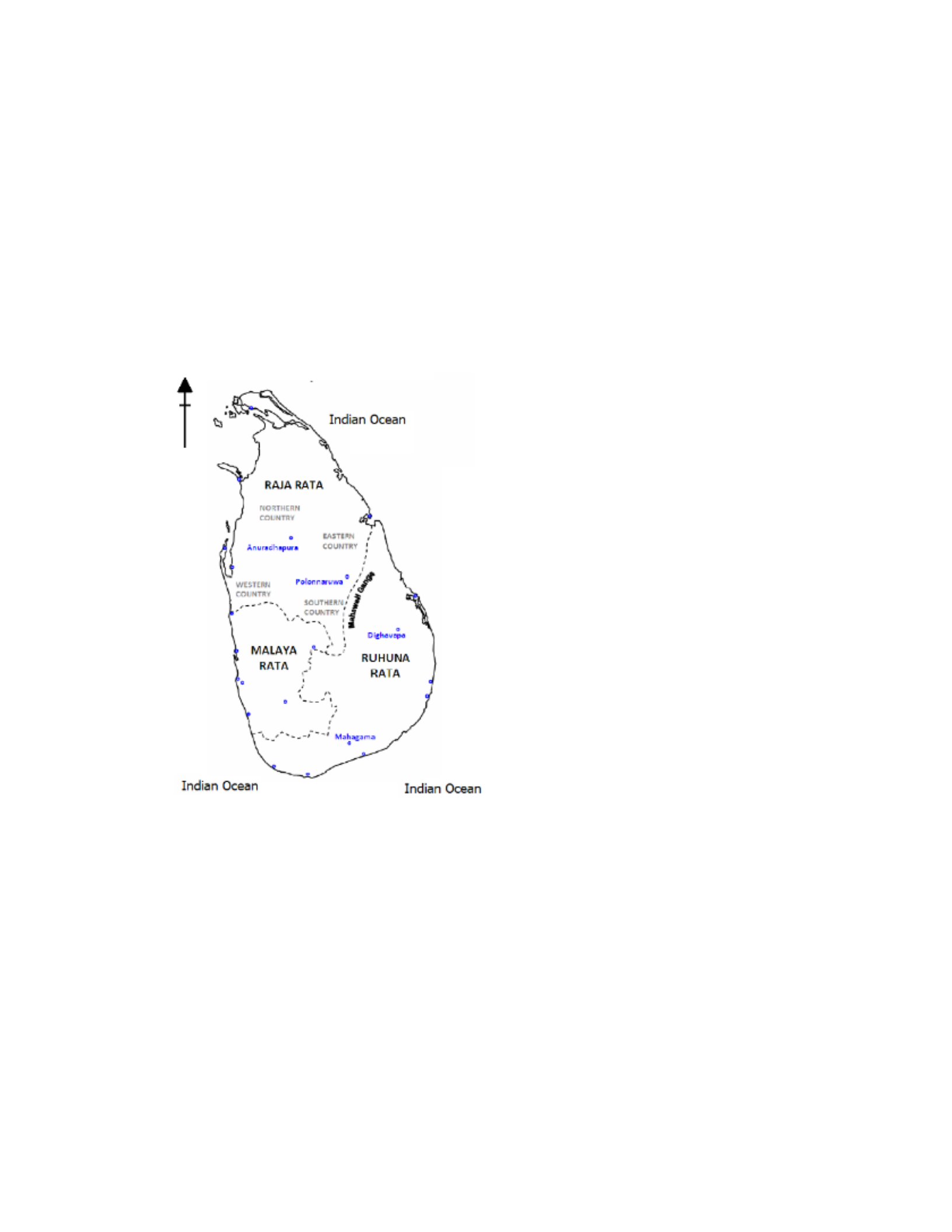
112
Anuradhapura, Polonnaruwa, Yapahuwa, Kotte and Kandy. Sri Lanka, until the fall of the
ancient monarchy, following British occupation, and the Kandyan convention of 1815,
always had multiple kingdoms within the nation (see Figure 9).
Figure 9
Three Major Kingdoms of Precolonial Sri Lanka
Note. Author created using the data sample, Three Major Kingdoms of pre-colonial Sri
Lanka, By S.P Amarasinghe, Authors Private collection, July 2009, Copyright, 2009.
The earliest kingdoms being the Ruhunu (Southern Kingdom), Maya (Western
Kingdom) and Pihiti (Northern Kingdom) due to various invasions and threats by foreign
forces, including the great Kaling and Maga, migrated to the central hills by the end of
the 14th century. In such Kingdoms both the monarchy and citizens held a collectivist

113
understanding of power. Despite commanding a higher level of authority, monarchs did
not go beyond the popular interest of the people. This is because, if they did, another
ruler would seize the throne with the support of its discontented followers (Mendis,
1951).
The Sri Lankan monarchs, trained in various philosophies during their upbringing,
understood the Buddhist philosophy of cause-and-effect, so they lived a life remarkably
like the Indian monarchs, and were held accountable to multiple obligations. These
obligations included maintaining order and peace, protecting the nation from outside
forces, and supporting the progress of agricultural needs to sustain the nation’s economy
(Kingwell-Banham et al., 2018). They were also expected be involved with supporting
the religions institutions of the people by encouraging the maintenance and progress of
temples and other religious edifices (Geiger, 1912).
In meeting the obligation placed upon him, a monarch, was bound by the laws of
governing called the ‘dasa-raja-dhamma’ or ten duties of the king. They used these
governing laws to delegate power virtuously (Pethiyagoda, 2021). The monarchs, despite
the power they commanded, were not exempt from being accountable for their actions.
They were constantly monitored, criticized, corrected, and guided by the ‘Purohita’ Vedic
priesthood and the ‘Pandit’s’, the wise or learned people in the court. These, Purohit’s
and the Pandit’s were responsible for educating and mentoring a young monarch and
continued this effort until their demise (Naik, 1961). The Purohit’s, the Pandit’s and the
guiding principles of the ten duties of the king acted as an unseen force that assured a

114
monarch conformed to the ‘separation of powers’ and executed his powers favoring the
popular interest of the people (see Figure 10).
Figure 10
The Ten Duties of the King (Dasa Raja Dhamma)
Note. Author created using the data sample, Kingdoms of Sri Lanka, By Amarasinghe,
Authors Private collection, July 2010, Copyright, 2010.
When governing their kingdoms, adhering to the ten duties, a monarch followed a
constitution. The most recent one uncovered is the constitution of the Kandyan Kingdom
(Nadaraja, 1972). Translated to English in 1833 this constitution covers an array of topics

115
pertaining to all aspects of governing a state, as well as executing justice (D’Oyly, 1833).
Some of the noted topics include, the duties and authority of the chiefs, honors,
privileges, division of the kingdom, duties allocated to castes, allocation of land,
responsibilities of the courts, crimes, punishment as well as the administration of justice.
Within the context of administering justice by an ancient monarch, the Pandit’s
and the Purohit’s physically stood within the court as an unseen force in ensuring due
process. The Gam-Sabaha (Village Council) and the Rata- Sabaha also played a key role
to balance power (see Figure 11). A basic form of self-governance, the ancient village
council consisted of ‘raiyats’ or those who hold land belonging to the king for purposes
of agriculture. These raiyats, at the ground level of ancient Sri Lanka’s judicial hierarchy
regulated the affairs of the village, enforced its ancient customary laws, and delegated to
each cultivator his or her share of land for the use and preservation of irrigation works.
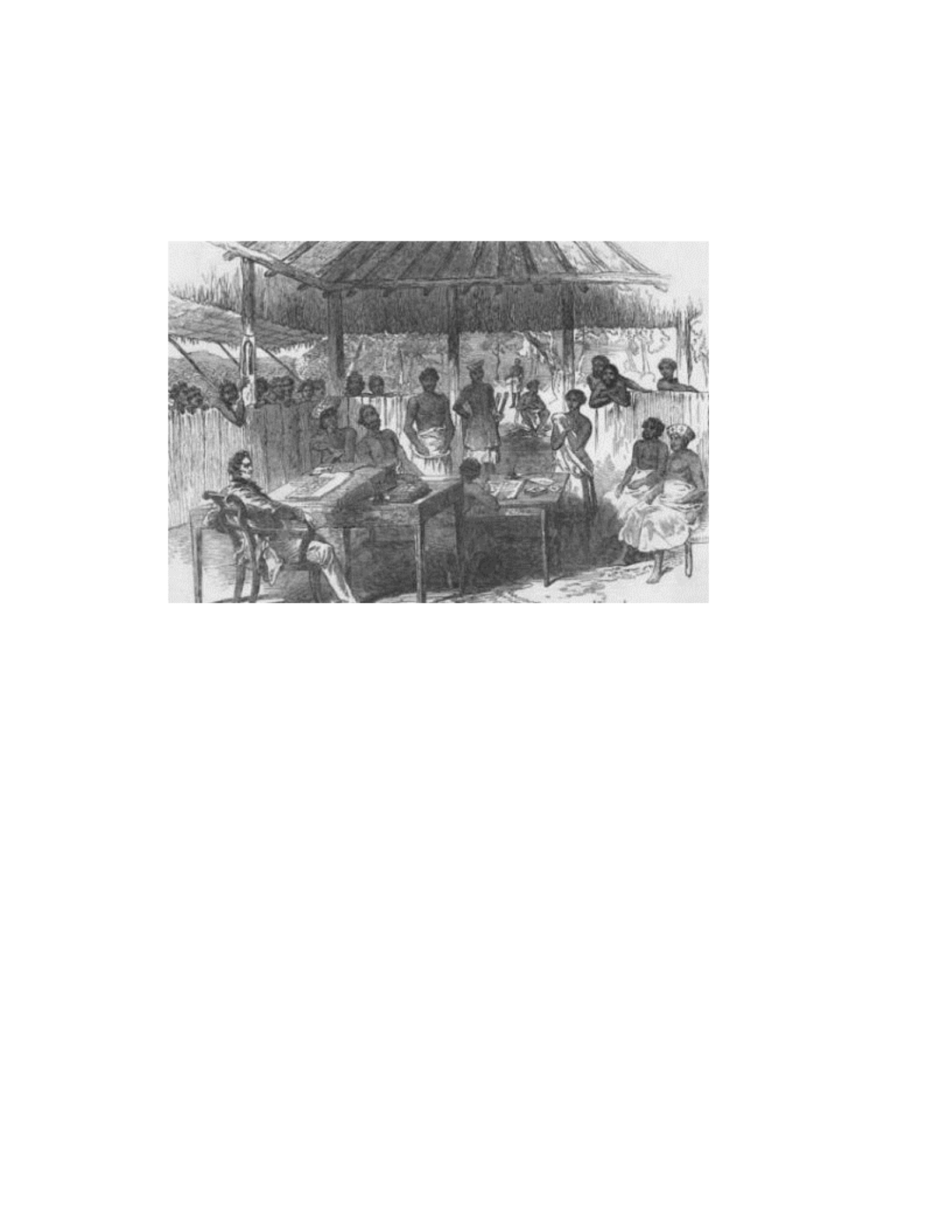
116
Figure 11
Interior of a Village Courthouse in Session (Gam Sabaha)
Note. Adapted from Ceylon: An Account of the Island, “Interior of a village
courthouse”, By Sir James Emerson Tennent, Longman and Roberts Publications,
Copyright, 1681.
The people, in protecting one’s trade, and when faced with challenges, would first
present their case to the village councils, and by voting on a motion accepted the decision
of a majority. If dissatisfied, the issue was then presented to the ‘Rata-Sabha’ (District
council), an entity consisting of delegates from each village of a particular district with
authority over caste, marriage, and social status. If these two councils failed to provide a
solution it would then be taken to the king’s court. Making the village councils and the
district councils the first and second level levels of the judicial hierarchy, as well as a
force, which ensured due process. The membership of the village council consisted of

117
residence in a particular village without regard to caste, creed, gender, or ethnicity.
The ancient monarchs of Sri Lanka endured several challenges. Most importantly
was their inability to effectively communicate with all parts of their dominion which
stood in the way of expressing authority, and in unifying the nation under one monarch
(Geiger, 1912). When responding to threats, having no standing armies, the monarchs
were dependent upon regional chiefs to provide people and arms. This afforded a good
deal of power to the chiefs (Siri Sumangala et al., 1998). The distance between kingdoms,
the monarch’s inability to communicate with their followers, and the dependency on the
chiefs in time of crisis, all compelled the people to organize themselves in small
communal sects to provide for their needs (K. M. De Silva, 1981).
Pre-Colonial Societal Dynamics
The nucleus of the ancient communal sects of Sri Lanka consisted of one’s family
and their trade. Each family, identified by a trade or a service they provide, formed the
Sri Lankan caste system and other dynamics of a village (Jabbar, 2005). The Sri Lankan
caste system differs from the Indian caste system. The Sri Lankan caste system is guided
by the Buddhist principals, and separate people based on the value of their industry and
their family’s ability to manufacture goods at an elevated level (M. Roberts, 1982).
Industries within the cast structure include merchants, woodcutters, flag-bearers,
jewelers, drum manufacturers, and farmers (Nubin, 2002). Trade secrets of their crafts
were handed down from father to son, and through inter marriage (K. M. De Silva, 1981).
Even the localities in pre-colonial times were named after the industry for which that site

118
was popular. For example, ‘Panideniya’, a village of the people engaged in honey
production, ‘Wewaldeniya’, of those engaged in weaving, ‘Madurawela’, is a village of
those engaged in pottery (Kumbal) industry (Jabbar, 2005).
Based on the Sri Lankan caste system, lineages that supported the nation’s
economy, through rice cultivation, and or counseled the monarchs and the chiefs, were
considered higher than jewelers or one’s manufacturing ‘Chunuk’ (calcium carbonate) for
painting or eating (Knox, 1681). The lowest within the Sri Lankan caste system were
associated with those incurably sick, and those engaged in cannibalism. They lived as
gypsies, occupied in industries such as tanning, rope making, and disposing of the dead
(Gilbert, 1945).
Role of Women in the Pre-Colonial Period
Another aspect of the pre-colonial society was the prominent role women played
as mothers and wives. Historical evidence indicates that other faiths and other tribes
including the Yakshas (demon) and Nagas (Snake) have existed in Sri Lanka since the
fifth century BC. These early systems of worship embodied strains of ancient Hinduism,
where women played a key role. In many instances women were portrayed as either equal
to their male counterparts or as in the case of the goddess ‘Kali’, stronger (see Figure 12).

119
Figure 12
Goddess Kali is portrayed standing on Lord Shiva & Goddess Lakshmi
Note. Adapted from, Hindu Mythology, Vedic and Puranic, “Goddess Kali and
Lakshmi”, By William Joseph Wilkins, Missionary Society Publications, Copyright,
1882.
Buddhism, the majority religion of Sri Lanka, was introduced in the 3rd century
BC by the great emperor Asoka. Even though Buddhism gained prominence, it
incorporated other existing religious beliefs, which included Hinduism, Yaksha, and the
Nagas (Rahula , 1966). The crucial roles played by notable women such as Buddha’s
mother Mahā Māyā, wife Yaśodharā, stepmother Mahāpajāpatī Gotamī, and the chief
laity Sujata, strengthened the Buddhist order. Because of their support to Buddha,
Buddhism portrayed women as worthy of veneration and as ones equal (Nyanaponika
Thera & Hecker, 2003). The Buddhist jataka tales, describe in detail, 550 reincarnations

120
of Prince Siddhartha who attained Buddhahood, illustrates loyalty, dedication, and the
bravery of his wife in these reincarnated births. These tales were integrated into the
Buddhist catechism ‘Tripitaka’ (Triple Basket of knowledge), to use as examples for
laymen. Because the way they were used by the monks, they were perceived as reality
within the ancient Buddhist spirituality.
Women in pre-colonial Sri Lanka had attained equal footing to men and were not
treated as second-class citizens. Sri Lankan history records queen Anula, the sister-in-law
of King Devanam Priya Tissa of Anuradhapura, spearheading the establishment of the
order of Buddhist nuns in the 3rd century BC (Geiger, 1912). The initial mission, under
the leadership of the Venerable Arahat Mahindra, consisted of all male monks of the
brotherhood. Anula, observing the interest of the native women in joining the order,
expressed her concern to King Asoka (Anālayo , 2012). King Asoka, understanding the
request, sent his eldest daughter Sangamitta, a nun of the Buddhist order, to Sri Lanka,
and established the “Buddhist Female Monastic Order of Theravāda Buddhism” which
continues to date (Cheng, 2007).
This account is followed by the bravery of King Kavan Tissa’s wife Queen
Vihara Maha joining her husband in planning for the impending war against the great
King Elara of the Tamil kingdom of Jaffna (Schrijvers, 1986). Annals describe her efforts
to set up check points, as well as strengthening the nation’s capacity to endure a
prolonged war by filling store houses, organizing secondary withdrawal points, and other
diplomatic endeavors to ensure victory (Schrijvers, 1986).

121
Considering more devious, and strong female monarchs of Sri Lanka, Queen
Sugala or Sugala Devi stand foremost. Sugala Devi, the mother of King Manabharana,
was the last monarch of the Kingdom of Ruhuna (Southeast Region) (C. R De Silva.,
1997). She reigned over the kingdom when King Parakramabahu I of Polonnaruwa
(1153–1186) gained dominance over all Sinhalese territories (Geiger, 1998). Following
the death of her son, she rallied the support of the people, and deployed devastating
campaigns against King Parakramabahu I to secure control over Ruhuna (Serrao, 2015).
Accounts depicting these campaigns show Sugala Devi’s wit, intelligence, and cunning,
making her a worthy adversary to Sri Lanka’s greatest monarch, the great Parakramabahu
I, who launched a campaign against Burma (Siriweera , 2002).
Next came the reign of the notorious Queen Anula in 44 BC, who poisoned her
partners to maintain her reign. Beyond these account during the pre-colonial period,
women played an active and equal role within in Sri Lanka because of rice cultivation.
Pre-Colonial Economy, Rajakariya, and Wealth
Proof of International trade can be found in coins from Greece, China, Rome, and
Persia, uncovered in Sri Lanka through various archeological digs. This indicates that the
circulation of currency was common in Sri Lanka when most of the world was using the
barter system. The reason behind this is Sri Lanka’s natural geography and location
within southeast Asia (see Figure 13). Sri Lanka was known to many ancient seafarers
because it is located a short distance from India, the doorway to the Overland Silk Road.
The natural geography of Sri Lanka contains both natural harbors, which provide access
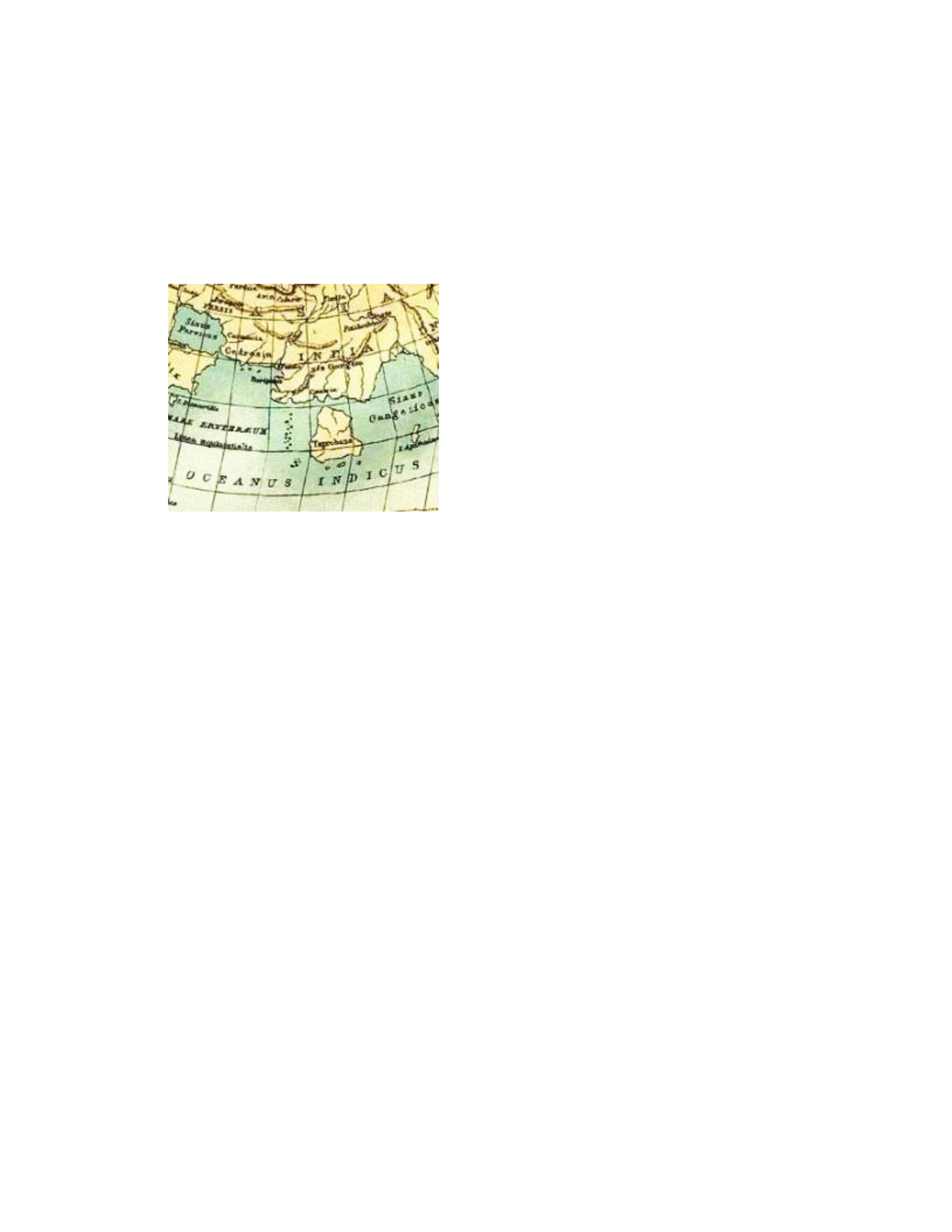
122
and protection for the Arabian sea trade from all sides.
Figure 13
Sri La ka i Ptolemy’s Worl Map 150 D
Note. Adapted from, History of Currency in Sri Lanka, “Extract of the world map by
Ptolemy”, Central Bank of Sri Lanka website, Copyright, 2018.
Sri Lanka was able to export cinnamon, cardamom, nutmeg, pepper, ivory, and valuable
timber such as Teak, Mahogany, and ‘Jack tree’ considered valuable in the European
market. Because Sri Lanka contained both good soil and ample water from a multitude of
rivers widespread throughout the country along with eastern and western monsoons, these
commodities grew in abundance (Bandarage, 2020). This, and Sri Lanka’s natural
harbors, along with its strategic location to both the Arabian Sea and Overland trade,
made it an ancient trading hub (Beck, 2006).
Along with this, the ancient system of land ownership and the tenurial practices
connected all socio-politico-economic aspects of pre-colonial Sri Lanka. The main type
of land used within Pre-colonial Sri Lanka was for paddy cultivation (see Figure 14).
Other types of land use included backyard gardens and ‘Chena’ or dry cultivation, to
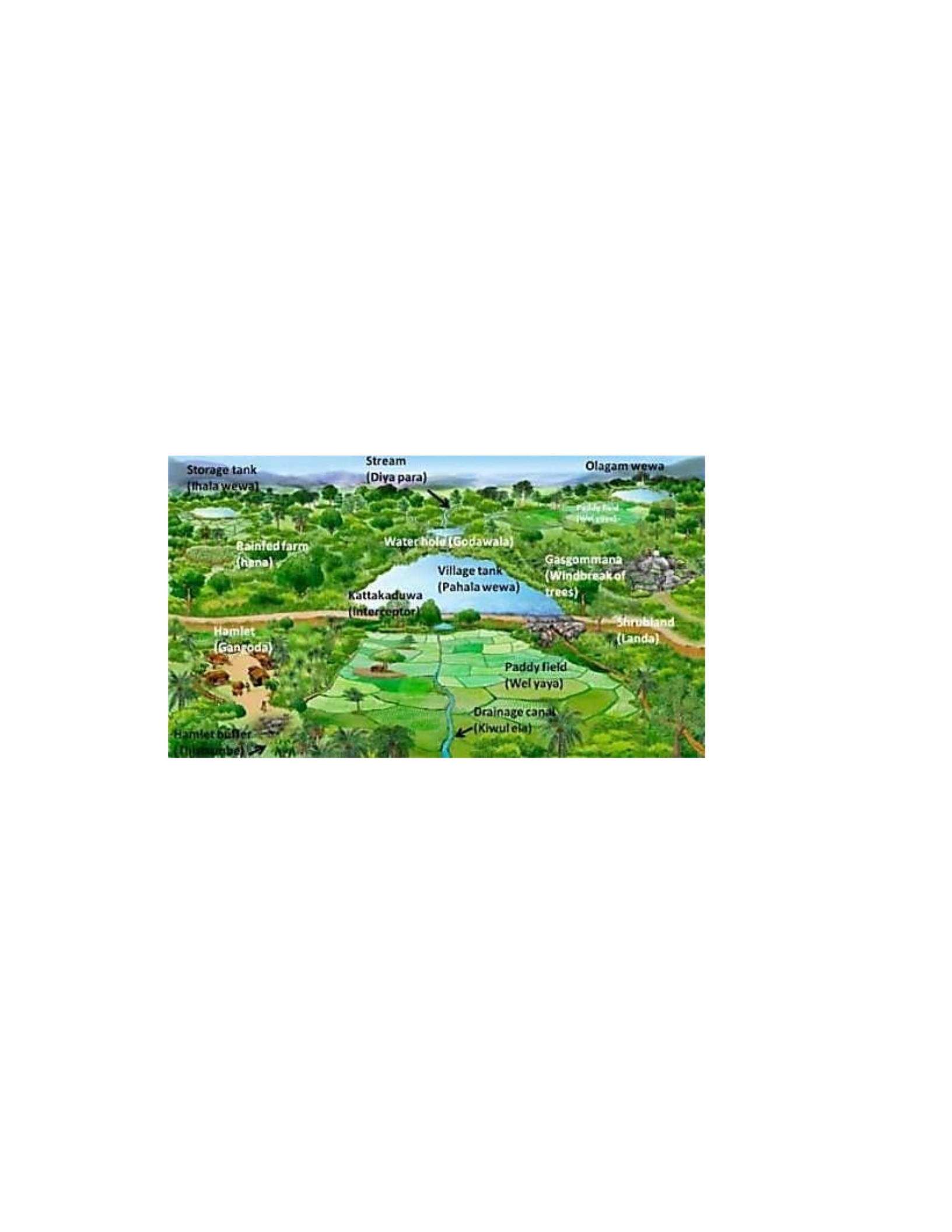
123
consume between rice harvests (Macmillan, 1914). With almost 70% of land being
covered by forests, arable land was scarce. Arable land was considered the most primary
and valuable resource within precolonial Sri Lanka and supported the forming of the Sri
Lankan land tenure system. Widespread farming communities throughout the country
used the available arable land and water resources to their maximum capacity.
Figure 14
Pre-Colonial Social Organization Bound Around an Irrigation Tank
Note. Adapted from, Ecology of ancient Tank Cascade Systems in island Sri Lanka, Fig.
5, in Journal of Marine and Island Cultures, By Geekiyanage, Pushpakumara,
Dharmasena (2010), Institute of marine and island culture, Copyright, 2010.
Multiple debates are presented by the academics on pre-colonial land ownership
in Sri Lanka, and the role of the monarchy. Some scholars, including Siriweera (1994),
Abeysinghe (1956), and Codrington (1938), say that within the ancient Sri Lankan tenure
system the monarch was the sole proprietor of all the land within his or her Territory. But

124
most academics argue that despite being identified as the owner of land (“Bhupathi’),
monarchs stood only as the custodian and not the sole proprietor of the land
(Kumarasinghe & Samkin, 2018).
Research by academics including Doyly (1883), Hayley (1923), Codrington
(1938) and Peiris (1956) show that land ownership and tenure was seen as four categories
under the control of a monarch (see Figure 15). The nobility and aristocracy and others of
prominence controlled the land to which the monarch granted them controlling rights.
The monarch could obtain services and income from the land outside of the three
categories above, and land held by religious institutions. The Rajakariya is the basis of
the ‘king’s duty’, it is a unique form of land tenure system that supports both the
individual and the state (Lowe, 2007). For this, the monarch used the land allocated to
him in exchange for services and income.
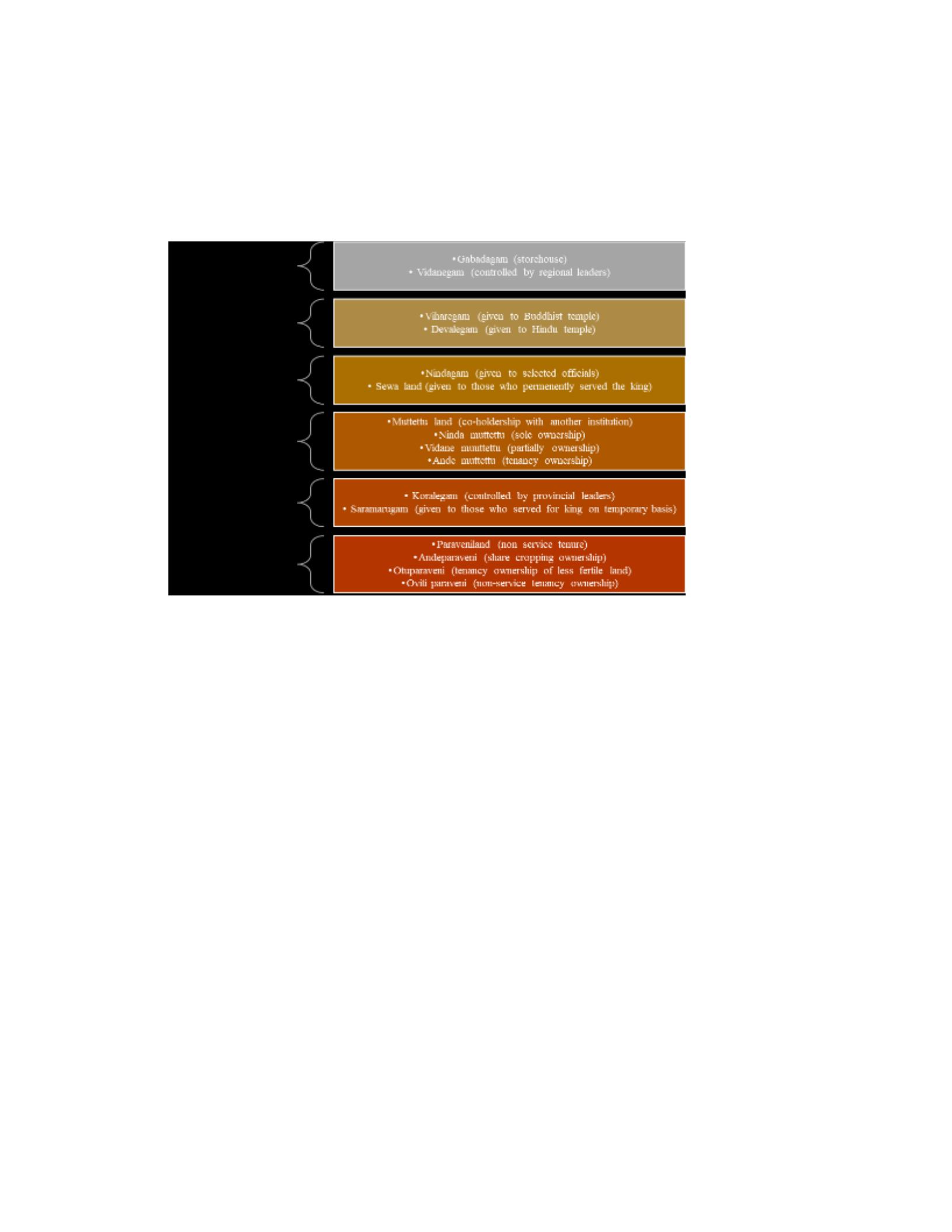
125
Figure 15
Land (Gam) Ownership and Tenure
Note. From Codrington (1929), D’Oyly (1833) and Abeysinghe (1956) within the data
sample, Land (Gam) Ownership and Tenure, By Samanga Amarasinghe, July 2017,
Copyright, 2017.
The services expected by the king for the land granted were in two forms. One
was services rendered for public works, such as in the construction of roads, bridges or
irrigation works. The other was for obtaining services based on an individual’s caste-
related occupation (Toynbee, 1946;Wickramasinghe, 2020). In this manner, the land
tenure system of Sri Lanka connected the pre-colonial socio-politico-economic
paradigms. This system incorporated a fair distribution of land by means of ‘Pangu’
(equal shares) based on one’s need and family trade. This land distribution omitted
religious or ethnic preferences, so ethnic harmony was sustained (Aiyangar et al., 1921).

126
The pre-colonial economy continued to grow because of these systems such as the
Rajakariya and the land tenure system. Today, most of these pre-colonial cities, beyond
Kandy, are in ruins, masking the hidden glory inside the overgrowth. Various accounts by
visitors to Sri Lanka from ancient times, give a glimpse of these marvels. One such
visitor to ancient Sri Lanka was Fa Hein, a Chinese Buddhist monk who traveled to all
the Buddhist kingdoms between 337 BC – 422 AD. During his journey Fa Hein landed in
Sri Lanka and described its diversity: “… the people of various countries heard how
pleasant the land was and flocked to it in numbers until it became a great nation (sic.)”
(Fa-Hien, 1886, p. 101). Sri Lanka’s abundance of vegetation, and agriculture, according
to Fa Hein (1886), was that “The vegetation is always luxuriant…. Cultivation proceeds
wherever men think fit, there are no fixed seasons for it (sic.)” (p. 101). The wealth of
pre-colonial Sri Lanka was such that the “king built a large tope (platform), 400 cubits
high, grandly adorned with gold and silver, finished with a combination of all the
precious substances” (p. 102). Fa Hein also gave us a glimpse of the wealth and
prosperity of the time when describing the historical Abhayagiri vihara (Temple
complex) site frequented by pilgrims even today. According to Fa Hein (1886), “…he
(the king) further built a monastery, called the ‘Abhayagiri’. In it a hall of Buddha,
adorned with carved and inlaid works of gold and silver… which there is an image (of
Buddha) in green jade, more than twenty cubits in height, glittering all over with those
substances” (pp. 102-103).
Fa Hein presents a rare glimpse of the ancient monastic way of life with some
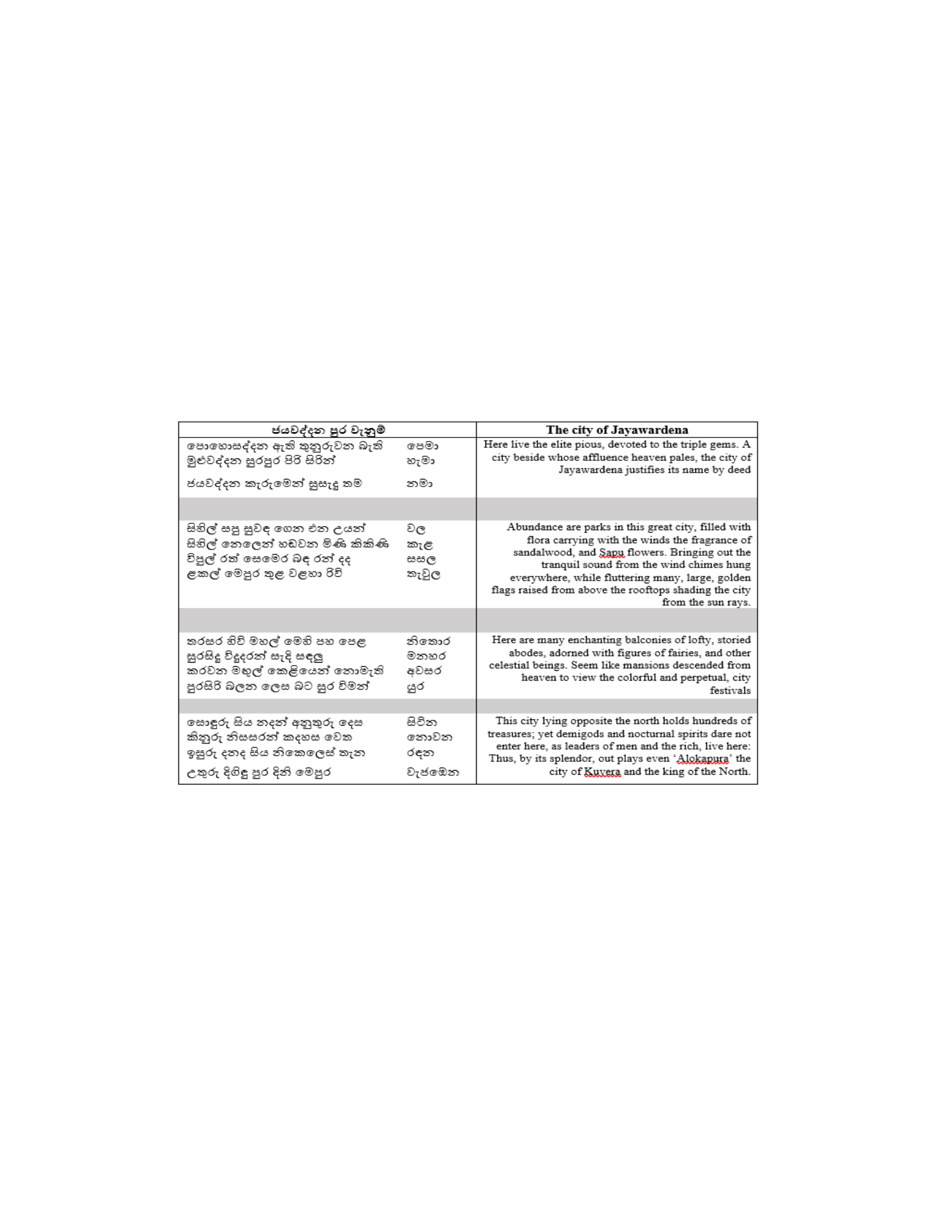
127
details about the ancient capital of Anuradhapura during the reign of king Mahanama of
Anuradhapura in 422 A.D (Codrington, 1926). Ven. Thotagamuwe Sri Rahula Thera,
through his text the ‘Salalihini Sandesh’ (Message of the Mina bird), also portray a
splendid view of Jayawardena, the last pre-colonial capital of Sri Lanka (see Figure 16).
Figure 16
Description of the City of Jayawardena in the ‘Salalihini Sandesh’
Note. Adapted from, Salalihini Sandesh, By Thotagamuwe Sri Rahula, translation
Edmund Jayasuriya, (2002), PP 40-41, Post Graduate Institute of Archeology,
(Copyright, 2002)
The kingdom of Kotte, during the reign of king Parakramabahu the VI (1412 –
1467), was considered one of the richest kingdoms since Anuradhapura and Polonnaruwa
(Somaratna, 1969). The wealth of this kingdom was found in its strategic location and its
openness to diversity (see Figure 17). It was located close to the port of Kolon Tota
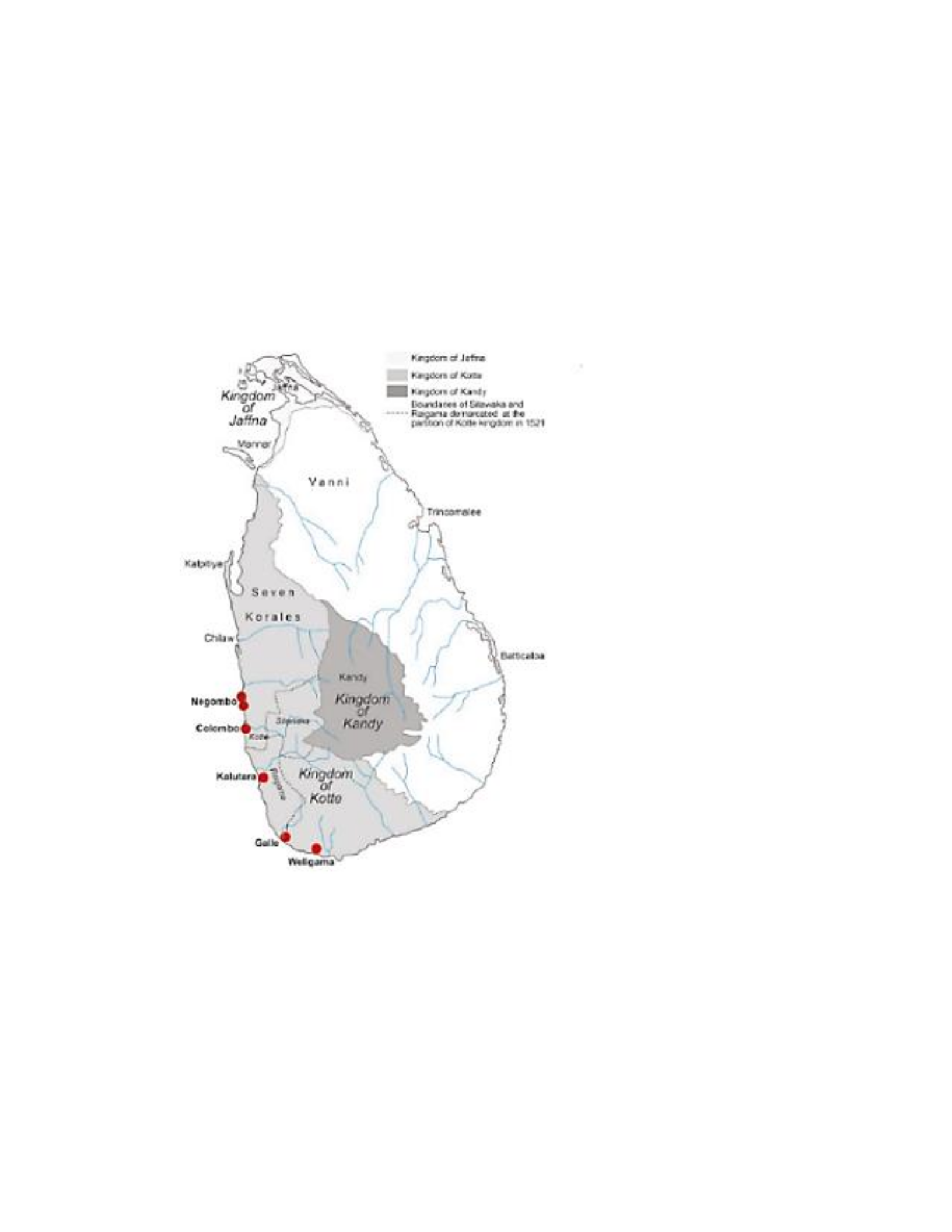
128
(Colombo), situated toward the west. This was a well-known port frequented by Roman,
Arab, and Chinese traders for more than 2000 years (Pieris & Naish, 1999).
Figure 17
The Kingdom of Kotte with the Annexed parts from the North
Note. Adapted from, Remains of Dark Days, By Sagara Jayasinghe, Helder Carita and
Joaquim Rodrigues dos Santos, (2019), P.20, Atris Press, (Copyright, 2019)
Various historical records indicate that by the 8th century, many Arab Muslim
traders had settled in Colombo, making it their base to conduct trade for that part of the

129
world (Peebles, 2015). The King of Kotte captured the Jaffna and Vanni territories by
1450 and as a result, had access to resources within the Northern region including
coconuts, pearls, and salt, all considered valuable trade goods. This enhanced the agrarian
economy of the Kingdom of Kotte (Somaratna, 1969).
The pre-colonial Sri Lankan kingdoms always managed to sustain the economy
because the monarchs of the time placed the wellbeing of their people a priority. The
monarchs adhered to an ancient form of decentralized governance that worked to
maintain both economic growth and the development of these kingdoms. The pre-
colonial monarchs, the chiefs, and the people working together within the Gam Sabah,
Rata Sabah, and the land tenure systems enabled values such as equality, justice, and due
process to flourish. The most relevant observation of the pre-colonial period is that they
valued humanity beyond things that separate people, such as religion, creed, color, and
birth. They welcomed diversity such as Buddhism when it first arrived in the 3rd century
BC, so peace reigned within these kingdoms. But, due to prolonged internal conflicts, and
various colonial interventions, these ancient governing methods changed.
The Colonial Period (1505 -1948)
Sri Lanka was colonized successively by the Portuguese 1505-1658, the Dutch
1664-1795, and the British from 1796 – 1948. These colonial powers would exploit the
once isolated precolonial Sri Lankan socio-politico-economic structure to meet their
geopolitical, geostrategic, and economic needs. Despite not making an impact at once,
these changes, over time, began to shift various paradigms of the socio-politico-economic

130
structure of Sri Lanka.
Portuguese Colonial Governance
The Portuguese, Sri Lanka’s first colonial power, found Sri Lanka by accident
when Lourenco de Almeida’s ship was swept away to the coast of Sri Lanka during a
storm in 1505. Almeida observed Sri Lanka’s commercial potential and returned it in
1518. Then, with the permission of king Vijaya Bahu VII, opened a trade post in
Colombo as part of the Portuguese East India Company and converted it to a fort.
By 1543, there were four kingdoms within Sri Lanka. To the south the kingdom
of Kotte under Bhuvanaikabahu VII, Raigama under Raigam Bandara and Sitawaka
under Maya Dunne. The Jaffna kingdom dominated the Northern provinces. Because of
familial hierarchical troubles within the Sinhalese, once Raigam Bandara was
assassinated by the domineering Maya Dunne, he turned his attention to the kingdom of
Kotte (Ribeiro, 1998). The king Bhuvanaikabahu VII, fearful and isolated, unsure as to
whether his forces could defend him against his brother, requested help from the
Portuguese who supplied labor and armaments, eventually increasing the power of the
Portuguese in Sri Lanka.
The Portuguese started to exploit resources within the territories of the Kotte
kingdom, claiming them as war tribute (Ribeiro, 1998). This was made easier by the
constant infighting of Maya Dunne and Bhuvanaikabahu VII. In 1560, omitting the
territories under the Jaffna and the Kandyan kingdoms, the Portuguese had extended their
dominion across all coastal territories belonging to the Kotte kingdom (Pieris & Naish,
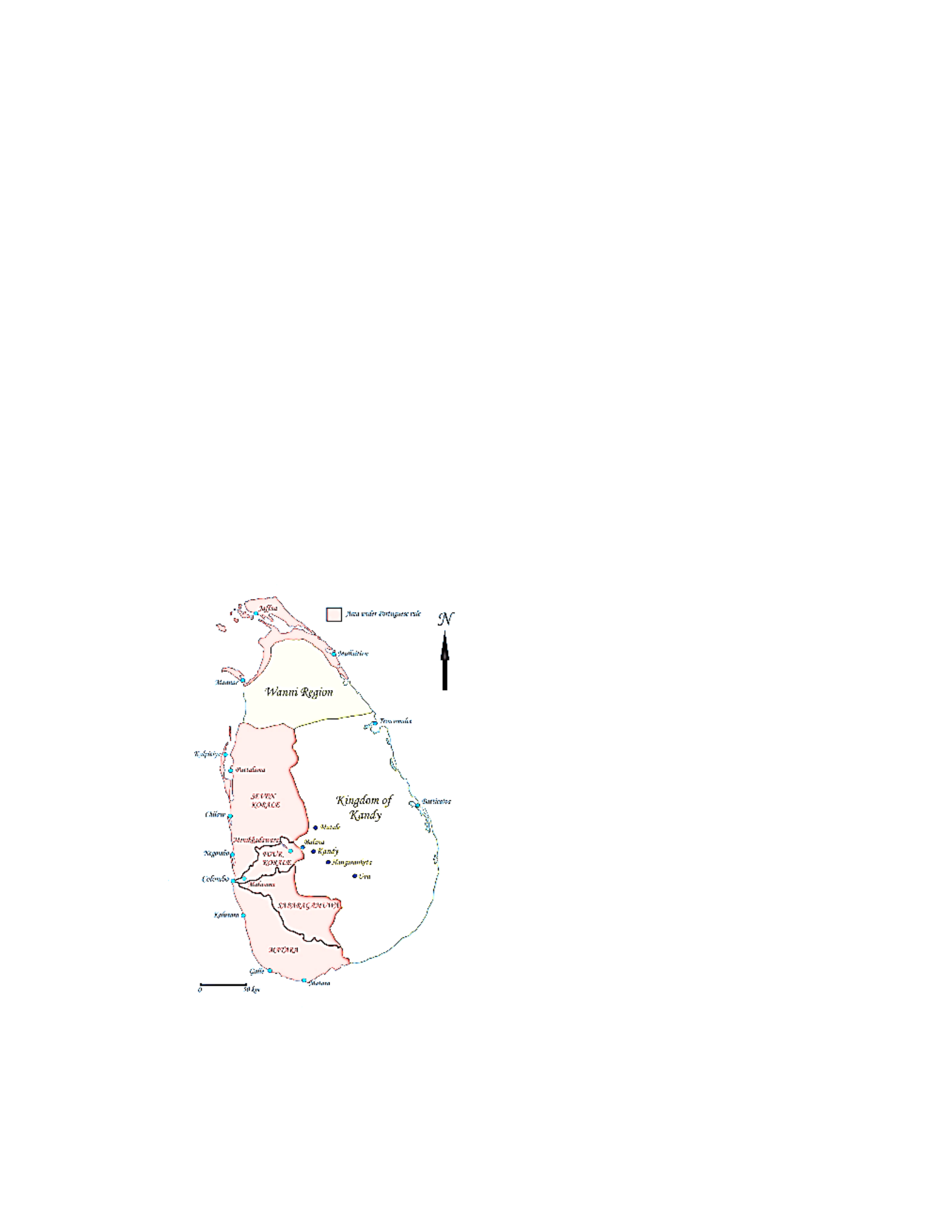
131
1999). In 1619, after multiple attempts to capture other parts of the country, the
Portuguese annexed the Jaffna kingdom, as well as the eastern coastal ports of
Trincomalee and Batticaloa (Blaze, 1999). The central high lands, and most parts of the
eastern coastlines remained under Sinhalese monarchial rule, known as the Kandyan
Kingdom, until 1815 when it was finally incorporated into British dominion (Mendis,
2005). The Portuguese governance within Sri Lanka was done by maintaining local
governance of the Kingdom of Kotte, which consisted of four provinces and various other
subdivisions each under a Dissave (Chief; see Figure 18).
Figure 18
Portuguese Rule in Sri Lanka
Note. From the data sample, Portuguese Rule in Sri Lanka, By S.P Amarasinghe, Authors
Private collection, July 2011, Copyright, 2011.

132
Portuguese Colonial Societal Dynamics
Under the Dissave, the Portuguese further delegated their power by appointing
local officials, taken from the Sinhalese nobility, who were loyal to the Portuguese and
the Burghers (McGilvray, 1982). They also maintained the pre-colonial system of land
tenure that sustained the local economy and procured essentials needed for Portuguese
trade (Mahroof, 1997). The old payment system by land allocation, was also used by
Portuguese officials to pay the native loyalists and the colonists for their services (Serrao,
2015).
During the Portuguese occupation, the native caste system was retained and a new
ethnic group, the Portuguese Burghers, were included as a preferred ethnic group. The
local economy continued to function through the paddy and dry cultivation seasons. The
international trade that supported the native economy to flourish was now completely
under Portuguese control (Pieris & Naish, 1999). Within these areas, certain indigenous
goods, such as elephants, pepper, and betel nuts becoming part of the Portuguese
monopoly, and was denied to the native king and his subjects. The Portuguese
governance within Sri Lanka, was based upon exploiting the abundant natural resources
for profiteering, lacked a proper understanding of the pre-colonial Sinhalese social and
economic structure, so they were not able to turn it to their advantage (G. C. Perera,
2007).
Another effect seen negative to the populous was the Portuguese effort to
evangelize the natives to Roman Catholicism. This left a lasting negative effect on Sri

133
Lanka’s ethnic harmony. Since 1211, most of the Portugal’s population (97%), followed
Roman Catholicism, and only 3% followed other religions. Portugal predominantly
remained a Catholic state. This influenced every aspect of Portuguese culture including
governance in Sri Lanka (Solsten & Keefe, 1993, p. XVI). With no separation of state
and religion, the Portuguese efforts to maintain control of Sri Lanka, deployed a fierce
campaign to forcibly convert the natives to Roman Catholicism by destroying any other
forms of worship (Keefe et al., 1977).
Portuguese Colonial Economics
The Portuguese, during these rampages, set fire to rice fields, chena cultivations,
and homesteads. They decapitated noncombatants, destroyed Buddhist, Hindu, and other
religious buildings, and burned Ola Leaf books within temples and shrines (Biedermann,
2018). During this period, the destruction of land allocated for use in the land tenure
system fomented a sense of resentment toward both the natives, who submitted to
Christianity, and the Portuguese (Wickramasekara, 2004).
In furthering this disharmony, the Portuguese enforced land taxes that would
eventually lead to aggression against the colonists and their loyalists (G. C. Perera, 2007).
The Portuguese enforced taxes was different from the monarchial land tenure laws which
compelled ‘volunteer labor’ or ‘caste-based services’ for the collective good of state and
country (G. C. Perera, 2007).
The Portuguese, within their territory, enforced taxes on natives after reviewing
all their possessions. They compiled a register of grants (Tombo) containing each

134
holding, the title of those who held it, the income it yielded, and the dues to which the
holder was liable. This was then collected with severity (Berkwitz, 2013). Portuguese
taxation was based on profiteering. It used a Hapsburg system to earn profit for the ruling
class based on one’s harvest, land size, and the profits made using the land (Berkwitz,
2013). Excessive demands placed by the Portuguese on the natives, led to various
hardships, compelling the natives to become hostile (G. C. Perera, 2007).
When faced with hostility, and disobedience by the locals, the Portuguese
responded with force. This exacerbated the conditions and led to constant turmoil
between natives and the Portuguese colonists. Some of these known conflicts include the
Vijayabā Rebellion of 1527, the battle of Nallur in 1560 and the toppling of the Jaffna
Kingdom in 1619 and annexing it to the Portuguese (De Queyroz, 1982; Winius, 2013).
In between these conflicts, the Portuguese, to extend their domain, deployed a full
military offensive against the Kandyan Kingdom: the last Sinhalese stronghold in 1592.
Noted battles of this offensive include: the celebrated Danture campaign of 1594, and the
battle of Gannoruwa on March 28, 1638 (Winius, 2013).
The native population of Sri Lanka, who endured centuries as an agrarian society
by challenging the jungles for their livelihood, were masters in guerrilla warfare (G. C.
Perera, 2007). Guerrilla warfare became a way of life for the locals, who responded to the
invading Portuguese forces, by using the natural setting of the Kandyan kingdom, of
thick jungles, deep gouges, and other obstacles, to their advantage, and caused heavy
losses to the Portuguese.

135
The impact of the Kandyan response was so devastating, that the Portuguese not
only retreated, but never attempted another military offensive of the Kandyan Kingdom.
Instead, they sought diplomacy by signing the convention of Malvana in 1598 with the
Kandyan Kingdom and retreated to their territories which include the Kotte and the
Jaffna.
With pressure building from all sides, including threats on his life, the last
executive action by the king of Kotte Bhuvanaikabahu VII, in protecting his lineage, was
to have his son Prince Dharmapala (Dom João Dharmapala Pereia Bandara 1541 –1597)
baptized and placed under the guardianship of the Portuguese until he was ready to rule
(Seijas & Xavier, 2020). Prince Dharmapala embraced Roman Catholicism, legitimized
Portuguese forced religious conversion, and granted the Portuguese total power over local
governance to protect himself from his uncle Maya Dunne and the enraged Kandyan
monarchs (Seijas & Xavier, 2020).
When Dharmapala died on May 27th, 1597, the Portuguese briefly gained
authority over the kingdom of Kotte, but most of Kotte’s divisions were still under
Sinhalese nobility loyal to the local monarch (Abeysinghe, 1964). To solidify Portuguese
authority over the Kotte kingdom, and to gain loyalty of the locals to the king of Portugal,
Governor General, Jeronimo de Azevedo initiated the Malvana convention of 1598
(Ribeiro, 1998). The edicts of the convention stated, that in return for native authorities
recognizing Philip I of Portugal as their king, he, as the authority of Portugal in Sri Lanka
and India, will respect the native way of life, including laws and customs (Abeysinghe,

136
1964). In response, eight Christianized Sinhalese delegates, and representatives of the
royal house of Kotte professed their loyalty to the king of Portugal (Pieris & Naish,
1999). This enraged the Kandyan monarch.
The Malvana convention of 1598 was the first of its kind introduced to Sri Lanka.
It was highly criticized for granting the Portuguese an open door to exploit the land and
plunder local treasures in their efforts to force the native population to convert to
Christianity (Pieris & Naish, 1999). What the convention granted the locals, was the
freedom to administer justice according to Sinhalese laws, even within the Portuguese
dominion (Niriella, 2013). Unlike times leading up to independence in 1948, the
Portuguese Colonial period, beyond its brutalities and resource exploitations, kept most
of the old pre-colonial ways.
When considering the Portuguese Colonial period of Sri Lanka (1505 – 1658),
history denotes it as an era of violence, unrest, and turmoil, and an era that compelled
prolonged change (K. M. De Silva., 1981). The change came in the form of ethnic
separatism that haunted the nation for decades. With the Jaffna kingdom falling under the
Portuguese in 1619, only the Kandyan Kingdom survived, as a strong hold for natives to
seek refuge (Ross & Savada, 1988).
Those who suffered and escaped the Portuguese dominion, considered the actions
of the Kotte monarchy to integrate Portuguese ideas in internal politics, as an act of high
treason (Welhengama & Pillay, 2014). The up-country people were unsympathetic
toward the residents of the low country, who were suppressed into submission by the

137
ruthless Portuguese, and began to look down upon the low country people as traitors who
betrayed the once glorious nation (Aspland, 1851). As a result, beyond the trading of
goods between low country and up-country natives, social attachments, such as marriages
ceased and “things went south” in all aspects (Booth, 1978). Causing another form of
separatism, based upon religious belief. Christianity became in disfavor among both the
upcountry and low country Buddhists. Even today, Christians are not openly welcomed
within dominantly Buddhist Sri Lanka.
Dutch Colonial (VOC) Governance
The Kandyan Monarchy, despite having the manpower to deploy a full-scale
attack in dealing with the Portuguese, lacked a strong navy, which challenged the
Monarch’s ability to contain growing Portuguese power. Examples of this can be seen in
the attack on the Colombo fort in 1521, when the Portuguese, on the verge of complete
loss, retreated to the sea (Black, 2011). Within the safety of their armada, the Portuguese
used their naval battery to devastate attackers, causing many casualties. They then
requested reinforcements from other nearby forts and reclaimed lost territory. In 1602,
due to the actions of Phillip of Spain, the politics between the Dutch and the Portuguese
had turned sour (Anthonisz, 2003). Phillip deprived the Dutch of their trade rights in
1602. In return, the Dutch collaborated with multiple other trade organizations and
established the Dutch East India Company or ‘Vereenigde Oost-Indische Compagnie’
(VOC) (Anthonisz, 2003). Since the Portuguese Navy maintained total dominance over

138
the Indian ocean, the VOC lacked enough territory to expand their trade, and secure a
monopoly on Asian goods (Dijk, 2006).
On May 31st, 1602, VOC Admiral Joris Van Spielberger landed in Batticaloa and
changed the history of both the VOC and Sri Lanka for good. The king of Kandy, Vimala
Dharma Sūriya I (1590-1604), finding the Portuguese menacing, established
communication with Van Spielberger. Both agreeing that they share a common enemy,
Van Spielberger agreed to help the monarch to get rid of the Portuguese and agreed to
send another envoy with details. But when the envoy arrived in 1612 with Marcellus de
Boschhouwer, Vimala Dharma Sūriya I, had died. The Kandyan Kingdom was now
under Rajasinghe II, who finalized details and signed the famous Kandyan Treaty of
1638. The treaty grants the Dutch the freedom to trade anywhere within the country and
Rajasinghe II agreed to annually deliver the country’s best cinnamon, at a fixed price to
the Dutch, to be paid with money or goods. In return, the Dutch agreed to support the
king in his campaign against the Portuguese, by providing military needs, such as men,
weapons, and ammunition (Da Silva & Beumer, 1988).
From 1638 -1658 the Kandyan monarchy, along with the Dutch, systematically
removed Portuguese strongholds throughout the coastline of Sri Lanka. By 1655, all the
Portuguese fortresses, including Batticaloa, Trincomalee, Negombo, Matara, Galle and
Colombo were liberated from the Portuguese. But, by 1658, the Dutch placed a larger
burden of the war costs on the Kandyan Monarch, and requested that payment be either in
cash, or resources. The monarch’s refusal to pay caused a rift between the two factions.

139
In response, from 1664 to 1795, the Dutch commandeered and held the regions once
occupied by the Portuguese, including most Sri Lankan harbors, and used them for VOC
industries within in Sri Lanka (Nierstrasz, 2012).
Sri Lanka, abundant in cinnamon, was the most important commodity for the
VOC so they chose Sri Lanka as their site of operations for the cinnamon industry (Da
Silva & Beumer, 1988). By 1658, the Dutch controlled over 470,000 people residing
within the two coastal provinces of Sri Lanka. The Dutch controlled territories to the
south including Galle and Colombo, then to the north, the territories included Jaffna, and
Mannar (see Figure 18).
The VOC, having their main base of operations in India, governed Sri Lanka as
part of a Mercantile system, which is a system of overseeing the economy of a country by
controlling its foreign trade. The colonies were mandated to only trade with their parent
nations, making them dependent on the parent nation (Kenton, ‘Mercantilism’, 2020).
As a result of ongoing internal turmoil between the colonists and the natives from
1500, by 1658 the ancient infrastructure now within Dutch dominion was neglected and
destroyed (Goonaratna, 1971). The ancient rice fields that sustained the local economy of
the once Kingdom of Ruhuna were now abandoned, their dams and waterways destroyed.
Unlike the Portuguese, the Dutch took a keen interest in developing the state in which
they governed. They were the first to introduce westernization into Sri Lanka,
incorporating the Sri Lankan ancient economic system (Arasaratnam, 1985).
Dutch governance was more socially relaxed and financially methodical than the

140
Portuguese. According to Ferguson (1883), the Dutch... “pursued a far more enlightened
administrative policy… but with regards to commerce, it was selfish and oppressive” (p.
5). The main goal of the Dutch occupation of Sri Lanka was to obtain a monopoly of the
cinnamon trade on behalf of the VOC. They valued ideas that encouraged economic
growth such as peace within their colonies (D. Ferguson , 1927). Because it would be too
expensive to bring in reinforcements and maintain stability within the region, native
conflicts were deemed unprofitable.
The Dutch, like the Portuguese, were dependent upon native labor. Benefiting
from this dependence, the Dutch, unlike the Portuguese, were more open to the native
system of governance (Gam Sabha and Rata Sabaha), which supported paddy-based
industries, and native social hierarchy based upon trade. The Dutch introduced Roman-
Dutch Law, allowing the administration of local justice on the regional level (Ross &
Savada, 1988).
Dutch Colonial Societal Dynamics
By 1660, the loyalty of the natives was split between the Kandyan monarch and
the Dutch. In retaining their loyalty, the Dutch used tact. They manipulated the well
rooted social dynamics of Pre-colonial Sri Lanka to their advantage and focused on
agriculture (Codrington, 1926). Agriculture not only supported the local economy to
grow, it also gave the colonists their cash crops. Prioritizing the cinnamon industry to
meet their needs, the Dutch extended their trade to other industries profitable within the
European markets. They industrialized pearls, pepper, and spice cultivation, as well as

141
profiting from other cash-crops such as coffee, coconuts, sugarcane, cotton, and tobacco
(R. B. Herath, 2002). The Dutch colonial mercantilism, within Sri Lanka, was based upon
the cinnamon industry. The Dutch introduced low level localized bureaucracy to Sri
Lanka which rallied supporters to their efforts (Reddy, 2003). The Dutch, observing the
ancient societal systems of Sri Lanka, added a new industry ‘cinnamon production’ to the
caste system (Reddy, 2003).
When the Portuguese colonial period ended, once ethnically united Sri Lanka was
divided along regional lines (see Figure 19). The upcountry natives looked down upon
the low country natives seeing them as traitors. This severed any opportunity for the low
country people to obtain any form of socio-politico-economic privileges, or even obtain
favor from their upcountry relatives (Maetsuycker, 1908). The new caste they introduced
to the Sri Lanka caste system was associated with the cinnamon industry and was known
as ‘Salagama’ or Salagama Brahmana (Dewasiri et al., 2020). The low country caste
system, created by the Dutch, used cinnamon peelers as the base, and ratcheted up to
owners of the estates.
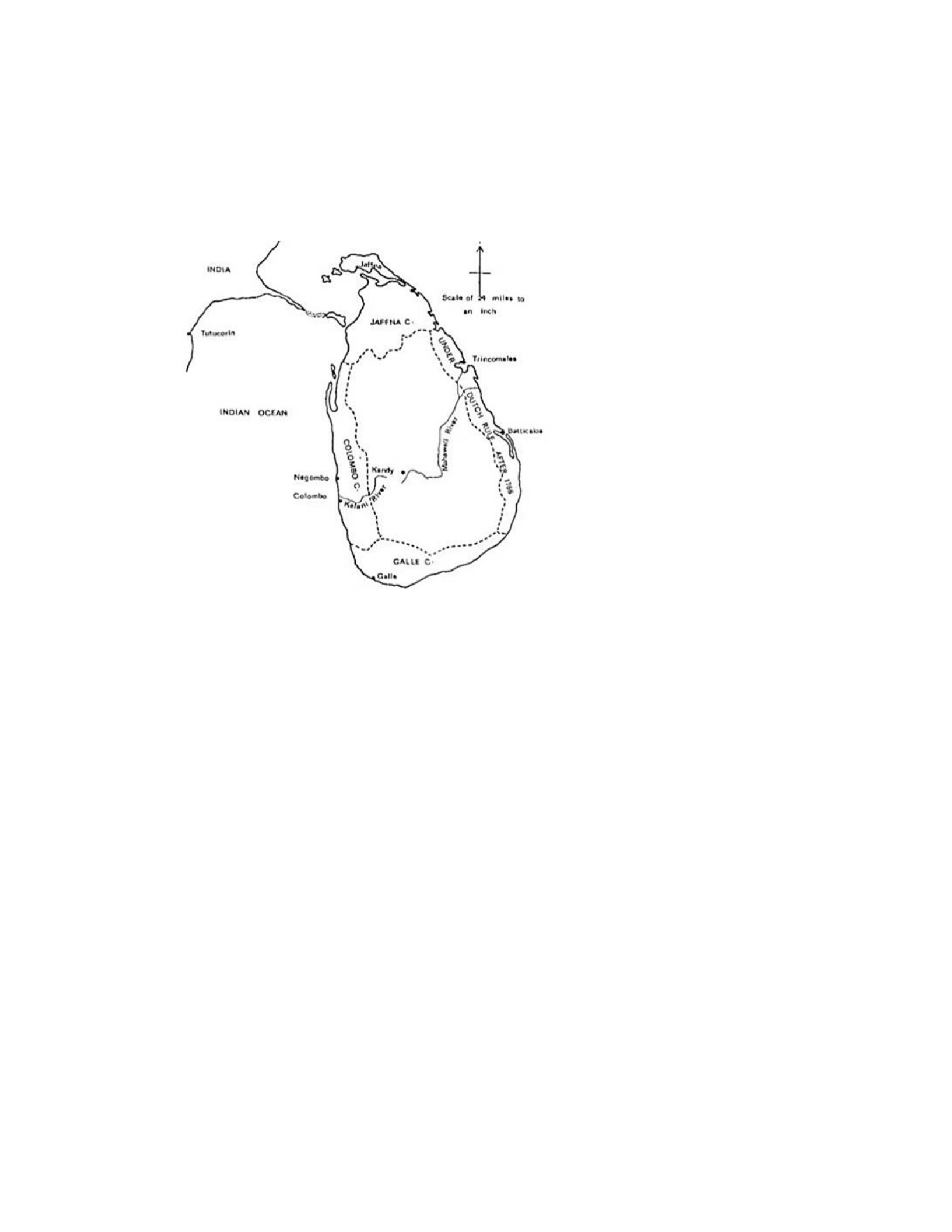
142
Figure 19
Map of the Dutch Controlled Regions Between 1658-1796
Note: From Some Historical Aspects of Leprosy in Ceylon During the Dutch Period 1658
– 1796, by C. De. F.W. Gooneratne, Medical History, 1971; 15(1), P. 69, Copyrights
1971
Above all other castes in the low country, the owners of these estates, along with
industrialists, were favored by the Dutch (Senaratne & Pathirana, 2020). The Dutch,
when delegating the duties within their administration, kept all high offices for
themselves, and the Dutch burghers. Lower offices were delegated to the local elite by
assigning them specific duties, such as providing manpower to guard the gate “Gate
Mudaliar” (M. Roberts,1982).
The invention of the printing press in 1450 marked a turning point in the world. It
brought books to the world giving prominence to education and higher education (Barker,

143
1978). Dutch clergymen, in their efforts to conduct research and publish various religious
documents, found it hard to do it using ‘Ola Leaves’. They requested a portable press to
be delivered to the Colombo fort in 1736 (Kularatne, 1995).
The press completely changed the dynamics of the Dutch colonial efforts in Sri
Lanka. The Dutch East Indian Company (VOC) printed multitudes of religious,
educational, and non-educational books in Sinhala, Tamil, and Dutch. The press, active
from 1737 to 1796, not only supported the development of proper records kept on the
growth of various industries and state policies, but it also enabled the Dutch to introduce
westernized education in Sri Lanka (W. Brown,1823).
The Dutch education system introduced to the natives, was a more liberal and
broad form of education than the Portuguese, with all its restrictions and limitations (W.
Brown,1823). Dutch education divided the occupied areas in to two hundred and forty
parishes, with one Protestant School for each parish. The Dutch further established their
education and religion, by constructing a seminary. Dutch education was accessible to
any prominent student, who could obtain an extensive education, enabling them to secure
careers as schoolmasters, catechists, or preachers (W. Brown,1823).
Some of the students chosen from these Dutch seminaries were even sent to
Europe to get a complete European education (Maetsuycker, 1908). Upon their return
they assisted in academia or joined various sectors within the Dutch administration
(Schrikker, 2007). The Dutch, along with their education system, in contrast to the
Portuguese, allowed, local temple-based education to continue.

144
Equally, native religious tolerance of the Dutch was much more lenient; while
they prohibited Buddhist and Hindu religious observance in urban areas, they did not
interfere with such in the rural areas. This retained the local population within the Dutch
dominion (R. B. Herath, 2002). However, the Dutch were not that sympathetic towards
Roman Catholic practices, they harassed Catholics whenever possible, and constructed
protestant religious edifices on land obtained from the catholic ministries (R. B. Herath,
2002).
Dutch Colonial Economics
The maintained peace between the Dutch and the Kandyan kingdom, allowed
various industries, including cinnamon, coconut, cotton, and coffee to flourish and
enabled the Dutch to develop the low country regions within their dominion. This
brought in large revenues to the VOC (Arasaratnam, 1985). The progress of the low
country was increased with the Dutch having control over all the ports and international
trade. The Kandyan kingdom having dominion over the inland remained an agrarian
society. By continuing to hold onto the pre-colonial methods and traditions, the Kandyan
kingdom lost its once flourishing economy (Dewaraja, 2008).
For the Sri Lankan low country, it was a time of revival. Unlike within the
Kandyan kingdom, dominated by the upcountry elites, Dutch dominion granted the
freedom of social upward mobility to anyone who contributed to the VOC (Kotelawele,
1995). Many ambitious young natives including Mr. Don Carolis, Christoffel de Seram,
Don Bartholomew, and James Edward Correa began emerging within the elite ranks of

145
the south (Wright, 1999). Others residing within various regions who sought fame and
adventure, began embracing the Dutch authority, and their ways, migrated to areas within
Dutch dominion. This caused the Kandyan’s and the upcountry citizens to look down
upon the Low country people even more (R. Pieris, 1956).
War and economy do not go hand in hand. If there is turmoil within a state it
discourages economic growth and development, the Dutch understood this more than the
Portuguese. In a situation where a foreign power is attempting to procure goods for a
mercantile venture that will benefit them more than the native state, internal conflicts are
inevitable. The Dutch attempted to maintain peace with the monarchy, they used the
nation’s Indigenous traditions, cultural traits such as the caste system, prominence placed
for education, mythology, and religion to lure support. But the Dutch, having dominion
only within the coastal regions, like their predecessors the Portuguese, despite their best
efforts could not create imposing change within Sri Lanka.
British Colonial (EIC) Governance
By the latter part of the 18th century, the world having changed through various
advancements in science and technology was now in a period of economic growth and
internationalism. In Sri Lanka, successive conflicts with the Portuguese, and the Dutch
for almost 200 years, added to various other internal turmoil over kingship. The Kandyan
Kingdom was now on the verge of economic collapse. Bordered by Dutch territories,
with no access to the world, the center of native governance of the Kandyan Kingdom,

146
remained isolated inland. The Kandyan Kingdom was omitted from all global affairs and
trends while the low country was becoming modernized.
In further damaging the economy of the Kandyan Kingdom, developments within
the low country created many opportunities for workers engaged in industries such as
plumbago (graphite), coconut, cocoa, coffee, cinnamon, and pearls. People from the up
country, seeking these opportunities, migrated to the low country (Pirani, 2016). This loss
of valued human capital further tilted the socio-politico-economic balance within the
Kandyan kingdom which was dependent upon the pre-colonial land tenure system and
rice economy (K. M. De Silva, 2007). These challenges obligated the Kandyan Monarch
King Kirti Sri Raja Sinha (1747-1782) to seek new allies willing to operate against the
Dutch and began communicating with the British from 1762 (Pybus, 1862). The British
were the emerging power within in Southeast Asia, who could match the naval power of
the Dutch Armada and its military might (Pirani, 2016).
In 1795, following the fourth Anglo-Dutch war (1780-1784), British emissaries
arrived bearing news that the British will support the Kandyan kings’ effort to remove the
Dutch dominance within the coastal regions (Pybus, 1862). In return for their support the
British requested that the Kandyan monarch hand over the Sri Lankan cinnamon trade
and Dutch controlled areas to the British (Pybus, 1862). Unaware of the disaster to
unfold, Sri Rajadhi Raja Sinha (1782-1798) agreed and together defeated the Dutch by
1796. In 1797, Dutch dominance was reduced, and the British took over the role of the
colonial administration within the low country coastal regions of Sri Lanka (Mendis,

147
2005). By the end of 1798, the British replaced the Dutch East India Company (VOC),
with the British East India Company (EIC) which became the dominant power over
Southeast Asian Trade.
Sri Lanka, with its natural harbors now well established by the colonial
predecessors, its proximity to India, and richness in resources was soon noted by the
British. Between mid-1700s and early the 1800s, the EIC was responsible for half of the
world’s trade in basic commodities including cotton, silk, indigo dye, sugar, salt, spices,
saltpeter, tea, and opium (Keay, 1993). They methodically began to exploit various
existing conditions within Sri Lanka to their advantage. They extended their dominance
to support their economic endeavors in Asia and Europe (Thakur, 2013).
In 1874, following the negative impacts of the Indian Rebellion of 1857, under
the Government of India Act 1858, the EIC was dissolved. All its possessions would be
taken over by the British Crown to be administered by the State (Thakur, 2013). The
exploitation of the existing conditions by the British within Sri Lanka, and their other
colonies, is a repeated topic noted throughout the British colonial administration by the
EIC and the Crown (Webster, 2007). This shift of power over the Southeast Asian
territories by the EIC to the Crown is a valuable observation when considering various
legal changes done within Sri Lanka and other states during the British Colonial past.
The EIC administered all territories as a vehicle for profiteering. The EIC did not
consider the colonies as individual states. When the crown took over, the administration
was guided in establishing colonies mimicking the British model. Rule by division and

148
exploitation of existing conditions within the nation guided the foundation of the British
colonial administration model (Davy, 1821).
From 1798, the British EIC further expanding their dominion to obtain more
inland resources, exploited the rift between the Nayak dynasty rule and the Kandyan
nobility (Davy, 1821). The Nayak dynasty (South Indian) established themselves into the
Kandyan Monarchy when King Vira Narendra Sinha (1707 – 1739) died nominating his
brother-in-law, a Madurai Nayak, for the throne (Gopalakrishnan, 1988). Until 1739 the
strength of the Kandyan Kingdom was in the blood. The monarch and all the nobility
were related to each other through marriage, so family loyalties held the kingdom
(Gopalakrishnan, 1988).
But the events of 1739, putting a foreign power over the Kandyan kingdom,
rapidly deteriorated the relationship between the Nayak and the Kandyan Nobility who
commanded the support of the people (Sivasundaram, 2010). By establishing
communication with both these parties, the British not only further exacerbated the
distrust between the Nayaks and the Kandyan Nobility, but also set the Kandyan elite
against each other (Dewaraja, 2008). By 1805, distrust between the monarchy and the
nobles, along with discord within the nobility, had withered within the Kandyan
kingdom. A family dispute between three prominent families of the Kandyan nobility
over territorial control erupted into riots in 1811 and completely severed what was left of
the dwindling relationship within the Kandyan court (Dewaraja, 2008). Threatened by the
1811 riots, and the conspiracy to remove him from the throne, the last king of Sri Lanka

149
and Kandy ‘Sri Wickrama Raja Singha’ a Nayak, became increasingly suspicious of his
chiefs and courtiers (Dewaraja, 2008). He would deploy brutal punishment on those
assumed or found guilty and was becoming unpopular even among the most loyal
supporters of the throne (Beck, 2006).
One such punishment that changed the course of history in Sri Lanka was the
execution of the well-connected and highly respected Ehelepola Family. Under suspicion
of treason, the king Sri Wickrama Raja Sinha had the wife of the Great officer Ehelepola,
Lady Ehelepola watches her two sons beheaded, and forced her to crush her infant baby
in a large mortar & pestle before drowning her in the Kandy Lake with a rock tied around
her neck (Vimaladharma, 2000).
This public execution became the last straw that decided the fate of the Nayak
dynasty (P. E. Pieris, 2001). Following the event, riots broke out throughout the Kandyan
kingdom, compelling the king to flee to Hanguranketha, which was the secondary
withdrawal point for the then Kandyan monarchy. With the seat of power vacant, and
unity among Kandyan chiefs in disarray, British loyalists within the Kandyan court
allowed the British to capture Kandy, its capital, in January 1815 (K. M. De Silva, 1981).
The great officer Ehelepola, who escaped death by the monarch, joined the ranks
of the British with the intention of returning with a large force to overthrow the British,
but it was in vain. On March 2nd, 1815, the Kandyan nobility signed the Kandyan
Convention of 1815 (Godden & Casinader, 2013). Drafted in both Sinhala and English it
agreed that the Sri Lankans recognize the British monarchy. In return the British will

150
recognize the Kandyan nobility and govern Sri Lanka through them (Godden &
Casinader, 2013). But as soon as the convention of 1815 was signed, and the Kingdom
was ceded to Britain, it opened a new era in Sri Lankan history that was unfavorable to
all, including the naïve Kandyan Nobility.
As the first order of business, assisted by the Kandyan nobility, the British
ventured to Hanguranketha then captured the King, Sri Wickrama Raja Sinha with all his
relatives the Nayaks, and exiled them to India (Phath, 1896). He remained in the Vellore
fort, South India as a political prisoner until his death on January 30, 1832, due to dropsy
at the age of 52 years. The British then directed their attention to their new dominion,
imposed various rules to contain the Kandyan chiefs and the nobility, banning them from
various duties including riding on horseback. In retaliation, the Kandyan nobility, led by
noted chieftains including Keppetipola, Pilimathalawa and Ehelepola, embarked on the
Great Rebellion of 1817–18 with the intention of taking back the Kingdom (Powell,
1984). But the British, with the support of loyal Kandyan chiefs, such as Molligoda Maha
Adikaram and Ratwatte Adikaram held strong and turned the tide by November 1818.
For the first time in Sri Lankan history the whole nation was united under one governing
authority (Powell, 1984). Steadfast in their efforts to use Sri Lanka for economic growth,
the British colonist under the EIC administration methodically began to change the
existing socio-politico-economic structure to support the British Empire.
In 1818 the British abolished the pre-colonial village council system of the Gam
Sabaha, Lok Sabaha, and Kings Council (Raja Sabaha) administrations. Thereafter, in

151
1833 the British introduced the Colebrook Cameron Reforms (CCR) 1829-1832. Through
the suggestions of the CCR reforms, begin a systematic process of westernizing Sri
Lanka. Suggested by the reforms, for the ease of management, and in reducing the power
of the Kandyan nobility, the British divided the Kandyan kingdom into five provinces
(see Figure 20). On March 19, 1833, the British established an executive and legislative
council. This was considered the first step for instituting a representative government
within Sri Lanka and executing power and justice. This also ended all native and
historical colonial authority (L. A. Mills, 1964).
Figure 20
British Introduced Provincial Systems
Note: From, Map 16, Campaign for Peace & Unity in Sri Lanka, the abuse of an islands history to
propagate a myth, Page 22, copyrights Campaign for Peace & Unity in Sri Lanka, 2009

152
The initial executive council of Sri Lanka consisted of the British Governor,
considered the head of state, and five other senior British officials, including the General
Commanding Officer, the Colonial Secretary, the Kings’ Advocate, the Treasurer, and
the Government Agent for the Central Province (Mellor, 1868). In 1840 the Government
Agent for the Central Province position was replaced by the Auditor-General and in 1883
the Queen’s Advocate post was renamed Attorney General. While the initial council
contained only one representative from the natives, the 1924 reforms of the executive
council added four unofficial native members (Mellor, 1868).
The legislative council replaced the village council system. The Kandyan
constitution, kangaroo courts of the Dutch as well as the king’s council became the
official legislative body of Sri Lanka (Hereford, 1900). The executive council and the
legislative council combined, formed the first representative government in Sri Lanka up
until 1931 when the legislative council was replaced with the state council of Ceylon
(Gunawardena, 2005). Going forward, the British governing body of Sri Lanka would
bring about rapid changes, in favoring the economic growth of the EIC, and the crown.
These changes were based on both collecting land revenues and profiteering through the
cultivation of cash crops.
The British, to maintain total control over the land, enforced the Crown Lands
(Encroachments) Ordinance No. 12 of 1840. This was a form of an enclosure movement,
where one claims landownership by annexing common land and enclosing it, and by
doing so deprives people of their ancient rights of access and privilege (Kain et al., 2004).

153
This enforcement of Ordinance No. 12 deprived the native majority and the Kandyan
peasantry of their ancestral lands and the land used for Chena cultivation. This marked
the downfall of the ancient land tenure system which eventually would deprive the
natives of their means of sustenance, wealth, and trade (Mendis, 2005).
In 1856, the British enacted the Registration of Temple Lands Ordinance No. 10
of 1856. This ordinance “required all land claimed by Temples to be surveyed for the
preparation of a Register of Temple Lands, partly at the expense of the Temple and partly
of the Government”. When executing Ordinance No. 10 many of the temples that owned
large land plots were forced to relinquish them to avoid paying heavy survey costs. These
unclaimed lands, belonging to the temples, consisted of underdeveloped forest and
overgrown unused land/areas (Waste Land) which would eventually be incorporated into
the crown.
Under complete British dominance of the nation in 1815, and from 1840 to 1856,
substantial amounts of land were procured. They converted these lands to cash crop
plantations favoring the European market (C. W. Kannangara, 1948). They then handed
this land over to the European planters for an incredibly low cost. The British, like their
predecessors, depended on local labor for their endeavors. To procure the maximum labor
they abolished the ‘Rajakariya’. The Rajakariya (communal obligations) was the
backbone of both the pre-colonial land tenure system and the socio-politico-economic
infrastructure of the nation at the time.
The ‘Grain Tax Ordinance of 1878’ imposed a tax on owners of paddy land

154
requiring them to pay a tax to the Government which was assessed based upon the
income from their fields (M. Roberts, 2011). Most, unable to pay this tax, abandoned rice
cultivation for good and joined the ranks working under the British Administration and
their plantations. This was the turning point to today’s economic struggles of having to
import rice from India and accruing international debt to support the nation’s staple diet.
The British introduced another land ordinance known as the Waste Lands
Ordinance, No. 1 of 1897. This land Ordnance gave the British crown, through its agents,
such as the governor, the capacity to declare vast areas of land in the country as Crown
land (Waste Land Ordinance, 1897). Collectively these Ordinances toppled every aspect
of Sri Lanka’s socio-politico-economic infrastructure that was bound on the land tenure
system created by the Rajakariya. The British, then began working on infrastructure.
They used local informants and British surveyors to map the island and build a network
of roads to open the central region and interconnect all the ports including Trincomalee,
and Galle.
The British also incorporated into this interconnected network of roads, their
coastal military strongholds, such as the Colombo, Trincomalee, Batticaloa and Jaffna
fort (see Figure 21). These efforts by the British not only furthered the lucrative trade
monopoly of the EIC, but also strengthened their dominion within Sri Lanka, by
bolstering their military presence within the country. The Ceylon Railway Company
(CRC) established in 1847 also began connecting main cities and expanding throughout
the country (Cave, 1854).

155
Figure 21
The City of Kadugannawa in Early 1900s
Note. From Historic Images of Sri Lanka “Kadugannawa Station Early 1900s”,
Lankapura Website, Public Domain, 2011.
By mid-1870 the CRC had interconnected all the urban trade hubs and all the
ports around the country with the main port of Colombo (Cave, 1854). This made the
export of valuable products such as tea, coconuts, and rubber quickly available to the
European market. Because of the professionally managed supply chain, by 1880 the
British immediately gained the monopoly on the then global Tea, Coconut and Rubber
market, bringing in a vast revenue to the EIC and the British Crown. This made Sri Lanka
a valued colony of the empire which the British developed further under their Model.

156
British Colonial Economics
The British economic efforts within Sri Lanka were grounded on upholding the
British mercantilism system and sustaining the crown. Despite scholars, such as
Arasaratnam (2021), considering the British colonial period in Sri Lanka, and their
economic endeavors as an historical turning point toward modernization, other sources
explain it as the start of its downfall. Until the 18th century, the European market
demanded Asian spices and cinnamon. So, an emphasis was placed by the authorities of
the East Indian Company to procure and only export these goods to Europe. Growing
with abundance, the British did not place a large emphasis on these industries which were
maintained by the Dutch throughout their dominion.
In the 19th century, the European market expanded; other commodities such as
coffee, tea, and rubber became in demand. As a result, all the colonial land within British
Sri Lanka (Ceylon) were converted to establishing elaborate plantations to support these
crops, commonly known as cash crops. The manufactured goods from coffee, tea, and
rubber generated a remarkably high income within the European market between 1800 to
1950s (Lipton, 1912).
To maximize income, efficient cultivation, production, and procurement
processes were needed (Lipton, 1912). Soon the Sri Lankan countryside was converted to
large tea, coconut and rubber estates and production facilities for these crops while
valuable resources within these lands such as timber were exported to Britain and the
crown colony of India (Cordiner, 1807).

157
From 1873, tea became the most prominent cash crop in Sri Lanka. When 23
pounds of tea was valued at $28.00 by 1911 over 186,000,000 pounds of Lipton’s tea
alone was shipped from Sri Lanka to various parts of the world” including the US
(Lipton, 1912, p. 5). From 1898, with more experiments done on the product, the rubber
market started to bring in profits. By 1901 the acreage allocated for Rubber cultivation
also began to increase, from 2500 acres in 1901 to 150,000 in 1907 then to 200,000 in
1910 (Willis, 1907). To meet this growing demand, Britain was compelled to increase
their production capacity of tea plantations, coconut, and rubber estates.
In losing their land, along with their food source and wealth, many residents of
the upcountry migrated to the low country in search of work. This caused a great labor
shortage, which was essential to supporting the growing Tea industry, the primary cash
crop of the crown at the time. The British, from 1820 - 1930 brought in ‘Indentured’
immigrant workers from South and Southeast India (Tamilnadu) to work in these
upcountry tea plantations as laborers (Sahadevan, 1993). These laborers were settled
within these plantations established on the land previously occupied by the majority
native Sinhalese who were chased off their ancestral land in 1840. The Industrial
revolution gained momentum from 1760 – 1913. The advancements in technology and
various processes of manufacturing needed a new caliber of educated workers.
British Colonial Societal Dynamics
In 1870, to meet this need, the British introduced, the British education model in
Sri Lanka. The pre-colonial education for the public was geared for purpose of building a

158
socially conscious population in meeting the needs of the pre-colonial socio-politico-
economic infrastructure.
The pre-colonial education system consisted of subjects that include Asiatic
languages such as Pali, Sanskrit, Indigenous medicine, history, religion, and wisdom
through ancient texts such as Chanakya Nitti, Kawi Silumina and Dhammapada. The
initial phase of transforming the temple education to a modern westernized one began
early within the British colonial period (1796-1948). Anglican priests who arrived with
the colonist from 1796 first initiated their missionary work within the occupied coastal
areas (Ruberu, 1962). When the British dominion expanded throughout the nation from
1796 -1815 these missionaries expanded their operations throughout the state and by the
1830’s was well established within the central hill country (Ruberu, 1962).
In 1833, the Colebrook-Cameroon commission mandated English to be the
medium of instruction in all the schools, and English educated youths to be given
government jobs (Corea, 1969). Many of these schools established under the British
authority were multiethnic, single sex schools, pitched specifically to educate the native
children of the Sri Lankan elite (Daniel, 1992). Some of these early missionary schools
include Trinity College Kandy, Royal College Colombo, St. Thomas’ College Mount
Lavinia, Girls High School Kandy, St. Anthony’s College Kandy, and Hillwood College
Kandy. With the growing demand for skilled workers from the 1870’s, the curriculum of
these schools was changed to a standardized western education enabling students to
continue or complete their higher studies in Great Britain through the University College

159
of Sri Lanka (Ruberu, 2007).
Even though graduates of these schools were given preference in any occupation,
the primary requirement to join such institution was embracing Christianity or having a
Christian upbringing (Tennent, 1850). This was no different for obtaining a good
occupation within the British Administration. Because Buddhism contained every aspect
of the Kandyan culture, most residing within this region, including a large pool of the
Kandyan nobility, were not willing to denounce their traditions, heritage, and culture (S.
G.Perera, 1941).
But this was not the case for the Tamil population living in these regions,
especially the Indian Tamils. Already second-class citizens, the Indian Tamils of the
upcountry, seeking better opportunities within the British Administration, began to
embrace Christianity (Kanapathipillai, 2009). Compared to the upcountry Tamil
population, only a handful of upcountry Sinhalese were given the privilege of entering to
these schools and thriving within the British Administration (Jayawardena, 2012). As a
result of the Portuguese and Dutch influence 1505 – 1796, most low country Sinhalese
and Tamils had already embraced Christianity and were well versed in European ways
(Golding, 2018; Wettewa, 2016). The British, needing fluent westernized native workers
in various fields, that include bookkeeping, management, and hospitality immediately
favored these Christians of which a large population was of Tamil origin
(Kanapathipillai, 2009).
The British took the Christians under their administration, then mentoring, and

160
modernizing them, created a new social class of educated elites (Jayawardena, 2012).
Reaching the 20th century most of the middle administrative positions in judicial,
agriculture, education and various other industries were held by English-speaking
Christians who graduated from these schools (Jayawardena, 2012). On the flipside,
because the temple education was systematically abolished from 1840, in reaching the
1880s, most of the rural Sri Lankans that remained loyal to Buddhism, were deprived of
both a good education and various privileges within the colonial administration.
The British enforced land ordinance laws, depriving the native Sinhala Buddhist
population of their land, forced them to abandon paddy cultivation, which was their main
source of sustenance. By 1890, Sri Lankan Sinhala Buddhists were left with only two
choices for survival. Either work a mediocre occupation under the British administration
or commit to hard labor within the colonial plantations established in their ancestral land
now owned and managed by the British and Sri Lankan Christians. Even the monastic
order, which guided the pre-colonial way of life was crippled. The knowledge of the
ancient Asiatic languages such as Pali and Sanskrit was fading. Only a handful of old
monks could read, write, and translate these ancient texts, and many passed away,
carrying with them their knowledge.
Wealth of ancient knowledge containing Sri Lankan history, and other disciplines
including ancient medicine, astronomy, astrology, engineering, and agriculture compiled
in annals by the ancients, became mere objects of veneration inside temple libraries.
By the early 1900’s illiteracy was large among the Sinhalese majority. People’s

161
knowledge of the nation’s past became limited to village folk tales, and little-known
Buddhist stories narrated by monks who learned them through word of mouth. Even
those who were literate, by obtaining a westernized education, were limited in their
knowledge of native history because they followed a modified version of Sri Lankan
history through the British curriculum.
The early part of the 20th century was a crucial turning point for both British
colonial rule and the Sri Lankans. By the year 1900, colonization, and the incorporated
changes to the socio-politico-economic infrastructure by western powers since 1597 had
negatively impacted Sri Lankan nationalities. The British from 1815-1900, dominating
the whole country, and imposing rapid changes, toppled every aspect that bound the pre-
colonial agrarian society of Sri Lanka. The Sinhalese were deprived of their land, the
Muslims, of their trade, and the Indian & Jaffna Tamils of their freedom, causing great
animosity towards the British (Paranage, 2018). In further exacerbating this condition
from 1890 – 1912, progress by the department of Archeology under commissioner H.C.P
Bell, uncovering various buried remains of the ancient cities that include Anuradhapura,
Polonnaruwa, and Sigiriya, uprooted national pride among the locals.
By 1930, this growing sense of nationalism among all ethnicities, the animosity
toward the British, and lack of understanding of the pre-colonial past being uncovered,
give life to a new ideology. The contested Sinhala Buddhist Ideology started to surface,
and it would soon become the incubus of Sri Lankan history, causing great disadvantages
to its future sustained growth. Its evolution goes back to the British who eliminated

162
temple education from 1840, and much of precolonial history of Sri Lanka getting lost
among the annals within temple archives.
With only a handful of novice monks attempting to interpret and incorporate the
lost history of what was uncovered, they found it easy to connect every aspect of Sri
Lanka’s past to Buddhism and the ancient Sinhala Monarchy. This was a grave fallacy
because these monks, did not take into consideration other aspects of Sri Lanka’s pre-
colonial, socio-politico-economic infrastructure. The land tenure system, (Rajakariya),
decentralized governance, and distribution of power were not considered supporting
factors for the sustained growth of pre-colonial Sri Lanka. In having no other means of
acquiring knowledge to challenge them, the large rural population of Sinhala Buddhists
naively believed these emerging pundits and united under the Sinhala Buddhists identity.
They called into action the revival of Buddhism in Sri Lanka and India because
they believed the liberating lifestyle of the ancients can only be achieved through
Buddhism and its institutions. In response, the Theosophical Society (TS) of the United
States lead by Colonel Hendry Steele Olcott, established a branch in Sri Lanka in 1880.
The Theosophical Society is an international organization of wealthy patrons’ residing in
the US and Europe. Their sole mission was to advance the ideas of Theosophy around the
world, and within that effort, chose to support reviving Buddhism in both Sri Lanka and
India from May 19, 1880.
The TS, in collaboration with the Sri Lankan Buddhist community deployed a
public awareness campaign to revive Buddhism in 1889. They would hold public debates,

163
and workshops in educating the masses, and emphasize the virtues and values of
Buddhism. For the Theosophical Society, extending their operations would also provide
funding for the development and the maintenance of various Buddhist pilgrim sites in
both Sri Lanka and India. Their most influential project was establishing prominent
Buddhist schools throughout the country. By 1907, approximately 205 schools had been
completed.
Colonel Olcott was a prominent individual who held multiple roles. He was a
Senior American civil war officer, a journalist, a lawyer, a Freemason, and held the office
of special commissioner to the US war department. Olcott also gained fame in 1865 for
being one of the investigators of President Lincoln’s Assassination. To further strengthen
the efforts of reviving Buddhism in Sri Lanka, Olcott used his influence to present the
Buddhist cause to the British government. In gaining support, he was able to obtain
sanctions to some of the restrictions on Buddhism, including the prohibition of
processions, establishing Buddhist schools and restrictions on temple properties.
By 1915, the activities of the TS within both urban and rural communities
throughout Sri Lanka united many scattered Buddhist communities and advanced the
progression of Sinhala-Buddhist nationalism. Because of Tamil and Muslim nationalism
gaining momentum, conflicts between three groups started to emerge. Communal riots
between the Sinhalese and Muslims breaking out on the west coast in 1915. In response
the British tightened their grip on Sri Lankan politics. They put down the unrest with so
much excessive zeal and brutality, that it shocked both the British, and the Sri Lankans.

164
Blaming the majority ethnic group for conspiring against the government, the British
indiscriminately arrested many prominent Sinhalese including Mr. D.S. Senanayake.
The British response to the riots of 1915 became a turning point for Sri Lankans
to adamantly demand self-governance and act to that effect. Soon, anti-British activists
began mobilizing for coordinated action against the British by aligning themselves with
the nationalist movement in India. In 1919, major Sinhalese and Tamil political
organizations united in forming the Ceylon National Congress. Their first actions were to
demand a new constitution that would increase local control over the Executive Council
and its budget.
The crown, despite turning it down, did declare a new constitution in 1920 and
then in 1924 made amendments to it allowing for an increase in Sri Lankan
representation. The British increased membership to represent only 4% of the native
population. The Ceylon National Congress also brought about a new constitution, which
was geared toward self-governance and support of a large representation of the Sri
Lankan population. In response, on November 13, 1927, the British Parliament appointed
a commission. The purpose of this commission was to interview the people of Sri Lanka
and through its findings, develop a constitution directing Sri Lanka toward self-
governance.
This marked the first stage in ending British colonial authority in Sri Lanka. The
Donoughmore Commission, meeting thirty-four times with the locals, and interviewing
140 people, presented the Donoughmore Constitution (DC) to Sri Lanka in 1931. This

