


Introduction The telecommunication industry
The telecommunication industry is a driving force of productivity across the
economy and societies. Katz and Koutroumpis (2014) noted mobile infrastructures
significantly influence the creation of market opportunities and contribute to increasing
employment and economic growth. In 2017, more than 70% of information technology
(IT) projects failed because of the use of ineffective strategies to manage project risks
(Deshaw, 2017). IT project managers need to use effective risk management strategies to
improve project success rates. The findings from this study may be used by IT project
managers to increase project success rates.
Background of the Problem
Uncertainties generate risks in all projects (Project Management Institute (PMI),
2017), and the use of effective risk management strategies is essential for improving IT
projects success rate in the telecommunication industry (Hartono, Sulistyo, Praftiwi, &
Hasmoro, 2014; Taylor, Artman, & Woelfer, 2012). Risk is a key construct that influences
IT project success (Joseph, Erasmus, & Marnewick, 2014; Pana & Ghibanu, 2013).
Ratsiepe and Yazdanifard (2011) and Taylor et al. (2012) noted that because of ineffective
risk management strategies, there was a 5% increase of IT projects that failed from 2006
to 2009, compared to 4% in 2004.
The Standish Group (2016) noted that in 2015, while 29% of IT projects were
successful, 52% were challenged, and 19% failed. In 2015, 70% of IT projects failed or
were challenged (Deshaw, 2017; Standish Group, 2016). Stoica and Brouse (2013) and

Iijima (2015) also stated the failure rates within IT project management have been high
since its inception. The Standish Group (2016) and Iijima (2015) noted a significant
number of IT projects that failed because of the use of ineffective risk management
strategies. The rationale for this qualitative research study was to identify the risk
management strategies telecommunication IT project managers use to improve project
success.
Problem Statement
Ineffective risk management is one of the major causes of IT project failure
(Pimchangthong & Boonjing, 2017). In 2017, more than 70% of IT projects failed
because of the use of inappropriate strategies to manage project risks (Deshaw, 2017).
The general business problem was that some IT project managers do not effectively
manage risk for increasing project success rates. The specific business problem was that
some IT project managers in the telecommunication industry lack effective risk
management strategies for improving projects success rates.
Purpose Statement
The purpose of this qualitative multiple case study was to explore the risk
management strategies used by IT project managers in the telecommunication industry
for improving project success rates. The targeted population was five IT project managers
from two telecommunication companies located in Senegal, a country in West-Africa.
The targeted population was appropriate for the study because the participants had more
than eight years of managing IT projects with a high rate of success. The implications for
positive social change from the study‘s findings included the opportunity to use a modern

and innovative telecommunication broadband network to improve the quality of the life
of people in the sectors of education, health, and agriculture.
Nature of the Study
Patton (2015) noted that the qualitative methodology is the appropriate method
researchers can use for exploring how organizations improve effectiveness. Yin (2018)
stated the qualitative method is appropriate for exploring thoughts and opinions, and for
gaining deeper insights into problems‘ solutions. When the researcher does not examine
the relationships or differences among variables, it is appropriate to use the qualitative
method (Yin, 2018). Because I was not interested in examining the relationships among
variables, the qualitative method was appropriate for the research study. The quantitative
method is not appropriate when the researcher does not seek to test a hypothesis about
variables for examining a phenomenon (Saunders, Lewis, & Thornhill, 2015). The use of
the mixed method is not appropriate when the researcher does not conduct an analysis of
a business problem with both an objective and subjective methods while combining
quantitative and qualitative methods (Stentz, Plano Clark, & Matkin, 2012).
Qualitative research design involves (a) narrative research, (b) phenomenology,
(c) grounded theory, (d) ethnography, and (e) case study (Yin, 2018). Using a multiple
case study design, researchers can obtain a deeper understanding of the researched topic
(Yin, 2018). Yin (2018) also explained researchers could use a multiple case study design
for exploring complex problems within a real-world situation. The researcher can use
narrative research to describe the lives of individuals through participants‘ stories (Lewis,
2015), but not for exploring a real-life phenomenon. The use of phenomenology is not

appropriate when the researcher does not attempt to understand or explain the meaning of
individuals‘ life experience (Saunders et al., 2015). Moreover, when the researcher aims
at exploring the participants‘ experiences with the ability to analyze data across cases, it
is appropriate to use a multiple case study (Maxwell, 2012). Additionally, the grounded
theory is not applicable when researchers do not seek to develop a theory for explaining a
phenomenon (Saunders et al., 2015; Yin, 2018).
Research Question
The central research question for the proposed qualitative research study was:
RQ: What risk management strategies do telecommunication IT project managers
use for improving project success rates?
Interview Questions
The following were the questions the participants responded to, during an
openended interview:
1. What strategies does your organization employ to conduct risk management
activities for an IT project?
2. As an IT project manager, what is your role in managing IT project risk in your
organization?
3. What strategies has your organization used to manage IT projects‘ risks?
4. How has your organization addressed the key barriers to implementing effective
IT project risk management strategies?
5. What else can you share with me about your organization‘s successful IT risk
management strategies?

Conceptual Framework
Researchers use the actor-network theory as a conceptual framework for a deeper
understanding of IT project processes and outcomes (Mpazanje, Sewchurran, & Brown,
2013). Awie and Dawie (2014) shared that social relationship is one of the significant
aspects IT project managers must consider for the successful implementation of IT
projects. The greatest threat to IT project success is the failure to communicate (Awie &
Dawie, 2014). IT project managers can use the actor-network theory to conduct a useful
analysis of the risks inherent to the project, and effectively manage stakeholders‘ interests
and expectations (Floricel, Bonneau, Aubry, & Sergi, 2014). The actor-network theory is
a powerful lever an IT project manager can use to build a social relationship and
strengthen trust with and among project team members and stakeholders (Floricel et al.,
2014). Awie and Dawie (2014) shared that IT project managers can use the actor-network
theory to resolve conflicts and gain a high level of control.
In a like manner, it is essential to acknowledge both the social aspects of the
organization and stakeholder knowledge influence project success rates (Liu, 2016). The
research findings of Liu (2016) showed that both the end-users and the management of
risks influence the performance of IT projects. Pollack, Costello, and Sankaran (2013)
agreed it is appropriate to use actor-network theory as a conceptual framework when
researchers aim at analyzing the social aspects of project management while focusing on
the risk management tools and techniques. Using the actor-network theory, I expected to
understand risk management strategies IT project managers use to improve project
performance and quality effectively.

Operational Definitions
In this section, I provided definitions of key terms used throughout the research
study.
Project manager: A project manager is defined as the person who has the overall
responsibility to perform the project tasks within schedule, budget, and quality (Vittal,
2010). The PMI (2017) and Vittal (2010) noted the project manager uses leadership
competencies to improve project performance.
Project performance criteria: The project performance criteria concern the project
schedule, cost, quality, and functionality (Zavadskas, Vilutienė, Turskis, & Šaparauskas,
2014).
Project risk: Project risk is an uncertain situation, if it occurs, that might constitute
a threat or an opportunity for achieving the project objectives (PMI, 2017).
Project risk management: Project risk management involves the process of
identifying, evaluating, and responding to risk throughout the project lifecycle and to the
benefit of achieving project objectives (Pimchangthong & Boonjing, 2017)
Project stakeholder: A project stakeholder is any internal or external individual,
group or company that may influence, be influenced by or consider itself to be influenced
by a decision, activity, or end product of a project (PMI, 2017).
Project success: Project success is a multidimensional construct (Carvalho &
Rabechini, 2017). According to Wit (1988), the traditional project success approach is
related to the compliance with scope, time, and cost objective. Shenhar and Dvir (1996)
believed project managers could deploy project success into more strategic dimensions

including project efficiency, impact on the project team, and impact on the customer and
business.
Project success criteria: The project success concerns the project schedule, cost,
and quality (Márta, Bálint, & Ákos, 2018). The PMI (2017) and Márta et al. (2018) noted
the project manager could define project success by assessing the stakeholder satisfaction
and considering the effectiveness criterion.
Assumptions, Limitations, and Delimitations
Assumptions and limitation affect the inferences the independent researcher can
draw from a study (Myers, 2013). I described the assumptions, limitations, and
delimitations of the research study in the following subsections.
Assumptions
Assumptions serve as the primary foundation of any proposed research (Leedy &
Ormrod, 2015) and thus constitute what the researcher takes for granted. Berg (1998)
noted there is no research study without a basic set of assumptions. As a qualitative
researcher, the primary assumption for this study was the participants would answer all
the interview questions honestly and accurately. In addition to the truthfulness of the
participants‘ responses, I also assumed the participants would use their knowledge and
past experiences in managing telecommunication projects to explain their view on IT
project risks.
Limitations
Limitations are potential study weaknesses that the researcher cannot address

(Saunders et al., 2015). The researcher should acknowledge that the research study has a
set of limitations (Leedy & Ormrod, 2015). Edwards (2005) shared that most ethics
committees that review research protocols require potential research participants to have
the absolute right of withdrawal at any time and without giving any justification. One of
the limitations was that a participant could withdraw from the interview at any time, thus
impacting the research process. Additionally, the fact I considered five IT project
managers for the study and restricted the research to two telecommunication companies
located in Dakar, Senegal was a part of the study‘s limitations. Moreover, the lack of
information on this study was also a significant limitation.
Delimitations
Leedy and Ormrod (2015) defined delimitations as what the researcher is not
going to accomplish. In other words, the delimitations are those elements that limit the
perimeter of the researcher‘s study. The delimitations of my study were by (a) geographic
location, (b) population size, (c) industry, and (d) target population‘s experience. My
study targeted five IT project managers from two telecommunication companies located
in Dakar, Senegal. The targeted population had more than eight years of managing IT
projects with a high rate of success. All the selected participants to this study met the
criteria to participate in this study.
Significance of the Study
Weak risk management may increase the failure rate of IT projects (Joseph et al.,
2014). However, some telecommunication IT project managers lack effective risk
management strategies to improve project performance and project success. The focus of

this qualitative research study was to contribute to business practice and in some ways to
positively influence social change.
Contribution to Business Practice
Effective risk management contributes to improving IT project performance and
success (Didagra, 2013; Hamza, Faizul, & Wang, 2012). Deshaw (2017) shared that in
2017, more than 70% of IT projects were unsuccessful because of ineffective risk
management strategies. Therefore, conducting this research study enabled me to explore
the risk management strategies telecommunication IT project managers used to increase
projects‘ success rates. For instance, telecommunication IT project managers could use or
adapt the findings‘ relevance for improving the performance of future projects.
Implications for Social Change
The scholar should act as change agents by promoting positive social change
(Wittmayer & Schapke, 2014). The improvement of IT project success rates in the
telecommunication industry could help to improve the lives of the populations. The
implications for positive social change from my study‘s findings included the opportunity
to use a modern and innovative telecommunication broadband network to enhance the
quality of the life of the populations in the sectors of education, health, and agriculture.
Moreover, the improvement of IT project success rates in the telecommunication industry
could contribute to strengthening employee information exchange in West-Africa,
increase the opportunity to conduct job interview remotely, and make eLearning
programs available for all.

A Review of the Professional and Academic Literature
Many organizations devoted significant financial means, time, and expertise in
developing software solutions to help IT project managers effectively manage projects
(Ramos & Mota, 2014). However, IT projects success rate remains low (Standish Group,
2016). The goal of this research study was to explore the risk management strategies used
by some IT project managers in the telecommunication industry for improving the project
success rates. In this section, I shared published research on risk management strategies
used by IT project managers.
The selected literature of peer-reviewed articles consisted of qualitative,
quantitative, and mixed methods studies dealing with IT project risks management
strategies. I used several databases and search engines, including ProQuest Central,
SAGE Premier, Google Scholar, EBSCOhost, and IEEE Xplore digital library. The key
search terms I used for locating the articles included information technology, IT project,
project risk, IT project manager, IT project success, IT project failure, risk management
strategies, and a combination of these keywords.
The literature review should be a description and critical analysis of what other
researchers wrote (Marshall & Rossman, 2016; Saunders et al., 2015). Fink (1998) noted
a literature review is a systematic approach the researcher could use to identify, analyze,
and clarify the researcher‘s work. Chei-Chang (2009) noted researchers could use
literature mapping to deal with a significant amount of data effectively and to synthesize
major findings of their research. Additionally, the researcher can use the literature
mapping to determine the relationship between themes and highlight research gaps

(CheiChang, 2009). Therefore, using a literature mapping, I structured my research into
the four following topics: (a) actor-network theory, (b) IT project failure and success, (c)
risk management strategies, and the (d) telecommunication industry.
Researchers should use the literature review to provide a summary of the
proposed research, and identify applicable theories, methods, and gaps in the existing
research (Marshall & Rossman, 2016). Saunders et al. (2015) noted the researcher should
focus on the research question and objectives in the literature review. The literature
review included major information about the risk management strategies IT project
managers use to improve project success rate. For instance, the subsection on risk
management strategies comprises information about (a) risk identification, (b) risk
analysis, (c) risk response planning, (d) risk response implementation, and (e) risk
monitoring.
As theory represents the foundation of most research efforts (Saunders et al.,
2015; Turner, Baker, & Kellner, 2018), Rocco and Plakhotnik (2009) agreed theory also
provides grounding for literature reviews. Turner et al. (2018) noted there should be a
clear alignment between the theory and the research question. The literature review
included information about the actor-network theory; the theory I selected for this study. I
included alternatives theories such as the (a) theory of constraints, (b) utility theory, (c)
contingency theory, and the (d) research-based theory. Additionally, the literature review
included subsections on IT project failure and success, risk management strategies, and
the evolution of the telecommunication industry.

Actor-Network Theory
The actor-network theory is a powerful tool researchers can apply to the sociology
of science (Callon, 1986; Latour, 1987). Latour (1996) conducted later researches on the
actor-network theory with a focus on IT. As a theoretical and methodological approach to
social theory, IT project manager can use the actor-network theory to analyze
sociotechnical processes, and interactions between humans and nonhumans during IT
project execution (Floricel et al., 2014). Floricel et al. (2014) suggested IT project
managers should treat both the social and technical aspects of the IT project inseparably.
Latour also noted the IT project manager should analyze people and artifacts with the
same conceptual apparatus. Using the actor-network theory, the IT project manager can
effectively treat the social and the technical aspects of IT projects as inseparable (Floricel
et al., 2014). Therefore, I used the actor-network theory as the conceptual framework for
this research study.
The actor-network theory is different from other social approaches because it is a
combination of theory and methodology (Latour, 1996). IT project managers can use the
actor-network theory to conduct an analysis of the risk inherent to the project (Floricel et
al., 2014). The IT project manager could use the actor-network theory as a concept to
view elements in the real world and trace those elements in empirical work. IT project
managers can use the actor-network theory to evaluate the motivation of project team
members and key stakeholders, and stimulate individuals and project team to achieve
project objectives (Walsham, 1997). Cresswell, Worth, and Sheikh (2010) also noted the
IT project manager should consider using the actor-network theory to better appreciate

the complexity of reality and the active role of technology in this context. The IT project
manager can use the actor-network theory to analyze the social aspects of project
management while focusing on the management of risks (Cresswell et al., 2010). I used
the actor-network theory as a conceptual framework to analyze the social aspects of IT
project management, and the causes of IT project failure.
The IT project manager can use the actor-network theory to understand why IT
projects fail (Gunawong & Gao, 2017). For instance, the IT project manager can use the
actor-network to conduct an effective analysis of the risks inherent to the project (Floricel
et al., 2014). Additionally, the actor-network theory is a powerful lever the IT project
manager should consider using to deal with project stakeholders‘ interests and
expectations (Floricel et al., 2014). Monteiro (2000) noted that the IT project manager
could use the actor-network theory to analyze the origins and processes of IT projects
failure after applying the theory to evaluate the development of IT project infrastructure
by private and public companies. Gao (2007) used the actor-network theory to investigate
the failure of a wireless local area network standard in China. Applying the actor-network
theory as the conceptual framework for this study, I understood how IT project managers
used risk management strategies to improve project success rates.
The development of a telecommunication project, such as a broadband network,
includes different actors with different expectations. Stalder (2002) noted that actors and
networks are connected in the sense that a network shapes and defines the actors that
align with the network. Callon (1986) defined this process of actor-network formation
and maintenance as the translation and separated it into four parts including the (a)

problematization, (b) interessement, (c) enrollment, and (d) mobilization. Gunawong and
Gao (2017) described the stage from project initiation to collapse as a failure in
translation. Uncertainties generate risks in all projects (PMI, 2017). Therefore, an
inability to effectively manage IT project risks might not only lead to the translation
process to fail but also to the actor-network to collapse (Greener, 2006).
The IT project manager can use the actor-network theory to build a social
relationship and strengthen trust with and among project team members and stakeholders
(Floricel et al., 2014). The IT project manager should understand the process of
actornetwork formation and maintenance (Callon, 1986). Additionally, the IT project
manager should know that translation involves the creation of a transition from one stage
to the other (Sarker, Sarker, & Sidorova, 2006). For instance, at the problematization
moment, the IT project manager should establish and control an actor-network, create the
project, and identify other active stakeholders (Gunawong & Gao, 2017). Moreover, the
IT project manager could use the actor-network theory to resolve conflicts and gain a high
level of control (Awie & Dawie, 2014). Liu (2016) noted that both the end-users and the
management of risks influence the performance of IT projects. Pollack et al. (2013)
suggested IT project managers should use the actor-network theory as an approach to
analyze both the social aspects of project management and risk management. I used the
actor-network theory as the conceptual framework for this study to understand how IT
project managers in the telecommunication industry used risk management strategies to
improve project success rates.

Alternative Theories
The actor-network theory was the theory used as the conceptual framework for
this study. The alternative theories I explored for this study included the (a) theory of
constraints, (b) utility theory, (c) contingency theory, and the (d) research-based theory.
Theory of constraints. Goldratt and Cox (1984) developed the theory of
constraints (TOC) based on finite programming software for the optimization of
production systems. The primary goal of the TOC was to (a) determine the system
limiting factor that could be a constraint in achieving a goal, (b) decide how to optimize
the system‘s constraint, (c) subordinate all other processes to the constraint (d) decide
how to get rid of the system‘s constraint and then (e) return to the first step for identifying
the next constraint and not allow inertia to become the next constraint (Ikeziri, Souza,
Gupta, & de Camargo Fiorini, 2019; Johnson, Creasy, & Fan, 2016). Rand (2000) and
Steyn (2002) noted the system‘s constraint is the component of the system that hampers
the objective of the system. Goldratt and Cox (1984) noted organizations‘ main goal is to
increase and sustain profitability over the long-term. The first step project managers
should consider when using the theory of constraints is to identify the system‘s constraint
(Goldratt & Cox, 1984). Rand (2000) noted the system‘s constraint constitutes the
bottleneck. Project managers should identify the part of the system that constitutes its
weakness to focus on improvement efforts, and exploit the system‘s constraint (Ikeziri et
al., 2019; Johnson et al., 2016). To effectively exploit the constraint, Goldratt and Cox
(1984) suggested project managers should use the constraint to its fullest capacity.

Additionally, Ikeziri et al. (2019) and Johnson et al. (2016) noted that project managers
should focus on eliminating the downtime of bottleneck operations to exploit the
constraint. In the third stage of the theory of constraints, Goldratt and Cox (1984)
suggested project managers should subordinate everything else to the above two
decisions. Project managers must work on adjusting the non-constraint parts of the
system to a point that will enable the constraint to perform at the maximum value (Rand,
2000; Steyn, 2002). If the previous stages were successful, project managers should
elevate the constraint by taking all necessary actions to remove the constraint (Goldratt &
Cox, 1984). Rand (2000) noted that after elevating the constraint, the initial bottleneck
may no longer be impeding the system. Therefore, project managers should return to the
first stage to identify the new bottleneck and then reproduce the process.
Project managers can apply the TOC as a conceptual framework to develop a
variety of management techniques (Steyn, 2002). Project managers can use the TOC to
effectively manage project scheduling (Goldratt, 1997; Johnson et al., 2016). Shu-Shun
and Shih (2009) indicated that project managers can use the TOC to manage project
schedules and risks more effectively. Additionally, de Souza and Pires (2010) and Zhang,
Song, and Diaz (2016) indicated organizations can use the TOC to leverage performance
to build and sustain competitive advantage. Sabbaghi and Vaidyanathan (2004) noted that
IT project managers can use the TOC as an approach in the planning and implementation
of IT projects. Project managers could apply the TOC to fast track project schedule and
improve project control and monitoring (Steyn, 2002). However, though fast tracking the
project schedule may not lead to an increase in project costs, it increases project risks

(PMI, 2017). Sabbaghi and Vaidyanathan (2004) and Ikeziri et al. (2019) indicated that
the TOC applies to a project as a network of required activities that move toward some
clear goals aimed at producing deliverables under budget and within schedule. To deliver
project results under budget and within the project schedule, IT project managers should
consider some prerequisites which are the precedents for the goal. Additionally, IT project
managers should define all required dependencies between the predecessor and the
successor (Johnson et al., 2016; Sabbaghi & Vaidyanathan, 2004). Though, IT project
managers can use the theory of constraints as an approach in the planning and
implementation of IT projects, it is not an appropriate conceptual framework for
managing IT project risks effectively.
Project managers can use the TOC as a social theory to address resources, as well
as scope, cost and time issues (de Souza & Pires, 2010; Steyn, 2002). Izmailov, Korneva,
and Kozhemiakin (2016) indicated that the use of the TOC enables project managers to
reduce non-productive multitasking people and implement tasks much more quickly and
effectively. Zhang et al. (2016) noted that the TOC is based upon the opinion that even a
single constraint can influence the outcome of a structure. Because the TOC treats every
process or project as a system of interconnected link, Izmailov et al. (2016) suggested the
use of the theory of constraints as a continuous improvement strategy for organizations to
achieve a competitive advantage. Because the purpose of this study was to explore the
risk management strategies used by IT project managers for improving project success
rates, I chose not to use the TOC. Additionally, the main focus of the TOC is on
continuous improvement, while risk management is applied to projects that have a known

starting date and an explicit ending date. Moreover, using the TOC, IT project managers
could not build a social relationship and strengthen trust with project team members and
stakeholders (Floricel et al., 2014). Therefore, I chose not to use the TOC as the
conceptual framework for exploring the risk management strategies IT project managers
within the telecommunication industry used for improving project success rates.
Utility theory. The utility theory originated from the concept of usefulness, and it
characterizes personal happiness (Nathan, Todd, & Yang, 2016). Safari, Bagherpour, and
Wang (2016) noted that Daniel Bernouilli first proposed the utility theory in 1738. The
utility theory is a concept that focuses on individuals‘ choices by increasing a utility
function (Brickley, Smith, & Zimmerman, 2015). Project managers can use the utility
theory to identify stakeholders‘ preferences between complex alternatives with uncertain
outcomes (Nathan et al., 2016). Shi and Wang (2019) noted that the utility theory is a
consumer behavior theory IT project managers can use to assess the attitude of key
stakeholders in dealing with risk. Nathan et al. (2016) and Shi and Wang (2019) defined
utility theory as an evaluation theory influenced by key project stakeholders‘
psychological choice tendency. Therefore, project managers can use the utility theory to
identify project stakeholders‘ preferences between complex alternatives with uncertain
outcomes (Johnson et al., 2016).
Project managers can use the utility theory to evaluate the risk attitude of project
stakeholders (Brickley et al., 2015; Nathan et al., 2016; Shi & Wang, 2019). Suda, Rani,
Rahman, and Chen (2015) conducted a quantitative study to determine the relationship
between creativity and attitude toward risk. The findings showed that a project manager

with a risk aversion will be cautious in decision making and that the utility will be higher
(Suda et al., 2015). Unlikely, Suda et al. (2015) noted that decision-makers who are not
reluctant towards risk-taking tend to take double risk than the risk aversion
decisionmaker, which will turn into a lower utility in decision making. Johnson et al.
(2016) shared that IT project managers can use the utility theory as a rational approach to
understanding the risk attitude of project stakeholders.
Piney (2003) suggested project managers use the expected utility values to assess
stakeholders‘ opinion of risk concerning project risk propensities. Johnson et al. (2016)
noted project managers can use the expected utility theory to evaluate situations in which
stakeholders must decide in the event of uncertainty. Johnson et al. (2016) noted that
Bernoulli attempted to formulate the criterion of maximization of expected utility in
1782. Brickley et al. (2015) suggested project managers should consider the criterion of
maximization of the expected utility when analyzing and identifying stakeholders‘
attitudes towards risk. Additionally, Piney (2003) and Qazi, Quigley, Dickson, and
Kirytopoulos (2016) noted that the project stakeholders generally select the act that
results in the highest expected utility, which is the sum of the products of probability and
utility over all possible outcomes. Johnson et al. (2016) believed that the decision-making
processes depend not only on the project manager‘s risk aversion but also on the utility of
other stakeholders. Therefore, project managers can use the expected utility theory to
make the decision-making processes more objective, and to meet the expectations of
project stakeholders (Piney, 2003).

The utility theory is a concept that project managers can use for making strategic
decisions in managing project risks (Safari et al., 2016). Nathan et al. (2016) and Qazi et
al. (2016) shared that project managers can use the utility theory to better understand
stakeholders‘ risk. Using the utility theory, project managers and project team members
can apply techniques such as brainstorming for identifying and assessing risk and
developing appropriate risk response strategies (Qazi et al., 2016; Safari et al., 2016).
However, though project managers have applied the utility theory as a rational method for
understanding and managing project risk, some concerns remain with the behaviors and
tasks that interrupt the risk management process predicted by the utility theory (Nathan et
al., 2016). Therefore, I chose not to use the utility theory because it would not be the
appropriate theory to effectively explore the risk management strategies used by IT
project managers in the telecommunication industry for improving project success rates.
Contingency theory. The contingency theory was developed in 1964 by Fiedler
as a leadership model that focuses on organizational effectiveness (Suda et al., 2015).
Fiedler (1964) shared that any organizational leaders‘ effectivness depends on two
aspects including the leadership style, and the situation favorableness. Fiedler stated that
the first step in using the contingency model is for the leader to identify the natural
leadership style. Fiedler demonstrated this first step using a scale called the least
preferred coworker. Leaders can use the least preferred coworker scale to determine
whether they are relationship-oriented or task-orienetd. Fiedler (1964) concluded that
leaders who score high on the scale are relationship-oriented, while those who score high

are task-oriented. Project managers can use the contingency theory as a model to
formulate strategic decisions and improve project performance (Sauser, Reilly, &
Shenhar, 2009; Suda et al., 2015).
Projects are one form of transitory and temporary organizational endeavor
undertaken to produce a unique service or result (Kendrick, 2015; Kerzner & Kerzner,
2017; PMI, 2017;). When analyzing project failure rates, most organizations focus their
research on the engineering and technical factors, but not on the managerial reasons
(Sauser et al., 2009). In many cases, the high rate of project failures is related to
management‘s failure (Hanisch & Wald, 2012; Sauser et al., 2009; Suda et al., 2015).
When addressing the project‘s success criteria, project managers generally take into
account the project schedule, cost, and quality (Márta et al., 2018). Additionally, Márta et
al. (2018) noted that project managers could define project success by assessing the
stakeholder satisfaction and considering the effectiveness criterion. Project managers can
use the contingency theory to address project low success rates (Joslin & Müller, 2016;
Sauser et al., 2009). Hanisch and Wald (2012) and Sauser et al. (2009) suggested project
managers should use of the contingency theory for optimizing project planning. Joslin
and Müller (2016) and Hanisch and Wald (2012) noted that project managers can use the
contingency theory to improve project planning and control factors.
Fiedler‘s (1964) contingency theory stated that the leader is someone in the group
who manages and coordinates task-relevant group activities. To apply Fiedler‘s
contingency model, the project manager should first identify their natural leadership
style, then their situation leadership style. However, Fiedler‘s contingency model showed

some limitations that need to be addressed. Fiedler (1972) acknowledged the
inconsistencies in experimental conclusions concerning the interpretation of
relationshiporiented versus task-oriented. Weill and Olson (1989) noted that one of the
contingency‘s limitations emanates from Fiedler‘s idea that there is a relationship
between the leaders‘ style and their behavior. Additionally, Suda et al. (2015) noted that
previously contingency theory has been applied to public projects, and not to private
projects. Therefore, I chose not to use the contingency theory as the conceptual
framework for this study.
Resource-based theory. Barney (1991) developed the resource-based theory in
1986 as a model organizational leaders can use to achieve long-term goals. The
resourcebased theory states that an organization that possesses strategic resources has a
great opportunity to develop and sustain a competitive advantage over its competitors
(Dzeng & Wen, 2005; Ferreira, Serra, Costa, & Almeida, 2016; Ghapanchi, Wohlin, &
Aurum, 2014). Killen, Jugdev, Drouin, and Petit (2012) suggested that organizational
leaders should apply the resource-based theory to increase profitability over time.
A firm‘s resources include all assets, capabilities, organizational processes,
attributes, information, and knowledge (Barney, 1991; Killen et al., 2012). Ghapanchi et
al. (2014) noted that organizational leaders could use the firm‘s resources to develop and
execute strategies for improving its efficiency and effectiveness. According to Barney
(1991), the firm‘s resources include the (a) human capital resources, (b) organizational
capital resources, and the (c) physical capital resources. To achieve the firm‘s long-term
goals, organizational leaders should invest more in the human capital resources, and in

the organizational capital resources (Barney, 1991). Additionally, organizational leaders
that invest in their firm‘s intangible resources are more successful when it comes to
project planning, monitoring, and controlling (Barney, 1991; Killen et al., 2012).
Therefore, project managers can use the resource-based theory to improve project
planning, monitoring, and controlling.
Organizations formulate strategies to achieve long-term goals and sustain a
competitive advantage (Ghapanchi et al., 2014). The resource-based theory is an
approach project managers can apply to project management and project portfolio
management (Ferreira et al., 2016; Killen et al., 2012). Ferreira et al. (2016) noted that to
sustain their competitive advantage, organizations need capabilities they can use to create
value that rivals cannot copy. The alignment between strategy, project management, and
project portfolio management contributed to improving project performance (Ferreira et
al., 2016). Killen et al. (2012) suggested project managers should apply the resourcebased
theory to classify project management resources in terms of complexity and leverage.
Project managers can use tangible project management resources such as project
management methodologies, and intangible resources to effectively plan, implement,
monitor, and control project activities (Killen et al., 2012).
The success of IT projects generally depends on several factors project managers
should understand and manage (Ghapanchi et al., 2014; PMI, 2017). Ghapanchi et al.
(2014) conducted a quantitative study to examine the influence of project resources on the
defect-fixing process. Ghapanchi et al. (2014) targeted 427 open source projects. The
purpose of Ghapanchi et al.‘s research was to determine the open source projects that had

the potential to affect defect-fixing effectiveness. The findings of Ghapanchi et al. (2014)
showed that open-source projects that have a higher level of organizational
communication than others are more likely to benefit from competitive advantage
through effective defect-fixing. Therefore, project managers should understand the need
for valuable strategic resources to produce a competitive advantage for the firm.
The resource-based theory is a strategic management research that focuses on the
firm‘s internal and external environment (Barney, 1991). Project managers can use the
resource-based theory to evaluate project team performance (Ferreira et al., 2016; Killen
et al., 2012). Dzeng and Wen (2005) used the resource-based theory to assess project
teaming strategies in the construction industry. According to Dzeng and Wen (2005), the
application of the resource-based theory enables project managers to determine critical
resources required to implement construction projects. Additionally, project managers can
apply the resource-based theory to assess the capacity of external stakeholders including
contractors, and determine resource gaps (Dzeng & Wen, 2005; Killen et al., 2012). The
resource-based theory is an effective approach project managers can use to examine how
the firm‘s resources can increase competitive advantage. However, though the resource-
based theory is effective to evaluate project teaming strategies, there is no evidence of its
effectiveness for exploring the risk management strategies used by IT project managers to
improve project success rates. Therefore, I chose not to use the resource-based theory for
this study.
Information Technology Project Failure and Success
In the field of IT, there is a noticeable shift toward project failure (Aranyossy,

Blaskovics, & Horváth, 2018; Iijima, 2015). IT projects failure can be in various forms.
Deshaw (2017) noted more than 70% of IT projects fail because they did not meet three
essential criteria that involve (a) schedule, (b) budget, and (c) quality. Márta et al. (2018)
indicated an organization could measure project success by considering the effectiveness
criterion and stakeholders‘ satisfaction. However, the rate of IT project success remains
low (Standish Group, 2016).
The Standish Group (2016) conducted a quantitative survey to investigate the
causes of IT projects failure. The Standish Group used surveys as an instrument to target
IT executive managers from different industries. The targeted industries included various
sectors such as finance and insurance, manufacturing, wholesale trade, as well as public
organizations. The overall sample consisted of 365 companies that had 8,380 software
end-user programs under development. The Standish Group (2016) noted that 31.1% of
the software applications were canceled before completion, while 52.7% cost 18.9% over
the initial cost estimates. In addition to the quantitative study, the Standish Group
conducted four surveys and several interviews to extend the study to the qualitative
context. In their chaos report, the Standish Group (2016) stated in 2015, that while 29%
of projects were successful, 52% were challenged, and 19% failed. Especially, 70% of IT
projects in 2015 failed or were challenged (Deshaw, 2017; Standish Group, 2016).
According to Deshaw (2017) and the Standish Group Chaos Report (2016), IT projects
fail when there is no stakeholder involvement, top management support, and/or a lack of
clear communication of requirements. Additionally, requirements changes could lead to
cost growth and schedule interruptions (Deshaw, 2017; Iijima, 2015; Standish Group,

2016). In a like manner, the Standish Group reported that immature technology could
hamper IT projects success by leading to cost growth.
Stoica and Brouse (2013) noted that there is a very high rate of IT project failure
since its initiation stage. Iijima (2015) conducted a qualitative study to evaluate the
reasons why project managers generally fail to deliver IT projects successfully. According
to Iijima (2015), IT projects fail because of the (a) failure of designing the business as a
business case, (b) failure to initiate a relevant business case review and approval process,
(c) lack of effective cost analysis, (d) failure to develop an effective risk management
strategy, and (e) failure to maintain the business case alive throughout project life cycle.
IT personnel generally possess the knowledge and technical skills of IT projects but fail
to write an IT business case (Iijima, 2015). IT personnel should consider involving other
departments of the organization in the writing of the IT project business case. In addition
to the failure to design the business case, IT personnel also fail to institute a relevant
business case review and approval process (Iijima, 2015). Iijima (2015) noted that
ineffective cost analysis constitutes another significant point of IT project failure. In other
words, the lack of transparency makes it difficult to ensure that the planning process
enables for proper and complete cost estimates.
Moreover, Iijima (2015) shared that risk is a key construct that influences IT
project success. The need for the development of an effective risk management strategy is
essential to increase the IT projects success rates (Deshaw, 2017; Hartono et al., 2014;
Márta et al., 2018; Pimchangthong & Boonjing, 2017). The life cycle of any project
includes the (a) initiation, (b) planning, (c) execution, (d) monitoring and control, and (e)

closure (PMI, 2017). The IT project manager must not treat the IT project business case
as a one-time assignment (Iijima, 2015; PMI, 2017). Therefore, project manages should
consider maintaining the business case throughout the project life cycle to improve IT
project success rates (Iijima, 2015).
Aranyossy et al. (2018) conducted a quantitative study to investigate the key
factors of project success and failure. Aranyossy et al. (2018) used a survey as an
instrument to target a population of 124 Hungarian IT professionals while considering
factors such as primary and secondary diversity, and major roles and responsibilities in
managing IT projects. Aranyossy et al. (2018) concluded the lack of stakeholder
engagement, executive support, and ineffective planning were the major factors of IT
project failure.
Stakeholder engagement includes the process of communicating and involving
stakeholders throughout the project lifecycle to respond to specific needs and
expectations (PMI, 2017). Hopkin (2018) noted an effective management of stakeholder
management can help the IT project manager to reduce resistance from stakeholders, and
therefore gain their support. Additionally, Aranyossy et al. (2018) noted communication
and change management skills are the two primary skills project managers need to
improve projects success rates. Because more than 70% of IT projects were unsuccessful
because of risks (Deshaw, 2017; Standish Group, 2016), IT project managers should
consider developing effective risk management strategies to improve IT projects success
rates.

Risk Management Strategies
The widespread occurrence of risk in projects encouraged organizations to take
proactive measures to effectively manage risk and its effects (El Yamami, Ahriz,
Mansouri, Qbadou, & Illousamen, 2017; Pimchangthong & Boonjing, 2017; PMI, 2017).
As the process of identifying, evaluating, and responding to risk across the project
lifecycle to meet project objectives (Pimchangthong & Boonjing, 2017; PMI, 2017), risk
management should be a major component of the project management process (Hillson &
Simon, 2012). El Yamami et al. (2017) and Júnior and Chaves (2015) noted effective
management of risk contributes to improving IT project success. Most researchers and
literature identified six risk management processes including (a) risk management
planning, (b) risk identification, (c) qualitative risk analysis, (d) quantitative risk analysis,
(e) risk response planning, and (f) risk monitoring (Brookfield, Fischbacher-Smith,
Mohd-Rahim, & Boussabaine, 2014; El Yamami et al., 2017; PMI, 2017). The IT project
manager can develop a project risk management framework by applying the six risk
management processes (Marchewka, 2014).
Plan risk management. The development of risk management planning enables
the IT project manager to not only formulate the objectives but also identify the ways and
means to implement risk tasks (Cagliano, Grimaldi, & Rafele, 2015). As the first step of
the risk management processes, risk planning begins with a strong commitment of a risk
culture from all the stakeholders involved in the project (El Yamami et al., 2017;
Marchewka, 2014; Schwalbe, 2015). According to Marchewka (2014), and Schwalbe
(2015), stakeholder engagement ensures the required resources provided will not only

help to plan adequately but also deal with the identified IT project risks. Furthermore,
stakeholders‘ involvement in the identification, analysis, and risk response to both
negative and positive risks is essential to develop an effective risk management strategy
(Javani & Rwelamila, 2016; PMI, 2017).
Risk identification. Risk identification involves the identification of all project
risks and sources of risks, as well as their documentation (El Yamami et al., 2017; Júnior
& Chaves, 2015; Marchewka, 2014; PMI, 2017; Schwalbe, 2015). By performing this
process, the IT project manager can document existing individual project risks and the
sources of overall project risk (Marchewka, 2014; PMI, 2017). Additionally, the risk
identification stage provides key data that the project team can utilize to appropriately
respond to the identified risks (PMI, 2017).
Júnior and Chaves (2015) conducted a qualitative study to explore the risk
management strategies used during the merger period of two telecommunication
companies in Brazil. In the process of identifying risks, the project manager can use
different techniques or tools including (a) expert judgment, (b) data collection techniques,
(c) data analysis tools, (d) interpersonal and team skills, (e) prompt lists, and (f) meetings.
Júnior and Chaves (2015) used interviews as a technique to list thirteen exclusive risks
identified by the respondents in the merger period between two Brazilian
telecommunication companies. Júnior and Chaves (2015) noted the unsafe zone that
spread throughout, and the high rate of redundancies was among the most frequently
reported risks identified by the respondents.

Risk analysis. After the identification of the risks, the next step for the IT project
manager and his or her project team to perform an analysis of the risks. Risk analysis is
about appraising identified risk to decide on the probability of happening, influence, and
lapse of time (Brookfield et al., 2014; Javani & Rwelamila, 2016; Júnior & Chaves, 2015;
Marchewka, 2014; PMI, 2017; Schwalbe, 2015). Marchewka (2014) noted the project
manager should consider prioritizing risks during the risk analysis step before
formulating a risk strategy. By prioritizing risks, the project manager can determine
which risks require a response (PMI, 2017). To perform the analysis of risks, the project
manager can use either the qualitative risk analysis or the quantitative risk analysis
(Hopkin, 2018).
The project manager performs the qualitative risk analysis throughout the project
by assessing the priority of identified individual IT project risks, and using their
probability of happening (Cagliano et al., 2015; PMI, 2017; Schwalbe, 2015).
Marchewka (2014) stated that IT project managers and the project team members can use
qualitative risk analysis to conduct a subjective analysis of the risk. The IT project
manager can use several qualitative tools or techniques for analyzing risks. For example,
the IT project manager can use the Delphi Technique to decide how serious risk is by
looking at the probability of occurrence of the risk, and the consequences if the risk
occurs (Marchewka, 2014; Markmann, Darkow, & von der Gracht, 2013). Moreover, IT
project managers can assess the impact of risks regarding time, cost, and quality (PMI,
2017). IT project managers can use a variety of qualitative tools including the probability-
impact risk matrix, cause and effect diagram, decision trees, and risk categorization for

assessing IT project risks (Holzmann & Spiegler, 2011; Marchewka, 2014; Muriana &
Vizzini, 2017). For instance, IT project managers can use a probabilityimpact risk matrix
for defining the rating scales for likelihood and impact of a particular risk and identify
which risks the project team needs to develop a response for (Muriana & Vizzini, 2017).
Project managers generally rates the likelihood and impact of project risk on the scale of
(a) very low, (b) low, (c) moderate, (d) high, and (e) very high (Hopkin, 2018). Figure 1
depicts an example of the risk impact and probability matrix.
Figure 1: Probability and impact matrix. Project Management Institute. (2017). A guide to
the project management body of knowledge (6th ed.). Newtown Square, PA:
Project Management Institute. Reprinted with permission

IT project managers could use input from the project to assess the likelihood of
occurrence for each individual risk identified (Hopkin, 2018; PMI, 2017). The identified
risks that are within the red and yellow zones of the matrix will have a risk response
strategy that may involve both risk reduction and a contingency plan. Figure 2 illustrates
an example of definitions of probability and impacts against three project objectives. IT
project managers can use the scales to assess both positive and negative risks by
interpreting the impact definitions as threats for negative risks, and opportunities for
positive risks (Hopkinson, 2017). While threats could include project delay, additional
cost, and performance shortfall, opportunities would be regarding schedule or cost
reduction, and performance improvement (PMI, 2017).
Figure 2: Example of definition for probability and impact. Project Management
Institute. (2017). A guide to the project management body of knowledge (6th ed.).
Newtown Square, PA: Project Management Institute. Reprinted with permission

Quantitative risk analysis involves a mathematical assessment of individual
identified risks and their impacts on the IT project objectives (Javani & Rwelamila, 2016;
Kendrick, 2015; PMI, 2017; Schwalbe, 2015). Using the quantitative risk analysis
approach, the IT project manager can quantify each of the identified risks, and then
develop numerical data that may enhance the risk response strategy (PMI, 2017). During
the quantitative risk analysis process, the IT project manager uses the information on
individual project risks analyzed in the qualitative risk analysis process as having a
sufficiently high impact on the project (Kendrick, 2015; PMI, 2017). Hopkinson (2017)
noted the use of quantitative is more effective for mega or strategically important
projects. IT project managers can use the quantitative risk analysis to adequately assess
all the project risks by evaluating their aggregated effects on project objectives (Haimes,
2015; Kerzner & Kerzner, 2017; Muriana & Vizzini, 2017; PMI, 2017). Table 1 depicts a
comparison between the qualitative and quantitative approach.
Table 1:
Comparison of Qualitative and Quantitative Approaches.
Qualitative Risk Analysis
Quantitative Risk Analysis

Addresses individual risk
descriptively; Assesses
the discrete
probability of occurrence and
impact on objectives if
it does occurs;
Prioritize individual risks for
subsequent treatment; Adds
to risk register; Leads to
quantitative
risk analysis
Predicts likely project outcomes based on
combined effects of risk; Uses probability
distribution to characterize the risk‘s
probability and impact;
Uses project models such as schedule or
cost estimate;
Uses a quantitative method, requires
specialized tools;
Estimates likelihood of meeting targets and
contingency needed
to achieve desired level of comfort;
Identifies risks with greatest effect on
overall project risk
Note: Adapted from Practice Standard for Project Risk Management of the Project
Management Institute. Reprinted with permission.
During all the stages of risk management, the IT project manager can use the risk
breakdown structure (RBS) to visualize and strategize its approach towards project risks
management (Kerzner & Kerzner, 2017; PMI, 2017). IT project managers can use the
RBS to group individual project risks. Additionally, the IT project team can use the RBS to identify
the entire sources from which each risk may occur (Hopkinson, 2017; PMI, 2017). The project team
can use the RBS to find out the cluster of risks in a certain category and dependencies among risks
(Marchewka, 2014; PMI, 2017). The RBS is a powerful tool the IT project manager can use for
monitoring and evaluating the risk mitigation process throughout the project (Marchewka, 2014; PMI,
2017). Figure 3 illustrates a hierarchical representation of potential sources of risks.

Figure 3: Sample risk breakdown structure (RBS). Project Management Institute.
(2017). A guide to the project management body of knowledge (6th ed.). Newtown
Square, PA: Project Management Institute. Reprinted with permission
Risk responses planning. After assessing the risks, the IT project manager should
consider developing a risk response planning (Hopkinson, 2017; PMI, 2017). Risk
responses planning involves the development of options, selection of effective strategies,
and the implementation of action plans for dealing with the overall project risks (Javani &

Rwelamila, 2016; Kendrick, 2015; PMI, 2017). Javani and Rwelamila (2016) noted that
by developing a risk response planning, IT project managers could develop procedures to
reduce the defined risks and oversee such risks, and also identify potential new risks and
execute risk response plans. IT project managers can use an effective and appropriate risk
response to reduce individual negative risks, increase individual positive risks, and
decrease overall project risk exposure (Javani & Rwelamila, 2016; Kendrick, 2015;
Muriana & Vizzini, 2017; PMI, 2017).
IT project managers can use five alternative strategies to deal with project risks
(Hopkin, 2018; PMI, 2017). These strategies include (a) escalation, (b) avoidance, (c)
transfer, (d) mitigation, and (e) acceptance (Cagliano et al., 2015; Marchewka, 2014;
PMI, 2017; Talet, Mat-Zin, & Houari, 2014). The escalation strategic approach is suitable
when the project team and other major project stakeholders agree they do not have the
resources or competencies required to respond to the risk (PMI, 2017). Therefore, even if
a risk does not affect project objectives but could still impact another part of the
organization, the IT project manager should escalate it to the appropriate owner to ensure
its recognition, understanding, and management.
Risk avoidance is appropriate when the IT project team takes actions to remove
the negative risk or keep safe the project from its negative influence (Kendrick, 2015;
Kerzner & Kerzner, 2017; Marchwicka & Kuchta, 2017; Muriana & Vizzini, 2017; PMI,
2017). The avoidance strategy involves all the actions taken to remove the threat
completely (Kendrick, 2015; PMI, 2017; Schwalbe, 2015). In this situation, the IT project
manager should make an active approach to prevent the possibility of the threat occurring

(Marchewka, 2014). Kerzner and Kerzner (2017) noted project managers can avoid risks
by taking actions such as monitoring and evaluation, removing risky activities, reducing
system complexity, revising component parts quality requirements, switching to new
contractors, and integrating redundancies. However, the IT project manager can or should
not avoid all risk. Additionally, communication is critical to risk avoidance (Kerzner &
Kerzner, 2017; Marchewka, 2014; PMI, 2017).
One strategy the IT project manager can use is to shift or transfer the liability or
consequence of a stated risk to a third party. Risk transference could result in the form of
buying insurance against a specific risk or hire out an expert to manage a portion of the
project (Marchewka, 2014). Kerzner and Kerzner (2017) and the PMI (2017) noted that
transferring risk rarely helps to remove the risk, but creates an agreement for mitigation,
acceptance, or avoidance on another party. For instance, the IT project manager can
consider using fixed-priced contracts, the IT project manager to transfer the risk to the
contractor (Larson, Gray, Danlin, Honig, & Bacarini, 2014; PMI, 2017; Schwalbe, 2015).
In this situation, the contractor is aware that his or her company is liable for any risk that
occurs (Larson et al., 2014). Before making the decision to transfer the risk, the IT
project manager should determine which party can effectively manage the activities that
would generate risks (Larson et al., 2014; PMI, 2017).
The IT project manager can use a mitigation strategy to reduce the probability or
the impact of a threat if it does occur (Kerzner & Kerzner, 2017; Larson et al., 2014;
Marchewka, 2014; PMI, 2017; Schwalbe, 2015). Larson et al. (2014) noted that a project
team in charge of implementing a new system could test the new system on a smaller

separate project before implementation. The project team can test a new system to
discover several problems, and then propose a solution before implementation (Larson et
al., 2014). The IT project manager can use a mitigation strategy to mitigate the
probability of the risk occurrence.
IT project managers can use the risk acceptance strategy when acknowledging the
existence of a threat, but not taking any proactive action (Marchewka, 2014; PMI, 2017).
According to Larson et al. (2014), the project owner is liable for the risk because the
probability of occurrence is low. Risk acceptance strategy is useful for low-priority risks,
and the project team can also adopt it when the IT project manager has no other way to
address the threat (Larson et al., 2014; Marchewka, 2014; PMI, 2017). Risk acceptance
strategy can be either active or passive (Hopkin, 2018). An example of active acceptance
could be establishing a contingency reserve, including resources such as money, time, or
human capital to deal with the threat if it happens (Larson et al., 2014; Marchewka, 2014;
PMI, 2017). By adopting a passive acceptance, the project team does not take any active
action apart from the recurrent analysis of the risk to ensure that it does change
significantly (Larson et al., 2014; Marchewka, 2014).
Risk responses implementation. Implementation risk response involves the
overall steps of risk responses implementation (PMI, 2017). In liaison with the risk
champion, the project manager appoints the risk owner as the best person to manage an
identified risk (Hopkin, 2018; Kerzner & Kerzner, 2017; PMI, 2017). The risk owner is
responsible for securing, coordinating and deploying necessary resources to implement
planned risk response strategies and bring risks within the defined tolerance thresholds

(Kerzner & Kerzner, 2017; Larson et al., 2014). Successful implementation of risks
requires strong leadership, effective time management, and the use of tools and
techniques such as expert judgments, interpersonal and team management competencies,
and project management information system (Kerzner & Kerzner, 2017; PMI, 2017). The
risk owner can ensure successful implementation of a risk response strategy by select
competent team members, create a positive work environment, establish a high standard
of performance, and measure, monitor and report implementation progress (Larson et al.,
2014).
Risk monitoring. After identifying, qualifying, assessing, developing, and
implementing clear responses, the project team must continuously monitor the various
risk triggers to monitor all IT project risks. Risk monitoring is the process of monitoring
the identified risks, identifying and evaluating new risks, and assessing how effective the
risk process is (Hopkin, 2018; Larson et al., 2014; Marchewka, 2014; PMI, 2017). Larson
et al. (2014) and Schwalbe (2015) noted that IT project managers must monitor risks in
the same way he or she tracks the project progress. For the risk response control to be
effective, the project team should use tools such as data analysis, audits, and meetings
(PMI, 2017). The project team should ensure that risk evaluation and updating is part of
every status meeting and progress report system (Larson et al., 2014). The project team
must always be on alert to deal with new and unforeseen risks (PMI, 2017).
Telecommunication Industry
The telecommunication industry is a driving force of productivity across the
economy and societies. In addition to its significant contribution to the economic

activities of countries, the telecommunication industry has a positive effect with reference
to economic growth, poverty reduction, health education, healthcare delivery, and
education and training (Aker & Mbiti, 2010). Katz and Koutroumpis (2014) noted that
mobile infrastructures significantly influence the creation of market opportunities and
contribute to increasing employment and economic growth. The telecommunication
industry has rapidly evolved, and there is a lot to learn from this evolution.
Evolution of the telecommunication industry. Telecommunication networks
were primarily government-owned monopolies from their very inception. Stone (2015)
and Gómez-Barroso, Feijóo, Quiles-Casas, and Bohlin (2016) noted telecommunication
networks were natural monopolies like public utilities, where only one firm had the
control of the cable networks and the commutes that routed calls. Therefore, it was no
necessary to consider fixing more than one network of cables. Moreover, most
WestAfrican countries dealt with telecommunications policy as a national concern
managed by a ministry of post and communications (World Bank, 2007).
The impetus for reform of telecommunications arose from the poor performance
of domestic incumbent operators, and the need for national economic, social and security
interests (Aker & Mbiti, 2010; Jia, Durrani, & Chen, 2018; Katz & Koutroumpis, 2014;
Stone, 2015; World Bank, 2007). In Senegal for example, the member of parliament
voted the law that led to the privatization of Sonatel on February 22, 1995, taking away
the monopoly right and liberalizing the telecommunication market (Katz & Koutroumpis,
2014). In 2004, Sonatel lost its statutory monopoly, and since then Senegal‘s
telecommunication system has become one of the fastest growing and most competitive

in Africa (Katz & Koutroumpis, 2014; World Bank, 2007). Most agencies of regulations
in developing countries adopted a competitive strategy to mobile telephony, realizing that
the benefits to customers of this approach would be considerable and generate more
revenues (Katz & Koutroumpis, 2014; Stone, 2015). Figure 4 illustrates Africa mobile
revenue forecast from 2015 to 2021. The graph showed that total mobile revenue for
Africa from $55.55 billion in 2015 to $69.67 billion in 2021, capitalizing a compound
annual growth rate of 3.8%. Unlikely, the figure also showed that mobile voice revenue in
Africa would decline over the forecast period, from $43.2 billion in 2015 to $36.37
billion in 2021. However, mobile data revenue is expected to increase significantly, from
$6.40 billion in 2015 to $27.56 billion in 2021, hence a compound annual growth rate of
27.6%.
Figure 4: Africa mobile revenue forecast from 2015 to 2021. Source: Ovum, TMT
Intelligence. (2018, November). Africa market outlook: Digital services gather
momentum. Retrieved from https://ovum.informa.com. Reprinted with permission

Most governments in developing countries identified a revenue opportunity with
the possibility of auctioning to sell successive generations of mobile phone licenses at
very high prices (Stone, 2015; World Bank, 2007). In a like manner, the Senegalese
Agency for Telecommunication Regulations (ARTP) saw that huge consumer and
producer surpluses were appropriate via a license fee. The number of companies involved
in the telecommunication market rose sharply (Gómez-Barroso et al., 2016; Stone, 2015).
In Senegal, for instance, we assisted in the introduction of Tigo, the second telecom
operator in 1999, and then Expresso, the third operator in 2009.
The modern mobile telecommunication industry (MTI). Mobile
telecommunication has transformed the way people communicate. While the first
generation (1G) of telecommunication realized the essential mobile voice using analog
access transmission, the second generation (2G) made known capacity and coverage
(Kumar, Liu, & Sengupta, 2010). The 2G enabled the improvement of the quality of the
existing voice services with the introduction of digital multiple access technologies such
as code-division multiple access (CDMA) and time division multiple access (TDMA)
(Sharma, 2013). Then followed the 3G, which focuses on data higher speeds to open the
gates for genuinely mobile broadband, which the 4G fully fulfilled (Kumar et al., 2010;
Sharma, 2013). The 4G provides customers with boundless of telecommunication
services, including leading mobile services, backed-up by mobile and fixed networks,
which are progressively packet-based, along with a support for low to high wireless
solutions and limitless data rates, aligned with service demands in multiuser environment
(Kumar et al., 2010; Sharma, 2013). According to Sharma (2013), the 5G should be a

revolutionary and smart technology that interconnects the globe. The 5G will be the latest
iteration of mobile telecommunication engineered to increase the speed and
responsiveness of wireless networks significantly. Figure 5 illustrates the evolution wave
of mobile telecommunication from 1G to 5G.
Figure 5: The evolution wave of mobile telecommunication. From ―The Innovation
Waves in Mobile Telecommunication Industry‖, by Jia et al. (2018), IEEE Engineering
Management Review, p. 66. Reprinted with permission.
Jia et al. (2018) used a system thinking approach to investigate the innovation
layers propelling the evolution of the telecommunication industry. According to Jia et al.
(2018), the telecommunication industry is not only a complex ecosystem but also a highly
competitive industry. Bohlin, Gruber, and Koutroumpis (2010) and Jia et al. (2018)
agreed that technological innovation is the primary driving force that influenced the
transition from a first generation (1G) to a fifth generation (5G) of mobile
telecommunication. Jia et al. (2018) explained the development of mobile
telecommunication from 1G to 5G with two factors that include the (a) evolution of the
network, and the (b) evolution of all the associated ecosystems levels.
Mobile adoption in West-Africa. Mobile adoption has been growing fast in most
West-African countries. According to GSMA Intelligence 2018 report, the 15 countries
members of the Economic Community of West African States (ECOWAS) registered 176
million subscribers by the end of 2017 (GSMA Intelligence, 2018). Several factors could
explain this rapid growth, including the extension of mobile networks to underprivileged
communities and the growing accessibility of services and device costs (GSMA
Intelligence, 2018; Nwanga, Onwuka, Aibinu, & Ubadike, 2015). According to GSMA
Intelligence (2018), between 2010 and 2017, the number of mobile subscribers in the
ECOWAS went up by two digits and reflected a compound annual growth rate (CAGR)
of just under 10% over that period. However, though annual subscriber growth went
down by single-digit rates, reaching 6% in 2017, the ECOWAS region is still one of the
rapidly growing markets in the world, with a forecast CAGR of 4.4% over the period to
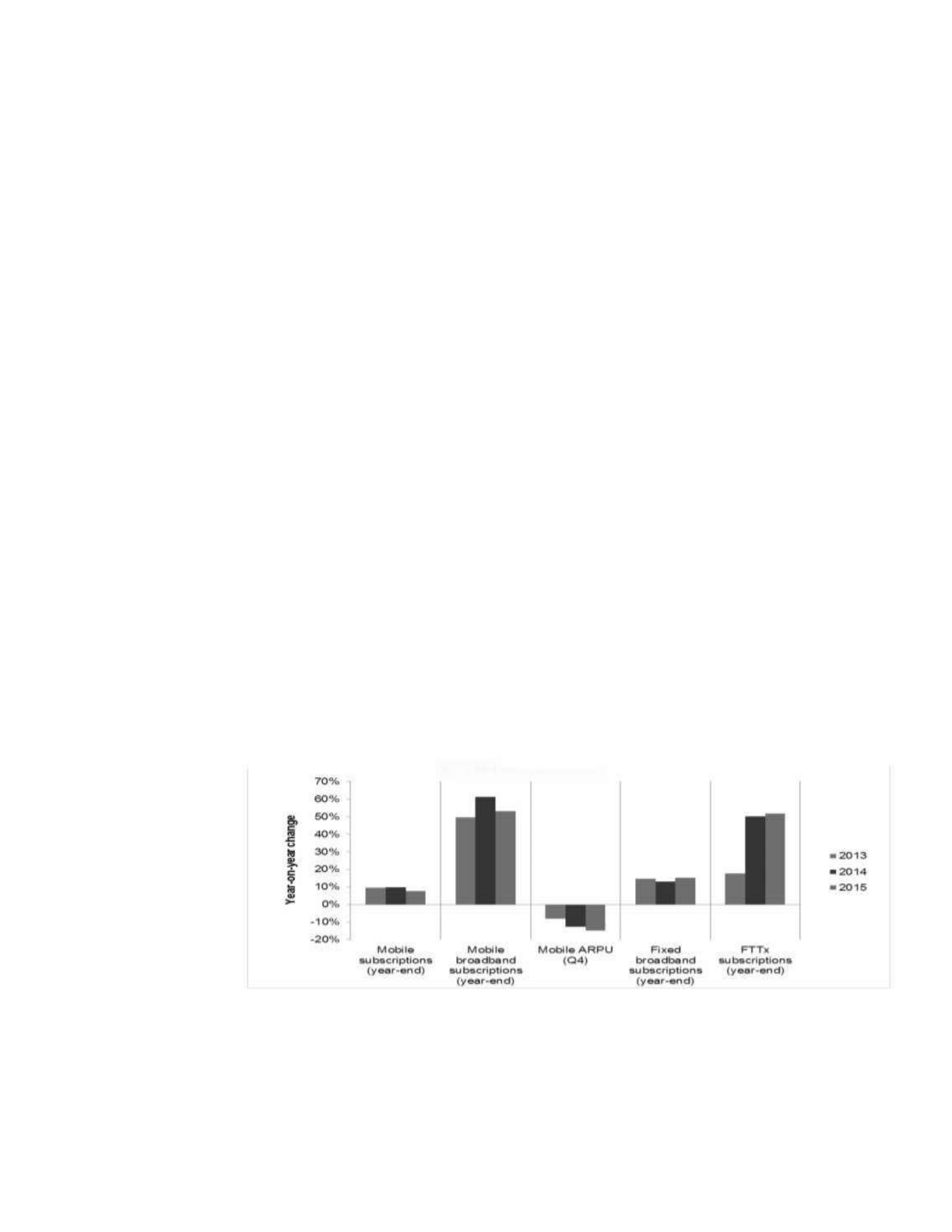
2025 (GSMA Intelligence, 2018). Figure 6 illustrates an overview of the African fixed
and mobile market from 2013 to 2015.
Figure 6: Africa fixed and mobile market overview, 2013 to 2015 (year-on-year %
change). Source: Ovum, TMT Intelligence. (2018, November). Africa market outlook:

Digital services gather momentum. Retrieved from https://ovum.informa.com. Reprinted
with permission
Regarding size and subscribers, one can note the diversity of the mobile market in
Africa. While Nigeria dominates the West African market with more than one-half of
overall subscribers in 2017, Burkina Faso, Cote-d‘Ivoire, Ghana, Mali, and Senegal
account for less than a fifth of subscribers (GSMA Intelligence, 2018; World Bank, 2018).
With an overall subscriber penetration of 47% in 2017, ECOWAS benefits from the
highest penetration rate of all the regional economic communities (RECs) in SubSaharan
Africa. Then, followed the Southern African Development Community (SADC) with a
penetration rate of 44%, the East Africa Community (EAC) with 42%, and finally the
Economic Community of Central African States (ECCAS) with a penetration rate of 40%
(GSMA Intelligence, 2018; World Bank, 2018).
Transition to mobile broadband. While some countries including United States
of America, South Korea, China, and Japan are putting 5G to work (SDX Central, 2018),
the transition to mobile broadband is in progress in West Africa. According to GSMA
Intelligence (2018), the extension of 3G and 4G networks, as well as lower data rates and
the growing accessibility of smartphones contributed a lot to the shift to mobile
broadband in the West Africa region. Though 3G currently remains the dominant mobile
broadband technology in West Africa, 4G adoption is significantly growing up because of
network expansion and considerable accessibility of 4G devices (GSMA Intelligence,
2018; World Bank, 2018). According to Ovum, TMT Intelligence (2018), Africa had a
combined broadband development index (BDI) score of 232 at the end of 2015, with

Central and Southern Asia being the only region to evidence a lower score. Figure 8
illustrates the BDI ranking by global sub-region in 2015. With the extension of 3G and
4G networks and accessibility of smartphones, the take-up of mobile broadband grown
strongly in Africa. For instance, in the first quarter of 2018, there existed 29 long-term
live evolution (LTE) networks in nine countries across West Africa, six of which launched
in 2017, including Airtel Nigeria in February 2018, and Africell Gambia and
Sierratel Sierra Leone in January 2018 (World Bank, 2018).
Figure 7: Broadband Development Index ranking by global sub region in 2015. Source:
Ovum, TMT Intelligence. (2018, November). Africa market outlook: Digital services
gather momentum. Retrieved from https://ovum.informa.com. Reprinted with permission
Reprinted with permission
The economic and social contribution of the mobile telecommunication
industry (MTI). The mobile telecommunication industry has a significant social and
economic impact (Broadband Commission, 2016; Jia et al., 2018; Katz & Koutroumpis,

2014; Nwanga et al., 2015). The mobile industry contributed some USD 3.1 trillion to the
global gross domestic product (GDP) and some USD 431 billion in public funding and
employs 32 million people either directly or indirectly (Broadband Commission, 2016;
GSMA Intelligence, 2018). In West Africa as well, the mobile industry has a significant
economic and social impact. According to GSMA Intelligence (2018), and the World
Bank (2018), the mobile ecosystem generated a total value added of USD 14 billion in
West Africa, hence representing 2.5% of the GDP. Concerning public funding, the
mobile ecosystem also made a significant contribution with a tax contribution estimated
to USD 4 billion in 2017 (GSMA Intelligence, 2018). Additionally, the mobile industry
employed more than 200,000 people in 2017 in West Africa (GSMA Intelligence, 2018;
World Bank, 2018). Because more than 70% of IT projects were unsuccessful because of
the use of ineffective strategies to manage project risks (Deshaw, 2017),
telecommunication companies should consider developing effective risk management
strategies to improve project success rates.
Transition
Section 1 of the doctoral study included the background of the problem and an
emphasis on risk management strategies for IT project managers. Additionally, I covered
components such as the problem statement, purpose statement, and the conceptual
framework of the study. I thoroughly discussed information on the assumption,
limitations, and delimitations, as well as the significance of the study. In the literature
review, I explained how the use of the actor-network theory could enable IT project
managers‘ understanding of risk management strategies, and therefore contribute to

effectively improve project performance and quality. I provided detailed information on
IT project failure and success, as well as inputs on the risk management processes an IT
project manager can follow to manage project risks effectively. Finally, I ended the
section 1 with detailed information on the (a) evolution of the telecommunication
industry, (b) modern mobile telecommunication industry, (c) mobile adoption, (d)
transition to mobile broadband, and the (e) economic and social contribution of the
mobile telecommunication industry in West Africa.
In section 2 of this study, I outlined the role of the researcher and described key
components including the (a) participants, (b) research methods and design, (c) ethical
research, and (d) population and sampling. I also provided information about the choice
of the (a) data collection instruments, (b) data collection technique, (c) data organization
technique, and (d) data analysis. Finally, I described the methods I utilized for ensuring
this study‘s dependability, credibility, transferability, and confirmability.

Section 2: The Project
Purpose Statement
The purpose of this qualitative multiple case study was to explore the risk
management strategies used by IT project managers in the telecommunication industry
for improving project success rates. The targeted population was five IT project managers
from two telecommunication companies located in Senegal, West-Africa. The targeted
population was appropriate for the study because the participants had more than eight
years of managing IT projects with a high rate of success. The implications for positive
social change from the study‘s findings included the opportunity to use a modern and
innovative telecommunication broadband network to improve the quality of the life of
people in the sectors of education, health, and agriculture.
Role of the Researcher
Qualitative methodology is the appropriate method the researcher can use to
discover trends in thought and conduct a thorough analysis of the research topic (Yin,
2018). Patton (2015) shared that in qualitative research, the researcher is the data

collection instrument. I used interviews to gather data from five IT project managers of
two telecommunication companies located in Senegal. Saunders et al. (2015) and Yin
(2018) suggested the independent scholar should identify the data analysis process the
researcher plans to use for the qualitative analysis. After I collected data from the
participants, I used data analysis for interpreting and describing the emergent themes and
patterns within the data file. Mostafa and Koroush (2016) suggested the use of thematic
analysis for qualitative research. Using thematic analysis in this qualitative research, I
interpreted and concisely described the emergent themes and patterns in my data file.
Qualitative researchers can use thematic analysis to organize into a database the data
collected, and then divide it into subjects (Saunders et al., 2015).
Researchers should have familiarity with the researched topic (McDermid, Peters,
Daly, & Jackson, 2016). As an independent consultant with more than 10 years of
experience, I assisted client partners including telecommunication companies in (a) using
gap analysis for defining problems, (b) applying tools such as computer simulation or
bottleneck analysis for analyzing data and developing solutions, and (c) using project
management techniques for implementing strategic solutions. With my experience as an
independent consultant to telecommunication companies in West-Africa, I not only
developed a professional relationship with internal stakeholders but also deepened my
knowledge of various project management topics such as IT project risk management.
However, to avoid influencing the results of the research study, I did not involve any
participants with whom I had a personal or past professional relationship.

Researchers are responsible for establishing the ethics of the research design
(Saunders et al., 2015). To ensure an appropriate collection and analysis of data and
comply with the ethical principle, I followed the protocol determined by the Belmont
Report (National Commission for the Protection of Human Subjects of Biomedical and
Behavioral Research, 1979). Gabriele (2003) shared that the Belmont Report is essential
to human research ethics because it implies respect for the participants of the study,
beneficence, and justice. Fisher (2011) shared that researchers can use the Belmont
Report to minimize the risk associated to the research, maximize the potential benefits to research, and
achieve a reasonable balance between research risks and potential benefits. I followed the protocols of
the Belmont Report, and completed the training organized by the National Commission for the
Protection of Human Subjects.
As the research instrument, qualitative researchers should preserve transparency
throughout the research (Gabriele, 2003; Saunders et al., 2015). For ensuring the
transparency of this research study, I did not involve any participants with whom I had
any personal or professional relationships. Yin (2018) also noted that qualitative
researchers could improve the study quality by avoiding experimenter bias. Pannucci and
Wilkins (2010) and Saunders et al. (2015) indicated the occurrence of bias could be
during the planning, as well as the data collection, analysis, and reporting stages. To avoid
or minimize bias, I brought back the data to the participants to allow them to comment
and correct them for validation (see Appendix D), and also used techniques such as
triangulation.

Kvale (1996) noted the qualitative researcher could use different types of
questions such as (a) probe questions, and (b) targeted questions. The researcher can use a
probe question to employ direct questioning and establish a context for the study (Kvale,
1996; Patton, 2015). The qualitative researcher should use initial probe questions to
enhance credibility and build rapport with the participants (Saunders et al., 2015). In
addition to initial probe questions, the qualitative researcher can also use targeted
questions to build a climate of trust with participants and lead the interview and
discussions on the hermeneutic status (Briggs, 1986; Dick, 2006; Hermanowicz, 2002;
Kvale, 1996). The use of targeted questions enables the qualitative researcher to have the participants‘
responses to the searched topic (Saunders et al., 2015). The researcher can use targeted follow up
question to explore the participants‘ answer to obtain further depth and detail, to ask for clarifying
examples, and to explain concepts and theme (Rubin & Rubin, 2005). Yin (2018) noted the researcher
could use the interview protocol as a guide during the interview process. I used the interview protocol
(see Appendix D) as an instrument to improve the quality of the data collected from the participants.
Participants
Researchers could use the qualitative method to discover trends in thought and
opinions and deepen understanding of the problem (Yin, 2018). Sargeant (2012) shared
that qualitative research enables the researcher to contribute to the understanding of the
problem. The qualitative research approach for the selection of participant differs from
that of quantitative research (Sargeant, 2012). Qualitative researchers must select
participants who can appropriately respond to the research questions and further improve
the comprehension of the problem searched (Sargeant, 2012; Saunders et al., 2015; Yin,

2018). Napier, Keil, and Tan (2009) shared that IT project managers need strong project
management skills to improve the project success rates. Therefore, to understand the risk
management strategies telecommunication IT project managers use to improve IT project
success rate, I set some criteria on the selection of the participants. For instance, I
selected IT project managers who had more than eight years of successful experience in
managing IT project portfolios within the telecommunication industry. Another primary
criterion was that the participants needed to have experience using risk management
strategies to improve IT project performance and quality, and to have contributed to
increasing their project success rate.
Hoskins and White (2013) and Saunders et al. (2015) shared that novice
researchers may have difficulty establishing rapport with participants unlike them and
encounter participants who are resistant to participate in the interview. Buchanan, Boddy,
and McCalman (2013) that noted researchers have been most successful where they have
a friend, relative, or student working in the organization. Because I am familiar with the
targeted organizations to have served as an external consultant, I gave a call to the target
companies‘ executives to collect the e-mail addresses of potential participants. I emailed
an invitation letter and the informed consent form to each of the participants to invite
them to participate in my research study without involving executives in the recruitment
process. My e-mail to the target audience involved (a) the purpose of my research study,
(b) a statement concerning confidentiality of the data the participants would provide (c) a
statement about the voluntary nature of the study, (d) the type of access required, and (e)
my contact information.

The researcher can use a variety of strategies to obtain physical access to
appropriate data (Buchanan et al., 2013; Yin, 2018). Saunders et al. (2015) noted one
good strategy the qualitative researcher could use is the use of existing contact for
developing new ones. Buchanan et al. (2013) also stated having an existing contact, such
as a manager constitutes an excellent opportunity to connect with potential participants in
the targeted company. I used existing contacts in the two targeted companies to gain
access to potential participants. After the participants showed an interest in participating
in my research, I engaged with them via telephone calls to build rapport. During my
initial phone call to each of the participants, I shared the purpose of my research study to
ensure alignment with my research question. I also gave assurances to the participants
concerning confidentiality.
Research Method and Design
Research Method
Researchers can use one of the three types of methods including qualitative,
quantitative and mixed methods approaches (Saunders et al., 2015; Yin, 2018). Using one
of the research methods, the researcher can collect, analyze, and interpret data (Yin,
2018). However, the researcher should select a research method based on the nature of the
research problem, and the researcher‘s experience (Gratton & Jones, 2009; Saunders et
al., 2015). For instance, Patton (2015) advised the use of the qualitative method to
analyze organizations to improve effectiveness. Sargeant (2012) explained quantitative
research mainly focuses on the impact of a phenomenon, while qualitative research
focuses on understanding a problem. The researcher can use a qualitative method to

explore and understand the meaning participants confer to a social or human problem
(Patton, 2015; Saunders et al., 2015; Yin, 2018). Considering the purpose of my study, as
well as my research question, I selected a qualitative method. Using the qualitative
approach, I appropriately explored the risk management strategies that
telecommunication IT project managers use to improve project performance and quality.
Sargeant (2012) and Yin (2018) noted researchers could use the qualitative
method to describe the data and the arising themes, hence facilitating the comprehension
of the phenomenon studied. Saunders et al. (2015) explained the researcher can use the
qualitative method to describe in details the feelings, views, and experiences of the
participants. Additionally, the qualitative researcher can appropriately provide an
interpretation and description of the emergent themes and patterns within his or her data
file (Patton, 2015; Sargeant, 2012; Saunders et al., 2015). Moreover, in the qualitative
method, the participants provide a thorough understanding of the research problem
(Patton, 2015). The qualitative method was the appropriate approach for this study
because it enabled me to have an in-depth understanding of the risk management
strategies IT project managers use to improve project success rates.
Researchers can use the quantitative method to compute sample size to obtain
enough power to ensure the effective attribution of the result of the phenomenon searched
(Sargeant, 2012). Saunders et al. (2015) explained quantitative research is the appropriate
approach for examining the relationship among variables. The researcher can use a
quantitative method to investigate the relationships between variables while primarily
aiming at analyzing and representing that relationship statistically through computation

analysis (Patton, 2015; Saunders et al., 2015). I did not select the quantitative method
because I did not examine the relationship between independent variables and IT project
performance.
Saunders et al. (2015) noted mixed method research is a research design with
philosophical assumptions as well as methods of inquiry. Stentz et al. (2012) explained
researchers could use a mixed method to analyze a phenomenon while combining both
quantitative and qualitative data. By combining both qualitative and quantitative research
and data, researchers can deepen their understanding and corroboration, while offsetting
the weaknesses inherent in pursuing each approach by itself. I did not choose a mixed
method approach because the nature of my study did not require a combination of both
qualitative and quantitative data.
Research Design
Saunders et al. (2015) described narrative research, phenomenology, ethnography,
and case studies as the types of qualitative research design. Narrative researchers situate
individual narrative in participants‘ experiences, their culture, and historical contexts
(Petty, Thomson, & Stew, 2012). The narrative research is appropriate for capturing the
detailed life experiences of the lives of a small number of individuals (Petty et al., 2012;
Saunders et al., 2015), but not for investigating a real-life phenomenon. Petty et al. (2012)
and Yin (2018) noted that a researcher could use a case study design to explore a new
phenomenon through detailed contextual analysis. Patton (2015) and Yin (2018) noted
researchers could use a case study to have a good understanding of the researched topic.
However, since my research study aimed at exploring the risk management strategies

used by IT project managers from two telecommunication companies located in Senegal,
I selected a multiple case study design.
The primary role of a researcher using a multiple case study design is to reinforce
the results by reproducing the patterns and therefore improve the reliability and validity
of the research findings (Yin, 2018). Additionally, by allowing replication in the
collection of data, a multiple case design can enable researchers to have a better
understanding of the problem explored (Anderson, Leahy, & DelValle, Sherman, &
Tansey, 2014; Yin, 2018). Stake (1995) noted that researchers can use a multiple case
design to have an in-depth understanding of the problem searched. I used a multiple case
study to get a deeper understanding of the researched topic and to explore the
participants‘ experience with the ability to collect and analyze data within the case
analysis.
Phenomenological researchers attempt to understand or explain an individual‘s
life experience (Saunders et al., 2015). The researcher can use phenomenological design
to avoid prejudices and predetermined assumptions about participants‘ experiences,
feelings, and response to a particular event (Saunders et al., 2015; Stake, 1995; Yin,
2018). Since I was not interested in gathering data on participants‘ life experiences or
understand their perception of the phenomenon, I chose not to select a phenomenological
research design.
The researcher can use the ethnographic research design to study large cultural
groups of participants interacting over time (Saunders et al., 2015; Yin, 2018). Stake
(1995) noted the ethnographic research design is appropriate when the researcher seeks to

understand a group‘s opinion and emotional behavior. Saunders et al. (2015) shared it is
appropriate to use the ethnographic research design when the researcher aims at
observing and interacting with the target participants in their real-life experience. Yin
(2018) suggested the use of the ethnographic design when the researcher seeks to
understand the culture of the participant‘s company. Because the purpose of my research
study did not aim at understanding the culture of the targeted telecommunication
companies, I chose not to select the ethnographic research design.
The narrative research design is an appropriate method the researcher could use to
investigate participants‘ real-life problems (Patton, 2015; Saunders et al., 2015; Yin,
2018). Using the narrative design, the researcher can focus on the participants‘ life-stories
rather than a theoretical abstraction (Patton, 2015). Because I was not interested in
capturing the detailed life experience of the lives of participants, I chose not to select the
narrative research design.
The qualitative researcher must reach data saturation to ensure research quality
(Bowen, 2008; Kerr, Nixon, & Wild, 2010). O‘Reilly and Parker (2012) noted data
saturation usually means that the researcher should collect data until there are fewer
surprises in the data and no more patterns that emerge from the data. Researchers could
use various methods to achieve data saturation (Saunders et al., 2015). Fusch and Ness
((2015) noted interviews are one method researchers could use to reach data saturation
when conducting qualitative research. During the study, the novice researcher can
research in a manner to reach data saturation (Gibbert & Ruigrok, 2010; Onwuegbuzie,
Leech, & Collins, 2010) by collecting rich and thick data (Dibley, 2011). For ensuring

data saturation, I collected data from interviews conducted with the participants of the
two targeted telecommunication firms.
Population and Sampling
The targeted populations for this research study are five IT project managers from
two telecommunication companies located in Senegal, West-Africa. I used purposeful
sampling for the selection of the sample population to conduct this study. Qualitative
researchers could use in-depth interviews, direct observation, and written documents to
collect and analyze data from participants (Patton, 2015; Saunders et al., 2015; Yin,
2018). Researchers are more successful when they have a friend, parent, or student
working in the organization (Buchanan et al., 2013; Saunders et al., 2015). I contacted via
e-mail executives from the two targeted companies, shared with them the purpose of this
research study, and obtained written permission to initiate contacts with different
potential participants. I sent via e-mail an invitation letter and the informed consent form
to each of the participants to invite them to participate in my research study without
involving executives in the recruitment process (see Appendix D).
Using qualitative research, researchers can target a specific group or type of
individual to provide an in-depth understanding of the problem searched (Yin, 2018). To
achieve this goal, the qualitative researcher could focus on criterion-based sampling
methods such to reach target group (Gentles, Charles, Ploeg, & McKibbon, 2015). I used
purposeful sampling to select the sample population of IT project managers. The rationale
and strength of purposeful sampling focus on the choice of information-rich cases for in-
depth study (Buchanan et al., 2013; Patton, 2015; Saunders et al., 2015). Using

purposeful sampling, I selected participants based on pre-selected criteria on this research
question. For instance, the participants had more than eight years of successful experience
in managing IT projects within the telecommunication industry. Additionally, the
participants have used risk management strategies to improve IT project success rates.
The purposeful sampling method is appropriate for identifying and selecting
individuals or groups of individuals with exceptional knowledge or experience of a
phenomenon of interest (Cresswell & Plano Clark, 2011; Patton, 2015; Saunders et al.,
2015). I selected the participants based on their experiences in successfully implementing
IT projects in the telecommunication industry. The participants had more than eight years
of IT project management and a success rate of 70%. I considered other criteria such as
the participants‘ ability to delivering the project on schedule and within budget. All the
selected participants met the above criteria, and volunteered to contribute to the research
study. The qualitative researcher should choose a sample size between 2 to 25 participants
(Gentles et al., 2015; Patton, 2015; Saunders et al., 2015; Yin, 2018). For this study, I
considered a sample population of five IT project managers from two telecommunication
companies located in Senegal.
In a qualitative research study, the sample size is typically small, whereas, in
quantitative research, the researcher uses a larger sample (Gentles et al., 2015; Patton,
2015; Saunders et al., 2015). Marshall (1996) noted random sampling is not appropriate
for a qualitative study. The study of a random sample can enable researchers to generalize
his or her findings to the population, but it is not the most effective technique to develop
an understanding of complex issues related to a problem (Marshall, 1996).

Therefore, I chose not to apply random sampling to this study.
The purposeful sampling method is appropriate for identifying and selecting
individuals or groups of individuals with exceptional knowledge or experience of a
phenomenon of interest (Cresswell & Plano Clark, 2011; Yin, 2018). Patton (2015)
suggested the use of purposeful sampling to focus on the particular characteristics of a
target population. The researchers can use purposeful sampling to appropriately answer
the research questions (Marshall, 1996; Patton, 2015; Saunders et al., 2015). Miles and
Huberman (1994) noted qualitative methods focus primarily on saturation. I continued
sampling the IT project managers that I considered for this study until there was no new
substantive information required even if I reached saturation with the data collected from
a specific number of participants. The participants shared their experiences in IT project
management, and mainly in the risk management strategies, they used for improving IT
project success rates. Researchers should not conduct the interviews in a noisy and
uncomfortable setting (Bernard, 1988; Castillo-Montoya, 2016; Saunders et al., 2015;
Yin, 2018). To ensure an appropriate record of the data and improve data accuracy and
validity, I made sure that the participants were in a quiet place before starting the
interviews (see Appendix D).
Ethical Research
Qualitative researchers emphasize their research study on exploring, evaluating,
and delineating people and their natural environment (Orb, Eisenhauer, & Wynaden,
2001; Saunders et al., 2015). During the collection and analysis of data, the qualitative
researcher has to deal with a variety of issues (Yin, 2018). Ethics appears to be one of the

challenges qualitative researchers face (Saunders et al., 2015). Sanjari, Bahramnezhad,
Khoshnava, Shoghi, and Cheraghi (2014) noted that ethical issues mostly occur during
the interaction between the researcher and the participants. I sent via e-mail an invitation
letter and the informed consent form to each of the participants to invite them to
participate in my research without involving executive in the recruitment process (see
Appendix D). After the participants replied to the e-mail with the words, ―I consent‖, I
started arranging an interview date and time directly with each of the participants.
Researchers should ensure that participants understand that their participation in
the study is voluntary, and without any compensation (Orb et al., 2001; Sanjari et al.,
2014; Saunders et al., 2015). I informed each of the participants that their contribution in
this study was voluntary, and without any incentives. MacNeil and Fernandez (2006)
suggested that the researcher should inform the participants of their right to withdraw at
any time from the study, and without any penalty. I informed the participants that they
had the right to withdraw before, or during the interview without providing any
justification via email or phone call.
Researcher should ensure that the ethical protection of the participants is adequate
(MacNeil & Fernandez, 2006; Orb et al., 2001). Saunders et al. (2015) recommended the
researcher should utilize his or her university‘s code of ethics to guide the design and
conduct his research. For the ethical protection of the participants, the researcher should
conduct research in compliance with his or her university IRB and the Belmont Report
protocols (Koro-Ljungberg, Gemignani, Brodeur, & Kmiec, 2007). Steele et al. (2016)
suggested researchers should get the permission from the participants‘ organization and

approval from the University IRB before collecting data from the participants. I started
collecting data from the participants after I obtained Walden University IRB approval and
permission from the targeted organizations. The approval number for this study is 09-
2019-0675733 and it expires on September 19, 2020. I complied with the Walden
University IRB and the Belmont Report protocols to ensure the ethical protection of all
the participants in this study. For example, I did not disclose any information about the
participant names and their company in the study. Instead, I used some codes such as
PMS1, PMS2, PMT3, PMT4 and PMT5 to name each participant and targeted
companies.
The ethical issues of confidentiality and anonymity also come to the fore during
the analysis and reporting of data (Orb et al., 2001; Saunders et al., 2015; Stake, 1995). I
committed to comply with Walden University IRB regulations by keeping for 5 years in
an encrypted external driver and keep the encrypted external driver in my safe-deposit
box. Upon request from the IRB faculty, I will share all the data about the research study.
I will delete all the data collected after a timeframe of 5 years.
Data Collection Instruments
Qualitative researchers could use methods such as individual interviews, focus
groups, observations, and actions research for gathering data (Bernard, 1988; Saunders et
al., 2015; Yin, 2018). As the primary data collection instrument, I used a semi structured
interview to collect data from the targeted participants (see Appendix E). The
semistructured interview is appropriate when the researcher will only have one
opportunity to interview a participant and when he or she will be forwarding several

interviews out into the field for collecting data (Given, 2008; Patton, 2015; Saunders et
al., 2015).
The qualitative researcher should utilize an interview framework protocol to (a)
verify alignment on the research question, (b) build a survey-based conversation, (c)
receive feedback on interview protocol, and (d) pilot the interview protocol
(CastilloMontoya, 2016). Patton (2015) and Rubin and Rubin (2005) stated that
researchers can use the interview protocol to understand participants‘ experiences,
describe those experiences and their meaning. I utilized the interview protocol before,
during, and after the data collection process to increase the quality of the data obtained
from the participants (see Appendix D).
Researchers could use some techniques such as member checking, and
triangulation to ensure the quality of data collected from participants (Birt, Scott, Cavers,
Campbell, & Walter, 2016; Saunders et al., 2015; Treharne & Riggs, 2014; Yin, 2018).
Birt et al. (2016) and Patton (2015) noted that member checking is a useful technique the
researcher could use to improve the accuracy of the data. Saunders et al. (2015) indicated
member checking is a good technique the researcher could use to enhance the accuracy,
credibility, validity, and transferability of the research study. I used member checking to
allow the participants to comment and correct the transcribed interview for validation
(see Appendix D).
Data Collection Technique
The qualitative researcher can use a variety of data collection techniques that
include (a) using several sources of evidence, (b) generating a case study database, (c)

keeping a source of evidence, and (d) being cautious when using data from electronic
sources (Saunders et al., 2015; Yin, 2018). The primary data collection technique I
applied for this qualitative research study was the semi structured interview (see
Appendix E). Semistructured interviews are in-depth interviews in which participants
must answer predefined open-ended questions (Jamshed, 2014). Given (2008) and Yin
(2018) noted the semistructured interview guide provides a clear set of instructions to the
researcher and reliable and comparable qualitative data. Doody and Noonan (2013)
believed that using semistructured interviews; researchers can effectively address the
research question during the interview, and thereby collect data.
Researchers could use the semistructured interview to allow the participants to
express their opinions in their terms (Jamshed, 2014; Kvale, 1996; Saunders et al., 2015;
Yin, 2018). For this study, I used semistructured interviews to ask different types of
questions to the participants while building rapport (see Appendix E). Kvale (1996) noted
researchers could use a probe question to employ direct questioning and establish a
context for the study. Saunders et al. (2015) also shared the qualitative researcher can use
initial probe questions to enhance his or her credibility and build rapport with the
participants. In addition to using probe questions, the researcher should use targeted
questions to have the participants‘ responses on the searched topic (Given, 2008; Kvale,
1996). Rubin and Rubin (2005) noted through semistructured interviews, the researcher
could formulate targeted follow-up questions to explore the respondent‘s response to (a)
obtaining more details and information (b) ask for elucidating examples, and (c) clarify
concepts and themes. I used semistructured interviews to improve the reliability and

validity of the data I collected from the participants through both taking notes and audio
recording.
Researchers can use semistructured interviews to gather high-quality data from the
participants (Gravlee, Maxwell, Jacobsohn, & Bernard, 2018; Saunders et al., 2015).
Duncan and Fiske (2015) and Yin (2018) stated researchers could use semistructured
interviews to build a good relationship with the participants and gain a more in-depth
insight into specific answers. Gibbs (2018) suggested researchers should use
semistructured interviews to improve the quality of the validity of participants‘ response.
I used semistructured interview to engage with the participants (see Appendix E) and
collect reliable and comparable data.
Qualitative researchers could use semistructured interviews to deal with
scheduling and costs constraints (Saunders et al., 2015; Yin, 2018). Kvale (1996) and
Oltmann (2016) believed the geographical distribution of participants is a significant
aspect of the interview context. In a semistructured interview, anonymity is not possible,
as the researcher identifies the participants (Kvale, 1996; Oltmann, 2016; Stake, 1995;
Yin, 2018). To protect the anonymity and confidentiality of the participants in this study, I
did not disclose any information about the participant names and their company. Instead, I
used some codes such as PMS1, PMS2, PMT3, PMT4 and PMT5 to name each of the
participants and their firm‘s name.
Researchers should ensure the accuracy of the data collected from participants
(Saunders et al., 2015; Yin, 2018). Birt et al. (2016) and Treharne and Riggs (2014)
suggested the use of member checking for exploring the credibility of the results. Patton

(2015) and Yin (2018) also indicated that the researcher should return the data to
participants to check for accuracy and resonance with their experience. I used member
checking to allow the participants to comment and correct the transcribed interview for
validation (see Appendix D).
Data Organization Technique
The qualitative researcher can use different techniques to organize the data
collected from the participants (Saunders et al., 2015). Gibbs (2018) and Yin (2018)
shared some data organization techniques include using written notes, audio recording,
and participant coding. Researchers can use of audio recording to keep accurate records
of interviews (Al-Yateem, 2012; Denzin, 2017; Krippendorff, 2018). Saunders et al.
(2015) indicated the researcher can use written notes to preserve data gathered during
interviews. I used written notes, audio recording, and participant coding for organizing
the data collected from the participants. I also asked for the participants‘ approval to
record the interview with an audio recording device (see Appendix D). I securely stored
the recorded data in an encrypted external driver and ensured that it is kept in my
safedeposit box for 5 years.
Researchers should organize data collected from participants by constructing a
database (Saunders et al., 2015; Yin, 2018). The organization of data enables the
researcher to improve the research quality (Gibbs, 2018). Saldaña (2015) and Gibbs
(2018) indicated researchers could use coding for organizing, examining, and analyzing
data in a structured way. After I collected the data from the participants, I reviewed the
whole data set and identified emerged themes. I listed the emerged themes and assigned

them numbers to entitle categories. Additionally, I created a coding table and classify the
data into themes.
Data Analysis
Qualitative researchers can use different data analysis process to apply to the
research study (Saunders et al., 2015). However, it is essential for the researcher to
identify the adequate data analysis technique (Saunders et al., 2015; Yin, 2018) and
effectively apply it to the analysis of the data collected. For instance, researchers could
use multiple data sources to develop a thorough understanding of the research study
(Patton, 2015; Yin, 2018). Denzin (2017) and Patton (2015) identified four types of
triangulation, including (a) method triangulation, (b) investigator triangulation, (c) theory
triangulation, and (d) data source triangulation. The researcher can use methodological
triangulation to collect more comprehensive data, improve validity, and enhance
understanding of the research problem (Denzin, 2017; Oliver-Hoyo, & Allen, 2006; Yin,
2018). I used semistructured interview and peer-reviewed articles as method triangulation
to collect data from IT project managers (see Appendix E).
The qualitative researcher can conduct data analysis through four steps, including
(a) data transcription, (b) data organization, (c) data coding, and (d) data validation
(Denzin, 2017; Marshall & Rossman, 2016; Saunders et al., 2015). Patton (2015) and Yin
(2018) noted researchers should transcribe interviews to determine the accuracy of the
data to analyze. Saunders et al. (2015) also indicated researchers should transcribe the
interview for organizing the data and archiving them for later use. After I collected the

data through audio recording and written notes (see Appendix D), I used NVivo to
transcribe the data.
Researchers can use different types of techniques to organize data (Patton, 2015).
Marshall and Rossman (2016) and Saunders et al. (2015) indicated the researcher should
use thematic analysis for organizing data. Using thematic, the researcher can organize
data into a database and divide them into themes (Mostafa & Koroush, 2016). Maguire
and Delahunt (2017) shared researchers could use thematic analysis to identify essential
patterns or themes within the qualitative data, and use these themes to address the
research problem and interview questions. I used thematic analysis to identify, interpret,
and appropriately describe the emergent themes within the transcribed data.
Researchers could use coding to organize, examine, and analyze data in a
structured way (Saldaña, 2015). Gibbs (2018) shared coding is an appropriate technique
the researcher could use to compress data into themes for a thorough data analysis
process. Saunders et al. (2015) indicated codes mostly stem from the data collected,
theories, interview questions, or the central research question. I reviewed the central
research question, interview questions, and the actor-network theory associated with this
research. Saldaña (2015) and Saunders et al. (2015) suggested the use of computer
software to analyze qualitative data. Zamawe (2015) noted qualitative researchers could
use NVivo to enhance the accuracy of data. I used NVivo for coding, mapping, and
finding out key themes or patterns in the data.
Reliability and Validity
Reliability and validity are essential to assess the quality of research (Abowitz &

Toole, 2010; Heale & Twycross, 2015; Morse, Barrett, Mayan, Olson, & Spiers, 2002).
Heale and Twycross (2015) and Saunders et al. (2015) shared reliability refers to the
replication and consistency of a measure. Miller (2008) described reliability as the
dependability, consistency, and repeatability of the project‘s data collection,
interpretation, and analysis. Davies and Dodd (2002) noted the validity of a qualitative
research study concerns the rigor and trustworthiness of the researcher in ensuring
research quality. Morse et al. (2002) noted that qualitative researchers could effectively
establish rigor through research credibility, dependability, conformability, and
transferability. Morse (2015) stated that dependability related to reliability, while validity
focuses on key constructs such as credibility, conformability, and transferability. In this
qualitative research study, I focused on the above four significant constructs for ensuring
research reliability and validity.
Reliability
Qualitative researchers should assess the reliability of the study findings by
evaluating the solvency of the research while considering the application and usefulness
of the methods and approaches used and the integrity of the conclusions (Noble & Smith,
2015). Saunders et al. (2015) and Noble and Smith (2015) noted qualitative researchers
should express rigor when conducting research. To establish the dependability of the
research study, researchers should address the dependability of the study (Anney, 2014;
Moon, Brewer, Januchowski-Hartley, Adams, & Blackman, 2016). Nowell, Norris,
White, and Moules (2017) noted that researchers should ensure the research process is
logical, traceable, and well documented. Researchers should offer the readers the

flexibility to examine the research process to appropriately judge the dependability of
research (Amankwaa, 2016; Connelly, 2016). Reliability requires researchers to be
consistent throughout the research study (Korstjens & Moser, 2018). To ensure the
dependability of this research, I described the research steps followed from the beginning
of the research project to the development and reporting of the results (see Appendix D).
Yin (2018) and Patton (2015) suggested the use of member checking to enhance the
accuracy of the data. Korstjens and Moser (2018) and Saunders et al. (2015) also noted
member checking enables the improvement of data accuracy, mainly because the
researcher and the participants look at the data with different perspectives. I used member
checking to allow the participants to comment and correct the transcribed interview for
validation (see Appendix D).
Validity
Qualitative researchers should ensure the rigor and trustworthiness of the study to
achieve research quality (Amankwaa, 2016; Connelly, 2016; Davies & Dodd, 2002).
Korstjens and Moser (2018) and Saunders et al. (2015) indicated researchers should
establish the validity of the research study by addressing the credibility, transferability,
and confirmability of the study. Guba and Lincoln (1994) noted credibility addresses the
fit between participants‘ views and the researcher‘s representation of them. Credibility
refers to confidence in the truth of the research results (Guba & Lincoln, 1994; Nowell et
al., 2017).
Researchers can use a variety of techniques to ensure the credibility of the
research (Leung, 2015; Saunders et al., 2015). Yin (2018) suggested the collection of data

from multiple sources for enhancing the quality of research. Guba and Lincoln (1994) and
Moon et al. (2016) also noted researchers could use techniques such as data and method
triangulation to address credibility. I used semistructured interview and peerreviewed
articles as method triangulation to address credibility (see Appendix E), and ensure the
validity of this study. Additionally, researchers can use member checking to address the
credibility of the research (Amankwaa, 2016; Saunders et al., 2015; Yin, 2018). I used
member checking by returning the findings to the participants to find out if the research
findings reflected their experiences (see Appendix D).
Researchers should ensure that the research results are transferable to other studies
(Amankwaa, 2016; Guba & Lincoln, 1994; Nowell et al., 2017). Colorafi and Evans
(2016) and Tobin and Begley (2004) defined transferability as the generalizability of the
inquiry. Researchers should provide adequate detailed data that the readers can analyze
and apply the data to other situations (Guba & Lincoln, 1994). Anney (2014) and Guba
and Lincoln (1994) noted researchers should address the transferability of the research
study to gather thick detailed data that will facilitate the applicability of the research
findings to other possible contexts. Patton (2015) and Yin (2018) suggested the use of
semistructured interviews to collect information-rich cases for in-depth study. Saunders et
al. (2015) also noted researchers should use semistructured interviews to provide a robust
description of the participants‘ experiences, context, actions, and their environment. I
used semistructured interviews (see Appendix E) to collect rich data from IT project
managers who had more than eight years of managing IT projects, and clarified all the
research processes, from data collection to the production of the research findings.

Researchers should address confirmability by demonstrating that the
interpretations and results originate from the data (Amankwaa, 2016; Guba & Lincoln,
1994; Tobin & Begley, 2004). Guba and Lincoln (1994) noted researchers should only
establish confirmability after achieving credibility, transferability, and dependability.
Researchers can establish confirmability using techniques such as audit trial, reflexive
journal and triangulation (Amankwaa, 2016; Guba & Lincoln, 1994; Nowell et al., 2017).
Gentles et al. (2015) and Saunders et al. (2015) indicated the researcher should confirm
the validity of the transcribed interview to establish confirmability. I used member
checking by returning the findings to the participants to find out if the research findings
reflect their experiences (see Appendix D).
Data saturation is a major construct to evidence the trustworthiness of qualitative
research (Morse, 2015; Saunders et al., 2015; Stake, 1995). Morse (2015) noted data
saturation influences the credibility of the researcher‘s study. Miles and Huberman (1994)
suggested the use of purposeful sampling to achieve data saturation. The researcher can
use purposeful sampling to identify and select participants with exceptional knowledge or
experience of a phenomenon of interest (Cresswell & Plano Clark, 2011; Yin, 2018). The
use of purposeful sample enables researchers to answer the research questions
appropriately, and improve the credibility of the study (Marshall, 1996; Patton, 2015;
Saunders et al., 2015). Though I reached data saturation with the coded interviews data
collected from the five participants I considered for this study, I continued to collect more
data until saturation was achieved.

Transition and Summary
The purpose of this qualitative multiple case study was to explore risk
management strategies used by IT project managers in the telecommunication industry
for improving project success rates. The topic is a significant business problem as more
than 70% of IT projects were unsuccessful because of the use of inappropriate strategies
to manage projects risks (Deshaw, 2017). The focus of this research study was to
contribute to improving IT project performance and success.
In section two, I provided an overview of the role of the researcher, participants
that I interviewed for my research, as well as the research method and design that I
selected for my study. Additionally, I provided detailed information about the population
and sampling approach, importance of ethical research, data collection instruments I used
in this research, as well as the data collection technique and data organization technique.
Moreover, I discussed data analysis and reliability, and validity. In section 3, I made a
presentation of my study‘s findings, discussed its application to professional practice, and
implication for social change. I also made recommendations for further studies and
shared my personal experience within the doctoral study process.

Section 3: Application to Professional Practice and Implications for Change
Introduction
The purpose of this qualitative multiple case study was to explore the risk
management strategies used by IT project managers in the telecommunication industry
for improving project success rates. Standish Group (2016) noted in 2015, that while 29%
of IT projects were successful, 52% were challenged, and 19% failed. In other words,
70% of IT projects in 2015 failed or were challenged (Standish Group, 2016). Stoica and
Brouse (2013) and Iijima (2015) also stated the failure rate for IT project management
has been high since its inception. IT project managers from the telecommunication field
could use the findings of this research to reduce IT project failure rate.
The actor-network theory was the groundwork of the conceptual framework. I
conducted semistructured interviews with five IT project managers of two
telecommunication companies located in Senegal for an effective understanding of the
topic. The participants answered 9 open-ended interview questions (see Appendix D).

The participants‘ responses to the interview questions enabled me to respond to the main
research question:
RQ: What risk management strategies do telecommunication IT project managers
use to improve project success rates?
The use of qualitative software NVivo contributed to improving the accuracy of
qualitative studies (Zamawe, 2015). After the review and transcription of the data
collected from the participants, I used NVivo 12 Plus for Windows to find out key
emerged themes in data. I identified four emerged themes representing the strategies IT
project managers in the telecommunication industry used to improve project success rate:
(a) project risk management culture, (b) project risk management framework, (c) project
risk communication and (d) project risk lessons learned.
Presentation of the Findings
The central research question for this multiple case study was as follows: RQ:
What risk management strategies do telecommunication IT project managers use
to improve project success rates?
I conducted semistructured interviews to collect data from five IT project managers from
two telecommunication companies located in Senegal. The analysis of the data enabled
me to identify four key themes that included (a) risk management culture, (b) risk
management framework, (c) risk communication, and (d) risk lessons learned.
The four emerged themes from the data analysis aligned with the risk management
strategies the participants used to improve IT project success rates. The use of the actor-
network theory enabled me to analyze the social aspects of project management while

focusing on risk management tools and techniques (see Pollack et al., 2013). I used the
actor-network theory as the conceptual framework to understand the context of the
research and the research question. Additionally, I used the actor-network theory as the
conceptual framework to identify the tools and techniques IT project managers use to
manage risks. Moreover, the four emerged themes aligned with the literature on IT project
risk management.
The risk management culture framework represents the importance of establishing
a risk culture that could drive the effective management of IT project risks. Without a
strong risk culture, risk management strategies cannot be effective. The second theme
represents the importance of using effective tools and techniques for (a) identifying risks,
(b) assessing risk impacts, and (c) defining adequate responses to risks. The third theme
constitutes the essential role of risk communication in the risk management process. The
fourth theme represents the importance of risk lessons learned from risk situations in IT
projects. All five participants offered the four major themes representing effective IT
project risk management strategies.
Theme 1: Risk Management Culture
I used of NViVo 12 Plus to identify, analyze and interpret key themes in the data
collected from the participants. The first theme that emerged from the data analysis was
risk management culture. Barkley (2004) and Hopkinson (2017) noted that to effectively
manage project risks, the organization should build a culture that supports the
management of project risks. The project manager should create a culture of risk to
increase project success (Hopkinson, 2017). Barkley (2004) stated the project manager

and project team members can develop an effective risk planning, identification,
assessment, and risk response strategy with a strong risk management culture.
In this study, I used codes such as PMS1, PMS2, PMT3, PMT4, and PMT5 to
name the participants and their companies. All five participants shared the essential role
of risk management culture in the successful management of IT project risks. For
instance, PMS1 stated the following:
Without a risk management culture, the risk management strategies cannot be
effective. Our organization‘s risk management culture supports the project team to
effectively address the key to implementing effective IT project risk management
strategies. Additionally, there is an alignment between the organization‘s risk
culture and risk management strategies, which facilitates the involvement of all
stakeholders where appropriate.
An effective risk management strategy is mostly the result of a successful risk
management culture (Barkley, 2004). Hopkinson (2017) and Barkley (2004) stated an
organization with a strong risk management culture has procedures in place that require
the project manager to and other project stakeholders to go through disciplined (a) risk
planning, (b) risk identification, (c) risk analysis, (d) risk responses planning, (e) risk
responses implementation and (f) risk monitoring. For instance, PMS2 stated the
following:
The development of a strong risk management culture can have positive impacts
on project risk management effectiveness. The management in our organization
continuously invests in a culture of risk management competencies including (a)

training in risk planning, (b) strong alignment between corporate planning and
risk management planning and (c) effective communication between stakeholders.
Risk culture is essential in the sense that it a critical impact on the effectiveness of
risk management (Hillson & Murray-Webster, 2017). Hopkinson (2017) noted numerous
benefits for the project manager to permanently consult with stakeholders when dealing
with risk management. PMT3 indicated:
The risk culture of our organization has influenced the effectiveness of risk
management policies, and helped project team to plan and implement risk
responses more appropriately. Additionally, our company‘s risk culture
contributed to create alignment between project team members and key
stakeholders, which influenced effective risk monitoring and control of former
projects.
Risk culture is essential throughout the project risk management cycle (Barkley,
2004). Hillson and Murray-Webster (2017) and Hopkinson (2017) pointed out that the
effective management of risks requires a strong organization‘s risk culture. PMT4
explained the following:
An alignment between our organization‘s culture and the risk management
strategies contributed to improving former projects‘ success. Our organization‘s
risk culture influences attitudes towards risk, hence shaping the way stakeholders
and project team collaborate in (a) risk management planning, (b) risk
identification, (c) risk assessment, (d) risk response planning and (e) risk
monitoring and control.

PMT5 also indicated, ―The effective risk management strategies are the result of a
longterm investment to build a strong risk culture. Our organization‘s risk culture
influenced
the strategies adopted to manage IT project risks.‖
The project manager should consider two important levels of risk management
including implicit risk management, and explicit risk management (Hillson, 2014).
Hillson and Murray-Webster (2017) and Hopkinson (2017) noted the implicit risk
management emphasizes on overall project risks through decisions made about the
structure, scope, and content. The explicit risk management is about the risk management
process to identify, assess, respond to, and control risks during the project lifecycle
(Hillson, 2014; Hillson & Murray-Webster, 2017; Hopkinson, 2017). PMT5 indicated:
The project team effectively managed former projects‘ implicit and explicit risks
because of strong risk culture. Building a strong risk culture enabled our
organization to improve the success rate of former projects we implemented.
Risk management culture was one of the emerged themes regarding the strategies
IT project managers in the telecommunication industry used to improve project success
rates. Hillson and Murray-Webster (2017) and Hopkinson (2017) noted that a strong risk
culture defines a successful risk management strategy. The topic of risk management
culture was a critical part of the discussion on effective risk management strategies for IT
project managers. The actor-network theory, which was the conceptual framework used
for this study focused on risk culture as an essential aspect of risk management strategies.

Organizations should consider developing a strong risk culture for IT project managers to
manage project risk effectively. An organization with a weak risk culture has a lower
chance of implementing its risk management strategy successfully, and therefore, a low
probability to improve project success rates.
Theme 2: Risk Management Framework
Of the four emerged themes, the risk management framework was the second
theme that I identified from the data analysis. All participants pointed out the risk
management framework as the overall approach the IT project manager and project team
members should use to manage project risks effectively. The five participants shared that
their organization‘s risk management framework provided them tools and techniques for
(a) identifying potential project risks, (b) defining risk response strategy to minimize the
impact of identified risks, and (c) monitoring and controlling those risks. Alhawari,
Karadsheh, Talet, and Mansour (2012) and Marchewka (2014) noted a risk management
framework provides useful tools that project stakeholders can use to better identify and
understand the number of risks that can influence an IT project. The PMI (2017) defined
the risk management process in six processes including (a) risk management plan, (b) risk
identification, (c) qualitative risk analysis (d) quantitative risk analysis, (e) risk response
planning and (f) risk monitoring and control. PMS1 and PMS2 referred to the Project
Management Body of Knowledge process as a risk management framework; however,
PMT3, PMT4 and PMT5 shared an in-house risk management framework that aligned
with the Project Management Body Knowledge.

PMT3, PMT4, and PMT5 shared that their organization used a risk management
framework that comprised (a) risk initiation, (b) risk identification, (c) risk prioritization,
(d) risk response planning, and (e) risk monitoring and control. PMT3 noted that at the
risk initiation stage, the project team meets with key stakeholders to discuss the project
objective and how the existing risk management framework will be used for managing
the project. PMS1 and PMS2 stated that their organization uses a risk management plan
that describes the approach to how risks will be used in the project. All participants
indicated they used tools and techniques such as (a) documentation reviews, (b)
brainstorming, (c) Delphi technique, (d) interviewing, (e) checklists and (f) diagramming
techniques for risk identification.
Once the risks are identified, the project team should analyze the risks to
determine their qualitative and quantitative impact on the project (Hopkin, 2018;
Marchewka, 2014; PMI, 2017). All participants indicated using qualitative and
quantitative tools and techniques to analyze identified risks. For instance, PMT3 noted:
The qualitative and quantitative risk analysis is an important stage in the risk
management strategy. We use qualitative tools such as risk probability and impacts, and
quantitative tools including interviewing and decision tree analysis to analyze project
risk. The use of the probability and impact tool helps us to assess the probability of each
risk occurring and assign a score.
PMT4 also shared the following:
During the project risk analysis stage, we use generally tools such as project
assumptions testing, and decision tree analysis. The project assumption testing

enabled the project team to evaluate all major assumptions on former projects,
and to establish that the assumption is accurate and that the probability assigned is
in the right estimation.
PMT5 indicated, ―To analyze project risks, we use tools including project assumption
testing, and risk probability and impacts. Using the risk and impact risk, project team
working on former projects rated potential risks based on their probability and impact.‖
PMS1 shared:
For the analysis of project risks, our project team uses tools that include risk
probability and impact, and decision tree analysis. For example, using the
probability and impact on former projects, we identified the risks with (a) low
impact –low probability, (b) low impact-high probability, (c) high impact-low
probability, and (d) high impact-high probability. Then, we focused our attention
on medium and high-priority risks.
PMS2 noted, ―During the analysis of risks, we use a combination of tools that include
risk probability and impact, data precision ranking, and sensitivity analysis and
interviewing.‖ Additionally, all five participants shared that for each risk, they worked
with stakeholders to develop a risk response documented in the risk register. To monitor
and control risks, PMS1 noted that the use of a project risk audit to determine how
effectively project risks are monitored and eliminated. PMS2 also shared the use of
project risk audits during the risk monitoring and controlling stage. For PMT3, the use of
periodic review helps the project team to monitor and control project risks more
effectively. PMT4 indicated using earned value analysis while PMT5 noted using project

risk response audit for monitoring and controlling risks. Moreover, all five participants
shared that they not only use the risk register as a key input to develop correct risk
response plans but also to control and monitor positive and negative risks.
Of the four themes that emerged from the data analysis, the risk management
framework represented one of the strategies IT project manager in the telecommunication
industry used to improve project success rates. Successful risk management strategies
largely depend on the risk management framework IT project managers use to identify
and understand potential risks to project success (PMI, 2017). The use of a risk
management framework showed that all the participants followed a process that
integrated five steps within their risk management strategies. Table 2 illustrates the risk
management process followed by all the five participants and their related frequency.
Table 2: Subthemes Representing Participants’ Risk Management Process With Related Frequency
Number of participants that
shared this perspective
Percentage of participants
that shared this perspective
Risk initiation/Risk
management plan
5
100%
Risk identification
5
100%
Risk analysis/Risk
prioritization
5
100%
Risk response planning
5
100%
Risk monitoring and control
5
100%
The risk management framework aligns with some steps of the actor network
including problematization, and interessement. Callon (1986) noted problematization as

the first step of the actor-network process that attempts to identify the problem. During
risk identification, the project manager meets with key stakeholders to identify the risks
inherent to the project (Hopkin, 2018; PMI, 2017). Interessement is the second step of the
actor-network process involving negotiations between actors regarding the roles they may
play within the network. The project managers engages with the project team members to
appoint them at different roles including risk champion, risk owner, and action owner
(Hillson, 2014). The risk management framework aligns with the problematization and
interessement components of the actor-network theory.
Theme 3: Risk Communication
Risk communication emerged as the third theme identified from the data analysis.
Kliem and Ludin (2019) and the PMI (2009) stated that project success depends largely
on communication throughout the risk management process. All participants indicated
they communicated risks before, during, and after a project to ensure that they met
stakeholders‘ needs and expectations. Using an effective risk communication plan, the
project manager can appropriately address the stakeholders‘ expectations on the project
risks, and also inform them on what risk information they will receive, when and how
they will receive it (Hillson & Murray-Webster, 2017; Hopkin, 2018; PMI, 2017).
Though all the participants indicated that they communicate risks to the
stakeholders during the four major phases of the risk management process that include (a)
risk identification, (b) risk analysis, (c) risk response planning, and (d) risk monitoring
and control, it is to note that they used different communication methods. For example,
PMS1 noted:

At the early stage of the risk management process, I conduct a risk workshop for
risk identification purposes. The workshop is generally restricted to key
stakeholders such as the project sponsor, customer and some members of the
upper management. During the workshop, I use a variety of techniques that
include interpersonal and team skills, brainstorming, and interviews to identify
risks. We record all the identified risks in the risk register which we share with all
key stakeholders.
PMS2 indicated:
The project stakeholders and I organize a risk identification workshop during
which we brainstorm to identify potential project risks. We also use other tools
such as the company‘s checklist. Once we identify the risks, they are captured in
the risk register. The risk register is shared with all key project stakeholders via
the company‘s cloud-based instant messaging platform.
PMT3, PMT4, and PMT5 also noted they used communication methods that include
weekly meetings, presentations, and emails to communicate risks to stakeholders. For
instance, PMT5 noted:
The project team has a plan to communicate risk to key stakeholders from the risk
identification to the risk monitoring and evaluation. During a kickoff meeting, the
project team conducts brainstorming sessions with key project stakeholders to
discuss the project objectives and the most significant risks related to the project.

Also, to capture the most significant risks, the project team uses the company‘s
checklists. Once risks are identified and recorded in the risk register, we use our
electronic data interchange system for stakeholders to access it.
PMT3 indicated:
During risk identification and assessment, I facilitate risk workshops and risk
reviews, at which project team members and key stakeholders actively participate.
Once the risks are identified and assessed, we document them in the risk register
and share it with project team members and key stakeholders. At regularly project
team meetings, scheduled progress reports and stakeholder reviews, I discuss all
the information about the project risks with project team members and key
stakeholders. Also, during the risk response planning phase, I conduct reviews
with upper-management, risk champion, and other key stakeholders involved in
the risk management process. Each appointed risk owner regularly reports
progress on responses to the risk champion via the risk register. The project team
updates the risk register with new information that we generate after each phase.
Then, a risk report is emailed to all key stakeholders.
PMT4 shared:
During the risk identification stage, I hold project team risk meetings with key
project stakeholders including project sponsor, risk champion and executive
management. I facilitate the risk meeting at which the risks are identified and
registered in a risk register.

PMT3, PMT4, and PMT5 also indicated the importance of using the risk register to
communicate the status of risks to project stakeholders. For example, PMT3 noted:
To provide a concise presentation to key stakeholders on the status of project risk,
I use a risk register with a dashboard. The use of the risk register with a dashboard
is effective to interact with all key project stakeholders regardless of their
location, and also to communicate them the risk status and progress.
PMT4 shared:
At the early stage of the project, I create a risk log also known as a risk register.
We use the risk log as an internal communication tool to provide stakeholders
with information about each risk and their nature, reference, and owner, as well as
mitigation measures.
PMT5 indicated, ―The risk register of the company‘s electronic data interchange system
makes it easy for the project stakeholders to access information about the risk status at
any point in time.‖
The project manager should develop an effective communication plan to involve
all stakeholders in the risk management process where appropriate (Hillson & Simon,
2012). All participants indicated that they involved and engaged key stakeholders in all
the phases of the risk management process using communication tools such as meetings,
interactive online platforms, team briefing, emailing, risk reports, presentations and
interviews. Moreover, the participants indicated that the use of the risk register
throughout the risk management process enabled alignment with key stakeholders.

The project manager needs to use appropriate tools and techniques to
communicate project risks to stakeholders (Hillson & Murray-Webster, 2017; PMI, 2017).
All participants indicated that one of their major roles as project managers consisted of
regularly reporting risk status to key stakeholders such as the project sponsor and steering
committee. The participants stated that their risk response strategies were successful
because of their alignment with the stakeholders‘ needs and expectations. For example,
PMT3 highlighted that:
As the project manager, I am accountable for the project and for delivering the
project‘s expected outcome. To ensure effective management of the project risk
strategies, I use the risk register to monitor and evaluate the efficiency and
effectiveness of the risk response strategy.
PMT5 also highlighted:
I appoint a risk champion whose one role is to analyze risk data and produce risk
reports. I also use the risk register to access the progress on risk report reported to
the risk champion by the risk owner. I addition, I use the risk register to evaluate
the effectiveness of the actions implemented by the risk action owner.
PMS1 indicated the importance of using the risk triggers for measuring the effectiveness
of the risk management strategy:
I use risk triggers and trigger dates in conjunction with the probability and impact
measurement (PIM) score. In case a risk elevates to a PIM score, the risk triggers
will show the impacted area and the trigger date will indicate when the risk action
owner has to start the planned risk response. Using the risk triggers that the risk

champion and I define in the risk response plan, we use risk metrics to determine
whether or not the risk response strategies are effective.
PMS2 highlighted:
I regularly use the risk register to review and update the status for each risk to
ensure risks are under control. The risk owner I appoint will close the risk with a
lesson learned if it is no longer considered a threat. Besides, I revise the
mitigation action or get approval from the committee review board to proceed
with the associated contingency plan, update and publish the current top risk list,
and prepare a risk status report for use in project reviews.
All participants indicated that by participating in risk workshops and review
meetings, the stakeholders were engaged and supportive of the risk management strategy
for the project.
The risk communication aligns with the concepts of enrolment and mobilization
of the actor-network step processes. Enrolment involves negotiations between actors
accepting the roles they were given and enroll in the network (Callon, 1986). During
negotiations, the project assigns different roles including risk champion, risk owner, and
action owner (Hillson, 2014). For instance, the action owner executes agreed actions to
support risk response strategies, and report progress on actions to the risk owner (Hillson
& Simon, 2012). Callon (1986) indicated mobilization happens as external to the network
move to support it. To gain the support of key stakeholders, the project manager uses
tools including the risk register to communicate project risk to stakeholders.

Theme 4: Risk Lessons Learned
Lessons learned are learning the project team and stakeholders gain from the
process of performing the project (Hopkin, 2018; PMI, 2017). Kwak and Stoddard (2004)
shared the use of lessons learned contributes to effective risk management. All the
participants indicated using lessons learned throughout all the processes of risk
management. PMT5 highlighted that the lesson learned constitutes a day-to-day process
in each risk management stage. PMT4 also indicated the importance of using lessons
learned throughout the risk management process. PMS1 noted that they documented
lessons learned in each risk management stage so that the project team and key
stakeholders can gain knowledge of what went wrong and what went right. PMS2 shared
that the use of lessons learned during each stage of the risk management process
contributes to effectively implement the risk response strategy. For example, PMS2
indicated, ―I bring the project team and key stakeholders together to discuss what went
wrong and what went right and what the impacts on the project were.‖ PMS1 highlighted:
For each step of the risk management strategies that the project team and I perform, we
invest time and energy to gain learning. After each risk management process, I facilitate
risk lessons learned sessions during which I identify comments and suggestions from
project team members and key stakeholders, then document them. Besides, I also use risk
lessons learned documents of similar projects performed by the organization
All the participants indicated that they also used documented risk lessons learned
on former projects to learn from past mistakes. For instance, PMT3 noted that, ―Using
lessons learned from previous projects, the project team and key stakeholders identified

that their organization had to deal with excessive expenses of risk management resources
because of the use of subjective qualitative measures to rank risks.‖ PMT4 also noted:
Documented risk lessons learned of former projects indicated that effective stakeholder
engagement and management contributed to the successful implementation of risk
management strategy. Therefore, at the end of each risk management process, I conduct a
risk lesson learned session. Before each session, the participants complete a survey, which
helps them to better interact and share inputs during the risk lessons learned session.
PMT5 indicated using the risk lessons learned as follow:
After each risk management process, I facilitate risk lessons learned workshops to
identify lessons learned. During the workshop, I ask the participants to share what
went right, what went wrong, and what we need to improve. After capturing the
participants‘ inputs and recommendations, I share the findings with key project
stakeholders.
PMS2 shared, ―The use of documented lessons learned from former projects indicated
that a documented risk management process does not mean that the process will be
followed by the project team.‖
The project team should conduct lessons learned project review just after project
closure and involve all the project team members and key stakeholders (Barkley, 2004).
All participants mentioned the importance of developing risk lessons learned report after
project closure. Kerzner and Kerzner (2017) noted project managers should document
lessons learned so that future project managers can learn from what went right and what

went wrong. All participants shared some good practices that they would expect to
reproduce for future projects. For example, PMS2 indicated the following good practice
they would like to reproduce:
We set up a focused risk management team with defined roles and responsibilities.
The risk management team‘s responsiveness to each other was effective. Also, the
communication within project team members and with stakeholders was effective.
We organized risk workshops and reviews, during which project team members
and key stakeholders worked together to identify and assess risks. We had
adequate resources available to appropriately respond to each identified risk.
PMS1 also highlighted the following as good practices they would like to reproduce for
future projects:
The project team had both technical and soft skills to assume roles and
responsibilities. The project team had an effective plan to engage with key
stakeholders during each risk management phase. The project manager regularly
reviewed the progress of risk response and their related actions with risk owners.
The project team regularly reported risk status to key project stakeholders with
recommendations.
PMT3 indicated the following good practices they would like to use as a benchmark for
future projects:
The project team enforced the strong participation of key stakeholders in the risk
management process. During the past projects we managed, there was effective

communication between project team members to deal with risks; also, the project
team members appropriately communicated risks to key stakeholders.
PMT4 highlighted:
We had contingency plans in place to mitigate risks that occurred. The project
team regularly communicated the risk status to key project stakeholders and
senior management. The project team used the risk register to report progress on a
risk response strategy.
PMT5 indicated, ―The project team effectively communicated with key stakeholders.
Also, the risk champion ensured not only the quality of risk data but also effectively
analyzed data and produced risk reports.‖
In addressing lessons learned reports, the project manager should also focus on
things that they should improve for future projects (Kerzner & Kerzner, 2017; PMI,
2017). All participants indicated things that went wrong during the risk management
process. For example, PMT3 shared:
The stakeholders did not receive proper training on how to use the new risk
register with a dashboard. This situation made it difficult to effectively
communicate the risk status and progress to the stakeholders. Therefore, we had
to use alternative strategies such as emailing and reports.
PMT4 noted, ―The project team was ineffective in the document numbering system,
which created conflicts with some key stakeholders.‖ PMS1 noted, ―The project team
did not effectively manage time during meetings with key stakeholders; therefore, they

had to spend more time than scheduled working on risk identification and assessment.‖
PMS2 indicated:
Some project team members including risk owners did not receive effective
coaching and mentoring on aspects of risk management such as the development
of risk responses in the form of risk actions, and the monitoring of progress on risk
responses.
All participants shared they used documented lessons learned from former projects, and
documented lessons learned report after closing projects.
Risk lessons learned focus on how the project team manages each stage of the risk
management process (Kerzner & Kerzner, 2017). The project manager could use
documented lessons learned to increase the effectiveness of the risk management strategy
(Kwak & Stoddard, 2004). All participants indicated the importance of using documented
lessons learned from former projects to avoid reproducing the same mistakes.
Additionally, the participants shared the importance of documenting lessons learned
report after project closure to allow future project managers to gain knowledge from what
went right and what went wrong. The actor-network theory, which was the conceptual
framework used for this study highlighted risk lessons learned as a critical driver of risk
management strategies. The project manager should document risk lessons learned
throughout the risk management process to manage project risk effectively. Additionally,
the project manager should document a risk lessons learned report at the closing phase of
the project so that future project managers can learn from went wrong and what went
right.

Applications to Professional Practice
The purpose of this qualitative multiple case study was to explore risk
management strategies used by IT project managers in the telecommunication industry
for improving project success rates. The findings and recommendations from this
research study may contribute to business practices and therefore help IT project
managers manage project risks more effectively. Effective risk management contributes
to improving IT project performance and success (Didagra, 2013; Hamza et al., 2012).
Deshaw (2017) shared in 2017, that more than 70% of IT projects were unsuccessful
because of ineffective risk management strategies. Therefore, if IT project managers use
effective risk management strategies, it may contribute to improving project success rates.
The population consisted of five IT project managers from two telecommunication
companies located in Senegal, West-Africa. The population had more than eight years of
managing IT projects with a high rate of success. All five participants in the study shared
their experience in managing IT project risks successfully in the telecommunication
industry. Four main themes that included (a) risk management culture, (b) risk
management framework, (c) risk communication, and (d) risk lessons learned constituted
the effective strategies IT project managers should use to improve project success rates.
The four themes that emerged from this study contributed to professional practice
in many ways. For instance, the findings showed that strong risk culture is indispensable
for the effective management of IT project risks. The second theme, risk management
framework addressed the importance of using appropriate tools and techniques for (a)
identifying risks, (b) assessing risk impacts and (c) defining adequate risk responses. The

third theme, risk communication addressed the importance of developing and
implementing a communication plan that involves all the project stakeholders in the risk
management process where appropriate. The final theme, risk lessons learned focused not
only on the importance of documenting risk lessons learned throughout the risk
management process but also on the necessity of documenting lessons learned report after
project closure. Using the above findings as a benchmark, IT project managers can
develop effective risk management strategies, and therefore improve the success rate of
future projects. Using the findings from this study, IT project managers could
successfully develop a 5G broadband network, which will allow their organizations to
compete more effectively, and sustain growth.
Implications for Social Change
The implications for positive social change from this study‘s findings may include
the opportunity to use modern and innovative telecommunication broadband network to
enhance the quality of the life of the populations in the sectors of education, health, and
agriculture. By applying the findings and recommendations of this study, IT project
managers may (a) build risk management into their organization‘s culture, (b) develop
and implement an effective risk management framework, (c) communicate risk more
effectively and (d) integrate risk management lessons learned appropriately throughout
the risk management processes and after project closing phase.
Researchers should act as change agents by promoting positive social change
(Wittmayer & Schapke, 2014). By applying the findings and recommendations of this
study, IT project managers within the telecommunication industry may improve projects‘

success rates, which could, in turn, enable economic growth with a direct impact on
poverty. Additionally, the improvement of IT project success rates in the
telecommunication industry could enable strengthening employee information exchange
in West-Africa, increase the conduct of job interviews remotely and make eLearning
programs available for all.
The improvement of IT project success rates in the telecommunication industry
can help create a connection between rural healthcare providers and their patients to
services in remote areas through the use of telehealth. Therefore, patients in rural areas
could receive care remotely and avoid long travel times. The improvement of IT project
success rates in the telecommunication industry could enhance the quality of the life of
the populations in the sector of agriculture. Moreover, IT project managers could consider
using the findings from this study to successfully implement projects, which could, in
turn, enable the e-Transformation of the economy by opening up opportunities in energy
and water supply management, transportation, financial services, and telemedicine.
Vishakha and Vandana (2019) noted the effective use of information communication and
technologies could not only improve the performance of farmers at work but also help
them perform work more effectively in a shorter time. IT project managers within the
telecommunication industry should consider using the findings and recommendations
from this study to apply effective risk management strategies for improving project
success rates, which in turn could potentially impact the lives of populations.

Recommendations for Action
The findings from this study include risk management strategies IT project
managers from the telecommunication industry use to improve project success rates. The
four themes that emerged from the data analysis included (a) risk management culture,
(b) risk management framework, (c) risk communication, and (d) risk lessons learned.
According to the Standish Group (2016), in 2015, 70% of IT projects failed or were
challenged. Due to the low success rate of IT projects, the use of the four themes resulting
from this study may benefit IT project managers.
The first recommendation I formulate is for executives from organizations to
consider building and sustaining a risk management culture. Barkley (2004) shared
organizations can build a risk management culture by (a) establishing a vision of
riskbased decisions, (b) integrating risk in strategic planning, and (c) training employees
to see risk. Therefore, I recommend that executive management consider integrating the
risk vision into the corporate strategy. Moreover, executive management should use their
leadership to further risk management, and provide training programs for (a) risk
identification, (b) risk assessment and (c) risk planning. The second recommendation is
for the IT project manager to use and implement a risk management framework that
relates to how the risk management activities are structured and performed. I recommend
that IT project managers consider using a risk management framework that includes the
(a) strategic planning to manage project risks, (b) tools and techniques to perform each
risk process, (c) roles and responsibilities of project team members at each stage of the
risk process, and (d) funds needed to perform each risk activity, as well as their timing.

A third recommendation is for IT project managers to consider using appropriate
tools and techniques to involve their team members, and regularly communicate project
risks to key stakeholders. The project managers should share accurate project risk data at
the right time with key stakeholders (Hopkin, 2018). The PMI (2017) suggested the use
of the risk register at each phase of the risk management process to communicate on the
risk status and progress. To effectively communicate risks, I recommend the use of
reporting tools such a risk register with a dashboard. A fourth recommendation is for IT
project managers to document risk lessons learned during each phase of the risk
management process, and risk lessons learned reports after the closing stage of the
project. Kerzner and Kerzner (2017) and the PMI (2017) noted the project team should
use risk lessons learned during each phase of the risk management process. Kwak and
Stoddard (2004) also shared project managers can use documented risk lessons learned
from past projects to increase the effectiveness of the risk management strategy. Project
managers should consider using lessons learned from previous projects to avoid
reproducing similar mistakes. Additionally, I recommend to IT project managers to
document risk lessons learned after each phase of the risk management process to allow
future IT project managers to gain knowledge of what went right and what went wrong.
I plan to share the findings of this study with the participants and their
organizations. Because Walden University will publish my study in the ProQuest
database, other scholars interested in researching topics in risk management strategies
might benefit from my findings. As an adjunct instructor and member of the PMI, I plan

on sharing my study‘s findings during conferences that I will participate in, or training in
the field of risk management that I will conduct.
Recommendations for Further Research
I formulated several recommendations for further research. The recommendations
would consider some components of research that include the (a) methodology, (b)
industry, (c) geographical location, and (d) conceptual framework. Future researchers
may consider other methods such as the quantitative or mixed-method to examine the risk
management strategies IT project managers use to improve project success rates. For
instance, future researchers could conduct a quantitative study to examine the impact of
risk on project performance or success rates. Future researchers should consider the
transferability of the findings from this study to other industries such as banking, health,
and education, and expand the study to different geographic locations. Additionally, I
recommend future researchers to apply other theories than the conceptual framework used
for this study.
The fact that I considered five IT project managers for this study, and restricted
the research to two telecommunication companies located in Dakar, Senegal, constituted
some limitations for this study. To avoid raising issues on the generalization of the
findings, future researchers should focus on a larger sample and not restrict the study to
one location. Moreover, I recommend future researchers to consider using other theories
including the stakeholder theory or a mix of the actor-network theory and stakeholder
theory to appropriately explain and understand the risk management strategies used by IT
project managers.

Reflections
I would like to share several reflections on my experience within the DBA
Doctoral Study process. Pursuing a doctorate in business administration enabled me to
acquire new competencies in the field of project, program and portfolio management, and
particularly in research methodology. The feedback I received from instructors was very
helpful in the sense that it helped me to identify my weaknesses in writing academic
documents and find a path for improvements. For example, using the feedback from the
URR‘s proposal evaluation, I improved my work and obtained approval. The feedback
from my doctoral chair and committee member was very constructive and helpful.
Interacting with other students on the discussion thread was a good experience as it
enabled me to learn from other students‘ research topics, and therefore gain new
knowledge. Additionally, the interaction with other students in the discussion thread
enabled me to improve my ability to express ideas with clarity and to network with peers
from other cultures, countries or even continents.
The use of the literature review was helpful and instructive as it enabled me to
gain knowledge in IT project risk management strategies and project success. The
doctoral journey was very rich and it contributed to improving my research skills and
ability. Before starting with Section 2 of this doctoral study, I was wondering on how to
avoid participants‘ bias during data collection. The different conversations I had with my
chair, as well as the literature review on qualitative research, provided me tools on how to
avoid participants‘ bias during data collection. Pannucci and Wilkins (2010) noted that
bias can occur at any phase of the research, including data collection and data analysis.

To avoid participants‘ bias, I used opened ending questions, which allowed me to better
access the participants‘ true experience on the topic. Patton (2015) suggested the use of
member checking to improve the accuracy of the data collected from participants. I also
used member checking to allow the participants to comment and correct the transcribed
interview for validation. I used the doctoral journey to improve my skill in research, and
to gain exceptional competencies in project management.
Conclusion
The purpose of this qualitative multiple case study was to explore risk
management strategies used by IT project managers in the telecommunication industry
for improving project success rates. The research method used to collect data from the
five participants was a semistructured interview. The participants were located in Dakar,
Senegal, and they had more than 8 years of IT project management with a risk
management success rate of 70%.
Member checking is a good technique the qualitative researcher could use to
enhance the quality of the data collected (Saunders et al., 2015; Yin, 2018). Therefore, I
used member checking for ensuring both data validity and saturation. The four emerged
themes from the data analysis aligned with the risk management strategies described in
the literature. I used the actor-network theory as the conceptual framework to understand
well the context of the research, as well as the research question.
The strategies IT project managers within the telecommunication industry use to
use improve project success rate included (a) risk management culture, (b) risk
management framework, (c) risk communication and (d) risk lessons learned.

Organizations should consider investing in building a risk management culture by
integrating the risk vision into their corporate strategy. Additionally, to sustain the risk
management culture, executive management should use leadership to further risk
management, and provide training programs in each aspect of the risk management
process. The risk management framework is crucial for the effective management of
project risks. IT project managers should consider developing and implementing a risk
management framework that includes a (a) strategic plan to manage risk, (b) tools and
techniques for managing each risk process, the (c) roles and responsibilities of project
team members at each phase of the risk management process, and the (d) required funds
and timeframe for managing each risk activity.
Project managers should utilize the appropriate tools and techniques to
communicate project risks to key stakeholders. To increase the effectiveness of risk
management strategies, IT project managers should consider using documented risk
lessons learned from past projects. Additionally, IT project managers should consider
documenting risk lessons learned after closing each phase of the risk management process
so that future project managers could gain more knowledge on what was successful or
not. The findings of this study could potentially contribute to business practice and in
some ways to positively influence social change.

