


1
Mind Map Project: Part 5
Student name
Department and institution
Course
Instructor
Date

2
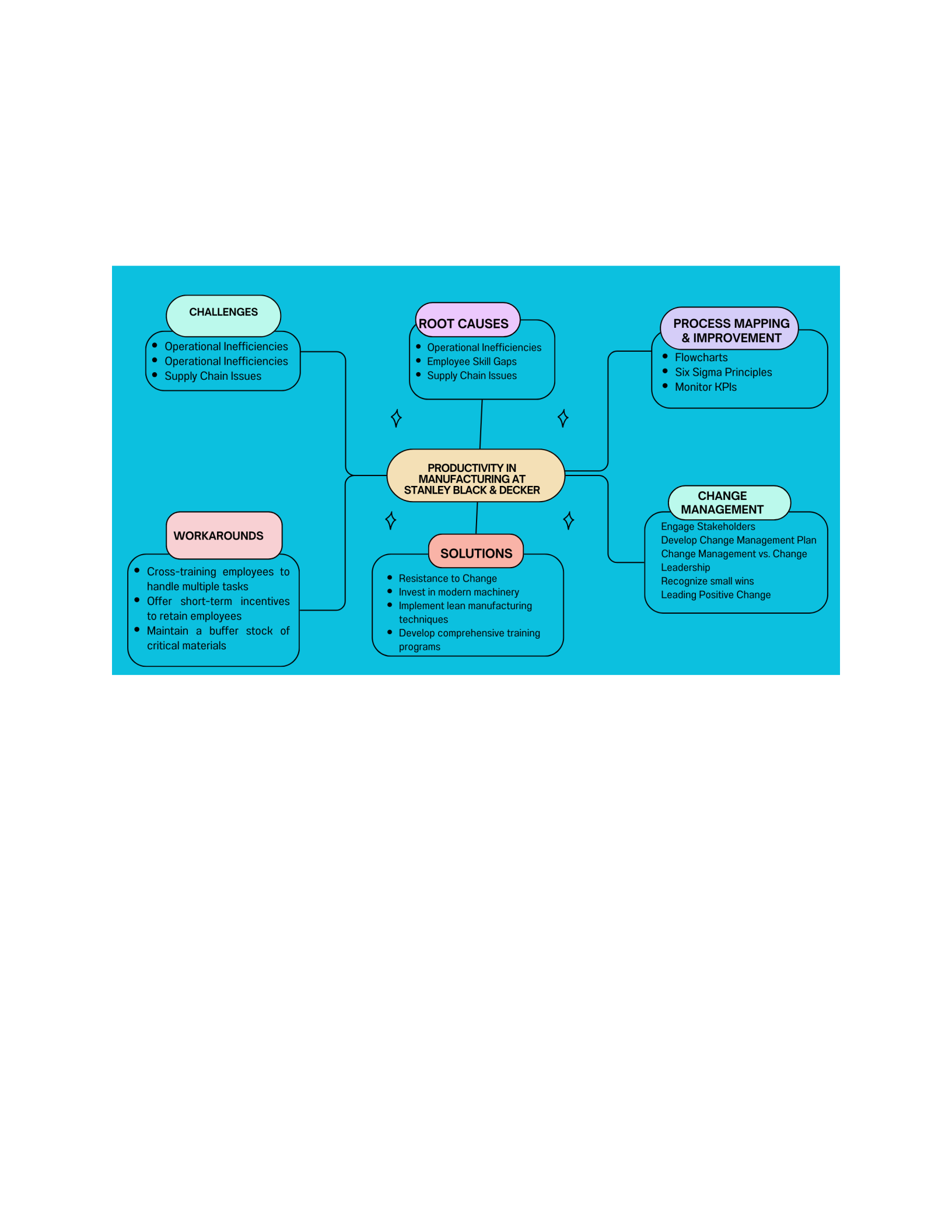
Final Mind Map Analysis for Productivity in Manufacturing at Stanley Black & Decker
The final mind map on productivity in manufacturing at Stanley Black & Decker
combines the data encountered at the beginning of the process in analyzing the problems,
solution proposals, and real-life solutions. This also ensures that it is detail-oriented, which also
entails applications of advanced process mapping and change management methods, as
highlighted under the specified readings and videos. From this point of view, the aim is to
establish an integrated approach that covers productivity challenges and makes the changes long-
lasting.
Challenges
The primary issues are functioning, the need for qualified personnel, and supply chains.
Worker productivity could be higher due to old equipment and organizational structure
irregularities that cause many breakdowns. There is evidence of the lack of direct and efficient
training programs and high levels of turnover in the labour force, which indicate breaks in the
continuity and skill improvement of the personnel. This scenario can be best described as
existing when the supply of material to the manufacturing process is constrained, and
communication with suppliers is unsatisfactory, leading to queues and slow production rates.
Root Causes
Analyzing the given challenges further, one can identify several causes for these
challenges. Thus, operational inefficiencies stem from poorly running machinery and
unoptimized processes, in particular. The considerable employee skill gaps are due to limited
training prospects and inactivity in retaining the workers competently. Lack of reliable suppliers
and inadequate contingency plans magnify the effect of existing problems in the supply chain.

3
Solutions
In response to these causes, the following reform strategies are put forward. As for
operation wastes, the substantial solution is to buy new equipment and apply the 'Toyota
Production System' on a production line. A fleet of contemporary machinery shall improve
procedural productivity, whereas efficient manufacturing methods shall help to reduce waste
within the processes. Hence, offering comprehensive training programs and optimum team
member retention measures is critical to close these skill gaps. Besides, training and
development will impart the necessary skills to the organizational employees.
In contrast, retention strategies will help decrease turnover and maintain a skilled and
efficient workforce. As for managerial recommendations, supply chain coordination and
management are advised to diversify the supplier base and improve supplier relations. This will
also help cut loose with some unreliable suppliers and make materials arrive when expected.
Workarounds
These solutions may be well supplemented by definite challenges when it comes to
implementation; thus, real-life considerations are needed. In cases where there are operational
inefficiencies, it is possible to put measures in place on a short-term basis before acquiring new
equipment, while cross-training the employees helps to prevent a lack of variety in tasks.
Suppose there is a temporary deficiency in the level of skills. In that case, one can use outside
training consultants and provide short-term motivating factors to ensure employees do not leave.
In supply chain concerns, stock-outs of essential materials can be met by having a cushion
inventory handy and having part sandwich suppliers for the essentials.
Process Mapping Improvement

4
From the book "Process Mapping, Process Improvement, and Process Management,"
some of the following techniques can be identified as being used to some extent, depending on
the organization's specific processes. They can be employed to show existing process models; in
doing so, it may be possible to discover problems that require enhancement. Six Sigma concepts
can be used to improve the process outcomes by decreasing the level of variation and removing
errors. The concepts of the Six Sigma dashboard and benchmarking will help the company
maintain process performance and improvements on the KPIs.
Change Management
Using these solutions requires proper changes in management at the corporate and
organizational levels. Derived from Managing Organizational Change, the suitable tactics
include: According to Managing Organizational Change, the following are some suggested
strategies: Video insights from” Change Management vs Change Leadership" and "Six Tips for
Positive Change" highlight the prepositions of management and leadership. Managers should
establish a clear and forward-looking vision, exemplify the desired behaviours, critique informal
work structures, facilitate change, support employees' efforts, raise morale, and acknowledge
minor accomplishments to promote organizational improvement.
Conclusion
The final mind map presents a systematic and coherent perspective on solving
productivity issues at Stanley Black & Decker. Thus, the map reflects a comprehensive approach
to efficiency-boosting that ties solutions with workarounds, process improvement
methodologies, and management change theories to develop an effective productivity
improvement model. That is why this plan is quite broad and universal; it does not address
5
current issues only but also focuses on how it can be improved in the future, setting up the
foundations for uninterrupted growth in manufacturing productivity.
The Mind map

6
References
Dr. John Kotter. (2012, February 6). Change Management vs. Change Leadership — What’s the
Difference? [Video]. YouTube. https://www.youtube.com/watch?v=2ssUnbrhf_U
TEDx Talks. (2013, January 7). Six keys to leading positive change: Rosabeth Moss Kanter at
TEDxBeaconStreet [Video]. YouTube. https://www.youtube.com/watch?
v=owU5aTNPJbs
Leadership Roll Call with Michael Finley. (2017, August 6). Breaking down silos [Video].
YouTube. https://www.youtube.com/watch?v=wC2O3WJHJRI

