


INTRODUCTION Although rates of community based
Although rates of community-based violence had been steadily declining since the
1990’s, violent crime has begun to climb more recently in the United States (Lopez et al., 2023;
Uniform Crime Report, 2019). Community violence has taken a substantial toll on individuals,
families, and communities (Bacchini & Esposito, 2020; Davis et al., 2020; Gardella et al., 2016;
Kruger et al., 2007), and disproportionately impacts low-income neighborhoods and
communities of color (Morgan & Oudekerk, 2019). Community violence, or street violence, is
characterized by intentional acts of violence in public areas (Cooley-Quille, Turner, & Beidel,
1995). Research has shown that community violence is often linked to poverty, unemployment,
family instability, and other community-level stressors (Centers for Disease Control and
Prevention [CDC], 2020). These complex, systemic factors pose significant challenges for
reducing and preventing community violence.
The use of law enforcement has historically been the primary strategy for reducing crime
and violence (Clear, 2009; Wortley, 2002). However, research suggests that police are often
overburdened, as they are expected to manage the byproducts of complex social problems
typically reserved for social workers and other mental health professionals (Fuller et al., 2015;
Treatment Advocacy Center, 2019). Moreover, the long history of disproportionate police
misconduct, corruption, and violence in communities of color has undermined resident trust
towards law enforcement, particularly in neighborhoods hardest hit by community violence
(Giffords Law Center [GLC], 2020; McCarthy, 2019).
Given the detrimental impact that mass incarceration has had on low-income
communities of color (Alexander, 2010), communities are increasingly reimagining the role of

policing and public safety in the United States. Calls to defund or dismantle police departments
increased in the wake of high-profile police killings of George Floyd, Breonna Taylor, and other
unarmed Black Americans (Andrew, 2020). The movement to shift resources from law
enforcement to community organizations and social services has its roots in radical abolitionist
traditions (Chazkel et al., 2020; Davis, 2011; Tchoukleva et al., 2020), but during the
countrywide uprising for racial justice in the summer of 2020, community-driven alternatives to
policing increasingly became a focus within mainstream discourse in the United States
(Fernandez, 2020). However, in the years that followed, funding for police departments actually
increased (Manthey et al., 2022) and although public opinion regarding community-driven
solutions dropped, increases in new police reforms have been implemented within the last two
years (Friess, 2022).
Statement of the Problem
The consequences of street crime are vast. Exposure to violence can lead to fear and
mistrust among residents (Kruger et al., 2007) and physically restrict their ability to move freely
in their neighborhood (Loukaitou-sideris & Eck, 2007; Stafford et al., 2007). Community
violence can also put an economic strain on communities, as many business owners are
discouraged from opening in high crime areas, thus decreasing property values (Hipp, 2011) and
perpetuating cycles of poverty and subsequent violence.
Another consequence of street violence is the psychological strain it puts on
communities. Research has shown that violence exposure increases the likelihood of
traumarelated symptoms and other signs of psychological distress (Bacchini & Esposito, 2020;

Gaylord-Harden et al., 2020; Margolin et al., 2010; Pierre et al., 2020; Yearwood et al., 2017).
Individuals who experience complex trauma, or ongoing traumatic stress, may present with
symptoms characterized by anger, aggression, and callousness which may serve an adaptive
function (Roach, 2013). Given the association between early exposure to community violence
and aggression or violence later in life (Davis et al., 2020; Myers et al., 2018; Spano & Bolland,
2013), a consequence of violence exposure is increased likelihood for the perpetuation of
violence.
Community violence has been negatively associated with school climate and academic
achievement (Gardella et al., 2016; McCoy et al., 2013; Ruiz et al., 2018). Given that eligibility
for school funding is often contingent upon standardized test scores and other measures of
academic achievement (Darling-Hammond, 2007), high-crime neighborhoods may be at an
increased risk of school closures. One research study revealed that low-performing schools were
more likely to be closed in communities with larger proportions of Black and Latino/a students.
More than half of displaced students were later transferred to school settings that were also low
performing (Han et al., 2017).
Violent crime rates rose substantially in the early 1990’s (Wintemute, 1999) and although
U.S. cities have seen declines in the past 30 years, community violence continues to be a
concern, as rates have recently been on the rise (Morgan & Oudekerk, 2019) and surged at a 24%
increase in homicides in 2023 compared to the first half of 2019 (Lopez et al., 2023). Between
2015 and 2018, the number of violent-crime victims who were 12 years old or older increased
from 2.7 million to 3.3 million. Survey data from 2018 also revealed that less than half (43%) of
violent victimizations were reported to police (Morgan & Oudekerk, 2019). Moreover, research

has shown that since 1965, the clearance rate of solved homicide cases has declined by almost
20% (Murder Accountability Project, 2020). The challenges that traditional policing have
encountered in reducing violence and potentially increasing crime in some instances (Steman,
2017), suggests that alternative, community-led strategies may offer sources of expertise that
have largely been ignored in mainstream public-safety discourse.
Community organizations that focus on reducing crime and violence have played an
important role throughout cities and neighborhoods across the United States. Longitudinal data
suggest that local organizations contributed to the major drop in homicide rates occurring
between 1990-2010 (Sharkley et al., 2017). Sharkley and colleagues (2017) estimated that for
every 10 community organizations added per 100,000 residents, the murder rate declined by 9
percent, the violent crime rate reduced by 6 percent, and the rate of property crimes declined by 4
percent. Given the integral role that local organizations play in enhancing public safety,
evaluations of community-led violence prevention initiatives have become an important area of
focus among researchers.
Community-led violence prevention initiatives were developed, in part, to ameliorate
community-police tensions by allowing residents greater autonomy to address violence in their
neighborhoods (Peterson, 2020). For the past 30 years, community-led public safety has sought
to address community violence using the knowledge, skills, and expertise of community
members impacted by violence. Many organizations involved in violence prevention work view
violence as a public health problem (Cure Violence Global, 2020; Krug et al., 2002). These
initiatives are often data-driven and receive state-funding to hire local residents and community
organizations to engage in violence prevention work in their neighborhoods. Many program

evaluations have shown reductions in crime and violence (Henry et al., 2014; Roman et al., 2017;
Skogan et al., 2009; Webster et al., 2012). Despite the promise of community-led public safety,
studies that have attempted to replicate previously successful initiatives have shown mixed
results, which are attributed to several challenges to program implementation (Fox et al., 2015;
Picard-Fritsche & Cerniglia, 2013; Wilson & Chermak, 2011).
Many of the challenges that community-led public safety initiatives encounter include
police-community tensions, divergent interests, lack of strong ties with community partners, lack
of an overall presence in the neighborhood, and inconsistent state funding (Berman & Gold,
2011; Fox et al., 2015; Skogan et al., 2009; Wilson & Chermak, 2011). The concept of relational
empowerment is useful for understanding the ways in which interpersonal relationships within
and across community organizations can overcome these challenges and help meet desired goals.
Relational empowerment is defined as the important psychological processes that help facilitate
relationships within organizations and communities that promote transformative social change
(Christens, 2012).
Relational empowerment has been studied across diverse contexts, such as elementary
school students participating in a youth participatory action research (yPAR) after school
program (Langhout et al., 2014), student leaders of various high school Gay Straight Alliance
organizations (Russell et al., 2009), youth of color exposed to community violence (Wray-Lake
& Abrams, 2020), and adult residents of Azerbaijan, many of whom were involved in community
organizations (Cheryomukhin & Peterson, 2014). This research has suggested that relational
empowerment is a flexible construct that can be applied to various settings and organizations
across age, race, ethnicity, and class and can look very differently across contexts

(Cheryomukhin & Peterson, 2014; Langhout et al., 2014; Russell et al., 2009; Wray-Lake &
Abrams, 2020). To date, no studies have examined relational empowerment among activists and
community organizers involved in violence prevention. Thus, identifying the various ways in
which activists and organizers demonstrate relational empowerment may yield important insights
that can strengthen community-led violence prevention initiatives and contribute to the
knowledge base of relational empowerment and other empowering processes.
Many of the challenges that community-led public safety initiatives encounter underscore
the importance of interpersonal relationships (Berman & Gold, 2011; Fox et al., 2015; Skogan et
al., 2009; Wilson & Chermak, 2011). Prior research suggested that relationship building may be a
vital socialization process necessary for raising critical awareness and sustaining civic
engagement and organizing (Russell et al., 2009; Christens et al., 2010; Wray-Lake & Abrams,
2020). Moreover, the dimensions of relational empowerment align with the overarching goals of
a well-funded and thoroughly researched strategy for community-led violence prevention known
as the Cure Violence model, which attempts to shift social norms through community
mobilization (Cure Violence, 2020). All five dimensions of relational empowerment, discussed
further in Chapter Two (i.e., bridging divides, collaborative competence, mobilizing networks,
facilitating others’ empowerment, and passing on the legacy), are particularly relevant to building
strong social ties, strengthening solidarity, mobilizing resources, and sustaining organizational
capacity to address community violence. Thus, examining how relational empowerment
manifests within the unique context of antiviolence community organizing may provide
important insights that inform grassroots strategies. Moreover, since no studies have examined
relational empowerment among grassroots activists and organizers involved in community-led

violence prevention, findings may also broaden understandings of relational empowerment as a
psychological construct.
Purpose of the Study
The present study examined relational empowerment in the context of community
organizing and neighborhood-driven public safety. The purpose of this research was to explore
how staff who work in community-led violence prevention experience relational empowerment,
the ways they utilize relationships to enact community-level change, and what they perceive to
be the barriers to relational empowerment and antiviolence organizing. Identifying how members
of these organizations build partnerships, manage tensions across relationships, promote
solidarity, mobilize communities, and sustain their organizations over time to address problems
of violence and victimization is an important focus of this research.
This study sought to explore the relational processes that contribute to empowered
community violence prevention organizations. Staff who work as outreach workers, violence
interventionists, and in crisis response within community-led public safety programs in U.S.
cities were the focus of this research. Given the breadth of grassroots organizing that focused on
preventing community violence (Butts et al., 2015; Cure Violence, 2020), this study provides
useful insights into the relational processes that contribute to effective violence prevention
among organizations that share similar ecological contexts.
Members of community-based violence prevention organizations have strong roots in the
community. Many have been directly impacted or had loved ones who have been exposed to
violence. They often have first-hand knowledge of gang life and many live in neighborhoods
with the highest rates of gun violence. As violence interventionists, they utilize their credibility in

the community and knowledge of street dynamics to interrupt disputes before they become
violent (Butts et al., 2015). Moreover, they serve as outreach workers or peer mentors for
highrisk youth, provide crises intervention, offer resources, and direct residents to vital services
necessary for minimizing risk of violence exposure (Butts et al., 2015). Community-led public
safety programs may also engage in protests, demonstrations, vigils, and other outreach
initiatives to mobilize the larger community beyond their neighborhood around violence
prevention (Butts et al., 2015; Cure violence, 2021). Lastly, they work to develop partnerships
and coalitions with other community organizations and stakeholders to respond more efficiently
to the needs of the community (Butts et al., 2015).
This research examined how relational empowerment is enacted among outreach
workers, violence interventionists, and crisis responders in U.S. cities. The unique challenges
they face in building empowering relationships was also identified. Lastly, this study sought to
explore factors that contribute to relational empowerment among individuals involved in
violence prevention work and how these processes strengthen their initiatives and sustain their
organizations over time.
Research Questions
The following research questions framed this study: (a) How do community-led public
safety outreach workers, violence interventionists, and crisis responders experience relational
empowerment in the context of community organizing? (b) How do they utilize relationships to
enact community-level change? (c) What are their perceptions of the barriers to relational
empowerment and effective community-led violence prevention?

Definition of Key Terms
Community-led Public Safety
Community-led public safety programs are nonprofit structures comprised of a diverse
range of employees. This study primarily focused on staff who work as outreach workers,
violence interventionists, and crisis responders. Outreach workers provide youth outreach and
mentorship, provide residents with resources, as well as offer case management services by
connecting them with other organizations and service providers in the community. Violence
interventionists utilize their credibility, lived experience, social connections, and expertise of
street dynamics and gang life to intervene and mediate tensions before they escalate into
violence. Crisis responders respond to the scene immediately following a shooting, homicide, or
other violent crime. They work with the hospitals and law enforcement in their city as a resource
to quickly intervene and provide emotional support and tangible resources for residents who lost
a loved one, have been victimized, or exposed to violence. The names of these three job roles
vary depending on the organization. In some cases, the term outreach worker encapsulates
violence intervention and crisis response. For the purpose of this study, they have been
categorized above with their associated activities.
Community Violence (Street Violence)
Community violence, or street violence, is defined as the intentional acts of interpersonal
violence in public areas (Cooley-Quille et al., 1995). For the purpose of this study, community
violence included gang conflict, shootings, or any physical altercations in the community carried
out with or without a firearm.

Empowerment
Woodall et al. (2012) argued that the definition of empowerment has become diluted and
less precise because of its widespread use in health promotion. In this study, the term
empowerment refers to a process in which individuals, organizations, and communities gain
mastery over the social problems that impact their lives (Rappaport, 1987; Zimmerman, 1995).
Organizer
An organizer is defined as someone who is engaged in long-term strategies and projects,
with the aim of bringing atomized people together around common interests to build collective
power. Organizing consists of building the infrastructure necessary to sustainably identify points
of leverage or vulnerability within the circumstances that organizers seek to transform (Taylor
2016). In the context of this study, an organizer may raise money for community resources,
develop mutual aid networks, mobilize residents to join violence prevention initiatives, and
identify partnerships with other organizations and service providers to build organizational
capacity and support for residents. In addition, the term antiviolence organizer or antiviolence
organizing was used as a qualifier for describing the organizing activities above, as they relate to
community violence prevention or community-led public safety.
Psychological Empowerment
This study used the definition offered by Christens et al. (2014), in which psychological
empowerment “…refers to the processes through which people, organizations, and communities
are developing critical awareness of their environment, building social networks and social
movements, and gaining greater control over their lives” (p. 1766).

Relational Empowerment
Relational empowerment, or the relational component of psychological empowerment,
consists of the psychological processes necessary for cultivating interpersonal relationships
within organizations and communities that promote transformative social change. There are five
distinct components of relational empowerment: Bridging divides, collaborative competency,
mobilizing networks, facilitate others’ empowerment, and passing on the legacy (Christens,
2012).
Significance of the Study
The nationwide protests led by Black Lives Matter and other organizations in response to
the police killing of George Floyd, Breonna Taylor, and other unarmed Black Americans have led
communities and policy makers to rethink the role of policing in the United States (Andrew,
2020). In Minneapolis, Minnesota public officials had announced their intent to dismantle the
police department and replace it with a holistic public safety approach that involves
communityled violence prevention (Romo, 2020). Although reforms have taken place since the
2020 uprisings (Friess, 2022), calls to reallocate public safety funding have waned. Many of the
efforts to shift funds from law enforcement to community-based solutions have faltered due to
political pressure to respond to the recent post-pandemic crime surge with more police (Londono,
2023). Given these recent barriers that attempt to discredit community-led public safety
initiatives, more research is needed to inform best practices and promote policies that facilitate
community empowerment. This research study sought to inform practice within community
organizing by identifying the psychological competencies and relational processes necessary for
creating transformative community-led change in violence prevention.

Although community activists and organizers have recently pushed the conversation of
community-led public safety into mainstream discourse, many in the U. S., including liberal
constituencies, are skeptical about residents’ and community organizations’ ability to police their
own neighborhoods (McCaskill, 2020). Thus, community organizations that actively lead public
safety initiatives encounter a host of challenges that other organizations may not necessarily
contend with. Issues related to housing, healthcare, and employment, for example, are generally
accepted by the public as viable initiatives that warrant community engagement. Public safety,
however, is typically assumed to fall on law enforcement and the broader criminal justice system.
Calls to defund the police, which is a call to reallocate resources to mental health and social
services, albeit increasingly becoming mainstream due to increasing awareness of police
violence, continue to be met with mixed public support (Crabtree, 2020; Friess, 2022).
Given that the dominant view favors law enforcement and the criminal justice system in
addressing public safety concerns, it is important for research to elevate counternarratives by
centering the knowledge, skills, and expertise of antiviolence activists and their vital role in
maintaining public safety. Moreover, the critical-ideological, abolitionist theoretical framework
of this study (discussed further in chapter two) may offer important critiques of dominant
narratives held by mainstream society. By challenging dominant narratives and identifying
relational processes that promote social change, this study sought to inform local and state
policies aimed at affording residents more autonomy and control over their neighborhoods.
Rather than policies that disempower residents by encouraging their overreliance on policing
(Vitale, 2017), this study sought to influence legislation that frees up and supports community
organizations to further promote public safety.

In addition to critical discourse and policy, this study sought to contribute to theory and
research focusing on community organizing. For example, more research is needed to understand
pathways to effective coalition building and community mobilization that may be specific to
community-based violence prevention. Moreover, identifying how relational empowerment
manifests among individuals involved in antiviolence organizing may lead to important
considerations about how relational empowerment is enacted in other types of organizations. For
instance, prior qualitative inquiry examining relational processes within high school Gay Straight
Alliance organizations (Russell et al., 2009) contributed to the development of relational
empowerment as a theoretical concept (Christens, 2012). Later scholarship identified the various
ways in which diverse populations and organizations promoted relational empowerment based on
their unique ecological context (Cheryomukhin & Peterson, 2014; Langhout et al., 2014; Wray-
Lake & Abrams, 2020). Thus, this research study may expand the theoretical terrain of relational
empowerment in ways that may be broadly applicable to populations outside of antiviolence
community organizing.
In addition to understanding how relational empowerment is enacted differently across
organizational contexts, another important aim of community research has been to identify
common empowering processes across diverse community organizations (Maton & Salem, 1995;
Maton, 2008). The strength of this research lies in the gathering of rich data that reveal common
themes across ecological contexts. Empowering processes may present quite differently
depending on the community organization, the setting, the social problems the organization is
attempting to address, and the diverse make-up of participants (Rappaport, 1981; Zimmerman,
1995). Therefore, insights gained from this research may be more relevant to local community

organizations who share similar ecological contexts across member identity, organizational goals,
and challenges.
Relational empowerment offers a potential framework for how violence prevention
community workers on the frontlines can build relationships that are vital for transformative
change. As mentioned above, key aspects of relational empowerment, including collaborative
competence, bridging divides, and mobilizing networks are processes that empower communities
through building power and gaining agency over the pressing issues affecting their community.
Additionally, passing on the legacy and facilitating others’ empowerment may also be vital
competencies that sustain community-led public safety initiatives overtime, particularly with
regard to maintaining funding streams and sustaining organizational capacity. This may be
especially important for volunteer-based organizations who face far more challenges sustaining
their activities than those in the nonprofit sector.
Lastly, this study sought to contribute to the counseling psychology literature. In similar
fashion to community psychologists, critical psychologists (Fox, 2003; Prilleltensky, 2001), and
liberation psychologists (Martin-Baro, 1994; Watkins & Shulman, 2008), counseling
psychologists have echoed the call to incorporate social justice frameworks when working with
marginalized communities (Goodman et al., 2004; Motulsky et al., 2014; Toporek et al., 2006).
This research study aligns with the principles and values outlined in the integration of both
multicultural and feminist theories in the field of counseling psychology, which move beyond
psychotherapeutic approaches of behavior change and aim to facilitate societal, or structural
change (Goodman et al., 2004).

In response to the increased need for social justice and advocacy frameworks in the field
of counseling psychology, there has been a growing focus on social justice and advocacy training
(Caldwell & Vera, 2010; Goodman et al., 2004; Toporek & Worthington, 2014). However,
moving beyond an individualistic lens as a profession, toward addressing macro-level systemic
inequalities continues to present challenges (Kozan & Blustein, 2018). This is, in part, due to the
professionalization of psychology, which often ignores the important role of psychologists as
advocates (Prilleltensky et al., 2009). Alternatively, psychologists can learn from the expertise of
those most impacted by systemic inequality to inform ways in which to engage in social justice
work (Toporek et al., 2006). Thus, this study sought to contribute to the counseling psychology
literature by centering the knowledge, skills, and expertise of workers involved in
communitybased violence prevention to further understand the systemic factors that contribute to
community violence. Moreover, this study aimed to shed light on the vital role that grassroots
organizations play in facilitating the empowerment of communities, while increasing
psychologists’ understanding of what is needed to prevent violence and victimization outside
more traditional, micro-level psychological interventions.
CHAPTER II
LITERATURE REVIEW
This chapter provides a review of the theoretical and empirical literature on
communityled violence prevention initiatives. Outcomes of antiviolence community organizing
and components of effective community-led public safety initiatives are detailed. In addition, the
theoretical literature on community violence and prevention is also discussed. The empirical

literature on relational empowerment within community organizing and other settings will be
reviewed. This chapter integrates the literature on community-led violence prevention and
relational empowerment to highlight how examining relational processes among grassroots
violence prevention workers may provide insights into how community organizations sustain
their activities over time, promote community mobilization, and influence community change.
Theories for Understanding and Addressing Violence at the Community-Level
This section highlights theories and concepts that have been used to understand the causes of
crime and violence, and how communities collectively address violence in their neighborhoods.
Social disorganization and social capital theory are discussed as prominent theories in the field
of community-based research. Critiques and limitations of social capital theory are also
identified, and empowerment is introduced as a theory that addresses these limitations and
therefore guides the present study.
Social Disorganization as a Cause for Crime and Violence
In the fields of criminology, sociology, and community psychology, several theories and
concepts have emerged to help understand the roots of community-based violence (Osgood &
Chambers, 2000; Sampson, 1997; Sampson, 2001; Shaw & McKay, 1942) and how communities
and organizations can address these problems (Beck & Eichler, 2000; Ohmer, 2016; Ohmer et
al., 2010). Social disorganization, one of the more prominent theories originally proposed by
Shaw and McKay (1942), places emphasis on community member involvement in public safety.
Social disorganization theory states that neighborhood structural factors, such as residential
instability, single parent households, ethnic and racial heterogeneity, and poverty, undermine

social cohesion and trust and contribute to crime (Osgood & Chambers, 2000; Sampson, 2001;
Shaw & McKay, 1942).
Research has supported the role of social disorganization in influencing violence, crime,
and delinquency. Sampson and Groves (1989) were the first to test the theory of social
disorganization. Their national survey data revealed that social ties mediated the relationship
between dimensions of social disorganization (i.e., low socioeconomic status, residential
instability, ethnic heterogeneity, and family disruption) and rates of crime and violence. In this
study, social ties were characterized as friendship networks, supervision of adolescent peer
groups, and organizational participation (Sampson & Groves, 1989). More recently, Boggess
(2017) found that changes in racial and ethnic demographics and residential instability were
associated with increased rates of violence and property crime. Racial heterogeneity and
residential instability, in addition to concentrated disadvantage, were significantly linked to rates
of auto theft (Lee et al., 2016). Lastly, Osgood and Chambers (2000) found that residential
instability, family disruption, and racial and ethnic heterogeneity were associated with violence
among juveniles in a rural community, thus demonstrating the generalizability of social
disorganization theory beyond inner city neighborhoods. Social disorganization researchers posit
that the various pathways to weak social ties are distinct and influence crime in different ways.
For instance, Boggess (2017) argued that racial and ethnic heterogeneity may uniquely lead to
increased crime by heightening racial tensions and undermining interactions among residents.
Violence Prevention Via Social Cohesion, Trust, and Shared Norms
One way that residents address social disorganization and strengthen social ties within
their communities is through informal social control, or residents’ ability to regulate the behavior

of others based on shared principles and values (Janowitz, 1975). Examples of informal social
control include residents’ active role in preventing illegal activity, antisocial behaviors (Warner,
2007), and crime and violence they may encounter in their neighborhood. By overseeing social
gatherings among youth on street corners, intervening to prevent truancy, confronting vandalism,
or mediating disputes, residents take ownership of their community and address problems that
may lead to further crime (Sampson et al., 1997). Collective efficacy is necessary for asserting
informal social control to prevent crime and violence. Sampson et al. (1997) defined collective
efficacy as “the linkage of mutual trust and the willingness to intervene for the common good.”
(p. 919).
In addition to informal social control and collective efficacy, social capital is another
construct used to understand how communities prevent social disorganization and, in turn,
neighborhood crime and violence. Putnam (1994, 2000) argued that residents who are high in
social capital have strong social networks, shared norms, and trust, and that these processes are
developed for the mutual benefit of the community. Social capital consists of two components:
bonding and bridging social capital (Putnam, 2000). Bonding social capital occurs within groups
of people who may share common identities and experiences. Groups of individuals who practice
bonding social capital may have similar attitudes, beliefs, identities, and experiences. Bridging
social capital involves uniting people and organizations across divides who previously had not
known each other. These divides can be based on attitudes, beliefs, identity, and other social
factors (Putnam, 2000).

Social Capital Theory in Community Organizing
Social organization theories have been used to inform community-led violence prevention
research and practice. Early research focusing on community members’ role in violence
prevention suggested that collective efficacy and social capital prevents violence through
building social trust, civic engagement, and a willingness to intervene (Hemenway et al., 2001;
Kennedy et al., 1998; Rosenfeld et al., 2001; Sampson et al., 1997). These findings have
informed the development of community-based interventions and models that effectively
increase collective efficacy, social capital, and social cohesion in disadvantaged communities
(Beck & Eichler, 2000; Ohmer, 2016; Ohmer et al., 2010).
A community organizing framework that draws from social capital theory is known as
consensus organizing. Consensus organizing emphasizes the importance of identifying and
engaging with residents and external stakeholders to address problems in their communities
based on shared mutual interests (Eichler, 2007; Ohmer & Demasi, 2008). Consensus organizing
seeks to identify how the interests of residents and institutions (e.g., housing developers,
financial institutions, law enforcement) overlap in order to draw support, mobilize resources, and
create more access for community members impacted by social problems (Eichler, 1995; Eichler,
2007). As the term consensus suggests, bridging social capital (Putnam, 2000) is a core
theoretical tenet of consensus organizing.
Critiques and Limitations of Social Capital Theory
Consensus organizing has become a prominent method to organize individuals around
social issues. Many scholars, however, offered important critiques of social capital theory, which
inform the praxis of consensus organizing. DeFilippis (2001) argued that social capital theory

fails to take the role of power into account. He posited that power differentials routinely shape
interactions between residents and powerful institutions: patients vs. health insurance company;
tenant vs. housing developer; civilian vs. police. As such, interests are never consistently mutual
between marginalized groups and those in positions of power. Although some shared interests
can be found, inherent tensions rooted in power are often irreconcilable, thereby limiting the
scope with which consensus organizing alone can create structural, or transformative change.
Defilippis (2001) asserted that “[w]hat needs to change are those power relations, not the level of
connection” (p. 790). Thus, relying on consensus alone may reinforce and maintain existing
power hierarchies.
Another important critique of social capital theory is the implicit assumption that
residents who occupy high crime areas are socially disconnected and that this leads to more
crime. Ginwright and Cammarota (2007) argued that this deterministic cause and effect
framework ignores the social networks and civic engagement that exist among youth of color in
poor communities. Moreover, social disorganization theory that informs current formulations of
social capital is deficit-based, leading many researchers to focus solely on problems such as
substance abuse, violence, drop-out rates, sexual activity, and other behaviors that undermine
well-being, while ignoring strengths and resiliency factors (Ginwright & Cammarota, 2007).
An additional criticism of social capital theory is the tendency to ignore other systemic
factors that contribute to the adverse social conditions that produce crime and violence. Akom
(2006) referred to social capital as a post-racial formulation in that it obscures the role that
racism and racial discrimination play in maintaining the social and economic disparities present
in low-income communities. Moreover, social capital theory places the onus on people of color

to combat the complex, multilayered sociological problems created by the long history of White
supremacy. Akom (2006) additionally argued that social capital theory, as it is currently
conceptualized, pathologizes communities of color by its implicit assumption that crime and
violence is due to the social disorganization of people of color, and if they were more organized,
crime and violence would cease to exist.
Given the limitations of social capital theory, Ginwright (2007) theoretically expanded
the concept of social capital to be more culturally relevant to Black youth. The concept of critical
social capital shifts the focus away from developing networks, norms, and trust for more access
to resources, and places greater emphasis on community change. Critical social capital focuses
on racial identity and political awareness as vital resources for youth. In his qualitative work with
African American youth involved in a community organization, Ginwright (2007) observed that
critical social capital is enacted by increasing racial and cultural identity development,
challenging negative stereotypes about Black youth at the policy level, and is sustained through
mentorship with adult activists in community organizations. This formulation of social capital
begins to address some of the critiques posited by Akom (2006) and Deflippis (2001). Critical
social capital attends to the role of power differentials in community organizing, while also
shifting focus from a deficit orientation towards identifying resiliency factors within
marginalized communities.
It is important to consider theoretical approaches that attend to these critiques in
understanding how community organizations effectively prevent crime and violence in their
neighborhoods. When considering racial disparities in police violence, poverty, and other social
factors that contribute to community violence, it is important to draw from theories that

incorporate power differentials while also identifying the sources of resiliency that exist within
community organizations.
Theoretical Framework for the Study
Empowerment Theory
One theory that attends to power differentials and community resiliency is empowerment
theory (Rappaport, 1981; Zimmerman, 2000), which has been widely used as a theoretical lens to
examine processes within community organizing (Christens et al., 2011; Christens & Speer,
2011; Christens & Lin, 2014; Maton & Salem, 1995; Speer et al., 2013). Given its relevance to
the current study, empowerment theory was used to guide this research. Empowerment theory is
influenced by Bronfenbrenner’s (1977) ecological systems theory and is a multilevel framework
for understanding the relationship between empowerment processes at the individual,
organizational, and community level. Empowerment is defined as the processes by which
individuals gain mastery over the issues that impact their lives (Rappaport, 1987; Zimmerman,
2000). Empowerment theory aligns with the goals of the current study, as it positions local
communities and organizations as the experts in resolving social problems that impact them
(Rappaport 1981, 1987). Community members involved in antiviolence work may have greater
insider knowledge into the ecological contexts in which they are situated than law enforcement,
professionals in the social service sector, and outside researchers. Thus, empowerment theory
offers a lens to conceptualize the relational work carried out by activists and organizers that
promote community-level change.
Within empowerment theory, psychological empowerment is assessed at the individual
level of analysis. Christens et al. (2014) defined psychological empowerment as “…the

psychological aspects of processes through which people, organizations, and communities are
developing critical awareness of their environments, building social networks and social
movements, and gaining greater control over their lives” (p. 1766). There are four constructs
within psychological empowerment: emotional, cognitive, behavioral (Zimmerman, 1995) and
relational components (Christens, 2012).
The emotional, or intrapersonal component of psychological empowerment refers to the
ways in which people perceive themselves. It includes perceptions of control and self-efficacy,
motivation to control life circumstances, perceptions of competence, and self-beliefs about
mastery (Zimmerman, 1995). Perceived social isolation, powerlessness, normlessness
(Zimmerman & Rappaport, 1988) and perceived helplessness (Rappaport, 1984) are considered
opposite constructs to the emotional component of psychological empowerment.
The cognitive, or interactional component involves developing critical awareness or
insight into one’s sociopolitical environment (Zimmerman, 2000). Critical awareness consists of
recognizing the causes of social problems (Sue & Zane, 1980), how to identify, cultivate, and
manage needed resources to address the issue, and when to engage and avoid conflict (Kieffer,
1984). Cognitive empowerment is theoretically related to critical reflection, one of several
constructs that make up critical consciousness (Watts et al., 2011). Critical reflection, however,
places greater emphasis on the cognitive shifts that take place when a person develops an
increased sociopolitical awareness. Cognitive empowerment focuses more on competencies
necessary for taking action and working toward social change (Christens et al., 2016).
The behavioral component of psychological empowerment refers to a wide range of
actions that can directly influence outcomes. When introducing behavioral empowerment,

Zimmerman (1995) posited examples such as participation in self-help groups, playing on an
athletic team, joining an organization, and managing stress or adapting to changes in one’s
environment. In terms of community organizing, behavioral empowerment has been described as
participation in democratic decision-making processes (Christens, 2012) and has been measured
using community participation scales (e.g., Speer & Peterson, 2000; Zimmerman & Zahniser,
1991).
Christens (2012) later added the relational, or interpersonal component of psychological
empowerment based on prior research underscoring the importance of socialization processes
and interpersonal relationships in promoting psychological empowerment (Cargo et al., 2003;
Christens, 2010; Fedi et al., 2009; Kieffer, 1984; Kim et al., 1998; Kirshner, 2008; Pigg, 2002;
Speer & Hughey, 1995; Zeldin et al., 2005), as well as relational constructs from community
research (Borgatti et al., 2009; Coleman, 1988; Foster-Fishman et al., 2007; McMillan & Chavis,
1986; Putnam, 1994; Sarason, 1974).
Relational empowerment is defined as the psychological processes necessary for
cultivating interpersonal relationships that promote transformative social change (Christens
2012). Since its development, relational empowerment has been validated as distinct from
cognitive, emotional, and behavioral components of psychological empowerment
(Cheryomukhin & Peterson, 2014; Rodrigues et al., 2018).
At the organizational level of analysis, community organizations can be empowering,
empowered, or both. Empowering organizations are concerned with processes that provide
opportunities for members to gain mastery over their lives, as they are settings that promote
psychological empowerment among participants. Empowering organizations provide

opportunities for participants to assume decision-making roles, share responsibilities, access
positions of leadership, and other forms of power sharing within the organization. Empowered
organizations are concerned with outcomes such as effectively competing for resources,
networking, building partnerships with other organizations, and creating positive change in the
community by influencing policy. Thus, empowered organizations facilitate social change, while
empowering organizations promote settings that empower individual members. Within a single
organization, both empowerment processes can be present (Zimmerman, 2000). The present
study yields insights into socialization processes that promote both empowered and empowering
organizations, as well as how the organizational settings themselves may facilitate or hinder
relational empowerment.
At the community level of analysis, an empowered community is one that is comprised of
well-connected organizations or coalitions, access to resources that are necessary for residents to
engage in activities that improve quality of life, and equal opportunities for all citizens to
participate in producing social change. Moreover, empowered communities work collaboratively
to identify, strategize, and address needs within the community. Similarly, empowering
communities include resources equally accessible to citizens such as recreational facilities,
protection by public services such as firefighting and police, healthcare, and other services. In
terms of community organizing, empowering communities include local and state governments
that are open and give credence to residents’ concerns (Zimmerman, 2000).
Penal Abolitionist Theory
Given that this study sought to identify the challenges that community-based violence
prevention organizations face when developing relationships that promote transformative change,

penal abolitionist theory will also be used to provide a contextual understanding of the social
mechanisms that may produce challenges to relational work. Penal abolitionist theory is a form
of radical criminology rooted in Marx and Engel’s capitalist critique (Saleh-Hanna, 2008). In this
view, capitalist economies rely heavily on the accumulation of surplus labor and therefore,
require exploited populations to extract the value of their labor. The penal system, which includes
prisons, probation, parole, courts, and other forms of correctional control, are viewed as the
mechanisms of these capitalist structures (Saleh-Hannah, 2008). Penal abolitionist theory views
the concept of crime as a social construct that is used as a tool to criminalize the exploited class
so that their surplus labor can be extracted (Steinert, 1986). Saleh-Hannah (2008) pointed out that
criminalization is reserved for those that capitalist structures exploit, often based on a group’s
race and class position. She argued that the term “crime” limits the scope of what forms of harm
committed in society are sanctioned and which are not. She argued that not all harmful acts are
considered crimes, as harmful acts committed against society by corporations and nation-states
are often not considered punishable crimes.
Within abolitionist theory, the focus of analysis is not on the individual act of crime or
violence, but on the social structures that criminalize marginalized communities (Saleh-Hanna,
2008). Institutional or prison abolitionists call for the abolishment of prisons. Penal abolitionists
argue that banning one institution is insufficient within racist and classist, advanced capitalist
societies that benefit from oppression (Saleh-Hannah, 2008). Thus, penal abolitionism consists of
a more comprehensive analysis of “…social structures, the concept of penalty, criminalization
processes, and the assumptions made about human nature and society within these processes”
(Saleh-Hanna, 2008, p. 437).

An abolitionist perspective acknowledges the deeply rooted power differentials between
marginalized communities and the broader criminal justice system. Given the tensions between
law enforcement and residents involved in antiviolence work (Berman & Gold, 2011; Wilson &
Chermak, 2011), a penal abolitionist lens may explain power dynamics that undermine efforts to
collaborate and find consensus between law enforcement and the communities they police.
Moreover, the construct of relational empowerment may shed light on pathways to building
power from the bottom-up and overcoming irreconcilable, diverging interests. Indeed, an
important competency within relational empowerment involves using a critical awareness of
asymmetrical power dynamics to determine when to engage in conflict, bridge divides, or
collaborate to effect social change (Christens, 2012).
The abolitionist tradition is theoretically linked to the broader concept of critical theory.
Critical consciousness, which is informed by the criticalist tradition (Freire, 1972, 1973; Watts et
al., 2011), offers an important supplement to empowerment theory by offering a rich and
contextually-driven account of how oppression functions from the vantage point of marginalized
communities (Christens et al., 2016). Penal abolitionist theory is particularly relevant to this
study given the abolitionist origins of community-led public safety (Chazkel et al., 2020; Davis,
2011; Tchoukleva et al., 2020). In attempting to understand the experiences of organizers
involved in community violence prevention work, penal abolitionist theory highlights, exposes,
and holds accountable, the oppressive systems that may undermine relational empowerment,
while empowerment theory informs how individuals and organizations may overcome these
obstacles to prevent or reduce violence in their communities.
Community-Led Public Safety

Violence as a Public Health Crisis
In 1996, the World Health Organization (WHO) declared violence a “major and growing
problem across the world” (Krug et al., 2002, Introduction). Since then, greater attention has
been paid to the role of the public health sector in preventing the spread of violence. Researchers
argued that the public health sector offers a multidisciplinary and preventative approach to
violence by shifting the behavioral, social, and environmental factors that contribute to violence
(Krug et al., 2002; Mercy et al., 1993). Addressing violence through a public health lens contrasts
with traditional law enforcement strategies, which often utilize more reactive approaches to
crime control (Weisburd & Majmunder, 2018).
One of the more well-known violence prevention frameworks that uses a public health
approach is known as the Cure Violence model (Cure Violence Global, 2020). The Cure Violence
model views violence as a communicable disease and therefore, attempts to address the spread of
violence similarly (Cure Violence Global, 2020). Three core strategies are used when combatting
the infectious epidemic process: 1) identifying, interrupting, and preventing the spread of new
cases, 2) identifying those most at risk of exposure and reducing their chances of contamination
and further spread, and 3) shifting the societal and behavioral norms and circumstances that
contribute to the spread (Heymann, 2008; Nelson & Williams, 2007; Slutkin, 2013). Gary
Slutkin, the founder of Cure Violence, sought to apply these three strategies to violence
prevention (Slutkin, 2013). Thus, Cure Violence operates on three core principles: 1) to detect
and interrupt conflicts that are potentially violent; 2) to offer personal support to those considered
highest risk, and 3) to mobilize the community to change social norms (Cure
Violence Global, 2020).

The Cure Violence Model: Community-led Violence Prevention
The Cure Violence model was first implemented under its original name,
ChicagoCeasefire (Butts et al., 2015), in the late 1990s and built approximately 27 sites
throughout
Illinois (Skogan et al., 2009). Other programs began to emerge following the success of Chicago-
Ceasefire, such as Safe Streets in Baltimore (Webster et al., 2012), One Vision (Wilson &
Chermak, 2011), Ceasefire Philadelphia (Roman et al., 2017), Phoenix TRUCE (Fox et al.,
2015), Save Our Streets (Berman & Gold, 2011) and other programs based on the Cure Violence
model (Butts & Delgado, 2017; Ransford et al., 2017).
State-funded Cure Violence programs rely heavily on local community organizations and
residents, as they are on the frontlines of program implementation (Slutkin, 2013). Although
community organizations are following the standard principles and philosophy of the Cure
Violence model, they draw from their own knowledge and experience of the neighborhood to
inform their approach. For instance, community organizations must have intimate knowledge
about a specific community’s local gang infrastructure and must understand and adapt to the
local street culture in a given neighborhood. Moreover, decisions about the extent of
collaboration with law enforcement may also differ depending on the nature of communitypolice
relations (Berman & Gold, 2011; Wilson & Chermak, 2011).
A central priority of the Cure Violence approach is for site hosts responsible for program
implementation to develop diverse partnerships with community organizations, faith-based
communities, schools, law enforcement, the healthcare sector, and other service providers. These
coalitions are viewed as central to changing social norms around violence (Skogan et al., 2009)

and align with the multidisciplinary approach of other public health initiatives (Krug et al.,
2002). Through these partnerships, community-based violence prevention programs seek to find
employment opportunities and access to other vital resources for those considered at high risk of
perpetrating violence or being victimized (Skogan et al., 2009)
In practice, the Cure Violence model identifies, interrupts, and prevents the spread of new
cases of violence with the use of violence interrupters, outreach workers, and community
coordinators (Slutkin, 2013). Violence interrupters are trained in methods of persuasion, as their
primary focus is to intervene in disputes that are at risk of escalating into further violence.
Interrupters are carefully chosen based on their own past experiences with violence and crime,
and many are former high-level gang members who have made positive changes in their lives
following extended prison time. Butts et al. (2015) argued that violence interrupters’ credibility
and expertise as members of the in-group position them to build vital relationships with youth
most at risk of violence exposure. Their insider knowledge of street culture allows them to
identify potential disputes and retaliatory violence before it occurs; they attempt to deescalate
disputes between rival gangs or parties and persuade them to negotiate the conflict in a way that
does not result in the loss of life (Butts et al., 2015).
The use of outreach workers is another way Cure Violence prevents the spread of
violence. Like violence interrupters, outreach workers may also have past criminal justice
involvement and credibility among youth at high risk of violence exposure. Outreach workers do
not focus on intervening in disputes, but rather serve a case management role by directing those
considered at-risk of violence or victimization to employment and educational opportunities,
recreational activities, and housing. By offering positive community resources and alternatives,

outreach workers attempt to promote positive behavioral change by encouraging individuals to
shift their thinking about violence (Butts et al., 2015).
Another main principle of the Cure Violence model is to change social norms around
street violence (Butts et al., 2015). This approach consists of violence interrupters, outreach
workers, and other Cure Violence staff gaining more widespread support by developing
partnerships and collaborations with faith-based organizations, neighborhood associations, tenant
councils, and other community organizations. These activities include anti-violence marches,
public vigils following the shooting death of someone in the community, media campaigns, and
posting signs and billboards in the neighborhood. Partnerships are also developed with law
enforcement, as they have played a vital role in providing access to data on neighborhood crime
patterns, in addition to the hiring of outreach workers and violence interrupters (Butts et al.,
2015).
Each of the three core principles of Cure Violence mentioned earlier necessitates the
development of interpersonal relationships. The ability to effectively intervene in conflicts before
they become violent, provide outreach to those considered at risk, and mobilize communities to
shift social norms all require a set of competencies. Relational empowerment is a construct that
may explain some of the psychological processes and competencies necessary for cultivating
vital relationships to prevent community violence.
Relational Empowerment in Community Organizing
An important contribution of social capital theory and related concepts is the emphasis
placed on the role of relationship-building in community organizing and violence prevention
(Ginwright, 2007; Ohmer, 2016; Ohmer & Demasi, 2009). Relational empowerment is a concept

that incorporates social capital theory in its formulation, but also offers a framework for
understanding the role of interpersonal relationships in building power and promoting
transformative change. More precisely, relational empowerment is comprised of the
“…psychological aspects of interpersonal transactions and processes that undergird the effective
exercise of transformative power in the sociopolitical domain” (Christens, 2012, p.121).
Relational empowerment draws from prior empowerment research that underscores the
significance of relationship building (Cargo et al., 2003; Christens, 2010; Fedi et al., 2009;
Kieffer, 1984; Kim et al., 1998; Kirshner, 2008; Pigg, 2002; Speer & Hughey, 1995; Speer et al.,
1995; Zeldin et al., 2005) and concepts from community research that incorporate a relational
lens, including social capital (Coleman, 1988; Putnam, 1994), social networks (Borgatti et al.,
2009), citizen participation (Foster-Fishman et al., 2007), and psychological sense of community
(McMillan & Chavis, 1986; Sarason, 1974). Relational empowerment is comprised of five
elements: bridging social divisions, collaborative competence, mobilizing networks, facilitating
others’ empowerment, and passing on the legacy (Christens, 2012).
Bridging social divisions consists of competencies necessary for building trust and norms
or reciprocity across different groups (Christens, 2012). Those who possess the ability to bridge
social divides are immersed in relational networks with individuals different from themselves.
Christens (2012) pointed out that this set of competencies are requisites for bridging social
capital (Warren et al., 2001).
Collaborative competence is conceptualized as the ability to develop interpersonal
relationships that strengthen group membership and solidarity (Christens, 2012). It also consists
of the ability to exercise collective agency with the goal of producing social change. Individuals

within an organization who exercise collaborative competence are expected to recognize when to
form weak or strong social ties with other organizations or individuals. Weak ties with external
organizations are useful for delineating vital information to large groups of people and can
promote political mobilization (Granovetter, 1973). Christens (2012) drew from the concept of
structural holes in social network theory to inform the concept of collaborative competence.
Individuals who exercise collaborative competence have interpersonal ties across gaps or “holes”
with those outside their own dense social networks (Burt, 2002). These individual actors have
more power because they learn from the knowledge and experiences of those outside the echo
chamber of their own organization (Burt, 2004). This can lead to new innovations and strategies,
thus strengthening organizational activities that promote social change (Christens, 2012).
Collaborative competence differs from bridging divides in that people who possess
collaborative competence recognize that engaging in conflict is necessary to building power.
Christens (2012) argues that where relational empowerment departs from social capital and
psychological sense of community is the emphasis placed on transformational change. While
cooperating and consensus-making are considered vital processes to organizational
empowerment, empowerment researchers, activists, and organizers recognize that efforts to
challenge oppression are inevitably met with strong opposition (Speer, 2008). Thus, challenging
or countervailing oppressive power structures with organizational power are important processes
for promoting social change at the community level (Alinsky, 1972).
Mobilizing networks involves both expressive and instrumental aspects of interpersonal
relationships (Christens, 2012). The expressive aspect of mobilizing networks consists of
creating an inviting atmosphere for people to participate in organizational activities, and

bolstering commitments to creating change on issues that directly impact participants (Christens,
2010). The instrumental aspect of mobilizing networks involves the importance of motivating
and sustaining community mobilization through relationships. For example, Christens and
Dolan’s (2011) case study on antiviolence youth organizing found that youth gained support from
other peers and adults by focusing on a tangible issue of common concern: gun violence. Youths’
ability to galvanize others led to participant recruitment and the development of relationships
that sustained organizational processes and led to community and policy-level change. The
passing down and expression of cultural and religious influences on collective action also
constitutes an important aspect of mobilizing networks (Mattis & Jagers, 2001). For instance, the
practice of Christianity within some Black communities is founded on relationships that often
inform various forms of collective resistance and social action (Mattis & Jagers, 2001).
Facilitating others’ empowerment consists of a community organizers’ ability to be
thoughtful and intentional regarding group processes and identifying others’ potential (Christens,
2012. Individuals who possess competencies in this area facilitate new opportunities, avenues of
support, and the insights of others. In practice, community leaders delegate tasks or relinquish
control and decision-making powers for the greater well-being of the organization. Thus,
leadership development is an important component to facilitating others’ empowerment by
allowing others to grow within the organization and take on new challenges (Christens, 2012).
Passing down the legacy involves the commitment of mentors and leaders to sustain the
progress they made over time (Christens, 2012). Community leaders develop relationships with
those who have less experience in community organizing. Transmitting knowledge and

experience to those who will eventually assume leadership roles also promotes the growth and
development of those more experienced, and builds greater solidarity and citizen participation
(Zeldin, 2004, as cited in Christens, 2012).
Given the challenges community organizations and community-led public safety
initiatives face in preventing neighborhood violence, identifying how outreach workers, violence
interventionists, and crisis responders bridge divides, collaborate effectively within and across
organizations, mobilize communities, facilitate others’ empowerment, and pass down their legacy
may provide new directions for how to strengthen and sustain antiviolence communitybased
initiatives. Since interpersonal relationships are often shaped by power differentials, it is
important for community violence prevention workers, organizers, residents, and
communitybased researchers to attend to these dynamics by identifying processes and
organizational settings that foster relational empowerment.
Empirical Literature Review
Community-led Violence Prevention Using the Cure Violence Model
Outcome research examining the impact of community-led public safety programs based
on the Cure Violence model on violence and crime has yielded positive results. ChicagoCeasefire
was the subject of the first thorough study of the Cure Violence model (Skogan et al.,
2009). At the time, there were a total of 27 Chicago-Ceasefire sites fully operating in the city of
Chicago. However, seven of the sites were included in the analysis because they had been
operating long enough to collect comparable and post-implementation data. There was an

average of 68 months of post-implementation data across the seven sites, in addition to the
overall duration of the time-series, which amounted to data spanning 188 to 210 months. This
gave the study sufficient statistical power to identify program effects. Comparison areas, where
the program was not operational, were analyzed as well. This method was particularly important
because although shootings declined in six out of the seven target areas where Chicago-Ceasefire
was operating, shootings also significantly declined in designated comparison areas. Thus, the
authors sought to identify whether crime was down more in target areas to accurately identify
program effects. (Skogan et al., 2009)
Results showed consistent evidence of program effects related to declines in gun-related
batteries and murders in West Garfield Park, Southwest, and Auburn-Gresham, three of the areas
where Chicago-Ceasefire was implemented (Skogan et al., 2009). Declines in these areas ranged
between 21-28% and no significant declines were observed in their comparison areas. Although
there was an 18% decline observed in West Humboldt Park, comparison areas saw similar
declines. This was also the case for Logan Square which saw a 19% decline in gun-related
batteries and murders. Lastly, a Poisson regression analysis was used to identify overall trends in
solely gun-related homicides. Results revealed that murders declined in Auburn Gresham, Rogers
Park, and West Garfield Park. Although declines in the comparison areas for Rogers Park and
West Garfield saw a parallel drop, the decrease in the gun homicide rate in Auburn Gresham was
approximately twice the comparison area. Hot spot mapping revealed that in four of the seven
areas involved in the analysis, declines in size and density of shootings were associated with the
implementation of Chicago-Ceasefire. Lastly, social network analysis showed that Chicago-
Ceasefire had a positive impact on gang homicide networks in two areas, whereas findings in the

other remaining areas were either mixed or inconclusive (Skogan et al., 2009). Overall, this
comprehensive study revealed that Chicago-Ceasefire played a role in declines in crime and
community violence. Based on the success of Ceasefire in Chicago, other communityled public
safety initiatives were developed and evaluated.
Safe Streets is another program under the umbrella of Cure Violence that was developed
in Baltimore (Webster et al., 2012). From July 2007 to December 2010, outreach workers
mediated 276 incidents. Based on outreach workers’ survey data, 59.5% of the incidents in which
they intervened would have “very likely” led to a shooting incident, while 24.6% were “likely”
to have occurred. Additionally, outreach workers considered 69% of the incidents to have been
successfully resolved, in which serious injury was avoided, while 23% were reported to be
temporarily resolved (Webster et al., 2012).
Within the four areas of Baltimore involved in the analysis, Webster and colleagues
(2012) found that in Cherry Hill, Safe Streets was linked to statistically significant declines in
overall shootings, a 56% drop in homicide and 34% drop in nonfatal shootings. No homicides
were reported in McElderry Park for the first 22 months that Safe Streets was implemented. This
is in contrast to what would have been expected based on prior homicide levels and city trends,
which projected five homicides without the intervention. When supervisors and staff focused on
a new Safe Streets program site in Madison-Eastend, close to McElderry Park, homicides in
McElderry Park actually increased, due to a surge in shooting incidents. During this time, there
were no significant program effects in McElderry Park. However, McElderry Park saw a
statistically significant drop of 53% in homicides in the months prior to Safe Streets extending
themselves to Madison-Eastend. The Safe Street program saw statistically significant declines in

nonfatal shootings in Elmwood Park and Madison-Eastend, 34% and 44% respectively. Of note,
however, the surge in homicides in Madison-Eastend was three times higher than anticipated
during the 18-month program implementation in Madison-Eastend. Additionally, the authors
found some evidence that the effects of other positive programs may have extended into areas
where Safe Streets was operating. Overall, the authors estimated that Safe Streets was associated
with a decline of 5.4 incidents of homicide and a drop of 34.6 nonfatal shootings throughout the
112 months of program implementation and observation. Furthermore, they estimated that 10
additional homicides would have been prevented if there had not been a substantial increase in
Madison-Eastend that coincided with the implementation of Safe Streets (Webster et al., 2012).
As mentioned earlier, an important aspect of the Cure Violence model is to change social norms
about violence. Thus, Webster and colleagues (2012) were interested in whether Safe Streets
shifted attitudes, particularly among youth, regarding gun violence. Survey data revealed that
Safe Streets had an impact on attitudes about gun violence in young men aged 18-25. Results
indicated that McElderry Park youth were 4 times more likely to display the least amount of
support for the use of violence than in a nonprogram comparison area. The surveys were
administered in two waves. Regression models revealed that Wave 1 participants in McElderry
Park were less likely to endorse the use of firearms to resolve disputes (p < .001) when
controlling for other confounding variables. Participants in Wave 2 were less likely to be in the
category of “strong” support for gun violence (p < .001). No significant neighborhood difference
was observed for the category of “moderate” support (Webster et al., 2012). These results
suggested that community-led public safety measures may be effective at shifting norms.

Although causation cannot be determined, positive shifts in how youth perceive gun violence
may partially explain declines in crime and violence.
Participants’ experience of the Safe Streets program was also assessed (Webster et al.,
2012). Community members who were in need of additional services indicated that outreach
workers helped them with job searches (88%), job interviewing skills (75%); job-related training
(63%), enrolling in school or GED programs (95%), and resolving family conflicts (100%).
Eighty percent of participants indicated that their lives were “better” since they became involved
in the Safe Streets program (Webster, et al. 2012). Given the systemic factors that can lead to
community violence, such as poverty and unemployment, this data suggested that outreach
workers may serve a vital role in indirectly preventing violence in high-crime neighborhoods.
Many other evaluative studies replicating Chicago-Ceasefire and the broader Cure
Violence model showed positive results. Ceasefire in Philadelphia showed a statistically
significant decline in shootings, amounting to a monthly 2.4 reduction per 10,000 residents
(Roman et al., 2017). The authors compared data from 24 months prior to program
implementation with that from 24 months following implementation. The results showed that
Ceasefire was likely associated with a 30% decline in the rate of shootings within the areas
involved in the analysis. Additionally, Ceasefire was also associated with statistically significant
declines in total shootings, which included victims of all ages between 10 and 35 years old. More
specifically, this amounted to a reduction of approximately one shooting per month for every
10,000 people, and a reduction of 0.8 shootings involving young victims per 10,000 residents
(Roman et al., 2017).

Another evaluation of Ceasefire in Chicago examined two years of publicly available,
violent crime data in two districts targeted by Chicago Police (Henry et al., 2014). Raw data
revealed a 31% decrease in homicide, a 7% decrease in total violent crime, and a 19% decrease
in occurrences of shootings in police targeting districts. When compared to citywide declining
trends, these decreases were found to be statistically significant. Moreover, program effects on
violent crime, shootings, and homicides were immediate and maintained throughout the year of
program implementation. The authors indicated that although it is unlikely that effects were the
result of police interventions, this cannot be confirmed as there was ongoing cooperation
between law enforcement and Ceasefire staff (Henry et al., 2014).
These quantitative and mixed-methods evaluations of the Cure Violence model suggested
that when given the opportunity, community members are well-equipped to address issues of
crime and violence in their neighborhoods. As insider experts, residents operate from a
groundlevel vantage point that law enforcement and city officials are not always able to perceive.
Thus, as the Cure Violence model posits, community-led organizations in general have vital
knowledge and skills that, when implemented, can play a critical role in the reduction and
prevention of street violence.
Challenges in Program Implementation
Although community-led public safety initiatives have proven to be an effective approach
to violence reduction, other programs have shown more mixed results. In Pittsburgh, the Cure
Violence model was implemented through a program known as One Vision One Life (or One
Vision). Violent trends were compared before and after program implementation in specific
target areas (Wilson & Chermak, 2011). Data from these target areas were also compared to

trends in non-program areas using propensity-score analysis and compared with non-target areas
that were considered most similar to program areas. Lastly, researchers also made attempts to
identify “spillover effects”, or the extent to which suppressing violence leads to increased
violence in neighboring areas (Wilson & Chermak, 2011).
Results of this One Vision study indicated that there was no association between program
implementation and changes in homicide rates in target and nontarget areas (Wilson & Chermak,
2011). Post program-implementation rates of aggravated assault and gun-related assaults
increased in target areas compared to comparison areas. Regarding comparisons between target
neighborhoods and those non-targeted neighborhoods deemed similar based on intimate
familiarity, no program effects on homicide were observed. In fact, One Vision was associated
with an approximate 27% increase in aggravated assaults in the Northside and an approximate
25% increase in the Southside. Increases in gun assault rates were observed in target areas,
relative to non-target areas. Lastly, no spillover effects were observed with regard to homicides,
but spillover was observed in aggravated and gun-related assaults. Although decreases in
aggravated assaults were identified in adjacent neighborhoods to the Hill District, no statistically
significant change in gun assaults were observed when compared to other neighborhoods
(Wilson & Chermak, 2011).
The Cure Violence model was also implemented in Brooklyn, New York with a program
called Save Our Streets (SOS) between January 2010 to May 2012. The quasi-experimental
design used to evaluate SOS found that gun violence decreased in the target area but that
decrease was not statistically significant, and gun violence increased in nearby comparison
neighborhoods (Picard-Fritsche & Cerniglia, 2013). Additionally, the authors sought to determine

the program’s effect on awareness and attitude change among residents. Surveys were
administered in two waves. Results revealed an increased awareness of SOS’ engagement in the
community among residents, as 27% in Wave 1 and 73% in Wave 2 endorsed increased
awareness. Results also indicated increased confidence in the efficacy of SOS’ activities,
evidenced by an increase from 29% in Wave 1 to 55% in Wave 2. However, survey results
revealed that residents did not feel any safer as a result of SOS’ presence, and continued to
support the right to carry a firearm if they were exposed to a prior gun-related crime
(PicardFritsche & Cerniglia, 2013).
A replication of Ceasefire’s approach, known as the Phoenix Truce Project also showed
mixed results (Fox et al., 2015). Findings indicated that there were no significant program effects
based on pre- and post-program implementation assessments in number of shootings or overall
incidents of violence. Due to the lack of statistically significant within-area differences in both
target and nontarget areas, the authors did not examine between-area differences. A significant
change was observed in one comparison, non-target area. In this area, the average number of
assaults rose from 59 per month prior to implementation to 67 per month post-implementation.
Overall, the implementation of the Phoenix Truce Project was associated with an increase of 3.2
shootings and a decline of more than 16 assaults per month. Researchers found a reduction of
more than 16 incidents of violence per month, which was driven largely by measures of assault
(Fox et al., 2015).
The evaluators of Cure Violence programs cited several barriers to community-led
violence prevention (Berman & Gold, 2011; Fox et al., 2015; Wilson & Chermak, 2011) that
could have hindered program efficacy. This includes a lack of developing strong ties with the

community (Fox et al., 2015) and community-police tensions (Berman & Gold, 2011; Wilson &
Chermak, 2011). Unpredictable state-funding issues were also a major concern to program
implementation (Skogan et al., 2009). Identifying these challenges faced by community-led
public safety programs can strengthen program implementation in ways that may make them
more responsive to communities’ immediate needs. Research in the field of community
psychology offers important insights into the organizational processes that may address these
challenges.
Given the rigorous evaluative studies that demonstrated the Cure Violence model’s
effectiveness in reducing violent crime, and the vital role community partnerships play in
upholding the model, research exploring the mechanisms through which communities develop
and sustain partnerships, mobilize resources, and ultimately shift norms is crucial. Understanding
the relational processes within antiviolence community organizing and how relational
empowerment can be fostered may yield important insights that can strengthen community-led
public safety initiatives. One of the ways researchers have sought to understand how community
organizations become empowered is by examining the settings in which they are situated.
Empirical Studies of Relational Work in Community Organizing
Relational approaches to community organizing are vital, not only for building power
through expanding one’s organization, but also for fostering systems level change. At present,
however, there are only a handful of studies examining the applicability of Christens’ (2012)
relational empowerment model which are described further below (Cheryomukhin & Peterson,
2014; Langhout et al., 2014; Wray-Lake & Abrams, 2020). Literature on interpersonal

relationships in community organizing, however, offers some theoretical insights into how
relational empowerment may apply to successful community organizing.
A case study by Christens (2010) sought to study relational work as a process or model
for community intervention. The author’s observations were based on 7 years of participatory
action research and collaborations with nine local community organizations in seven states. Most
of the local groups were affiliates of the PICO National Network, which focuses on improving
neighborhoods, education, housing, healthcare, and other local issues. For this research study,
quotes focusing on public relationship building were taken from 56 in-depth interviews within
six PICO organizations. Three distinct themes emerged from discussions that focused specifically
on relationships in the process of organizing: 1) broadening participants’ relationship networks,
2) developing new understandings of the social world, and 3) strengthening commitments to
civic engagement. Regarding broadening relationships, the PICO model is intentional about
building wider circles of relationships among participants and representatives of institutions.
Christens (2010) observed that these public relationships are not exempt from moments of
conflict in order to achieve desired goals. As public relationships expand, participants gain new
understandings of the social systems in which they are embedded and become more aware of
these dynamics as they engage with local officials, institutions, organizations, and other systems
of power. Lastly, commitments to sustain civic participation are strengthened as relationships are
built through the process of community organizing. Christens
(2010) pointed out that effective organizing efforts often display increased volunteer
participation (Speer et al., 2010). This study suggested a possible causal link between relational
empowerment and the cognitive component of psychological empowerment. Moreover, the role

that public relationships play in sustaining organizational commitments over time further
highlighted the vital role relationships play.
Russell et al. (2009) examined empowerment processes among student leaders of high
school Gay Straight Alliance (GSA) organizations. Focus groups were conducted in three
communities in California. Many of the students identified as lesbian, gay, or bisexual. Other
participants identified themselves as straight allies, and one student indicated that they were
transgender (female to male). Approximately half of the students involved in the study were
White; three identified as Latino or Latina, three reported they identified as Black, and one stated
that they were Asian. Results indicated that GSA activists discussed three distinct empowerment
processes. The first was empowerment through having and utilizing knowledge. The second was
personal empowerment and the third was relational empowerment or interpersonal
empowerment. With regard to relational empowerment, students discussed feeling empowered as
GSA leaders based on their group membership. Students indicated that being part of a larger
community offered the social support that was vital for pursuing liberation.
Another aspect of relational empowerment was an investment in passing the legacy of
GSA on to future students in order to sustain the organization and so that students can benefit
from GSA after they leave. The last component to relational empowerment was the desire for
GSA leaders to empower other GSA students or prospective members (Russell, et al., 2009).
As part of their analysis, Russell et al. (2009) examined interactions across dimensions of
empowerment. The authors found that relational and personal aspects of empowerment were
interconnected. One observed pattern was how students would describe the personal
empowerment that occurs through feeling affirmed, which is, in part, a result of being part of a

collective of students with shared experiences. This study suggested that relational empowerment
may promote emotional empowerment. As individuals within an organizational context are
supported and feel a sense of belonging, they may gain more confidence in their abilities to gain
agency over their life circumstances. In this study, the concept of relational empowerment was
conceptualized as part of interpersonal or cognitive empowerment. Christens (2012) later
identified it as a distinct component of psychological empowerment, separate from emotional,
cognitive, and behavioral components.
Christens et al. (2014) conducted a case study examining social regularities, or the
relational and temporal patterns that promote empowerment and the development and enactment
of social power. The focus of this case study was on a grassroots organizing model carried out by
WISDOM, a statewide federation that supports local community organizing. Listening-focused
one-to-one meetings, reflection, and social analysis were identified as social regularities that
were found to strengthen empowerment and the ability to exercise social power across ecological
systems (Christens et al., 2014).
Listening one-to-ones were utilized to foster self-interest among participants and other
individuals in the community (Christens et al., 2014). Listening to compelling narratives of
individuals impacted by oppressive systems situated them as the experts in the room,
strengthened connections between participants, and also generated mutual self-interest as others
might have identified with personal accounts of oppression. Moreover, listening provided
opportunities to expand social ties and build power (Christens et al., 2014). Thus, listening
provided a concrete avenue to bridging divisions, which is an aspect of relational empowerment.
Christens et al. (2014) also identified reflection as a social regularity. The authors defined

reflection as the ongoing evaluation at both the individual and collective level. Reflection is used
as a purposeful attempt to assess whether various actions contribute to the goal of organizational
growth. In the case of WISDOM, this may come in the form of assigning participants to specific
trainings based on shared awareness of what their capacities are, or providing opportunity role
structures that allow participants to engage in a diversity of responsibilities in the organization.
Given that diverse opportunity role structures promote member engagement (Christens & Speer,
2011), this is an example of ways organizations can be intentional in their decision-making for
the purpose of building their organization. Reflection is embedded in the culture of WISDOM.
This allows the organization members to not only trust and care for one another but continue to
hold each other accountable for the greater good of the organization (Christens et al., 2014). This
is an example of collaborative competency in relational empowerment. Within WISDOM,
conflict and confrontation is recognized as a necessary process for working through divergent
perspectives to achieve social change that is responsive to community member needs (Christens
et al., 2014).
Social analysis is the last social regularity that was identified by Christens et al. (2014)
and involves the critical analysis of social conditions. Through the process of listening to
individuals’ personal accounts of oppressive systems, participants gain awareness, but also
develop a more concise understanding of the concrete mechanisms in society that produce unjust
systems. Thus, experienced organizers translate abstract social problems into concrete issues that
can be addressed locally. Through social analysis, a shared belief system, shared language, and
norms are developed. The process of community organizing is also normalized with the goal of
building power and changing unjust systems. Through this process, members come to recognize

that their self-interests (e.g., access to education, employment, financial security) are issues the
whole community faces, and the process of understanding the systemic mechanisms that produce
inequality informs actionable approaches (Christens et al, 2014). These findings suggested that
cognitive empowerment is fostered within the context of relationships. Facilitating the
empowerment of others and passing on the legacy appear to be important relational
empowerment processes that facilitate increased critical awareness and solidarity among
community members.
Research has also focused on how relationships promote community participation and
engagement. Christens and Lin (2014) examined the link between organizational participation,
organizational social support, psychological sense of community, and components of
empowerment. In this study, social support was defined as not only a component of
organizational empowerment that involves emotional support but also forms of assistance with
navigating the obstacles associated with effecting social change (Peterson & Zimmerman, 2004).
Psychological sense of community, another distinct component of organizational empowerment,
was defined in this study as encompassing feelings of belonging, mattering to others, being part
of an organization that can make an impact on the community, and a belief group members will
meet each other’s needs (Long & Perkins, 2007; McMillan & Chavis, 1986). Participants (n =
1,322) in this study were all adults and 63% identified as female. Ninety-four percent identified
as White. Participants were diverse in terms of socioeconomic status (Christens & Lin, 2014).
Self-report survey data revealed that among low-income individuals, organizational
participation was a strong predictor of sense of community and organizational social support
(Christens & Lin, 2014). Additionally, social support was a strong predictor of sense of

community. Although sense of community and social support were not predictive of
sociopolitical control (emotional empowerment), organizational participation was a strong
positive predictor. Of note, among low-income individuals, the positive relationship between
participation and sociopolitical control was less pronounced than among participants in
higherincome groups. Among the middle-income group, organizational participation predicted
social support and sense of community. Social support and sense of community positively
predicted sociopolitical control to a greater extent for the middle-income group than for low-
income individuals and a lower extent compared to higher-income individuals. In addition,
participation among middle-income individuals predicted sociopolitical control more profoundly
than for lowincome participants. Similar to low- and middle-income participants, organizational
participation was a strong positive predictor of social support and sense of community among the
high-income group. Social support significantly predicted sense of community, but to a lesser
degree than for those of other income levels. Sense of community positively predicted
sociopolitical control. The association between social support and sociopolitical control was
strongest among higher income individuals. Lastly, community participation was a strong
positive predictor of sociopolitical control among the higher income group, more so than among
other income groups (Christens & Lin, 2014). This research showed that organizational social
support and sense of community mediate the relationship between participation and
psychological empowerment. Thus, aspects of relational empowerment (i.e., collaborative
competency, bridging divides, facilitating others’ empowerment) may be vital to fostering
organizational settings that promote social support and sense of community, and by extension,
sociopolitical control.

Empirical Studies of Relational Empowerment
To date, there have been very few studies examining contextual factors or pathways to
relational empowerment (Cheryomukhin & Peterson, 2014; Christens, 2010; Langhout et al.,
2014; Russell et al., 2009; Wray-Lake & Abrams, 2020). However, instruments assessing
relational empowerment have been validated on different populations across age, race, ethnicity,
religion, and geographical location (Cheryomukhin & Peterson, 2014; Rodrigues et al., 2018),
highlighting the broad applicability of relational empowerment as a construct. Although the scant
literature on relational empowerment has established the link between relational empowerment
and organizational settings, more research is needed to understand how relational empowerment
is enacted in diverse contexts.
Cheryomukhin and Peterson (2014) used factor analysis and structural equation modeling
to determine the relationships among emotional empowerment (i.e., leadership competence and
policy control), relational empowerment (i.e., facilitating others’ empowerment), sense of
community, alienation, and community participation. The participants in this study were 350
adults living in Azebaijanis, a predominantly Muslim country in a former Soviet county. The
authors found no direct link between facilitating others’ empowerment and sense of community.
However, those who participated in community organizing were more likely to score higher on
measures of emotional and relational empowerment. Since sense of community was also
associated with involvement in community organizations, sense of community was found to have
an indirect relationship with emotional and relational empowerment. Relational empowerment
was the only construct that negatively predicted alienation. This study suggested that
organizations that foster a sense of community—characterized by a sense of belonging, needs

fulfillment, emotional connectedness, and perceived influence in the community—are more
likely to be comprised of individuals who display characteristics of relational empowerment.
Moreover, those who are more alienated are less likely to participate in activities that facilitate
others’ empowerment. Lastly, this study supported Christens’ (2012) hypothesis that community
participation in various activities across organizations may facilitate the development of the
relational component of psychological empowerment.
Langhout and colleagues (2014) examined aspects of relational empowerment among 12
elementary school students participating in a youth participatory action research after-school
program (yPAR ASP). In the mixed-methods study, 75% of the students were Latina/o, 15% were
white, 2% were African American, and .5% were Asian. Approximately two thirds were
considered designated English language learners and three fourths qualified for free or reduced
lunch. The program’s focus was to facilitate students’ identification of problems they encounter
at school and to take action to address them. As part of the yPAR ASP, children collaborated on a
project to address perceptions that the school was not welcoming to students or their families.
Interviews with the students after graduation revealed that participants experienced all
five aspects of relational empowerment (Langhout et al., 2014). The children often described
collaborative competence as teamwork, emotional support, and a positive school climate.
Collaborative competence was the second most common factor of relational empowerment
mentioned, making up 27.5% of relational empowerment codes. Bridging social divisions was
mentioned and comprised 18.3% of codes. Activities associated with bridging divisions included
conducting focus groups with other groups of children. Children viewed their ability to
acknowledge differences and communicate common themes as bridging social divisions.

Moreover, children engaged in activities that helped them bridge divisions among parents,
teachers, teens, and peers. The authors concluded that these processes enhanced trust among
students across differences (Langhout et al., 2014). Langhout and colleagues (2014) pointed out
that children do not hold power relative to adults in western society. Thus, the authors adapted
facilitating of others’ empowerment to mean adults facilitating empowerment and how children
share power with one another. Students mentioned facilitating others’ empowerment based on
how it was operationalized in this study, which comprised 11.1% of the codes. Children
discussed experiences of sharing power with peers, as well as being provided with opportunities
to be the experts in the room. Mobilizing networks was mentioned the least with 1.8% of codes.
The two students who had discussed mobilizing networks organized focus groups, and another
student negotiated symbols on the mural which led to broadening social networks, as this
required the yPAR program to contact central administration at the school. Passing on the legacy
was the most frequently mentioned factor of relational empowerment, making up 41.3% of all
codes. Due to children’s social position, it is rare for them to be mentors to adults or other
children. Thus, to be more in line with youth development literature, the criteria was expanded to
include instances when children gained skills relevant to making social change, which is a form
of passing on the legacy (Kohfeldt & Langhout, 2012; Langhout, 2014, as cited in Langhout et
al., 2014). Examples of passing on the legacy included building communication skills, learning
new research skills, and engaging in systemic-level thought processes (Langhout et al., 2014).
More recently, one study sought to identify how youth of color in high-poverty
neighborhoods experience and define problems in their community, civic engagement, and
empowerment processes (Wray-Lake & Abrams, 2020). Face-to-face interviews and brief

selfreport surveys were administered to 87 youth of color between the ages of 12-19 who were
recruited from five youth centers in Rochester, New York. Ninety percent identified as Black and
Black multiracial and 59.8% were males. This study found that 31% of the sample expressed
examples of relational empowerment in their own lives. Youth viewed effective collaboration and
shared decision-making as necessary to address community problems. Moreover, youth
expressed the belief that getting large groups of people involved was vital to improving
neighborhood conditions, such as addressing community violence. Thus, youth viewed
mobilizing networks to be an important component of effective organizing. Additionally, analysis
of transcripts revealed substantial overlap between cognitive and relational empowerment. Out of
the 13 cases in which cognitive and relational empowerment overlapped, 10 illustrated instances
in which youth expressed plans for community change (i.e., cognitive empowerment) and
various strategies, such as building collective capacity and mobilization (i.e., relational
empowerment). Based on these findings, the authors suggested that both relational and cognitive
empowerment are naturally linked. Although youth expressed that civic engagement and
community change were only possible when community members work together, relational
empowerment was not linked to collective action. The authors asserted that this is likely because
most of the participants never participated in social action (Wray-Lake & Abrams, 2020).
Wray-Lake and Abrams (2020) also sought to develop a conceptual model that identifies
how empowerment and other processes are associated with aspects of civic engagement. The
authors identified what they referred to as pathways to civic engagement: safely engaged (n =
42; 48.3%), disengaged (n = 22; 25.3%), personally responsible (n = 10; 11.5%), and broadly
engaged (n = 10; 11.5%). The remaining participants were considered unclassified. Youth who

presented as civically disengaged tended to have high cognitive empowerment and low
emotional and relational empowerment. Youth who tended to attribute community violence and
other societal problems to personal responsibility or the bad choices of others presented with low
civic empowerment across cognitive, emotional, and relational components. Youth considered
safely engaged were emotionally empowered, as they believed they can make a positive impact
in their community by helping others. Some safely engaged youth expressed notions of relational
empowerment, in that they believed that working together was the only way to create
community-level change. Many of the safely engaged youth felt comfortable helping others in
the youth center to which they belonged, but unsafe in the larger high-crime neighborhood. Thus,
youth considered safely engaged tended to be more emotionally empowered than relationally
empowered depending on the context. Youth who were broadly engaged tended to present with
high emotional empowerment. They spoke out on various issues across different settings, not
only the youth centers. Some of these participants also expressed both cognitive and relational
empowerment. These findings showed that although emotional empowerment clearly
distinguishes pathways to civic engagement, cognitive and relational empowerment do not.
While it was evident that relational empowerment was implicated among some safely and
broadly engaged youth, most of the participants in this study had never been involved in protests,
rallies, or other forms of social action. The authors posited that youth in this study likely had less
opportunities to develop these competencies (Wray-Lake & Abrams, 2020).
Findings from these studies suggested that relational empowerment is a broad and
flexible construct that can be applied to different populations across race, ethnicity, age, and
ecological context. However, more research is needed to link the construct of relational

empowerment with social action and change. Despite the lack of research in this area, the studies
described earlier examined many of the relational processes that reflect components of relational
empowerment and how they facilitate collective agency and empowerment within and across
organizations (Christens, 2010; Christens & Lin, 2014; Christens et al., 2014; Russel et al.,
2009). Furthermore, organizational empowerment research has shed light on relational processes
for building group capacity (Evans et al., 2014), processes that contribute to interorganizational
empowerment (Neal, 2014), and organizational contexts that facilitate psychological
empowerment (Wilke & Speer, 2011). At the psychological and organizational level, the
empowering relationship may be bidirectional. Thus, relational empowerment may encompass
some of the key individual and collective competencies necessary for organizational and
community empowerment.
To date, there have been no studies exploring what relational empowerment looks like
among experienced antiviolence community organizers and workers involved in community-led
public safety. In conceptualizing empowerment, Rappaport (1981) argued that empowerment
presents itself differently not only with regard to the different problems that organizations
confront, but also in the various settings in which they operate. Similarly, the Cure Violence
model must be adapted to meet the specific context of the neighborhood in order to appropriately
address community-based violence (Berman & Gold, 2011). Given that there have been no
studies exploring relational empowerment among community-led public safety workers,
understanding these relational processes may shed light on ways to overcome identified barriers.

Relational Empowerment in Community-led Violence Prevention
As described earlier, the lack of strong community ties, divergent interests, and
policecommunity tensions likely posed significant challenges to community-led violence
prevention programs (Berman & Gold, 2011; Fox et al., 2015; Skogan et al., 2009; Wilson and
Chermak, 2011). Many of these challenges highlight the important role relational empowerment
can play in fostering strong ties across stakeholders, building solidarity, and mobilizing resources
when necessary. The components of relational empowerment seem particularly relevant to the
goals and challenges faced by community-led public safety initiatives. Applying the components
of relational empowerment to community-led violence prevention sheds light on the active and
effective ingredients of antiviolence community organizing.
Challenges to Bridging Divides
Those who implemented community-based violence prevention strategies often cited
issues related to effectively building community partnerships (Berman & Gold, 2011; Fox et al.,
2015). They attributed this, among other challenges (i.e., lack of funding and resources), as
reasons for nonsignificant outcomes. Fox and colleagues (2015) argued that the Phoenix TRUCE
project’s lack of community embeddedness, inability to develop partnerships with the faith-based
community, and the lack of community member awareness of the program may have undermined
their efforts. In particular, shifting social norms and values away from violence toward conflict
resolution may have been difficult, as strong ties in the community may play a central role in
effectively preventing violence. Save our Streets (SOS), a Cure Violence program in Brooklyn,
did not have difficulty creating partnerships with community entities (Berman & Gold, 2011).

However, they did report challenges with keeping their community partners’ message consistent
with the efforts of the Cure Violence. For instance, one community organizer cited examples of
community partners standing up at meetings calling for anti-gun policies and demanding that
those who have information about shootings should come forward. The authors posited that
although these are worthy tactics, they are not part of the Cure Violence model (Berman & Gold,
2011). Thus, one of the primary lessons learned was the importance of cultivating local allies to
ensure that participants have a shared understanding of the specific violence prevention
principles and goals. Berman and Gold (2011) argued that developing these community networks
is vital to hiring staff, identifying key social service providers, and other important resources.
With regard to building trust as outsiders, having “[a] local track record on the ground is just as,
if not more, important than solid research results established somewhere else” (Berman & Gold,
2011, p. 7).
As mentioned earlier, bridging divides is an aspect of relational empowerment that
involves developing trusting relationships and norms of reciprocity across lines of difference.
Community organizers who demonstrate competency in bridging social divisions recognize how
isolation and fragmented community initiatives maintain asymmetrical power dynamics
(Christens, 2012). Phoenix Truce’s inability to immerse themselves in the community and build
strong ties with faith-based organizations demonstrates the importance of bridging divides to
promote social change. Fox and colleagues (2015) pointed out that faith-based groups were
important fixtures in the neighborhoods in which Phoenix Truce was operating. Thus, bridging
social divisions provides opportunities for coalition building around shared interests that can
challenge systems that maintain community violence.

Challenges to Collaborative Competence
Wilson and Chermak (2011) posited that one explanation for One Vision’s lack of
program effects in community violence was due to community-police tensions. The authors
noted that although Chicago-Ceasefire had a strong partnership with the police (Skogan et al.,
2009), tension and overt hostility were observed between One Vision staff and Pittsburgh police.
Since law enforcement played a central role in increasing the perceived risk and cost of illegal
firearm possessions in Chicago’s Ceasefire program, One Vision staff suggested that they may
have inadvertently pushed at-risk youth toward being more isolated in the community, thus
contributing to further gun violence (Wilson & Chermak, 2011).
Tensions between law enforcement and program staff were also evident in the SOS
program (Berman & Gold, 2011). This was particularly detrimental to SOS’ goals, as program
staff were dependent on law enforcement for crime data and conducting background checks for
new staff. The authors observed that trust erodes if community members perceive that any
information they disclosed would be reported to police, which in turn undermined the impact of
SOS. Thus, SOS staff often had to distance themselves from meetings with law enforcement
(Berman & Gold, 2011).
This tension between antiviolence organizations working directly with community
members and police underscores the inherent challenge of collaborative competence. An
important aspect of collaborative competence consists of identifying when and how to form
strong or weak social ties. Moreover, community leaders and organizations who exercise
collaborative competence recognize that engaging in conflict may be necessary in order to gain
agency over their affairs (Christens, 2012; Speer, 2008) while also possessing the capacity to

forge relationships and build solidarity (Christens, 2012). Collaborative competence may serve
as an important framework for navigating challenging relationships among law enforcement and
residents that, at times, may be irreconcilable.
Challenges to Mobilizing Networks
Fox and colleagues (2015) asserted that lack of community member awareness of
Phoenix TRUCE project may have played a crucial role in not being able to shift social norms
about gun violence in the community. Additionally, Chicago-Ceasefire programs cited
statefunding issues, indicating that their ability to keep program sites afloat was contingent on
the local political zeitgeist of the day (Skogan et al., 2009). Community mobilization efforts
focus on creating a welcoming environment that encourages others to participate while
strengthening their commitments toward making meaningful change on issues that impact them
(Christens, 2010, 2012). Using interpersonal relationships to motivate and sustain community
mobilization, in part, raises community awareness and places pressure on those in positions of
power to meet their demands. Thus, community mobilization may be one way community-led
public safety workers can build power through expanding community support and ensuring
allocation of resources.
Ecological Commonality vs Ecological Specificity in Relational Empowerment
Although existing formulations of relational empowerment can be applied to
communityled violence prevention, it is important to consider how antiviolence organizations
may perceive or experience relational empowerment in unique ways. Early research examining
organizational settings provided support for how empowerment processes may be consistent
across settings

(Maton & Salem, 1995) and also differ in significant ways (Peterson & Speer, 2000). Maton and
Salem (1995) conducted the first study that examined common characteristics across different
organizations that foster psychological empowerment. The authors examined prior research
focusing on three separate community organizations in which semi-structured interviews were
conducted (Maton & Rappaport, 1984; Hrabowski & Maton, 1995; Rappaport et al., 1985; Salem
et al., 1988).
Three common features across the organizations were identified that promote
psychological empowerment (Maton & Salem, 1995). The first was a shared belief among
participants that inspires growth, was strength based, and extended beyond the self to the larger
mission of the organization. The second theme consisted of an opportunity role structure. Each of
the community organizations offered a large number of easily accessible and meaningful
opportunities for participants to be involved. These roles were also multifunctional in that they
offered opportunities for skill development, learning, and utilization, as well as the exercise of
responsibility. Lastly, social support was identified as a common theme across organizational
contexts. Social support was comprised of a wide range of types of support, was peer-based, and
provided members with a psychological sense of community (Maton & Salem, 1995). This early
research underscored the importance of leadership competencies related to relational
empowerment. Facilitating others’ empowerment and mobilizing networks may be important
relational processes that foster empowering settings across various organizational contexts.
Later research acknowledged that although there may be common factors across different
organizations that are associated with psychological empowerment, diverse organizations may
not all have the same characteristics or pathways that promote empowerment (Peterson & Speer,

2000). Ecological commonality refers to characteristics that are shared across different
organizations (Maton & Salem, 1995). Ecological specificity refers to the unique characteristics
of an organization based on the specific setting or context from which they emerged (Maton &
Salem, 1995; Peterson & Speer, 2000).
Peterson and Speer (2000) conducted the first study examining the perceived
organizational characteristics that differed across three different community organizations and
their relationship to psychological empowerment. The authors administered self-report measures
to 289 organizational members of a service-agency collaborative, an electoral association, and a
multi-issue pressure group. Statistically significant differences in organizational characteristics
were observed across all three community organizations. Service agency collaborative members
endorsed significantly greater opportunity role structure, higher internal locus of control, lower
political efficacy, and lower perceived competence (i.e., emotional empowerment) than the
electoral group. Furthermore, lower desire for control (i.e., emotional empowerment) was linked
to higher perceptions of leadership and social support. Thus, perceived organizational
characteristics were not associated with measures of psychological empowerment consistently
across organizations. This study lent support for ecological specificity in researching the
organizational processes that contribute to psychological empowerment.
In addition to studying different types of community organizations, studies have also
shown how routes to psychological empowerment present differently based on individual
characteristics or identity. For instance, research has shed light on how pathways to
psychological empowerment may differ across age (Christens et al., 2013), race and ethnicity
(Christens et al., 2018), class (Christens, et al., 2013; Christens & Lin, 2014; Christens et al.,

2011), and gender (Speer et al., 2013). These divergent pathways underscore the importance of
examining how the specific characteristics or individual experiences of community-based
violence prevention workers shape empowerment processes.
Qualitative inquiry into how antiviolence organizations experience relational
empowerment aligns with quantitative findings on the importance of identifying ecological
specificity (Peterson & Speer, 2000). Outreach workers, violence interventionists, and crisis
responders in U.S. cities who engage in community-led violence prevention face challenges that
may be unique to the specific community organization (e.g., tense or strained relationships with
law enforcement, heightened sense of danger, addressing issues of structural poverty).
Alternatively, understanding relational empowerment within community-led public safety
programs in U.S. cities may also offer insights regarding ecological commonality (Maton &
Salem, 1995), as empowerment processes may converge across various settings and experiences.
Given the diversity of various organizational settings and participants, it is important to consider
how experiences of relational empowerment may converge among those involved in antiviolence
work across the U.S. while concurrently diverging from other types of community organizations.
Summary and Conclusion
Evaluations of community-led violence prevention programs have shown promise.
However, many attempts to replicate successful programs such as Chicago-Ceasefire have shown
mixed results (Fox et al., 2015; Picard-Fritsche & Cerniglia, 2013; Wilson and Chermak, 2011).
These programs encountered several barriers to effective community organizing. Overcoming
these hurdles necessarily involved the cultivating of strong ties in the community and the ability
to navigate complex relationships, often characterized by divergent interests and inherent

tensions. Thus, it is important for researchers, organizers, and community violence-prevention
workers to understand the specific relational processes and competencies that lead to decisive
gains and successes in their work.
Relational empowerment is a relatively new construct that was developed based on prior
research studies examining the role of social capital, sense of community, and social networks in
community contexts (Christens, 2012). Unlike the cognitive, emotional, and behavioral
components of psychological empowerment, relational empowerment has not been as
extensively researched in organizational settings. Prior studies across various settings have
suggested that relational empowerment is a flexible construct that can manifest differently based
on organizational setting, social issues, and participant demographics (Cheryomukhin &
Peterson, 2014; Langhout et al., 2014; Russell et al., 2009; Wray-Lake & Abrams, 2020).
Currently, no studies have explored relational empowerment in the context of community-led
violence prevention. Thus, understanding how relational empowerment is experienced within
these organizations may offer important considerations that strengthen violence prevention
initiatives, while also further articulating how relational empowerment is defined in the
literature.

CHAPTER III
METHOD
Given the efficacy of community-led public safety, as well as the relationship-based
challenges and barriers violence prevention workers encounter, the purpose of this study was to
identify the relational processes and competencies that may strengthen their initiatives.
Relational empowerment is a construct that consists of important psychological processes and
competencies necessary for effectively navigating complex relationships to meet organizational
goals. This study sought to identify how outreach workers, violence interventionists, and crisis
responders within these organizations experience relational empowerment and how workers
utilize relationships to enact community-level change. In addition, the perceived challenges
associated with promoting relational empowerment and effective community organizing within
the context of worker-driven public safety were explored.
Study Design
This research study was situated within a critical-ideological paradigm. From this
perspective, all thought and expression are mediated by power relations that are rooted in a
sociohistorical context (Kincheloe & McLaren, 1994). What constitutes reality is also shaped by
power. In the context of research, critical theorists acknowledge that mainstream research
practices often reproduce oppression for marginalized communities (Kincheloe & McLaren,
1994). Within the critical-ideological paradigm, the researcher-participant relationship is
collaborative and dialectic. This contrasts with traditional hierarchical research methods, which
view the researcher as an unbiased observer of participants (Tolman & Brydon-Miller, 2001).

The research-participant relationship in critical research is collaborative in that the goal is for
researchers to gain a deeper understanding of the phenomenon of interest but also to empower
participants to strive toward egalitarian and transformative change (Ponterotto, 2005; Tolman &
Brydon-Miller, 2001). An important aim of this study is to identify the relational processes that
occur within community organizations involved in street violence prevention to further
strengthen their social justice goals and initiatives.
This research consisted of qualitative interviews with individual members of
communityled public safety programs in U.S. cities whose primary goal is to prevent violence.
Focusing on workers and organizers across various community organizations offered an
opportunity to identify ecological commonalities regarding how relational empowerment shapes
grassroots violence prevention initiatives.
Even though qualitative differences offered some insights into the diversity and
complexity of organizations involved in violence prevention, the primary thrust of this research
was to identify common experiences and challenges tied to relational empowerment. Many
neighborhood-based antiviolence programs, initiatives, and organizations draw from the Cure
Violence model and similar frameworks. Moreover, research has identified certain empowerment
processes that consistently manifest across different types of organizational and ecological
contexts (Maton & Salem, 1995). Thus, examining diverse community-led violence prevention
initiatives illuminated universal relational processes.
The data for this study consisted of individual interviews. Data was analyzed using
thematic analysis (Braun & Clark, 2006). Staff comprised of outreach workers, violence

interventionists, and crisis responders within community-led public safety programs in various
cities across the United States were asked to participate.
Participants
The only inclusion criteria for this research were that participants must be members of a
community organization involved in preventing street violence in an urban center within the
United States. The age range of participants was 18 years of age and older. There were no
exclusion criteria based on race, ethnicity, gender, religion, SES, or any other demographics. The
purpose of this study was to identify the perceived relational processes and competencies
necessary for creating transformative, community-level change across ecological contexts. Thus,
participant diversity of experience, identities, and organizational characteristics were anticipated
to yield research results that offered more utility and applicability.
There were a total of eight participants who were interviewed in this study: One from
Organization A, one from Organization B, and six from Organization C. Pseudonyms were used
in place of real names to protect participants’ anonymity. Moreover, names of geographic
locations, landmarks, organizations, and other individuals were redacted in transcripts. All three
organizations operated in a different city within the United States but engaged in similar
community-based initiatives. These activities included outreach to high-risk youth, families, and
residents in their community, which involved risk-assessment, youth outreach and mentorship,
and connecting residents and families to vital social services. Moreover, all organizations
engaged in violence intervention, or conflict mediation with high-risk residents and
ganginvolved individuals to prevent further escalation. In addition, each organization consisted

of a crisis intervention component, which comprised of support and case management for
residents and families who are immediately exposed to violence. The organizations that
participated in this study serve anyone in their respective neighborhoods who has been impacted
by violence or is at a higher risk of violence exposure. Table 1 details the demographic
information, including years involved in community organizing activities, how long each
participant has worked in their current organization, as well as their job responsibilities. Data
were gathered from the demographic surveys each participant completed, as well as their verbal
reports during interviews.

Table 1
Participant Demographics Across Three Organizations (n = 8)
Participants Organization Age Gender Race/
Ethnicity Occupation Org
Responsibilities
Caroline Org A 37 Female White/Non-Hispanic Violence Prevention Specialist Youth outreach, plan events,
case management
Calvin
Org B 45 Male Black/
African American 1) Own’s trucking co.
2) Founder of nonprofit
Participate in strategy calls,
case management,
community education
Michael Org C 32 Male Black/
African American
Manager of Street Outreach Manage Outreach Navigators
to prevent violence
Martin Org C 63 Male Hispanic/
Latino
Intervention Navigator Youth outreach/Mentorship,
case management
Alex
Org C 49 Male Black/
African American
Intervention Navigator Youth outreach/Mentorship,
case management
Janice
Org C 44 Female Hispanic/
Latino
Crisis Response Coordinator Crisis management, (e.g., loss
of loved one, violence
exposure)
Rodrigo
Org C 60 Male
Black, Hispanic, Native, White
(Multiracial)
Intervention Navigator Youth outreach/Mentorship,
case management, conflict
mediation
Cameron
Org C 33 Male Black/
African American
Street Outreach Case management, conflict
mediation
Note. ©Christopher M. Thompson

65
Table 1
(continued)
Participants
Education Employment Status Yealy Income Years In Current Org
Years of Community
Organizing
Experience
(Overall)
Years Lived in City
they Organize In
Caroline Bachelor’s degree Full-time $40,001 -$50,000 1 2 1
Calvin Some college/2-year degree Self-Employed +$50,000 1 2 2
Michael Some college/2-year degree Full-time $40,001 - $50,000 5 7 Lifetime
Martin Some college/2-year degree Full-time $40,001 - $50,000 7 30 55
Alex
Bachelor’s degree Full-time $40,001 - $50,000 1 8 Lifetime
Janice High school/GED Full-time $40,001 - $50,000 2 20 Lifetime
Rodrigo
Some college/2-year degree Full-time $40,001 - $50,000 8 25 Lifetime
Cameron
High School/GED Full-time $30,001 - $40,000 3 2 Lifetime
Note. ©Christopher M. Thompson

66

Procedure
This study first obtained approval from the Seton Hall University Institutional Review
Board (Appendix A). Upon approval, purposeful sampling was used to recruit participants. I
emailed the letter of solicitation (Appendix B) and recruitment flyer to nonprofit directors and
staff, organizational chairs, community leaders, professional listservs, and social media
platforms. With regard to chairs, directors and staff of various community organizations, I
requested their participation and asked that they forward the solicitation letter and flyer to their
membership. In the solicitation letter and email I sent to potential participants, I instructed them
to contact me via email if they were interested in participating. I sent an email to all individuals
who responded, expressed interest, and met inclusion criteria, with the following attachments:
the informed consent form (Appendix C) and the demographic questionnaire (Appendix D). In
this email, potential participants were instructed to complete the forms and send the completed
attachments to my email address.
The letter of solicitation included my professional affiliation, the purpose of the study,
information on how to sign up for the study, the duration of individual interviews, and details
about compensation for participating. The individual interviews were video recorded and
transcribed; field notes were typed immediately following each interview. I had access to the
transcripts, field notes, and recorded video. My faculty advisor, Minsun Lee, only had access to
the transcripts and demographic questionnaires. All demographic questionnaires, transcripts, and
memos were de-identified and stored on my password-protected Seton Hall OneDrive folder.
This password-protected OneDrive Folder was shared with my faculty advisor, Minsun Lee. The
demographic questionnaires, transcripts, and field notes were assigned random codes so that I
71

can know which demographic questionnaire, transcript excerpt, and field note corresponded to
the same participant. A master key was created on a separate document that included each
participant’s name with their corresponding random code. The master key, informed consents,
and recorded videos, which consist of all the identifiable data, was stored on a separate
password-protected Seton Hall OneDrive folder to protect anonymity. I was the only one who
has access to this folder and its contents. Each participant received a $30 gift card for
participating in this study. Participants were reminded that participation in this study is voluntary
and that they could leave the study at any time.
All participants were emailed a copy of the transcript for their individual interview
following transcription. That allowed each participant the time to contact me and request that
certain excerpts be removed from the analysis, results, or any publications or presentations. Once
the analysis was complete, the principal researcher emailed each participant to notify them of
what will be in the final analysis, and they were asked again what they did or did not feel
comfortable being included. An additional purpose for emailing participants the transcript was to
offer them the opportunity to check for accuracy and expand on their responses if they had
additional thoughts.
Data Collection
Demographic questionnaire
The demographic questionnaire consisted of 15 items that ask about participants’
involvement in their organization, experiences with activism and organizing, race and ethnicity,
income, age, and other information relevant to their experience. Given the potential diversity
among community-based antiviolence staff and organizers in the United States regarding cultural
72

norms, identity, and neighborhood context, it was important to understand how these differences
shape their experiences and perspectives.
Individual interviews
Each participant met with me for an individual interview lasting approximately 90
minutes and was conducted via Microsoft Teams. I used a semi-structured interview protocol
(See Appendix E) with follow-up questions and prompts designed to elicit in-depth data on how
participants experience relational empowerment, how relationships are utilized to promote
community-level change, and barriers and challenges to relational empowerment.
Although this study sought to explore the commonalities in experiences of relational
empowerment across various community-based violence prevention organizations, it was also
important to understand each participant’s individual perspective and opinion. Individual
interviews were chosen, as they allow for in-depth information gathering that can capture
detailed and specific themes, both common and divergent, among relationally empowered
workers involved in community-led public safety, as well as the shared and varied challenges
they may encounter.
Data Analysis
This study utilized thematic analysis (Braun & Clarke, 2006) to conceptualize how
outreach workers, violence interventionists, and crisis responders experience relational
empowerment and the challenges associated with relational empowerment. Latent thematic
analysis is a research method that utilizes existing theory and literature to analyze data. Given
that this research sought to explore relational empowerment based on the lived experiences of
workers who engage in community-led public safety initiatives, thematic analysis was an
73

appropriate method for this study. As indicated in Chapters One and Two, very few studies have
examined relational empowerment in organizational contexts (Cheryomukhin & Peterson, 2014;
Christens, 2010; Langhout et al., 2014; Russell et al., 2009; Wray-Lake & Abrams, 2020). Thus,
this study offers opportunities to expand the theoretical terrain of relational empowerment by
gaining a deeper understanding of how it presents itself within grassroots, relationship-based
community violence prevention.
According to Braun and Clark (2006), thematic analysis “…is a method for identifying,
analyzing, and reporting patterns (themes) within data” (p. 79). Thematic analysis is a flexible
approach to analysis because it is not bound by any one pre-existing theoretical framework.
Thus, it can be utilized within many different approaches. Themes or patterns in the data can be
identified in two ways when using thematic analysis, either inductively or deductively. Since this
study sought to understand how a pre-existing construct (i.e., relational empowerment) operates
among community-based violence prevention staff and organizers, the deductive or theoretical
approach was used. This contrasts inductive analytic methods such as grounded theory, which
solely identifies themes that are closely linked to participant responses themselves, instead of
using pre-existing preconceptions or constructs to understand or interpret the data (Charmaz,
2014).
Braun and Clark (2006) outlined six non-linear phases of thematic analysis which were
implemented in this study. At the first phase, I transcribed the data, read, and re-read the
transcripts, while jotting down initial ideas. The second phase consisted of me generating initial
codes across all transcripts. Codes were identified based on their relevance to the research
questions and prevalence across data sets. The third phase involved searching for themes. In this
74

phase, I organized the codes and grouped them into potential themes that answer the research
questions. In the fourth phase, I reviewed and checked the themes to ensure they relate to the
generated codes. The goal of this phase was to generate thematic ‘maps’ of analysis. The
thematic map is a visual representation of different themes and the collated codes that are tied to
them. The fifth phase consisted of defining and naming the themes which involved refining each
theme and identifying the narrative that the analysis revealed. Lastly, the final phase involved the
selection of compelling excerpts that capture the research findings and tie the final analysis to the
research questions and prior literature in a scholarly report (Braun & Clark, 2006). My faculty
mentor, Minsun Lee, served as the internal auditor and reviewed codes, themes and chosen
excerpts throughout each phase of the analysis.
Enhancing Credibility and Trustworthiness
The criteria for credibility and trustworthiness depend on the research paradigm (Morrow,
2005). This study used a critical-ideological paradigm, which focuses on the culturalhistorical
context of the research. Moreover, critical-ideological paradigms place emphasis on raising
consciousness about how power and oppression function in our society and identify ways that
research can create transformative social change (Guba & Lincoln, 1994). One criterion of
trustworthiness within the critical-ideological paradigm is referred to as transgressive validity.
Transgressive validity occurs when the research is able to provoke discourse and add to a more
critical social science (Lather, 1994). This study sought to identify how workers involved in
relationship-based violence prevention initiatives perceive challenges to effective community
organizing and relational empowerment. The penal abolitionist lens incorporated in this study
offered a deeper understanding of how the criminal justice system and other structural forms of
75

racism and classism subvert efforts to mobilize and empower communities. Furthermore,
understanding the ways in which community-based public safety workers and organizers
interrogate traditional ideals of public safety (e.g., law enforcement, probation, parole) offered
new ways to reimagine community-led approaches to violence prevention.
There are several criteria for trustworthiness within the constructivist or interpretivist
paradigm that overlap with critical-ideological perspectives. The authenticity criteria proposed
by Guba and Lincoln (1989) parallels trustworthiness and is relevant to both paradigms. The
authenticity criteria that are relevant to this study include fairness, ontological authenticity,
catalytic authenticity, and educative authenticity.
Fairness occurs when different perspectives or constructions among participants are
explored and honored by the researcher (Morrow, 2005). By facilitating 90-minute individual
interviews in this study, participants may have had a platform to articulate their differing
experiences. Despite my best efforts to recruit from various organizations, Organization C was
overrepresented within the sample. Despite this, participants might have had divergent
perspectives from those within their own respective organizations as well. Thus, this study
offered participants an opportunity to identify challenges to relational empowerment based on
intraorganizational differences. However, since overrepresentation did occur, I attended to the
ways this influenced the analysis and findings in the limitations section in Chapter Five. An
important limitation in this case, which is explicated further in the limitations section, was that
themes generated from the final analysis largely represent one organization involved in the study.
Although participants among organizations less represented contributed substantially to the
identified themes, they were not necessarily captured to the same extent as the experiences of
76

members within the organization that were more represented. Thus, when they adequately
answered the research questions, every effort was made to assure equitable representation of
excerpts by Organizations A and B, over Organization C in the final report.
Ontological authenticity is enhanced when each participant is given the opportunity to
improve, mature, expand, and elaborate on their construction (Marrow, 2005). Similarly to
fairness, this research design lent itself to gaining in depth, rich data because it made use of
purposeful sampling, which is often used to produce information-rich data (Patton, 2001) and
consists of identifying specific groups of people who are experienced or knowledgeable about a
particular phenomenon (Cresswell & Plano Clark, 2011). The in-depth nature of individual
interviews also offered participants the opportunity to articulate pathways and challenges to
relational empowerment that in their specificity, generated themes across organizational contexts.
Lastly, each participant was given the opportunity to review their transcript and include anything
that they did not have the opportunity to share during the interview. Thus, participants had some
time to process what was discussed in their individual interview so that they could build upon
previously expressed ideas.
Catalytic authenticity is the extent to which research brings about action among
participants (Guba & Lincoln, 1989). By identifying the organizational and psychological
processes that promote relational empowerment, as well as the current challenges found in
community-driven violence prevention work, participants involved in this study may gain further
insights into organizational strategies to meet their goals. Moreover, I will be disseminating the
results to all organizations who participated. The dissemination of results will be in the form of
presentations at organizational meetings, as well as one interorganizational meeting that involves
77

members of community-led public safety initiatives across the U.S. Participants involved in this
research are planned to attend these organizational meetings, as well as administrative
departments, and staff involved in research and development. Thus, these research findings may
contribute to or reinforce the knowledge base of participants and their organizations which, in
turn, can inform their praxis.
Educative authenticity occurs when participants gain an increased understanding and
appreciation for the constructions of others (Guba & Lincoln, 1989). In this study, participants
may learn from one another’s experiences when given the final report upon completion of this
research project. In this context, it may be more difficult to assess whether this research led to
increased awareness and perspective-taking in this regard. However, each participant will have
the opportunity to read divergent perspectives among those who engage in similar work.
Presenting findings in organizational meetings may also offer insights of divergent perspectives
across organizational contexts and within an organization.
The adequacy of the data is another important criterion for trustworthiness and credibility
(Morrow, 2005). An important aspect of adequacy is called adequate amounts of data (Erickson,
1986). Morrow (2005) pointed out that the richness and depth of data are more important than
the number of participants. Individual interviews in this study provide opportunities for depth of
interview data.
Lastly, my faculty mentor also served as internal auditor. This additional perspective was
meant to not only counteract any idiosyncratic biases that I might have had, but to assist in
clarifying analyses as they related to constructs of relational empowerment and adequately
demarcate themes that emerge from the transcripts.
78

Reflexivity Statement
I am a 41-year-old, White male doctoral student. I was raised by a single mother for the
first 10 years of my life. Throughout my childhood and adolescence, my family fluctuated in and
out of poverty. These past experiences, which largely shaped my worldview, are part of what
drew me to conducting this study. Throughout my upbringing, I lived in neighborhoods that were
heavily policed, and I had multiple run-ins with law enforcement as an adolescent and young
adult. I have been repeatedly harassed and threatened physically by police, usually over minor,
misdemeanor drug offenses. I can recall moments in my life when I was afraid to be outside for
any extended period, fearful that I would be harassed or physically harmed by police.
The neighborhood I lived in was predominantly Black and constantly under police
surveillance. The town was heavily segregated by race and socioeconomic status. Although the
police routinely violated my civil liberties, Black, low-income residents experienced the brunt of
aggressive policing. These adverse experiences shaped my perceptions of law enforcement and
influenced my own sociopolitical development. As I became more radicalized politically, I
gained more of a critical awareness about the systemic factors that contributed to racism, poverty,
and policing in the United States. I began to view the police and broader penal system as
mechanisms that enforce and maintain capitalist interests to the detriment of working-class
people. Moreover, I became increasingly interested in societies and organizing principles that
offer alternatives to policing.
In my early years as a graduate student in professional counseling, I interned at a private
detention center facilitating groups and conducting individual, couples, and family therapy for
the adult men who were housed there. I also coordinated a visitation program where I facilitated
79

groups for family members, mostly mothers, girlfriends, and wives. I was inspired by how the
families with whom I worked provided support for one another and worked collaboratively to
address the immediate problems they and their imprisoned loved ones were experiencing. At this
time, I increasingly became interested in how communities tap into their own informal supports
or relationships, despite few resources, to address problems within their communities. As a
service provider, I saw how the justice system, the social service sector, child welfare, and other
institutions sanctioned by the State routinely failed poor and working-class communities. I felt
that they were insufficient in addressing the multilayered, systemic problems that communities
face and sometimes made their lives more difficult. My personal and professional experiences
have informed my research focus, which is to better understand how communities are
empowered by relying on each other to collectively gain greater agency over their lives.
For this study, I used reflexivity as social critique (Finlay, 2002) to identify and manage
participant-researcher power dynamics. Reflexivity as social critique involves openly
acknowledging tensions that are produced in the researcher-participant relationship based on
differences in race, class, gender, and other social positions (Finlay, 2002). Wasserfall (1997)
pointed out that reflexivity can “…mute the distance and alienation built into conventional
notions of ‘objectivity’ or objectifying those who are studied” (p. 152). By breaking down this
power hierarchy, a mutual research process can unfold that “deconstruct[s] the author’s
authority” (Wasserfall, 1997, p. 152). In this study, my social identities based on race, gender,
faith, and class were very different from all of the participants’ in one way or another. Thus,
reflexivity as social critique provided insights into how these power differentials may shape my
own experience, as well as participants’ during recruitment, individual interviews, and data
80

analysis. Given that these imbalances can impact participant responses, it was important for me
to strive to breach the psychological distance found in the observer-observed research
relationship.
Prior to initiating recruitment, interviewing participants, and analyzing the data, I
anticipated that my position as a White researcher who grew up in a different neighborhood than
participants would impact this research in several ways. Although I was not certain, I had
anticipated that most antiviolence organizations that operate in U.S. cities were led by
workingclass communities of color. Thus, I knew there was a high likelihood that I would be
interviewing predominantly BIPOC participants. Moreover, I reflected on how my presence as a
White academic may reproduce asymmetrical power dynamics present in society. This could
have potentially led to distrust or skepticism among participants, thereby discouraging disclosure
and undermining the process of gathering rich data. Attempts were made on my part to promote
trust and credibility, first by attending to my own biases and assumptions. Moreover, it was
important to disclose to my participants, aspects of my personal background that help explain my
motivations and intentions for pursuing this research topic, mainly my exposure to the criminal
justice system, how I was impacted and overcame those barriers, and how the meaning I derived
from those experiences informed my interest in participants’ work. Doing so hopefully was an
effective way to break the isolation and alienation associated with the observer-observed,
researcher-participant relationship.
Given the differing social locations between myself and participants, attending to my
own biases was of vital importance throughout the research process. This was especially
important as I was the only researcher analyzing data with the assistance of an internal auditor.
81

The privileges I am afforded as a White researcher could have potentially shaped the directions I
took in each interview, how transcripts are coded and analyzed, and how the study is written or
published. In addition to race, differences in religiosity also could have potentially contributed to
blind spots. Residents involved in community organizing are often people of faith, and religiosity
itself can be a positive influence within inner-city life (Pargament & Maton, 2000; Swarts, 2008).
Although I was raised Protestant during parts of my childhood, I mostly grew up in an areligious,
liberal household. My grandfather was an atheist, and my mother was very critical of
conservative ideological tendencies that were born out of White ethnocentric, Christian
nationalism. It was not until I became an adult that I developed an appreciation and respect for
spirituality and religious practice as an avenue for personal growth, and how it had been applied
to liberatory and transformative social change throughout history. Even though I gained a deeper
understanding of religion through personal relationships, research, and in my clinical work with
clients, it is not an integral part of my worldview. Thus, it was important for me to be
consciously aware of the potential impact of faith-based differences between myself and
participants to avoid neglecting the role of religiosity in relational empowerment or making
assumptions about respondents.
Prior to beginning this research project, I reflected on how participants may experience
relational empowerment and the challenges associated with exercising these interpersonal
competencies and skills. I anticipated that a common theme across organizational contexts would
be participants’ ability to bridge divides or build trust across differences and identify mutual
interests with other organizations and those in positions of power. Some organizations may differ
regarding the degree of credibility they have in the neighborhoods in which they work. Thus, I
82

expected that their ability to bridge divides would also vary, but that the efforts will be apparent,
nonetheless. Consensus organizing, or the ability to identify mutual interests across organizations
and with powerful institutions to get material needs met, has become a nationwide organizational
tactic evolving out of the civil unrest and nationwide labor strikes of the 1960’s (Eichler, 1995,
2007). Thus, I anticipated that relationship building across difference is likely a fundamental
aspect of any grassroots antiviolence project and would at the very least, be a core initiative
among different organizations with which I came into contact.
I expected that there would be substantial differences with regard to collaborative
competence, particularly the competencies involved in knowing when to engage in open conflict
with institutions and apply pressure to meet organizational goals. I presumed that this would be
contingent on several factors, including organizational capacity, funding, and their ability to
mobilize community networks around a common cause. In addition, I anticipated there
potentially being significant barriers to working with law enforcement, schools, and other
institutions who may be ideologically opposed to organizations with a more radical, liberatory
approach or who have divergent interests from those institutions. However, I considered that
other aspects of collaborative competence may consistently emerge across participants, mainly,
their ability to confront one another within and across organizations on resonant issues as a
means for effectively navigating power dynamics.
I presumed that the ability to mobilize networks and promote community solidarity might
differ based on organizational capacity and immersion in the community. For some
organizations, logistical challenges associated with lack of funding for instance, may create
uphill battles in achieving many of their goals. Given these documented constraints on
83

organizational capacity, I posited that facilitating others’ empowerment and passing down of
legacy were vital components of relational empowerment that are critical to sustaining those
organizations over time. Since many workers involved in community-led public safety have been
exposed to violence either personally or indirectly, I anticipated that their shared experiences
foster inclusive and supportive environments where new members feel welcome and can thrive
within the organization.
As I conducted individual interviews, it was important for me to write memos on an
ongoing basis as the data unfolded. This helped me keep track of my assumptions and whether
they align with what is really emerging from the data. Additionally, documenting any ongoing
assumption provided a record of my thought processes in response to the data, thereby giving
more credibility to the analysis.
CHAPTER IV
RESULTS
Results from participant interviews revealed unique competencies that define relational
empowerment within community-led public safety programs. In addition, themes were identified
that outline relational competencies tied to youth outreach, a specific service provided by
outreach workers in the community. These themes involve key competencies tied to relational
empowerment but may be less related to community organizing and more closely linked to
service delivery. Given the highly complex relational skills involved in these processes, they are
detailed in this chapter, as they can be particularly useful for informing community work and
relational empowerment in other organizational contexts.
84

Regarding relational empowerment in community organizing, themes that were identified
under Passing on Legacy consisted of Transmitting Self-Efficacy & Commitment and Learn,
Internalize, & Apply. These themes involve competencies related to modeling passion and
dedication to the work for new members, as well as members’ openness to learn, assume new
roles, and apply principles, values, and skills. Facilitating Others’ Empowerment was comprised
of Balancing Worker Autonomy & Guidance. This theme captured leadership’s willingness to
engage in power-sharing, channel workers’ strength and expertise, as well as provide guidance
and training when necessary. Themes that were consolidated under Bridging Social Divides were
Collective Over the Individual and Group Norms Built on Respect. These relational competencies
involved prioritizing the best interests of the organization and community to inform lines of
difference and disagreements, as well as norms of discourse rooted in openness and honesty and
the capacity to facilitate empathy and understanding. Mobilizing Networks consisted of
Organization as Family and Worker-Organization Reciprocity. Lastly, relational competencies
within Collaborative Competence consisted of Navigating Power Structures and Channeling
Social Ties.
Barriers to relational empowerment were also identified in participant interviews and
consolidated into themes. Key themes that were of particular significance were Community
Distrust due to Organization-Police Partnership, Caregiver Adversities Undermine Youth
Outreach, Conflict of Interest Among Organizations, Organization Unable to Meet Demand for
Violence Prevention, and Pervasiveness of Gang Influence. Despite major achievements in all of
the above domains, these challenges that participants outlined had a direct impact on their ability
85

to build trust in the community, engage and detach high-risk youth, and collaborate with other
organizations.
Relational Empowerment in Community-Led Public Safety
Participant narratives across all three organizations demonstrated key components of
relational empowerment, as they relate to their specific ecological context. Passing on Legacy,
Facilitating Others’ Empowerment, Mobilizing Networks, Bridging Social Divides, and
Collaborative Competence were all key components that were detailed. Not only did participants’
experience of relational empowerment align with current research on organizational contexts, but
results expand these constructs in a way that allows researchers and practitioners to further
define relational empowerment. The thematic map in Figure 1, illustrates the components of
relational empowerment and the themes that define them.
Figure 1
Themes Within Each Component of Relational Empowerment
86
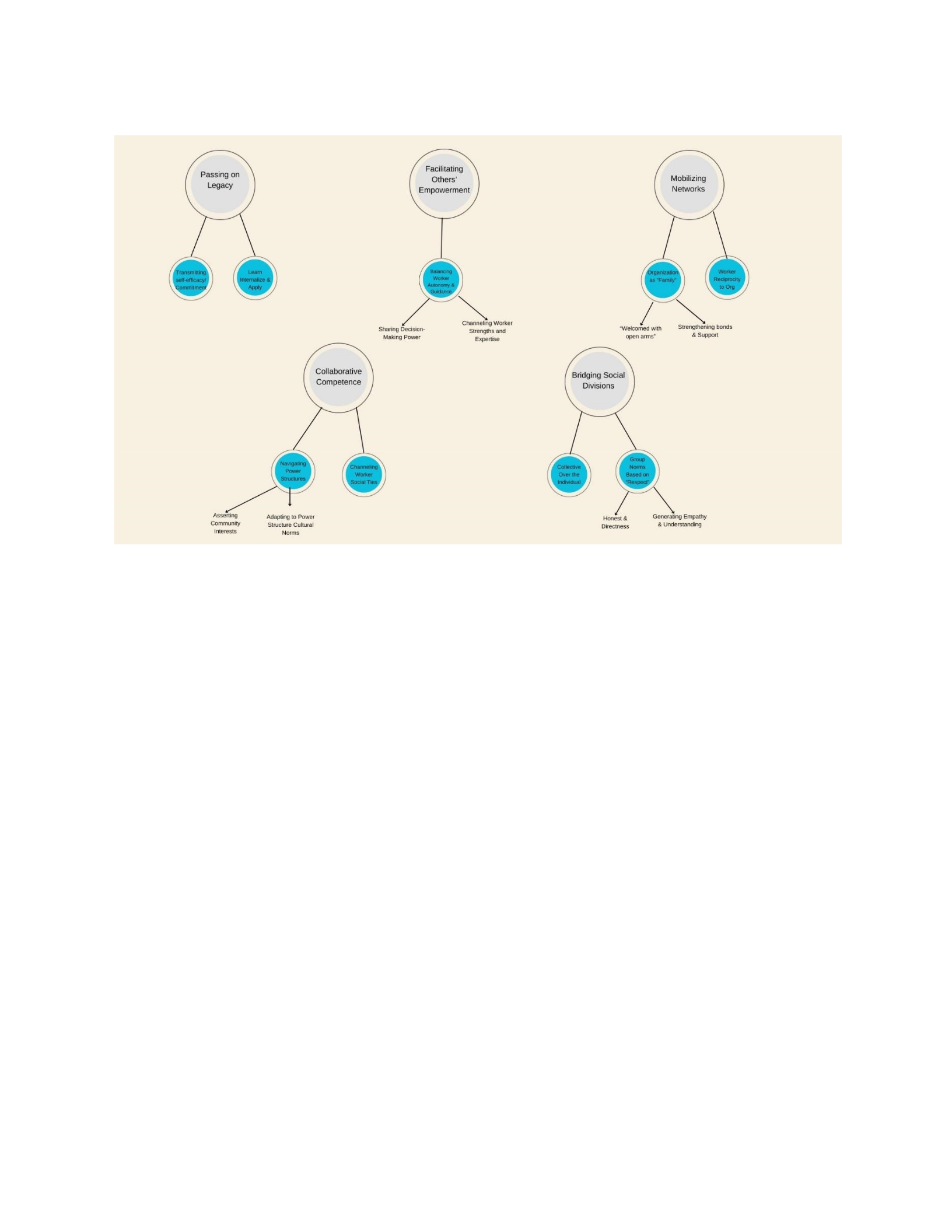
Note. ©Christopher M. Thompson
Passing On Legacy
Two sub-themes were identified that make up the construct of Passing on Legacy: (a)
Transmitting Self-Efficacy & Commitment, and (b) Learn, Internalize, & Apply. These
components of Passing on Legacy foster a sense of confidence, strengthen dedication to
community work, and instill the capacity and willingness to apply organizing principles and
skills among new members.
Transmitting Self-Efficacy & Commitment
Participants often discussed feeling “inspired” and “motivated” by witnessing the passion
that seasoned co-workers and leaders in the organization demonstrated for the work they did.
87

This not only motivated and strengthened worker commitment to the project of youth
engagement and violence prevention, but instilled confidence and activated their initial
engagement in this meaningful work.
The two ways in which transmitting self-efficacy and commitment was articulated were
in the way relational processes instilled confidence and motivation among members. Both of
these components manifested through leadership modeling their passion for the work and
members engaging in the work itself. This experiential process inspired confidence among
members and allowed them to experience themselves as competent. One participant, Cameron, a
33-year-old, Black male who had been engaged in community organizing for two years and
involved with Organization C for three months talked about this. Working in Street Outreach,
which involves connecting high-risk residents to vital resources and services, described how
strong commitments, hard work, and sincere dedication to youth demonstrated by leadership
inspire him:
So, it's just being around those people. It's just, I know I can be great like them; I know I
can. I’m destined for it […] And that's just only five [leaders]. It's way more. Way more
so, you can just imagine. You know (laughs). So yeah, man that's a great group of people
[…] with hearts that really care, that wanna make a change in the community and in the
youth. They want to, so I'm glad to be a part of this.
Cameron is not only describing this exposure to leadership as a site of inspiration, but also
expressing gratitude for being part of the organization because of the sincerity he sees among
leadership. He also suggests that this modeling by leadership instills a desire and confidence that
he will one day embody these characteristics when he says, “I know I can be great like them.”
88

Cameron expresses being glad to be part of an organization that sincerely cares about the
community and views the leadership qualities as something to aspire to and embody.
Reinforcing member commitment is an important aspect of Passing on Legacy. Janice is a
44-year-old Latina woman, who had been involved with organization C for approximately two
years as Crisis Response Coordinator. She has been involved in antiviolence community
organizing in the city where she was born and raised for 20 years. Janice discussed how
motivating it is to see a leader who shares her own identity and that is knowledgeable and
dedicated to the work:
Gabriela is very intuitive, very informative, very soft spoken. At which I get on her about
all this time (laughs). She’s definitely the opposite of me, but just her dedication […] is
very heartwarming to see and also motivating. And another young Puerto Rican woman
you know, out there in her role and doing what she does and you know, it, it's-excuse me-
(clears throat) it's motivating.
For Janice, the strengths that her manager brings to the organization, coupled with their shared
identity as Puerto Rican women, is a quality that she looks up to in her manager and thus,
reinforces her commitment to the work. A vital component that defines Passing on Legacy that is
seen here involves the investment of leadership in new members for the sustainability of the
organization (Christens, 2012).
Learn, Internalize, & Apply
A common theme demonstrated by outreach workers and violence interventionists was
the willingness and capacity to learn, adopt the attitudes, principles, and values of the
organization, and apply those principles, values, and learned skills. This is an important
89

component of Passing on Legacy that has not been previously identified in the literature. In its
current definition, the focus of Passing on Legacy is on the individual who demonstrates
leadership skills and acts in ways that align with their commitment to sustaining the organization
upon their departure. However, the participants of this study highlighted the important role of the
receiver in the process of passing on the legacy.
For example, Michael, a 32-year-old, Black male, who works as Manager of Street
Outreach and has been with organization C for five years reflected on his earlier days at the
organization and stated, “I always had the mindset, ‘I'm never too good to learn.’[…] even
though I was in a dark place, I wanted to learn everything I needed to know to be good at the
work I do.” Now as a manager, Michael looks back to his early years attending faith-based
meetings, stating, “I was already preparing myself to be able to sit in that room and talk about all
the good stuff we do and events we got coming up.” The capacity and willingness to learn and
the pride members take within that learning process were prerequisites for Michael to eventually
mentor new members coming into the organization. Michael goes on to demonstrate these
qualities when describing his experience with a mentor early on and how quickly he imagined
himself in this role:
[…] I look at him as a father figure cause he took me under his ropes cause we came in at
the same time. But he had been doing the work for 27 years. So when I start soaking up
the knowledge from him, I always looked at it like, ‘I wanna give back to somebody
younger than me.’ So like when our [former clients] just became 21, old enough to get a
job or 20, I know the things that I know, they only knew of from the program aspect, but
they didn't know from being a worker […]
90

Participants also discussed how seeing the organization’s sincere desire in wanting to help
high-risk youth and how seriously they took that role was something that they needed to embody
for themselves in order to thrive in the organization. Alex, a 41-year-old, Black male who works
for Organization C as an Intervention Navigator, which consists of connecting with judicially-
involved youth and providing mentoring, court-advocacy, and relevant resources that are
important for detaching youth from gang influence reported:
[…] we have employees who are dedicated to this. They very passionate, seriously. They
care about the youth. You know, that's one thing that stands out about [Org C]. You know,
the people that they hired, they really want to make a difference. You know? So I saw
that and I had to become that in order to coexist with the staff. You got to become that.
And it was good for me because it was a learning experience.
In this excerpt, Alex’s openness to learn allowed him to be receptive to the culture within the
organization. Due to his own motivation for thriving in the group, he took on the qualities of that
culture and in that process, his resolve was strengthened as a violence navigator.
Facilitating Others’ Empowerment
An important aspect of Facilitating Others’ Empowerment is knowing when to provide
guidance to newer members and when to step back and foster their autonomy (Christens, 2012).
In this study, worker autonomy appeared to be predicated on the idea that all members have
unique expertise, based on lived experience, shared identity, and insider cultural knowledge of
residents and their families, gangs, and the neighborhoods with which they function. These
worker strengths are channeled in ways that are in the best interests of the residents they serve
and the organization itself, coupled with guidance and willingness to allow workers to make
91

mistakes. Thus, providing experiential learning opportunities and guidance fosters members’
psychological empowerment and through their growth process, leads to organizational
empowerment and community change.
Balancing Worker Autonomy & Guidance
Valuing newer members as cultural insiders with credible knowledge and expertise was
shown to be fundamental for facilitating empowerment processes through worker autonomy.
When describing the autonomy he was offered in youth outreach, Rodrigo, a 60-year-old,
multiracial male who has worked in Organization C for 8 years, stated, “I felt appreciated. I felt
that my knowledge was being utilized in a righteous manner to try to help a lot of these kids
and…they gave me the leeway to be able to speak to masses of kids.” In this context, worker
autonomy consists of the experiential application of strengths. Later in the interview, Rodrigo
discusses how having open access to leadership guidance and feedback when he needed it, as
well as exposure to training and professional development opportunities instill motivation,
encouragement, and assist him in navigating uncertainty:
[…Org C] has encouraged me to continue doing the great work that I do. It continues to
motivate me and it gives me trainings […] they continue to give me education to train
myself and keep me polished as far as to do the work [with youth] that I'm doing […].
And if I need opinions or assist, […] I feel I could take it all the way to the top if I need
to and the door's always open for an honest opinion because you know, this is so real.
You know what I mean? That I don't need like ‘well, maybe and maybe-‘ No. I take it to
the top because I need decisions sometimes[…]
92

In addition to open access to leadership, the process of experiential growth is also
coupled with opportunities to learn from mistakes and constructive and supportive feedback from
the higher-ups. When asked what organizational support looked like, Alex indicated that “they
teach you as you go,” “you’re not crucified” for making errors, and that “they help you to learn
from that particular mistake.” This illustrated the reciprocal relationship between fieldwork and
feedback to facilitate empowerment processes among membership. Later in the interview, Alex
expounds on this premise further when describing his supervisors’ approach to guidance: You
can fall down. He'll pick you up and show you how you could have done this better and not only
just acknowledge, you know, the mistake, but he gonna show you how you can avoid making the
same mistake again. And when he's done, you know, with you oneon-one, talking to you, you
feel so much stronger. And so, you know, you feel so much equipped.
Among members, valuing and channeling worker expertise is balanced with constructive
and supportive guidance from leadership. This has been demonstrated by open access to
leadership whenever members need feedback on a key issue and opportunities to learn from
mistakes that are made in the field. Moreover, as part of promoting autonomy, sharing
decisionmaking processes unfold as part of promoting worker autonomy, which strengthens
psychological and organizational empowerment.
Bridging Social Divisions
The process of effectively navigating intraorganizational tensions across race, ethnicity,
gender, social class, age, faith, and other identities and social locations involves recognizing that
group division and isolation maintain power differentials and can be detrimental to the
functioning of an organization (Christens, 2012). Participants identified two predominant
93

competencies that comprise bridging social divisions within organizational contexts. The first is
one of mindset: Collective interests and support over individual interests and ambitions. Thus,
what is best for the organization and the community takes precedent, in addition to valuing the
importance of group solidarity. The second competency involves the facilitation of group norms
built on respect, particularly during organizational meetings.
Collective Over the Individual
The theme of favoring the collective over the individual interests consists of prioritizing
what is best for the organization and community. As Rodrigo stated in his interview, despite
group differences, “we’re all in the same gang” when disputes arise. This mindset of prioritizing
the group over the individual was articulated throughout many of the interviews. Alex stated, “no
matter how much I feel this should be done this way, […] we got to think of what's best for the
organization, for coworkers, for the youth, whatever it may be, you know. I've learned so much,
man.”
In addition to prioritization of the organization and the community, collective support was
also revealed to be an important factor in navigating conflict. This was illustrated by Rodrigo,
when discussing ways he navigated a race-based issue that occurred within the organization. The
dispute was centered on a member disagreeing with the organization’s decision to promote a
Latino member to oversee operations in a predominantly Black neighborhood. Rodrigo’s stance
was that in this particular instance, the promoted members’ experience and knowledge of street
dynamics were far more sophisticated and thus, warranted promotion, despite ethnic and racial
differences between the worker and the neighborhood they would serve. When asked what
contributed to effectively navigating this disagreement, Rodrigo stated:
94

[…] I had to let him know that, ‘does it really matter?’ ‘When you bleed, is it different
color than mines?’ You know, when you get your ass kicked, do you feel like, you don't
feel nothing?’ Or you know, because I know that me, I'm here for all of us. And
everybody was in agreement with whatever I was saying. Because, you know […] I just
try to keep us unified and when someone comes and if they have conflict, we try to get it
right […] I think letting them know the fact that if he gets surrounded all he has to do is
make a phone call and we're gonna be there. You know um, you know it’s one of the big
factors.
Rodrigo asserted that reminding co-worker with whom he disagreed that he is supported by him,
as well as the collective, despite this executive decision, was an important factor in resolving this
dispute. Moreover, the guiding principle in navigating this dispute was identifying who would be
the most effective at connecting with high-risk youth in that neighborhood, which was a primary
organization goal. Prioritizing what was in the best interest of the organization and the youth they
serve guided Rodrigo’s discourse. Although participants heralded shared identity as vital to youth
outreach in general, experience appeared to be more of an important factor in this case.
Group Norms Built on Respect
Group norms built on respect was an important theme that contributes to the bridging of
social divides. Two important aspects of building group norms based on respect were being open
and honest, or “keeping it real”, and generating empathy and understanding among members.
With regard to being open and honest, participants recognized the detriment that talking behind
others’ backs can have on group cohesion, their community work, and their safety. Rodrigo
95

expressed prioritizing protecting that group cohesion and what is at stake when there are
divisions:
[…] I believe (laughs) that honesty is the best policy […] And I'm very boisterous about
it. I don't appreciate when people talk behind other people's backs. I think that's some
punk shit. Um and I let it be known, if there is something to say about anything that y'all
see wrong here, I think that whoever it is needs to speak up, because if you don't, we're
gonna frown if we catch you talking about it later on […] So let's bring it out because we
are one family, we are taking our chances on the streets. So I like bringing the reality of
the risk that we take there just to solidify and they could know, man, if there is a problem,
we need to you know, clean it up so that we can become even stronger because, you
know, the safety that we need on the streets.
In navigating disagreements in organizational meetings, group members and leadership
also facilitated empathy and understanding for one another. The process of generating empathy
and understanding consists of not allowing others to speak over each other and practicing
patience in listening to others with whom they disagree. Alex stated, “I've seen leadership do a
good job of coming in and listening to everybody's opinion, even those who weren't involved and
getting suggestions.” Michael described a disagreement between himself and executive staff
about how to engage high-risk residents following a gang shooting. The disagreement was based
on differences in social class, as Michael had real-world experience as a former high-ranking
gang chief, whereas the staff whom he disagreed with had “book” smarts. He stated the
following:
96

[…] they was against it at first. But when they saw it was a success, we put it in our
calendar for this summer coming up 'cause that's how it really is […] and I challenged
them cause I say, “come on and take a stroll through my land with me before you can
really see what's going on in this community […]. So before you can tell me what look
good on paper, let me take you through the community before you can see why [your
idea] ain't gonna work […].” I invite them to just take a day with me out in the field.
Mobilizing Networks
Those who demonstrate competencies in mobilizing networks facilitate inviting and
welcoming spaces through various relational processes, sustain member engagement (Christens,
2012). Results of participant interviews revealed two separate themes that make up mobilizing
networks: Organization as family and worker reciprocity to organization. Both themes activate
and sustain member engagement.
Organization as Family
Many participants discussed the importance of individual and organizational support and
how this motivated them to join their organizations. They often described this support as akin to
family. Michael discussed being in a “dark place” after his brother died from gun violence and
how Organization C was there for him during a pivotal moment in his life. He describes being at
a crossroads about his gang-involvement when he made contact with Organization C:
[…] missing the parents at that time, played a toll on me so I really got attracted with
[Org C] when they moved to the [neighborhood] area right before my brother died. My
brother died two blocks over from the [Org C building]. And when they gave me
97

opportunity and then I saw the people, how they was like family […] they come for me
and they open their doors with open arms and I've been there since.
Among participants, the support that they received was experienced as personal,
transcending support from typical work, corporate, or nonprofit structures. This deeply personal
form of support is often what was at the heart of how participants described this family
environment. For Janice, the emotional support she received from members and leadership after
her niece was shot and killed, as well as the ongoing tangible support (e.g. disability paperwork
post-surgery), served as a corrective emotional experience. She stated on two occasions during
her interview that she’s “blessed” and “grateful” that “it’s okay to not be okay” and receive
unconditional support, as someone who has had to overcome many struggles on her own. She
goes on to describe organization C as a surrogate family:
[…] it just never ceases to amaze me how everybody is so willing to be there for one
another when they're going through something good, bad, or indifferent. So the impact of
that, [Org C] to me is a family. I unfortunately didn't have a family growing up […]. But
to be able to walk into an organization at that and feel like family immediately, is a good
feeling for somebody like me. Can't speak on anybody else. For sure, it's definitely been
a good feeling.
For Janice, the support she receives from other members and leadership makes her work more
than just a job, but rather a way of being that she integrates into her personal life.
Worker-Organization Reciprocity
Engaging the community in ways that foster an inviting and welcoming environment was
shown to be key to initially activating residents to overcome personal challenges and become
98

involved in organizational activities. With regard to sustaining activities and increasing worker
engagement, participants often spoke about a sense of responsibility for giving back to the
organization and leadership that not only demonstrated a welcoming space for them, but ongoing
support as they thrived within the organization. This worker-organization feedback loop was
expressed as a key factor for ongoing community mobilization and commitment.
Calvin, a 45-year-old, Black male who participated in two separate organizations over the
course of two years, described the current organization (Organization B) he has been involved in
as a “family environment” where “my story has always been heard”. He articulates this further,
stating, “I got real family members that I know that I couldn't call at 2:00 o'clock in the morning.
And [Org B] answering the phone? (pause) Come on, man […] listen they're putting 100% back
on your life!” He went on to describe how when he was a client, the organization’s unconditional
commitment and loyalty to providing him with emotional and tangible supports upon his release
from prison and challenging him in supportive ways, increased his self-confidence and
strengthened his commitments to the organization:
So that's what they give me. And I'm happy with it and that's what makes me wanna
partner up with them and be about that. Because I know it's real […] I’m out here and I
feel like no matter how good I get or whatever, if I was in a situation where I needed help
again, I can come right back to ‘em. So it wouldn’t be like “oh, you’re not on our
caseload anymore (laughs).” But if I needed some help, I think that these are the people
cause they help me before […]. [T]he help they gave me man, put me on a roller coaster.
Man, I've been moving ever since.
99

For Janice, the supportive, family environment of the organization was one of both
emotional support at a time of tragedy when her niece was shot and killed, and one of guidance
and mentorship. As someone who grew up with instability in her life, she describes her own
incentive for wanting to learn how to adapt in professional environments and when engaging
with key, powerful players in the community. This personal growth process is something that was
facilitated by organizational leadership and in turn, she strives to give back to the organization
through her commitment to the work in crisis response, but also to her personal growth.
I knew that I had to change for a long time, but really didn't have the drive or the
motivation to do it. But with [Org C], that's different because I know I represent [Org C]
wherever I go and I wanna make sure that I'm doing that properly, because that's what
they deserve […]. [T]hey have done nothing but been great to me from the moment,
since before I walked into the door […]. So the very least I can do is work on the things
that I knew I had to work on anyway […]. I guess it's kind of like a parent-kid
relationship, where you wanna make sure dad’s happy about what's going on. So you
gotta watch how you talk and watch how you act. But I love it. […] It's cool to be around
those types of people for once.
Janice cultivated her own intrinsic motivation for personal growth, but there’s also a sense of
giving back to the organization, as someone who has been a fixture in her community prior to
joining Organization C, but who now represents Organization C even when she is not on the
clock.
100

Collaborative Competence
An important component of collaborative competence is knowing when to identify shared
interests and goals with various institutions and engage in collaborative organizing, and when to
adapt to power structures in ways that assert the organization’s best interests (Christens, 2012).
An important prerequisite to navigating these spaces effectively is having a sociopolitical, or
critical awareness of the root of social problems and an understanding of how power functions in
society. Participants shared their own experiences of effectively navigating tensions with law
enforcement, politicians, and harmful media narratives. An additional aspect of collaborative
competency, that was also revealed among participants, involves the capacity to channel existing
social ties within the organization to build trust in the community and strengthen
interorganizational collaboration.
Navigating Power Structures
With regard to asserting community interests with those in positions of power, Janice,
Michael, and Martin, who all occupy varying roles in Organization C, effectively demonstrate
ways to push back to create positive change in their community. For example, Michael discussed
the importance of maintaining street credibility and how being associated with the police during
canvassing activities can undermine his efforts to connect with residents and assess escalating
tensions in the neighborhood. He goes on to describe interactions he has with law enforcement in
the following excerpt:
We can't be seen just walking with y’all in the neighborhood […] because they gonna
look at us like “you working with the police.” You can't stop how [residents] make their money.
But if they see you with the police, the first thing they think is “you telling on us cause you know
101

what we do.” […] So you always want your street credibility to be there, but you also need the
police to understand like, “no, we all here for the same cause, to help the community. But at the
same time, I can't really tell this man how to live his daily livelihood. What he gotta do to
survive.” And once they start understanding that […] we was able to canvas the neighborhood
and talk to the players ourselves, who was doing the gang banging at the time, and it was like
they listened to us and it calmed down. Effective boundary-setting with the police requires an
awareness of the historical and legitimate distrust that Black and Brown communities have
toward the police and the imperative of maintaining strong ties and credibility with the
community. Moreover, Michael balances his pushback by underscoring shared goals of violence
prevention with police. Walking this delicate tightrope between strengthening collaboration
through identifying shared goals and boundarysetting with law enforcement was articulated by
several participants and was a vital component to effective violence prevention.
Power can be exercised also in asserting influence at the micro-level. Martin, a 63-
yearold Latino Male, who works as an Intervention Navigator for Org C, described ways that he
and
Org C created positive change for a specific youth:
[The youth] robbed a dope addict […] of $40. He told the dope-“I got you, I'm gonna get
you.” Give me the $40.00 and took the man's $40. Right. So they came to the school, you
know, they wanted to arrest him. We stopped him from being arrested. We gave the guy
back his $40.00 and they wanted to expel him from school. Because of that, right. And
so, you know, I didn't stop working with him […]. Let me find him a school. Right. So
we find them a different school. And then I had him working with the education staff
[…]. Then I got him into clinical. I got him to talk to the therapist […] he had a lot of
102

trauma in his life […]. And I saw that and through that network of people from the
Education Department, the clinical services and the sports activities, right. I got him to
get his mind right.
An important component of collaborative competence is being able to effectively
navigate interstitial spaces as a way to accumulate power or influence. This was exemplified in
Janice, when she shared her experience with navigating dominant narratives in the media
following the murder of her niece:
You know, we're already being stereotyped and “oh typical gang bangers” and “it's
always the Puerto Rican parade”, and all these things that were not true. And I said the
only way I can do this and get my point across was I did the press conference, I held the
press conference, and I spoke on behalf of my family and I spoke on behalf of my niece
and [her] family […]. So I just made it a point to know that if we're already being
stereotyped, I'm never gonna put myself in a position to act like the stereotype that you're
portraying upon me.
In his interview, Michael elaborated on ways he adapts to various cultural norms when
brokering shared interests between politicians and the community of which he is a part:
[…] once you listen to what their dire needs are, and if you in the position to help them in
that time, they respect you and trust you more […]. Like, I can't go in the room with the
Alderman, the Mayor (smiles), and talk like I talk to the people at the block. Gotta be
able to adapt, be flexible […]. So you gotta be able to know […] the hood terminology
[…] and then when you talking to the Alderman, they ask you “How would this grant
help your organization” and stuff like this.
103

Janice also discussed ways that she has challenged herself to engage with politicians
during meetings and how she has had to adapt to maintain those vital relationships:
…Let it be noted, I am not a fan of our elected officials (laughs), but I know that there's
gonna be times where I have to work side-by-side with somebody that I may not
necessarily agree with their politics, but the work has to get done so I can put my pride to
the side and my personal feelings to the side, you know, for the greater good to get
through, whatever the situation may be. But I think definitely you have to learn how to
bite your tongue a lot in [participant-city] around certain people and kind of just
remember why you're here and stay grounded.
Channeling Worker Social Ties
Another aspect of collaborative competence is the ability for leadership to maintain weak
ties with other organizations, groups, and institutions. Weak ties refer to instances when
individuals who are part of a group have infrequent or distant connections with those in an
outside group but can be influential and build trust with those groups (Granovetter, 1973). Weak
ties can also be present when connections are made outside the closed circle or organization
through an intermediary within the group who can span structural holes across organizations.
Structural holes refer to the gap, or absence of interaction or information flow between groups
(Burt, 2001). Members of a group who have ties to both organizations or groups can broker an
opening that allows for new information to flow in from outside the organization and set agendas
for collaboration (Burt, 2001; Granovetter, 1973). Identifying intermediaries who have these
important connections with people outside a closed social circle, organization, or institution can
also harness those networks to promote social change (Christens, 2012). In this study,
104

participants demonstrated awareness regarding the importance of recruiting members who have
strong ties in neighborhoods where street violence is prevalent, especially when leadership seeks
to maintain their weak ties with that community. This principle was also applied to building
coalitions with other organizations, as well as strengthening relationships with individual police
officers.
The capacity to coordinate connections based on pre-existing social ties is not only a skill
reserved for managers within organizational contexts, but also those who are engaged in direct
intervention. Martin, who is a 63-year-old Latino male who works as an Intervention Navigator
at Organization C, shared his experience soon after he was released from prison. He drew from
his own connections in prison and referred one of his contacts to Organization C, so that they
could be engaged in a specific neighborhood this person had credibility in:
And then when I got out, he asked me for people: “I need good people to work”, you
know, this and that. So I sent them...one guy. His name is Diego. He still works with [Org
C] now. And I sent him and he was working in [neighborhood] where there was a [street
gang name] problem up there…and they needed somebody to have familiarity with [that
street gang], you know. And so he had it. So I sent him, you know? And so he started
working with [Org C] and he was very effective working with members of [street gang
name].
From the managerial perspective, deploying violence interventionists based on their
existing social ties is a central part of Michael’s work. He is tasked with building a team of
outreach workers who can effectively engage with residents, street gangs, and gang chiefs across
neighborhood contexts. He describes this process in the following excerpt:
105

[…] Knowing I don't speak Spanish. I need somebody who can relate to [residents in
specific neighborhood], who know them, that have a strong voice in the neighborhood,
that changed they life, or if they always has been a pillar for the neighborhood, to let
them know what we're trying to bring to they neighborhood. So you always want to get
welcomed in before you go. So like the team I handpicked right now, we got
[neighborhood1], we got [neighborhood2], we got [neighborhood3] […] is about we have
somebody that come from that neighborhood and be that pillar for us to let them know
[…] we coming with open arms to try to help y'all with resources or provide anything we
can for the youth and for the elders.
This process of facilitating connections based on existing social ties also applies to
connecting with other organizations. Michael also shared the ease with which Org C develops
coalitions with other organizations due to their shared goals and by identifying workers who have
a pre-existing relationship with them to reach out:
We actually good at cross functioning with other organizations. Cause all of us have the
same common goals […] it’s like somebody in our organization […] got that connection
with somebody from that other organization and we try to support each other as a whole.
So that […] really been the easy part.
The Utilization of Relationships to Promote Community-Level Change
Participants in all three organizations discussed the relational processes by which community
change occurs by preventing street violence in the neighborhoods in which they operate. These
relational processes, particularly regarding youth outreach, are not captured by the model of
106

relational empowerment. Relational empowerment is centered on the psychological processes
involved in interpersonal exchanges that lead to transformational change in the sociopolitical
domain (Christens, 2012). However, the bulk of activities disclosed by participants, working on
the ground across organizational contexts, were focused on micro-level change sanctioned by
local and state governments, rather than macro-level initiatives that challenged State power (e.g.,
policy or structural change).
Although these relational interventions tied to service delivery are not captured in the
model of relational empowerment, they were identified as vital to individual change processes
among youth, their families, and in effect, the community. Moreover, participants reported
substantial reductions in violent incidents in part, due to relationship-based interventions with
individual, high-risk youth and their families. By intervening, client-by-client, positive change
appears to be widespread throughout participants’ cities. The thematic map in Figure 2 illustrates
the identified relational themes underlying resident outreach and engagement.
Figure 2
Relational Themes That Comprise Resident Outreach and Engagement
107
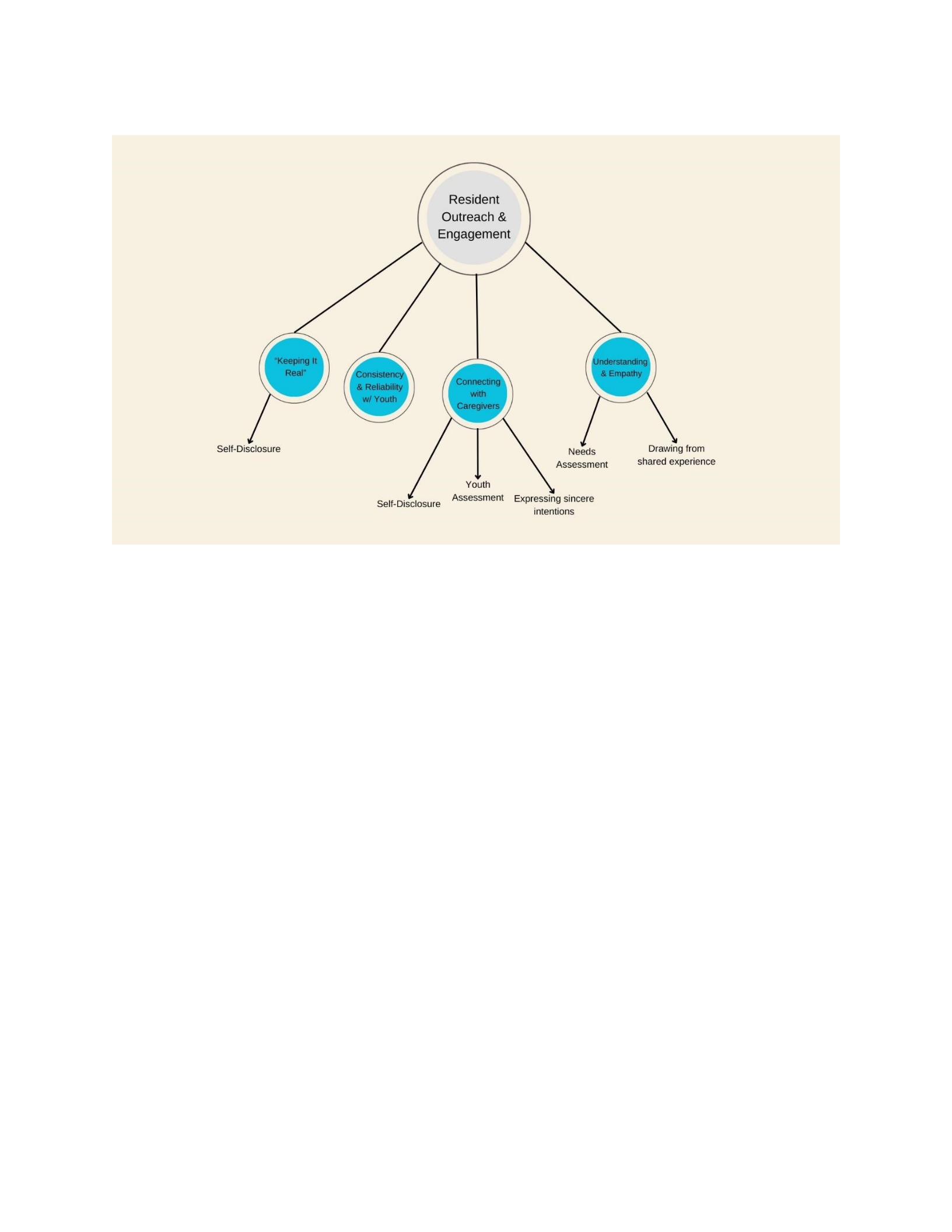
Note. ©Christopher M. Thompson
Relational Competencies for Resident Outreach and Engagement
Several themes were identified among participants that comprise interpersonal skills and
competencies that are important for youth outreach. Participants outlined considerations for
building trust and bonding with young people, utilizing relationships with caregivers as an entry
point to connecting with youth, exercising empathy and understanding, as well as the importance
of “keeping it real,” or authentic with youth in their attempts to intervene. These relational
competencies were identified by participants as being contributing factors for positive youth
development, as well as diversion from substance use and gang-involvement.
108

Consistency & Reliability to Build Trust
Building trust was described as the single most important component when initially
making contact with youth and their families. Michael, who works for Organization C as
Manager of Street Outreach stated, “If you don’t have they trust, you don’t have anything.”
Participants outlined several approaches to building trust among youth and high-risk residents.
The most predominant consideration that was echoed among all participants was the importance
of being consistent and reliable in youth’s lives. Calvin, who owns his own trucking company
and owns his own community violence prevention non-profit, describes why it is important to be
a consistent and reliable presence in youths’ lives during outreach:
…if you're a case worker and you got your clients and they call, you gotta be there […]
this stuff that's detrimental to people's livelihoods so it's not only, you know me telling
the truth and keeping my word. It's about me showing up and being vital and visual. You
know, a lot of them conversations don't just happen like […] we're having a conversation
right now. Ain't nobody gonna open up just on the first time […] you gotta understand
like even somebody that went to school, a lot of the questions may come off as probing.
So you gotta let somebody bring that to you if they wanna talk […] I don't wanna force
myself into it […] you gotta be supportive from the outside if that's what it is.
Calvin outlines the way that being a steady presence promotes trust and that no matter
how much training or education an outreach worker has in their interventions, respecting youths’
self-determination and agency may be integral to fostering the relationship. He also describes the
urgency of being consistent given what may be at stake for residents and their families. In
conjunction with being a consistent presence, participants emphasized being reliable by fulfilling
109

promises as another building-block of trust among residents and their families. Michael describes
how being dependable reverberates throughout the community and contributes to a reputation
that also fosters trust:
[…] the community always was used to people making promises. But if you can come
through on what you promised them, they open up to you […]. When they see you with
your [Org C] shirt on or your [Org C] gear, they know who you is. They gonna show
respect. If you can help somebody and their family member, they gonna connect you to
‘em, cause you done helped them.
Through the process of consistency and reliability among individual youth and their families,
organizations build social ties and extend their reputation with the community at large. This
fosters social capital among organizations and their members, thereby facilitating trust and
respect. By being known throughout the community, there are fewer barriers to overcome in
youth outreach.
Connecting with Caregiver as Entry Point to Youth Outreach
Participants described the important role that caregivers play in making contact with and
bonding with youth. This was described as challenging at times, as many caregivers of high-risk
youth struggle with their own adversities and may have tumultuous and reactive relationships
with their child. In similar fashion as trust-building with youth, participants highlighted
consistency and follow-through as significant contributing factors to bonding with caregivers. In
addition, self-disclosure and expressing sincere intentions to support the family, coupled with
consistency, were shown as another important method for building trust among caregivers.
110

Rodrigo, whose job responsibility is, in part, youth outreach, describes ways he overcomes
challenges when faced with parental distrust:
…that's when I have to work harder. I'm in it to win it. “So you're gonna see me, you
know. I'm sorry. You gonna see me. And I'm only here for you, you know, not only for
you, but for, you know, of course for your baby. But I'm here for you. I need you to know
that you can trust me.” And then once they see that consistency […] they open up a little
bit and I open up because I let them know about myself also. You know, I tell them about
my past. I tell them, “Man. I've been there.”[…]. My life is dedicated so that kids don't
have to go into the system like I did because I didn't have somebody guiding me […]. But
yeah. And then sometimes they will open up. The majority do.
Once trust has been built with families, they can become a vital resource for connecting
with youth. Cameron, who works in Street Outreach for Organization C reports having a strong
relationship with caregivers, much of which is based on his reputation for effectively supporting
families and their children in the community. He described one way he utilized his relationship
with a mother to bond with a particular youth who had been avoiding him:
But the Mamas was just so adamant about me getting connected with her son. So every
time I come, he gone, I call, he gone. I catch him. He don't wanna talk. I see him. I said,
“Let's go here.” He don't wanna go. So it was like, damn, what could I do? [...]. So I ask,
Mama, like, “what do he really like to do?” Like “what's in his room?” like, “what he
got?” “Send me a picture of his room […]” So I'm like, OK. “You like skating? You like
basketball.” Alright, cool. “Tell him to be ready…at this time, skating and basketball and
see if he wanna go.” She called me back and said, “yeah, he wanna go.” I said so now I
111

know how to get him (laughs) […] every weekend, we'll go like skating and to the gym
to play basketball. We was doing every Sunday. Every Sunday we was doing this, so now
I got him too where sometimes I might not even call him. He’ll call me. “What's up? You
cool?” (laughs)
Making contact and building trust with caregivers was described as a vital way to intervene by
finding points of interest for youth, thereby promoting buy-in for youth engagement. Once
outreach workers make contact with youth, empathy and understanding of their experiences were
shown to be a major factor in building trust in order to effectively reach them.
Understanding & Empathy
Understanding the depth and complexity of the predicament that youth and families
encounter allows for more relevant referral sources and the capacity to meet residents where
they’re out emotionally. Moreover, empathy allows workers to connect with youth on a deeper
level, thereby strengthening youth engagement and buy-in. Regarding the youth that Cameron
was making attempts to connect with based on their interest, he also described the important role
that empathy and curiosity play in identifying what the underlying emotional needs are for the
youth. He described the child’s caregiver and their lack of understanding, which contributes to
conflict in the home:
[…] kids just don't act like this for no reason. It’s something the kid want or you have to
take your time or get him help. You have to or it’s gonna spiral out of control and it might
be too late! So you have to get them right when they start. You have to get them.
So luckily I caught it in the beginning-middle, but luckily I caught it.
When following up with Cameron on how he manages his own emotions when he
112

encounters brick walls when trying to build trust with youth, he elaborated further: It’s not
about me […] I could put myself in his shoes. And I can see what he going through
that I been through already […] that's how I channel myself because how can I
react to you at this point in time when I was just there, so I know what you're going
through. That'll be wrong for me to say, “Ohh yeah, this and this. Everything OK? And
this and that-” “No, it's not. You need help, just like I did. And nobody gave it to me”
[…] I had a lot of my grandmas and her peoples so I stayed around old people a lot cause,
I know y'all gonna make me feel some type of way. So it's just that. That's just what it is,
Chris.
Cameron makes a conscious effort to not center his own potential reactions to rejection by youth,
but rather draws from his own personal, shared experience to cultivate empathy and further
curiosity from within. He acknowledges that things are in fact, not okay, a potential point of
validation for youth whose struggles may feel unseen or unheard. Moreover, his capacity toward
empathy allows him to identify and be responsive to youth’s underlying emotional needs.
Empathy was also described as vital for meeting residents’ tangible needs, in the form of
relevant resources. Janice, who works as the Crisis Response Coordinator for Organization C,
described the importance of empathy and understanding in the wake of tragedy. She shared her
experience with a woman whom she had a pre-existing relationship with. A shooting occurred at
her daughter’s birthday party which resulted in the woman’s daughter incurring severe brain
damage and her child’s father being killed, along with two friends who were like family to
Janice. She describes how empathy can be a driving force to meet this families’ emotional and
material needs:
113

[…] I know the mom and I told her I said, you know, “I need to have a very difficult
conversation with you and you probably gonna hate me or wanna kick, punch, and
scream after this. But nobody knows your daughter better than you. This is a
circumstance where you have to decide quality of life versus quantity […]. There’s a lot
of tragedy with it. But you gotta be able to put yourself in a mindset where you can have
not sympathy, but empathy, kind of step back and analyze and think to yourself, what
information would you wanna have right now? You know, what resources would be
viable for you to have and for you to know right now.
As crisis response coordinator, Janice makes attempts to put herself in her clients’ shoes
without succumbing to her own emotional reactions and becoming overwhelmed. Earlier in the
interview, Janice asserted the following:
…trauma, unfortunately brought me to [Org C] to do this work. And trauma definitely
keeps me in [Org C] to do this work. I had somebody recently asked me, ‘How do I do it?
How do I deal with all the death, with all the shootings, with all the heartache?’ And my
answer was real simple. ‘I didn't have a “me” when I was going through it.
Janice’s lived experience with tragedy and capacity for empathy allows her to have clarity in
understanding her clients and in being responsive to their needs amid tragedy.
“Keeping it Real”
Worker authenticity and honesty appeared to go a long way in promoting resident trust
and engagement. Participants shared that by disclosing their past involvement in gangs and other
street activity, youth often expressed enthusiasm in wanting to learn more and engage with
workers further. Martin discussed how lack of lived experience can often be a barrier to trust, he
114

stated that “[The adults] will never get it […] they're not gonna bond with the youth because the
youth is gonna find out that you're full of shit.” Lived experience offers outreach workers an
advantage in connecting with youth, and disclosing that lived experience is essential. Martin
described how he overcomes challenges as a Latino male, instilling trust with African American
youth and the role that self-disclosure and honesty played in making a connection:
I work with both Latinos and African American kids, you know? And I know both sides
of the fence because I've been there with, you know, the African American gangs. I've
talked to the leaders, I’ve hung up with their leaders, you know, I mean, from the from
the [streetgang1], to the [streetgang2], to [streetgang3], to [streetgang4]-[streetgang5]
[…]. And so when they hear me talk, right, the African American kids hear me talk about
that, it's “aw man. He know my chief. Whoa.” And this and that. And so then it becomes
a barrier shuts down…
For those whose lived experience is less extensive, self-disclosure and honesty continue
to play an important role in connecting with youth. Alex shared that he “hadn’t been in the streets
for a long time” when he was younger and prior to working with Organization C as an
Intervention Navigator, he worked in the mental health field at another nonprofit. He discussed
some of the challenges he initially faced in not only cultivating bonds with the youth, but fears
associated with the high-risk nature of the job:
At first I'm gonna tell you, I was scared. I was fearful […]. And so when I got a sneak
peek of some of the work I'll be doing, I'm like “ohh man, I'm finna be working with
atrisk gang members.” “I gotta interact with these guys.” “I gotta try to build a
relationship with them where they can trust me and I can provide these services” […] but
115

then I was inspired from a coworker at [Org C] […]. He says, “share some of the things
that you've been through with them so you can connect with them. They can identify with
those things.” And I did that and the more I did that and the more I came down to their
level and let them know I'm not here, I'm nonjudgmental […]. Man, my relationships
have been outstanding with the youth.
Although Alex hadn’t been involved in street life for an extended period, the process of
transparency positioned him in a way that is nonjudgmental. This allowed him to connect more
effectively with the youth.
Relational Interventions for Reducing Violence and Victimization
In addition to resident and youth outreach and engagement, there are many other ways
participants interface with the community and prevent violence and victimization. Participants
are positioned as practitioners, providing mentorship once they have successfully built trust and
engaged with youth, as well as professional community organizers, utilizing their relational
competencies to garner vital resources for residents, which is an important skill related to
collaborative competence (Christens, 2012).
Resident Needs Assessment and Intervention
As community organizers, many participants shared how important it was to be cognizant
of and make connections with other organizations and nonprofits in their community. They
discussed various ways they collaborate and build coalitions for the purposes of immediate
“wrap-around services” for youth and their families. In addition to service providers and
nonprofits, collaborations with teachers, parents, law enforcement, and others involved in the
child’s life, and assessing families’ needs to connect them with tangible resources were described
116

as important components for refocusing youth away from street organizations, substance use, or
other high-risk involvement. As crisis response coordinator for Organization C, Janice
underscored the importance of gathering collateral information from those who come into
contact with the youth, but to also identify the vital resources with which she can direct youth
and their families:
[…] I think it's always important to make those relationships with the guidance
counselors, if you're working in a school environment, and the school faculty and the
teachers, so that they can kind of tell you what's going on with the kid. On the flip side of
that, […] not only their peers, but you know, their classmates and the people that they
frequently hang with like, talk to them, ok. “Do you see something out of character with,
you know, with John Smith?” Like, just “do you notice something?” […]. And pay
attention cause you can't address the issue if you don't know what the issue is […]. So I
think it's important to have relationships with those closest to the people that we're
servicing so that we can better serve them, you know and then outside of that […] just in
general, having that presence and being known through the different police stations and
the different people that are out there doing the type of work that we do. The hospitals
when we respond there. […] [A]sset mapping to me is so important. You wanna know
who's out there and who's offering what and have those relationships with those people so
that they can reach out to you and you can in turn, reach out to them.
The social ties that Janice has cultivated, as a resident, born and raised in her city, as well as the
efforts she makes to cultivate new connections and wrap-around services for youth on her
117

caseload is important for assessing the nature of the problem and level of risk, in addition to
channeling resources to meet the needs of youth and families.
Catherine, who works in Organization A, described a different intervention strategy that
her organization uses to make contact with youth, assess, and intervene:
So a [violence-intervention-method] is, it's community, social services, and law
enforcement as a group. And so in our community, law enforcement […], they have a
system, a numbering system basically on who we go talk to and that's based on charges,
you know, if they're gun charges, how recent, how often and the age of the person. And
that's kind of their scale on who we need to go to speak with.
Catherine goes on to detail one example of this approach and how it can be an effective
intervention for addressing basic needs:
[…] [W]e were sitting at a table with this young man and everyone else was kind of
standing over by the door more and, you know, we just kind of started talking to him. We
started asking about his kids and all that stuff and, you know, just seeing kind of the light
bulb go off almost of like, “yeah, I need to do different things” and you know, then that's
when we offer the support of, “you can be with one of our outreach workers. Law
enforcement will not be involved from here on out, like we'll never come with law
enforcement again. Like, that's not what this program is about and if you need a job, if
you need housing, if you need rides to your probation like whatever it may be like, we
can help you, um, overcome those boundaries just so it's like one less thing maybe that
you have to worry about,” you know.
118

Catherine’s organization optimizes their relationship with police, such that they are
utilized as an efficient referral system, but minimizes resident contact with law enforcement
when promoting client buy-in. This network of resources allows Catherine to intervene and
readily provide relevant supports.
Violence Intervention & Mediation
Participants with lived experience of prior gang and justice-involvement utilized their
relational skills and pre-existing social ties to connect with and mediate disputes among rival
street organizations. Key relational skills in this domain involve utilizing social ties to connect
with members of street organizations, maintaining and building alliances with gang chiefs,
assessing the basis for the conflict, identifying mutual or individual interests among rivals, and
facilitating their awareness of how violent retaliation undermines those interests. Those involved
in this delicate work described successes in de-escalation and prevention of violent retaliation.
Cameron, who works with Organization C, discusses how he uses pre-existing social ties
in his community to bring rivals together and cultivates alliances for the purpose of providing
supports and mediating disputes:
[…] [S]o it's like we use our connections and our resources. So if I'm from the
[neighborhood1] community and you know somebody from [neighborhood2]
community. You know, if I got, somebody got a problem over here that I know and you
know the person that they into it with. That's how we come together. You talk to him […]
I talk to him. […] We get a mediation going. Prevention, team prevention. So it's like,
you get him going, you get him to agree to meet up with us. No guns. You pat him down,
you search him, you do all, everything the police do, but we not the police.
119

Cameron’s capacity to utilize connections in the community, a key relational skill
involved with collaborative competence, allows for opportunities for face-to-face mediation
among rivals. Once all parties are in the same room, Cameron positions himself as a source of
support for both parties while assessing the bases for the dispute, stating “What resources do y'all
need to stay away from each other? What is it that y’all want? What can we help y’all with?
What is the violence really about?” When asked how he builds alliances with gang chiefs,
Rodrigo stated, “…getting to know the leadership of the gangs in the community. Boots on the
ground. Um, being able to talk to them and help them out, sometimes financially with food. Um
we take them out on field trips.” Later on in the interview, he elaborated further:
Of course I choose a location, kind of populated, but that I can have a little private area
and then I get them there: “Man, eat whatever you want; order whatever you want. I got
you.” And then, you know, I let them meet. I want them to feel like I'm there for them,
which I am, but I want them to feel it…
Similarly to Cameron, Rodrigo makes attempts to effectively mediate brewing conflicts
by aligning with rival parties and taking a nonjudgmental, supportive stance.
Regarding the process of mediation itself, participants predominantly reported that
facilitating rival gang members’ awareness of how violent retaliation may undermine their own
interests was an important tactic in cognitively shifting their perspective. Participants provided
multiple examples of this, including appealing to gang members’ aversion to police as a way to
de-escalate, how they can back down from retaliation without “losing face” or tarnishing their
reputation, and reminding youth of deadly retaliation against them if they engage in a particular
120

conflict. Cameron provides examples of how he appeals to their interests in mediation with rival
gang members.
Y’all gonna get killed or you gonna go to jail? Or you gonna kill somebody that's
innocent, or you're gonna have somebody that don't deserve this, have something happen
to them. Because why, y'all beefing? All y'all parents and people staying in the hood.
They don't stay out of town no where, so it's easy for anybody to touch any one of your
people. So it's like, what y'all beefing for, so it's like once we do all that and we still can't
get them to come to terms, which is frustrating, but even if we could just get them to
agree, even if they change their mind afterwards, you know, we did our plan. Our plan
was to come here, get them to agree to some type of movement.
For Cameron, the process of mediation involves reminding and reinforcing gang
members’ awareness of the consequences of engaging in violence. Rodrigo provides examples of
how he employs a similar tactic when mediation between rival parties begins to escalate:
if I see one of them starting to get loud, and then I intervene. “Wait a minute, bro. It's not
even about that here. We're talking like [gang] chiefs. You’re the leader and you're the
leadership. We're gonna talk like men, like chiefs, with respect to each other, because
that's why I'm bringing you here. Y'all know me, you know. And I'm not on that bullshit.
You know, we're gonna talk. We're gonna come up to a solution tonight because honestly,
y’all guys are responsible for the youth in your neighborhood. So what are we gonna do?
We're gonna let them kill each other or what? And that's up to y'all guys.” And then
they're like, “Whoa.” You know, so I like putting them on the spot. And so that's one of
the strategies, you know, that I use.
121

By appealing to a part of their identity as men and gang chiefs, as well as heightening their
awareness regarding the weight of the responsibility they bear, Rodrigo shifts rivals’ value
system away from retaliation or violence.
There are a multitude of additional services that participants reportedly provide to
residents, including facilitating mediations between the police and residents to build trust and
promote social inclusion. Another participant shared his experience working in the school
systems, facilitating mediations between school staff and students with profound success, thereby
positively impacting school climate. These services offer emotional and tangible support to
residents and were described as central to promoting stability for families and to show youth and
other higher-risk residents viable alternatives to selling drugs or gang involvement.
In this study, participants detailed relational interventions that were necessary for
successfully engaging with youth and their families, fostering positive growth and change among
residents, de-escalating disputes, and staying connected with the resources and organizations in
the community. Participants described all of these activities as fundamental in preventing
community violence and victimization.
Psychological Empowerment as Meaning-Making in Community-Led Public Safety
In addition to interpersonal competencies within relational empowerment,
individuallevel, rather than organizational-level, processes that capture the other components of
psychological empowerment were also identified in participant interviews. Participants described
various ways they made meaning in the process of engaging in the work. This meaning
illustrated the three other components of psychological empowerment. Emotional empowerment,
one component of psychological empowerment, is defined as an intrapsychic process
122

characterized by increased self-efficacy, motivation, and hopefulness for creating change in
social and political domain (Christens, 2012, 2013). For participants, the meaning that generates
emotional empowerment was one that brought personal fulfillment to the work, thus reinforcing
motivation and commitment. Making a positive impact on the lives of youth and their families
and what that meant to workers were described as pivotal moments that further solidified their
place in the organization and in the work they did. In addition to making an impact, the personal
growth they experienced in the process of working directly with high-risk youth and their
families was also a reinforcing mechanism that strengthened mobilization and commitment.
Catherine is a 37-year-old, White female who works with Organization A as a violence
prevention specialist. She talked about the work she does, specifically with the youth, and how
making a difference in their lives brings fulfillment. When asked what led her to do community
violence prevention work, she stated the following:
I grew up pretty White, middle class […]. So I get that like, I don't have that type of
experience [that youth have]. So that's something I've kind of, like had to look within on
[…] understanding my privilege […] and being able to use that in a good way […] I went
through cancer (voice shutters) right so. I think that experience kind of helped me
because I had so many people around me that like, helped me and, like people I didn't
even know (tearful) maybe cared, right? So it's like, if I could be that person for
someone, for someone that's going through some stuff in their life, then that's kind of
where that comes from, I think.
Catherine identified how she could give back in light of her privilege. Moreover, her own
personal experiences of receiving an outpouring of support during a cancer diagnosis became a
123

motivating factor for her to offer those same experiences to residents in the community with
whom she works. She goes on to describe an interaction she had with a youth that was pivotal to
reinforcing her role as a violence prevention specialist. She describes youth distrust toward
outreach workers, which can be a barrier to intervention, and a moment when she was actually
able to connect and build trust. She states, “I feel like I'm actually making a difference in
people's lives […] I can support people and help make their lives better, like, that's kind of what
keeps me going and fills my cup up.” Catherine makes meaning through the experiential process
of positively impacting others in her community work, which reinforces her commitment.
The process of engaging with youth as a White woman who has a different lived
experience led to personal growth as well. She stated that “it's made me understand that there's
like these root causes […] to [street violence] and circumstances […] that has led to where
they're at […]. I can empathize with and understand that they have this huge story that has led to
this point.” This increase in her own critical awareness led to strengthening her empathy for and
understanding of the community with whom she works. Moreover, increased critical awareness
is an important aspect of cognitive empowerment (Christens, 2012). Through the action of
engaging with youth and the community, which is an aspect of behavioral empowerment
(Christens, 2012), Catherine experiences emotional and cognitive empowerment, which in turn,
further reinforces community involvement.
Similarly, Rodrigo described his own relationship with the work and how this experience
reinforces his engagement with youth. When asked what the most rewarding aspects of
antiviolence work was, he stated, “Man all of my detachments. The detachments, because I feel
that [the youth] get their life back”. Rodrigo uses the word detachments to mean the effective
124

negotiation with gang leaders to safely detach youth from their obligations to street
organizations. As a former, high-ranking gang chief, Rodrigo has credibility and influence
among gangs in his city and gains fulfillment by impacting youth in positive ways. He also
disclosed his own personal growth in the process of working with youth in a school-setting and
how in his attempts to effect positive change, he recognized he needed to look inward and make
change from within:
So when […] I seen the effect that I was having on these kids, I said to myself and excuse
my language, man, “fuck that gang shit.” You know I said, man, “it's time to be real about
this, because what am I gonna do, fake these kids out?” You know, so I got real about it.
You know, I felt the love at [Org C] from these people that they help me like (pause)
change a little bit, you know, like they helped me make the decision, leave this stuff alone
and stay on this positive note.
Rodrigo’s desire to maintain his integrity, coupled with organizational support, was a driving
force that led him to make substantial life changes that further solidified his role in the
organization.
Meaning-making led to emotional empowerment through personal growth after Rodrigo
came to terms with the significance of the impact he is making, coupled with organizational
support. Increased motivation to engage in the work was demonstrated through his commitment
to change his own life. For Rodrigo, meaning-making generated a reciprocal feedback loop
between youth engagement and organizational involvement (i.e., behavioral empowerment) and
increased motivation to make a positive impact on the community (i.e., emotional
empowerment).
125
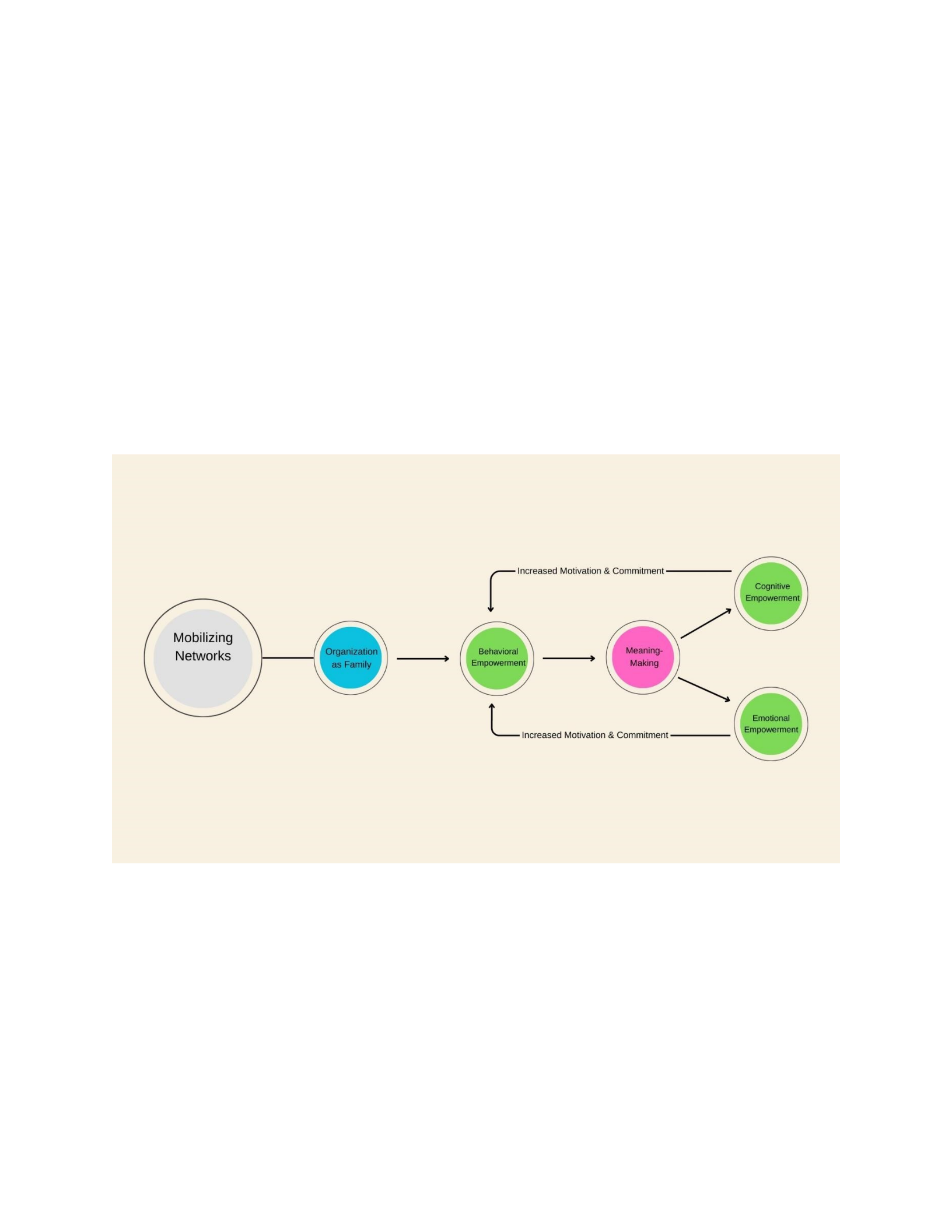
Based on themes identified from participant interviews, the capacity to mobilize networks
by cultivating a welcoming and inviting, family environment promotes member engagement.
This initial engagement in the organization and the community, or behavioral empowerment,
creates conditions for meaning-making, thereby facilitating emotional and cognitive
empowerment among members that in turn, strengthened commitment and engagement in the
work. This self-sustaining feedback loop is illustrated in Figure 3.
Figure 3
Mobilizing Networks and Feedback Loop Among Components of Psychological Empowerment
Note. ©Christopher M. Thompson
Barriers To Relational Empowerment
Participants described a multitude of factors that pose direct challenges to the cultivation
of relational empowerment among those involved in community-led public safety. Despite the
development of relational skills, expertise, and credibility necessary for building trust with
residents, participants reported that promoting resident trust is an ongoing challenge due to
126

resident skepticism of their partnerships with police. Participants also discussed that connecting
with residents’ families can be challenging due to their own struggles. Further, participants cited
conflicts of interest among organizations with which they would otherwise collaborate.
Moreover, participants described a lack of organizational capacity to meet the demand of
violence in their communities. Lastly, the pervasiveness of gang culture and influence create
challenges for interventionists, even those who are skilled at detaching youth from gang
involvement.
Distrust Toward Organization Due to Police Partnership
Participants in this study discussed the ongoing challenges of cultivating trust with youth.
The primary impetus for this divide was the partnership between law enforcement and the
community organizations to which the outreach worker belonged. Catherine, who works in Org
A, talked about her attempts to engage with youth and the hesitation she feels due to her
association with law enforcement:
[…] [S]ometimes I am kind of like, I don't know, I feel a little hesitant to be like walking
up with a bunch of cops cause I don't want people to be like “oh she works with the
cops.” You know what I mean? Like because there is that mistrust, right? So I think it's
kind of a fine line. I would say I have that good rapport with a lot of the officers that we
work with, but (pause; laughs) I don't necessarily want to be like, associated with that?
Which is kind of harsh to say I guess. And I don't know. I don't know. It's kind of
complicated (smiles). I suppose.
Catherine’s hesitation as she reported, comes from a legitimate place, given community distrust
in law enforcement that she described. Martin, who serves as a violence navigator in
127

Organization C, elaborates on the distrust among many residents in the neighborhoods in which
he works. When asked how it felt to be involved in Org C when he got out of prison, he reported
the following:
You know it's scary, man…now your members are looking at you like, “what you flip?
You turn the snitch?” You know what I mean, they look at you differently, right? And so
you have to, you know, walk, you know, with caution, man, because when you go into a
neighborhood and they see you, “oh man, what the fuck you talking about? Peace and all
this bullshit”. You know, they don't wanna hear it because all they're doing is, you know,
selling drugs on the block or, you know, selling weight, whatever they doing, they're
doing it.
Martin articulates an added layer of danger inherent among workers who have been
formally gang-affiliated and are now engaged in antiviolence work. Although Martin has since
gained credibility in his networks since returning to his community from prison, for many
workers, resident distrust becomes an additional barrier as a result of their association with the
police.
Intergenerational Adversities Undermine Youth Outreach
Another challenge several participants reported was lack of caregiver involvement in the
process of connecting youth with the outreach worker and challenges with facilitating caregiver
involvement in the youth’s development. Janice, who works for Organization C discussed
attempts she made to involve a parent in the work she was doing to support the caregiver’s child,
following the death of the child’s father:
128

[…] [U]nfortunately it didn't happen, establish[ing] relationships with the parents.
Unfortunately, with these specific kids, the parents weren't there in the way that they could have
been. I don't wanna say should have been. I'm nobody to judge, but it was difficult. A lot of them,
you know, were young parents and they're kind of raising their kids as siblings versus their child.
You know what I mean? And I get it. Parenting doesn't come with a handbook. I was a young
mom myself. I was eighteen when I had my oldest. Janice draws from her own experiences when
expressing empathy for this young mother who just experienced a painful tragedy. She
recognizes that this woman’s adversities undermine her attempts at garnering as much support
for her children as she can. Alex, who works for Organization C as an Intervention Navigator,
described how adversities that caregivers undergo not only become a barrier to youth support, but
a detriment. When asked what the most challenging aspects of the work are, he reported the
following:
Getting youth to believe in themselves. (Pause)…Just getting them to believe that they're
more than what they've been told they are…some of the parents tell them how “you ain't
gonna never be nothing” and/or “you gonna be just like your father” or “you gonna keep
going around the circle-you go to jail again. I'm not coming to get you” or “get out of my
house.” You know, whatever negative things they've been told, just trying to get them to
believe there’s something better outside of they community, something better waiting for
them, getting them to just become more um, independent and self-motivated.
Conflicts of Interest Among Organizations
Participants discussed challenges with successful interorganizational collaboration due to
an incentivization structure that pits non-profits against one another. This was described as a
129

problem that not only impacts coalition-building but fosters distrust among residents toward
organizations who claim to support the community. Michael, who works for Organization C as
Manager for Street Outreach, shared how he and other members were thrust into a 6-month long
conflict with another organization due to a dispute regarding turf. There was confusion over
which organization would take a client depending on what street the given incident occurred. He
stated, “it was a disagreement like, ‘oh, this my client.’ ‘No this my client.’…they didn't want us
to come past [streetname1]. And we telling them, “well, if that's the case, if y'all come past
[streetname2], we have a problem.” Michael later elaborated on the underlying cause of the
dispute, stating the following:
A lot of people don't know…but it's a number game. If you not meeting your numbers or
your quotas, you gonna do everything in your power to meet your quota….they felt that
we was taking numbers out they mouth and we like, ‘no, we all here for the same one.
Whoever gets here first, that's who client it is.’ So that's the same scenario like basically
with the tow truck company, ‘whoever gets to the tow first. If it's an accident, it become
they car.’
Michael stated that they since resolved the conflict, indicating that they decided whoever
has the strongest social ties with the resident, gets the client. Nonetheless, a focus on quotas to
get funding can be a detriment to interorganizational collaboration. Martin described a similar
challenge to interorganizational collaboration due to the same incentivization structure. He talked
about referring clients to other organizations that claim to provide specific services, but fail to
meet clients’ needs:
130

There's agencies out here that claim that they can get young people jobs, right? And I sent
young people to them and none of them have gotten jobs. Right?...So there's a lot of what
I call ‘poverty pimps’, right? Those organizations are poverty pimps, man…They're just
there to just get money, you know, from foundations or grants from wherever they're
getting it from. Right? And they're not doing nothing. And that hurts society, man. That
hurts society when you got these little agencies sucking up this money, right? When it
could be, you know, sent somewhere else to an organization that is effectively dealing
with the issue, you know what I mean? Then you're hurting the system, man. You're
hurting us…
The lack of follow-through among agencies can create distrust among residents, thereby
hindering outreach. The incentive that nonprofits have, to claim they provide services to the
community in their grant applications, is counterproductive when they fall short. That also poses
an additional challenge to identifying adequate referral sources that organizations can trust, that
will not undermine their clients’ upward trajectory.
Organizations Unable to Meet Violence Prevention Demand
Many participants shared the challenges they encounter with meeting the demands of
residents’ needs in their neighborhoods. Participants asserted that the spread of violence across
their city, as well as the pervasiveness of gang culture have made it difficult to connect with
residents who would otherwise greatly benefit from their services. Calvin described the need for
more resources to manage the influx of violence he is seeing in his city:
It's a lot of murders and you know…it's not the average violence. Now they got all these
hybrid gangs and they got, you know, it's just different. It's not the big entities like, you
131

know, the Crips or the Bloods…there’s little cliques and crews that's within…It's a lot…
it's senseless, and then there's a lot of these dudes that I grew up with, these are they kids.
These are kids that’s out here doing this…it's just different now…we need more
resources. We need more people on the ground.
Calvin also discussed the lack of “accountability” among residents to care for one
another’s kids, communicate with their caregivers when they see them acting out, and take
ownership of the conditions in their neighborhood. Based on Calvin’s experience, this lack of
social capital, coupled with the increasingly young age of perpetrators of violence puts a strain
on community-led violence prevention. This sentiment is mirrored by Janice, who attributes the
spread of violence in her city, to increased gentrification and the city-wide displacement of
residents:
Well, now guess what? Now you need another resource. You need a resource of violence
prevention because now it's creeping into your blocks, which you’d think would have
been common sense because of the amount of gentrification we deal with in the city.
She goes on to point out the lack of organizational capacity to deal with the spread of violence:
Like we always fight that we don't have the same rights for education and for
employment as those that are well-off. And that's the sad truth. But on the flip side of that,
they don't have accesses to the resources if violence sits there and hits them because we
don't have organizations like ours in those type of areas.
Participants’ account of the escalation and spread of street violence, attributed to structural
conditions such as gentrification and diminished social capital within impoverished
neighborhoods, creates precarious circumstances for residents that community organizations
132

themselves are unable to fundamentally address. This suggests that as long as the systemic
problems that maintain and exacerbate street violence exist, community-led public safety
initiatives will continue to face capacity issues in meeting residents' needs.
Pervasiveness of Gang Influence
Another significant challenge reported by participants was the difficulty in detaching
youth from gangs. Although participants highlighted major successes negotiating youth to leave
their affiliated gang, the influence they often have on young people is pervasive and an ongoing
hurdle for violence interventionists and outreach workers. Rodrigo spoke to the strong influence
that gangs have over some youth. He shared his own experience of a youth dropping him as a
mentor and cutting him completely due to gang influence:
[…] [M]aybe a month ago, I lost one of my participants because he found out about my
past [gang] affiliation. And I was dealing with him for like, two to three years! Man the kid,
I've been to court for him, I've taken him out to dinner. I've taken him out to [sportsteam1]
games. I've taken up to [sports-team2] game. I've you know, I did a lot of things with this
kid until he just found out…I was from a certain gang, and that's his rival. So man, he cut
me off. First time ever.
In addition to the power of gang influence, Martin shared his own experiences with losing
youth to gang violence and detailed the difficulty young people have in detaching from gangs
even when they decide to leave:
[…] [T]here's always gonna be a time that [youth] are gonna go back. Cause I've had
kids, man, that, you know, they were doing great, right. And all of a sudden their house
got shot up and they went back to that lifestyle. Because you know that life, that gang life
is gonna follow you, always…they're not gonna let you go. You know, and that's
133

unfortunate, because that's what happens when you work with these young men. For the
last 3-4 years, I've had at least two or three kids each year die that I've worked with, get
killed from gun violence, you know…And that hurts, man, that hurts. That hurts my
heart.
Violence interventionists described several successful attempts at mediation and
detachment of youth from gangs. They detailed ways in which they implemented their relational
skills, based on lived experience and expertise. Nonetheless, gang culture and the obligations that
gang leaders impose on youth continue to be a powerful influence on youth that pose challenges
for community-led violence prevention organizations.
CHAPTER V
DISCUSSION
Relational empowerment was experienced among all participants interviewed in this
study. The themes generated by participants that comprised aspects of relational empowerment
revealed important interpersonal processes and skills specific to community-led public safety.
Moreover, important competencies connected to youth outreach and engagement offer additional
insights and considerations into how the construct of relational empowerment could be extended
to apply not only to community organizing activities that harness power through collaboration
and challenging oppressive social systems, but service delivery as well.
Based on the findings of this study, organizations mobilize networks by creating a
welcoming and inviting space that cultivates personal bonds that transcend co-worker
134

relationships. For new members with shared identities and experiences, this family environment
promotes a sense of belonging. To further solidify their place in the organization, the family spirit
of their organizations come in the form of tangible and ongoing emotional support offered to
members who many have they themselves been impacted by gun violence. This strengthens their
commitment and engagement within the organization.
One aspect of this strengthened engagement is workers’ sense of responsibility to “give
back” to the organization, particularly those participants who were supported by their
organization during pivotal and difficult times in their lives. This reciprocity between and among
members and their broader organization, in addition to the meaning that members derive from
their organizational involvement and community impact, maintains their engagement over time.
This meaning-making, whether it was the result of making an impact or personal growth, further
mobilized participants to give back to their organizations and the community they serve.
As participants described ways that their organization further mobilized their
involvement through various forms of support, they also described feeling inspired and
motivated by leadership. In this study, passing on legacy came in the form of the capacity of
leadership to instill self-efficacy and commitment to the organization and the work that members
do. Through leadership passion, sincerity, and dedication to the work, members look up to
seasoned members and expressed increased confidence in following in their footsteps. Moreover,
passing on legacy also consisted of memberships’ ability and openness to learn, internalize the
values and principles of the organization, and practice those skills in their personal and
professional lives.
135

The opportunity to learn, embody the organizational culture, and apply skills were, in
some cases, important in being able to effectively navigate power structures (e.g., law
enforcement, politicians, media), which was a theme of collaborative competence identified in
this study. As participants described their own growth process within the organization, they also
outlined the balance of autonomy and guidance from leadership that was appreciated by staff.
This balance of promoting autonomy and guidance was shown to be a theme of facilitating
others’ empowerment, consisting of including members in the decision-making process and
channeling their existing strengths and expertise. An additional theme that comprised
collaborative competence in this study, was the ability to channel members’ pre-existing social
ties by deploying them to neighborhoods where they have more credibility and are more likely to
engage in effective work. This process allows workers to continue to engage in experiential
learning and for leaders to continue to facilitate empowering processes by deferring to their
expertise and the strengths they bring to the organization.
Lastly, bridging social divisions was found to consist of asserting the importance of what
is in the best interest of the organization and the community they serve, over individual interests.
Competencies necessary for developing group norms predicated on respect among members was
another theme that was subsumed by bridging social divides. Both of these themes informed the
group process when navigating disagreements or conflicts. The ability for members to be honest
and direct, as well as empathize with and understand differing perspectives was described as vital
for working through and resolving group tensions. The themes that comprise mobilizing
networks - family as organization and worker reciprocity to organization & leadership – may be
136

important for laying the foundation for group cohesiveness and the trust necessary to implement
norms of respect, empathy, and understanding.
General Discussion
As previously mentioned, there have been very few studies that have examined or
identified relational empowerment processes in organizational or group contexts (Cheryomukhin
& Peterson, 2014; Christens, 2010; Langhout et al., 2014; Russell et al., 2009; Wray-Lake &
Abrams, 2020). Given these theoretical, conceptual, and empirical gaps in the literature, this
study sought to clarify and broaden current conceptualizations of relational empowerment.
The current study revealed that effective navigation of power necessitates members’
critical consciousness to inform ways to engage with residents, law enforcement, politicians, the
media, and other powerful networks. Moreover, increased self-efficacy reinforced community
engagement among participants. The link between critical consciousness and relational
competencies and their relationship to social change processes found in the current study is
contrary to the study by Wray-Lake and Adams (2020), who found that youth who were high in
cognitive empowerment (i.e., critical awareness) alone, were low in relational empowerment
(i.e., facilitating others’ empowerment) and were civically disengaged. Alternatively, emotional
empowerment, characterized by high self-efficacy and motivation, delineated a clear pathway to
relational empowerment and civic engagement among youth (Wray-Lake & Abrams, 2020). Of
note, youth in this study did not have experience with community organizing, whereas
participants in the current study were comprised of adults, many of whom had extensive
community organizing experience and exposure to street violence. The findings of the current
study align with Keiffer’s (1984) concept of participatory competence, which consists of
137

individuals’ increased self-efficacy, sociopolitical awareness, and the capacity to cultivate
individual and collective resources for social action. Thus, self-efficacy, or emotional
empowerment, in conjunction with cognitive empowerment, play an important role in processes
related to community engagement.
Participants in the current study revealed that increased self-efficacy around engaging
youth, effective coping with work-related stressors (i.e., perseverance), and capacity to remain
dedicated to community work, was in part, due to modeling from leadership in the form of
passing on legacy. Moreover, participants derived their motivation from co-workers and
leadership who treated them like family and were welcoming and supportive, a theme related to
mobilizing networks. This suggests that organizations who are comprised of members who
possess these competencies of relational empowerment - collaborative competence, mobilizing
networks, and passing on legacy – can create the conditions to activate civic engagement through
these simultaneous pathways.
Sustaining member engagement through fostering a welcoming and inviting space was
defined as an important aspect of mobilizing networks (Christens, 2012). As discussed,
participants described the family support they felt when joining the organization and how this
motivated and strengthened their engagement in the organization and with the community they
serve. This also contributed to a sense of responsibility and reciprocity to leadership and the
mission of the organization. Russell and colleagues (2009) found that a sense of belonging and
affirming experiences as part of a collective increase engagement, but also participants’
confidence in their abilities to overcome their life circumstances. In the current study, member
self-efficacy was transmitted from leadership via modeling passion, sincerity, and dedication to
138

the community, as participants felt inspired and sought to embody that confidence. This suggests
that multiple pathways of relational empowerment can produce increased confidence and a sense
of agency through the capacity to foster a supportive and welcoming culture and the display of
what one participant referred to as “heart,” which they defined as “going the extra mile.” In the
literature, there are conceptual overlaps between passing on legacy and facilitating others’
empowerment. Christens (2012) defines passing on legacy as consisting of leaders who invest in
the sustainability of organizations by utilizing strategies of mentorship and guided participation,
training, and intergenerational collaboration. Although facilitating others’ empowerment also
consists of relinquishing or delineating control, Christens (2012) includes leadership guidance
and various forms of mentorship from previous literature (Kirshner, 2008; Preskill & Brookfield,
2009) to conceptualize the construct. Therefore, the only demarcating factor between the
constructs appeared to be the intention of the mentor or leader within a given organization. This
study extends the construct of passing on legacy to include the contributions of those who carry
on the legacy, as participants expressed a willingness to learn, internalize, and apply the
principles, values, perspectives, cultural markers, skills and competencies of leadership and the
organization. Thus, interviews with those on the receiving end of passing on legacy offered
unique insights that delineated this component of relational empowerment from facilitating
others’ empowerment.
Conceptually, passing on legacy, like all components of relational empowerment, is
contingent upon not only the leader who facilitates empowering relational processes, but the
members themselves. As mentioned above, participants in this study described their own
competencies, which consisted of a willingness and openness to learn, a desire to embody
139

leadership qualities and the culture of the organization, as well as carry out relational processes
that reflect the organization. Thus, legacy was not only a tradition to be passed on by the
higherups, but one to be received and carried out. Given that to receive and carry out legacy
consists of relational competencies, this expands how passing on legacy can be defined. Future
studies should examine more closely those on the receiving end of passing on legacy to further
identify competencies within this domain. Moreover, further research should explore
bidirectional relational empowerment competencies, especially those that are necessary for
facilitating empowered organization engagement in transformative social justice work.
Research exploring the relationship between those who pass down legacy and those who
receive and apply legacy may lead to more in-depth understandings of intergenerational
processes within organizations. Cultural norms, principles, values, and knowledge that is passed
down from generation to generation by leadership, over time, may be interpreted differently by
those on the receiving end. This misinterpretation, or adaptation, could lead to organizational
attitudes, beliefs, activities, and other processes that are not intended by leadership to pass down.
Thus, future research can examine how intergenerational tensions manifest within organization,
as well as how intergenerational adaptation of legacy may in fact, contribute to organizational
longevity and empowerment within shifting sociopolitical and economic contexts.
Themes that made up bridging social divides consisted of norms built on respect and
collective over the individual. This corroborated prior research on the important role of practicing
intentionality when cultivating face-to-face relationships based on respect, civility, and shared
mutual interests in community organizing (Christens, 2010). Participants in this study prioritize
meetings to iron out differences and to avoid sub-grouping and division. They also prioritize the
140

interests of the organization and the community in guiding their decision-making. Of note, norms
that prioritize the collective over individual interests and the consistent practice of honesty and
openness to differing opinions, may also be a way participants transmit legacy within the
organization. Participants often described their learning curves when adapting in staff meetings
where bridging social divides took place, and how members eventually took ownership and
enacted these processes with one another. Further studies should explore how passing on legacy
manifests through the transmission of group or cultural norms, values, and principles that guide
intraorganizational conflict resolution over time. This may be an important relational process
involved in organizational sustainability across generations.
Langhout and colleagues’ (2014) study on elementary school students involved in a yPAR
after-school program concluded that bridging social divides promoted trust among the students.
The current study further supports the important role that bridging social divides has on
cultivating trust, as some participants either disclosed their initial trepidation toward having
authentic discourse and confronting group members face-to-face, or eventually recognized the
value in others’ perspectives. Many participants articulated how invested they eventually became
in these conversations and, in fact, valued staff meetings for the purpose of maintaining and
protecting group cohesion and a sharpening their focus on their stated organizational goals for
the community. Thus, bridging social divides appears to be an important component to fostering
trust and a necessary precondition for maintaining group cohesion.
The current study lends support to the notion that the process of bridging social divides
can be applied to a variety of organizational contexts and lines of difference. Christens (2012)
defines bridging social divides as the ability to facilitate norms of trust and reciprocity across
141

lines of difference (Christens, 2012). Research on bridging social divides identified the capacity
to strategize to bring others together based on differences in culture, identity, and social location
(Cargo et al., 2003; Watkins et al., 2007), whereas other studies were based on disagreements and
other forms of division that were not as clearly explicated (Christens, 2010; Langhout et al.,
2014). In the current study, the two themes that consist of bridging social divides were articulated
among participants across a variety of issues. Interorganizational conflicts and disagreements
were based on differences in race and ethnicity and social class, as well as ideological differences
around strategy. In all cases, the two themes in this study were important components that
assisted members in trusting the process of openness and honesty with one another and
broadened member awareness of others’ perspectives regarding ways to effectively prevent
violence in their community. Thus, research should continue to focus on common group
processes across various issues that arise both within and between organizational contexts.
In addition to contributions in empowerment theory, the current study offers important
considerations for practitioners involved in community-based violence prevention. Since the
high-profile murders of Brianna Taylor, George Floyd, and others by the hand of law
enforcement, nationwide calls to dismantle or defund the police have since faltered (Londono,
2023). Nonetheless, these tragic incidents sparked the public’s imagination regarding the role of
law enforcement in public safety and ways that communities can hold more decision-making
power over their affairs. This led to an increase in community-led violence prevention programs
across the United States. Given the increased attention and demand on community organizations
tasked with violence prevention, there is a need for more research into the factors that contribute
to effective community organizing centered on violence intervention and prevention.
142

Prior research showed challenges with cultivating partnerships with other organizations
and residents, which the authors asserted as contributing factors to outcomes that lacked
significance (Berman & Gold, 2011; Fox et al., 2015). The current study highlights the central
role that collaborative competence plays in community embeddedness and interorganizational
collaboration. In this study, collaborative competence involved, in part, channeling worker social
ties. Leaders identified prospective and current members who had pre-existing relationships with
residents and organizations in other neighborhoods. These social ties are not only effective at
building trust with higher-risk youth but also create linkages to other organizations to foster the
exchange of information, resources, and trust-building. Moreover, identifying and underscoring
shared goals with other organizations was reported as another factor contributing to
coalitionbuilding.
Berman and Gold (2011) argued that within community violence prevention, developing
networks within communities is important not only to identify resources and social service
providers in the community, but also for hiring staff. Participants in this study often describe their
introduction to the organization through someone they knew who was already part of the
organization. Thus, community leaders, organizers, and practitioners involved in community-led
public safety can focus with intention, on assessing the social networks of their staff to identify
interorganizational linkages, as well as prospective staff.
This study suggests that multiple themes within the construct of relational empowerment
can be useful for staff hiring and retention. Regarding key competencies for mobilizing networks,
participants viewed co-workers and supervisors as “family” and often felt a sense of belonging
due to the staff’s welcoming, inviting, and supportive approach. Moreover, striking a balance
143

between worker autonomy and guidance, an aspect of facilitating others’ empowerment, was
shown to provide reinforcement to workers who felt like their expertise was being utilized for the
greater good. Worker reciprocity to the organization and leadership, as well as the meaning-
making from the work may partially explain the longevity among some staff, particularly in
Organization C. Thus, those involved in community-led violence prevention organizations who
cultivate a welcoming, inviting, and supportive space for new staff, organize trainings to increase
relevant competencies, channel their expertise and strengths in positive ways, and include them
in decision-making processes based on their expertise, help offer important enrichment
opportunities for staff retention.
Community-based public safety programs have faced challenges navigating relationships
with law enforcement in the past (Berman & Gold, 2011; Wilson & Chermak, 2011). One
program noted a loss of trust with the community due to their partnership with law enforcement.
Thus, the delicate dance that community organizers, outreach workers, and violence
interventionists must play in order to maintain bonds with law-enforcement and the community
can be challenging. This study identified the important role of navigating power structures as a
key relational skill important for collaborative competencies that are useful for balancing these
otherwise opposing tensions. Maintaining street credibility by educating law enforcement
regarding the rationale behind pulling back on certain collaborations is important, in addition to
not revealing client information and how doing so would undermine their goals. Practitioners can
prioritize the cultivation and maintenance of street credibility in their boundary-setting with law
enforcement. Moreover, to build trust, workers can continue to identify and underscore the
shared goals they have with law enforcement for reducing and preventing street violence. Lastly,
144

employing staff who have a critical awareness of the sociohistorical tensions between law
enforcement and residents is important for facilitating this balance. Another component of
navigating power structures in this study was about tailoring language and interactions to the
cultural sphere. Identifying staff who are flexible in their communication and nimble in their
capacity to adapt to the community and in spaces with law enforcement may be important in
managing these tensions.
Penal Abolitionist Considerations
A penal abolitionist framework was used to gain a deeper understanding of existing
challenges to relational empowerment and community violence prevention. This framework is
useful for understanding some of the barriers to relational empowerment addressed in Chapter 4.
In addition, there were other adversities that participants disclosed that were not included in the
results, addressed here. Additionally, the penal abolitionist framework was used to understand the
ways that participants and their organizations successfully subvert oppressive systems and
ideologies in their assertion of relational empowerment.
The Symbiotic Relationship Between the Penal System & Community-Led Public Safety
Participants shared the challenges they faced building trust with the community due to
participants’ organizational partnerships with law enforcement. Due to the long history of police
corruption, unwarranted surveillance, brutality, and mass incarceration in low-income,
workingclass communities of color (Alexander, 2012; Vitale, 2017), many residents are
rightfully skeptical of law enforcement. Participants in this study discussed the important role
that law enforcement and the courts play in referring high-risk youth as a deterrent to further
penal involvement, in addition to assisting with organizing interorganizational events and
145

keeping residents safe during marches following a shooting. Law enforcement also benefits from
this partnership with community-based violence prevention. As interventionists are de-escalating
tensions among residents before they escalate, police officers potentially spend less time
responding to incidents in the neighborhood and completing paperwork. However, the
partnership between community-led public safety programs and law enforcement continues to
pose persistent barriers to youth outreach and violence mediation.
Participants in this study underscored their reliance on law enforcement and viewed the
inherent tensions in their partnership as something to be necessarily worked through in order to
maintain these partnerships. When describing Organization C’s partnership with law
enforcement, Cameron provided a compelling account of the necessity for law enforcement in
his community during antiviolence marches:
We be out there almost 100 strong with police officers and everything…But you know,
we try not to involve the police as much but you know, when there’s shootings and we're
doing these walks, we got to include the police because that's our safety. You know, we
try to be the youth and the community’s safety by not involving the police, by trying to
get ahead of [shootings] ourselves, but what more can we do? We […] ain't gonna finna a
pull out no guns and Batman and Robin […] we're not finna do none of that. So it's like,
that's our security.
Cameron’s earnest account of why police are necessary in antiviolence work aligns with his
reality on the ground, as an intervention navigator engaging with residents every day. For good
reason, the notion of prison abolition, or removing police involvement from their activities
entirely, was not broached by participants. In the court of public opinion, working toward or
146

imagining a society without police, probation or parole officers, courts, or other punitive
mechanisms of the State often seem out of touch or naive to the realities with which
workingclass communities of color contend (Davis, 2003). As long as the conditions that
produce and exacerbate violence are present, police may always be a practical and, in some
cases, vital option for residents at risk of victimization.
Research has shown that poverty, residential instability, and traumatic stress are among a
few of the contributing factors associated with violent crime (Shaw & McKay, 1942; Osgood &
Chambers, 2000; Rawles, 2010; Sampson, 2001). Moreover, qualitative and spatial analysis
research has identified causal links between structural forms of racism and community violence
(Burrell et al., 2021; Jacoby et al., 2018). Given the pervasiveness of violence in communities
impacted by racial and class disparities, pulling law enforcement out of those neighborhoods
without addressing the underlying social conditions may cause unintended harm. Rodrigo, a
participant from Organization C, gave an example of this when describing his experience
working in the public schools in his city:
We do the conflict mediations within the schools, which is something that's really needed
because in [city], they decided to defund the police in schools. So when they did that, um
it's like-to me it […] created a little bit of a problem, because sometimes a lot of kids, you
know, they just get away with a lot more stuff now. They disrespect teachers; they bring
drugs, now that vape is on […] and then our job is to go up in the schools and get up with
some of these kids, especially some of the main ones that are like the main perpetrators
[…]
147

Based on Rodrigo’s experience, defunding the police and removing school resource officers
(SROs) created a vacuum that led to increased behavioral problems and an additional burden
placed on violence mediators. This on-the-ground account suggests that the problems young
people face in the schools in his city are so pervasive, that they necessitate police presence.
Although the presence of SROs may maintain a layer of behavioral control, research
shows juvenile detention referrals do not reduce delinquent behavior, impede educational and
employment success, may lead to severe detriments to physical and mental health, and expose
youth to abuse and maltreatment (Mendel, 2023). Moreover, research shows that incarceration in
general has little to no impact on reducing violent crime and may increase crime in states and
communities with higher concentration of incarceration (Steman, 2017). Therefore, law
enforcements’ presence in impoverished communities may provide a degree of order and control
that may also entrench vulnerable residents further into the penal system. However, the criminal
justice system itself fails to address the underlying conditions that produce violence and
exacerbates racial and class disparities in neighborhoods impacted by structural violence
(Alexander, 2012; Davis, 2008).
If community-led public safety programs are unable to work independently from law
enforcement to address these deeply entrenched, macro-level social problems, in collaboration
with other nonprofits and organizations, it is important to ask why. Understanding the limitations
of community violence prevention initiatives and the reasons why they were never designed to
fundamentally address broader social problems deepens our understanding of the problem,
thereby offering insight into solutions for strengthening the role of community-driven
antiviolence work.
148

The Nonprofit-Industrial Complex & The Limits or Community-Led Public Safety
The goal of anti-capitalist, abolitionist projects are to transform the very societal
conditions that make law enforcement, probation, parole, drug court, and all other arms of the
carceral state unnecessary (Davis, 2003). In similar fashion to the penal system, the nonprofit
sector was also never built to structurally transform systemic problems rooted in exploitative and
racist policies that contribute to community violence. They are concerned with service delivery.
The rise of the nonprofit sector came out of the neoliberal era of the 1960’s (Dunning, 2023). The
project of government to outsource the provision of public goods for marginalized communities
to the private sector was meant to offset the increasing inequality of capitalist accumulation
(Dunning, 2023). As a result, nonprofits became the avenue through which Black and Brown,
poor and working-class communities gained access to public services and social welfare that they
were previously denied. This marked a compelling shift that was generally viewed as a sign of
progress (Dunning, 2023). However, shifting the conversation of basic rights (e.g., healthcare,
housing, sustenance) to a provision to be doled out by nonprofits backed by philanthropist
donors and discretionary government spending, fundamentally undermined those rights and
concealed the pernicious nature of the outsourcing as well (Dunning, 2023).
Lack of capacity for nonprofits to address structural issues that lead to community
violence is exacerbated by their dependency on state and local funding just to keep their doors
open. In the nonprofit world, programs can be defunded on a whim, due to dips in performance
or what happens to be in vogue based on the political climate. Despite increases in homicides,
community-based violence prevention programs that were empirically proven to reduce gun
violence, like Operation Ceasefire in Chicago, for instance, received cuts in their funding due to
149

city budget deficits (Crime Report, 2015). Two years prior, the mayor cut funding entirely due to
outreach workers not collaborating with police (Childress, 2013). This had been an ongoing trend
with Ceasefire programs, including in Baltimore and other cities since their inception in 1996
(Constantino, 2015). Calvin, who works in Organization B, highlighted the sporadic and
unpredictable nature of funding streams and the challenges that arise as a result:
[…] [A] lot of times, man, we lose a lot of funding. We lose, you know, momentum […]
it's hard to come back to the people and say, “you know, I mean, they cut our budget for
that man.” […] one person will tell you one thing and be like, “yeah, you know, man, we
all good. It’s a go. You know, we gonna make sure that this is a project that we're gonna
tackle”, and then it never happens. So, and then there's somebody slashed it or it could be
even somebody in the company, you know? So, things happen man […]
As Calvin suggests, budget cuts can impact the relationship that community organizations
have with residents and perhaps more notably, prevent them from saving lives. The problem of
violence prevention should not fall solely on the nonprofit sector. Low-income communities of
color’s safety and security should not depend on whether a program will be funded for another
fiscal year. As indicated in this study, participant accounts of their work are evident; they change
lives and residents rely heavily on them. Thus, when nonprofits who are fixtures in any
community are shut down due to funding issues, that creates a vacuum (similarly to police), and
local and state governments are not necessarily there to fill the gap. Calvin articulated the
precarity of many residents either coming home from prison or struggling with economic
hardship:
150

[…] I feel like from the outside looking in, [other programs] was just doing it for the
signatures to say, “yeah, look we got all these signatures. Let us get our funding.”
Nobody really went there and it wasn't a one-stop-shop to where it's like, really help. You
understand what I'm saying? So, like, not only my situation, but other people's situation, that
could have been a catalyst right there to me committing the crime or saying, “you know what”,
giving up right there […] These are the pivotal times that if that door would have got slammed,
you know, I probably-it could have been a-a-a downward spiral effect to where I could lost my
housing […] my employment. And then […] you turn back to whatever […] you trust […]
whatever is easy for you. So whether that's going way back to the streets, the connections is
always there. They're always there. You know, it's never hard to get back into a negative reality.
Calvin describes a system where the social safety net is precarious and uncertain, while social
problems and lawbreaking alternatives to gain reprieve, remain a steady presence and are easily
accessible options in his community, as treacherous as they may be.
Given that the root of these problems is structural in nature, and nonprofit operations are
contingent on discretionary funding, they naturally lack the organizational capacity to address
everyone’s basic needs. Results of this study supported this, as Janice, who works for
Organization C, articulated when she discussed the spread of street violence throughout her city,
which she attributed to ongoing displacement of residents from gentrification. She asserted,
“Now guess what. Now you need another resource.” She captures what Dunning (2023) refers to
as the “patchwork” nature of attempting to address a much larger social problem with nonprofits.
Both Janice and Calvin, who works at Org B, stressed the dire need for “more boots on the
ground” due to escalations in violence they see in their respective cities.
151

There is a symbiotic relationship between the non-profit industrial complex and the
prison-industrial complex. The precarious, non-profitization and outsourcing of basic services
that should otherwise be basic rights (Dunning, 2023), maintain the necessity for police, prisons,
drug courts, and other systems of control and punishment, as this patchwork method leaves gaps
for vulnerable citizens to slip through and be fed back into the penal system. Thus, reaffirming
the necessity for police and prisons. Moreover, participants in the current study described how
their organizations work closely with the courts, SROs, and law enforcement, a partnership that
extends beyond organizations in this study (Ervin et al., 2022; National Network for Safe
Communities, 2023; McCampbell, 2014), thereby reinforcing this symbiotic relationship.
Marxist Critique & Considerations for Strengthening Community-led Public Safety
The Marxian concept of dialectical materialism has been used to inform penal abolitionist
thought and respond to arguments among some abolitionist scholars that offering a solution, or
alternative to prisons, only results in compromise and reaffirmation of the carceral state
(Lamusse, 2021). Dialectical materialism is the theory that historical, social, and political events
are fraught with tensions based on conflicts between opposing material needs and wants, and that
these tensions can be interpreted as a series of contradictions. Examining these contradictions
reveals solutions to otherwise intractable social phenomena (Marx, 2006). This framework offers
a guide to identifying the inherent contradictions in the role of community-led public safety
within market-driven and carceral-dependent economies.
There is a dialectical, or seemingly contradictory relationship between community-led
public safety initiatives and the criminal justice system. On the one hand, community-led public
safety reaffirms the criminal justice system as a predominantly non-profit structure that (a) is not
152

intended to address the underlying structural conditions that lead to street violence and (b)
affirms the necessity of law enforcement and other penal institutions in their collaborative,
codependent relationship. Alternatively, community-led public safety has successfully diverted
high-risk youth and other residents from penal involvement on a case-by-case basis. Moreover,
they are broadening the public’s imagination regarding alternatives to incarceration. Davis
(2003) argues that the fight for prison abolition is, in part, an ideological one. She states, “The
creation of new institutions that lay claim to the space now occupied by the prison can eventually
start to crowd out the prison so that it would inhabit increasingly smaller areas of our social and
psychic landscape.” (p. 108).
Angela Davis, in her book, Are Prisons Obsolete? (2003), argued that an abolitionist
position is one that identifies viable alternatives that fundamentally address the underlying
conditions that generate prisons and other mechanisms of punishment and retribution. Addressing
these systemic issues requires a perceptual shift away from viewing basic rights as services and
more like public necessities. Therefore, as an alternative to nonprofit service delivery,
institutionalizing access to basic needs, codified by law are necessary preventative measures
(Rahman, 2018). Laws that ensure equitable access to healthcare (e.g., physical and mental),
education, and housing, for instance, coupled with decriminalization laws and alternatives to
punishment and retribution, that focus on reconciliation and reparation can prevent further
entrenchment and dependence on prisons and other punitive measures (Davis, 2003). Enacting
these rights into law, frees up community-based violence prevention programs to focus their
existing skills to meet demands in their neighborhoods.
153

Lastly, institutionalizing the existence of community-led public safety outside the
nonprofit sector as a basic need, with all the resources of the federal government, would
strengthen organizational capacity and allow outreach workers, violence interventionists, and
crisis responders to be consistently responsive to community needs. Workers who engage directly
with this work are highly skilled and specialized professionals who deserve to be compensated
commensurate with their work and to have job security that is not contingent on donors and grant
funding.
Penal abolitionism has been described as a process (Berlatsky, 2021). The process of
decriminalization laws, the institutionalization of equitable policy that insures everyone’s basic
needs are met, and redirecting monies from law enforcement to mental health resources, schools,
and healthcare (Berlatsky, 2021; Deaderick, 2020), allows for opportunities to expand
mainstream public opinion around what is possible in the domain of keeping communities safe.
Limitations of the Study
This study sought to understand how relational empowerment is experienced among
workers and organizers in community-led violence prevention programs in U.S. cities. To that
end, the purpose of this research was to identify ecological commonalities, or similar
characteristics across organizational contexts, rather than their differences. This is an important
limitation, as antiviolence organizations can differ considerably neighborhood-to-neighborhood
based on several factors. These factors include whether they receive state funding, whether they
are volunteer-based, a non-profit, their degree of credibility in the community, hierarchical versus
horizontal structure, the capacity and self-sustainability of the organization, and various cultural
norms and identities of membership. The specific characteristics of an organization, the setting in
154

which the organization operates, and the context or challenges its members may face reveal
different pathways to empowerment (Peterson & Speer, 2000). As important as ecological
specificity is in understanding empowerment processes, identifying these divergent pathways
was not a focus of this research, and as such, is a limitation of this study.
Although identifying common themes across organizational contexts was the focus of this
study, low participant size and disproportionate representation of one organization over others
was an additional limitation. There were a total of six participants in this study that worked for
Organization C. The other two participants worked for individually separate organizations,
located in different cities (Organization A and Organization B). Thus, the majority of codes that
made up important themes in this study were generated by participants from Organization C. The
degree of Organization C’s involvement in this study was likely due to larger funding streams
and greater organizational capacity, in addition to having a separate department dedicated to
research involvement. Moreover, participants expressed enthusiasm about their research
participation. This enthusiasm may be indicative of a culture within the organization around
member-leadership reciprocity, as many participants described an ongoing desire to give back to
the organization. All three organizations in this study share common structural characteristics.
Each of them utilizes similar methods to interface with the community, including youth outreach
and mentorship, connecting residents with material supports (e.g., employment, housing, food
vouchers), conflict mediation, and crisis intervention. In addition, all three organizations have
similar philosophies that inform their efforts to prevent violence in their communities. Despite
these similarities, there may be notable variations in the way that relational empowerment is
experienced within their respective organizations and among members themselves. Given the
155

small sample size and disproportionality of organizational representation, variations in the
identified themes could not be delineated. Moreover, it is possible that having greater
representation from Organization A and B could have offered nuances to the identified themes
that are not captured in this study.
In addition to disproportionality and small sampling, participants in this study varied in
their job role and as a result, worked in different departments within Organization C. For
instance, Michael and Janice are in more of an overseeing role in their departments, Street
Outreach and Crisis Response, respectively. All other participants worked on the ground as either
intervention navigators or in street outreach. This broad array of worker representation can be a
strength to this study, as many of Michael and Janice’s experiences were often corroborated by
others’ experiences, both within and across organizational contexts. However, focusing on one
specific role within given organizations that share similar structures and philosophies may be an
opportunity to sharpen our understanding of empowerment processes within community-led
public safety programs.
Another limitation of this study is that the data from individual interviews may have been
influenced by the researcher’s presence and the power dynamics in the researcherparticipant
relationship. As mentioned under methodology, reflexive practice was used to attend to
researcher bias throughout the research process and attempts were made to breach power
hierarchies during individual interviews. This was carried out via researcher self-disclosure, as I
stated to participants that my intentions to pursue this research were due to my own
justiceinvolvement and having vital supports in my life at a pivotal time. By sharing my
experience and intentions, my aim was to encourage participant openness. Although this may
156

have facilitated sincere participant disclosure, given my positionality as a White researcher and
academic, these efforts likely did not eradicate power dynamics or researcher influence entirely.
In addition to research-participant power dynamics, intraorganizational influence may
have also been present in the current study. The intervention and outreach teams in Organization
C are small departments, relative to others within the organization. It is likely that those among
Organization C who participated knew of and worked with each other. Moreover, they may have
been aware of one another’s participation in this study, and some may have been supervisors of
other participants. Therefore, it is possible that responses from participants could have been
influenced by others within the organization or among those who participated. Alternatively,
converging responses among participants could be more indicative of group cohesion and the
culture within Organization C.
The research that was used to define relational empowerment and its application within
organizational contexts is limited (Cheryomukhin & Peterson, 2014; Christens, 2010; Langhout
et al., 2014; Russell et al., 2009; Wray-Lake & Abrams, 2020). To date, there have been no
studies conducted with experienced community organizations whose primary focus is on
preventing and reducing street violence in their community. This points to a significant gap in the
literature that notwithstanding this study, still needs to be addressed. In addition, the limited
number of empirical studies on relational empowerment means that more research is needed to
strengthen its theoretical foundation. There have only been two studies that have used a validated
relational empowerment scale (Cheryomukhin & Peterson, 2014; Rodrigues et al., 2018).
Although this study makes a contribution to the theoretical development of relational
157

empowerment, an important limitation of this research is its use of relational empowerment as a
starting framework that is still in need of further validation.
Implications for Theory, Research, Practice, Training, Education, and Advocacy
Despite its limitations, this study has several implications for theory, research, practice,
training and education, and advocacy. First, this study contributes to existing theory on relational
empowerment and community organizing more broadly. In particular, by adding to the body of
literature that examines relational empowerment in specific ecological contexts (Cherymukhin &
Peterson, 2014; Langhout et al., 2014; Wray-Lake & Abrams, 2020), additional pathways to
relational empowerment were identified. Additionally, other relationship-based competencies
within community-led public safety that were outlined in this study, increases our understanding
of how relational empowerment is potentially enacted within and across ecological contexts.
Moreover, given the complexity of organizational activities and the variety of services that
community-led public safety programs provide, expanding the construct of relational
empowerment to include service provision in the community (i.e., resident outreach; violence
mediation) may be an important consideration. In addition, this study revealed that, in order for
some relational empowerment processes to unfold, these processes appear to be bidirectional or
reciprocal among members.
This study informs research in a variety of areas. The organizational activities among
community-led public safety programs are varied, from collaborating with other organizations, to
providing services for the community, directing residents to resources, as well as mediating and
de-escalating conflicts. Thus, future research should examine empowering processes within
specific activities or job roles in order to build on understanding the linkages between relational
158

empowerment and psychological empowerment. Moreover, new sub-themes, or relational
competencies, that were identified in this study may be applicable within other organizational
contexts as well. Thus, studies that focus on how relationally empowered settings foster
meaning-making and worker reciprocity to mobilize networks or how norms of respect and the
prioritization of the collective to bridge social divides in other ecological contexts may be useful
in clarifying or broadening our understanding of these interactional processes.
Despite recent increases in funding for law enforcement (Manthey et al., 2022), violent
crime trends continue to remain high (Lopez et al., 2023; Uniform Crime Report, 2019). Thus,
the expansion of evidence-based, community-driven alternatives is urgently needed to address
the public health crisis of violence impacting low-income, working-class Black and Brown
youth, families, and communities. This study highlights many of the important relationshipbased
processes and competencies involved in effective community-led public safety initiatives,
including building organizational capacity, sustaining staff engagement and commitment,
effective resolution of intraorganizational conflict, building lasting partnerships for the allocation
and coordination of resources, promoting worker autonomy and channeling strengths, and
navigating tensions with law enforcement and other institutions with divergent interests or
expectations. Practitioners and community organizers involved in this vital work can use this
research to inform staff hiring and training, strengthen collaborations within their organizations,
in addition to informing outreach initiatives, service delivery, and conflict mediation in the
communities with which they work.
Calls for integrated social justice and advocacy competencies in training and practice
within the field of counseling psychology have increased (Goodman et al., 2004; Motulsky et al.,
159

2014; Toporek et al., 2006). This study informs education and training in these domains by
facilitating student and professional awareness alike, to consider the sociohistorical and
structural, macro-level determinants of community violence within racially segregated and under
resourced, poor and working-class Black and Brown neighborhoods. Consciousness-raising
around systemic inequality is needed, particularly with regard to education, training and
advocacy competencies, as counseling psychologists in practice, continue to remain largely
oriented toward individualistic appraisals and interventions (Kozan & Blustein, 2018).
Moreover, counseling psychologists and trainees can defer to the expertise of outreach workers,
violence interventionists, and crisis response workers highlighted in this study to inform
intervention and practice. Specialists who work in community-based public safety possess the
street credibility to connect with high-risk residents on first contact or soon thereafter. Most
counseling psychologists and trainees do not have the lived experience to make immediate
positive connections with those entrenched in gang culture or street life in the same way.
However, self-disclosure and authenticity in the relationship-building phase with youth and
families, highlighted by public safety professionals, are important considerations that counseling
psychologists and trainees can learn from to strengthen their practice. In addition, participants’
emphasis on being a consistent and reliable presence for youth and families cannot be overstated.
Therapists working in community mental health are routinely overburdened with high caseloads
(Kim et al., 2018), which may have a significant impact on client outcomes (Russel et al., 2021).
Psychologists tasked with managing systems of service delivery in their respective agencies and
institutions can utilize this research to strengthen partnerships with local organizations and
160

agencies to assist in building organizational capacity in order to strengthen referral streams and
meet clients’ basic needs.
Calls for federal funding, local government support for infrastructure and institutionalized
support, and other initiatives to support community-driven public safety have increased since the
uprisings for racial justice and police accountability in the summer of 2020 (Denver Task Force,
2021; Jannetta et al., 2020; Sakala & Doyle, 2021). This study supports these funding initiatives
by highlighting the specialized skills that community organizers and community-driven public
safety experts bring to their work. Outcome evaluations show that public safety initiatives led by
communities most impacted are effective at reducing neighborhood violence. Thus, consistent
federal funding and institutionalizing of policies that provide more autonomy and allow for more
local innovation for community-based organizations involved in violence intervention and street
outreach is recommended.
Lastly, creating new incentivization structures that allow community organizations to
engage in violence prevention work without leading to conflict of interests is recommended.
When it comes to violence prevention and mediation, providing vital resources for low-income
residents, or supporting youth and families in crisis, there is too much at stake to rely on the
precarious nature of marketized and politically driven, non-profit funding revenues. If or when
state or local funding dries up, low-income, working-class communities are left to depend on the
whim of philanthropy. Therefore, policies should be put in place that shift community-driven
public safety, as well as other vital social services (e.g., housing, healthcare), away from the
nonprofit sector. Policy should focus on solidifying consistent funding to these programs as part
of vulnerable communities’ basic rights.
161

In addition, policymakers must acknowledge outreach workers, violence interventionists,
and crisis responders who carry out this important work, as professionals who are experts in the
field of violence prevention and intervention. All participants in this study reported a yearly
income between $30,000 - $50,000, yet they are among the few professionals with the
knowledge, credibility, and expertise to reach and connect with high-risk youth and their
families, quickly facilitate powerful change in culturally responsive ways, as well as maintain
consistent and dependable service delivery and allocation of resources for clients, given their
social ties in the community. They can meet high-risk residents where they are at, not only
mentally and emotionally, but geographically, in the locales within their neighborhoods that law
enforcement and other social services providers cannot go without evoking reasonable suspicion.
Thus, the institutionalization and non-contingent, stable federal funding of community-led public
safety should be informed by these considerations. The results of this study demonstrate that
community-based violence prevention is a highly skilled profession and as such, those engaged
in this important work should be compensated in a similar fashion to physicians in state
hospitals, psychologists, law enforcement, and other professionals who are deemed essential to
securing society’s basic needs.
162

163

