



Introduction My doctoral dissertation explores
My doctoral dissertation explores the moral experience of forensic anthropologists
investigating cases of political violence in Colombia and Peru. Latin America is a region
most severely impacted by violence, forcing millions of individuals to endure ongoing
uncertainty in their daily lives (Chinchilla and Payan 2019; Centeno and Lajous 2018).
Countries in the region struggle with the legacies of brutal dictatorships, civil wars, and
continuing political violence. Those legacies are reflected in contemporary projects of
peace and reconciliation and a collective memory of trauma. In addition, the region’s recent
history has been shaped by the proliferation of armed groups, by violence from drug cartels
and organised criminal groups, and by a rise in homicides, disappearance, extortion, and
human trafficking. Perhaps more than anything else, though, the region is known for not
just violence as such, but the forced disappearance of thousands of civilians (Fonseca and
Cruz 2021; Cardoza 2020; Torres Dujisin 2020; Vilalta 2020; Calmon 2019; Ferllini 2017;
Fondebrider 2016; Bender 2012; Kaiser 2005; Robben 2005). Forced disappearances stand
out as a defining feature of the history of political violence in Latin America. While some
have referred to forced disappearances as
“Argentina’s nightmare,” because of the strong association of disappearances with the Dirty
War, disappearances as a form of political violence have shaped the experience of violence
more broadly throughout Latin America (Robben 2005, 277). To provide some numbers:
“more than 200,000 people disappeared and/or were murdered in Guatemala between 1960
and 1996; 15,000 in Argentina between 1976 and 1983; 70,000 in El Salvador between
1981 and 1991; 70,000 in Peru between 1980 and 2000; 3,000 in Chile between 1973 and
1989; and thousands in Colombia, an estimate that increased daily” (Fondebrider 2016,
67). However, the numbers only tell part of the story. Los desaparecidos – the disappeared
– of previous decades are not forgotten and searched for by their relatives and forensic
anthropologists to this day (Peccerelli 2014; Taylor 2006).

At the time of this writing, organised crime groups are thriving across pandemic-stricken
Latin America, exploiting “distracted governments and desperate populations to tighten
their grip over swathes of the economy, political structures and, often, territory as well”
(Americas Quarterly 2021, 3; Fonseca and Cruz 2021; Alvarez 2020). The region’s recent
progress is under threat, as indicated by a “new anti-democratic wave” and the slowing of
the region’s anti-corruption initiative (Americas Quarterly 2020, 2; Americas Quarterly
2019). Neighbouring Colombia and Peru have been called “sister countries” (Popolizio
Bardales 2019, 15). Both countries have roots in a colonial social structure, a majority
Catholic population, and a shared historical context (Neira Samanez 2019). Moreover, both
countries are highly polarised; their societies, especially the Indigenous communities and
campesinos (rural cultivators or peasants), have suffered immensely
during internal conflicts. It is this shared history of political violence that is most relevant
for thinking comparatively about the conditions in which forensic anthropologists work.
While the Civil War in Peru has officially ended, significant social inequalities and the
marginalisation of Indigenous communities persist (Yezer 2008). Colombia, despite
achieving a peace agreement with the guerrilla group FARC-EP, is marked by numerous
persistent conflicts and social inequalities. In that sense, violence continues to shape the
contexts in which forensic anthropological work is carried out in both countries. Given the
persistent instability and violence in Colombia and Peru, compounded by the lasting effects
of colonial injustices such as racism towards Indigenous communities, a collective memory
of trauma, and the plight of families looking for their disappeared loved ones, it is crucial
to acknowledge these realities as integral to understanding the moral experience of forensic
anthropologists working in these regions.
Forensic anthropology is a global field, with forensic specialists working around the world
in places marked by conflict and violence, which include the Balkans, Rwanda,
Somaliland, and, of course, Latin America. It has been noted that the contemporary uses of
forensic anthropology in cases of political violence originated in Latin America,
specifically in Argentina (Fondebrider 2016). The Dirty War in Argentina (1976-1983) was

a period of state terrorism characterised by brutal military rule and widespread human
rights abuses. This era saw between 10,000 and 30,000 individuals killed or forcibly
disappeared by the ruling military junta (Rodríguez Cuenca 2004). In reaction to these
disappearances, the Mothers of the Plaza de Mayo movement arose, dedicated to seeking
justice, and bringing global attention to these atrocities (Robben 2005). In 1984, renowned
forensic anthropologist Dr. Clyde Snow taught young Argentine students the application of
forensic anthropology in cases of political violence (Cardoza 2020; Tcach Abed 2020;
Fondebrider 2016). The approach to forensic anthropology in Latin America differs
significantly from that in the United States and Europe due to its unique sociopolitical and
historical context (Rodríguez Cuenca 2004). Unlike in the Global North, forensic
anthropology in Latin America does not have academic roots but rather evolved from
societal needs driven by political violence (Ubelaker 2016). This contrast highlights one of
the key distinctions between the two regions. In Latin America, the discipline had to
address multifaceted concerns deeply intertwined with sociopolitical circumstances,
necessitating a focus on issues related to political and legal contexts, logistical and security
challenges, and establishing connections with victims’ families and communities
(Fondebrider 2016). Snow stressed the importance of the collaboration between scientists
and the relatives of the missing in Latin America (Fondebrider 2016) – another key
distinction between the approaches in the Global North and the South.
In Latin America, a close relationship based on mutual trust is maintained with the victims’
relatives to the extent that it is them “rather than a judge or the forensic anthropologists,
[that] are the true protagonists” (Ibid., 68; Sáenz de Tejada 2020;
Tcach Abed 2020; Torres Dujisin 2020). The process with the families is “unrelated to the
traditional field of forensic anthropology,” according to forensic anthropologist Luis
Fondebrider (2016, 69). Forensic anthropologists spend hours with the families explaining
technical procedures such as the complexities of identification, and the realistic likelihood
of discovering remains. It also involves potentially emotional conversations such as
listening to “their histories, [trying] to understand […] how the disappearance of their loved
one has affected the family and changed their lives” (Ibid.). The interaction with families
is an aspect that will be explored, thereby showing how the local context shapes the work

and (moral) experience of forensic anthropologists. The next section will address the
importance of context-specific narratives of forensic anthropological work.
*
Each country is different. Latin America [doesn’t exist] as a concept. Colombia [is]
different than Peru; Peru, Argentina. Each country has its own personality. Europe,
Germany [is] different than France than Italy than Spain. Is very difficult to
generalise.
– my informant Miguel
In his book Digging for the Disappeared: Forensic Science after Atrocity (2015), human
rights scholar Adam Rosenblatt argues for a unified, global approach to forensic
anthropological work on cases of political violence. He calls for a “historically informed
set of reflections on human rights forensic investigation as a distinct, networked field of
global activism and scientific practice, rather than a loose collection of cases” (8). At the
same time, Rosenblatt acknowledges that it is tempting to question the value of discussing
international forensic investigations broadly. He notes: “Every new forensic investigation
is so complex, so forcefully shaped by the political and cultural context in which it is carried
out, that perhaps the only stories we can tell are stories of individual countries and their
exhumations” (44). Yet, he goes on to advocate for a metainvestigation of forensic
anthropology on cases of political violence, and he focuses especially on aspects such as
the ethical values involved in such work and the role of various stakeholders. I would
suggest, however, that it is through both, the explorations of similarities in international
forensic investigations using meta-analysis, and the context-specific analyses of local
differences that our understanding of forensic anthropological investigations of cases of
political violence can be extended. My research indicates that local narratives should be
valued as they reveal unique contextual elements that may not be understood when
applying a broad brush across international contexts. A leading figure in forensic
anthropology, Luis Fondebrider (2016) assesses:

there is no single criterion for the type of contribution made by forensic anthropology
to the context of political violence, which are therefore designated as “humanitarian,”
“human rights,” “war crimes,” or “genocide” investigations, all of which are but
incomplete names that simplify the complexity of the problem. This situation may be
due to the fact that most of the practitioners of such name applications do not have a
profound and comprehensive insight into what political violence entails, the different
local contexts, or the judicial and humanitarian dimensions of the investigations. (65-
66)
Fondebrider’s statement highlights the complexity surrounding the role of forensic
anthropology in contexts of political violence, where various labels like “humanitarian,”
“human rights,” “war crimes,” or “genocide” investigations are used. These labels, while
attempting to categorise the work, oversimplify the intricate nature of the issues at hand.
While Rosenblatt (2015; 2010) seems to view all forensic anthropological efforts in
investigative cases of political violence as human rights (activism), the practical reality on
the ground reveals a more intricate and nuanced situation. The complexities of political
violence demand an approach that considers the unique sociopolitical dynamics, historical
backgrounds, and cultural sensitivities of each situation. My research moves beyond
simplistic labels and contributes to developing a deeper understanding of the intricate web
of factors at play in such scenarios.
My North American informant Mike, who has experience as a forensic anthropologist in
Colombia and around the world, stated: “What really matters, it’s the politics, it’s the
psychology […]. Our technical problems are little problems. We’ll do an experiment; we’ll
figure that out eventually. Real problems are so much contextual.” At a later point in our
Zoom interview, he clarified: “As I said, our real problems are not methodological, they
are not biological in terms of, you know, ‘how do I get a more precise age estimate on this
skeleton?’ Our real problems, I would argue, are structural and political and maybe
psychological.” Based on first-hand accounts of forensic anthropological work in
Colombia and Peru, this dissertation shows that every sociopolitical context presents
distinct complexities, which affect the lived experience of forensic anthropologists. In turn,
it is essential to grasp the environment in which they operate. However, the dissertation
does not solely focus on detailing the historical and sociopolitical background of Colombia
and Peru. Instead, it delves into how this background influences forensic anthropological

practices and the responses of forensic experts to these circumstances. I will frame their
(moral) experience employing two overarching notions: that of encounter and witnessing.
These will be detailed in the following section.
*
1.1 Theoretical Framework: Encounters of Unwanted and
Moral Witnesses
Encounters and witnessing are integral components of moral experience, each contributing
distinct dimensions. Encounters represent the contextual backdrop within which forensic
anthropologists engage with moral dilemmas, and which may result in impacts on the self.
The experience of forensic anthropologists in Colombia and Peru entails aspects that can
be characterised as challenges. However, framing their experiences as challenges only
would be reductive as it fails to capture the complexity of
what they face. The concept of encounters, which is more neutral, allows for an exploration
of their various interactions in all their subtleties. “Alles wirkliche Leben ist
Begegnung,” philosopher Martin Buber (1995, 12) states, – “All actual life is encounter”
(Buber 1970, 62). The two primary ways in which humans can perceive the world,
according to Buber, are captured by the word pairs: I-Thou and I-It (Herberg 1956). We
can view the world merely as an object for analysis and measurement, treating it as a distant
entity to be utilised and dominated (Ibid.; Neyerlin n.d.). This perspective, known as the I-
It relationship, signifies a “relation of person to thing, of subject to object,” emphasising a
utilitarian approach that involves objectification and control (Herberg 1956, 14). This
subject-object dynamic reflects a sense of separation or alienation. It is in the I-You relation
in which the encounter happens. It has been noted, “Only when we include [the world] in
an act of relation, an emotional attitude can develop, and encounter occur. A human being
realises his humanity through movements of relation” (Neyerlin, n.d., 4). The concepts of
relation and detachment will be crucial elements within the intricacy of the encounters of
forensic anthropologists and will be investigated throughout the dissertation. The kinds of
encounters that forensic anthropologists in Colombia and Peru face extend beyond the

exhumation and analysis of human remains. Rather, these encounters encompass
engagements with a diverse array of entities, including grieving families, guerrilla and
paramilitary groups, governmental bodies, and enduring historical legacies. By
acknowledging the multifaceted nature of these encounters, a more comprehensive
understanding of the (moral) complexities and implications on the self, inherent in forensic
anthropological work in Colombia and Peru, can be attained.
Examples of ethnographic studies showcasing professionals navigating diverse
encounters and moral dilemmas in their professions include Paul Brodwin’s book
Everyday Ethics: Voices from the Front Line of Community Psychiatry (2013) and Sameena
Mulla’s book The Violence of Care: Rape Victims, Forensic Nurses, and Sexual Assault
Intervention (2014). Brodwin delves into the ethical challenges faced by mental health
clinicians working with marginalised individuals in the United States healthcare system.
Through ethnographic research, Brodwin explores the moral dilemmas and struggles of
these frontline providers as they navigate issues of coercion, dependency, and consent in
their daily practice. The book sheds light on the complexities of community psychiatry,
revealing how clinicians grapple with maintaining their professional ideals amidst systemic
constraints and ethical quandaries. Brodwin’s work prompts reflection on how to
responsibly care for the most vulnerable members of society. Mulla’s book explores how
nurses balance collecting forensic evidence with providing care to sexual assault victims.
The author highlights the challenges faced by nurses in preserving evidence while
addressing the needs of victims, shedding light on how institutional practices impact the
experiences of victims in terms of justice, healing, and recovery.
The second key notion employed in this dissertation, witnessing, embodies the
consequences of their encounters on the self; that is, as a witness, as an expert who
produces certain knowledge, sees things, and is potentially harmed by it. Gabriela
Polit Dueñas (2019) introduced the notion of unwanted witnesses when writing about the
experience of journalists in Argentina, Mexico and Colombia. “Journalists,” she notes,
“are witnessing truths that those in power are withholding from us, and they are seeking

truth in spite of the dangers and the risks necessarily implied in that search. They have
become the unwanted witnesses” (120). Polit Dueñas further writes:
I heard journalists speak candidly about the risks and challenges of their
profession. They shared experiences about the complications faced when
dealing with police corruption, the emotional pressure of listening to people who
are searching for their loved ones with no support or attention from authorities,
the courage needed to understand the complex manifestations of resilience, and
the self-restraint needed to write objectively about the cruelty displayed in the
man forms of killing. (4)
Numerous parallels exist between Polit Dueñas’ exploration of journalists in Latin
America and my research on forensic anthropologists. Both professions face similar risks
and challenges, such as encountering the sorrow of families of forcibly disappeared
individuals, managing their emotions alongside the pursuit of (scientific) objectivity, and
witnessing the horrors within their home nations. They work in sociopolitical environments
marked by persistent violence and instability, posing threats to their safety and mental well-
being.
Witnessing, when viewed through a focused lens within the realm of ‘forensics,’ pertains
to evidence presented in legal settings – forensic anthropologists in the medicolegal setting
act as expert witnesses. As such, they provide specialised knowledge in areas like the
identification of skeletal remains, skeletal trauma, and expert opinion on the circumstances
of death. In Latin America, however, this concept extends beyond the courtroom to
encompass a broader scope of knowledge generation. Forensic anthropologists in
Colombia and Peru face various encounters – encounters with human remains and the
legacies of political violence (they witness human rights violations), encounters with the
families of the missing (they witness the families’ grief and suffering), encounters with
perpetrators and violence directed at them (they witness the conflict directly) and
encounters with a precarious institutional landscape. This expansion allows for a
perspective shift towards understanding witnessing as a moral act in these contexts. Those
encounters shape the moral experience of forensic anthropologists – making them not only
unwanted witnesses but also moral witnesses – and, as my research will show, expose them
to specific risks, dangers, stressors, and emotional difficulties.

*
1.2 Project Significance: Contributions to the Field of
(Forensic) Anthropology, Studies of Trauma and
Emotions
My doctoral research makes contributions to various fields of study, including forensic
anthropology in Latin America, anthropological discussions on forensic investigations of
political violence, and studies on trauma and emotions. By bridging these disciplines, my
project can offer valuable insights and advancements to each of them.
Numerous books on forensic anthropology have been published in recent years. In my
dissertation, rather than focusing on identifying gaps in the existing publications, I am
engaging with different bodies of literature. These include works on Latin American
forensic anthropology teams and first-person memoirs. In All That Remains: A Life in
Death (2018), British forensic anthropologist and anatomist Dame Sue Black provides
insight into the work of a forensic anthropologist, drawing from her extensive global
experience. She delves into the complexities of examining human skeletal remains to reveal
vital details about individuals and the circumstances surrounding their deaths. She also
addresses the psychological impacts of her work. After a distressing event led to unusual
behaviour, for instance, Black questioned if she had encountered signs of posttraumatic
stress disorder (PTSD). Clea Koff’s The Bone Woman (2004) is a memoir that details her
experience as a forensic anthropologist in the United States, in Bosnia, Croatia, Kosovo,
and Rwanda. Interestingly, she describes her struggle with balancing the emotional impact
of her work and maintaining scientific detachment. Moreover, she addresses the issue of
safety. She recalls being caught in a crossfire in Rwanda when several men were killed
close to her guesthouse. However, Koff further notes that they would normally not be
subjected to this kind of situation:
Forensic scientists like us necessarily deal with people who are already dead; we aren’t
usually (ever?) there at the indefinable moment when a person […] is shot in the face,
inhales lake water, and stops breathing. (67)

Unnatural Causes (2018) by Richard Shepherd is a first-hand account of his personal
and professional experience as a British forensic pathologist. The memoir is not
within the realm of forensic anthropology, yet it is intriguing for my research due to
its candid account of the profound psychological impact of this kind of work, and the
management of emotions and detachment. Shepherd openly discusses his experience
with posttraumatic stress disorder (PTSD). The dissertation will highlight the rarity
of discussing these effects within the forensic anthropology
community. Sue Black’s comment on Shepherd’s book further underscores this aspect:
I’d like to tell you about Richard Shepherd, or ‘Dick’. I know him very well; he was
the first pathologist that I worked with in London. We’ve shared 30 years of a career
together, which is a delight because he’s brilliant company. I’ve always respected his
expertise as much as I cherished his friendship, but he surprised me. I’d never known
that he was going through the personal difficulties conveyed in this book, in relation
to coping with the cumulative trauma that he had experienced over his professional
life. (in Styles 2019, n.p.)
Black expresses surprise at learning about Shepherd’s “personal difficulties,” indicating
that these struggles were not apparent despite their long history together. One dominant
theme in much of the first-person literature on forensic anthropology is the issue of
scientific detachment and objectivity. Scientific detachment is an aspect my research will
delve into in much detail. The literature mentioned addresses the issue of scientific
detachment and the emotional and psychological effects of forensic anthropological work.
However, it originates from a Western viewpoint, and it cannot be presumed that similar
experiences occur in other settings. Hence, my research examines how these factors
manifest in different contexts, particularly where forensic anthropologists interact closely
with the families of the missing.
According to Fondebrider (2016, 65), “there is still a lack of understanding about the nature
of the work and the contribution made by organizations and individual anthropologists” in
and from Latin America. My research enriches the body of knowledge on forensic

anthropology in Latin America by presenting a comprehensive portrait of forensic
anthropologists in Colombia and Peru. There is an increasing amount of anthropological
literature focusing on forensic investigations related to human rights violations and the
excavation of mass graves (see Ferrándiz and Robben 2015; Rosenblatt 2015; Crossland
2013; Wagner 2008). In these discussions, some researchers highlight the dangers that
forensic anthropologists face when investigating cases of political
violence. Adam Rosenblatt (2015) briefly addresses how individuals responsible for human
rights violations may seek to hinder forensic investigators from uncovering evidence of the
crimes. He mentions instances where “direct threats” were made against these investigators
(59). Roxana Ferllini (2017) outlines some of the challenges forensic anthropologists may
face in places of unrest. The professionals involved in human rights investigations, the
author notes, face various harmful encounters, such as “openly hostile aggression,”
including “verbal abuse” in Spain and “attacks” in South America, and the threat posed by
unexploded devices (99). Further scholars and forensic anthropologists themselves address
risks and hazards, forensic anthropologists may be subjected to (see Roberts et al.
2016a/2016b; Checker et al. 2011; Koff 2004; Maples and Browning 1994; Joyce and
Stover 1991). Because the knowledge forensic anthropologists produce can potentially
become evidence of political violence and human rights violations, the work of forensic
anthropologists in Latin America can become politically charged as various parties,
including governments, armed forces, and guerrilla groups, all of whom have been involved
in political violence in the past, have a vested interest in blocking forensic anthropologists’
efforts in uncovering evidence of crimes committed. Forensic anthropologists in Latin
America themselves have addressed explicitly their compromised safety. Forensic
anthropologists Clyde Snow and Fredy Peccerelli, for instance, stated they received death
threats in Argentina and Guatemala, respectively, due to their involvement in investigations
of political violence (Hagerty 2023; Jones 2016;
Lubbock 2005; Giles 2004; Joyce and Stover 1991). A study conducted by Juan
Pablo Aranguren Romero (2023) suggests that Colombian forensic anthropologists may be
exposed to safety risks within the sociopolitical environment they work in. One Colombian

informant noted: “It was a really dangerous time, and it was really hard for me. People we
worked with were murdered, and it was immensely sad” (687). While it remains uncertain
whether the source was referring to fellow forensic practitioners being targeted, she did
emphasise that “feeling afraid was inevitable” and that receiving
professional support helped “to manage fear” (Ibid.). My project outlines such incidents
and explores how those conditions shape their experience and sense of self.
There also has been an increasing number of publications focusing on the experiences of
forensic anthropologists in Latin America. The book Witnesses from the Grave: The Stories
Bones Tell by Christopher Joyce and Eric Stover (1991) chronicles the career of forensic
anthropologist Clyde Snow, his work on cases of political violence, and his founding of the
Argentine Forensic Anthropology Team (EAAF). It was in Argentina where Snow first
became aware of the importance of incorporating the families of the missing in forensic
anthropological investigations. He also taught his young Argentine students about his
mantra If you have to cry, you can cry at night (Snow 2004, n.p.17) which will be discussed
throughout the dissertation. This credo highlights a contrast between emotion and clinical
detachment; with the latter being considered inherently connected to the forensic scientist’s
role of conducting objective investigations. This binary is associated with a separation
between the public and private realms. Whereas detached conduct is expected in public, in
the private sphere, the forensic anthropologist is allowed to let emotions manifest. In the
edited book Forensic Anthropology Teams in Latin America by Silvia Dutrénit Bielous
(2020), multiple authors outline the origins and development of various forensic
anthropology teams in Latin America. It provides an overview of the teams’ achievements
and challenges faced. Concerning the psychological impacts of their work, César Tcach
Abed (2020, 66), for instance, notes about members of the Argentine Forensic
Anthropology Team:
All of them recognise the traumatic condition of their work and the mark it leaves in
their lives. In the beginning, “we all dreamed of bones, skeletons,” said Luis
Fondebrider. “We all had nightmares,” acknowledged Mercedes Doretti. Each one has

their own way of handling the effects of the job, Miguel Nievas admitted, and attributed
his psoriasis to the consequential nervous tension.
Psychological studies by Juan Pablo Aranguren Romero and Gabriela Fernández Miranda
focus on the emotional experiences of forensic anthropologists in Latin America as they
face the grief and pain of the families of the missing. As previously mentioned, forensic
anthropologists in Latin America interact closely with the families of the missing. This
close relationship and seeking antemortem data includes listening to the families’ stories of
grief and pain, which, in turn, may psychologically impact forensic practitioners.
Aranguren Romero’s paper (2023) explores the management of emotions and coping
strategies of forensic anthropologists in Colombia and Peru when confronted with
narratives of suffering within a context of severe atrocities. Consequently, the study shows
“how the experiences of forensic anthropologists oscillate between a marked professional
commitment and the need for distance so as to safeguard their own emotional well-being”
(679). Moreover, Aranguren Romero’s research revealed that the forensic anthropologists
interviewed manage the psychological effects of their work using different positive
approaches. These methods involve recognising the resilience of victims and communities,
taking breaks, creating distance, or potentially transitioning out of forensic anthropological
work altogether, along with seeking therapeutic assistance.
Aranguren Romero’s paper in collaboration with Fernández Miranda (2021), and
Fernández Miranda’s research (2019) highlight the theme of frustration forensic
anthropologists in Colombia face, and what drives them to continue working even when
the chances of success are low. Aranguren Romero and Fernández Miranda note that few
studies have examined the emotional experiences of forensic professionals working in
armed conflict and politically violent settings. Alexa Hagerty’s book Still Life with Bones
(2023) provides an account of the author’s personal experience in exhumations at mass
grave sites, of those affected by atrocities, and the work of forensic practitioners in
Argentina and Guatemala. The book addresses the science of forensic anthropology,

offering an exploration of grief, justice, and the aftermath of genocidal violence. Hagerty
mentions forensic practitioners in Guatemala and Argentina dreaming about the dead.
The dreams consist of dreaming about “sleeping in pools of blood” (89) or “a skeleton
emerg[ing] from a closet dressed in [the forensic scientist’s] sister’s clothes,”
“dismembered legs in their beds, swimming pools with severed torsos, and digging up a
brother’s body” (Ibid.). Another forensic anthropologist disputes these reports, stating, “No
one dreams. You stop dreaming after the first few months” (Ibid.). Informants of
Aranguren Romero’s and Hagerty’s study also mention harmful coping strategies such as
heavy drinking. One informant states that a psychologist once suggested, “it’s important to
eat well, take physical exercise, not drink to excess” (Aranguren Romero 2023, 687). The
informant adds, “But at that time, everything that could be done to excess, we were doing
it, looking for all the escape valves possible.” Hagerty (2023) notes, “A joke circulates on
forensic teams: My therapist is Doctor Jameson, referring to a bottle of whiskey” (89).
As outlined briefly, these publications address the issues of maintaining scientific
objectivity, the management of emotions, and the personal and psychological implications
of the work of forensic anthropologists, underscoring the need for more research in this
area. Even with literature that has begun to recognise trauma or emotional impacts, further
understanding is needed regarding the complexities of the lived experience of forensic
anthropologists. While I am thinking with and alongside the aforementioned literature on
forensic anthropologists and their experience, using the notions of encounters and
witnessing, my research delves into the moral experience of forensic anthropologists. It
explores how they seek to navigate the ethical dilemmas and challenges of their work and
come to terms with what they witness. That can include issues of trauma, but it is not fully
limited to it.
I will draw from a range of trauma approaches. The ethnographic studies on trauma and
social suffering by scholars such as Arthur Kleinman (1987; 1977; 1973) and Veena Das
(1990) elicited a paradigm shift in the field of trauma studies by making social scientists
“realise the pre-eminence of the meanings and subjective experiences of trauma events
from the perspective of the affected within their prevailing sociocultural contexts –

something that universal categories of Posttraumatic Stress Disorder (PTSD) and other
psychiatric disorders exclude in their sole focus on the medicalised understanding of the
survivors’ experiences” (Gupta et al. 2019, 71). Similarly, Aranguren Romero and
Fernández Miranda (2021) assess that most studies that have interpreted the personal
experiences of forensic practitioners have done so through the lens of PTSD. Both authors
explore the emotional experiences of forensic professionals working in armed conflict and
politically violent settings, and therein focus on the interaction between forensic
anthropologists and the families of the missing. The authors believe that the pathologising
framework of PTSD is limiting because it fails to acknowledge the intricate dynamics
between forensic practitioners, families of missing individuals, and their work
environment. Aranguren Romero (2023, 680) argues that while previous studies on PTSD
in forensic teams addressed the possible psychological effects of forensic inquiry, the
portrayal of these professionals’ work was significantly restricted as the studies only used
a “standardized characterization” of the experience of those who encounter the suffering of
others, based on the concept of contagion. My project will explore trauma perspectives
beyond the prevailing posttraumatic stress disorder concept.
Building on the work of psychologist Konstantinos Papazoglou and sociologist Brian
Chopko (2017), I suggest that another way to think about the impact of what forensic
anthropologists in Colombia and Peru witness can be through the analytic category of
moral injury. I will not psychoanalyse my informants’ narratives on stress, trauma and
emotions, however. Rather, I am interested in showing how forensic anthropologists
manage emotions while engaging with families of missing persons, hearing their stories,
witnessing their grief, and examining the remains of individuals similar in age and of the
same nationality. As will be shown, forensic professionals face balancing the belief in the
necessity of scientific detachment for unbiased work, of needing to remain emotionally
detached to fulfil their scientific duties as the families’ potentially only hope for answers,
establishing emotional distance for their own psychological well-being, while at the same
time demonstrating empathy to build trusting relationships with the families. Moreover, I
am connecting their experience to some of the institutional realities, the conditions, and the
social and political context of their work. Is it, for instance, different working for the

government versus working for a non-governmental team in Colombia? Moreover, my
research explores the emotional effects of being unwanted witnesses and moral witnesses
on forensic anthropologists which not only includes the interaction with families but also
the knowledge they produce, which, as my research will show, can have impacts on their
safety. Rebecca Lester (2013, 758) highlights “the importance of [the] temporal expansion
of trauma.” In the context of Colombia and Peru, the exposure to stressors for forensic
anthropologists – that potentially result in trauma or moral injury – is not a sudden, one-
time event but rather chronic in nature. Furthermore, what my research will show is that
some forensic anthropologists are not simply “done” (Ibid.) with what they witness
throughout their work but what they witness also comes to influence how they think of
themselves as persons, both in terms of their intimate relations with potential family, and
even in a sense as a generation or in national terms. They have become morally injured.
*
By examining the moral experience of individual forensic anthropologists in Latin
America, my study broadens our understanding of their contributions to the investigations
of cases of political violence. Additionally, by doing so, it will give impulses to reassess
current approaches in Europe and North America, especially considering work with
Indigenous communities in Canada. Latin American forensic anthropologists engage
closely with the relatives of the missing, which goes against the widely held stance of
clinical detachment that European and North American forensic anthropologists appear so
insistent on maintaining (Sáenz de Tejada 2020; Tcach Abed 2020; Torres Dujisin 2020;
Fidel 2019; Fondebrider 2016; Fondebrider 2005). By giving an account of the work
approach in Latin America, my research will aid in developing an understanding of the
work of forensic anthropologists that, depending on the local context, goes beyond the
prevailing Western model of forensic anthropology (Fondebrider 2016).
*

1.3 Conducting Anthropological Research during a Pandemic:
Methodology and Analysis
Initially, my doctoral research project was planned as a multi-sided approach. I had
envisioned accompanying forensic anthropologists in Colombia and Peru. However, the
ever-changing situation caused by the COVID-19 pandemic and subsequent lockdowns
necessitated frequent adjustments to my plans. I had planned to conduct remote interviews
using the communication platform Zoom until the peak of the pandemic passed and travel
resumed. That this was merely wishful thinking became apparent with the appearance of
the Omicron variant followed by more lockdowns and more uncertainty. I decided to
completely cancel fieldwork; it was safer to remain where I was, not just for health reasons.
A fellow international doctoral candidate and friend told me about the uncertainty she
experienced on her return to Canada from her fieldwork in Mauritius. She had just made it
back in time before Canada shut its borders to international travellers. It made me wonder,
had they not let her back into Canada would they have sent her back to her home country?
Rumours circulating in campus hallways suggested that having an international study
permit along with a university letter stating you need to be in the country would
theoretically serve as sufficient justification for reentry. As an international student, I was
hesitant to put that theory to the test. I tried to convince myself that I needed to draw a final
line under the prospect of travelling for my project and that it was for the better. I nearly
succeeded in convincing myself of that until my remote interview with Eduardo in March
2022.
Eduardo is Colombian and one of twenty-five forensic anthropologists working for the
Cuerpo Técnico de Investigación (CTI), the Technical Investigation Unit of the Attorney
General’s Office in Bogotá. He told me that there are currently around fifty to sixty forensic
anthropologists working in Colombia. Besides the forensic anthropologists at CTI, there
are approximately twenty working for the Institute of Legal Medicine in Bogotá and around
fifteen at non-governmental organisations. This pales in comparison to current estimates of
120,000 forced disappeared in Colombia. Eduardo acknowledged, “The anthropologists
that make this work, we are older, yeah? For each year is a plus and we need young people
that want to work in this. In the government or

the ONG groups. […] We are few people, so we need more. We need more support for the
coming years.” That is why, Eduardo said, they are appealing to the younger generation:
“We are trying to motivate more people, young people.” Despite efforts by present-day
forensic anthropologists to attract a younger demographic to this field, there remains a
challenge in pursuing an education in forensic anthropology in Colombia, as noted by
Eduardo. He stated:
In this moment, [one can] only [study forensic anthropology at] the University of
Magdalena and Bogotá, Medellín, Caldas y Cauca. Five places in all the country that
are trying to study forensic anthropology and maybe it’s not, no son mas de cuarenta
or cincuenta personas en todo el país that are interested in forensic anthropology.
At the time of writing, there are, according to my informants, three forensic anthropologists
with a doctorate in Colombia: one at the National Institute of Legal Medicine in Bogotá,
one at the Magdalena University in Santa Marta22 and one working for the Unidad de
Búsqueda de Personas dadas por Desaparecidas (UBPD). There is a two-fold problem:
Even if there were more graduates in forensic anthropology, job prospects in the country
are limited, according to Eduardo.
The Colombian government, Eduardo told me, provides good working conditions for
forensic anthropologists. That is why he decided to work for CTI and thus the government
and not a non-governmental organisation. “Let me show you,” he said as he was getting off
his chair. I was confused for a second. Show me what, I wondered.
Eduardo flipped his phone camera so I could see his surroundings. “That’s my lab,” he
panned the camera across parts of the laboratory, without showing me anything
incriminating, of course. “Principally for this, we are working for the government,” he
explained. The government, he noted, offers career possibilities, necessary equipment,
buildings and infrastructure. He stepped towards a window and showed me their own
parking lot set in the backdrop of a grey Bogotá sky and palm trees. Eduardo also told me
that they receive equipment and training, mainly from the Department of Justice of the
United States. Later, I will learn that, despite these advantages, there are potential dangers

associated with working in Colombia’s sociopolitical environment, particularly for
individuals in government positions.
“Quiero visitar a su lab,” I blurted out.
Eduardo, who had sat down again in the meantime, laughed, “You are welcome. Any
time. When you come to Colombia you are welcome here.”
Initially, I confused his invitation as an example of the kind of politeness I encounter every
day in Canada, and which has been a topic of conversation between us nonnationals as it
confuses and frustrates us to no end. The kind of politeness that
Michael Herzfeld ([2005, 1997] 2016, 12) describes as being rooted in “cookie-cutter social
relations [that] are sustained by an impressive forest of symbols in the form of false
indexicals in daily practice” – people asking you how you are doing without actually being
interested in a response that goes beyond being ‘fine,’ or inviting you to a coffee date that
never happens.
That is why I asked, “Would it honestly be a possibility to visit your lab?”
He reassured me, “You can visit us. You can come and know we are the lab and know
the people, other people that work with me. And the things that we [do] here.” Apparently,
this still did not convince me because I added that I would keep his word for it. Eduardo
laughed heartily, “I’m waiting. I’m waiting for you.”
Until this point, I had tried to convince myself that I was alright with solely doing remote
interviews. Deeply buried in the back of my mind, however, was a spark kept alive by
reading about Colombia and listening to Colombian forensic anthropologists speaking with
passion about their country and devotion to their jobs. I am grateful to Eduardo for turning
the smouldering ember into a burning flame. Four months later, with travel restrictions
lifted, and four COVID-19 vaccines (as well as one against Yellow Fever for good measure)
in my arm, I was on my way to Bogotá. I stayed in the city for six weeks during which I
met up with several informants for interviews and made beneficial firsthand observations
on the sociopolitical climate of the city. Many ethnographic moments from my stay in
Bogotá are incorporated throughout the dissertation.
*

1.3.1 Interview Process
Most Western-based institutions mandate a formal ethics review for anthropological
research involving living human individuals. I obtained initial approval from Western
University’s Research Ethics Board (REB) on June 29, 2021, and continuing REB
approvals were issued on June 28, 2022, and June 23, 2023. Relevant research protocols
that were submitted to the REB and the approval letters can be found in Appendix A through
Appendix C. I had planned to divide the interviews into two stages. The aim was to create
trust and rapport during the first interview in which general and broad topics were
addressed, followed by directing attention to more sensitive topics during the second
interview. In the end, this approach was neither necessary nor feasible. First, informants
spoke candidly about their work experience including potential safety issues and emotional
implications, oftentimes without the need for a prompt. Furthermore, many of my
informants were very busy and frequently spent just a brief period ‘at home’ before heading
back into the field. Therefore, scheduling two interviews would have been too time-
consuming.
For recruitment, I relied on snowball sampling, a method where informants identify
potential participants through interpersonal referrals (Bernhard 2017). As there are not
many forensic anthropologists investigating cases of political violence in Latin America,
they “know one another very well” (Fondebrider 2016, 73). This was beneficial as my
interviewees recommended and put me in contact with other informants. Following ethics
guidelines, before the interviews, I explicitly communicated that these would cover
sensitive topics. I obtained either written or verbal consent. In addition to an information
letter, I inquired at the start of the interview if they were comfortable with being recorded.
The interviewees were assured that they could withdraw from the interview at any time.
Further, they could choose to remain anonymous or to be disclosed. I anonymised all my
informants, and all names that appear in this dissertation are pseudonyms. Where I found
it essential to provide additional anonymity, I created two individuals from one single
interviewee. Following a semi-structured approach, questions and prompts were imposed

focusing on the potential repercussions and risks the informants may face, including
potential experiences of trauma or suffering. In addition to interviews, as previously
outlined, I used textual and digital evidence such as newspaper and magazine articles about
the current political situation in Colombia and Peru, the memoirs of forensic
anthropologists, existing interviews, webinars and further publications such as (scientific)
articles about their work. These provided initial textual evidence about the potential
repercussions they face and important additional background information for gaining a
deeper understanding of the sociopolitical contexts and history of forensic anthropology in
Latin America. Further, they offered another point of evidence about how forensic
practitioners think about their experience and profession.
I transcribed and coded data upon my return to Canada. I employed grounded theory
coding, which entails a two-stage process. During initial coding, I kept myself receptive to
all potential theoretical paths suggested by my analysis of the data (Charmaz 2006).
Following that, I employed “focused coding to pinpoint and develop the most salient
categories in large batches of data” (Ibid., 46). As my research progressed, I found
situational mapping most helpful, whereby I drew maps to get a visual overview of
emerging topics. It helped me formulate initial relations between issues and incorporate
theoretical handles that seemed fitting. Furthermore, I adjusted subsequent interview
questions based on the specific topics that emerged and that I wished to explore further.
*
1.3.2 Positionality
Of special note regarding my suitability for conducting this research is my Master of
Science Degree in Forensic Anthropology and Forensic Archaeology. I aided in the
identification and excavation of WWII soldiers’ remains and worked as an archaeological
excavation assistant. I therefore possess the technical expertise for the identification of
human remains and the analysis of skeletal trauma, as well as in locating and excavating
clandestine graves. This ‘insider’ knowledge and being considered as someone ‘in the

know’ helped to build mutual trust and rapport with my informants. The primary language
used in my project was English. Some of my informants had educational backgrounds from
English-speaking countries and considered the interviews a good way of practicing. At the
same time, many of my informants expressed apologies and concerns about their English
proficiency. Sharing with my informants that English is not my native language either,
noticeably put them at ease. During my research, I acquired some proficiency in Spanish.
To build rapport I asked questions in Spanish and encouraged my informants to speak
Spanish when they hesitated to explain something in English.
Further, I included parallels to life in the former German Democratic Republic (GDR) – a
socialist dictatorship where I was born. While I was too young to remember many details
of life in the socialist state before the Wall came down, I consider myself, however, as part
of a postmemorial generation. Postmemory is a notion initially applied in Holocaust
studies. It refers to “the relationship that the ‘generation after’ bears to the personal,
collective, and cultural trauma of those who came before – to experiences they ‘remember’
only by means of the stories, images, and behaviors among which they grew up. […] It is
to be shaped, however indirectly, by traumatic fragments of events that still defy narrative
reconstruction and exceed comprehension. These events happened in the past, but their
effects continue into the present” (Hirsch 2012, 5). Postmemory therefore affects my lived
experience and identity. Many Latin American countries and the former German
Democratic Republic share “historical injur[ies],” whereby harm accumulated over
centuries (Castillejo-Cuellar 2013, 19). East Germans are no strangers to forced
disappearances, especially those of children born to alleged Staatsfeinde and who were
taken away from their parents right after birth. Often claimed to have died but instead taken
and adopted by West citizens. In March 1985, Ramona Dewitz’s twin daughters were taken
from her right after birth and disappeared by the GDR state. She notes, “As we carried
these urns to the grave, I had no emotions. I could not imagine that my children were inside.
[…] I was never allowed to see my twins and this, for me, is the absolute worst that I do
not have an image of them before my eyes. I cannot imagine them” (Jacob 2021). To this
day, the fate of these two girls and many other children is still unknown. The psychological
impact of living under a dictatorship continues to affect East Germans. Due to the ‘Stasi’

(short for Ministerium for Staatssicherheit, Ministry for State Security) – the Stalinistic
secret police, intelligence service and instrument of control in the former German
Democratic Republic – people lived with a deep mistrust towards even the closest
individuals in their life. Germany, it is often argued, is only unified on paper. East Germans
(or Ossis) are still stigmatised – for instance, for the way we speak or tell the time. It needs
to be mentioned, however, that East Germans also share fond memories about the GDR,
called Ostalgie – reflecting nostalgia for some aspects of life in Communist East Germany.
*
1.4 Thesis Overview
Chapter 2 – Forensic Anthropology in Different Contexts – serves as an introduction into
forensic anthropology in the Western medicolegal context. There, encountering the families
and their grief appears to be considered a threat to objectivity and unbiasedness. This differs
significantly from the approach to forensic anthropology in Latin America, where
practitioners in Colombia and Peru navigate both the scientific realm and the realm of
tragedy. There, as will be shown, the families of the missing and their stories play a pivotal
part in the investigative process. This involves several challenges, which will be
highlighted throughout the dissertation. This chapter also introduces the notion of trust as
a prerequisite for a relationship with the families of the missing. The building of trust, in
the sociopolitical contexts of Colombia and Peru is a complex matter. Chapters 3 and 4 will
explore trust-building in environments of ongoing violence, uncertainty and distrust. In this
regard, several questions are addressed such as How do forensic anthropologists build
relationships based on mutual trust with the families? What aspects are crucial in this
respect? How should families get approached and what role do emotions and motivation
play in this regard?
Chapter 3 focuses on how pioneering forensic anthropologists in Peru approached forensic
anthropological investigations with Indigenous Quechua-speaking communities. It is the
first part of two parts which will look at the Complexities of Trust and Trustworthiness in

Peru (Chapter 3), and in Colombia (Chapter 4). The chapter starts by introducing the notion
of trust in more detail. It will be argued that a power imbalance exists between the families
of the missing as laypersons and forensic anthropologists as experts. This power imbalance
exists irrespectively of a country-specific context. In the case of Colombia and Peru,
however, many, if not most, victims experience a kind of vulnerability that goes beyond
the layperson-expert power imbalance as it existed before encountering the forensic
anthropologist. It is a vulnerability stemming from systemic marginalisation,
dehumanisation, and state agents being perpetrators, which ultimately affects the perceived
trustworthiness and integrity of forensic anthropologists. Chapters 3 and 4 will discuss
these themes in more detail.
Chapter 4 – part two of Encountering Complexities of Trust and Trustworthiness – turns
to the complexities of building relationships with families of the missing in Colombia. The
atrocities committed by state authorities, such as members of the police force and military,
underscore the significance and complexity of fostering trust between stateemployed
forensic anthropologists and the families of the missing. Individuals employed by state
institutions are considered representatives of the state, such is the case with forensic
anthropologists working for state institutions like the Attorney General’s Office. It is then
not just a matter of trustworthiness towards families (whose family members might have
been victims of police or military) but, as will be shown in Chapter 5, it becomes a matter
of safety when forensic anthropologists are also seen as state representatives by members
of guerrilla and paramilitary groups. This fact gets exacerbated by the knowledge and skills
forensic anthropologists possess. Giving insight into the complex reconciliation process in
Colombia, Chapter 4 addresses philosophical questions such as What does justice mean in
Colombia’s transitional peace scenario? What do truth and forgiveness mean in
Colombia’s scenario? It will further explore various aspects that potentially aid in fostering
trust such as listening, mutuality, the display of emotions and the motivation behind doing
this kind of work.
Chapter 5 – Encountering Violence – foregrounds how forensic scientists encounter
violence directly in their professional lives. Forensic anthropologists in Latin America

operate within a sociopolitical environment where they may encounter individuals involved
in the political violence cases they investigate, including guerrilla and paramilitary group
members. Further, the chapter addresses the risks inherent in the knowledge forensic
anthropologists produce and being associated with the state.
Chapter 6 – Encountering the Unwanted and Moral Witnesses – explores the questions:
How do forensic anthropologists navigate the various kinds of encounters? And ultimately,
what do these encounters do to their selves? The preceding chapters show that forensic
anthropologists in Colombia and Peru are unwanted witnesses. The aspects through which
they witness include, the dangers and risks to their lives they encounter in the sociopolitical
contexts they work in, navigating themes of racism against marginalised communities and
distrust when interacting with the families of the missing, listening to stories of pain and
suffering, and working with the human remains of a modern context of extreme violence.
The chapter elaborates on the aspects of interaction with the families, the knowledge
forensic anthropologists produce, the expectations that come with this profession being
considered a vocation, and how they make sense of what they witness. The chapter
concludes that forensic anthropologists in the contexts of Colombia and Peru are not only
unwanted witnesses but may also be framed as moral witnesses. I close the dissertation
with a discussion on scientific detachment and the management of emotions as well as a
summary of my research project’s contributions.
***
Chapter 2
A scientific man ought to have no wishes, no affections – a mere heart of stone.
– Charles Darwin
…in the context of human rights violations […] the relationship between
anthropologists and the victims’ relatives […] is perhaps the most difficult area for
those forensic anthropologists who conceive their task as strictly technical and
objective in the name of an idealized clinical distance.
– Argentine forensic anthropologist Luis Fondebrider, Forensic Anthropology and
the Investigation of Political Violence

2 Forensic Anthropology in Different Contexts
I had my first encounter with real-life forensic anthropology when accompanying a forensic
anthropologist on a re-opened cold case of a missing woman in Northern Germany. I
remember a detective at the scene that day telling me he would be very good at reading
people. He thought me a quiet person, and that I harboured an inner peace. I nearly snorted
into my water glass. That outing, part of an internship at a biomechanics laboratory at a
renowned German University Hospital, was my first step back into the world after two
excruciating years of surgeries and rehabilitation measures following a car accident. I was
diagnosed with what in Western psychology is referred to as posttraumatic stress disorder
(PTSD). My inner world was far from peaceful. While this diagnosis informs my research
question and concern for the experiences of forensic anthropologists, I do not assert that
forensic practitioners experiencing potentially traumatic stressors have this disorder. Not
all individuals who encounter a traumatic event will develop PTSD. Nor do I claim to know
what forensic practitioners dealing
with this condition are going through. The symptoms are experienced uniquely by each
person.
After completing the internship, I pursued a Master of Science Degree in Forensic
Archaeology and Forensic Anthropology at the Centre for Anatomy and Human
Identification (CAHID) in Scotland. During this program, I had a realisation that shaped
my doctoral research project: I was surprised that the potential emotional impacts of this
kind of work were not discussed. I remember that my cohort wanted answers to pragmatic
questions such as ‘What do you do when you are at a crime scene, you have a runny nose,
but you cannot take off your mask so as to not compromise the crime scene’s integrity?’
“You suck it up,” we were told.

As I looked more into the emotional impacts of this profession, I learned that in some
situations sucking it up does not only apply to bodily excretions. In Western forensic
anthropology, the role of the scientist is intrinsically linked to objectivity, scientific
detachment, and unbiasedness. Emotions need to be navigated carefully – they are to be
separated, expressed privately in spaces outside of the professional contexts of forensic
anthropological work like the field site or the laboratory. Indeed, there appears to be a
prevailing credo that speaks of if you must cry, you do so at night.
*
2.1 Encountering the ‘Western’ Context
Distinguished British anatomist and forensic anthropologist Professor Dame Sue Black was
about to meet the father of a deceased woman. He wished to express his gratitude to
Black for her role in revealing the truth about his daughter’s murder. Despite her extensive
work experience across the world, Black suddenly felt nervous and uneasy. She had met
family members when working overseas, but never in the United Kingdom (2018, Chapter
9: The Body Mutilated). Would she find the right words; was there even anything you could
say in situations like this? “In our world,” Black (2018) explains, “we strive to maintain a
clinical detachment while engaged in our work and are largely removed from the
immediacy of the grief and distress of family and friends” (Ibid., emphasis added). There
is, according to Black (2007, n.p.), “a very good reason” for not getting involved with the
families: “You can’t afford to be influenced by their emotion and their situation. So, the
majority of our work is in clinical isolation.” In North America and the United Kingdom,
the practice of forensic anthropology is rooted “in a tradition of criminal investigation, with
close links to the police and local medical examiners” (Crossland 2015, 104). In this
context, forensic anthropologists operate as scientists and expert witnesses. A “forensic
scientist is first a scientist,” the American Academy of Forensic Sciences (AAFS, 1996-
2014, 3) states. In fact, the “primacy of scientific identity,” it has been argued, “is woven
into the structures by which forensic scientists are trained and interact with one another”
(Rosenblatt 2015, 18). In parallel, Black (2019, 61:00 mins) explains:

There is no such thing as forensic science. All there is, is science. The forensic bit
comes from the Latin pertaining to the forum, that’s where the forensis bit comes in.
The forum was, of course, the courts of Rome. So forensic science is just science in
the courtroom. If you want to be a forensic scientist, be a real scientist first. Be a
biologist, a chemist, a physicist, a mathematician and then once you understand your
science apply it in the way that the courts request your need you to do.
Whereas today the word forensic pertains to the application of the scientific method to the
legal context, its origins lay in Ancient Rome as pointed out by Black (2019;
Crossland 2015). The Latin term forensis means in open court, public, or of the forum,
where legal hearings were held in ancient Rome (Ibid.). In today’s “public forum of the
court of law,” forensic anthropologists appear as expert witnesses (Crossland 2015, 104).
Striving for admissibility of evidence in court, the main objective of forensic
anthropologists, it is argued, is to obtain “the most accurate and objective investigative
results possible” (Ferllini 2013, 5). Therefore, in their role as scientists and expert
witnesses, forensic anthropologists are expected to be unbiased and accurate (Crown Office
and Procurator Fiscal Service, n.d.; The Law Commission 2011; Michell and Mandhane
2005). Objectivity is often regarded as the epitome of scientific investigations, and the
foundation of “the authority of science in society” (Reiss and Sprenger 2020, n.p.). It seems
to be closely associated with clinical detachment. The latter is a cultivated disposition
according to which scientists are to set aside their personalities and focus solely on the
characteristics of the object being studied (Antonovskiy and Barash 2020). In other words,
scientists should prioritise an objective analysis without letting their personal traits or
biases influence their study.
Today’s forensic scientists, Sue Black and Niamh Nic Daeid (2015, 2) point out, see
themselves confronted with “punishing demands to be consistently and unerringly
accurate, precise, informed, impartial, definitive and right.” It comes as no surprise then
that the need for practising objectivity in forensic anthropology, which involves clinical
detachment, has been a long-standing conversation in the Western context. Statements by
forensic anthropologists emphasise the necessity of clinical detachment due to the legal

context they work in and the expectation to be objective and unbiased. Distinguished
forensic anthropologist Clyde Snow (2009, n.p.) stresses that as a forensic anthropologist
“when you’re working you can’t become too emotionally involved [as it] affects our
objectivity – we have to conduct our investigation in such a way that it should be accepted
not only by whichever side you are testifying for, but the other side too.” Sue Black explains
(2007, n.p., emphasis added):
… to work in forensics, you need to have a clinical detachment, because you’re there
to retrieve evidence, you’re not there to give an opinion; you’re not there to be
affected by it. And if you do become affected by it you become inefficient in your
objectivity. So there is an element that… you actually close down. You close down
emotionally.
Although Black states that certain elements might need to be shut down emotionally, in
another statement she (2017, n.p.) notes that clinical detachment does not render her cold
or uncaring. She frames detachment within the notion of pragmatism, emphasising that the
latter is anticipated from scientists:
However much we may desperately want to help somebody, the truth is that we’re
there to assist the law […]. Our job is to recover the evidence, to analyse the evidence
and to report on it. It’s a very clinical detachment […]. It doesn’t make me cold,
clinical or uncaring, I don’t think. It makes me pragmatic – which is what scientists
should be.
Similarly to Black, forensic anthropologist William R. Maples (in Maples and Browning
1994, 121) holds that emotions need to be ‘put aside,’ or compartmentalised, during
investigations:
It costs me an effort, in my professional capacity, to put aside the outrage any human
being must experience when brought into contact with these depravities. Yet put it
aside I must, if I am to reach clear and dispassionate conclusions in my
investigations.
A further reason for the importance of clinical detachment is that emotional involvement
can impact the forensic practitioner’s mental health. Black (2015, 26-27) notes that
maintaining objectivity is beneficial for effectively performing your job:

It’s an incredibly powerful self-protection shield, yes. We’re there to do a specific
job and be impartial scientists, which means you have to collect and report on
evidence objectively, and you cannot take sides – those are the rules of science. If
you let emotion and personal involvement in, you’ve strayed from the rules of being
a scientist, and that's when you get into trouble. Your training as a scientist is your
best friend.
Emotional involvement and clinical detachment are repeatedly framed as binary. In the
forensic anthropologist’s role as scientist and expert witness, clinical detachment is,
according to these voices, of utmost importance. Emotional involvement is perceived to
interfere with the scientist’s striving for objectivity. The distinction between clinical
detachment and emotional involvement appears to get destabilised, however, when forensic
anthropologists of the Western medicolegal oriented context encounter an element about
which Black (2018) states they would be largely removed from. That is, the families of the
victims.
*
2.2 Unravelling the Illusion of Sterility and Separation
We did not have much contact with either the interviewers or the survivors, for which
I was grateful.
– Courtney Angela Brkic in Bosnia-Herzegovina,
The Stone Fields: An Epitaph for the Living
The local judge was out there. And his secretaries, a couple of male lawyers. And the
relatives of the deceased. That shocked me. We don’t let relations within five miles
of an exhumation in the States.
– Clyde Snow in Argentina (in Joyce and Stover 1991, 245)
Luis Fondebrider (2016, 65), founding member of the Argentine Forensic Anthropology
team, notes that “there is still a lack of understanding about the nature of the work and the
contribution made by organizations and individual anthropologists outside the Anglo-

Saxon world.” Literature on the practice of forensic anthropology outside the Anglosphere,
Fondebrider holds, mainly focuses on the activities of Anglo-Saxon forensic
anthropologists in the Balkans (Ibid.). The Balkans saw widespread violations of human
rights, including instances of mass killings and torture. They are described as the only
region where most forensic anthropologists from a Western background have conducted
their work. Since the early 1990s, according to Fondebrider, numerous forensic
anthropologists have spent several months working in the Balkans, while some only made
short visits to Bosnia, Croatia, or Kosovo. In what follows, insights will be given on the
experiences of forensic anthropologist Clea Koff. Inspired by the work of Clyde Snow and
the Argentine Forensic Anthropology Team (EAAF), Koff travelled to Rwanda and Kosovo
to exhume victims of human rights violations when she was just a young anthropology
graduate student. During her work there, she saw the notion of scientific stoicism
compromised by the stark reality of her own humanity and by witnessing up close the
suffering of the relatives of the deceased.
*
Clea Koff (2004, 186) describes Clyde Snow as one of her “professional heroes.” Her
memoir The Bone Woman makes multiple references to the book Witnesses from the Grave:
The Stories Bones Tell by Christopher Joyce and Eric Stover (1991), which chronicles
Snow’s career and his founding of the Argentine Forensic Anthropology Team. The memoir
discusses Snow’s work and that of the EAAF in the context of forensic anthropology and
investigations of political violence. As previously mentioned, Snow argued that forensic
anthropologists need to exercise emotional restraint as otherwise objectivity would be
affected. In 1984, Snow imparted this belief to his young students from Argentina, whom
he trained in excavating and identifying the disappeared of the military junta ruling between
1976 to 1983. Snow (2004, n.p.34, emphasis added) states the following about his credo:
I developed a philosophy quite early. When the members of the [Argentine] team
were very young, they saw horrible things that shocked them a lot. But we have to
function as scientists. If we let our emotions get involved, the work is not objective.
We have to provide the evidence and at that moment we almost have to have a cold
look. A forensic dentist who also joined that first mission in 1984 created a kind of

slogan. Recognizing that you can’t be a scientist all the time, he said head-on: “If
you have to cry, you’ll cry at night.” When you are in the morgue or doing the
scientific work you have to maintain your objectivity.
Once more, a contrast between emotion and clinical detachment can be observed with the
latter being considered inherently connected to the forensic scientist’s role of conducting
objective investigations. Most compellingly, this binary is associated with a separation
between the public and private realms. Whereas detached conduct is expected in public, in
the private sphere, the forensic anthropologist is allowed to let emotions manifest. The
spatial separations between private and public spheres, work and personal time (“you can’t
be a scientist all the time”) underscore the importance of maintaining a professional
disposition, and the ability to separate emotions from professional duties.
“Emotions,” Jane Fajans (2006, 118) suggests, “are a part of social activity” and as such
should not be seen as a solely isolated physiological occurrence. Rather, they are
“mediating phenomena” negotiating between the domains of “inside and outside,
individual and collective, public and private” (104). As such, they are, according to
Fajans, neither an entirely social nor an entirely intrinsic, biological phenomena.
“Physiological responses to stimuli,” the author argues, “are modulated by social patterns,
cultural expectations and individual experience” (Ibid.). As emotions manifest in cultural
and social contexts, the “individual learns to associate such contexts with appropriate
responses” (105). In the context of British death rites, for example, it is argued that British
individuals suppress their emotions when confronted with death (Hepburn 2002). This can
be attributed to the British stereotype of having a ‘stiff upper lip.’ They grieve in what is
considered the appropriate place, which is to say, in private (Ibid.). Similarly, for Snow,
forensic anthropologists are expected to exercise emotional self-restraint when working in
the morgue or at the exhumation side. The display of emotion is only deemed appropriate
at a particular place; that is, ‘at night,’ in private. This raises the questions: Does allowing
for emotions in private have no effect on objectivity in the workplace? Under the
assumption that emotions can be separated from the public and private sphere, where do

those feelings go when stepping from the private realm into the public? For all the
importance being placed upon objectivity and emotional restraint, Hepburn (2002, 247)
reminds us that we need to “distinguish between what people are doing and what they may
actually be feeling.” While forensic anthropologists emphasise and publicly perform the
importance of emotional restraint, it does not mean that they are devoid of feelings towards
human remains or the atrocities committed. As
Black (2016, n.p.) acknowledges, it “can be absolutely horrendous and you’d be almost
inhuman not to be affected, but you can’t let personal distress get in the way of the job you
have to do.” In a later interview, Snow (2009, n.p.) notes that his credo – If you have to cry,
you can cry at night – “became almost a mantra” for the Argentine team. In fact, it resonated
within the field of forensic anthropology and continues to be cited in various
scholarly works. Koff seems to have embraced Snow’s philosophy but saw it challenged in
the context of investigations of political violence. In her autobiography, she reflects on the
struggle of upholding the expected ‘stiff upper lip’ while experiencing emotional responses
to what they as forensic anthropologists encounter and witness.
*
Forensic anthropologist Roxanna Ferllini (2013, 1) considers places of on-going
investigations of human rights violations “emotionally charged environments.” The author
argues that surviving family members at the site of mass grave excavations add a
“specific element that is capable of vectoring a strong element of emotional charge” (5). In
Rwanda, a journalist asks Koff (2004) and her teammates how they cope with the dead and
the presence of the victims’ relatives. They respond noting that “the place for emotion is
away from the site” (46), thereby echoing Snow’s credo. The explanation too mirrors that
of Snow: “we were scientists, there to do a job” (Ibid.). Again, emotional restraint and the
role of the scientist are considered to be intrinsically intertwined. In the public domain, the
forensic anthropologist is expected to maintain emotional control. Interestingly, a
separation is not only made between the public and private sphere. Koff physically
separates herself from the ‘emotional element’ of the grieving families, which she
acknowledges towards the end of her book. She describes how, in Arizona, she and her

mentor would deliberately avoid encountering the relatives of the deceased while collecting
human remains from the medical examiner’s office. She and her colleague “left by a back
door that was well separated from the front door, where relatives of the dead might enter”
(260). She presumed the same to be possible in Rwanda:
I had expected that we would always have a “back door”, separated from families
and “living people with interest” by crime scene tape or soldiers or the simple
existence of rules concerning medico-legal evidence that has yet to be presented at
trial. I had seen myself as a part of a crew of forensic scientists traveling to Rwanda
to gather evidence, interpret it, hand it over to the Tribunal, and leave. All sterility,
all separation. But it hadn’t been like that. […] we were always among “people with
an interest.” You would have to be a particular sort of person not to be affected by
the entangled nature of that set up. (Ibid., emphasis added)
Initially, Koff anticipated a clear separation between the forensic scientist team and the
emotional involvement of those affected by the crimes, symbolised by the idea of a “back
door” and “crime scene tape,” and sterile, professional detachment. However, the reality
turned out differently as they found themselves immersed among people directly impacted
by the events, blurring the lines between objectivity and emotional engagement. Further,
the essence of Koff’s statement, “You would have to be a particular sort of person not to
be affected by the entangled nature of that set up,” delves beyond emotions and science to
encompass the kind of person who does this work (and what the work does to the person).
These aspects will be explored in detail throughout the dissertation.
Witnessing the emotions of the families is seen as something that must be avoided as their
display of emotion is potentially disruptive to the forensic anthropologist’s emotional
restraint. In this respect, British forensic pathologist Richard Shepherd (2018, 140) notes:
I had come to regard myself as a five-star, fully competent controller of emotions.
Until I met relatives of the deceased. Relatives, with their burden of shock, horror,
grief. Relatives, looking at me for answers to the often unanswerable (‘Did he suffer,
Doctor?’).

Shepherd appears to see himself as highly skilled at managing his emotions through the
practice of detachment. However, this self-assurance in emotion management is challenged
by the depth of human emotion encountered in the relatives of the deceased.
My informant Mike, a North American forensic anthropologist who has worked in Latin
America, explained that Western forensic anthropologists seek to maintain scientific
detachment by physically distancing themselves from individuals who may introduce an
emotional element. He put it this way:
We put up the yellow tape and it’s a physical barrier, meant to keep people out. But
it also serves as a sort of social and psychological barrier. And you’re protecting the
scene but you’re protecting yourself.
Koff (2004, 260) expected such barrier or “back door” to exist in the contexts of Rwanda
or Kosovo, but it simply did not. In Rwanda and Kosovo, forensic anthropologists
experienced the “immediacy of the grief and distress of family and friends,” which they
would normally be removed from as noted by Black (2018, Chapter 9: The Body
Mutilated). And in Koff’s case, hoped to be removed from. When interviewing a victim’s
family member as a witness for the tribunal, Koff encountered the raw emotions of grieving
relatives. Her feelings at this moment mirrored those of Sue Black when encountering the
father of a murdered woman (Recall: Before this instance, Black had met family members
when working overseas, but never in the United Kingdom.) It spoke of unease and of being
unsure of what to do. The witness being close to tears, Koff wanted to comfort her.
However, she did not know how: “I couldn’t think of anything that was good enough” (71).
In another instance, in Kosovo, the grandfather of a deceased man was present when his
body was lifted from the ground. Koff wanted to reach out to the grandfather but chose not
to as there were too many people around. She wanted him to know that they “weren’t
emotionless scientists who just exhumed bodies by rote” (219). While Koff publicly
performed her role as a scientist, a “controller of emotions” as Shepherd called it, here in
this emotionally intimate moment, she yearned for the relative to know that forensic
anthropologists are not like the stoic personas they appear to be.

Ferllini (2013) calls emotional restraint at the exhumation site a forensic anthropologist’s
duty. It could be argued that this introduces moral weight as it suggests that detachment is
an obligation. When encountering families on site, it is “the duty of the forensic
anthropologists,” the author notes, “to concentrate upon the matter at hand and complete
their work without introducing an emotional element into the situation” (5-6, emphasis
added). Koff and other forensic practitioners appear to have internalised this conviction,
which mirror’s Snow’s philosophy. Although Black (2018, Chapter 10: Kosovo) allows that
having “chinks in your armour isn’t always a sign of weakness. It is often a sign of
humanity,” Koff felt repulsed when momentarily losing her scientific distance and instead
feeling empathy for the victims. “I felt sick,” Koff (2004, 154) explains, “sick that I had
had this happen – that while I was working, something slipped through whatever it is that
allows me to work with dead bodies without feeling tragedy as I work.” Koff observes that
her vivid imagination enables her to envision the sights and sounds of events she did not
witness firsthand. However, she must not allow herself, Koff notes, to project a life onto
the human remains. Throughout her book, Koff details her challenge of balancing empathy
with a clinical, detached stance.
*
When asked by a journalist what she is thinking whilst working in the grave, Koff
responded, “I’m thinking: ‘We’re coming. We’re coming to take you out.’” (46). In front
of the journalists, Koff’s teammates expressed agreement, but in private, they would mock
her by claiming that she would hear voices. Koff explains, “For me, the conundrum was
that I was capable both of scientific detachment and human empathy, but when I revealed
the latter, I was made to feel I had revealed too much (47, emphasis added).
Koff calls this “double vision” (155); feelings such as empathy or imagining the dead as
living breathing person that intruded into her thoughts while she worked. It appears she
sees objectivity as a rigid phenomenon. Clinical detachment needs to be upheld without
there being room for feelings such as empathy. That both can exist at the same time without
jeopardising the investigation seems to be difficult to fathom for Koff and others.
Rosenblatt (2015) offers an explanation as to why Koff saw herself in a conundrum.

According to Rosenblatt, Koff’s remark about her thoughts towards the dead “trespassed
in [various] sensitive areas” (169). One of these areas addresses emotions in a field that
strives to sustain objectivity and clinical detachment. By expressing empathy for the
victims, Koff, Rosenblatt argues, “injected raw emotion into a fragile system where
scientific detachment is the norm” (Ibid.).
‘Trespassing’ is an interesting word choice. It suggests that it was a serious faux pas by
Koff to openly address the possibility of feeling and showing empathy in the first place. It
is as if the author is saying that the invisible line, the psychological barrier of the figurative
yellow crime scene tape, should never have been crossed. An open expression of emotion
towards the dead or of one’s own feelings seems to be perceived as a threat to this carefully
crafted system. This is exemplified by an incident in Kosovo whereby an
‘outside element’ threatened Koff’s ‘armour,’ as Black calls it, of clinical detachment. Koff
(2004, 233) notes, “I was keeping myself together admirably until my composure was
thwarted by the living.” A display of emotions by one of her anthropologist colleagues was
almost her “downfall”:
I was angry with her – so angry. […] Why was she there if she was going to force
me to contemplate – during the working day – the bleak and harsh reality of these
dead? […] I was thinking, ‘Don’t do this to me. Don’t start me crying, because I
might never stop.’ I didn’t have casework to insulate myself; I’d be like that line from
Paul Simon’s ‘Graceland,’ with a window to my heart so that everyone would see it
blown apart. (233-234)
Koff notes that her composure had already hung by a thread; only being maintained by the
insulating “demands of casework,” which kept her from continuously crying, thinking and
feeling (232). In connection to Koff’s above statement, Rosenblatt briefly relays the
narrative of 23-year-old forensic anthropologist and archaeologist Courtney Angela Brkic
when she was in Bosnia-Herzegovina. After Brkic’s had an emotional breakdown, a
colleague said, “‘You’re too close to it,’ he told me almost groaning, ‘And it’s hard on
everyone because you are.’” (Brkic in Rosenblatt 2015, 195). Rosenblatt frames these
incidences as an act of care:

The often-silent rules of conduct at the mass grave or forensic lab are not merely
protective ‘poses’ each expert dons for his own sanity or protection. They are, in fact,
an important part of the social life of the forensic team. As both Koff and [Brkic’s
colleague] make clear, managing your own stress – and knowing to step back when
you cannot – can be a way of caring for your teammates, respecting the boundaries
that others around you need to continue with their work. (195-196)
Rosenblatt states that the rules of conduct, which involve exercising emotional restraint,
are rooted in care for one’s colleagues. However, to engage in an act of care the forensic
scientist must restrain their own emotions. Rosenblatt points out that Koff had grown reliant
on the principles of conduct and professionalism. Being exposed to her colleague’s display
of emotion poses a threat to Koff’s emotional restraint – ‘if you cry, I cry.’ This is also
implied by Brkic’s colleague when he responds to her emotional outburst with ‘it’s hard on
everyone because you’re too close to it.’ Initially, controlling one’s emotions, or
compartmentalising, may serve as a beneficial way to protect oneself from potentially
traumatising stimuli. However, in the long term, suppressing emotions can lead to
detrimental self-destructive behaviours (see Chapter 6). Framing the suppression of one’s
own emotions as an act of care as it allows one’s colleagues to be able to restrain their
emotions does not seem a satisfactory proposition to the practice of clinical detachment.
Rather, it seems to lead to the act of care being used as a kind of
‘ethical scaffolding’ in defence of clinical detachment, thereby reproducing the phenomena
in a different language. Ethical scaffolding is a notion used by Paul Brodwin
(2013, 134) which describes “the means by which people preserve the felt legitimacy of
their daily work.”
Koff, as Rosenblatt notes, does not find a solution to her conundrum of juggling the
coexistence of clinical detachment and empathy. In the concluding sentences of her book,
Koff distinguishes between her forensic anthropology persona and her personal self. The
forensic scientist persona she describes as having the “duty” of aiding in having the voices
of the dead heard; a duty that “required detachment and discipline.” Whereas the “person”
she is “felt, thought, dreamed, cried, and connected” (2004, 266). Rosenblatt (2015, 196)
points out that other forensic experts “might have alternative language of professionalism
and duty, or be content, as Clyde Snow advised his Argentine students, to ‘work during the

day and cry at night.’” As shown throughout the previous section, it may be argued that
these contentions are two sides of the same coin, and it is more than just an “alternative
language.” As outlined, the philosophy of if you have to cry, you can cry at night has echoed
throughout the field of forensic anthropology in various forms. It is a credo that appears to
be constantly reproduced. Rosenblatt speaks of “unspoken rules of comportment and
professionalism” and “often-silent rules of conduct at the mass grave or forensic lab” (195).
However, are these rules often silent as Rosenblatt suggests? Autobiographies by forensic
practitioners, it has been noted, seem “to be an Englishlanguage phenomenon, concentrated
primarily in the United States” (Crossland 2015, 105). Nevertheless, many forensic experts
who have published or been interviewed are very open about the expected rules of conduct
for forensic scientists in the laboratory, morgue, and at the grave site. These expectations
are repeatedly stressed by various forensic scientists not only in the field of forensic
anthropology (see forensic pathologists Richard Shepherd, Klaus Püschel). So much so,
that one wonders if clinical detachment, as Rosenblatt suggests, is indeed the norm in this
‘system’ thereby implying that it is accepted as a standard way of conduct, then why is the
contention of objectivity and clinical detachment constantly reiterated and thereby re-
produced as if it was something exceptional?
*
As the above suggests, the ideas of detachment and empathy/emotions are of central
concern in the prevailing discourse about the self-conception of forensic anthropologists
and their work. Koff’s belief that the forensic scientist persona, characterised by clinical
detachment, contradicts the experience of grief and empathy, puts a central tension in that
discourse. Why is there a distinction being made between what is deemed appropriate
behaviour in the public and private realm? One possible explanation may lie in the context
in which the aforementioned forensic scientists work and were educated. As previously
outlined, in the Western context, forensic anthropologists mostly operate in the legal
context of criminal investigations. As scientists, they exist in a world in which a certain
claim to objectivity is regarded as the epitome of scientific investigations (Reiss and
Sprenger 2020). In fact, they are required “to be consistently and unerringly accurate,

precise, informed, impartial” (Black and Nic Daeid 2015, 2). Some forensic
anthropologists, like Koff, Black and Snow, seem to associate this context with the
appropriately deemed response; that is, emotional restraint. As outlined, clinical
detachment or emotional restraint has been framed as pragmatism (Black 2017) or as an
act of care (Rosenblatt 2015). For Brkic (2004, 253), it is more like a delusion: “I knew the
illusion of controlled emotion that I had carefully cultivated over the past month had
faded along with the bad weather.” In some instances, the context of investigations of
political violence destabilises the carefully grafted distinction between emotional
involvement and clinical detachment. In this context, both the spatial and psychological
barrier between the forensic anthropologist and the grieving families, which is deemed
necessary to uphold the system of clinical detachment, is missing. Of course, Koff’s and
Brkic’s experiences regarding clinical detachment cannot be generalised to the entirety of
the Western forensic anthropology community. However, their reflections on this,
alongside the professional discourse of memoirs and other writings by leading figures like
Clyde Snow or Sue Black, point to the discursive frames through which forensic
anthropological work is understood (and taught, as the case of Snow shows). Taken in that
context, Koff’s and Brkic’s meta-commentaries provide insight into the challenges forensic
anthropologists might experience when removed from the context of individual homicide
cases and the laboratory, or ‘clinical isolation,’ as Black calls it – that is, spaces where one
is largely removed from emotional elements such as the relatives of the deceased.
For Western forensic anthropologists, the experience of working in the Balkans (and later
in Rwanda) provided a challenge to the claim of scientific detachment. The political context
of work in those cases and the presence of families of the victims was destabilising and
provoked some, like Koff and Brkic, to question the separation of reason and emotion, or
objectivity and empathy. Yet, that felt sense of disruption assumes a certain approach to
forensic anthropological work itself – it assumes the dominant discourse as exemplified by
figures like Black or Snow. For those who approached work in the Balkans from a different
historical experience, the situation differed. As Fondebrider (2015a, 41-42) puts it:

the forensic studies on the Balkans were conducted mainly by English-speaking
practitioners who lacked knowledge of the Latin American experiences, and did not
have a comprehensive understanding of the unique humanitarian, judicial, and
political dimensions of forensic work in postconflict societies. These professionals
had until 1996 excavated only individual graves in their own countries, and had
therefore little experience with the nuances and implications of investigations in
contexts of political violence, which are alternatively designated as humanitarian,
human rights, war crimes, or genocide investigations, all of which are but partial and
incomplete names that simplify the complexities of such forensic work.
In what follows, I seek a more nuanced exploration, one that does not “simplify the
complexities of […] forensic work.” In the subsequent section and chapters, this
dissertation will turn to an in-depth exploration of forensic anthropological work in the
Latin American countries of Colombia and Peru. In both countries, as in many other parts
of Latin America, the families of the missing take on a central part in forensic
anthropological investigations. The presence and place of the families in and alongside
forensic anthropological work in Colombia and Peru, especially when considered in
relation to the political and sociocultural context of forensic anthropological work in both
countries, shapes how forensic anthropology is conducted and how forensic
anthropologists think about their work and themselves. In this context, I will argue, we
need to rethink the relationship between professional detachment, empathy, and trust.
*
2.3 Interlude – “They Didn’t Get What Others in Latin America
Knew All Along.”
My informant Mike, a forensic anthropologist with international work experience, noted:
“So, a British NGO is supporting the development and implementation of the Cypress
Missing Persons Commission. And they arrive at a burial site, and they say: ‘OK, this is
how it’s gonna happen.’ They put up their tape and they are like: ‘OK, are you Cypriots?
Like Cypriots who are members of the Commission of Missing Persons? You are new.
You don’t know how this works. So, you wait over there, and you watch us do it.’ Right?
And then of course this generates bitterness, and you know, there is a really top-down sort

of conceptualisation and actualisation and really pretentious and colonial, and you could
use all kinds of great terms to characterise this. Then the Argentine team is there.
And they are like: ‘No, no, no, we’re working together.’ Cypriots and us were mentoring
while at work, right? And that breaks this conception of the crime scene as sort of sacred.
That somehow you are contaminating it. And it’s very important to note that the Cypress
Missing Persons Commission is extrajudicial. There are no criminal trials happening in
Cyprus by mandate, by law. So, there is no need for concern about contamination of
evidence. There is no [need] to exclude non-experts. I mean, to a degree, right? I mean
journalists can’t take photos of whatever [inaudible, of] the families, except that the
families should be there. If they are walking across remains, then no obviously. But, you
know, they ought to be there and there is no reason why they should not be there. But this
British team versus the Argentine team revealed these very contrasting models and of
course today the Argentine team is very allied with the Cypriots. And the British are not,
right? Yeah, to me, colonial is the best characterisation that I could think of to describe it.
And it’s unproductive, it’s counterproductive, it is exclusive and especially when your only
mandate is humanitarian and not criminal, judicial. I mean, ‘you got it all wrong,’ I would
say that to the Brits. And I know them [he laughed]. I know them all very well. But whoever
was making the decisions in that particular instance was making the wrong decisions. They
didn’t get that. They didn’t get what others like in Latin America knew all along.”
*

2.4 Encountering the Latin American Approach
It’s not a science isolated in a bubble. Is science active and in relation with the people.
– my informant Miguel
I always repeat, I always say that my job has no sense without families. My job is
useless without families because [it] has no meaning [without them]. Is just a job.
We try to transmit this to the families.
– my informant Maurice
South America, it has been noted, is “‘a continent made to undermine conventional truths,’
a region unto ourselves, unlike any other, where theories or doctrines fashioned elsewhere
seldom have purchase” (Arana 2019, 6-7). One might argue that this assertion is also
relevant to the field of forensic anthropology. The forensic anthropology approach
predominant in the United States and Europe was redefined in the sociopolitical and
historical context of Latin America (Rodríguez Cuenca 2004). A main reason for the
difference between the two approaches can be found in the difference in the discipline’s
roots in the Southern Hemisphere. Forensic anthropologist Douglas H. Ubelaker holds
(2016, 94) that whilst “the academic roots of forensic anthropology in the United States
extend into Europe, they originate in North America with early anatomists and physicians
who applied their knowledge to medico-legal issues.” By contrast, in Latin America,
forensic anthropology did not emerge from within the academy but rather from civil society
and specifically from a sociopolitical context of violence (Castellanos and Chapetón 2023).
As Fondebrider (2015a, 44) states:
The birth of forensic anthropology in Latin America was not the result of an
administrative decision or a desire by an anthropology department eager to fulfill its
civic duty. On the contrary, the academic community was not interested, and turned
its back on the urgent demands of social sectors hit hardest by political violence. This

origin is one of the most striking differences between the development of forensic
anthropology in Latin America and that in the United States and Europe.
In Latin America, the concerns the discipline needed to react to were manyfold and rooted
in sociopolitical circumstances. “There was a need,” Fondebrider (2016, 68) holds, “[…]
to respond to issues associated with the political and legal contexts in the places where the
work was being performed, to ensure the logistics and security required for each
intervention, and, most especially, to establish a relationship with the victims’ relatives and
their communities.”
While the sociopolitical context shaped how forensic anthropology developed in Latin
America, it is the involvement of the families that perhaps most distinguishes forensic
anthropology in Latin America from the approach practiced in the United States and
Europe. As outlined previously, in the contexts of the United States and Europe, according
to forensic anthropologists themselves, they are generally far removed from the grief, and
the emotions, of family members. In other contexts, the presence of family members is
acknowledged as a possibility, but there is an attempt to maintain the spatial and emotional
separation between forensic practitioners and others. For example, based on her experience
in Rwanda, Kosovo, Syria, and Spain, forensic anthropologist Roxana
Ferllini (2013, 5) describes family members present at the site of “investigations of human
rights abuses” as a “specific element that is capable of vectoring a strong element of
emotional charge.” The author further notes that it “is not inferred here that such individuals
should be prevented from being present while forensic personnel are processing the site;
however, the fact remains that the said factor might present itself at any given juncture”
(Ibid.). “Within normal circumstances,” Ferllini adds, “such scenarios dictate that relatives
or acquaintances of the families stand behind the cordon and observe the work at hand in a
state of anxiety and consternation, but typically in a patient manner. It is the duty of the
forensic anthropologists to concentrate upon the matter at hand and complete their work
without introducing an emotional element into the situation” (5-6). In the scenario that
Ferllini describes the families of the missing are introduced as a disruptive element,
believed to threaten the scientific detachment of the forensic scientist. By contrast, in Latin
America, forensic anthropological investigations are characterised by an integrative

process that prioritises the involvement of families over other parties such as judges or
forensic anthropologists. There, families are “the true protagonists” who play a central role
in the investigations (Fondebrider 2016, 68; 2015a; 2015b). My informant Mike explained:
[The Latin Americans] allied with families from the start because families were
betrayed by the state. So, they’ve always had that. But I’m North American and I
trust my state, it’s a strong state and it fulfils obligations, and it generally protects
people and so I had a very sterile version of how forensic investigation ought to be.
And that sterile version is ‘everybody outside the scene, the expert is here.’
Mike highlights that families were “betrayed” by the state. In Latin America, many killings,
and human rights violations – in some nations the majority – were conducted by state
agents, such as the police and the armed forces. How this impacts the work of forensic
anthropologists will be outlined in subsequent chapters. Furthermore, according to
informants, the governments show a lack of concern about the missing and their families.
My Colombian informant Ana, who had just finished her Master’s degree in forensic
anthropology when I interviewed her, noted: “The government doesn’t care, doesn’t
support. And the reason why, I think, [is that] […] to find the missing and to recognise we
have the problem means that they have failed. They have [done] something wrong.”
Another Colombian informant, Santiago, who worked for various Colombian government
institutions and the International Committee of the Red Cross, also pointed out that the
Colombian government does not care: “They don’t care. This is a political decision. […]
They worry about other things. Not about finding or looking for the missing. It depends on
the political decision.” On August 7, 2022, Gustavo Petro was inaugurated as the 34th
President of Colombia. Many people have considered his election a source of hope for the
country.
“Do you think the lack of concern will change with the new elections,” I asked Santiago.
“Maybe. Maybe. I’m not sure, maybe,” he laughed.
I met with Latin American forensic anthropologist Miguel in a charming restaurant in
downtown Bogotá for dinner. Since he was a young student, he has been working as a
forensic anthropologist in various parts of the world. Miguel stressed the importance of
working closely with the families:

I always have been involved with the families. Always have been talking with
families. […] The way we try to do science is to incorporate [the family] to the
process, to the investigation. If I don’t know the family, the family is not going to trust
me. If I don’t understand the context – and the only way to do it is to visit the families,
talk with them, to understand them – I am not going to have a hypothesis of
identification. So, to work with the families is critical for us and for many people.
That’s why the approach we have here, we’re promoting in several parts of the world,
is totally different. Is not the police, [on] one side, then the lawyer, then the forensic
[…]. To talk with the families is normal.
Miguel likened this relationship to that between a doctor and a patient:
I mean it’s like a hospital, when you go to the hospital. You receive a doctor who talk
to you, or you have an operation you want to talk with the doctor who operate your
family. Is the same.
Interestingly, forensic anthropologist Mercedes Doretti, founding member of the Argentine
Forensic Anthropology team, also draws on the analogy of the doctor-patient relationship
to describe her work with the families. She (2010, n.p.) points out that she is sometimes
asked, “‘Why are you giving [the families] talks on forensics? You know, these are not
forensic people. They’re not going to be able to understand.’” She disagrees:
Of course, people understand. I mean, people in general understand much more than
one would think, and there are ways in which you can explain a genetic test. There
are ways in which you can explain what a fracture does in a bone and how it heals
and why we’re seeing that old fracture now in this particular bone. And I think as in
any case, I mean, when a daughter or son or a very close relative of yours died in
normal circumstances, you will ask the doctor involved to explain […] as much as
he can about what happened. The same thing is in these cases, but with the extra that
these people have been denied knowing this for years, sometimes for decades.
In this framing, the analogy of the doctor and patient highlights the emotional relationship
between the forensic anthropologist and the families of victims. Further, it emphasises the
fact that the knowledge produced through forensic anthropological investigations is in
some sense knowledge that is meant for them, for the families (rather than specifically for
a court). Doretti even includes the extra sense of obligation for forensic anthropologists, as
the families have “been denied knowing this for years.” This sense of obligation to the
families was also highlighted by the director and founding member of the Guatemalan

Forensic Anthropology Foundation, Fredy Peccerelli (2022), who states about working
with the families:
You got to remember, these families, they are the heroes in this. Not us. Our role is
minuscule, it’s almost non-existent. Without the families pushing, without these
brave women that have led the search for the disappeared in Argentina, in Chile, in
Guatemala, without these women we wouldn’t be doing what we do. Because what
we are doing is at their service. What the prosecution is doing is at their service.
Here, forensic anthropological work itself is tied to the families, especially women, who
have advocated for investigations, protested against violence, and long searched for
answers. They are the “heroes” and forensic anthropology teams work “at their service.”
*
In Latin America, forensic anthropology had to move beyond its traditional
bioanthropological and exhumation focus (Fondebrider 2015a, 44). As such, the discipline
was redefined. Prominent Colombian physical (and forensic) anthropologist José Vicente
Rodríguez Cuenca (2004, 15) explains:
In Latin America, […] forensic anthropology cannot be limited only to its
bioanthropological aspect – the analysis of skeletal remains –, nor to archaeology –
the exhumation –, but the forensic expert must know the social context in which the
violent deaths occur in order to obtain more comprehensive information about the
circumstances of the disappearance of the victims, their somatic characteristics and
the legal procedures to proceed to the search, excavation and analysis of their
remains. That is, it expands its performance with the legal, sociological, political,
technical-procedural and morphological context as practiced by the Argentine
Forensic Anthropology Teams (EAAF) […], the Forensic Anthropology Foundation
of Guatemala (FAFG), the Peruvian Forensic Anthropology Team (EPAF) and
others.
Here, we see Rodríguez Cuenca suggest that the sociopolitical context of the work changed
the work itself – not only where it is done, but also how. As he puts it, the context required
an expansion of the traditional modes of forensic anthropological

investigations. In Latin American contexts, gathering information about the circumstances
of the disappearance has been a crucial part of the preliminary research phase, in which the
information from primary sources, such as family members of the disappeared, or
perpetrators, is considered of utmost importance (Cardoza 2017). In this stage, antemortem
data is collected by interviewing family members and friends of the disappeared (Ibid.).
The term antemortem refers to events or conditions that occurred before death,
encompassing everything that impacted the biological and social aspects of an individual
during their lifetime (Ibid.). Antemortem data can normally include medical records
(preferably radiographs, scans), a photograph to compare dental and skeletal traits (Burns
2013), records or stories of any (potential) physical trauma and surgical appliances,
pathological conditions, body modifications (e.g. implants, tattoos), antemortem stature,
and DNA samples (Langley and Tersigni-Tarrant 2017). When working with Indigenous
communities in Latin America the process of collecting antemortem data needs to be
adjusted to the specific circumstances. My informant Miguel pointed out to me that
Indigenous communities in rural areas do not typically have access to medical services
such as a dentist and can therefore not provide dental Xray charts which would help in
identifying human remains through means of comparison.
Therefore, he noted, “the identification process is more complex” than, for instance, would
be the case with a mass fatality accident in Norway, in which case forensic anthropologists
would have access to the dental records of the deceased. Similarly, in the case of the 2004
Indian Ocean tsunami, Western countries could identify their citizens through dental charts,
as having dental records “is normal in those countries.” However, “in this part of the
world,” including Colombia and Peru, Miguel noted, it “is more complex.”
Carmen Rosa Cardoza (2017, 75), founding member of the Peruvian Forensic
Anthropology Team (EPAF), considers the stage of collecting antemortem information
“one of the most sensitive in the process” as a trusting relationship – “una relación de
confianza,” she calls it – needs to be established with the relatives, so that the latter feel
inclined to induce memories of what their loved one was like when they were alive. It has
been noted that “establishing ties with the victims’ relatives, a task that goes well beyond

collecting antemortem data, is a long, slow process that requires a relationship built on
mutual trust” (Fonderbrider 2016, 68, emphasis added). In turn, establishing an
“atmosphere of trust,” as Fondebrider (2016) points out “is, of course, not a smooth or
simple process for the teams involved” (Ibid.). They had to “learn how to interact with
relatives, to understand their doubts, uncertainties, to respect their need for time” (Ibid.,
68-69). Fonderbrider (2015a, 41) further states that they were “[s]ensitized to the complex
circumstances, ethics, and politics of forensic work in postauthoritarian societies.” In the
early years in Argentina, for instance, Fondebrider (2015a) points out, some relatives feared
political consequences and thus did not agree to an investigation. In other instances, he
states, “the perpetrators were still living in the same community, and asking a relative or a
witness to point out the gravesite might place the person in danger” (45). Therefore, the
sensitisation to the circumstances and concerns of the relatives is especially crucial when
looking at violence not only in relation to physical aspects (massacres, torture, forced
disappearance etc.) but also in relation to “historical injury” whereby harm accumulates
over centuries (Castillejo-Cuellar 2013, 19). The more acute political violence of recent
decades cannot be fully separated from this deeper historical context, as many groups in
Latin America, especially campesinos (rural cultivators or peasants) and Indigenous
communities throughout Latin America have suffered from social inequality, oppression,
racism and displacement. Wade Davis (2020, 165) notes that in Colombian “cities, the
violence was random, anonymous. In the small towns, […] it was intimate and personal.
Everyone knew everyone.” This dynamic of violence can be found in most if not all Latin
American countries and influences how forensic anthropologists approach their
investigations with the bereaved. Miguel noted:
In the case of Latin America, the main change was the incorporation of the families
and communities. Is not just family. Most of the families in Latin America affected
by violence are rural families, not urban families. And the way you consider family
in a rural area is totally different than in the city. Families [means] the whole village
is affected not just one specific family. And that changes a lot the way you interview,
you talk with the family, you deal with the family. […] Very often when you identify
someone in a village, a specific family, the whole village participates in the mourning
process, or everybody knew about the incident. If I kidnap you and you live in a
village here, not only your family will know, your neighbours and the whole village
will know about that. In a city, you can [inaudible] one here, maybe the people here

will know and nobody else. So, the rural area is totally different than the urban areas.
And that affects also a lot how you investigate. Especially in local places like here
[in Colombia], in Peru. The case of Peru is worse because [it] is like Guatemala. The
affected population was the Indigenous population which [has faced] strong
discrimination so it’s more complicated to investigate.
Miguel highlighted the significant differences in how the family as a concept is perceived
and how families were impacted in rural areas compared to urban areas in Latin America.
In rural settings, families extend beyond individual households to encompass entire
communities, where events affecting one family reverberate throughout the village. Unlike
urban areas, in rural settings, information spreads rapidly among neighbours and the
community at large. Moreover, the statement notes that rural families, particularly
Indigenous populations in Peru and Guatemala, were disproportionately affected by
violence compared to urban families. These facts underscore the need for specialised
approaches by forensic anthropologists when interacting with Quechua-speaking
communities in the Peruvian highlands. Chapter 3 explores this aspect in more detail.
In an interview about her work with the Argentine Forensic Anthropology Team, forensic
anthropologist Mercedes Doretti (2010, n.p.) summarises the complexity of trust in the
contexts they work in:
A good relationship and the trust of the families of the victims with the forensic team
is as important as the science that you are applying. If people don’t trust you, if they
don’t believe in what you’re doing, they’re not going to believe in your results, or
they will doubt them and they won’t be able to, in a way, heal and close that story,
particularly in human rights cases. And this is something we always try to transmit
to other forensic people that have not worked in this field. It is very important to
build up our relationship with the families of the victims. I think also that they have
the rights of this.
I mean, I think that forensic people should always take into account that they are
serving other people and that their investigation should be transparent and open. But
in human rights cases, this is particularly important because the families of victims
have, for the most part, been denied the right to know, the right to know what
happened with their loved ones, where are they, what happened to them. And often
they’ve been told, ‘You’re lying,’ or ‘Your loved ones are lying. They didn’t
disappear. They are somewhere else. They are traveling around. They are with their
comrades,’ or things of that sort. So there’s a lot of mistrust from the side of the

families of victims towards forensic people that in our countries mostly work under
the judiciary or the government or police.
Doretti highlights the critical importance of transparency and openness in forensic
investigations, especially in human rights cases where families have been prevented from
knowing the truth. This lack of information leads to mistrust towards forensic
professionals, who, she notes, typically operate under government or judicial authorities.
In the next chapter, I turn to a deeper exploration of the phenomena of trust, trustworthiness
and vulnerability in the context of forensic anthropology in Colombia and Peru. It will first
illustrate the experiences of pioneering Peruvian forensic anthropologists and the complex
historical and sociopolitical circumstances they had to navigate, before focusing on
Colombia. Neighbouring Colombia and Peru have been called “sociedad binacional” and
“países hermanos” – sister countries (Popolizio Bardales 2019, 15). Both nations have
origins in a colonial social structure, share a predominantly Catholic population, and a
historical background (Neira Samanez 2019). Moreover, both countries are highly
polarised; their societies, especially the Indigenous communities and campesinos, having
suffered immense losses during internal conflicts. While some argue that the Civil War in
Peru has ended, significant social inequalities and the marginalisation of Indigenous
communities persist (Yezer 2008). Colombia, although it has accomplished a peace deal
with the guerrilla group FARC-EP is marked by numerous on-going conflicts and social
inequalities. The building of trust, in this sociopolitical context is, therefore, a complex
matter. In the paper titled Trust: A Concept
Too Many, Timothy W. Guinnane (2005, 1) puts forward the notion that “the idea of trust
has been used so widely and loosely that it risks creating more confusion than clarity.” For
the author, in relation to economics at least, the concept has become redundant as it does
not offer any new or useful insights. I put forward the argument that in the social
sciences, more specifically, in the context of forensic anthropology in Colombia and Peru,
trust is a crucial phenomenon which offers insights into the complex and, sometimes
challenging, relationship between families of the missing and forensic anthropologists.

***

Chapter 3
We cannot choose to trust, it is not a decision.
– Trudy Govier, Social Trust and Human Communities
3 Encountering Complexities of Trust and Trustworthiness:
Part 1 – Peru
Trust is part of our everyday life. German sociologist Niklas Luhmann (1968) argues that
trust is what makes our Dasein manageable – it is what gets us out of bed in the morning.
Without it, we would be frozen in fear and dread. For Luhmann, our general trust towards
others, including strangers, is necessary to reduce life’s complexities. If we believe that
human beings possess agency, or the freedom to act, there are numerous possibilities for
how the future can play out. Can I, for instance, trust that the car, which has stopped for me
to cross the street, stays put? We put trust in people every day, often subconsciously. In
other contexts, trust is something that must be actively cultivated and produced.
In Colombia and Peru, the notion of trust adds a layer of complexity to the relationship
between families of the missing and forensic anthropologists. The Vertrauensfrage – the
question of trust – becomes a focal point. First, there is the matter of trusting an expert
when they tell you that the organic material you see before you are the remains of your
loved one. “One of the clearest and most important areas in which social trust exists,”
Trudy Govier (1997, 52) argues, “is that of knowledge and belief. If we did not trust in the
word of other people, we would not have beliefs beyond our own immediate
experience.” Trusting in the words and knowledge of others becomes especially significant
concerning expert knowledge in the context of forensic anthropological investigations. “To
recognize a missing person in a bone,” Alexa Hagerty (2023, 157) states, “is a difficult act
of imagination.” Imagine for a moment that one of your loved ones disappeared one day.

Then after months, years, perhaps decades of searching, a forensic anthropologist plops a
small box with human bones into your hands, telling you that this is your husband, your
son, or your daughter. Oftentimes this might even only pertain to a handful of bones or less.
Perhaps you feel relief that your missing relative has been found; that you can finally bring
them home. Perhaps you feel anguish because the tiny bit of hope you clung to of them still
being alive gets crushed at that very moment. Making the psychological switch between
the image you have of your loved one when they were still alive, and what it is now
presented to you is incredibly difficult. More so, how can you trust that those bones are
your loved one when there is no resemblance to the person you knew? Forensic
anthropologists know that one’s life history can indeed be “etched into [your] bones and
teeth” (Soler et al. 2019, 196), an important variable in the identification process. You as a
layperson may not know this. In this instance, you need to believe what the scientist tells
you. And to believe, you need to trust.
Govier (1997, 59) notes that to “believe someone is to trust that person to tell the truth, to
regard him or her as someone who is in a position to know, who does know, and who is
sincerely communicating knowledge.” In other words, you must trust the forensic
anthropologists and their skills, which allow them to make an identification, for you to
believe that those remains are your family member. Under isolated circumstances, the task
of believing the scientist when he tells you that those bones are your loved one is in itself
difficult. After all, as we established, you are a layperson, not an expert. “We must assume,”
Govier (1997, 81) states, “that the professionally qualified person has the competence to
do what is needed and the integrity and motivation to act on behalf of the client. We are
vulnerable; we submit to another’s judgement and technique; we know there is a risk; and
yet we go ahead. In short, we trust.” Put differently, you are dependent on the scientists’
knowledge because, as professionals, they have the knowledge and skills that you do not
possess. Applying this notion to forensic anthropological investigations in Latin America
means that families of the missing are dependent on the knowledge and skills of forensic
anthropologists. The families need to trust them to have the abilities and integrity to find
their loved one, identify their family member and present them with remains that are indeed
their relatives. This dependency makes families vulnerable. Whilst the dependency on

expert knowledge might generally be the case, Miguel highlighted the agency families
possess in terms of acquiring scientific knowledge:
Very often the families in Latin America became like scientists because […] they
need to understand. ‘You are telling me DNA. Well, nobody explain[ed] me DNA, I
start reading for myself [about] DNA.’ Or they receive training by some of us, for
example [about] DNA.
Parallels might be drawn to Cheryl Mattingly’s (2014) ethnographic portrait of Dotty, the
mother of a chronically ill child, Betsy. As a single mother to a gravely sick child,
Dotty’s role resembles that of a “critical care clinician” (108). She had to become proficient
in medical knowledge to not only manage her daughter’s disease but also to navigate her
encounters with a range of doctors whom she did not always trust.
As pointed out, trust is linked to vulnerabilities. Govier (1997, 95) holds that “scientists are
paradigm examples of ‘experts,’ professionals whose knowledge and power affect
everyone.” When applied to the context of Latin America, a power imbalance emerges
between forensic anthropologists, who are experts, and bereaved family members, who are
laypersons. The power imbalance between layperson and expert, it may be argued, exists
irrespectively of a country-specific context. Yet, in the case of Colombia and Peru, this
issue is made more complicated by the history of violence in those countries. This is
because many, if not most, victims of political violence in Colombia and Peru experience
a kind of vulnerability that goes beyond the layperson-expert power imbalance, and which
has existed before encountering forensic anthropologists. As pointed out by Mercedes
Doretti (2010), transparency and openness are vital in forensic anthropological
investigations, particularly in cases of human rights violations where families are denied
access to the truth. The absence of information fosters distrust towards forensic experts,
who commonly work under governmental or judicial institutions. As noted previously,
establishing a relationship built on trust with the families of victims is not “a smooth or
simple process” (Fondebrider 2016, 68). What contributes to the complexity of trust
towards forensic anthropologists in the Latin American context are far-reaching historical
and sociopolitical factors. That is, the historical injury many victims are enduring, which
speaks of systemic racism, oppression, the disinterest of the state, and atrocities committed

by the very people and institutions we should be able to trust every day. The atrocities
committed by state authorities, such as members of the police force and military,
underscore the significance and complexity of fostering trust between stateemployed
forensic anthropologists and the families of the missing. In Colombia, forensic
anthropologists working for state institutions are considered the state by association. As
such, state-employed scientists need to demonstrate their trustworthiness. Chapter 4 will
delve into this matter, thereby outlining how forensic anthropologists demonstrate
trustworthiness. First, however, this chapter will turn to Peru. There, the dehumanisation
of Quechua-speaking communities rendered them more vulnerable to being perceived as
“more killable” than other groups (Rojas-Perez 2017, 8). That history of violence,
marginalisation, and dehumanisation has consequences for how forensic anthropological
investigations take place, especially if forensic anthropologists were affiliated with, or
perceived to be affiliated with, the Peruvian state. How can families of victims trust forensic
scientists if they work for the same state that has contributed to that violent legacy? In Peru,
this has meant two things. First, pioneering forensic anthropologists looking for the
disappeared needed to work with or be affiliated with non-governmental teams. Second,
the approach of the forensic anthropological investigations, specifically in terms of the
collection of antemortem data, had to be adjusted to take into account the historical injury
Indigenous communities of the Andean highlands have been enduring for hundreds of
years, their cosmological understanding, and Native language.
*
3.1 Forensic Anthropology in the Peruvian Andean Highlands
I conducted my first interview for my research project with Elena, a Peruvian social activist
and former member of the non-governmental Peruvian Forensic Anthropology Team
(EPAF). Liliana, also a former team member, had joined the interview and helped translate
Spanish into English. EPAF, Elena noted, initially consisted of archaeologists since there

is no academic training in forensic anthropology or forensic archaeology in Peru. That is
why, she noted, in Peru, it is archaeologists who work with human remains and conduct
excavations. In parallel, José Pablo Baraybar and Franco Mora (2015, 463), also former
members of EPAF, point out that the “concept of forensic archaeology as an academic
specialty does not exist in Peru and, as elsewhere in Latin America, the recovery of human
remains from mass graves is performed primarily by archaeologists with a bioarchaeology
or physical anthropology background, based on their investigations of skeletonised human
remains from pre-Columbian or historical contexts.” The founding members of EPAF,
Elena continued, were “part of a study group that was directed by Luis Guillermo
Lumbreras [who] is one of the most important
Peruvian archaeologists.” When he was in Argentina in 1989, he learned about the work of
the non-governmental Argentine Forensic Anthropology Team (EAAF) (Cardoza 2020).
Upon his return to Peru, Lumbreras told his students about EAAF using archaeological
excavation and recovery methods in the search for the missing. This insight initiated the
creation of the first forensic anthropology team in Peru. Baraybar and Mora (2015, 463)
note that in Peru, “forensic archaeological work began in 1997 with the creation of the so-
called Technical Group within the National Coordinator of Human Rights Organisations
(Grupo Técnico de la Coordinadora Nacional de Derechos Humanos), which later became
the Peruvian Forensic Anthropology Team (Equipo
Peruano de Antropología Forense – EPAF). Most of the members of EPAF came from
the ranks of human rights activism and professional training in archaeology and physical
anthropology.” EPAF was legally formalised in 2001 (Cardoza 2020).
Carmen Rosa Cardoza (2020, 151), a founding member of EPAF, highlights the team’s
dedication to the integration of both: the “academy” (archaeology as a social science) and
“activism” (protection of human rights). She adds that the team “introduced international
standards and good practice in forensic anthropological investigation in the search for
missing persons” (Ibid.). Following Peru’s Civil War (1980-2000), EPAF, together with

governmental bodies like the Prosecutor’s and Ombudsman’s Office, was involved in the
development of preparatory work for the Peruvian Truth and Reconciliation Commission
(CVR) (Ibid.). The Truth and Reconciliation Commission was created in 2001. My
Peruvian informant Sara, who worked for EPAF, noted: “After the problems here in Peru,
they established the Commission of Truth and Reconciliation. […] [The director of EPAF]
and his team was one of the few people in this country who had experience in forensic
[investigations] because they worked in Balkans, Kosovo, and other countries.
So, they came to Peru, they established the team, they worked for this commission.” The
“problems” in Peru that resulted in the creation of a Peruvian Truth and Reconciliation
Commission were comprised of the aforementioned twenty-year Civil War, which will be
briefly outlined in the next section.
*
3.2 Chaqwa – “Suffering and Chaos” in the Highlands
Only in two nations of Latin America – Guatemala and Peru – have the indigenous
peoples been so completely and so systematically degraded.
– Dirk Kruijt, Exercises in State Terrorism: The Counter-Insurgency
Campaigns in Guatemala and Peru
Lima is the centre of the power of Peru. […] I have to say not only people of Lima,
[also] people who live [on] the coast. People who live [on] the coast, they don’t
recognise people who live in the highlands […] as equals.
– my Peruvian informant Maurice

On May 17, 1980, after twelve years of military dictatorship, Peru held its first democratic
general elections (Rénique and Lerner 2019; Rojas-Perez 2017; La Serna 2012; Flindell
Kláren 2000). The ballot boxes and registry were stored in Chuschi, a town in the Southern
department of Ayacucho (Ibid.; Gorriti Ellenbogen 1999). The Maoist guerrilla insurgence
Sendero Luminoso, or the Shining Path, seized the opportunity to commit the symbolic act
of burning the ballots denoting the “rejection of the notion that the transition to civilian
rule would liberate the Peruvian masses” (La Serna 2012, 142).
The seeds for the group’s mobilisation, with Abimael Guzmán as their founder and leader,
had been planted centuries ago. Timothy James Bowyer (2019, 35) describes the
environment that generated the Shining Path as a “disconnected, impoverished region
[where] the majority indigenous population remained subject to an antiquated
socioeconomic structure, making them vulnerable to criminal and insurgent influence.”
Hundreds of years of oppression, a sudden upsurge of schools and universities in the
impoverished, illiterate, and exploited Andean region of Ayacucho in the 1960s and 1970s
bearing a young, educated, entirely Indigenous community as well as a preceding military
dictatorship created the perfect breeding ground for Guzmán’s fanatic Maoist
ideology (Arana 2019). Initially a professor at Ayacucho’s Huamanga University, Guzmán
was inspired by Mao’s successful Chinese communist revolution. According to most
versions of Marxist political thought, it is the urban proletariat who is thought to be the
class that will give rise to a revolution. By contrast, Mao believed it was the peasantry who
needed to be awakened (Arana 2019; La Serna 2012). Following Mao’s political
philosophy and strategy of a rural movement as a blueprint, Guzmán infiltrated the minds
of susceptible students with his ideology. He strived for an egalitarian society absent of
capitalism’s inequalities (Starn in Gavilán Sánchez 2015); that is, “justice for the
disenfranchised, bread for the hungry, respect for the downtrodden” (Gorriti Ellenbogen
1999, xiv). Goals that in the Shining Path’s logic justified their use of extreme violence.

The rebellion would hurl Peru into an “increasing spiral of violence and cruelty” (Ibid.,
241) that within two decades saw over 69,000 people killed (Rojas-Perez 2017;
Fondebrider 2015a; La Serna 2012). Peru’s Civil War differed from those of Argentina,
Chile, and Guatemala because in Peru most atrocities were committed by guerrillas rather
than by members of state forces (Fondebrider 2015a; Yezer 2008). That being said, the
Peruvian military cannot be absolved of responsibility for any war crimes. It has been
argued that the regime of Fernando Belaúnde (1980-1985) did not address the upsurging
violence strategically (Cardoza 2020). Proclaiming a state of emergency, the government
gave “emergency or ‘red’” zones, which were considered ‘communist,’ to the National
Police of Peru and then to the military services (Ibid., 143; Rénique and Lerner 2019).
Launching into “a brutal counterinsurgency campaign [… the state] granted the military
unrestrained powers to confront the Maoists” (Rojas-Perez 2017, 30). Anthropologist
Orin Starn, who has done extensive research in Peru, neatly summed it up by stating:
“The Shining Path viewed violence as justifiable means to the promised land of a
Communist utopia. The army saw terror as the only way to stop a Communist takeover.
The result was a bloodbath.” He further noted: “Unlike, say, Argentina, the military did
not normally hold suspected guerrilla prisoners for long periods of time. They would
usually kill them right away and bury their bodies in mass graves like the one below the
army barracks of Los Cabitos in Ayacucho.” Anthropologist Isaias Rojas-Perez (2017, 13)
compares the heinous acts of the Peruvian state to those conducted by the German
dictatorial regime (1933-1945):
… some practices of state terror resulted in something resembling what Hannah
Arendt called the “fabrication of corpses,” referring to the factory-like production of
mass death in Nazi concentration camps. […] the primary resemblance lies in the
kind of death […] not only were individuals’ lives taken away anonymously, but their
deaths and the memory of their deaths were also eliminated. The victims were
subjected to forms of asocial death – death without mourning, rituals of
remembrance, and even grief.

In Peru, the majority of victims were Quechua-speaking peasants (campesinos) who lived
in the Andean highlands (Cardoza 2020; Rojas-Perez 2017; La Serna 2012; CVR
2003). The most affected region was the impoverished, illiterate and exploited department
of Ayacucho (Rojas-Perez 2017; Kruijt 1999). According to the Truth and Reconciliation
Commission and investigations that followed the publication of its report in 2003, more
than fifteen thousand people (were) forcibly disappeared in the 1980s and
1990s (Cardoza 2020). The Peruvian Legal Medicine Institute estimates that by “mid-
2015, more than eighteen thousand Peruvians remained ‘disappeared’” (Rojas-Perez 2017,
12).
*
Whereas one should be mindful not to attribute a homogenous vulnerability to Indigenous
communities that pertains to all aspects of life, it has been argued that Quechua-speaking
Peruvian highland communities (especially women) belong to the “most historically
marginalized populations in the Andes” (Moulton and Carey 2023, 1; Távara and Lykes
2022). For the Native communities of Peru, oppression had been a reality long before the
Spanish conquest. Natives of the altiplano, a high plateau in the Southeast Peruvian
highlands, “were conquered and forced into labor by the Incas and then reconquered and
enslaved by Spanish conquistadors” (Arana 2019, 3). “The problem with this country,” my
Peruvian informant Sara noted, is “we have a lot of racism, we have a lot of classism. […]
The capital has all the economic power, all the political decisions, and if you come one day
to Peru you will realise: Lima, the capital of Peru, is like another country. […] The people
from the rural area for the government is like no people at all.” Similarly, my Peruvian
informant Valentina pointed out, “Peru is a very divided country. I hate to say the word but
racially, ok? There is like the limeños or the white mestizos versus the Andean mestizos.
Now we are all mestizos, but we see each other as different countries inside a country.”
Peru is divided into three geographical areas: the costa (coastal lowland), the sierra (the
highlands), and the Amazon basin, jungle or forest (Bowyer 2019; Werlich 1978; Descola

1968). This geographical division between the coastal area and the highlands corresponds
to a division in Peruvian society – separating “the indigenous people located in the Andean
highlands from the Spanish-speaking, mixed-blood mestizos and criollos located along the
coast” (Bowyer 2019, 24-25; Werlich 1978). This division was established with the Spanish
conquistadores in 1532, who formed a “wealthy coastal elite” (Bowyer 2019, 25). The
spatial division did not only correspond with ‘rich versus impoverished’ communities and
‘Spanish versus Indigenous culture,’ but in the mind of the coastal colonists, with a racist
one. Ruled by the Incas, Native Americans in Peru were no strangers to oppression. The
Spaniards, however, “collapsed an intricate hierarchy into one powerless underclass”
(Arana 2019, 98). After overthrowing the Inca Empire and seizing its treasures, the
Indigenous population was forced into labour wherever the colonists desired, but especially
into mines for extracting precious metals
(Arana 2019). Although dangers, such as earthquakes, attempted raids by English and
Dutch pirates, and rebellions by Native Americans, were imminent, it “took only a few
decades,” Jean Descola (1968, 23) notes, “for Peru to assert herself as the most brilliant
jewel of the Spanish overseas empire.” Under Spanish colonisation, Native Americans of
Peru not only found their spiritual and physical lives disrupted. They were also relegated
to an inferior position (Descola 1968). The Spanish conquerors considered the Indigenous
peoples as “gente sin razón, ‘irrational people,’” and spoke of “Peru’s ‘Indian problem’”
(Werlich 1978, 49 and 12). This “anti-Indianism” led to a social split that aligned with a
geographical divide: the Native population in the rural highlands, and the white, mestizo
upper-class in the coastal urban areas (Llamojha Mitma and Heilman 2016, 3; Bowyer
2019). It comes as no surprise then that in 1613 a Peruvian nobleman noted that the
Indigenous peoples “have become distrustful as a result of their experiences and the losses
they have suffered” (Felipe Guaman Pima de Ayala, in Simpson 1993, 101). Three hundred
years later, Peru’s Indigenous peoples continued to endure exploitation and oppression. It
was only the elite power structure that had changed; Republicans had succeeded the
Spanish colonists (Werlich 1978). By 1845, the jewel of Spain’s former colonies had
become an “object of international ridicule” and the “nation lost faith in itself” (Ibid., 75).

Peru suffered from political instability and, according to its liberator Simón Bolívar, was
not prepared for democracy (Arana 2019). Political instability has been a recurring theme
in Peru’s modern history, which at the time of writing, saw the
Peruvian government close to collapse and caused a journalist to conclude that “Peru is
spiraling towards ungovernability” (Banda 2023, n.p.).
*
Anthropologist Alejandro Castillejo-Cuellar (2013, 18) states, “The definitions of violence
– mostly dealing with bodily mistreatment (disappearances, killings, rape and torture) and
around a relatively recent past – as is usually the case in the context of transitional justice
initiatives, render long-term continuities of structural forms of violence difficult to grasp.”
After the Civil War, the Peruvian Truth and Reconciliation Commission acknowledged the
country’s societal situation, thus situating violence not only in physical terms but also in
structures of inequality. The Commission’s report concluded that “in a broad historical
context, the worst episode of violence in modern Peru had to be understood not just as the
result of the political will of terrorist groups, but ultimately as a product of persisting unjust
structural conditions in Peruvian society as a whole” (Rojas-Perez 2017, 8). These
conditions led to a spiral of lethal violence situated within a “‘biopolitics of neglect’”
(Ibid.). The Peruvian state can be considered what Daniel M. Goldstein (2012) termed a
‘phantom state.’ The Peruvian state was absent and present at the same time. It was absent
by failing to protect its citizens and by neglecting marginalised communities. One survivor
of the Civil War notes: “We villagers do not trust the state; it didn’t protect us during the
political violence and since returning to the village no one has helped us. The community
is very bitter because there is no state support: my people are saying that only in the
elections do we see the state and then it disappears along with all the promises they made;
they forget us” (Bowyer 2019, 147).
Another survivor states that due to her experiences, “I no longer trust people; I only trust
in God” (Ibid.). At the same time, it could be contended that the state existed as a phantom,
allowing its agents – members of the police and armed forces – to murder those whom they
are supposed to protect.

“By what mechanisms, precisely,” Paul Farmer (2003, 30) asks in relation to suffering
Haitians, “do social forces ranging from poverty to racism become embodied as individual
experience?” The answer, with regards to Peru, is given by Isaias Rojas-Perez (2017, 8)
drawing on the conclusion of the Commission: “The racism, economic inequality, and
social and cultural discrimination that continue to structure Peru’s social order made some
Peruvians more “killable” than others.” Orin Starn stated a similar contention. He noted
that the communities in the “mountains suffered by far the greatest level of violence from
both the Shining Path and the military. Both, the general racist contempt for mountain
peasants and the isolation of the countryside, made it easier to get away with. The life of a
peasant simply did not count as much as that of white Liman in the eyes of society.” In this
sense, in its absence, the state was indirectly present through
the dehumanisation of vulnerable individuals. The state allowed acts of discrimination,
violence, killings and forced disappearances through its extension, the Peruvian Army, and
the police. In other words, members of both institutions committed atrocities under the
protection of the state. In Tocache, for example, a region in Northern Peru, the Army took
on a special position. British foreign correspondent John Simpson (1993, 189) states, it was
“judge, jury and if necessary executioner in every case.” Members of the Shining Path were
protected by the Army granting them impunity. In payment for several thousand dollars,
captured guerrillas would get released. However, to “maintain a powerful presence in the
area, it had to demonstrate that the threat of terrorism was a serious one; therefore it was
not in the Army’s interest to defeat terrorism there” (Ibid., 188). Many disappearances were
not associated with the war on terrorism but were related to outstanding debts to drug
traffickers. Essentially, soldiers would act as hitmen, killing those who owed money to drug
dealers and in turn taking their share of the outstanding debt (Simpson 1993). To disguise
their atrocities, they would stage the killings as Shining Path’s doing. Even when the Army
allowed the killings to be recognised as their doing, they did not have to face any
consequences as “no one came from Lima to investigate” (Ibid., 189). The state denied the
occurrence of massacres and disappearances by the Peruvian military, thereby “setting the
script of denial and silencing that later governments would follow” (Rojaz-Perez 2017, 31).

Indigenous communities were in a constant state of insecurity and uncertainty because of
the betrayal and deceit by the Shining Path as well as the Peruvian state. Concerning the
arrival of investigators of the Truth and Reconciliation Commission (CVR) in Ayacucho
villages, Orin Starn noted: “I know some families were suspicious by then of so many
outsiders coming – and wondering what good would come of it.” He pointed me to an
article by Caroline Yezer (2008) about the reception of CVR investigators in an
Ayacucho village. Although, she notes, “many of the Commission investigators were
themselves survivors of the war, or victims who suffered directly from war atrocities,” (68)
they were met with suspicion and distrust by the community. Yezer describes how some
“insisted that it was part of a foreign plot to harm the peasants or was a disastrous deception
by the Peruvian state” (273). In one example of deception, guerrillas disguised themselves
as army officers to get revenge for the village joining the counter-insurgency.
Although many individuals fled as they feared the Shining Path and the Army, some fell
victim to the fake soldiers’ ploy. Under the belief that they were amongst allies, villagers
told them how they fought off rebels. At this confession, the ‘soldiers’ revealed their true
identities and started to shoot. While supporters of the Shining Path deceived by concealing
their identity, the armed forces employed alternative means of deception. It has been stated
that special counterinsurgency police attempted to bribe school children. In exchange for
sweets, children were supposed to tell officers which of their teachers were “‘terrorists’”
(Yezer 2008, 286). This tactic reminds me of methods employed by members of the ‘Stasi’
(short for Ministerium for Staatssicherheit, Ministry for State Security) – the Stalinistic
secret police, intelligence service and instrument of control in the former German
Democratic Republic (GDR). My mother told me that kindergarten children were asked to
describe what the clock on the evening news looks like.
Individuals associated with the Stasi would further enquire about the popular children’s
show ‘Sandmännchen’ (little sandman). As both, the clocks on the news, and the look and
theme music of the ‘sandman,’ would differ between East and West television, members of
the Communist dictatorship used children to discern whether their families would watch
the forbidden West television. In doing so, they hoped to expose potential public enemies.

“We never watched West television. The doors were closed, I can tell you!,” my mother
told me in a telephone conversation.
I laughed, “So you did watch West TV! You just told me you didn’t.”
She clarified, “Well, officially we didn’t. There was only one Western channel. And
sometimes there even was a blockade on the TV set so you could not adjust the channel.
Or they looked at the direction the antenna was pointing to. We had antennas on the roof.”
I chuckled, “The antenna that was directed towards the West. The Stasi neighbours
checked.”
My mother explained, “That is why some took it underneath their roofs. Back then, you
did not know who belonged to the Stasi. You could only speculate.” “So, there was mistrust
there,” I stated simply.
My mother agreed, “Of course! Most of the time, it was people, who you never would
have thought capable [of working for the Stasi], even in your own family. We never looked
at our Stasi records – what do you want to know that for?”
The Communist dictatorship of the GDR created a finely spun web of mistrust, control,
suspicion, and fear, similar to the one spun by the Peruvian state. As Yezer (2008, 275)
notes, “By obscuring identity and meaning in their acts, both rebels and the state created a
state of insecurity, in which no one knew who the enemy was or on what grounds the war
was being fought.” About one of her earliest memories growing up, my Peruvian informant
Sara noted:
You couldn’t talk about some topics. You couldn’t express yourself. Even my sister
and me were like: ‘you cannot talk outside of the house about what we talk about
inside of the house.’ The intelligence group from the government [were observant].
If someone asked me, ‘Well my mother is my mum, my father is my father, and we
are a happy family.’ [she chuckled] Nothing more to answer. Because you could find
your dead body […]. That’s how we live.
Fondebrider (2015a) notes that families might be scared to talk to forensic anthropologists
because they fear political consequences, or because perpetrators might live in the
community, and they fear speaking would cause retaliation. The phenomenon of intimate

enemies as proposed by Kimberly Theidon (2013) contributes to the fostering of mistrust
and suspicion. “One particularity of civil wars,” Theidon (2013, xiii) notes, “is that foreign
armies do not wage the attacks. Frequently the enemy is a son-in-law, a godfather, an old
schoolmate, or the community that lies just across the valley.” For
Peruvians this meant that “former enemies would be left living side by side,” creating a
“volatile social world” (Ibid., xii and xiii). Consequently, the war did not only exacerbate
the already strained relationship with the state, but it also destroyed social fabrics, or
‘thick relations’ as they have been called. One survivor notes: “The military came and took
people away, they lied and people disappeared. Many families don’t know what happened
to their missing. After that people began to hate each other, accusing each other of being
terrorists and others were saying that they were in the military and killed innocent people”
(Bowyer 2019, 58). In the GDR, the Communist dictatorship created suspicion and
mistrust, causing people to be wary of everyone. This ultimately led to the destruction of
social ties or kept people from establishing them in the first place. My mother does not
want to read her Stasi file for fear of finding out that someone she trusted might have been
a Stasi spy. In the case of Peru, however, there was not only suspicion at work, or the fear
of what people close to you might be capable of. Instead, Peruvians witnessed first-hand
the atrocities committed by their relatives, friends, and neighbours (Theidon 2013).
*
During Peru’s internal conflict, individuals of Indigenous communities were brutally
murdered, disappeared, confined, tortured, sexually assaulted, and hunted down. They were
forced out of their homes to seek shelter in the mountains, sleeping on rocks and in caves,
oftentimes escaping to the city. They were deprived of basic human rights, of food, shelter,
sanitation, adequate health care and clean drinking water. Indigenous communities
experienced the loss of social and communal ties, of former values and beliefs. As one
survivor notes: “Before the violence we were closely united […] but after the military
arrived people turned rebellious; the military worked people to death, both men and
women. Then the military left and there was no more unity among us and we did not want

anything more to do with the community” (Bowyer 2019, 104). People lived in constant
uncertainty with the threat of death by guerrillas and the military alike looming over them.
“We slept with our shoes on,” one survivor recalls, “in case we had to escape in a hurry.
We lived on the run going from hill to hill; we fled because the Shining Path
could have arrived at any moment” (Ibid., 68). Another survivor tells of members of the
military forcing her family into the hills under the threat that if they did not leave, the
soldiers would kill them. Another survivor holds: “The police were the same as the
terrorists as they too were responsible for people’s disappearance. The police took my
brothers away and I have never seen them since and this is why I hate them” (Ibid., 161).
Circumstances like these, Bowyer (Ibid., 65) argues, lead to the “need for prolonged
vigilance […] and feelings of fear, mistrust and isolation” as well as a sense of “losing trust
in the world” becoming inevitable.
While the Civil War is officially over, the voices collected by Bowyer demonstrate that the
victims’ suffering continues. Due to the “psychic wounds of political violence,” many
survivors, Bowyer argues, experience “nervousness, fearfulness and panic, especially when
faced by reminders of the political violence, such as the arrival of strangers in their
community” (93 and 110). One individual notes: “People here do not feel safe, we are very
anxious about anyone who enters the community; we know all about the (current) attacks
in nearby villages. There is a climate of insecurity…” (110). It is in this “climate of
insecurity” that forensic anthropologists began their work. After enduring decades of
oppression, racism, and governmental neglect that have echoed through the centuries to
modern-day Peru, along with twenty years of massacres, disappearances, sexual violence,
and forced displacement by guerrillas and supposed protective institutions, Indigenous
communities are now being approached by forensic experts from the coast, who claim to
want to offer assistance – even if this “now” comes twenty years after the fact. My Peruvian
informant Sara explained:
When we talk about rural areas, we are talking about people who speak their Native
language. We are talking about people, most of [whom] didn’t get more than [a]

primary or secondary level [education]. We are talking about people who are living
without electricity or maybe electricity by hours, without internet, with few
communication access. We are talking about people who even if they are
Peruvian, as me, their cosmo[logical] vision, how they conceive the world around
them, is not mine. So maybe the first question [we should ask] before [asking] if they
saw us as a scientist, [is] if they saw us, I mean, the Peruvian forensic team, as them.
And the answer for sure is ‘no.’ They were the others. They were the others who
came after twenty years from the disappearance of some of your relatives to [ask]
you questions, to say that they want to help, they want to support, they want to find
the body of the disappeared people, I mean, … using a translator.
Sara expressed a differentiation between Indigenous people from the Andean highlands and
forensic scientists by referring to the latter as the others. In anthropological terms, this
speaks to orientalism. Initially coined by Edward Saïd (1978) to describe a power relation
whereby European/Western identity is seen as superior to that of Eastern cultures (the
‘Orient’), the concept of ‘orientalism’ has become a synonym for ‘othering’ – a binary
relation between an ‘Us-and-Them.’ As previously outlined, the notion of the ‘other’ has
been built and reinforced in Peru since the Spanish conquest. Several centuries later, and
after a devastating Civil War, finding your loved ones necessitates that you open up to ‘the
other,’ that you tell them about the tragedy you experienced (and still are experiencing),
and about the loved ones you lost. In short, you need to trust. My
Peruvian informant Valentina told me: “Even if we are Latino-Americans, many people
that, not all the people, but the people that I have worked with are limeños, are from Lima.
So Lima is an island in Peru, is more occidental way of thinking. And when we go to the
Andean communities, we are really, really different. So, we have to deal also with this
cultural clash, when we are working with them. Even though we are all Peruvians, but we
are different cultures.” Liliana translated what Elena said as follows: “The most important
[thing] is the trust of the forensic [anthropologist] with the relatives of the disappeared
people. If you have that link of connection that will help you a lot in your work. So, the
Peruvian forensic team takes it very carefully this relationship with the relatives of the
disappeared people.”

How did pioneering forensic anthropologists gain the trust of Indigenous communities in a
climate marked by centuries of suffering and distrust? Fortunately, as pointed out by Govier
(1997, 48), “Acting as trustworthy persons is something we can do.” For Peruvian forensic
anthropologists demonstrating trustworthiness involved positioning themselves as experts
who were notably not state agents (because they worked as non-governmental teams). It
also involved meeting the Indigenous communities with respect and treating them as
human beings with their own stories, and not treating them merely as victims or as statistics.
Respect nurtures trust. Respect was not only given by considering Indigenous individuals
as humans but also by considering their cultural needs. “When a limeño goes to the
highlands,” Valentina noted, “they don’t see you as a friend. You have to gain their respect
to work with them. The psychology branch of the team [has] to work with them first and
then prepare them to [work with] the forensic intervention.” Valentina continued, “if they
saw me, even though I am not like white white […], I’m white for them. So, I’m a gringa
for them. So, we have to be careful to not do something that they think that we are doing
[…] unrespectfully.”
*
3.3 Humanising Encounters with the Non-Governmental Team
My informant Sara noted that “the first important topic [is that] they were not part of the
government.” As Delhey and colleagues (2023, 1) suggest, “In many […] situations it is
easier to be trusting from a position of security.” In the case of Peru, “existential security”
(Ibid., 2), or the generalised trust towards our Mitmenschen we engage in every day, was
undermined during the Civil War when anyone could have been an enemy; friends,
neighbours, guerrillas dressed as military, members of the military themselves.
Montgomery and colleagues (2008, 623) speak of an “imposed vulnerability,” which they
describe as “an objective state of exposure to events that are difficult or impossible to
ignore, over which an individual has little or no control, and which can lead to serious, even
life-threatening, harm to an individual.” Although they speak of events such as natural
disasters or terrorism, I would like to expand this concept to on-going phenomena.

Disasters trace the social structures, or “social fault lines,” of inequality and vulnerability
(Farmer 2011, 170; Oliver-Smith 2002). Systemic racism and dehumanisation had already
been in place before the Civil War. It imposed a vulnerability on Quechua-speaking
highlanders that rendered them perceived as more killable than others during the country’s
internal conflict. The Peruvian government continues to neglect its Indigenous peoples.
“When we trust in institutions,” Delhey and colleagues (2023, 3) hold, “we believe that
they will ‘deliver’ […] and do so with benevolence and integrity.” Hannah Arendt speaks
of “islands of certainty in an ocean of uncertainty” (Arendt 1958, 244). In the case of Peru,
the government and its agents could not be considered “islands of certainty” in times of
conflict as they were part of the problem. What should have been “islands of certainty” for
the Indigenous communities perhaps never have been if we consider the systemic racism,
neglect by the government and atrocities committed by agents of the state. Killings and
forced disappearances carried out by the state itself may change the perception and role of
the forensic scientist investigating the deaths. Luis Fondebrider (2015b, 32) differentiates
between
“traditional” forensic cases and investigations of cases of political violence. He notes that
regarding the former, the person responsible for the death is usually an individual acting
independently, without the backing of the state, “perhaps killing somebody as a result of a
robbery or accident,” or even an individual taking their own life (Ibid.). Put differently, the
death is usually not attributed to political, ethnic, or religious motives. However, where the
reasons behind the death are of political, ethnic, or religious nature, “the majority of
murders are usually committed by the state, or in collusion with it, as part of a documented,
organized, and often systematic plan” (Ibid.). In both scenarios, forensic anthropologists
may work for the state – but their roles are perceived differently. While, according to
Fondebrider, in “traditional” cases the forensic scientist “is not associated with the person
who has committed the murder but is regarded as an ally who helps the investigation,” in
cases of political violence often “no distinction is made between the state apparatus that
committed the crimes and the state that, years later, has to investigate them” (Ibid.). It
comes as no surprise then that it was important for Quechua-speaking highland
communities that the first forensic anthropologists were of a non-governmental team.

The dehumanisation and neglect by the Peruvian state make humanising encounters of
utmost importance. The first article of the German constitution (Basic Law) of the German
Federal Republic reads: Die Würde des Menschen is unantastbar. Sie zu achten und zu
schützen ist Verpflichtung aller staatlichen Gewalt. – ‘The dignity of man is inviolable. It
is the duty of all State powers to respect and protect it.’ It is an imperative first article; a
reminder not to repeat the incomprehensible atrocities committed by the National Socialist
regime. I shy away from comparing the systematic extermination of peoples committed by
the National Socialist state to other human rights abuses, as Hannah Arendt (1958, 1951,
444) points out: “There are no parallels to the life in the concentration camps. Its horror
can never be fully embraced by the imagination for the very reason that it stands outside of
life and death.” There are, however, aspects that both, the systemic racism of the Nazi
regime and the Peruvian government share, and which lead to so much suffering: the state
committing human rights violations, and the dehumanisation and absolute disregard of the
lives of specific groups of people. I asked
Sara if the communities in the countryside feel forgotten by the Peruvian government.
“Completely,” she responded and stressed, “It’s not feel, they were,” thereby highlighting
that it is not a subjective assessment but indeed a fact.
Sara lived in a rural area in Peru for two years where she led a governmental project.
Alluding to repatriation attempts, she noted that for the government it “didn’t matter what
happened there, they only want to present results like reports to say, ‘We give you the
money, I did this, photo please,’ and that’s it.” I asked her why the government does not
care about the rural communities. “Because,” she responded, “it’s very hard to say, but the
people from the rural area for the government is like no people at all.” What Sara referred
to is an experience marginalised peoples have been subjected to across the world for
centuries. It can be framed under many concepts, but which essentially point to the same
phenomenon. What the Peruvian Indigenous peoples are experiencing can be described, for
instance, as dehumanisation. “Dehumanized people,” David Livingstone Smith (2011, 264)
explains, “are imagined as subhuman animals, because they are conceived as having a
subhuman essence. […] They are imagined [… as] creatures that elicit negative responses,
such as disgust, fear, hatred, and contempt, and are usually thought of as predators, unclean

animals or prey.” Dehumanisation, simply put, can act as a justification to kill. In this sense,
it provides “ethical scaffolding” (Brodwin 2013, 134) as it aids the perpetrator from seeing
the act of killing a ‘subhuman’ as immoral. In biopolitics, drawing from Ancient Greece,
the Italian philosopher Giorgio Agamben speaks of the difference between zoë (bare/animal
life or life in the simplest sense) and bios (political life, a life worth living, human as citizen
with rights) (Agamben 2000). In this sense, Peruvian Indigenous people were made zoë,
thereby reduced to bare life. However, even the right to bare life was taken away from them
by considering them as ‘killable.’
To gain the Indigenous peoples’ trust, Sara said, it was important to acknowledge them as
what they truly are; that is, as human beings with their own distinct culture:
… give them the space to talk, to express, they treat them as people, as person. They
were not numbers, they were people. And you can feel it, I mean, you can feel when
someone come[s] to you just to ask you for information and then you are just a
number, another statistic, which is not the same when someone [comes] to you and
say[s], ‘I want to hear your history.’ It’s important.
To foster a connection based on trustworthiness, the forensic experts needed to adjust to
the communities’ pace “because they have their own schedule, so you will have to adapt
your work and your time to them,” Liliana translated what my informant Elena said.
Elena emphasised the importance of not treating the families and their stories as mere
cases to be processed. Instead, she stressed the need to approach them as equals on a human
level. Martin Buber (1995) teaches us that if we encounter our fellow human beings as ‘It’
– as it happens when dehumanising people – we alienate ourselves from the individual and
as such from our Mitmenschen. In this regard Roland Neyerlin (n.d., 5) states, “Bliebe es
bei dieser Entfremdung, wir würden unser Menschsein verfehlen.” – ‘If this alienation
remained, we would miss our humanity.’ Liliana translated what Elena said as follows:
“The relatives of the disappeared people, the people who were disappeared, feel very sad
about the treatment that they received from the government, because of the ways and the
forms that they operate and the relation with them. When a judge goes to those places, the
way that they speak with the relatives is like doing like a checklist, doing like a police

[check]. This is not the way to establish connection with the relatives of those people. You
need to take your time, you need to look for an isolated space where you can talk with the
people.” Honesty and transparency about the limitations of forensic anthropological
investigations were also important: “The Peruvian forensic team was very close with the
relatives and always remarked to them the limitations of the forensic work, because you
cannot do all the analyses that you wish [you could] and you have limitations so they always
were clear with relatives: we are going to do this but this is our limitations.”
My informant Valentina noted that at the beginning, Andean highland communities did not
“trust governmental institutions because they think that they could not work well and try
to hide things because the main perpetrators in some cases was the state.” However, with
time, she noted, “and the Public Ministry working many many cases, I think that way of
thinking is no longer valid. So, people trust, I think, the governmental teams. But they feel
more comfortable working with people that speak Quechua, people that speak
Quechua are not limeños usually. […] If they saw you speaking Quechua, they know that
they are one of them. So, they will be open to you.”
*
3.4 Speaking Quechua and Collecting Information
According to the Peruvian Truth and Reconciliation Commission, the majority of victims
of the internal conflict were from rural areas and spoke a Native language as their mother
tongue (La Serna 2012). Sara explained, “The Peruvian team has the experience to try to
find a person in the community to let them speak their language. That’s very important.”
In parallel, my Peruvian informant Maurice, a former EPAF member, stated, “Yeah, for
sure, we have this language barrier. And sometimes this was the reason that we are
[accompanied by] a person who speaks Quechua. For translation.” Valentina noted,
“Because we [did] many cases with Quechua speakers and I don’t speak Quechua, I only
watched from far to other people that speak Quechua. So, it was moving but not that much
for me because I was not directly involved with the conversation.” Quechua is described
as “una lengua viva” – a living language – and is spoken by around eight million people in
Latin America (Mujica Bermúdez 2019, 139). In Peru, there are currently around 3,799.780

Quechua speakers, according to the national 2017 INEI census (Ibid.). This is an increase
of around thirteen percent from individuals that identified as Quechua speakers ten years
earlier (Ibid.). This growing trend, it has been stated, relates to an increase in writings and
publications in Quechua (Ibid.). Finding someone who speaks the Native tongue opened a
door into the Indigenous communities for members of EPAF, but it was also important in
terms of gathering information. Although they could use a translator, this is not the ideal
approach. Liliana translated what Elena said in this regard as follows:
[Elena] said something very important. […] [It is] always […] recommended to do
the interview in the mother tongue. Don’t use a translator. Because using a translator,
like us for example in this moment, we are losing information […] We can lose part
of the information in this translation. In this interview, it is not a big deal because we
work and answer, work and answer. However, if you are taking information for a
justice case you need to recover as much as you can especially focus in perimortem
or antemortem lesions or injuries. And the best way to do it is
in the language of those people and also, if you are going to use a translator prefer to
use a local translator of that community.
Antemortem data collection can always be a challenging process that requires the
adaptation of standard procedures to the given context. In this sense, the work with
Indigenous communities did not create a unique challenge. This is exemplified, for
instance, by the Tsunami mass casualty incident of 2004, which was mentioned previously
by Miguel. Whilst many victims were identified through Interpol’s international standard
Disaster Victim Identification (DVI) procedures, that is, through “personal, medical, dental,
DNA and fingerprints – forwarded by the governments of [mostly Western] countries with
missing citizens” (De Valck 2006, S16), procedures for the collection of antemortem data
needed to be adjusted for “non-Asian victims” (Ibid., S17). Antemortem fingerprints, for
instance, could only be used for comparison for victims from countries that have ID
identification through fingerprints. Moreover, in the case of unregistered Burmese migrants
who lived in “marginalized and impoverished migrant communities” (De Valck 2006, S17),
special care needed to be exercised when collecting antemortem data from relatives and
friends of the victims due to fear, and real possibility, of arrest or deportation. Therefore,

the collection process and produced records needed to be kept confidential (De Valck
2006). In parallel, in the Peruvian context, the procedures for antemortem data collection
were adjusted to the situation of Indigenous communities. Liliana noted in her translation
of Elena’s account:
To work in the rural area of Latin America has a lot of challenges, you cannot use a
photo for example. Most of those people, they will not have a photo. You will [not]
find a dental register either because they don’t go to the dentist as frequently as us.
So definitely to work in the rural areas of Latin America confront you with a big
challenge. However, they try to adapt protocols and also register format and adapt
[that] information to the needs of each population. For example, [to] describe the
type of clothes that the people wore during the disappearance. […] Sometimes you
don’t have the same language of the relative of the people so even if you use a
translator you need to establish a graphic form to be clear what is the other person
trying to explain and if you understand the same. So, they adapt everything,
protocols, register, graphic register and others.
Parra and colleagues (2020) note that in Peru, an emic approach is used to collect data,
whereby attention is paid to the perspectives and worldview of the particular culture, rather
than trying to understand matters through an etic or external framework. As Elena
explained, the description of clothes (and colours) can differ between Quechua-speaking
highlanders and experts from the coast, therefore methods of data collection were adapted.
Clothes of the victims would be laid out for family members to identify. It has been found
that at these presentations, family members create meaningful spaces to remember their
missing relatives. These gatherings serve as important opportunities for relatives to feel
connected to the individuals they have lost, and for both “individual and collective
memories” to be strongly evoked (Ibid., 644.). Social anthropologists take advantage of
these occasions to gather additional information using “emic categories,” without
disrupting the moments of remembrance (Ibid.). This data is then utilised as a valuable
resource in the process of identification.
*

3.5 Encountering Various Levels of Trust
My informant Sara hails from a rural area in Peru and not the city, so I wondered if, in
comparison, it would be more difficult for me as a gringa to establish trust with locals than
for her. “I would say no,” she said, “because you are a gringa which means you came with
the truth and with the most developed methods, and with the neutral aspect, and you came
from a developed country. So maybe your work would be more trustful, more reliable, you
know. And the people will prefer to see what a gringa has to say about something more
than what a Peruvian has to say about something.” I am perplexed. “Really?!,” I exclaimed.
I feared that a foreigner might be considered as having a white hero complex when aiding
Indigenous communities in Latin America. Sara noted that, depending on the context, being
a gringa could be of advantage:
That plays to your favour here in Latin America. Remember, in Latin America most
of the people feel less than the gringa people. […] I will give an example. One time
they developed an advertisement […], you know, marketing about odontologist.
They put people with nice smile because they want to sell a dental tooth [paste]. And
the people [from the marketing company] say: ‘No, we are going to this country, so
we have to use local models, you know, with the colour of the skin, the typical face.’
Makes sense, right? The people didn’t want to buy the tooth cream. And you ask,
why? And when they ask to the local people they said, ‘well, if the white people use
the other [cream], it’s because the other should be better than the other cream.’
Remember that we were for a long time a Spanish colony. So, [to] be gringa could
be something negative, yes, could be, but also if you [have] other times of priority,
[it could be] other advantage.
Sara differentiated between various contexts in which a foreign scientist may be considered
more trustworthy in comparison to Peruvian experts, and vice versa. She stated, “If you
came here even with zero experience, the people will hear you because you are from the
developed country so you must know things that we don’t know. But you will say: ‘But I
don’t have experience you could teach me.’ ‘No, please, you receive classes, you have a
PhD, you write in English so, you are better than us.’ Not all of them but a lot of people
could think that way.” As a white, educated gringa I might be perceived as “better” than
them – what Sara seemed to describe is the internalisation of what rural Indigenous
communities have been told for decades; first by Spanish colonialists then by urban
Peruvian governments. The assimilation of negative opinions about one’s community

seems similar to Hondurans internalising opinions rooted in U.S. imperialism. Adrienne
Pine (2008, 4) notes, “Hondurans form their ideas of themselves largely in opposition to
what they are not – their Other […and…] what most Hondurans are primarily aware of not
being is from the United States.” As a result, they describe their “imagined community” as
one overshadowed by negative associations; that is, violence, poverty, (economic)
instability and generally lacking in advancement as compared to the United States (Ibid.,
27). In other words, they seem to have internalised the characteristics of what is now,
especially by Western contexts, understood under the term ‘third-world country.’
Concerning Peru, for Sara, some Peruvians might see themselves in the opposition of ‘not
being gringos.’ Gringo is slang, generally denoting a foreigner, but depending on the Latin
American country it can describe specifically a fairskinned (foreigner and) US-American.
I told her that I assumed people from rural areas would trust her because she is Peruvian
rather than me as a gringa. Sara held that it depends on the “kind of level of trust.” She
explained:
If you want someone to open the door of the house, to their history, to be more close,
more open to you, yes, definitely, that kind of trust, yes. Especially if you are a
woman because as a woman you will have [to] enter and [make] contact with another
woman, I mean. If I were a local man who want[s] to approach to receive information
from a local woman they would be reserved because of the gender issues. I’m not
going to talk about the LGTBQ, nothing of that, just the basic level. That’s one level
of trust but that’s not the only trust that you will realise. The other level is ok you
finish the case, you finish analys[ing] the bones, and when that happened who could
have more trust? The gringa or the local people?
Govier (1997, 5) points out that “Trust on the whole does not mean trust in every context.”
Similarly, Russell Hardin (2002, 89) notes, “Like trust, distrust is also a matter of degree.”
While I may trust my roommate to pick me up from a doctor’s appointment, I would not
trust them to look after my cat. In parallel, Sara proposed that who is more trustworthy to
the Indigenous families – a local or a gringa – depends on the social context in which trust
is required. Regarding getting access to the community, a Peruvian might be considered
more trustworthy. Being a female scientist can be of advantage when talking to women of
the community because of the “gender issues,” according to Sara. While Sara did not go
into more detail as to what these issues pertain, it has been noted that women from highland

communities have faced racialised gendered marginalisation, exacerbated by patriarchal
systems and the Civil War (Távara and Lykes 2022). Rojas-Perez (2017, 148 and 149),
however, found that the state terror against Indigenous communities led to the release of a
“female political agency,” and Quechua-speaking women “started to walk in search of their
missing relatives.” Some mothers felt their husbands failed as fathers “and betrayed their
sons by not responding as expected when the lives of those sons were at stake,” for instance
when they did not act in the process of a son being kidnapped by members of the military
(Ibid., 159).
Returning to the matter of different levels of trust, gringos, according to Sara, might be
perceived as more trustworthy in comparison to Peruvians from the coast when it comes to
the scientific, technical aspects such as doing analysis and writing reports. For Sara, when
it comes to the scientific aspects of the work, gringos might even be considered more
trustworthy than members of a Peruvian non-governmental team. “It’s like a mix,” Sara
explained. “If you want to play with the ‘how the people think here in Peru,’ at least, you
will create a team with that characteristic. Local people prefer [individuals] who speak their
native language with the same colour of their skin, could be better even more if they came
from the same area than the people who are studying because they will be more inside of
the reality but for to give the result, the proper analysis, and all that DNA etc. etc. yes, a
gringa could [inaudible] feel better.”
*
3.6 Addendum – “EPAF Was a Beautiful Illusion.”
In 2002, the relationship between EPAF and the Truth and Reconciliation Commission
officially broke off and EPAF as a technical forensic anthropology team started to
disappear. My informant Miguel explained:
Peru basically started investigating in 2001 when created Truth Commission. They
produced a report. There was a fight and then the Truth Commission called [the
Argentine] and the Guatemalan team. […] Then EPAF continued working, but also
the Medico-legal Institute of Peru in Lima create[d] a forensic team to deal with these
cases. They are based in Ayacucho. And they have been recovering bodies. EPAF

slowly goes down down down down. […] Today, they are not doing anything in
terms of exhumations and the work is in the hands of the Medico-legal Institute. And
the forensic team of the Minister of Justice. There are two teams now in Peru. They
are working together in cases. But EPAF was in the late 90s, early 2000, and the
EPAF almost disappeared.
My informants highlight positive aspects of EPAF such as the team’s interactions with
organisations in foreign countries providing valuable international exposure and learning
opportunities, and the team being like family. The challenges for EPAF were manyfold,
however, according to my informants, including interpersonal issues within the team,
problems with the Truth and Reconciliation Commission, and financial support. One
informant noted: “The team functioned with their problems, but they functioned as a family.
[…] They helped each other, they supported each other. But the ego inside of that team was
something that [was] very difficult to support.”
According to Parra et al. (2020, 638), with the Truth and Reconciliation Commission
ending their work with the publication of their final report in late August of 2003, “a new
phase of development in the history of forensic anthropology and the search for missing
persons began in Peru.” The Andean Center for Forensic Anthropological Investigations
(CENIA) and the Specialised Forensic Team (EFE) were created (Ibid.). Julia told me that
“from 2002, there were […] two or three teams. One formal team, there was EPAF […].
And then maybe in 2004 or 5 it was from CENIA. That was another team. In 2003, the
state actor, the Truth Commission ended their labour. The Public Ministry decided to form
a governmental forensic team, and it is EFE, Equipo Forense Especializado.
[…] So, there were three teams, only three. […] By 2009, Julia stated, CENIA was not
working anymore and there was only EFE (of the Public Ministry) and EPAF. My Peruvian
informant César noted that when EPAF ended its relationship with the
Commission, the EFE took over: “From that moment, all the international financial support
was direct[ed] to the public organisation, to the EFE. The civil organisation cannot build
an approach to the problem because the EFE was always in every step of the process. If
you see the law in this moment, you see the EFE stayed in the process. Always.”

In 2016, the Peruvian government instituted Ley n° 30470 – Ley de Búsqueda de Personas
Desaparecidas en el Contexto Violencia 1980-2000 Peru (Law on the Search for
Disappeared Persons). This law mandated the Ministry of Justice and Human Rights to
implement a National Search Plan with a humanitarian focus, along with managing the
National Registry of Disappeared Persons and Burial Sites (Ministerio de Justicia y
Derechos Humanos, n.d.). Under the jurisdiction of the Ministry of Justice and Human
Rights, this law also saw the implementation of the General Office for the Search of
Missing Persons (DGBPD) which investigates the fate of missing and deceased individuals
within a humanitarian framework (Parra et al. 2020). Julia noted that “with
this law, you don’t have the need to have the official governmental investigation going on
to look for your family. You can search for them only because they are missing. Because in
the legal part of the Public Ministry you need to have denuncia.” Denuncia translates to
‘complaint’ or ‘accusation,’ ‘to file a report against someone.’ If you file a report to the
Public Ministry, or Public Prosecutor’s Office, looking for the missing person is not their
priority, Julia noted. They do not need to look for the missing person, she explained, it is
“enough to look for the person that did this.” However, with this new law, it was not
necessary anymore to file a report with the Prosecutor’s Office, which might not look for
the missing, as under the National Search Plan a humanitarian, non-judicial approach to
finding the disappeared was introduced.
In their 2015 article, Baraybar and Mora note that EPAF’s work “focuses in three main
areas: forensic expertise, historical memory, and training and human development […and]
EPAF comprises 12 staff including four archaeologists/anthropologists, one forensic
doctor, one geneticist, one historian, one outreach worker, two project designers and one
administrator” (464). Although new members joined EPAF over the years, they would soon
leave for other institutions. Consequently, EPAF as a technical forensic anthropological
team does not exist anymore, according to my informants. My informant
Mike noted, “I don’t know who works for EPAF. If you ask me who works for EPAF, I have
no idea. Who used to work for EPAF? I could name 5, 6, 7, 8 people but now they work for
the ICRC.” He continued, “It’s weird, but I think it’s pragmatism. I think that’s part of the

problem of the survivability of NGOs. When the government assumes some degree of
responsibility then suddenly people are tempted to, you know, to go to the other side. […]
You know, they want a reliable job. I think with NGOs there’s uncertainty. […] ‘Am I
gonna have a contract the next year?’ I think that’s true for forensic anthropologists more
than anything. Forensic pathologists work for the state, you know, almost exclusively.
Anthropologists tend to be consultants. And when you are a consultant, you’re worried
about your job security. So, you tend to, you know, shift.”
Valentina highlighted problems with acquiring the necessary funding to continue their
work, which resulted in members leaving the team for job opportunities with other
institutions: “Because EPAF is an NGO, they have problem with funding. In some
occasions, the Ministry of Justice pay EPAF to work with them in some cases. But the
problem now is EPAF no longer exist[s] because […] their experts have migrate[d] to the
Ministry of Justice or to the Red Cross. […] Because of the funding.” Valentina told me
that EPAF was always in need of external funding, and when funds were not available, they
were not able to pay team members, so people left to find other places to work. My Peruvian
informant Óscar explained that at the time of the Truth and Reconciliation Commission,
Peru and its NGOs received international financial support, but this funding stopped once
Peru started growing economically. He explained, “that’s why many NGOs were falling
apart, were closed, but EPAF was one of the NGOs that survived.” He told me that “EPAF
is not closed today but they are working at the minimum. With a minimum team.” Valentina
noted that as a result of people leaving, due to financial instability, “there is no forensic
people in EPAF.” Thus, for her, while EPAF may technically still exist, she said that “EPAF
is not working now.” Miguel too stated that
EPAF is “almost non-existent.”
While some informants spoke of the financial insecurity one might experience working for
EPAF an NGO, Óscar highlighted that there were not enough cases to work on. When I
asked him about his experience working for a government institution compared to
EPAF, he laughed. “Well, it’s curious,” he noted, “because my perspective was not the
financial stress […] but my first thought could be that there were no cases to work in EPAF.

Because EPAF perform as perito de parte, I mean the cases that EPAF work on are more
related as a second opinion of the analysis of the work that maybe other institutions do
before. […] It’s few cases where EPAF was the main perito, the main team, the first and
the main team.”
“The main investigator, kind of?” I asked.
“Yeah, exactly. So that in the daily life,” Óscar chuckled softly, “there were not the same
amount of activity compared with the activity of the Public Ministry. […] So, in that part,
yes, that’s true – it’s a non-governmental organisation. And those activities to complement
or to fulfil the objective [were] more related to activism in human rights.”
He explained that EPAF’s work was divided between working “some cases,” and “making
activities to remember some special days in Peru related to human rights, related to activists
in human rights.”
In 2021, at the Pontificia Universidad Católica del Perú, a new team formed called
Grupo de Investigación en Bioarqueología y Antropología Forense (GIBAF). An informant
told me that the group plans to become an actor in the search for the missing, following a
humanitarian approach. They also hope to drive the work forward on the
“standards for identification,” supporting the Public Ministry and the Justice Ministry, and
creating a Master’s program in forensic anthropology.
*
What was it like for Peruvian forensic anthropologists to work with the Indigenous
communities, I wondered when I started my research project. As outlined, this question
revealed a complexity of circumstances, which not only showed human suffering of tragic
proportions. It showed that encounters between forensic anthropologists and survivors of
the internal conflict carry with them the legacy of past encounters defined by racism and
distrust – like an echo reverberating through history. After having looked at the encounters
between forensic anthropologists and survivors of the Peruvian internal conflict, Chapter 4
outlines the encounters of forensic anthropologists in Colombia.
***

Chapter 4
Where [do] the families [go] first? To the police station, to the army section, to the
state institution? At some point they decide to go to other institution because the state
[doesn’t] give an answer to them. That’s how it works. Sometimes they are afraid to
go to the state.
– my informant Miguel
4 Encountering Complexities of Trust and Trustworthiness:
Part 2 – Colombia
Establishing a relationship built on trust with the families of victims of political violence is
a complex process. What contributes to the complexity of trust in the Latin American
context are far-reaching sociopolitical factors. As discussed in Chapter 3, in Peru the
complexities of building trust are shaped by the long history of social exclusion and
violence against Indigenous communities. In Colombia, the question of trust is shaped
above all by the pervasive experience of violence and insecurity. César Niño and
Irma Vásquez Merchán (2023, 213) describe Colombia as an “anxious nation.” The nation’s
anxiety, they argue, stems from the state’s neglect to address its citizens’ ontological
security, which has been threatened by decades of armed conflict, socioeconomic
inequalities, displacement, structural violence, and uncertainty which ultimately, they note,
led to distrust and insecurity. The concept of ontological security or Seinsgewissheit
describes an existential condition marked by the certainty of the continuity of one’s
Dahinleben. When living in ontological security, the individual lives life within a certain
continuity, trusting that the world continues revolving in its habitual
pattern. Conversely, ontological insecurity, according to Anthony Giddens (1991, 53), is
characterised by failure to achieve “an enduring conception of […] aliveness” and by being
overwhelmed by “anxiety about obliteration.” It has been argued that this condition not

only pertains to the individual itself “but also involves a public concern for the deterioration
of social networks and relations that could threaten collective identity and undermine the
very foundation of mutual trust” (Valente and Pertegas 2018, 162). In the case of Colombia,
Tom Feiling (2012, 263) notes that “after years of widespread insecurity, it should come as
no surprise that as well as being among the happiest people on the planet, Colombians are
also of the least trusting. Outside the circles of family and friends, most people are not to
be trusted.” The issues of trust (or lack of trust) and insecurity combine to make Colombia
the “anxious nation” (Niño and Vásquez Merchán 2023; cf. Taussig 1992). Consider, for
example, how Martín Nova Estrada (2020, 2019, 390) summarises his experience of
growing up in Colombia:
We are a society that grew up in the midst of an armed conflict. There is not a living
Colombian who has not lived his entire life in the midst of anxiety and violence that
is always just around the corner, in a country where […] a tragedy is only surpassed
by another tragedy. […] we grow up with fear, and what is worse, we grow up with
mistrust.
Decades of armed conflicts have sown uncertainty and distrust across Colombia. Through
rapid attacks in public spaces, the sense of safety within these areas was replaced by “the
perception that isolation and confinement are the only survival strategies” (Suárez 2022,
95). Uncertainty and distrust also bled into interpersonal ties. In instances where
perpetrators were hooded or recognised during killings, Andrés Fernando Suárez (2022,
91-92) notes, “victims were told that their destruction came from their own community or
from people close to them. With this, social distrust deepened to break the morale and will
of the victims and instil in them a feeling of guilt and mutual recrimination for the violence
inflicted.” As in the case of the historical legacies of marginalisation and
dehumanisation in Peru, political violence in Colombia has raised suspicions amongst
survivors towards their friends and neighbours; the latter becoming enemigos íntimos –
intimate enemies (Suárez 2022; Theidon 2013). Additionally, the erosion of societal ties
extends past death as a result of the stigmatisation faced by both victims and their bereaved
families. In this regard, Tom Feiling (2012, 194) points out:

The families of the disappeared are deeply stigmatized in Colombia. The bereaved
are often threatened or forced to leave by people who regard their relative’s death as
proof that they had some involvement with the guerillas, and therefore deserved their
fate. This is in marked contrast to attitudes towards the families of those who have
been kidnapped by the guerillas. In a country as polarized as Colombia, it should
come as little surprise to learn that the victims’ associations too are split between
‘them’ and ‘us’, depending on who fell victim to whom.
Furthermore, similar to Peru, in Colombia, the state and its institutions, such as the police
and armed forces, should have been “islands of certainty in an ocean of uncertainty”
(Arendt 1958, 244), but fell short. Members of these institutions have been involved in
committing numerous human rights violations. If the phenomenon of what has been termed
general trust (Luhmann 1968) has ever existed in Colombian society, it seems to have been
eroded by years of armed conflict, and ontological insecurity.
It is in this context of distrust, uncertainty, and insecurity that Colombian forensic
anthropologists operate. The previous chapter focused on Peru and the encounter between
forensic anthropologists and Indigenous victims of the country’s civil war. In the Peruvian
context, the historical relationship between the state and Indigenous communities meant
that forensic anthropologists had to cultivate trust with the communities that they worked
with. As I have shown in the previous chapter, this meant it was important for forensic
anthropology teams, especially the first team which began to search for the missing, to not
be associated with the Peruvian state. In this chapter, I explore the encounter between state-
employed forensic anthropologists and victims of
Colombia’s conflicts. In Colombia, forensic anthropologists who work for state institutions
like the Attorney General’s Office are considered the state by association. This perception
affects state-employed forensic anthropologists in two ways. First, due to state institutions
not being considered trustworthy as a result of the atrocities committed by members of the
state, such as police and military, state-employed scientists need to demonstrate
trustworthiness. How forensic anthropologists do this will be explored in greater detail
below. Second, members of guerrilla and paramilitary groups consider state-employed
scientists as representatives of the Colombian state. This association with the state by other
armed actors poses risks for forensic anthropologists and adds additional complexities to
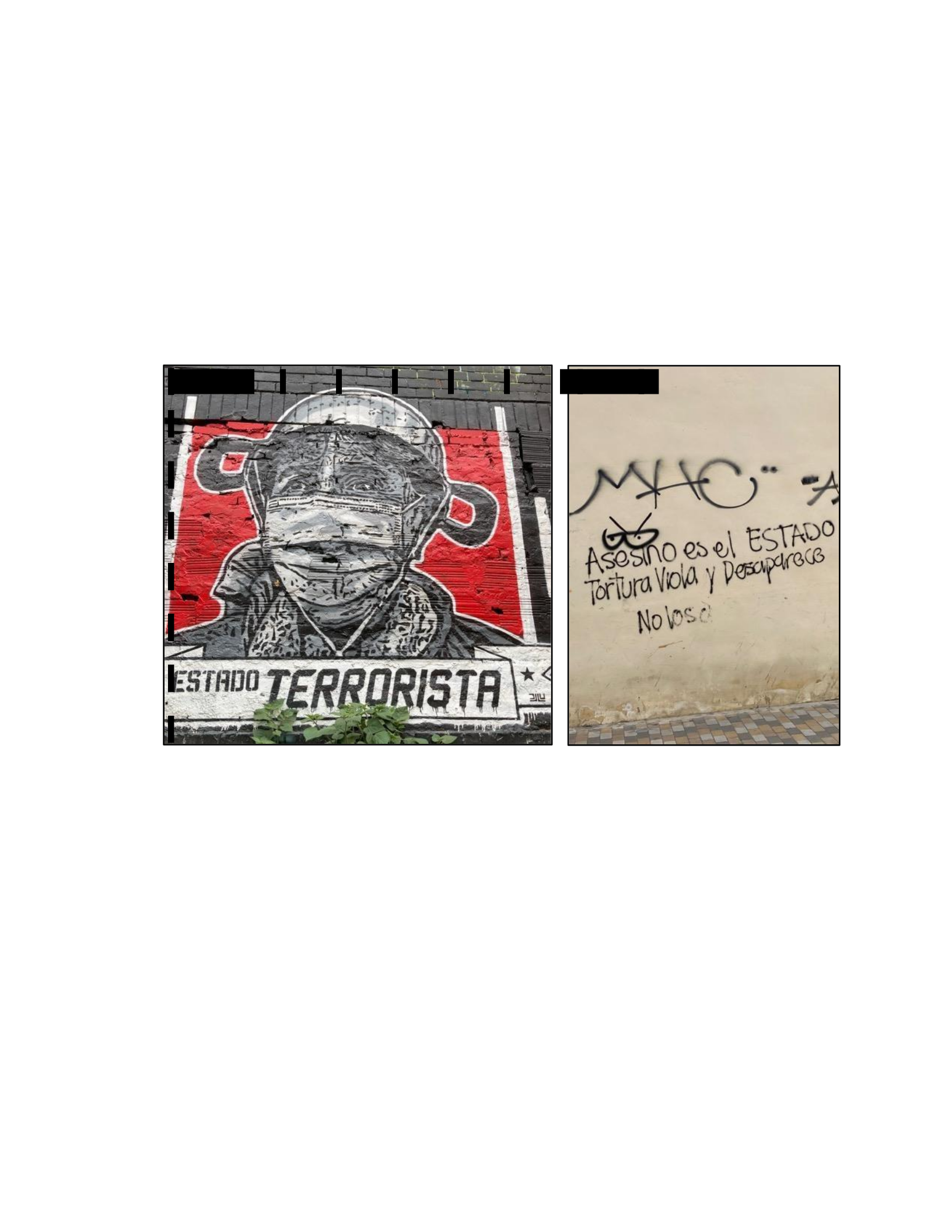
how they conduct their work. For example, it not only makes forensic investigations riskier
because of the potential for violence, but it also means that the knowledge produced by
forensic anthropologists through their investigations may implicate both guerrilla groups
and state agents and thus there are a variety of actors who may wish to prevent the
production or circulation of evidence of their crimes. I will return to the question of forensic
anthropological knowledge in Chapter 5.
*
Figure 1 and Figure 2: The Colombian State branded a terrorist and a murderer. ©
Franziska Albrecht
4.1 State Agents as Perpetrators
Police represent the state more so than any other political institution; a citizen is more
likely to engage with a police officer than a congressperson on any given day.
– Branton et al. (2023, 2)
F 1
F 2

Nicolás was a fifteen-year-old boy […]. He had something very special: his critical
sense and his vision of the country. […] Now I don’t want death for anyone. […]
Suddenly the pain purifies one. And I want people to think a little bit about that. In
that we must continue to fight for our rights and not allow revenge to take over each
of us.
– father of Nicolás
Colombian forensic anthropologist Eduardo works for the Cuerpo Técnico de Investigación
(CTI), the Technical Investigation Unit. It is one of two permanent judicial police bodies
in Colombia, and a division of the Attorney General’s Office (Castellanos and Chapetón
2023; notes from my informant Hugo). Eduardo explained the main challenge in their
work:
One of the most principal conflicts is about the fact that we are working for a state
unit. I am working for the government and maybe […] in different [instances], the
victims are the victims of the state’s agents. Maybe army, maybe policemen, maybe,
I don’t know, agents of the state. So, the families don’t trust in us because we are the
state, too. And the victimarios [attacker, perpetrators] are the state, too, so …
To put into context why families might consider state agents untrustworthy, the next
sections will give insight into the atrocities committed by members of Colombia’s National
Police and the Army. Many determinants can affect an institution’s public image and
ultimately the trust put in it. As an in-depth exploration is beyond the scope of
this dissertation, only a brief introduction to the atrocities committed by the Colombian
National Police and the Army will be given.
*
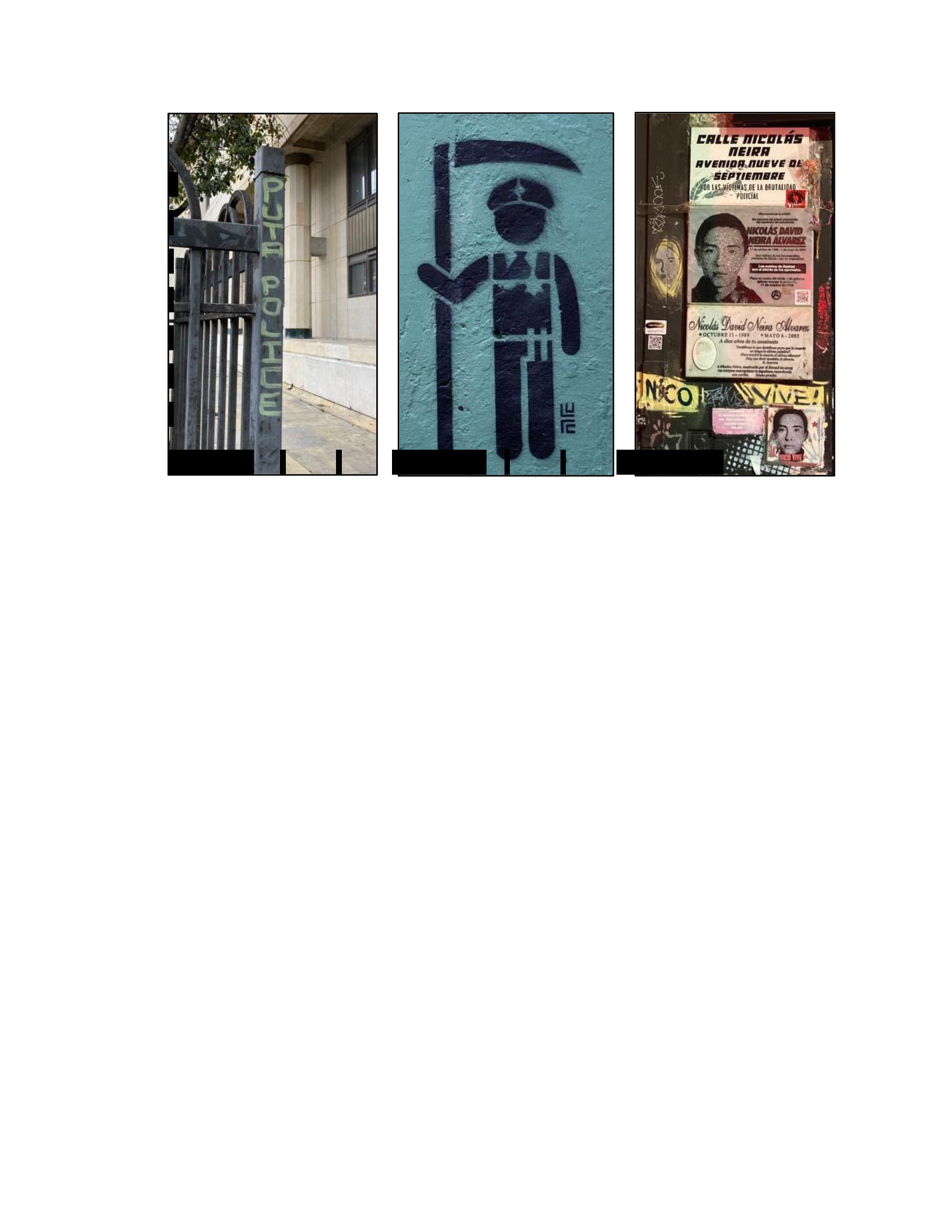
Figure 3 and Figure 4: Graffiti that speaks of police violence and hatred towards Colombia’s
Police Force can be found all over Bogotá.
Figure 5: Memorial plaques for Nicolás David Neira Álvarez.
© Franziska Albrecht
4.1.1 State Agents as Perpetrators I – La Policía Nacional de
Colombia
25 August 2022. I pause to take a picture of graffiti on Carrera 7. Now, after nightfall, the
streets are clear of vendors, and I can take a proper photograph. “Also take a picture of
Nicolás,” Ana, who accompanies me on my stroll, urges me. According to a memorial
plaque, Nicolás David Neira Álvarez was fifteen years old when he was killed by police
officers during the May protests in Bogotá in 2005. Reports on how he received the fatal
head injuries from the police’s special unit ESMAD diverge: blows to the head or hit by a
police projectile (El Tiempo 2021). Nicolás, a message displayed on the wall states, was “a
victim of the innumerable crimes committed by the state,” crimes that are “still in
impunity.”80
F 3
F 4
F 5

Since its formation in 1891, the public image of Colombia’s National Police has been
fluctuating (Ruiz Vásquez 2013; 2012; Llorente 2006). In Bogotá, I saw indications in the
form of graffiti that speak of a strained relationship between the police and
Colombians. “Colombians have no respect for the police,” a fellow graduate student from
Bogotá tells me one day during lunch at my university’s grad club. Another Bogotano I met
in Colombia notes that as a woman she would not feel safe around the Colombian police
and that in one incident, police officers reportedly raped women on Colombia’s National
University campus. Yet another Colombian I met scoffed when I asked him if there was
corruption in the police force as if I had asked a question with an obvious answer. The
history of Colombia’s police force is described as filled with years of “disdain, fear and
apprehension” for Colombians (Ruiz Vásquez 2012, 43). Highlighted are its manipulation
by the Liberal and Conservative political parties during La Violencia, incidences of sexual
violence and links to drug cartels (Branton et al. 2023; Ruiz Vásquez 2012). In Colombia,
perhaps the most infamous cartel was the Medellín cartel led by drug lord Pablo Escobar.
In the hit Netflix series Narcos (2016), the character Colonel Hugo
Martínez, leader of the Search Bloc, proclaims: “The man standing over Escobar when this
is over needs to be a Colombian police officer.” While it is unclear who fired the precise
shot that killed Pablo Escobar on a Medellín rooftop on December 2, 1993 – members of
the Colombian Search Bloc or a member of the US-American Delta Force
(Bowden 2001) – it has been noted that in 1993, following the killing of Escobar and the
dismantling of major drug cartels, the public image of the police force “improved notably”
(Ruiz Vásquez 2012, 44). However, despite its achievements, the favourable public image
of the National Police did not persist.
Colombia has been in the grasp of internal conflicts for over six decades. The presence of
civil wars alone, it has been noted, negatively affects public trust in state institutions for an
extended period (Branton et al. 2023). Especially, it might be argued, when members of
state institutions committed serious crimes during those conflicts. The newspaper The

Guardian (Parkin Daniels 2021, n.p.) reports: “Colombia’s militarized police fought for
decades on the frontlines of the country’s war against leftist rebel groups and has long been
accused of human rights violations.” In parallel, Juan Carlos Ruiz Vásquez (2013, 408)
states, “The police record for human right abuses is […] a long one.” According to official
reports, the author notes, “Since the promulgation of the Constitution of 1991, the
Colombian police has been the agency in Colombia most frequently accused of being
involved in forced disappearances, tortures, beatings, and arbitrary detentions,” in addition
to massacres and cases of sexual violence (Ibid.). At the time of this writing, the Colombian
Centro Nacional de Memoria Histórica y Observatorio de Memoria y Conflicto (2020) list
266 cases of sexual violence and 1997 cases of forced disappearance where the persecutors
are presumed to be state agents.
In the 1990s, members of the Colombian police “were conspicuously involved in socalled
‘social cleansing’ whereby local retailers and businessman hired policemen to kill street
urchins and vagrants in an attempt to violently expel ‘obnoxious’ people from their
neighborhoods” (Ruiz Vásquez 2013, 408). Concerning forced disappearances and acts of
social cleansing, Ana, a Colombian forensic anthropologist, told me of police practices in
the 1980s. She was “completely sure” that the government “was involved [in forced
disappearances] because at the beginning, in the ‘80s, the first missing people
disappeared because of the government.” She told me about F-2, a former division of the
Colombian National Police. “They used to investigate crimes,” Ana said, “but also people
that don’t agree with the government and the politics.” People allegedly showing
indications of having communist mindsets, thus seen as opponents of the government,
would disappear. The first to disappear were university students. Ana described F-2’s
approach as “systematic but not that obvious.” She continued, “It was just a few students
that someday just went home [from] university and disappear.” Members of F-2 would
“just take them away and disappear them. And [that] was the beginning. Then […] the
violence between government and the guerillas [started to increase]. And it was a little bit
more complicated, but some organisations […], civil organisations, and families, they made

investigations and they found out that guerrilla and that kind of […] armed groups, they
don’t kill or disappear so many people as the government and other armed groups that
working together with the government like paramilitares. They have a huge responsibility.”
That is why, she believes, the government does not aid in finding los desaparecidos – the
disappeared. “They don’t care about it,” she said, “they don’t support, with money, with
anything. And thanks to the peace agreements, they have to support and create
organisations around this topic.”
The F-2 – nicknamed los feos, which loosely translates to ‘the ugly’ or ‘nasty ones’ – was
a secret intelligence service, judicial police and “repression apparatus” associated with
various human rights violations such as forced disappearances and acts of social cleansing
(Carrillo and Kucharz 2006, 216; Rojas 1996). In June 2023, Attorney General of the
Nation, Francisco Barbosa, proclaimed that “F2 practices […] have returned to
Colombia” (Semana.com 2023a, n.p.87). He made this comparison in connection to a
scandal which involved Chief of Staff of the Presidency Laura Sarabia and her nanny.
The latter was accused of having stolen money from her employer. According to reports,
she was subjected to a polygraph test without a court order in the presidential palace, and
her phone got illegally intercepted by the police under the excuse that she allegedly had
links to the paramilitary group and drug cartel, the Gulf Clan (Semana.com 2023b). This
scandal, it has been reported, “has damaged the Petro administration’s credibility among
voters, and weakened its standing in Colombia’s congress” (Rueda 2023, n.p.).
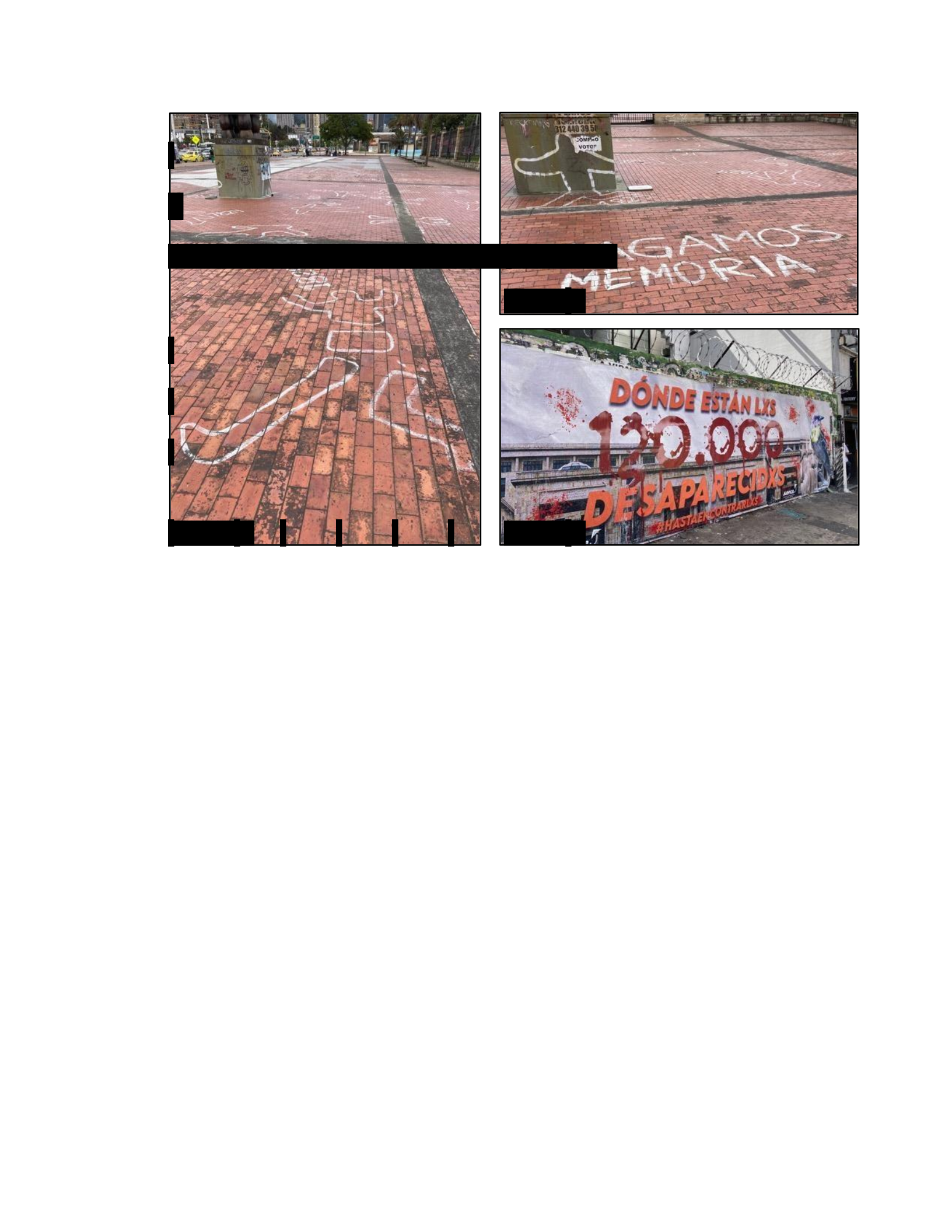
Figure 6 and Figure 7: “Let’s remember” the massacres: Art installation depicting
dismembered bodies.
Figure 8: “Where are the 120,000 disappeared?” a poster asks on the International Day of
the Disappeared, August 30, 2022. © Franziska Albrecht
In Colombia’s armed conflicts, state agents at times committed more massacres than
guerrillas. From 1981 to 2021, a total of 3,933 massacres were documented within the
context of the armed conflict, resulting in 22,309 fatalities (Suárez 2022). The perpetrator
accused of the crime is known in 3,272 massacres, accounting for 83.2 percent of all the
incidents (Ibid.). In total, approximately 8.7 percent of known massacres are linked to state
agents, while 1.1 percent are associated with collaborative efforts between state agents and
paramilitary groups (Ibid.). While this number stands in stark contrast to known cases in
Peru, where 27.8 percent of massacres are attributed to state agents (Ibid.), there is no
question that every statistic, every single number, stands for a tragedy. It is not difficult to
fathom that the aforementioned human rights violations left their mark on the psyche of
Colombians and affected the perceived trustworthiness of state agents. In addition to human
rights violations committed throughout the last decades, there have been recent incidents
which did not benefit the police’s public image.
F 7
F 6
F 8

*
The Perfect Storm
In Colombia in 2021, a mix of pre-existing inequalities, pandemic sanctions, tax reforms,
and police violence erupted in violent protests. In March 2020, the World Health
Organization declared the COVID-19 outbreak a pandemic and countries across the globe
went into lockdown (WHO 2020). In the same year, the Colombian government imposed
a six-month lockdown for its citizens which worsened pre-existing vulnerabilities
experienced by “the poorest and informal workers who live hand-to-mouth” (Martínez and
Young 2022, 373). Disasters, Anthony Oliver-Smith (2002) notes, trace and interact with
pre-existing vulnerabilities or inequalities that individuals experience. Before the
pandemic, Colombia had already been a deeply divided and unequal country. The
Organisation for Economic Co-operation and Development (OECD 2022, 1) notes in a
recent report: “Labour informality remains a critical challenge for Colombia with over 60%
of workers in informal jobs with no access to social security benefits, except health.” For
instance, a survey conducted between March and May 2021 of 750 Cali street vendors
noted that the majority of interviewed individuals were incapable of working for more than
three months (Martínez and Young 2022). It further revealed that street vendors faced a
significant decrease in sales and income when they were able to work. The newspaper The
Guardian reports: “Amid one of the longest lockdowns in the
world, the number of Colombians living in extreme poverty grew by 2.8 million people last
year. Red rags were hung outside homes, in a desperate signal that those inside were
hungry” (Parkin Daniels 2021, n.p.). Elizabeth Dickinson, a researcher with the
nongovernmental organisation International Crisis Group (ICG), states in the same article
that the economic suffering for Colombia is immense, “Like the rest of Latin America,
Colombia has been hit hard by the pandemic and as a result we have had to live with a year
of on-and-off lockdowns.” She continues, asking, “and who was the face of implementing
those lockdowns? It was the police” (Ibid.). The Colombian police, The Guardian reports,
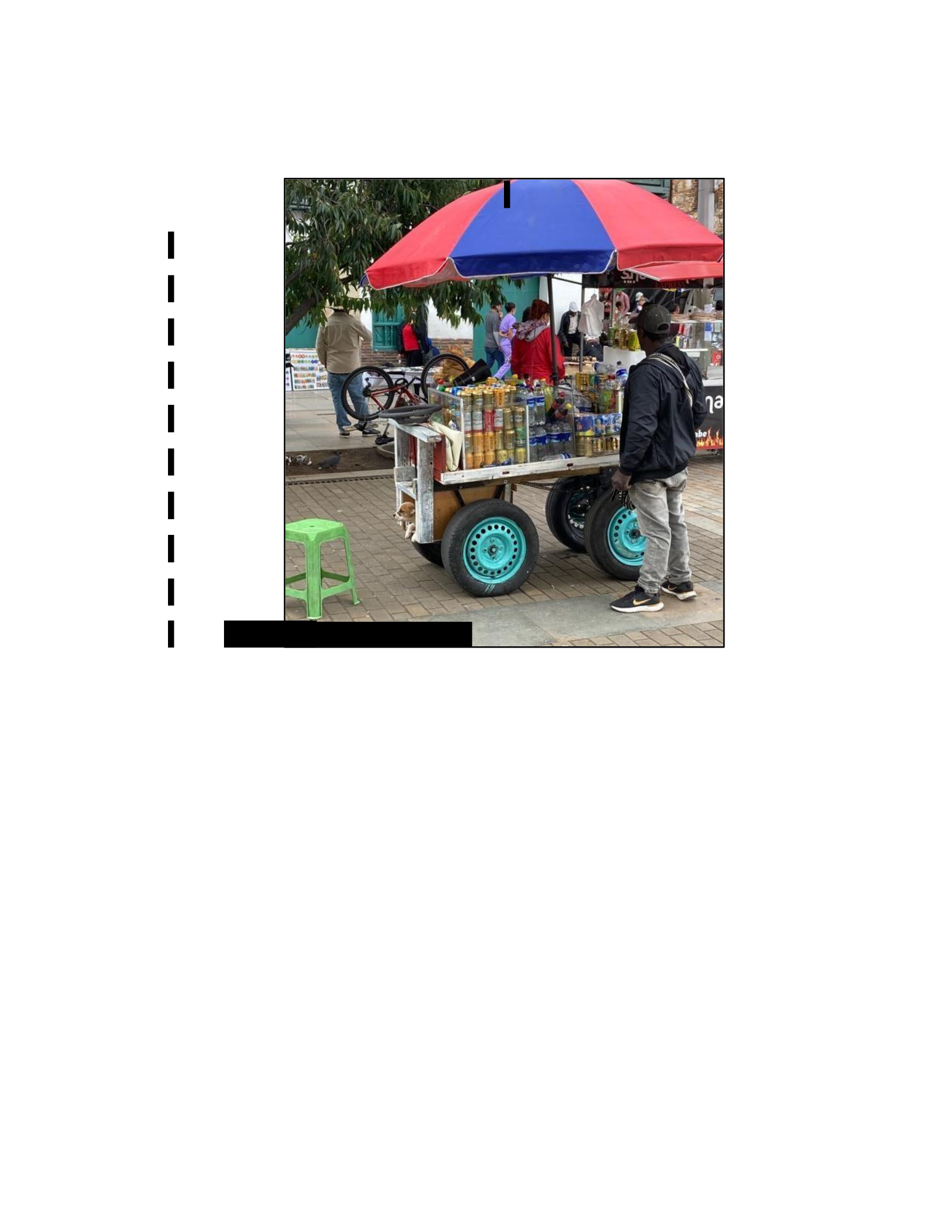
charged Colombians with large fines when encountering them wearing masks incorrectly
or when consuming alcohol in public (Ibid.).
Figure 9: Martínez and Young (2022, 379) report that “street vendors are a
highly vulnerable group.”
© Franziska Albrecht
In addition to financial struggles and pre-existing inequalities amid the pandemic, in April
2021, the Colombian government, under then-president Iván Duque, proposed a tax
increase for individuals and businesses (Bocanegra 2021). Many Colombians are said to
have believed that the tax reform would further exacerbate the challenges of navigating an
economy strained by the pandemic. The resultant protests rapidly transformed into a
widespread manifestation of frustration regarding poverty and inequality, exacerbated by
the escalating spread of the virus, as well as the aggressive tactics employed by the police
in response to the movement (Turkewitz 2021). Pre-existing inequalities, poverty, and a
proposed tax overhaul in addition to the pandemic-related lockdowns created the perfect
storm, which eventually erupted in a National Strike on April 28, 2021. Throughout the
protests, Colombia’s Mobile Anti-Riot Squad ESMAD was deployed. “Colombia’s
F 9

Police Force, Built for War, Finds a New One,” a New York Times headline reads in May
2021, alluding to the excessive force used by squad members on protestors (Turkewitz and
Villamil 2021). Over a hundred protesters suffered eye injuries from police projectiles in
targeted assaults, according to Amnesty International (2021). As of June 6, 2021, a
minimum of 46 individuals had died, but Human Rights Watch and other organisations
suggested that the actual death count may have been higher (Turkewitz 2021). The violent
police response to the nationwide strike exacerbated the frustrations felt by many
Colombians, causing a demonstration against police brutality (Turkewitz and Villamil
2021). In response to an alleged increase in violent crime after COVID lockdowns,
hundreds of uniformed military police were deployed (Semana.com 2022a; Alsema 2021).
Although the government announced a military intervention in key areas of the city,
Claudia López, Mayor of Bogotá, assured Bogotanos in January 2022 that additional
security measures would remain at 300 military police personnel stationed at specific
checkpoints and that there would be no militarisation of the city (Semana.com 2022a;
Semana.com 2022b). The ambiguity is striking: While the residents of Bogotá are informed
that the city is not militarised, my observation of individuals in military attire either
marching in formation or riding on the back of a truck gave me a contrasting impression.
*
The Other Side
No hay buenos ni malos. Todos somos víctimas. Paz para Colombia.
– a note in Bogotá’s police museum
Trudy Govier (1997, 209) reminds us, “It is all too easy and – and apparently all too natural
– to infer fallaciously that all members of the group have the same attitude, which is
timelessly fixed, […] and that is just it. Attitudes within groups are variable and changeable.
[…] groups are not monoliths; as reductionists reminds us, they are ultimately composed
of individuals.” In other words, not every Colombian views the police negatively or
behaves disrespectfully towards them. Although trust in the

Colombia Armed Forces and National Police exhibited a declining trend from 2004 to 2018,
a notable 42.4 percent of survey respondents in 2018 still indicated trust in the police”
(Rivera et al. 2019).
*
16 August 2022. Today I am visiting the Casa de Nariño (Colombia’s presidential palace)
and the Plaza de Armas in the historical centre of La Candelaria. Since there is no direct
access to the palace and plaza, I am seated on a curb next to a small patch of grass at the
Plaza de Núñez. I recognise the Plaza de Armas from the inauguration ceremony of
Gustavo Petro a few days earlier; it is the square where he received high ranking officers
of the military and police force. The four column pairs of the presidential residence still
bear Colombian flags. The sun means well today, and I can feel it burning the top of my
head. I take my rain jacket from my backpack and pile it ungraciously on
my head to protect myself. I am still not used to the ever-changing weather in Bogotá;
blistering sunshine in one moment, torrential downpour the next, followed by more
scorching sunshine. Of course, I had forgotten my baseball hat in my apartment. With my
jacket on my head, I face-time my mother. As I am telling her about my day, a police officer
to my right catches my eye. I watch him more intently than I probably should, but I
convince myself that it is in the service of ethnographic observation. He fascinates me
because he has a content smile on his face as if he cannot imagine being in a better place.
I tell my mother that he is now taking a picture of a tourist in front of the palace.
“Imagine a German police officer taking a picture for a tourist,” I exclaim. “They would
show you the bird,” she responds, which in German means thinking that someone has lost
it. A few moments later, a small dog enters the plaza to my left and happily sniffs its way
across. It roams freely without a leash, and the male owner is crouching down taking
pictures of his fluffy model. From the right, the police officer approaches. I am giving my
mum a running commentary of what is happening, expecting a showdown any second.
However, unhurried, the police officer weaves his way through the crowd towards the dog
owner. The officer is holding his hands in front of him, but I cannot see if he is playing

with his fingers or the whistle, he had used earlier to gently direct some tourists from a
patch of grass. All in all, he comes across as unthreatening, which is the entire point of his
nonchalant demeanour, I assume. He stops and waits patiently near the dog owner to finish
his photoshoot. Only then, does the police officer approach him. I cannot hear what is being
said but I assume he tells him that he needs to put the dog on a leash; the owner complies.
They talk for a while and from the dog owner turning and pointing to the presidential palace
at one stage, I gather they are not talking about leashes anymore. The dog owner then holds
out his fist initiating a fist bump which the police officer returns. I am flabbergasted and
wonder if they know each other. A civilian fistbumping a police officer?! Unfathomable to
me. In Germany, we have the beautiful bureaucratic term Beamtenbeleidigung, which
means an insult to a public servant. Solely addressing a police officer informally (duzen),
for instance, is an offence, which, depending on the judge, can cost you several hundred
Euro. I can only assume what I witnessed between the civilian and the police officer.
Perhaps what I interpreted as
‘informal’ behaviour by the police officer comes down to his Wesen. Perhaps it was an
example of the community policing initiatives introduced that put focus on casual
interactions between police officers and civilians (Arias et al. 2021; Ruiz Vásquez 2012;
Llorente 2006). Perhaps, it was a mix of both.
‘La policía es mi familia’ – it sounds out in a catchy tune from a television set of the
Department of Social Welfare in Bogotá’s police museum. This is accompanied by a video
of scenes that I believe are supposed to denote ‘family and cohesion’ and that the
Colombian police, as an institution, takes care of their employees (suggested by images of
police officers playing with their children and hugging their spouses). It seemed to be really
on the nose, but the melody remained stuck in my head for days. In the museum, I also find
examples of members of the force being characterised as heroes, expressed in handwritten
notes and pinned to a wall. Colombia’s police force has been working on a positive image.
¿Quién soy? – Who am I? – a recent advertisement for the police force posted on their
official YouTube channel asks (Policía Nacional de Colombia. Dios y Patria 2022). It shows
for instance a young man dressed casually in jeans and a t-shirt applying yellow paint to
mark the borders of a path in a park. He receives a friendly pat on the shoulder from a male
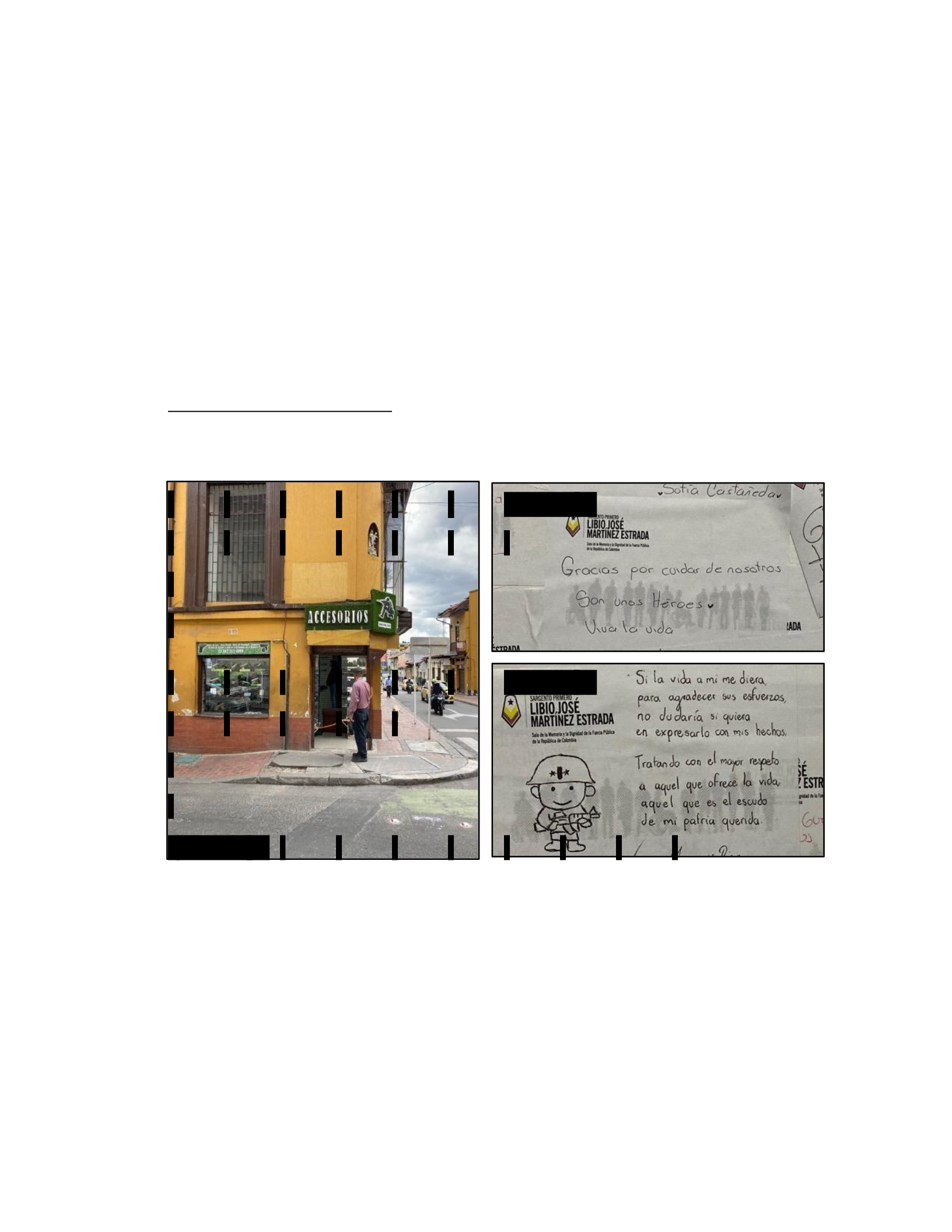
youth. The scene cuts and now we see the same man in uniform, fist-bumping his
colleagues. ‘I am the neighbour on the block and also the station companion,’ the voiceover
says in Spanish95. At the end, the advertisement states,
‘I am [a] police [officer], and I am also part of the community.’ The advertisement depicts
a force that is close to the people without Berührungsängste. It reminds me of a scene from
a news report about the annual May riots in the German city of Hamburg that stuck with
me. “You are of one the good ones,” a civilian tells a police officer walking alongside him.
“I am just a father whose children want him to come home at the end of
the day,” the officer replies. The police officer then points directly to the camera, “this,” he
stresses, “you should broadcast.”
Figure 10: There are numerous shops close to the police museum, where military and police
equipment and memorabilia can be bought.
Figure 11 and Figure 12: Notes thanking the Colombian Public Forces.
© by Franziska Albrecht
*
F 11
F 12
F 10

4.1.2 State Agents as Perpetrators II – The Colombian Military
We murdered innocent people, campesinos. […] They trusted us, and we deceived
them. We lied to them, and we murdered their families. God forgive me. […] Today,
I want the world to know they were campesinos that I, as a member of the Public
Force cowardly murdered. Took away the hope of their children. Their mothers’
hearts were torn. Because of pressure for results. For false results. To keep a
government happy.
– Néstor Guillermo Gutiérrez, former corporal in the Colombian military, 2022, JEP hearing
After outlining the complex relationship between the police force and Colombia’s citizens,
the next section will give insight into the largest scandal committed by the Colombian
military. In this process, an introduction to the Jurisdicción Especial para la Paz (JEP) will
be given. “In recent decades,” Fernanda Espinosa Moreno (2021, 30) notes, “testimonial
voices have moved from marginal spaces of society to the centre of the scene.” The voices
of victims and perpetrators in this section will aid in demonstrating not only the atrocities
committed and the suffering caused by state agents but also the complex transitional peace
process in Colombia.
*
Investigating the falsos positivos, and the Jurisdicción Especial para la
Paz
In One Hundred Years of Solitude, Gabriel Garcia Márquez’ famous magical realist novel,
José Arcadio Buendía spends almost two years travelling in search of a new home,
dreaming of “a noisy city with houses having mirror walls rose up. He asked what city it
was and [the voices] answered him with a name that he had never heard, that had no
meaning at all, but that had a supernatural echo in his dream: Macondo” (García Márquez
2006, 24). In its early years, Macondo resembled a social utopia. It was so peaceful that
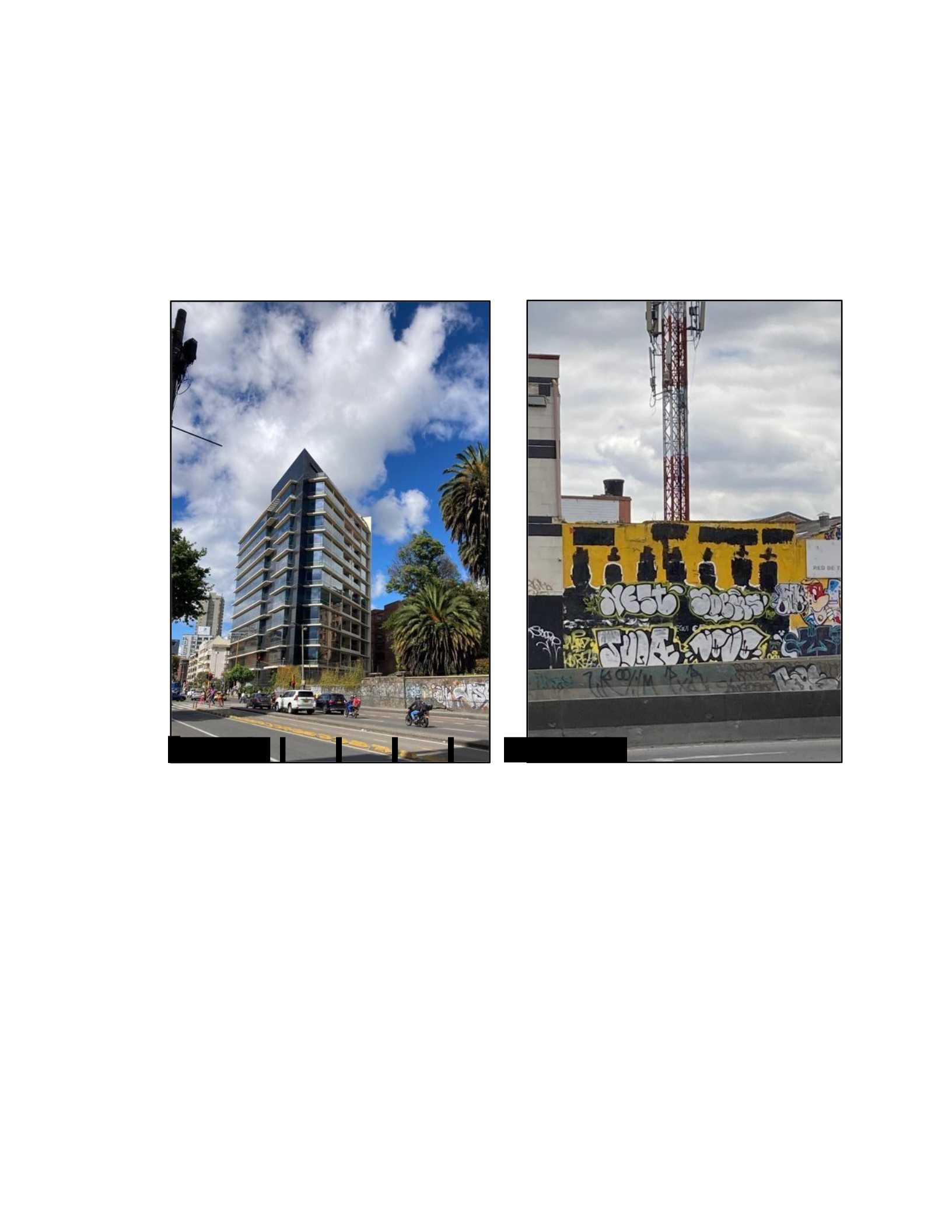
none of its citizens “had died even of a natural death” (Ibid., 56), therefore they did not
need police or military forces to establish social order. Such a utopian vision is, of course,
only a dream, but as David Harvey (2000, 156 and 157) notes: “the figures of the ‘city’ and
of ‘Utopia,’ have long been intertwined” and associated with “emotions and beliefs about
the good life.”
Figure 13: JEP’s Headquarters in Bogotá, Colombia.
Figure 14: Remains of graffiti depicting the faces of seven high-level military commanders,
close to the José María Córdova Military School in the North-West of Bogotá. © by Franziska
Albrecht
Wrapping around the corner of Av. Alberto Lleras Camargo y Calle 64 in the bustling city
of Bogotá and with the gleaming sun and cloudless sky reflecting off its glass façade, the
modern high rise that houses the Jurisdicción Especial para la Paz (Special Jurisdiction
for Peace) could be situated in the utopian city Gabriel García Márquez (2006) describes
in his novel One Hundred Years of Solitude. One might say, however, that for many,
F 13
F 14

Colombia does not resemble a utopian society. JEP is one of two institutional bodies that
operate under Colombia’s transitional justice model Sistema Integral de Verdad, Justicia,
Reparación y No Repetición (SIVJRNR, Integral System for
Truth, Justice, Reparation, and Non-Repetition). One of JEP’s judges, Alejandro Ramelli
Arteaga (2023), noted in his presentation at the Centre for Criminology & Sociolegal
Studies at the University of Toronto: “Colombia has suffered the longest armed conflict in
the Western hemisphere.” It thus comes as no surprise that due to continuing civil unrest,
Colombia’s modern history has seen more than one Truth Commission (Espinosa Moreno
2021). In 1985, members of the leftist M-19 guerrilla group, a movement current President
Gustavo Petro was a member of, entrenched themselves in Colombia’s Palace of Justice
(LaRosa and Mejía 2017; Carrigan 1993). The handling of the takeover of the building by
the Colombian government was disastrous. With the government standing back, the army
went for an “all out military assault involving tanks, armored cars and over two thousand
troops” (Carrigan 1993, 13). It ended in tragedy with more than a hundred individuals
killed, and with an unknown number of survivors getting disappeared (LaRosa and Mejía
2017; Leech 2011; Carrigan 1993). It was only in 2005, twenty years after the tragedy
unfolded, that a truth commission was created to investigate the catastrophic event.
Moreover, the report ¡Basta ya! Colombia: Memorias de Guerra y Dignidad (2013) by the
Centro Nacional de Memoria Histórica (CNMH) is described as having “characteristics of
a truth commission” (Espinosa Moreno 2021, 19). Additionally, the website of the Centro
Nacional de Memoria Histórica y Observatorio de Memoria y Conflicto unifies a wealth
of statistical and geographical information, including outlining the armed conflict in figures
with data boards, map visualisations, databases and commemorative boards. In 2017, the
Integral System of
Truth, Justice, Reparation, and Non-Repetition was incorporated into Colombia’s political
constitution as part of the 2016 peace agreement between the Colombian

government and the guerrilla group FARC-EP (Comisión de la Verdad, JEP, UBPD n.d.).
It consists of the Truth, Coexistence and Non-Repetition Commission; the Special
Jurisdiction for Peace (JEP); and the Unit for the Search for Persons Presumed
Disappeared (UBPD). The Special Jurisdiction for Peace, or JEP, operates outside the
standard criminal law system and thus has its own jurisdiction. As Santiago, a Colombian
forensic anthropologist, explained it to me: “the JEP is like the Attorney General but special
for the peace.”
In his opening statement at the Nuremberg tribunal on November 21, 1945, Chief of
Counsel for the United States, Robert H. Jackson (1945, 150) stressed: “the idea that a state,
any more than a corporation, commits crimes, is a fiction. Crimes always are committed
only by persons. While it is quite proper to employ the fiction of responsibility of a state or
corporation for the purpose of imposing a collective liability, it is quite intolerable to let
such a legalism become the basis of personal immunity.” With the intention of serving as a
model for the future, Ruti Teitel (2006, 1616) states, the Nuremberg trials “were aimed at
teaching individual responsibility for crimes of aggressive war and crimes against
humanity, so as to deter their re-occurrence.” In a similar vein, JEP’s fifteen-year mandate
states that it is obligated to investigate and prosecute individuals who participated directly
or indirectly in the armed conflict, including: “ex-combatants of the FARC and members
of the Public Forces who have been prosecuted or linked to crimes related to the armed
conflict,” “other non-miliary State agents and third-party civilians who appear voluntarily”
(Comisión de la Verdad, JEP, UBPD n.d., n.p.). Judge Ramelli Arteaga noted in his
presentation that in the JEP, “we focus our investigations [on] the most responsible. So, we
don’t investigate the soldiers, […] we investigate just the high level in the rank, in the chain
of command […]. So, we investigate the [greatest], or the most serious crimes and the most
responsible for the commission of war crimes and crimes against humanity.” Whereas the
traditional
Colombian justice system investigates on a case-by-case basis, in the country’s transitional
peace scenario, investigating individual crimes case by case, however, is not deemed
feasible. According to Judge Ramelli Arteaga, JEP is a “complex jurisdiction.” It holds its

autonomous jurisdiction “over 9,000 FARC members,” “over 3,600 members of
Colombia’s security forces,” it “investigated 71 civilians who participated in the
Colombian armed conflict,” investigated over 300,000 victims and over 200,000 crimes.”
He concluded that there are “a lot of offenders, a lot of victims, a lot of damages, and a lot
of crimes.” Therefore, the crimes are combined into eleven macro cases, which are
subdivided into three territorial cases and eight thematic cases. Case 03 combines
“killings and forced disappearances presented as combat casualties by state agents” –
commonly known as los falsos positivos.
*
Why? Why had my brother been killed? Why did they select him […]? There was
never a response. Never an accurate answer. They only told me how he could have
been anyone and I just realised, no! That there was a pattern of cruelty. That there
was a pattern of cruelty against difference.
– Margarita Arteaga, sister, JEP hearing
I didn’t do it out of my own volition. It was because some commanders demanded it
of me. But I did make the decision.
– Wilson Burgos Jiménez, Colombian sergeant, JEP hearing
On March 28, 2007, “recruiter” second sergeant Burgos Jiménez and his soldiers, all
dressed in civilian clothes, headed to a local nightclub. Earlier his commander had told him
that they needed to present three deaths. Why three, the sergeant did not know, because
“they weighed more,” according to his testimonial at the JEP hearing (JEP Colombia 2023).
Why a nightclub? Because there, people would be “more vulnerable.”
At the club, Burgos Jiménez got into a conversation with two men, whom he invited to
drinks. When they asked him about marijuana, he saw what he was looking for – “a
vulnerable person.” Under false pretences, he got them into a van, where his soldiers were
waiting. After driving to another location, Burgos Jiménez gave the order to kill them, their
belongings were burned. Signs of torture are brushed off by Burgos Jiménez. He asserts

that there was no torture; instead, he attributes the sustained injuries to the impact of the
bullets.
Andrés Fabián Garzón Lozano and Kemel Mauricio Arteaga Cuartas did not fall as soldiers
in battle that day. They were civilians at a party deviously lured to their deaths under false
pretences by disguised soldiers. “How can a person like you murder some defenceless
boys?” – boys he had beers with, had started a conversation with, thereby a brief
relationship – JEP Judge Catalina Díaz Gómez asks (Ibid.). Burgos Jiménez responds, “I
did not think about that. I only thought about my benefit, and my benefit was to obtain
results” (Ibid.). This testimonial describes the fate of only two victims. JEP reports that
between 2002 and 2008, 6,402 individuals were killed and presented as guerrillas killed in
combat (Jurisdicción Especial para la Paz 2022b). ¿Quién dio la orden? – Who gave the
order? – a graffiti close to the José María Córdova Military School in Bogotá asked. It
showed the faces of seven high-level military commanders. Under their command, over
6,000 extrajudicial executions were committed between 2000 and 2010. The Army hurried
to paint it over.
¿Quién dio la orden? – a big poster behind the victims in one of JEP’s courtrooms insists
again. Like in forensic anthropological investigations, at JEP, the families and the victims
are at the centre of the process. “We are a tribunal for the whole truth,” Judge
Ramelli Arteaga explained, “This is our main responsibility.” He also acknowledged in his
presentation, however, that:
… the problem is: What does it mean ‘the whole truth’? This is a philosophical
[question], what does it mean ‘the truth’? Because when you are a victim, you are
interested in having more information about a specific crime. ‘Who give the order to
assassinate my father?’ But […] we don’t have the possibilities to investigate all the
crimes. We investigate macro cases in order to give a general explanation of the
crimes. Even in some particular cases, we can identify who gave the order to
assassinate your father but is difficult to solve all the cases. That’s why some victims
said, ‘No, they didn’t give me all the information.’
While victims and the magistrate strive to obtain the truth through JEP’s hearings, (former)
members of the Colombian military question whether JEP is impartial.

Juan Pablo Rodríguez Barragán, Colombian Army General from February 2014 until
November 2017, states:
In some cases, for being in the military, one is already practically sentenced before
being investigated, without taking into account their fundamental rights. The JEP
must be completely impartial. What was wanted was that all actors in the armed
conflict were represented in the JEP, to achieve a point of balance and a consensual
acceptance of decisions made there. At present there is mistrust with the JEP
regarding the symmetry and impartiality in the application of justice to State agents
and members of the public force; hopefully, for the sake of achieving true
reconciliation, the JEP understands that great responsibility it has. (in Nova Estrada
2020, 2019, 305)
In 2014, the Gallup poll of national opinion reported that the Colombian Army, “the
institution most loved and respected by Colombians, has had its biggest drop in opinion in
decades” (Ibid., 50). Yet, for all human rights violations, they did not cause the Army’s
ultimate downfall. Martín Nova Estrada (2020, 2019, 50-51), who interviewed several
Colombian generals serving over the last forty years approximately, notes: “In all these
events, as with the False Positives, they are a few that manage to affect the name of a huge
institution.” When confronted by Nova Estrada about some of the recent issues around
Colombia’s Army, General Rodríguez Barragán stresses: “These Armed Forces are
vigorous, they are not going to succumb to anything, and they are going to continue
fulfilling their constitutional task” (51). Rodríguez Barragán strongly believes that the
Colombian Army is here to stay:
… the soldiers of land, sea and air and our police “are in the heart of Colombians and
we will always stay there”. Even if they try to do whatever, to attack us, slander us,
discredit us, the Colombian people are very clear about the sacrifice and
heroism of our men to guarantee security, and they will always look for a soldier for
their protection. (313-314)
*

Several camping tents are pitched near the entrance of JEP’s headquarters, just a few steps
away from the sidewalk. They are covered with a dark tarp. I believe this serves the dual
purpose of enhancing privacy and providing protection from weather conditions. The
weather in Bogotá, at its altitude, can change rapidly. There is a broom and dustpan set to
the side. A woman is preparing some food. Avocados are offered for sale. A cardboard box
is set up for donations. These are the living quarters of several displaced Colombians. It
has been noted that “Colombia’s forcibly displaced – los desplazados – make up one of the
largest populations of internal refugees in the world” (Brodzinsky and Schoening 2023,
18). Walking by, the big Colombian flag cannot be missed. The national tricolours – gold,
blue and red – represent the mineral wealth of the country (gold, emeralds), its lakes and
seas, and the blood spilt during its wars for independence. On the
Inauguration Day of Colombia’s recent president Gustavo Petro in August 2022, the
Colombian flags decorating the streets and houses of Bogotá were vibrant, symbolising
national pride and hope for a brighter future for the country. Here, in this makeshift camp,
the colours of Colombia are faded, the flag’s edges look worn, the coat of arms is nearly
unrecognisable. A disheartening scene that stands for the crude reality of Colombia having
the second highest number of internally displaced individuals in the world, according to
the National Center for Historical Memory (Centro Nacional de Memoria Histórica, 2015).
Next to the makeshift living quarters, police riot helmets and shields lean against a wall, as
if lying in wait. Why this police presence at JEP’s headquarters is deemed necessary, I am
not sure. I asked informants about it, but they could not give me a definite answer.
Are they there to keep the displaced ‘in check’? Are they worried about attacks by
guerrillas or families of the victims looking for retaliation? Judge Ramelli Arteaga
mentioned the “challenge to guarantee the security of the people who participate in the
process, the witnesses, the judges, and even the victims and the perpetrators.” He also drew
attention to the problem of “the assassination of former members of the FARC. Until today,
400 ex-members of the FARC have been assassinated and [it] is a very complex situation
because is impossible to make another peace process if you can’t ensure the security of the
members of the armed group.” This would indeed explain the police presence. Since my

arrival in Bogotá, I had been circling the perimeter of the JEP building but did not go inside.
I know JEP has a Grupo de Apoyo Técnico Forense (Forensic Technical Support Group) as
part of its Unidad de Investigación y Acusación (UIA, Investigation and Prosecution Unit).
I thought since I was in Bogotá, rather than sending an enquiry for an interview to a general
email address, I might have more luck speaking to someone directly on-site. The police
presence, however, deterred me from entering. What made the scene unheimlich to me was
that from the headquarters of the National Police I expected a certain degree of fortification
but not from a judicial building committed to peace and reconciliation that stands in the
glinting sunshine in a central part of the city. Its commitment to the notion of reconciliation
provides starting points for various topics of discussion which the next section will briefly
turn to.
*
4.1.3 The Complex Matter of Reconciliation – Additional Notes
Reconciliation begins with an apology. What is an apology and what can it do?
Apologies are defined by Michel-Rolph Trouillot (2000, 184) as “rituals in the strictly
anthropological sense of a regulated, stylized, routinized and repetitive performance that
tends to have both demonstrative and transformative aspects.” Their transformative
character can be the first step in shifting a damaged relationship toward the positive. In
2020, FARC-EP issued a collective public apology to the tens of thousands of victims
kidnapped by members of the guerrilla group (jc – afp, El Tiempo 2020). The apology has
been described as an “unprecedented public declaration from a non-state armed group”
(Roccatello 2020, n.p.) and “the most forceful message of forgiveness it has sent since
signing the peace [agreement] in 2016” (jc – afp, El Tiempo 2020, n.p.). With regards to
the aforementioned falsos positivos scandal, in October 2023, the Colombian government
issued a public collective apology in the context of President Petro’s total peace policy –
twenty years after the extrajudicial killings were committed. “We ask you to forgive us for
these crimes that embarrass us in front of the world,” current Defense
Minister Iván Velásquez said in his speech (AP News 2023, n.p.; Redacción Semana 2023).

FARC’s apology has been described as “unambiguous and [not including] any attempt to
justify the practice,” and was thus hailed as demonstrating “political maturity, which can
only develop when there is the space and willingness to engage in peaceful political
dialogue rather than armed confrontation” (Roccatello 2020, n.p.). Trouillot (2000) regards
collective apologies more pessimistically, calling them “abortive rituals” as the apology
fails to do the transformative work. He stresses that collective apologies are performed
under the belief and “acceptance that ‘the whole world is looking at me,’ a privilege once
reserved for the most powerful, who even then retained the right to reject that gaze. That
gaze, now virtual yet increasingly hard to escape, global in its pretensions yet parochial in
its instrumentalities, frames all discussions of collective responsibility today” (181-182).
We see the awareness of the apology being performed in front of a global gaze exemplified
in Velásquez declaration that the committed crimes “embarrass us [the Colombian nation]
in front of the world.” Ex-military Néstor Guillermo Gutiérrez makes a similar contention
when referring to presenting innocent people as guerrillas and how this damaged
Colombia’s image: “What were we doing, oh my God. The damage we caused [you]. The
news to the world: ‘Colombia, a guerrilla, a guerilla.’ Here, today, I recognise these crimes”
(JEP Colombia 2022). It has been reported that most of the
victims present at Velásquez’s speech “were not ready to forgive” and believed the apology
should not have been issued by the current defence minister but by the defence minister
who was in charge when the crimes were committed. Juan Manuel Santos was in office
between 2006 and 2009. While he apologised during a closed-door hearing with Colombia's
truth commission in 2021, he has yet to offer a public apology (AP News 2023).
The aforementioned former General Rodríguez Barragán spoke of “achieving true
reconciliation.” Here lies yet another philosophical question: What does reconciliation
mean? First, it must be noted that, according to Alejandro Castillejo-Cuellar (2013), “as
has been seen in other transitional scenarios, the weight of ‘reconciliation’ lies on the
shoulders of (forgiving) victims.” Forgiveness is a complex interpersonal and
psychological construct. Forgiving, it has been argued, requires deliberate effort and it can,
to put it simply, be incredibly difficult. To forgive, Avishai Margalit (2002, 193, emphasis

added) reminds us, not only means one has to make “a conscious decision to change one’s
attitude and to overcome anger and vengefulness.” The decision to forgive leads us to either
entirely forget the “past wrong” or to “[forget] that it mattered to you once greatly” by
stopping ruminating about it and discussing it with other people (Ibid.). “Forgiveness,
unlike ordinary gifts,” Margalit (2002, 195-196) argues, “is not intended to form or
strengthen a relationship but rather to restore it to its previous state.” This contention raises
the question: How can the relationship between Colombian state institutions and citizens
in the Colombian peace scenario be restored to its previous state (whatever that might
looked like)? In its modern history, for over six decades, the Colombian state has failed its
citizens. Innocent people were and continue to be murdered by individuals that in their
function as members of the police and military are supposed to serve and protect. As
previously outlined, uncertainty and distrust have been engrained in Colombians’ collective
psyche. Additionally, restorative sanctions applied by JEP are different from traditional
penalties “because we are in a peace process with the FARC,” as Judge Ramelli Arteaga
noted, it “is impossible to sign a peace agreement with the FARC and say ‘OK, all the
FARC will be in prison.’” Regarding reparations for the victims, he stated, “we have nine
million victims, even with this administrative
[compensation] program [it is] impossible to [repay] nine million victims.” JEP
acknowledges that it is a challenge to make society see that restorative sanctions “are not
synonymous of impunity.” Judge Ramelli Arteaga stated that “this is a cultural challenge
because everybody thinks ‘OK, the prison is the only solution.’” He stressed, however, that
Colombia is in a peace process. Therefore, JEP strives to find a balance between
punishment and restoration.
What about justice? What is justice in this scenario? How do we define it? It might be
suggested that for the relatives of those who were forcibly disappeared and killed
‘justice’ is deeply relational. Families are told that sanctions as known in a traditional
justice system (i.e. prison) are not possible in the transitional peace context as the state
wants to achieve peace with remaining rebel groups as well (i.e. ‘if we put them in prison,
we cannot sign peace deals’). Further, closure for the victims cannot take the form of
vengeance as the loop of continuing violence on a national scale needs to be closed.

Consider, for example, the situation of Dania Achagua Cecile, whose father was falsely
portrayed as a guerrilla and killed when she was just two years old. “It breaks my heart,”
she says, “to not even remember, not even to know what the tone of his voice was like.” In
her speech at a JEP hearing she addressed the military perpetrators, “Your blood and your
heart are so cold and cruel that you continued to enjoy your lives and your rewards. Pushing
out your chest, supposedly being the best, and let me tell you something: You are not and
will never be the best.” She is grateful that her mother raised her without hate. In her
response, JEP Judge Díaz Gómez notes, it “is to be admired that at your 18 years, you have
that clarity, that tranquillity, that courage. Frankly, you are an example I think for many
young persons who have had to suffer the horrors of war. Feel very proud of what you have
done.” The judge admires that Dania speaks against hatred. Once more, reconciliation rests
upon the forgiving victims. By folding the suffering of particular individuals into problems
of the state such as prioritising ending the national cycle of violence and shifting towards
a future focused on truth-seeking in return for reduced penalties, emphasising
reconciliation over retaliation, and considering
Colombia’s image and reputation going forward, there might be the risk that the peace
progress becomes a hollow endeavour for the individual victim for whom justice is deeply
relational. At the same time, it cannot be denied that the spiral of violence, which still
presents a stark reality in Colombia, must come to an end. The effect of decades of conflict
and violence on the collective psyche of the nation and its image to the rest of the world
cannot be underestimated and should not be cast aside. To repeat the quote by my
Colombian cabify driver: “Es muy penoso. Es muy penoso porque la gente extranjera así
como tú se da cuenta de todo.” Colombia and its conflicts are indeed a complex matter.
Within JEP, the process of reconciliation appears to be anchored in a system of restorative
justice. This system involves acknowledging the suffering of victims, perpetrators
revealing the complete truth to clear the names of their victims and Colombia as a nation,
perpetrators admitting to their crimes and offering sincere apologies “without any excuse,”
according to JEP Judge Ramelli Arteaga, and engaging in both individual and communal
reparations. Even in design choices the commitment to reconciliation is reflected. Its

courtrooms, JEP’s Executive Secretary Néstor Raúl Correa points out, break with the
square shape of traditional courtrooms in favour of a circular design (Semana.com 2018).
Interestingly, he notes that the circular shape of the courtrooms would allow ‘dialogue to
flow and expand’ and, furthermore, to allow victims and perpetrators to look into each
other’s eyes, which ultimately, he argues, promotes reconciliation (Ibid.). He adds: “The
judicial architecture must not separate, isolate, subdue, inhibit. A philosopher, Giorgio
Agamben, notes that the real sorrow is judgment. And that judgment, if it is oriented to
forgiveness and reconciliation, must take place in a propitious space” (Ibid., n.p.). The
belief of spatial designs to positively influence social processes is reminiscent of a kind of
utopianism David Harvey (2000, 160) refers
to as “utopias of spatial forms”; isolated “artificially created islands.” In the smallest sense
of a spatial utopia, the circular motif of JEP’s courtrooms may be an attempt to build an
alternative world; a microcosm of a Colombian society characterised by reconciliation,
dialogue, and forgiveness. Although utopias may help us understand and strive for what is
possible, and with that social change, the possibility of a mere architectural design choice
to undermine deeply rooted complexities of violence and deeply set social wounds is
doubtful. Some things simply cannot be forgiven.
While the design of the courtrooms aims to facilitate connection and dialogue, the presence
of security personnel, police officers and riot gear, despite it possibly being there for
protection, paints a picture of JEP shielding itself from the outside world. This is a
disenchanting observation considering the Executive Secretary’s implication of attempting
to create a promising space within JEP that induces reconciliation and forgiveness. A space
that, in his words, “must not separate, isolate, subdue, inhibit.” Just as the “city of mirrors”
in García-Márquez’s novel had, in the end, become “a city of mirages” (Higgins 2002, 40),
proving its utopian promise illusory, a bright glass exterior, despite suggesting openness
and transparency cannot, paradoxically, deflect Colombia’s problems like its sunshine.
*

4.2 Fostering Trust
As Colombians find themselves unanchored from the pillars of safety that state institutions
should represent, it comes as no surprise that state institutions and their agents may be
deemed untrustworthy. As suggested by my informant Eduardo, the actions by state agents,
affect how state-employed forensic anthropologists are perceived by victims of police and
army brutality in terms of their trustworthiness. As outlined before, families as non-experts
are inherently vulnerable when interacting with forensic anthropologists who possess
specialised knowledge. This vulnerability might be exacerbated by the belief that state-
employed forensic anthropologists represent the Colombian state and as such work for the
perpetrators rather than the families. The question arises: How do forensic anthropologists,
including state-employed practitioners like Eduardo, foster trust? This is a question this
section engages with.
“We […] explain [to] them,” Eduardo noted, “that ok, we are the state agents, but we are
social científicos [scientists], social professional, we are anthropologists, we are medical
person, we are odontologists, we are, I don’t know, different professionals.” This statement
suggests that they aim to make the family see the individual scientist, rather than a
representation of a state institution. Interestingly, one may perhaps interpret this statement
as pointing to the objectivity and neutrality that comes with being a scientist. Similarly,
forensic anthropologist William D. Haglund, Rosenblatt (2015) states, never came to
completely identify with the human rights organisation he worked for. Haglund would often
use the pronoun “‘they’” to refer to the organisation. He thus made a distinction between
the human rights activists and scientists working for this institution. Eduardo elaborates
that to shift families away from viewing scientists through an institutional lens and towards
fostering a trusting interpersonal connection, they reassure families that they work for
them:
[We explain to them] that we are working for them, for the families, but we are not
working to protect the victimarios [the perpetrators]. We are trying to protect the
families, with our work, with our knowledge, with our efforts, to try to identificar
[identify] the victim, or the body, that we are looking for. That is the principal conflict
with the families. Explain to them what we are doing for them. What [we] are […]
doing for them in this case. But after that, the situation is easier for us to work, for

them, to work for the families. When they understand our work, it is easier. They
understand so easy that we are working for them.
I talked to Alfred who aids Indigenous communities in Canada in locating potential areas
of interest in the search of graves of missing children. On the relationship between the
Indigenous communities, and the organisation he is employed at, he noted that “it comes
down to individuals” to build trust. In other words, he must be perceived as simply Alfred
and not the institution he is affiliated with. In the case of forensic anthropologists, it seems
that the lines between the private individual and the professional sometimes become
blurred. Colombian forensic anthropologist Marie stated, “you also get to build friendships,
and people become somehow like your family, and you become also part, like a really
important part, of their lives. You are a complete stranger, and they are sharing with [you]
all… everything and sometimes it’s like ‘you are our last hope to find them.’” Similarly,
my informant Julia noted, “I have friends that lost a loved one and we became friends
because of this work.” Further, Maurice mentioned that he made friends amongst victims
but that does not negate the fact that he is a scientist, too. In fact, for him, being a scientist
comes first. He explained:
I have many friends among the families of the missing. But all the time I am saying,
and this is [what] I try to explain: I am a scientist but before I am a human being, I
am a person. I see a person. But when I am working, this scientific part is before.
And [me] being friends [with you] doesn’t mean that I will tell you what you want
to hear. I will be objective, and I will show what is. No, because sometimes, some
families, relatives they are not friends of [mine], they say, ‘No, but you can say
this…’ ‘No. I cannot say this because it is what it is.’ So, I need to, base[d] on my
findings, I need to say something. I cannot say something if I cannot prove. And this
is what we also explain [to] people. So, the pressure that sometimes you can receive,
even from the prosecutors […] ‘No, I cannot say this.’ Because I have to say, ‘if I
cannot prove, I will not say.’ […] This is what people need to understand regardless
of being friends, you are scientific, and you need to be objective. […] for sure, you
[…] try to find something to provide some answers. But sometimes you can say ‘ok
I did my best, but this is what I have.’
Maurice spoke about navigating the different roles he, and other forensic anthropologists,
must inhabit when encountering the families of the missing. As this dissertation progresses,
it will add to the complexity of proximity towards and detachment from the families.

*
4.2.1 Confianza – A Form of Reciprocity
For state scientists like Eduardo explicitly telling families that they work for them seems
most important in promoting trust. Other informants added further, more implicit, aspects
that they consider crucial. The Latin American concept of confianza will aid in framing
these aspects. As mentioned previously, Cardoza (2017) holds that una relación de
confianza needs to be established with the families of the missing as it aids with gathering
antemortem information. Confianza, in English speaking contexts often simply translated
to ‘trust,’ has been described as a complex, multilayered cultural characteristic of, and
“psychosocial” phenomenon in Latin America (Adler Lomnitz 1977, 212; Documet 2012).
The concept implies familiarity between parties and a mutual commitment to reciprocity.
Patricia Documet (2012, 491) notes the following about confianza:
Confianza is a necessity for any personal relationship that includes meaningful
interactional behavior within the Latino culture. Confianza provides a comfortable,
safe space, where the person can be himself or herself, with no need for false
pretenses. A relationship with confianza is by definition personal, involves an
informal way of relating that enables the formation of a special bond, and opens the
possibility for sharing feelings and concerns at a deep level. Such a relationship also
carries the understanding that the information being shared must be kept confidential
and not disclosed to others who are not en confianza.
Conditions or actions that foster confianza can, according to Documet, include “a caring
attitude, mutuality, informal communication styles, and repeated contact” (Ibid.). In this
respect, a “caring attitude shows that the person matters to the other and is demonstrated
by asking questions, listening attentively to what the person has to say, or showing interest
in the person’s family” (Ibid.). Documet discusses confianza in the context of immigrant
health, and physician and Latino patient relationships. The mentioned aspects of confianza,
however, establish a framework in which the fostering of trust between forensic
anthropologists and victims of political violence in Latin America can be examined.
Listening. The act of listening is a crucial component of forensic anthropological
investigations in Latin America. It builds the foundation for a relationship founded in

mutual trust, and ultimately for working with the relatives to find the missing family
member. As previously noted by Miguel: “If I don’t know the family, the family is not
going to trust me. If I don’t understand the context – and the only way to do it is to visit the
families, talk with them, to understand them – I am not going to have a hypothesis of
identification.” Hence, in the Latin American context, forensic anthropologists need to get
to know the family, and understand their concerns, and their life, otherwise the family will
not trust them. Neyerlin (n.d., 9) reminds us, “to be able to listen and to want to listen is of
central importance for a human world. For only listening as an act of turning towards the
world and towards other humans makes possible actual encounter and encourages mutual
understanding.”
Mutuality, a further aspect that aids in fostering confianza, can take various forms. A
prominent theme, it holds significant relevance within the Peruvian setting, where a distinct
sociocultural divide exists between Indigenous campesinos and urban scientists. As
previously outlined, mutuality may be demonstrated by engaging with Quechuaspeaking
communities as human individuals rather than numbers, and by showing recognition and
respect for their cultural heritage. Moreover, Maurice mentioned the sharing of food.
Sharing food is a complex matter as it carries cultural and social meanings (Jönsson et al.
2021). In a highly polarised, emotional and politicised environment, the supposedly simple
act of accepting and sharing food can become a way of bridging barriers of power
imbalances, turning the act into a bonding experience and a matter of building trust. A study
carried out in the United Kingdom, for instance, concludes that communal cooking and
eating “can offer a rich sensory and social environment in which trusting relationships can
form between asylum seekers and host nationals” (Chaplin 2019, 1). In parallel, Maurice
told me that Quechua-speaking communities would oftentimes cook for them, and thus
share their food, to express their gratitude. “When we are working, they [people of the
community] bring food or something to drink. They share […] with us.” He added that in
one instance he worked in an area for fifteen days, in which the families cooked for them
every day, “At some point we say: ‘No, please don’t do this, we have our own food, we can
do by ourselves.’

Because they don’t have the obligation to do that for us.” Acts of reciprocity, however, are
deeply engrained in Peruvian Quechua culture. One of the most important concepts in this
respect is ayni. According to Catherine J. Allen (2002, 72), “Life revolves around ayni.
Nothing is done for free; in ayni, every action calls forth an equivalent response.” In fact,
Allen notes, “Reciprocity is like a pump at the heart of Andean life” (73). Consequently,
the author (1997, 76) points out, “Every category of being, at every level,
participates in this cosmic circulation. Humans maintain interactive reciprocity
relationships, not only with each other but also with their animals, their houses, their potato
fields, the earth, and the sacred places in their landscape.” Accepting food, Maurice stated,
“for us is different with the official state team.” Maurice explained:
“At the beginning, they didn’t want to receive anything because they are impartial, they are
independent, they are neutrals, they cannot receive anything from them. This is because
they said, ‘if I receive,’ I don’t know, ‘food from them, can be understood…’” “As
bribery?” I asked.
“Exactly,” Maurice continued. “Something like this. And we are saying, ‘You know
what? […] No one is going to think about this. Is a matter of respect. They are showing
their thanks. It is their way of saying thank-you to you for this […] so you cannot start
acting like a jerk.’” He laughed. “‘Just receive it and don’t…’” “Don’t question it,” I
offered.
“Exactly. This is the truth,” Maurice said.
Patricia Documet (2012) further mentions that mutuality can be fostered through
information sharing. While this seems to mainly refer to connecting through personal
details like ‘My son attended the same university as yours,’ the aspect may be extended to
the sharing of information as a form of knowledge exchange. As noted earlier, Ferllini
(2013) suggests that the involvement of families and surviving relatives can be a disruptive
factor for forensic scientists in maintaining the necessary scientific detachment required
for their work. Ferllini (2013, 6) further notes about surviving family members:

In one particular instance [in Spain], the author recalls an elderly woman [at the
excavation side] regressing to the past and speaking about the incidents as if they had
occurred literally yesterday, with the stance conveyed being almost that of a child. In
some instances, individuals may be emotionally depleted or psychologically
damaged, and others of an advanced age able to only understand in part what is
happening. However, such individuals cling to a tenuous and collective
hope that on that particular day, or perhaps the next, they will finally receive
confirmation of their desired news.
Although it may be true that some surviving individuals experience psychological trauma
or are elderly, one should refrain from simplifying these natural reactions and their
potentially ‘disruptive’ effects as the main defining traits of surviving relatives as it is
reductionist and undermines their autonomy. Families, as María Alexandra López Cerquera
(2018, 146) points out, “are not monolithic. Families have different life projects, needs,
desires and opinions.” Families also are made up of individuals, and as such surviving
family members possess agency.
In the Latin American context, families of the missing often work to acquire scientific
knowledge, and forensic anthropologists sometimes even train them on various topics such
as DNA analysis. Govier (1997) suggests that the knowledge and power of scientists affect
everyone. As mentioned earlier, a power disparity exists between the forensic
anthropologist, who holds knowledge, and the bereaved family, reliant on this knowledge
and potentially seen as vulnerable. In other words, forensic anthropologists have specific
knowledge that the families may not possess but that they need or desire. Forensic
anthropologists training families, and thus sharing their knowledge with them, shapes the
encounter between forensic practitioners and families of the missing. It moves the expert
closer to the families. Sometimes, families take matters into their own hands and educate
themselves about identification methods, a social process that may be likened to
“scientific citizenship” – a term coined by Nicolas Sternsdorff-Cisterna (2015) in the
aftermath of the Fukushima Daiichi nuclear plant disaster in Japan. The concept describes
the practice of citizens acquiring scientific literacy, born out of a lack of trust towards the
government. The scientific knowledge Japanese citizens acquired allowed them “to

critically assess expert advice and deciding to circumvent the state’s expertise to protect
the health and life of current and future generations” (456). In Latin America, family
members might pursue scientific knowledge for several reasons, including distrust towards
the state and state agents, or a desire to reclaim agency and not feel at the mercy of someone
else (i.e. being dependent on what experts and the state tell them). As Miguel suggested, “I
mean is a like a hospital when you go to the hospital you receive a doctor who talk to you,
or you have an operation you want to talk with the doctor who operate your family. Is the
same.” Put differently, they might want to know what is happening regarding their family
member, like someone reading up on a medical procedure a loved one needs to undergo.
My Colombian Santiago informant told me that he was instructed on how to approach the
families. He said: “You have some instructions. And I remember one of them was like
‘Don’t look at the families like…,’ How do you say? I want to use a word in Spanish.
Probrecitos.” To underline what he meant, Santiago used the well-known exclamation of
pity, “Don’t look the families like ‘aww.’”
I understood immediately, “Aw, ‘poor you,’” I offered.
“Yeah,” Santiago replied. There is a difference between expressing sympathy and
compassion for someone and showing pity. The latter often being considered as having a
negative connotation that drifts into condescension and superiority, therefore the opposite
of mutuality. Santiago continued, “Just look at them like someone that understands you,
[…] that needs answers. That was one of the instructions.” Here the aspect of mutuality is
implied in that surviving relatives should not be considered as ‘different,’ ‘anything less’
or perhaps ‘damaged.’ They are people looking for the truth. Santiago noted, “And they
give some instructions like ‘ok, these people they don’t understand anything about science,
they don’t understand anything about forenses. You have to use words that they can
understand what you are saying, what [analysis] you did to the victim, to the person that
you have in the bones. So, you have to speak clearly.’ So, they give you some instructions.
And the families [are] always with […] a psychologist. So, before you explain to the family,
the psychologist give[s] you some information about the families, or the psychologist say[s]
to you, ‘ok, […] the family are three members, or one

member,’ […] whoever is going to be there. The mother, the father, the brothers. So, you
have like an idea of the members of the family that are going to be there. And then you
explain, with your words, the procedures that you did.”
However, it is not just the information itself that is produced and shared by the forensic
anthropologist that builds trust, but also ideas and perceptions surrounding who the person
delivering that information is. Russell Hardin (2002, 11) holds, “What matters for trust is
not merely any expectation that you will act in certain ways but also my belief that you
have the relevant motivations to act in those ways, that you deliberately take my interests
into account because they are mine.” Before considering communication strategies and
how to treat the families, establishing trust delves much deeper. It starts with the initial
motivation that led the forensic anthropologist to pursue such a career in the first place.
*
4.2.2 Encountering the Ego: Doing the Right Thing for the Right
Reasons
Only a person who feels his preference to be a matter of course, not something out
of the ordinary, and who has no thought of heroism but only of a duty undertaken
with sober enthusiasm, is capable of becoming the sort of spiritual pioneer the world
needs. There are no heroes of action – only heroes of renunciation and suffering.
– Albert Schweitzer, Out of my Life and Thought
In January 2023, I gave an introductory lecture on forensic anthropology at Western
University. Attempting an icebreaker, I asked the students if there was anyone among them
who might have thought about becoming a forensic anthropologist. One student raised his
hand. I asked him why he wanted to become one. “Because it is cool,” the student
responded. Sue Black (2015, 27) comments on the rising number of students entering the
field of forensic anthropology, “There was a real blossoming of courses in the late 1990s
and early 2000s because universities realised if you stick that sexy F word, forensics, on

the front of anything, then you get students’ bottoms on seats. Many of those courses
eventually fell away either because the teaching wasn’t up to standard or students realised
there wouldn’t be a job at the end of it. However interesting it might be, we don’t need
5,000 new forensic scientists a year.” I wondered what moved people to become forensic
anthropologists. For my informants César, Maurice and Sara, there are two kinds of people
in forensic anthropology.
I met my informant César in a café close to the Colombian National Museum in Bogotá.
César believes that your motivation to work as a forensic scientist affects your interactions
with the families of the missing. “I think there are two kinds of forensic [practitioners], in
general, forensic,” César began sipping on his Colombian coffee. These two kinds have
competing values: ego and empathy. On one side, you have the type of person that “wants
to work in the team because is nice, is cool, is fashion, no? You have bones, CSI and they
are…” Here César exclaimed excitement by waving his arms around a bit, going “aaaah.”
He continued his explanation, “And then they have an approach that is not appropriate.
When they talk with the victims, they say ‘whatever.’
They are…” He looked for the word.
“‘Dismissive’ maybe,” I offered tentatively.
“Yes,” César said, “and the other kind of people is the people that think, that believe,
that feel, that is necessary work in the team. [That do] everything to try to find the people
that [were] disappeared. And [they] understand that the knowledge that everyone has is
important to try to find the people.”
“Would you say you fall into the latter category,” I asked, hoping he would not take
offence.
“Of course!” he pointed out.
Similarly, Maurice distinguished between individuals who become forensic anthropologists
because they believe in the cause and those who do it for ego or
popularity reasons. “Based on what I saw in my life,” he told me, “there are different
people. There are people who really really believe this, and [there] are some people who

believe that they are doing this for the sake of the families.” For Maurice, people who
approached the work this way did it not just because they liked forensic anthropology, but
because they were committed to something more, to the search for the missing, perhaps
even to the truth. He contrasted that type of forensic practitioner with people who
“become [a] forensic anthropologist because it’s cool being forensic anthropologist. [When
they are at a party] or whatever or catching up with people. When people are asking you
‘ah, what do you do?’ ‘I am a forensic anthropologist.’ People start making a lot of talk.
Personally, I try to avoid saying I am a forensic anthropologist all the time [he laughed].
Because I don’t like to start answering questions about this. But [with] my friends for sure
because they know what I do. But with [strangers] I say I am an archaeologist. And people
start asking me about dinosaurs.” He laughed again.
My informant Sara too shared her opinion on what should motivate someone when working
as a forensic anthropologist:
If you want to be a forensic person, your motivation should be humanitarian
motivation. Humanitarian doesn’t mean that you want to be the hero of the world.
No! Humanitarian for me means that you will take care first [of] the needs of the
relative of the victims. That you are going to be conscious that you are not working
just with another material. You are working with human people. With the parent, the
son of someone else. For me, it should be the best, the first, the most important
request. Not to think about money. No. Should be [aware] that the first thought in
your mind is the humanitarian aspect that you are bringing. And don’t expect
anything from your work. Just doing your work in silence trying to help and support
as much as you can.
She added that there are people who do not “care about the ideals or the justice, they just
want their salary and the other people who are very compromised with the ideals with the
justice but also with the big ego who want to be recognised as heroes of the world. And no
collaboration at all, they just want to talk bad about you, bad about your work.”
Similarly, César noted, “Always the ego is the problem. Always.”
*

On January 27, 2023, walkers came across an abandoned dog and mobile phone on a park
bench close to a river in Lancashire, Great Britain. The phone was still connected to a work
call, the dog was unleashed but waited patiently for its owner’s return. However, there was
no sign of 45-year-old Nicola Bulley. As the days went by, Lancashire police struggled to
locate the whereabouts of the mother-of-two. In week two of the search, a specialist private
diving team was called in to assist in the search. Its leader, an expert in underwater search
operations, was confident they would find her. “If she is in here, we find her,” he is quoted
in an online news outlet (Chadwick 2023). After a three-day search, the team had not
located Nicola. It was only after twenty days after her disappearance that her body was
found in the river one mile from the bench. One reader of the article notes online: “[The
specialist] was highly unprofessional given he deals with such sensitive issues. He talks far
too much, it’s all about his ego, and this is likely to bring even further anguish and false
hope to the loved ones of a missing person. He needs an opportune reminder that in
circumstances like these the better part of valour is discretion” (Ibid.).
Some of my informants expressed that ego should play no role in the type of work they do.
Sara pointed out: “I didn’t want to come back to that work because I saw the worst of the
human people, the living people […]. Most of the people were just looking [for] money.
They want their names on the cover of the book, they want their name […] on TV, they
want to feel like heroes. I mean the forensic people […], not all of them, but some of them
they want to be recognised as the heroes of the world.” In the aforementioned British case,
the proclaimed forensic expert overstepped by making a, perhaps ego-driven, promise to
the family of the missing Nicola. One which he did not keep. “It’s very important to be
honest with the people,” my informant César noted.
“You should not make promises,” I stated.
“Ja,” he agreed. “And the people understand. It’s hard but is necessary. When […] your
relationship is in that way is easier. But if you say ‘no, we can do it. We have to find…”
“‘We are going to find them…’” Ana, who joined my interview with César, corrected.
I asked, “And are there people who make these promises?”

César pulled his head back and responded with what I can only describe as the drawnout
howl of a dog. “Every time,” Ana noted with a hint of defeat in her voice.
For César, Maurice, Sara and many others, it was important to approach forensic
investigations without ego, without hubris, and without the claim that you will definitely
find the missing person or be able to determine fully what happened. You cannot make
promises because you can never be certain that you will find the answers. These different
approaches seemed to mark out different motivations and different kinds of forensic
practitioners. For César, the proper motivation for this kind of work must not be based in
the ego but must come from a place of emotional connection to the cases and the families.
That motivation, a kind of professional ethical disposition, shaped how they thought of
forensic anthropological work itself. Not only did it mean that one should not be ego-
driven, but it also meant that one had to establish an emotional connection with the families,
to build trust with them, to work, in a sense, for them. And that entails a different kind of
forensic science. For César, this approach “puts you next” to the families, and it stands in
stark contrast to the seemingly globally dominant Western approach in forensic
anthropological work, based on scientific detachment and the separation of forensic
anthropologists from families (as detailed in Chapter 2). In the Latin American context,
scientific detachment can block the emotional connections necessary to build trust and
work with the families of the missing.
*
4.2.3 Encountering Emotions as a Guiding Principle
My informant Canadian archaeologist and anthropologist Emma noted:
Why did they have to leave to cry? Why did they think I couldn’t cry in that room in
front of those other people? Because we were all acting like we were scientists.
Everyone was putting on a big show that we were all scientists who were objective,
and we were gonna get to the bottom of the mystery even though no one is in that
room except for maybe like two people [who] had any experience. […] And I talked
to my boyfriend about it afterwards, and he was like: ‘Yeah, you just have to kind of
shut that part of your brain off.’ And I was like: ‘Mmh, what!?’ ‘So yeah, you just go
shut it off,’ and I was like: ‘I don’t know if I want to do that. I don’t know if I am
capable of doing that. But doesn’t it seem weird to you that no one emotionally

prepared us for this? And now you are just telling me, oh you just have to shut it off?’
I don’t know if I want the person who is trying to solve my murder to shut off their
emotions when they are doing that. I know you have to compartmentalise a little bit,
I understand that, in order to emotionally deal with it but… it felt weird. And it felt
like we weren’t allowed to talk about that stuff.
This anecdote exemplifies that the topic of emotions in the world of forensic anthropology
is complex. In both, Western and Latin American contexts, forensic anthropologists do not
deny the presence of emotions in their work. However, as shown in Chapter 2, forensic
anthropologists in Western, medicolegal, expert witness-focused contexts are normally
removed from the emotions of families, and in some cases actively avoid both the feelings
themselves (or overt discussions and displays of them) and the grieving family members.
Emotions are often portrayed as an obstacle to maintaining scientific detachment and
objectivity, both of which are deemed critical to forensic anthropological work. In the
context of Latin America, however, my informants frame emotions not just as a positive
element, but as something central to their work. Mike noted in this regard: “Of course, you
are [emotionally impacted]! How can you not be, standing next to this family member who
is crying and looking for their father or wife or whomever. Of course, you are moved by it.
But that’s not a bad thing at all, right? It’s just a question of to what extend is that harmful
or helpful towards you. And it’s not one or the other, it’s obviously not like that, that
simple.” Maurice shared a similar contention in that you can feel the suffering and emotions
radiating off the families, which extends to contexts in which you do not even speak the
language. He told me: “Even if you work in a context where you don’t speak the language,
you can feel the pain of the families [when] they receive the remains. So, you perceive. Is
like something around you, to surround you and you can feel the pain and the sorrow of the
people. Despite that they are not saying anything. Despite that you cannot talk to this
person.”
Acknowledging and embracing the emotional aspects of forensic anthropological work was
not just seen as a positive (or unavoidable) aspect of the work for forensic anthropologists;
it was also deemed important because it facilitated the necessary relationships with the
families of the missing. Emotions, I was repeatedly told, brought the forensic
anthropologist closer to the families. César explained it this way: “You have to feel.

Necessary. Is necessary to feel because [it] put[s] you next to the people that is looking for
[their loved ones]. I think that the day when […] people doesn’t feel, doesn’t serve to the
work.” For César, there is simply no other way to approach the work. He told me that the
day you do not feel something about the work is the day you quit the job altogether.
“Because you have to feel. Your approach is very different, and the [families] see the
different approach and say, ‘that people is good and that people bad.’ Yes, is a big difference
and is important to [the families] that if you are working in this you need to feel like this,
like they are feeling, too.”
Similarly, Mike, a North American forensic anthropologist with work experience in
Colombia, noted, “Only by allowing yourself to be in closer proximity, physically, mentally,
emotionally, with the families, can you really serve them well. […] You know the Latin
Americans would tell me this, right? Not in those words but for them it’s the most natural
thing.” In the Western context, in which forensic anthropologists predominantly act as
expert witnesses in the judicial system, emotions are often perceived as disruptive. For
instance, as previously mentioned, Sue Black (2007, n.p.) notes they keep away from the
emotions of families for good reasons, to maintain their objectivity: “You can’t afford to
be influenced by their emotion and their situation. So the majority of our work is in clinical
isolation.” However, in Latin America, most forensic anthropological work is not done in
“clinical isolation.” Rather, it is done in complex social and political contexts, and as I have
been arguing throughout, the context shapes both the forensic anthropological work itself
and the forensic anthropologist. In Latin America, forensic anthropologists more
commonly operate in a humanitarian-centred, non-judicial, context. Families play a pivotal
role in their work. As shown through César’s and Mike’s statements positive emotions such
as empathy are framed as guiding and empowering. They affect how the forensic
anthropologist approaches the interactions with the families, which the latter pick up on.
Fredy Peccerelli (2022, n.p.), director and one of the founding members of the Guatemalan
Forensic Anthropology Foundation, put it this way:
I guess the most important part of it is [the question] what if it was you? What would
you want to do if someone in your family disappeared, if your son, your husband,
your father disappeared. What would you do? What would you want to do? That’s

what we try to do. Something so powerful consumes you. The pain, the impotence,
the sense of emptiness that every one of those family members has, flows through
you, [through] everyone that works here and we use that to channel it, to try to find
the disappeared and at the same time it gives us strength to be able to continue. And
that’s why I refuse to stop this work. I refuse to just let it go because I know that the
second we stop doing this here in Guatemala it will probably end.
My Peruvian informant Sofía recounted an incident in which she became emotional
and shed tears during a video presentation at a workshop, prompting a colleague to
emphasise the importance of acknowledging and valuing emotions:
I was crying like a baby, you know. It was very, it was a very hard video on a search
on a person from Chile. And that person told me, at the moment that you lose [those]
feelings and that sentiment, you cannot continue doing this because that is what
[gives] you your objective to continue. To be perseverant that you and the families,
and we as a team know that you are gonna do anything that you possibly can do to
identify that person or to just give a very good and objective analysis to the
prosecutor, no?
My informant Maurice described himself as “very emotional.” Maurice said his friend told
him: “You need to move [away] from this, you cannot work in this because you are not
helpful because [the] cases affect you a lot. And this is not good.” He disagreed with her.
“The day that I can’t feel anything about this,” he proclaimed, “this is the day that I will
say I will not work in this anymore.”
Emotions in forensic anthropological investigations are a complex subject matter which
cannot be regarded in simplified terms. In the Western context in which forensic
anthropologists primarily appear as expert witnesses in the judicial system, ‘feeling too
much’ often seems to be seen by practitioners as a potential hindrance to their objectivity.
By implication, scientific detachment is necessary due to the nature of the work and the
context in which it is carried out. In short, it is what makes the work possible as several
quotes by practitioners, as outlined in Chapter 2, suggest. In her anecdote, Emma described
a “very particular understanding” of what her boyfriend thought was expected of a forensic
anthropologist. Emma sees this understanding as “toxic:”
Objective, professional, always knowing the right answer. Never admitting when you
don’t know the answer. When you are wrong. I think the objective part is the part

that filters through the most. It’s not just a forensic problem in North American
anthropology, it’s like a bioarch[aeology] problem more widely, where people seem
to think that you can solve all the world’s problems by being objective. And that the
more objective people are the better workers [they are].
Which I do not agree with. Because I don’t think you can really be truly objective
about anything. So, I don’t think it is just a forensic anthropology problem. I think
this was a wider science of anthropology problem, in North America. I can’t speak
to the South American context obviously.
My informants believe that emotions can serve as guiding elements without compromising
the objectivity of scientific analysis. Indeed, they suggest that you cannot do this job if you
do not feel. Yet, for many of my informants – similar to the seemingly prevailing Western
approach of if you have to cry, you can cry at night – there is a place and time for feelings.
Even though emotions are embraced and a key part of the work for Latin American forensic
anthropologists, they also talk about the right or appropriate ways to have, handle, or show
emotions.
Sofía told me that she and her colleague were delivering human remains to family members
along with their scientific findings when their usual scientific objectivity was interrupted
by a question. “Did it hurt? Did she suffer?” one of the relatives asked. “It was a question
that nobody expects,” Sofía said. “No,” her colleague reassured the relative, “it was fast.
She died very fast with this.” As the family member started to cry,
Sofía had to leave the room, “You are the scientist there. You can cry, but not there! You
have to emotionally help the relatives; [and then] you are the one that are gonna be
emotional? So difficult. So, for those questions you have to be prepared. Sometimes the
questions are gonna be like that.” I commented that this is not something you get taught in
university. “Never! Never,” she agreed.
Colombian state-employed scientist Eduardo shared a similar contention about regulating
one’s feelings in front of the families: “You can feel the sadness, you can feel the pain, you
can feel all these feelings that the families have about the disappeared and about the dead
of the family. […] Es muy difícil no sentir. Es muy difícil apartase de ese sentimiento.”
However, Eduardo tries “to have a pokerface,” and he demonstrated what he means by
breathing deeply in and out and putting his facial features into a neutral mask. This

pokerface, he stressed, is for “that moment. But after the moment, you can uncharge all
these feelings, with your family, with the friends, with maybe the colleagues talking and
talking about the situation and talking with my family about what is happening in the
country with all this situation of violence, of disappeared people, missing people. It’s the
way to uncharge the feelings. But all this is after the moment I have contact with the
families.”
Eduardo’s idea of a pokerface might be a form of what Arlie Russell Hochschild (2012,
2003, 1983) calls emotional labor. Emotional labour, according to Hochschild “requires
one to induce or suppress feeling in order to sustain the outward countenance that produces
the proper state of mind in others – in this case [of flight attendants], the sense of being
cared for in a convivial and safe place” (7). Applied to the interaction with families of the
missing, this might mean that when engaging with families of the missing, forensic
anthropologists may need to control their emotions to present a calm demeanour that
reassures families they are being supported by knowledgeable scientific professionals who
are genuinely motivated to provide accurate information, especially when informing them
that their loved one did not experience any suffering. At the same time, they need to allow
emotions as a way to show families their genuine intentions and empathy towards them
and the fate of their loved ones. The dissertation will revisit the topic of emotional
complexity in a subsequent discussion in Chapter 6.
The preceding section of the dissertation delved into the sociopolitical context within which
forensic anthropologists operate in Colombia and Peru, particularly focusing on their
encounters with the families of missing individuals. The following chapters will further
explore the working environment of these professionals, emphasising the risks they
encounter. Key themes to be addressed include the danger of knowing, the perception of
state forensic anthropologists as adversaries, and the pivotal role of
neutrality of the International Committee of the Red Cross in facilitating work in Colombia.
It is to a discussion of these themes that I now turn.
***

Chapter 5
5 Encountering Violence
2 August 2022, Bogotá. The bright faces of numerous young men are smiling at me as I
pass them. Some are dressed in football jerseys; some are leaning against their motorcycle.
Their families and friends come and go, many will sit down beside them; smoking, crying,
perhaps telling them about their day, their worries and hopes. Maybe they are talking about
the happy times they shared. Whatever the content of these quiet intimate conversations,
the smile on the young men’s faces engraved in the white marble of their final resting places
stay forever unchanged. Usually, I bask in the tranquillity graveyards provide. They offer
a window into our societies, perhaps telling us more about the living than the dead. On this
cloudy Colombian day, the main cemetery of Bogotá would not bring its usual serenity,
however. Only stark reminders of suffering and despair.
While Peru’s Civil War has officially ended, armed conflicts and violence persist in
Colombia. How does work in the complexity of a shifting context look like for forensic
anthropologists, and what dangers do they encounter? To delve into these questions is the
aim of this chapter. It provides a brief overview of the persistent conflicts and violence
among different groups in Colombia, highlighting the risks faced by forensic
anthropologists in the field. This sets the stage for the exploration of two main themes.
The first examines the perceptions of ‘enemies of the state’ such as paramilitary and
guerrilla groups towards various institutions and how their perception puts forensic
anthropologists at risk or offers protection. In this regard, the experiences of forensic
anthropologists affiliated with the Attorney General’s Office, the Unidad de Búsqueda, and
the International Committee of the Red Cross will be closely examined. The second theme
explores the specialised skills and knowledge forensic anthropologists possess, and the
relation between the production of knowledge from evidence123 and the contexts in which
forensic anthropologists work.
*

5.1 Setting the Scene: Colombia’s Continuous Unrest
I come from one of the three most beautiful countries on Earth.
There is an explosion of life there. Thousands of multi-coloured species in the seas, in the
skies, in the lands…I come from the land of yellow butterflies and magic. There in the
mountains and valleys of all greens, not only do abundant waters flow down, but also streams
of blood. I come from a land of bloody beauty.
My country is not only beautiful, it is also violent.
– Colombian President Gustavo Petro Urrego, UN speech 2022124
To understand and highlight some of the risks forensic anthropologists in Colombia are
subjected to, especially those working in the field throughout the country, it is necessary to
look at the sociopolitical context within which they work. It is a context characterised by
continuous conflicts, violence and precarity. In telling the history of Latin America, some
assess violence as an influential aspect of Latin American culture, and thus
Colombia. Marie Arana (2019, 2), for instance, speaks of “Latin America’s abiding culture
of the strongman.” She notes that many writers such as Gabriel García Márquez pointed to
Latin America’s tendency “to solve problems by unilateral and alarming displays of power.
By brutality. By a reliance on muscle, coercion, and an overweening
love for dictators and the military: la mano dura, the iron fist” (Ibid.). Paul Farmer
(2003, 48) challenges the notion of culture being used as concept to explain the
“distribution of misery.” He argues that “‘Culture’ does not explain suffering; it may at
worst furnish an alibi” (49). Farmer assesses:
The abuse of the concept of cultural specificity is particularly insidious in discussions
of suffering in general and of human rights abuses specifically: cultural difference,
verging on a cultural determinism, is one of the several forms of essentialism used
to explain away assaults on dignity and suffering. Practices including torture are to

be “part of their culture” or “in their nature” – “their” designating either the victims,
or the perpetrators, or both, as may be expedient (48).
In other words, acts of violence must not be rationalised by attributing them to the cultural
norms of a particular group. Instead, Farmer emphasises the importance of examining the
“national and international mechanisms that create and deepen inequalities” (Ibid.).
Historian Gonzalo Sánchez G. (2001, 3) states:
Colombian violence has been multiple in terms of its origins, objectives, geography,
modi operandi, and strategies. […] Organized crime, guerrilla struggle, dirty war,
and diffuse social violence – differentiated forms of violence but quite often
intertwined – can be part of a single situation.
Put differently, the history of violence in contemporary Colombia in its various formations
is not so much a story of individually separated narratives (or mechanisms) as of
intersecting threads. The result is an entanglement of various forms of violence and
conflicts spanning across decades, geographical areas, ages, ethnicities and social classes.
My informant, Colombian forensic anthropologist, Santiago noted: “The social context that
we have is violence. In all Latin America.” Journalist Mark Bowden (2001, 12) states that
“violence stalks Colombia like a biblical plague,” and Juana Suárez
(2010, 19) speaks of an “endemic presence of violence” in Colombia. It has been suggested
that violence is typically classified as either a singular generic entity – as expressed in the
previous statements – or divided into multiple distinct types (Moser 2001). Juana Suárez
(2010) contends that simplifying the events in Colombia as violence having only one
possible meaning would be reductionist as it fails to capture the intricate nature of this
phenomenon and its ongoing complexities. Suárez (2010, 23) notes that given the
“coexistence of political violence and violence generated by common crime, in Colombia
one cannot speak of violence as a univocal term, but rather of various forms of violence.”
This chapter focuses on political violence encompassing violence stemming from the state
and its armed forces, guerrilla and paramilitary groups, as well as violence arising from
crime and drug trafficking. Forensic anthropologists in Colombia are exploring the

repercussions of such violence, which consequently exposes them to potential harm. I am
not attempting to explain the violence in Bogotá and Colombia. Rather, I will highlight its
contours and sketch out key actors to show how it shapes the lived experience of forensic
anthropologists. Further, I map out the ways in which people talk about violence in all its
ambiguity, and how questions of violence, security and uncertainty get folded into everyday
life.
*
5.1.1 La Violencia
“Trying to contextualise, grosso modo, the Colombian context is a major task,” Josefina
Echavarria A. (2010, 18) states. Given the complex subject matter, where to
begin with outlining Colombia’s history of violence? The period called La Violencia has
been characterised as a pivotal moment in Colombia’s modern history (Sánchez 1992). The
lack of consensus on the exact duration of La Violencia highlights the complex nature of
this phenomenon. It has been given a general time frame spanning from the 1940s into the
1950s (Chasteen 2006, 2001). Others deal with “its distinctive periodization” between circa
1945 until 1964 (Palacios 2006, xv). It also has been dated between 1948 and 1964,
followed by a period of “modern war” (Dudley 2004). Yet, others frame it “from about
1946 to 1960” (LaRosa and Mejía 2017, 93).
Michael J. LaRosa and Germán R. Mejía (2017, 93) conclude that it is “impossible to date
the origins of ‘the violence,’ but it is safe to say that Liberal-Conservative tensions, the root
cause of the violence, had been boiling over since the 1930s.”
Since their establishment in the early nineteenth century, the Liberal and Conservative
political parties have prevailed over Colombian politics (Dudley 2004). The first decades
of the twentieth century were marked by three areas of conflict: struggles of the working
class due to poor working conditions, rural conflicts over land where impoverished

individuals were displaced from their land by proprietors of large estates, and the war with
neighbouring Peru in 1932-33 (LaRosa and Mejía 2017; Sánchez G. 2001).
Regarding the struggle for land, my informant Miguel noted, “The main problem in
Colombia is the land. The property of the land. Many people don’t want to give up what
they have, rich people. Is the origin of the paramilitarismo, all those kinds of things, and
the narcos. That’s why as a society [Colombia] is hugely divided, like Spain. […] [A] very
small amount of people concentrates the huge fortunes here in Colombia.” The disputes
over poor labour conditions are encapsulated by one tragedy specifically. In 1928, ‘United
Fruit’ Banana workers went on a strike to protest inadequate working conditions and low
pay. The strike tragically culminated in a massacre carried out by the Colombian army
under the Conservative government (Bergquist et al. 2001). The incident is referenced in
Gabriel García Márquez’s One Hundred Years of Solitude
(2006), and I found it alluded to in an art installation in Bogotá along with other massacres
that occurred (see Figures 6 and 7). The massacre is not only believed to have established
a precedent for the rest of the century, where conflicts were resolved through violence
rather than peaceful negotiation, it also played a significant role in propelling forward the
political career of Jorge Eliécer Gaitán Ayala, (LaRosa and Mejía 2017; Kirk 2003; Sánchez
G. et al. 2001; Bushnell 1993). Populist presidential candidate Gaitán Ayala embodied the
hope of the marginalised labour class for a brighter future. “‘I am not a man, I am a
people!’” he would proclaim (Bowden 2001, 8). Although he did not win the presidency in
1946, he was highly favoured for the 1950 elections. The hopes of the working class were
crushed, however, when Gaitán Ayala was assassinated in Bogotá on April 9, 1948
(Guzmán Campos et al. 2005; Safford and Palacios 2002; Sánchez G. 2001;
Bushnell 1993). With his assassination “the modern history of Colombia starts”, and “[a]ll
hope for a peaceful future in Colombia ended,” Bowden (2001, 10 and 11) notes.
The frustration felt by marginalised people over the Conservatives winning the 1946
presidential election, alongside the assassination of populist Gaitán Ayala, plunged the
country into deep crisis (LaRosa and Mejía 2017). The uprising that followed would be

referred to as nueve de abril, or el bogotazo (Bushnell 1993). Initially limited to Bogotá,
riots and violence eventually spread to other cities and the countryside, with La Violencia
eventually engulfing Colombia (LaRosa and Mejía 2017; Uribe 2013; Dudley 2004; Allen
2002; Bowden 2001). Horrific displays of violence characterise this period, which includes
acts of vengeance where individuals sought retribution for previous killings, and bodies
were dismembered and mutilated (Uribe 2020; Kirk 2003; Sánchez 1992). It was a conflict
among civilians rather than being driven by ideologies or external interests (Kirk 2003).
Attacks from members of both political parties, Robin Kirk (2003, 25) states, “were not
crimes between strangers, but acts of astonishing violence between people who had known
each other their whole lives.” The fighting was thus characterised by what Kimberly
Theidon (2013) had termed intimate enemies in the context of Peru’s
internal conflict. By the late 1950s, violence in Colombia had gradually lessened, in part
due to a military dictatorship that lasted four years, and to a political initiative known as
the National Front. This new bipartisan agreement involved the Liberal and Conservative
parties taking turns in the presidency every four years (McFarland Sánchez-Moreno 2018;
LaRosa and Mejía 2017; Bowden 2001; Bushnell 1993).
*
5.1.2 Emergence of Guerrilla and Paramilitary Groups
The new political arrangement did not, however, resolve the conflicts. As
Michael J. LaRosa and Germán R. Mejía (2017, 95) note, the “narrowness of the elite
bipartisan agreement” gave rise to another source of violence. Leftist guerrilla groups,
alongside paramilitary units and Colombia’s armed forces brought about new suffering for
the people of Colombia. The first guerrilla group to emerge was the National Liberation
Army (Ejército de Liberación Nacional; ELN) in 1964. Drawing inspiration from the
strategies of Marxist revolutionary Ernesto ‘Che’ Guevara in Cuba, its members aspired to
replicate Castro’s rise to power in Colombia (LaRosa and Mejía 2017; Leech 2011). I felt
rather uncomfortable when my friend and I ended up in a bar in Bogotá that appeared to

have been dedicated to Che Guevara and Fidel Castro. As we drank from mugs that bore
the Marxist (-Leninist) revolutionaries’ faces, I joked to my friend:
“Should I tell the owner that I was born in Communist Germany? I’m sure I will make a
new best friend.”
In 1966, the Colombian Revolutionary Armed Forces of Colombia (Fuerzas Armadas
Revolucionarias de Colombia; FARC) appeared in response to the struggles in the
countryside in the 1930s and 1940s that were suppressed by the Colombian government
(LaRosa and Mejía 2017; Leech 2011). They later changed their name to The
Revolutionary Armed Forces of Colombia – People’s Army (Fuerzas Armadas
Revolucionarias de Colombia – Ejército del Pueblo; FARC-EP) (Leech 2011). This
group was influenced by Soviet communist movements. One year later, the Maoistinspired
guerrilla group Popular Liberation Army (Ejército Popular de Liberación; EPL) appeared.
Despite signing a peace agreement in 1991 and seeing over two thousand members
demobilise to pursue politics through their own party, a significant number within the group
refused to accept the accord. The faction that remained encountered numerous challenges
in recent years, including struggles to appoint a leader, conflicts with the guerrilla
organisation ELN, and internal rifts. These issues have fueled speculation that “EPL’s days
as a criminal force may be numbered” (InSight Crime 2022a, n.p.).
In the 1970s, the 19th of April Movement (Movimiento 19 de Abril, or M-19) emerged.
The guerrilla group focused on urban areas and gained notoriety for stealing
Simón Bolívar’s sword and seizing control of the Palace of Justice in Bogotá in 1985, a
tragic event as noted earlier. Following their demobilisation in 1990, M-19 transitioned into
politics by forming its own political party (LaRosa and Mejía 2017; Carrigan 1993).
Colombia’s current President Gustavo Petro is a former member of this guerilla group.
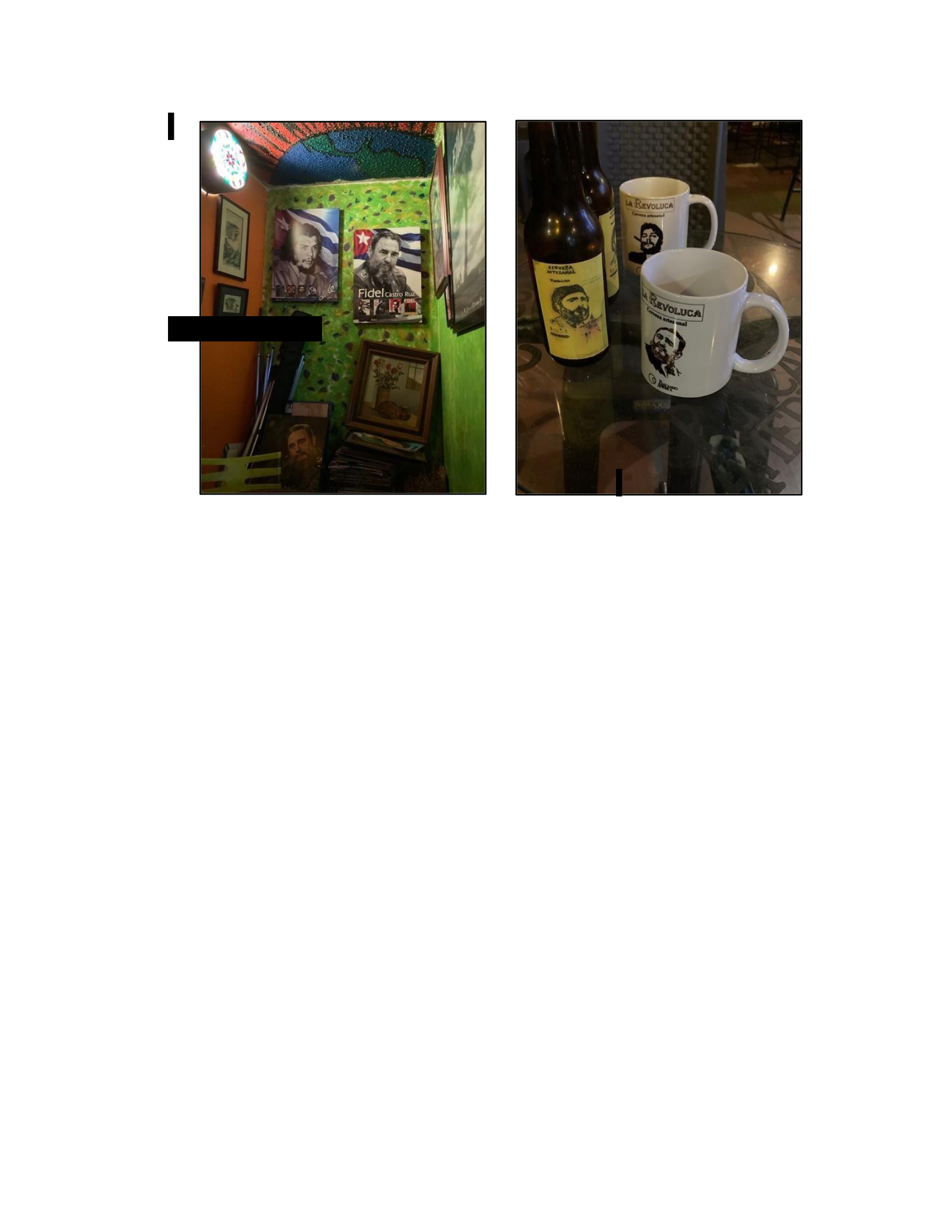
F 15 F 16
Figure 15 and Figure 16: A bar dedicated to Communist revolutionaries. ©
Franziska Albrecht
The emergence of guerilla groups and paramilitaries in Colombia has significantly shaped
the country’s contemporary context. These armed actors have played a central role in the
ongoing conflicts, which have had far-reaching implications for the country’s sociopolitical
landscape, the lived experience of its population and ultimately that of forensic
anthropologists.
*
5.1.3 Intersecting Violence
By the end of the 1970s, cultural historian John Charles Chasteen (2006, 2001, 307) notes,
“the rate of violent death in Colombia began to set world records for a country not at war.
It was in this context of lawlessness that Pablo Escobar pioneered a new business,
smuggling marijuana and then cocaine to the United States.” Until he died in 1993,
Escobar’s notorious Medellín cartel spread terror and corruption throughout Colombia,
particularly in his beloved city (LaRosa and Mejía 2017; Bowden 2001). During

Escobar’s reign, Medellín became known as the “‘murder capital of the world’”
(McFarland Sánchez-Moreno 2018, 2). My informant César noted that in the “‘80s and 90s
[it] was very complicated living in Colombia.” Ana, who accompanied the interview with
César, added, “With the bombs.” I wondered out loud if describing the situation as
complicated would be a significant understatement. Ana responded, “Yeah, normal for us.”
In parallel, as the Cold War drew to a close in the late 1980s and early 1990s, funding from
the former Soviet Union for the FARC-EP, a group inspired by Soviet communism, ceased.
The organisation increasingly relied on entrepreneurial activities like kidnapping,
extortion, drug operations, imposing taxes, and unlawfully acquiring land to sustain itself
(O’Neill Mccleskey 2022; McFarland Sánchez-Moreno 2018; Klobucista and Renwick
2017). Consequently, conflicts arising from leftist ideologies – which focused on achieving
a perceived improved state for marginalised groups – intertwined increasingly with issues
related to land ownership and drug trafficking. The rise of paramilitary organisations, paid
by the wealthy elite and large landowners to safeguard their properties against guerrilla
groups, exacerbated the existing dire circumstances by introducing further violence
(McFarland Sánchez-Moreno 2018; LaRosa and Mejía 2017; Kirk 2003).
The paramilitaries, it has been argued, “were hard to distinguish from death squads for the
military, or private armies for wealthy landowners and drug lords” (McFarland Sánchez-
Moreno 2018, 16). Several paramilitary groups formed a coalition called United Self-
Defence Forces of Colombia (Autodefensas Unidas de Colombia, or AUC), about which it
has been noted that “its mere presence and the ghastly, gruesome massacres it orchestrated
caused reasonable people to question who, in fact, was in charge in Colombia” (LaRosa
and Mejía 2017, 99).
Historians Frank Safford and Marco Palacios (2002) note that toward the end of the 1980s,
a phase of violence began that is marked by a convergence of drug traffickers, guerrillas,
and paramilitaries in different times and places (and which continues to this day). The
authors state, “These are intermixed, in alliance or in conflict, with clientelistic politicians,
cattle-owners, the military, and the police” (347). My Colombian informant Ana told me
that the conflicts and violence in Colombia moved spatially and started to overlap. She

pointed out that over the decades, violence has moved from different areas in the country,
and that when one group would “retire” or dissolve, new groups would emerge to take their
place. Decades of “paramilitarismo” led to more and more killings.
“And the violence etc. moves between those groups,” she told me, noting that various
groups vied for control over different territories, cities, and regions of the country. The
causes of the violence shifted throughout the years too, from fighting for land to fighting
over the control of territory, especially as the narcotráfico or drug traffickers emerged and
began to use violence to control key routes. “I think in the ‘60s, ‘70s, ‘80s, the conflict was
[about] the access to the land, for farmers etc. they [fought] for justice,” Ana told me. “But
the ‘90s was about another thing, about drugs, about something else, so the violence was
just violence. […] It was indiscriminate, they killed [not only] people from another group
but also civilians […]. They know that as dirty war.” With intersecting state, guerrilla and
paramilitary violence, in addition to conflicts related to drug trafficking and land
ownership, violence had become an everyday occurrence in Colombia. Robin Kirk (2003,
177) likened the situation to the common practice of discussing the weather: “Will it be
cloudy today or clear? Will there be a massacre or just bodies along the road?” According
to Gonzalo Sánchez G. (2022), a total of 4,216 massacres were documented in Colombia
between 1958 and 2020. More recently, these incidents have been occurring at a disturbing
frequency, with one massacre happening approximately every three and a half days (Ibid.).
My informant Santiago noted in our Zoom interview that conflicts in Colombia are
contained within specific regions. He contrasted this situation with the ongoing war
between Russia and Ukraine. He put it this way:
In the Ukraine, you can see the war in every place but in Colombia, you don’t see the
conflict in every place. You have to travel to the places. To the outside of the cities,
[to] the rural areas. Especially, in places where [you can find] coco leaves cultivation.
“So, it’s basically like two worlds – the city and the countryside?” I asked.
Santiago agreed with my observation. “Yes!” he exclaimed, “all this violence is for the
drug control.” Santiago highlighted a duality within Colombia – a juxtaposition between
the “normal” Colombia and a Colombia scarred by the illegal drug industry and the
violence it has spawned. He noted:

Don’t think that Colombia [is] like in the films, like in the movies. Like you are going
to see a lot of people shooting, or something, no… or something like that, no.
Because when I talk about the drugs [being] a huge problem is because is a huge
business, the production is in the rural areas. […] So don’t worry about your stay
[…] in Bogotá or something like that. But the thing with the drug trafficking is that
is like if you see two Colombias. Like the normal Colombia [and] the Colombia that
has a lot of production of this… of cocaine.
Despite the conflicts having been pushed back to specific rural areas, Santiago warned me
regarding my upcoming visit to Colombia: “If you go to specific places alone, maybe be
careful […]. It depends on where you are going to travel. Just talk with the other people
and ask them about the safety of the place, if you can go alone, things like that. I mean,
don’t do anything without asking first. [If] you don’t know the place, ask first.
Yes. You will be fine. It’s not too bad. I mean you are not going to be in a very specific
rural area where you have illegal groups or something like that. No. So you will be like in
the normal place of the country.”
Another informant, Colombian forensic anthropologist Sebastián told me in our remote
interview that in Colombia “it’s dangerous depending on where you go.” Although he
comes from the city, there are some areas where he cannot go. Bogotá, he said, “is divided
into North and South.” In the Northern part, wealthier people live that have “good flats and
stuff like that.” In the Southern region, the majority of criminal activities would occur. Yet,
the situation in the city does not seem comparable to the countryside: “But on the other
hand,” Sebastián noted, “you have the rural areas. You know, the countryside. I must tell
you even for me in Colombia for the last year that I have been living here in the city, when
I go out of the city, is horrible. […] The infrastructure is terrible, there are these towns that
still have no pavement. The roads to reach [the places], they are horrible. […] I don’t know
even for me there are some places
[…], there are places in the country where people don’t really go. Like the West side of the
country, people don’t go there. It’s too dangerous.”
Rural areas are increasingly linked with violence compared to the perceived safety of urban
centres. Numerous Colombians have expressed to me that “Bogotá is similar to any other
major city.” However, as suggested by Sebastián, within the city itself, danger and crime

are associated more so with certain areas, with the perception that the North of Bogotá is a
safer area compared to the South. My observations in Bogotá seem to indicate a broader
sense of general insecurity. Upon arriving in Bogotá, one of the initial observations is the
prevalence of gated structures – not only are windows secured by iron bars but also front
courtyards, creating a cage-like appearance. I further observe a significant number of police
officers, patrolling in vehicles, on motorcycles, and on foot. This presence of police appears
to be particularly the case in tourist spots like La Candelaria, and in the Northern zones
like Chapinero, which is deemed a safer area. I also noticed several CAI (Comandos de
Atención Inmediata, Immediate Attention Commandos) spread throughout Bogotá. These
small command centres enable the National Police to be closer to the community and thus,
respond faster to urgent situations.
I mentioned the police presence to my informant Ana, and she noted that in her
neighbourhood in Bogotá, police patrols are not as common. I feel ambiguous about the
over-policing of certain areas, whilst others seem to be under-policed. Should the presence
of so many police officers instil a sense of safety? Or should I feel unsafe because there
must be a reason as to why there are so many officers? Additionally, in Bogotá, detection
dogs are positioned at underground parking entrances, shopping centre entrances, and
soldiers at the military school inspect the undersides of vehicles using telescopic mirrors.
That I was not used to this kind of security measures in everyday life became blatantly
obvious to me on my first day of arrival. Upon entering the upscale Andino Shopping
Centre, I encountered a female security officer with a non-threateninglooking Labrador in
a vest. Before I could walk past her, she said something in Spanish to me and gestured at
the dog. In my naivety and love for puppies, I briefly entertained the idea that she might be
inviting me to pet the dog. I did not react as I was confused about why she would approach
me to pet the dog. “Lo siento,” I said, “no entiendo.” It was only when she gestured at the
dog’s nose and a man from behind me yelled “The bag!” that I understood that she wanted
me to put my backpack in front of the dog for it to sniff.

Later, I saw that the dog had ‘anti-explosive’ written on its vest. In 2017, a bombing
occurred in the Andino Shopping Centre reportedly carried out by individuals associated
with another guerrilla faction, the People’s Revolutionary Movement(Symmes Cobb
2017). In another incident, a bomb detonated at the National Police Academy in 2019,
which was claimed by the guerrilla group Colombia’s National Liberation Army (ELN)
(Orjoux and Said-Moorhouse 2019). Not only rural areas but Colombian cities have
recently experienced violence, with Bogotá being directly targeted.
Further security measures I observed in Bogotá point to more common criminal activity
like seemingly spontaneous body checks by police officers, shoppers having their receipts
and bags inspected by private security upon leaving the grocery store, my Airbnb host
reminding me several times to lock my door behind me the instant I enter the apartment,
private security stationed at apartment buildings, and taxi drivers locking the door and
rolling up the window when in a traffic jam. I realised that during my initial remote research
phase I focused so much on larger national security issues, such as safety issues for forensic
anthropologists in the field, that I did not consider how much safety and security aspects
would already be part of their everyday life. In hindsight, of course, I could not have
known; I only became aware of those issues on-site in Bogotá. It only took me a few days,
however, to become accustomed to the security measures. So much so in fact that I became
suspicious when at the entrance to the archaeological museum there was a metal detector
but no guard, which prompted me to ask a police officer for help.
When I met my informant Ana in Bogotá, who had not been in her hometown for over
a year, she said that those measures of having one’s grocery bags checked were new to her,
too. She sees them as something that is done “ritually, symbolically.” That is, she perceives
these practices as examples of the government trying to perform security and produce a
feeling of safety. Security measures like having dogs inspect bags before entering a
shopping centre that at one time might have been associated with an acute situation of
rupture (e.g. bomb threat) now seem to have become routine in Bogotá. As previously
mentioned, Ana commented that the complex situation in Colombia in regard to violence

is normal for them. In parallel, my North American informant Mike, who has worked in
Latin America, noted about the region:
I mean North Americans, they are accustomed to security, right? But when you live
in societies that are in so many ways precarious – you know just even petty theft, but
it happens, you see it all the time – you have a very different perception of security
and its value. You don’t depend on it; you don’t count on it. So, I think that creates a
different sort of mentality towards threats. I’m sure, I’m certain it does.
*
The potential exposure to certain risks and hazards is not a new issue for forensic
anthropologists. Building upon Alison Galloway and J.J. Snodgrass’s article (1998)
Biological and Chemical Hazards of Forensic Skeletal Analysis, authors Lindsey G.
Roberts, Gretchen R. Dabbs and Jessica R. Spencer (2016a; 2016b) offer an updated
version in a two-part series about hazards (pathogens and chemicals) forensic
anthropologists may encounter when working with human remains (e.g. Tuberculosis and
Smallpox), and in field and laboratory settings (e.g. Tetanus and Lyme disease),
respectively. While it is unquestionably important to be aware of potential dangers in the
form of biological and chemical pathogens, my dissertation emphasises the risks and
dangers originating from the sociopolitical landscape within which forensic practitioners
operate. According to my informant Elena, there was an incident in the Balkans where the
radiologists suddenly started screaming for everyone to evacuate the laboratory
immediately upon discovering a grenade inside a body bag. If the explosive device had
detonated, everyone within a fifty-meter radius would have died. Elena mentioned that they
felt fortunate to have escaped unharmed on that day. My informant Mike recalled an
incident that occurred when he worked for the United Nations in the former Yugoslavia:
There were, you know protests, people were angry, yelling things, throwing things at
your bus. But we always had security, we had military security, police. I remember
one time being out for dinner and there was a guy at the table next to us and he was
just… he had a coffee, and he was crying. And he kept looking at us. And I was with
an investigator and a security guy. And I said to the security guy, I said: ‘You see that
guy?’ ‘No, what?’ ‘He’s been staring at us and he’s crying, and I don’t know, it just

seems a bit odd.’ […] His brother had disappeared during the conflict and yeah…
but he was no threat, right, I mean direct threat. If we had engaged with him, he might
have got pissed off, and thrown a chair at us and who knows, who knows. But that’s
not a real threat because I’m with a security guy who is ex-military. The police are
around.
He stressed: “You can’t compare anything that I have been through with what the Latin
Americans typically deal with.”
*
5.2 “One of the Most Difficult Things in Our Work Is Working
Between that War Scenario.” – Risks Faced by Forensic
Anthropologists in Colombia
Armed conflicts and violence in its many forms continue to this day in Colombia. The
prevailing sociopolitical context of unrest puts forensic anthropologists at risk. Before
meeting Colombian student Ana in Bogotá, we discussed the dangers associated with
working as a forensic anthropologist in Colombia during a Zoom conversation. Ana had
recently completed her Master’s Degree in Forensic Anthropology in Europe. For her, the
greatest risk factor is that they work in a context of unrest. She stated: “I think we made a
step forward with this peace agreement [with FARC-EP] but just a part of the violence, of
the war, stopped, yeah? But in other ways, in other parts in Colombia, we have violence
like that. The violence keeps going. And I think that is one of the most difficult things in
our work, at least in Colombia, is working between that war scenario.”
The working conditions in Colombia present a stark contrast to Peru. Ana put it this way:
“You don’t go like in Peru to find bodies and people in field like… you know. You have to
go in[to] [those] parts of Colombia with conflict. With the huge risk [to] your life.”
Similarly, my informant Santiago noted that “Colombia is kind of a different place because
of the sociopolitical issue but in Peru things are more quiet.” My Peruvian informant Elena
stated that in the early days in Peru, forensic anthropology was a
“dangerous career due to the political context.” She recalled the Japanese Embassy Hostage
Crisis in Lima in 1996. EPAF analysed the human remains of those killed. She mentioned

that there were people who followed the “steps” of individuals who were part of the case
as it has been a high-profile political case, “loaded with stigmatisation.” In other instances,
the telephone of a team member’s family was intercepted, and the house of another team
member was broken into. While they did not take any of the money present in the house
for an upcoming trip, the computer and laptop were taken,
suggesting that the perpetrator(s) were after information rather than money. When I asked
my Peruvian informant Valentina if she thinks that forensic anthropology is still a risky
career in Peru, she responded:
It will depend on which political party is in the government. Right now, no. Because
the political party that is in charge is good with our work. But if the fujimorismo wins
someday, it will be difficult. Because they did pretty terrible stuff and they don’t want
the people to know so they threaten the experts.
Elena stressed that places associated with drug trafficking are particularly dangerous for
forensic investigators. She points to Colombia where, she noted, forensic professionals and
social activists would get killed. My Colombian informant Sebastián was cautioned by
friends about the dangerous conditions in the field in Colombia. They recounted incidents
of shootings and injuries during excavations. One event involved forensic anthropologists
halting their exhumation at night due to being observed from a nearby hill, only to find no
human remains upon returning the next day. Colombian forensic anthropologist José
Vicente Rodríguez Cuenca (2004) highlights the threat of antipersonnel mines to both
civilians and researchers. Recent data reveals that 12,390 individuals were physically or
psychologically affected by explosions between 1990 and October 31, 2023 (Acción contra
Minas Antipersonal 2024).
In Colombia, it is possible for forensic anthropologists to encounter the dangers of direct
physical violence or to have to work in areas where armed conflict is still taking place.
However, they also encounter conflicts in other ways, such as bearing witness to the
anguish of the families, and engaging with perpetrators, who at times disclose the locations
where they hid their victims. Santiago told me:

When I was [working] in the police, we were sometimes […] with the perpetrators
because they were giving us the directions of the burials. Because remember that I
told [you] that there is another law. That is the law of the Peace and Justice Law,
2005. It was the peace agreement between the government and the paramilitaries
groups. So, the perpetrators, if they told the truth they had like a… decrease of the
punishment. That was the reason that we were travelling with them because if they
[…] helped to find the people, the missing people, they get like reduce in punishment.
Working in dangerous areas or working with perpetrators shaped the context of
forensic anthropological work. However, so too did working with the families of
the missing. Santiago put it this way:
So, [working] with the families was very intense. It is you can see the suffering of
the people. How, after many years, […] they can’t know the whereabouts of their
loved ones. Yeah, you can see that. And you are like in the contact with the conflict
because I think in Colombia […], when you are in the cities, you don’t feel too much
the armed conflict. Because this is in the rural areas. In the places where there is the
narco-traffic […]. I mean with the control of everything is by illegal groups, even if
you have like police and things like that, there are… there are not too many, there
are few, so the institutions, the government institutions are not strong. So, the control
is taken by the illegal groups. And they have the money because they have production
of the coke. So, they have the money. So, because I was raised in a city… I mean I
was familiar with the conflict but indirect, indirect contact. So, when I was working
with the families I have the direct contact with the conflict. When I was working or
when I had the opportunity to travel with these […] perpetrators, I was not angry, I
was like sad because they were young. They were very young. And they were people
that […] don’t have any opportunity, so they were in that groups because they had a
job. They were paid for that. Monthly, they were paid. So, I was like they were
victims, too. Yeah, that was the feeling that I had.
Santiago’s experience is reminiscent of my informant Miguel’s statement that forensic
anthropology is not “a science isolated in a bubble.” In a context like that of Colombia,
forensic anthropologists encounter risks that are embedded in the sociopolitical climate
they work in. As noted above, these risks may include coming into direct contact with
perpetrators, and the danger of hidden landmines. But there are additional factors too.
Another key aspect of the complex sociopolitical context in Colombia involves the risks

associated with the institutions that employ forensic anthropologists. The following
sections explore the risks associated with working for the following three institutions: the
Cuerpo Técnico de Investigación of the Attorney General’s Office – a state organisation
with a judicial approach to investigating the missing; Unidad de Búsqueda de Personas
dadas por Desaparecidas – a state institution with a nonjudicial, humanitarian approach;
and the International Committee of the Red Cross – a non-governmental institution with a
humanitarian approach.
*
5.2.1 State Scientists Considered the ‘Enemy’
One of the most principal conflicts is about the fact that we are working for a state
unit.
– my informant Eduardo
“In Colombia,” my informant Mike, who worked in Colombia, noted, “the threat is real not
to NGOs, I don’t think. I mean they need to be careful. Anyone in Colombia needs to be
careful. There are places you don’t go to. Period. It’s not safe. But the real threat in
Colombia,” he stresses the word real, “is [to] the state scientists, I would say.” “How
so?” I asked Mike.
He explained, “So [the guerrilla group] ELN, paramilitary groups, when state scientists
from the Prosecutor’s Office or the Police are doing exhumations, I mean they have to have
security in a lot of places. Like heavy security. That’s what I mean.”
In Colombia, forensic anthropologists are employed by various state institutions, earning
them the title of ‘state scientists’ as described by Mike. I spoke to forensic anthropologists
who worked for CTI at the Attorney General’s Office, the Unidad de Búsqueda, the
Colombian National Police, and the National Institute of Legal Medicine and Forensic
Sciences. The section delves into their perspectives on the risks associated with working

for state institutions, shedding light on their experiences. It further provides a concise
overview of the present scenario concerning guerrilla and paramilitary groups in Colombia.
*
Working for the Attorney General’s CTI
Fiscalía Rima Con Porquería. – Prosecutor’s Office Rhymes with Crap.
– written in red capital letters on the handrails of a footbridge in Bogotá
10 August 2022. A shrill drawn-out sound penetrates my ears and I flinch. Dazed, I cannot
immediately place where the sound came from or what was going on for that matter. I had
just taken a photograph with my phone of the entrance to the Fiscalía General de la Nación
(FGN) – the Office of the Attorney General of the Nation. It houses the Cuerpo Técnico de
Investigación or CTI, its Technical Investigation Unit.
There are two permanent judicial police bodies in Colombia: CTI of the Attorney
General’s Office, and specialised agencies operating under the National Police of Colombia
such as the Dirección de Investigación Criminal e Interpol (DIJIN)
(Castellanos and Chapetón 2023; notes from my informant Hugo). Forensic specialists of
these divisions, my informant forensic anthropologist Hugo, who I met in Bogotá for
coffee, explained, van al terreno; they go into the field to investigate and exhume in a
judicial framework. DIJIN and CTI identify and determine the cause and manner of death,
Hugo noted, but only for skeletonised bodies (also Castellanos and Chapetón 2023).
Eduardo, who works for CTI, told me in our Zoom interview:
CTI solo trabaja con restos óseos. No trabaja con cadáveres, fresh bodies.
¿Cadáveres frescos? No. Solo restos óseos. CTI. Los cuerpos frescos, los cadáveres
frescos los analizar medicina legal – es otra institución.
The Colombian police officer standing at the bottom of the stairs that lead to the main
entrance of the Attorney General’s Office does not take my faux pas lightly. He blows his

whistle as if he had been waiting for the moment a foreign research student would dare to
commit this violation. Rightly so. Later, I will joke to a friend that I was lucky he only
incapacitated me with a whistle and not a gun. In other countries, where aggression seems
to be the default setting for police officers, I most likely would have found myself
pummelled to the ground with more than just a ringing in my ears. Embarrassed and slightly
panicked, I make my way over to him and, babbling on in my limited Spanish, I try to
explain that I am waiting for my friend Eduardo who works here. ‘Lo siento,’ I apologise
profusely, a staple sentence on my research trip to Bogotá. ‘I only wanted to send my friend
a picture of my location because he cannot find me.’ Thankfully, the officer is a good sport
about it, and I am not joined by multiple Colombian police officers to take me on a full tour
of the fiscalía with many questions being asked.
I am flooded with relief when I see Eduardo making his way towards me. He immediately
engulfs me in a big hug. Eduardo and I talked over Zoom a few months earlier and he had
invited me to see his laboratory. I am grateful he made time in his busy schedule to meet
up with me before he heads out into the field again. As we are walking up the stairs to the
main entrance, he asks me what I have in my backpack. Just the usual things, I reply as he
takes the bag off me and slings it onto one of his shoulders. Water, my power bank. In
hindsight, there might have been more to this gesture than him being a gentleman. He might
have wanted to avoid any hassle for me at the security checkpoint.
Just as the hug might have been more than an expression of ‘I am happy to see so you’ but
a public demonstration to our surroundings that we indeed know each other. Whilst as an
employee Eduardo passes quickly through the security checkpoint, I must hand over my
passport number, information about my occupation, my stay in Bogotá as well as a
fingerprint. After going through the metal detector and having a picture taken of me without
my glasses, I receive a green visitor pass which Eduardo clips to my jacket, so it is easily
visible. At the entrance to the building that houses the laboratory, my passport number is
noted once again.
After exiting the elevator, Eduardo leads me into a hallway with a glass wall running
along it. Behind it, I can see some examination tables like you would find in a mortuary.

On some of them, skeletal remains are neatly spread out for analysis. There are also some
tables with microscopes running along the far wall and an X-ray machine. I am used to
seeing this kind of equipment from working with human remains in a biomechanics
laboratory and related visits to a city morgue. What I did not expect, however, is the natural
sunlight flooding the space. Eduardo and I joke about it. Usually, I say, we are banned to
basements. Yes, he agrees, it is because we work with human bones, and people do not want
to see that. It reminded me that forensic anthropologist William M. Bass mentions
the same issue:
Why are crime labs and morgues always in basements? Why not up on the top floor,
with big corner windows looking out across the city or the countryside? Just because
some of us like to look at bodies and bones, that doesn’t mean we wouldn’t appreciate
a nice view out a window every now and then. (in Bass and Jefferson 2003, 176)
The windows that allow a pleasant view of Bogotá’s mountains are fixed shut due to
security concerns. The natural lighting, however, proves beneficial for analytical work on
the skeletal remains, Eduardo adds.
In this laboratory, he continues, a team of three specialists works together to create a
biological profile of human remains: a forensic anthropologist, a forensic odontologist, and
a pathologist. With a medical background, the pathologist can determine the cause and
manner of death. While a forensic anthropologist can aid in establishing the manner and
cause of death, they are unable to do so independently, as this falls under the purview of
the medical examiner or pathologist. Eduardo highlights that although forensic
anthropologists provide age estimations within a time span, forensic odontologists using
dental analysis offer a more precise estimation due to the narrower range. Assessing the
four biological markers sex, age, stature and ancestry, my informant Miguel, who I met
with on the same day I visited Eduardo’s laboratory, noted used to be the “classical role”
of the forensic anthropologist. However, “that role doesn’t exist anymore in the world,”
Miguel added. “More and more the forensic anthropologist works in taphonomy, in

trauma, with the families, expanding the role of forensic anthropology,” he stated. “It was
in the ‘80s [the role] had changed a lot around the world now. Only in some places is still
that role.”
Eduardo’s team examines antemortem, perimortem and postmortem trauma. Trauma
analysis aids in determining the circumstances surrounding the individual’s death and in
establishing the identity of the person. Typically, forensic anthropologists cross-reference
ante-mortem information like medical records (e.g. dental x-rays) with ante-mortem trauma
observed on the remains. However, Eduardo notes that they hardly receive any ante-
mortem data in the form of medical files from the victims’ families. This is because many
victims killed during the conflicts came from rural areas with limited or no access to
medical services. Once a biological profile is created, the data is entered into a database for
matching purposes. It typically takes around two weeks to complete a biological profile,
after which DNA analysis is conducted. Eduardo’s laboratory is conveniently located near
the DNA department, although it appeared vacant when he gave me a tour. My informant
Maurice noted that “people believe that DNA is the solution but is not.” The identification
process, he added, is “more complicated than CSI and other TV shows try to explain [to]
you [in] 45 minutes without advertisements.” Similarly, Miguel noted: “some organisations
promote DNA as a magic thing to solve the cases.” This, for Miguel, is a “common
frustration.” He added: “There is no discipline [that] is 100 percent sure. Also, DNA has
what is called fake positives and fake negatives. […] That’s why the approach has to be an
integration of all the possibilities. But you know with the TV, people think is the magic
solution.”
Close to where we are standing, I can spot a skull cap that shows a black substance on it,
and I ask Eduardo if this is mould. This discolouration, Eduardo tells me, is caused by the
acidity of the soil. Pointing to the only few bones they have of this individual, he explains
that soil acidity is a problem for them as it destroys the skeletal remains. It makes

morphological analysis – and therefore the identification process – more difficult, if not
impossible. Within ten years, he adds, there might be no skeletal remains left.
*
CTI is the Colombian State is the Enemy
At the end of my visit to his laboratory, Eduardo informs me that he will be returning to the
field the following day to search for a group of individuals who have been missing for
years. With no leads on their whereabouts, Eduardo likens the search to “finding a needle
in a haystack.” During our prior Zoom conversation, Eduardo had already mentioned his
work involving the search, recovery and identification of missing individuals, including
victims of armed conflicts. This task entails travelling to suspected locations. The inherent
danger in this work is a significant concern for state scientists like Eduardo. “For the
guerrilla, for the FARC, for the paramilitares, for the […] delincuente […], call them the
bad people, we are government agents,” Eduardo explained. “Doesn’t matter [if] we [are]
anthropologists, medical – doesn’t matter. We are CTI, we are Attorney fiscalía, then we
are enemies for them.” When talking about being an enemy Eduardo made a sweeping
gesture across his forehead as if enemy was written there in bold letters. “So, in different
lugares, in different places,” Eduardo stressed, “we can’t go. We can’t go because in these
places are FARC, paramilitaries, bad people that don’t like the government agents there.”
Similarly, my informant Santiago, who worked for Colombian state institutions, noted that
in “some of places […] they still have like the control or yeah, the control [by] some illegal
groups so if you are in the government institution like the fiscilía or Legal Medicine and
you travel there you are considered like a government
person so you cannot go there. So, the humanitarian because they are humanitarians, they
are neutral so they can go and collect or rescue or recover the body.” Non-governmental
organisations like the International Committee of the Red Cross (ICRC) take a
humanitarian approach in their work. Rather than collecting evidence for prosecution, their
focus is on the recovery and repatriation of human remains to the victims’ families. A key

principle that the ICRC upholds is neutrality. This will be explored in more detail in a later
section of this chapter.
Although many guerrilla and paramilitary forces officially demobilised, not all members
accepted the decommission of their respective groups. When I visited the Centre de
Memoria, Paz y Reconcilialicón in Bogotá, I came across tactical gear worn by a former
guerrilla member. Paper notes in the shape of flowers are now attached to it; the joyful
colours are a stark contrast to what the gear would represent to the victims of FARC-EP.
Gracias por decidir creer en la paz – thanks for deciding to create peace – one of the notes
says. Underneath, the author drew a small peace dove. In 2016, the Colombian government
and FARC-EP signed a historic peace agreement, which saw 13,185 FARC-EP members
listed as demobilised by January 2020, according to the United Nations (2020). As part of
his total peace policy, newly elected President Gustavo Petro, himself a former leftist
guerrilla, not only continues to honour the peace deal with FARC-EP, but he has also
promised to extend peace negotiations to all armed groups (Hege 2022). Although a peace
agreement has not been signed yet, his government resumed peace talks with ELN – a
Marxist-oriented guerrilla group – and a ceasefire began in August 2023, and initially lasted
for six months (Rueda and Suárez 2024). The ceasefire was extended for another six
months in February 2024 (Ibid.). ELN reportedly stands as the largest remaining rebel
organisation in Colombia, boasting around 3,000 combatants (Acosta 2024). However,
armed groups frequently fragment into new factions either during or following the
conclusion of peace negotiations, a situation that frequently
coincides with the reemergence of conflicts (Human Rights Watch 2023; Cárdenas et al.
2022). FARC-EP, it has been reported, fragmented into thirty different splinter groups, also
called dissident groups (Ibid.; McColl 2022).
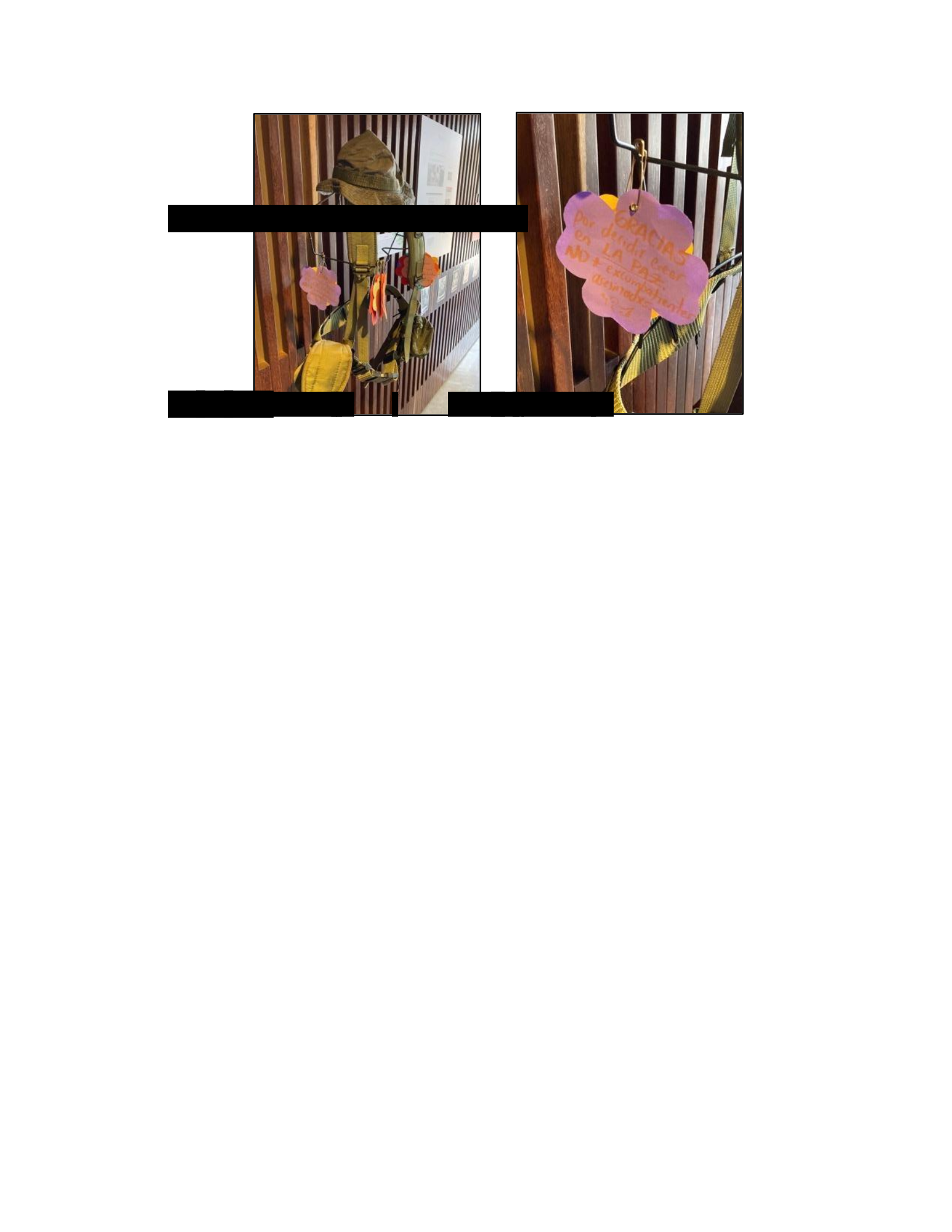
Figure 17 and Figure 18: Military gear with a note saying, “Thanks for
deciding to create peace.”
© Franziska Albrecht
Despite an initial decrease in violence following the peace agreement between the
Colombian government and FARC-EP, it has been contended that soon after new forms of
violence emerged, leading to increased abuses by armed groups in remote areas in
subsequent years. By 2022, levels of violence had risen to a point comparable to those
observed just before the peace process (Human Rights Watch 2023). The rise of newly
established dissident factions has been linked to heightened direct confrontations with other
armed groups like the National Liberation Army (ELN), within dissident factions, and with
the Colombian military. This escalation has resulted in heightened insecurity in certain
communities, marked by enforced confinements preventing residents from leaving, and
forced displacements. Additionally, these factions target advocates against violence such
as social and human rights leaders (Cárdenas et al. 2022). Notably, this violence extends to
investigators from the CTI who investigate the groups’ criminal activities. In 1998, the CTI
succeeded in a significant operation against paramilitarism, described as “the hardest blow
that paramilitarism received in the middle of the process of national consolidation” (Aldana
2021, n.p.). Reportedly, at least fourteen CTI investigators were killed both before and
following that raid (Ibid.). Recently, in 2021, CTI investigator against criminal structures
Mario Fernando Herrera Aparicio was murdered (Buitrago 2021). In 2018, three CTI
F 17
F 18

investigators were murdered: Douglas Dimitry Guerrero, Willington Montenegro
Martínez and Yair Alonso Montenegro (Monsalve Gaviria 2018). Both crimes were
reportedly committed by FARC dissidents (Ibid.; El Pais 2021).
*
As highlighted by my informants, state scientists in Colombia face threats not only from
guerrilla groups but also from paramilitary forces. Political anthropologist Winifred Tate
(2011, 192-193) notes that Colombia not only has a “dizzying array of paramilitary groups
commonly called self-defense forces, warlords, military entrepreneurs, mafias, gangs,
bandits, and so on,” classifying and distinguishing among those groups is a complex feat.
The author further notes that one of the most contentious issues concerning Colombian
paramilitary groups is the extent of their independence from other political and economic
entities as well as their ability to govern “social life as a statelike power” within their
controlled territories (Ibid., 193). These groups seem to have evolved into entities that,
while acting to some degree independent from the Colombian state, are also by extension
with the state – as their relationship with the Colombian military shows.
With the emergence of guerrilla groups in Colombia, the United States was anxious to
obliterate the communist threat in the Global South, but unlike in the case of the Vietnam
War, it did not directly intervene by sending troops to Colombia. Instead, the United States
offered military assistance and training to governments fighting communist uprisings,
urging them to forge alliances with occasionally questionable yet efficient
“civilian irregulars” (Human Rights Watch 1996, n.p.). A report by Human Rights Watch
(1996, n.p.) notes:
For U.S. theorists and practitioners, civilian irregulars were most effective when they
included army reservists, retired officers predisposed to a fierce anticommunism, and
men familiar with local residents, customs, and terrain.
Organized into so-called “self-defense forces,” these civilians would be armed and
trained by the army and provide troops with intelligence and logistical help, like
guides; assist in psychological operations; and even fight alongside regular soldiers.

The Colombian military supported the use of self-defence forces against guerrillas,
allowing these newly formed groups considerable freedom of action, under the excuse of a
shared struggle against a common perceived communist enemy. Declassified records
released by the Colombia Documentation Project in 2005 shed light on the alliance between
the Colombian military and paramilitary groups (Evans 2005). Notably, a series of more
than twelve massacres carried out by the United Self-Defence Forces of
Colombia (AUC) in Norte de Santander in 1999 illustrates the tacit approval from the
military with which the paramilitaries operated. Reports indicate that in many instances,
local military units did not intervene during paramilitary attacks (Ibid.). When asked by
U.S. officials why the military did not intervene in the paramilitary’s actions, Colombian
army Colonel Víctor Hugo Matamoros of the local troop responded,
Look, I have 100 kilometers of oil pipeline to protect, as well as several bridges and
the National Police… Plus, there are guerrillas to fight… If you have so many tasks
to do with so few resources, and you’re faced with two illegal armed groups, one of
which (guerrillas) is shooting at you and the other (paramilitaries) is shooting at
them, you obviously fight the guerrillas first, then worry about paramilitaries. (Ibid.,
n.p.)
Although the paramilitary coalition AUC officially demobilised between 2003 and 2006,
splinter groups persist. Similar to the FARC-EP, the AUC fragmented into over thirty
factions comprising both former and new members. It has been reported that “at least three”
of these factions remain active today (Cárdenas et al. 2022, 4), prompting a Human Rights
Watch report (2010, 18) to label the demobilisation process as “flawed.”
According to Human Rights Watch (2022), successor groups such as the AGC continue to
engage in violations of international humanitarian law and severe human rights abuses,
including killings, disappearances, and sexual violence. Whilst paramilitary groups may
act under the “blessing” of Colombia’s government and its military (Olarte-Sierra and
Castro Bermúdez 2019, 10), CTI has been investigating paramilitarism, including
paramilitary infiltration in state institutions with consequences for its investigators.

Paramilitary coalition AUC threatened, kidnapped and killed CTI prosecutors and
investigators involved in investigating this group; some investigators were forced into exile
(Camillo Posso 2023; Comisión Colombiana de Juristas 2022; Aldana 2021; McFarland
Sánchez-Moreno 2018).
*
Unidad de Búsqueda de Personas dadas por Desaparecidas – A
Hybrid.
The Unidad de Búsqueda de Personas dadas por Desaparecidas (UBPD, Unit for the
Search for Persons Presumed Disappeared), which some of my informants refer to as ‘the
Unit,’ inhabits a hybrid position – it is a state organisation, and it operates under an
extrajudicial, and thus humanitarian paradigm. In 2016, the Colombian government came
to a peace agreement with the guerrilla group FARC-EP, which led to the implementation
of transitional justice mechanisms. My informant Santiago explained:
So, you have the peace agreement and within the peace agreement was created the
Comprehensive System for Peace. So, it is composed by the Commission of the
Truth, the JEP and the Unit for Search People. So, this is the place for the Unit. So,
the Unit is in charge [of] find[ing] all the missing people that are in the context of
the armed conflict. That is the mandate for that Unit.
As noted by Santiago, the Unidad de Búsqueda is one of three bodies operating under
Colombia’s Comprehensive System for Truth, Justice, Reparation, and Non-Repetition
(JEP 2020). The Unidad de Búsqueda’s objective is to lead, organise, and support
humanitarian efforts to search for and find individuals who have been reported missing as
a result of the armed conflict, locating those who are alive. In instances of fatalities, the
goal is to recover, identify, and respectfully return the bodies whenever feasible (Unidad
de Búsqueda de Personas dadas por Desaparecidas 2024). The Unidad de Búsqueda,
Santiago further noted “is just humanitarian,” clarifying that they “don’t collect any
information for any prosecution. They can’t do that.” The institution therefore operates in

a non-judicial context. My Colombian informant Marie stated about the work of the Unidad
de Búsqueda:
They are also a humanitarian institution. Their only job is looking for missing people,
that is the only thing they have to do. They have a time frame. They only go up to
the date of the signature of the peace accords. From 1980 to 2016. After 2016, they
can’t.
Although the Unit does not collect evidence for prosecution, forensic professionals working
for the state institution are considered enemies by association. My informant
Horacio, who works for the ICRC, noted, “one [additional] problem […] for the Unidad de
Búsqueda is that the Unidad de Búsqueda is a state institution. And for the armed group
it’s the state. It’s the Colombian state and the armed groups fight against this state.
And is, is very interesting.” The perceived identity of an institution and its individuals
appears to carry more significance in being viewed as an enemy than the specific approach
it employs, whether humanitarian (non-judicial) or forensic.
Ana, who worked for the Unit, told me that in her experience, not every individual working
for the Unit was aware of the risks. She said: “They thought it is ok if you go anywhere
with the team and work for, I don’t know, two weeks, one week. And if something goes
wrong you [can] leave […], just leave…” She chuckled in disbelief and continued:
‘Oh, is a problem here, we need to go back home.’ Is not that easy, is not that easy.
And that’s the reason why so many Colombians, at least, don’t choose this career,
[…] because it’s so risky, you know. Yeah, this is so difficult for us and Peru, for
example, was another thing. It completely stopped. We don’t.
Ana again highlighted the differing contexts of Colombia and Peru in which forensic
anthropologists work. Whereas in Colombia, the armed conflict is still on-going, Peru’s
internal armed conflict is generally considered to be over. It needs to be mentioned,
however, that at the time of writing, Peru was engulfed in political turmoil that caused
violent protests and citizens getting killed. The British daily newspaper The Guardian
describes it as “a flashback to a past many hoped they had left behind” (Collyns 2022, n.p.).
One witness likened what was happening right now to the armed conflict with the

Shining Path: “It was like reliving all that happened in the ‘80s and ‘90s, to be under the
overflying helicopters and the sound of shooting. […] It shows that we haven’t learned
anything, we keep making the same mistakes. […] In the ‘80s and ‘90s we lived in a
constant state of emergency which meant there were systematic violations of human rights”
(Ibid.).
I asked Ana which institution in Colombia she would like to work for. Her response
highlights the heightened risks for forensic anthropologists working for institutions that
follow a forensic, judicial approach. She told me: “I would like to work with those
organisations like EQUITAS or something like that. Or with the Unit. […] With fiscalía or
Police, no. I don’t want to. I prefer to work in the humanitarian field.”
“Why?” I asked. “Do you think that working for the Unit or the Police is more
dangerous?”
Ana replied: “With the Unit, no. But with the Police… yeah, I have some friends that
used to work for the Police. Or fiscalía.” She told me that if some people in the Unit do not
understand the risks, the situation is worse in the Police: “They don’t understand at all.”
She continued, telling me that it can be difficult to explain but that the type of work you do
as a forensic anthropologist makes an important difference. She put it this way:
“Maybe you can say the humanitarian work, you can move a little more free in our country.
But in your team, you go with police, with military, it will be a little bit more dangerous.
Because some armed groups are, you know, in those parts, in cities etc., it will be more
risky, I think.”
Although Ana noted that engaging in “humanitarian work” may afford some degree of
freedom of movement within the country, the Integral System for Truth, Justice,
Reparation, and Non-Repetition, which the Unidad de Búsqueda and JEP are part of, has
faced attacks and intimidation, raising concerns about the safety of its officials and the
challenges they encounter in their work. In December 2023, JEP’s official YouTube
channel got hacked and all videos including recordings of JEP tribunals were deleted

(López 2023). In February 2022, JEP recordings, featuring interviews with the captured
leader of the Gulf Clan drug trafficking group, Dairo Úsuga David, were stolen, potentially
leading to the loss of information regarding events from the armed conflict (Jurisdicción
Especial para la Paz 2022; Unidad de Búsqueda de Personas dadas por Desaparecidas
2022a). In an incident in August 2021, near the Venezuelan border in Saravena, Arauca,
armed individuals approached an employee of UBPD and a driver, intimidating them to
hand over a vehicle marked with the UBPD emblem (Semana 2021). The attacks on
investigators of CTI and the Unidad de Búsqueda highlight the risks involved in the search
for missing persons in the sociopolitical environment of Colombia and the importance of
protecting those involved in this crucial task. Within this sociopolitical context, another
actor navigates through the violence – the International Commission of the Red Cross
(ICRC). The ICRC is both, a non-governmental institution and operating under a
humanitarian, extrajudicial framework.
*
5.2.2 The International Committee of the Red Cross – Protection
Through Principles?
There are places [in Colombia where] the government can’t go. So, they need the
help of the humanitarian institutions like the ICRC.
– my informant Santiago
The last section outlined that the perception by armed groups of forensic scientists
embodying the state makes them enemies by association. This prompts the question of
whether working for an independent institution such as the International Committee of the
Red Cross (ICRC) carries fewer risks. As will be shown, the response is not a
straightforward yes or no. My informant Horacio, who works for the ICRC, noted that it
“is very interesting to try to imagine the work in the Colombian jungle with the ICRC and
the armed groups.” Safety depends on a multitude of intersecting factors and is never a

certainty. This section will concentrate on the aspects highlighted by my informants in the
context of Colombia.
*
“After the 2016 […] peace agreement,” my informant Miguel stated, “the FARC start[ed]
[to] create a unit to provide information to the ICRC to collect bodies. But those are
nonjudicial recoveries, are humanitarian so ICRC recover the body and they send the body
to the Medicolegal Institute.” The International Committee of the Red Cross (ICRC) and
the Unidad de Búsqueda both operate under a humanitarian approach. However, the ICRC
holds a special role as it can operate in territories that its Colombian state institutions
counterpart cannot. My informant Mike, a forensic anthropologist who works for the ICRC,
explained:
There are a lot of areas that are controlled by armed groups so in theory, sure the
government could go in with the army, but they are really risking people’s lives by
doing that. So, it’s a bit unreasonable to expect the government to risk lives to recover
the dead. And they do it. To be clear. I mean some of the forensic colleagues there
tell awful stories about doing exhumations under gunfire. Like it’s really ridiculous.
[…] Everything they [the ICRC] do is confidential […] so if an armed group, let’s
say the ELN says ‘there is a body here of somebody we killed and they are buried
here and you can…,’ and we’ll ask them, we say ‘hey, can we get the body so that it
can be ID’d and returned to the family?’ and they’ll say ‘yeah, ok, whatever.’ Most
often they don’t care. They say, you know, ‘no problem.’ So, we can get access
because we don’t pose a threat to them. But when we’re doing that, we do an
exhumation, we hand the body over to the authorities to be identified but we don’t
give them any contextual information.
I will provide more detailed information below about how the (ICRC) gains access to
controlled territories.
In its mission statement, the International Committee of the Red Cross describes itself as
an:
impartial, neutral and independent organization whose exclusively humanitarian
mission is to protect the lives and dignity of victims of armed conflict and other

situations of violence and to provide them with assistance. The ICRC also
endeavours to prevent suffering by promoting and strengthening humanitarian law
and universal humanitarian principles. Established in 1863, the ICRC is at the origin
of the Geneva Conventions and the International Red Cross and Red Crescent
Movement. It directs and coordinates the international activities conducted by the
Movement in armed conflicts and other situations of violence.
(International Committee of the Red Cross (a) n.d., n.p.)
With its mission being exclusively humanitarian, Shuala M. Drawdy and Cheryl
Katzmarzyk (2016, 64) note, that the institution’s focus is on the “the victims and their
families, rather than judicial investigations.” The authors emphasise the benefit of the
ICRC’s humanitarian approach paired with its inclusive view of missing persons. Drawdy
and Katzmarzyk (2016) assess that adopting this method would allow for a comprehensible
response to the numerous missing individuals globally, encompassing instances such as the
disappearance of individuals in Colombia. According to the ICRC’s official webpage,
Colombia belongs to the ICRC’s twenty-four areas of key operations (International
Committee of the Red Cross (b) n.d.). it has been in the country for over five decades, as
my informants noted.
The ICRC operates under seven fundamental principles: impartiality, neutrality,
independence, humanity, voluntary service, unity and universality (International
Committee of the Red Cross 2023). It appears the ICRC’s ability to assist individuals in
distress in conflict zones is facilitated by adherence to the first three principles, a shared
belief in these principles among ICRC staff and armed groups alike, and consistent action
based on these principles. As the renowned expert in the fields of international relations
and global governance, Thomas Weiss (2013, 12), explains: “If aid agencies are perceived
by combatants as partial, allied with the opposing side, or having vested interest in the
outcome, they have a difficult time getting access; or even worse, they may become targets
[…]. Operating according to these principles and being perceived as
apolitical are particularly important during times of armed conflict.” In the case of
Colombia, these principles allow forensic anthropologists access to the missing in occupied
and contested regions. Lorenzo Caraffi (2023, n.p.), head of the ICRC delegation in

Colombia, notes: “For more than 50 years, our neutrality, impartiality, and independence
have enabled us to fulfil our humanitarian role in the most conflictaffected areas of
Colombia.” Regarding the principle of neutrality, anthropologist Peter Redfield (2011, 66)
states: “The classic Red Cross adherence to neutrality traded public silence for operational
access and cast its moral appeal at the level of formal agreements and long-term influence.
Its aura of moral authenticity thus relied on consistent adherence to principle and
recognition by political powers.” In parallel, Caraffi (2023, n.p.) finds that neutrality “is
not only a moral stance.” Rather, it is a “humanitarian and pragmatic one, which enables
us to speak with weapon bearers and have access to communities in need. Neutrality means
we cannot take sides in a conflict, but we can take action to help its victims. It allows us to
cross front lines to provide humanitarian assistance that saves lives” (Ibid.).
Neutrality is considered so crucial that employees are expected to uphold it even in their
personal lives. I asked my informant Santiago, who worked as a forensic anthropologist for
Colombian state institutions and the ICRC, whether ICRC’s public image of neutrality has
any effect on how he must behave as an employee. He replied:
Yes, because I have to be neutral so I couldn’t be any position. Like take any position,
any political or social position so I have to be very, very neutral. Especially in my
work and even after my work. Because I was representing that institution so… it was
kind of… I mean it was not difficult to me because I am apolitical. I don’t know if
that’s a word in English. I mean I don’t like any politics.
So, I don’t make any opinions in social media or something like that. So, for me was
like fine. But it was kind of difficult too because in this institution you can see the
things outside of the government, [you] can identify the issues of the government,
especially in forensics. I am talking about forensics. So, it was like a little bit difficult
for me to have a position of neutrality because you are seeing the issues [and] you
want to act. But you cannot do that, that’s not the way to act. You have to act in a
different way. So, it was like… at the beginning but after that I was completely
adapted.
Maintaining a neutral position in ICRC’s operations not only facilitates access but also
impacts safety concerns. The Security and Safety Manual of the ICRC (2021, 12 and 58)
urges its members “to think about what you publish on social media” and to “sanitize your
online identity” as it can affect their safety. The manual explains in this regard:

“Some threats are visible, others less so. In our increasingly connected world, the image
you project online can affect your security. Expressing your personal opinions may offend
those who don’t share them. Advertising the details of your private life may tarnish the
image of the organization. And any information you share online is liable to be used by
others, against you or the ICRC. So, before you publish anything, ask yourself whether it
could cause problems later” (Ibid.).
In Bogotá, I met with forensic anthropologist Hugo, who works for the ICRC, at a coffee
shop by the Chile Shopping Centre. I was nervous because it was my first interview in
person for my research project. So much so that I had difficulty falling asleep the night
before and on my way to the interview, I discovered that I had forgotten to remove a sticker
from my new jeans before leaving my apartment. As we drink our Juan Valdez coffee, Hugo
highlighted a further aspect that is of utmost importance in ICRC’s work. When I informed
Hugo that a source from CTI had indicated that CTI and its employees are viewed as
adversaries by armed groups, Hugo responded that while there is a risk for CTI, the same
level of danger does not apply to forensic scientists working for the ICRC. That is because,
he told me, “en el contexto colombiano, nosotros tenemos una muy buena relación con
todos, los actores armados y […] con las familias.” In Colombia, they have a very good
relationship with the armed actors and the families. Hugo added that “nuestro dialogo es
confidencial.” The contents of the conversations with the armed groups or families are not
shared with anyone else by them. The ICRC’s Security and Safety Manual (2021, 47) notes
in this regard: “The authorities are not allowed to use confidential ICRC information in
judicial or administrative procedures.” This confidentiality, Hugo said, is “una gran
ventaja” – a great advantage. The ICRC’s mode of operation emphasises confidentiality.
This principle, it might be argued, furthers a good relationship with armed groups as the
latter do not have to fear that anything they disclose could lead to prosecution. One could
contend that fostering positive relationships through a humanitarian mission approach,
which stands in contrast to CTI’s judicial mandate, provides a level of protection for ICRC
members and enables them to reach areas inaccessible to other teams.

The process of gaining access, however, can still prove complicated as my informant
Horacio, who works for the ICRC, told me in our remote interview. He noted that there is
a difference between finding a missing person “in a country at peace” and in a country in
continuous conflict. The latter scenario complicates the recovery of human remains,
sometimes even making it impossible because the presence of multiple armed groups needs
to be navigated. Horacio stated:
[In Colombia], we have five, at least, at least five internal armed conflicts in the
country with different armed groups. For example, I work for the ICRC, if I want to
find a missing person and try to do a humanitarian recovery of human remains in x
area, I need […] the green light of all the armed groups in the area. Without the green
light, I cannot enter to the territory. And this is [to] try to do humanitarian dialogue
with the groups, sometimes we can’t find them, sometimes they deny the access.
Maybe for one human remains we [are] working three, four, six months early, and
it’s impossible.
I wanted to find out more about what ‘getting the green light’ entails so I asked: “I don’t
know if you are allowed to say this but when you say ‘you can get the green light from an
armed group’ is that just a telephone call or do they sign something? How does that work?”
Horacio laughed. “Sometimes WhatsApp,” he replied. I thought I must have misheard
him. He continued: “Sometimes but is not the regular way. The regular way is talking with
the High Commands. […] We don’t have [to] sign something. Only we say to the High
Commander ‘Ok, we are going to this point for a humanitarian mission, for recovery [of]
human remains, please inform to your troops we are in this zone in this day.’ ‘Ok, no
problem.’ They inform and we are going to the grave site to the area, we don’t see the troop
because the troop is not there because the High Commander do the order. Say the order and
[we] don’t have a problem.” Communication primarily occurs verbally and only sometimes
on WhatsApp. “But the WhatsApp in the jungle,” Horacio continued, “is not working
always and [then] we need to go to the jungle and try to find them and try to get an
appointment.” He acknowledged that it “is crazy, it really is crazy. But in other cases, this
in the 95 percent of the cases, we have the green light. Sometimes we don’t have green
light for example, they are messing with us and say this zone ‘we are putting mines, anti-
personal mines, is better that you don’t go into this area.’ And we [say], ‘Ok, is a red light.
We don’t go in there. No problem.’ Or when they are [doing] tactical military operation [to]

attack another armed group or to attack to the Colombian armed forces, ok, no we can’t do
this. ‘You are a red light, is impossible. We need military priority’ or something like that
and we don’t go on this date. Maybe they say, ‘Don’t go in three months. Five, four, five
months you can go. But not now.’ Everything is [done verbally]. No form, no document.”
As Horacio was frank about the situation, I allowed myself to be direct, too. “I just can’t
imagine it,” I said, “Sorry, it sounds crazy to me.”
Horacio laughed again, “Is very interesting because Colombia is crazy. I don’t know. I
don’t know how to describe the situation here.”
Horacio pointed out that the Unidad de Búsqueda encounters difficulties accessing specific
regions, especially due to being a state entity viewed as adversarial by armed groups.
Consequently, the Unit aims to emphasise its humanitarian focus when engaging with
armed groups. Horacio told me that the Unidad de Búsqueda has been trying to emphasise
their humanitarian, extrajudicial objective to make it easier to work in areas controlled by
armed groups. “Sometimes,” he said, “it’s received in a good way [by] the armed [groups].”
Still, being able to access territories controlled by armed groups is not just due to ICRC’s
approach, but also to the long operational history. The Unidad de Búsqueda is still a young
organisation, as it only started officially operating in August 2017 (Barometer Initiative,
Peace Accords Matrix, Kroc Institute for International Peace Studies 2018). By contrast,
the ICRC has worked in Colombia for more than fifty years, which means that it has been
able to successfully demonstrate its commitment to its principles and non-judicial methods
to armed groups. This involves maintaining ongoing communication at all levels, as
highlighted by Horacio. He elaborated:
Yeah, we have this advantage, we can access to war territories in the country. But we
can do that now because ICRC have worked here in the country for fifty years and
for fifty years the humanitarian dialogue is very continuous, is very frequently with
the armed groups. We have humanitarian dialogue with all levels of the armed groups
in military structure from command to [inaudible] soldiers. And we are working in
the humanitarian mandate for example for evacuated injured soldier from the armed
groups as well. We do workshop in the management of the dead with the armed
groups, for like troops. And the dialogue is very continuous. But is a work from fifty
years, and now we can access to all the territory but in this neutral and independent
and only for humanitarian purpose but is a work intensive for many many years ago.

But Unidad de Búsqueda is a new institution. It’s only working in the territory from
3, 4 years ago.
Yet even the ICRC’s reputation for and adherence to neutrality does not always ensure
safety. A former UNHCR official notes on the general safety situation of humanitarian
workers: “The simple truth is that humanitarian workers are no longer, if they ever were,
shielded from violence and attacks of various forms by the mere fact of being in the
humanitarian field. Quite the contrary […] they are now sometimes deliberately targeted
because they are humanitarians” (in Weiss 2013, 78). In early November 2023, an ICRC
convoy “came under fire” in Gaza City. A public statement by ICRC stipulates: “The ICRC
reminds the parties of their obligation under international humanitarian law to respect and
protect humanitarian workers at all times” (International Committee of the Red Cross (c)
n.d., n.p.).
The ICRC recognises that complete safety cannot be guaranteed in the diverse operational
environments they work in. Their Security and Safety Manual (2021, 19) notes: “The
complex and often unpredictable environments in which you will work mean that you’ll
never be totally safe. As a humanitarian professional, you must therefore be cautious and
be prepared to challenge yourself.” The ICRC addresses the question of whether attacks on
ICRC members are increasing. The institution notes: While the
“concerns underlying such questions are justified, […] the analyses available reveal a more
nuanced situation and don’t provide a clear “yes” or “no” (Ibid.). The ICRC manual
indicates that there has been no significant global increase in the number of humanitarians
killed, injured, or abducted over the past fifteen years. Additionally, most severe incidents
have been concentrated in a few specific regions, as highlighted in the 2020 Aid Worker
Security Report (Ibid.). The ICRC’s manual acknowledges that regardless of what the
statistics may indicate, humanitarian organisations are
encountering a concerning lack of safety, particularly in specific operational areas. The
convergence of criminal organisations and armed factions, the ICRC notes, along with the
disregard for International Humanitarian Law by both governmental and nongovernmental
entities, is leading to intentional assaults on humanitarian workers. While not a new issue,

this trend appears to be escalating in certain nations. Although the ICRC recognises that in
the past twenty-five years, several of its staff members have lost their lives in attacks aimed
at the organisation or after being kidnapped, the manual does not specify exact figures. In
1996, ICRC workers in Colombia were attacked by a division of FARC-EP – the Tenth
Front – which has been labelled as “one of the most active elements of the ex-FARC Mafia”
(InSight Crime 2022b, n.p.). Writing about the attack, Human Rights Watch (1998)
reported that members of the guerrilla group opened fire on a car belonging to the ICRC
(bearing its emblem), hitting its tyres and fuel tank. Reportedly, the present ICRC delegate
was told not to report the incident and then forced to draw up a handwritten letter to the
Tenth Front commander promising not to issue a complaint (Ibid.; Redacción El Tiempo
1996). Human Rights Watch (1998, n.p.) denounced this incident, calling it “a serious
violation of the protection guaranteed vehicles marked with the red cross, the
internationally recognized symbol of protection granted to medical and religious personnel,
medical units, and medical transports,” deeming ICRC vehicles as untouchable. Regarding
its emblems, ICRC’s webpage states: “The red cross, red crescent and red crystal emblems
provide protection for military medical services and relief workers in armed conflicts”
(International Committee of the Red Cross 2015, n.p.). The red cross on a white
background, as a symbolic representation, is closely associated with the ICRC and plays a
crucial protective function. The organisation states:
In armed conflicts, the protective emblem must be in red on a white background with
no additions. It must be clearly displayed in a large format on protected buildings,
such as hospitals, and vehicles. Emblems on armbands and vests for
protected personnel must also be clear and stand alone. A deliberate attack on a
person, equipment or a building carrying a protective emblem is a war crime under
international law. (Ibid., emphasis added)
“Yeah, we have the emblema,” Horacio pointed out. “In all the cars, we have flags, and we
have a little shield [with the emblema on] the back and the front. And is visible wherever
you want. [When] we are sleeping in the jungle in the community, we need to put up a big,
big flag for the armed groups to identify ‘this is ICRC, don’t touch it.’” Horacio chuckled.
The protection the emblem and its associated principles provide can be fragile. While

attacks on ICRC workers in Colombia have been rare, especially in the last twenty years,
they remain a possibility. The Aid Worker Security Database ((b) n.d.) reports nineteen aid
workers who fell victim to physical assaults, including kidnappings, in Colombia between
1999 and 2023. This includes one ICRC international staff member of British nationality
who was kidnapped on November 10, 1999, and released unharmed four days later. As in
most of the nineteen cases, the actor who committed the crime remains unknown.
*
State Effects
In conclusion, it can be noted that there are various ways of thinking about the state – as a
wide array of institutions and individuals therein, as a monolithic entity, and as “a set of
practices and processes and the effects they produce” (Trouillot 2003, 89). As outlined, the
CTI of the Attorney General’s Offices investigates crimes committed by paramilitary
groups. The efforts by the Attorney General’s Office to investigate paramilitarism
infiltrating state institutions appear to contrast with President Petro’s approach towards
paramilitaries, which has been labelled the “politics of love” (Hristov and Camilo Arias
2023, 55). Alison Mountz (2003, 633; Gupta 1995) notes, “the state is often misconceived
as a unified, homogeneous category.” However, in the case of Colombia, it might be better
to think of the state as “a set of institutions operating at different levels across disparate
geographies, comprised of individuals working within diverse mandates and frameworks”
(Ibid.). Viewing the state as made up of various institutions and actors rather than as a
monolithic entity, it is not incongruous for Colombian paramilitaries to view the military,
a state institution, as an ally, while perceiving investigators from the
Attorney General’s Office, another state entity, as adversaries. In parallel, Michel-Rolph
Trouillot (2003, 80; Aretxaga 2003) suggests that “the state has no institutional or
geographical fixity” but becomes recognisable through “state effects.” Conversely,
nonstate actors can assume state-like roles and generate impactful state effects (Aretxaga
2003; Trouillot 2003). This phenomenon is evident in instances where Colombian
paramilitary groups are observed to wield authority akin to the national government, and,

as noted, govern “social life as a statelike power” within their controlled territories (Tate
2011, 193).
For some families of the missing, and armed groups, as pointed out by my informants,
forensic practitioners are the state because of the work that they do. Firstly, some forensic
anthropologists work for state institutions and are therefore perceived as the state. As noted
by my informants, CTI and the Unidad de Búsqueda are considered the state by for
guerrillas and paramilitaries, and therefore regarded as the enemy. Secondly, regardless of
where or how they are located, it might be argued that forensic anthropologists are
perceived as the state because the knowledge they produce is part of the larger project of
the state to investigate violence, and that might make them the target of violence, as
exemplified by the attacks on CTI workers. The inclusion of soldiers or police for
protection in the field further solidifies this type of forensic work as government related.
When I asked Eduardo, who works for CTI of the Attorney
General’s Office, how they protect themselves when going into the field, he exhaled
audibly. “In different occasions we are with army, with soldiers, and police men, people
that [accompany] us,” he noted. “They care for us, and they surround the site, around the
place that we are working [in]. […] We are not working alone in places that we have
presence of FARC, paramilitaries, guerrillas. We don’t work alone. We always go with
company of army and police people.” While being ‘with’ the army and the police might
provide some measure of protection, it could also be seen – by families and armed groups
– as involving forensic anthropologists in the longer history of the state’s involvement in
the violence, and its ambiguous relation to other armed actors.
In contrast, the International Committee of the Red Cross relies on adherence to its principle
and operational instrument neutrality and a good relationship with the armed groups, built
within fifty years, and its emblem for protection. The organisation works independently
from the Colombian state. Yet, the ICRC enters territories state agents cannot, thereby
doing work for the state. In some instances, my informant Eduardo noted,
“the Red Cross, ONGs people do this work for us [of entering the territory and retrieving
the human remains] and we do the rest of the process, in the lab with the medicolegal

process, with attorney, with all the things. And we make the identification of the body and
give the body to the family and the family is complacida con el procesa. La familia está
acuerdo en que se hará de esa manera because the family wants to recover the body and
the state makes the medicolegal process. It’s a mix, it’s mixed work between government
and humanitarian groups.” And then he added that the guerilla and paramilitary groups do
not see people like me, that is, foreigners, as enemies. They do not treat “NGO people” like
enemies. This is because they understand foreigners and NGO teams to be doing
humanitarian forensic anthropological work, and thus to not be part of the state (and its
associated legal processes). In the context of forensic anthropological work in Colombia,
then, “humanitarian” or NGO can signal “non-state.” By contrast, Eduardo notes that the
armed groups see Colombia forensic practitioners, especially those working for state
agencies, as a threat. “It’s difficult to think they look at you like the enemy,” he said. “They
look at us like enemies.”
However, it is not just the (real or perceived) association with the state or the government,
that is an issue. It is also the kind of forensic anthropological work (for prosecution) and
the information drawn from evidence the state seeks to produce that is of concern for the
armed groups. The next section thus explores the matter of the knowledge forensic
anthropologists possess and produce in more detail. In Latin
America, this knowledge may put them at risk as it unveils crimes committed by guerrillas,
paramilitaries, and the state.
*
5.3 Unwanted Witnesses – The Danger of Knowing
In Latin America, individuals who possess knowledge about atrocities committed, such as
activists, journalists, and forensic scientists, may find their safety compromised. A key
pattern that runs through Latin America’s contemporary history. Journalist John Simpson
(1993, 13) notes about the Shining Path era in Peru in 1992: “It was a seriously dangerous
place. Journalists who dug too deeply into the activities either of the Shining Path guerrilla

movement or the Peruvian Army frequently ended up dying by the roadside. More of them
have died in Peru than in any of the wars which have taken place since Vietnam, the war in
what was Yugoslavia included.” Exploring the experiences of journalists in contemporary
Mexico, Argentina and Colombia, Gabriela Polit Dueñas
(2019, 3) notes that “when it comes to reporting on local violence, no one is safe in
Mexico.” Mexican journalist Javier Valdez Cárdenas, who reported on drug cartels, is
quoted as saying: “We may be scared, but we won’t stop publishing about this human
tragedy” (Lauría 2017, n.p.). In 2017, Valdez Cárdenas was fatally shot near the building
that housed the newspaper he helped establish (Faidell 2017). Journalists, Polit Dueñas
(2019, 120, emphasis added) holds, “are witnessing truths that those in power are
withholding from us, and they are seeking truth in spite of the dangers and the risks
necessarily implied in that search. They have become the unwanted witnesses.”
This section concentrates on the fact that through the knowledge they produce, forensic
anthropologists interfere with the perpetrators’ intention of hiding the committed atrocities.
This ultimately puts forensic anthropologists at risk. They too become unwanted witnesses.
For as long as there have been forensic anthropology teams in Latin America, they have
encountered threats. During the 1980s, Clyde Snow and his team of young volunteers faced
death threats as they initiated the first forensic anthropological investigations in Argentina.
Despite the threats, Snow approached the situation with a touch of dark humour. He is
quoted as stating: “Yeah, death threats are so common down here they ought to set up hours
of the day when calls will be taken. […] ‘Sorry, we don’t take death threats except between
the hours of ten o’clock and two o’clock. You’ll have to call back later.’” (Joyce and Stover
1991, 297-298). Despite having police officers present for protection, they could not be
trusted. During a 1985 exhumation in Buenos Aires, a team member heard one police
officer say to another: “‘If we had done the job right in the first place, these people wouldn’t
have anything to dig up.’” (Ibid., 298). Threats against forensic anthropologists have
persisted. In 2011, Amnesty International reported that Fredy Peccerelli, founder of the
Guatemalan Forensic Anthropology Foundation (Fundación de Antropología Forense de
Guatemala, FAFG) and three of his colleagues had received death threats. They received
these threats after testifying as expert witnesses in a high-profile human rights violation

case. The case involved the Guatemalan army acting as the aggressor, resulting in the
deaths of 250 villagers in 1982 (Amnesty International 2011).
For my informant Elena, Mexico is “another quite complicated place to work because of
the corruption, the system is part of that so it’s complicated, too.” On April 6, 2023,
Mexican forensic anthropologist Juan Carlos Tercero Aley (got) disappeared (Cruz 2023;
Lopez 2023). Mike also brought up Mexico, informing me that a member of the Argentine
Forensic Anthropology team has been monitored in Mexico recently. “So, it turns out,” he
said, “that state services have been monitoring with legislation that was designed to monitor
narco traffickers. But they are monitoring, you know, a lawyer, a journalist, [a member]
from the Argentine team. So there always exists a degree of security risk for NGO people,
but state scientists it’s like ‘you’re told you’re not investigating that!’ ‘Ok.’ You have no
choice, right? You want to keep your job.” Although Mike has worked in Iraq and
Colombia, two places deemed dangerous for forensic professionals, he does not want to
work in Mexico. He stated: “There was a possibility for me when I was leaving Colombia
to go and work in Mexico and I just said ‘no, Mexico scares me.’ It’s… yeah… I don’t
know. It’s… really… it scares me. You
don’t know who to trust. But anyway, I think [the Argentine team member] will be fine.
There’s enough attention around this that I’m sure [they] will be fine. I say sure, I’m not
sure. But I think so. […] The government is watching, and the government is being
watched. There is so much distrust.”
*
The knowledge produced by forensic anthropologists could endanger them, as it entails
revealing information that guerrilla and paramilitary groups, as well as state actors, prefer
to conceal. It has been noted that forensic anthropological investigations have the “capacity
to unmask terrible truths” as “they can detect patterns concerning burials, criminal
behaviour, and other data that is helpful for the identification of victims and aggressors”
alike (Buriano Castro 2020, 34). This includes being able to discern trauma patterns and
making statements as to the circumstances in which the victim died.

A research study by María Fernanda Olarte-Sierra and Jaime Enrique Castro
Bermúdez (2019, 11) revealed that forensic anthropologists of the Attorney General’s
Office in Colombia identified a “systematic method of burial” regarding killings committed
by paramilitaries. This method was characterised by the following “primary features: 1)
they were bodies buried in shallow graves (sometimes individual, sometimes multiple), 2)
by the side of the road, 3) folded in half or dismembered, 4) often
(semi)naked” (Ibid.). Examples of contempt which go beyond the act of killing shown by
paramilitaries towards the victims include burying the bodies “tied at the hands and feet”
and positioning them “in obscene, sexual positions” (Ibid.). Thus, the forensic
anthropological investigations uncovered necroviolence, a phenomenon described by
anthropologist Jason De León (2015, 69) as “violence performed and produced through the
specific treatment of corpses that is perceived to be offensive, sacrilegious, or inhumane
by the perpetrator, the victim (and her or his cultural group), or both.” This includes
physical mistreatment or disappearance of the body. The latter not only hinders a respectful
burial for the deceased but also provides those committing violence with a way to deny
responsibility (Ibid.). I will return to the complexities of uncovering and documenting
necroviolence and other forms of violence, and the question of how my informants
rationalise what they witness in the following chapter. Here, I want to emphasise that the
kind of information that forensic anthropologists produce can itself put them at risk. The
risk comes from guerrillas and paramilitaries. Being considered as being part of the state
may put them at risk from those fighting against the state (guerrillas) as well as from
organisations that might be said to be part of the assemblage of the state (like
paramilitaries). However, the danger might also come from within the state, as exemplified
by an incident involving a forensic pathologist in Honduras.
The state not only engages in violence when committing crimes, but also by interfering
with investigative processes to conceal these crimes and engaging in threatening behaviour.
My informant Mike highlighted the risk encountered by forensic scientists when using the
knowledge they possess and the knowledge they produce to confront state perpetrators.
“The risk for state scientists in Latin America is of political ingérence,” Mike stated. “The
term exists in English, it’s the same word but I don’t know how to pronounce it in English.

Interference, let’s say. So political interference. So, there’s a case that’s sensitive because
maybe the police or the army was involved and forensic science services are told ‘We are
not investigating that,’ right?” Interference pushes state actors and forensic scientists into
an antagonistic relationship. While state perpetrators strive to conceal their crimes, forensic
scientists strive for the truth. Consequently, state scientists speaking out against complicit
state actors run the risk of losing their job, or life. Mike recalled the story of Semma Julissa
Villanueva Barahono, a pathologist and former head of Forensic Medicine at the Public
Prosecutor's Office in Honduras. “There was a young agent of a new criminal investigation
agency, ATIC,” he told me. “And this young agent, young female agent, turned up dead,”
Mike continued. “I think in the house of another ATIC agent, no, a higher-ranking person,
I’m almost positive. And so ATIC investigated the crime and determined that she had
committed suicide. And the head pathologist did an autopsy and said ‘no, she’s been
strangled to death.’”
The young agent was Sherill Yubissa Hernández Mancía. She was only 28 years old when
she was killed. “In an unprecedented move,” a New York Times article in 2019
reports, “ATIC barred Forensic Medicine officials, along with the police and the prosecutor,
from the crime scene. ATIC officials went alone and pronounced the death a suicide”
(Nazario 2019, n.p.). Forensic experts at the Honduran state morgue, however, did not agree
with the manner and cause of death reported by ATIC. Dr. Villanueva and her team spoke
out publicly, and consequently, Dr. Villanueva lost her job. “She is actually running for
parliament now, for Congress, she has become a politician,” Mike pointed out. “Because
it’s not just that she said, ‘oh no, she was strangled to death, she did not commit suicide,’
she was super vocal about it. I mean she was with the press, and she was directly pointing
the finger at this criminal investigation agency, at the chief prosecutor. She is not the type
to just be silent. So anyway, she lost her job and now she’s becoming a politician. That’s a
great example of political interference with investigative processes,” Mike continued. “But
that’s the dilemma for state scientists where their independence is weak, and their capacity
to be independent is weak. And we see [it] in a lot of places but in Latin America in
particular.” In this case, speaking out against state perpetrators had real consequences,

including threats to personal safety and professional standing. Not only did Semma Julissa
Villanueva Barahono and her team need police protection, she also had to temporarily leave
the country (Ibid.). Ultimately, Villanueva Barahono returned to her country and was
elected as the Vice President of Security in Honduras in 2022 (El Heraldo 2022).
Villanueva Barahono used her medical knowledge to show that the ATIC ruled suicide was
indeed homicide by strangulation (Nazario 2019). Voicing this finding publicly and thereby
revealing complicity within the state system put her in grave danger, forcing her and her
colleagues to seek refuge outside Honduras. In those instances of having to flee one’s home
country for protection, the difference between being a local and an outside forensic
anthropologist becomes apparent. Mike has not experienced anything like
Villanueva Barahono’s story. There is a “sort of unfairness of the structure,” he noted, “of
the system that we operate in.” He recalled an instance of excavating mass graves in the
Iraqi desert. Despite the small number of scientists present, they were safeguarded by more
than a hundred security personnel. “When you are in the middle of the desert!” he
exclaimed. “So, if someone is coming out to get you, you gonna see them, you know, an
hour before they actually get there because it’s the desert. It’s vast and flat. And […] a 110
people. Now I’m not an expert in security so it’s not for me to criticise but what I mean to
say by this is the resources invested in security were incredible.” The level of security, he
assessed, depends on who you work for, like the United States Department of Defence, in
this instance. Mike highlighted that there is a further advantage to working as an outsider
in a different country – one which Latin American forensic anthropologists working in their
home countries may not have. He pointed out:
If I wanted to leave, I would say ‘you know what, I’m done! I wanna be on the next
plane out of here.’ And I can do that. If I’m working in my own country and I can’t
trust the government because I’m uncovering crimes committed by the government
or the army or whatever, then I can’t just say ‘Ok, I’m done. I’m not interested in this
work anymore.’
Outside investigators occupying a different position from locals when it comes to safety is
reminiscent of what Ieva Jusionyte experienced during her research. Her book Savage
Frontier (2015) is about news-making and security on the Argentine border to Brazil and

Paraguay. At one stage, she became actively involved as a journalist and investigated
“controversial themes” that usually were not talked about openly in the region (54). Her
local colleague, however, stopped her planned reporting. He explains, “if anything
happens… you will get on the plane and take off. I have to stay on living here” (Ibid.).
Jusionyte acknowledges that uncovering those issues “was less a heroic act of exposing
public secrets as breaking news than it was a practice that largely depended on concerns
about security” (Ibid.). In other words, had she rattled the proverbial cage by reporting on
controversial issues, as an outsider she could have left any time, thereby leaving it all
behind. Whereas her local colleague would have had to live with the consequences. The
situation is similar for forensic anthropologists, as Mike noted when he suggested that, as
a non-national forensic anthropologist, he had the option to leave an unsafe situation in
foreign countries, whereas local forensic anthropologists when uncovering crimes
committed by the very state that employs them might not have the luxury to do so. Who
you are, a national or a foreigner, matters. So too, does who you work for, the state or an
NGO. Additionally, it is not only the conditions in which forensic anthropologists work
that are dangerous but also the knowledge they produce.
*
The nature of the violence in Colombia and Peru was, at least in part, designed to hide both
the perpetrators and the victims (as in the case of the disappeared). The knowledge forensic
anthropologist produce is therefore a crucial matter. “The exhumation and identification of
bodies [conducted by forensic anthropologists] have different meanings and implications
for the parties involved,” Olarte-Sierra and Castro Bermúdez (2019, 7) note, “with some
bodies, for example, being uncomfortable for governments and public intuitions as they
evince State-perpetrated violations.”
One of the probably most notable cases where forensic anthropological expertise caused
‘uneasiness’ within a public institution in Colombia was the falsos positivos (false
positives) scandal, mentioned above. In 2002, the government under then President Álvaro
Uribe Vélez introduced the so-called Democratic Security Policy, which pledged
Colombians protection from domestic terrorism (Olarte-Sierra and Castro Bermúdez

2019). This policy gave rise to the concept of the “omnipresent enemy” represented by
terrorists (Ibid., 15). What followed is dauntingly reminiscent of US-American military
practices during the Vietnam War, where emphasis was placed on presenting numerical
body counts to justify the conflict. Callous atrocities committed by members of the US-
Army, it has been argued were the consequences of the Pentagon’s goal to reach a “‘cross-
overpoint’: the moment when American soldiers would be killing more enemies than their
Vietnamese opponents could replace” (Turse 2013, 38). Consequently, the production of a
high Vietnamese body count would become “‘the measure of success’” in the Vietnam War
(Ibid. 39; Greiner 2009). This approach fostered a competitive environment among troops
and incentives were offered for achieving the highest body count. The implications of this
system, which prioritised body counts, not only affected Vietnamese soldiers but also had
repercussions for civilians. Similarly, actors of Colombia’s military produced numbers to
justify the ‘war on terrorism.’ The victims of that policy are known as false positives. In
essence, the military engaged in the extrajudicial execution of civilians, who “were
disappeared, killed, and then made to reappear as guerrilla combatants by military actors”
(Olarte-Sierra and Castro Bermúdez 2019, 5).
Between 2002 and 2008, according to JEP reports, 6,402 individuals died as a result of
artificially inflating casualty numbers, which earned members of the military vacation days
or promotions (Jurisdicción Especial para la Paz 2022b; Olarte-Sierra and Castro Bermúdez
2019). It was forensic anthropological knowledge that aided in proving that the
circumstances surrounding the individuals’ deaths were staged. Forensic anthropologists
proved inconsistencies with the ‘props’ used (or not used, respectively) in an attempt to
create a false identity. In the aforementioned research project conducted by Olarte-Sierra
and Castro Bermúdez (2019, 16), a forensic anthropologist of the Attorney General’s Office
is quoted as saying:
Their uniforms did not fit, or they had damaged weapons, or even boots on
backwards. […] But, above all, one could see that they were set-ups because they
were bodies that had nothing of their own. When you find the bodies of guerrillas or
paramilitaries, you can see that their clothes are marked – embroidered with their
name –, and that they carry their spoon and fork in their uniform. They even have
photos or the medications they take. In false positive bodies there’s nothing like that.

Their clothes are sometimes new, and there’s no sign of the person having had a life
before that moment. And that’s very unusual, that doesn’t happen.
Forensic anthropological investigation is not only concerned with human skeletal remains
as such but also with clothing and personal belongings, as these are potential indicators of
a person’s identity. “There are cases where the clothing is very critical,” my informant
Miguel noted. “In some cases, [it] is the personal belongings, in other cases the kinds of
disease the person could have. So, you need to evaluate all that and you need sources to get
that information.” One needs to consider the context, he told me, and I recall a lesson I
learned when aiding in identifying World War Two soldiers in Germany – we found that
the boots soldiers wore were not necessarily an indicator of their true identity. I was told
by colleagues that Russian soldiers would take the boots of German soldiers they had killed,
for instance, as they needed the boots to protect themselves from the bitter cold Winter of
1944-45. Therefore, without taking the context into account, the individual’s identity might
inadvertently be obscured. In the Colombian case, however, members of the Colombian
Army attempted to obscure their victims’ identities on purpose by equipping them with
clothing and broken weapons that were not their own. Consequently, clothing and personal
belongings not only help to determine who a person is, but also who they are not.
Additionally, skeletal trauma analysis contributed to showing that these individuals were
not who they were staged to appear to be. Forensic anthropologist Jaime Enrique Castro
Bermúdez notes:
We knew they were such cases when we found inconsistencies between the reported
wounds and the wounds found by forensics. For example, the report said “wounded
in combat” and we found bodies that were still whole and with only one shot... Do
you know what a body looks like when it is shot from a distance and with a rifle?
The bullet doesn’t open a hole, it blows off a leg, a head, an arm. Whatever it hits, it
turns to dust. The wounds on these bodies were not from combat, they were from
executions; they were wounds from a small gun, a revolver [...] most of them in the
head [...] in combat, you shoot anywhere and shooting at the head is not easy and if
you do hit it, it doesn’t stay whole. (in Olarte-Sierra and Castro Bermúdez 2019, 17)
In forensic and humanitarian cases in which human bodies are in the process of
decomposition, skeletonised, or heavily fragmented, bones become one of the most

important sources of evidence for determining the cause, manner and circumstances of
death (Passalacqua and Rainwater 2015a; Pinheiro et al. 2015). A fractured larynx or hyoid
bone, for instance, might indicate anoxic death by strangulation (Pollanen 2010; Pollanen
and Chiasson 1996; Ubelaker 1992). Some trauma found on bone might not have
contributed to the direct cause of death but are equally important as they give forensic
examiners the possibility of reconstructing the circumstances in which the victim died,
which in turn might affect the nature and length of someone’s sentence (see for instance
case studies in Passalacqua and Rainwater 2015b; Steadman et al. 2011). Thus, the kinds
of interpretations of skeletal trauma made by forensic anthropologists can play a pivotal
role in forensic investigations, and their findings might assist in reconstructing the events,
the results of which manifested as defects on the bone (Blau 2017).
In the falsos positivos case, forensic anthropologists of the Attorney General’s Office
provided evidence showing that the individuals who had been killed were not guerrillas,
contrary to what the public was led to believe. Olarte-Sierra and Castro Bermúdez (2019,
18) assess, “forensic knowledge not only produced victims in the sense that it was able to
identify them as such, but also produced perpetrators among the military who, in some
cases, have been tried by the ordinary justice system, which in turn provides inputs and
information to support the recently established JEP.” JEP (Special Jurisdiction for Peace)
is part of Colombia’s Comprehensive System of Truth, Justice, Reparation, and
NonRepetition. It was established under the agreement to end the conflict and establish a
stable and lasting peace signed between the Colombian Government and the FARC-EP
(Jurisdicción Especial para la Paz 2020). However, achieving peace requires confronting
the past. Forensic anthropologists working for the state in its pursuit of truth and
reconciliation creates tension as the information they uncover may implicate the state; that
is, members of public forces, and military figures. This, in turn, may not only put them in
danger but, as previously outlined, it affects the trust between state scientists and families
of the missing.
*

Summing up, forensic anthropologists encounter violence through various aspects. They
may encounter violence by being perceived as state agents by guerilla and paramilitary
groups. Additionally, their specialist knowledge and the knowledge forensic
anthropologists produce may put them at risk. In the case of the false positives scandal,
forensic anthropologists showed that innocent individuals were staged to appear to be
guerrilla fighters to inflate numbers and thus justify the alleged war on terrorism
(OlarteSierra and Castro Bermúdez 2019). Consequently, forensic anthropological
knowledge, as with many other cases, revealed perpetrators in complicit state systems. It
comes as no surprise then that perpetrators might consider forensic anthropologists as
disruptive actors who interfere with keeping the truth hidden. In other instances, as will be
shown in the next chapter what might be a blessing to families (knowing what happened to
their loved ones), might cause forensic anthropologists great suffering. In this sense,
forensic anthropological knowing can be considered a fraught form of knowing as besides
providing empowerment (allowing families to know what happened to their loved ones,
contributing to justice), it can be risky, dangerous, and for forensic anthropologists, even
emotionally, psychologically and morally wounding.
***
Chapter 6
6 Encountering the Moral Witnesses
Previously, I have described forensic anthropologists as unwanted witnesses as they
produce knowledge that perpetrators, including in some instances state agents, wish to keep
hidden. This knowledge production can potentially put forensic anthropologists at risk of
violence. This chapter explores the role of forensic anthropologists as moral witnesses. In
his autobiography, British forensic pathologist Richard Shepherd (2018) notes that it was
not the act of examining dead bodies that gave him what has been described in
psychological terms as posttraumatic stress disorder (PTSD). Rather, it was the deeper

significance and meaning behind what those bodies represented, and what he witnessed
through them. He writes:
My PTSD is not caused by any particular one of the 23,000 bodies on which I have
performed postmortems. And it is not caused by all of them. It is not caused by any
particular disaster I have been involved in clearing up. And it is not caused by all of
them. It is caused, in its entirety, by a lifetime of bearing firsthand witness to, on
behalf of everyone – courts, relatives, public, society – man’s inhumanity to man.
(377, emphasis added)
This statement highlights two key dimensions of witnessing. First, there is the juridical
aspect of forensic scientists’ role as expert witnesses, where they document scientific facts
and present professional analyses. This judicial and technical form of witnessing is crucial
in establishing the circumstances, manner and cause of death. Second, there is a moral
dimension to witnessing as they bear witness to the darkest aspects of the human condition:
the capacity for cruelty, violence, and disregard for human life. In a similar vein, forensic
anthropologists in Colombia and Peru juridically witness in their professional capacity as
expert witnesses; that is, through the knowledge they produce around the circumstances of
death and trauma analysis, answering the questions of what happened to that individual,
and how they died. Philosopher Avishai Margalit (2002, 148) argues that “to become a
moral witness one has to witness the combination of evil and the suffering it produces:
witnessing only evil or only suffering is not enough.” Forensic anthropologists in Colombia
and Peru morally witness through various aspects. These aspects include: the dangers and
risks they encounter in the sociopolitical contexts where they work; issues of racism and
distrust they must navigate when interacting with the families of the missing; the impact of
listening to stories of pain and suffering; the felt weight of expectations from families and
superiors; their commitment to the profession as a calling or vocation; the toll of working
with human remains of a modern context of extreme violence; and the fact that, in many
cases, they may be working with the remains of fellow countrymen. Margalit (2002, 150,
emphasis added) notes:
The paradigmatic case of a moral witness is one who experiences the suffering – one
who is not just an observer but also a sufferer. The moral witness should himself be
at personal risk, whether he is a sufferer or just an observer of the suffering that

comes from evil-doing. An utterly sheltered witness is no moral witness. There are
two senses of risk here. There is the risk of belonging to the category of people
toward whom the evil deeds are directed, and there is the risk of trying to document
and record what happens for some future use. We may thus speak of the risk of being
a victim and the risk of being a witness.
As shown, forensic anthropologists in Colombia and Peru have to navigate both senses of
risk. Additionally, they may not only become “sufferers” as the knowledge they produce
potentially puts them in danger. They are also at risk of becoming morally injured, as this
chapter will show. It follows that moral injury ties back to the notion of the unwanted
witness. The unwanted aspect takes on a double sense – the sense that the knowledge
forensic anthropologists produce is unwanted by various groups implicated in and
responsible for political violence, disappearances, and killings, and the sense that the
knowledge might also be unwanted because of what it does to the forensic anthropologists.
Framing forensic anthropologists as moral witnesses thus includes exploring the questions:
How do forensic anthropologists navigate the various kinds of encounters? And ultimately,
what do their experience and encounters do to them? I have already addressed some of
their encounters in the preceding chapters, such as the dangers and risks encountered by
forensic anthropologists. In what follows, I want to elaborate further on the interactions
forensic anthropologists in Colombia and Peru have with the families, on the knowledge
that forensic anthropologists produce, on the expectations that come with this profession
being considered a vocation, and on ways that forensic anthropologists discuss the
emotional or affective dimensions of their work and the professional stance of scientific
detachment.
*
6.1 Encountering Forensic Anthropology from a
Bioarchaeology Perspective
People […] didn’t understand how I switched to all this crazy.
– my informant Sofía

Most of the Peruvian forensic anthropologists I interviewed began their careers in
archaeology and bioarchaeology. This section outlines their experiences of working in
these two disciplines in contrast to working in forensic anthropology, and the impact on the
self this shift contains. As will be shown, the field of bioarchaeology is associated with
working predominantly in the laboratory with archaeological (sometimes prehistoric)
artefacts and remains. Forensic anthropology, on the other hand, is concerned with modern
contexts, and interaction with the bereaved families. When discussing their experiences of
the transition from working in an archaeological context to a contemporary one, my
informants address various mentally taxing issues, which this part of the dissertation will
go into more detail as it progresses. One of those issues is the interaction with families.
Ferllini (2013, 7) states that interaction with the families of the missing results in forensic
anthropologists “invariably carry[ing] forward memories that remain with them for the rest
of their lives,” and a “modified outlook with respect to various aspects of their own lives.”
The dissertation has highlighted the importance of a close relationship with the families in
the context of investigating cases of forced disappearances in Latin America. However, the
experience of my informants outlined below will show that interpersonal relations in the
context of their work can become mentally taxing for various reasons. The impact the
interaction with families can have is further exemplified when outlining my informants’
statements on the differences between working in the laboratory and working more directly
with the families. Again, I would like to stress that it is not my intention to psychoanalyse
my informants. Instead, I will regard them not just as ‘data’ but provide them with room
for their voices and explanations to be heard and respected. Furthermore, I will connect
and contextualise how they talk about their various encounters to the wider conditions in
which they work.
*
My Peruvian informant Elena worked with the Peruvian Forensic Anthropology Team
EPAF but is now involved in human rights work and describes herself as a “social activist.”
She told me in our Zoom interview that, in Peru, there is no academic training in forensic

anthropology. For that reason, the first Peruvian forensic anthropology team was made up
of archaeologists. While a Master’s program in forensic anthropology did exist for a short
time, it was closed down after two years due to insufficient funding.
Consequently, “there was only one group of people [or graduating class] that came out
[with a] degree,” my Peruvian informant Julia noted in our remote interview. Julia describes
herself as both, a forensic anthropologist and bioarchaeologist. She is interested in isotopic
analyses in bioarchaeological contexts and endeavours to apply this expertise to forensic
investigations. My Peruvian informant Sara, who is a bioarchaeologist, shared that Dr.
Sonia Guillén, recognised as “the first doctor in bioarchaeology in Peru” and a former
Minister of Culture, founded Centro Mallqui, a non-governmental bioarchaeology centre.
The centre worked with prehistoric human remains of Indigenous people, and two of my
informants received hands-on experience in bioarchaeology there. Bioarchaeology is
concerned with the scientific study of human remains from archaeological sites. By
learning about human health, disease, diet and behaviour, practitioners establish an
osteobiography – the life history as unveiled by the skeleton of the person under analysis.
Despite the (former) existence of the bioarchaeology centre, my Peruvian informant
Valentina, who described herself as a “biological anthropologist”
doing both, bioarchaeology and forensic anthropology, mentioned: “We don’t have training
in bioarchaeology either. We learn by working with other people that have the formal
training and then some of us have done this Master’s [program]. Other people have done
other Master’s programs in other countries. But in Peru is nothing. Basically
[it is a] sociocultural anthropologist with osteological manual doing the investigation.” She
added: It “is a funding problem. Because people in Peru don’t gain too much. And the
problem is, it’s expensive. [People] want to learn but they don’t have the money to pay for
the education. That’s the problem.”
Most of the Peruvian informants I interviewed have a background in archaeology, and
bioarchaeology, respectively. Because of this, I was interested to know more about how
they think about both fields, forensic anthropology and bioarchaeology. In particular, how

they think about the differences between them, especially the transition from working with
human remains in archaeological contexts to working with the remains of fellow Peruvians
who were victims of political violence. My informant Valentina noted that she “cannot live
without one of them.” She clarified: “When I am doing bioarchaeology, I miss forensic
anthropology and when I am doing forensic anthropology, I miss bioarchaeology. So, I
have to combine them.” I asked her what she misses about forensic anthropology. She told
me: “I miss the sense of [being] helpful for my people. That’s the thing. And with
bioarchaeology, yeah, is interesting, yeah, good stuff, but I don’t have that feeling of
making a change on the living of someone.” While for Valentina working in the field of
forensic anthropology does have its rewarding aspects, she also highlighted the downsides
of working in this field: “When I am doing forensic anthropology, [there] is all the stress,
the sad things I know. When I want to be in a safer place, I return to bioarchaeology.”
“You mean stress, the psychological stress?” I asked to clarify.
“Yes,” she responded.
Valentina’s comment highlighted how she experiences forensic anthropological work in
comparison to bioarchaeology. As noted in the preceding chapters, forensic anthropological
work in Colombia and Peru is a fraught enterprise. While helping people, forensic
anthropologists face many dangers and risks. Valentina’s comment showed that the sense
of stress is also a key element of the experience of their work. The stress experienced in
forensic anthropological work was contrasted with the safety and comfort of
bioarchaeological work.
My Peruvian informant Sofía, who has also worked in forensic anthropology, described the
work in similar terms, casting the field of bioarchaeology as less stressful than working in
forensic anthropology. Working in forensic anthropology, she stated, “it’s a lot of pressure
and responsibility.” She noted that perhaps not everyone felt “that responsibility” but she
did. “I was so stressed,” she said, and she described working with the families as being at
the centre of both that feeling of stress and of responsibility. “You and the families,” she

said, “we as a team know that you are [going to] do anything that you can possibly do to
identify that person or to just give a very good and objective analysis to the prosecutor.”
She continued: “Of course, it is not the same as bioarchaeology, [where you are] in your
lab, very nice, with your books. […] Nobody is knocking at your door to ask you if you
[can] identify the relative or the loved ones.” Thinking about all of this, she emphasised
that “if you don’t want to do this, and don’t want to compromise you and your work with
the families you better do bioarchaeology.
Don’t enter into this world that is complicated. But well, and I continue – my mother and
all my family were telling me sometimes, ‘just when are you going to leave this, it’s killing
you, it’s killing you.’ Well, but I didn’t.” She gave a small laugh.
While Sofía associates the forensic anthropological field with pressure, responsibility,
stress and complexity, she does not prefer doing desk work. She stated: “When you love
the field and the lab and you are in clausurado in an office with the computer, it was killing
myself. Killing myself. I really need the field and the emotion. Of knowing, of finding.
That’s something that I really really missed.” I asked her how she experienced switching
from the field of bioarchaeology to the modern context characterised by violence in her
home country. “That’s a good question that probably nobody [has] asked me before,” she
said. “But it’s interesting because I probably don’t have the answer completely to that. I
was very happy doing bioarchaeology.” However, she knew that in the field of
investigations of political violence “they need the people and I probably think that it was
my like one right, you know, to help and to identify these people or to help in trying to
search for the missing in my country.” Sofía split her time between working for EPAF as a
forensic anthropologist and working in the field of bioarchaeology. “I just wanted to be
known as both […], forensic and bioarchaeologist,” she said. “I love, you know,
bioarchaeology, just really love to investigate, to search, to go with the analysis.
[…] It was like my hobby, you know, when I get vacations in EPAF – [which] we didn’t –
but in my own vacations going to the field in the North with [a biological anthropologist]
was my vacation time, you know. Was just my time to do what I really like to do.” Sofía’s
statement reflects the distinction between bioarchaeology and forensic anthropology,
highlighting the emotional and ethical complexities involved in forensic anthropology. In

bioarchaeology, Sofía suggested, researchers work in a controlled laboratory environment
with skeletal remains, focusing on archaeological and biological analysis without direct
interactions with families seeking identification of loved ones. On the other hand, forensic
anthropologists are faced with the task of identifying individuals for legal or humanitarian
purposes, which can be psychologically demanding due to the involvement of families
seeking closure. Sofía emphasised that those who are not prepared to handle the
‘complicated world’ of forensic anthropology should consider working in bioarchaeology.
However, she also highlighted how forensic anthropology allowed her to contribute to
finding the missing in her home country.
For my Peruvian informant Julia making the move from the archaeological context to that
of investigations of political violence initially was a shock until she became aware of the
rewarding aspects of her work:
It was ok for me. I was comfortable with the two contexts because they both involved
the human bone analysis and also, when we have the chance, we also
have to differentiate […] between animal bones and human bones, in some context.
First, it was like maybe a change, a big change, because in archaeology you see the
context and the [inaudible: burial objects?] the family offered to the deceased. And
in this case [of investigations of political violence], you saw the clothes that maybe
some person, or maybe you, [wore] in that time. The kind of pants and you begin to
think [about] what was going on in your country. At first, it was very very shocking
but then I realised that […] I know I could help to identify people […]. I could help
a lot.
Despite the rewarding aspects of the forensic anthropological work, due to the emotions
this work evoked, Julia needed to distance herself from the forensic context by treating it
like an archaeological one. She put it this way: “And then I treated it like – not to maybe
to touch a lot our emotions – I treated maybe at the beginning all the cases like [they were
from] an archaeological context. Not being attached because then you saw their relative
come alone to see the skeleton and you have [to] explain.” In response to the question of
how she feels about working with the families of the missing, Julia highlighted the temporal

difference between working within an archaeological context in contrast to a contemporary,
conflict-related one:
This is difficult at the beginning. You have to realise that you are not working with
somebody who [lived] a lot of years ago. But you have the direct family looking at
what you are doing, and you have to be very very careful. And also, to be very clear
when you explain what you are maybe seeing. That you maybe don’t know […]
[what happened to their relatives]. Because they also don’t know how they died. And
also, in the aspect of identifying the person because some of them are like there are
many people in the same burial, so you have to differentiate between them. And also,
when you can’t do that, you have to explain why. Like in simple words for them. For
them to understand. So is a little bit more difficult in that part that you have to be
also sensible with the information you are dealing with. And you also have to make
yourself clear for them to understand what is happening.
And what you can tell from what you are analysing and what you can’t tell.
For Julia, the archaeological context involved fewer emotions and it was easier to be
detached from the work, to approach it just as the scientific analysis of human (or animal)
remains. Personal belongings or burial goods found in archaeological contexts were
associated with individuals from hundreds or even thousands of years ago. Whereas in the
modern context of forensic anthropology, the victims might have worn clothes similar to
clothing the forensic practitioner themself might have worn. For Julia, details like
recognising the style of clothes made it harder to be detached and reminded her of the
sociopolitical context (as noted by her comment about remains making her reflect on “what
is going on” in the country). Additionally, Julia highlighted a further key difference
between working in the two fields; that is, the direct contact with the families of the
missing. In an archaeological context, one might come into indirect contact with the
deceased’s kin through burial goods and scientific analysis observing the care put into the
burial rite. In the modern context of investigations of political violence, on the other hand,
the family is right there. Not only that, but, as previously outlined, in the Latin American
context, they are considered a key part of the investigative process. Julia noted that she felt
that it was important to be careful when interacting with the families, that forensic
anthropologists need to be careful about how they talk to them and what they tell them.
Honesty is highlighted as an important aspect when working with the families. That is, to
give definite answers and not get entangled in probabilities of what might have happened.

Julia stressed it is key to explain to families what is possible and what is not, to make it
clear that not all their questions might get answered. Similarly, my Colombian informant
Ana told me that it is important not to give families ‘false hopes.’ As Ana put it, forensic
anthropologists need to “try to find again the point between giving [the families]
information, make them part of the process, but also doesn’t keep false hopes. Say, ‘yeah,
this is your husband, here we found a body, maybe is your husband. Don’t worry, we find
them.’ No, this is so so risky. Is a fine line that you can’t cross. I see it. I was in a situation
like that, was terrible. He wasn’t the relative. Yeah, we need to understand anthropologists,
everyone in the team, [at] what point we need to just say […]
‘we need to wait for the results’ and don’t get into these situations because that is so painful
for the families and for us [it is] also painful.”
Elena, a former member of the Peruvian Forensic Anthropology Team (EPAF), spoke
similarly about her experiences with forensic anthropological work. She summarised the
difference between working in an archaeological context versus investigations of political
violence stating that to excavate, and to exhume are entirely different matters. Like Julia,
Peruvians Maurice and Elena highlighted the temporal difference through clothing which
draws the victim to the here and now. “I used to work as bioarchaeologist, analysing and
recovering human remains,” Maurice, who also worked for EPAF, noted. He further stated
that in the archaeological context, you may find human remains “sometimes dressed but
you don’t recognise the dress like the clothes you are wearing every day.” In the modern
context, however, “you start finding jeans and shoes and a belt, rings. So, you feel more
close to them than the archaeological people. Yeah, for sure, you respect them because they
are people, but you don’t feel so close. You are conscious that they belong to another time.”
While there is a sense of respect towards prehistoric human remains, it appears the
connection and closeness felt towards contemporary items like clothing, belts and shoes
are more profound due to the forensic anthropologist’s familiarity with them.
When discussing her experiences as a forensic anthropologist in Peru, Elena also mentioned
her earlier forensic anthropological work in the Balkans as a formative experience. The
issue of clothing the victims wore stood out for her in that context too. Recovering intimate

and familiar items like blue jeans or a pair of shoes had an emotional impact on her. Elena
preferred the “time barrier” of archaeological excavations because when faced with human
remains in situ (rather than in a burial ground) she felt it hard not to dwell on the context
and circumstances. “You start thinking, this person could be my brother, that person could
be a friend,” Liliana, who was Elena’s colleague at EPAF, translated what Elena said.
Eventually, Elena reached a point where she decided not to continue with forensic
anthropological work. She preferred archaeological work because the distance of time
made it easier to do. Liliana further translated: “The sad thing that is also part of our Latin
American reality are the memories that people carry until the end – photos, letters, money,
etc. […] Coming across personal effects was very hard, the farewell letters, it affected
[Elena] a lot emotionally and physically because those people never reached their
destination.”170 Referring to her decision to leave EPAF, Liliana noted that for Elena “it
was very hard to work with the dead people.”
Summing up, while the rewarding aspects of working in a forensic anthropological context
are highlighted, my informants also associate impacts on their selves, such as stress and
responsibility, with forensic anthropological work. Both, bioarchaeology and
170 Translated by me from Liliana’s Spanish notes.
forensic anthropology, offer a glimpse into the lives of human beings. In the former
discipline, the remains and burial goods of individuals from hundred, perhaps thousands of
years ago are analysed. In the case of forensic anthropological investigations of political
violence, the practitioners come across clothing and personal belongings that are only a
few decades old. Thereby a temporal bridge between the victims and the practitioner is
formed, and associations of the self with the victims are made. The temporal distance of
archaeological work highlighted, by contrast, the temporal closeness of forensic
anthropological work. For some of my informants, it meant they withdrew from work in
contemporary contexts, seeking comfort in the more detached work of remains from the
distant past. For others, it meant a constant encounter with the realities of the families of
the missing and sociopolitical contexts of violence. Some, like Elena, preferred
archaeological work, while others, like Sofía, found that forensic anthropological

investigations gave them a sense of purpose. Emotional aspects of the work, such as the
presence of the families or a possible identification with the victim were some of the ways
that Peruvian forensic anthropologists spoke of their experience. Underlying those
experiences were the feelings of moral responsibility and of stress. In the next section, I
explore these issues further by looking again at what it means to work with the families of
the missing and how this shapes the sense of self and the moral experience of forensic
anthropologists.
*
6.2 Working with the Families
[If you] don’t want to compromise you and your work with the families you better
do bioarchaeology. Don’t enter into this world that is complicated.
– my informant Sofía
“[Trabajar con las familias es un tema] emocional y es un tema que es de la antropología
forense.” – ‘Working with families is an emotional issue and it is an issue that’s part of
forensic anthropology,’ my Colombian informant Hugo, who works for the ICRC, noted in
our interview in Bogotá. Forensic anthropologists in the region view working with families
and having contact with them as a non-negotiable and natural part of their work (unless
perhaps solely working in a laboratory environment). This stands in stark contrast to the
way that forensic anthropologists in the Global North talk about their work, as the latter
view contact with the families as either outside the scope of the work or as something that
might make their work less ‘objective.’ As noted in the previous section, working with the
families also distinguished two kinds of work (forensic or bioarchaeological) within the
Latin American context. In this section, I want to explore further how working with the
families, which is so central to forensic anthropology in Latin America, affects forensic
anthropologists and shapes their moral experience of their work and of themselves.

*
“It’s understandable why people don’t want to engage with families because it is difficult,”
my informant Mike told me. Mike is from North America but has done forensic
anthropological work in Latin America for many years. While I have explored the physical
dangers and risks of that work in Chapter 5, here I want to highlight something else, for
what Mike was referring to when he described working with the families as “difficult” was
the impact that getting close to families might have on forensic anthropologists themselves.
Mike suggested two related kinds of difficulties that arise from engaging directly with
families of the missing: first, that working closely with families can be emotionally difficult
because it means having to be close to their suffering and grief and having to attend to the
emotions of family members; and second, that the emotional proximity that comes with
working closely with families might impact the work itself, making it less objective. Based
on his years of experience in Latin America, Mike noted that he had seen other forensic
anthropologists have emotional reactions even when they were not directly working with
families, about which he said:
“Culturally and psychologically, this is to me something that I don’t understand but that I
think is really interesting. And I experienced it to a degree but not as seriously as some
colleagues.” In the following, he outlined an example of practitioners having an emotional
reaction outside any contact with relatives of the missing:
I do the work, I’m in a grave, doing autopsies, whatever. Yeah, emotionally it’s
difficult but somehow there is this mechanism that separates you from the person.
It is a body. When you’re at home and you watch a documentary, it’s a very different
experience. Physically or psychologically, you should be more removed. And you
can see a documentary about the work you did but your brain is functioning
differently now. And your defences – defences! That’s probably not even a good
term. Ah, to a degree. It’s like stress, you know. A bit of stress is good. But too much
stress overwhelms you. So, when you think of defence it’s like defence against too
much of this, too much proximity. […] Watching a documentary and suddenly it’s
very moving emotionally. It’s very difficult. And you think ‘how odd that I should
be at home, in a sort of safe space, watching a documentary about my work.’ Not my
work but the context or the work that I have done in that place and it’s very emotional.
But when I’m doing the work, I don’t experience the same intimacy. That’s
something I don’t understand. And I’ve seen colleagues, you know, at work, we

watched a documentary and later we were going out for dinner and a colleague just
broke down. Just lost it, emotionally. And I thought ‘What’s going on?!’ Like I didn’t
understand. And it was my inability to connect what I myself had experienced but
not to such a degree with his experience. But there were not even families there. And
that’s what people are worried about, I’m sure, when they are worried about being
close to families. Like it’s emotionally taxing and perhaps dangerous.
However, he highlighted that the perceived danger of being close to families may be
exaggerated “if people think of it in those terms.” He drew an analogy between being close
to families and the concept of a vaccine, suggesting that some exposure or interaction with
family members can further a connection to them: “A little bit of that helps you develop –
immunity is not the right word – I think it helps you to [inaudible] mindset and brings you
closer to them.” Mike then discussed the relationship between proximity to the families and
bias in scientific research:
What the sort of conventional scientific thinking is, is that the closer I am to them
the more bias-able I am. That’s the risk that I will be influenced by them. But what’s
wrong with being influenced by them? The conception is I will be influenced by their
version of events. […] A fear of that proximity of families is, I would argue strongly,
completely mistaken. Completely disoriented. […] [But] ‘how much is too much?’ in
terms of psychological and emotional proximity. And I would argue, well, it’s not
something that is quantifiable and it’s something that is progressive.
Mike sought to explain this in relation to what he sees as the cultural differences in
emotional expression and intimacy between Latin America and the Global North:
But in Latin America because there is a cultural tendency simply to be more open in
general terms in relations […] Oh, from day one they are much more adept about
being open, about feelings and exchange. Sort of a more intimate emotional exchange
with other people. Look at salsa. You are right in there. There are two people who
are one unit. And then you compare it with the waltz […], the degree of intimacy is
so distinct and to me, it’s just another reflection of that distinction of proximity of
physical, emotional, psychological proximity. So, I think Latin Americans culturally
generally are more adept so when they are suddenly with families at a graveside, you
know, it’s not such a stretch for them emotionally or psychologically. But for people
who grew up like me, it takes time. It’s something you either avoid all your life or
you gradually come to accept and gradually work towards. And that doesn’t mean
you are not emotionally impacted by it. Of course, you are! How can you not be,
standing next to this family member who is crying and looking for their father or wife
or whomever? Of course, you are moved by it.

But that’s not a bad thing at all, right? It’s just a question of to what extent is that
harmful or helpful towards you. And it’s not one or the other, it’s obviously not like
that, that simple.
In Mike’s account, Latin Americans are described as being more comfortable with
emotional and psychological closeness, making it easier for them to navigate emotionally
charged situations like having the families present at the exhumation side. Cultural and
social differences in how emotions are experienced and expressed are well documented in
anthropology (see for instance Will 2017; Hepburn 2002; Lutz 1988; Abu-Lughod 1986;
Lutz and White 1986). In his account, Mike challenged the notion of emotions as binary –
either beneficial or detrimental. Emotions are multifaceted and can serve different purposes
depending on the context – they can bring the forensic anthropologist closer to the families
but can also have a negative psychological impact. Ultimately, what Mike’s comments
suggest is that it is not so much whether or not emotions are a part of forensic
anthropological work but rather how people experience and express their emotions in
relation to their work that matters.
*
In the Latin American context, where families are present and part of the investigation,
emotions play a key role in building trust and fostering good relations, but this points to
the kinds of emotional labour that forensic anthropologists also need to perform as part of
their role. My Peruvian informant Sara highlighted how hard it can be to interview the
families, as forensic anthropologists must maintain professionalism while providing
comfort for the family members, while at the same time dealing with their own emotional
responses as they listen to stories of suffering, violence, and grief. About working with
Peruvian Quechua-speaking communities, Sara noted:
They were not numbers, they were people. And you can feel it, I mean, you can feel
when someone comes to you just to ask you for information and then you are just a
number, another statistic. Which is not the same when someone comes to you and
says, ‘I want to hear your history.’ It’s important. It’s important for us, and also find
psychologists [that know how to] to train us how to do it. It’s not easy […] to recover
information, very hard – be professional but also give comfort to the other people.

[…] You cannot say, ‘no, I’m professional, I will hear everything, and I will not feel
anything.’ This is impossible.
Sara’s statement highlights the complexity of recovering information from the families,
stating that it is challenging and requires a balance between professionalism and emotional
connection (something she noted they needed to get trained in). The notion that forensic
anthropologists cannot detach completely from their emotions when dealing with the
families underscores the human aspect of their work. While Sara highlighted the
importance of receiving training on supporting the relatives of victims, she also stressed
the importance of recognising the need for psychological support for forensic
anthropologists. She put it this way:
I remember, […] in 2010, [there was] the congress in Colombia, the Latin
American Forensic Congress, you know the ALAF, the Latin American
Association. And one of the topics that they [talked about] in that congress is the
need of the psychological support for the scienti[sts]. Because most of the time we
think about the psychological support for the relatives of the victims, but as equally
important is the psychologically support for us. But no one of the Latin American
team took much attention really.
Sara highlighted that psychological support for forensic anthropologists was discussed in
regional association meetings. In section 6.4 below, I will return to the issue of
psychological support (or lack thereof) for forensic anthropologists. The focus of this
section has been on the question of the emotional impacts of working with the families felt
by my informants. While it previously has been noted that some of my informants found
the modern clothing worn by victims emotionally impactful, here it is a connection with
the living, the families, that becomes centrally important.
I asked my Colombian informant Marie how she feels when seeing the suffering of family
members looking for their loved ones. She stated:
Well, I think, you know, at the beginning, it was more complicated. I feel like I got
more emphatic with like the sad part […]. Mostly the people who search for missing
people are women. So, either mums or wives or daughters or sisters. They are like
heading the search process. And they are very resilient so like even if they are like
[inaudible] what probably is the worst day of their lives you always find there is hope
in the narrative they tell you. They never quit the search even if they had to face

many many obstacles starting with state institutions for example. Like getting around
the bureaucracy. Just getting someone [to listen] that this happened to their families
and that they are looking for them. [inaudible] So, I feel like even though the stories
are heartbreaking, the conflict, the whole context around what’s happening is very,
very nerve-wrecking, I try to focus on the… yes, I think the resilience is the main
thing.
In many cases, it has been groups of women, as such the famous Mothers and
Grandmothers of Plaza de Mayo in Argentina in the 1980s, who have led the search for the
missing (Robben 2005). As Marie noted, in the Colombian context (as elsewhere), families
of the missing have shown great strength and resilience in their search for the truth. As hard
as it might be to experience their emotions as a forensic anthropologist, Marie also noted
that the persistence was inspiring. She explained:
People never stop fighting or searching. Even when they are faced with [the fact that]
it might not happen. Even if they lose a bit of that hope, there are support groups
around them, there is a close-knit group of people that have gone through the same
or something similar and they are always there with each other. So that’s why these
organisations of families are so important because they give you this circle of
protection around. So, if one of them just like falls, they try to pick them up and carry
on the fight. Or if, as it has happened, maybe some of the family that is searching
maybe they died because they are old people and COVID and other things. So, a lot
of mums, particularly elderly, have died recently and they haven’t yet found their
husbands or their daughters or whoever they are looking for. And the rest of the
groups takes the flag and are in charge of continu[ing] the search even if there is no
more family member left.
It appears Marie gets her strength and motivation to deal with what she witnesses through
the resilience, as she calls it, of the families – ‘They do not give up, neither do I.’ Gabriela
Fernández Miranda (2019) makes a similar observation when exploring the theme of
frustration in Colombian forensic anthropologists. The author states: “Forensic
anthropologists feel that, if family members are capable of continuing searching, despite
obstacles, pain, institutional obstacles, limited resources, etc., they as professionals have
no right to give up either” (72). To quote one of Fernández Miranda’s interviewees: “if they
haven’t tired of searching, why, that is, I haven’t been looking for it for so long, why am I
going to be like this?” Let’s continue” (Ibid.). These statements highlight the profound
impact of familial resilience on forensic anthropologists (working in Colombia). It appears

that some of these professionals feel a moral obligation to match the families’ perseverance,
recognising that giving up would be a disservice to those who continue to seek closure and
justice. In this sense, the emotional response to the families is not an obstacle to forensic
anthropological work (as some might see it in other contexts). Rather, it informs that work
and gives it a specific moral purpose.
While my informant Santiago acknowledged that it is emotionally difficult for forensic
anthropologists to have to witness the families’ suffering, he finds solace in knowing that
he can help them. “I mean, it’s hard,” Santiago said. “You can feel…” he paused. “You
have a lot of feelings in that moment when you are with the families. But the good thing is
that, I mean, you feel good, or…” he paused again, searching for the words to explain how
it might also feel good. He continued, “you feel fine because you are contributing to the
truth. To the families, I mean. You are giving a contribution to them. So, you feel like –
how do you say that? – recompensado [rewarded]. So yeah, I mean you can see the family
crying, you can see the suffering of the family. And you can identify with the family in that
suffering.” As he spoke, he shifted the pronouns he used, almost as if to provide an example
of the kind of empathic identification he was describing. He continued: “Because it’s a
person, it’s your loved one that is in bones, the person has a
[gunshot] whatever it has, whatever the person has. So, you feel that if that happens to a
member of your family, I mean, you can understand the suffering. But you feel kind of
connected with them because you are helping them in order to find the truth.”
For Santiago, then, the presence of the families might be emotionally difficult, but at the
same time, it led him to think about his work in a particular way – that is, to see forensic
anthropological work as a kind of moral relation with the families. This empathic
identification with the suffering of families of the missing was not accidental or secondary
to the work; rather, the connection was key to Santiago’s felt sense that he was working
with the families to find “the truth.” By recognising the shared humanity and
interconnectedness with those affected, it underscores a moral responsibility to help and
provide answers to the families. While providing answers to the families may be rewarding,

for Santiago and others, it also creates new kinds of pressures for them – a sense of
responsibility to the families that shapes the experience of their work. My informants
acknowledged the pressure they feel to find the missing and to bring answers to the
families. Julia told me of feeling put under pressure by the families themselves. She
mentioned instances where families want forensic anthropologists to continue the search
although they have no indications as to the whereabouts of the missing person:
We have pressure basically from families. But there are some cases that are very
difficult to solve. [Where] we don’t have any clue where the missing [is] or the group
of missing persons, or we need the help of anonymous informants to know what
happened. Because we search a lot of places, and we can’t find the persons or the
person that we are looking for. So those cases are difficult for us, [having] to stop the
search for these people because there are always families that put pressure to go on.
But […] you have to maybe to close [the case] because you don’t have any more
clue, you are going like in circle [in the sense that] there is no more new evidence
that will help you to know the… we call it en paradero [desconocido: unaccounted
for] – where is this person? And what happened to him? Or to her, no?
My Colombian informant Horacio also highlighted the pressure experienced in relation to
the expectations of the families. He mentioned a difficult period in 2018 and 2019,
emphasising the extensive fieldwork conducted, with and without family involvement,
often without finding the missing person. Horacio underscored the importance of meeting
families’ expectations, despite the team feeling fatigued, not just within the forensic

