


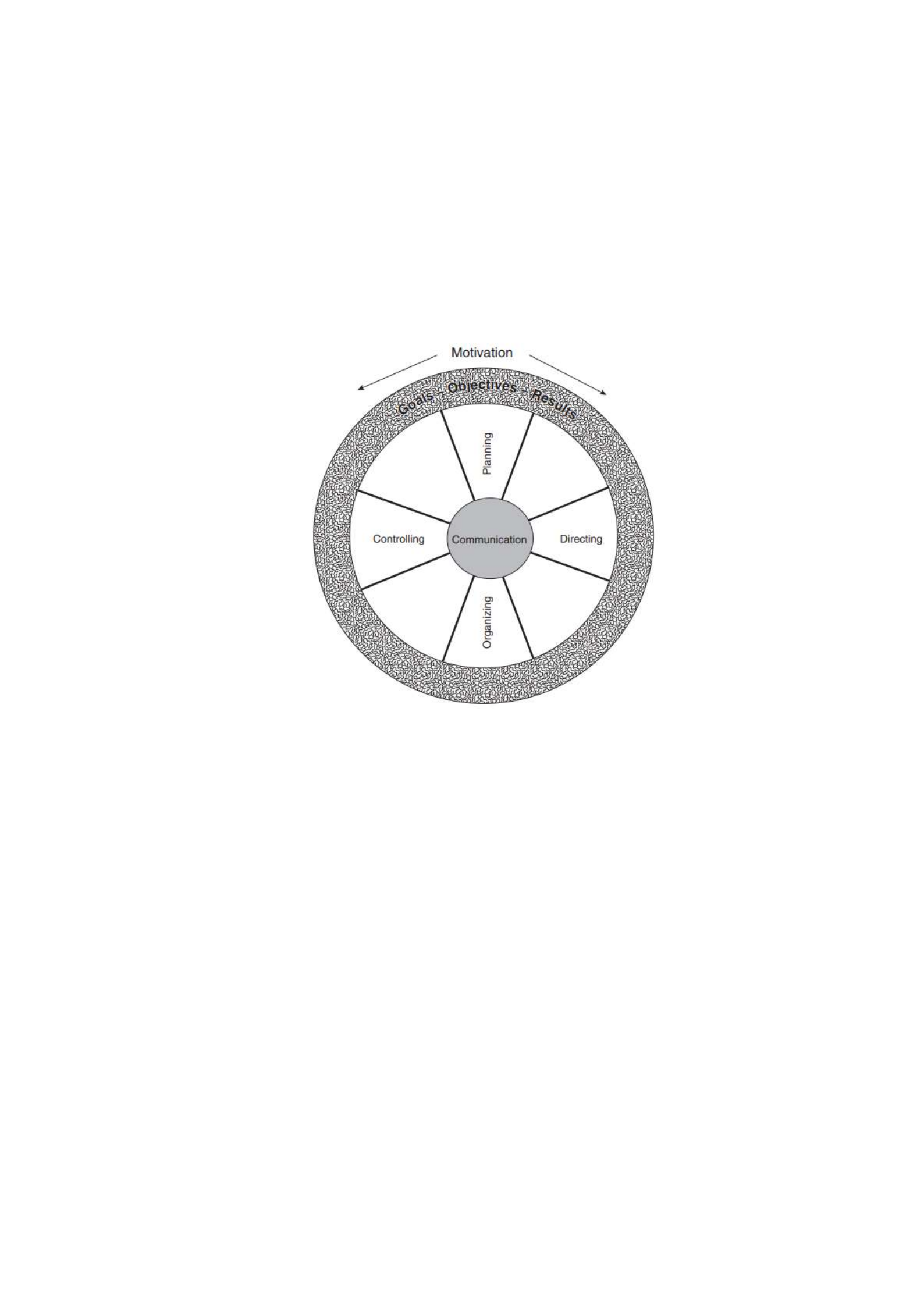
PLANNING
Planning can be defined as forward thinking about courses of action based on a full
understanding of all factors involved and directed at specific goals and performance
objectives.
The first segment focuses on forward thinking, which means just that, looking
ahead. This is not a forecast but an action-oriented statement—thinking about the future.
To look forward, it is vital to be aware of the events of world and key trends. The second
element concerns courses of action, which implies developing alternatives or methods
of accomplishing specific goals and objectives, based on a full understanding of all
factors involved. Here is where the facts and consequences of the various factors
affecting the alternative courses of action are weighed. Finally, there is the most
important part of all, as well as the most neglected: directed at specific goals and
objectives, or, in other words, focusing on some endpoint, some target.
Types of planning

The planning task represents the preparation of the agribusiness firm for future
business conditions. Since the future can be defined to include various time periods and
it is uncertain, the planning task can take a number of forms. The three types of planning
discussed in this chapter are strategic, tactical, and contingency.
Strategic planning is focused on developing courses of action for the longer term.
Long term may be two or three years for a very small agribusiness, while a major
corporate organization may be looking at a 20-year (or longer) time horizon. Strategic
plans tackle the broadest elements of an agribusiness fi rm’s strategy: what countries will
we operate in; what businesses will we be in; what plants will we build, what technologies
will be developed?
While strategic plans are found at all large agribusiness companies, they are also
important for the small food processor or the sales manager for a swine genetics
company. It is the long-term time horizon that characterizes the strategic planning
activity.
Any planning activity is focused on achieving some goal, on moving the firm in some
direction. Therefore, in many strategic planning situations, one of the first steps is the
development of a mission statement or a statement of vision. A mission statement helps
to spell out this direction for a firm and describes the destination. When developing a
mission for a company or even for a department, management must think strategically
about the firm’s business in a future time period. Briefly stated in between one and three
sentences, a mission statement usually describes who the company is, what they do,
and where they are headed. In many cases, it has three parts:
1. Key markets (who we serve)
2. Contribution (what we do)
3. Distinction (how we do it differently)
A mission statement should be specific to the firm. Generically worded statements
that apply to any fi rm are not useful. Such generic statements do not paint a mental
picture of where the fi rm is destined and offer no guidance on which activities to pursue
and what strategies to follow. In contrast, a good strategic mission statement must be
pointed. It must have specific relevance to the company in both its direction and

destination. Many agribusiness companies have found that in addition to company
stated missions, teams and working groups supervised by various levels of managers
also benefit by developing a “team” mission. Team members benefit from being involved
in developing their own working group’s mission. To inspire those involved, this type of
mission statement should be expressed in language that attracts the attention of people,
creates a vivid image, and provokes emotion and excitement. If managers are maintaining
the big picture perspective, they can help employees understand where we need to go.
Thus, by keeping the focus on a company’s mission, all can better achieve their goals
more effectively.

