


How to treat grooved top-bars
The groove in grooved-top bars should be filled with wax. First, melt down the wax completely in a
flat tray. Allow it to cool and cut it into strips about 6mm wide. Inset the strip along the groove.
Heat the tip of the knife and run it quickly along the wax. This will melt some wax and allow the
wax strip to stick firmly into the groove.
HIVE HANGING PATTERNS
Hives are hang so as to offer a convenient working height and to prevent pest and predator attack.
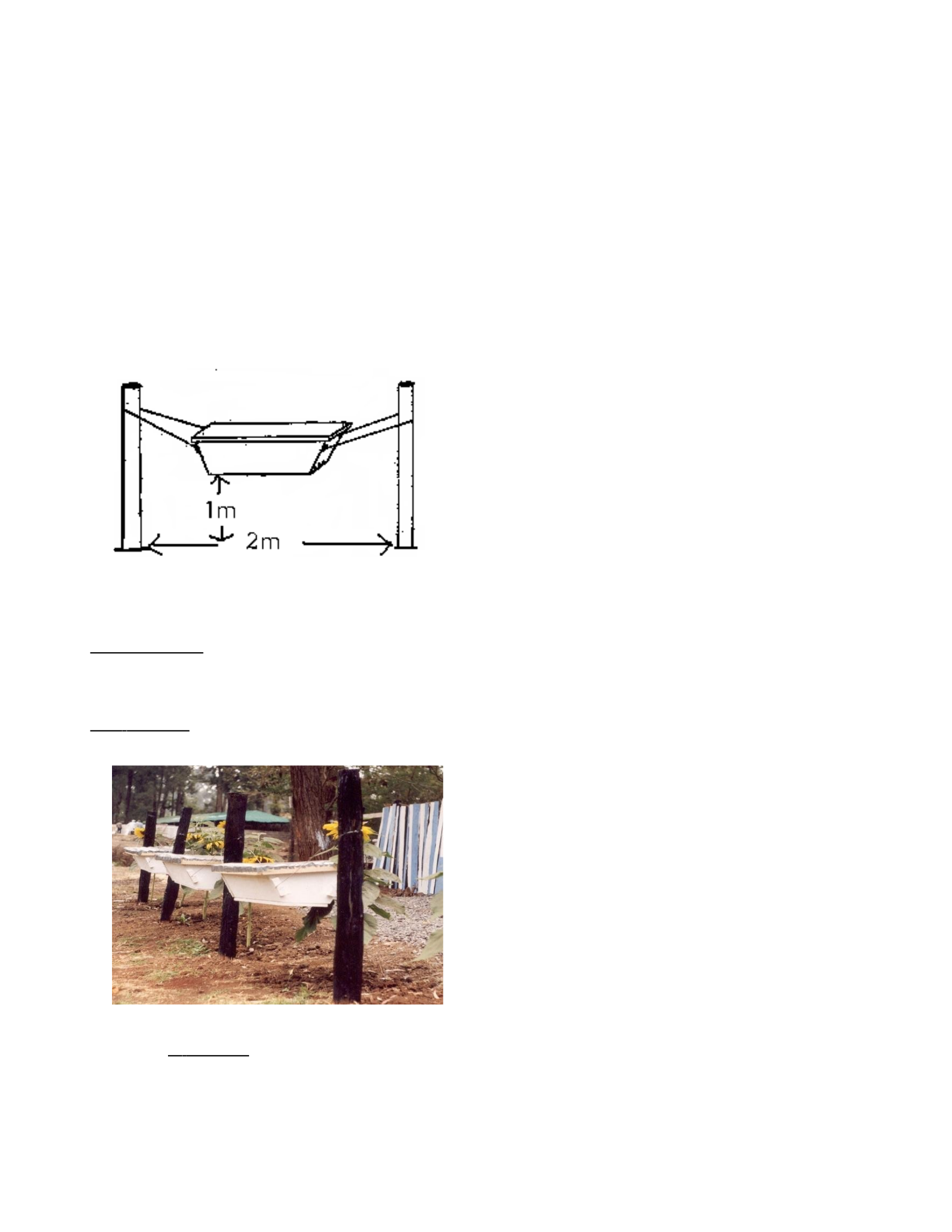
Usually hives are suspended between two posts at least one metre above the ground. Entrances
should face outwards and the posts should be fixed firmly to the ground to avoid sagging when the
hive is heavy with honey.
The ideal position of hanging a Kenya Top Bar Hive
There exists various hive hanging patterns;
i) Single Pattern: This is whereby a single hive is hang between two posts at a distance of two
metres apart. It uses many posts and a lot of space, thus it is uneconomical when hanging
many hives.
ii) Line
Pattern: This is where hives are hang on a straight line. It is good especially for a narrow
strip of land.
KTBH in a Line Patt ern
ii) T. Pattern:
Hives are hung to form a T-shape pattern.
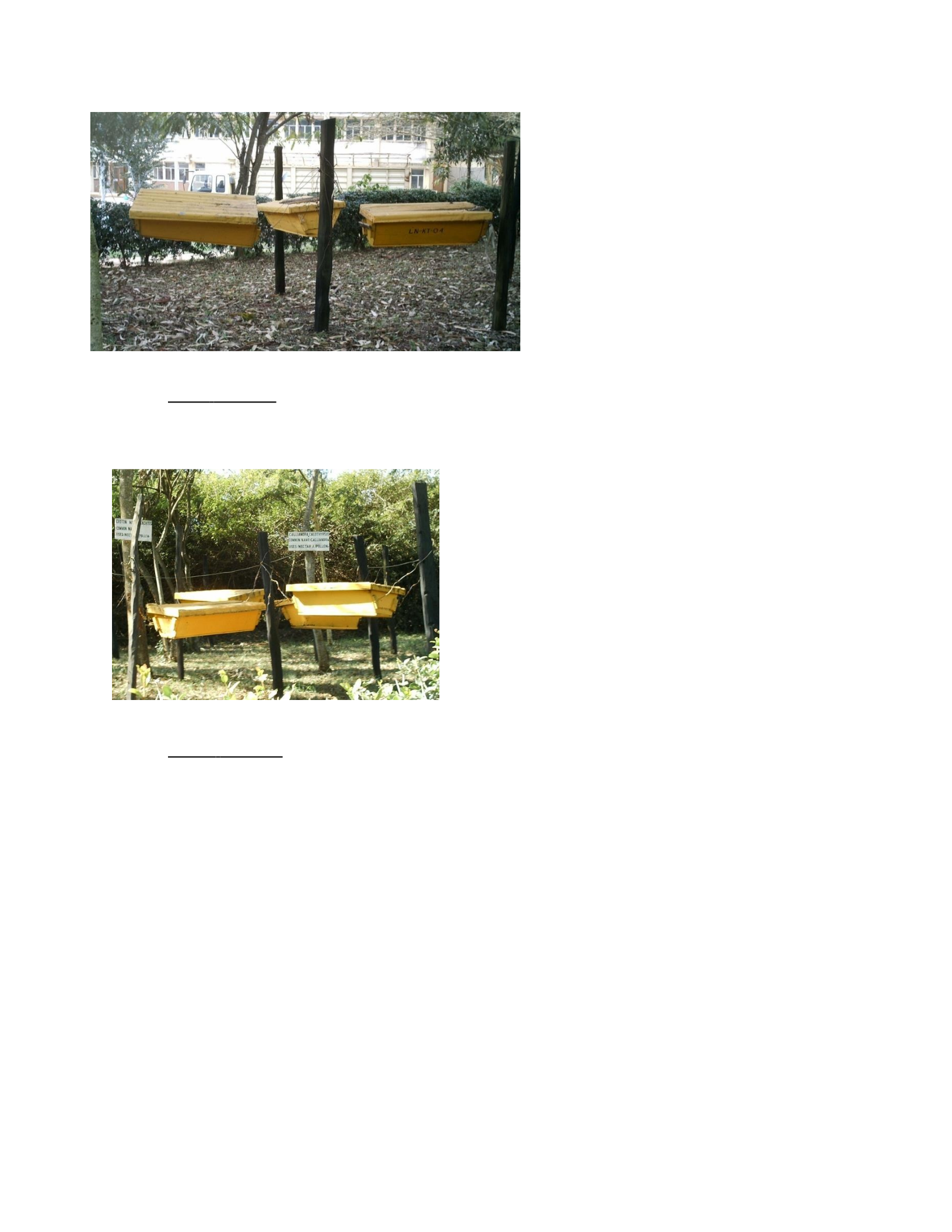
KTBH hang on a T- pattern
iii) Cross Pattern:
Hives are hung in a cross-like pattern with one post at the centre being shared by four hives. It is
a very economical pattern as it saves on posts and space.
KTBH hang in a Cross Pattern
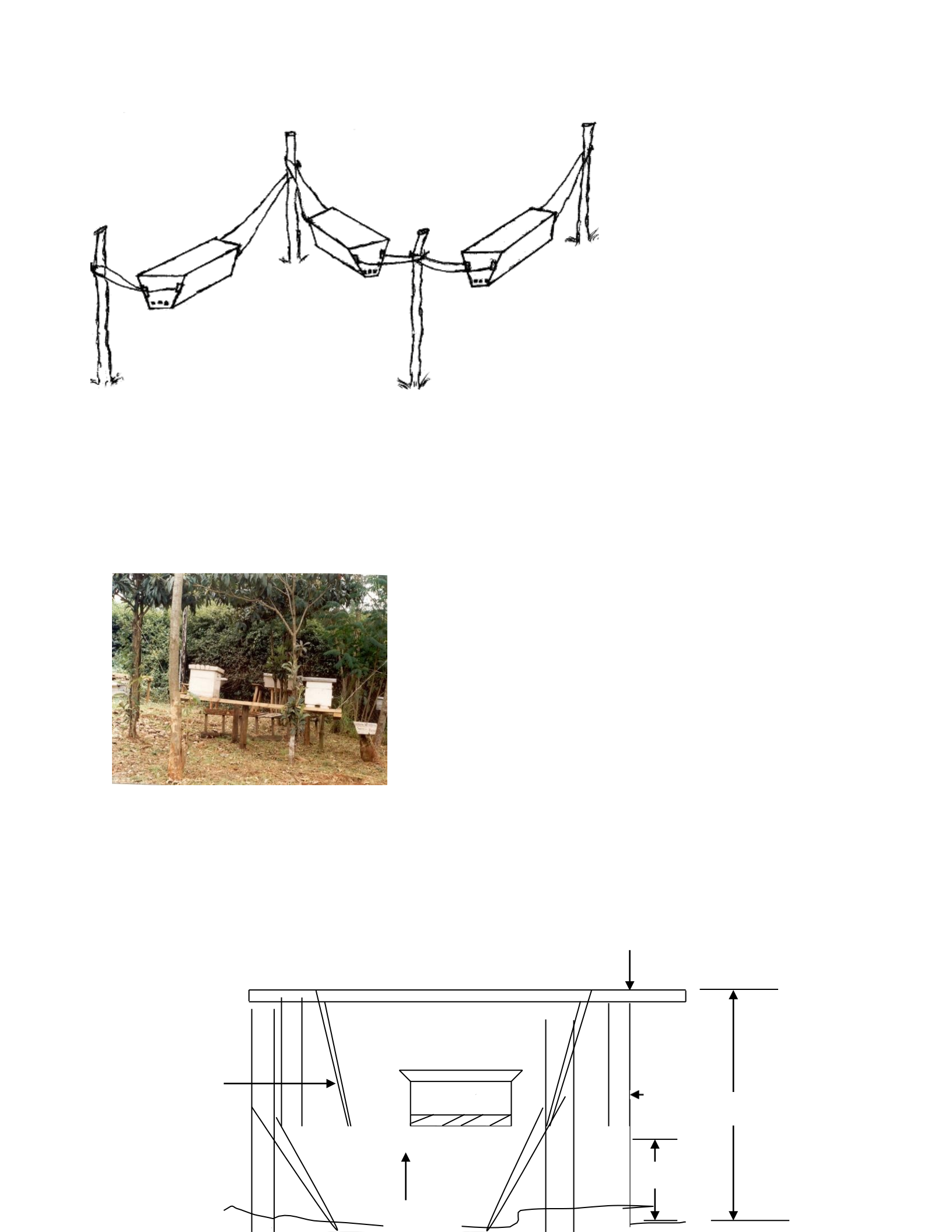
iv) Zigzag Pattern:
Hives are hung in a zigzag pattern (appearing like a letter Z). it is ideal for sloppy terrain.
Note that entrances of hives should face outward in all patterns.
51
pos
t
Fig 4.2: Zigzag Pattern
HIVE PLACEMENT
Hives can be placed on stands or platforms which are fixed firmly to the ground at a convenient
working height of about 1 metre high. However this method is only suitable in areas which are not
prone to bee pest and predators
Hives on a platf orm
MODIFIED HIVE HANGING METHODS
Goal post method
Cross bar
Hanging wires Post
2 m
Fig 4.4: Suspension method
(Several hives suspended
between two
1
m
1
ms
)
52
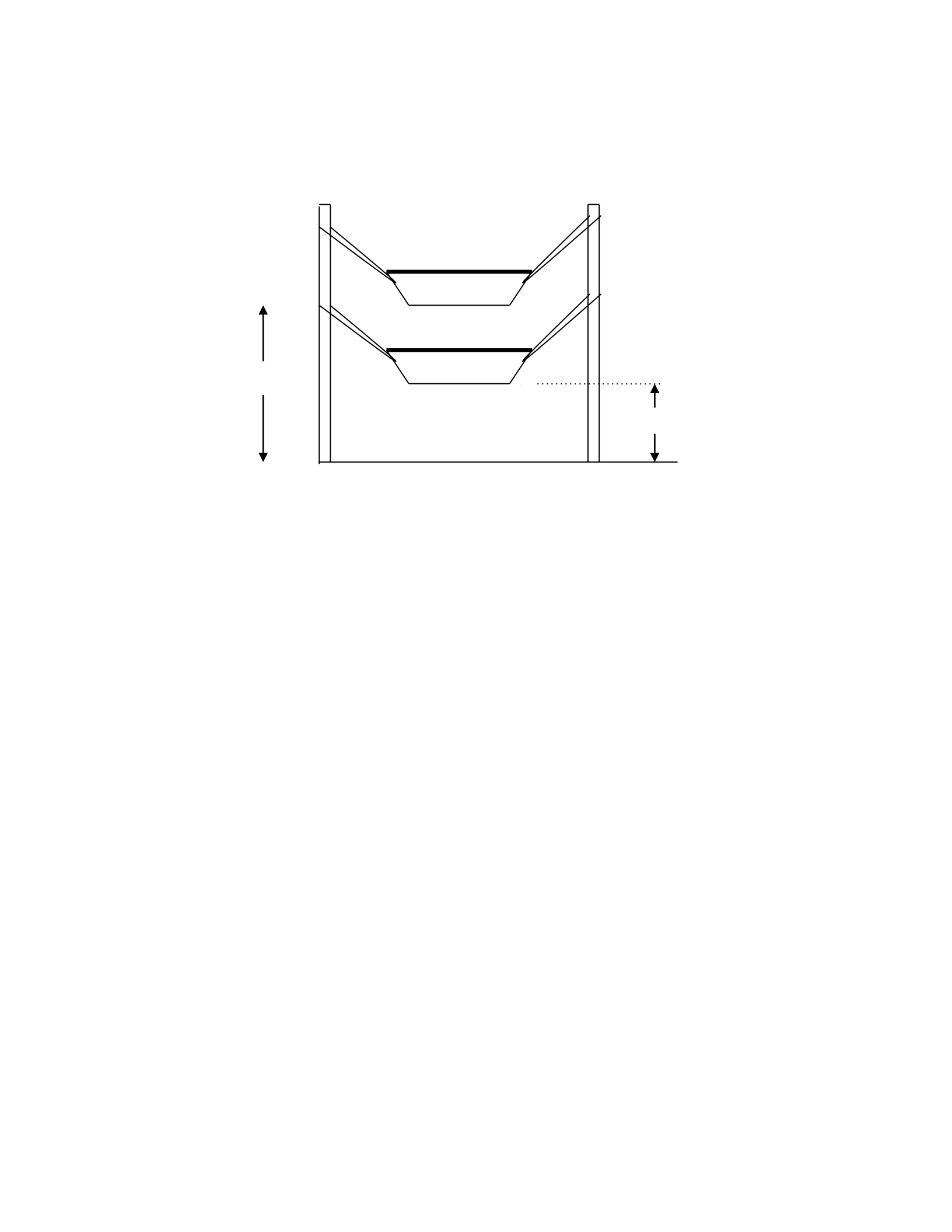
High hive hanging method
New position
Old position
2
1m
NB:(The hive is lowered to the lower position while working the bees and returned to new position)
This position is meant to guard against the honey badgers, monkeys, squirrels etc so that by
standing on their hind limbs they cannot reach the hives.
A hive can be suspended, for example between two trees or from sturdy branches of big trees. It
can also be installed on a platform or a rock. This is a decision that must be made by the individual
beekeeper. Advantages and disadvantages of the two methods are set out below.
Advantages of the hanging beehives
1. It is cheaper to hang a beehive than to install it on a platform.
2. The lizard, an important hive predator, does not seem to pose a serious danger.
3. Cattle and other grazing animals cannot tip the hive over.
4. Running water cannot carry the beehive away.
5. It is easier to prevent ants from reaching the hive than when it is installed on a stand.
6. A thief seldom steals a Kenyan top-bar hive in a tree, especially when it contains honey, because
it is not easy to remove the suspension wires if they are properly attached. Disadvantages
1. A suspended hive can swing. The bees become alert and prepared to pounce on the
beekeeper if they find him.
2. Honey-harvesting and brood-nest control is difficult to execute during the day.
3. It is not easy to change the location of the hive. When removing it from the trees, the least false
movement may result in tipping it over and jarring the whole contents. Sometimes the only way
to remove it from the tree is to cut the suspension wires.
Advantages of installing a hive on the stand
1. It is easier to place the hive on the stand and remove it.

53
2. It is easy to move both hive and stand to another spot.
3. The beehive does not swing about even if the beekeeper is working,
4. Honey collection and brood-nest control can easily be carried out even during the warmest time of
the day.
Disadvantages
1. Grazing animals can knock the hive over.
2. The legs of the stand can easily be used by lizards to reach the hive unless they are protected
by lizard guards.
3. It is more expensive and tedious to make a reliable stand than to buy a metallic wire for hanging a
hive.
4. Easy movement facilitates easy stealing. The thief has no time to waste.
Uniting colonies
Newspaper method
Place a newspaper into the hive to separate the two sides of the hive
Identify the most reproductive queen among the 2 and kill the less productive
Make holes on the newspaper to allow the pheromones to pass through which makes the bees to
smell alike thus reduce fighting
Bees should be artificially fed during the dearth period
Provide adequate water
Provide moderate hives. Too small hives leads to building of very small water

54
BEE BEHAVIOUR
REPRODUCTIVE SWARMING
During reproductive swarming, bees don’t reproduce individuals
They replicate in units ie they raise other queens
There is always congestion in the hive when there is plenty of nectar and pollen
During congestion the workers make queen cups on the comb in which the queen will lay
After laying the workers then lengthen the cup and provide plenty of royal jelly
After 3 days the eggs hatch into larvae and feed on royal jelly
The larvae then pupate due to production of ecdysome and juvenile hormones
Juvenile is produced from the larvae (afterwards). Ecdysome hormone is te actual pupating
hormone
The larvae then turns at an axis around itself.
After sealing the swarm cells, the queen mother then produces a hizing sound which makes the
bees to move to one corner of the hive and migrate out
They then wait at the nest for i/2 hours before migrating to not less than 6km away Reproductive
swarming reduces the bee population decongestion but has a negative impact to the honey
producer
It is recommended that swarm cells be destroyed by inspecting the hive every 7-10 days
ABSCONDING
Is the total evacuation of bees from the hive due to environmental disturbance?
Bees are not prepared during absconding and they leave behind honey, pollen, larvae, pupae
adults
Control is by avoiding unnecessary disturbance of the hive
SUPERSEDURE
This is replacement of a failing queen
A queen fails if she cannot produce queen substance Lays
too many drone eggs
Does not lay enough eggs Causes of
failure
Diseases Injury etc
Replacement is done by constructing at the middle section of the comb a queen cell by workers
produce one or two.
This is different from the queen cells of the swarm cells which are produced around the
periphery in large quantities
Developing queen from the colony hive and may migrate to another hive in piece with her
mother
The daughter queen goes on a mating flight after 3 days
Once she returns she become hostile to the mother bee. shekilla or eventually the worker kills the
older queen
Management : the queen bee should be replaced every 2 years
MIGRATION

55
Is the seasonal movement of a colony from one ecological zones to another in search of food
Bees eat all the honey and don’t leave behind any member of the colony
They also eat all the pollen and nector and wait for the larvae to mature
They also starve the queen to stop her from laying eggs
Bees might come back later on but not necessarily to the same hive
Control:
By artificial feeding providing supplements and planting plants that flower throught the year
around the bee hive
Use queen exluder, because they will leave the queen behind
FORAGING
Searching of food by workers more than 21 days old Can
be observed by noting
Manner of walking. Fast movement means foraging
Dipping of head into flowers and protrusion of proboscis for nector collection /
foraging
Presence of pollen on the corbicules confirm this as well
Bees has flowerfidality limit their activities onto particular flowers
MATING
Bees avoids inbreeding by traveling too far to select mate
Queen travels 3 km drones 5 km to reach drone congregation area
Drones also leave earlier by ½ hours
Pollination
Bees must visit plants for nector and pollen for food Thay
can cover aradious of 4 km for the search of food Plants
produce different scent to attract bees
Dependency on pollination is increasing in Kenya the service is now inadequate
Symptoms of inadequate pollination
• Irregular fruits shape and deformaties
• Flower or fruit drops
• Flower abortion
Bee products and their uses
HIVE PRODUCTS
Six bee products are known. These are honey, bee wax, propolis, pollen, royal jelly or “ bee milk”
and bee venom.
a) Honey
is sweet viscous juice usually collected in the largest quantities from the bee hive. It is found in the
cells of the honey bee comb. Matured (ripe) honey is usually found in seal combs and can be
kept indefinitely; unsealed honey is not matured and therefore ferments shortly after it is
harvested.
Uses of honey
As human food:
-in certain alcoholic beverages e.g.muratinakigeli aafricanus

56
-sugar substitute in cooking and baking
-in child feeding
-for athletic and strenuous activities, Provide instant energy for people doing hard work
-diabetes
-as an ingredient in drugs:
For hay fever; in cough syrup; as sweetening agent in drugs, especially for children
-for animal feeding:
-dairy cows (to increase milk production)
-donkeys and racehorses
-poultry mash and feed for fish farms
-in vet nary medicine;
In treatment of acetonemia (a disease of the cow)
-in cosmetics:
As a facial cleanser and ingredient in hand lotion In
mice and rat repellent compounds
For cultural purposes egsettl dowry Can
be used as preservative eg meat
Marketing of honey
Most honey produced are substandard due to poor handling
Mixing brood, ripe and unripe honey together during harvesting lowers the quality and taste
Honey quality is excellent if harvested as it is in produced by bees
Ensure honey is not adultered well processed and packaged Use
transparent packaging materials made of plastic or glass
Indicate name, source, date of package and address, include the name Honey in the label
Indicate the net weight ie total weight, weight of container
Honey processing equipment
i) Simple Honey strainer
This consists of a set of sufurias (urns), a bucket and a fine net. It is suitable for straining freshly
harvested and stored honey.
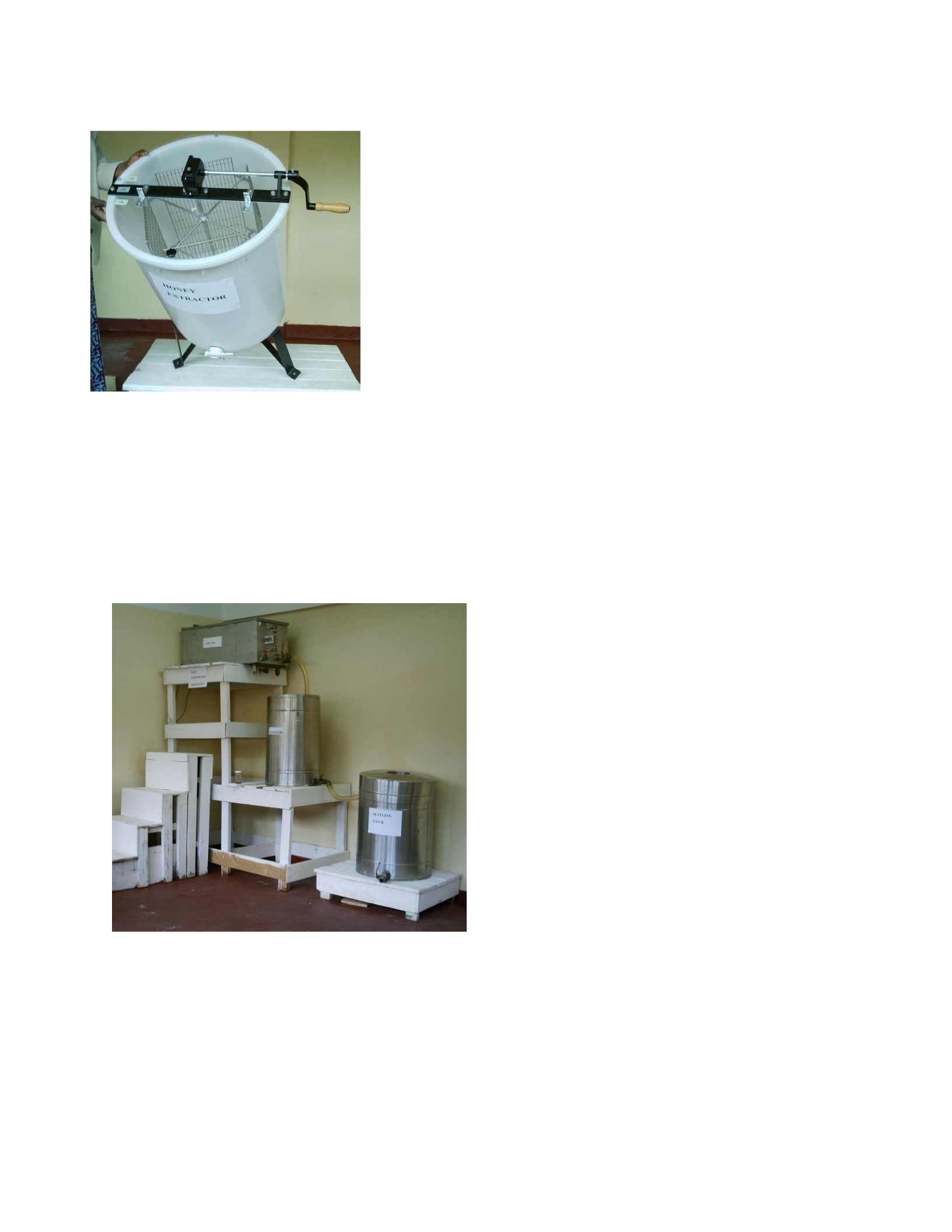
ii) Honey extractors
These consist of either electrically and manually driven machines which operate on the principle
of centrifugal force. Modern extractors vary in size ranging from small two frame units to big ones
holding upto 50 to 85 frames. Manual extractors are equipped with either a hand crank or a
bicycle chain while the electrical ones are motor driven.
57
iii) O.A.C. Strainer
This is a continuous honey processing equipment consisting of a sump tank with an outer water
jacket and an inner chamber for holding honey. It has sieves of varying sizes and a settling tank.
The equipment is unique in that it is a one stop set up that uses gravitational force to sieve the
honey. It is ideal for bulk honey processing.
Plate 3.11: A set up of O.A.C strainer
iv) Honey Press
A cylindrical wooden equipment with a heavy metal that presses the honey out through spaces
between the wooden material.

58
Plate 3.12: A Honey press
b) Bee’s wax
It is produced from the four pairs of wax glands of young bees during the warm period of the
day.
Bees do not recycle their combs this is because waxmoth usually destroy combs that are
deserted
Bees wax extraction
1. Hot bath method
In the absence of a wax-melter, the hot-water bath process now in use by some African
beekeepers may be adopted. This is the quickest method of obtaining the wax, but it can only be
employed after the combs have been crushed and the honey removed.
Equipment
-a cooking pot
-sackcloth or a sack (preferably jute)
-string or twine (2-3 meters)
-a stick or a discarded top-bar
-a large spoon or ladle
-a mould for the wax
Procedure:
1. Put water (amount depending on the quantity of the bee combs) into the cooking pot and heat
over fire.
2. Wash crushed bee combs to remove dirt and honey and place in the sack.
3. Make a good package by tightening the string around the sack.
4. By now, the water should be quite warm. Put the package into the pot and use the stick to push It
down to the bottom.

59
5. When it reaches a temperature of about 590c, the wax begins to melt and a waxy scum begins to
form on top of the water.
6. Use the stick to press the package. More wax will float to the top of the water.
7. Use the ladle to skim off the melted wax and pour it into a mould. Continue this process until wax
no longer rises to the surface.
Note; do not subject beeswax to high temperatures. Prevent the water from boiling by reducing
heat.
2. The solar wax-melter
This is a simple device and can be made by local craftsmen. The melter is made of wood, lined with
a galvanized metal plate and has a grass or clear plastic cover. The base is airtight. The melter can
be painted black to absorb more heat.
On a sunny day, the wax extractor is capable of generating a temperature of 610c, enough to melt
down a bee comb so that both honey and beeswax flow into a container inside the box.
Uses of bee wax
1. Cosmetic industry is the largest consumer of beewax
2. Pharmaceutical industry
Used in making pill coatings
Allow bypass of stomach digestion until the pill reaches the small intestine where it is digested by
enzymes
3. Bee industry
making of comb foundation
making queen cells
applied in bars to lure bees
4. Candle making candles from bee wax produces aroma
5. Dentistry
making artificial teeth. One bite onto bee wax to leave behind an imprint also
used in making a base plate when entire teeth set is lost
6. Used in making shoe polish, paints and in general water proof
7. Used in making chewing gum and cryons
8. Used in the process of lost wax casting, used in making very fine equipment especially
surgical equipment
The bee uses wax to build the comb cells in which its brood are reared, and also the cells in which
honey and pollen are stored. The bees consume between 8 and 15kg of honey to
60
produced 1kg of bee wax. The wax is removed or collected by heating.. Beeswax
is rendered from the bee combs after the honey has been remove.
Beeswax processing equipment
i) Sisal/Cotton wax bag
A small bag made of either sisal or cotton material in which the molten wax is poured inside and
squeezed out using two pieces of rods.
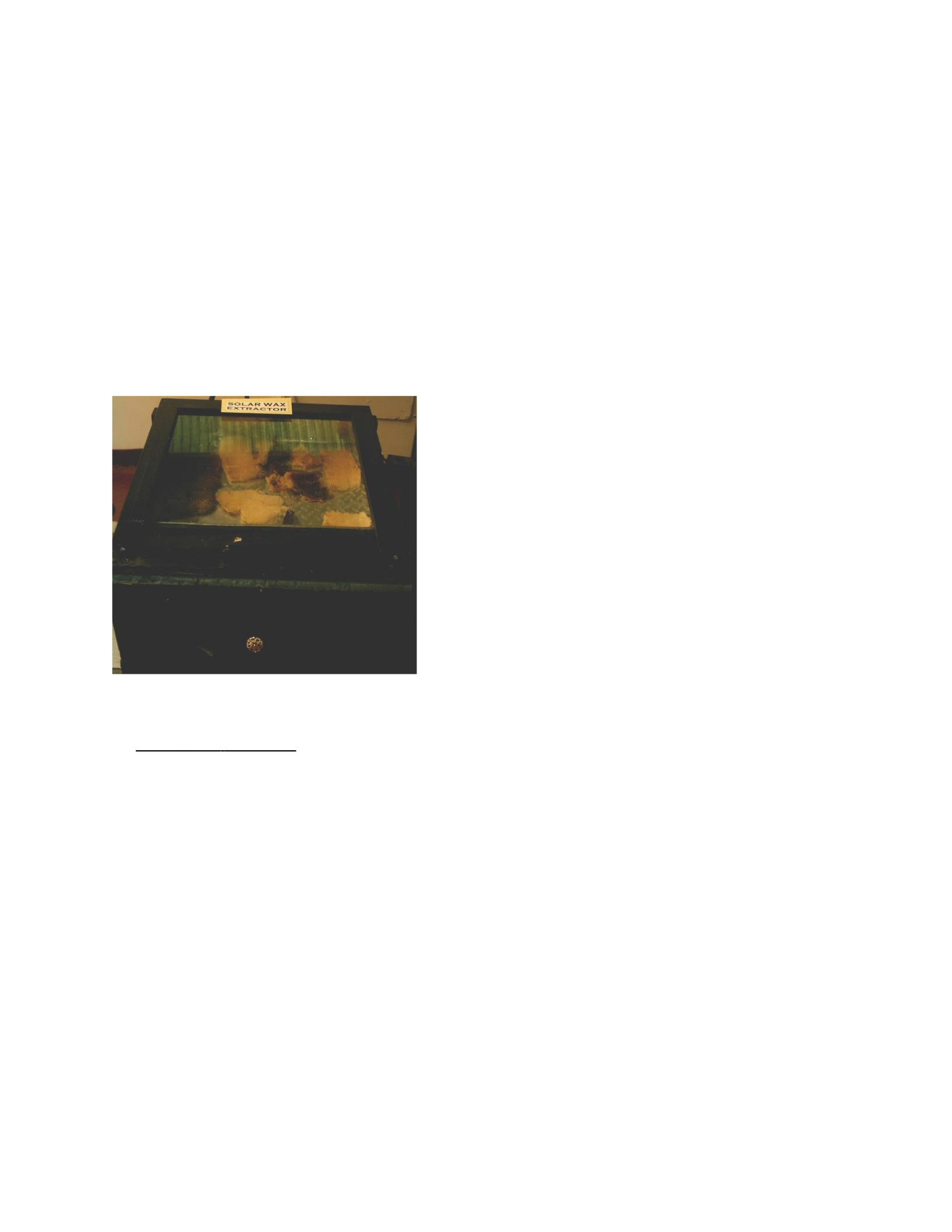
ii) Solar wax extractor
This is a rectangular wooden box fitted with a glass cover on top, a reflective flat sheet on the
inner side where empty combs are placed and a receiving tray at the base of the unit. The wooden
frame is painted black for maximum absorption of solar heat.
Plate 3.13: Solar wax melter
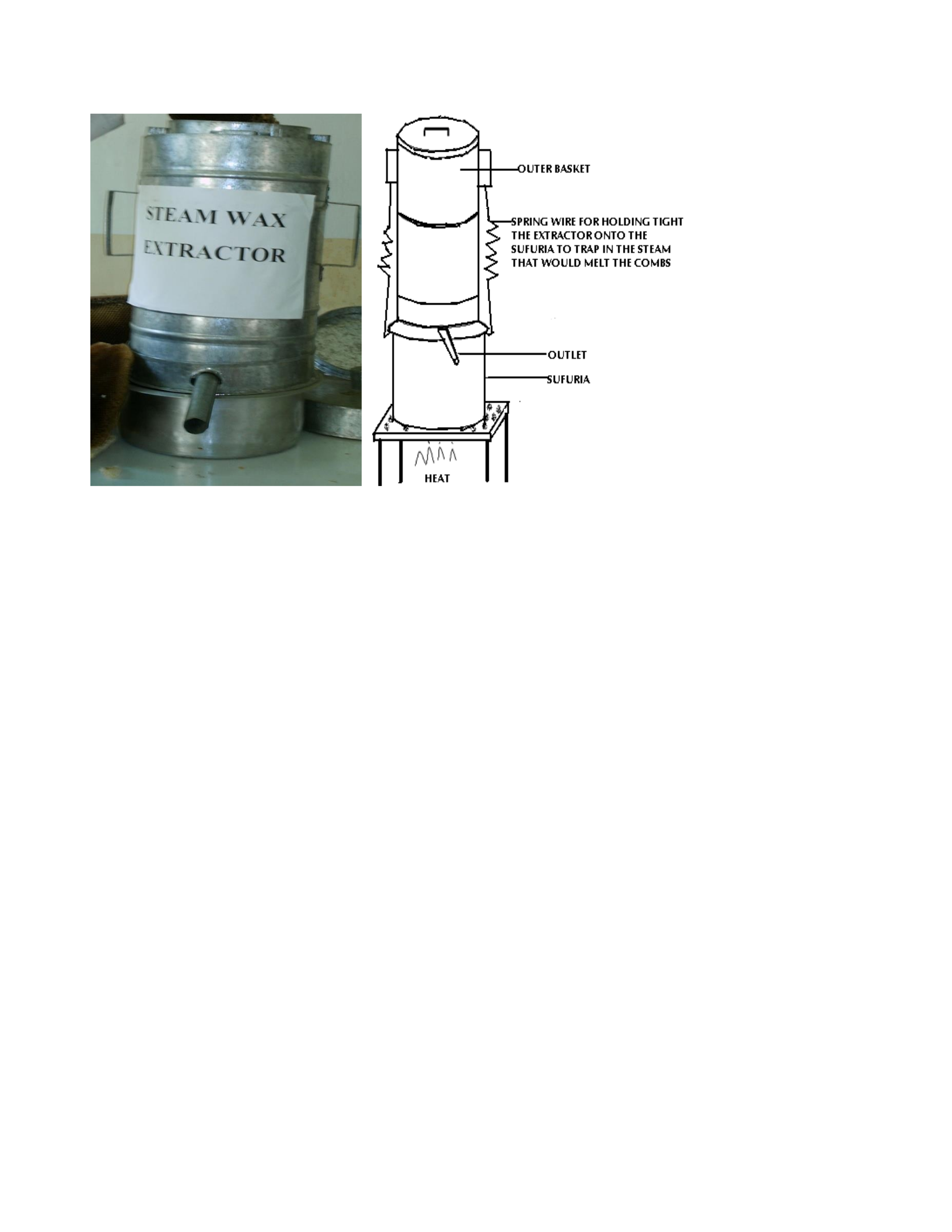
iii) Steam wax extractor
This is a cylindrical aluminium equipment which has an inner chamber to hold the empty combs
and a well fitted container underneath to boil water in. The steam that is produced melts the
combs and the molten wax flows through the snout into a collecting bowl.
61
Plate 3.11: A steam wax extractor Fig 3.5 : A diagram of steam wax
extractor
c) Propolis
is a resinous material collected by bees from leaves and buds of certain trees. It is greenish-
black in color and gummy in consistency.
The bees use propolis
• to fill cracks in their hive, to seal the entrance hole when it is too large,
• to make the hives watertight,
• to glue the top bars to the hive body, to strengthen the thin boarders of their comb and
• as an embalming material a to cover any dead hive intruder which they cannot remove from the
hive.
This hive product has several pharmacological properties; for instance, it is in preparation to treat
some skin diseases, and research on other uses is going forward.
d) Pollen,
The male reproductive agent of flowering plants, is collected by bees and stored in combs cells. It
is fed to the brood in the larval stage.
Pollen is collected from beehives by the use of pollen traps located at the hive entrence. These
remove the pollen from the corbicula (pollen baskets) on the hind legs of the foraging bees.
Beekeepers can collect pollen from hives, dried , frozen and saved to feed to the bees at times when
no plants producing pollen are in flower for the bees to collect and eat directly.
Uses
Used as human dietary supplement Used in pig
and poultry feeed industry
Used in mainatance of laboratory animals eg guinea pigs mice etc

62
In the developed Countries, pollen is also used in some expensive dietary supplements, since it is
believed to have valuable medicinal properties.
e) Royal jelly, or “bee milk”
Is used by the bees to feed the queen bee and the young larvae less than three days old. It is
secreted from the hypophyryngeal glands of the 5-to 15-day-old worker bee.
Studies show royal jelly to be a good source of vitamin B.
Like pollen, it is thought to have medicinal valueie antimicrobial and easing high blood pressure and
is therefore in certain expensive preparations.
It is frozen to reduce moisture content and sold in form of tablets or mixed with honey
China makes royal jelly chocolate candy and vine, as well as lotion and tonics for therapeutic use.
f) Bee venom
is used by the bees as a defensive weapon to protect their property that insects, some birds and
reptiles would not allow them to enjoy the fruits of their labour.
The venom is produced in the poison glands of the worker beee
Venom is used once, should be 15-18 days old when venom is ripe It
is passed through the sting
When the bees sting it leaves behind a bit of intestine and the venom glands this makes the bees
die
Venom can be collected without killing of the bees using venom collector
Bees pass through the venom collector when they are subjected to a mild electric shock. This
exposes the sting due to refraction and eventually deposit a drop of venom on the tip of the sting.
The venom falls on a double sheet of glass
Venom has moisture content of about 40% and dries very fast to leave behind dry venom
powder like.
Human suffering from anaphylactic shock reaction severaly to stings and bee venom Such
people are given strong drinks eg coffee, alcohol or anti histamine egpiriton Adrelin shots
can also be given
Uses
The venom has two main medical uses; as a desensitizer for those who are allergic to bee
stings, and in treatment of arthritis and gout and bee sting allergies.
It is applied directly or by injection.
Protection from enemies
ENEMIES OF THE HONEY BEES
Honey bees problem are grouped into three categories:
natural climatic conditions,
man and his activities and
natural pests and diseases.
1. NATURAL CONDITIONS
The amount of annual rainfall and the temperature of an area exert a great influence on the
life and work output of the honeybee.

63
The insect has been called a “summer bird”, for it performs most energetically and relatively
high temperatures, up to 350c.
Its activity slows when the temperatures drops below 200c, and bees will not move at all below 80c.
Low temperatures and rainy season
At low temperatures, comb building ceases. Bees remain indoors and cluster to generate heat to
keep themselves warm.
To fan themselves or to cluster, they need fuel to burn; honey fuel allows them to perform these
functions. Therefore if one of these two activities is allowed to continue for long, field bees will not
fetch food and other necessities of life and the colony will have to depend on honey stored in the
comb cells.
If bees are confined because of unfavorable weather, an average colony may consume as much as
1.4kg of honey in a day. Should this continue, whole stores of honey may be completely depleted
and the colony will face famine
High temperatures
At very high temperatures above 370C, combs begin to melt and most bees in the hive will move
out and fan themselves and the brood nest frantically.
At such temperatures bees will spend all their time fetching water to cool the hive and nectar
collected will cease completely.
WHY does the equatorial evergreen rain-forest area does not support any reasonable bee keeping
activity?.
Other problems are also encountered by the honeybee in the dense equatorial forests:
Some trees are so tall that worker bee will not visit them for any reason.
Tall trees in the equatorial forests have few or no flowers, so that nectar and pollen are
scarce.
The suns rays cannot reach the forest floor, the thick undergrowth prevents the free
flow of air and the temperatures are too low to induce worker bees to fly out to procure
the commodities essential for the colony.
High humidity levels promote serious fungal diseases in the insect.
High moisture content in the nectar prevents honey from curing well.
Ants, reptiles, birds and other predators are present in the forest in large numbers.
2. HUMAN ACTIVITIES
The honey hunter
Honey hunters using outdated, barbaric methods are a terrible danger to the bees. Not only do
they deliberately kill many of them, but as they cut down trees to take the colonies’ combs,
they destroy the tree hollows that are the bees’ natural home. The colonies are thus forced to
hang outdoors, exposed to all their natural enemies and if the bees are destroyed they cannot
fertilize flowering crops, and this again contributes to famine condition.
Control:Governments should not only regulate honey hunting and enforce the regulations once
made but, should also make serious efforts to instruct honey-tappers in the newer more efficient
ways of honey hunting as well as to encourage them to keep bees themselves.
Bush-burning

64
Some obvious reasons for bush burning are:
I. To clear the land for farming
II. To clear the bush and make hunting easy
Control:The bee keeper must guide his hives against bush fires. Before the dry season, he
should make a fire belt around the apiary and visit it as frequently as possible, removing any
fallen wood or leaves which could spread a fire on the site.
Bee-burning
Where water is scarce during the dry season, the honeybee makes life difficult for man by
collecting his water.
While Returning from the farm late in the evening the exhausted, thirsty farmer finds that his
only bucket of water has been drained by the bees. What is more, the bees harass the
women pounding grain. In extreme cases they try to suck human sweat and these results in
scuffle.
In some places therefore the villagers hunt the bees and burn them.
Control:Bees must be watered in the same manner as birds are watered on a poultry firm.
The palm-wine tapper
The palm tree produces a sweet, refreshing liquid which is drunk by man in many tropical
countries. The honey bee also refreshes herself with this type of wine from the pot of the
wine tapper. The honey bee begins to leave the hive as early as 5 a.m.
Control: in general, drunken bees are like human drunkards. They work less and produce
little honey. Apiaries should therefore not be set up near places where wine-tapping is in
progress. Colonies may dwindle in size and may perish completely as the insects are burned,
crushed and drowned.
Poisoning bees
As the honeybee visits plants during her search for nectar or pollen, she flies from one plant
and flower to another. Sometimes the insect unknowingly lands on a poisonous plant or
contacts a poisonous pesticide which the farmer has sprayed to protect his crops.
Control: Beekeepers are strongly advised to keep their hives away from sprayed fields.

