


Rabbit production
Rabbits belong to the family leporidae characterized by
Long ears
Long hindlegs
Soft far
Cottony tail
IMPORTANCE OF KEEPING RABBITS
1. Capital requirement is minimal. With some scrap wood or bamboo, a hutch can be constructed.
2. Spacing is minimal. It can be set up at backyard.
3. A rabbit is a convenient ‘one meal size’, thus avoiding the need for storage.
4. Rabbit keeping is not restricted by any taboos or particular beliefs that prevent the eating of rabbit
meat or its promotion as food.
5. Feeding rabbits is very cheap. Even though supplementation with concentrate or grain is
sometimes necessary and definitely will increase growth rate, roadside grass, kitchen offal,
garden leaves, etc (feed of no direct value to humans) can provide the main feed at almost no
cost.
6. Rabbits can be tended by women, children or men unlike bigger animals for it needs no force to be
restrained.
7. Because they produce offspring regularly (gestation period of 28 – 32 days), they form a regular
source of income instead of a large amount at once.
8. It matures for table between 5 -6 months, breeding (5 – 7 months)
9. Rabbit is a prolific animal.
10. Meat from rabbit is an all white meat product that is high in protein and low in fat, sodium and
cholesterol as compared to other common meats, such as beef, lamb, pork and poultry. Rabbit
meat has been recommended for years by some physicians to their patients with coronary
heart conditions.
11. It is not a smelly or noisy animal and can easily be kept near to school buildings or
people’s houses.
12. It produces rich manure for gardening or flower beds.
BREEDS OF RABBITS
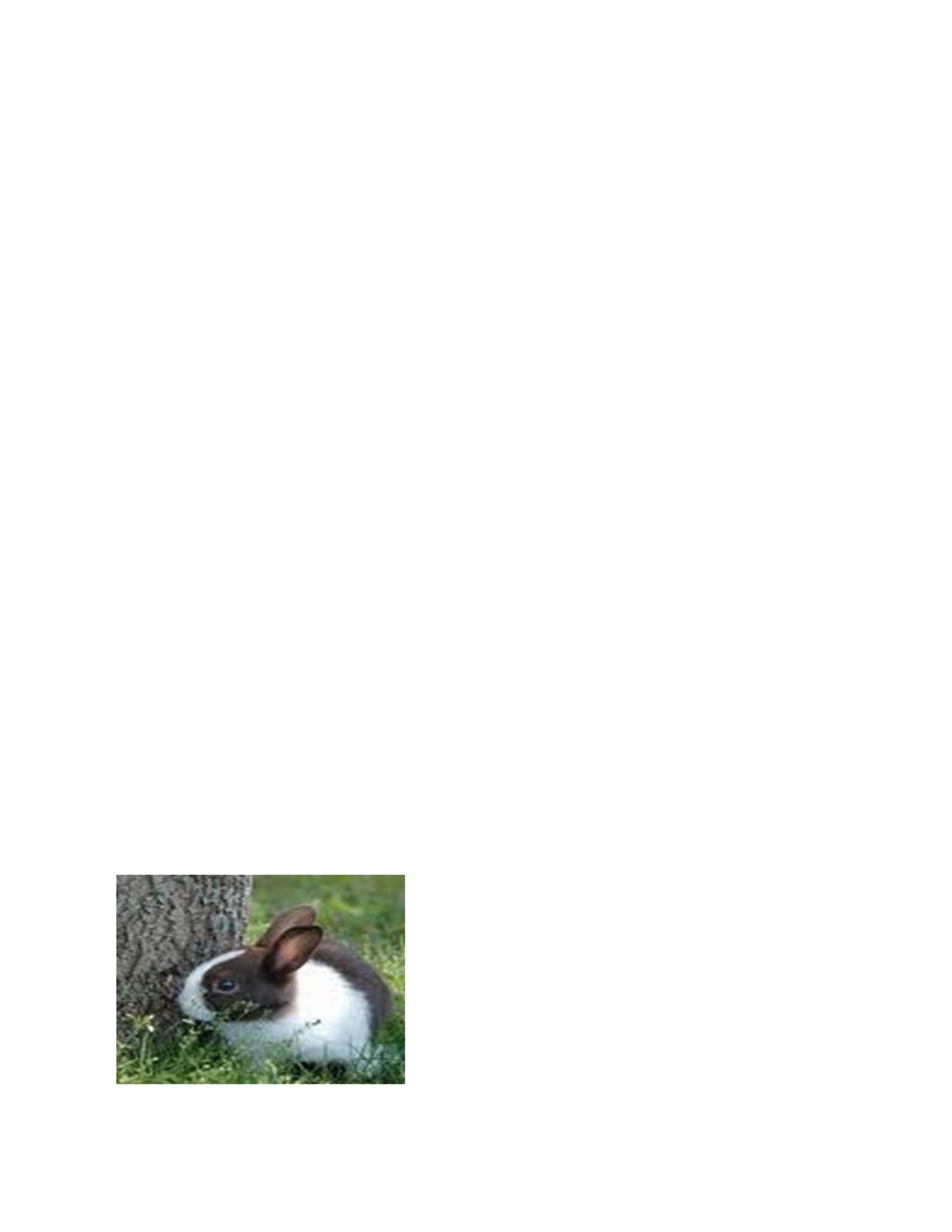
Dutch:
The dutch is a small breed with a mature liveweight of 2.5-3.5kg. It has a wide white band of fur
around its body at the shoulders as well as a white stripe down the middle of its face.
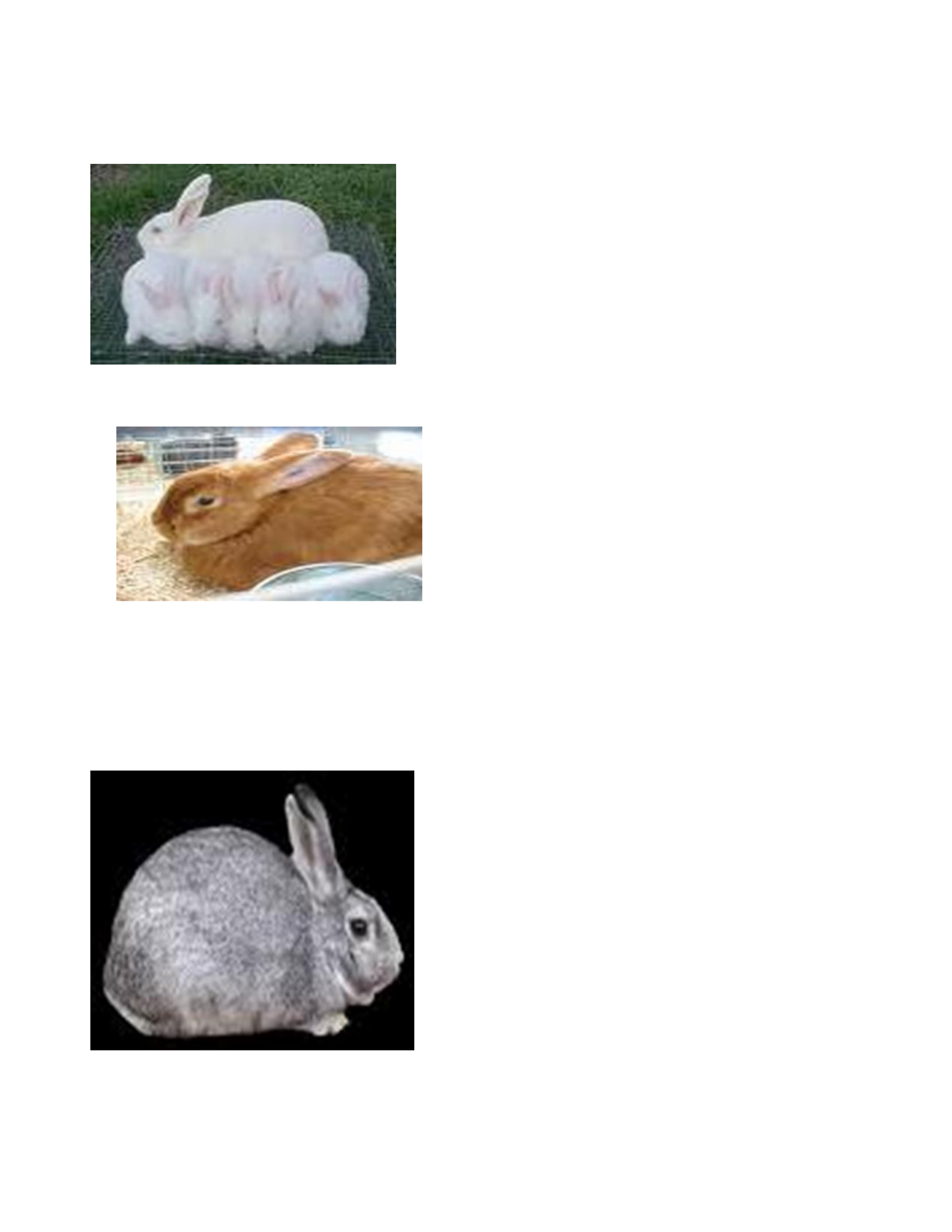
New Zealand white
New Zealand red
This breed is used most widely throughout the world
for meat production. It is all white in colour and
usually weighs 3-5kg when mature.
This is essentially red but has not been intensively
selected for growth rate. Mature live weight is 3-
4.5kg
Chinchilla:
This breed is blue-grey in colour with a white belly. There is a thick fold of skin around the front of
the chest which is very obvious when the rabbit is in good condition and sitting in a resting
position. The weight range for the mature Chinchilla is 3-4.5kg
Californian:
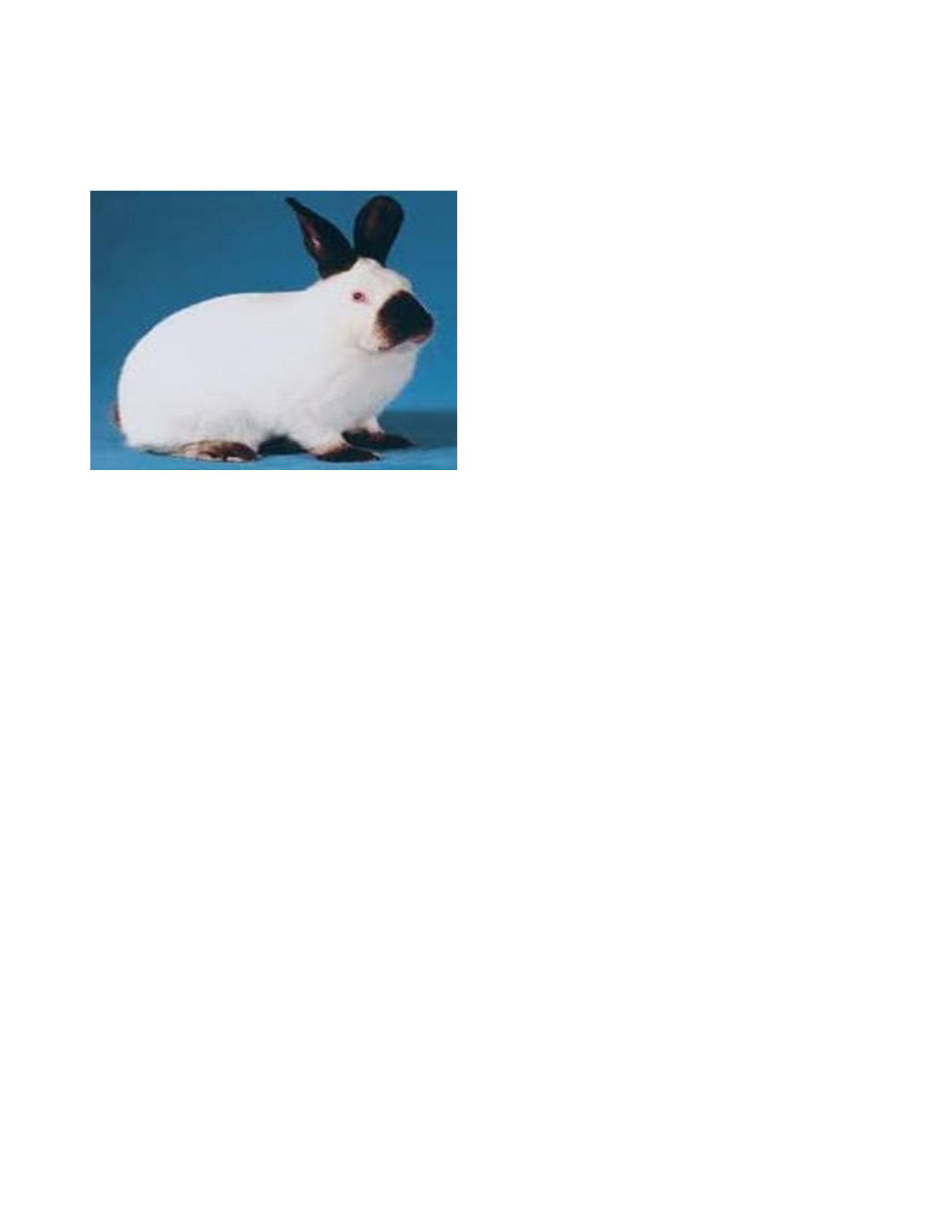
This is the second most popular breed for meat production. The colour is all white but with
black tipping on the nose, ears, feet and tail. The weight range for the mature Californian is 3-
4.5kg.
IDENTIFICATION
Rabbits may be marked by
Tattooing special ink used on the inner part of the ear
Ear tagging attaching ear tags, can be easily get lost
Ring method ring attached at the hock of the rabbit . the ring carries a number
Ear notching
HANDLING
Rabbits should be handled with care as rough handling may cause irreparable damage to
muscles and may lower the carcass quality (SCARM 1998).
Avoid;Lifting rabbits by the ears should be avoided.
Best way:They may be lifted by grasping with one hand the loose skin over the shoulders and
placing the other hand under the rump to support their weight.
Nails of adult rabbit may have to be trimmed to prevent them catching on the wire mesh of a cage.
Rabbits will bite and scratch their handler if distressed or frightened and it is wise to wear
cotton gloves to protect your hands.
MANAGEMENT AND FEEDING
GENERAL FEEDING OF RABBITS
How Rabbits Should be Fed
Rabbits need to eat lots of fresh, green vegetative matter every day. Rabbits are nocturnal, and eat
more at night. Fill the cages (mangers) with feed before the sun sets. Rabbits like fresh food.
They will refuse greens that have been dried unless the rabbits have been trained to eat good
quality dry hay and given plenty of water. Give them fresh feed twice a day; once in the

morning and plenty at night. A nursing doe will need more feed than a pregnant doe or young
buck.
A cage with a dozen young, growing rabbits that have been weaned will consume lots of feed.
Here is an easy way to know if you are feeding them enough: if they eat everything, you have not
given them enough; if they leave a lot, you gave them too much. The ideal is for there to be a
small amount of leftover feed in the morning.
What Rabbits Eat
Rabbits eat most anything green, just like goats and cows. Here are some of the best feeds for
rabbits by family: (See table at the end of the Tech Note for a full listing of rabbit forages, together
with their scientific names and parts eaten.)
Legume or Bean family: These are all kinds of plants, vines, shrubs, and trees that produce a pod
that splits on a single seam. The leaves of these plants are some of the best feeds for rabbits
because they are high in protein. Examples are leaves of pigeon pea, peanut, beans, cowpea,
velvet bean,
Perennial Peanut is a Nutritious Forage and makes excellent Hay
Stylosanthes, soybean, Leucaena, tropical kudzu, Centrosema, jack bean, forage peanut, lablab
bean, Gliricidia, Sesbania, Calliandra, and Albizia.
Grass family: Rabbits eat all kinds of grasses such as guinea grass, elephant or napier grass, signal
grass, maize and millet leaves.
Trees: There are many non-leguminous tree leaves rabbits will eat such as banana, mango,
moringa and nacedero.
Fruit: Rabbits love fruit. Feed them all the fruit that cannot be sold or eaten by humans such as
overripe bananas (with the peel), mangoes, papaya, kenép (Spanish lime), avocados, pineapple
and guava.
Weeds: Lots of weeds are good feed for rabbits such as crab grass, pig weed, goose grass and
Spanish needle.
Leaves of cultivated plants: Sweet potato, maize, green beans, carrot tops, cabbage,
and so on.
Kitchen scraps: Feed your rabbits kitchen and table scraps such as potato peels,
carrots,papaya rinds, water melon rinds, avocado skins and celery leaves.
Market waste: Rabbits thrive on market waste such as waste lettuce, cabbage, carrots, apples, and
other fruits and vegetables.
Garden waste: Rabbits should be fed all waste left over after the harvest from home gardens of
peanut hay, green bean leaves, corn husks, cowpea and bean hulls, and unusable fruits and
vegetables.
Rabbits also eat concentrated commercial (pelleted) feeds such as those made from corn, beans,
wheat and millet.
Management of pregnant doe

Should be fed good quality concentrates containing 16 -20% protein and fibre
Good quality grass or legumes hay be fed .
Requires 250g/doe /day
Commercial pellets usually contains the right amount of energy, protein fibre and mineral
required during pregnancy and lactation.
Village or small rabbits is usually maintained on kitchen residue as supplemented with fresh grass
or legumes
Kindling preparation
2-3 days prior to kindling a nest box should be placed in the hutch so that the doe can prepare the
nest using fur from her skin or belly hair
Kindling (birth) normally takes place 30 to 31 days after mating. It
lasts for some minutes 15-30 minutes depending on litter size. This
varies with breed, level of management and feeding.
Usually varies from 5 to 10 commercial production and 3 to 6 in the village system
Kindles are normally blind and naked when born. The blindness lasts for 8-10 days
It is recommended that during kindling 8-9 kindles be produced per doe, dependent on the number
of teats per doe.
Management of doe and the young
Inspect the doe and her litter after kindling to check if there are complications to ensure that
the doe is in good health.
Remove any undersized, deformed, or dead young from the nest box
Provide a resting place with soft dry hay or cotton wool to cover the young rabbits
Does can rear 8 to 10 young ones upto weaning. Excess kindles should be transported to another
nest with less kindles
Foster doe does not usually reject the young if transfer is done during the first 3 days of kindling If
done after 3 days. Kindles should be first smeared with hair from the foster doe nest to prevent
them from being killed.
The hair Provide the odour features of the nest and also provide warmth
Milk production start at kindling and peak at approximately 3 weeks then declines
Feeding the kindles
Their feeding behavior is usually imposed by the dam
Sucking is done once in every 24 hours. The kindles will start feeding on what the doe is
feeding on the third week
Kindles suckle for a maximum of 4 weeks
The young should be fed to appetite. They will feed more at night than at the day since the
temp would be low therefore nocturnal feeders
The more they feed the more water they take
Rabbits have a very keen sense of smell therefore water provided should be very clean

In commercial production water is given via clean nipples
Rabbits are given 100 grams of pellets (15% CP) per day in equal portion (once in morning and once
in the evening)
However 100 grams is inadequate and more feed should be given
11% of total feed should be fibre to facilitate proper digestion The
feed intake in usually between 5 to 7% of their body mass
They may be sexed at 8 weeks when their penis of the buck and V – Shaped slit of the doe are
easily distinguished
Weaners
The young intended as replacers or breeding stock should be separated and their ration regulated
to prevent extensive fatness while the other intended for meat are fed to appetite to ensure rapid
growth rate and early market mass
Market mass can be obtained at approximately 10 weeks under commercial or 16 weeks under
village conditions
CF- 13-14% very crucial. Deficiency causes diarrhea and death
CP-16%
Energy 220-240 Kcal/DE/kg
Management of dry does and bucks
The two are not in service and can be maintained in a satisfactory condition on good quality
forage and crushed grains.
Bucks in service should be supplied with some concentrates and as much hay as they can
consume (.90-100g/day). Salt should be included in the diet at 0.5 to 1 % of total feed
Rabbit should have access to water at all times. They can consume as much as 20 to 30 of their best
water in a day
Resting adults
CP-10-15%
CF- atleast 10%
Vitamins especially P and C
Lactating adults
CP 17-18%
Energy-300 Kcal DE/kg CF
10-11%
Vitamins- ca and phodphorus. Most of it lost through milk to the young one. 7-8 g/day
NB The average daily requirement of pelleted feed for rabbits of different ages is given below:
Does 100g
Pregnant does 160g

Lactating does 350g
Oaten chaff can be fed at the rate of 20 g per day per adult rabbit.
Many feed companies are now supplying a commercial rabbit pellet. It is important to have a very
consistent feed product for rabbits as breeders report that their rabbits are particularly fussy
about changes in diet, and variation in feed supply can cause major problems with diarrhea. Many
of the commercial suppliers of rabbit pellets are now aware of these issues and are becoming
more consistent in the mix of ingredients they use to make up a ration of specified energy, protein
and fibre content
FEEDING SYSTEM/ PRODUCTION SYSTEMS
1. Extensive system:
Total dependence on forages and kitchen wastes.
Advantages
- Cheap
- Easy to provide the quantity of food required
Disadvantages
- Forage availability varies with season
- The quality of the forage reduces during dry season
- It is labour intensive
- It can introduce diseases and health problems
2. Intensive system;
Total dependence on prepared concentrate foods from the feedmill.
Advantages
- High levels of production
- Little risk of disease introduction
Disadvantages
- Very costly
- Depends on the feed miller (in terms of availability and quality)
3.Semi-intensive system:
The use of forages supplemented with prepared concentrate foods. It falls between the
extensive and intensive system in terms of advantage and disadvantages. It is also the system
that is most suitable for the small-scale producer.
HOUSING AND EQUIPMENT
HOUSING
Rabbit housing and equipment differ from country to country. Factors that affect their design
include;
Climate
Raw materials (Availability and cost)
location

Scale (large or medium) and system of production (Intensive, Extensive or semi-
intensive)
Size of the rabbitry
Expertise of the rabbit production
Temparature
The optimum temperature in a rabbit shed is around 10 – 250C (SCARM 1998).
Effective ventilation is required to control extremes of temperature and also to remove
ammonia. Housing is a critical issue for rabbit health. Poor ventilation will result in irritation to
the respiratory tract and susceptibility to infection from bacteria. Heat stress will cause major
rabbit mortalities and reproductive failure.
Protection:
Housing should be able to prevent against injury within the hutch, rain, direct sunlight, direct
and indirect wind and predators such as dogs, cats, rats, ants, man, etc.
Ventilation
a. Natural ventilation systems
Can use wind and animal heat to move air.
Natural ventilation can be provided with a high gable roof, a ridge vent, and open sides with
flaps that can be opened or closed depending on the atmospheric requirements.
In high wind areas, a stub wall or wind baffle outside the open sided sheds is needed to reduce
wind velocity.
Advantage
Natural ventilation is low cost,
Disadvantages
being lack of control over air movement, inability to lower the inside temperature of the
rabbitry below that outside, and over-ventilation.
b. Mechanical ventilation systems
Are used in environmentally controlled buildings, using fans to provide required airflow.
The advantage
There is the ability to control rate of airflow for effective removal of moisture, heat and
ammonia;
Disadvantages
There is the high initial and operating cost
The need for back up systems in case of power failure.
Evaporative cooling systems may be used in a hot, dry climate. A water sprinkling system on the
roof of the rabbit shed will help to reduce high temperatures.
Space requirements
Sufficient room is required for caged rabbits to move around, to feed and drink without
difficulty.

The minimum legal standards for different classes of rabbits are given below:
Doe and litter (5 weeks) 0.56 sq.m (total area)
Doe and litter (8 weeks) 0.74 sq.m (total area)
Rabbits (5-12 weeks) 0.07 sq.m (per rabbit)
Rabbits (12 weeks or more) 0.18 sq.m (per rabbit)
Adult does and bucks for breeding 0.56 sq.m
Cage height (>12 weeks) 45 cm
If the floor of the cage is of wire mesh material it should be of woven or flat construction. The
square mesh of the floor should not exceed 19 x 19 mm for adults and 13 x 13 mm for kittens.
The optimum for rectangular mesh is 50 x 13 mm. The thickness of the wire mesh should not be
less than 2.5 mm diameter (12 gauge). Cage arrangement can vary depending on the size of the
enterprise. Multiple deck configurations require a faeces diverter or multideck conveyor belt.
Feeders and watering equipment
Good feeding and watering equipment will supply feed and water in hygienic condition and will
avoid causing discomfort or stress to the rabbits. “J” type feeders are most widely used. A feed
hopper in a cage should have a sufficiently big opening and should be large enough to feed all
the rabbits in the cage at the same time. An automatic watering system can be installed. The
drinking nipples of the watering system should be at optimum height from the floor of the cage,
around 10 cm from the floor of the cage and they should not project morethan 2.5 cm into the
cage . It is always advisable to have a backup system to ensure that rabbits have access to
water in case of a failure of an automated system.
Cage systems
Individual rabbits are kept in cages or hutches. Hutches may be contructed of wood frames
with wire netting at the sides and base. All wire hutches last longer and are more expensive.
They may be built in one, two or three tiers
Two or three tier hutches are used where there is insufficient space but requires more labour
than single tier
Cage measurements
doe and her litter or weaned up to market mass
1.2m by 0.6m by 0.6 m
Individual mature rabbits
0.8 to 1 m in length, by 0.6m in height , o.5 m in breadth
NB rabbit may also be raised on solid floor on litter of wood shavings (economical but risky of
disease outbreak is high)
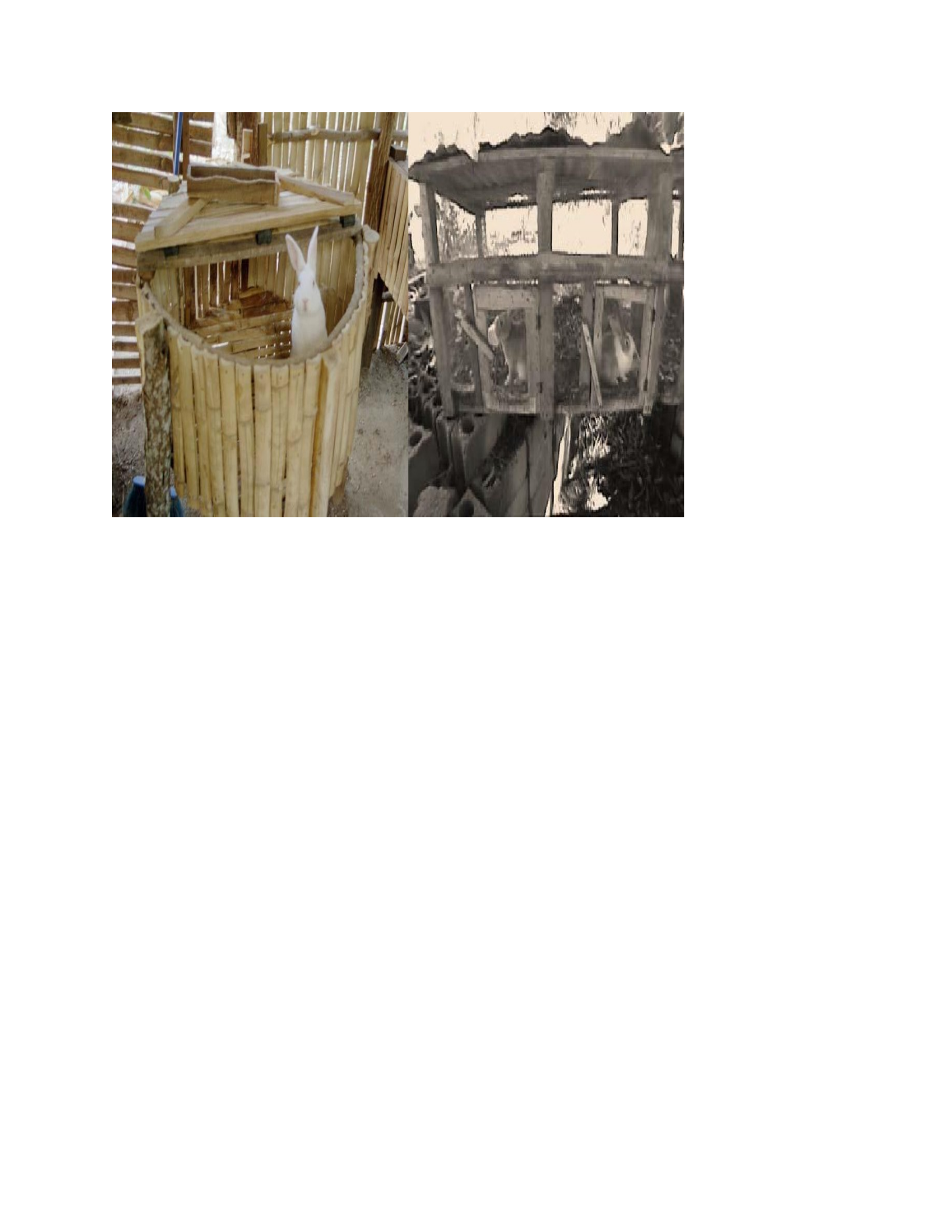
Bamboo rabbit cage wood and wire mesh cage
Types of cages/ hutches
1. Indoor hutches: These are kept inside a house (stable). The stable is a place in which or
under which the hutches are placed.
Advantages:
It provides good conditions for the rabbit and the rabbit keeper
Easy access to animal (even when there is rain or high sunlight)
For animal adequate protection
The individual hutch can be easily cleaned and disinfected
It allows ease increase in production
Disadvantage:
It is very expensive
2. Out door:
The requirements of space, protection and ease of management can be achieved through
appropriate design, construction and siting.
Design: A typical rabbit hutch dimensions are follows;
1m above the ground
Height of hutch: 60cm at the front, 50cm at the back for easy drainage
Width: 50-60cm
Length: 90-120cm

Construction: The materials used in construction would usually be locally available
materials such as interwoven branches, split bamboo, mud, tin, plastic. If possible, a fence
should be built around outdoor hutches and fitted with a padlock gate.
Siting: Common aspects of the siting include the following;
a. It should be placed near a house wall / fence to provide shade and protection
(from sunlight, rain and wind). Note that while too much sunlight may be stressful, too
little is also undesirable because the hutch may become damp, there will also be reduced
disinfection by the sun’s ultraviolet rays, and Vitamin D synthesis by the rabbit may be
impaired if it does not experience some direct sunlight.
b. It is important to site hutches under trees in a very hot environment
c. The site must ensure security against predation. This is achieved when hutches are
kept
near keeper’s house.
Advantages:
it requires low capital
Materials are always
available
Appropriate when starting production
Disadvantages:
No perfect protection against
predator Difficult to clean
Not easy to increase the number of hutches quickly (it limits production)
Floor Method: This involves keeping the rabbits on the ground in a fenced area provided with
simple boxes for shelter.

