


INTRODUCTION The demographics of Americas public
The demographics of America’s public schools are considerably more racially and
ethnically varied than in decades past (GAO, 2022). In the late 1980s, over 70% of K-12
students in U.S. public schools were White, and by 2020, that percentage had dropped to
less than half (Schaeffer, 2021). By contrast, the proportion of students of color has
increased during the last 30 years. Hispanic students make up nearly 30% of K-12 public
school enrollment, and Black students represent almost 15% of student enrollment
(Carrillo, 2022). The term “diversity” is an awareness of the shifting demographics in the
U.S., capturing “differences in social identities [in terms of] age, race, socioeconomic
status, gender identity, gender expression, sexual orientation, disability, and nationality”
(American University, 2023, para. 7). As students show up to American classrooms from
a range of backgrounds and an intersection of identities, such diversity is best served with
educational equity in mind (Center for Public Education, 2016).
Educational Equity
Advocates for educational equity strive to ensure students’ academic, social, and
emotional needs are met within their learning environment (National Equity Project,
2023). Educational equity centers on access—access to opportunities, content,
experiences, rigor, and relevance that students need in order to be successful (Leute,
2022). To that, educational equity is “access to an education focused on meaningful
learning—one that teaches the deeper learning skills contemporary society requires in
ways that empower students to learn independently throughout their lives
(Thompson & Thompson, 2018, p. 36; Darling-Hammond, Wilhoit & Pittenger, 2014).
Educators achieve equity for their students when they
• design, establish, and maintain diversity-centered campus and classroom
environments,

• acknowledge and embrace difference as a strength within the learning community,
and
• facilitate positive outcomes for all, regardless of student background or identity
(National Equity Project, 2023).
For the English teacher, achieving equitable outcomes for students involves careful
“consideration” of curricular choices, instructional strategies, and materials access
(Leute, 2022, p. 1). In its position statement titled “Opportunity to Learn,” the National
Council of Teachers of English (NCTE) (2019) suggested that ELA instruction include
“curriculum with positive representations of diverse student and faculty populations and
accurate information on histories of diverse populations” (para. 4). Aligned to that ideal,
the topic of this research study is ELA teachers’ experiences incorporating curriculum and
instruction that is high-quality, diversity-centered, inclusivity-minded, and educational
equity-driven.
The English Classroom and the Culture Wars
The influence of “culture wars” has historically determined what, how, and with
whom students learn (Goldstein, 2012). Culture wars is defined as the fight over
America’s identity, values, and ideals (Hunter, 1992). Critical race theory (CRT) is
currently at the center of a culture war. Theorized in legal scholarship decades ago, CRT
is used for race-centered social critique, examining racial bias within the legal system and
other public entities in America (Kim, 2022; Crenshaw, 1988). Burmester and Howard
(2022) explained that the current contention over CRT and broader social reckonings
outside the classroom have led to a narrowing of curricula and instruction inside the
classroom. That is, anti-CRT policy deters curriculum and instruction that “recognizes,
respects, appreciates, and celebrates the rich human differences that make up our diverse
societies” (Thompson & Thompson, 2018, p. 42). Sawchuk (2021) suggested the reason
for CRT’s connection to diverse, inclusive K-12 curriculum and instruction: [T]here is a

good deal of confusion over what CRT means, as well as its relationship to other terms,
like “anti-racism” and “social justice,” with which it is often conflated. To an extent, the
term “critical race theory” is now cited as the basis of all diversity and inclusion efforts
regardless of how much it’s actually informed those programs. (paras. 11-12)
The Issue in Context
While curriculum and instruction conflicts arise, such as the controversy over the
Common Core standards over a decade ago, an increasing number of students are being
affected by legislative and policy restrictions on what and how they learn (Nelson, 2023).
Nearly 140 school districts across 32 states banned over 2500 books, impacting nearly
four million learners during the 2021-22 academic year (Pendharkar, 2022). In addition to
an unprecedented number of books banned during 2021 and 2022, there were over 60
legislative proposals to prohibit the teaching of topics considered contentious (Krebs,
2022). That is, almost every state has introduced legislation regulating content and
discourse around race, ethnicity, gender, and other identity topics in public schools since
2021 (Bissell, 2023). Of the proposed measures prohibiting curriculum and instruction
around certain topics, over 42% became law or policy, between January 1, 2021, and
December 31, 2022 (Alexander et al., 2023). These are district and state mandates
seeking “to control teaching and curriculum in the classroom” (Lambert, 2023, para. 2).
Within the State. In the state where this research study took place, anti-CRT
legislation passed in the House of Representatives in March 2023. The legislation
regulates the way teachers can “discuss racism and sexism in the classroom”
(Schoenbaum, 2023, para. 5). The following details are included in the bill:
• Public schools cannot encourage concepts such as the superiority of one race or
sex over another or the inherent racism or sexism of a group.
• Teachers cannot expose students to the concept of “white privilege,” or that the
American system is set up to bestow unfair advantages to White people.

• No lessons can be taught that suggest that individuals bear the legacy of actions
committed in the past by members of the same race or sex.
• Meritocracy cannot be promoted as inherently racist or sexist.
• Lesson cannot be taught that suggest America was founded to oppress members of
another race or sex.
• Schools must alert the state department of education before providing instruction
on the prohibited concepts mentioned in this legislation.
• Schools and districts must alert the state department of education before enlisting
diversity trainers, speakers, or consultants who advocate for or who have
previously promoted the prohibited concepts mentioned in this legislation.
(Schoenbaum, 2023)
In the Area. At the local level, my role as teacher support affords me the
opportunity to hear the concerns of teachers who report being unsure of what they are
allowed to teach. Granted, teachers in the districts throughout this region are required to
use the curriculum purchased for their content area. Still, most of them are accustomed to
the privilege of supplementing the district-adopted material with their favorite novel
study or specialty units. Since the onset of the anti-CRT movement, the following scene is
common in English/ELA department meetings.
English teachers meet in the conference room for their bi-weekly professional
learning community (PLC) meeting. As teacher support, I sit, observe, and take notes on
the “glows” and “grows” that each teacher shares. The “glows” are positive situations or
outcomes; “grows” are issues or outcomes that need to be addressed. Most teachers report
loving the new material offered in the recently purchased curriculum, commenting that
the ease of use frees up time to plan and collaborate—a commonly mentioned “glow.”
The “grows” for all teachers is student engagement. Every teacher asks for support

increasing student engagement, especially that of students of color. One teacher says,
“Some of these kids completely tune out during the lesson. It’s like they hate the story,
hate the discussion, hate the activities.” I ask, “Is there a particular genre, topic, or theme
that seems to repel some students?” Most teachers answer, “No, not really. Kids just say,
‘This is boring. Can we ever read stuff about real life?’” To which, I respond, “Oh, I see.
This sounds like a relevance issue. Are the texts culturally relevant to your student
groups?” And what I hear is “Yikes, probably not, at least I hope not, since all of that is
illegal or restricted now.”
Across the country and close to home, anti-CRT laws, policy, and proposed
legislation are affecting what is being offered to students. As English teachers strive to
empower students to read, think, and write critically as members of an inclusive
classroom community, this study probed the realities of recent legislation on that
endeavor.
Problem of Practice
The problem of practice (PoP) addressed in this study centers on political barriers
to employing equitable education practices, such as utilizing diverse, inclusive curriculum
and instruction. Such barriers are especially problematic, because there is a significant
gap in literacy proficiency between White students and students from minoritized and
marginalized backgrounds within the setting of this study. Proficiency rate differences by
race and ethnicity reach double digits at most grade levels. In essence, students of color
are in critical need of high-quality reading and writing instruction. Research supports
cultural relevance and responsiveness as approaches to increasing literacy levels (Ladson-
Billings, 1995; Gay, 2010). These are approaches that encourage the use of students’
diverse backgrounds to make sense of the content, the world around them, and who they
are as knowledge constructors (Will & Najarro, 2022). Moreover, a substantial part of
ELA teaching is facilitating relevance and responsiveness by wedding students to

meaningful literary study. Diverse, inclusive content “provides a site of inquiry like no
other for exploring the human condition” and empowers the learner to
“read both texts and worlds with a nuanced and critical eye” (Appleman, 2022, para. 2).
Barriers to Curricular Relevance and Instructional Responsiveness
All 50 states have incorporated cultural competence and responsive teaching into
their educator standards (New America, 2019). That is, culturally relevant and responsive
teaching have been a part of professional development and educator evaluation for years.
Now, teachers who seek to meet educator standards in the area of cultural relevance and
responsiveness must meander around policy and regulations to find legal and/or
permissible ways to do so (National Education Association & The Law Firm Antiracism
Alliance, 2022). Though culturally relevant, responsive teaching and critical race theory
are not the same, many fear that anti-CRT policy conflates cultural relevance in the
classroom with divisiveness (Najarro, 2022b). The concern is warranted; during 2021 and
2022, nearly all 50 states proposed legislation to preempt (override) local curricular and
instructional selection authority (Nelson, 2023). In addition to targeting CRT, curricular
preemption threatens local school districts in the following way:
State preemption of schools and school districts is of great concern…These bills
target curricula related to Black and Indigenous Peoples of Color, explicitly
aiming to prevent any form(s) of culturally relevant pedagogy or culturally
responsive teaching in the name of protecting white students, parents, and
communities from purported discomfort. (Nelson, 2023, p. 2)
With laws and regulations in place that prohibit diversity-centered, culturally relevant,
responsive curriculum and instruction, it is unclear how teachers should go about
ensuring educational equity. The existing tension between the mission of schools to
provide equitable educational experiences and the agenda of politicians to disrupt equity
work intensifies in the English classroom (Will, 2023).

Stress and Confusion
Woo et al. (2022) conducted a research study, titled “Walking on Eggshells—
Teachers' Responses to Classroom Limitations on Race- or Gender-Related Topics,” that
elicited feedback from thousands of teachers across the country. English and ELA
teachers reported job-related stress over the “the intrusion of political issues and
opinions” more than any other content area, including elementary education and social
studies (Woo et al., 2022, p. 7). This finding is troubling yet understandable under the
circumstances. Vague curricular restrictions are confusing teachers (Pollock et al.,
2022b). Many teachers have turned to administration and teacher support staff for
guidance. Amid a growing number of directives and regulations, teachers are being
advised to “exercise caution in their choice of words, curricular content, instructional
approaches, and activities, cognizant that their decisions could get them fired”
(Teitelbaum, 2022, p. 52). Such a climate has clouded teacher autonomy and agency,
making some feel pedagogically apprehensive (Burmester & Howard, 2022). That
apprehension is especially prominent among English teachers (Woo et al., 2022).
Teacher Support
As teacher support, I play a vital role in facilitating teachers’ understanding of
district and state mandates regarding curriculum and instruction. Moreover, I am charged
with enhancing educator practice, which often entails alleviating professional anxiety and
building practitioner confidence. Still, it is the classroom teacher who delivers
curriculum. Explaining the essential role of the educator in curriculum and instruction,
Alsubaie (2016) stated, “Without doubt, the most important person in the curriculum
implementation process is the teacher” (p. 106). It is that importance that creates the need
to better understand teachers’ experiences with professional decision-making during the
current culture war that is impacting public school classrooms. Exploration of this
problem found a gap in knowledge—implications for striking a balance between locally

chosen curricula and distally-created policies. To fill the gap, the focus of this research
was highlighting what English educators are doing to abide by anti-CRT regulations
while maintaining use of diverse, equitable, inclusive curriculum and instruction.
Statement of Purpose and Research Question
This study aimed to spotlight the perspectives and experiences of ELA teachers
navigating the process of making professional decisions that adhere to anti-critical race
theory legislation and/or policy. This is research that aimed to explore the state of
diversity, equity, and inclusion in the ELA classroom during the culture war over CRT.
Further, this study sought to examine the wherewithal of English teachers to maintain
their presence as literacy leaders charged with reading, writing, speaking, and listening
instruction in a political climate that undermines their autonomy (Sawchuk, 2023). The
following question guided the unveiling of and insight into English teachers’ efforts to
serve the heterogenous literacy needs of their demographically diverse classrooms:
• How do English teachers make curriculum and instruction diverse, equitable, and
inclusive amid the anti-critical race theory movement?
A theoretical framework was used to explore and interpret three English teachers’
experiences, address the problem of practice, and answer the research question.
Theoretical Framework
The theoretical framework structures a study and offers context into which a
problem of practice can be considered (Grant & Osanloo, 2014). This research was
framed by two theoretical structures: critical race theory and culturally relevant pedagogy.
In educational research, CRT is a framework that leverages racial consciousness to
investigate and understand facets of teaching, learning, and student achievement,
including debates over who and what are represented in the curriculum (Delgado &
Stefancic, 2001). Alongside CRT, culturally relevant pedagogy (CRP) centers the
significance of culture in education (Brown-Jeffy & Jewell, 2011). Kimberlé Crenshaw’s

(1988) critical race theory and Gloria Ladson-Billings’s (1995) culturally relevant
pedagogy aided the study by working together in the following way: While CRT
provides a framework and for some a tool of analysis for examining educational practices
and structures that continue to subordinate groups of people, culturally relevant pedagogy
offers a model of theory to practice and examples of how such instruction can be
delivered. When CRT is related to CRP, the centrality of race to American culture is
acknowledged. (Brown-Jeffy & Cooper,
2011, p. 71)
In essence, students of color and from other marginalized groups should be equipped to
perform as well as their peers. Data show they are not (Hanselman et al., 2014). As
mentioned before in the PoP section, literacy scores show major gaps in performance
between White and non-White students. Howard (2003) insisted that culturally relevant
and responsive practices improve outcomes for students of color. Despite the acceptance
of cultural relevant and responsive teaching as “best practice” (Byrd, 2016; Larson et al.,
2018; Piazza et al., 2015), there is growing discouragement of such equitable practices
due to their conflation with teaching critical race theory (Will & Najarro, 2022). As such,
the theoretical framework of this research study and the problem addressed within it
justified a closer look at teachers’ navigation of equity-erasing policies that potentially
exacerbate underachievement.
Critical Race Theory
The connection between critical race theory and education is an important one.
CRT in education validates the examination of “the role of education policy and
educational practices in the construction of racial inequity and the perpetuation of
normative whiteness” (Dixson & Anderson, 2017, p. 122). Within this study, CRT
interrogates laws and policies that eliminate or restrict diversity, equity, and inclusion
(DEI) efforts in the classroom when historically and contemporarily marginalized

students continue to fall further behind their peers. According to Ladson-Billings (1998),
within CRT, the realities of society are built upon the interchange and internalization of
others’ experiences. Telling teachers’ stories presented an opportunity to recognize and
rectify educational injustices that might otherwise be concealed or misunderstood
(Delgado, 1990). That is, CRT in education works to unearth the source of educational
inequity.
Culturally Relevant Pedagogy
Culturally relevant pedagogy (CRP) is closely connected to CRT in education in
the way that it focuses on race, culture, and student learning. Conceptually, CRP is
curriculum and instruction that serve the “academic and social needs of culturally diverse
students” (Howard, 2003, p. 195). CRP bears the standard for distinguishing between
teaching and learning that is student diversity-centered and that which is not. For this
study, CRP anchored this research with its fortifying premise that “every child is entitled
to learn” and can learn when policies, systems, and supports are in place “for teachers to
deliver instruction that is relevant to all of the diverse population that inhabits our
schools” (Brown-Jeffy & Jewell, 2011, p. 80).
Critical race theory and culturally relevant pedagogy drove the exploration of
educators’ experiences making curricular decisions as sociopolitical issues increasingly
bear heavily on the ELA classroom. The relationship between the theoretical framework
and the focus of the study is indicated in the figure below.
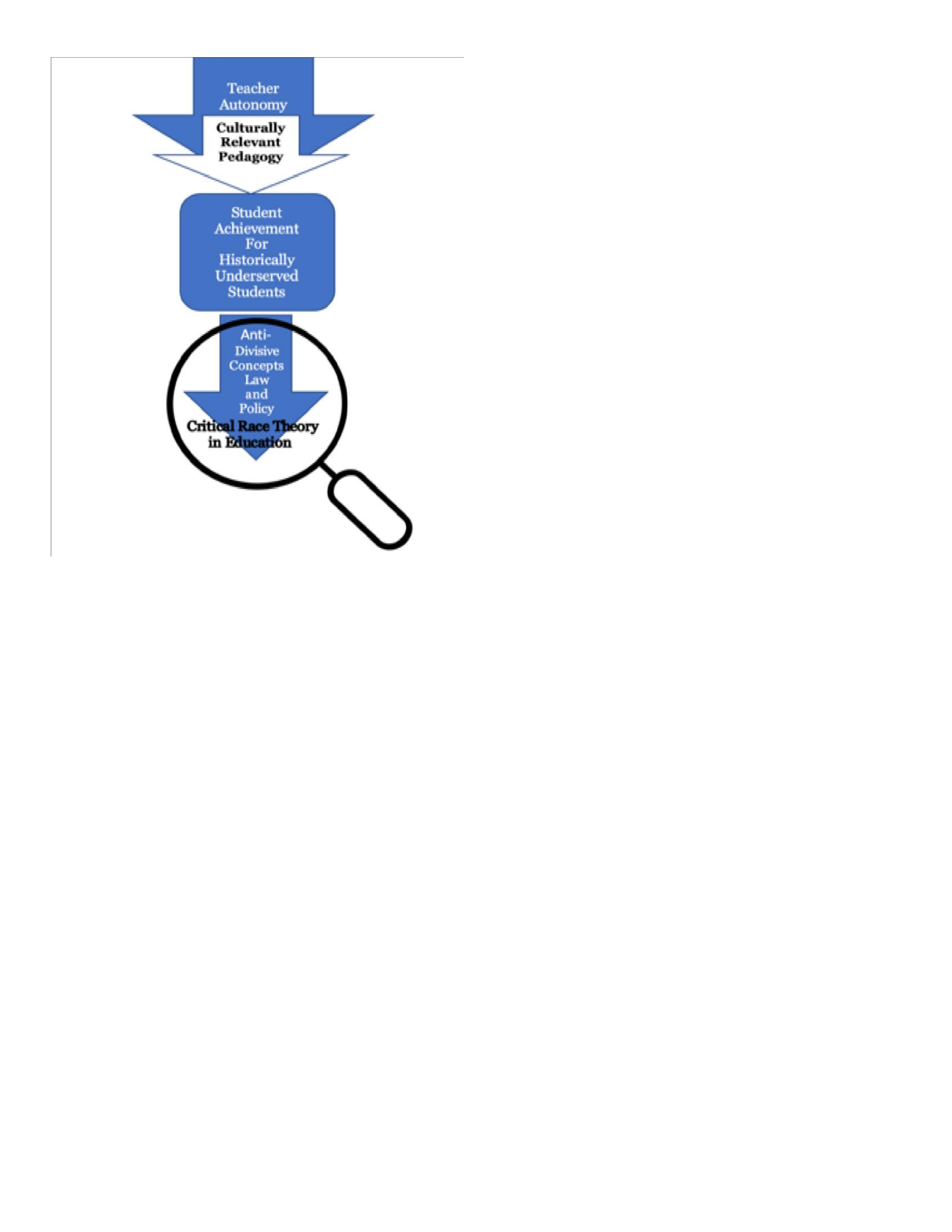
Figure 1.1
Theoretical Framework
Rationale
As the research question indicates, this study explored the experiences of English
teachers making instructional decisions in the era of anti-CRT. As the problem of practice
discussed and a wealth of scholarly literature suggestions, such a probe was imperative
for several reasons, sheltered under an overarching principle: Students are raced,
ethnized, classed, gendered, and oriented in diverse and intersectional ways and are
bringing those identities with them into the classroom (Mensah, 2021). Due to trends of
disparity, the ferocity of the anti-CRT movement, and the need for culturally relevant
education, this qualitative study strove for insight surrounding a problem of practice:
English teachers contending with the delivery of a culturally relevant education under
culturally repressive regulations.

Disparity
Racial and ethnic achievement inequality has yet to be overcome. Numerous
studies document the chronic underperformance of students of color (Berkowitz et al.,
2017). Porter (2023) posited that, within the last four decades, achievement disparity has
received more attention than almost any other educational topic. To that, the considerable
focus on and framing of racial and ethnic performance gaps led Quinn (2020) to examine
the impact such coverage has had on perceptions of, stereotypes about, and bias against
certain student groups. In short, disparity is a robust conversation in education. Put
another way, there is an underperformance problem, and many people are aware. That
underperformance underlies unfortunate realities, including limited access to rigorous
courses, lower graduation rates, and static future earning potential (Jencks & Phillips,
1998). In ELA, literacy proficiency is a major achievement indicator. “Literacy is one of
the strongest predictors of adult success,” yet many graduate from high school along the
spectrum of illiteracy (Cheney, 2014, p. 29; Reading, Literacy, and Education Statistics,
2009). As such, there is a need for better programming for students who consistently
underperform their peers.
The Anti-Divisive Concepts Movement
Another justification for this study is the movement to smother the reckoning on
race, ethnicity, gender, language, class, inequality, and oppression (Sawchuk, 2021). The
stance against CRT and the “divisive” concepts thought connected to the theory is a nod
for laws that “protect objective, unbiased, and balanced teaching” (Krebs, 2022, p. 1927).
Anti-CRT rhetoric maintains that, by obstructing teaching and learning that might awaken
personal, social, or historical awareness, students are protected from attempts to divide or
indoctrinate (Krebs, 2022). The agency of the school setting, educators, and programming
to expose students to multiple perspectives, diverse ideologies, and critical thinking is the
real threat for some policymakers and stakeholders (Burmester & Howard, 2022).

Moreover, the effort to disrupt DEI culture in schools and prevent social critique in the
classroom has been likened to the destruction of the teaching and learning process (Kim,
2021). For the many learners who desperately need to build knowledge, hone skills, and
catch up to their peers academically, pedagogical destruction is an especially poignant
concern.
Culturally Relevant Education
The demographics of public schools represent an increasing number of students
from diverse backgrounds (Carrillo, 2022). Educators have found the diversity within
public school classrooms in need of differentiated approaches (Thomas & Berry III,
2019). Deficit thinking and cultural undervaluing are among the reasons scholars
developed tools to remove barriers and improve teaching and learning experiences for all
(Will & Najarro, 2022). Such approaches and strategies are framed by an “asset-based”
paradigm. This is a mindset that respects and appreciates the differences that make
students who they are. An asset-based approach honors “the diversity that students bring
to the classroom, including culture, language, disability, socio-economic status,
immigration status, and sexuality as characteristics that add value and strength to
classrooms and communities” (Office of Teacher and Leader Policy, 2022, para 1).
Culturally relevant teaching and culturally responsive pedagogy were developed to
strengthened teachers’ competence to utilize student diversity in teaching and learning
(Byrd, 2016; Ladson-Billings, 1995; Gay, 2010). Still, there are some who oppose such
approaches, as they believe them to be extensions of critical race theory (Morgan, 2022).
As such, this study sought to explore the of dynamics between this kind of educational
programming and political influence.
Researcher Positionality
Maher and Tetreault (1993) explained that positionality indicates who researchers
are, in terms of race, ethnicity, gender, class, and power, in relation to their participants

and setting. Identifying as an experienced ELA teacher, I deeply relate as an insider,
feeling as though my time in the English classroom links me to those who are still there
(Herr & Anderson, 2015). What is more, I have often pondered how to “grip and engage”
my reluctant readers and writers. I’ve made “risky” curricular choices— decisions to
replace the hardly relatable short stories or novels I was asked to teach. Indeed, when
benchmark data came back and indicated learning gaps or stalled literacy growth, I made
curricular and instructional shifts.
As of late, the roles I have served put me into the outsider category (Herr &
Anderson, 2015). Working as teacher support for the last eight years adds a layer of
separation from my role as “teacher” in the traditional sense. Recent responsibilities have
included the observation, coaching, modeling, and evaluation of classroom teachers. I
have been specifically tasked to gauge their choices in and implementation of curriculum,
instructional methods, and formative assessment. There is a natural divide between
evaluators and the evaluated. However, none of the participants for this study were
educators who I currently observe, coach, or evaluate. I have no direct, daily contact with
them.
An English Teacher of Color
My racial and cultural identities are also integrated into my positionality. I am a
Black female from the Deep South—born in Little Rock, AR, a few blocks away from the
site of the Central High School desegregation showdown of 1957. I was raised by both
my college-educated parents in a “traditional,” middle-class family and community. My
father coached our little league softball team, and my mother was the registered nurse
who patched up all of our sports injuries during her years on the emergency room staff.
My sister and I attended our mom’s “hometown” school system and thrived K-12. This
(and more) means that my identity has been developed by multiple factors. Race, region
culture, class, and familial support are among those factors and influence my worldview.

In all, my view of the world impacts research connected to the underachievement and
disenfranchisement of students who look like me. As a Little Rock native, I am no
stranger to politically motivated educational oppression. As an English teacher of color, I
am enraged by the sweep of books by and about people of color off the shelves of school
and public library systems. I fear the fate of culturally relevant teaching and equity efforts
that make more students feel safe, seen, and heard. Efron and Ravid (2020) said it best:
the way researchers view the world “implicitly shape…decisions throughout the research
process” (p. 54).
Researcher Fear. Significance of positionality surfaced early on in this study. In
my experience, training centered on cultural competence was often wrought with
uncomfortable, contentious racial moments. I remember colleagues being brought to
tears, to rage, and to utter dismissal of all notions of systemic inequality, personal bias,
and educational disservice. I believe such professional discussions are necessary for
educators because closing the achievement gap is going to require “courageous
conversations” (Singleton & Linton, 2006) and more. Still, the probe within this study
carried with it the potential for socioemotional heaviness about which I felt a degree of
researcher fear. On one hand, I was driven to probe; on the other, I did not want to elicit
the degree of discomfort I had witnessed for years during professional learning around
race, education, and social injustice. I did not want to hurt anyone or be hurt by the
“touching upon race” required with this inquiry. In that way, I can relate in some small
way to those who want to avoid sensitive topics such as “race in America.”
For Our Students. But I remembered the students. They bring their race and
ethnicity, home language and dialect, culture and background with them to school. They
cannot avoid it, regardless of how marginalized they feel. And the adults on the scene
should not avoid who these learners are either. Working toward the inclusion of all
students to take part in learning that builds from who they are and what they know is my

life work. This study fit within my life work, so I had to remind myself that, however
much I may or may not agree with what I discover, discomfort is a fleeting condition. I
reconciled that my participants and I would be a team of practitioners, working for the
benefit of students in this region and possibly beyond. I constantly reminded myself that I
was working with them, learning from them, and impacted by them—a position Herr and
Anderson (2015) described as practitioners who are open to change in the process of
investigation. I was guided by the following self-imposed standard: Yes, we are English
educators. We may have related experiences as English educators. But your story is your
story to tell, with no preconception from me. You must not feel that the future of teacher
autonomy or student outcomes rests in the disclosure of your truth. I simply want to hear
from you and be informed by your experiences, however similar to or different from my
own.
Research Design
As a practitioner striving to improve professional experiences for the educators I
serve and learning experiences for the students they serve, my study was situated in
action research. Mertler (2020) explained that action research aims to “improve one’s
own professional judgement and to give insight into better, more effective means of
achieving desirable educational outcomes” (p. 14). I attempted this research to better
understand the nuances of teacher decision making amid political pressure and constraint.
I looked to the perspectives of English teachers as a vital voice in the conversation on
curriculum and instruction for equitable access to engagement and achievement. An
explanation grounded by the work of John Dewey, Herr and Anderson (2015) asserted
that using the professional experience of practitioners as a well of knowledge is a
pragmatic approach to improvement. Therefore, my research plan was to seek out ELA
teachers from a district within the Southeast region of the United States for qualitative
study.

Phenomenology
An approach offered to research methodology by 20th century German
philosopher Edmund Husserl, phenomenology centers on lived experience (Groenewald,
2004). I looked to phenomenology as a fitting method to seek the essence of English
teachers’ current experiences with and perceptions of curricular decision making. As a
qualitative approach, new insight was gained by drawing as near as possible to the
phenomenon of study through the collection, analysis, and interpretation of data from the
experiential stories of fellow educators (Aspers & Corte, 2019). Brene¢ Brown (2010)
suggested that stories are “data with a soul” (1:05). That is what I sought. I wanted to
highlight real thoughts, feelings, and experiences of these teachers. That is, I wanted to
know more than what quantitative data might have provided, such as how many teachers
felt impacted by the anti-CRT movement or the titles that had been shelved in fear of
retaliation. I wanted to capture the essence of the educator’s soul at this moment in time,
as they navigate yet another “student first” movement.
Hermeneutics. Martin Heidegger, a philosopher, theologian, and Husserl
contemporary, was also interested in understanding the lived experience (Laverty, 2003).
However, Heidegger believed that interpretation was part of the human spirit and that our
understanding of our experiences is a function of interpretation (Laverty, 2003).
Hermeneutics refers to the exercise of interpretation, in which knowledge and insight
emerge from interpretation-based understanding (Dyer, 2010). For Heidegger,
hermeneutics justifies interpretation as an essential means to understanding the lived
experience (Laverty, 2003). Based on that concept, a hermeneutic phenomenological
approach to this study drove the examination and interpretation of teachers’ experiences
to arrive at an answer to the research question: How do English teachers make curriculum
and instruction diverse, equitable, and inclusive amid the anti-critical race theory
movement?

Participants
Merriam and Tisdell (2016) explained that qualitative research is not appropriate
for “generalization” and is best used for “purposeful” insight (p. 96). They suggested
“purposive,” “non-probability” sampling, or selecting a sample “from which the most can
be learned” (p. 96). I chose a criterion-based, typical sample—a roster of participants
believed to be typical of a group being studied (Efron and Ravid, 2020). For this study,
sampling had to represent teachers who currently teach English, English language arts,
reading, or similar language arts content. Additionally, I desired a sample of teachers
from a regional school district, since I am familiar with the adopted standard course of
study driving instruction. Upon gaining Institutional Review Board (IRB) approval, I sent
correspondence through the U.S. Postal Service to several ELA teachers at the
elementary, middle, and high school level asking for their participation. In the event that I
did not receive response to the physical invitations, I planned to invite other teachers via
their personal e-mail accounts. My goal was to represent six teachers [two teachers from
each level—elementary, middle, and high school]. I also wanted the six participants to be
demographically diverse. Three teachers agreed to participate.
Data Collection and Analysis
As Efron and Ravid (2020) recommended, I revisited my problem of practice,
research question, and the data I needed before selecting collection methods. As
previously mentioned in the problem of practice section, the focus of this study is the
misalignment between the mission of English teachers to provide equitable educational
experiences and the agenda of anti-CRT politicians to disrupt equity work. To address the
problem, this study required data that answered the following research question: “How do
English teachers make curriculum and instruction diverse, equitable, and inclusive amid
the anti-critical race theory movement?”

Collection
Careful methods selection is crucial in qualitative studies. Teherani et al. (2015)
explained that, in qualitative studies, “The researcher is the main data collection
instrument,” examining what experience “means to the participants studied” (p. 669). I
collected data from three sources: an open-ended response survey, a one-on-one
interview, and document analysis to answer the research question. An autoethnographic
narrative was incorporated into the use of a researcher’s reflexive journal, which provided
a means to bracket and separate my perceptions, preconceived notions, and biases during
the study.
Analysis
Phenomenological analysis, according to Merriam and Tisdell (2016), serves to
extract the basics of a phenomenon. For this study, that extraction entailed oscillating
between description and interpretation to examine, compare, and make sense of the data
(Merriam & Tisdell, 2016). Upon initial analysis, data was organized by fixed codes that
were based on the theoretical framework (Stuckey, 2015). I sought theme emergence of
participants’ experiences, in a process that cycled reading and review, annotation and
summarization, and meaning making and interpretation (Smith & Osborn, 2007). The
data collection and analysis process and other methodology details for this study are
discussed in Chapter 3.
Summary of the Findings
Ladson-Billings’s (1995) culturally relevant pedagogy and Crenshaw’s (1988)
critical race theory facilitated the interpretation of this study’s findings. The findings
indicate that making curriculum and instruction diverse, equitable, and inclusive requires
critical cognizance of beyond-the-classroom forces that impact teaching and learning,
continuous professional learning, intentional efforts to offer multicultural literary
experiences, circumnavigation of monocultural curriculum, and a commitment to meeting

students’ needs. Participants recounted stories and shared perspectives that highlight what
is involved in their service to their diverse student groups, despite the political movement
to evade equity work in the classroom.
Significance and Limitations of the Study
What comes from qualitative research is the true fuel that we need as educators,
practitioners, and transformers to power change and improvement. In this regard,
qualitative inquiry, and this study in particular, gives rise to what Bryk (2015) termed
“change ideas” that are “based on evidence from what actually happens” (p. 7). My work
revolves around promoting teacher quality, growth, and improvement through
meaningful, impactful advice and coaching. An area that is growing increasingly
confusing is what constitutes regular inclusion of relevant content and learning activities
that are culturally diverse and what stands as deep indoctrination of anti-American
sentiment and pro-division agenda that are restricted or illegal. While the media has
covered the culture war over critical race theory extensively, what is less featured is the
way in which teachers experience instructional decision making amid such sociopolitical
contention. Miller et al. (2020) posited that there is agency in truth to “achieve
educational equity by giving voices to silenced and marginalized populations aimed at
informing and educating” those whose perspectives need expanding (p. 273). My
perspective needed expanding in order to continue offering meaningful teacher support.
Moreover, this action research was authentic to my professional challenges and should
not be considered a generalizable set of findings. However, for those educators who are
tasked with supporting ELA teachers’ curricular and instructional choices, the hope was
that, by reading my study, change ideas will emerge.
A limitation in this study surrounded the nature of interpretation. Smith and
Osborn (2007) suggested that research based on the interpretation of qualitative data
carries with it the responsibility of deriving meaning from the multiple facets of human

essence—thoughts, feelings, memories, and language. While the potential for keen
insight and perspective is possible in qualitative research, the challenge for me, the
researcher, lay with aptly construing, inferring, and interpreting data collected from
participants. An additional data collection method, such as a focus group interview, may
have built more confidence in the interpretations.
Sample size proved another limitation of the study. While no more than five or six
would have been a manageable number of participants, the greater the number of diverse
perspectives, the greater the potential for inclusive representation of English/ELA/literacy
practices. After all, there is no one English teacher voice, a notion similar to that of
Harvard law professor Randall Kennedy’s assertion that, “There is no non-white voice”
(Delgado, 1990, p. 97). One voice does not nor could not represent a range of
perspectives. Yet, to represent a range of subpopulations, my sample size would have
increased beyond what could be efficiently and effectively managed. Insomuch as ELA
teachers navigate the political pressure in the form of challenges, bans, and “curric script”
(scripted curriculum), the experiences of English teachers in this era of anti-critical race
theory has been fused into a common “voice.”
Organization of the Dissertation
The introduction to the topic and an overview of the problem in this first chapter
are followed by four chapters, each addressing components of the study. Chapter 2 offers
a review of the literature connected to the topic of this study for contextualization, with
an emphasis on the theoretical framework that supported this research. In Chapter 3,
methodology for this research is explained; Chapter 4 follows with a review of the data
and illumination of the findings. The last chapter is devoted to discussion of the results,
implications for ELA teacher support, reflection on the study’s methodology, and
recommendations for further related studies.

List of Definitions
Achievement Disparity: Achievement disparity in education refers to the gap in academic
performance and outcomes between or among groups of students (Ansell, 2004). Critical
Race Theory: In education, critical race theory, based on the 1980s work connected to
legal scholar Derrick Bell, is a lens of examination through which appraisal of
educational practices, policies, and visions centers around the impact of white supremacy
and racism (Roithmayr, 1999).
Culture: Culture is held as a set of characteristics, values, beliefs, customs, and behaviors
endorsed and shared by members of a social group (Prinz, 2020).
Cultural Competence: Cultural competence reflects an alignment of attitudes, behaviors,
practices, and policies that enables a person or system to effectively engage cross-cultural
situations (National Center for Cultural Competence, 2021).
Culturally Relevant Education: Culturally Relevant Education is based on the
foundational work of two researchers: Geneva Gay (2000) and Gloria Ladson-Billing
(1995). It is a conceptual framework combining two areas of focus: pedagogical
philosophy and teaching practices (Aronson & Laughter, 2016).
Diversity: Diversity describes the quality, status, or dimension that represents difference
in categories such as, race, ethnicity, nationality, language, gender identity, sexual
identity, socioeconomic status, age, and ability (Silverman, 2010).
Divisive Concepts in education: Divisive issues within the context of public schools
include concepts that are generally considered “problematic” to explain to students
because they are centered on “political, moral, and sociological beliefs about aspects of
race, gender, sexual identity, and oppression” (Stitzlein, 2022, p. 596).
Equity-driven/equity-focused: Equity in education entails accessible opportunities to
engage, participate, learn, and develop regardless of race, ethnicity, culture, gender

identity, or socioeconomic status. Equity-driven/focused-efforts promote equal access to
those opportunities (Jurado et at., 2020).
Ethnicity: Use of the term “ethnic” or “ethnicity” has evolved over time to refer to
various categorizations of groups. Generally, an ethnic group is a set of people who are
grouped by their shared set of cultural and historical distinctions (Hamer et al., 2018).
Hegemony: Cultural hegemony describes a context in which those with the most power
and influence in society dictate what is real, of value, and normal in a culture (Zaidi et al.,
2016).
Instructional Text: Instructional texts are texts used to facilitate student learning at any
grade level within any content area. Instructional texts may include but are not limited to
physical textbooks, novels, online documents, news articles, and trade books (Hruby et
al., 2019).
Meritocracy: As a social construct, meritocracy consists of those who enjoy success based
on their talent, ability, and effort, with no regard to power or privilege. Meritocracy is
also used to describe the condition under which a person advances and succeeds (Mijs,
2015).
Multiculturalism: Multiculturalism is a framework that endeavors to weave recognition,
understanding, and appreciation of different races, ethnicities, classes, and orientations in
an effort to escape a monocultural society (Moawad, & Shoura, 2017).
Race: Defining race is a challenge in science and research. A couple of centuries ago, race
was defined biologically, or based on physical characteristics people were born with such
as skin and hair color. Over the years in the United States, the federal government has
categorized race in a range of ways, from White-Black-Indian to ancestral-based
references such as European American, African American, or Pacific Islander (National
Research Council, Division of Behavioral and Social Sciences and Education, Panel on
Methods for Assessing Discrimination, and Committee on National Statistics, 2004).

Students of color: Students of color “include those who are Black, Hispanic, Asian,
Pacific Islander, American Indian/Alaska Native, and of Two or more races” (Condition
of Education, 2022).
Systemic Racism: Systemic racism is an arrangement of rulings, laws, and regulations
authoritatively endorsed that favor certain groups in a society and entitles them to rights,
power, and privilege denied to other groups. In America, some reference the domination
of Indigenous people, the enslavement of Black people, and the disenfranchisement of
immigrants from certain countries as evidence of systemic racism (Yancey-Bragg, 2020).

CHAPTER 2: REVIEW OF THE LITERATURE
As introduced in Chapter 1, this qualitative, action research study explores three
public school English teachers’ experiences making curricular choices for their diverse
classrooms in an era of anti-critical race theory sentiment and policy. Chapter 2 examines
literature connected to the ideas, concepts, and theories surrounding the problem that
instigated this study. Beginning with a broader explanation of the problem of practice,
followed by the purpose of the study and theoretical underpinnings, this chapter reviews
the literature associated with the topic and focus of this action research.
Problem of Practice
My problem of practice centers around the existing tension between two opposing
agendas. English teachers are charged with facilitating literacy proficiency. Ambitious
politicians are committed to rallying their base. Teachers employ equity-centered
approaches to facilitate literacy proficiency for their diverse groups of students.
Politicians use fear-based platforms to ignite concern around an issue. Culturally relevant
pedagogy and culturally responsive teaching are equity-driven frameworks designed to
improve the facilitation of literacy proficiency for historically and contemporarily
marginalized students. Anti-CRT legislation and policies connect educational equity
efforts to critical race theory. The national uproar against critical race theory has resulted
in many anti-racism and school district equity initiatives being banned or thrown into
question in the 17 states that passed anti-CRT laws. Even in states that have not enacted
these laws, parents and community members have flooded local school board meetings to
oppose curricula that touch on race, racism, sexuality, gender identity or library books
that include those topics (Pendharkar, 2022, para. 4). For teachers across the country,
including the three participants in this study, anti-CRT policy compromises their sense of
autonomy and approval to ensure educational equity through their choices of curriculum
and instruction (Superville, 2023). Those two agendas equate to a problem of practice:

uncertainty around the legality or permissibility of making curriculum and instruction
diverse, equitable, and inclusive.
Purpose Statement and Research Question
The purpose of this qualitative study was to understand what English teachers are
doing to make diverse, equitable, and inclusive content and activities available to their
students within the context of the current culture war over critical race theory. The
following is a review of the factors driving this research study:
1. Modern classrooms are filled with students with diverse identities and
backgrounds (GAO, 2022).
2. Multiculturalism is the demographic reality of many American public schools
(Carrillo, 2022).
3. Eurocentrism is the dominant culture of America and the systems within it,
including school systems (Dixson & Anderson, 2017).
4. Students belonging to non-Eurocentric cultures often academically underperform
students from Eurocentric cultures (Hanselman et al., 2014).
5. Educational equity efforts, such as utilizing culturally relevant and responsive
approaches to curriculum and instruction, work to improve academic outcomes
for students from culturally diverse backgrounds (Howard, 2003).
6. Anti-CRT legislation and policies ban the teaching of critical race theory and limit
or prohibit concepts conflated with CRT, such as diversity, equity, and inclusion,
anti-racism, and culturally relevant education (Kim, 2021).
7. Vague anti-CRT policies diminish educators’ understanding of which educational
equity efforts are permissible (Pollock et al., 2022b).
8. Confusion around anti-CRT policy threatens diversity, equity, and inclusiondriven
initiatives for and service to the multicultural student groups in America’s K-12
classrooms (Will & Najarro, 2022).

This study endeavored to gain the practitioner’s perspective on the banning of “divisive
concepts” from the classroom. To supplement what is known about managing teacher
autonomy and agency amid top-down policy making that threatens educational equity, the
following question drove the research:
• How do English teachers make curriculum and instruction diverse, equitable, and
inclusive amid the anti-critical race theory movement?
Literature Review Methodology
Intent on fully understanding the nature of racial and cultural concepts in the
classroom, this review was begun with a reading of Why Race and Culture Matter in
Schools by Tyrone C. Howard (2010). From the concepts and research presented within
Howard’s work, university access to EBSCO powered the search for scholarly work on
achievement disparity, teacher efficacy, responsive teaching, and other ideas related to
race, ethnicity, culture, and education. The related work of Antonia Darder, Parker
Palmer, and Thomas D. Wilson emerged during the search. Additionally, JSTOR provided
a swift sweep of various writing related to scholarly literature on critical race theory in
education, cultural relevance in the classroom, multiculturalism, and teacher autonomy. I
also used ResearchGate, Taylor & Francis Online, and Sage Journals to review writings
from Gloria Ladson-Billings, Linda Darling-Hammond, Geneva Gay,
Christine Sleeter, James A. Banks, Kimberlé Crenshaw, and other social justice scholars.
In all, this literature review incorporates book excerpts, textbooks, web-based journal
articles, and ERIC-powered peer reviews to canvas the literature situated around this
topic.
Theoretical Framework
The literature review was aided by the scholarly work on critical race theory and
culturally relevant pedagogy. The use of these theories served in fleshing out the
connection among teacher autonomy and agency, student performance, educational

equity, and political power. That is, the theoretical framing for this study indicted
“schooling practices that perpetuate Whiteness through … narrowly constructed
curricular content” (Lynn & Dixson, 2013, p. 3). It is through the lenses of these theories
that scholars, researchers, educators, and policy makers better understand both the
pathways and the obstacles to equitable, inclusive, multicultural, multi-perspective
learning experiences in the public-school classroom.
Critical Race Theory
Carbado (2011) wrote “critical what what” to capture the experience of making
sense of critical race theory (p. 1593). Moreover, the mere mention of or allusion to the
term is not enough to render full comprehension, evident by Fox News’s nearly 2000
references to CRT in less than four months during 2021 (Elnaiem, 2021). Even with wide
media coverage and household-name recognition, many are still unaware of the substance
within its framing (Morgan, 2022). To understand critical race theory is to understand its
beginnings, what it is, and what it is not.
History of CRT. Though Kimberle Crenshaw coined the term “critical race
theory,” the genealogy of critical race theory traces back to Derrick Bell, referred to by
many as “father of the CRT movement” (Elenbaas, 2022). His work first challenged the
master narrative of justice-for-all in American law (Hoag, 2020). Before his scholarship
and critique of the impact of Civil Rights legislation of the 1960s on social progress
during the 1970s and 1980s, many believed that American law played no role in nurturing
racial hierarchies (Bridges, 2021). Critical race theory was fleshed out from the critical
exploration of legislated inequality (Crenshaw, 2011). It is an ideology formulated by
scholars including Derrick Bell, Kimberlé Williams Crenshaw, Patricia Williams, Cheryl
Harris, Richard Delgado, and Mari Matsuda (Elnaiem, 2021). CRT is centered on the
implications of race in America and driven toward social justice for all (Ford &
Airhihenbuwa, 2010).

CRT Framers. Crenshaw (2011) described the context of CRT’s beginnings as a
Summer 1989 convention at the University of Wisconsin-Madison. There were nearly 25
legal scholars of color, all of whom were “veterans” in “particular institutional conflicts
over the nature of colorblind space in American law schools” (Crenshaw, 2011, p. 1263).
The meeting of minds was precipitated by the 1982 eruption over Harvard Law School’s
lack of racial and ethnic diversity seemingly demonstrated in the following ways:
• Near exclusion of tenured people of color
• A make-shift course to replace Derrick Bell’s Race, Racism, and American
Law
• Bell’s replacement course taught by two white Civil Rights scholars [as,
apparently, no qualified scholar of color could be found.] (Matsuda et al., 1993) Six years
after the Harvard Law School showdown with the dean, the framing of CRT began
(Crenshaw, 2011). The CRT framers were individual law teachers and students
committed to racial justice [who gathered] …to talk, to write, and to engage in political
action in an effort to confront and oppose dominant societal and institutional forces that
maintained the structures of racism while professing the goal of dismantling racial
discrimination. (Matsuda et al., 1993, p. 3)
Derrick Bell. However, it was well before that convening of thought and the formal
conception of CRT, that Derrick Bell began to believe that racism “is so deeply rooted in
the makeup of American society that it has been able to reassert itself after each
successive wave of reform aimed at eliminating it” (Cobb, 2021, para. 4; Bell, 1980). It
was from this notion, along with the early work of legal scholars Alan Freeman and
Richard Delgado, that critical race theory was developed (Delgado & Stefancic, 2001).
Ladson-Billings (2013) stated succinctly about CRT: It is a proclamation that racism is
the rule, not the exception—a principle believed to be what truly distinguishes the critical
race theorist from others who study race. In other words, racism is so tightly woven into
every fiber of American life that it is strong enough to resist any attempt to unravel it.

Expounding on Bell’s proposition on the insidiousness of racism, Crenshaw (1988)
described “reform” and “retrenchment,” as a one-step-forward-two-steps-backward
analogy of the gains made for people of color that are drown out by subsequent tides of
sanctioned backlash (p. 1331). The birth of critical race theory delivered a framework of
interrogation of the impact of race and racism in relation to social capital inequities
among the different racial groups (Hiraldo, 2010).
Essentially, Harvard Law School and its resistance to hiring scholars of color and
offering legal studies centered on issues of color set in motion the cross-examination of
prominently white schools of thought, ways of knowing, and aspects of excellence
(Carbado, 2011). Further, an “interest in exploring race outside the context of the Civil
Rights Movement,” “a broader inquiry into the relationship between race and law,” and “a
critical interrogation of traditional legal education” conceptualized critical race theory
(Crenshaw, 2011, p. 1279).
The Tenets. The theory raised a set of abiding themes. Critical race theory posits
about the way the United States constructs racial identity along the spectrum of
Whiteness:
1. Race is a social construction and not based on biological realities.
2. Racism is systemically embedded in American society and culture.
3. Systemic racism perpetuates racial inequality despite claims of colorblindness and
the agency of meritocracy.
4. The lived experiences of people of color are valuable to scholarship. (Cobb, 2021;
Crenshaw, 1988)
What It Is. Delgado & Stefancic (2001) stated that CRT is a movement “of
activists and scholars interested in studying and transforming the relationship among race,
racism, and power” (p. 2). Critical race theorists clinch multiple perspectives and the
partiality contained within them and embrace political action (Matsuda et al., 1993).

The following is associated with the agenda, philosophy, and efforts of critical race
theorists:
Our work is both pragmatic and utopian, as we seek to respond to the immediate
needs of the subordinated and oppressed even as we imagine a different world and
offer different values. It is work that involves both action and reflection. (Matsuda
et al., 1993, p. 3)
Rather than a movement against a particular group of people or entity, critical race theory
maintains that the United States lacks the structure to address the issues of its diverse
peoples because it was built to accommodate the interests of the dominant group
(Benson, 2022; Crenshaw et al., 1995). Critical race theory is
• an intellectual framework developed by legal scholars to explore the role race and
racism play in American systems and institutions (Dixson & Anderson, 2017),
• a social paradigm constructed to dismiss the notion that racism and discrimination
are individually practiced and expose them as structural and systemic (Carbado,
2011), and
• a social justice movement designed to transform America’s political, economic,
and academic condition by illuminating and interrogating ideas around the
“valorization of whiteness as treasured property in a society structured on racial
caste” (Harris, 1995, p. 277) and the reality of social progress for people of color
only “when it converges with the interests of Whites” (Bell, 1980, p. 523).
What It Is Not. To clarify what is not connected to critical race theory—ideology
or practice—one must first internalize the “emergence of a post-truth era” and the
dominance of “fake news” (Benson, 2022, p. 4). Morgan (2022) explained one common
misconception about CRT—that it is a theory that blames the White race for oppressing
and victimizing people of color. Additionally, despite its recent connection to implicit bias
training by the media and in politics, “CRT is not a diversity and inclusion ‘training’ but a

practice of interrogating the role of race and racism in society” (George, 2021, para. 2).
Sawchuk (2021) posited that, while critical race theory functions to eliminate the injustice
caused by racism, it does not advance the idea of reverse oppression by limiting the rights
of White people to achieve equality. Critical race theory is not
• anti-American, anti-White indoctrination (Weiner, 2021),
• a curricular unit taught in K-12 but rather a “complex framework for viewing
America” and its racial realities “introduced to graduate students and law students
within the last forty years” (Benson, 2022, p. 9; Pellar, 2021; Streeter, 2021),
• an ideology that purports that a) one individual, race, or gender is superior to
another b) discrimination is ever justified c) one race or gender is morally inferior
to another d) individuals are accountable for and should feel guilt over the
historical actions of others (Gray, 2021).
Insofar as CRT anchors any sociocultural probe into access, equity, inclusion, and
opportunity, it is theoretical framing that justified and tooled the exploration of ELA
teachers’ experience with text selection for representation of cultural diversity amid
legislation, policy, and rhetoric against diversity-centered classrooms.
CRT in Education. Gloria Ladson-Billings and William Tate (1995) wrote the
first article on critical race theory in education, after extensive reading and research on
CRT as legal scholarship. Just as CRT in the legal academy served as a vehicle to roam
the realities of race, power, and inequality, Ladson-Billings and Tate (1995) proposed
CRT in education for similar exploration. They stated that educational “inequalities are a
logical and predictable result of a racialized society in which discussions of race and
racism continue to be muted and marginalized” (Ladson-Billings & Tate, 1995, p. 47).
CRT in education functions in the following ways.
Examines Systems. A key function of critical race theory in education is its
critique of what some see as race neutral pedagogy, curriculum, and policy (Lynn &

Dixson, 2013). Curriculum and instruction, the “what” and “how” of teaching and
learning, are the main components of the American school system. Ladson-Billings
(1998) explained that “Critical race theory sees the official school curriculum as a
culturally specific artifact designed to maintain a White supremacist master script” (p.
18). That is, despite the diversity that America has long celebrated as a “melting pot” of
peoples from around the globe, K-12 “curricula are primarily based on a narrow,
hegemonic view focused on western European cultural norms” (Brand & Tutwiler, 2022,
p. 165). Likewise, public schools have historically offered instruction that is absent of a
racial slant and thought appropriate for all students (Ladson-Billings, 1998). In absence of
the other CRT—Geneva Gay’s (2010) culturally responsive teaching—an opportunity is
missed to use “the cultural knowledge, prior experiences, frames of reference, and
performance styles” of diverse students to enhance their encounters with learning (p. 31).
In turn, as race-neutral instruction continues to underserve learners of color, “The
students, not the techniques, are found to be lacking” (Ladson-Billings, 1998, p. 19).
However, by examining the systems designed and implemented to serve all students, CRT
works to expose the inner workings that perpetuate subpar educational experiences for
students of color (Lynn & Dixson, 2013).
Dismantles Constructs. The story of “race in America” and the way it is told
through public education have been difficult structures to dismantle. In effect, America’s
reckoning on race continues, notwithstanding declarations of post-racial status (Love &
Tosolt, 2010). From a CRT in education perspective, the motivation behind monocultural
curricula that insists on the “stock tale” is power (Burmester & Howard, 2022).
“Curricular choices have long excluded and minimized the histories and perspectives of
marginalized communities in America” (Nelson, 2023, p. 1). James A. Banks (2002),
“father of multicultural education,” posited that curriculum and instruction are tightly
fastened by the bolt of America’s power structure. Further, Banks (2002) lifted the idea

that teaching and learning in America function to maintain one dominant view of the
world which forces the floundering of all other views. One such veiled view is the
modern existence of racism in America. Many believe that racism is isolated (Love &
Tosolt, 2010) and that race is no longer a guarantee of nor impediment to life, liberty, and
the pursuit of happiness (Declaration of Independence, 1774). As such, mentioning or
acknowledging race—much less grappling with racism—is no longer considered
necessary by many (Eddo-Lodge, 2021). Critical race theory works to dismantle those
post-racial social constructs (Nelson, 2023). Anti-CRT legislation is believed to be part of
a political agenda aimed at “snuffing out schools’ efforts to encourage students to think
critically about the history and impact of race, gender, and systemic inequality in the
U.S.” (Kim, 2021, p. 65). While it is not the intention of CRT to elicit “white guilt” from
school children over America’s racist legacy, it does hold that White supremacy and
normativity should be deconstructed (Ray & Gibbons, 2022).
Renders Equity. Improving outcomes for students of color, those who are often
marginalized and underserved in American schools, is the intent of critical race theory in
education (Yosso et al., 2009). Fueled by the essential premise—racism is the rule not the
exception—CRT in education exposes the underpinning of K-12 educational inequities
(Lynn & Parker, 2006). Before looking at educational realities through a racial lens,
researchers used the lens of either socioeconomics or gender (Lynn & Parker, 2006).
However, the authors of CRT explained that the evasion of race, racial difference, and
racial history skirts the impact of systemic injustice to racial minorities (Martinez, 2013;
Olson, 2003). Ladson-Billings (1998) lauded “the potential of CRT for illuminating our
thinking about school inequity” (p. 22). Yet, she cautioned that discussion and exploration
alone are not enough to bring about a shift in outcomes for underserved students.
It is very tempting to appropriate CRT as a more powerful explanatory narrative
for the persistent problems of race, racism, and social injustice. If we are serious

about solving these problems in schools and classrooms, we have to be serious
about intense study and careful rethinking of race and education. Adopting and
adapting CRT as a framework for educational equity means that we will have to
expose racism in education and propose radical solutions for addressing it.
(Ladson-Billings, 1998, p. 22)
An update to the National Council of Teachers of English (NCTE) educator standards
reflects the “rendering of equity” principle of CRT in education. A “shift in language was
meant to be more specific and have educators interrogate whether every aspect of their
instruction—from literature selection to writing prompts—is rooted in an anti-bias
perspective,” according to NCTE’s executive director (Will, 2021, para. 8).
In the previously mentioned ways and others, there is significant applicability of
CRT to education. And while CRT-in-education does not denote lessons-on-CRT, fear of
the race-centered ideology runs rampant (Pendharkar, 2022). To that, fear-driven backlash
in the form of anti-critical race theory legislation has frightened a good deal of autonomy
out of public-school educators (Woo, 2022). From an early 2022 survey of principals and
teachers from across the U.S., researchers found that “the intrusion of political issues and
opinions in school leadership or teaching” impacted their leadership decisions and posed
“threats to their instructional autonomy” (Woo, 2022, pp. 5-6). Numerous examples of the
effect the CRT culture war is having on public school teachers include:
• A New Hampshire teacher no longer includes a curricular unit on race and
economics that connects Jim Crow laws with the wealth divide.
• An Oklahoma school district banned all teachers from using the word
“diversity” in their classrooms.
• A Utah principal chose to remove a class from the school’s course offerings
because one the modules discussed topics such as the Black Lives Matter
movement.

• A Florida teacher was terminated for creating a Black Lives Matter-themed
classroom.
• A group of school administrators in one Tennessee district agreed on the
following message to help inform teachers’ instructional decisions: 1) don’t
teach your opinions and 2) if you think it will get you in trouble, don’t teach
it. (Meckler & Natanson, 2022)
These instances illustrate what one study found. Nearly 900 school districts serving
almost 18,000,000 learners, or “35% of all K–12 students in the United States,” have
been affected by anti-CRT laws or policy as of late 2021 (Pollock et al., 2022b, p. vi).
Teachers in the study reported a confusing and “newly hostile environment for discussing
issues of race, racism, and racial inequality and more broadly diversity, equity, and
inclusion” (Pollock et al., 2022b, p. vii). The result has been a swift return to “largely
White and male voices of the traditional literary canon as the primary source of curricular
content” (Burmester & Howard, 2022, p. 376). Critical race theory in education
foreshadows the impact of shifting away from diverse text and curricular content for
more “traditional” selections from the canon: “contemporary forms of racial inequality,
which are disguised as ‘neutral’ and ‘objective’ structures, processes, and discourses of
school curriculum” (Yosso, 2002, p. 93). Further, the application of CRT in education
structured the way in which this study drew meaning and implications from decision
making experiences in a climate of curriculum and instruction confusion.
Culturally Relevant Pedagogy
Chapman (2013) explained that critical race theory in education works in tandem
with culturally relevant pedagogy (CRP) to challenge the following notions:
1. Every student can be successful with effort and hard work.
2. “Traditional” curriculum is “American” curriculum.
3. “Diversity” is a code word for anti-American, reverse racism.

4. Teachers and curricula must be prevented from indoctrinating and dividing
students.
In the way that critical race theory in education facilitates an understanding of educational
inequity (Ladson-Billings & Tate, 1995), culturally relevant pedagogy informs a dialectic
comparison of what students need and what they typically receive (Ladson-Billings,
2021, p. 45).
History of CRP. American classroom rosters represent a growing number of
students from diverse backgrounds (Schaeffer, 2021). Over the years, some have found
the multiculturalism of modern classrooms a challenge to traditional ways of engaging
with students (Howard & Rodriguez-Scheel, 2017). Moreover, performance data suggest
that schooling does not work for many students. In addition to gaps in test scores, other
indicators show disparity. Graduate rates, attendance, advanced course enrollment, and
discipline statistics highlight disparity between White students and students of color
(Howard & Rodriguez-Scheel, 2017). Gloria Ladson-Billings, educator and scholar,
pressed past the daunting data to find out what actually works for students of color (Lim
et al., 2019). Specifically, her research focused on the knowledge and practices of
effective teachers of African American students (Brown & Crippen, 2017). Extending the
work of other social-justice-in-education scholars, Ladson-Billings recognized “culture as
endemic to students’ socialization and ways of knowing, and therefore a fundamental
aspect of the learning process of students of color” (Howard & Rodriguez-Scheel, 2017,
p. 6).
In a study that began in 1988 and spanned several years, Ladson-Billings (1995)
collected data from eight teachers (five Black and three White) at a low-income
elementary school in California serving a majority-minority population. Participants were
chosen because of their successful outcomes with their groups of predominantly Black
students (Ladson-Billings, 1995). Ladson-Billings (1995) procured that list of effective

teachers based on feedback from African American parents’ experiences and
“crosschecked” by principals and other teachers (p. 471). Through analysis and
interpretation of the data collected from unannounced observations, interviews, video-
tapping and notetaking, and participants’ collaborative reflection, Ladson-Billings
recognized multiple themes emerging from their practice.
Characteristics. Centering teaching practices on student culture, culturally
relevant pedagogy situates student identity and cultural integrity as vital components of
an effective learning environment (Howard & Rodriguez-Scheel, 2017). Ladson-Billings
(2021) described the markers of culturally relevant pedagogy in the following way:
effective approaches that insist on 1) academic success 2) cultural competence and 3)
sociocultural critique.
Academic Success. Recognizing the anemic state of research on the educational
success of students of color, Ladson-Billings (1995) was distinctly focused on
achievement and how it was garnered by the group of teachers at the research site. An
aspect that emerged from the findings was that “Each of the teachers felt that helping the
students become academically successful was one of their primary responsibilities”
(Ladson-Billings, 1995, p. 475). That mindset translated into what Ladson-Billings
described as students’ demonstrated ability to read, communicate, engage, calculate, and
think critically at the most complex levels (Ladson-Billings, 1995). Additionally, this
group of predominantly Black students used critical thinking and higher-order evaluative
skills to wrangle with “the nature of teacher-or text-posed problems and engage in peer
review of problem solutions” (Ladson-Billings, 1995, p. 475).
Cultural Competence. Some studies suggest that academic success for students of
color is often accompanied by the rejection and denial of their cultural identity, in what
many students project as speaking or behaving like White people (Fordham & Ogbu,
1986). Fordham and Ogbu (1986) defined “acting White” within the context of students

of color (African American students, in particular) as “exceling in academic arenas which
traditionally have been defined as the prerogative of White Americans” (p. 177).
LadsonBillings (2009) revealed that culturally relevant teaching could counter the loss of
racial and cultural identity within the White spaces of public schooling by reinforcing the
relevance of students’ heritage and lived experiences. Miller (2015) explained about CRP:
By connecting home, community, and school to curriculum, instruction, and learning,
students can enjoy academic success without feeling as though such success compromises
their identity.
Sociocultural Critique. Sociocultural interrogation involves the probing and
questioning of systems that perpetuate inequality with the intent of dismantling those
systems (El-Amin et al., 2022). Further, critical consciousness functions to invite
marginalized students into curriculum and instruction and welcomes their backgrounds
into the complex thinking and problem-solving process (El-Amin et al., 2022). Along
with high expectations for student success and cultural connections to learning,
LadsonBillings (1995) found that guiding learners to “recognize, understand, and critique
current social inequities” was apparent in CRP classrooms (p. 476). As culturally relevant
teachers should be cognizant of the social justice issues impacting their students, school,
and community at large, their service to students must, Ladson-Billings contended,
facilitate authentic connections between curriculum and instruction and opportunities for
learners to critique and solve problems in the world outside the classroom (Howard &
Rodriguez-Scheel, 2017).
Essentially, Ladson-Billings (2021) developed culturally relevant pedagogy
through observation and interpretation of the lived experiences of stakeholders in thriving
educational situations, determining that student success requires
• “fluid” student-teacher interaction,
• teacher “connectedness” with every student,

• learning “community” within the classroom, and
• collaboration and peer ownership of learning. (p. 32)
Surveying over 300 secondary students throughout the United States from diverse
backgrounds —25% White, 25% African American, 25% Latinx, 25% Asian— one
research study correlated culturally relevant teaching to positive academic outcomes and
identity development along racial and ethnic lines (Byrd, 2016). In addition to those
students, culturally relevant pedagogy is an approach that has been found to work for
students from a range of backgrounds (Bonner et al., 2008). Santamaría (2009) concluded
that CRP and equity-driven methods “are those that consider all learners in a classroom
setting and pay close attention to differences inherent to academic, cultural, linguistic,
and socioeconomic diversity” (p. 24).
CRP in the ELA Classroom. In practice, race-evasive, colorblind ELA
classrooms that avoid “divisive topics” look like this: “sites of cultural and linguistic
violence where nonwhite, non-Western ways of knowing, being, and languaging are
delegitimized” (Burmester & Howard, 2022, p. 375). Consequently, many American
students experience unidimensional teaching and learning, based on academic
programming that only represents the dominant culture (Nieto, 1994). The following
summarizes the impact of society and politics on public school ELA classrooms:
Schools reflect their communities and the larger society. The conflicts over
matters of taste in our English classrooms—the rhetorical choices open to student
writers, the boundaries and limitations imposed on student reading choices—
reflect a larger and ongoing societal battle. (Goodson, 1994, p. 22)
However, culturally relevant pedagogy transforms that which could easily function as a
social battleground into a safe space for learning language arts (Will, 2021). Culturally
relevant pedagogy as a framework for this study informed what is possible [and

necessary] in an ELA classroom. Ladson-Billings (2021) summarized the “moves” of a
culturally relevant English teacher:
• Empowering students with troubled histories and uncertain futures to become
academic leaders in the classroom
• Encouraging students to own the learning environment as their space to share,
discover, and grow
• Validating students’ lived experiences as part of the literacy experience and
legitimate curriculum
• Expanding literacy merit to include reading, writing about, and discussing social
realities
• Inviting a shared charge for social justice
• Recognizing oneself as a sociopolitical being with power and permission to
participate in the world outside the classroom.
In sum, culturally relevant pedagogy serves as a “best practices” framework for
the classroom. For the English classroom, specifically, the body of research establishes a
positive increase in academic performance within culturally relevant education (Aronson
and Laughter, 2016). Supporting the context of this study, culturally relevant pedagogy as
a theoretical framework afforded “issues of political, economic, social, and cultural
natures” as welcome additions to the curriculum and endorsed the empowerment of
students to “put the learning they gain” from such socioeconomic, sociopolitical, and
sociohistorical discourse “to practical use” as an essential component of their literacy
education (Ladson-Billings, 2021, p. 71).
Historical Perspective
America’s Reckoning on Race
American history is littered with unjust, violent, and inhumane realities. Like other
nations around the globe, the United States is guilty of crimes against humanity (Quarcoo

& Husaković, 2021). The Indian Removal Act, the enslavement of peoples descended
from African, and the internment of Japanese Americans during World War II underscore
the atrocities incurred on American soil. Impeding the accounting of those realities is “the
difficulty that the United States has always had in reckoning with ugly parts of a history
at odds with its professed ideals” (Quarcoo & Husaković, 2021, p. 3).
A Republic’s Reality
While the legacy and implications of slavery, White supremacy, oppression, and
inequality are glaring realities for many, they are not easy truths to internalize. Lowery
(2017) put it succinctly: “One of the most difficult things about talking about race in the
United States is talking about race” (p. 114). Still, “race matters” (West, 1994). Moreover,
racism is not a plot line that ended in previous chapters of the American story; it is a sad
social element introduced to the American narrative many years ago (Cain &
Hadden, 2022; Rosenbaum, 2013). Smithsonian (2023) explained that the racial term
“white” was used by European settlers to refer to people whose physical features
resembled theirs. Beginning in the mid-1600s, the words “race,” “slave,” and “savage”
were used to refer to the differences between the White colonists, enslaved persons, and
the indigenous people of America (Smithsonian, 2023).
These elites created ‘races’ of ‘savage Indians,’ ‘subhuman Africans,’ and “white”
men. The social inventions succeeded in uniting the white colonists, dispossessing
and marginalizing native people, and permanently enslaving most African-
descended people for generations. Tragically, American culture, from the very
beginning, developed around the ideas of race and racism. (Smithsonian,
2023, para. 7)
A Nation’s Story
Though the reality is that our nation’s story began with race and racism setting the
tone, beliefs about race among mainstream America are informed by what most of us

learned in school, at home, and within our social circles growing up (Haupt, 2010). The
story of the United States of America is told and understood in a very absolute way
(Donoghue, 2022).
The Indians shared their land and culture with the European settlers. The settlers
thanked the Indians by sharing a big meal with them and calling it “Thanksgiving.”
Then there was slavery. Abraham Lincoln’s Civil War abolished slavery; Harriet
Tubman and Frederick Douglas helped. Jim Crow was about lynchings and lunch
counters in the Deep South. The Civil Rights Act freed everyone for good. That made
Martin Luther King and Rosa Parks happy. America has been great ever since.
Obama’s election and Oprah’s fame are proof of our post-racial status.
For many Americans, that is the racial story and all that there is to know or talk about in
terms of race and racism. However, as Pollock et al. (2022a) explained: That racial and
cultural relevance is irrelevant because we are now a post-racial nation is a
micronarrative that deflects away from critical social ills that have yet to be healed.
The Black Lives Matter Movement
In May 2020, the nation watched via television and over the internet the death of a
Black man under the custody of a White police officer. Mr. George Floyd’s murder
ignited a firestorm of protests over racist violence during the summer of 2020, known to
many as the Black Lives Matter (BLM) movement (Onion et al., 2021). The BLM
movement was, in fact, started by three Black women in 2013 after the Zimmerman
acquittal of Trayvon Martin’s murder. BLM prevalence resurfaced in 2020 after millions
tuned in to the unfolding of the Floyd case (Howard University School of Law, 2023).
The BLM movement is considered one of the largest, most diverse social movements in
the history of America (Fisher 2022).
Social Solidarity. The months of BLM protests were incited by numerous
accounts of anti-Blackness. However, a “First they came for the…” (Niemöller, 1892–

1984) spirit awakened within other marginalized groups (Fisher 2022). Martin Niemöller
was a German clergyman who did not oppose the Nazi regime initially. In his statement
on failing to speak out against social injustice, he recounts sympathizing with Nazi
principles and not fully sympathizing with the oppressed until he landed in Hitler’s
prisons and concentration camps (United States Holocaust Memorial Museum,
Washington, DC, 2023). His evolution from social justice indifference to social justice
advocacy has stood as a powerful model for what citizens owe one another in the fight for
justice for all.
Everyone-help helps. Not only did the BLM movement hold salience for Black
people concerned with racial justice, it mobilized individuals who felt connected to a
number of other intersectional issues. Many who joined the movement were “individuals
with multiple identities that interacted to affirm group similarities” (Fischer, 2022, para.
5). In sum, mobilization of people from diverse ethnicities and cultures, members of the
LGBTQIA community, the young and the old enlarged and diversified the BLM
movement.
The Pushback
The anti-CRT movement is considered pushback and retaliation against the
widespread unity of historically and contemporarily disenfranchised groups during the
spring and summer months of 2020 (Pollack et al., 2022). Social unrest over the audacity
and privilege exercised by some and the brutality and oppression experienced by others
forced the call for critical exploration into social justice issues (Quarcoo & Husaković,
2021). The Black Lives Matter movement, in particular, drew attention to, awakened
concern about, and elicited conversation around race, racism, and injustice (Eckart,
2022).
How people talk about an issue and how often they talk about it can create
momentum and bring attention to a cause. They point to civil rights marches,

which led to changes in voting and housing rights, and to anti-Vietnam War
protests, which helped shift public opinion. (Eckart, 2022, para. 5)
As such, the wide coverage of the deaths of unarmed people and the sustained protests
and racial reckoning spurred new or enhanced diversity, equity, and inclusion (DEI)
efforts by businesses, organizations, and schools (Schwartz, 2022). However, racial
reckoning and public opinion shifts do not align with the sociopolitical agenda of some
Americans (Pollack et al., 2022).
Reverse Racism. With the nation attempting to productively move forward with a
renewed focus on anti-racism and equity work, “commentators pushed back, claiming
that some of the exercises that asked white Americans to reflect on their privilege were
racist and divisive” (Schwartz, 2022, para. 17). Christopher Rufo, a senior fellow at the
Manhattan Institute, was especially outspoken against DEI training and popularized the
conflation of anti-racist and diversity work with critical race theory (Gabriel, 2022). In
September 2020, Rufo urged then President Trump to end mandatory diversity training in
federal agencies in the spirit of opposition to critical race theory and its avowal of reserve
racism (Schwartz, 2022). Within weeks, President Trump signed an executive order
stripping ideology that is “offensive and anti-American race and sex stereotyping and
scapegoating” from federally funded employee training (Trump & US Executive Order
13950, 2020, para. 15). Without mentioning critical race theory specifically, former
President Trump’s executive order supplied the sentiment and language for the anti-CRT
legislation and policies that are now impacting public schools.
From Trump’s Executive Order to Anti-Divisive Concepts Legislation
A key justification for highlighting the experiences of English teachers making
instructional decisions is the momentum of the anti-CRT/anti-divisive concepts
movement. This is a political push to ban “divisive concepts” in K-12 curriculum.
According to former President Trump’s Executive Order 13950 titled “Combating Race

and Sex Stereotyping,” issues are considered “divisive” if they are an interrogation of
America’s founding and history or this country’s handling of race, gender, gender
identity, sexual orientation, justice, and equality (Ray & Gibbons, 2021). Because critical
race theory is a tool that magnifies such topics, it is thought to be the source of “divisive
concepts” (Robinson, 2023). For opponents of critical race theory and the agitation of
“divisive concepts” that CRT is blamed for, their interest in anti-CRT legislation lies in
recentering America’s public schools on the ideals of the American Dream (American
Legislative Exchange Council, 2020).
Reclaiming Education. The American Legislative Exchange Council (ALEC) is
an organization of state legislators credited with casting and scripting the anti-
CRT/antidivisive concepts political movement (Casey, 2021). ALEC included the
following blurb leading into a December 2020 webinar titled “Against Critical Theory’s
Onslaught:
Reclaiming Education and the American Dream”:
The 1619 curriculum is infecting our schools. Diversity training is taking over our
workplaces. How do patriotic Americans respond? Tune in as the Heritage
Foundation has a conversation about the threat of Critical Theory manifesting in
society and the important role state leaders play in reclaiming education and the
American Dream. (American Legislative Exchange Council, 2020, para. 1)
Jackman (2013) explained that ALEC meets annually for policy discussions.
Within these meetings, “ALEC is known for writing model legislation with major
industries and then encouraging their introduction – through their legislative
partners – in statehouses nationwide” (Jackman, 2013, para. 1). Godlasky (2022)
explained that “A copycat or model bill is legislation that’s written with the intent
to have it replicated in multiple states” (para. 1). An archive of ALEC’s model
legislation is housed on its website. Along with ALEC, other organizations write

model legislation with the same intention: to craft language that busy legislators
and policymakers can quickly grab and use to advance an agenda. The Heritage
Foundation (2022) offered anti-CRT support stating, “In efforts to stop the
insidious tenets of CRT from being taught in K-12 schools around the United
States, The Heritage Foundation crafted model legislation that states can adopt” (para. 2).
With a unified agenda among former President Trump loyalists, think tanks, donors, and
sponsors, CRT has been strategically targeted as a central political issue (Allison, 2021).
CRT: Public Enemy #1. For critical race theory opponents, race consciousness
and discourse risk “misrepresentations of our country’s history and its role in the world”
(Trump & US Executive Order 13950, 2020, para. 4). This fear of misrepresentation of
the dominant narrative explains anti-CRT opposition to The New York Times’s 1619
Project (Hattem, 2020). This is what its opponents find objectionable:
The 1619 Project is an ongoing initiative from The New York Times Magazine
that began in August 2019, the 400th anniversary of the beginning of American
slavery. It aims to reframe the country’s history by placing the consequences of
slavery and the contributions of black Americans at the very center of our national
narrative. (The New York Times, 2021)
The New York Times’s 1619 Project exemplifies what Trump’s executive order decried as
critical narrative and conversations about our nation’s history, amounting to ideology
“rooted in the pernicious and false belief that America is an irredeemably racist and sexist
country” (Trump & US Executive Order 13950, 2020, para. 4). Essentially, the
curriculum is one that exposes and tackles the messiness of American history. For critics
of social critique curriculum, “the emotionalities of whiteness” overshadow any necessity
for racial consciousness or revisits to shameful periods in America’s history (Liou &
Alvara, 2021, p. 77). And though the 1619 Project is not synonymous with critical race
theory, it and programming like it have been subsumed into the decades-old legal theory

(Schwartz, 2022). In a recent interview, Ladson-Billings asserted about the demonization
of critical race theory: There is an attitude of “…if I hate it, it must be critical race
theory” (Anderson & Ladson-Billings, 2022, para. 3). And some believe that notion is by
design.
Deliberate Conditioning. While research has found that discussing divisive
topics can feel socially threatening, there is value in doing so, such as growing “social
self-efficacy” (Simons & Green, 2016, p. 182). Fang and White (2022) found that
discourse around “the historical and structural roots of racial inequality” can lessen
“racial resentment” and increase “systemic and historical thinking about contemporary
racial inequalities” (p. 1). Still, the mention of any social justice issue resounds as
“divisiveness” to some policymakers and parents (Frey, 2022). This is deliberate
conditioning stemming from political motivation by a party that is trying to ignore this
nation’s rising diversity and appeal to its largely white, culturally conservative voter base.
In fact, the term “critical race theory”—a much narrower academic framework than what
is commonly taught in K-12 courses on American racial history—is intentionally used as
a scare tactic to appeal to that base. (Frey, 2022, para. 2)
To that, Christopher Rufo, the conservative political activist who informed Trump’s U.S.
Executive Order 13950, had a goal in mind (Jones, 2021). His March 2021 tweet
highlighted his agenda:
The goal is to have the public read something crazy in the newspaper and
immediately think “critical race theory.” We have decodified the term and will
recodify it to annex the entire range of cultural constructions that are unpopular
with Americans. (Rufo, 2021, realchrisrufo)
Mission Accomplished. Within a year of Trump’s executive order on “divisive
concepts” and months after Rufo’s tweet citing his mission to create a straw man of
critical race theory, almost every state had introduced legislation regulating content and

discourse around race, gender, and other identity topics in public schools (Bissell, 2023).
That is a sociopolitical accomplishment for some, and a major concern for others. For
Ladson-Billings, who transferred concepts of critical race theory from the legal realm into
education in the 1990s, the concern rests with what she detected as a connection between
the anti-CRT movement and a fear of the truth. She stated:
We don't have to make up lies about the American story. It is a story of both
triumph and defeat. It is a story of both valor and, some cases, shame. Slavery
actually happened. We trafficked with human beings, and there's a consequence to
that. But it doesn't mean we didn't get past it. It doesn't mean we didn't fight a war
over it and decide that's not who we want to be. (Anderson & Ladson-Billings,
2022, para. 43)
As some endorse an emphasis on slavery as a vital thread woven into America’s tapestry,
others see such focus as a ploy to revise “some previous, fundamentally correct narrative
of America’s founding” (Hattem, 2020, para. 1). Within the context of public schooling,
anti-CRT legislation has specifically targeted content and classroom discourse, as CRT
opposition sees curriculum as “stories we tell ourselves about ourselves” (Teitelbaum,
2022; Inglis, 1985, p. 31). That is, for opponents of CRT, curriculum and conversations
that “teach our children that we were founded on the principle of oppression, not
freedom” is an attempt to “rewrite American history” (Hattem, 2020, para 1). And in
many states, there is now legislation or district policy in place to restrict such
“storytelling.” Table 2.1 captures the connection between President Trump’s executive
order and the anti-divisive concepts legislation impacting public education.
Table 2.1
Executive Order 13950 and Anti-Divisive Concepts Legislation
President Trump’s US Executive Order 13950
“Divisive concepts” means the concepts that…
1) one race or sex is inherently superior to another race or sex;

2) the United States is fundamentally racist or sexist;
3) an individual, by virtue of his or her race or sex, is inherently racist, sexist, or oppressive,
whether consciously or unconsciously;
4) an individual should be discriminated against or receive adverse treatment solely or partly
because of his or her race or sex;
5) members of one race or sex cannot and should not attempt to treat others without respect to
race or sex;
6) an individual's moral character is necessarily determined by his or her race or sex; 7) an
individual, by virtue of his or her race or sex, bears responsibility for actions committed in the
past by other members of the same race or sex;
8) any individual should feel discomfort, guilt, anguish, or any other form of psychological
distress on account of his or her race or sex; or
9) meritocracy or traits such as a hard work ethic are racist or sexist, or were created by a
particular race to oppress another race.” (Trump & US Executive Order 13950, 2020, para. 20)
Anti-Divisive Concepts Legislation
Divisive Concepts: Bans on teaching most of the “divisive concepts” listed in US Executive Order
13950
Identity and Diversity: Restrictions on highlighting race, ethnicity, gender, or other identities
Social Advocacy: Limitations on “action civics” or current events discussions
Transparency: Public listing of the content and materials teachers use
Neutrality: Bans on teachers showing political bias in the classroom (Schwartz, 2022, para. 9)
Impact of Anti-Divisive Concepts Legislation On Public Schools
ELA/literacy teachers want to see reading, writing, and language growth among
their students and facilitate that growth with choice materials and best practices to engage
them in the process (Goering, 2021). To ensure students’ to access the content and
opportunity to make real-world connections to the learning, teachers are trained to use
multicultural, relevant, responsive programming (Aronson & Laughter, 2016). This is
curriculum and instruction that teachers have been trained to utilize in order to address
the needs of their diverse student groups. However, anti-divisive concepts legislation and
policies indict much of the culturally relevant education framework (Morgan, 2022).
Consequently, there is a decrease in material and approaches that teachers feel are
available to utilize for the improvement of learning outcomes, especially the outcomes of

chronically underserved students. Alas, the need for more (not less) diversity-centered
content is especially dire for our region’s underperforming students.
Cut from the Curricular Charcuterie Board:
Content, Conversations, and Courses
With nearly every state proposing or passing legislation banning or limiting topics
such as race, discrimination, unflattering history, and gender and sexual identity, the
challenge lies in understanding what is legal and allowed in the public-school classroom
(Gross, 2022). What is clear to many is that the bans and constraints span a range of
sociopolitical, sociocultural, and sociohistorical issues, with Race in America, America’s
racist legacy, and gender/sexuality identity most commonly restricted.
Content
Across all content areas, the function of instructional texts is major, and within
English language arts—paramount. For elementary school students, instructional texts are
manipulated to offer students “word recognition” and “decoding” opportunities (Hruby et
al., 2019, p. 11). For older students, instructional approaches to text engagement target
close reading, literary analysis, and reader response experiences (Hruby et al., 2019). Sell
(2005) posited that, at a time when multiculturalism is no longer an ideal but rather the
way it is, literature and carefully chosen instructional texts facilitate an awareness of and
appreciation for diversity through “contrasting perspectives, concepts and worldviews”
(p. 90). It is the mirrors-windows-and-sliding-glass-doors concept that Rudine Sims
Bishop (1990) advanced. Essentially, rich text has the capacity to facilitate reflective,
transparent, and exploratory literary experiences for students. However, that premise is
not always considered when instructional texts are selected. Sonia Nieto, scholar and
professor of language, literacy, and culture, spoke about her text selection journey as a
young teacher:

I tried my first tentative steps at adapting curriculum so that it would be more
interesting and meaningful to their lives and realities than the highly scripted
curriculum I was given on the first day of class. I recalled how as a child, I had
rarely heard any reference to my culture, background, or experiences in school
and I began to understand how a more relevant curriculum might have helped me
feel that I belonged. (Ferlazzo, 2021, para. 10)
Even for non-students of color, reading texts that are selected from a range of diverse
authors, about diverse characters, and from diverse perspectives is instructionally sound.
Sims (1990) asserted that multicultural literature expanded all students’ awareness of
similarities and differences among cultures, traditions, and values.
Books. Books representing people of color and LGBTQ+ issues have been
disproportionately challenged in the culture war over CRT and DEI (Pendharkar, 2022).
The American Library Association (ALA) reported that, in 2021 and 2022, it recorded the
highest number of book challenges in its history of data collection of challenged and
banned material which began in the 1980s (Hines, 2022). President of the ALA stated
about the uptick in text removal requests:
The unprecedented number of challenges we’re seeing already this year reflects
coordinated, national efforts to silence marginalized or historically
underrepresented voices and deprive all of us—young people, in particular—of
the chance to explore a world beyond the confines of personal experience. (Hines,
2022, para. 4)
Despite the benefits of a teacher’s autonomy to choose books, short stories, poems, and
current events to share instructionally, restrictions are the “new normal.” Morgan (2022)
listed some of the instructional content that has been proposed to be or already banned
from public school classrooms.

• In Pennsylvania, a proposed bill stipulates that students cannot be forced to read
content that could expand understanding of affirmative action, or unwarranted
favorable treatment.
• In Oklahoma, a new law passed that prohibits teachers from teaching content that
would elicit anguish within the context of their race or gender.
• In most proposed or passed legislation, there are restrictions on content “involving
racial inequalities and social justice movements.”
• Content that is used in “programs implemented to better serve students of color.”
(Morgan, 2022, p. 37)
These limitations, which are only a few of many, remove such texts as Dr. Martin Luther
King’s “Letter from Birmingham Jail” (1963), Ruby Bridges Goes to School (Bridges,
2009), Warriors Don’t Cry (Pattillo Beals, 1994), Holocaust-related literature like Night
(Wiesel, 1960) or The Book Thief (Zusak, 2006), The House on Mango Street (Cisneros,
1983), and works by authors such as Amy Tan, Gary Soto, Alice Walker, Maya Angelou,
Sherman Alexie, Malala Yousafzai, and Mildred Taylor (Robinson, 2022). Further,
according to 2021 data provided by the American Library Association, LGBTQ+ texts
and texts by or about black, Indigenous, and people of color (BIPOC) were challenged
double the rate of texts banned for sexual content (PEN America, 2023).
Conversations
Like the restrictions on content and texts that anti-CRT legislation targets,
classroom discourse is also under scrutiny. In Alabama, for example, “restrictions on
classroom discussions about race” and other concepts considered “divisive” is the law of
the land (Robinson, 2022, para. 15). Yet, the Yale Poorvu Center for Teaching and
Learning (2017) explained that class discussion in its various formats, i.e., whole group,
pair-shares, Socratic Seminar, “write-discuss-write,” derives its benefits from the
Vygotskian (1962) notion of social learning through knowledge sharing. Further, tough-

truth topics like America’s racist history, war, the Great Depression, the horrors of the
Holocaust, and current events like police-on-citizen violence and immigration reform are
not remote concepts to students. Many students understand something about various
historical, cultural, and social justice issues (Jackson, 2018). Moreover, wellchosen text
and class discussion have been used for years to unpack and add to what is known about
such topics; this is evidence-based practice (Burke, 2012). From their mixed methods
study, Wolf et al. (2005) offered an encouraging connection between
“discourse-based instructional approaches” (i.e., discussion, accountable talk, debate) and
literacy skills (p. 20). They found “evidence that a classroom discourse including
listening to others, questioning other’s knowledge, and exploring one’s own thoughts has
a positive relationship with the academic rigor of reading comprehension” (p. 20).
When Students Talk. A poignant example of the impact of anti-critical race
theory legislation is a January 2023 Planet Money segment (Beras et al., 2023) on
National Public Radio (NPR) featuring a 3rd grade class in Ohio learning about economic
principles through storybooks. The segment captured students’ text-to-world connections
and higher-order thinking through literacy and math concepts. Audio of their engagement
revealed robust, energetic interaction with the NPR reporter, their teacher, their peers, and
the texts. The series of read-alouds seemed to progress as instructionally planned until
students detected, in addition to economic concepts, issues of difference and
discrimination in the last story. The book was Dr. Suess’s The Sneetches (1961). Several
moments into their teacher’s read-aloud, students began to react, in much the same way
as before during the first two picture books. The teacher read:
Now, the star-belly Sneetches had bellies with stars. The plain-belly Sneetches
had none upon thars…The star-bellied Sneetches live the good life, and the
nonstarred Sneetches do not. The star-bellied Sneetches don’t let the plain-bellied

Sneetches come to their frankfurter roast, picnics or parties or marshmallow
toasts. (Beras et al., 2023, minute 21; Seuss, 1961)
These were some of the students’ literary responses: “Oh, that’s kind of mean,” “They got
to fight back,” “…like, just ‘cause their bellies are plain and they don’t have stars in it
doesn’t mean that they’re not special,” and “Like, white people disrespected Black
people, but then, they might stand up in the book” (Beras et al., 2023, 21:00). In essence,
students were using grade-level literacy skills [drawing inferences, making predictions,
determining key ideas and details, and generating text-dependent questions] to engage in
social justice discourse. However, the communications specialist for the school district
who had been sitting in on the production felt that the text-based interchange of ideas was
not appropriate. The communications staff member explained:
I don’t know if I feel comfortable with [this] book being one of the ones featured.
I just feel like this isn’t teaching anything about economics, and this is a little bit
more about differences with race and everything like that. So do you mind…if we
pause this book … Yeah, I just don’t think it might be appropriate for the
thirdgrade class and for them to have a discussion around it. Are you OK with
that?
(Beras et al., 2023, 22:00)
One thing is clear from the audio: students discussing difference, discrimination, and
taking a stance alarmed at least one adult in the room. It is also evident that students were
confused about what was happening with the halt of the story and that they wanted to
know how the story ends. Further, the scene in this elementary classroom—a showdown
between conflicting professional judgement about which texts and concepts belong in the
public-school learning environment—represents an issue larger than the Dr. Suess wars
(Watts & Asmelash, 2021). And while some of the works and legacy of Dr. Suess include
fodder for debate (as with many authors, media, and content), the enduring issue is

America’s discomfort with its own narrative.
Courses
In addition to restrictions on content and activities, whole courses are now under
the watchful eye of opponents who see a political slant in the programming of particular
classes (Kim, 2023). Florida’s governor, backing his state department of education,
rejected an Advanced Placement (AP) course titled AP African American Studies (Kim,
2023). Calling the course an indoctrination effort fueled by a “political agenda,” DeSantis
had this to say about the College Board-developed course that would provide high school
students an opportunity to earn college-level credit: “When you try to use black history to
shoehorn in queer theory, you are clearly trying to use that for political purposes”
(Pendharkar, 2023, para. 23). For many, the explanation published by the Florida State
Department of Education is the most concerning aspect of the ban. The department stated
in a press release that “The content of this course is inexplicably contrary to Florida law,
and significantly lacks educational value” (Pendharkar, 2023, para. 3). And Florida is not
the only state restricting whole courses. In Indiana, anti-CRT legislation has threatened
Advanced Placement designation for multiple courses. Specifically, the warning emerged
from the passing of laws by multiple states that restrict texts, content, and engagement
surrounding issues that are commonly found in upper-grade level and/or college course
work.
The College Board's Advanced Placement Program said that it will remove the AP
designation from courses when required topics are banned, a move that would
jeopardize the ability of high school students to earn college credit for success in
those courses. (Herron, 2022, para. 3)
In addition to Indiana, content could be stripped from AP courses in a number of states,
including Arkansas, Florida, Idaho, Iowa, New Hampshire, Oklahoma, and Tennessee,

which have passed anti-critical race theory laws and ban the teaching of certain content,
particularly in English and history (Stump, 2022).
Student Access. Years before, Solorzano and Ornelas (2004) explained the
problematic connection between advanced, college credit-earning courses and students of
color. Essentially, college admissions look at high school grade point averages,
standardized test scores, and participation in advanced coursework such as that offered by
College Board to make acceptance decisions. Because many districts across the country
serve populations that are predominantly students of color, minority representation in AP
courses is misaligned (Solorzano and Ornelas, 2004). For example, College Board
reported that, of the over one million U.S. public high school seniors taking AP exams in
2022, 34.5% were taken by “traditionally underrepresented students—including
Black/African American, Hispanic/Latino, and American Indian/Alaska Native students”
(College Board, 2023, para 1). Courses such as an African American studies class stand to
increase interest among students of color in rigorous, relevant coursework and offer an
opportunity to earn college credit at no cost. Conversely, current anti-critical race theory
legislation could serve to decrease advanced course offerings, further reducing access and
opportunity for historically marginalized student groups.
Implications For The Setting Of This Study
In the state in which this study was conducted, there seems to be a split on the
issue of CRT. An April 2022 poll of over 1000 voters suggested that most believe that
curriculum and instruction decisions should be made by educators rather than politicians
(Duncan, 2022). Nevertheless, an anti-CRT bill is one Democrat’s vote away from
vetoproof passage (Schoenbaum, 2023). The governor vetoed a similar proposal in 2021,
determining that the bill would lead to government overreach and educator confusion
(Schoenbaum, 2023). If passed, the law would mirror anti-CRT legislation enacted in
other states.

Pushed Out by the Anti-CRT Push. As mentioned before, the participants in this
study do not teach in an area bound by anti-CRT legislation. Proposals. Yes. Enactment.
No. Still, the impact of the national anti-CRT movement has been felt by the educators in
this region. One retired educator from the area explains what led to the end of her English
teaching career. She described the push to exit the profession in this way: For over 21
years, I taught high school English to students…students of color, trans students,
evangelical Christian students, students guided across the border by coyotes and who
spoke no English yet, and students whose families could trace their history through
Mayflower ancestors. Until 2021, we read Toni Morrison,
Malcolm X, Elie Wiesel and Chinua Achebe, alongside Shakespeare, Dickens and
Hemingway. That same year, I found myself targeted along with other teachers in
my county by extremists backed by our local conservative school board members.
During school board meetings, my fellow educators and I were bombarded with
accusations of “CRT,” and “indoctrination,” despite our efforts to create
appropriate lessons for our students to learn about our past and present that will
prepare them for the real world. (Biondi, 2023, paras. 1-3)
Even without enacted CRT legislation, the region of the United States in which this study
was conducted is like others that have. Its teachers and administrators are professionally
navigating the tension between efforts to hold space for diversity in their classrooms and
a political agenda that encases diversity, equity, and inclusion as “divisiveness” and
“indoctrination.”
Related Literature
Selecting texts and choosing instructional approaches are essential responsibilities
of an English/ELA teacher. As of late, many teachers in this country are teaching in an
atmosphere that restricts their autonomy and diminishes their agency to provide the most
appropriate programming for their students. Anti-CRT policies overwhelmingly affect

K12 education, with nearly three-fourths of the measures seeking “to control teaching and
curriculum in the classroom” (Lambert, 2023, para. 2). “These bills have tied the hands of
educators and administrators dedicated to teaching critical pedagogies and have continued
the suppression of knowledge and truth for K-12 students” (Grice, 2022, p. 26). Further,
the culture war over critical race theory has called into question teachers’ competence and
integrity to manage curriculum and instruction around identity topics and social justice
issues (Ferlazzo, 2022). Rather than being credited for ensuring educational equity for
their diverse student groups, many teachers find themselves in fear of accusations of
indoctrination or worse. Nevertheless, data show that there are thousands of teachers who
are highly qualified to meet the challenges of the modern classroom.
Permission to Teach
“Good teaching” (Ladson-Billings, 2021) is not an automatic manifestation.
Delivering effective instruction using choice materials requires a range of competencies.
Those who facilitate positive outcomes for students amid the many challenges associated
with public education surpass the “competent” marker into “high quality” distinction.
Teacher quality is “the most important school-related factor influencing student
achievement” (Rice, 2003, p. v). The National Board for Professional Teaching Standards
(NBPTS) (2022) listed the essential traits of professional educators: 1) facilitate student
learning 2) know their subject matter and how to relate it to students 3) monitor student
learning 4) reflect on practice and 5) participate in learning communities. Fortunately for
American schools, in addition to being served by standards-driven educators, “55 percent
of elementary school teachers and 61 percent of secondary school teachers held a
postbaccalaureate degree in 2017–18” (National Center for Education Statistics, 2022). It
appears that, through adherence to robust professional standards, continual training, and
advanced coursework, U.S. teachers have earned more than permission to teach. Most
know the rules and have the tools to deliver a first-rate education (National Center for

Education Statistics, 2022).
Qualifications
Though many educators seek master’s, specialist’s, and terminal degrees, like other
professionals, educators must earn a bachelor’s degree. Extensive training and internship
in the form of student teaching are often required in many programs of study, and the cost
of earning an English degree averages $10,000/year at four-year public universities
(Bouchrika, 2023). Teacher licensing is contingent upon successful performance on
multiple standardized exams, as most states require a proficiency exam in the content
area of licensure, as well as an assessment on the principles of learning
(Educational Testing Services, 2023). In sum, the educator licensing pathway provides
American public schools with access to a pool of several hundred thousand English
teachers each year. The U.S. Bureau of Labor Statistics (2022) found that, of the 1.7
million people with degrees in English, nearly 430,000 are employed as teachers.
As this study explored the perspectives of English teachers specifically,
professional standards for educators in language arts warranted a review. The National
Council of Teachers of English (NCTE) (2022) articulated the knowledge and skillset that
English/ELA teachers who are prepared by accredited programs bring to the classroom.
Those proficiencies are described in Table 2.2.
Table 2.2
English/English language arts Teacher Competencies
Domain
Proficiency
Inclusive,
Standardsaligned,
Instruction
Apply and demonstrate knowledge of learners and learning to
foster inclusive learning environments that support coherent,
relevant, standards-aligned, differentiated, and antiracist/antibias
instruction

Antiracist,
Antibias
Language arts
Apply and demonstrate knowledge and theoretical perspectives,
including antiracist/antibias ELA, pertaining to texts, composition,
language, and languaging
Inclusive,
Theory-aligned,
Research-based
Planning
Apply and demonstrate knowledge of theories, research, and ELA
to plan coherent, relevant, standards-aligned, differentiated,
antiracist/antibias instruction and assessment
Inclusive,
Motivating
Engagement
Implement planned coherent, relevant, standards- aligned,
differentiated, and antiracist/antibias ELA instruction and
assessment to motivate and engage all learners
Reflective,
Collaborative
Professionalism
Reflect on their ELA practice, use knowledge and theoretical
perspectives to collaborate with educational community members,
and demonstrate readiness for leadership, professional learning,
and advocacy
1This wealth of know-how belongs to professional educators who are equipped to
make critical judgements about what works best for their students. Explained another
way: Knowledge of English language arts subject matter, educational theory, child growth
and development, and instructional methods is an amalgam of expertise that many would
acknowledge as capable of making curricular and instructional decisions (Deane et al.,
2015).
Autonomy and Agency
“For a critical reform of schooling to exist, teachers must have more voice and more
respect in the culture of education.” (Kincheloe et al., 2011, p. 240)
At the center of this research study is teacher autonomy and teacher agency and the
way the two are situated within the current anti-critical race theory movement. The notion
of curricular restrictions and “banned” content elicits feelings of professional
undermining (Liou & Cutler, 2023. Conceptualizing ideas on teacher autonomy and
teacher agency help inform this study by explaining the dynamics of teacher decision
making.
Teacher Autonomy. Professional autonomy in teaching involves the interplay
between teachers’ actions and regulatory provision and constraint (Pantić et al., 2021).

Teacher autonomy is thought to be the in-the-field, boots-on-the-ground permission to use
professional judgement to make decisions in the classroom. McPhie and Kenney
(1959) explained that teacher autonomy is accommodated by the following:
• Education and training to perform instructional tasks
• Employment to perform instructional tasks based on qualifications and
capabilities
• Acceptance of expectations to meet instructional objectives.
Through that lens, in-service teachers who comply with the expectations of their building
and district administrators and meet professional standards should be trusted with the
“localized responsibility” to make choices that garner student learning (McPhie &
Kenney, 1959, p. 286). However, long before anti-CRT legislation and policy, other
agendas have sought to remove that responsibility from teachers.
Neoliberalism. For three decades after the second World War, teachers enjoyed
the trust and respect of their communities—and the autonomy that spring from them
(Hyslop-Margison & Sears, 2010). As sociopolitical pressure insisted upon greater
standardization and “evidence-based practice” in public education “within a neo-liberal
framework,” teachers’ decision-making scope narrowed (Hyslop-Margison & Sears,
2010, p. 2). Neoliberalism centers around efficiency and conservation and opposes the
inefficiency and waste of “big state,” small oversight (Apple, 1999). In sum,
neoliberalism represents a “broad ideology that became popular in political, economic,
and governmental circles” during the 1970s and peaked globally by the 1980s, with its
shift away from big government and blackhole spending (Heinz, 2017, para. 2). For the
public school system, neoliberalism framed “students as human capital,” who needed to
be educated and trained as the future labor market and economic contributors (Apple,

1999, p. 9). In essence, there was no economic latitude for the irrational spending on
public services that did not advance America’s economic market (Apple, 1999).
Socio-politically, the American public’s watchful eye over public school teachers
is appropriate, as public schooling should reflect the “citizenry it serves” (McPhie &
Kenney, 1959, p. 289). However, autonomy-squelching overreach is problematic.
McPhie and Kenney (1959) asserted about teacher autonomy:
Every competent educator expects and encourages the public to co-operate in
defining the outcomes or results expected from the educational institutions it has
established and supports. But no intelligent layman undertakes to direct the trained
educator in performing a task calling for specialized competence. (p. 289) Hyslop-
Margison & Sears (2010) offered insight on the overreach and undermining of teachers.
They asserted that hindering educator autonomy diminishes teachers’ inclination to accept
responsibility for the outcomes of their students (Hyslop-Margison & Sears, 2010).
Teachers are with their students for most of the calendar year and make numerous
decisions each day for them. It is the destabilization of decision making for actual
students they know and serve that demotivates teachers (Hyslop-Margison & Sears,
2010). About the definitive connection between professional autonomy and actualization,
Knight (2019) explained it this way: Teacher motivation is scant when teacher autonomy
is scant.
Teacher Agency. Differing from teacher autonomy, teacher agency is the action
teachers take based on their lived experiences and “perceptions” of their latitude to
navigate and respond professionally to the needs of the work (Lennert da Silva &
Mølstad, 2020, p. 119). Teacher agency manifests in the following ways: 1) making
decisions 2) taking initiative and 3) holding firm “in ways that affect their work” (Imants
& Van der Wal, 2019, p. 2). Though many hope that teachers are permitted and
empowered to make instructional decisions that are appropriate for their students,

multiple factors influence agency. Pajares (2003) summarized the work of Albert
Bandura—work which provides a helpful framework for understanding how teachers
adjust and transform their professional practice. Social cognitive theory (SCT) anchors
the concept of personal and professional agency.
Social Cognitive Theory. Initially referred to as the social learning theory during
the 1960s—that people learn by watching other people—Bandura’s work had evolved by
1977. Pajares (2007) examined the 1970s/1980s work of Bandura, concluding that social
cognitive theory holds at its core the notion of self-efficacy. Bandura (1977) posited that
self-efficacy beliefs are beliefs people have about their ability to carry out intended
actions and that those beliefs play a major role in agency. For the social cognitive theorist,
the premise is that “people are agentic operators in their life course” (Bandura, 1999, p.
22). Social cognitive theory “reflects a view of human agency in which individuals are
proactively engaged” in thoughts, beliefs, and values of their own choosing (Schunk &
Usher, 2012, p. 14). Czerniak and Chiarelott (1990) expounded upon the idea of agency
and self-efficacy beliefs as conscious “judgements” about what we believe we can do,
influencing performance, persistence, and completion (p. 50). In effect, unless a person
believes his or her actions can elicit intended outcomes, there is little incentive to exact
effort in the face of struggle or failure (Bandura, 1989). Teacher self-efficacy works in
much the same way. Citing the research of Gibson and Dembo (1984) as well as their
own study of educator self-efficacy, Czerniak and Chiarelott (1990) explained agency as
the “belief that one’s abilities can bring about positive changes in students’ behaviors and
achievement” (p. 50). What is suggested here is that teachers who have faith in their
efforts to progressively impact students are motivated to act. On the other hand, teachers
who believe that there are factors beyond their control and outside of their capacity to
change give up (Czerniak & Chiarelott, 1990; Dembo & Gibson, 1985). In short, teacher

agency is achieved through successful navigation of internal and external challenges to
belief in self and capability.
Permission
As a culturally relevant, responsive, inclusive approach is theorized to be what
works in diverse classrooms (Sleeter, 2004), it is a teacher’s education and training and
autonomy and agency that make it happen. Sleeter (2011) posited that diversity advocacy
in the classroom, such as employing culturally relevant strategies, “is not only about
teaching, but is also a political endeavor directed toward equity and justice” (p. 19). For
some, that is an inappropriate endeavor for the classroom. In a diversity-discouraged
sociopolitical climate, it is especially important to survey teachers’ navigation of
curricular limitations. These limitations “have created confusion, uncertainty, and fear,
and teachers may face a range of consequences, from professional discipline to monetary
penalties, if they are found to be in violation” (Brunold-Conesa, 2022, para. 12). While
Pollock et al. (2022a) succinctly asserted, “Educators need to know their agency” and feel
empowered to make choices that positively impact their students (p. 107), even a highly
qualified teacher’s autonomy and agency may prove no match for that degree of backlash.
Summary
This study served to explore English teachers’ perspective on and experiences
with anti-CRT policies. Specifically, the study sought to highlight what teachers are doing
to offer diverse, equitable, inclusive curriculum and instruction in spite of the confusion
and limitations imposed on them. A review of the literature indicates that, across the
country, current curricular and instructional decisions are impacted by policy born out of
an ongoing culture war over what and how students should learn about America’s history
and social justice issues. Though teachers are educated and trained to use professional

judgement to meet the needs of their students, a political agenda is undermining their
pedagogical autonomy and reducing their professional agency.

CHAPTER 3: METHODOLOGY
This chapter outlines the action research designed to address the problem of practice.
English teachers are the literacy leaders on campus and challenged to ensure college-and-
career literacy readiness among their students. As widely reported during the last couple
of years, autonomy to make instructional decisions has been compromised for educators
across the country. The long-standing imperative to facilitate diversitycentered, culturally
relevant learning environments and programming has been disrupted by political calls for
CRT-free classrooms. The problem of practice this study attempted to address is the
existing tension between the mission of teachers to provide diverse, equitable, and
inclusive curriculum and instruction and the agenda of politicians to disrupt DEI efforts.
In light of book bans, curriculum critiques, and discussion dodging, the English teacher’s
navigation of a new instructional era warranted investigation.
Research Question
I sought those in the field—English, ELA, and/or literacy teachers—to unveil the
way in which they interpret their decision-making capacity in the wake of a major
political movement. To uncover those perspectives, the following question steered the
research:
• How do English teachers make curriculum and instruction diverse, equitable, and
inclusive amid the anti-critical race theory movement?
Organization of the Chapter
This chapter begins with a brief overview of the action research topic and problem of
practice. Discussion of the chosen research design follows. The setting of the study and
my role within that setting is addressed next, followed by the participant sampling plan.
Description of the participants is presented next. Thereafter, I explain the data collection
tools, methods, and process of data analysis. I then outline the design’s validity and
discuss ethical considerations. The chapter concludes with a summary.

Research Design
With its distinct focus on improvement through disciplined, systematic, practical
inquiry, my problem of practice is best addressed with action research (Efron & Ravid,
2020). Action research in education is theoretically advanced by “the importance John
Dewey gave to human experience … in the generation of knowledge” (Herr & Anderson,
2015, p. 21). To that, the teachers I have served have consistently communicated to me
that they want to learn better, more effective ways of reaching students. In my effort to
offer “better, more effective” practices for teachers in their pursuit of pedagogical
improvement, this research centered on exploring the perspectives of English teachers in
“a quest for knowledge about how to improve” (Ferrance, 2000, p. 2). This research uses
the agency of lived experience and interpretation to infuse insight into a broader
conversation on teacher autonomy, social justice issues in the classroom, and culturally
relevant education. The following approach was employed to conduct the action research
study: qualitative, hermeneutic phenomenology.
Qualitative Research Approach
Qualitative research centers on “understanding how people interpret their
experiences” (Merriam & Tisdell, 2016, p. 6). It is a paradigm within action research in
education that builds “knowledge” and elicits “insight” that serve as agents of change
(Efron & Ravid, 2020, p. 46). Ospina (2004) further highlighted an important potential of
a qualitative approach to action research: the emergence of “a novel perspective of a
phenomenon … not well understood because of the narrow perspectives used before” (p.
9). In pursuit of a “novel perspective” on balancing instructional decision-making and
politically driven policy, I maneuvered through this action research accommodated by a
qualitative design.

Phenomenology. Phenomenology was offered to the world of psychology by
Edmund Husserl, as a method of “investigation of human experience” (Wertz, 2005, p.
167). Within qualitative methodology, phenomenology seeks “the essence or basic
underlying structure of the meaning of an experience” (Merriam & Tisdell, 2016, p. 27).
As such, phenomenology is an appropriate methodology for probing the social,
emotional, and professional navigation of English teachers in an ongoing equity-erasing
political movement. Succinctly, the phenomenon in this study is English/ELA teachers’
course content and instructional considerations. The essence under examination is the
human experience or lived experience within the phenomenon in light of the anti-CRT
movement. Moreover, my problem of practice required that which phenomenology
surfaces: insight that “dwells with and openly respects persons’ own points of view and
honors the multiperspectivity found” within a phenomenon (Wertz, 2005, p. 175). It is the
honoring of multiple perspectives on ensuring educational equity amid a
diversitydiscouraged political environment that suitably mates phenomenology with the
theoretical structure of this study.
Hermeneutics. Creswell (2007) advised the phenomenological researcher to
“decide how and in what way his or her personal understandings will be introduced into
the study” (p. 62). To that end, I chose to incorporate hermeneutics, or an “interpretative
approach” into this study (George, 2020, para. 1). Based on the work of Martin
Heidegger, an early to mid-20th century philosopher trained under Husserl, hermeneutic
phenomenology is grounded by the notion that interpretation is essential to understanding
(Laverty, 2003). Smith and Osborn (2007) highlighted the way interpretation works
within hermeneutic phenomenology:
While one is attempting to capture and do justice to the meanings of the
respondents to learn about their mental and social world, those meanings are not

transparently available; they must be obtained through a sustained engagement
with the text and a process of interpretation. (p. 66)
Efron and Ravid (2020) referenced the sharp contrast between the interpretive nature of
qualitative data and the objectivity of data-from-numbers. They stated that traditional
research often seeks context that is “generalized” and more “universal” (Efron & Ravid,
2020, p. 13). Guillen (2019) concluded that hermeneutic phenomenology garners “the
description and interpretation of the fundamental structures of the lived experience” as
well as “recognition of the meaning” (p. 222), which is aptly what I desired in order to
extract the fullest understanding from my participants.
Setting and Context
This study took place within a large public school district in the southeast region of
the United States. The district, which I referred to as Glenndale-Clark School District
(pseudonym), is made up of over 100 schools, across the rural, urban, and suburban areas
of its community. Student enrollment across K-12 grade levels during the 2021-22 school
year was nearly 70,000. The student poverty rate is over 60%, and the graduation rate is
near 90%. A majority of the students are members of racially, ethnically, and/or culturally
minoritized populations, with 41% of the student enrollment Black, 17% Hispanic, 6%
Asian, and nearly 1% American Indian or Pacific Islander. White students make up a little
over 28% of the student population. The K-12 teaching staff is over 60% white, with
Black teachers representing 32% of the staff and 7% of teachers identifying as “other.”
Role of the Researcher
I have developed professional learning experiences for teachers in the region, at both
the middle school and high school level, since the 2015-16 school year. As support staff
for teacher development, I have modeled, mentored, coached, guided, and assisted

teachers in all areas of curriculum, instruction, assessment, and classroom management. I
have had no “official” administrative or evaluative responsibilities over the teachers in
this district, but I have observed the classroom environments and practices of many. In
terms of positionality, some teachers have expressed to me feelings of being “evaluated”
or “judged.” However, I am not currently in a role that “observes,” “evaluates,” or
“judges” their level of skill and wherewithal, which diminishes any power dynamic that
might otherwise elicit discomfort.
The Researcher’s Perspective. My own experiences influenced my
determination to embark upon this action research study. I strongly hold the belief that
there is a dominant culture and a subordinate culture in America. I believe that racial
hierarchy is the reason why. I also believe that, while America has much to be proud of, it
must not shy away from its sociohistorical and sociocultural realties. Among those
realities are supremacy and oppression that have wreaked havoc on generations of people.
I believe that the legacy of oppression continues to be felt socially, politically,
economically, and educationally. As an English teacher of color, I have experienced
parents requesting “the other teacher” because their child was a serious student who
required “advanced instruction.” I had an “advanced degree” and facilitated some of the
highest student assessment scores in the district year after year. Yet, there were families
who switched out of my class into the English class taught by a White teacher after
meeting me at Back-to-School night. Bias, microaggression, and racial slights are
difficult to prove. Moreover, there are situations that have little to do with bigotry. Still, as
a Black person, I have felt rejected upon sight, and that lived experience is part of my
belief system about my country. To that, my worldview drives my professional agenda to
improve teaching practices in order to help students from marginalized backgrounds get
the quality education they historically have not received—not in my area, not in my state,
not in my country. I explored the tension between the pedagogy of English teachers and

the agenda of certain politicians because I believe that diversity, equity, and inclusion
initiatives have been rejected upon sight. The anti-CRT movement has relegated equity
work to “liberal agenda,” “indoctrination,” and “blame and shame” in the public-school
classroom. And I believe that critical race theory explains the reason why.
Participants
To obtain volunteer participants for this research study, I employed purposeful
sampling. Merriam and Tisdell (2016) suggested “purposive,” “non-probability” sampling
for qualitative studies (p. 96). For this study, the sample had to reflect current teachers
who 1) teach at the elementary level; teach at the middle school level; and teach at the
high school level 2) serve diverse student populations 3) have participated in equity-
centered professional learning on culturally relevant education and 4) have phenomenon-
based experience(s) that can be captured, explored, and shared. Moser and Korstjens
(2017) pointed out that a criterion-based component to sampling in phenomenological
study is appropriate, as participants must meet a specific criterion: “experience with the
phenomenon under study” (p. 11). Within this study, that phenomenon was navigating
curricular and instructional choices and providing culturally relevant learning experiences
before and since the anti-CRT movement. Further, seeking an in-depth examination, my
plan reflected a manageable sample size capable of securing data collection based on
Merriam and Tisdell’s recommendation of “reaching a point of saturation or redundancy”
(2016, p. 101). The steps taken to select participants for this study represent a “maximum
variant” method to purposive sampling (Etikan et al., 2016,
p. 3). That is, within my sample, I sought a range of perspectives on this issue. In addition
to attempting to represent English teachers from diverse racial/ethnic backgrounds, my
goal was to choose participants from varying age groups, gender identities, educational
backgrounds, and experience levels.

To initiate the invitation process, Institutional Review Board (IRB)-approved
communication strategies (U.S. Postal Service and e-mail) were implemented. I invited
six English/ELA teachers within the region with whom I was familiar from prior teacher
support roles I filled in previous years. Each received an invitation (Appendix A) to
participate in the study via U.S. Postal Service. To gain additional potential participants, I
used my university-provided student email to send invitations to the email addresses
listed on schools’ websites of English teachers in the area. I contacted nearly 100 English,
ELA, or Reading teachers, with the goal of securing six English/ELA teachers—two at
each level: elementary, middle, and high school—to participate in the study. Participants
#1 and #3 were recruited via mailed invitations within two weeks upon receipt.
Participant #2 volunteered to participate from the email recruitment strategy within a day.
Each participant serves the Glenndale-Clark School District. I chose their
pseudonyms for privacy and anonymity. Participant #1, referred to as Sally, is a substitute
English teacher for the 2022-23 school. Participant #2, referred to as Cora, teaches
several English courses at one of the large, diverse high schools within the district.
Similarly, Participant #3, referred to as Mary, teaches 12th grade English at one of the
district’s high schools. The following is an introduction to each of the three participants.
Sally
Sally identifies as a bi-racial, African American and White, female who uses
she/they/her pronouns and is situated in the 22-30 age range. She earned degrees in
English and Political Science in 2019 from “the public Ivy.” She began her professional
journey as a writing tutor for a community college during the 2019-20 academic year.
Sally taught 6th and 7th grade ELA at an area charter school during the 2020-21 and 2021-
22 school years. She is currently pursuing a graduate degree in school psychology and
works as a substitute English teacher. When asked what contributed to her willingness to
participate in this study, she responded:

I want to help bring more multiculturalism and diversity into classrooms so
children can read texts that have a real-life relevance and impact. One of my
professional aims is to diversify and rethink the “Canon” of literature that is
taught in K-12 and higher education.
Sally has a definitive view on ways public education needs to change in order to better
serve students. She believes that shortened school weeks (from a 5-day week to a 4-day
week for students) would give teachers more time to thoroughly plan quality learning
experiences, develop professionally, and collaborate with colleagues. Additionally, she
believes that shortened school days would give students more time to practice skills at
home in the comfort and support of family. Finally, Sally believes that 100% reading
proficiency is a “must attain” social goal, as well as a moral imperative.
Cora
Cora is an African American woman in the 31-40 age range. She is Ivy
Leagueeducated and began teaching at the collegiate level 15 years ago. Cora’s
professional journey has brought her to the junior and senior English classrooms in an
urban high school. She teaches courses along the curricular spectrum, from special
education programming to Advanced Placement courses. Her college minor in African
American
Studies, in which her classes “were taught by leaders in African American studies and
Black Feminist thought,” informs her professional worldview. Additionally, her
positionality comprises experiencing advanced coursework throughout her own K-12
school years as the only Black girl in those classes. For Cora, when asked what enticed
her to participate in this study, she stated: “I know how important text selection can be to
engagement. Cultural relevance can make the difference between a student’s success in
the class versus checking out completely.” Cora envisions holistic change as the

transformation necessary for improving learning outcomes for all students. She stated
that, socio-politically, change should resemble the following:
Fully funding public education so that students and teachers could have the
resources they need would be the gateway to a truly wonderful world! Ensuring
all students had access to health care, mental health care, food and shelter, and
universal basic income would create the conditions in which everyone could
thrive.
Mary
Mary identifies as “Caucasian” in the 41-50 age range. She has over 18 years of
experience teaching English. Mary admits that she did not know what she wanted to do
professionally upon graduating college. She wanted to “motivate and inspire young
people” and began teaching with that mission in mind. Mary confides that, though she
entered the profession lateral entry (gaining licensure while in service), she “landed
correctly and fell into a career that is my passion and purpose in life.” As a seasoned
teacher, Mary saw the importance of this study. Believing that public education needs
further development, she was willing to participate in the research because she thinks
change begins with dialogue, such as the discussion this study hopes to spur. Further, she
posits that “teachers are best equipped” to inform systemic change. Mary feels that
transforming education would involve serving all students and meeting them where they
are. Additionally, she envisions public education that focuses less on assessment and
more on critical thinking. Finally, Mary hopes for an educational system that values
ownership: schools of their campuses, teachers of their classrooms, and students of their
learning. Moreover, Mary believes that “ownership” centers on “choice.” She stated:
“Recently, I have enjoyed independent text units. My goal is to have students connect
with literature. I have found that allowing students to have choice in what they read is a
way to allow that to occur.”

Data Collection Tools
I collected data on the phenomenon of English teachers making text selections and
instructional decisions for their diverse student populations during the current culture war
over critical race theory, utilizing the semi-structured interview as the main data source.
As the study includes participants from various subgroups within the sampling,
interviews should reflect experiences “diverse enough from one another to enhance
possibilities of rich and unique stories” (Laverty, 2002, p. 29; Polkinghorne; van Manen,
1997). A semi-structured interview protocol allowed for both pre-planned and
extemporaneous questioning that permitted the latitude to draw out from participants
stories (Merriam & Tisdell, 2016). I also collected data from an open-ended response
survey, document analysis, and an autoethnographic narrative. An additional data source
was a document analysis of the researcher’s reflexive journal. van Manen (1997)
explained that data collection in hermeneutic phenomenology aspires to convert the lived
experience into a “textual expression of its essence” (p. 56).
Interviews
In hermeneutic phenomenology, the interview elicits “reflective recollections”
(Sloan & Bowe, 2013, p. 26). Interviewing participants once during the data collection
process of the study, I employed an “open-ended,” “less structured” approach (Merriam
& Tisdell, 2016, p. 110). Participants were guided by an open-ended instruction to
“Please describe your experiences with text selection, planning, and content choices
during the recent anti-critical race theory movement.” The interview questions are listed
in the interview protocol (Appendix C). The interview protocol included follow-up
questions and time for summative wrap-up to address any elements missing from the
spontaneous and semi-structured responses. Boyd (2001) explained that studies
employing a phenomenological approach reach the point of saturation after interviewing
between two and ten participants. For this study, I continued the interview process with

each of the three participants until I reached saturation and no new insight was being
revealed (Merriam and Tisdell, 2016).
Surveys
Efron and Ravid (2020) described the use of surveys as a quick, laborsaving way
to collect information about beliefs, opinions, values, and behaviors (p. 112). In
hermeneutic phenomenology, surveys may be used to “establish clear baseline
information which can be used” for later analysis and comparison (Sinister, 2017, p. 3).
Due to the interpretive nature of this study, it was important that I establish a rapport with
participants, since I do not work with them. Without attempting to closely acquaint
myself to the participants, the open-ended response survey served to provide preliminary
insight into their writing style, voice, and a basic personal and professional profile. The
survey also provided participants an opportunity to pose questions prior to the interviews.
The survey questions are listed in Appendix B.
Autoethnographic Narrative and Reflexive Journal
I am a licensed English/ELA educator, thereby, professionally align to the
sampling group with poignant experiences with the phenomenon being examined.
Bochner (2012) explained about the autoethnographic narrative: It is inquiry that focuses
“on the functions of stories and storytelling in creating and managing identity” and “the
expressive forms for making sense of lived experience and communicating it to others”
(p. 155). My perspective through narrative—a probe into my experience building
diversity-considered text sets and navigating controversial topics in the educational
setting—added to the exploration within this study. This narrative is included in a
reflexive journal that I utilized throughout the study.
Cope (2014) explained that “Reflexivity is the awareness that the researcher’s
values, background, and previous experience with the phenomenon can affect the

research process” (p. 88). Owning reflexivity, I understood the importance of monitoring
and addressing my sensibility throughout the study and leveraged the use of a reflexive
journal. Reflexive journaling is a strategy that makes notations of thoughts and feelings
elicited during the study, as well as an approach to bracketing—identify and isolate—
perception and bias (Mantzoukas, 2005). Smith (2007) summarized the use of reflexive
journals in hermeneutic-phenomenological study, emphasizing the researcher as the
principal method of data collection. As an integral part of the study, Smith (2007) stated
that the researcher’s reflexive journal contains “reflections on the research process” that
contribute a “contextual richness” (p. 360).
Document Analysis
Bowen (2009) described document analysis as a “systematic” process for
examining a document for data collection (p. 27). The study collected data from reading
lists approved by Glenndale-Clark School District to be used instructionally. Saldana and
Omasta (2016) asserted that data can be collected from mute sources by “analyzing value
systems suggested by documents” (p. 69). Because this research centered on text
selection and teacher decision making, examining what was “officially” vetted and
approved by the instructional administrators offered the interpretation of the findings
“union and support through the use of different data sources” (Armstrong, 2021, p. 1).
Data Collection
To explore the problem of practice and answer the research question, I first mapped
out the information needed to address the topic. Because I desired first-person points of
view from English teachers who currently teach amid the anti-CRT climate, the design for
this research study used a qualitative, phenomenological approach. Unlike quantitative
research methods which use objective data to address research questions, qualitative

approaches deliver an understanding of subjective data such as lived experiences that
cannot be identified through numerical data (Moustakas, 1994). Succinctly, “If the
research objective is problem solving or exploring the phenomenon under study, then it
would recommend interpretivism” (Khan, 2014, p. 300; Creswell, 2007). I sought to see
the world as the participants see it, through analysis, theme emergence, and interpretation
from survey data and semi-structured interviewing
(Moustakas, 1994).
Participants accessed the survey through a hyperlink within their invitation to join
the study. The survey was generated using Google Forms and asked for demographic
identifiers, as well as other introductory information, such as participants’ favorite text(s)
to teach and preferred instructional strategy. Participants were also given an opportunity
to ask questions before the interview. The survey took participants between 12-38
minutes to complete. Each of the three participants asked questions of the researcher.
Interviews were conducted using Zoom virtual meeting platform over three weeks.
For Participants #1 and #2, interviews lasted over an hour; for Participant #3, the
interview exchange spanned several days. The virtual interviews began with a reminder to
participants that the session was being recorded for transcription and review purposes.
The researcher’s introduction was followed by a brief discussion of the purpose of the
study. Within three minutes into the interview, participants were asked to introduce
themselves as English educators. From there, the rest of the semi-structured interview
continued, prompted by a preset list of questions (Appendix C). Participant #3 responded
to the same questions through Google Forms. Follow-up questions were asked through
email, and all three participants responded. One of the follow-up questions asked of the
participants was the web address to the school district-approved reading lists. Data was
collected from an in-depth document review of those approved reading lists—noting and
sorting authors, topics, themes, and reading levels.

Data collection began with the researcher recording several types of information,
before the research design was completely fleshed out, during data collection, and
throughout the analysis process. One source of researcher-based data was an
autoethnographic narrative of my English teaching experience. In addition to the
narrative, I journaled reflexively. Running journal prompts included When I Taught
English…Where Am I on This…I Heard This Today…I Need to Rethink…and, Today,
This Research Seems, which allowed me to remain focused on the process, my feelings
about the process, and external factors that impacted how I perceived the study (Turner,
2021). Creswell and Creswell (2018) explained that researcher reflexivity includes “past
experiences” and the ways those past experiences “shape interpretations” (p. 184). During
data collection from the participants, I wrote in the researcher’s reflexive journal before
and after each interaction. The reflexive journal contained 76 entries at the completion of
interviews and follow-up questioning.
Data Analysis
A “process of data analysis” that streamlines the road to findings is recommended
for qualitative research (Efron & Ravid, 2020). Data analysis for this research study
included multiple phases. In essence, data analysis began after “empirical” activities, or
the “collection of experiences,” and entailed a “reflective” cycle, or analytical search for
meaning, toward interpretation (Fuster, 2019, p. 225). Data analysis occurred after each
collection activity, through notetaking, annotation, and rereads. Once data from the
survey, interviews, document analysis, and nearly 75 entries had been made in the
researcher’s reflective journal, the “formal” analysis process began. The phases consisted
of data immersion, coding, categorization, and theme extraction. This process allowed for
what Creswell and Creswell (2018) insisted was the aim of qualitative analysis: “a focus
on learning the meaning that the participants hold about the problem or issue” (p. 182).

Data Immersion
I began with multiple viewings, review, and notetaking of the interview recordings
and written dialog. Data from the interview audio recordings were transcribed using
Microsoft Word’s speech-to-text tool. A line-by-line review for accuracy within the
transcriptions corrected mistakes made by the misinterpretation of the voice recording
tool. The corrected transcriptions and data collected through Participant #3’s written
expression were then organized into dialogue format, with the pseudonym of each
participant and researcher used. Researcher comments were removed from the
transcription documents, leaving only the interview questions asked and the participants’
responses. Data collected from the document analysis were generated into a table within
Microsoft Excel and color coded. The review of the researcher’s autoethnographic
narrative involved the use of manual color-coding using highlighters. Engagement with
the researcher’s reflexive journal entries was ongoing throughout the study and included
review, notetaking, and annotation.
Reduction. Mertler cautioned that one of the major challenges of data analysis of
a phenomenological study is the reduction of volumes of data in a manner that retains
their accuracy and integrity. Phenomenological analysis of data is a “ferreting out of the
essence or basic structure a phenomenon” (Merriam & Tisdell, 2016, p. 227). Moreover,
data analysis would hardly be possible without the “reduction of potentially massive
amounts of narrative data” using a system of organization and categorization (Mertler,
2020, p. 174). The “coding scheme” involved 1) transforming the data from the
interviews, surveys, narrative and reflexive journal 2) sorting and organizing the
transformations into units of meaning by theoretical framework theme recurrence and 3)
drawing conclusions from the themes and synthesizing the findings (Mertler, 2020, pp.
174-176).
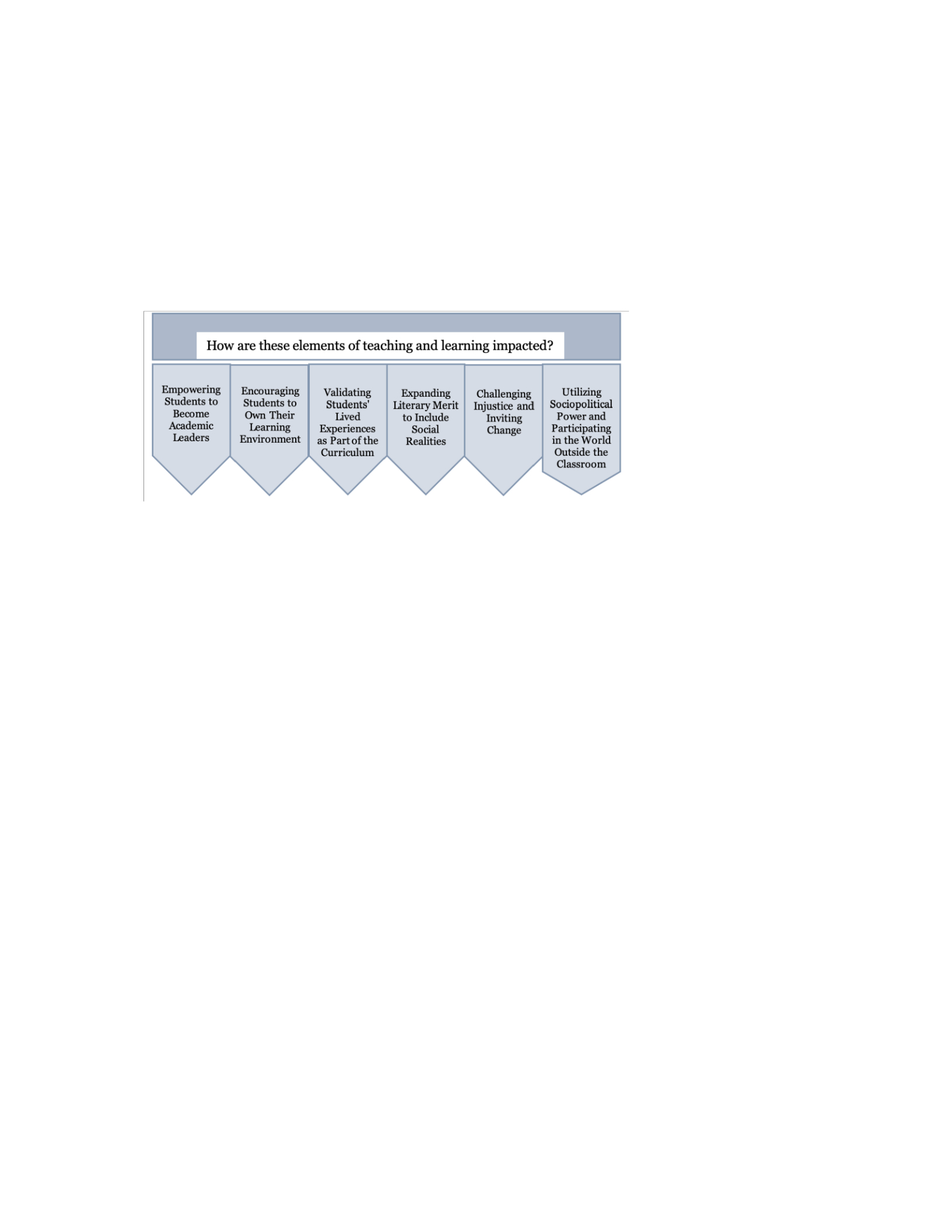
Data Coding
Utilizing the theoretical framework, an a priori approach to labeling the data was
appropriate for lending structure to the first iteration of coding (Goldsmith, 2021).
Looking to Ladson-Billings’s (2021) notion of culturally relevant teaching and the impact
of teaching in an anti-CRT atmosphere, I systematically assigned codes to the data based
on the framework represented in Figure 3.1.
Figure 3.1
Coding Framework
From the coding framework, I imported codes: academic empowerment, learning
environment, student validation, literary expansion, challenge and change, and power in
participation, into the qualitative data analysis software, NVivo (Lumivero, 2023). NVivo
grouped the data within the coding feature, based on manual sorting of the responses and
other data. Related responses and data were given the same code, and some data were
assigned more than one code. The codes were organized and charted according to the
frequency of reference.
Data Categorization
To get closer to eliciting themes from the data, I began category construction to detect
patterns in the coded data (Merriam & Tisdell, 2016). Categorization was facilitated by
sifting the coded data through the goals of culturally relevant pedagogy— student
achievement, cultural competence, and critical consciousness (Ladson-Billings, 1995).

Through the sifting, I continually asked myself, “what is at play here,” and “how are
these chunked data speaking to student achievement, cultural competence, or critical
consciousness.”
Theme Extraction
Several patterns surfaced from the categorization process that pushed my analysis
toward a more pointed goal, essentially back to the research question: How are these
teachers making curriculum and instruction diverse, equitable, and inclusive in the middle
of this culture war over critical race theory movement? I revisited the data multiple times,
to answer questions that kept popping into my mind…Is it even possible to offer a
culturally relevant education in a diversity-discouraged climate…Are they afraid of
pushback. I was attempting to capture the essence from their lived experiences and
perspectives. It was the collectivized representation I was seeking. From the coding
process and examination of units, categories, and patterns that surfaced, the following
themes emerged relating to teachers’ experiences with text selection: critical cognizance,
growth and development, intentionality, circumnavigation, and commitment.
Bracketing. I utilized the reflexive journal as a way to “bracket” my experiences
throughout data collection from participants (Merriam & Tisdell, 2016, p. 113). Because
my own lived experience includes being situated within the phenomenon of the study, I
carried beliefs, bias, and assumptions. Merriam and Tisdell (2016) explained that “the
extent to which any person can bracket his or her biases and assumptions” is unclear (p.
27). Bracketing is, however, a strategy I employed to contain the presumptions I held in
an effort to effectively analyze and drill down to the essence of the experiences offered by
my participants.
Research Design Validity
Wertz (2005) posited that the highest quality of data for the phenomenological
researcher is “concreteness” (p. 171). Moreover, qualitative data derived from accurate

details that align with lived experience rather than opinions and speculations that
sufficiently replicate the phenomenon when the researcher cannot observe the
phenomenon itself (Merriam & Tisdell, 2016). With that, a major concern arises from the
researcher serving as the primary tool of collection within qualitative research (Teherani
et al., 2015). My interpretation of the interpretations of my study’s participants was an
obvious challenge to validity. The validity of qualitative data is a matter of fidelity,
precision, and authenticity (Mertler, 2020). However, phenomenology accepts the
inherent subjectivity within data collection and the effort to make meaning of the lived
experiences lifted from participants (Sloan & Bowe, 2013; Patton, 2005). Nonetheless,
trustworthiness was sought in this study by adhering to using five standards:
1) descriptive validity: facts-based accuracy of participants’ input
2) interpretive validity: representation-based accuracy of participants’ input
3) theoretical validity: theory-purpose-findings alignment
4) evaluative validity: objectivity-based researcher meaning-making
5) generalizability: implications-based applicability. (Mertler, 2020; Gay et al.,
2009; Maxwell, 1992)
Measuring up to these standards insisted upon well-articulated processes and description,
ensuring rigor in the “methodological” and “interpretative” processes (Merriam &
Tisdell, 2016, p. 239).
Triangulation
I used several methods to capture as closely as possible the essence of the
phenomenon and the reality of the participants’ experiences (Merriam & Tisdell, 2016).
To collect data, I used an open-response survey, a semi-structured interview, and
document analysis. By collecting data from multiple sources, there was added confidence
that the findings were “supported by integrating inferences and demonstrating that
independent measures of it” are in alignment (Mertler, 2020, p. 142).

Thick Description and Member Checking
In hermeneutic phenomenology, thick description lends to a study “presentation of the
participants’ perspectives in their own words” (Efron & Ravid, 2020, p. 76). Such a data
representation puts “the experience to the reader so that it can be relived” (Nielsen, 2000,
p. 11). Thick description was heavily relied upon in this study. Ensuring that participants’
input and insight are presented accurately, Efron and Ravid (2020) recommended
“member checking” (p. 77). I employed this strategy by providing study participants with
interview transcripts and asking for feedback regarding accuracy or possible
misinterpretation.
Reflexive Journal
I am a former English teacher and educator of color, with a child of color who attends
public school. There was an intimacy involved that added a subjective element to this
study. Efron and Ravid (2020) advised that, even in qualitative action research,
“There needs to be a balance between objectivity and subjectivity” (p. 63). There must be
“reflexivity,” or an awareness of the impact a researcher’s belief system, value set, and
life experiences has on the study (Efron & Ravid, 2020, p. 63). I maintained a reflexive
journal to monitor and document the effect of my subjectivity on the study throughout the
process. In spite of the impact subjectivity may have had on this study, the plan for
transferability rested in my effort to make “modest extrapolations” from the findings,
offering a small contribution to scholarly understanding of the tension between local
efforts to ensure educational equity and a state and national political agenda to eliminate
DEI initiatives (Merriam & Tisdell, 2016, p. 254).
Ethical Considerations
Action research involves ethical consideration of those who agree to participate in
questioning, reflection, disclosure, and more. The minimum standard is that researchers

“think through possible risks to those participating in the research process and try to
minimize these as much as possible” (Herr & Anderson, 2015, p. 157). Before beginning
this study, I carefully considered possible risks to participants. As a distinct political
movement has infiltrated the American classroom with the strength of legislation and
policy to affect an agenda, educators’ personal and professional standing are potentially at
risk depending on their stance on CRT. Efron and Ravid (2020) insisted upon the
following safeguards as a mean to protect study participants:
• Permission and Consent
• Confidentiality and Safety
• Respect of Research Site
• Accuracy in Interpretation and Presentation.
Prior to agreeing to participate in the research, potentials were provided details of the
study, expectations of participants, measures to ensure confidentiality and data protection,
and a platform for asking questions. After participants were recruited, each was reminded
that withdrawal is possible at any time. I ensured participants’ confidentiality and
anonymity by replacing their names with pseudonyms on all interview transcripts. All
data has been digitally housed in Microsoft Office and NVivo software. The
transcriptions have remained in a password-protected virtual vault. After data analysis
and coding of the transcripts, the copies were shredded. I will destroy all digital data after
five years. I have no authoritative, evaluative, or daily connection to my participants.
Further, all research activity was conducted outside of professional contract hours, off
school district property, and through personal rather than professional communication
tools. This minimized risk to job safety and security. I did not use students nor student
data in this study. As previously mentioned, member checking protocol was employed to
ensure accurate interpretation of the data and presentation of the findings.

Summary
This study sought to answer the qualitative question: How do English teachers
make curriculum and instruction diverse, equitable, and inclusive amid the anti-critical
race theory movement? It employed a hermeneutic, phenomenological approach to collect
and analyze data for the purpose of interpretation and deep understanding of the lived
experience situated within the phenomenon (Efron & Ravid, 2020). That is, I sought to
highlight and understand how current teachers experience making diverse, equitable,
inclusive curricular and instructional choices “under a social and political microscope.” I
believe that the design of and methods used within this study garnered transformative
insight and drove a much-needed revisit to the ideal of “free and equal educational
opportunity for all.”

CHAPTER 4: PRESENTATION OF FINDINGS
This chapter presents the results of the study. The purpose of the research was to spotlight
the experiences of ELA teachers navigating the process of making professional decisions on
content and activities that adhere to legislation and policy, while remaining committed to
diversity, equity, and inclusion. I attempted to discern common themes among participants as
they described their level of autonomy and agency within their public-school setting. As diversity
is a reality of public-school classrooms, the “permission to teach” allows educators to address the
range of difference among the students they serve (Pozas et al., 2021). The problem is that
schools across the country must adjust to a political climate that deemphasizes and actively
undermines diversity, equity, and inclusion practices. This study explored the conflict between
educational equity efforts in the classroom and curricular regulations set by the government. The
objective was to gain deeper understanding of teachers’ experiences in hopes of informing future
teacher support efforts.
Data Analysis and Theme Emergence
Exploration of the problem of practice involved collecting English teachers’ perspectives,
stories, and experiences through survey and interview data. An initial deductive analysis sought
to organize the data by impact to each of the dimensions of Ladson-Billings’s (2021) culturally
relevant English teacher. This is a teacher who
• empowers students to be academic leaders,
• encourages students to own their learning environment,

• validates students’ backgrounds as part of the curriculum,
• expands what is considered “literary,”
• challenges and changes social injustice, and
• participates in the sociopolitical world outside the classroom.
The analytical lens was then expanded. Using the theoretical framework, the data were
filtered through the concepts of culturally relevant pedagogy and two tenets of critical
race theory:
• Culturally relevant pedagogy (1) focuses on student learning and academic
success (2) develops students’ cultural competence to assist in their development
of positive ethnic and social identities (3) supports students' critical consciousness
(Ladson-Billings, 1995)
• Two critical race theory tenets propose that (1) racism is systemically embedded
in American society and culture (2) systemic racism perpetuates racial inequality
despite claims of colorblindness and the agency of meritocracy. (Crenshaw, 1988)
The Findings
As previously mentioned, there is growing misalignment between teachers
ensuring equitable learning opportunities and politicians promoting divisiveness-free
classrooms. Given the need for literacy growth, the underperformance of students of
color, and a number of barriers to effective educational experiences identified in the
literature, it was beneficial to draw meaning from the perspectives and experiences of
English educators currently teaching in diverse public schools. The question this study
sought to answer was “How do English teachers make curriculum and instruction diverse,
equitable, and inclusive amid the anti-critical race theory movement?” Data indicate that
making curriculum and instruction diverse, equitable, and inclusive in an anti-DEI
political environment involves the following five themes:

• Critical cognizance of the forces at play
• Continuous personal and professional development in both sociopolitical matters
and teaching and learning
• Intentional efforts to offer student-centered literary experiences • Strategic
circumnavigation around obstacles to educational equity
• Unwavering commitment to put students’ needs first.
The following sections expound on the themes that emerged from analyses of the data.
Each of the five thematic sections concludes with interpretations made using the
theoretical framework to address the research question. Those interpretations are
represented in Tables 4.1-4.5.
Critical Cognizance
English teachers make curriculum and instruction diverse, equitable, and inclusive amid
the anti-CRT movement by leveraging critical cognizance.
Ladson-Billings (2021) explained that teachers must “consciously create” the
conditions that a diverse population of students needs to thrive (p. 32). A culturally
relevant learning environment does not happen by accident. A consciousness of the
“moving parts” necessary for student success is required, along with a critical awareness
of factors that deter positive learning outcomes. Hester (2018) pointed out that
“Whitedominated curriculum ignores decades of research showing that students learn best
when they feel connected to the content of their learning, and when their own identities
are reflected” (para. 9). Still, anti-CRT proponents seem unwavering in their support of
antidiversity classrooms. Each of the three participants had strong ideas why. The
participants did not use the words “critical cognizance” to describe their awareness of the
forces working against equity-centered teaching and learning. Rather, they shared their
perceptions of the anti-CRT movement. The critical cognizance theme developed from

multiple allusions to recognizing the rhetoric, reflecting on what is at play, and refocusing
their efforts within the context of anti-diversity.
DEI vs. Political Agenda
Cora had distinct feelings about the political rhetoric working so hard to decenter
diversity, equity, and inclusion in the classroom. She expressed that she is not impressed
by the credentials of those who are pushing policies that negatively impact curriculum
and instruction. She asserted:
The anti-Critical Race Theory movement is led by ignorant people discussing
books and articles they have never read. They are trying to hide the fact that they hate
people who don’t look like them while also pretending they are the victims of an
oppressive system when they are in fact the beneficiaries of that system. Last summer,
Mary participated in equity-centered professional development which deepened her
understanding of anti-racist pedagogy. More cognizant of the systems that hamper
equitable learning experiences, Mary suggested, “Let's be honest, it is not the theory that
is making people react.” She expanded on that idea, stating “I see the negative reaction to
critical race theory as a lack of understanding or as fear from individuals.” She explained
that the “real” fear behind sociopolitical-driven restrictions on issues of diversity, equity,
and inclusion in the classroom is the potential for “deep, thoughtful conversations that
enable students to think and understand …how the history of this country has many
implications- some good- some awful.”
Diversity or Divisiveness
Sally went on at length about the resistance to CRT and the push for eliminating
“divisive concepts” as functions of fear—a fear she understood upon reflection on her
first couple of years in the classroom. Sally elaborated, explaining the challenge of
steering students through complex concepts:

If you are a teacher, you know it's important to talk about, but you don't have the
tools to do it correctly…you're afraid of saying something wrong, making a
mistake… I think that is probably what leads to some of the policies being put in
place, because if you were to look at it from the view of people who want to ban
or limit the discussion of critical race theory, one of the thought processes I've
always heard is ‘well I don't want my child going to school and being made to
feel bad because of something that they weren't part of’, and I think it comes from
that fear of people not handling it correctly.
Sally, who teaches younger students, empathized with the fear of distressing and dividing
learners. She confessed that, “No, you don't want an environment that feels divisive…that
draws a line, Oh this is minority culture; this is majority culture. This is the history of
violence that's occurred in the past.” Sally said she learned that a teacher cannot leave the
conversation there. It must continue. Sally guides her students through the initial divide.
She said that the learning experience has to “integrate where we're going to go
forward…how we're going to move forward…how we treat each other with respect. If
you just leave it divisive, I think that's what people are afraid of.” During the virtual
learning days during the pandemic, Sally said that police brutality and social uprising
were keen on the minds of her students of color. “What can we learn from this…” or
“How do we begin to move in the right direction…” questions helped her steer student
thinking past divisiveness. In all, Sally said that she wished there were a “democratic”
process that systemically collaborates, from top down, to ensure consensus in the way
students are encouraged to engage with complex issues.
If everybody in this process…if the people who wrote the curriculum, the school
administration that purchases the curriculum, the instructional leaders that help
the teachers as they are delivering this instruction… [works together] then we are

overlapping in how we cover these topics and how we discuss these topics. So
from the top down, we have some level of agreement.
Rhetoric vs. “Real” Concerns
From shifting away from the use of high-stakes assessments to increasing critical
thinking in the classroom, Mary believes that “Public education needs to shift and needs
to develop.” For Cora, there should be more focus on the culture of reading, generally,
and students’ reading habits, specifically. She underscored what needs to supplant the
nationwide focus on CRT:
O.K., everybody’s saying they want these test scores to go up, but people aren’t
reading. […] people are so up in arms about ‘what you're making my child read’,
but like the number of students that actually graduate from high school without
reading a book is much higher than the number of students who are reading…so
um there's that element of this whole book challenge/CRT thing…um, we have,
like, a reading problem…yeah, that is greater than…they're worried about what
they’re reading…I’m like, are the students reading.
In this study, critical cognizance refers to the acute social, political, and professional
awareness that each of the participants maintains to effectively navigate obstacles to
educational equity. From the data, there was a collective frequency in participants’
reference to “knowing,” “recognizing,” “thinking,” and “seeing.” The findings show that
employing critical cognizance disconnects these teachers from ignorant bliss and binds
them to discernment. Interpretations of Theme 1: critical cognizance were revealed
through the theoretical lens of this study and are represented in
Table 4.1.
Table 4.1
Ladson-Billings’s Culturally Relevant Pedagogy (1995, 2021) and Crenshaw’s Critical Race
Theory (1988) Lens on Critical Cognizance
English teachers must

focus on student learning and
academic success (Ladson-Billings, 1995, 2021) because
racism is systemically embedded in
American society and culture and systemic racism perpetuates racial inequality despite
claims of colorblindness and the agency of meritocracy (Crenshaw, 1998).
Therefore,
employing critical cognizance allows the participants to recognize what is happening outside
the classroom and why. So, they are not distracted from “one of their primary responsibilities”
inside the classroom: “helping students become academically successful” (Ladson-Billings,
2021, p. 26).
English teachers must
develop students’ cultural competence to
assist in their development of positive ethnic and social identities, (Ladson-Billings, 1995,
2021) because
racism is systemically embedded in
American society and culture and systemic racism perpetuates racial inequality despite
claims of colorblindness and the agency of meritocracy (Crenshaw, 1998).
Therefore,
utilizing critical cognizance maintains the participants’ awareness of what is missing from the
monocultural curriculum offered to multicultural students and why. So, they consciously
consider ways to foster students’ “cultural competence” (Ladson-Billings, 2021, p. 27).
English teachers must
support students' critical
consciousness (Ladson-Billings, 1995, 2021) because
racism is systemically embedded in
American society and culture and systemic racism perpetuates racial inequality despite
claims of colorblindness and the agency of meritocracy (Crenshaw, 1998).
Therefore,
drawing upon critical cognizance empowers the participants to facilitate students’ deeper
exploration into the world around them and ask why. So, their “pedagogy and the students’
learning” function as “a form of cultural critique” (Ladson-Billings, 2021, p. 29).
Growth and Development
English teachers make curriculum and instruction diverse, equitable, and inclusive amid
the anti-CRT movement informed by continuous personal growth and professional
development.

There is evidence that teacher preparation programs fail to adequately equip
preservice teachers to meet the needs of America’s diverse classrooms (Ladson-Billings,
2021). Further, many come to realize that public school “curriculum, both that assigned
officially by the administration and that unofficially created by social norms and
expectations [is] not culturally relevant to their students and the communities in which
they lived” (Weilbacher, 2012, p. 1; Kohl, 1967). Ladson-Billings (2021) asserted that
serving diverse learners requires a “comprehensive approach” including a range of
personal and professional learning (p. 111). Theme 2 emerged from participants’
description of the actions they take to grow and develop to better meet the needs of their
students.
Informing Practice; Justifying Choices
Cora shared, “During the last 10 years, I did a lot of reading around reading
…Penny Kittle and other resources on student literacy.” Penny Kittle (2023) taught
English and coached literacy instruction for 34 years; her advocacy is grounded in the
notion that teachers “live a belief in [student] success.” Mary, too, engaged in self-study
to address her recent professional challenges. She shared specific texts that informed her
wherewithal to adjust to an anti-CRT climate. Mary explained, “I did a great deal of
reading. Clint Smith's How the Word is Passed [2022]. White Fragility [DiAngelo, 2018].
Culturally Responsive Teaching and The Brain: Promoting Authentic Engagement and
Rigor Among Culturally and Linguistically Diverse Students [Hammond, 2014].” Mary
admitted that she was particularly enriched by the conference she attended out-of-state
last summer. She beamed, “I also attended a training […] in early August. And it was
basically teachers teaching other teachers how to be antiracist. It was amazing. I loved the
conversation. I loved the resources. I loved the shared lesson plans.” From her anti-racist
PD, Mary understands the implications of the anti-CRT movement more fully. She holds
hope that the movement will cause no further marginalization. She said about the

importance of teachers preventing exclusion and disengagement within their classroom
learning spaces:
It is the role of the teacher to make sure that this does not happen. We might insist
on culturally responsive teaching, text where students can see themselves, texts
that challenge ideologies that make us uncomfortable and be able to unpack that
in safe spaces.
Learning From Non-Examples
Sally recalled multiple moments during college (for her, only a few years ago)
when she spoke out during class discussion in her literature courses. She described
situations in which microagressive, insensitive, insulting statements were made about
characters she called “their token characters in their White lit.” Rather than engaging in
what Sally considered a relevant consideration of the text, her professor nor her
classmates were ever interested in unpacking the texts beyond mentions of “minor
character,” “comic relief,” or “sidebar stuff.” To that, Sally stated, “If you're not even
having these antiracist conversations in your [college] classes in 2015, 2016, and 2017,
I'm not that surprised that we're having these [anti-CRT] conversations now [in 2023] for
public school in K12 education.” Sally admitted that she mourns the absence of social
engagement through literature that she expected to have going into university studies. She
learned to engage herself, divulging that she “advance” purchases “anything by” Ta-
Nehisi Coates or the Obamas, among others.
Growing From Experience
Sally learned from the disappointing experiences with her college professors. She
shared that “As the teacher, you have the responsibility of building those authentic
connections so that there is an environment of learning that's respectful enough that we
can talk about these things without being more divisive.” How-Not-To experiences in the
classroom grew her insight of the kind of environment she wanted for her students. Sally

added that classroom discussion should be a vital part of engagement in the ELA
classroom—teacher-to-students and student-to-student. She explained about class
discussion at the upper elementary/middle school level:
It might not have started with a conversation about diversity but especially when
you have students that know they're not being represented who will start asking
questions like ‘Hey there's nobody like me in this story’ [or] ‘Where were the
African Americans at this time’ [or] ‘What were they doing at this time’ and you
start getting into those conversations.
She insisted that she was “very organized” with her instructional activities but “never
discouraged discussion from happening.” She recalled a two-week period when one of
her Black students kept saying “White power” in her classroom and around their
predominately Black campus. Sally explained that the student was a jokester and draw
many laughs at the irony of his use of racially offensive slang. One day, she pulled the
class into a whole group and discussed the history behind the phrase, the offense it
causes, and its connection to violence. Sally never heard the student use the phrase again.
She expressed her disappointment that the same had not been done in classrooms she has
sat in as a student.
In this research study, personal growth and professional development represent the
continuous learning repeatedly referenced in the data. Growth and development was a
theme formed from the stories of participants’ independent book studies, self-funded
conference attendance, and ongoing reflection. In varying contexts, each participant
discussed ways she informed her professional practice, particularly in service to the
chronically underserved. Collectively, the findings show that the participants are
intrinsically motivated to expand their knowledge, improve their practice, and critically
reflect on the teaching and learning experiences in their classrooms. Interpretations of

Theme 2: growth and development were revealed through the theoretical lens of this
study and are represented in Table 4.2.
Table 4.2
Ladson-Billings’s Culturally Relevant Pedagogy (1995, 2021) and Crenshaw’s Critical Race
Theory (1988) Lens on Growth and Development
English teachers must
focus on student learning and
academic success (Ladson-Billings, 1995, 2021) because
racism is systemically embedded in
American society and culture and systemic racism perpetuates racial inequality despite
claims of colorblindness and the agency of meritocracy (Crenshaw, 1998).
Therefore,
growing and developing refreshes participants’ competencies beyond being model citizens and
delivering adopted curriculum based on the district pacing guide. So, they are steadily exposed
to multiple perspectives and constantly updating their methods of helping students of color
“successfully negotiate schools and classrooms” (Ladson-Billings, 2021, p. 115).
English teachers must
develop students’ cultural competence to assist in their development of positive ethnic and
social identities, (Ladson-Billings, 1995, 2021) because
racism is systemically embedded in
American society and culture and systemic racism perpetuates racial inequality despite
claims of colorblindness and the agency of meritocracy (Crenshaw, 1998).
Therefore,
transferring that which is gleaned from growth and development increases participants’
wherewithal to center students’ culture in the learning. So, they help to build students’ “cultural
competence” to succeed academically while existing authentically (Ladson-Billings, 2021, p.
114).
English teachers must
support students' critical
consciousness (Ladson-Billings, 1995, 2021) because
racism is systemically embedded in
American society and culture and systemic racism perpetuates racial inequality despite
claims of colorblindness and the agency of meritocracy (Crenshaw, 1998).
Therefore,

modeling growth and development on a personal, social, emotional, political, and professional
level exposes participants’ students to the value of life-long learning. So, they build within
their students an appreciation for probing and asking “questions about the ways that whole
groups of people are systematically excluded” from the spoils of the American Dream
(Ladson-Billings, 2021, p. 114).
Intentionality
English teachers make curriculum and instruction diverse, equitable, and inclusive amid
the anti-CRT movement driven by their intentionality to increase students’ literary
engagement and improve students’ literacy proficiency.
One English teacher in California blogged about her 20th century days in the ELA
classroom, explaining that “All students were expected to read the same books (written
by old, dead White guys plus Harper Lee) and write the same five-paragraph essays their
parents had suffered through 35 years prior” (Farley, 2022, para. 3). Sally, too, mentioned
Harper Lee. She described professional development leaders guiding participants through
a text analysis of To Kill a Mockingbird (1960) and the elements most often taught and
discussed to 8th/9th grade students: internal and external conflict and full character
development of the white characters. Then, participants are asked to think through To Kill
a Mockingbird from the point of view of Tom Robinson. This was PD aimed at increasing
teachers’ intention to engage students in critical thinking.
DEI in ELA: More Than Analysis Of A Sub-Character of Color
Sally recounted her impression of the To Kill a Mockingbird -based PD. She
thought, “Yes, I get it. This is White lit, passed off as a multicultural classic because there
are Black people in the book.” Sally frustratedly shared, “[We are all] still trying to
decide, when it comes to English, what is it that's most important to teach students…And
if they are all written by majority authors, still, and we know how diverse classrooms
look…that cannot be a reflection and a matching perspective.” Borsheim-Black and
Sarigianides (2019) asserted that “literature does not simply reflect race and racism in

American society; literature has played a role in constructing race and racism in American
society” (p. 7). Along with the PD experience, Sally learned from a teaching moment that
illuminates this point.
District-Adopted Curriculum: Monocultural Material
As a new teacher, she was assigned to work with a mentor teacher who observed
her lessons, offered her feedback, and guided her through reflection. During one
observation, Sally was teaching a lesson on advertisement and the impact of rhetoric.
Sally explained:
It was a series of 12 different ads that students were responding to, and at the end
of the lesson, Ms. Xavier (pseudonym), was like, ‘Did you notice that none of the
advertisements had any people of color in them?’ She was like, ‘They're all from
decades ago. They all had white couples featured in them.’ She was like, ‘There
was no diversity presented in this lesson.’ And she was like, ‘You, the teacher,
have to see something like this and bring in your own, you know…your own twist
on it.’ But I think that's how… the way it's set up. It’s so ingrained. It's so implicit
you don't even think about it […] the lesson that was given to me… whoever
designed the lesson didn't think about the diversity… they just wrote it with the
majority culture in mind.
From that point forward, Sally has been intentional about thinking through the curriculum
she was delivering to students. She admitted that she was surprised and definitely not
proud of thinking “with the majority culture in mind.” She continued about the
underrepresentation and oversight:
It just won't occur to you. You will just present the lesson as it's given, and only
after reflection or having someone point it out to you are you like, ‘That is true.
We didn't even think about it.’ That's how ingrained into our brains it is… that we
don't even see the lack of diversity in these materials. [You] have to go that extra

step. You have to spend extra time to find the materials that connect to these
things, because the person who wrote the curriculum didn't do that.
Equitable Literacy Instruction: On Purpose
Cora insisted that she is always “trying to be intentional about text selection.” She
said, as an upper-grade level English teacher, she knows that it is up to her to introduce
(or reintroduce) students to the joy of connecting with a text before students graduate
high school. She shared that her mission “is just to get people to have positive reading
experiences and see themselves as readers.” Cora mimicked the warm, husky voices of
her male junior English students her mentioning to her at the end of class, “Hey Ms.
Cora, that’s a really good poem” or “That was a very cool story.” After a thoughtful
pause, Cora conceded that “Not every piece will connect with every student.” Sally
pointed out that diversity is not monolithic and that “Each year the makeup of your
classroom is always going to be a little bit different. So you have to have different things
to bring in.” Mary shared that she tries to enhance her ability to make appropriate,
meaningful choices for her students. She stated:
My favorite training was a self-study of Gholdy Mohammad's Cultivating Genius.
I used this as framework for the guiding principle of why I teach and what my
classroom environment needs to be. This is such an impactful book when looking
for direction and justification for the choices you are making.
In a similar way that Mary utilized Gholdy Mohammad's (2020) Cultivating Genius: An
Equity Framework for Culturally and Historically Responsive Literacy to facilitate a
more intentional text selection process, Cora acknowledged that she spent a great deal of
time “trying to find as many different types of stories that might connect with my
students after getting to know them through conversation.” She shared that much of the
time, her efforts pay off.

Text Selection: Knowing Our Students
Describing one especially significant nod to the importance of culturally relevant
texts, Cora shared a profound experience that she insisted was at the heart of her efforts to
select texts intentionally for the kids she knows and is trying to reach. One of her
“standard level” English classes is one with attendance challenges. Cora traced her
attempts at getting those students involved and engaged, “but for whatever reason these
students are not coming to school.” The struggle has been ongoing this school year, Cora
admitted. Yet just the day before the interview, she witnessed the power of her
instructional choices. She said,
I had three students who were failing at the end of last quarter. One of them has
an extremely low reading level… he's someone I was just having trouble [with]
usually they came to class, but ‘can I get you to stay in class and be seated’. And so I
got another student, who…played football. He's kind of like on level… but he
hadn't been coming to class in like weeks. He showed up yesterday. And then a kid
who comes all the time, just doesn't necessarily perform. So three black boys between
17 and 18 years old, sitting at a table together. And they're taking turns reading
aloud Jason Reynolds’s A Long Way Down [Reynolds, 2017] They've been clamoring
like, ‘I wanna read now. I wanna read now.’ Yeah. So that's like, the text we select
really makes a difference.
In this study, intentionality refers to the on-purpose literary engagement that the
participants foster in their classrooms. Repeated throughout the data, participants
reference being intentional about making their classroom, the content, and discussions
accessible to their students. The findings show that these teachers understand that
accessibility to and engagement with the learning do not happen automatically; their
focus on the texts they select, the approaches they use, and the classroom environment
they create improve the odds that students will respond to instruction. Interpretations of

Theme 3: intentionality were revealed through the theoretical lens of this study and are
represented in Table 4.3.
Table 4.3
Ladson-Billings’s Culturally Relevant Pedagogy (1995, 2021) and Crenshaw’s Critical Race
Theory (1988 )Lens on Intentionality
English teachers must
focus on student learning and
academic success (Ladson-Billings, 1995, 2021) because
racism is systemically embedded in American society and culture and systemic racism
perpetuates racial inequality despite claims of colorblindness and the agency of meritocracy
(Crenshaw, 1998).
Therefore,
being intentional about interrupting literary whiteness enables participants to include more
students in literacy engagement. So, they expand the “learning community” rather than teach
“isolated and unrelated skills” (Ladson-Billings, 2021, p. 70).
English teachers must
develop students’ cultural competence to
assist in their development of positive ethnic and social identities, (Ladson-Billings, 1995,
2021) because
racism is systemically embedded in
American society and culture and systemic racism perpetuates racial inequality despite
claims of colorblindness and the agency of meritocracy (Crenshaw, 1998).
Therefore,
making instructional choices that validate students’ identities and backgrounds affirms their
stores of knowledge. So, they grow the curriculum by incorporating reading, writing, and
analysis around topics that students know and expand their thinking from that point
(LadsonBillings, 2021).
English teachers must
support students’ critical
consciousness (Ladson-Billings, 1995, 2021) because
racism is systemically embedded in
American society and culture and systemic racism perpetuates racial inequality despite
claims of colorblindness and the agency of meritocracy (Crenshaw, 1998).
Therefore,

selecting student-centered material in a purposeful way to negate the effects of literary
disinterest created by much of the packaged curriculum. So, they can move students toward
“literacy for liberation,” facilitated by welcoming “issues of political, economic, social, and
cultural natures” into the curriculum (Ladson-Billings, 2021, pp. 61, 71).
Circumnavigation
English teachers make curriculum and instruction diverse, equitable, and inclusive amid
the anti-CRT movement with strategic circumnavigation around obstacles to meeting
their students’ needs.
Because anti-CRT policy and its threat to diversity-centered educational programming
were the stimuli for this study, the conflict was addressed early in the interview session.
When asked during the interview, “How has the anti-critical race theory movement
impacted your curricular choices,” participants had varying experiences. Each participant
has been directed to use only the texts listed on the approved reading lists issued by the
district.
Autonomy To Choose From Pre-Approved Lists
Mary shared that she did not feel that the anti-CRT movement had impacted her
text selection practices. However, at the beginning of the 2022-23 school year, Mary said
the media specialist reminded teachers about selecting instructional text, saying “Make
sure your books are on the approved reading lists.” Like Mary, Sally was under
administrative directive to use material approved by administration. She stated about the
curriculum that was purchased for the school:
That is the curriculum that they bought for the school, and they suggested strongly
that we maintain fidelity with this curriculum as much as possible…they really
did not want us deviating from the curriculum…[saying] ‘We do not expect you
to have to pull in other things.’ So they really expected us to follow it.

Each participant shared her perspective on text selection within the parameters of district
policy, referring to the “approved lists” as a way to ensure pedagogical compliance. Upon
review and analysis of the lists, their experiences took further shape.
The Question: “Culturally Relevant For Whom?”
Appendix D captures data on the racial and ethnic diversity represented on the
approved reading lists, in terms of books by people of color (POC) about people of color.
There are 70 books approved for students at the 7th Grade level, with 22 representing
authors and/or characters from racially or ethnically minoritized backgrounds. That
equates to 30% of the approved list of books with characters, storylines, and themes
reflective of perspectives outside the dominant culture. Sally pointed out that, for a
student population in which 90% identified as learners of color, the approved book list
felt culturally misaligned. On the 11th Grade list, only 20% of the approved books reflect
racially- or ethnically- diverse texts. Cora signaled that Grade 12 is the level that has
historically focused on British Literature. That might explain why there are no authors
from diverse backgrounds included on the list of 75 books. There are, however, two texts
written by White writers about people of color. The text suggestions for Advanced
Placement and International Baccalaureate English courses total over 300 books, of
which nearly 25% are written by or represent racially- or ethnically- minoritized people.
Adding To the Approved: A Process
Document analysis of the reading lists of books from which participants must
make their instructional selections spurred me to ask follow-up questions: “Am I missing
something? Where’s the diversity?” For Cora, she shared that, as a seasoned teacher, she
is well aware of approved reading lists, curriculum, and pacing guidelines. Cora disclosed
that strictly adhering to selection from a certain set of texts is now the expectation. She
said, “There is this protocol [now]. When I first started teaching, no one really cared or
mentioned it to me.” Compared to those days, Cora believes she now has less autonomy.

She explained that she can still teach what she wants to teach, but “the directive from
administration [is] ‘Whatever it is, make sure it’s on the list.’” And because the approved
list available to her does not include some of the texts she wanted to teach, she described
her option for adding the texts to the approved list as “a process.”
There’s a procedure that you go through. Your school level MCAT [Media and
Technology Advisory Committee] has to approve the book, and then it pushes it
up through to the district level. And so yeah, there’s paperwork you have to fill
out about Lexile levels and a description of the text and what are the thematic
ideas that are celebrated…For a while, it was just, like, I wasn’t adding new
books to the list just because I didn’t have the time.
Making Use of the Approved
For the three participants, the “approved” curriculum and reading lists include
texts that they teach, have taught, or would be interested in teaching. Sally was eager to
offer her students a Maya Angelou piece. Cora taught one of Zora Neale Hurston’s
seminal works. One of Mary’s favorite texts to teach is The Kite Runner (Hossein, 2003)
in her AP class. All approved. But each participant shared that they look for ways to
enhance the district-approved curriculum with content that will be more relevant to their
students. Complementing the approved lists in no way suggests that the participants teach
texts out of compliance of their building’s or district’s policies. Their shared perspective
centered on student literacy and relevance.
Beyond the Approved: Holding Space For Student Interests and Literary Diversity
Education equity scholar Christopher Emdin (2017) asserted that teachers’
commitment to cultivating a connection between content and their students lessens
“misalignments between school and community” (p. 133). Tracing a phenomenon that
happens within the learning experience when teachers intentionally infuse choice,
relevance, and cultural context into the curriculum, Emdin noted key takeaways: 1)

students are fully engaged 2) curiosity is awakened and 3) connections are explored
beyond the scope of a traditional lesson. Mary stated about cultivating literary
engagement:
I do supplement text, but more often, I do independent book studies and provide
students with a wide range of texts. Students connecting with the reading is the
most important thing because that is when students will actually do the reading
and engage in thinking.
Like Mary, Cora builds in learning experiences that allow students to self-select books for
extended study. Cora explained that “just getting them to own their lives as readers and
cultivate their own reading lives is, like, a win for me.” She described her approach to
student-driven literacy experiences.
We just finished our second independent reading unit, and students were choosing
what they want to read as long as it’s a novel or a play or a memoir. [I tell
students] ‘You’ve got carte blanche. I just want you to read this from start to
finish… and it’s fine if the first book that you picked up you’re not into. Drop it;
find one that you are passionate about, because, yeah, you’re going to be writing
about it and talking about it.’
Adding Diverse-Print Richness To Diversity-Poor Book Collections
Sally donated stacks of children’s and adolescent literature to her classroom
library. About providing supplemental texts, she said: “It’s not even saying you have to
teach it as a classroom novel…doesn’t have to be a part of the curriculum…sometimes
just having the book available so that whoever wants to can receive it.” Similarly, Cora
mentioned spending hundreds of dollars from her personal funds each year buying books
to increase students’ access to rich, engaging texts. What Cora understands about loaning
a student a good book: she knows she is not going to get it back. Still, she purchases new

books often, and her message to her class is “Look what I got in,” or “Yeah you can take
this home,” or “This book would be perfect for you.”
For this study, circumnavigation describes working around the monocultural
materials provided by the district. Though the participants teach different grade levels,
each discussed at length the inadequacy of the approved reading lists adopted by the
district to appeal to diverse groups. Analysis of the reading lists confirmed that only a
small percentage of texts were by or about people of color. Circumnavigation emerged as
a theme as Sally, Cora, and Marry explained that they supplement the required curriculum
with more diverse selections. They also use independent novel studies as a way to
empower students to connect with literature that is meaningful to them. As incorporating
diverse texts into the curriculum is a state standard for literacy instruction, the data
indicate that these participants view circumnavigating the options provided by the district
as necessary supplementation. Interpretations of Theme 4: circumnavigation were
revealed through the theoretical lens of this study and are represented in Table 4.4.
Table 4.4
Ladson-Billings’s Culturally Relevant Pedagogy (1995, 2021) and Crenshaw’s Critical Race
Theory (1988) Lens on Circumnavigation
English teachers must
focus on student learning and
academic success (Ladson-Billings, 1995, 2021) because
racism is systemically embedded in
American society and culture and systemic racism perpetuates racial inequality despite
claims of colorblindness and the agency of meritocracy (Crenshaw, 1998).
Therefore,
working around booklists and suggested texts that do not align with participants’ diverse
groups of students lessens the chance of literary exclusion and disengagement.
English teachers must
develop students’ cultural competence to
assist in their development of positive ethnic and social identities, (Ladson-Billings, 1995,
2021) because

racism is systemically embedded in
American society and culture and systemic racism perpetuates racial inequality despite
claims of colorblindness and the agency of meritocracy (Crenshaw, 1998).
Therefore,
making extra efforts to cultivate literacy rich situations and environments substantiates the
importance of the reading, writing, analysis, and discussion and sets an example for students
that reading is an effort worth making. So they empower students with the choice to connect
with a book that resonates with who they are, what they choose to embrace, or what they hope
to dismantle (Ladson-Billings, 2021).
English teachers must
support students’ critical
consciousness (Ladson-Billings, 1995, 2021) because
racism is systemically embedded in
American society and culture and systemic racism perpetuates racial inequality despite
claims of colorblindness and the agency of meritocracy (Crenshaw, 1998).
Therefore,
enabling students to make novel self-study selections dismantles the constraints imposed by
standardized educational programming. So, they take a “critical stance” toward the adopted
curriculum and challenge the standard “concepts of knowledge” (Ladson-Billings, 2021, pp.
33-34).
Commitment
English teachers make curriculum and instruction diverse, equitable, and inclusive amid
the anti-CRT movement inspired by an unwavering commitment to meeting their
students’ needs.
The National Center for Education Statistics reported that over 40% of public
schools would begin the 2022-23 with vacancies, mostly created by teacher resignations
(Zahn & Wilde, 2022). Whether or not teachers are leaving due to the political climate
impacting educational policy, many would agree that teaching is a challenging profession,
CRT controversy notwithstanding. In light of the recent series of professional stressors,
including the pandemic, blending learning, increased school violence, and now the anti-
CRT movement, participants were asked to reflect on their overall perspective on
teaching. What surfaced from their reflections was evidence of a commitment to
overcome professional obstacles and setbacks for the sake of their students. Though data

indicate that teachers are leaving the profession at alarming rates, the participants in this
study are not only determined to navigate the challenges of their job description; they are
driven to do whatever they can to meet the educational needs of each of their students.
Educated, Trained, Prepared, and Inspired To Do A Tough Job
Mary stated, “I enjoy education.” She also believes that “Young people is why I
continue to teach 18 years later.” Yet, Mary also expressed that she wanted “to see
education develop to meet the needs of our students.” Her reflection centered on
illfocused agendas that do nothing to better serve kids. For Sally, she began her reflection
by recognizing the platform that ELA classrooms serve to springboard countless
directions of inquiry, interpretation, and discourse. Sally continued, “We're educated in
this area. We've read different things. We know these kids, so we have an idea of what
will really be impactful for them.” She admitted, “But it’s a tough job. There never seems
to be enough hours in the day to get it all in. Time flies, except when students are
squabbling or visiting the restroom. And we are still reacclimating students to basic
socialization post-pandemic. It’s hard.” Cora said she understands why teachers are
leaving. Because she is passionate about books, reading, and establishing life-long
literacy habits in her students, barriers to and limitations on resources frustrate Cora. She
explained about adolescent literacy: “They aren’t being given the space and time to read
or access to books that they want to read. So [I’m] trying to turn that around, but that's
not something that…[a] single teacher can do by themselves. We need…change at the
structural level.” Despite a call for systemic change to fund print-rich environments and
build a culture of reading, Cora described the efforts she makes to put resources into
students’ hands. She shared one example, explaining with warmth and emotion: I bought
copies of the book The Hate You Give [Thomas, 2017] for my inclusion students…and
gave them out in gift bags [to] make them feel special and wrapped the book up as a gift
and put it in a blue bag with silver paper and then blue candies. Yeah, so I ended up

having, like, to drop off the books to several students. But that's how, like, [I] met their
families and tried to, like, convince them to log in to our remote learning days.
Educational Inequity: When Teachers Get It Wrong
During each of the interviews, the participants shared moments they believed their
instructional choices and equity efforts had a profound impact on their students. Still,
Sally freely acknowledged that sometimes teachers do not get it right. Needs go unmet.
She shared two experiences of a “missed moment” to render equity and meet the needs of
a group of students. First, she described an experience with a new student. Though the
majority of Sally’s students were African American, almost all identified as Christian.
When a black Muslim student transferred in, Sally noted that the Muslim student and the
other students “did not get along.” She explained:
Nothing in our curriculum covered anything even relatively close to his different
religion, the different holidays that he celebrated. It was that entire culture
difference to the rest of our students….and so to have something in there where
they [could] get a little closer to him, [to] understand it a little better, I think it
would have just helped, just with interactions day-to-day. They didn't understand
him very well, so they didn't get along very well. And you could just see when
you have that lack of materials, you just don't have those conversations as a class.
In a second situation, Sally lamented the handling of a student who was
transitioning genders. She said:
We also had a student who was transitioning in 7th grade, went through a name
change, pronoun change. And I think it was something that teachers handled as
well as their capabilities kind of allowed them to. But there wasn’t anything that
was provided for us that was like ‘Here’s how you can navigate this as a grade
level because you are going to continue to experience, you know, relationship
things going on because of this.’

She admitted that a “genuine fear” she had about the anti-CRT movement is the “gag
order” on diversity in the classroom. She anticipates that so many needs will not be met
because conversations will not be entertained. Sally explained that heightened attention
was paid to social-emotional learning during the last school year which many teachers
hoped would quell the disrespectful behavior. She said, “We tried, and it still did not seem
to do much.”
Because I think when you don't…when you don't talk about diversity, you don't
build those empathy skills of ‘Oh this is how this person feels’ [or] ‘This is what
this person goes through’ [or] ‘This is this person's daily experiences.’ You never
have practice putting yourself in someone else's shoes and looking at it from their
point of view. So you lack a basic respect.
Professional Trust and Respect: When The System Gets It Wrong
For Cora, she remembers things going wrong, even before the anti-CRT push. As
the first Black AP teacher at one of her previous high schools, she recalls back-to-school
night, a hot, crowded classroom with over 120 parents cycling through to meet “the new
teacher,” she thought. Little did she know or consider, she was teaching under immense
scrutiny. Cora asserted that she has always been a teacher with high expectations and rich,
relevant coursework for her students. She explained that she knew many stories, had read
many books, and had taught at the collegiate level. Cora remained up to date on the
research around reading, such as what one educational justice advocate explained about
culturally relevant texts in the classroom:
Children’s books have traditionally played a role in socialization -- teaching
children how to think, how to act, and how to feel about themselves, others, and
the world…We live in a time when there is a wealth of beautiful, thoughtful and
nuanced children’s books by and about people of color, and there is no reason for
curriculum that doesn’t represent the identities and experiences of all children.

(Hester, 2018, para. 7)
Despite Cora’s use of a wide range of high-quality, diverse texts and instructional
methods to engage all students, she recalled being observed, analyzed, coached, and
evaluated often, with the threat of an action plan if she didn’t improve her practice. After
some time, Cora “proved” herself the Ivy League- degreed educator she knew herself to
be. Still, she explained that the anti-CRT movement feels like another layer of scrutiny
that makes her job harder. She said with conviction, “Anti-blackness is always present.
Yeah, it has to do with…not trusting Black teachers, not validating Black texts. And so,
there's nothing new in this [anti-CRT].” The data do not suggest that Mary, who identifies
as a White woman, shares Cora’s experience with professional mistrust. Mary has
continued to build higher-order thinking, interrogation, and critique into her lessons,
despite the political movement to avoid such potentially “divisive” classroom
engagement. She explained about using theory to facilitate critical thinking: I believe I
have tried to inform students more of theory in general, so I make a more intentional
move to include multiple theory studies in class along with
Critical Race Theory so that students understand theory in relation to literature.
Curriculum, Instruction, and Environment: Doing It Right
Data revealed that each participant believes that “navigating” anti-CRT is simple:
Serve the needs of all your students and commit to doing it right. Sally said it best: “As
the teacher, you are delivering this content to your students. You have to have enough
autonomy so that you can make adjustments as needed.” Mary stated that, CRT or no
CRT, best practice in ELA is championing text engagement and deep discussion. For her
senior-English classes, she explained:
One of my favorite units to teach is on social justice, and to be truthful, in many
years, all of my units have a component of social justice built in. This year we
read The Sun Does Shine: Finding Life and Happiness on Death Row [2018] by

Anthony Ray Hinton- a man wrongly convicted and just recently was set free.
Reading a text such as this, opens doors to conversations around the controversy
surrounding critical race theory.
Cora concluded her reflection on English teaching by explaining that her students need
diverse, complex texts and discourse because they are diverse, complex kids. She proudly
named some of what emerged from student engagement with the texts and discourse in
the classroom learning community during this school year:
• “We were talking about relationships and ground rules and what love looks like and
what women should demand of relationships… those kinds of conversations were
really fruitful and students were really invested in them.”
• “We talked about history…where they're getting their news from…who shapes their
worldview: their parents, their peers…where they feel comfortable…who they feel
comfortable having important discussions with…and how do they use their voices.”
• “We talked about guns and violence…So then we're thinking about our community
and what we owe each other…but then we also got to talk about crying and why
people thought boys didn’t cry or why they wouldn't be entitled to the full range of
human emotion.”
Cora stated that, even before the current movement to shield some students from
classroom material and activities that make them uncomfortable, she taught literature that
was thoughtfully chosen for her learners. And she contended that the same
engagementby-design choices will be made when anti-CRT becomes a bygone
movement. Based on the findings from this research study, educator commitment
is captured in the way participants continue to do a difficult job, with multiple stressors,
inadequate resources, and shrinking autonomy because of their dedication to serve public
school students. Commitment emerged from the data as the three participants referenced
their quest to use language arts not only to teach and assess literacy skills, but to engage

and empower students with literary experiences that feed their intellectual, social, and
emotional growth and development. Findings show that their motivation to effectively
serve children withstands factors that impede their mission, including a culture war being
fought in their classrooms. Interpretations of Theme 5: commitment were revealed
through the theoretical lens of this study and are represented in Table 4.5.
Table 4.5
Ladson-Billings’s Culturally Relevant Pedagogy (1995, 2021) and Crenshaw’s Critical Race
Theory (1988) Lens on Commitment
English teachers must
focus on student learning and
academic success (Ladson-Billings, 1995, 2021) because
racism is systemically embedded in
American society and culture and systemic racism perpetuates racial inequality despite
claims of colorblindness and the agency of meritocracy (Crenshaw, 1998).
Therefore,
remaining in the classroom is teaching and “no matter how good a fit develops between home
and school culture” students need teachers to teach them (Ladson-Billings, 2021, p. 26). So a
commitment to the professional is a commitment to teaching and so much more.
English teachers must
develop students’ cultural competence to
assist in their development of positive ethnic and social identities, (Ladson-Billings, 1995,
2021) because
racism is systemically embedded in
American society and culture and systemic racism perpetuates racial inequality despite
claims of colorblindness and the agency of meritocracy (Crenshaw, 1998).
Therefore,
displaying a passion for and dedication to teaching and learning cultivates “strong interpersonal
relationships” with students (Ladson-Billings, 2021, p. 85; Foster, 1992). So they connect with
learners as having a background, culture, community, and “enormous intellectual capacity”
(Ladson-Billings, 2021, p. 85).
English teachers must
support students' critical
consciousness (Ladson-Billings, 1995, 2021) because

racism is systemically embedded in
American society and culture and systemic racism perpetuates racial inequality despite
claims of colorblindness and the agency of meritocracy (Crenshaw, 1998).
Therefore,
persevering through setbacks and the volatility of organizational change allows participants’
pedagogy to “evolve to address the complexities of social inequalities” (Ladson-Billings, 2021,
p. 142). So they sustain an emphasis on the marginalized and ways to steer them toward a
“place of normativity” (Ladson-Billings, 2021, p. 141).
“But That’s Just Good Teaching”
Through her own research experiences, Ladson-Billings (1995) asserted that, “The
place to find out about classroom practices is the naturalistic setting of the classroom and
from the lived experiences of teachers” (p. 163). Discovering the strategies of successful
educators of students from diverse backgrounds, Ladson-Billings captured in culturally
relevant teaching what she says many conclude is “just good teaching.” Centered on
teachers’ facilitation of academic success, cultural competence, and critical
consciousness, culturally relevant pedagogy is “good teaching, but it is much more than
that” (Ladson-Billings, 1995, p. 159). For Ladson-Billings, CRP is programming that
addresses the needs of Black students and “other children who have not been well served
by public schools” (p. 159). Further, culturally relevant pedagogy facilitated the analysis
and interpretation of this study’s findings. To understand the way the teachers in this
study navigate instructional decision making in the wake of the anti-CRT movement is to
understand the culturally relevant teacher.
A New Day: No Legal Space for Race
Participants voiced that a major barrier to culturally relevant English teaching has
always been the practice of loading the “approved” curriculum with the “great literary
works,” known as the Canon. While Sally, Cora, and Mary asserted that there is a place
for seminal works in the classroom, it is the oversight, or exclusion, of other deserving

works that their instructional decision making has worked to address. Supplementing
their curriculum with works by diverse authors about diverse people by pulling them
from the literary margins is, as Cora voiced, “nothing new.” The “new day” English
teachers now face is the unclear set of professional and legal consequences of doing so.
Maintaining Space for Diversity
This study’s findings identified multiple “mental moves” that these teachers make
to offset the political effort to replace race and other “off limits” topics with content that
will not upset, shame, or discomfort some students. From cognizance to intentionality and
commitment, maintaining a space for diverse curriculum and instruction is an exercise of
consciousness and awareness. Thought-to-Action for these teachers involves professional
development, self-study, reflection, and circumvention of barriers to diverse, inclusive
learning experiences—the “moves” of Ladson-Billings’s culturally relevant
English teacher.
Diverse, Equitable, Inclusive ELA Curriculum and Instruction
I interpret the findings of this study to mean DEI in the classroom has never been
easy to procure. Maintaining [protecting] inclusivity of and an appreciation for difference,
in the learning environment as a learning community, takes persistent effort. Based on
reflection on my own practice and the insight lifted from participants, the centering of
teaching and learning on diversity is a mindset. It is ensuring classroom spaces are
enriched with a variety of print, media, critical discussion, and cultural representation. It
is planning student-choice independent novel studies. It is delivering goodie bags of
books to entice and engage reluctant readers. Sally, Cora, and Mary make pedagogical
moves that insist on the “centrality” of cultural relevance in the English classroom
(Ladson-Billings, 1995, p. 159). For them, navigation of the tension between their
instructional goals and the anti-CRT political agenda rests upon pedagogical decision
making that leads to “just good teaching.”

Summary
Chapter 4 presented the findings of this qualitative research study that sought to
answer: How do English teachers make curriculum and instruction diverse, equitable, and
inclusive amid the anti-critical race theory movement? Through multiple data collection
methods and in-depth analyses of each of the three participants’ lived experiences and
perspectives on meeting the needs of their students, several themes surfaced. The themes
worked to highlight the efforts teachers make to maintain space for diversity in the ELA
classroom. In Chapter 5, I align the study’s findings to the literature, present implications,
and offer suggestions for future research.

CHAPTER 5: IMPLICATIONS
This chapter begins with an overview and follows with a revisit to the problem of
practice, purpose, theoretical framework, and research question for this study. A summary
of the findings follows. The chapter continues with a discussion of the findings.
Recommendations for ELA teaching and learning come next. The chapter includes a
section of reflection on the methodology, limitations, and suggestions for future study.
Chapter 5 ends with a summary of the study.
Overview
Public schools are more diverse than ever, with student entering U.S. classrooms
from a wide range of cultures and backgrounds. Students from minoritized groups now
make up the majority of America’s K-12 enrollment (Carrillo, 2022). Serving the
educational needs of the diverse student groups in our classrooms has included a
commitment to diversity, equity, and inclusion (DEI) (National Equity Project, 2023).
Culturally relevant and responsive curriculum and instruction is considered a DEI
approach to improving learning outcomes for non-White students (Howard, 2003). The
harsh reality of chronic achievement gaps between White students and students of color
makes DEI initiatives all the more critical to eradicating educational inequality. This
research study was driven by the need to lift insight from those who are tasked each day
to deliver diverse, equitable, inclusive curriculum and instruction.
Problem of Practice
Since 2021, there has been growing tension between teachers’ efforts to maintain
diverse, equitable, inclusive teaching and learning in their classroom and a political
agenda to disrupt DEI initiatives within all public entities. Across the country, political
efforts have succeeded in dismantling the construct of diversity, equity, and inclusion. For
example, the governor of Florida considers DEI encryption for “discrimination, exclusion
and indoctrination" and signed into law legislation prohibiting diversity, equity, and

inclusion efforts at public colleges and universities (Diaz, 2023). At the K-12 level, anti-
divisive concepts legislation and policy indict DEI efforts, such as culturally relevant,
responsive teaching, as critical race theory (Najarro, 2022a). With equitable educational
programming being “confused with” CRT, there is a threat to frameworks put in place to
more adequately serve students from minoritized and marginalized backgrounds. At a
time when all students are bridging learning gaps created by disrupted learning during the
pandemic, there is concern that fewer responsive approaches for historically underserved
students will widen performance gaps. In short, a threat to or elimination of diversity,
equity, and inclusion initiatives is not good.
Purpose
One of the greatest resources we have is learning from the perspectives and
experiences of others (Farrell, 2020). The purpose of this study rested on the notion that
teachers’ insight can shed light on the way distal policies impact local decisions. To that
end, this study sought to highlight English teachers’ experiences and perceptions of
providing diverse, equitable, inclusive ELA curriculum and instruction in an era of
antiCRT. This is research that explored what three English teachers are doing to maintain
DEI in their classrooms amid the culture war over CRT and DEI. The action research
model was appropriate for this inquiry, because the findings elicited from the study will
inform my role and improve my practice as teacher support (Efron & Ravid, 2020).
Theoretical Framework
Critical race theory (Crenshaw, 1988) and culturally relevant pedagogy
(LadsonBillings, 1995) formed the theoretical framework for examining curricular
choices and instructional decisions within the context of the anti-CRT/divisive concepts
political movement. This framework holds within it a central focus on educational equity,
both of efforts toward as well as barriers to. The major tenet of critical race theory
maintains that racism in the United States is the norm in society (rather than the exception

sprinkled among bigoted individuals here and there) and affects every system in America,
including public schools (Delgado & Stefancic, 2017). Culturally relevant pedagogy is
one path teachers can take to avoid leading students into pits of disengagement,
disenfranchisement, and disconnection. Coupling CRT and CRP created a route for this
research to probe political factors that impact teachers’ use of culturally relevant
curriculum and instruction. Using qualitative methods, the study was designed to extract
data from these participants to answer the research question:
• How do English teachers make curriculum and instruction diverse, equitable, and
inclusive amid the anti-critical race theory movement?
The Findings
The problem presented in this study is the navigation of political barriers to
employing equitable education practices, such as utilizing diverse, inclusive curriculum
and instruction. The use of survey data, interview transcripts, and document analysis
garnered a collection of data for this qualitative study. Data analysis and interpretation led
to the findings which worked to address the problem of practice by answering the
research question. As action research, it is important to state that the findings of the study
cannot be generalized beyond the context, experiences, and perceptions of the English
teachers who participated in this study. However, drawing deeper understanding from the
implications is appropriate.
A Deeper Understanding
To fully appreciate the findings, two aspects of this research study warrant a closer
look. First, it is important to revisit what was at stake by participating in this study. As
discussed in previous chapters, the anti-critical race theory movement is one that has
sustained momentum for nearly two years. As such, teachers nationwide have been
working under the constraints of restricted curricula, regulated instruction, and actionable
noncompliance. Instances of educators defending themselves and their practices against

accusations of inducing divisiveness or promoting CRT are widely covered in the media.
To that, an endorsement of or connection to critical race theory is currently considered a
professional risk. For this study, I invited 90 educators from across multiple districts and
charter schools in the region, and only three teachers were willing to participate. Each
participant eagerly accepted the invitation to participant in this study, despite an
awareness of the risks teachers take when they display the slightest hint of critical race
theory alignment. Secondly, it is important to consider that, though the participants serve
the same school district as English/ELA teachers, they do not know each other. They have
never worked together nor collaborated professionally during district meetings, at
conferences, or in the community. Yet, the data collected from these three teachers
suggest a closely connected professional alliance. That is, the participants’ individual
stories collectivized into a refrain of perspective and voice. The participants in this study
prioritize cultural relevance in their instructional decision making; they are culturally
relevant teachers. However, the findings indicate that what truly binds these educators is
their belief in the agency of English language arts to advance social justice. As uncovered
in Chapter 4, the findings of this research study highlight the extra effort it takes to
facilitate equitable learning environments and experiences for the diversity in our public
school classrooms. This is effort willingly and eagerly made by teachers who believe that
guiding students—especially the minoritized and marginalized—to see themselves as
thinkers, readers, writers, speakers, leaders, and problem solvers is social justice
advocacy. To that, participants’ social justice advocacy-driven “extra effort” encapsulates
themes that emerged from data analyses, which include critical cognizance, personal and
professional growth and development, intentionality, circumnavigation, and commitment.
Discussion
Of note, a significant implication of the results of this study is that the culture war
over critical race theory and “divisive concepts” is about more than protecting students

from a theory or division. As a “culture war,” the anti-CRT movement has realized the
introduction of nearly 700 executive orders, legislative, and district policy measures to
ban critical race theory in K-12 education since September 2020 (UCLA School of Law
Critical Race Studies Program, 2023). Within the region of this study, state departments,
school boards, and teachers have made national news for initiating or resisting book bans
(Weaver, 2023), adopting new content standards to ensure CRT-less teaching and
learning (Modan, 2023), and enacting legislation that can withhold funding to schools
found to violate anti-CRT laws (Kruesi, 2021).
Considering the seemingly obvious ways race has impacted people differently
throughout the history of America, the following three questions floated just below the
surface of this study: Which of the tenets suggests an objectionable premise? Why the heavy-
handed resistance to a concept that is theoretical, perspective-based, and used to situate
race and racism in post-secondary studies many levels beyond K-12 curriculum? How
should teachers respond to calls for “neutral,” colorblind, non-divisive curriculum and
instruction?
The Which
Delgado and Stefancic (2001) suggested that there are basic premises that critical race
theorists would agree upon. The principal tenet is that racism in America is normal and
structural, rather than isolated and individual. This particular tenet seems to be the
“which”—as in, which tenet most offends those who oppose CRT. The common language
among the laws, bans, restrictions, and regulations against critical race theory is “any
discussion or teaching that the United States is inherently or fundamentally racist”
(Hamilton, 2021). This is what Heritage Action for America (2023) said about the theory:
“CRT holds to the idea that…America is systemically racist and must be dismantled”
(para. 5).

Does CRT Call For An End to America. No, I, nor the many who work
alongside me, do not want to dismantle America because of our notions about race and
racism in this country. I want no harm to come to America; it is home. Yet, there are
problems in this country that reckoning with and attending to social justice issues could
eliminate. Underservice to students of color is one example. I have been an educator long
enough to realize how underperformance is often generational within demographics and
communities. As such, the gravity of politics interfering with curricular and instructional
choices is heavy, especially at a time when 20% of adults lack literacy and over 50% read
below a 6th grade level (Zauderer, 2022). For me, I appreciate what critical interrogation
can do for problematic issues in society. Utilizing the “fruit” of ongoing, constructive
critique, I, like many, want to ensure the next generation is well educated and prepared
today so that they can continue to build a better America tomorrow. But, because CRT
opponents believe that the theory suggests an end goal of a “dismantled” America, they
have proposed and, in many instances, enacted a range of laws and restrictions of its
“teaching.”
The proposed bills and enacted statutes, however, will instead prevent educators,
for fear of incurring threatened penalties, from teaching about the role of racism
in U.S. history and engaging students in meaningful discussions about race. If
they remain in place, the laws increase the chances that the next generation of
students will remain uninformed of the racial history of the United States and its
legacy and will thus come of age unmotivated—and unequipped—to improve
upon it. (Hamilton, 2021, p. 61)
Does CRT Call America A Bigot. An implication of this study is the way critical
race theory has been misrepresented and mischaracterized as an enemy of the public, a
menace to polite society, and a pathway to indoctrination. Rather than a “doctrine of hate
and division,” CRT is a consciousness of the “pervasive structural and unexamined

individual racism” in America (Hamilton, 2021, p. 63). Critical race theory challenges the
validity of the dominant narrative that diminishes the legacy of the removal of Indigenous
people from their land, the enslavement of people from Africa, and other violent,
oppressive, disenfranchising moments in American history. The “better narrative” is told
within a context that dilutes the flavor of atrocity, such as anti-critical race theory
legislation in Texas that requires teaching “slavery as a deviation from the founding
principles of the United States” (Fortin & Heyward, 2022, para. 31). To that, anti-CRT
Americans will not be emotionally pummeled by hateful history [e.g., Plessy vs.
Ferguson, the 1867 burning of a Chinese American community, Emmitt Till, Jim Crow,
Japanese internment camps, Antisemitism, to list a few] nor burdened by the implications
of America’s racist history on modern society. The “which” for critics of critical race
theory is the insistence on acknowledging the hidden-in-plain-sight, systemic nature of
racism, injustice, and oppression.
The Why
A review of the literature in Chapters 1 and 2 captures the anti-CRT sentiment,
traces the movement back to the racial reckoning inspired by the George Floyd murder by
police, and delineates proposals and legislation that address “the teaching of CRT in the
classroom.” In short, politicians, their sponsors, and constituents oppose critical race
theory because they believe “that it is divisive, anti-American discourse that villainizes
white people and indoctrinates young minds” (Duhaney, 2022, para. 3).
They Say, “Division and Indoctrination.” The current governor of Florida said
about CRT, “In Florida we are taking a stand against the state-sanctioned racism that is
critical race theory” (DeSantis, 2021, para. 2). A North Carolina House of Representative
stated, “This great education state must have an educational system that unites and
teaches our children, not divides and indoctrinates them” (Schoenbaum, 2023, para. 7).
School officials in several California districts wrote executive orders referring to CRT as

“a divisive ideology that can result in racial guilt” (Lambert, 2023, para. 16). A U.S.
Congressman from Florida summed up the anti-CRT movement as putting an end to race
and racism talk because such talk leads to further division (Sprunt, 2021). Many would
agree that further division is not a progressive goal. Opposing divisiveness is not the
concern for those on the other side of the CRT issue. The major problem with the
“antidivisiveness” movement is its regulatory wide-swath of DEI. Hoffman (2023) aptly
pointed out that opponents of CRT are defining “critical race theory so nebulously that
any classroom discussions about race, no matter how educational or innocuous, can
readily be silenced by labeling them critical race theory (para. 5). That leads anyone
concerned about teaching, learning, and DEI to wonder: How would legislators and
officials suggest teachers go about making their content and approaches relevant for
minoritized students if they must steer clear of race in the classroom? Absent from the
results of this study is the way in which the anti-CRT movement is impacting students of
color. What message is being sent to Black and Brown students by the anti-divisive
concepts movement? A licensed clinical social worker and researcher said this about the
impact of the anti-CRT movement on students of color:
The current debate and pushback against the teaching of critical race theory in
schools communicates to people of color that their lived experience, perspective,
and daily struggle in a white supremacist society does not matter and will never
matter. When kids believe they don’t matter, this impacts identity, esteem,
efficacy, and the ability to succeed. The debate and pushback represent yet
another racial trauma, which brings with it an intense emotional and mental
injury. (Cole, 2023, para. 32)
Others Say, “Power.” Applebaum (2023) posited that the anti-CRT movement is
less about discomfort and division and much more about a refusal of the mainstream—

the power structure—to acknowledge another narrative and way of knowing. Grice
(2022) said this about what is offered to most students in this country:
Narratives and knowledge systems that support the dominance of white,
cisgendered male, heteronormative, middle and upper-class, English- speaking,
able-bodied, and Evangelical Christian values and norms [and that those values
and norms] in schools are driving the backlash we see in society and schools
against equity, social justice initiatives, and CRT. (p. 31)
For students—and students of color in particular—releasing the grip on tightly held
ideas, beliefs, and perspectives aids inquiry and discourse around the following:
• Whose identities are represented in what there is to know
• Whose history is told in what there is to know
• Whose experiences are “absent from or marginalized by” what there is to know.
(Vindevoghel, 2016, p. 88)
Historically, relinquishing control over what and how much there is to know has been
difficult. During the years of slavery and the years after, “white people have preserved
their power by hoarding knowledge or banning the access of knowledge to Black people”
(Bunts & Tawa, 2022, para. 2). In terms of “knowledge is power,” for slaveowners who
justified enslaving Black people because they were believed to be intellectually inferior
and incapable of more than servitude, literacy among the enslaved would debunk their
reasoning (Coleman, 2020). To that, anti-literacy measures prohibited enslaved Black
people from learning to read, write, and speak standard English, punishable by death
(Beaubrun, 2020). For some, anti-CRT legislation is the 21st century equivalent of anti
literacy laws. The following was lifted from newspaper archives of an antebellum issue of
a Southern newspaper:
Every school and college in the South should teach that slave society is the
common, natural, rightful and normal state of society. Any doctrine short of this

contains abolition in the germ: for, if it be not the rightful and natural form of
society, it cannot last, and we should prepare for its gradual but ultimate
abolition…To teach such doctrines we must have Southern teachers and Southern
school books. It is from the school that public opinion proceeds, and the schools
should be set right. No teacher should be employed in a private family or public
school at the South, who is not ready to teach these doctrines. Parents, trustees
and visitors should look to this thing. (Richmond Enquirer, 1856)
In all there is to know about CRT, CRP, DEI, and ELA, the discussion reduces to this:
“Republicans are trying to use school boards and critical race theory to mobilize their
voters” (Nierenberg, 2023, para. 1). This is the “why” of the anti-CRT movement.
The How
The “which” of the anti-CRT movement is systemic racism and the fragility
associated with acknowledging inequality; the “why” is that such fragility rouses a
particular political base and spurs increased voter participation. Votes equate to power.
Every vote is one step closer to control. The “which” and the “why” are part of a
sociopolitical agenda—a movement begun to rally a base. Such is politics. The problem
is that the anti-CRT movement is roaming hallways, classrooms, district offices, and state
departments of education across the country, trampling over diversity, equity, and
inclusion initiatives. That is much more than political action. To that, what this study was
designed to elicit was the “how.” How are teachers responding to politics playing out in
their curriculum and instruction? How are practicing teachers navigating the anti-critical
race theory movement? Findings indicate that these teachers keep their classrooms,
teaching, and learning diverse, equitable, and inclusive by sustaining a distinct mindset
and making strategic moves to serve their students. Their response to anti-CRT sentiment
resounds as: I teach the students in my classroom. The students in my classroom are from
diverse backgrounds, racially, ethnically, linguistically, and more. The content and

approaches I use are relevant to that diversity. No guilt trips or indoctrination here. This
response is built upon a collective perspective that acknowledges race, racism, and the
implications of both within teaching and learning and society at large.
Race and Such
What follows is whether this response, the “how,” complies with legislation and
policies that insist on neutral, colorblind, non-divisive content and discourse. For the
participants in this study, they consider their teaching practices to be in service to students
and advocacy for equality rather than acts of noncompliance. They make “extra efforts”
to protect diverse, equitable, and inclusive teaching and learning because they appreciate
the anti-CRT movement for what it is; they understand the “which” and the
“why.” Rather than the rejection of a legal theory, the movement is an objection to the
“commitment to diversity, equity, inclusion, and to social justice in general” (Cuevas,
2022, p. 2). Under the influence of anti-CRT sentiment, many now indict equity work as
a rebuke of and hatred toward white people. This is sentiment inspired by former
President Trump’s executive order (Hamilton, 2021). That is, critics of CRT argue that
“efforts to highlight and analyze the role of white supremacy in U.S. history, politics, and
culture only serves to heighten racial divisions” (Farag,2022, October 21). In terms of a
social movement aimed to protect students from discomfort and division, Cuevas (2022)
observed and pondered the following about the anti-CRT movement:
The clear implication was that issues of antiracism, social justice, diversity,
equity, and inclusion are not topics to be discussed and promoted, but topics that
should be prohibited and must be censured. But if anti-racism is a bad thing, does
that mean that racism is the goal? If social justice is problematic, does that mean we
should strive for injustice? Should inequity and exclusion be ideals for places of
[learning]? (p. 2)

The hope is that most would instantly recognize the puzzling dynamics that exist within
an effort to dismantle diversity, equity, and inclusion initiatives, especially those targeted
to better serve students seeking a public education. But, with the disinformation
campaigns that have fueled the anti-divisive concepts movement, many want no part of
“CRT-inspired” diversity, equity, or inclusion. Yet, it is the disinformation that actually
informs the “how” of responding to the anti-CRT movement.
Disinformation and Truth
Cuevas (2022) poignantly asked, “How could a teacher successfully teach language
arts without offering students a range of literature written by authors from a variety of
backgrounds and without taking into account the language and culture of the readers?” (p.
1). The anti-CRT disinformation campaign would answer by mentioning “traditional”
literature that has stood the test of time across generations of ELA instruction and
learners. The truth is that language arts curriculum is overwhelmingly white and relevant
primarily to non-students of color—traditional and standing the test of time for white
people (Sleeter, 2001). And this is precisely what critical race theory was designed to do:
expose areas where racial dominance exists. Seemingly, no American who espouses to
the ideals of freedom and equality for all would endorse racial dominance. Yet, critics of
CRT have framed the theory as “anything taught in schools that would discuss racial
inequality” (Kreiss et al., 2021, para. 4). Again, this is evidence of a campaign intent on
misinforming their base in an effort to drive their concerns all the way to the voting
booth. And this practice of disinformation dates back decades. Our research
demonstrates that conservative fearmongering over CRT reuses a set of scare tactics
that equate racial justice with Communism that originated during the cold war.
Conservative politician George Wallace once called the Civil Rights
Act of 1964 “a fraud, a sham, and a hoax” and likened it to the Communist
Manifesto. (Kreiss et al., 2021, para. 6).

Findings from this research indicate that educators must treat misinformation with
healthy doses of truth. The truth is that almost 80% of public school teachers identity as
White and middle class (Schaeffer, 2021). To that, a 2017 poll of over 1100 educators
found that less than half were affiliated with the Democratic party, with 30% identifying
as Independent and 27% as Republican (Klein, 2021). These are teachers who engage
with their students every day. They know their kids: their backgrounds, strengths, and
weaknesses. Moreover, like the participants in this study, the literature reveals that
teachers know the factors that threaten the educational progress and social-emotional
wellbeing of their students. And CRT in the classroom has not been among those factors.
Are there references to or depictions of dark moments in American history or disturbing
conditions in society in the literature students read or discussions they have? Yes. Do
educator standards call for teachers to facilitate critical thinking through complex topics
for their students? Yes. That is true. What is not true is that critical thinking through and
discourse around complex issues are inherently indoctrinating. What is not true is the
rhetoric of widespread CRT-driven indoctrination by teachers or the need to restrict and
criminalize future attempts. That is disinformation, and disinformation is dangerous. This
is rhetoric centered on the frightening accusation that teachers are brainwashing, molding,
and grooming children. Fear. Fear of teachers. Fear of public education. Fear of pushback
and accusation. Fear. As the participants in this study pointed out: Anti-CRT legislation is
about fear. “Fear and reticence in teaching about racism are the point of the law”
(Waxman, 2022, para. 6). Implications of this research study suggest that it is critical
cognizance, growth and development, intentionality, circumnavigation, and commitment
that elevate these three teachers above fear of or reservation about maintaining a diverse,
equitable, inclusive learning environment. That is “how” they do
it.

Recommendations
The results of this research study prompted the following recommendations for
practice. The recommendations center on the need for teacher support. By looking into
the experiences of practicing English teachers who are making instructional choices daily,
this research highlighted the ways three teachers are striking an “old balance”
(between curricular and pacing guidelines and student need) within a “new” context
(amid the anti-critical race theory movement). Educator support has become more
important than ever to ensuring teacher wherewithal to address the diverse learning needs
within the modern classroom. Specifically, K-12 literacy proficiency requires continuous
pedagogical attention, with students from diverse backgrounds in particular need of
highquality, relevant reading and writing instruction.
ELA/Literacy Teacher Support
After the 2020 executive order banning mandatory diversity training, professional
learning across industries realized a significant decline in offerings. Portnoy et al., (2021)
said about Trump’s anti-diversity training executive order: It “ignored established
evidence supporting the important role that diversity and inclusion trainings play” in
enhancing professionalism and the service professionals provide (p. 181). To that end, the
results of this study align with the notion that a choice for cultural relevance matters to
students from diverse, minoritized, and marginalized backgrounds. Yet, there are few
guidelines on how to meet students’ needs in a culturally relevant way while remaining in
anti-CRT compliance. That is, the decline in professional learning around diversity,
equity, and inclusion (DEI) issues makes it more difficult to maintain a current
understanding of the district’s goals and adjustments, in terms of education equity.
Rather Than “Going It Alone.” The findings of this study indicate that teaching
for cultural relevance and responsive involves a range of elements, from critical
consciousness to continuous learning to civic involvement. The participants in this study

maintain DEI in their practice but often find themselves figuring it out on their own.
Curriculum support, professional collaboration, and administrative involvement around
efforts to protect diverse, equitable, inclusive curriculum and instruction are in order. My
recommendation involves an initiative proposed to support teachers with the collaborative
construction of culturally relevant text sets. Conceptually framed by the work of Student
Achievement Partners and Achieve the Core, this professional learning opportunity is
designed to: facilitate educator proficiency with selecting content that builds “knowledge
and vocabulary through text sets that center culturally relevant pedagogy and students,
particularly students who are often marginalized” within our schools and classrooms
(Swanson et al., 2022, para. 3). I envision implementation in the following way:
The Plan. The initiative would be titled, Building Culturally Relevant Text Sets:
Balancing Students’ Literacy Needs and Anti- Divisiveness Policy Compliance. It would
be a district-wide initiative available to English/ELA/Reading teachers. The theory
grounding the work is based on the work of Ladson-Billings (2009) and learning sessions
are driven by the following best practices for professional learning:
• content-centered,
• active and hands-on,
• collaborative and contextual,
• with modeling, coaching, feedback, and reflection over the course of two
academic school years (Darling-Hammond et al., 2007). Table 5.1 highlights the
conceptual framework supporting the initiative.
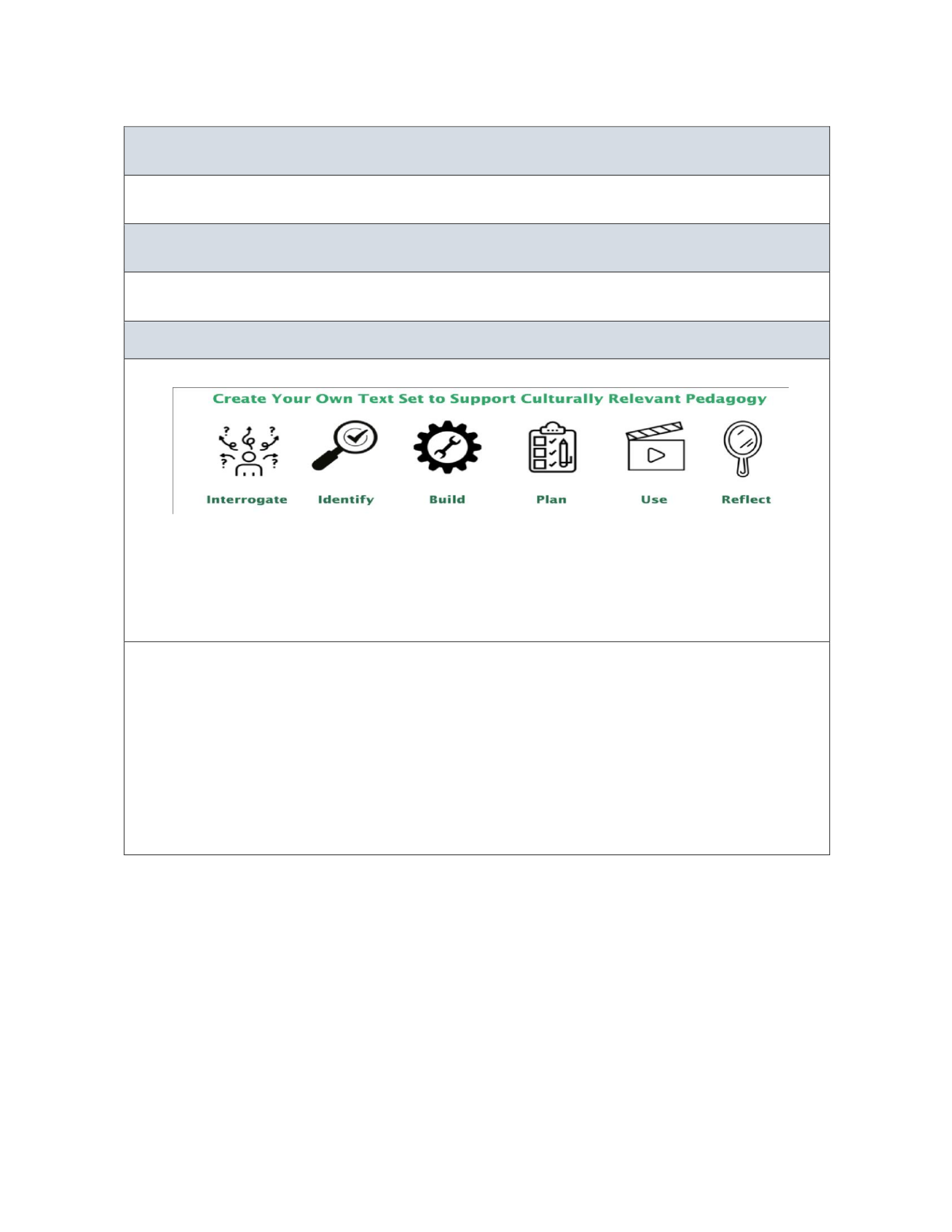
Table 5.1
Conceptual Framework for Professional Learning on Building Text Sets
Title of Professional Learning
Building Culturally Relevant Text Sets:
Balancing Students’ Literacy Needs and Anti-Divisiveness Policy Compliance
Learning Objective
Participants will be able to construct high-quality collections of texts selected to enhance cultural
relevance and student affirmation yet remain in compliance with anti-“divisiveness” policy.
Conceptual Framework for Learning
Figure 3
Conceptual Framework for Guidance on Culturally Relevant Text Set Construction
Note. This model was created by Student Achievement Partners with Achieve the Core in 2022.
From “Creating Text Sets to Support Culturally Relevant Instruction” by C. Swanson, T. Filler, A.
Williams, and T. Starks, 2022.
The concept framing this professional learning was developed by Swanson et al., (2022) through
Achieve The Core. Exploring texts through the lenses of singular narrative/perspectives, world and
current events, and identities, participants are guided through the process of interrogating content,
identifying choice material, implementing the sets, and reflecting on their use to improve literacy.
Probing questions include:
▪ What texts can be added to highlight additional voices, narratives, and perspectives?
▪ What texts can be added to highlight the relevance of real-world issues in modern society?
▪ What texts can be added to highlight the range of identities, languages, backgrounds, and experiences
reflected among students? (Swanson et al., 2022)
Implementation. Participants will explore a range of literary and non-fiction and
curriculum. Background knowledge and current need drive this PD. Utilizing deep
reflection over the course of the learning, participants will construct fresh text sets in the
following hands-on process:
• Reflect on current texts and content, using a culturally relevant pedagogy
reflection tool

• Review student work and experiences (teacher’s and students’) with teaching and
learning using particular texts
• Chart the GLOW texts and the GO texts, based on reflection on instructional text
successes and failures
In addition to collaborative work during the sessions, participants will be asked to take
the learning to back to the ELA teachers at their schools to stretch the process into their
immediate context. During the sessions, participants will collaborate in the following
ways:
• Bring Two, Take Two is a low-effort way for participants to use their background
and instructional success to facilitate learning for their peers. Each participant
brings two pieces to each session, labeled by grade span, text complexity, genre,
topic, and a one- sentence “why this.” A roundtable share-out will accommodate a
bring-and-take exchange.
• Participants summarize their learning after each session that includes A-
POSTFOR-MY- POST “ah-ha” from the knowledge, skill, or insight gained to be
shared during campus PLCs or staff development.
Teacher Support. The facilitator will feature a culturally relevant text set portable
display each session, modeling content, materials, resources, and alignment details for
either middle school or high school curriculum. Participants will be provided supplies and
materials to build displays during each March session. Participants will receive other
models of text sets available through open-source materials. The facilitator will also guide
participants through the process of text selection and set building, lifting from Achieve
the Core’s professional learning resource on literacy improvement through the use of text
sets. During each session, participants will be afforded breakout time to work on text
setting, with the facilitator providing one-on-one coaching and support.
Participants will receive facilitator feedback at the end of each breakout work session.

The feedback sought will be targeted and succinct.
• Consider _____________________________________________ a strong
component of the text set you are generating.
• Think about ____________________________________________ as you move
forward with the text set you are generating.
Participants will have an opportunity to evaluate the learning process and whether the
objective was met. Additionally, participants will be asked to submit their needs to help
them further reach their professional learning goals for the PD. A third component of the
evaluation gathers implementation feedback. Evaluation will be generated by Google
Forms and released for use after each of the eight professional learning sessions. Table
5.2 outlines the plan for the professional learning initiative addressing literacy
improvement, with a focus on incorporating cultural relevance into learning experiences.
Table 5.2
Professional Learning Overview
Professional
Learning
Offering rigorous, relevant learning experiences to the diverse student population that
makes up Glenndale-Clark School District is in line with one of the district’s core
values: aligning “resources to create equitable opportunities for students.” Culturally
relevant texts encourage wide-range reading and learner engagement with content that
resonates with their background, experiences, and perspectives. Educators’ capacity to
construct high-quality collections of texts selected to embed cultural relevance and
student affirmation yet remain in compliance with anti-“divisiveness” policy is the
objective of this PD. Using a collaborative, ongoing approach to professional learning,
participants will address the instructional need to bridge literacy skill gaps and fortify
students' ability to read, comprehend, and produce complex text.
Objective
Participants will be able to build culturally relevant text sets that are:
• aligned to the state’s Standard Course of Study
• correlated to district-approved curricula
• interest sparking and engagement sustaining
• within the margins of content compliance.
Audience
6-12 Teachers; Administrators; Instructional Support
Duration
Quarterly, 6-Hour Sessions; two school year cycles

August 15, 2023 October 10, 2023
January 9, 2024 March 11, 2024
August 13, 2024 October 8, 2024 January 7,
2025 March 11, 2025
Continuing
Education
Units
48 Credit Hours
Location
Glenndale-Clark District Conference
Room
Facilitator
Muzical Waite
Participants will build upon their culturally relevant text selection skills each
session. Through continuous feedback, reflection, collaboration, models and support,
participants will be afforded the opportunity to build up to eight culturally relevant text
sets with a structure for sharing the learning experiences within the context of their
content PLCs over the course of two school years. Ensuring that this plan is initiated
within the district, I first have to submit a proposal to the district’s professional learning
director who approves development courses. Upon course approval, the offering will be
listed in the continuing education units catalogue, enabling participants to sign up.
Finally, I will then advertise the opportunity on the district’s ELA department resources
page.
Reflection on the Research
New to action research, I had much to learn about planning and implementing this
type of study. I was familiar with concepts such as hypothesis, participants, surveys, and
quantitative data. However, qualitative methodology presented a learning curve. In that
regard, some elements of the study were unexpected, while others were not.
The Expected
As expected, teachers possessed distinct perceptions of the anti-CRT movement. I
expected that having time to relay their experiences with the political influences on their
schools and classrooms via interview would be welcomed, as I have always known

teachers to appreciate an opportunity and safe space to express their professional
accomplishments and challenges. Many teachers have a “counter story” to tell, but they
do not always have an audience (Solorzano & Yosso, 2002). I hypothesized that teachers
would be able to either 1) point to efforts they were making to maintain DEI in their
classroom in the face of the culture war over CRT, or 2) suggest that they had avoided all
mention of race, ethnicity, or identity during class discussion or in the materials they
chose. The three participants fell within hypothesis #1.
The Unexpected
I did not expect to work with only three participants. It was not lost on me that
critical race theory is a political boogeyman. I also considered how teachers and
administrators across the country have been challenged, harassed, and fired for certain
stances that CRT opponents did not like. In certain states, CRT affiliation is costly and
can be criminalized.
Tennessee aims to levy fines starting at $1 million and rising to $5 million on
school districts each time one of their teachers is found to have “knowingly
violated” state restrictions on classroom discussions about systemic racism, white
privilege, and sexism…Teachers could also be disciplined or lose their licenses
for teaching that the United States is inherently racist or sexist or making a
student feel “guilt or anguish” because of past actions committed by their race or
sex. (Pendharkar, 2021, paras. 1-2)
However, the setting of this study was not in Tennessee nor under state-legislated
mandates regarding CRT. So, I did not expect such low interest in participating in a
research study on such a highly visible issue. In terms of discussing and understanding
CRT, each of the three participants communicated that, for many people, a lack of interest
in such a study is “more of the same”: aversion to “race talk.” At this point in time in our
society, “race talk” is essentially “illegal.” I underestimated the affect antiCRT sentiment

and the impact the political movement is having on teachers. I did not expect 87
invitations to go out without response or acknowledgement. Perhaps all those who chose
not to be considered for this study fall within hypothesis #2.
Changes
I would change the several aspects of this study in a hypothetical “do over.” First,
I would widen the window to elicit participation. I did not allow enough time to find a
few more willing teachers to participate and share their experiences. My goal was a
sample size of six. However, I was able to collect a tremendous amount of data from the
three, brave teachers who did agree to participate. In fact, in lieu of a larger sample size,
my second change would be incorporating an additional method of collection.

