


CERTIFIED PUBLIC ACCOUNTING FIRMS
Except for certain governmental organizations, the audits of all general use financial
statements in the United States are done by CPA firms. The legal right to perform audits
is granted to CPA firms by regulation in each state. CPA firms also provide many other
services to their clients, such as tax and advisory services.
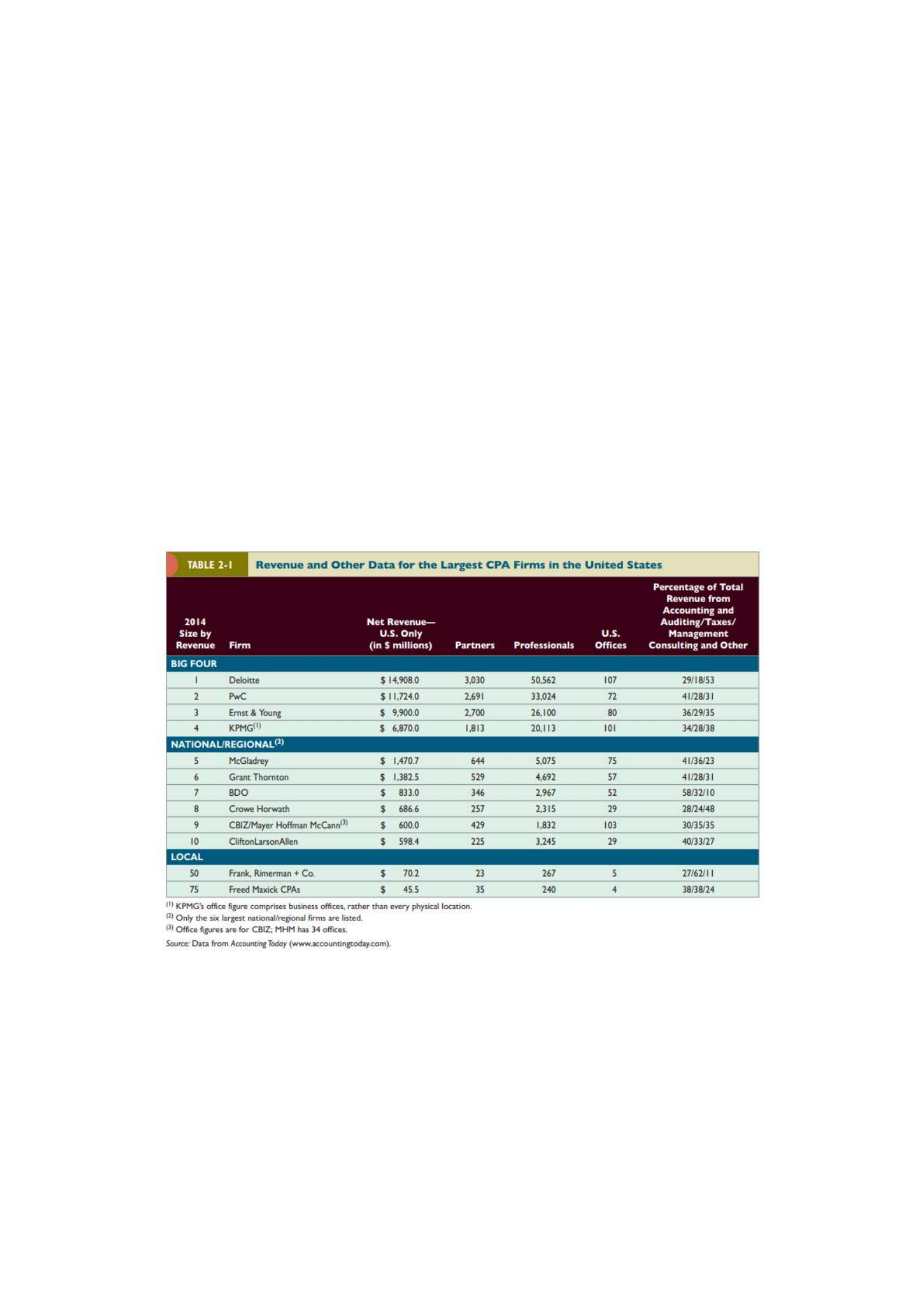
It is estimated that more than 85,000 CPA firms exist in the United States. These
firms range in size from 1 person to more than 50,000 partners and staff. Table 2-1
provides revenue and other data for some of the largest accounting firms in the United
States. Three size categories are used to describe CPA firms: Big Four international firms,
national and regional firms, and local firms.
1. Big Four international firms. The four largest CPA firms in the United States are
called the “Big Four” international CPA firms. They are the first four firms listed
in Table 2-1. These four firms have offices throughout the United States and
throughout the world. The Big Four firms audit nearly all of the largest
companies both in the United States and worldwide and many smaller
companies as well.

2. National/Regional firms. National CPA firms in the United States have offices in
most major cities while regional firms have several offices in a state or region
and serve a large radius of clients. The six largest of the national/regional firms
are listed in Table 2-1. These firms are large but considerably smaller than the
Big Four. The national/regional firms perform the same services as the Big Four
firms and compete directly with them for clients. Many of these firms are
affiliated with firms in other countries and therefore have an international
capability
3. Local firms. Some local firms have only one office and serve clients primarily
within commuting distances while others may have several offices. The larger
local firms compete for clients with other CPA firms, including national,
regional, and Big Four firms. Many of the large local firms are affiliated with
associations of CPA firms to share resources for such things as technical
information and continuing education. Many of these firms also have
international affiliations. Most small local CPA firms have fewer than 25
professionals in a single-office firm. They perform audits and related services
primarily for smaller businesses and not-for-profit entities, although some have
one or two clients with public ownership. Many small local firms do not perform
audits and primarily provide accounting and tax services to their clients.
CPA firms provide audit services, as well as other attestation and assurance
services. Additional services commonly provided by CPA firms include accounting and
bookkeeping services, tax services, and management consulting and risk advisory
services. CPA firms continue to develop new products and services, such as financial
planning, business valuation, forensic accounting, and information technology advisory
services.
1. Accounting and bookkeeping services. Many small clients with limited
accounting staff rely on CPA firms to prepare their financial statements. Some
small clients lack the personnel or expertise to use accounting software to
maintain their own accounting records. Thus, CPA firms perform a variety of
accounting and bookkeeping services to meet the needs of these clients. In
some cases, the CPA firm is engaged by the client to help them prepare financial

statements mostly for management’s internal use. In many cases in which the
financial statements are to be given to a third party, the client may engage the
CPA to compile financial statements that are accompanied by a compilation
report, which indicates the CPA assembled the statements but provides no
assurance to third parties. In other situations, the client may engage the CPA to
provide some assurance on those statements by performing a review or even an
audit of the financial statements. As Table 2-1 (p. 49) shows, attestation services
and accounting and bookkeeping services are a major source of revenue for
most large CPA firms.
2. Tax services. CPA firms prepare corporate and individual tax returns for both
audit and non-audit clients. Almost every CPA firm performs tax services, which
may include estate tax, gift tax, tax planning, and other aspects of tax services.
For many small firms, such services are far more important to their practice than
auditing, as most of their revenue may be generated from tax services.
3. Management consulting and risk advisory services. Most CPA firms provide
certain services that enable their clients to operate their businesses more
effectively.
These services are called management consulting, management advisory services,
or risk advisory services. These services range from simple suggestions for improving the
client’s accounting system to advice in risk management, internal controls, information
technology and e-commerce system design, mergers and acquisitions due diligence,
business valuations, and actuarial benefit consulting. A number of organizations
outsource or co-source their internal audit function to CPA firms. Many large CPA firms
have departments involved exclusively in management consulting and risk advisory
services with little interaction with the audit or tax staff.
Although the Sarbanes–Oxley Act and Securities and Exchange Commission (SEC)
restrict auditors from providing many consulting services to public company audit
clients, some services are allowed, and audit firms are not restricted from providing
consulting to private companies and public companies that are not audit clients. Table
2-1 shows that management consulting and other risk advisory services are a significant
source of revenue for most accounting firms.

