



INTRODUCTION School leaders that rely on efficient
School leaders that rely on efficient approaches to solve dilemmas run the risk of
suspending their ethical responsibility to students. Colnerud (1994) suggests that ethical
tension and conflict finds their origin where ethical norms collide. The collision of these
norms creates space for ethical dilemmas to arise in schools and in the decisions of those
who work in them. In this context, leaders face a double mandate wherein their
professional conduct is expected to support such norms as well as students’ best interests.
In the field of educational leadership in the United States, interest in ethics increased
when the Interstate School Leaders Licensure Consortium released standards for the
licensing of school administrators that include an ethical strand (ISSLC, 1996). Based on
the assumption that moral and ethical conflicts exist in the experience of educational
leaders, as a framework for responding to ethical dilemmas scholars have theorized that
the ethical conflict educational leaders’ experience occurs within three domains; that is,
justice, critique, and care (Starratt, 1991). Thus, it has been proposed that a
multidimensional ethical framework that combines the ethics of justice, critique, and care
can provide a lens through which leaders’ can view their work from an integrated ethical
perspective to reconcile ethical conflict. Shapiro and Stefkovich (2001, 2011) take up the
issue of responding to such conflict by proposing an ethic of profession that synthesizes
the three component ethics. The ethic of profession espouses decisionmaking in the best
interests of the student. These theoretical advances, while significant, have not mitigated

the difficulty leaders experience supporting the best interests of the student (Colnerud,
2006).
Bearing these issues in mind, this dissertation is organized in five chapters.
Chapter one establishes the context of the study by identifying the problem, purpose, and
research questions. Chapter one also establishes the relevance of the study and sketches
out major concepts. Chapter two presents a review of the literature and finds a gap in it
relevant to the need for empirical inquiry into to the difficulty educational leaders’ face in
making decisions in the best interests of students. Based on the review of research,
chapter three outlines the chosen methodology and specific methods used to conduct this
study. Chapter four describes the study’s sample of participants, presents and clarifies the
data gathered and used in the study, and offers the study’s findings. As a method of
conclusion, the final chapter of the study relates the data captured to the research problem
and applies it to answer the study’s research questions. Chapter five closes by offering
recommendations for future research.
Statement of the Problem
Theory and research in ethics and moral reasoning in general and in the applied
area of educational leadership in particular has historically adopted a narrow perspective
on decision-making that can jeopardize the best interests of the student (Campbell, 2001;
Colnerud, 1997, Langlois, 2004, Stefkovich & O’Brien, 2004; Vitton & Wasonga, 2009).
For example, when confronted with difficult decisions leaders can be pressured by
guidance that comes in the form of zero-tolerance (Keleher, 2000), influenced by norms
associated with collegial loyalty (Colnerud, 1997), or suffer from the effects of goal

displacement (Langlois & Lapointe, 2007). What’s more, in some cases organizational
conditions can inhibit moral agency or make inaction legitimate (Saimer, 2008). While
the literature suggests that a multiple ethical approach can help leaders to make important
decisions, in itself such an approach can cause leaders to experience ethical conflict as
students, parents, colleagues and leader all have a certain ethical standing and do not
always agree in terms of best interests. Ethical conflict is part of the landscape of
educational leadership and not enough is known about it. Ethical decision-making is a
persistent problem in the field of educational leadership.
Rationale for Study of the Problem
Reconciling value-laden perspectives to promote moral ends is a legitimate area
of inquiry in the field of educational leadership and an important responsibility of
educational leaders (Begley, 1999; Starratt, 2005). Because it is unacceptable for
educational leaders to make decisions that are harmful to students, this research thus
represents a relevant and important line of inquiry that has the potential to contribute to
the educational leadership literature.
Purpose of the Study and Research Questions
Bringing together literature in educational leadership and related fields relevant to
the problem of ethical decision-making, the purpose of this research is to capture and
describe ethical conflict experienced by practicing educational leaders through a
multidimensional theoretical lens. From this basis the following questions are
investigated:

1. What is the nature of ethical conflicts that practicing educational leaders
experience?
2. Is the critical incident technique a tool relevant to the purpose of capturing ethical
conflict as perceived by practicing educational leaders?
3. How does the nature of these ethical conflicts relate to leadership background?
4. How does the nature of these ethical conflicts relate to school context?
5. What are the implications for leadership preparation and professional
development?
6. What are the implications for future research?
Although similar research has been conducted that documents ethical conflict in
teaching (Colnerud, 1997; Pope, Green, Johnson, Mitchell, 2009), research has not been
located that employs ethical theory to interpret conflict experienced by practicing
educational leaders as specified by this research.
Literature/Research Background
To begin to consider ethical conflict and student best interests, let us start with a
question: why it is that dilemmas arise in schools that risk jeopardizing the best interests
of the student in the first place? Learning something about the sources of ethical conflict
in schools is pertinent to the decision-making responsibilities of educational leaders.
The Relevance of Ethical Decision-making to Educational Leadership
Reasoning between ideological points of view is relevant to many aspects of
public policy. For example, values embedded in forms of orthodoxy and progressivism
have very different conceptions of moral authority that can lead to equally different

judgments (Rest, Narvaez, Bebeau and Thoma, 1999). Like societies, people are not
devoid of a particular moral perspective and do not always share the same values in terms
of what is right or wrong and good or bad (Sockett, 2006). The values that are
manifested by individuals impact in social institutions such as schools (Starratt, 2005).
For instance, Jonathan Zimmerman (2003) is one author to examine culture wars
that are fought in America’s schools. From his perspective, the struggle for expression of
progressive values is fought on two different fronts; that is, the teaching of history and
religion. Similarly, from the international perspective, Rest et al. (1999) offers that
ideological struggle is a defining characteristic of the post-cold war world. While it is
clear that varying views and ideologies exist in culturally plural contexts that themselves
are perfectly reasonable, it is also plausible that the coexistence of them in context can be
a source of conflict and struggle (Rawls, 1993).
Culture, Values, and Decision-making
Respecting the customs in civil society does not mean the same thing in every
context. It is possible that there are several logics that can be applied to solve problems
each perhaps being based on differing comprehensive views or ideologies. Valuing one
ethical basis can devalue another. Since conceptions of ethics can differ within and
across cultures (Passini, 2010), educational leaders who are called on to serve student
interests have to be able to draw from an expanding repertoire of ethical perspectives.
To illustrate, consider Miller’s (1990) work which supports the idea that culture
and values effect the development of one’s reasoning ability. Miller (1990) found that in
India, subjects respond to a broader audience of others (parent, friend, stranger) in moral

terms when tasked with deciding whether or not to render aide, as compared to the United
States in which subjects only valued aide to parents and did not consider lending aide to
friends or strangers as a moral imperative. Miller (1990) is of particular relevance to the
present topic of decision-making in the best interests of the student. Such
decisionmaking entails the extension of applicable moral protections for the purpose of
fostering the well-being of others who may lie outside of an agent’s culturally constructed
scope of justice. The subjects in the Miller (1990) study clearly operated on the basis of a
broad scope of justice. In a manner similar to the subjects in the Miller (1990) study,
educational leaders who have the capacity to take the perspective of students are able to
extend such moral resources and protections to them in order to make decisions in line
with their interests.
Personal values issue from cultural perspectives and are developed over the
course of time (Vitton & Wasonga, 2009). For example, personal values can arise from
different religious or nonreligious traditions (Sockett, 2006). Similarly, Putka (2002)
offers that the moral ideologies with which people identify are not easy to change or
modify. Further, he indicates that one’s moral ideology resides close to the surface
making it easy to retrieve when in the process of moral negotiation as it can invite
defensiveness.
Being an educational leader brings with it a public role. Such a public role can
call on leaders to modify personal values and tightly held ideology. Although the
professional responsibilities of an educational leader require high levels of
personalization (Starratt, 2004), "professions are inherently public and communal"...and

"professionals require membership in a community" (Shulman, 1998, p. 520). The values
of a professional community are a synthesis of personal and professional ethics (Shapiro
& Stefkovich, 2011). Professional values include a focus on decision-making that
promotes the well-being of others.
As a focus of inquiry, problem solving in educational leadership has typically had
the profession’s attention (Callahan, 1966; Crewson, 1987; Farqhuar, 1989; Glass, 1992;
Leithwood & Raun, 1993; Leithwood & Steinbach, 1995). Because values impact in
social institutions including schools (Starratt, 2005), the field of educational leadership
has expanded beyond modern perspectives toward consideration of the role affect plays in
ethical reasoning (Begley, 1999; Gross, 2006). More specifically, the decision-making of
educational leaders is justified due to the nuanced and value-laden context in which
decisions are made (Begley, 1999). Since educational leaders frequently face critical
ethical incidents, ethical reasoning is a valid area of inquiry (Gross, 2006).
Postmodern perspectives such as phenomenology find values and affect at the
core of moral and ethical functioning (Magee, 1987). Accordingly, there is research that
pursues axiological approaches (Dempster & Berry, 2003; Foster, 1985; Greenfield, 1985;
Hodgkinson, 1991; Lakomski & Evers, 1999; Langlois, 2004; Langlois &
Lapointe, 2007; NPBEA, 1996; Starratt, 1991; Shapiro & Stefkovich, 2001, Sherman &
Grogan, 2003). Such reasoning can be developed via experiences that broaden one’s
scope of justice (Bloom, 1977, Passini, 2010, Shweder, 1982, Vitton & Wasonga, 2009).

Ethics and Morality
It is useful at this point to define ethics and morality and explain why these terms
are used in a discussion of educational decision-making. Ethics derives from the Greek
ethos and morality derives from the Latin mores. To the ancient Greeks, ethos relates to
the person or individual while the Latin mores means social habits or customs. In other
words, ethics are a means exercised by individuals to promote moral ends (Robbins &
Trebicht, 2009).
Passini (2010) suggests that as “educational agents” schools are in position to play
an important role in promoting an inclusive morality. As a framework to interpret
dilemmas that can arise in schools, the idea that consolidating ethical perspectives can
add value to the decision-making of educational leaders was first suggested by Starratt
(1991) and initially included three ethics; that is, the ethic of critique, the ethic of justice,
and the ethic of care. Because the terms ethics and morality are used in varying and
nuanced ways in the literature, it is useful to use Starratt (2004) to further put them in line
with the educational context:
Ethics is a term that is used in a variety of ways for a variety of purposes. I use it
here to denote a study of the underlying beliefs, assumptions, principles, and
values that support a moral way of life. The product of that study is an ethics—a
summary ordering of those principles, beliefs, assumptions, and values into a
logical dynamic that characterizes the moral life. (p. 5)

Starratt’s (1991) idea that ethical themes could be brought together to provide
educational leaders an organized way to think about their work from ethical perspectives
attracted the scholarly attention of Shapiro and Stefkovich (1997) who later merged these
ethics into an ethic of profession (2001). While this theoretical synthesis has provided a
new approach to research on ethical leadership and decision-making, it has not mitigated
the difficulty in making decisions in the best interests of the student (Colnerud, 2006).
Ethical Decision-making
Benevolence and beneficence are additional terms that are relevant to ethical
leadership and decision-making in education. Benevolence is a cognitive macromoral
concept that resides at the communal level (Rest et al., 1999). Benevolence has to do
with feeling sorry for others and taking action as a result. Thus, instead of valuing high
levels of contextualization and intimacy, benevolent decision-making favors fairness and
equity. Although educational decision-making grounded in benevolence can be efficient,
it is not sensitive to individual student needs. Leaders who practice this brand of
decision-making therefore run the risk of compromising their ethical responsibility to
students.
Beneficence, on the other hand, is action taken on behalf of others for the purpose
of promoting their well-being. Beneficence is an affective micormoral concept that
resides at the level of the individual (Rest et al., 1999). Beneficent decision-making
issues from high levels of contextualization and intimacy that originates empathic
volition that moves one to take action on behalf of another. Educational leaders who
pursue beneficent means to solve ethical conflict are sensitive to individual student needs

and take action to promote their well-being. Educational decision-making in the best
interests of the student values beneficence.
Macro-Micro Binary
It is helpful to further develop the macro-micro binary mentioned prior.
Developing this concept is important because macro and micro are terms that help to
address some of the problems of modernity (i.e., individualism, isolationism) that are
relevant to ethical decision-making. In public enterprise, the connection of theory and
practice is mutually beneficial. For instance, decision-making in educational leadership
requires high levels of contextualization and intimacy yet whether such decisions are in
the best interests of the student or not simultaneously requires an understanding of related
theoretical concepts including justice, care and critique (Shapiro & Stefkovich, 2011;
Starrett, 1991). Similarly, in the related field of public administration, contextualized
human resource functions or practices can be thought of as micro yet whether they are
effective or not may rely on one's understanding and consideration of particular macro
organizational theories and their influence (Farmer, 1995). In public enterprise, means
and ends can therefore be thought of as reciprocally determined and mutually
interdependent.
Ethical Dilemma
For the purposes of the present study and as used in the educational leadership
literature, an ethical dilemma is a social situation that involves a conflict between
imperatives such that supporting one often results in transgressing the other.

Methodology
To answer the research questions outlined prior, a qualitative interpretative
methodology has been employed. According to McMillan (2004), qualitative research
can take four forms: ethnographic, case study, phenomenological, or grounded theory.
Since the purpose of this study is to capture and describe the nature of phenomena (the
ethical conflict experienced by educational leaders), the appropriate approach to take is
qualitative with elements of phenomenology. The approach used in this study is in line
with prior research that explores ethical problems and conflicts in the field of education
(Colnerud, 1997; Pope et al., 2009).
Summary
The background literature and research presented establishes the need for research
relevant to ethical educational leadership and decision-making. Resolving ethical conflict
is an inherent but not easy task pertinent to the role of educational leaders. The task is
difficult because the reasons that guide the decisions of leaders are not bracketed in
practice and are difficult to bracket in research. The ethics of justice, critique, and care
overlap with each other and are often hidden in institutional norms and practices and
decision-making guidance is masked in various jurisprudential concepts. Thus, this
research considers the difficulty leaders’ face in making decisions that are in line with the
best interests of students by focusing on the specific kinds of ethical conflicts practicing
leaders’ experience.
The preceding introductory discussion provides solid footing for a more in-depth
look at the literature which is taken up next.

CHAPTER 2. REVIEW OF RELATED LITERATURE
The purpose of this chapter is to review the literature as it pertains to ethical
educational leadership. As a starting point, databases including ERIC, Education
Research Complete, and Humanities International Complete were selected based on
relevance and searched using the search terms “ethical educational leadership”. Abstracts
of articles were reviewed for relevance. Based on relevance, articles were studied and
assimilated. The bibliographies and reference lists of relevant selections were also
reviewed and assimilated. Based on this search and assimilation, two themes emerged
from the literature.
The first theme has to do with the relevance of ethical decision-making to the field
of educational leadership. Due to the complexity of practice there is a significant amount
of nuance involved in resolving dilemmas to reach decisions that are in the best interests
of students. The second theme that emerged is the postmodern view of ethical decision-
making as grounded in a multidimensional framework. On this view, multiple ethical
perspectives interpenetrate each other to create an ethic of profession. Such an ethic of
profession provides educational leaders with an expanding repertoire of ethical bases to
draw from when making decisions. Integral to both of these themes is the presence of
ethical dilemmas in the school setting.
The Double Mandate
Leaders who pursue efficient solutions “often turn to legalistic approaches to
resolve what may essentially be ethical dilemmas” (Stefkovich & O’Brien, 2006, p. 197).

Such school leaders thus risk suspending the ethical responsibility they have for students’
well-being in loco parentis. Colnerud (1994) suggests that ethical tension and conflict
finds its origin where ethical norms collide. In this context, educators face a double
mandate wherein their professional conduct is expected to support both ethical norms as
well as individual students’ interests. The collision of these norms creates space for
questionable situations to arise in schools that can taint the decisions of those who work
in them. In such cases, educators who have a singular ethical focus can rely on one ethic
at the expense of others. Colnerud’s (1997) descriptive study of professional ethics in
teaching found that ethical conflict “in relation to pupils, parents, and colleagues” can
jeopardize the well-being of students (p. 630). Similarly, supporting the best interests of
students is an important responsibility of educational leaders.
Of particular relevance to supporting the best interests of students are the work of
Starratt (1991) and Shapiro and Stefkovich (2011). Starratt (1991) proposes a
multidimensional ethical framework that includes the ethics of justice, critique, and care.
Shapiro and Stefkovich (2011) add an ethic of profession that results when the ethics of
justice, critique, and care are merged. At the heart of the ethic of profession is
consideration of the best interests of the student. The determination of the best interests
of the student can involve applying the ethic of profession to three thoroughly
contextualized best interest correlates; that is, rights, responsibility, and respect
(Stefkovich & O’Brien, 2004).

Despite the attention paid to decision-making in the field of educational
leadership, research investigating complex decision-making via the lens of a
multidimensional framework is thin. Only the work of Langlois (1997, 2004), Slavinsky
(2006), and Vitton and Wasonga (2009) were located; however, Langlois’ (1997) work is
in French and therefore inaccessible. The empirical work by Langlois “in different
cultural and linguistic settings has allowed for the verification of Starratt’s
multidimensional model” (Langlois, 2007, p. 249). As stated prior, the theoretical
advances in professional ethics have not made it any easier for educational leaders to
support the best interests of students (Colnerud, 2006). Although Colnerud (1997)
suggests that the most effective way to investigate issues of professional ethics is by
studying them in relation to the interactions agents have with those in their professional
life, such an approach has not been located in the field of educational leadership. The
present research aims to build on prior research (Colnerud, 1997, 2006; Shapiro &
Stefkovich, 2001, 2011) by interpreting ethical conflict through a multidimensional
theoretical lens. Yet, before considering the multidimensional ethical framework, it is
helpful to think ourselves into the position that gives rise to such a framework. Hamlyn
(1987) advises that at its core, philosophy is concerned with problems, “even if only the
problems of understanding something or other” (p. 12). Thus, consideration of the
philosophical position in which the multidimensional ethical framework finds fulfillment
as a means to resolve dilemmas and promote student best interests can help us to
understand its application and relevance to practice.

Modern vs. Postmodern Reasoning
Modern reasoning does not fit contemporary approaches to decision-making for at
least two reasons. First, as advocated by modern philosophical approaches, if people can
think themselves out of the existence of all ideas except thought (as did the
paradigmatically modern-thinker, Descartes), then what monitors reason and thought? It
would seem that on the modern view, self-interested reason serves the function of judge
and jury. Second, the enlightened view of reason holds that bodily experiences of passion
and affect get in the way of reason. It turns out that the opposite is true.
Demasio (1994) shows in Descartes’ Error: emotion, reason, and the human brain that
emotionless people cannot be rational. Cognitive science suggests that people cannot
puzzle out desirable ends without emotion.
The postmodern idea that values impact the decisions of educational leaders is in
line with the work of Bull and McCarthy (1995) who advocate for the expansion of the
fields of law and ethics beyond traditional perspectives. Langlois (2004) thus suggests:
In a post-modern context, which most would consider complex, it seems to us that it is
important to consider this new light which has been shed on ethics. This perspective
extends beyond the empirical and into the veiled psychological world of mental processes
where the very acts of management occur, distinguishing between practices that are
considered good from those which are considered bad, according to the individual
belonging to a community of practice. (p. 81)

In other words, the new light that has been shed on applied ethics signals a path
away from the tenants of pure reason and toward an acknowledgement that human factors
such as affect supplement reason to form a more complete picture of ethical functioning.
This new light originates in the phenomenology of thinkers such as Husserl and
Heidegger and in the pragmatism of others such as James.
Why is it that the capacity of emotion is so important to rational functioning?
One place to look for the answer to this question is in the phenomenological philosophy
of Husserl and Heidegger. The systematic investigation and analysis of objects in
consciousness is called phenomenology (Magee, 1987). An essential Husserlian insight
that is relevant to our purpose is that phenomenological objects “includes not only
material objects but a great many different sorts of abstract entity; not only our own
thoughts, pains, emotions, memories and so on, but music, mathematics, and a host of
other things” (p. 254). Similarly, Heidegger proposes an approach that considers
concepts such as state of mind and the emotional life as legitimate focuses of
philosophical inquiry. From this point of view, people are not the observing subjects or
knowing beings that modern reason assumes us to be, but rather we are simultaneously
both. Heidegger calls this contextualized and social account of being Dasein (Magee,
1987).
The pragmatism of James is also relevant to our discussion. One aspect of James’
pragmatism involves a cluster of terms including will, habit, and belief. Will is the desire
for something and the origin of choice. Habit consolidates choices into behavior that
allows people to achieve what they want. Beliefs result from habits and transform the
will by providing a structure of meaning to what we do that allows us to do things

unthinkingly. Therefore, will, habit, and belief can be reduced to a system of
representation. From this perspective, many of the choices we make have already been
made for us. In this way, systems of representation are real and act upon us whether we
want them to or not (Parkinson, 1988). On the consequences of habits turning into
beliefs, James thinks that ideas become naturalized into our body, part of our nervous
systems, and therefore part of our nature. Nervous systems are structured around habit
and activity. New information usually leads to minor adjustments in one’s systems of
representations, but in some circumstances a conversion experience can occur and a new
system can replace the old system.
In developing a theoretical perspective in which affect serves to supplement
cognition, Blasi (1983) offers that the “dividing line in the motivational field is not
placed, here, between affect and cognition…”. Blasi continues that while “there is […] a
normative pull, both in action and in development, in the direction of cognitive
objectivity” the process of arriving at moral decisions is far from “mechanically logical”
(p. 195). On Blasi’s view, the self exercises a central and active role. The “significant
developmental changes” that one’s moral identity undergoes is attributable to a self that
“chooses and acts” (1983, p. 201).
The Multiple Ethical Paradigm
The multiple-ethical paradigm consists of four areas related to applied ethics in
school administration: the ethic of justice, the ethic of critique, the ethic of care, and the
ethic of profession. The literature, however, does not fit neatly into one or the other and
they necessarily interpenetrate each other (Starratt, 1991). The overlaps that appear in the

literature owe to a bit of irony. While scholars have argued in favor of one or the other
position, the multiple ethical paradigm acknowledges that ethical leadership and decision-
making in education is not an either, or endeavor. Alternatively, “in this paradoxical,
unstable, and ethically polarized era” a multiple ethical paradigm approach can assist
educational leaders as they wrestle with the dilemmas they face (Shapiro &
Stefkovich, 2011, p. 3). In their watershed work, Reflection of the Knowledge Base in
Law and Ethics for Educational Leaders, Bull and McCarthy (1995) similarly call for the
integration of “major intellectual domains, across the full range of administrative
decisionmaking” (p. 613), and that leaders who attempt to maintain separate personal and
public ethics are inviting ethical controversy.
The descriptions of the ethics of justice, critique, and care that follow are broad
rather than specific and exhaustive. As such they fill out a conceptual framework rather
than present a detailed history. The descriptions therefore do not include every notable
scholar in each area. Also, in order to bring out some of the nuance and inherent
contradictions within them, the descriptions are supplemented by some relevant empirical
and scholarly work. In this way, the multidimensional framework provides a platform for
the development of the ethic of profession, which involves a more comprehensive
discussion.
The Ethic of Justice
The ethic of justice focuses on the laws and rules that govern society and on the
accompanying rights of individuals. It may be broadly separated into two categories; that

is, deontological ethics and consequentialist ethics. Justice reasoning is a source of the
uniformity that is typically found in decision-making in schools.
Strike, Haller, and Soltis (1998) offer that a useful way to understand the
deontological perspective is via the concept of equal respect. Because humans are
capable of reason, the core of this perspective is the non-relativist belief that all people
are moral agents and therefore ought to be respected. Breaking rules that may jeopardize
the rights of other moral agents, even if it serves a greater good, is not an option. An
axiom that is a useful way to describe the deontological perspective is people are ends in
themselves.
On the other hand, theorists such as Beauchamp and Childress (1994) advance a
view that has its roots in utilitarianism. For those who align with this approach, rules are
guides and depending on the probable outcome of a situation the rules may be violated. A
useful way to describe the utilitarian perspective is via the principle of benefit
maximization (Strike et al., 1998). The principle of benefit maximization is specified by
its Millian call to each person to make decisions bearing the end of bringing the greatest
amount of benefit to as many people as possible in mind. While consequentialist
conventions acknowledge rules and laws, such conventions simultaneously acknowledge
that there may be times when rules have to be broken in order to serve a vision of the
greater good. In this way consequentialism finds society as the central figure. An axiom
that is a useful way to describe this perspective is ends justify means.
Deontological Ethics. For the deontologist, individuals are central and respect of
rights is most important. One place to look for the origin of deontological ethics is in the

18th century work of Kant (Goldberg, 1995). In order to understand Kant's position it is
helpful to briefly consider the work of Hume. Hume believed that a posteriori knowledge
is all that one can hope to know. For example from Hume's point of view there is no way
to know that the sun will rise tomorrow, because tomorrow lies in the future and we have
not experienced tomorrow yet. Ideas have to be verifiable. Thus, Hume shows that while
reason is capable of identifying desirable ends, reason is not capable of compelling
people toward them. This, he believed, is due to reason's inability to infer ought from is.
In other words, the rational desirability of an end has to be verified if the end is to have
the power to compel an agent to act toward it. The desirability of a moral end falls short
on this account due to its metaphysical nature. While reason can prove the existence of a
desirable moral end, happiness for example, it is not capable of moving an agent to the
belief that they ought to pursue it. On Hume's account just because happiness exists
doesn't necessarily mean that it ought to exist.
Like Hume, Kant believed that experience and human nature can present desirable
ends to be pursued, and that reason was particularly adept at determining the appropriate
means to achieve such ends. But unlike Hume, Kant believed that human nature consists
of more than one part. Kant was Christian and Hume’s idea of the self being only a
cluster of experiences or impressions devoid of a metaphysical perspective puzzled Kant.
The practical part of human nature, according to Kant, changes over time due to
sensuous experience while the rational part of human nature does not change. If Hume is
correct in assuming that moral action is rational action, then for the same reason that

Hume believes that action based on rationalism is beyond the reach of human beings,
Kant believes it is within our reach. In other words, if humans are rational then moral
action has to apply to all beings because of it. Therefore, beings on Kant’s view can be
ends in themselves.
Integral to an understanding Kant’s categorical imperative is an understanding of
the terms maxim, law, and will. A maxim is a practical rule that is determined via reason
and on which one acts. A law, on the other hand, is an a priori objective principle that is
relevant to all rational beings and on which one ought to act. A will is informed by reason
and supplies volition. Thus the categorical imperative, “Act only on the maxim through
which you can at the same time will that it should become a universal law” (quoted in
Goldberg, 1995, p. 107), is reasoned practical volition that is in itself in line with
reasoned law. The Golden Rule can be considered such a maxim, Do unto others as you
would have them do unto you. In this way, the imperative has the power to deduce ought
from is and thus compel beings toward moral ends. As the product of pure reason, good
conduct has intrinsic moral value in itself. The Golden Rule is clearly based in the ethic
of justice. What we have a right to expect from others is the same as what they have a
right to expect from us.
Typically deontological guidelines can present in the form of codes of ethics.
Pertinent to decision-making, the duty orientation of deontological ethics can create
constraints that trump other ethical considerations. For example, an administrator’s duty
to report suspected abuse may put a child in additional danger. A narrow focus on rights
and duties can push one to make decisions that lead away from rather than closer to the

moral core of the education profession (Hanson, 1998). Such a focus, while supporting
the ethical principle of neutrality can also support the abdication of personal
responsibility for others (Marshall, 1995). Because deontological ethics determines not
only the kinds of rules we ought to follow, but also supplies the volition to pursue such
ends, it is critical that codes and legislation be rationally vetted for warrant. Because
difficult decisions are often characterized by divided loyalties, an understanding of the
deontological framework is pertinent to decision-making (Dempster & Berry, 2003).
Consequentialist Ethics. Another point of view that is encompassed in the ethic
of justice is consequentialism. Consequentialist scholars believe that society is the
central figure rather than the individual. One can locate the voice of consequentialism in
Mill’s utilitarianism (Goldberg, 1995). Utilitarian ethics is based upon the principle of
greatest happiness. Millianism interprets questions about why to maximize happiness as
in terms of what makes happiness desirable. The greatest happiness principle grew from
the work of Mill’s mentor, Bentham, and addresses an inherent deficit in Kant’s
categorical imperative. According to Mill, the maxims which supply the volition toward
universal law, contain no inherent constraints on action that would prevent rational beings
from adopting immoral laws. In other words, reason serves as judge and jury.
Regardless of which values or maxims prevail, a person can always follow an alternative
course of action but for the undesirability of the consequences.
Utilitarianism assumes a priori that each person knows best the sort of life they
wish to pursue and are left alone to pursue it so long as they do not cause harm to others.
Millianism supports experiments of living which assumes that trying out different

solutions to predicaments enables society to flourish. People are free to do what they
please in pursuing happiness even if it offends others since civilized societies typically
contain a measure of diversity. Thus, Mill's greatest happiness principle logically derives
from a form of self-interest where each person pursues his or her own happiness which
then constitutes a desirable summation of happiness. This is how happiness becomes an
end in itself, and those things that a person pursues intermediate to this end, freedom for
example, are means to the end of happiness.
Although Mill's utilitarianism privileges liberty and experiments of living, in
some circumstances it is justified to set limits on means. Paternalism is the belief that
one may know what is in the best interests of another. Although paternalism can be
thought to curtail the pursuit of happiness, Mill considers paternalism justified in cases
pertaining to those who do not have the capacity to make responsible decisions for
themselves; for instance, the uncivilized and children. In the context of educational
decision-making in the best interests of the student, paternalism can be justified on
utilitarian grounds. While Mill believed that paternalism was justified in certain
situations, the role of the school in making decisions in the best interests of the student
may conflict with the teachings of parents. What is one culture’s happiness may not be
another culture’s happiness.
While Mill suggests that happiness is desirable as an end in itself, he also suggests
that unthinking conformity can lead to stagnation and a stunting of human potential. This
raises questions about why the uniform pursuit of happiness does not constitute social
conformity. In answering this challenge, Mill's utilitarianism has two levels. First,

principles of happiness are developed over the course of time. As such, ends can be
derived from experience on utilitarian grounds; that is, those courses of action that tend to
maximize happiness for the greatest number can be distinguished from other courses of
action. The second level has to do with the application of the principles to specific cases.
Applying the principles of happiness to cases can reveal problems. To illustrate, consider
the issue of student rights and school safety. Let us say that an educator viewed an
irregular bulge in a child’s book bag. The educator reports this to a school leader who
summons the student. Once a suspicion is validated, institutional norms can call for the
student’s person and property to be searched. This circumstance appears to be justified
on strict utilitarian grounds as the humiliation that the child will endure is far outweighed
by the positive feelings enjoyed by the majority whose appetite for safety is satisfied.
From this example can be drawn the concept of rule utilitarianism. Rule utilitarianism
produces self-evident rules of thumb that serve as bulwarks against majority desires.
Using the example of search and seizure, rule utilitarianism makes the humiliation of an
innocent person unacceptable even when weighed against the desires of the majority.
In addition to having two levels, Mill’s utilitarianism has two forms. Higher
forms of happiness are more nuanced and fit more appropriately to the human condition.
Mill defined higher forms as having a cognitive core as contrasted with the lower forms
that were physical. For example, Mill suggests that it is better to be a dissatisfied human
than a fully satisfied pig. Unlike lower animal forms, utilitarianism assumes humans will
direct towards higher forms of intellectual pleasure over the lower physical ones.

In the context of educational leadership, the consequentialist perspective is aimed
toward outcomes. In terms of making decisions, the justificatory process has to do with
choosing the option that renders the best consequences among the options available.
Given that many decisions are complex and not clearly specified, educational leaders
have to contend with unintended consequences of what may arise years later (Dempster
& Berry, 2003).
Although deontological and consequentialist conceptions of justice have different
starting points; they share the same focus on working toward ends that are just and
equitable. To illustrate, consider the example of a teacher bearing witness to a colleague
who values order rather than compassion and care. From the consequentialist
perspective, if the means of maintaining order is somehow deemed to support the greater
good of conformity to collective norms and the promotion of happiness, then the
consequentialist teacher bearing witness to such conduct has only one choice; that is, do
nothing. Although some children may receive questionable treatment, supporting the end
of the greater good is inviolate. The point here is to show that the a priori aim of
bringing the greatest benefit to the most people (ends) informs the decision making
process (means). On the other hand, as moral agents and viewing others as such,
deontologists act out of a motivation of duty borne from reciprocal rights-based
relationships. Issuing from socially constructed ideals that specify the actions we ought
to take, the choice of whether or not to confront or blow the whistle on a colleague places
the deontologist in a situation that presents a divided loyalty where the right thing to do is
not clearly specified. Standards of justice may not in themselves contain the ethical

clarity necessary to deal with the dilemmas inherent in practice. In such cases, it can be
useful to supplement the justice reasoning with a supply of critique.
The Ethic of Critique
Senge, Cambron-McCabe, Lucas, Smith, Dutton, and Kliner (2000) relate that the
creative process is a powerful driver of innovation. Integral to the creative process is
tension; that is, wherever there is tension can also be found an intention toward
resolution. Thus, the ethic of critique highlights and relaxes the embedded tensions in the
ethic of justice. To illustrate these tensions, briefly consider the example of a legal
opinion arising in the context of schooling that sets individual rights against the common
good; such as, the codification of school bussing. Bussing creates a tension within the
ethic of justice because the individual’s right to be locally educated is set against the
common good of integrated communities and equal educational opportunity.
Another example that reveals the tension in the ethic of justice is zero-tolerance
policies. Zero-tolerance policies are standards of student conduct that when breached are
often followed by prescribed and typically severe consequences. The results of research
into zero-tolerance raise questions pertinent to the logic of such policies. For example,
Skiba and Peterson (1999) offer that schools employing zero-tolerance policies may be no
safer than schools without such policies. Keleher (2000) finds that there are significant
racial disparities in the application of zero-tolerance policies and that such policies are
more likely to exist in districts represented by a predominate minority student population.
Further, Keleher (2000) found that in addition to straining the principle of due process,

zero-tolerance policies could inhibit the expression of reasonable professional judgment
for school educators and administrators. Students require consequences to be sure, but
the consequences have to be appropriate. Among other things, appropriateness can
involve specification related to the context of the situation, to the disciplinary and
academic history of the student, to the age of the student, as well as to cultural
considerations. Zero-tolerance policies are another example of how individual rights can
be set against the common good of safe schools.
The discussion of the common good in the context of education echoes of the
prior consideration of means and ends. Critical pedagogy espouses a belief that
ignorance is a necessary ingredient in the recipe of despair (Freire, 1970). For instance,
considering the examples of zero-tolerance and school bussing offered before, Freireian
critique calls on people to not only perceive injustice but also to take action against it.
Connecting this pedagogy to school settings and individual classrooms, Giroux (1991)
similarly encourages educators to perceive their work as oriented toward the end of
expanding social justice and eliminating exploitation and suffering. Contemporary
critical pedagogues echo the work of Freire (1970) and Giroux (1991), ensuring that
empowering social discourse remains a relevant area of research in the field of
educational leadership (Kress, 2011). For example, some current themes in the literature
related to critical pedagogy include social justice (Brent, 2010; McArthur, 2010),
selfauthorship (Meszeros, 2007; Pizzolato, 2007; Wildman, 2007); and curricular
approaches (Jarrett & Stenhouse, 2011; Lewis, 2011).

In cases where justice concerns present divided loyalties, how do ethical school
leaders deal with them? To satisfy this question, it is useful to differentiate two kinds of
critical ethics.
Critical Theory. As its commonly accepted starting point, critical theory
challenges the underlying assumptions of current practice particularly as they relate to
gender, social class and racial inequities; thereby specifying beneficence albeit as an
intermediate outcome. Bearing this in mind, a comparison can be drawn between critical
theory and “foundational principlism” (Rest et al., 1999, p. 23). As rules or guidelines
from which practical guidance can be derived, critical theory works top-down via the use
of deductive logic. In this way, the ethic of critique enables non-critical consequentialism
and Kantianism to take on the nuance necessary to fit the complexity of practice.
If moral purposes are specified as a call for justice and equity, then it is possible
that the rules themselves may favor some over others and therefore be biased (Rest et al.,
1999). When rigid and absolute laws or policies such as bussing or zero-tolerance create
inequity, become insensitive to individual rights and special circumstances, or particularly
when such laws or policies systematically discriminate against entire groups of people,
critical theorists ask probing questions about the assumptions that under pin such
guidelines. Approaching the ethics of educational leadership from the starting point of
critique thus can use political language (Purpel, 1989) to advance a social aim. As its
starting point, critique assumes injustice a priori and at the same time aims toward a
desired end state toward which one is ethically compelled to work. By pushing

conceptions of educational leadership into the domain of potentially controversial social
action, educational leaders can find the traction that enables them to get things done.
By moving us to rethink the fundamental purposes of our education system
including democracy and social justice, Shapiro and Gross (2008) relate that critique also
encourages us to puzzle out new conceptions of a host of other foundational ideals
integral to ethical decision-making. For instance, pursuant to a democratic ethos of
schooling that promotes equity for all children, Sherman and Grogan (2003) combine
ethical and critical theory to evaluate school leaders’ responses to gaps in student
achievement between minority and majority student groups. Such gaps have been made
increasingly relevant by the current movement toward universal standards and call on
leaders’ to take action. Taking steps to narrow and close gaps in achievement has
become a moral leadership imperative.
Democracy and moral reasoning correspond (Passini, 2010; Sharf, 1977). That is,
the democratic ethos to which Sherman and Grogan (2003) refer can locate a psychology
in moral theory. Moral theory can “explain and empirically document the educational
[features] of democratic experience” (Scharf, 1977, p. 91). One feature of democratic
experience can be specified as collective role-taking. Collective role-taking “[is] critical
to the development of mature social thought” and can be described as the ability “to
assume the moral perspective of the group’s authority” (p. 93). Perspective-taking is
pertinent to the ability of leaders to mitigate between competing mandates to render
decisions that are in the best interests of students.

Bearing in mind the important concepts of means and ends brought out by the
ethic of justice, critical theory can reveal a dark side in the literature; that is, means and
ends gone astray (Buskey & Pitts, 2009; Samier, 2008). Samier (2008) assumes that the
heart of passive evil is organizational conditions that either inhibit moral agency or make
inaction legitimate. For example, one specification of these conditions is a rational
organizational mindset that masks evil treatment of others behind technique and
technology. Weber (quoted in Samier, 2008) attributes this condition to “the dominance
of legal-rational values that suppress other sources of value such as affect, tradition, and
high order belief systems” (p. 4). In such an organizational setting, it becomes
increasingly difficult to respect others as ends in themselves. “Through language
manipulation and moral inversion, administrators can practice evil unintentionally and
even unconsciously, making their behavior potentially more dangerous than those
knowingly doing so” (Samier, 2008, p. 5). Moral inversion occurs when evil is redefined
and accepted as something good. Once woven into policies evil can become masked and
not easy to find. To offset the effects of moral inversion, critical self-awareness and
governance is necessary in order for administrators to remain cognizant of their moral
sensibilities. The root of evil in educational organizations may be found in “those who
are morally under developed, in effect walking through the world morally unconscious”
(p. 5). To advance development, Samier (2008) advocates against “external controls” and
for “internalisation in professional practice” (p. 16). Such internalization in practice
occurs through a process of synthesizing various individual, organizational, and
administrative characteristics to construct an ethic in administration. By extension, the

process ought to address the core problem of passive evil in educational organizations by
“cultivating moral self-governance that requires a different and higher standard of
morality…” (p. 18).
Similar to Samier’s argument equating passive evil to doing nothing, Buskey and
Pitts (2009) acknowledge the range of ethical issues that arise in schools and in the
behavior of the professionals that work in them and suggest that the way to prepare
professionals for the challenges of educational leadership in the amoral contexts in which
they are likely to find themselves is to move beyond non-malfeasance and toward
beneficence. These authors note that many who graduate from educational leadership
programs do not immediately enter positions that have embedded change mandates or
authority. Rather, most exit programs and fill roles as head teachers and/or assistant
principals. On these authors’ view, the goal of leadership preparation ought to be to arm
completers with the tools of non-violent protest such as strategies for passive and active
resistance applicable to amoral school settings. They suggest that when faced with
ethical issues school leaders need more “nuanced options” than “deny or comply”, “fight
or flight”, and “argue or obey” (p. 59). To gain a contextual handle on the options
available to them, Buskey and Pitts (2009) suggest a critical approach to decisionmaking.
By assuming that the metaphors and narratives on which cadres of administrators
were brought up are not well suited to the promotion of social justice, Kempner (1989)
invokes critical race and gender theory to argue for a change in recruitment practices. He
concludes that in lieu of current thinking that focuses on credentials; administrators might
be selected based on their critical awareness of democratic principles including social

justice and compassion for the schools. His argument that the field make a focused effort
to recruit women and minorities in to the ranks and then train them in the philosophical
and ethical principles of administration is echoed by Shapiro and Gross (2008) who
suggest that “critical theorists are often concerned with hearing the voices of those who
are silenced…” (p. 24).
In a different voice, the literature also presents evidence of critical theory being
evoked in professional preparation at a Catholic university. Everson and Bussey (2007)
argue that ethical preparation “must focus on social justice” (p. 178) and assess
candidates “as ethical leaders” (p. 184). To this end, the university is designing a
quantitative instrument to assess students’ learning related to social justice. While noble,
this approach runs the risk of reducing social justice to something that can be easily
measured.
Critique that Uses the Language of Ethics. While the application of critical
theory is a valid strategy for highlighting and attacking injustice, it is not the only way to
conceptualize the ethic of critique. Another legitimate brand of critique thus focuses
analysis toward issues as they arise in context. Using particular situations as the starting
point, this brand of critique invokes inductive logic to derive practical guidance from
specific cases.
When leaders make decisions that have no grounding in law or policy they are
challenged to do so based on context (Vitton & Wasonga, 2009). In this instance, critique
applies the language of ethics to summon “the virtue of justice and the compatible moral
principles of fairness and equality…” (Campbell, 2008, p. 373). This orientation is

toward ethical educational leadership and decision-making in context as it is invoked in
the school setting. As an inductive process that works bottom-up, this brand of critique
can lead to the development of a critical consensus among professionals that is similar to
the process that develops common law.
Heslep (1997) considers the practical value of philosophical thought to the ethical
dimension of educational leadership. He offers that the practice of relying on philosophy-
free professional common sense in lieu of consideration of philosophical traditions and
principles can be flawed and limited. Heslep (1997) moves from a normative picture of
philosophical thought to a practical one by demonstrating that routine decision-making
that lacks philosophical mindedness can become inattentive to the rights of others. Such
ethical decisions can be compared to Marshall’s (1992) description of “seat-of-the-pants
ethics” that “does not work” because leaders are “unable to make decisions with any
sense of professional guidance or support” (p. 383). Heslep (1997) defines philosophical
mindedness as “comprehensive, inquisitive, probing, reflective, and critical” and “highly
relevant for the judgments in which practitioners of educational leadership have to
engage” (p. 4).
Thus far, this review suggests a corresponding relationship between the ethic of
justice and the ethic of critique. Because the ethic of justice alone may not contain a
supply of ethical clarity sufficient to the task of dealing with situated practice, critique
can be used as a supplement. While the two brands of critique outlined have different
starting points, they share the same focus on working toward ends that are just. From the
perspective of the critical theorists, beneficence is an important end toward which one is

compelled to work, but beneficence is intermediate to the a priori aim of social justice.
When unjust or inequitable situations arise, critical theorists ask important questions to
reveal and highlight their origin. Therefore, critical theorists work top-down from the
macromoral to make concepts such as justice and equity manifest. Conventions then
follow from the ideal to prevent the same or similar situations from arising in context in
the future. This way critical theory uses deductive logic to develop conventional
guidance.
Conversely, those who apply the language of ethics to situations as they are
contextually situated are concerned with micromoral concepts and through the use of a
particular situation as the starting point, their ethical duty is aimed toward finding just
and equitable solutions to situations in context. In other words, analysis of the symptoms
informs conventions that support ideal ends. From a contextual starting point, work is
done bottom-up. Applying ethical language in context uses inductive logic to develop
conventional guidance from specific cases.
From these points of view, critique is generative and developmental. For instance,
Bull and McCarthy (1995) suggest that law and ethics can serve more than boundary
setting functions. Because “legal and ethical considerations permeate all aspects of
schooling”, in order to improve practice it is imperative that administrators develop
“habits of criticism” as they apply law and ethics to the problems they face (p. 629). In
other words, the counter intuitive approach of blending critical awareness and
imagination with law and ethics can enable administrators to make the most of

opportunities for improvement in decision-making as such opportunities present
themselves (Bull & McCarthy, 1995).
Ethic of Care
Similar to the way that critique supplements justice reasoning, the ethic of care
interpenetrates the ethic of critique. Rather than pursuing macro-social aims, the ethic of
care features a micromoral orientation aimed toward the nurturance of relationships.
Conceptions of uniformity that are typically assumed to be the foundation of
decisionmaking in schools can ignore the ethical diversity that exists in them. In this
context, it is possible for decisions to be made at the expense of the child’s best interests.
According to Colnerud (1997), ethical ambiguity can appear sharply in three domains:
“concerning the status of caring, in relation to the imperative of collegial loyalty, and in
the problem of pupils’ self-determination” (p. 633). With regard to caring, she advises,
“caring has an uncertain status in competition with other values or norms”. “Although
[educators] are concerned about the pupils’ well-being, they hesitate to confront parents
or colleagues to protect pupils from ill-treatment…” She goes on to relate that:
The passivity [educators] demonstrate, despite their wish to defend the pupils,
reveals an ambiguity concerning the pupils’ right to be spared reprehensible
treatment in school. The abandonment of caring ought not be seen as a
considered choice, it is more of an unwanted consequence of the unconscious
conformity to unreflected traditions. (p. 634)
The ethic of care grew out of feminist scholarship and unlike the ethic of justice
that locates law and order at its core; the ethic of care considers caring as foundational to

ethical decision-making. For example, the caring administrator is a model of leadership
that is in line with the aim of “find[ing] meaning through education” (Marshall, 1995, p.
450). Intending toward the aim of capturing the inferred and expressed needs of the cared
for (Noddings, 2008), decision-making by the caring administrator is thoroughly
contextualized thereby “affirming and encouraging the best in others” (Noddings, 1992,
p. 25, quoted in Marshall, 1995, p. 450).
The Relation of Justice and Care. A problem in educational research since the
1980s has been the relationship between the ethics of justice and care. While the ethic of
justice is based on rules and duties, Noddings (1992, 2003, 2008) and Gilligan (1982)
make it clear that the ethic of care places caring at the core of ethical decision-making.
Although commonly assumed, the ethic of care does not always trump the ethic of justice.
For example, if the aim of education is to be toward developing capacities of care, would
males not suffer?
There is work highlighting the correspondences between justice and care (Katz,
Noddings & Strike, 1999). According to Colnerud (2006), justice and care “complement
each other and, furthermore, often lead to the same moral standpoints” (p. 368). To
explain, it is worth returning to the ethical perspective of the deontologist (people are
ends in themselves). When applying an ethic of care to the school setting, why is it not
reasonable to think that an individual student’s best interests cannot be supported without
simultaneously surrendering to potential injustices that may be inflicted on a group?
From this point of view “the individual child’s welfare can compete with collective
interests” (Colnerud, 2006, p. 368). Accounting for the correspondences between justice

and care, multiple ethical paradigm theorists cast a broad net whereby the nuanced
aspects of practice can be captured.
There is also evidence from the international literature that suggests that a focus
toward justice at the expense of care can compromise student best interests. For instance,
Langlois & Lapointe (2007) demonstrate that in Canadian provinces goal displacement
can set the ethic of justice against the ethic of care. Goal displacement occurs when the
means to reach some end become more important than the end itself. Some educational
leaders in Canadian provinces have interpreted the Canadian Charter of Human Rights
and Freedoms as a protection of the official French language at the expense of care for
the children in linguistic minority schools. For example, some schools only communicate
with homes in French, even if the parents do not speak that language. Further, some
schools may adopt rules that restrict student communication to French while at school.
Although the true mandate of the Charter grants official language minorities the right to
education in their native language, these situations represent a type of goal displacement
where school leaders make believe that the intent of the mandate is language protection.
The adoption of a biased interpretation of justice causes these principals suspend their
ethical responsibility to care. In other words, “language protection [takes] precedence
over the protection of pupils’ rights” (p. 257). Further, Langlois and Lapointe (2007)
found that principals that practice goal displacement were inexperienced. Less than five
years experience as principal can lead one to ground practice in the ethic of justice while
increasing experience enables principals to “gradually integrate the three ethics” (p. 256).

Virtue Carers and Relational Carers. Differentiating between virtue carers and
relational carers, Noddings (2008) makes some relevant distinctions that are embedded
within the ethics of care. Briefly, virtue carers believe that they know what is in the best
interest of the cared for and often make decisions based on the inferred needs rather than
on the expressed needs of the cared for. Relational carers, on the other hand, fully
account for the perspective of the cared for. This accounting includes interaction that
captures expressed needs. Relational caring is therefore contextual in nature rather than
abstract or inferred and can be characterized by a reciprocal relationship between the
carer and the cared for. Without effort from both parties, a caring relation does not
happen. Not only is the relational carer engrossed, motivationally displaced, and prone to
action (Noddings, 2008) but the cared for has to also signal that the effort of the carer has
been received.
The ethic of care can apply critical theory to reveal the voice of injustice as it
relates to the ethic itself (Shapiro & Stefkovich, 2011). Catherine Marshall (1992)
specifies the type of administrator that may be disposed to cultivate effective
interpersonal relationships as well as demonstrate fairness. She argues that enduring
ethical questions persist because many educational leaders avoid controversy. By
hypothesizing that central to this avoidance tendency are practices of risk aversion
associated with the norms of Caucasian male administrators, Marshall (1992) relates that
when faced with a double mandate, these administrators support institutional norms at the
expense of individual students’ needs.

Recalling Colnerud (1994), when institutional norms clash with ethical norms,
conservative administrators choose to maintain the former. These administrators may be
described as being neither ethical nor unethical, but rather morally mute (Samier, 2008).
Accordingly, via purposive sampling of female and minority leaders and analysis of the
dilemmas they faced, Marshall (1992) suggests that supporting atypical leaders may
present opportunities to create more humane, fair, and equitable schools and thus
overcome the enduring ethical questions that point to educational leadership as a potential
catalyst of malfeasance toward students. Similarly, “school districts that seek principals
who are likely to use post-conventional thinking would be scouting for a younger,
moderately liberal, highly educated female” (Vitton & Wasonga, 2009, p. 113). While
Marshall’s (1992) atypicals faced dilemmas that were principally related to structures
beyond their control, “the volunteered statements of these administrators show a pattern
of caring, sharing, high empathy for teachers’ fairness, and healthy respect for parents, the
strongest value that emerged is concern for the individual student” (p. 381).
Ethic of Profession
Pertinent to the educational leader’s decision-making role is “consideration of
those moral aspects unique to the profession and the questions that arise as educational
leaders become more aware of their own personal and professional codes of ethics”
(Shapiro & Stefkovich, 2001, p. 18). Therefore, the ethic of profession is “grounded [in]
the moral dimension for the preparation of school administrators” (Greenfield, 1993, p.
285, quoted in Shapiro & Stefkovich, 2011, p. 25). Such a moral dimension targets the
end of social justice. Shapiro and Stefkovich (2011) suggest that by combining the ethics

of justice, critique, and care into an ethic of profession, educational leaders can be
equipped with a tool of ethical decision-making that can help them to “leave behind any
simplistic notions of right and wrong or good and bad” en route to dealing with the
complexity of the post-modern world (p. 184). As such, ethic of profession is in line with
education for social justice (Shapiro & Stefkovich, 2011). Accordingly, leadership for
social justice remains an active area of research in the field of educational leadership
(Arredondo, 2008; Brundrett & de Cuevas, 2007, 2008; Bruner, 2008; Garza, 2008;
Theoharis, 2008).
Personal Codes of Ethics. Shapiro and Stefkovich (2011) suggest that in order to
deepen understanding of the underpinnings of personal ethical beliefs, leaders should
“write out personal and professional ethical codes and compare and contrast their two
codes” in order to “determine where inconsistencies exits between the codes and where
clashes of codes might appear” (p. 7). The logic is that self-examination will result in
“difficult dialogue” that can assist “in making our once hidden ethical codes explicit” (p.
180).
Sockett (2006) makes some relevant points in terms of unearthing personal ethics.
He believes that the process issues from the Aristotelian concept of “eudaimonia” (p. 12
[italics in original]). Being a human being entails taking responsibility for the kind of
person one becomes. Unearthing personal ethics is self-fulfilling conduct inasmuch as
self-examination is a means to the end of self-discovery. What is important here is the
idea that the starting point for the development of professional ethics is the individual
rather than normative ideals. Sockett’s perspective is based on the work of an American

philosopher (Norton, 1991). Norton’s point of view as an ethical individualist is
specified by the belief that people’s life task is to discover and actualize their innate
potential. Such individual actualization leads to the discovery of virtuous traits that
enable them to contribute meaningfully to others.
Similarly, Starratt (2004) proffers a view of authenticity and advises that
administrators “bring themselves, including their deepest convictions, beliefs, and values,
to their work” (p. 65). In addition to being barely discernible, Starratt (2004) goes on to
suggest that authenticity is difficult to articulate because “it is so foundational, so close to
the bedrock of moral motivation that it is rarely analyzed in its essential elements” (p.
66). Pertinent to Starratt’s analysis of authenticity is the work of a Canadian philosopher
(Taylor, 1991). Taylor’s work addresses some problems of modernity, namely radical
individualism. Rather than surrendering to the idea that individualism rejects most moral
laws and thus generally diminishes the meaningfulness of life, Taylor redefines the issue
by embracing individualism’s corollary, self-actualization.
Pertinent to both of these accounts of personal ethics is the concept of personal
mastery made relevant by Senge (1990). Both Sockett (2006) and Starratt (2004)
envision personal ethics as the simultaneous process of unearthing individual aspiration
and awareness. To imagine is to intend toward something generally considered to be
external, while the concept of the self typically points toward something internal. As a
result, curiosity leads one to imagine, which informs self-awareness and development.
This dual awareness of the external and internal creates a tension that by its nature seeks
resolution through development.

Professional Codes of Ethics. The assumption that professional ethics falls under
the normative umbrella of justice is appealing. Adopting this assumption is appealing
because many professions such as law, medicine, and business have adopted codes of
ethics that serve as guides or rules to be followed to advance professional practice. These
normative codes typically outline high ideals toward which professionals ought to strive.
Such codes of ethics can be normative or descriptive (Colnerud, 1997). Normative codes
outline how things ought to be and descriptive codes outline how they are. The abstract
nature of normative codes can limit their value in practice (Langlois, 2004; Shapiro &
Stefkovich, 2011). Campbell (2001) “illustrates the difficulty, if not the impossibility, of
applying ethical standards to actual situations in any professionally and ethically
satisfying way” (p. 395). As related in a prior section, deriving ethical guidance
deductively is only one of perhaps many approaches. A more profound rendering of
professional ethics may result through the blending of normative and descriptive ethical
approaches. Working from this point of view, Campbell (2001) supplements empirical
evidence with “first person narrative responses to the evidence” to offer that while
professionals cannot recite relevant ethical codes, “most of us live lives in which we
rarely have to stop to think how not to break the law” (p. 395). Her point here is to show
that the moral core of the education profession reflects deeply embedded personal and
public principles that ought to make codes of ethics independently irrelevant. Campbell
(2001) goes on to suggest that “Professional ethics cannot be imposed, for by their nature
they must be internalized to become part of the collective consciousness and the
individual conscience” (p. 396). Her argument brings out a point of view in which

normative and descriptive aspects reside in interdependence with each other. This point
of view signals toward the work of Shapiro and Stefkovich (2011) in the area of
professional ethics in education and away from the professional ethics of other fields
such as law and medicine. Thus, it is helpful to differentiate the education profession
from others.
The Education Profession
In his parallel research on the manner and methods of teachers, Fenstermacher
(1990) points out that there are some characteristics of the profession of education that
make it distinct, as well as a correspondence between the profession and others. The
distinctions have to do with aspects of the relationship between the professional and the
client, for instance:
1. Other professions are not aimed toward closing gaps in knowledge as the
profession of education is;
2. Other professions do not espouse the widely held opinion that close and
appropriate relationships are essential to effective professional conduct; and,
3. Other professions do not describe an effective professional-client relationship
in terms of reciprocity of effort.
These distinctions suggest that the profession of education is characterized by
measures of contextualization that set it apart from others. Bearing this in mind there is
also a correspondence between the education profession and others. The correspondence
has to do with the unequal distribution of power between the professional and the client.

To this end, Colnerud (1991) relates, “the most serious lack of explicit professional
ethics is perhaps when [educators] aren’t aware of the relation between clients’ interests
and colleagues” (p. 9). Colnerud (1997) also describes the education profession as
maximally contextualized and minimally balanced in terms of power. Accordingly, the
cornerstone of professional ethics in education is professional decision-making that
explicitly places the best interests of students at its core (Shapiro & Stefkovich, 2011).
The Connection of Theory to Practice in Education Shulman (1998)
makes some relevant observations regarding professional preparation for the centripetal
aim of student best interests. Shulman revisits Dewey’s thoughts on professional
preparation and his focus on the relation of theory and practice. For the fully developed
professional, knowledge and application interact in a fashion that enables the blending of
“technical skills and theoretical knowledge in a matrix of moral understanding” (p. 516).
Integral to this developmental process is the resolution of the tension that exists between
theory and practice as “Clearly the two perspectives are not exclusive and will interact”
(p. 512). Theory and practice interact as knowledge rocks back and forth between them.
Practice can generate consequential propositions that supply a novel platform that can
supplement theory. On this view, theory and practice are points in a process of continual
change that is based on a sequence of refinements. Knowledge is provisional because it
has to be continuously refined through an ebb and flow between theory and practice.
Rest et al. (1999) outlines a critique of the limits of theoretical abstraction in
regard to professional judgment offered by Strike (1982). Strike (1982) calls for a more
contextualized approach to professional judgment that can “inform the daily activities of

the practicing [educator]”, namely training in intermediate concepts (quoted in Rest et al.,
1999, p. 11). From this perspective, Strike’s position is in line with an approach to ethical
decision-making that acknowledges the value of situated professional knowledge.
Shulman (1998) thus observes that a fully developed professional educator is able to
confront “highly situated problems that draw together theory and practice in the moral
sea of decisions to be made, actions to be taken. Options are rarely clean; judgments
must be rendered” (p. 525).
Personal and professional codes of ethics can be summarized as follows.
Pertinent to the education profession are high concentrations of moral meaning and
unequal relations of power (Fenstermacher, 1990; Shulman, 1998). Therefore,
professional ethics for education has to stipulate the professional-client relationship
(Colnerud, 1991). This relationship can be specified by a centripetal aim toward student
best interest (Shapiro & Stefkovich, 2011). Decisions made in this context have to be
grounded in appropriate ethical constructs such as justice, critique, and care (Starratt,
1991). Ideally, leaders’ decisions are informed via dialogical interaction with these
ethical positions (Shapiro & Stefkovich, 2011). In a moral context, such dialogical
interaction “provide[s] a prism of justice, responsibility, and virtue through which
[educators] reflect on their actions” (Shulman, p. 516).
Combining Personal and Professional Ethics
In order to think about how personal and professional ethics are combined it is
worth returning to Taylor (1991). Recall that he espoused a dialogical process of
selfactualization. The dialogical process threads concepts of aspiration and awareness

together in a manner that renders an understanding of the social domain. The goal of
such dialogue is to open new space where people can become increasingly aware of the
relationship between their context and their experience. In this way, dialogue is social
rather than individual. Similarly, Shapiro and Stefkovich (2011) relate their “quest for
dialogue and knowledge of ‘self’ in relation to others” (p. 180).
Relevant to the ethic of profession, dialogical interaction involves the mind’s
ability to imagine external positions (i.e., justice, critique, care) in an internal dialogue.
This is how aggregate concepts are introduced to the particular; and, conversely the
particular is diffused to the aggregate. Bearing this in mind, consider that professional
communities function as a type of society of mind. After being introduced by individuals
and vetted for warrant, communal knowledge can flow back toward situated practice
(Shulman, 1998). This dialogical ebb and flow of knowledge from the particular to the
aggregate and back again instantiates the ethic of profession. The capacity for
membership in a professional community requires one to possess the ability to “assume
the moral perspective of the group’s authority”. Such collective reasoning is “critical to
mature social thought” (Scharf, 1977, p. 93).
One challenge to this imaginative conception of ethics was located in the
literature. Responding to Bull and McCarthy (1995), Strike (1995) challenges that if “the
knowledge base for administrators should be structured and represented as a dynamic
product of human effort to which anyone with sufficient imagination and intelligence can
contribute” (p. 628), then the “very product of an authoritative knowledge base for
educational administration is suspect” (p. 639). A literal interpretation of Strike’s

comments can lead one to conclude that his view is strictly non-relativist; that is, he
seems to advocate from the perspective that dialogue runs the risk of becoming
unreflective personal preference or mindless conformity to professional norms.
Strike has a point, as coarse grained and unreflective talk clearly introduces a significant
amount of relativity.
But, do Bull and McCarthy (1995) suggest such a coarse grained approach?
Rather, the assumption made here is that Bull and McCarthy intend specification toward
dialogue that can take place via the spoken or written word (Senge, 1990) and dialogical
interaction that is reflective and critical (Taylor, 1991). A further specification of this
dialogue is vetting for warrant by members of the community (Shulman, 1998). Such an
intentioned and reflective process can evoke an attitude that encourages collective
inquiry. Such collective inquiry can account for an expanding rather than restrictive legal
and ethical domain. In this way, “these traditions [become] a resource for, not a
constraint upon, effective administrative action” (Bull & McCarthy, 1995, p. 613).
To account for this expanding professional domain, Shapiro and Stefkovich
(2011) suggest a reflective practice whereby personal and professional ethics are
compared and contrasted in an ongoing manner. Sources for personal ethics can come
from “life stories and critical incidents” and sources of professional ethics can come from
one’s “consideration of their personal codes” as well as from “experiences of their
working lives” (p. 23). Campbell (2001) relates that the application of a unified ethical
perspective to the moral complexity of the education profession reinforces a sense of
collective moral purpose. “Common support for ethical principles despite possibly

differing ideological interpretations of the principles, should signify the potential for
dialogue and agreement…” (p. 408). Langlois (2004) found that such reflection on
personal and professional ethics may increase one’s theoretical understanding, yet when
confronted with difficult issues in practice subjects tend to draw “upon their personal
ethics rather than externally imposed ethics to find values which are closer to their
contemporary reality” (p. 89). Thus, an important area of inquiry relevant to the ethic of
profession is exploration of that which enables leaders to expand their concept of person
(Passini, 2010).
Best Interests of the Student
Interestingly, in spite of its use in the literature until recently the best interests of
the student lacked a conceptual model of itself (Stefkovich & O’Brien, 2004). In order to
access the meaning of best interests it is useful to bracket the terms and deal with them
individually. Best infers a relative quality in itself related to the ultimate extent of some
measure, in this case interests. Interests have to do with a state of being involved with or
linked to. The question thus becomes, to what ends are educational leaders to direct
themselves to the ultimate extent on behalf of students? A thorough examination of the
third edition of Shapiro and Stefkovich’s (2011) book pays only scant attention to this
question and then only in a cursory way. It turns out that at the time the first edition of
the book was published the construct had not been worked out. Hence Stefkovich and
O’Brien (2004) offer:
In their book, Ethical Leadership and Decision Making in Education, Shapiro and
Stefkovich (2001) propose a framework for responding to ethical dilemmas.

Ethical paradigms based on models of justice, caring, and critique are merged into
a fourth paradigm, that of the profession. At the center of this conceptualization
is the “best interests of the student.” Educators have often used this concept to
justify important moral and ethical decisions; therefore it seems apt that this
concept would lie at the heart of a professional paradigm. Yet research reveals
this term is used broadly, interpreted in multiple ways, and few attempts have
been made to define it rigorously. (p. 198-199)
Recall that Bull and McCarthy’s (1995) watershed thesis that law and ethics serve
more than a boundary setting function for the educational leader. In order for law and
ethics to become a resource for rather than a constraint upon the decision-making ability
of leaders, these authors suggest that “leaders should integrate these traditions” (p. 613).
Taking up what the best interest of the student is, Stefkovich and O’Brien’s (2004) point
of view is that ethical and legal perspectives can “converge around what is in the best
interests of the student” (p. 197). Therefore we turn to this work in order to find an
answer to an essential question; that is, to what ends are educational leaders to direct
themselves to the ultimate extent on behalf of students? According to Stefkovich and
O’Brien (2004) the correlates of best interests are rights, responsibility, and respect.
Rights. These authors proffer a broad range of rights “universal and fundamental
to our conception of a student’s best interests” (p. 203):
These include: natural rights granted to all human beings as articulated by
philosophers past and present; universal rights recognized by the United Nations,
particularly those acknowledged under its convention on the Rights of the Child

(United Nations, 1989); and rights guaranteed by law, specifically those
articulated under US Constitution’s Bill of Rights. In addition, this model
recognizes the existence of certain fundamental rights as universal despite the fact
that some countries such as the USA have not recognized them. (p. 202)
Because certain of the rights granted by the US Constitution are limited in the
context of the school, these authors specify that:
Our conception also encompasses a right to dignity, which we interpret as
entailing both respect for all individuals and protection from humiliation. Finally,
it includes two rights that are not recognized as fundamental for students under
the US Constitution. They are the right to an education and the right to be free
from bodily harm. (p. 202)
Responsibility. While individuals have rights, theorists down the line “consider
rights to be incomplete if viewed without consideration of accompanying responsibilities”
(p. 203). On this view, what do students have a right to expect from school leaders? It
turns out that the responsibility correlate of best interests, like the correlate of rights is
embedded in the justice paradigm. Stefkovich and O’Brien (2004) suggest that ethical
decision-making is linked “with the responsibility one has in making moral choices” and
that according to Rawls “one should make moral decisions based on issues of fairness and
equality” (p. 203). Further, Stefkovich and O’Brien (2004) offer that “Kohlberg speaks
of conscience as principled responsibility, one of the highest levels on his hierarchy of
moral stages. Concepts of rationality and choice also underlie the basis behind
Kohlberg’s theory of democratic schools…” (p. 203). It may seem awkward that

Kohlberg is used in a discussion of a prominent approach to ethical decision-making
authored by women; however, Stefkovich’s training involved studying under Kohlberg.
During its period of prominence, Kohlbergian theory was often studied side by side with
the feminist theory of Gilligan (Shapiro & Stefkovich, 2011).
Respect. Unlike the correlate of rights and the correlate of responsibility, the
correlate of respect includes an affective component that signals interdependence. Such
interdependence is explosive, generative, and can create “symmetry, empathy, and
connection in all kinds of relationships, even those, such as teacher and student, doctor
and patient, commonly seen as unequal” (Lawrence-Lightfoot, 1999 quoted in Stefkovich
& O’Brien, 2004, p. 204). Against Fenstermacher’s (1990) rendering of the education
profession as being maximally contextualized and minimally balanced in terms of the
relation between the professional and the client and therefore ripe for ethical conflict
(Campbell, 2001), respect is a key correlate particularly in light of its affective qualities.
Stefkovich and O’Brien (2004) suggest that the idea of respect “includes elements not of
sympathy, feeling sorry for another’s plight, but of empathy…meaning the ability to put
oneself in another’s shoes” (p. 204).
Supporting Best Interests Decision-making
Postmodern reasoning introduces human variables into the equation that produces
action. From the postmodern point of view, affect supplements cognition to produce a
more complete picture of moral and ethical motivation (Blasi, 1983). Assuming the
perspective of others generates emotion that supplies volition to act (Dawes, Fowler,
Johnson, McElreath, & Smirnov, 2007; Johnson, 1993; Lakoff, 2008; Passini, 2010). As

outlined by Iacoboni (2008) one of the promising trends in neuroscience research has to
do with findings related to social competence and empathy. Recalling James’ systems of
representation, Iacoboni (2008) finds that humans are born wired with the capacity for
assuming the perspective of others; however, being wired does not also mean that such
perspective taking is automatic. Singer and Lamm (2009) relate that empathy is
malleable in response to certain factors including the perspective taken by the observer.
Johnson (1993) suggests that moral and ethical functioning is the product of imagination:
Unless we can put ourselves in the place of another, unless we can enlarge our
own perspective through an imaginative encounter with the experience of others,
unless we can let our own values and ideals be called into question from various
points of view, we cannot be morally sensitive. (p. 199)
The idea that context can play a role in developing ethical volition is supported in
the literature (Bloom, 1977; Passini, 2010; Shweder, 1982, 1990; Vitton & Wasonga,
2009). Located in the reasoning of these scholars is the recognition that individuals
“construct their moral knowledge […] through their interactions with the society in which
they live” (Passini, 2010, p. 435).
Decision-making in the best interests of the student is linked to care and empathy
(Shapiro & Stefkovich, 2011; Stefkovich & O’Brien, 2004). In the field of professional
education, Cruz and Patterson (2005) favor multicultural learning via an experiential
approach as a means to develop empathy and understanding. Such experiential learning
in a multicultural context expands one’s moral scope of justice (Passini, 2010). Thus, it is

plausible that professional multicultural experiences can develop the capacity for
empathic responses that are in line with best interest decision-making.
The multiple ethical paradigm of decision-making in the best interests of the
student (Shapiro & Stefkovich, 2011) has been tested via neo-Kohlbergian moral theory
(Vitton & Wasonga, 2009; Slavinsky, 2006). While acknowledging a normative pull
toward justice reasoning, Neo-Kohlbergian theorists claim to address fundamental and
justified criticisms of Kohlberg’s original theory en route to developing an improved
moral theory more in line with contemporary moral philosophy (Rest et al., 1999). By
replacing stages of moral development with cognitive schema theory, these theorists
argue that criticisms related to the lack of advanced reasoning produced by Kohlberg’s
original theory and criticisms related to gender differences are overcome. According to
Sockett (2006), neo-Kohlbergian post-conventional reasoning mixes universal principle
with individual conscience to represent an ethic of genuine interest in the welfare of
others. Thus, Vitton and Wasonga (2009) hypothesize that inquiry into moral reasoning
ability via neo-Kohlbergian moral theory and instrumentation can advance the multiple
ethical approach to decision-making in the best interests of the student; “Multiple
perspectives [enable leaders] to pursue dilemmas with personal sophistication, sensitivity
to others, and reflective professional practice. These perspectives echo the characteristics
of post-conventional thinking and what is in the best interest of students” (p. 109).
There are some correspondences between neo-Kohlbergian schema theory and the
multiple ethical paradigm in terms of epistemology, development, and the similar way in
which schemas and ethics combine to produce assimilative thinking. Thus, studies that

test the reasoning ability of school leaders via neo-Kohlbergian theory and
instrumentation (Vitton & Wasonga, 2009; Slavinsky, 2006) can also be said to be
evaluating congruence that may exist between moral theory and the multiple ethical
paradigm.
The results of the two studies located that test educational leaders’ reasoning
ability via neo-Kohlbergian theory and instrumentation are interesting. For instance,
suburban Indiana (United States) public school leaders in the Vitton and Wasonga (2009)
sample had a mean moral reasoning level of P=38.9 which places them on a continuum
between senior high school students and general adults. The random sample of
Connecticut (United States) school leaders in the Slavinsky (2006) study produced a
mean moral reasoning level of P=43.4. This level of moral reasoning places these leaders
between Navy enlisted men and staff nurses. The results of these two studies may lead
one to wonder why professional school leaders do not possess stronger reasoning
abilities.
One explanation why the school leaders in the Vitton and Wasonga (2009) and
Slavinsky (2006) studies did not demonstrate advanced reasoning abilities can be located
in the neo-Kohlbergian grounding in a macro- rather than micro-moral perspective. The
macro- micro-morality distinction has to do with the ways in which cooperation is
conceptualized and developed in a community; that is, formal structures versus face-
toface personal interaction. The moral theory on which the Vitton and Wasonga (2009)
and Slavinsky (2006) studies are based is grounded in a macro-moral point of view.
Being based on a macro-moral rather than on a micro-moral perspective, neo-

Kohlbergian theory predominately aims toward fairness, equality, and impartiality within
a community rather than toward loyalty and caring between special others (Rest et al.,
1999); hence, the normative pull in the direction of justice. A second explanation is
related to neo-Kohlbergian instrumentation. Measuring reasoning ability via the use of
decontextualized, hypothetical moral dilemmas is not in line with educational research
and practice that finds educational leaders faced with resolving maximally contextualized
and value laden critical incidents (Begley, 1999; Colnerud, 1997; Fenstermacher, 1990;
Gross, 2006).
Summary
It is helpful to summarize the results of this literature review in order to further
establish a context for the discussion of methods in the next chapter. As an organizational
strategy, the summary outlines what we know, what we do not know, and what this study
finds out about ethics and ethical reasoning from school leaders’ perspectives.
What We Know
We know that the coexistence of varying ideologies in culturally plural contexts
can be a source of conflict that impacts in social institutions including schools. We also
know that resolving such conflict through approaches that value efficiency can jeopardize
the best interests of students. Efficient approaches (that are predominately grounded in a
paradigm of justice) are potentially harmful to students because such solutions are located
at a level of abstraction that is not sensitive to the contextualized nature of the education
profession. Because of this, scholars have theorized that an integrated approach that
supplements justice with critique and care can potentially empower educational leaders to

make ethically balanced decisions. Thus, the ethic of profession is constituted by a
supply of reasoning from a multiple ethical perspective (Shapiro & Stefkovich, 2011).
We also know that research has been conducted that provides a considered response to
the concept of student best interests. Using the strategy of legal review,
Stefkovich and O’Bryan (2004) have tentatively located elements of justice, critique and
care in court decisions involving the best interests of children. Elements of
multidimensional decision-making have also been located in the reasoning of school
superintendents (Langlois, 2004; Sherman & Grogan, 2003), and the multidimensional
approach to decision-making has been connected to neo-Kohlbergian theory and tested
via the Defining Issues Test-2.
What We Do Not Know
In spite of the theoretical advances that have been made, we still do not know
enough about how to promote school leaders’ ability to make decisions that are in the best
interests of students and a range of pertinent questions have not been answered in the
literature. For example, it would be helpful to know more about the nature of ethical
conflicts that practicing school-level leaders experience. Does supporting one ethic often
result in transgressing another as the literature suggests? Are the conflicts as perceived
by practicing leaders related to their leadership background or school context? Why are
the voices of school leaders largely silent in the literature in terms of ethics and ethical
reasoning? From the methodological perspective, we do not know enough about how to
capture ethical conflict as experienced by school leaders. Finally, given the call for
ethical development in leadership preparation and practice, we need to learn more about

the implications the answers to these questions have for future school leaders and for
future research.
What This Study Finds Out
Through qualitative research methodology and instrumentation this research
addresses the gap that exists in the educational leadership literature relevant to ethics and
ethical reasoning featuring the school leader as the participant. Based on the review of
literature, research questions (as outlined in the next chapter) are designed to capture and
describe perceptions about ethics and ethical reasoning from school leaders’ perspectives.

CHAPTER THREE. METHODOLOGY
The purpose of this chapter is to explain the methods and procedures used in this
descriptive study. Since the purpose of this study was capture and describe the nature of
phenomena (the ethical conflict experienced by educational leaders), the appropriate
approach to take is qualitative with elements of phenomenology.
Research Questions
1. What is the nature of ethical conflicts that practicing educational leaders
experience?
2. Is the critical incident technique a tool relevant to the purpose of capturing ethical
conflict as perceived by practicing educational leaders?
3. How does the nature of these ethical conflicts relate to leadership background?
4. How does the nature of these ethical conflicts relate to school context?
5. What are the implications for leadership preparation and professional
development?
6. What are the implications for future research?
Qualitative Phenomenological Study
The descriptive approach used in this study is in line with prior research that
explores ethical problems and conflicts in the field of education (Colnerud, 1997; Pope et
al., 2009). Capturing ethical conflict experienced by practicing educational leaders
through a multidimensional ethical theory produces a map of ethical land-mines that
describe a sample of the kinds of situations that cause ethical norms to collide.

Participants and Sites
Maxwell (2005) suggests that choices regarding “where to conduct your research
and whom to include” are typically called sampling (p. 87). Typically, qualitative studies
make use of what Maxwell (2005) calls purposeful selection. Purposeful selection is a
strategy in which “settings, persons, or activities are selected deliberately in order to
provide information that can’t be gotten as well from other choices” (p. 88). Maxwell
(2005) continues, “Selecting those times, settings, and individuals that can provide you
with the information that you need in order to answer your research questions is the most
important consideration in qualitative selection decisions” (p. 88). Based on the review
of literature, practicing educational leaders are purposefully selected as they have the
potential to provide necessary information with which to answer the research questions.
Such leaders were solicited from a pool of experienced practicing leaders who are
pursuing or who have recently completed a doctoral degree (Ed.D and Ph.D) in
educational leadership from an accredited research university in central Virginia (USA).
Prospective participants received initial and follow-up email messages inviting their
participation in a brief online survey and follow-up interview if selected.
Ethical Standards
This research is conducted from start to finish in accordance with the guidelines
of the Virginia Commonwealth University Institutional Review Board.

Data Collection Methods
Data are collected using methods of narrative inquiry and semi-structured
interview. The following research questions were answered via the use of narrative
inquiry (the critical incident technique) and data analysis protocol described below.
1. What is the nature of ethical conflicts that practicing educational leaders
experience?
2. Is the critical incident technique a tool relevant to the purpose of capturing ethical
conflict as perceived by practicing educational leaders?
Narrative Inquiry. A useful outline of the development and fundamental
principles of the critical incident technique can be found in Flanagan (1954). There are
three assumptions commonly associated with the critical incident technique. First, it is
important that the incident correspond to a clearly articulated case. Second, if the
respondent cannot produce a clear account of what occurred, then the case is not valid.
Third, the unit of analysis is the critical incident itself. Based on these three assumptions,
the critical incident technique is a valid means to collect data on decision-making
behavior.
Literature supports the critical incident technique as an appropriate means through
which to examine practicing professionals’ responses to ethical dilemmas in education
(Colnerud, 1997; Pope et al., 2009; Shapiro & Stefkovich, 2011). Further,
decisionmaking from a multiple ethical perspective involves affect (Starratt, 1991).
There is evidence that the critical incident technique can capture such emotional content

since “it is reasonable to argue that the perceived “critical incident” is essentially an
emotional event…” (Cope & Watts, 2000, p. 114).
Procedure. Relevant empirical research (Colnerud, 1997; Pope et al., 2009)
using the critical incident technique “involves asking subjects to respond in writing to a
single question about a significant experience” (Pope et al., 2009, p. 779). Thus, to
capture information relevant to the research question, the solicitation posed to participants
was: “Briefly describe a situation or a kind of situation in which you find it difficult to
know the right or wrong thing to do from a moral/ethical point of view in relation to
[student best-interest]” (Colnerud, 1997, p. 629; Pope et al., 2009, p. 779). Consistent
with literature, added to this solicitation is “Feel free to describe a first-hand experience
with ethics and [the best interests of the student] or more general ethical issues you have
encountered with [the best interests of the student]” (Pope et al., 2009, p.
779). As mentioned prior, this research targets the collection of fully contextualized data.
This methodology is appropriate as it allows participants to respond in their own words
and from their own particular perspective; thus, being in a good position to provide a
complete description of the ethical conflict they face.
Data Analysis Methods
Maxwell (2005) advocates a three-pronged approach to data analysis: coding,
organizing, and sense-making. In the present study critical incident data coding,
organizing, and sense-making took place in an ongoing manner. As the critical incidents
were received they were be labeled with a numerical value from 1 to N. In order to make

sense of the data and answer the research question, once collected the data was coded and
organized in three tables.
Coding and Organizing. Before beginning to examine the contents of the
solicited critical incidents, a table scaffold was created that displays column headers
across the top of the table from left to right that represent anticipated domains of ethical
conflict (Colnerud, 1997). It is anticipated that educational leaders experience ethical
conflict when in the course of fulfilling their professional responsibilities in relation to
students, parents, and colleagues. Thus, critical incidents were categorized in a table by
domain of conflict. The “x” in each column represents the number of incidents.
Table X
Critical Incidents Categorized by Domain of Conflict
Domain of Conflict Students Parents Colleagues
x x x
After the critical incidents have been categorized by domain of conflict, they were
organized in a second table in relation to the ethical paradigms that come into conflict
(Starratt, 1991). The second table lists ethical paradigms of justice, care, and critique as
row and column headers. Each critical incident was analyzed to identify the ethical
paradigms that come into conflict. Based on the outcome of this process, an
organizational code will be placed at the upper right corner of the critical incident just
under the domain of conflict indicator that will signify conflicting ethical paradigms. For
example, from the table below twenty-five of the reported critical incidents were marked

with J/C, because twenty-five of them present conflict that sets the ethic of justice at odds
with the ethic of care.
Table X
Conflicting Ethical Paradigms in Reported Critical Incidents
Conflicting Paradigms Justice Care Critique
Justice 5 15 12
Care 3 9
Critique 1
The data analysis procedure described above enables a rendering of the nature of
ethical conflicts that practicing school leaders experience by categorizing them by
domain of conflict and conflicting ethical paradigms. In order to illustrate the data
analysis process, consider the following hypothetical example.
Solicitation of Critical Incident: Describe a situation or kind of situation in which
you find it difficult to know the right or wrong thing to do from a moral/ethical point of
view with regard to student best interests. Feel free to describe a first-hand experience
with ethics and the best interests of the student or more general ethical issues you have
encountered relevant to supporting the best interests of the student.
Response to Critical Incident: I was confronted with a situation in which I found
it difficult to know what to do. My school espouses and practices high expectations for
students and builds in many supports to assist regular education students who begin to fall
behind. In spite of these interventions, there are some students who begin to fail each

year and produce substandard achievement results. In the school division, families are
transferred from state to state/country to country regularly. The governing body offers
policy guidance that allows students to exit the school year up to 20 days before the end
of the semester without a requirement for reenrollment in another school. Further,
students are not subject to school attendance requirements since the governing body is not
required to comply with the No Child Left Behind Act (NCLB). Over time, gaps in
school attendance create gaps in students’ learning that present as failing grades and low
test scores. In addition, the governing body does not provide summer educational
services. As the educational leader I am faced with making decisions regarding retention
for selected students based on the recommendation of a school committee authorized by
regulation for that purpose. If I support the recommendation of the committee for
retention, I may abandon my responsibility to support the best interests of the student as
retention seldom works. If I do not uphold the recommendation for retention, I may also
be abandoning my responsibility to the student because they have developed significant
learning gaps that are only likely to grow in the future.
Finding: The hypothetical critical incident reported represents a conflict
experienced in fulfilling an important professional responsibility in relation to students.
This critical incident was thus be coded with S. In addition, the critical incident
represents a conflict between norms of justice and norms of care. If a committee of
professional educators recommends retention for a child who has not earned passing
grades, from the point of view of justice the educational leader ought to uphold the

recommendation. However, when in the course of supporting norms associated with
justice the leader can simultaneously abandon their responsibility of care for the student.
Thus, the example above represents a critical incident in which the ethic of justice and the
ethic of care conflict and was coded with J/C.
Semi-structured Interviews. Semi-structured interviews (Appendix D) are
pursued in order to answer research questions three through six.
3. How does the nature of these ethical conflicts relate to leadership background?
4. How does the nature of these ethical conflicts relate to school context?
5. What are the implications for leadership preparation and professional
development?
6. What are the implications for future research?
From the pool of reported critical incidents four to six participants were selected
for semi-structured interview. In addition to the information provided in responses of
interview participants, questions five and six were also be answered via researcher
reflection in the discussion chapter of this research.
Credibility
It is recognized that some reported critical incidents may not include enough
information to make coding, organizing, and sense-making possible. If necessary,
member checks were conducted on all incomplete or ambiguous cases to gather feedback
for the purpose of clarification. If after respondent verification the case remained
ambiguous, a second knowledgeable professional was consulted. If an interpretation of
the incident was impossible after member checking and a second interpretation, while an

accounting of such cases is provided in the results the case was not included in the
sample.
Reactivity occurs when participants are influenced by the researcher. While
important, reactivity is impossible to eliminate (Maxwell, 2005). Because the researcher
and participants belong to the same professional community, reactivity can be productive
since both parties experience similar ethical challenges and mandates. It is anticipated
that participants were motivated to provide complete and authentic accounts of ethical
conflict because the results of this study are useful to them.
Limitations
Generalizability is not an aim of this study. In fact, due to the design of this study,
generalizability is not possible and this could be thought of as a limitation of the study. In
addition to generalizability, the instrumentation and perspectives of the subjects present
limitations. Based as they are on reconstructions of past events, it is pertinent to note that
the reported critical incidents are dependent on respondents’ ability to accurately recall
them. As noted (Rest et al., 1999), sometimes people know more than they can tell;
therefore, the critical incidents “may not accurately reflect the intensity of
[…] thoughts and feelings…” (Cope & Watts, 2000, p. 116). But as these scholars note,
capturing critical incidents as they naturally occur is a methodology that is very difficult
to operationalize so “researchers will always be dependent on the subjective
representations of their respondents” (p. 116).
In terms of respondents, a potential limitation of this study is the size the sample
of participants that can be captured from the population. The population is anticipated to

be approximately 175. If a sample of participants reaches 25% of the population, then
approximately 40 participants can be anticipated. Although generalizability is not a goal
of this study, if the sample size falls significantly short of this level, then sample size can
be considered a potential limitation.
In addition to being subject to the ability of respondents to recall critical incidents
and subject to adequate sample size, this study is also limited by the perspective of the
researcher. This research was conducted from the perspective of a practicing educational
leader at the school level with experience as principal in three middle schools in Virginia
(United States) including urban, suburban, and rural settings as well as in an international
setting with the Department of Defense Dependent’s Schools. In addition, I am currently
serving as the director of a regional public high school that is a magnet for high ability
learners. In my role as a school leader, I am faced with ethical conflict in the
relationships I have with others including students, parents, and colleagues. In fact,
ethical conflict appears to be a phenomenon inherent in educational leadership. Prior to
beginning this project, while I was aware that such conflict existed, I did not know much
about it; that is, ethical conflict is often not easily discernible. As the researcher, I
recognize that I collected and interpreted data through a lens colored by my experiences.
No data analysis plan can do all things. In an effort to provide structure at the
outset and to consider the data in light of current theory in the field, it is possible that the
precast structure obscured other possible interpretations.
CHAPTER FOUR. FINDINGS

Modern theory and research in ethics in the applied area of educational leadership
has typically mitigated conflict through a rational lens. Such a rational approach often
lacks the ethical clarity necessary to reach decisions that are in the best interests of
students. For instance, recall that zero tolerance policies often prescribe disciplinary
sanctions that are severe and that often lack due process (Keleher, 2000; Skiba &
Peterson, 1999). When in the course of determining an appropriate level of consequence,
the absence of consideration related to context and student characteristics can cause
leaders to suspend their ethical responsibility to students in loco parentis.
Balancing value-laden perspectives to reach decisions that are in the best interests
of the student can require a supply of reasoning from an expanding ethical domain.
Theorists have suggested that rational approaches, when supplemented with the ethics of
critique and care, can provide the ethical clarity necessary to mitigate conflict in the best
interests of students (Shapiro & Stefkovich, 2011; Starratt, 1991). In spite of these
theoretical advances, not enough is known about the kinds of situations that cause
leaders’ to experience ethical conflict. Thus, the purpose of this research is to capture and
describe ethical conflict experienced by a sample of practicing educational leaders using
the multiple ethical paradigm of ethics. The following research questions were used to
guide this study.
1. What is the nature of ethical conflicts that practicing educational leaders
experience?
2. Is the critical incident technique a tool relevant to the purpose of capturing ethical
conflict as perceived by practicing educational leaders?

3. How does the nature of these ethical conflicts relate to leadership background?
4. How does the nature of these ethical conflicts relate to school context?
5. What are the implications for leadership preparation and professional
development?
6. What are the implications for future research?
Results are organized and presented in line with data collection methods. The
first section presents an analysis of data collected via narrative inquiry and the second
section presents an analysis of data collected via semi-structured interview. Because
candidates for interview are selected based on the data captured in the first phase, it
makes sense to organize and present the data this way for clarity.
Analysis of Narrative Inquiry Data
In addition to presenting a description of the sample of participants, this section
describes the nature of self-reported ethical conflict and the feasibility of capturing such
data via narrative inquiry (critical incident technique). So that readers can easily interpret
the data, descriptions are presented as text, tables, or figures.
About the Sample
The target population for this study was practicing educational leaders who were
also current doctoral students or recent doctoral completers from an accredited research
university in central Virginia. The population consisted of 167 potential participants who
were sent an email inviting them to participate in an online survey which was hosted by
SurveyMonkey. The email provided a brief overview of the project, the name of the
principal investigator, acknowledged that participation was voluntary, explained that data

would be protected, and provided a link to the online survey. Follow-up emails were sent
to the same population during the second and third week following the orginal message.
The same population received follow-up emails because there was no way to distinguish
between those who had and had not completed the survey. Participants who also wished
to participate in a follow-up interview (if selected) were invited to provide contact
information. This recruitment process produced a sample size of 42 survey participants
which equalled a response rate of 25%.
In terms of job title, the sample of participants consisted of 9 assistant principals
(21.4%), 11 principals (26.2%), 6 central office administrators (14.3%), and 16 who
selfidentified as “other” (38.1%). Relevant to gender, 14 were male (33.3%) and 28 were
female (66.7%).
Regarding the years of experience that participants had as an educational leader, 6
had 0-5 years experience (14.3%), 17 had 6-10 years experience (40.5%), 6 had 11-15
years experience (14.3%), 6 had 16-20 years experience (14.3%), and 7 had 21 or more
years experience (16.7%). From Figure 1, it is clear that a significant percentage of the
sample reported an experience level of 6-10 years, it is also clear that no single
experience level constitutes a majority of the sample. While generalizability is not a
specific goal of this study, the spread of the sample in terms of experience level is varied.
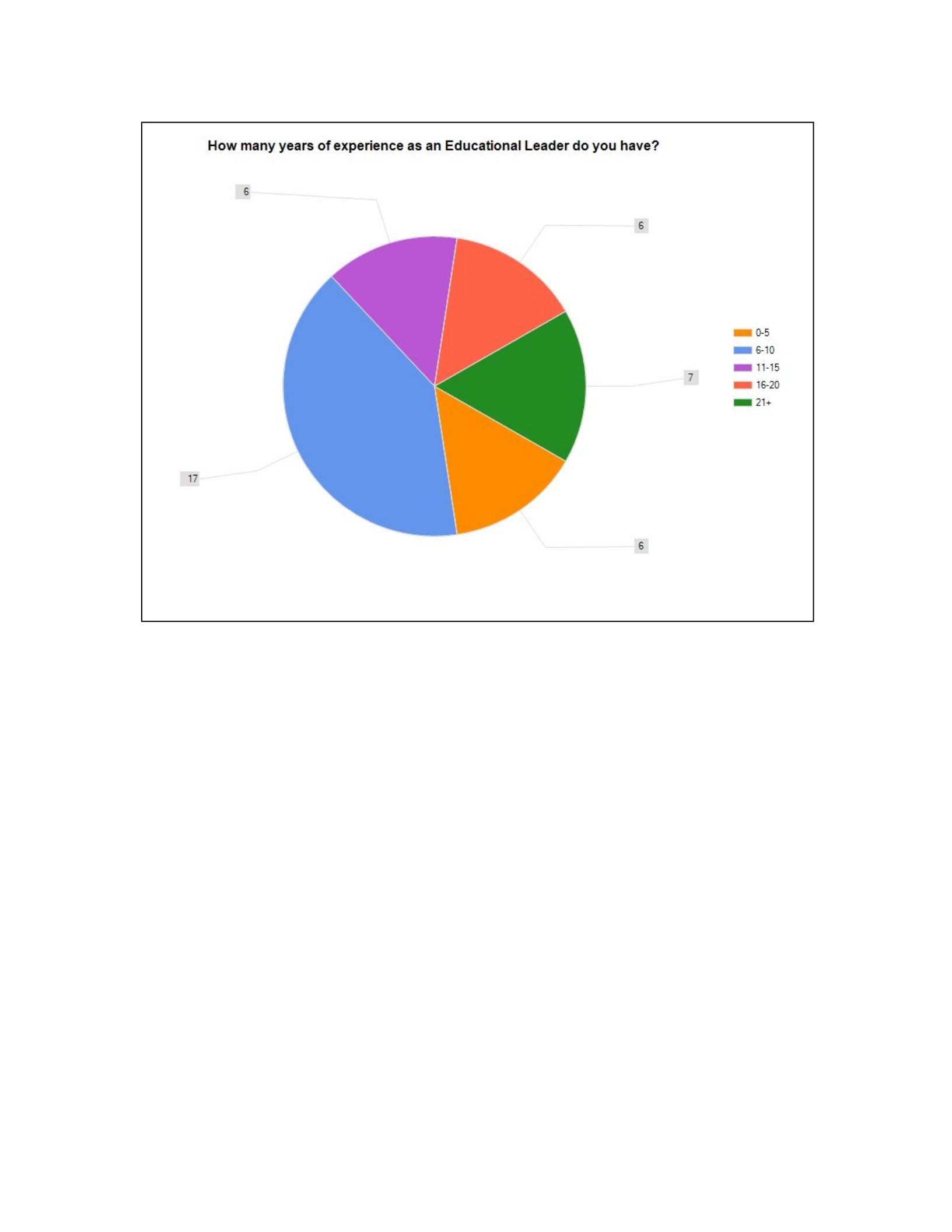
Figure 1. Years of Experience as Educational Leader
Participants were asked to indicate the context in which the majority of their
experience was invested. In terms of context, 11 participants reported that the majority of
their experience as an educational leader was in urban contexts (26.2%), 5 participants
reported that the majority of their experience was in rural contexts (11.9%), and 27
participants reported that the majority of their experience was in suburban contexts
(64.3%).
To provide information relevant to describing the sample, participants were also
asked to share the level at which the majority of their experience was invested. In terms
of level, 13 participants reported that the majority of their experience was at the
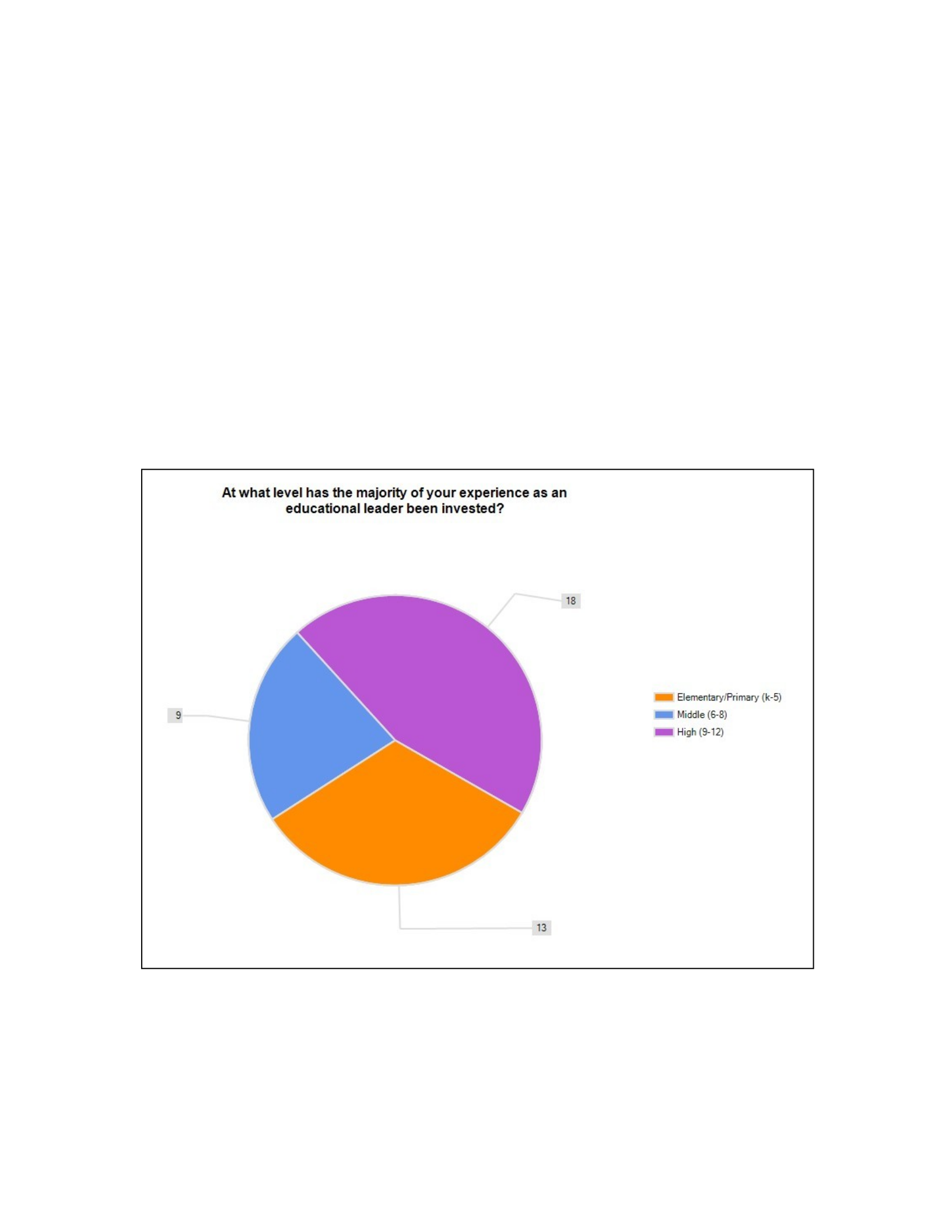
elementary/primary level (31%), 9 participants reported that the majority of their
experience was at the middle level (21.4%), and 18 participants reported that the majority
of their experience was at the high school level (42.9%). Additionally, 2 participants did
not answer this question (4.7%). Although Figure 2 shows that the sample is most
significantly represented by leaders who have invested the majority of their careers
practicing at the high school level, it is also useful to note that all three areas are well
represented. While generalizability is not a significant focus of this study, the spread of
responses across levels signals toward the balance of the sample.
Figure 2. Level of Experience as Educational Leader

Findings and Analysis of Narrative Inquiry Data
Moving beyond background information, the survey next asked participants to
share in writing a situation in which they found it difficult to know the right or wrong
thing to do from a moral/ethical point of view in relation to a student’s best interest.
From the 42 participants who accessed the survey, 34 provided a written account of a
critical ethical incident (80.9%). Of the 34 respondents, 5 (14.8%) provided 2 accounts
of ethical incidents which brought the total count of incidents to 39.
At this stage it is worth recalling that people know more than they can tell (Rest et
al., 1999). As a means to capture ethical conflict, the critical incident technique asks
respondents to tell a brief story. As the unit of analysis itself (Flanagan, 1954), the
critical incident does not contain all of the information that respondents know. The
critical incident report therefore provides the raw material for broad rather than specific
inferences. Thus, the reports are relevant to the purpose of classification by domain of
conflict and by conflicting ethical paradigms in tabular form.
Prior research suggests that situations that cause teachers to experience ethical
conflict find their origin with students, parents, and/or colleagues (Colnerud, 1997). As
Table 1 shows, 9 (22.5%) of conflicts reported by this sample of leader had to do with
students, 10 (25.0%) of reported conflicts had to do with parents, and 20 (51.3%) of
reported conflicts had to do with colleagues.
Table 1

Critical Incidents Categorized by Domain of Conflict
Domain of Conflict Students Parents Colleagues
9 10 20
The categorization of the reported ethical conflicts by domain of conflict was
worked out in accordance with prior research (Colnerud, 1997; Pope et al., 2009). It is
useful to note that the domains were given, not created and the data were organized
according to a best fit criterion pertinent to the origin of conflict. It is also helpful to add
context to the incidents in each domain by reporting a sample from each in Table 2-4
below.
Conflict in the domain of student. Most frequently, the nature of conflict in the
domain of student was related to substandard performance. Such substandard
performance created the need for action on the part of the school leader. From the sample
responses below in Table 2, it appears that in dealing with conflict in the domain of
student, leaders are able to discern the connection between their decision-making and its
impact on the student’s best interests. When deciding to spare students from
unnecessarily negative consequences leaders seem equipped to draw from more than one
ethical frame and are mostly disinterested in what rationalism may call for. It is,
however, also important to note that the voice of the student is largely absent and
primarily anecdotal in the accounts of these leaders.
Table 2

Sample of critical incidents involving students
“One year as a summer school coordinator, two eighth grade students performed poorly
on their final Civics project, which meant they would fail the course. If they failed
Civics they would have to repeat the 8th grade. I knew this would be the second time
each student had failed a grade in middle school. I had the authority to “pass” these
students onto high school, even though they had technically failed a required course.
I was conflicted between holding these two students to an academic standard versus
putting them back into a potentially negative situation by having them repeat another
grade in middle school.”
“In my work with students in higher education, I encounter ethical conflicts when
students with psychiatric/mental health concerns appear to be at risk, and parents
become involved out of concern. I am bound by FERPA, however must weigh the
safety of the student, their right to autonomy, and their risk for harm in making
decisions to talk with parents or other support persons outside the university.”
“Several MDR meetings come to mind, that would call into the ethical question the use of
a long-term suspension as punishment when the student does not see it as a
punishment and particularly when the student already has several risk factors that
predict a high likelihood of dropping out.”
“In education, there are rules, policies, and guidelines that you are expected to follow. At
times, a student has not followed the rules and are supposed to receive a specific
consequence. There are times when you know that student’s home life and it is better
for him/her to be in school than not…”

Note: The narrative text presented represents full or partial accounts of reported critical incidents
Conflict in the domain of parent. It appears that conflict involving parents is
more nuanced and problematic than conflict with students. This nuance often seems
related to the competition that results when the parent and the acting parent engage in an
ethical tug-of-war with respect to the best interests of the student. The tug-of-war signals
toward the inclusion of the perspective of the parent in the leader’s scope of justice
(Passini, 2010). From the sample of responses below in Table 3, such competition can
create space for the best interests of the student to be jeopardized.
Table 3
Sample of critical incidents involving parents
“…parents often refuse to accept the fact that their child is not the only child to be
considered in most instances. As building administrators, we must always find the
solution that is in the best interest of not only the one student but all the students.”
“I am conflicted when the issue of residency is raised. [...] I feel that children need
stability and I hate when they are moved multiple times during their elementary
careers. The problem becomes when I am not interested in bending the rules for
waivers…with problem parents.”
“I work often with families from poverty in which their decisions may impact their
children’s ability to attend school on a regular basis. In one situation, the mother asks
for her older child to watch the younger children when they are home sick because of

she does not go to work, she does not get paid. In this situation we work closely with
the student and family to help support them, and we do not penalize. Ethically there
is an attendance policy, the grey area becomes the survival of this family and how
responsible is the school, and how much do they get involved?”
“Some students come from very different situations where honesty and ethics are not
taught or modeled. I have had students who have stolen items in the classroom or
from other students. Sometimes they have been taught that this is okay to do from
home. […] It is difficult to suspend a student for a day out of school for stealing
when they have not been taught differently.”
Note: The narrative text presented represents full or partial accounts of reported critical incidents
Conflict in the domain of colleague. The collegial conflict reported in the
present study primarily involved superiors, however leaders can also experience conflict
with subordinates. As shown in the sample of responses in Table 4 below, one of the
reasons that leaders in this sample reported ethical conflict is due to occupying an uneven
position of power relative to those who oversee their decisions. In effect, these leaders
felt that they had no real choice given the stance and expectation of their superiors which
can favor rational decision-making. Thus, subordinate leaders may jeopardize student
best interests as a result of remaining loyal to their superior.
In teaching, collegial loyalty can be described as supporting a colleague at the
expense of a student’s best interest (Campbell, 2001). Such support can include bearing
false witness or turning a blind eye toward a colleague’s malfeasant behavior. One subtle
difference between the empirical evidence involving teachers and the findings of the

present study is that while the reported cases in this study included no incidents in which
a leader bore false witness, one incident was reported that saw a leader turn a blind eye to
malfeasant treatment to students.
That being said, much of the conflict involving colleagues that practicing
educational leaders in this sample experienced is more closely related to Samier’s (2008)
notion of moral inversion. Recall that moral inversion occurs when legal-rational values
prevail at the expense of other approaches. Although leaders are inclined to behave
differently, they feel compelled to follow the status quo.
Table 4
Sample of critical incidents involving colleagues
“I provide support to struggling and novice teachers. Teachers are asked to change or
grow, but they may not always buy in to the changes which would be in the best
interests of the students. On very rare occasions, I have worked with a teacher who
refuses to make the necessary changes over a period of several months, and the
school-based administrator doesn’t follow up by doing the required paperwork, it can
be frustrating to have my hands tied.”
“I always have an ethical issue when asked to sit in with the police officer during an
interrogation. We are supposed to watch out for the student and yet we are also
supposed to let them talk which in many cases results in a confession and legal
ramifications. I have watched the police lie to student to obtain a confession…”
“It creates an ethical conflict for principals every day when they are told to adhere to
zero-tolerance policies and to bring better classroom and behavior management to

their schools (this increasing student achievement and growth) AND, at the same
time, are told that they must keep a keen eye on the number of out-of-school
suspensions of students with disabilities or students of color.”
“…it is difficult to suspend someone for 10 days when they were just trying to deal with
the symptoms of their cold as a Senior in High School.”
Note: The narrative text presented represents full or partial accounts of reported critical incidents.
Conflicting Ethical Paradigms
As reported in the review of literature, theorists suggest that it is helpful to
consider multiple ethical paradigms in order to reach decisions that are in the best
interests of students (Shapiro & Stefkovich, 2011). In this way, the ethics of justice,
critique, and care interpenetrate and/or overlap with each other (Starratt, 1991). When
the ethics interface, they can conflict. On this view, mitigating ethical conflict to the
benefit of student interest is conflicting in itself. Thus, leaders must acknowledge the
complexity of situations they face and view them as solvable puzzles. This conceptual
frame is reminiscent of Shulman (1998) who observes that a fully developed professional
educator is able to confront “highly situated problems that draw together theory and
practice in the moral sea of decisions to be made, actions to be taken. Options are rarely
clean; judgments must be rendered” (p. 525).
The ethic of justice focuses on the laws and rules that govern society and on the
accompanying rights of individuals. It may be broadly separated into two categories; that
is, deontological ethics and consequentialist ethics. Justice reasoning is a source of the

uniformity that is typically found in decision-making in schools. The ethic of critique
highlights and relaxes the embedded tensions in the ethic of justice. The ethic of critique
is grounded in critical theory and the promotion of social justice. Finally, the ethic of
care grew out of feminist scholarship and unlike the ethic of justice that locates law and
order at its core, the ethic of care considers caring relations as foundational to ethical
decision-making.
In order to bring out the ethics of justice, critique, and care in the reported critical
incidents, the incidents were organized in relation to the ethical paradigms that came into
conflict. It is important to recall that, like the domains of conflict; the ethical paradigms
(justice, critique, and care) were not created, but rather were given in the literature
(Shapiro & Stefkovich, 2011; Starratt, 1991). The classification of conflicts was carried
out in line with procedures that were influenced by Pope et al., (2009). Thus, using these
ethical paradigms as an organizing framework, the critical incidents were classified
against conceptual themes found in the review of literature. Table 5 below lists
conceptual themes that can be found in ethical paradigms.
Table 5
Sample of Paradigm-related Conceptual Themes
Paradigm Conceptual Themes
Justice deontological (respect), consequentialist (principle of greatest happiness),
zero-tolerance, duty, policy
Critique special population, social justice, critical pedagogy, equality
Care relationships, emotion, beneficence, trust, communication, empathy

As shown below in Table 6, ethical paradigms can conflict with themselves and
with other paradigms. The nature of the critical ethical incidents can be described by
their location in Table 6. An examination of the pattern of results in Table 6 shows that of
the 39 incidents 3 (7.7%) involved justice vs. justice conflicts, 21(53.9%) involved justice
vs. care conflicts, 10 (25.7%) involved justice vs. critique conflicts, and 5 (12.9%)
involved care vs. critique conflicts.
Table 6
Conflicting Ethical Paradigms in Reported Critical Incidents
Conflicting Paradigms Justice Care Critique
Justice 3 21 10
Care - 5
Critique -
Note: Dashes indicate that ethical paradigms did not conflict in reported critical incidents.
Bearing in mind that the purpose of this study is to capture and describe ethical
conflict experienced by practicing educational leaders, it is useful to learn more about the
kinds of situations that are represented by the numerical values in each cell.
Justice vs. Justice. As shown in Table 7 below, the two brands of justice ethics
can conflict. Conceptual themes associated with the ethic of justice are deontological
(respect), consequentialist (principle of greatest happiness), zero-tolerance, duty, and
policy.

Table 7
Sample of responses as justice vs. justice
“As building administrators, we must always find the solution that is in the best interest
of not only the one student but all the students.”
“When bad things are done by good students it is often easy to overlook the need for
equal discipline. But at the same time there should be equality in discipline.”
“Maintaining a safe, orderly learning environment for every student may conflict with an
individual’s best interests.” “So, overall, weighing the best interest of one versus the
best interests of many often times brings questions and conflicting emotions.”
Note: The narrative text presented represents full or partial accounts of reported critical incidents.
Justice vs. Care. From the sample of responses as justice vs. care, deontological
and consequentialist perspectives embedded in the ethic of justice conflict with elements
of contextualization which are emblematic of the ethic of care. Note that the sample of
reported incidents involves more than one domain (i.e., students, parents, colleagues).
Conceptual themes associated with the ethic of care include relationships, emotion,
beneficence, trust, and communication.
Table 8
Sample of responses as justice vs. care
“In education, there are rules, policies, and guidelines you are expected to follow. At
times, a student has not followed the rules and are supposed to receive a specific
consequence. There are times when you know the student’s home life and it is better

for him/her to be in school than not, which becomes trivial with finalizing your
decision.”
“I always have an ethical issue when asked to sit in with the police officer during and
interrogation. We are supposed to watch out for the student and yet we are also
supposed to let them talk which in many cases results in a confession and legal
ramifications. If it were my child, I would tell them to remain quiet until I had
consulted a lawyer. I have watched the police lie to students to obtain a confession so
I am always ethically challenged in this situation.”
“The ethical dilemmas occur when one must decide to keep the last hired because they
are more beneficial in the classroom and cutting the person who may have tenure
because they are less effective in the classroom.”
“I am conflicted when the issue of residency is raised. I often want to bend the rules to
keep the students with our school. I feel that children need stability and I hate when
they are moved multiple times during their elementary careers. The problem becomes
when I am not interested in bending the rules for waivers coming to our school or
bending rules with problem students or parents. It is a conflict.”
“Suspending students out of school when I know the home life is horrible.”
“As a principal, I had a student come to my office and show me a small knife he had
accidentally brought with him to school. Policy dictated zero tolerance, and an
automatic suspension. However, I discussed the situation with the student, called his
parent with him present, and had the child talk with the parent. I then told the parent

that the child had done the right thing in coming to me, and had them come to pick up
the knife.”
“In my experience, I have had a few instances when I was morally conflicted when I
know that a teacher wasn’t reporting full and/or accurate depictions of their
interaction with students to a parent.”
Note: The narrative text presented represents full or partial accounts of reported critical incidents.
Justice vs. Critique. Table 9 presents a sample of responses categorized as
justice vs. critique. In addition to the conceptual themes embedded in the ethic of justice,
Table 9 introduces conflicts involving the ethic of critique. Recall that the ethic of
critique can help to relax the tension of the ethic of justice. It is pertinent to note that this
sample of reported incidents also occurs in more than one domain. Conceptual themes
associated with the ethic of critique include protections for special populations, social
justice, critical pedagogy, and equality.
Table 9
Sample of responses as justice vs. critique
“I dealt with several circumstances in regards to advising teachers on whether or not to
“pass” students in non-core subjects. Yes, students earn grades, but there are times
when teachers can make the difference in whether or not students pass classes and
earn credits for graduation. Sometimes it was hard to help teachers understand that
with elective courses, sometimes it just does not matter if the child learns the content.
[these children were members of gangs].”

“Several MDR meetings come to mind, that would call into the ethical question the use of
a long-term suspension as punishment when the student does not see it as a
punishment and particularly when the student already has several risk factors that
predict a high likelihood of dropping out.”
“A new attendance policy predicated upon students having written excuses from parents
predominantly and negatively effects students in a lower socio-economic class.”
“Specifically, an incident which occurred involved a student who as he rounded the
corner he “high fived” a teacher. The teacher’s perspective was that the student
“touched” her inappropriately.” “The teacher wanted the student expelled.” “The
administrative team discussed at length what would be the worse of two evils:
suffering the wrath of the staff’s discontent and the effect on the student and the
community’s sense that the school treats students unfairly. In addition, the student
was an African American male which added another element to the situation.”
“I often work with families from poverty in which their decisions may impact their
children’s ability to attend school on a regular basis. In one situation, the mother asks
for her older child to watch the younger children when they are home sick because if
she does not go to work, she does not get paid.”
Note: The narrative text presented represents full or partial accounts of reported critical incidents.
Care vs. Critique. Table 10 presents reported critical incidents in which the ethic
of care and the ethic of critique conflicted. Note that this sample of reported incidents
includes elements of contextualization as well as acknowledgement of a special

population. It is useful to note that these incidents also cut across the domains of
students, parents, and colleagues.
Table 10
Sample of responses as care vs. critique
“In my work with students in higher education, I encounter ethical conflicts when
students with psychiatric/mental health concerns appear to be at risk, and parents
become involved out of concern. I am bound by FERPA, however must weigh the
safety of the student, their right to autonomy, and their risk for harm in making
decision to talk with parents or other support persons outside the university.”
“When you look at a teacher’s grades, one assignment is weighed in such a way that it
can have a tremendous effect on the students overall grade.” “I have a problem with
telling a teacher to change a grade, yet at the same time the student, a senior needing
this credit for an advanced diploma, also deserved to pass.”
“A teacher failing to meet the academic needs of students. However, she wanted me to
feel sorry for her because she has a disability. Therefore, not holding her responsible
for her job duties.”
Note: The narrative text presented represents full or partial accounts of reported critical incidents.
In order to gather more information that can be used to describe the ethical
conflict that practicing educational leaders experience, it is useful to categorized the
incidents by conflicting paradigms in reported incidents and domain of conflict (student,
parent, colleague) as shown in Table 11 below.

Table 11
Incidents categorized by paradigm and domain of conflict
Domain Students Parents Colleagues Total
Justice vs. Justice 2 0 1 3
Justice vs. Care 5 4 12 21
Justice vs. Critique 1 3 6 10
Care vs. Critique 1 3 1 5
In describing the ethical conflict experienced by this sample of leaders it becomes
clear that mitigating conflict with colleagues is integral to supporting the best interests of
students. As is shown in Table 11, the majority of conflict leaders experience involves
colleagues (51%) and of these collegial conflicts 12 (60%) involve the ethic of justice and
the ethic of care. Also of note is that the majority of all conflicts (53%) involve the
conflicts between the ethics of justice and care and that 26% of conflicts involve conflicts
between the ethics of justice and critique. Pertinent to the questions this study pursues, it
is useful to learn more about these two types of conflict in terms of the level and context
that gives rise to them and to see if there is any pattern in the data.

Table 12
Justice vs. Care incidents categorized by level and context
Urban Suburban Rural Total
Elem 2 4 0 6
Mid 0 6 0 6
High 2 4 3 9
Total 4 14 3 21
Table 13
Justice vs. Critique incidents categorized by level and context
Urban Suburban Rural Total
Elem 0 2 1 3
Mid 0 2 0 2
High 2 3 0 5
Total 2 7 1 10
From the data presented in the tables above that organized reported critical
incidents by level and context, it is interesting to note no clear pattern can be discerned in
the data. The relatively small count of incidents perhaps masks any trends that might
otherwise develop. Tentatively, it appears that most incidents occur in high schools, but
recalling that a significant number of participants reported service in high schools, that
assumption is misleading. Similarly, since a significant number of participants serve in

suburban settings, it is not plausible to assume that there are more incidents in suburban
contexts in general. Although the count of this sub-sample of incidents is relatively
small, the spread of incidents across contexts and levels suggests that leaders can expect
ethical conflict in their professional lives regardless of the level or context in which they
serve (Begley, 1999).
Summary. When acting in loco parentis, supporting the best interests of a
student means using more than one ethical paradigm. When more than one ethical
paradigm is used simultaneously, conflict can result. To investigate this phenomena the
critical incident technique was employed to capture and learn about ethical incidents
experienced by practicing leaders relevant to students’ best interests. From the target
population of 167 a sample size of 42 participants was captured that produced a total of
39 reports of critical ethical incidents. Although the majority of participants served in
suburban contexts, the sample was well balanced in terms of gender, and there was a
notable spread across the sample in terms of experience and school level served. As
shared in the review of literature, people know more than they can tell (Rest et al., 1999).
Even if the participants did not call the domains or ethics by name, a description of their
experience was captured in their reports. The 42 participants produced 39 descriptions of
critical ethical incidents.
Findings of the narrative inquiry phase of the present study. Pertinent to the
purpose of this study which was to capture and describe the ethical conflict that is
experienced by practicing educational leaders and based on the sample of responses
captured and analyzed, the following tentative findings are offered. First, it was found

that like teachers, ethical conflict experienced by leaders can occur in the domains of
student, parent, and colleague. Second, we know that of these three domains, conflict
with colleagues was most prevalent. Third, we know that within the domain of collegial
conflict, the interface of the ethics of justice and care most often are the source of the
conflict. Fourth, the spread of incidents across levels and contexts as shown prior in
Tables 12 and 13, suggests that leaders experience conflict irrespective of the level and
context in which they serve.
Findings and Analysis of Semi-Structured Interview Data
This section reports the results of data collected via semi-structured interview.
Person to person interviews that lasted approximately 60 minutes each were conducted
with selected participants. The purpose of the interview was to collect information
supplemental to narrative inquiry data. Specifically, data reported more fully explore the
relationship that may exist between participants’ self-reported ethical conflict and
leadership background, school context, ethical preparation, and professional needs. In
addition, the interview probed participants to capture data relevant to whether ideals or
principles guided their decision-making and to determine whether they believe the best
interests of students were served.
Interview Protocol
It is pertinent to the purpose of this study to learn more from leaders who reported
an incident in which ethical paradigms conflict with themselves and given the high
frequency of incidents involving the ethic of care and the low frequency of incidents
dealing with the ethic of critique, it is also relevant to learn more about these kinds of

ethical conflict. The original data set was thus consulted to determine which
representative participants provided contact information for interview. As shown in
Table 14, a purposeful sample of 4 participants was selected for face-to-face interview.
Table 14
Identification of interview participants by nature of reported critical incidents
Conflicting Paradigms Justice Care Critique
Justice 1 2 1
Care - 0
Critique -
Note: Dashes indicate that ethical paradigms did not conflict in reported critical incidents.
Interview Participants
The sample of 4 participants for interview included leaders who identified evenly
(current position) as assistant principal, principal, central office administrator, and other.
Of the 4 participants, 3 were female and 1 was male; years of leadership experience
reported, 0-5 years, 6-10 years, and 21+ years; and, in terms of leadership context and
background 2 participants reported that the majority of their experience had been in
suburban middle schools, and 2 participants reported suburban high schools.
Recall that participants for interview were selected based on the nature of their
critical incident reports; thus, for explanatory purposes each leader is represented as
either A, B, C, or D as shown in Table 15 below. As you see in the data, participant D
reported a multifaceted incident that involved more than two conflicting elements.

Table 15
Conflicting Paradigms Justice Care Critique
Justice A B, C D
Care - D
Critique -
Coding of interview participant data for explanation
Note: Dashes indicate that ethical paradigms did not conflict in reported critical incidents.
Interview Findings
This section presents findings from the interview phase of the study. The
information is presented in line with the purpose of the interview; that is, whether the
natures of these ethical conflicts relate to leadership background and/or school context;
the extent to which the reported critical incidents may present implications for leadership
preparation and professional development; and, the extent to which ideals and principles
guide these leaders’ decisions. While the interview data is essentially grounded in the
same critical incident reported by the participant in the prior phase, by its nature the data
captured via interview is more contextualized than the data captured via the critical

incident report. In order to effectively capture the voice of the participant, it is thus
useful to report this section in narrative form.
Participant A. This participant is a female assistant principal who reported 6-10
years leadership experience in suburban high school settings. It is important to note that
during the course of the interview, this participant indicated that her ethical frame is also
significantly informed by her teaching experience that predominately took place in at-risk
middle school settings. The critical incident that participant A reported had to do with
balancing the competing values embedded in deontological and consequentialist ethics.
Maintaining a safe, orderly learning environment for every student may conflict with an
individual’s best interests. […] So, overall, weighing the best interest of one versus the
best interests of many often times brings questions and conflicting emotions.
Ethical conflict and leadership background. When asked about her perception
of whether leadership background related to the ethical conflict she identified, this
participant shared that leadership background and more specifically learning from varied
background experiences is essential to ethical growth. From this excerpt, it appears that
varied experiences expanded this participant’s scope of justice (Passini, 2010). But in my
experience (this is approximately my seventeenth year as teacher, middle school
administrator and high school) and sort of seeing that emotional, social, I guess that
academic growth of students over that time period, I have begun to incorporate into my
decision making about, or tried to balance more I guess, not only the black/white you
broke the rule here’s the consequence, but what does that mean for the individual student.
And so I find myself trying to weigh what is the ultimate good for the whole, for

everyone, for the student and the organization. If I can find that balance that’s the most
ideal; sometimes easier than others.
Ethical conflict and school context. In addition to background experiences, this
participant shared that the level (high school, middle school, etc) of the student is also a
factor that has ethical entailments.
While [students] are older and know right from wrong, generally speaking, and
can make decisions they aren’t always reactive…some of it is premeditated.
There’s a balance between…they’re still adolescents and we all make mistakes;
adult...we’re all human so whether you’re adult or an adolescent you’ll make a
mistake, so what is that mistake and should the consequences of that mistake…
how should they weigh? So I think yes, being in high school, yeah we are
growing, productive citizens, we are teaching them there are consequences for
their actions, but at the same time our ultimate goal is to educate them and
graduate them, and so…is what they did, should the consequences for that, how
deep should they go? And because they are older they make a lot of decisions
that have greater implications not only for themselves but for society and other
students. So there’s a balance between the consequences, between how deep
those consequences and ramifications will go, and what needs to be done for the
order and maintenance of the group.
In addition to internal challenges to the best interests of students, participant A
acknowledged external pressures. Pressures of the external environment include not only

those associated with being a member of a professional community (Shulman, 1998), but
also those over which she has no control (Marshall, 1992).
On-time graduation rates and the impact of that and what consequences would be
for that student. So there are Central Office pressures, there are community
pressures where parents are generally, in this particular context, more involved,
many are educated themselves and so they bring an insight and wishes and wants
on how they think things should go. And so it’s a balance between the
community, between Central Office leadership, between what’s best for our
school as a whole, and then the individual student as well. So yes, there are
different pressures.
The role of ideals and principles. Participant A related that both ideals and
principles impact upon her decision making. This participant shared that normative
ideals are an important part of the framework within which she reaches decisions and
often times it is in the space between ideals and principles that the role of emotion comes
into play. In other words deciding between what one ought to do and what one may have
to do causes conflict.
For me one is your personal moral and ethical set of how you make decisions;
that’s one for me. Two, it’s what we as a school have decided we are going to use
as our guiding expectations and what consequences are going to be; we try to all
be on the same page with that. There’s the individual student piece and what that
student needs, whether or not it may fit in that paradigm or that framework in
which we have established as a school, district expectations and parental

expectations too. But trying to weighing all that, I try to see things from various
perspectives; from the perspective of the teacher, from the student perspective, the
parent perspective, community perspective, what other students will see as a
result of how we responded to that situation in trying to balance all of that for the
most good of everyone involved.
The best interests of the student. The ebb and flow of factors between ideals and
principles causes this participant to experience ethical conflict. Specifically, this
participant seems to relay the teleological belief that in some circumstances it is
reasonable for an individual to be required to sacrifice their standing as an agent in
themselves in order to support the greater happiness of the group. Further, when queried
on the issue of whether best interests are supported when in the course of mitigating
ethical conflict, this participant relates the following.
No, I don’t feel that they are. Often times there are the big picture or the message
that it sets or the example that it sets, message it sends – example that it sets,
supersedes that individual student’s personal situation. What I try to do when
those things are in conflict for me, when I feel like I have to do this…I have to
make this decision, follow this course of action because it’s what we’ve decided,
because it’s what we have done, because it’s what is expected. I follow through
with that because I am a team player in part of a larger organization than just
myself.

Although this participant acknowledges that in some cases she renders decisions
that are not in line with the best interests of the student, she seems to have found a means
to reconcile the conflict for her and the students’ benefit.
However, within those frameworks I then see how can I meet those expectations,
how can I do what we have all agreed, yet still somehow come back to assist and
work with that student. So after initial recommendations are met, what other
supports and services can we offer that student. How can we help acclimate them
back, how can we get them caught up? So while here’s a consequence for this;
here’s what we’re going to do. How can we salvage, how can we help bring it
back?
Ethical training, professional development, and the relationship of ethics and
practice. This participant’s responses to queries related to ethical training and the
perceived relevance of ethics to the practice of educational leadership are not balanced.
As you see from the response excerpts below, the participant does not recall significant
pre- or in-service training, yet relates the importance of ethics to practice.
I don’t recall a lot of training in my undergrad, my undergraduate in education
regarding that. In my master’s program, honestly there may have been a course
but it’s not sticking out to me…I don’t recall any formal training. In my
postgraduate work I’ve had an experience with one course I remember that was
an ethical course. It’s great to help you think of things and see things from a
different perspective and discuss with colleagues and reading a variety of pieces

of literature for example, but that’s the only formal training that I can recall in my
education.
Participant A goes on to share several insights in response to the relevance of
ethics to the practice of educational leadership. As you will see from her response below,
she seems to lament that ethics may not provide the objective guidance she once believed.
Recalling the Bull and McCarthy’s (1995) call for combining personal and professional
ethics, she shares that the idea of right and wrong being malleable and subject to
experience, reflection, and context causes her a measure of ethical conflict that she
herself must manage while simultaneously fulfilling her professional responsibilities
related to supporting the best interest of the student. Regarding the extent to which
personal and professional ethics comingle, this participant shares the following.
I don’t think you can separate the two is my personal thought. I think your ethics
and morals are comprised of…it’s who you are. I’m asserting it’s your foundation
so I don’t see really how you separate from that. It’s the foundation or
springboard in my opinion for how you make your decisions and then your life
experiences and/or professional experiences add to that and help to either cement
those thoughts and beliefs, or to think ‘what about’ as I become more of a…as my
experience and leadership has grown I have found there to be more gray than I
thought there was fifteen years ago, let’s say. So, I don’t think you can separate
the two, and for me I could not… my heart is involved in what I do. I love what I
do and I love working with people so I can’t imagine that not being a component
for me. And then if that part of me…if my conscience, my heart is unsettled, then

I couldn’t see how I could continue in that profession, in any profession, if they
were always in conflict, and so for me I have to find the balance between that for
me and the more black and white objective things. But I see ethics and morals
maybe not as an objective component but more of a subjective side for me, and so
I have to balance those two.
Participant B. This participant is a female principal who reported 6-10 years of
leadership experience primarily in suburban middle school settings. It is useful to note
that this participant has a diverse leadership background that includes a principalship at
the elementary level and an assistant principalship in an alternative middle school. The
critical incident reported by participant B has to do with balancing the ethics of justice
and care.
In education, there are rules, policies, and guidelines you are expected to follow.
At times, a student has not followed the rules and are supposed to receive a
specific consequence. There are times when you know the student’s home life
and it is better for him/her to be in school than not, which becomes trivial with
finalizing your decision.
Ethical conflict and leadership background. Participant B turned to her
experience working in an alternative setting where students have experienced academic
and social difficulty over time that has resulted in their alternative placement. Her
response to the critical incident clearly stated concerns about home life that she wrestles
with when making decisions and she follows up on these concerns as she considers how
her leadership background may have brought out an appreciation for the ethic of care.

This relates to my leadership background because I have worked at the elementary level,
middle school level and I worked in an alternative school setting. So having that diverse
experience and knowing the ins and outs of what happens in households you
automatically think about what’s in the best interests of that child and what you can do to
support the child and to make a difference. I have found at times in different settings that
you are expected to follow certain procedures; for example working at an alternative
school you know that they are in an alternative school for a reason, because they were not
meeting…they were not successful in a comprehensive setting. Whereas, they were
basically the bottom 10%, those that were having academic challenges as well as
behavior challenges. So, putting them into an alternative school is to give them more
individualized attention and to keep them in school. They’ve already been suspended
several times so when they are in that setting and still not compliant, the ultimate goal is
to keep them in school. So what do you do? Do you follow the policies and procedures
in the district, or do you make modifications and adjustments for their success.
Ethical conflict and school context. In terms of school context and mitigating
ethical conflict, participant B acknowledged environmental factors related to the norms in
the community that must also be taken into consideration (Marshall, 1992). Complying
with such external factors can cause conflict for this leader. For example, in a
community that supports if someone pushes you, then you push them back, a school
leader is faced with the prospect of in some way devaluing a child’s view of their parent’s
authority when the child follows the parent’s direction and then receives school
consequences.

I think [context does matter] because based on where you are, if it’s
urban/suburban, rural and so forth there are underlying messages and thoughts,
the environments these students come from, the home environment and the
expectations that you have for them in your buildings.
The role of ideals and principles. While this participant acknowledges the
importance of using policy as a guide, she also seems deeply committed to the ideal of
caring for the children in her school.
Long term, especially working at the elementary level, we are building a
foundation for these children, so what we do now will ultimately affect how…
what will happen in their future. Having the experience of seeing…working in a
middle school and seeing kids who don’t like school, who don’t want to be in
school, you know that what happened to them in their younger years [caused]
them to feel this way at school. It didn’t have anything to do with middle school;
it had something to do with their foundational skills, what they learned at the
elementary level and even prior to that what they learned at home.
So, long term vision…the decisions we make…can affect them so I’m looking at
the big picture long term; what’s going to happen to them.
Recalling the distinction between macro and micro moral reasoning, in lieu of
leaning on abstract principles, this leader relies on context and communication to support
each child’s growth and development.
But then in regards to the principles rules and what you have to follow – it’s all in
how you present it to them. You can talk about the rules, you may not have to

give them the consequence, but you can make sure they understand consequences
for their actions. So it’s about that discussion piece, conferencing piece, and then
looking at the long term…how this is going to affect this child. Once you are
communicating with the child, communicating with the parents and teachers and
so forth, what’s going to be best for this child? I take it on a case by case basis
for each child.
The best interests of the student. Participant B clearly believes that she knows
what is in the best interests of her students due to the fully contextualized relationship she
has with them. She seems to believe that relationships are crucial to having an
understanding of beneficence and that those (district office personnel) who hold abstract
perspectives can cause best interests to be jeopardized. In line with Cope and Watts
(2003), ethical conflict for this participant can have emotional entailments “although they
say it should not but it does.”
I think what keeps [best interests from being served] are the resources that you
have available to you to truly make a difference in public schools. As well as the
ultimate support that you have…are you, based on your decisions, are you going
to be backed or not from your superiors.
Ethical training, professional development, and the relationship of ethics and
practice. Although participant B reported no specific recollection of ethical training in
her graduate program or during in-service training, based on her prior responses she is
unwittingly conversant in ethical decision-making.

I remember having a class [but] I haven’t had any ethical training since I’ve been
a leader and I’ve been in administration…I think this is my seventh year, so I’ve
haven’t had any specific ethical training or professional development.
Reflecting on the relevance of ethics to the field of educational leadership,
participant B relates that ethics are relevant to “everything you do.” She goes on to share
an integrated perspective of professional responsibility in which personal and
professional ethics are combined into an ethic of profession (Shapiro & Stefkovich,
2011).
We’re here for the best interests of these children each and every day. You have a
school of 800 kids you still need to know what’s going on in those children’s
lives. So…and you can’t just focus on…it can never be just black and white when
you are so instrumental in a child’s life.
Participant C. This participant is a male central office administrator who
reported 21+ years of leadership experience primarily in suburban middle school settings.
It is useful to note that this participant has a diverse leadership background that includes a
several principalships three school districts in Virginia, as well as 7 years experience as a
director of middle schools in a large school division in central Virginia. The critical
incident reported by participant B has to do with balancing the ethics of justice and care.
As a principal, I had a student come to my office and show me a small knife he had
accidentally brought with him to school. Policy dictated zero-tolerance, and an automatic
suspension. However, I discussed the situation with the student, called his parent, and
had the child talk with the parent. I then told the parent that

the child had done the right thing in coming to me, and had them come to pick up
the knife.
Ethical conflict and leadership background. In the interview, this participant’s
view of the necessity of ensuring that the school’s approach to management of student
social and academic behavior came through clearly. He made it clear that one size does
not fit all in terms of approaches to decision-making. Decisions that are made in the best
interests of the student should account for the norms in the community and the
circumstances that surround incidents.
They are different circumstances and again, depending on where you’re located
and the mores of the community, in many cases you may make a decision that’s
best for the child within the context of the community, a little different from what
policy or normal procedure dictates.
Ethical conflict and school context. Participant C’s response to the question
about how school context may relate to ethical conflict lines up with his earlier remarks
relevant to situational factors that ought to be accounted for when making decisions. This
participant seems willing to embrace the complexity associated with mitigating conflict.
Most of my background was in middle school but also had many contacts at the
high school level. Obviously there is a difference between the way we may deal
with elementary students – very young elementary students, middle school
students and high school students because of the level the age, the work that
we’ve had with kids. Personally, at one of my schools where I had multiple ages,
I would talk to my eight graders…I had sixth, seventh and eighth graders, and

when I would bring in my sixth graders in I would discuss information with them
and talk to them about what my expectations where…my expectations were quite
different with my eighth graders, particularly those that had been with me for
several years and they knew what our rules were, what I would tolerate and what I
wouldn’t, and so my expectations were different for the older students than for the
younger students. And I think in many cases we see that our expectations would
be different for a junior/senior in high school that has seen numerous situations as
opposed to a student who is in first or second grade.
It is clear from this excerpt that contextual factors are important to this participant
and recalling the critical incident itself that involved a boy scout who brought a pocket
knife to school by mistake, relationships and relationship building is important to this
leader.
We wanted them to trust us and learn to be able to come to us and talk to us about
situations like that so that we could make good decisions, decisions that made sense for
children; the best decision for a child as opposed to lock-step/following policy which
doesn’t always make for the best decision for kids. The role of ideals and principles.
From the response sample below, this participant clearly finds conflict an embedded and
perhaps inescapable aspect of educational leadership. In order to avoid ethical pitfalls,
this participant primarily relies of normative ideals to guide his decision-making, yet near
the end of the response, you will hear consequentialism introduced.
Principles will change; policies and procedures may change depending upon
where you are, but your ideals kind of stay with you all the time. Ideals for me

basically mean looking at situations and trying to do what’s best for children…do
what’s best for kids. I’m constantly trying to balance what’s best for the whole
verses what’s best for this individual student; what’s best for the teachers in the
teaching environment versus what I’m doing with this one student. But I always
try to look at the individual child and make a decision that’s best for the child
without creating any kind of major conflict with our procedures, our policies and
what we do for the whole.
The best interests of the student. In addition to confirming that supporting the
best interests of the student is an elusive goal, this participant names policy as the
primary obstacle. When asked if he is always able to support the best interests of the
students he serves, he responded this way.
Not always. And I think we strive for that as a good administrator and as one who
has a good ethical foundation, you are always striving to do what’s best for
children, but invariably we do run up against policies and zero tolerance and it
forces us to make some decisions that aren’t in the best interest of children.
Ethical training, professional development, and the relationship of ethics and
practice. Much of the ethical training that this participant recalled is related to action
research that is conducted on the job. He was not able to site specific examples of
training or the names of ethics courses in which he participated. Pertinent to the on the
job ethical training that takes place, it is interesting to note that this participant referenced
how the ethical culture of the organization is real and that there should be alignment
between one’s personal ethics and the ethics of the organization. That being said, it is

plausible that the ethics of the institution can either support or inhibit beneficence
according to this participant.
After becoming a teacher, obviously in your education classes there’s some ethics
training that takes place early on, and then as I moved forward in my master’s and
doctoral programs there can be an ethics class here and there, but generally the
ethical training that we get is inane and innate; its working with other people
within an organization feeding off of them and seeing what the culture of the
community and what the culture of the organization. Culture sometimes can
create problems where you don’t feel comfortable in staying with an organization
because your ethical background and your ethics are different from that of the
organization or system and so that creates problems that you have trouble dealing
with. But I think in many cases it’s a very informal training that leaders go
through working with peers and trying to develop and figure out if the ethics of
the organization matches with the ethical background that you’ve got in whatever
training you may have had as you’ve come through.
This participant goes on to say that ethics is an important part of the practice of
good educational leadership. Near the end of this excerpt a reference to the ethic of care
as being essential to making decisions that are in the best interests of the student can be
heard.
I think ethics are the center piece, and should be the center piece of any
administrator who deals with children. If you are working in education and
you’re dealing with children, if ethics is not something that’s at the forefront of

each and every decision that you make then I think you’re in the wrong
profession. I think we’ve got to look at that because that is the basis for making
decisions that are best for children. Obviously we’re going to have policies,
we’re going to have procedures, we’re going to have things that are going to be
the framework and the parameters that we’ve got to work within, but I think as a
good administrator that cares about kids you’ve got to figure ways of maintaining
your ethics and working to make sure the decisions you make are best for kids.
Participant D. This participant is a female who reported 0-5 years of leadership
experience primarily in suburban high school settings. It is useful to note that this
participant is currently working in higher education after having recently completed her
Ph.D. The critical incident reported by participant D has to do with balancing the ethics
of justice, care, and critique.
I dealt with several circumstances in regards to advising teachers on whether or
not to “pass” students in non-core subjects. Yes, students earn grades, but there
are times when teachers can make the difference in whether or not students pass
classes and earn credits for graduation. Sometimes it was hard to help teachers
understand that when dealing with elective courses, sometimes it just does not
matter if the child learns the content. Harsh, I know.
Before exploring specific areas of the response from this participant it is helpful to
explain why this incident involves the intersection three ethics. It appears that this
incident would only pertain to the intersection of justice and care. Justice ethics relate to
the perspective that students must meet certain standards in order to earn credit and in the

event that they do not meet this standard the student justifiably does not earn credit
regardless of what the potential impact may be on the student’s future. The ethic of care
relates to the understanding of the likelihood of dropping out of school if the student fails
to graduate and the accompanying long-term hardship that is most likely occur as a result.
Two additional pieces of information that came through in the interview introduce the
ethic of critique. First, this incident has to do with at-risk, gang related students who are
seniors in high school. Thus, this incident includes elements of social justice and
protection of minority/special cases.
Ethical conflict and leadership background. As you will see in the response
below, this participant explicitly references the importance of appropriately
contextualized relationships with students as integral to empathic decision-making. In
addition, the response suggests that for this participant leadership background played an
essential role in forming her ethical stance.
My background is in working with youth who come from urban areas that are
members of gangs and who are at risk, so when I started in schools that’s what I
was doing, I was working with these kids who had been in big trouble and that’s
where I was an administrator for the first time. So I think working in that
population I realized that sometimes it’s not about the grade or the content but the
relationship that you build with the students and helping them learn life skills and
building their confidence, and loving them for who they are. So that’s where my
background is.

Ethical conflict and school context. It appears that work in high school settings
has also informed this leader’s ethical stance. The goal of meeting graduation
requirements and the opportunities that it can provide far outweigh other institutional
considerations in the view of this leader.
Yes. I’ve mostly worked with secondary school students and middle school
students. I was at a private school for about three years and then a public school
for seven as a theater teacher so I was a non-core teacher. And as a leader it just
became more important to me that these non-core teachers worked with a student
where they were, no matter where that was; unless you’re talking about a child
that wants to be an actor, I’m not as worried about the content. I have a specific
memory of this student who was trying to get through his degree through the tech
center but also finishing up at the high school where I taught, and he wanted to
work in HVAC…that’s what he wanted to do. He knew as soon as he graduated
he was going to work with his dad and was probably going to make more money
than I ever will…and he had to take the Fine Arts elective and ended up taking
Graphic Arts and he was terrible at it, he didn’t enjoy it, he and the teacher
clashed, and the teacher actually wanted to hold him back and not let him
graduate because he didn’t learn the content… And so these circumstances were
not common, but I’d [also] say at least once a year we’d have some sort of issue
dealing with students with needs outside of the elective course teachers. The
role of ideals and principles. When considering whether ideals or principals

guide her decision-making, this participant shared a view that favors a balanced
approach.
Both. Absolutely both. I think it depends on the circumstances. There are times
where your ideals should be first place, and there are times where your principals
should be first place. There are times where you have to care about the student
first and there are times where you have to follow the rules first.
I think you have to gather as much information as you can, get insight from as
many people who are involved in the circumstance, look at the consequence of
your decisions…potential consequences because of course you never really know,
and just gather as much information as you can and make the best judgment call
for the circumstance at hand.
The best interests of the student. This participant acknowledged that making
decisions that are in the best interest of the student not easily done. There are
combinations of factors both internally and externally that impact on this leader’s ability
to support beneficence.
Well I mean there certainly were situations where I think I called it wrong. There
were certainly times where circumstances were outside of my control. There are
times when it doesn’t matter what I think; whoever is ahead of me and gets
involved and makes a decision, it doesn’t matter what my input is. Sometimes
people who supervise us have rules and policies that we don’t understand, things
that we don’t get so see in the big picture, and so there were times I felt student’s
needs were not served because of those circumstances. But I do feel in both teams

I was at, both my public and private school, we worked very well together to
serve student’s needs. There were just times that things were outside of our
control.
Another interesting insight pertinent to supporting students adds context to the
response offered prior in which she indicated that both principles associated with justice
and ideals associated with care are important to making good decisions. In this response
is information that acknowledges the way in which justice reasoning is relevant to
making decisions that are in the best interest of the student when it is supplemented with
logic from other approaches.
I think it’s dangerous to go too far either way. I think about the administrators in
the building where I just was, and each of them had strengths which lead to an
awesome united team. There was one administrator that was by the book…didn’t
matter, he followed the rules and that was that. There was one administrator on
the opposite end of this spectrum…students first, you’ve got to love them, here -
have a granola bar type of administrator. So, it really worked well when we
would bring all the administrators together; here’s the circumstance, here’s the
student, here’s what we know…what’s the best solution and then kind of work
together to solve those problems. It’s important to have everybody.
Ethical training, professional development, and the relationship of ethics and
practice. While participant D completed ethics graduate courses, she indicates that
applying that knowledge through reflective teaching and practice were empowering.

In my preparation plan I got both my master’s and Ph.D…so I took the mandatory
classes [for] them, and then actually before I finished by Ph.D I started teaching
ethics [at the university level]. I taught ethics…for about seven years. And I
think I learned more about being a good leader and ethically looking at issues
through my instruction with graduate students. So that’s really where I got most
of my training.
I did have a good ethics course…that helped, but I feel like you can’t really see
the full spectrum until you’re in the middle of it and have to really sort through
things, and consider, and think…
Like other interview participants, this leader was clear about the importance of
ethics as it relates to professional practice and acknowledges the power of institutional
values. Like participant C, this leader believes that the overlap of personal and
professional ethics is important to success as a leader.
I don’t think you can be a school leader and not look at all issues ethically. I think
if you…it has to do with your morals, your moral compass and your value system,
but also the value system of the place where you work. You have to consider
what their values are; like I couldn’t go into a Christian school and not follow
their value system if I’m an atheist.
Summary. Prior to beginning analysis of interview data, it is important to return
to limitation outlined in the methods chapter. The structure provided at the outset of the
study particularly in terms of the precast nature of the interview questions may obscure
other possible interpretations. The connection of the narrative inquiry and interview

phases of this study would be strengthened if the interview questions were developed
following the analysis of data from the first phase. This aspect will be addressed more in
a later section.
For now, it is helpful to briefly return to the literature to establish context for the
analysis of interview data. When reading the major findings below, recall that
postmodern reasoning introduces human variables into the equation that produces action.
Taking the perspective of others often generates the emotion that supplies volition to act
(Dawes et al., 2007; Johnson, 1993; Lakoff, 2008; Passini, 2010). Iacoboni (2008) finds
that although people are born wired with the capacity for assuming the perspective of
others, being wired does mean that such perspective taking is automatic. Singer and
Lamm (2009) relate that perspective taking is malleable in response to certain factors
including contextual experiences. In the field of professional education, Cruz and
Patterson (2005) favor multicultural learning via an experiential approach as a means to
develop ethical understanding. Therefore, it is plausible that professional experiences can
enable responses that are in line with best interest decision-making. Leadership
background and context thus influences the conflicts leaders face.
Also, pertinent to the role of ideals and principles, it is worth returning to Taylor
(1991) who advances a dialogical approach as a means of ethical development. Taylor’s
work addresses some problems of modernity like radical individualism. According to
Taylor (1991) professional ethics develop when agents ebb and flow between the
particular to the aggregate, or in this case between contextual experience and abstract
principles or norms. The dialogical process opens space where people can become

increasingly aware of the relationship between the particular and the abstract. In this way,
dialogue is social rather than individual. Participant reports of applying both ideals and
principals suggest that they were engaged in such a dialogical process which signals
toward a grasp of professional ethics as proffered by Shapiro and Stefkovich (2011).
Findings of the interview phase of the present study. The goal of the interview
portion of the study was to learn more from certain leaders based on their critical incident
report. The critical incident data was consulted to identify four participants for interview.
The interview questions were created in advance of the comprehensive analysis of
narrative data and sought to capture insights relevant to whether leadership background or
context influenced the nature of the incident they reported. The questions also targeted
leadership preparation and professional development as a means to learn more about
participants’ understanding of professional ethics.
Based on the information captured via interview the following tentative findings
are offered. First, leaders strongly believe that leadership background and experience in
context empower them to mitigate conflict to the benefit of the student. Such
background and contextual experience with students, parents, and colleagues enhances
their cache of knowledge in the area of applied ethics. Second, in situations in which the
best interests of students are not served, leaders attribute the malfeasance to
external/institutional factors. Third, based on data captured during interviews, the ethic
that is the strongest in terms of its influence on the decisions of leaders selected for
interview was the ethic of care. Finally, the descriptions of ethical conflict that were
provided in narratives and in interviews suggests that leaders in this sample have an

awareness of applied ethics; however, they do not attribute their awareness to pre- or
inservice training.
The Connection of Narrative and Interview Findings This
study was conducted using the methods of narrative inquire and semistructured
interviews. There were some correspondences and differences in the data captured
by these methods.
It is suggested that the information captured in the narrative and interview
portions correspond in significant ways. Both the reported critical incidents and the
interview data told stories that clearly indicate that participants knew they were involved
in making important ethical decisions. Although many of the leaders shared incidents in
which the best interests of the student were not served, each had a normative awareness
of an alternative course of action. Such alternative courses of action may be pursued ex
post facto given the pressures many leaders face to conform to distorted institutional and
professional norms.
Although not specifically pursued, the narrative inquiry and interview data both
contain undercurrents of issues related to social justice. For example, both sets of data
include references to race and social class. The finding that ethical conflict is spread
across levels and contexts suggests that factors such as race and social class may be
significantly connected to the ethical conflict leaders’ experience.
Concern for the student via the ethic of care is a predominate value that emerged
in both the narrative inquiry and interview portions of this study. The leaders’
perceptions of care, however, are incomplete because neither the critical incident data nor

the interview data contain the voice of the student. Because of this, leaders’
conceptualizations of care are often based on inferred rather than expressed needs
(Noddings, 2008). Since the ethic of care is integral to revealing the voice of injustice
(Shapiro & Stefkovich, 2011) leaders who fail to consider the expressed needs of students
may simultaneously fail to support their best interests.
A difference between the sets of data is also noted. Recall that in the narrative
portion, most ethical conflict that practicing educational leaders in this sample
experienced occurred in the domain of colleague. In the interview portion, participants
do not explicitly point to collegial conflict as a reason that the best interests of students
are not served, but rather signal toward policy and/or institutional norms. Contrary to the
ethos of professionalism, even when they believe they have ethical standing leaders are
reluctant to advocate against collegial points of view particularly when the colleague is
perceived to occupy a higher organizational standing. Rather than confronting
colleagues, these leaders thus make believe that the best interests of students can be
served via unethical means.
CHAPTER FIVE. CONCLUSIONS AND RECOMMENDATIONS
This chapter uses the data already reported and relates it to the specific research
problem and questions. Recall that the problem this study addresses has to do with the
expectation that educators are called to achieve contradictory goals (Colnerud, 1997).
Not only are they accountable to the institution, but they are also accountable to support
the best interests of students. Even when in the course of supporting the best interests of

students via the multiple ethical paradigm of ethics, leaders experience ethical conflict
because drawing from multiple perspectives to reach decisions creates conflict in itself.
Perhaps this is a reason why many scholars such as Begley (1999) suggest that mitigating
ethical conflict is persistent in the lives of educational leaders.
The rationalism of modern theory has produced institutional norms that are the
source of the uniformity that can be found in schools. Institutional norms, such as
zerotolerance policies, can jeopardize the best interests of students. Educational leaders
experience a level of ethical conflict when making such decisions because value-free
reasoning is neither capable of capturing the entire nuance nor the voices associated with
supporting the best interests of students. As a supplement to a purely rational approach,
the multiple ethical paradigm of ethics has been proposed (Starratt, 1991). By
supplementing rational/value-free justice reasoning with the ethics of critique and care,
the multiple ethical paradigm of ethics can help leaders make decisions that are in the
best interests of the student. The confluence of these ethical streams can also cause
leaders to experience ethical conflict as students, parents, colleagues and leader all have a
certain ethical standing and do not always agree in terms of best interests. Conflict is part
of the landscape of educational leadership and not enough is known about it. The present
study thus sought to capture and describe the ethical conflict experienced by a sample of
practicing educational leaders. From this basis, responses to the following questions can
be offered.
What is the nature of ethical conflicts that practicing educational leaders
experience?

To foreground the answer to this question it is helpful to recall that the core of
decision-making in the best interests of the student is the concept of in loco parentis.
School officials including teachers and administrators act in the place of parents when
students are under their supervision. The obligation of the school leader in loco parentis
is to support the welfare of the student.
The findings of the narrative portion suggest that the majority of ethical conflict
experienced by practicing educational leaders in this sample involved colleagues and that,
within the domain of colleague, the majority of conflict involved the collision of the
ethics of justice and care. A reason why conflict involving colleagues is problematic is
because when a second set of values are introduced (the values of the colleague), the
leader is called to negotiate between and among three sets of values (i.e., institutional
values, their own values, collegial values) in order to support the interests of the student.
The inclusion of others in the leaders scope of justice as suggested by Passini (2010),
results in conflict with which the leader must wrestle. A second reason why collegial
conflict is problematic is because the values of the leader and colleague are both held in
loco parentis and therefore each actor may feel as though their recommendation has
ethical warrant. That being said, much of the conflict involving colleagues that practicing
educational leaders in this sample experienced is more closely related to
Samier’s (2008) notion of moral inversion. Although leaders are inclined to advocate
differently, the tension generated by conflict can lead them to rely on rational approaches
which are typically more efficient.

Similarly, parents and acting parents (leaders) share an interest in supporting the
best interests of the student. The amount of conflict with parents that leaders in this
sample experienced is less than that experienced with colleagues. A reason for this may
be because leaders do not perceive there to be a conflict in fact, since parents do not
occupy commensurate ethical standing as perceived by the leader. Thus, when in the
course of mitigating conflict with parents, leaders may tend to acquiesce toward the
efficiency of justice reasoning.
Leaders in this sample also do not report a high incidence of conflict with
students perhaps because they do not perceive that students have ethical standing. Thus,
absent other informed sets of values there are only institutional values with which to
negotiate in order to meet the leader’s best interest standard. Leaders in this sample were
adept at applying the ethic of critique and the ethic of care when dealing with conflict in
the domain of student.
The nature of the ethical conflict experienced by practicing educational leaders
can be described as being riddled with embedded conflicts of interest. Such conflicts of
interest can move leaders to rely on value free rational approaches which not only tend to
be more efficient but also make it difficult to support the best interests of the student in
some cases.
Is the critical incident technique a tool relevant to the purpose of capturing ethical
conflict as perceived by practicing educational leaders?
Recall from Flanagan (1954) that there are three assumptions associated with the
critical incident technique: the incident should correspond to a clearly articulated case; if

the respondent cannot produce a clear account of what occurred, then the case is not
valid; and the unit of analysis is the critical incident itself. Based on these assumptions,
the critical incident technique is proposed to be a valid means to collect data on
decisionmaking behavior.
From the 42 participants who accessed the survey, 34 provided a written account
of a critical incident (80.9%). Of the 34 respondents, 5 (14.8%) provided 2 accounts of
ethical incidents which brought the total count of incidents to 39. This rate of
participation suggests that the solicitation for the critical incident was easily understood
by the participants. In addition, the leaders provided full accounts of incidents that were
meaningful to them. All reported critical incidents thus included enough information to
make coding and organizing possible. Such coding and organizing require course- rather
than fine-grained inferences. Thus, while coarse-grained data is relevant to the purpose
of coding and organizing, sense-making calls for data that is more contextualized.
The critical incident technique suggests that conflict experienced by school
leaders occurs in the domains of student, parent, and colleague. The nature of conflict
experienced by practicing leaders is informed by the multiple ethical paradigm of ethics.
Even if participants did not call the ethics of justice, critique, and care by name, the
themes embedded in them came through with clarity in the reported critical incidents.
While not used prior as a tool to capture ethical conflict experienced by practicing
educational leaders, the critical incident technique proved to be an adequate means to
collect such data which often lies at the phemenological level (Cope & Watts, 2003).

In line with prior research (Pope et al., 2009) the critical incident technique
captured information that enabled substantive findings to emerge from the data. First,
based on data captured by this study we now tentatively know that like teachers, leaders
can experience ethical conflict in the domains of student, parent, and colleague. We also
tentatively know that conflict with colleagues is particularly problematic for educational
leaders and that such conflict experienced by the participants in this sample involved a
conflict between the ethics of justice and care.
Based as they are on reconstructions of past events, one limitation of this research
was suggested to be the ability of participants’ to accurately recall incidents that cause
them conflict. While the written reports of critical incidents may not have been a precise
reflection of the intensity of the event, the interviews provided an opportunity for such
feelings to come through. Overall, the critical incident technique is an effective tool for
capturing ethical conflict perceived by practicing educational leaders.
How does the nature of these ethical conflicts relate to leadership background?
In this study, leadership background is defined as elementary, middle, or high
school. At these levels, leaders share that the nature of conflict can vary. For example,
participant A and C who serve at the high school level, site graduation requirements as an
important external accountability measure that tends to influence their decision-making,
particularly as it relates to seniors (12th grade). Because graduation can be more
important to some seniors than others, the external accountability related to graduation
requirements is an example of an institutional norm that can lead decision-makers toward
choices that are grounded in the ethic of critique. Thus, when leaders are pressured to

conform to the idea that it is acceptable for particular seniors not to graduate, the ethic of
justice can conflict with the ethic of critique. In this example, applying the ethic of
critique can relax the tension in the ethic of justice by providing a pathway that supports
the best interests of the student.
Similarly, at the elementary level internal professional norms that often summon
the ethic of care and can likewise jeopardize the best interests of the student. These
norms can conflict with such things as the principles of education and of upbringing
(Colnerud, 1997). Thus, relying on the ethic of care (only) can compromise the virtues of
the others. Recalling Shulman (1998) is helpful in this regard. No ethical approach can
do all things in all situations; hence, one ethical size does not fit all situations. Justice
reasoning, like the ethics of critique and care, is useful to student best interests.
How does the nature of these ethical conflicts relate to school context?
Used here, school context refers to the distinction between urban, suburban, and
rural settings. While each interview participant indicated that the majority of their
experience had been invested in suburban settings, their experience also included tenures
in other settings. School context informs the nature of the ethical conflicts due to the
values that are held in the community. In line with Marshall (1992) leaders often have
little or no control over such communal values. In some cases leaders are thus called to
balance competing collegial, parental, and communal interests. Since leaders themselves
are not devoid of a particular ethical perspective, it logically follows that experience in
varying school contexts impacts upon not only the nature of conflicts experienced, but
also on the ability of the leader deal with the conflict to the students’ benefit. Some

school contexts may include amplified and/or unrealistic expectations for students, while
others may not. The important finding regarding context is that the pattern of results
found in this study and presented in Tables 12 and 13 prior suggests that ethical conflict is
spread across all contexts and that there is not one predominate type of conflict that
presents in a particular context. Leaders thus need to be prepared to mitigate all types of
conflict regardless of the context in which they find themselves.
What are the implications for leadership preparation, professional development,
and future research?
Based on the responses of these participants, and in line with Campbell (2008), it
seems that leadership preparation was not a strong influence in leaders’ professional
ethical development. Based on the tentative findings of this research, it is clear that
preparation and training in ethical decision-making remains pertinent. Interview
participant B shared that most administrative training has focused on “curriculum and use
of data”, at the expense of serious consideration of ethics.
Unlike ethics in teaching, the body of educational leadership literature pertaining
to ethics is thin. Campbell (2008) thus considers literature on ethics in educational
leadership to be a field that parallels ethics in teaching.
While the language used may be shared, the conceptual frameworks that interpret
the language are not, and the literature base continues to represent a range of
theoretical positions from the traditional to the critical on the meaning of moral
and ethical educational leadership. And, in some cases, the language of morality
and ethics is used without substantive grounding conceptually or philosophically,

and any meaning of what it is about the leadership described that makes it moral
or ethical is obscured.
There is anecdotal evidence that suggests that most educational leaders are the
products of the teaching ranks. Given the gap in the literature relevant to ethics in
educational leadership, leaders can be routed to the literature related to professional ethics
in teaching. On the bright side, one of the important books in this area is Strike and
Ternasky’s (1993) Ethics for Professionals in Education: Perspectives for Preparation
and Practice. While this book does not deal with ethics in educational leadership per se,
it does deal with normative concepts that are parallel to the field such as the philosophical
connection of ethics and schools, pre-service ethical instruction for teachers, and
professional ethics.
Most ethical training does not include significant consideration of the dark side of
ethics (Campbell, 2008). Such a dark side is characterized by the ethical conflicts and the
kinds of situations that teachers and leaders face that cause them to compromise the best
interests of the children they serve. Pre- and in-service training that aims toward bringing
out theses blind spots holds great potential as a force for good. In terms of pre-service
training, the educational leadership and foundations departments of the university that
served as the host may benefit from reading this study. Given the lack of specific
information that leaders were able to share regarding the ethical training that they
received in their preparation programs, this study can potentially alert university faculty
relevant to the ethical conflict faced by educational leaders in practice. Such faculty may
be able to use this information to make firm connections between ethics in theory and

ethics in practice (Shapiro & Stefkovich, 2011; Starratt, 1991). Developing the ability of
future leaders to use the ethics of justice, critique, and care will help them to support
decision-making that has the potential to promote the best interests of the students they
serve.
From the professional development perspective, the interview portion of the study
suggests that not only is experience as an educational leader in general integral to the task
of making balanced decisions, but that experience across levels and contexts is also
important. Such experience in various levels and contexts can help leaders to understand
the ethical perspectives of the students, parents and colleagues that often differ in
nuanced ways across communities. For example, experience at the elementary level
where care can be an important ethic can assist leaders when in the course of serving high
school students where the ethic of justice can be strong.
In terms of areas ripe for future research, there is a need for inquiry that amplifies
the voice of students in terms of recognizing them as having ethical standing and thus,
shared decision-making. For example, this study can be replicated featuring the student
as participant. Remember that Iacoboni (2008) found that while humans are born wired
with the capacity for assuming the perspective of others being wired does not also mean
that such perspective taking is automatic. Care and empathy are integral to supporting
the best interests of students and affective factors such as these are enabled when leaders
are able to take the perspective of the student (Johnson, 1993; Singer & Lamm, 2009).
Recalling Johnson (1993), it is hard to imagine being able to assume the perspective of
students without talking with them first.

Pertinent to leader background variables, another area ripe for research is the
study of whether and how participant background variables (i.e., race, gender, etc.) are
related to ethical conflict and decision-making. Learning more about ethical conflict and
decision-making from the point of view of a particular subsample of leaders would
enhance the field’s grasp of the ethical dimensions of educational leadership and also
build on theory that informs the profile of an ethical educational leader (Marshall, 1995;
Vitton & Wasonga, 2009).
Given the findings of this study, it may be useful to incorporate parts of its design
into a research program designed to more fully and completely understand the kinds of
ethical conflicts that are faced by practicing educational leaders, particularly in the
domain of colleague. For example, this study can be replicated in one or more large
school districts using the district’s practicing leaders as the sample of participants. This
strategy may not only be likely to net a larger sample of participants but may also capture
critical incidents that are pertinent to a particular community. In this way, participants
may be more likely to share powerful ethical incidents when they know that others may
face the same types of issues and space may be created in which important discussions
about the sample of conflicts that cause student best interests to be jeopardized can take
place. One part of its design that should not be replicated has to do with the precast
nature of the interview questions. Rather than developing interview questions in advance
of the outset of the first phase of the study, it would have been better to develop them
after the analysis of narrative data was complete. This would be a better approach
because the immersive nature of analyzing the critical incidents would have enabled the

development of questions pertinent to emergent topics (e.g., student voice). With this
adjustment, more powerful data could have been captured via interview. Beyond urban,
suburban, and rural contexts, we can press further into new territory by studying ethical
conflict and decision-making based on the actual make-up of the school. For example,
racially or economically segregated school settings might be purposively selected based
on their ability to shed new light on decision-making. Another interesting setting is the
school within a school concept particularly when the make-up of the students in each
context differs along racial and/or socio-economic lines (as is normally the case). In a
similar way, this study may produce useful information if it were to be conducted as
designed, using leaders who serve at a specific level. For example, a larger sample of
participants may show that the kinds of ethical conflict faced by practicing leaders at the
elementary level differ from the kinds faced by middle and high school leaders.
Extending this logic, it is also useful to learn more about the similarities and differences
in the kinds of incidents faced by urban, suburban and rural leaders who serve in the same
district.
As noted prior, the narrative inquiry and interview phases were both based on the
same critical incident report. By conducting this study as designed yet developing the
interview questions after the analysis of the critical incidents, the connection of these
portions of the study can be strengthened to reveal additional information that is useful.
In this way, more information pertinent to the connection between social justice and
decision-making that is in the best interests of the student might be revealed. This is
important because the discourse that surrounds social justice often favors abstract

structures and conditions that create or perpetuate inequality. Research is needed that
explores the how the critical component of social justice is operationalized via the ethic
of critique at the level of the student. Such research may serve to elevate the
consideration of ethics and ethical decision-making to a higher level cultural status in
schools (Sichel, 1993).
The purpose of this study was to capture and describe the ethical conflict
experienced by a sample of practicing educational leaders through a multidimensional
ethical lens purported to support the best interests of students. Serious inquiry into this
topic is largely absent in the educational leadership literature. Although study of the
normative side of ethics in educational leadership brings with it ideal visions of how
things ought to be, the dark side of ethics in educational leadership ought not to be a
secret that the field keeps from itself. While this dark side of ethics is unseemly and
complex, by acknowledging that it exists and by illuminating and wrestling with its
complexity, practicing educational leaders and the institutions that serve students benefit.
By taking up the dark of ethics in educational leadership, the literature receives a modest
yet important contribution from this study.

