


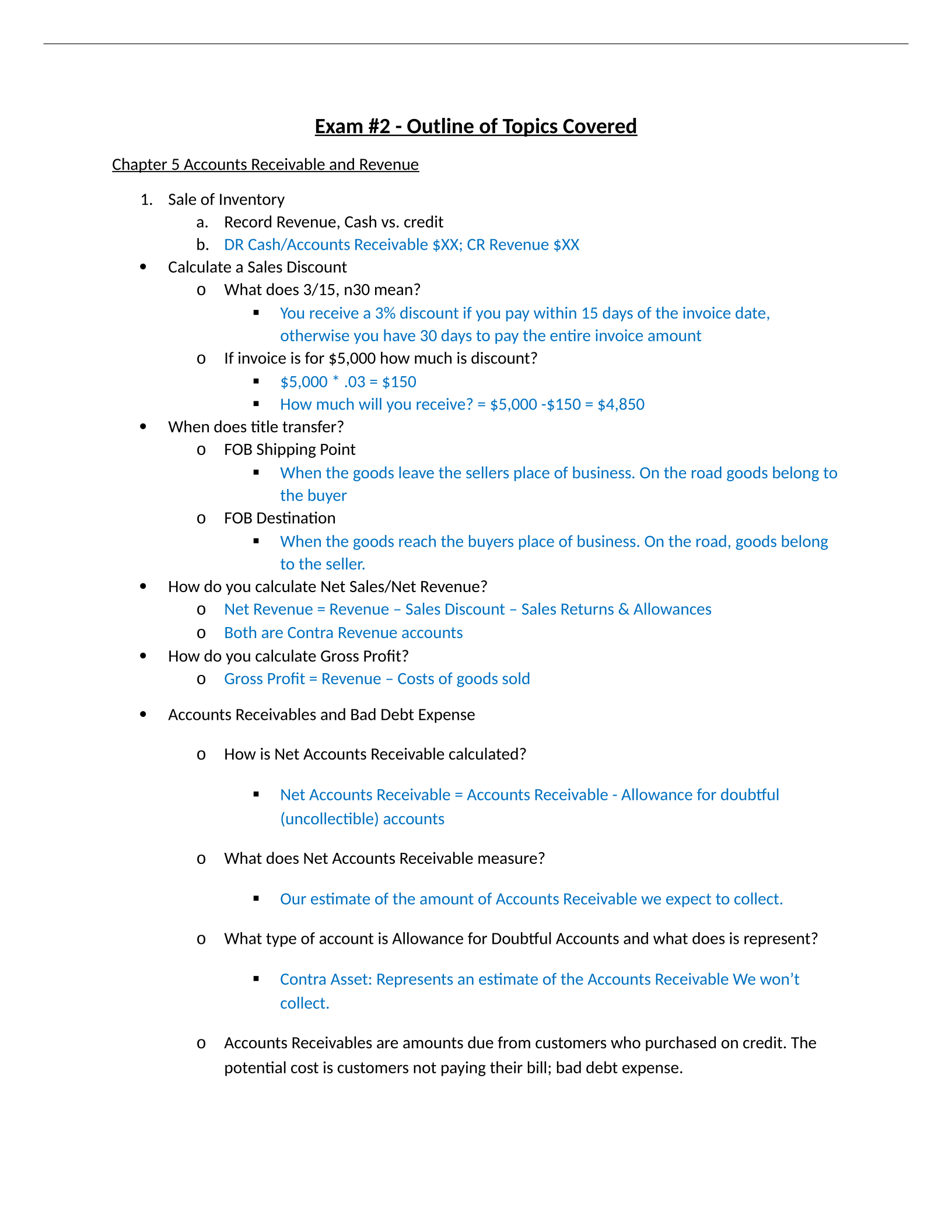
Exam #2 - Outline of Topics Covered
Chapter 5 Accounts Receivable and Revenue
1. Sale of Inventory
a. Record Revenue, Cash vs. credit
b. DR Cash/Accounts Receivable $XX; CR Revenue $XX
Calculate a Sales Discount
oWhat does 3/15, n30 mean?
You receive a 3% discount if you pay within 15 days of the invoice date,
otherwise you have 30 days to pay the entire invoice amount
oIf invoice is for $5,000 how much is discount?
$5,000 * .03 = $150
How much will you receive? = $5,000 -$150 = $4,850
When does title transfer?
oFOB Shipping Point
When the goods leave the sellers place of business. On the road goods belong to
the buyer
oFOB Destination
When the goods reach the buyers place of business. On the road, goods belong
to the seller.
How do you calculate Net Sales/Net Revenue?
oNet Revenue = Revenue – Sales Discount – Sales Returns & Allowances
oBoth are Contra Revenue accounts
How do you calculate Gross Profit?
oGross Profit = Revenue – Costs of goods sold
Accounts Receivables and Bad Debt Expense
oHow is Net Accounts Receivable calculated?
Net Accounts Receivable = Accounts Receivable - Allowance for doubtful
(uncollectible) accounts
oWhat does Net Accounts Receivable measure?
Our estimate of the amount of Accounts Receivable we expect to collect.
oWhat type of account is Allowance for Doubtful Accounts and what does is represent?
Contra Asset: Represents an estimate of the Accounts Receivable We won’t
collect.
oAccounts Receivables are amounts due from customers who purchased on credit. The
potential cost is customers not paying their bill; bad debt expense.

oMethods of recording bad debt expense-Journal entry to record bad debt expense when
using the direct method vs. when using the allowance method
Direct Method-for companies whose accounts receivable balance is small.
Record bad debt expense as specific receivables become uncollectible.
What is the journal entry to record bad debt expense under the direct
method?
oDR Bad Dept Expense $XX CR Accounts Receivable- Customer
$XX
Allowance Method-estimate bad debt expense
Aging Receivables Method
oGiven a schedule for aging receivables or the estimate of
uncollectible accounts
determine value that should be in Allowance for
Uncollectible accounts.
Estimate that $10,000 of the Accounts
Receivables will not be collected and current
balance in ADA is a credit of $500
$10,000 - $500 = $9,500 how much we have to
increase ADA by
DR Bad Dept Expense $9,500 CR ADA $9,500
The amount of the journal entry to record bad debt
expense
Record the journal entry when a specific customer’s accounts receivable
becomes uncollectible.
oDR Allowance for Doubtful accounts $XX ; CR Accounts
Receivable-Customer $XX
Notes Receivable
You Lend $10,000 on Nov. 1st, 2019, matures in 5 months and has a 6% interest rate.
Journal entry to record the loan
oNov. 1st DR Notes Receivable $10,00; CR Cash $10,000
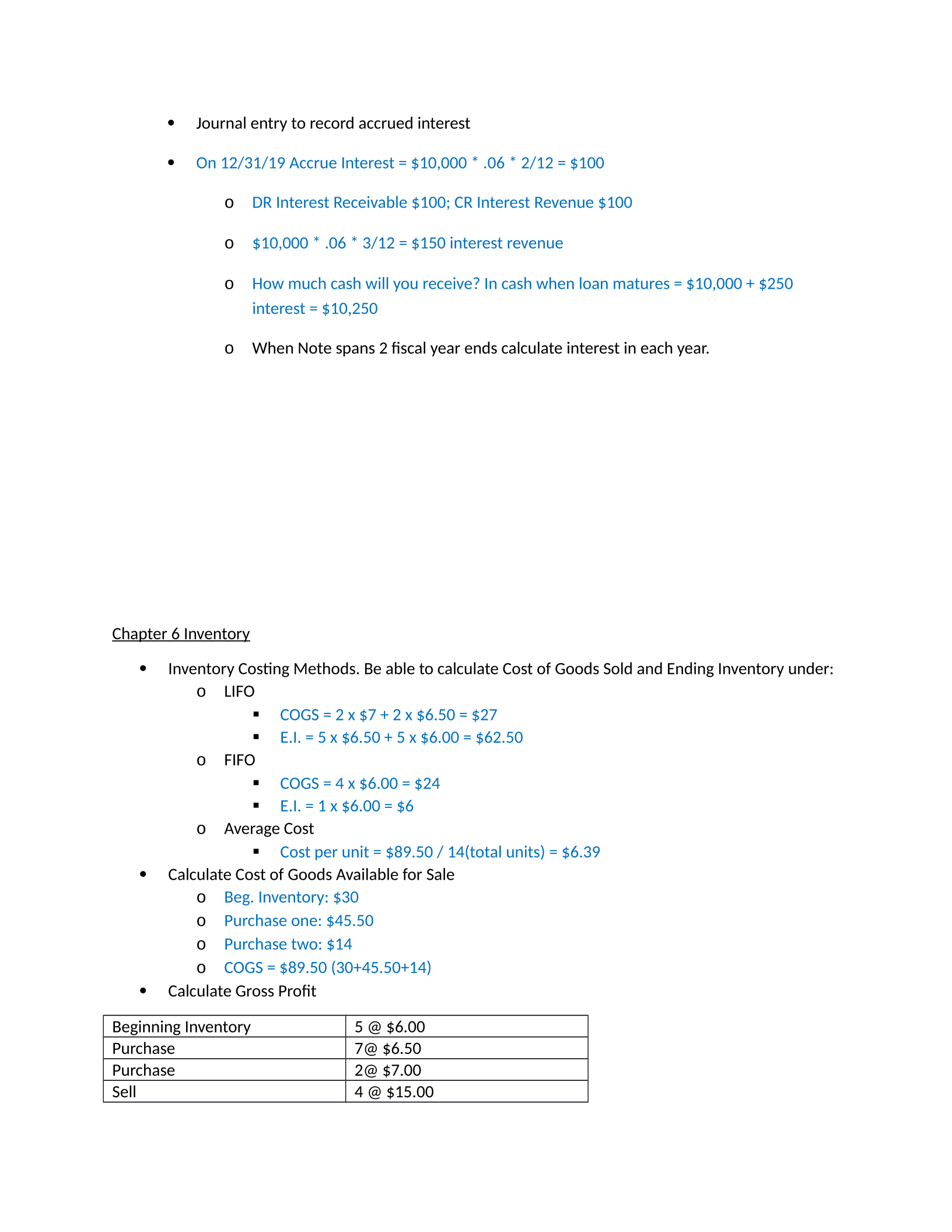
Journal entry to record accrued interest
On 12/31/19 Accrue Interest = $10,000 * .06 * 2/12 = $100
oDR Interest Receivable $100; CR Interest Revenue $100
o$10,000 * .06 * 3/12 = $150 interest revenue
oHow much cash will you receive? In cash when loan matures = $10,000 + $250
interest = $10,250
oWhen Note spans 2 fiscal year ends calculate interest in each year.
Chapter 6 Inventory
Inventory Costing Methods. Be able to calculate Cost of Goods Sold and Ending Inventory under:
oLIFO
COGS = 2 x $7 + 2 x $6.50 = $27
E.I. = 5 x $6.50 + 5 x $6.00 = $62.50
oFIFO
COGS = 4 x $6.00 = $24
E.I. = 1 x $6.00 = $6
oAverage Cost
Cost per unit = $89.50 / 14(total units) = $6.39
Calculate Cost of Goods Available for Sale
oBeg. Inventory: $30
oPurchase one: $45.50
oPurchase two: $14
oCOGS = $89.50 (30+45.50+14)
Calculate Gross Profit
Beginning Inventory 5 @ $6.00
Purchase 7@ $6.50
Purchase 2@ $7.00
Sell 4 @ $15.00
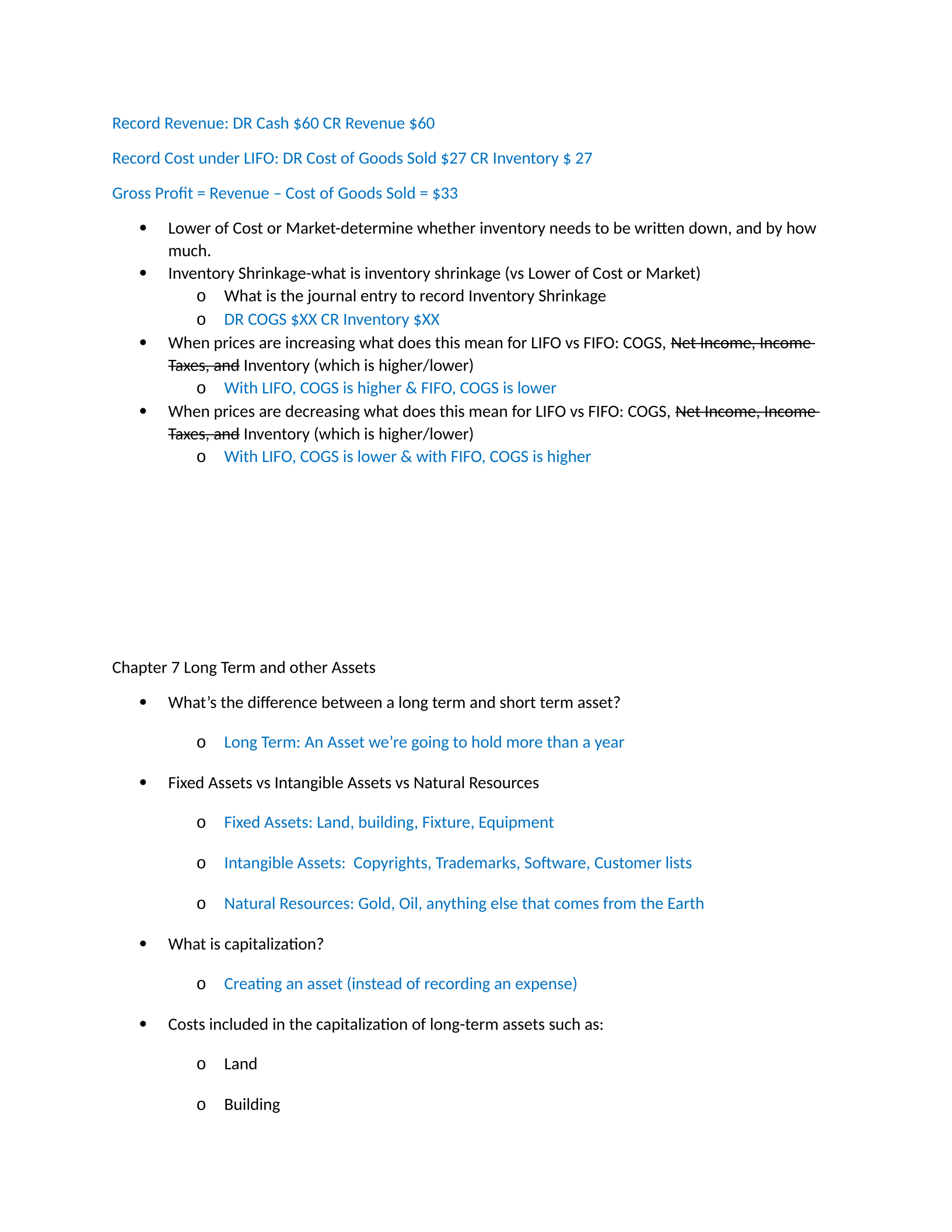
Record Revenue: DR Cash $60 CR Revenue $60
Record Cost under LIFO: DR Cost of Goods Sold $27 CR Inventory $ 27
Gross Profit = Revenue – Cost of Goods Sold = $33
Lower of Cost or Market-determine whether inventory needs to be written down, and by how
much.
Inventory Shrinkage-what is inventory shrinkage (vs Lower of Cost or Market)
oWhat is the journal entry to record Inventory Shrinkage
oDR COGS $XX CR Inventory $XX
When prices are increasing what does this mean for LIFO vs FIFO: COGS, Net Income, Income
Taxes, and Inventory (which is higher/lower)
oWith LIFO, COGS is higher & FIFO, COGS is lower
When prices are decreasing what does this mean for LIFO vs FIFO: COGS, Net Income, Income
Taxes, and Inventory (which is higher/lower)
oWith LIFO, COGS is lower & with FIFO, COGS is higher
Chapter 7 Long Term and other Assets
What’s the difference between a long term and short term asset?
oLong Term: An Asset we’re going to hold more than a year
Fixed Assets vs Intangible Assets vs Natural Resources
oFixed Assets: Land, building, Fixture, Equipment
oIntangible Assets: Copyrights, Trademarks, Software, Customer lists
oNatural Resources: Gold, Oil, anything else that comes from the Earth
What is capitalization?
oCreating an asset (instead of recording an expense)
Costs included in the capitalization of long-term assets such as:
oLand
oBuilding
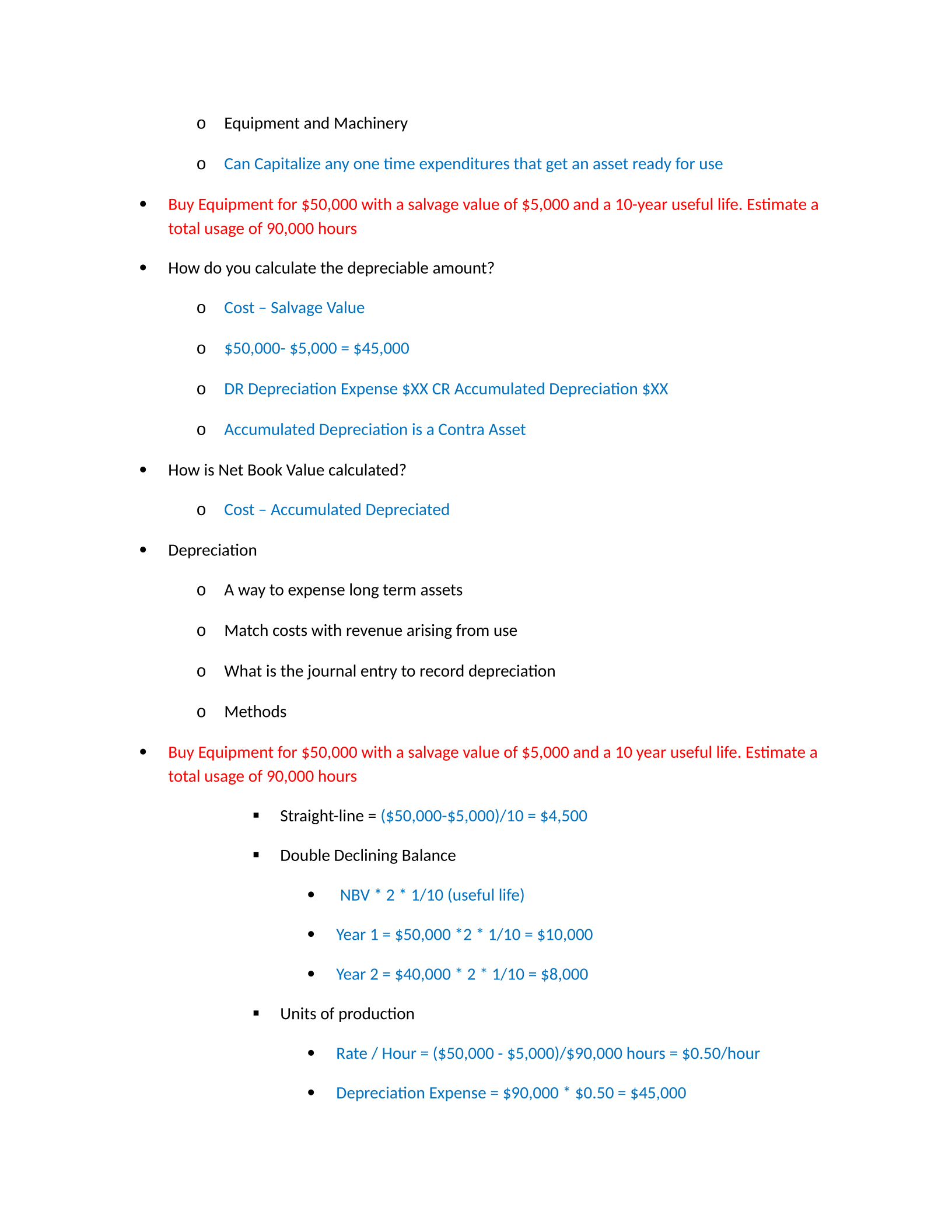
oEquipment and Machinery
oCan Capitalize any one time expenditures that get an asset ready for use
Buy Equipment for $50,000 with a salvage value of $5,000 and a 10-year useful life. Estimate a
total usage of 90,000 hours
How do you calculate the depreciable amount?
oCost – Salvage Value
o$50,000- $5,000 = $45,000
oDR Depreciation Expense $XX CR Accumulated Depreciation $XX
oAccumulated Depreciation is a Contra Asset
How is Net Book Value calculated?
oCost – Accumulated Depreciated
Depreciation
oA way to expense long term assets
oMatch costs with revenue arising from use
oWhat is the journal entry to record depreciation
oMethods
Buy Equipment for $50,000 with a salvage value of $5,000 and a 10 year useful life. Estimate a
total usage of 90,000 hours
Straight-line = ($50,000-$5,000)/10 = $4,500
Double Declining Balance
NBV * 2 * 1/10 (useful life)
Year 1 = $50,000 *2 * 1/10 = $10,000
Year 2 = $40,000 * 2 * 1/10 = $8,000
Units of production
Rate / Hour = ($50,000 - $5,000)/$90,000 hours = $0.50/hour
Depreciation Expense = $90,000 * $0.50 = $45,000
Units of production for Natural Resources
oDetermine the Gain or Loss on the Sale of a long term asset
oYou used straight line to depreciate after year 1 decide to sell the machine for $46,000
Proceeds- NBV = gain/loss
NBV after year 1 = $50,000 - $4,500 = $45,500
$46,000 - $45,500 = gain of $500
Intangible Assets-What are intangible assets
Most internally developed intangibles are expensed as incurred.
When is goodwill recorded?
When you buy another company
How is the value of goodwill determined?
Purchase price – Fair Value of Net Assets (FV Assets – FV Liabilities)
Powered by TCPDF (www.tcpdf.org)

