



In this topic, you will be studying turf grasses and lawns. Some people think that growing lawns
in the Southwest is not sustainable, but there are certain beneficial aspects of growing a turf
grass lawn that cannot easily be replaced. To learn more about this debate, read the
supplemental article posted in the folder.
Like herbaceous plants used for landscape color, the climate of Arizona definitely influences
what types of turf grasses are grown and when we can grow them. In Phoenix, you can grow
warm-season grasses that survive our hot summer but go dormant in the winter. You can also
grow cool-season grasses that grow well in the winter and spring but cannot easily survive our
hot summer. Before viewing the videos read the following sections of the textbook and answer
the following questions.
Be able to define the following terms:
● Cool-season grasses
● Warm-season grasses
● Hybrid grasses
● Sod
● Sprigs
● Plugs
● Overseeding
● Scalping
Now you are now ready to watch the videos for this section entitled Southwest Turf grass and
Arizona Cardinals Football Playing Field. Click on the Video link in the Folder on the course
website. After reading the articles and watching the videos, you should be able to answer the
following questions:
1. What benefits are derived in the landscape from growing a lawn? What are some of the
expenses involved when growing a lawn?
2. What examples of cool-season grasses were presented in the video as grasses that can
be used for lawns in the Phoenix area? What are examples of warm-season grasses?
Why can’t people living in central Arizona grow a single type of grass year-round?
3. What advantages/disadvantages were discussed in the video for each of the different
types of cool season-grasses? For example: What cool-season grass can be planted in
the fall and will stay greener longer throughout the winter into spring and early summer?
Is it better to grow annual or perennial ryegrass? Which type of ryegrass is more
expensive to plant and which is more difficult to maintain? Which type of ryegrass is
better if a person has children and pets?
4. The video mentioned two general types of Bermuda grass - what are they? And how are
they different? What are some of the advantages to planting hybrid Bermuda grass?
5. How do some of the examples of hybrid Bermuda grass that were demonstrated in the
Study Guide

video differ (Santa Ana, Tifway and Midiron)?
6. What types of turf grasses grow best in the Phoenix region in lawn areas under trees
and in shade? What types are not tolerant of shade? What is the best turf grass to use
for a sunny residential Phoenix landscape location in the summer? In the winter?
7. When designing and planting a lawn area, what key points should one remember to
include and do? What is the difference between using seed, sod and sprigs to plant a
lawn? How is common Bermuda grass typically planted? How is hybrid Bermuda grass
typically planted?
8. When does Bermuda grass turn brown and dormant? When types of lawns in Phoenix
are overseeded, and what type of grass is used in the overseeding process? What is the
seeding rate per 1,000 square feet of lawn used for overseeding cool-season grasses?
After overseeding, how often and for how long should one sprinkler irrigate to establish?
9. Once established, about how often should a lawn be sprinkler watered?
10. What type of fertilizer is used to fertilize lawns? How much fertilizer is generally needed
to keep a lawn healthy?
11. Why is it important to regularly mow lawns? How do mowing heights differ between the
different types of grasses commonly grown in the Phoenix area?
Turf grass lawn plants (by genus) mentioned in this video are listed below.
● Cynodon (Common and hybrid Bermuda grass; locally used cultivars include Santa Ana,
Tifway 419 & Midiron)
● Lolium (Annual and perennial ryegrass)
Final note: If you want more information about the turf lawn plants mentioned in this topic, then
visit Dr. Chris Martin’s: Virtual Library of Phoenix Landscape PlantsLinks to an external site.
(Plants on this website are listed alphabetically by their genus and species).

Turfgrass Terms
1. Cool season grasses
● Definition: Grass species that are biologically active within a temperature range
of 40-80 degrees fahrenheit
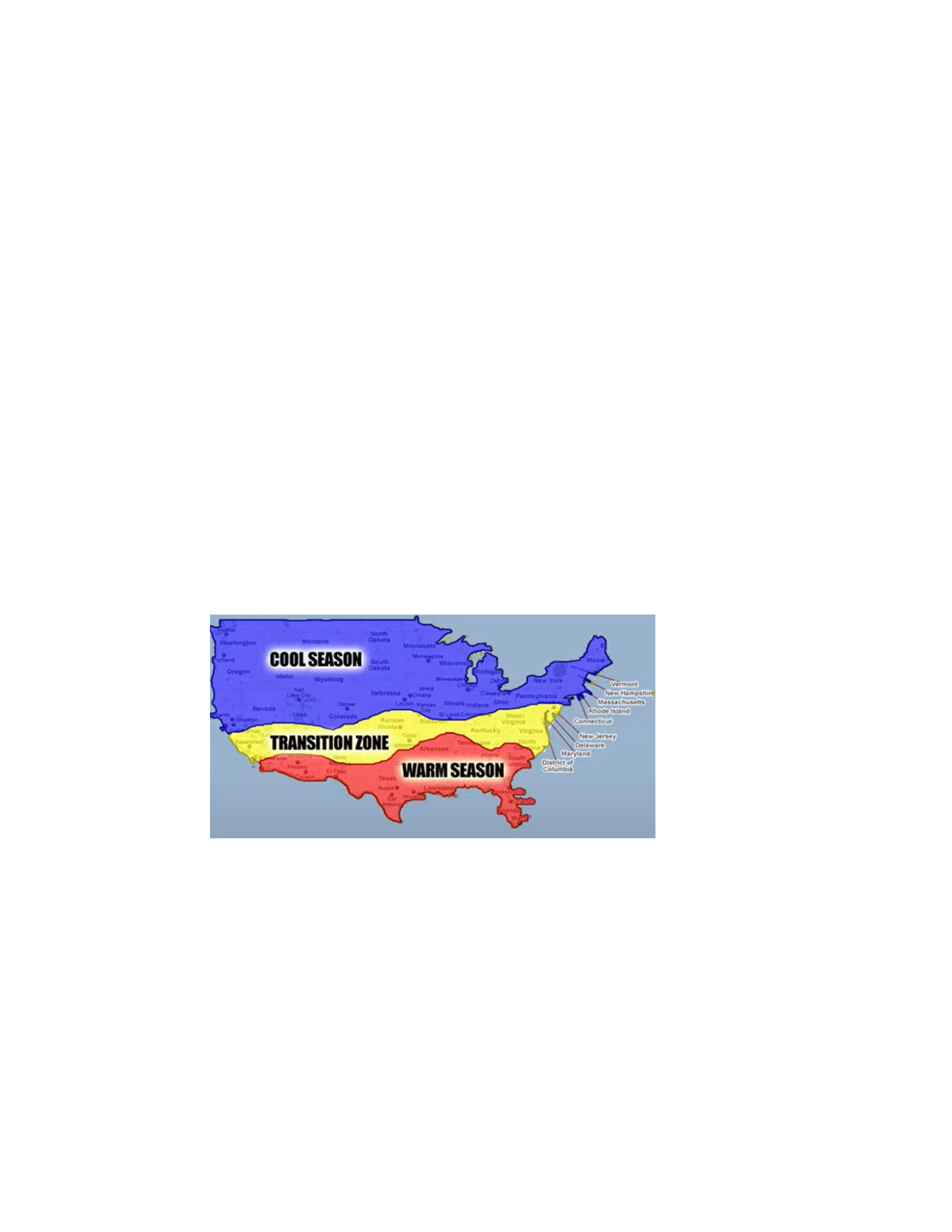
● Predominant cool season grasses are found in the north (see picture)
● Examples:
○ Kentucky bluegrass
○ Rye grass group (primarily perennial rye grass and annual rygrass)
○ Cannabis
2. Warm season grasses
● Definition: Grass species that are biologically active within a temperature range
of 65-110 degrees fahrenheit
● In the phoenix area and south central area these warm season grasses are
biologically active from: late march through thanksgiving
● Examples found here
○ Bermuda grass
○ Zojja grass
○ St. Augustine grass
3. Hybrid grasses
● Definition: Offspring from crosses of grass species or strains that have superior
genetically-determined traits
● Horticultural breeders have been interested in the development of hybrid grasses
since the early 1900’s
● Some of the genetically determined traits
○ Darker grass plant leaf color, a pungent skunk like odor, a finer texture
(resulting from narrow grass leaf blades), a denser lower and shorter
growth habit, improved drought, heat and cold tolerance, biological
sterility (grass plants do not produce pollen) and finally turf grass disease
resistance
4. Sod (installation)
● Definition: Rectangular section of grass-covered soil (1” to 2” thick) held together
by matted grass roots. Sod is sold in bulk by turf growers for fast installation of a
finished lawn
5. Sprigs (installation)
● Definition: 3” to 6” pieces of grass stems or runners without soil that are planted
in rows or broadcast spread and lightly covered with surface mulch to start a
lawn
● Stolon: stem slightly at the surface or above
● Rhizome: stem slightly at the surface or below
● 3 nodes where grass plant will emerge above the soil
● It's important when spriging, that once include for each sprig, at least a stem
section that contains one to three nodes
6. Plugs (installation)
● Definition: 2” to 4” wide chunks of sod, either round or square that are spaced
evenly over a surface to start or repair a lawn
7. Scalping (management)
● Definition: Removal of an excessive quantity of grass leaf tissue at any one
mowing, resulting in a stubbly brown appearance due to exposed stems, dead
leaves and even bare soil
● The practice of scalping is viewed negatively by professional turf grass managers
● It's something you do not want to do, mow your grass to short
● However, in Phoenix during late september to early october, turf grass managers
are changing summer lawn (bermuda grass) to winter lawn (perennial rye grass
lawn)
○ Bermuda grass is scalped very short prior to the application of seed in a
process called overseeding
8. overseeding (management)
● Definition: The laying of grass seed on top of existing grasses to promote new
growth or to replace the existing grass with a new strain for a season
● Dominant grass grown here in summer is bermuda
● During the cool times of the year, grass turns brown and dormant
● Cool season grass seed (perennial rye grass) is put on top
● In a matter of weeks, the perennial grass will germinate

Video: Southwest Turfgrass
Ornamental grass plants
● Used in many different ways to beautify and enhance the functionality of outdoor
landscapes
Most common uses for grasses
● A lawn: turf grass
Where does the word lawn come from? And History of lawns
● Laune: Celtic- an enclosed place of worship
● Managed lawns were first cultivated by wealthy aristocrats in northern Europe over 500
yrs ago
○ Wealthy europeans during that time used lawns for bowling greens and creating
landscape vistas
○ Early lawns were clipped by the use of special scythe or by grazing animals such
as sheep
● The modern american lawn is attributed to the famous landscape designed Frederick
Olmested in the late 1860’s
○ Olmsted thought that lawns should be large and extended over property lines to
give suburban housing developments a park-like setting
● Lawns became a common part of the american landscape during the early 20th century
because of a national ad campaign by the US garden club
○ Taking care of a lawn became a matter of civic pride
○ Was seen as a homeowners contribution to keeping their neighborhood spiffy
■ Still prevalent today!
Cold winters
● Having an actively growing green lawn is restricted to the warmer times of year
● BUT! Here in the southwests it's possible to have a green lawn all year round
Types of turf grass commonly used for lawns across the U.S are a result of decades of research
● Funded by the Department of Agriculture and
● The gold industry
Warm-season grass
● Prefer the heat of summer
● Actively grows from march until november
○ Nighttime temperatures stay above 55
● Most common type
○ Hybrid bermuda grass
■ Wear resistant
■ Sterile

■ Densely matted habit
■ Fine texture
■ Medium to dark green
● Types of hybrid Bermuda grass varieties: Midiron, tifway 419, Santa Ana, Tifsport
○ Pollon free
○ Can withstand our stressful desert soil and climate conditions
● Midiron is the best type of hybrid bermuda grass because…
○ Tolerance to a variety of mowing and watering practice
● Tifway 419 is the preferred turf grass for active sports and recreation use because…
○ Of its aggressive root growth and rapid recovery after heavy use
● All Bermuda grasses have a special biochemistry that enables high rates of growth when
our temperatures are above 100
● Bermuda grass remains healthy and green during the summer
○ HOWEVER! They are not adapted to thrive in shade or cold weather
○ Bermuda grass is typically brown and dormant during the winter months
Cool-season grass
● Cool-season grass grows from late October to mid April
● Most Common types
○ Annual ryegrass
○ Perennial ryegrass
● Both annual and perennial ryegrass are
○ Bright green
○ Fine textured
○ frost tolerant
● Annual ryegrass
○ Elongated blades
○ Weak
○ Intolerant of foot traffic
● Perennial ryegrass
○ Short and stiff blades
○ Dense and durable (tolerable to foot traffic)
○ Dark green
○ Preferred grass!
Benefits of a lawn
● Place for people to
○ gather
○ Relax
○ Recreate
● Local microclime of cooled air
○ Tufgrass can cool air by 10 to 20 degrees
● Lawns provide an open respite for urban wildlife, especially birds

Maintenance
● Regular moving
● Relatively high amounts of supplemental water
● Fertilizing
● May not be the best choice for every landscape setting
Mowing frequency
● Varies according to the grass growth rate
○ Mow once per week when cooler
○ Mow 2-3x a week when warmer
● Remove no more than 1/3rd of grass height
Sustainable tip
● Healthy and vigorous turf grass will inhibit weeds and eliminate need for pesticides
Water needed for grass
● Will vary depending on grass type and weather conditions
● During the summer
○ Bermuda grass lawns will need to be watered every 2-3 days
● During the winter
○ Water every 5 days (or less frequently if it rains)
Fertilize every 6 weeks during summer
● Especially from April through the summer into September
● Always read the label instructions
● Grass clippings are 3% nitrogen
○ Leave clippings to decompose
○ Substitute way to lower the amounts of fertilizer needed for lawn care
○ This practice recycles plant nutrients such as nitrogen back into the soil as an
organic fertilizer
Sustainable tip
● Natural organic fertilizers (such a milorganite) release nutrients slowly into the soil
○ Fertilizers promote the health of both turf grass and beneficial organisms that live
in the soil beneath the turf
Transitioning from summer to winter
● Overseeding
○ Done in early october
○ Transition happens when night temperatures between 60-70 degrees fahrenheit
○ Beings with scalping
■ Mowing the bermuda grass really short about 1/8th to 1/4th inch
○ Next sow perennial ryegrass seed onto the lawn

■ Add 3-5 pounds of seed per 1000(ft^2) square feet of lawn area
○ TIP
■ Scare the birds or…
■ Cover the freshly over seeded lawn with a fine, composted organic mulch
○ Freshly sown seed will need to be watered for 10-20 minutes several times a day
■ To keep surface moist enough for seed to germinate and grow
● Perennial ryegrass seed germination usually takes about 5-12 days
● After the seed is germinated
○ Watering should be gradually reduced
● It will generally take about 2 weeks before the new winter lawn is established enough to
begin normal mowing
Sustainable tip
● Recycle grass clippings as mulch for ryegrass
Synthetic and artificial grass
● Artificial grass is made of nylon or polypropylene plastic polymers that are woven
together with the same tufting technique for carpets
● Gives the illusion of a green grass
● Other than aesthetic appearance, artificial turf provides few environmental benefits
○ Surface temp is similar to asphalt and concrete
■ It can be as hot as 140-150 degrees fahrenheit during summer afternoons
○ Dog urine dries on artificial turf leaving a foul stench that even rain water can’t
dissolve away
Popularity of turfgrass
● Popularity of turfgrass has gone down from the 20th century
○ Due to increasing public concerns of water conservation
○ However turf grass lawns can provide ecological and social benefit

Video: AZ Cardinals Football Playing Field
What grass is in AZ cardinals field?
● Thick cut sod which works really good for sports installation of sports fields
○ “Play ready”- Could be playing on it within a day of installation
○ When its rolled down its compacted with some plates
● Use Bermuda Tifway 419- Hybrid Bermuda
● Very dense root zone
● Roots and stolons grow laterally
○ Gives great stability which is why most sports industries use this grass
● “Recovery is the name of the game”
○ Need the grass regenerate as fast as possible so field is safe
● Solons, rhizomes and root structures really help with bermuda hybrid
● Grass is overseeded with perennial ryegrass during winter
○ Only a 1/3rd of football season is just bermuda grass
● Start overseeding process depending on the football schedule
○ Usually early in september which isn’t too typical in the Southwest
● Till in fibers that intertwined with the root zone which interlocks and gives you a really
tight root structure
What type of system is used to move outdoor location, indoors?
● Field tray weighs 19 million pounds and is moved in 13 steel tracks that are embedded
in the concrete floor
● Field tray hooks up to 2 power chords
● Field is moved with a push of a button
How often is the football field mowed and irrigated
● Cut it 4/10tenths of an inch two 1/2half of an inch during the football season
○ Helps players move fast
● Fields mowed daily
● Watered with overhead sprinkles outside and a fire hose when it's inside
● For football games they do not add any additional water
○ In fact the goal is to have the field dry
● Field is usually slightly watered pre-grame
Any special tools used to take care of the football field?
● Tool that measures the soil profile wetness and dryness
○ It has two probes that are sticked into the ground and gives you a reading
● Clegg- Measures field hardness
○ Dropped, gives you a reading on how hard or soft the field is
● Gas-powered airless striping paint sprayer to paint everything on the field
○ Different nozzles for thickness of lines

○ Takes approximately two days to finish painting
■ First day is basic lines
■ Following day is all major painting of numbers, logos, etc.


