


Answer 5 questions about "The Case of North Korea" by reading the case.(International Relations)
 Mr. Eren97
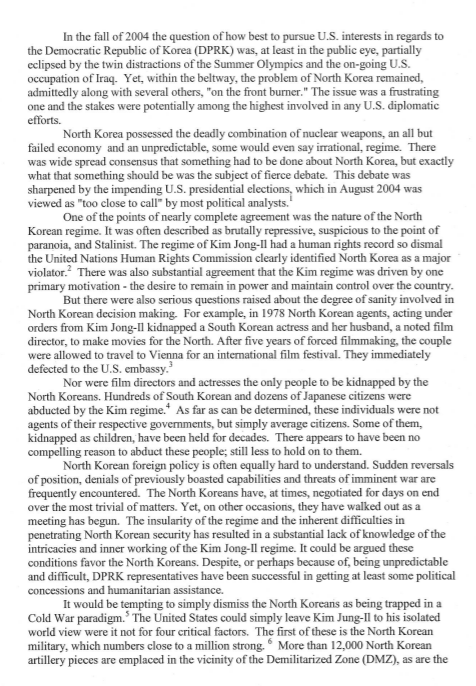
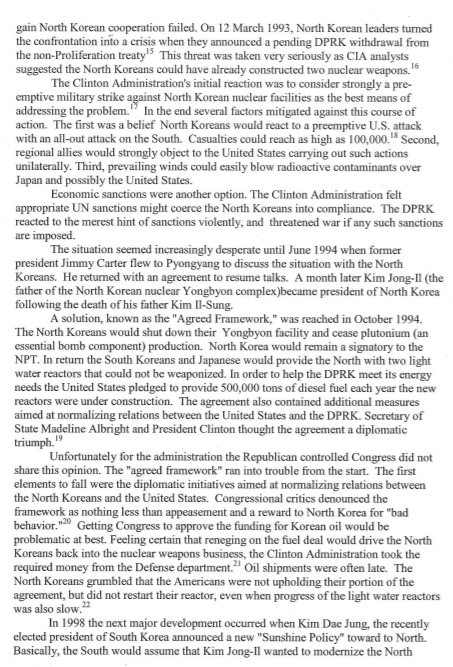
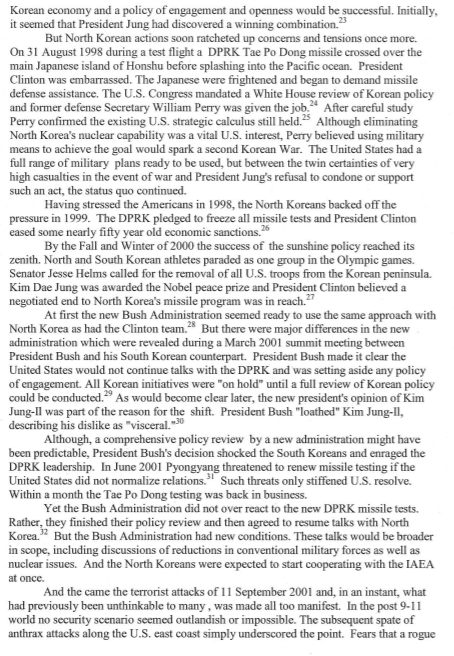
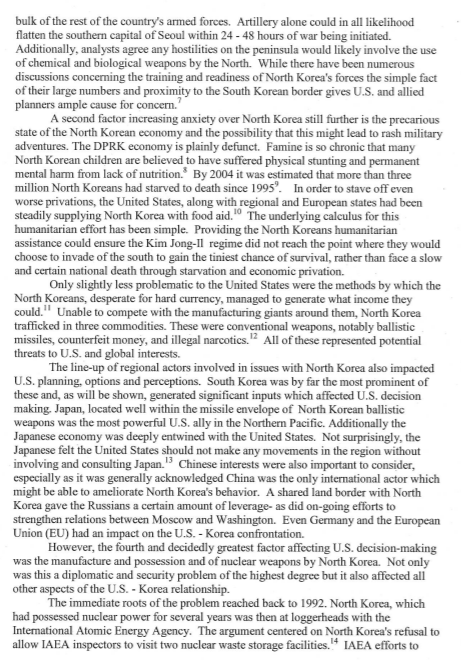
Read: “The case of North Korea” U.S. Naval War college. (Attached below)
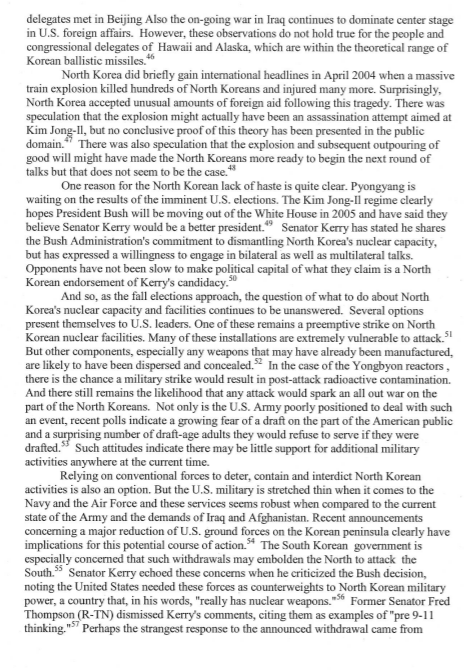
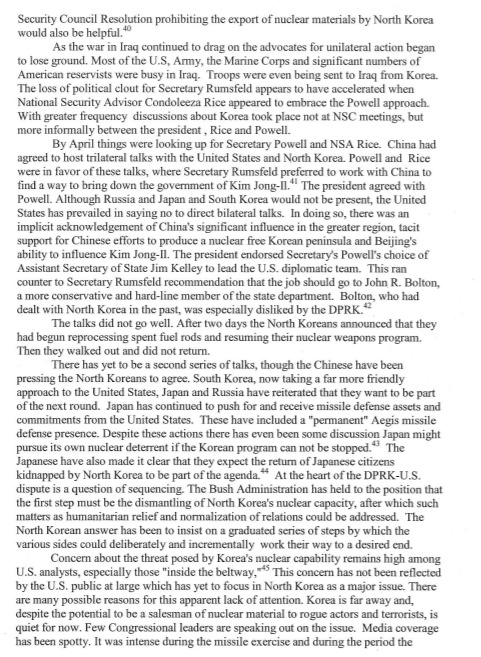
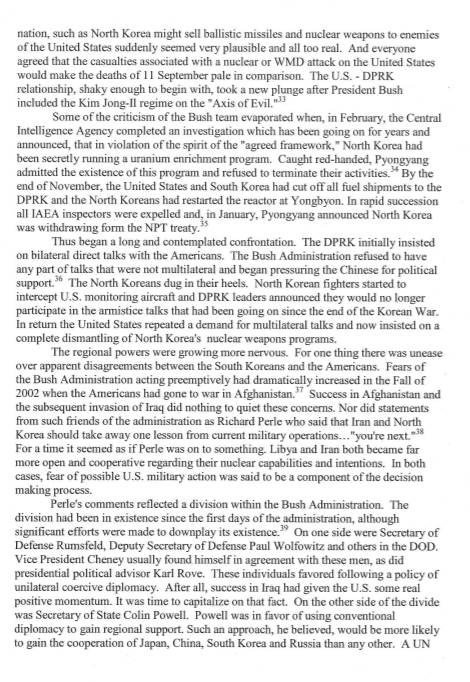
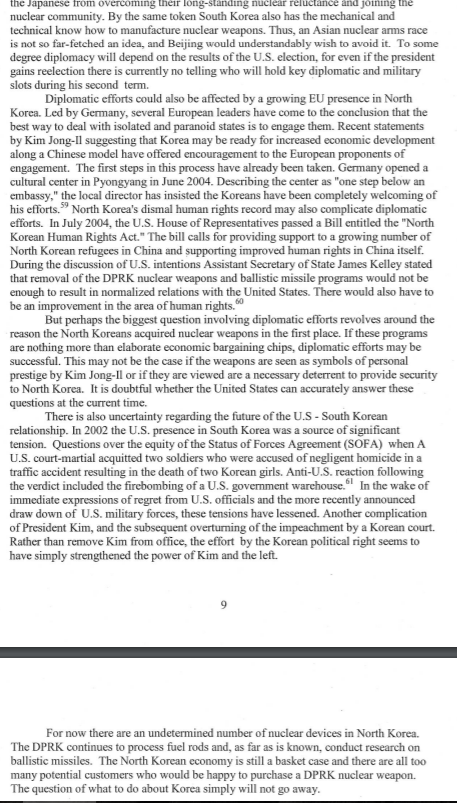
This case discusses the history of US/North Korean relations with an emphasis on the Clinton/Bush (#2) era. It highlights the difficulties of “doing business” with North Korea.
As you read the case, take notes to help you understand the chronology of events, key actors, decisions and so on.
Then answer the following questions.
- In a couple of paragraphs, briefly describe what the case is about (who, what, where, when).
- What has been the approach (diplomacy, use of forces, sanctions etc) of both the Clinton and Bush administrations toward North Korea and the problem of nuclear weapons?
- Given the differences between those two administrations in party, personality, strategies etc…why do you think each has wound up with essentially the same strategy?
- How does our lack of knowledge or uncertainty regarding the North Korean regime affect our policy toward North Korea?
- Was Kim Jong-Il rational? Why or why not? If so, what does he value? (Alternatively, if so, then what sources of influence does that give the United States?)
 9 years ago
 38
38
Answer(1)![blurred-text]()
Purchase the answer to view it

 ThecaseofNorthKoreaandUnitedStates.docx
other Questions(10)
- Please
- Communication and motivation are important skills for managers to use to direct the activities of their employees. These tools are...
- MGT 431 Week 1 Individual Assignment HR Roles and Responsibilities
- team 2 also sets up two pulley systems to move their supplies up a different cliff. the pulley systems are...
- Original work only (quick turn)
- for a-plus writer only
- Simple quiz...Communication expert only
- ACC 205 Week 1 Exercise 3 Balance sheet preparation
- 5 pages, due in 10 hours
- Imagine that you are a consultant for an organization, and they want you to work on developing their core values. The organization would like their core values to reflect key attributes of their culture. Select an organization, such as a company, co

