


How Amazon Uses Behavioral Economics to
Influence Consumer Purchases

How Amazon Uses Behavioral Economic
Biases to Drive Sales
Amazon has proliferated over the last several
years to become the most popular online store
worldwide. Using principles of behavioral
economics is central to the company’s approach
to increasing revenue. Amazon relies heavily on
behavioral economics, which examines how
customers’ emotions, thoughts, and intuitions
affect their purchasing choices (Iyengar &
Lepper, 2000).
Amazon has effectively encouraged users to
purchase more things, spend more time on the
site, and post favorable reviews by capitalizing
on several cognitive biases. This article will
examine how Amazon takes advantage of
customers’ inherent biases at each phase of the
sales funnel (Fritze et al., 2018). We hope our
research will shed light on the success of

Amazon’s tactics and show how they might be
used to increase revenue in other sectors.
Stage 1: Awareness or Problem Recognition
Determining if there is a need or interest in the
product or service is the first step in the
consumer buying process. In order to increase
profits, Amazon is now using cognitive biases
discovered in behavioral economics (Fritze et
al., 2018). These slants aim to sway consumers’
preferences toward the Amazon brand and drive
up sales (Lo et al., 2022). This section introduces
the cognitive biases Amazon employs during the
awareness stage and includes examples of how
these biases are applied on Amazon’s website.
Fifteen distinct forms of cognitive bias are used
by Amazon, all of which will be investigated
here. Evidence of their usage will be shown via

screenshots of the Amazon.es website. Insight
into Amazon’s use of cognitive biases to boost
sales will be provided, as will consumer
education on e-commerce sites’ strategies during
the buying process’s research phase.
Scarcity Bias
The scarcity bias originates from the widespread
belief that a commodity is scarce or will soon be
out of stock. By emphasizing “limited offers”
and “last units in stock” alerts, Amazon makes
use of this behavioral economics phenomenon
(Jesse et al., 2021). The term “scarcity bias” was
coined by Robert Cialdini, who first discussed it
in his seminal work “Influence: The Psychology
of Persuasion.” This bias increases sales by
making prospective customers feel they must
quickly acquire a product before supplies run out

(Fenko et al., 2017). Figure 1.1 in the
supplemental materials illustrates this bias on
the Amazon.es website.
Amazon’s goal in appealing to the scarcity bias
is to increase sales by encouraging buyers to act
quickly before product supplies are depleted.
This bias occurs in “Stage 1 because it
encourages the buyer to decide fast before the
product is out of stock. Consequently, this raises
the issue of the potential loss of a desired good
or service for the first time.
Anchoring Bias
The anchoring bias occurs when a person weighs
too much on the information they first hear.
Amazon employs this bias by prominently
displaying a product’s reduced and original
pricing, lulling customers into thinking the

lower price is a better deal. For more, see
(Rezaei, 2021). Amos Tversky and Daniel
Kahneman discovered this prejudice in their
seminal paper “Judgment under Uncertainty:
Heuristics and Biases.” To get consumers to
commit to a specific price and see a discount as
a good bargain, businesses use the anchoring
bias during the awareness phase of the customer
purchasing process (Rezaei, 2021).
Figure 1.2 in the supplemental materials
demonstrates this bias on the Amazon.es
website. Amazon applies the anchoring bias to
influence purchasing decisions by presenting the
pricing in a manner that makes it seem like a
bargain. This bias is included in “Stage 1
because it might affect a consumer’s first
impression of an item’s worth and serve as a
benchmark for future choices.

Framing Bias
The term “framing bias” refers to the impact of
presentation choices on how an audience
interprets and remembers information.
According to Zhao et al. (2020), Amazon takes
advantage of this propensity by providing
favorably biased product descriptions and
reviews. Amos Tversky and Daniel Kahneman
introduced this bias in their book “The Framing
of Decisions and the Psychology of Choice.”
Buyers’ perceptions of the product and its
advantages may be influenced by the bias as
early as the Awareness stage (Florence et al.,
2022).
A phenomenon indicative of this trend is shown
by a product description on Amazon.es, which
emphasizes the device’s mobility and processing
speed more than its meager storage capacity.
Figure 1.3, which may be found in the Appendix,

is an example of this phenomenon. Since the
consumer’s perspective and motivation to take
action may be influenced by how a problem or
opportunity is presented, this bias is especially
prevalent in Stage 1.
Confirmation Bias
Confirmation Bias refers to the inclination of
individuals to actively seek out and construe
information in a manner that aligns with their
preconceived notions and convictions. The firm
takes advantage of customers’ propensity to
shop on Amazon by recommending goods
similar to those they have already browsed.
(Curmi, 2021). Peter Wason initially presented
the bias in his research “On the Failure to
Eliminate Hypotheses in a Conceptual Task.”

The bias above is exhibited during the stage of
customer awareness, as it enables Amazon to
strengthen customers’ inclinations toward
specific categories of merchandise. If a
consumer has previously engaged with a
specific shoe brand, Amazon’s algorithm will
suggest similar styles and brands to the
consumer on their homepage. An instance of this
is illustrated in the Appendix through the
depiction presented in Figure 1.4. This bias
occurs in Stage 1 because consumers may seek
information that validates their opinions or
perceptions, affecting their initial awareness and
problem recognition.
Endowment Effect
The term “Endowment Effect” describes how
property is often overvalued by its owners. By

prominently showcasing customer evaluations
and ratings on product pages, Amazon
capitalizes on this cognitive Bias (Achtypi et al.,
2021). This bias is included in Stage 1 due to its
potential to affect an individual’s initial
valuation of a thing and to foster an emotional
investment in it. This may influence the
consumer’s propensity to part with their money
and encourage them to take action to get the
product.
“Endowment bias” was coined by Richard
Thaler, who first discussed it in his book
“Misbehaving: Consumers’ Endowment Effect
is fueled during the awareness phase, increasing
their emotional investment in the product and
their likelihood to purchase it (Renaud, 2021).
Users may see user reviews and ratings right
beside Amazon’s product description. Figure 1.5
in the Appendices shows this instance on the

amazon.es website. This strategy has as its
ultimate goal the increased purchase of the
company’s products by the general public.
Social Proof
Social proof is a groupthink capitalizing on
people’s tendency to agree with the majority.
Prominently showing the number of purchasers,
customer reviews, and ratings alongside the
product description on the product page. To
influence consumer decisions, Amazon plays on
this predisposition (Jain et al., 2019). Robert
Cialdini initially described this prejudice in his
seminal book, “Influence: The Psychology of
Persuasion.” Throughout the awareness phase,
Amazon presents this bias to potential buyers to
gain their trust and, hopefully, their business
(Fenko et al., 2017).

Potential consumers are given social evidence in
the form of ratings and reviews, as seen on the
Amazon.es product page, right alongside the
description of the product. Figure 1.6 from the
supplemental materials serves as an example.
This bias is included in Stage 1 because it might
impact first awareness of a problem or
opportunity by demonstrating that others have
faced similar problems. As a result, the
perceived significance and relevance of the issue
or opportunity increases.
Loss Aversion
The psychological phenomenon referred to as
loss aversion pertains to a pronounced
inclination towards evading losses instead of
attaining gains. The authors of Ivaschenko et al.
(2020) assert that Amazon exploits this

cognitive bias by providing a hassle-free return
policy, thereby mitigating the perceived
purchasing risk for customers. The identification
of bias was initially conducted by scholars Amos
Tversky and Daniel Kahneman in their research
paper titled “Prospect Theory: An Analysis of
Decision under Risk.”
The bias described above is demonstrated
throughout the procurement stage to allay the
concerns of potential customers over potential
risks involved with purchasing a particular
product (Guo et al., 2021). This partiality in
operation is observable on the Amazon.es
webpage, as depicted in Figure 1.7 in the
Appendix. This bias is classified as Stage 1
because it may instill dread or urgency about
losing up on a desired thing. As a result, the
customer becomes aware of the possible loss and
is motivated to take action.

Primary Effect
The primary effect describes a cognitive bias
toward remembering information presented
earlier over later. Amazon takes advantage of
shoppers’ natural tendency to select one of the
top-ranked products displayed immediately
following a search due to the primacy effect
(Cheng et al., 2021). Hermann Ebbinghaus
initially noted this prejudice in his book “Über
das Gedächtnis” (On Memory).
This bias is revealed at this juncture because it
shows how Amazon’s search algorithm, which
decides the order in which goods are shown, is
geared toward capitalizing on the significant
impact to boost sales (Moerth-Teo et al., 2021).
This bias is evident on Amazon.es when
searching for a popular product like “a
smartphone,” where only established companies
with good user ratings appear towards the top of

the results. Figure 1.8 illustrates and may be
found in the Appendix. This bias occurs in Stage
1 because the initial information provided to the
customer may disproportionately influence their
later decision-making process, impacting their
initial awareness and problem identification.
Reciprocity Bias
The “reciprocity bias” refers to the tendency to
feel obligated to return a favor or act of
kindness. Amazon capitalizes on this propensity
by giving its most loyal customers exclusive
discounts and access to member-only sales.
Robert Cialdini initially presented reciprocity
bias in his landmark book “Influence: The
Psychology of Persuasion.” Amazon capitalizes
on this bias by focusing on consumers who have

identified a problem and are actively researching
possible solutions (Moerth-Teo et al., 2021).
Amazon favors returning customers by offering
exclusive sales and discounts on previously
purchased items. Figure 1.9 is a supporting
visual that may be found in the Appendix. This
bias is under Stage 1 because it might generate a
feeling of responsibility or debt to a seller who
has supplied value or help. As the consumer
considers how to reciprocate the perceived
benefit, the consumer’s initial awareness and
problem recognition are influenced.
Authority Bias
Authority bias refers to the tendency for
individuals to provide further weight to the
opinions of those in authoritative positions. As a
cognitive bias, the “Authority Bias” causes

individuals to be more receptive to the direction
of those in authoritative positions. Amazon uses
authorities like experts, influencers, and
celebrity endorsements to sell its items, creating
the impression that they are high-quality and
trustworthy. Customers who hold the authority
person in high esteem are more likely to buy
after hearing this. The “Amazon’s Choice”
section of the Amazon.es website illustrates this
principle since it features items carefully
selected and evaluated by the company’s
specialists (Kumari, 2023). These items are
featured or displayed prominently to encourage
shoppers to choose them over alternatives. In the
1960s, psychologist Stanley Milgram initially
postulated the Authority Bias (Kumari, 2023).
This bias is introduced since it is a standard
marketing strategy influencing customer
decisions. Figure 1.10 from the supplementary

materials illustrates. This bias occurs in Stage 1
because the perceived competence or credibility
of the source providing a problem or opportunity
might influence the consumer’s first awareness
and problem identification. As a result, their
following decision-making process is
influenced.
Stage 2: Information Search
In the research phase, consumers look into
various offerings to find one that best fits their
requirements. Amazon makes money during this
time by swaying customers’ decisions by
providing them with incomplete or incorrect
information (Pham, 2020). Amazon uses the
heuristic availability bias to its advantage by
presenting shoppers with information that has
been well-chosen to make its items more

enticing (Sarwar et al., 2019). Additionally, they
provide initial pricing that sets the tone for the
rest of the customer’s decision-making process
using anchoring bias. Positive evaluations and
social proof are highlighted to support the
customer’s choice, tapping into the confirmation
bias in the process.
Confirmation Bias
Customers who use Amazon’s search engine are
presented with relevant product suggestions,
which may drive them to buy goods they might
not have considered otherwise. This bias was
initially postulated by Peter Wason in his study
“On the Failure to Eliminate Hypotheses in a
Conceptual Task.”
Amazon’s search algorithm might influence the
purchasing decisions of customers who have

previously indicated an interest in a product
(Mrkva et al., 2020). Figure 2.1, given in the
Appendix, depicts an example of this
phenomenon. Consequently, Amazon’s search
algorithm can potentially significantly impact
consumer purchase choices, reinforcing the
confirmation bias. This bias occurs in Stage 2,
when consumers actively seek information
supporting their previous views or preferences,
impacting their appraisal and selection of
prospective choices.
Framing Effect Bias
Amazon takes advantage of this prejudice by
highlighting a product’s strengths while
downplaying its weaknesses to boost its
popularity and sales. When a customer searches
for a laptop on Amazon, for instance, that

laptop’s specifications—such as its battery life,
processing speed, and storage capacity—are
shown in a manner that is most likely to pique
the customer’s interest. This bias gets more
significant during the deliberation phase as
consumers compare and assess their alternatives
(Sarwar et al., 2019).
Figure 2.2 in the supplemental materials depicts
this framing effect. Psychologists Amos Tversky
and Daniel Kahneman initially recognized this
cognitive bias in their seminal work, “The
Framing of Decisions and the Psychology of
Choice.” This bias is present in Stage 2 because
how information is presented may affect how it
is viewed and assessed, influencing the
consumer’s search for relevant information.

Anchoring Bias
In order to increase the perceived value of the
reduction, Amazon uses this tendency by
consistently presenting the list price alongside
the reduced price. This slant is shown to entice
buyers by making them think they would save
money if they bought now. If a product’s original
price was €17.39 but has now been reduced to
€15.82, Amazon will show both prices,
emphasizing the reduction. Amazon could
encourage more people to purchase by
emphasizing the value of the reduction by
highlighting the higher initial price (Dowling et
al., 2019).
This prejudice is evident on the whole show on
Amazon.es, where sale prices are posted
alongside the total retail price. Figure 2.3 in the
supplemental materials illustrates this concept.
This bias occurs in Stage 2 because the first

information supplied to the customer might act
as a reference point for further assessment,
affecting the consumer’s search and
consideration of other possibilities.
Social Proof Bias
Amazon employs the social proof phenomenon
by presenting customer evaluations and
feedback on its platform to sway prospective
purchasers’ perceptions and enhance revenue.
The display of past customers’ evaluations and
scores on Amazon’s platform during product
searches is aimed at exerting an impact on the
decision-making process of potential customers,
as noted by Fenko et al. (2017). According to
Jain et al. (2019), Muzafer Sherif and Solomon
Asch, renowned psychology and social

influence figures, were among the early
proponents of this particular bias.
According to Jain et al. (2019), the social proof
bias exhibits maximum efficacy when
introduced at the outset of the purchase process
while establishing trust and credibility. This
partiality can be observed in Figure 2.4, as
depicted in the supplementary materials. This
bias exists in “Stage 2 because the views and
conduct of others might influence the
consumer’s appraisal and selection of choices.
Authority bias
Amazon takes advantage of this fallacy by
highlighting endorsements from authorities such
as celebrities, professionals, agencies, well-
known brands, and other important people. In
order to increase sales, Amazon may play on

consumers’ trust in authoritative sources (Lamis
et al., 2022). Customers searching for a product
on Amazon, for instance, will be able to see if
any well-known people have endorsed it
(Feldman et al., 2020). Customers who trust the
specialist are more inclined to buy from them.
Figure 2.5 in the supplemental materials
illustrates this. Since customers have recognized
their needs and are weighing potential solutions
(Sarwar et al., 2019), it is an ideal time to
present the authority bias to sway their
decisions. Authority bias is present in “Stage 2
because sources’ legitimacy and perceived
competence might impact the consumer’s
appraisal and selection of prospective
alternatives throughout their information
search.

Decoy Effect Bias
The decoy effect bias occurs when consumers’
preferences change in response to adding a third,
irrelevant alternative. Amazon takes advantage
of this bias by providing a “dummy” option
alongside the genuine one, which may influence
buyers’ views and, in turn, increase sales (Marini
& Paglieri, 2019). At this point, clients are
weighing their alternatives, making them
vulnerable to the decoy effect bias.
For laptops, Amazon may sell two different
models, one for €600 and the other for €1,000
(Amazon). The introduction of a “decoy”
alternative, such as a €1,200 “deluxe” model,
might trick buyers into purchasing the more
expensive “premium” version (Marini &
Paglieri, 2019). This is because the high-end
version now seems the most cost-effective

choice. See Figure 2.6 in the Appendices for an
illustration of this.
In the 1980s, Joel Huber and John Payne,
researchers in the marketing field, introduced
the decoy effect bias. This bias occurs in Stage
2: introducing a third alternative, especially a
decoy option, may impact the consumer’s
appraisal and consideration of the initial two
options by altering their relative worth and
appeal.
Bandwagon Effect
Amazon uses the bandwagon effect, the
propensity of individuals to follow the
majority’s actions, by highlighting the
“Amazon’s Choice” label on goods that are
popular with and highly rated by Amazon
customers (Rahman et al., 2020). Customers

may be persuaded to buy the product because of
the emblem, thinking plenty of others have
purchased and liked it. Farjam (2021) et al.
proposed this bias in 1936.
One example is the “Amazon’s Choice” badge,
which features products that are popular among
Amazon.es customers. Figure 2.7 in the
Appendices illustrates. At this point, we show
this bias because it is crucial for consumers to
understand how social influences, like the
bandwagon effect, might sway their choices.
The bandwagon effect occurs in “Stage 2
because consumers’ desire to adhere to popular
viewpoints and trends influences their decision-
making and choice assessment during the
information search stage.

Availability Heuristic
Decisions are often made with just some of the
information accessible, which is known as the
availability heuristic bias. Amazon employs this
bias by ranking search results so that high-
demand items appear first. In this way, Amazon
may persuade buyers to rush into purchases
without carefully considering their options. In
2019, Dietz and Venmans proposed their theory
of bias.
Figure 2.8 in the Appendices shows one such
instance. Amazon.es may prioritize the most
popular laptops in response to a customer’s
search for that specific product. As a result, the
purchaser might select one of the best laptops
above the competition without conducting more
study (Ahmad & Shah, 2020). The availability
heuristic may be found in Stage 2 because
customers use the ease of memory recall while

making judgments about a product or brand’s
quality, relevance, and popularity.
Scarcity Bias
Amazon uses the scarcity bias to make its
consumers feel they need to make a quick
purchase because of the limited product
availability. The corporation uses techniques
such as “Limited time offer” and “Only 2 left in
stock” notifications on product sites to provide
the impression of scarcity and raise prices. In
2019, scarcity bias was first conceptualized by
Dietz and Venmans.
For instance, the Spanish version of Amazon has
a large banner alerting shoppers that only a
limited number of popular electronic items are
still in stock. The manifestation of this bias is
seen in Figure 2.9 of the appendices. Scarcity

bias is included in Stage 2 because it might
motivate buyers to look for information more
thoroughly. As a result, they will place a higher
value on the thing they want to buy and be more
likely to make a speedy choice.
Default Bias
Default bias refers to the propensity to always
go with the status quo. Amazon capitalizes on
this propensity by signing customers up for its
Prime membership program without their
knowledge or consent. Prime members get
quicker shipping and other perks. Customers
may be less inclined to cancel if they feel they
must go to some trouble to do it. This bias was
suggested by Zhao et al. (2020).
When purchasing Amazon.es, for instance,
customers can take advantage of a free 30-day

trial of Prime. They will be charged for the
subscription if they do not cancel before the trial
period finishes (Moerth-Teo et al., 2021). In the
Appendix, Figure 2.10 serves as an illustration.
This slant emphasizes how Amazon sways
customer choice and ultimately increases
revenue. Default bias is categorized under Stage
2 since it encourages consumers to stick with the
preselected choice rather than exploring other
possibilities, such as the preselected delivery
option.
Stage 3: Alternative Evaluation
Customers in the Alternative Evaluation phase
have narrowed the options to a select few that
they believe will adequately satisfy their
requirements. Now that they know they have
choices, they can make an informed buying

decision. Amazon now uses several cognitive
biases to sway customers in its favor. These
biases include the decoy effect, social proof, the
illusion of scarcity, and the endowment effect
(Mrkva et al., 2020). Amazon tries to sway a
customer’s purchase choice by manipulating the
presentation of its items. For example, it may
display a comparable but inferior product beside
a customer’s selected selection to make the latter
seem more appealing, or it may use timed
promotions to generate a feeling of urgency.
Anchoring Bias
Amazon takes advantage of the anchoring bias
by switching the positions of the regular and
discount prices on a product’s page. In order to
sway consumers, goods marketers often resort to
this strategy (Rezaei, 2021). Amazon.es

illustrates anchoring bias by showing both the
list and discounted prices. Using this method,
even a nominal price reduction will appear more
attractive. Customers’ decision-making
processes may be heavily influenced by
anchoring bias when assessing the benefits and
drawbacks of various solutions.
As may be seen in Figure 3.1 of the Appendices,
this impact is visible on the Amazon.es website.
Amazon often uses anchoring bias to influence
consumer behavior and boost sales. Anchoring
bias occurs in Stage 3 since it causes consumers
to place excessive weight on the first piece of
information they are given when evaluating
alternatives.
Endowment Effect

Amazon capitalizes on this bias by offering
complimentary trials of its Prime membership
program. This tactic encourages clients to sign
up for full membership by giving them a taste of
what they are missing out on without spending a
dime. For example, on Amazon.es, new
consumers may sign up for a 30-day free trial of
Amazon Prime in return for an email address
and some basic personal information (Dietz &
Venmans, 2019).
Researchers in behavioral economics, such as
Daniel Kahneman and Richard Thaler, have
examined and suggested the endowment effect
(Mrkva et al., 2020). When buyers debate the
relative merits of various options during the
Alternative Evaluation phase, this document is
presented to them. This phenomenon can be
seen on the Amazon.es webpage, as shown in
Figure 3.2 in the Appendix. The Endowment

Effect is in Stage 3 because it may affect the
perceived worth of alternatives, making them
look less appealing than the goods one currently
owns.
Decoy Effect
Amazon may boost the chance of their desired
choice being picked by offering a less appealing
alternative (a decoy) that makes the preferred
option seem better. Dietz and Venmans (2019)
assert that Amazon capitalizes on the cognitive
bias of consumers by presenting a product that
is marginally inferior to other alternatives but at
a reduced cost, with the expectation that
purchasers will ultimately opt for the pricier
option. Bias manifests during the Alternative
Evaluation phase of the consumer decision-

making process, wherein purchasers engage in a
comparative analysis of various alternatives.
Amazon employs the Decoy Effect to
incentivize consumers to opt for a pricier item
by introducing a comparatively unappealing
alternative that functions as a “decoy.” Figure
3.3 in the Appendix illustrates this phenomena,
which may be seen on the Amazon.es website.
The Decoy Effect is included in Stage 3 because
it gives a third alternative comparable to one of
the primary choices, making one of the main
options look more appealing.
Confirmation Bias
Amazon uses this prejudice to its advantage by
emphasizing favorable product evaluations over
negative ones, which may influence consumers’
opinions of the product (Jesse et al., 2021). Since

customers are actively searching for information
to support their decision-making, this bias is
presented during the Alternative Evaluation
stage. Products on amazon.es, for instance, that
have received several five-star reviews are
shown more prominently, making it more
straightforward for prospective buyers to
discover the overwhelmingly great comments
they have received (Mrkva et al., 2020). Figure
3.4 is provided as an example in the Appendix.
In their study of how consumers use internet
reviews to inform their purchases, Jesse et al.
(2021) introduced the confirmation bias.
Confirmation bias is present in stage 3 because
it entails individuals seeking information that
confirms their previous ideas and prejudices,
which may impact their evaluation and decision-
making process when examining multiple
choices and alternatives.

Negativity Bias
Negativity bias is the propensity for people to
place more weight on bad than good data (Lee et
al., 2020). At this point, Amazon takes
advantage of this partiality by prominently
displaying negative reviews alongside good
ones, which may sway customers’ perceptions of
the product in an unbalanced way. This strategy
can boost the authority of favorable evaluations
while drawing attention to product problems.
On the Amazon.es website, for instance, both
excellent and negative customer reviews are
shown beside the product. This tactic may work
better or worse depending on the goods and the
buyer’s receptivity to the negative bias. Lee et
al. (2020) recommend using the negative bias,
and an example is shown in Figure 3.5 of the
Supplement. Amazon uses this tactic to sway
buyers when considering their options. This bias

is included in Stage 3 because it might persuade
consumers to avoid particular choices by
focusing on the negative features of the
alternatives.
Framing Effect
Viewers may have different emotions when the
same information is presented differently (the
“Framing Effect”). Using phrases like “best
sellers,” “new releases,” and “Amazon’s
choice,” Amazon tries to influence customers’
purchasing decisions (Florence et al., 2022). A
good spin on a product may influence
consumers’ purchasing decisions. Figure 3.6 in
the appendices is an illustration of this.
Tversky and Kahneman’s (1981) study on
cognitive biases included the first mention of the
framing effect (Mrkva et al., 2020). This is

offered when the buyer is actively weighing
their alternatives and is thus more receptive to
the influence of framing. On the Amazon.es
website, for instance, goods labeled as
“Amazon’s Choice” are more likely to sell than
comparable ones. The framing effect bias occurs
in stage 3 because how choices are presented or
framed might impact the consumer’s decision-
making process.
Bandwagon Effect
Robert K. Merton coined the term “bandwagon
effect” in 1949 to explain how individuals prefer
to follow the lead of the people around them.
Amazon communicates this bias during the
Alternative Evaluation phase by showcasing the
number of times an item has been purchased,
suggesting that many others have also bought it,

making it a popular pick (Brandes et al., 2022).
The goal is to create a feeling of social evidence
that will sway consumers to make purchases. In
this way, Amazon.es may label a product as a
“Bestseller,” signifying that it is a top seller and,
hence, a suitable option (Brandes et al., 2022).
Figure 3.7 in the appendices illustrates this. The
Bandwagon Effect is classified as Stage 3
because it leads buyers to pick a specific product
based on its popularity and social approval,
among other factors.
Availability Bias
In the late 1970s, researchers Tversky and
Kahneman initially suggested the idea of
availability bias. Amazon employs this bias in
the Alternative Evaluation phase by
recommending products often purchased

together. By emphasizing the popularity of these
bundles, Amazon hopes to encourage people to
buy more of the advertised products. In the
“Frequently bought together” section on
Amazon.es, for instance, related products
frequently purchased by customers who viewed
the item in question are displayed (Brandes et
al., 2022). Customers are more inclined to
purchase complementary products if they have a
positive impression of their popularity and
quality, which is why this part is included.
Figure 3.8 in the Appendix demonstrates this
bias. Availability Bias is included in Stage 3
because customers may depend on readily
accessible information, such as customer
evaluations, to evaluate alternatives instead of
searching out other sources of information.

Halo Effect
Various researchers have noticed the “halo
effect,” or the human tendency to form an
overall favorable impression of a person or thing
based on just one positive quality. Amazon
capitalizes on this prejudice by emphasizing
items that have received celebrity or expert
endorsements (Ruangkanjanases et al., 2020).
The idea behind this tactic is to enhance sales by
associating the product with the good qualities
and skills of the celebrity.
On Amazon.es, for instance, a celebrity-
endorsed perfume is highlighted, and product
sales increase due to the celebrity’s widespread
appeal. Figure 3.9 from the supplemental
materials serves as an illustration. Amazon aims
to boost revenue and earnings by capitalizing on
the halo effect. The Halo Effect is in Stage 3
because it may impact a customer’s view of a

product’s overall quality based on a single good
trait, resulting in a biased evaluation of
alternatives.
Scarcity Bias
Amazon exploits scarcity bias to influence
customer behavior via persuasive techniques.
When purchasers anticipate a product with a
limited supply and high demand, they acquire
this bias. Amazon employs the phrases “only x
items left in stock” and “limited-time offer” to
pressure customers into purchasing before the
promotion expires (Adaji et al., 2020). Tags like
“Only 2 left in stock” or “Limited time deal”
alert buyers on Amazon.es that a product may
soon go out of stock. (Chen et al., 2019) The
goal is to encourage clients to make a speedy

purchase. This strategy is shown in Figure 3.10
of the Appendices.
Psychologists in behavioral economics first
proposed the idea of scarcity bias. According to
Jesse et al. (2021), Amazon successfully used
this prejudice to shape buyer decisions. Scarcity
bias occurs in Stage 3 because it causes buyers
to see a product as more valued and desired
owing to its limited availability or exclusivity,
creating a feeling of urgency to acquire it.
Stage 4: Purchase Decision
Customers have done all their homework and are
ready to purchase at the fourth stage of the
purchasing process. At this point, Amazon
employs several behavioral economic biases to
influence consumers’ choices (Cheng et al.,
2021). Amazon uses these biases in the hopes

that it would lead to more purchases and higher
average order values. This step employs
fallacies like scarcity bias, social proof bias, and
anchoring bias. Incentives like free delivery,
discounts, and time-sensitive sales are ways
Amazon tries to get people to buy from them
(Nagtegaal et al., 2022). The company’s
recommendation system heavily influences
customers’ selections, which recommends
things based on their past purchases.
Default Bias
People have a propensity toward going with
whatever is already set up. Amazon takes
advantage of this tendency by defaulting the
checkout process to provide the fastest shipping
option. In 2019, Sarwar et al. put out this idea
(Nagtegaal et al., 2022). Figure 4.1 in the

supplemental materials illustrates how Amazon
typically displays the default shipping choice.
This bias is introduced throughout the decision-
making process to improve the possibility that a
buyer would go through with a purchase (Soroka
et al., 2019).
Customers are more inclined to take the fastest
delivery option without further thought if given
a choice between two or more. This tactic may
also boost the offer’s perceived value and create
urgency. Default bias is prevalent in the
“Purchase Decision” stage because customers
prefer to remain with the default option even
when provided with different options, which
might impact their ultimate purchase decision.

Anchoring Bias
Decision-makers are vulnerable to anchoring
bias by giving disproportionate importance to
the initial piece of information they receive. By
prominently showing both the usual and
discount prices, Amazon capitalizes on this
cognitive bias by increasing the perceived value
of the sale price. Tversky and Kahneman were
the first to suggest this bias in 1974. When given
to consumers, this bias might sway them to buy
products they would not have considered
otherwise.
Figure 4.2 in the Appendix displays how
Amazon.es displays the original price of an item
alongside the discounted price (Soroka et al.,
2019). Using this method, users can give the
customer a sense of security regarding the
product’s value, which may sway their buying
decision. Anchoring bias is in the 4th stage

because it may impact a buying choice by
making the first price or information offered (the
“anchor”) the reference point for assessing
future possibilities.
Confirmation Bias
We all suffer from confirmation bias, the
propensity to look for evidence that backs up our
thoughts and opinions. Amazon takes advantage
of this slant by prominently showcasing 5-star
reviews and ratings from verified consumers to
persuade potential shoppers to purchase. Sarwar
et al. (2019) explore this approach further. In the
Appendix, Figure 4.3 shows a product page with
many five-star ratings and feedback from
satisfied customers. As this bias can help
customers overcome doubts about the product,
its presentation in the Purchase Decision stage is

crucial for Amazon (Soroka et al., 2019). A
book’s product page on Amazon.es is an
excellent example of this method since it has
endorsements from multiple satisfied customers.
Confirmation bias is significant in Stage 4
because after a decision is made, individuals
prefer to seek out and concentrate on
information that supports their choice while
ignoring information that contradicts it.
Decoy Effect
In 1982, Joel Huber, John Payne, and
Christopher Puto introduced the decoy effect,
also called the asymmetric dominance effect
(Doi et al., 2022). It implies that decision-
making may be influenced by adding a third
option that is asymmetrically dominated by one
of the other options. By displaying a decoy

product that is more expensive than the target
product but has fewer features, Amazon uses this
bias to make the target product seem more
appealing (Lamis et al., 2022).
As shown in Figure 4.4 of the Appendix, a decoy
choice with a higher price and fewer features is
placed in the center of three laptop models, as
seen on the Amazon.es website. At this point, the
decoy effect steers clients toward a specific
product by making it seem like the best
alternative. The Decoy Effect appears in Stage 4
because it presents a third alternative to make
one of the other options more appealing,
increasing the possibility of a sale.
Endowment Effect
Amazon employs the endowment effect as a
marketing strategy by recommending products

to customers based on their prior buying
behavior. According to Voramontri and Klieb
(2019), the recommendation of related items can
enhance the perceived value of products and
elevate the average order value. The presence of
bias is exemplified in Figure 4.5 of the
Appendix, wherein a system recommends
products to a user based on their purchasing
history.
This was demonstrated in a study conducted by
Ul Adin et al. in 2022. Amazon leverages the
endowment effect as a strategic tool during the
purchase decision-making process to incentivize
customers to increase their purchase volume.
Richard Thaler, a renowned behavioral
economist who won the Nobel Prize, was the
one who first put up the idea of the endowment
effect (Kartini & Nadha, 2021). The Endowment
Effect appears under Stage 4 because it makes

customers appreciate products they possess
more than those they do not, making them more
likely to buy and harder to part with.
Social Proof
Amazon utilizes social proof as a marketing
strategy by emphasizing purchase quantities,
user-generated reviews, and product ratings on
individual product pages. According to Ul Adin
et al. (2022), prospective buyers are presented
with social proof in the cumulative quantity of
reviews and ratings displayed on the product
page. An illustration of this can be found in
Figure 4.6, located in the appendices.
The term “social proof” was introduced by
Robert Cialdini in his influential publication
“Influence: The Psychology of Persuasion.”
According to Voramontri and Klieb (2019), the

presence of social evidence indicating a
product’s high quality and popularity is likely to
increase the likelihood of purchase among
buyers at the point of sale. The number of
evaluations and critiques on a particular item can
be observed on the product page of “Amazon
Basics – Cable de carga para-Apple iPhone” on
the Amazon.es online platform. Social proof is
under Stage 4 because it uses the psychological
notion that individuals follow the actions or
behaviors of others to make choices, making it a
successful sales tactic.
Hindsight Bias
“Hindsight bias” describes the inclination to
overestimate one’s predictive powers
retrospectively. As part of its business strategy,
Amazon uses Hindsight bias by emphasizing

and advertising goods that have been successful
in the past, giving the impression that this was
always the case (Fechner & Herder, 2021). This
is evident in the “Best Seller” and “Customers
also bought” sections of their website, which
include prominently displayed successful
products. Lamis et al. (2022) uncovered the
existence of this bias.
Figure 4.7 in the appendices is a screenshot that
exemplifies this. On Amazon.es, for instance, the
most negative customer evaluations are shown
front and center on the product page for “1984”
by George Orwell, thereby swaying the opinions
of future purchasers. The Hindsight bias section
appears in Stage 4 because it might lead
consumers to justify a poor purchase decision
since they did not know better.

Self-Serving Bias
Amazon leverages this cognitive bias by
prioritizing the presentation of predominantly
positive product ratings and reviews. As
illustrated in Figure 4.8 of the supplementary
material, the concept was first proposed by
Orsenigo (2020). The figure portrays a product
that has received favorable feedback through
five-star ratings and positive reviews from the
Amazon.es website.
According to Doi et al. (2022), Amazon employs
this bias to cultivate a positive perception of the
product among customers, leading to a rise in
sales. By strategically promoting favorable
reviews and ratings, Amazon cultivates a self-
serving bias within the consumer’s psyche,
reinforcing their confidence in the accuracy of
their purchase decision and fostering a sense of
trust in the organization. This approach helps

Amazon enhance its revenue generation while
strengthening customer allegiance. The actions
above exemplify how Amazon exploits bias to
its benefit. The Self-serving bias is a factor in
Stage 4 because it affects consumers’ propensity
to ascribe their purchase’s success or failure to
their talents rather than external circumstances.
Loss Aversion
Amazon capitalizes on this bias by
implementing liberal return policies that
facilitate exchanging or returning merchandise.
According to Litovsky et al. (2022), offering a
return policy can increase the likelihood of
buyers purchasing goods, as it assures they can
return the product if it fails to meet their
expectations. Amazon’s return policy is an
exemplar of this phenomenon, and it is

explained comprehensively on the Help &
Customer Service page of the website. In their
seminal work “Prospect Theory,” Kahneman
and Tversky pioneered identifying cognitive
bias (Fechner & Herder, 2021). The
supplementary materials are depicted in Figure
4.9. Loss aversion appears in Stage 4 because it
encourages buyers to buy rather than not buy
since they fear losing money if they do not.
Status Quo Bias
The Status Quo Bias is the inclination to keep
things as they are rather than embrace change.
Using subscription-based services like Amazon
Prime, which offers free and fast shipping,
streaming of movies and TV shows, music, and
more, Amazon takes advantage of this cognitive
bias to promote customer loyalty (Nel &

Boshoff, 2020). Customers are more likely to
stick with these services after they have
experienced their ease and advantages. This
prejudice is on full display on Amazon.es, where
Prime members are given access to exclusive
discounts and incentives that make continuing to
buy from Amazon more tempting.
In 1988, Samuelson and Zeckhauser were the
first to suggest this bias. This bias is shown here
to show how Amazon manipulates cognitive
biases to influence consumer behavior. Figure
4.11 in the Appendices illustrates. Status Quo
bias is in Stage 4 because it makes consumers
more inclined to continue with their present
habit, even if better choices are available,
making switching to a new product or brand
more difficult.

Stage 5: Post-Purchase Evaluation
A customer’s propensity to make a repeat
purchase is heavily influenced by how they feel
about a product after using it. Amazon uses
consumer post-purchase biases in order to
influence their shopping habits. The post-
purchase assessment phase is critical because it
may influence consumer loyalty and word-of-
mouth advertising (Boerman et al., 2021).
Amazon aims to influence the buyer’s opinion
of a product to encourage repeat business and
good word of mouth by using techniques
including tailored suggestions, social proof, and
the prominence of positive reviews.
Confirmation Bias
Amazon capitalizes on this slant by highlighting
positive feedback and high ratings on product

sites, leading customers to create favorable
opinions of the product before using it. Sarwar
et al. (2019) were the first to describe this bias.
Confirmation bias might affect customers’ post-
purchase evaluations and subsequent purchases.
Therefore, it is crucial to grasp how it works at
this point.
The “The Alchemist” product page on
Amazon.es indicates this bias since the reviews
are mostly favorable, and the book has a high
overall rating, leading customers to assume it is
a worthwhile purchase (Boerman et al., 2021).
This exemplifies how Amazon uses
confirmation bias to sway patronage and
spending habits.” Figure 5.1 in the appendices
illustrates this. Confirmation bias occurs in stage
5 because consumers prefer to seek information
supporting their opinions or expectations
regarding the goods they bought rather than

evaluating alternative information that may
contradict their initial impressions.
Hindsight Bias
Amazon exploits this fallacy by making it seem
as if it was simpler to predict outcomes or events
that occurred in the past. Indicating the best
alternative based on sales history and user
ratings, the “Amazon’s Choice” logo promotes
products with this Bias (Boerman et al., 2021).
As a result, buyers will likely be swayed into
thinking the product is superior to alternatives.
This bias was first proposed by Lamis et al.
(2022).
In the Appendix, Figure 5.2 illustrates this. The
Amazon’s Choice badge is used as a bias during
the post-purchase assessment phase to
encourage repeat purchases by making

consumers feel good about their purchases. If
two coffee makers on Amazon.es have identical
ratings and customer reviews, but one has the
Amazon’s Choice label, the customer is likelier
to buy the one with the label. This bias is
categorized in stage 5 since it alters the
customer’s impression of the purchase decision,
leading them to assume that their option was
evident and proper.
Loss Aversion Bias
By providing a no-questions-asked return
policy, Amazon takes advantage of loss
aversion, the psychological inclination to value
avoiding losses more highly than attaining
profits. Customers are more likely to make
purchases when they know they may exchange

or return items if they are unsatisfied. This bias
was hypothesized by Cheng et al. (2021).
The Amazon.es website prominently displays a
guarantee that if a consumer is dissatisfied with
their purchase within 30 days, they may send it
back at no cost to them (Apparaju, 2021). The
accompanying Figure 5.3 provides more
illustration of this bias. This bias has been
introduced since it affects consumers’ post-
purchase ratings and subsequent purchases
(Hayes et al., 2021). Loss aversion bias is in
Stage 5 because customers evaluate their
purchases based on perceived gains and losses,
and the fear of losing something they already
own can motivate them to keep using it rather
than looking for alternatives.

Negativity Bias
Amazon customers’ propensity to be affected
more by negative than by neutral or good events
and emotions. The firm takes advantage of this
prejudice by concealing negative customer
feedback and star ratings on product sites. This
bias was first shown by Jesse et al. (2021).
Because it has the potential to color the buyer’s
post-purchase assessment, this bias is introduced
now. If buyers go to the Spanish version of
Amazon (Amazon.es), they will notice that both
good and negative reviews are published, but the
former is pushed farther down the page so that
only the latter is accessible to readers. The
illustration in Figure 5.4 can be found in the
appendices. Negativity bias is in Stage 5 because
consumers are more likely to recall and dwell on
unpleasant experiences or product
characteristics than favorable ones, which might

affect their future purchase choices and
satisfaction.
Positivity Bias
Positivity bias is the tendency to focus on good
memories and downplay or ignore less pleasant
ones. By emailing customers after making a
purchase, Amazon uses this prejudice to boost a
product’s star rating and sales (Kumar et al.,
2022). This, in turn, may sway interested
purchasers to complete the transaction. This bias
is evident, for instance, on the Amazon.es
website, where items with higher ratings and
good reviews tend to be shown more
prominently. Taylor and Brown made the 1988
proposal of this bias. The post-purchase
assessment phase is when the bias manifests
itself since satisfied customers are more likely to

repurchase and remain loyal to a brand if they
have had a good experience. In the Appendix,
Figure 5.5 serves as an illustration. Positivity
bias is significant in Stage 5 because buyers
prefer to concentrate on the positive features of
a product after buying it, which might impact
their probability of favorable evaluations and
repeat purchases.
Social Proof Bias
When making choices, people are prone to
follow the lead of those around them due to
social proof. Amazon takes advantage of this
tendency by giving customers easy access to
ratings and reviews written by other customers
before they purchase (Cheng et al., 2021).
Robert Cialdini, a social scientist, was the first
to suggest this partiality. This bias manifests in

the evaluation phase following a purchase
because buyers want confirmation that they
made the right choice. Providing social evidence
of a product’s quality, the Amazon.es website
displays the number of reviews and ratings it has
received, along with an average rating (Vollero
et al., 2021). Figure 5.6 from the supplementary
materials serves as an illustration. The social
proof bias occurs in stage 5 since buyers may
seek out and depend on the views of others when
assessing their purchase choice and post-
purchase experience.
Endowment Bias
Amazon utilizes the Endowment bias by
incentivizing customers to provide ratings and
feedback on their acquired products. This
subsequently enhances their emotional

connection to the item and the probability of
future purchases (Dietz & Venmans, 2019). Bias
is discernible on Amazon.es, as customers are
prompted to provide ratings and reviews of their
purchases. Thaler (1980) first proposed the
presence of this bias, as cited in Apparaju
(2021). This strategy is executed post-purchase
to strengthen the customer’s affective
attachment to the product and encourage
subsequent transactions.
The Appendices contain a visual representation,
as depicted in Figure 5.7, demonstrating the
manifestation of this particular bias. Amazon
seeks to improve customer loyalty and increase
repeat sales using Endowment bias. Endowment
bias appears under Stage 5 because it relates to
people’s inclination to overvalue something
merely because they possess it, which might

impact how they evaluate and feel about the
object after acquiring it.
Choice-Supportive Bias
Amazons utilize a cognitive bias called
attributing positive features to prior decisions.
The company takes advantage of this tendency
by encouraging customers to provide feedback
through reviews and ratings, which may lead to
customer post-purchase satisfaction (Alaybek et
al., 2022). As a result, Amazon will see an
increase in consumer happiness and loyalty. On
the Amazon.es website, for instance, customers
are prompted to rate and evaluate their
purchases. Potential purchasers have easy access
to the favorable evaluations left by past
customers by reading the reviews posted on the
product page.

Mather and Johnson (2000) were the first to
suggest the idea of choice-supportive Bias
(Apparaju, 2021). This bias is introduced at this
point to demonstrate how Amazon uses
consumers’ cognitive biases to affect their
purchase choices. Figure 5.8 from the
supplemental materials serves as an illustration.
Choice-supportive bias is included in Stage 5
because it influences how consumers recall their
purchase decision and promotes their feeling
that they made the correct choice, resulting in
increased satisfaction and perhaps more future
purchases.
Omission Bias
The omission bias is a cognitive bias in which
detrimental acts are seen to be more severe than
inactions that may have had equivalent negative

consequences. Amazon takes advantage of this
misunderstanding by pushing “risk-free” items
that give buyers more assurance when
purchasing (Ul Abdin et al., 2022). Amos
Tversky and Daniel Kahneman initially
postulated this bias in perception (Alaybek et al.,
2022).
If a consumer is unhappy with their purchase
within 30 days, for instance, they may send it
back and get their money back from Amazon.
Figure 5.9 in the Appendices exemplifies this
bias (Alaybek et al., 2022). Omission bias is in
Stage 5 because consumers tend to regret actions
they have made (like buying a product) more
than actions they have not taken (like not buying
a product), making inactivity seem safer.

Voluntary Response Bias
Customer feedback rates tend to increase after
getting a post-purchase email, a phenomenon
known as the “voluntary response bias.” Those
with favorable, solid, or negative sentiments are
likelier to submit feedback, whereas those with
indifferent opinions may choose not to bother.
Groves and Peytcheva initially proposed the
concept of voluntary response bias in 2008. The
report stresses the significance of this Bias
because Amazon relies on consumer input for
product and service development (Roodbeen et
al., 2021). By being aware of this partiality,
Amazon will be better able to examine customer
comments and make well-informed choices
about enhancing its products and services.
For instance, Amazon will contact buyers after
purchasing to solicit feedback through a product
review. In doing so, they give Amazon helpful

information that can be used to improve the
product and entice more sales. Although not all
customers will leave reviews, Amazon uses
statistical methods to extrapolate the general
population’s opinions from the reviews they
receive. This bias is included in Stage 5 because
it relates to consumers who have a strong
opinion, either favorable or unfavorable, to offer
feedback and skew the total rating of a product,
which might impact future purchase choices.

References
Achtypi, E., Ashby, N. J. S., Brown, G. D. A.,
Walasek, L., & Yechiam, E. (2021). The
endowment effect and beliefs about the
market. The Decision, 8(1), 16–35. Web.
Adaji, I., Oyibo, K., & Vassileva, J. (2020). E-
Commerce shopping motivation and the
influence of persuasive strategies. Frontiers in
Artificial Intelligenc 3, 67. Web.
Ahmad, M., & Shah, S. Z.
(2020). Overconfidence heuristic-driven bias in
investment decision-making and performance:
Mediating effects of risk perception and
moderating effects of Financial
Literacy. Journal of Economic and
Administrative Sciences, 38(1), 60–90. Web.
Alaybek, B., Dalal, R. S., Fyffe, S., Aitken, J. A.,
Zhou, Y., Qu, X., Roman, A., & Baines, J. I.

(2022). All that ends (and peaks) well? A meta-
analysis of the peak-end rule and duration
neglect. Organizational Behavior and Human
Decision Processes, 170. Web.
Amazon. (n.d.). Amazon.es. Web.
Apparaju, A. (2021). Analyzing customer
buying habits. International Journal of
Scientific Research in Science and Technology,
584–587. Web.
Boerman, S. C., Kruikemeier, S., & Bol, N.
(2021). When is personalized advertising
crossing personal boundaries? How type of
information, data sharing, and personalized
pricing influence consumer perceptions of
personalized advertising. Computers in Human
Behavior Reports, 4. Web.
Brandes, L., Godes, D., & Mayzlin, D.
(2022). Extremity bias in online reviews: The

role of attrition. Journal of Marketing
Research, 59(4), 675-695. Web.
Chen, Q., Feng, Y., Liu, L., & Tian, X.
(2019). Understanding consumers’ reactance of
online personalized advertising: A new scheme
of rational choice from a perspective of negative
effects. International Journal of Information
Management, 44, 53-64. Web.
Cheng, H., Lambert, D. M., DeLong, K. L., &
Jensen, K. L. (2021). Inattention, availability
bias, and attribute premium estimation for a
biobased product. Agricultural
Economics, 53(2), 274–288. Web.
Curmi, T. (2021). Investigative Decision
Making and Its Association With Critical
Thinking Skills, Thinking Styles, and Law
Enforcement Experience (Doctoral dissertation,
City University of New York). Web.

Dietz, S., & Venmans, F. (2019). The
endowment effect, discounting and the
environment. Journal of Environmental
Economics and Management, 97, 67–91. Web.
Doi, T., Doi, S., & Yamaoka, T. (2022). The
peak–end rule in evaluating product user
experience: The Chronological Evaluation of
past impressive episodes on overall
satisfaction. Human Factors and Ergonomics in
Manufacturing & Service Industries, 32(3),
256–267. Web.
Dowling, K., Guhl, D., Klapper, D., Spann, M.,
Stich, L., & Yegoryan, N. (2020). Behavioral
biases in marketing. Journal of the Academy of
Marketing Science, 48, 449-477. Web.
Farjam, M. (2021). The bandwagon effect in an
online voting experiment with real political

organizations. International Journal of Public
Opinion Research, 33(2), 412-421. Web.
Fechner, W., & Herder, E. (2021). Digital
nudging for more ecological supermarket
purchases. In Adjunct Proceedings of the 29th
ACM Conference on User Modeling, Adaptation
and Personalization. pp.284-292. Web.
Feldman, G., Kutscher, L., & Yay, T.
(2020). Omission and commission in judgment
and decision making: Understanding and linking
action‐inaction effects using the concept of
normality. Social and Personality Psychology
Compass, 14(8). Web.
Fenko, A., Keizer, T., & Pruyn, A. (2017). Do
social proof and scarcity work in the online
context?. In 16th International Conferences on
Research in Advertising (ICORIA 2017) (pp. 1-
7). Web.

Florence, E. S., Fleischman, D., Mulcahy, R., &
Wynder, M. (2022). Message framing effects on
sustainable consumer behavior: a systematic
review and future research directions for social
marketing. Journal Of Social Marketing,
(Ahead-Of-Print), 12(4), pp. 623-652. Web.
Fritze, M. P., Eisingerich, A. B., & Benkenstein,
M. (2018). Digital transformation and
possession attachment: examining the
endowment effect for consumers’ relationships
with hedonic and utilitarian digital service
technologies. Electronic Commerce
Research, 19(2), 311–337. Web.
Guo, J., Li, Y., Xu, Y., & Zeng, K. (2021). How
live streaming features impact consumers’
purchase intention in the context of cross-border
E-commerce? A research based on SOR
theory. Frontiers in Psychology, 12. Web.

Hayes, J. L., Brinson, N. H., Bott, G. J., &
Moeller, C. M. (2021). The influence of
consumer–brand relationship on the
personalized advertising privacy calculus in
social media. Journal of Interactive Marketing,
55(1), 16-30. Web.
Ivaschenko, A., Stolbova, A., & Golovnin, O.
(2020). Data market implementation to match
retail customer buying versus social media
activity. Advances in Intelligent Systems and
Computing, Vol 1, 363–372. Web.
Iyengar, S. S., & Lepper, M. R. (2000). When
choice is demotivating: Can one desire too much
of a good thing?Journal of Personality and
Social Psychology, 79(6), 995–1006. Web.
Jain, J., Walia, N., & Gupta, S.
(2019). Evaluation of behavioral biases
affecting the investment decision-making of

individual equity investors by fuzzy analytic
hierarchy process. Review of Behavioral
Finance, 12(3), 297–314. Web.
Jesse, M., Jannach, D., & Gula, B.
(2021). Digital nudging for online food
choices. Frontiers in Psychology, Vol 12, 5870.
Web.
Kartini, K., & Nadha, K. (2021). Behavioral
biases on investment decision: A case study in
Indonesia. The Journal of Asian Finance,
Economics, and Business, 8(3), 1231-1240.
Kumar, S., Ashoka Rajan, R., Swaminathan, A.,
& Johnson, E. (2022). Hyper-personalization
and its impact on customer buying
behavior. Data Intelligence and Cognitive
Informatics, 1(1) 649–664. Web.
Kumari, R. (2023). Customer buying behavior
towards online retail marketer’s (Amazon vs

Flipkart). International Journal For
Multidisciplinary Research, 5(2). Web.
Lamis, S. F., Handayani, P. W., & Fitriani, W. R.
(2022). Impulse buying during flash sales in the
online marketplace. Cogent Business &
Management, 9(1). Web.
Lee, E. J., Choi, H., Han, J., Kim, D. H., Ko, E.,
& Kim, K. H. (2020). How to “Nudge” your
consumers toward sustainable fashion
consumption: An fMRI investigation. Journal of
Business Research, 117, 642-651. Web.
Litovsky, Y., Loewenstein, G., Horn, S., &
Olivola, C. Y. (2022). Loss aversion, the
endowment effect, and gain-loss framing shape
preferences for noninstrumental
information. Proceedings of the National
Academy of Sciences, 119(34). Web.

Lo, P. S., Dwivedi, Y. K., Tan, G. W. H., Ooi, K.
B., Aw, E. C. X., & Metri, B. (2022). Why do
consumers buy impulsively during live
streaming? A deep learning-based dual-stage
SEM-ANN analysis. Journal of Business
Research,147,325-337. Web.
Marini, M., & Paglieri, F. (2019). Decoy effects
in intertemporal and probabilistic choices the
role of time pressure, immediacy, and
certainty. Behavioural processes, 162, 130-141.
Web.
Moerth-Teo, J. Y., Bobek, V., Horvat, T., &
Milost, F. (2021). The effects of consumers’
buying behavior on E-Commerce pricing in the
highly developed emerging market: The case of
Singapore. International Journal of Economics
and Finance, 13(12), 55. Web.

Mrkva, K., Johnson, E. J., Gächter, S., &
Herrmann, A. (2020). Moderating loss aversion:
Loss aversion has moderators, but reports of its
death are greatly exaggerated. Journal of
Consumer Psychology, 30(3). Web.
Nagtegaal, R., Tummers, L., Noordegraaf, M.,
& Bekkers, V. (2020). Designing to debias:
Measuring and reducing public managers’
anchoring bias. Public Administration
Review, 80(4), 565–576. Web.
Nel, J., & Boshoff, C. (2020). Status quo bias
and shoppers’ mobile website purchasing
resistance. European Journal of
Marketing, 54(6), 1433–1466. Web.
Orsenigo, L. (2020). Reflection of self-serving
biases on memory representations: The
unconscious effects of hedonic and utilitarian

consumption, Universidade Católica
Portuguesa. Web.
Pham, H. C. (2020). Factors affecting consumer
goods buyers’ choice in e-commerce sites:
Evidence from Vietnam. The Journal of Asian
Finance, Economics and Business, 7(11), 947-
953. Web.
Rahman, M. A., Islam, M. A., Esha, B. H.,
Sultana, N., & Chakravorty, S.
(2018). Consumer buying behavior towards
online shopping: An empirical study on Dhaka
city, Bangladesh. Cogent Business &
Management, 5(1). Web.
Renaud, K. (2021). Endowment effect.
In Encyclopedia of Cryptography, Security and
Privacy (pp. 1-2). Berlin, Heidelberg: Springer
Berlin Heidelberg. Web.

Rezaei, J. (2021). Anchoring bias in eliciting
attribute weights and values in multi-attribute
decision-making. Journal of Decision
Systems, 30(1), 72-96. Web.
Roodbeen, S. X., de Lacy, F. B., & Hompes, R.
(2021). Response to the Comment on
“Neyman’s Bias in Online Voluntary
Databases!”. Annals of Surgery, 274(6), e702-
e703. Web.
Ruangkanjanases, A., You, J. J., Chien, S. W.,
Ma, Y., Chen, S. C., & Chao, L. C.
(2020). Elucidating the effect of antecedents on
consumers’ green purchase intention: an
extension of the theory of planned
behavior. Frontiers in Psychology, 11, 1433.
Web.
Sarwar, M. A., Awang, Z., & Habib, M. D.
(2019). Consumer purchase regret: A systematic

review. International Journal of Academic
Research in Business and Social Sciences, 9(9).
Web.
Soroka, S., Fournier, P., & Nir, L. (2019). Cross-
national evidence of a negativity bias in
psychophysiological reactions to the
news. Proceedings of the National Academy of
Sciences, 116(38), 18888–18892. Web.
Ul Abdin, S. Z., Qureshi, F., Iqbal, J., & Sultana,
S. (2022). Overconfidence bias and investment
performance: A mediating effect of risk
propensity. Borsa Istanbul Review, 22(4), 780-
793. Web.
Vollero, A., Sardanelli, D., & Siano, A.
(2021). Exploring the role of the Amazon effect
on customer expectations: An analysis of user‐
generated content in consumer electronics

retailing. Journal of Consumer Behaviour. 6(3),
309–433. Web.
Voramontri, D., & Klieb, L. (2019). Impact of
social media on consumer
behavior. International Journal of Information
and Decision Sciences, 11(3), 209–233. Web.
Zhao, H., Fu, S., & Chen, X. (2020). Promoting
users’ intention to share online health articles on
social media: The role of confirmation
bias. Information Processing &
Management, 57(6). Web.
Appendices
Stage 1: Awareness or Problem Recognition
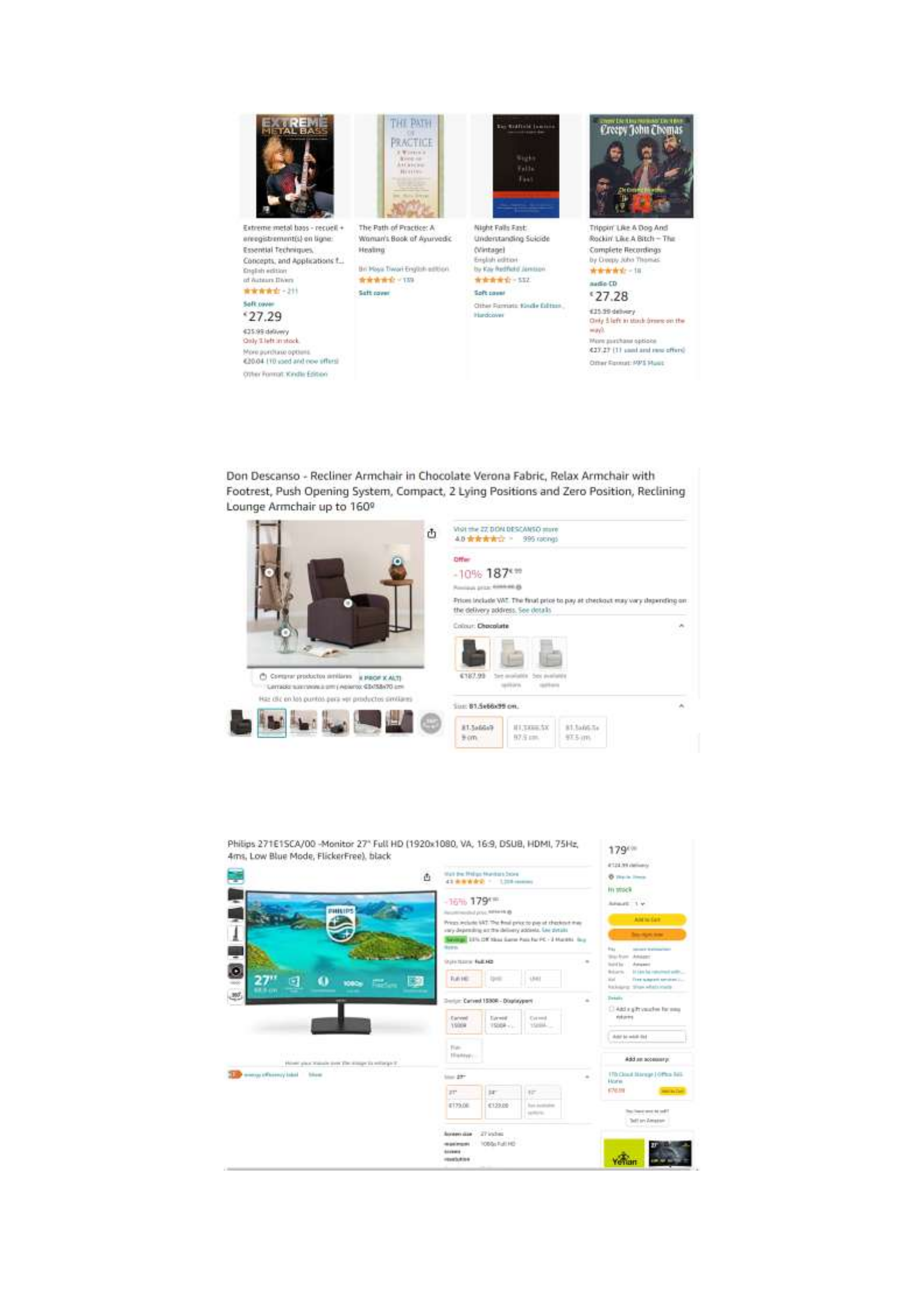
Figure 1.1 Scarcity Bias (Amazon).
Figure 1.2. Anchoring Bias (Amazon).
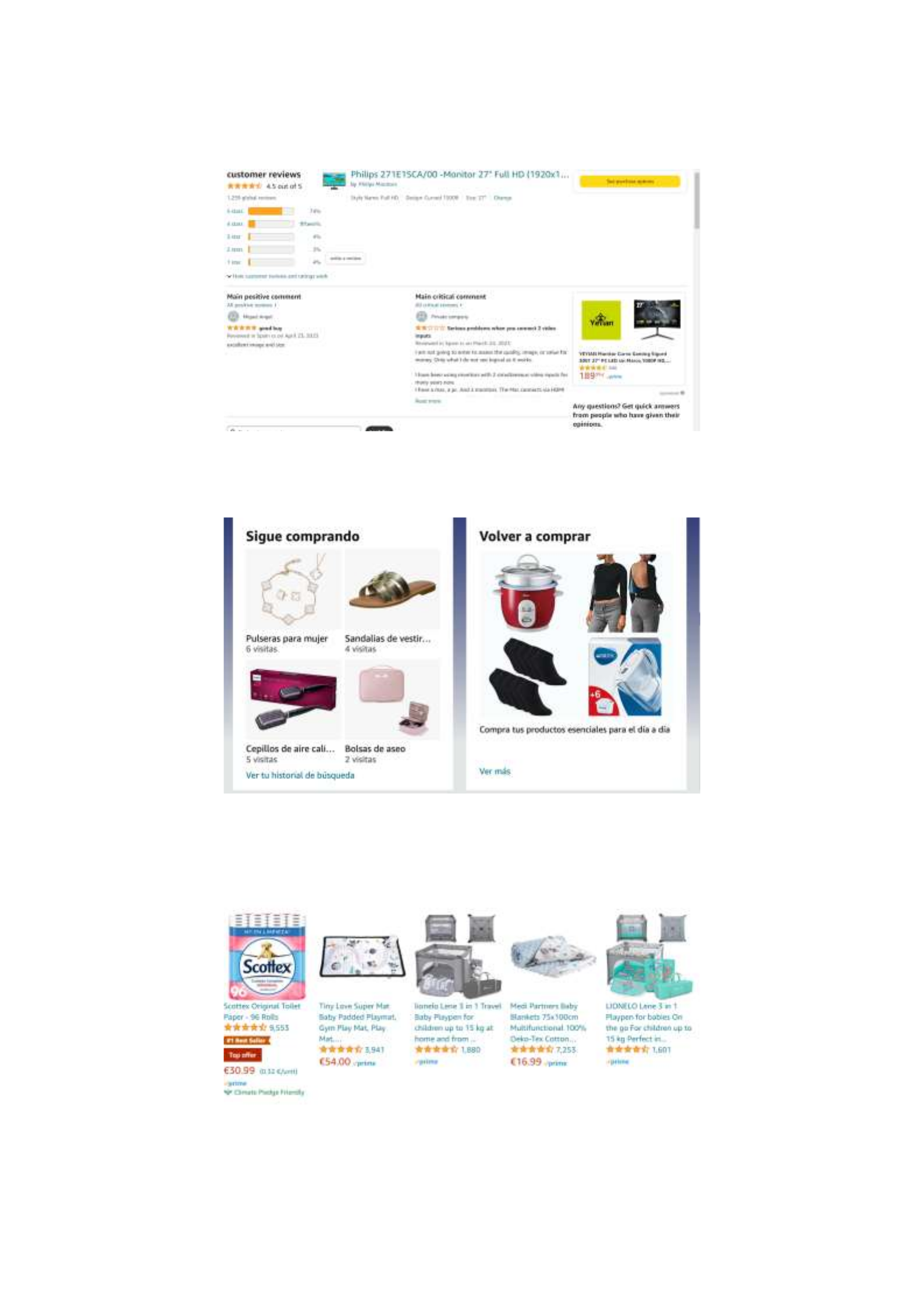
Figure 1.3: Framing Bias (Amazon).
Figure 1.3: Framing Bias (Amazon).
Figure 1.4: Confirmation Bias (Amazon).
Figure 1.5: Endowment Effect (Amazon).
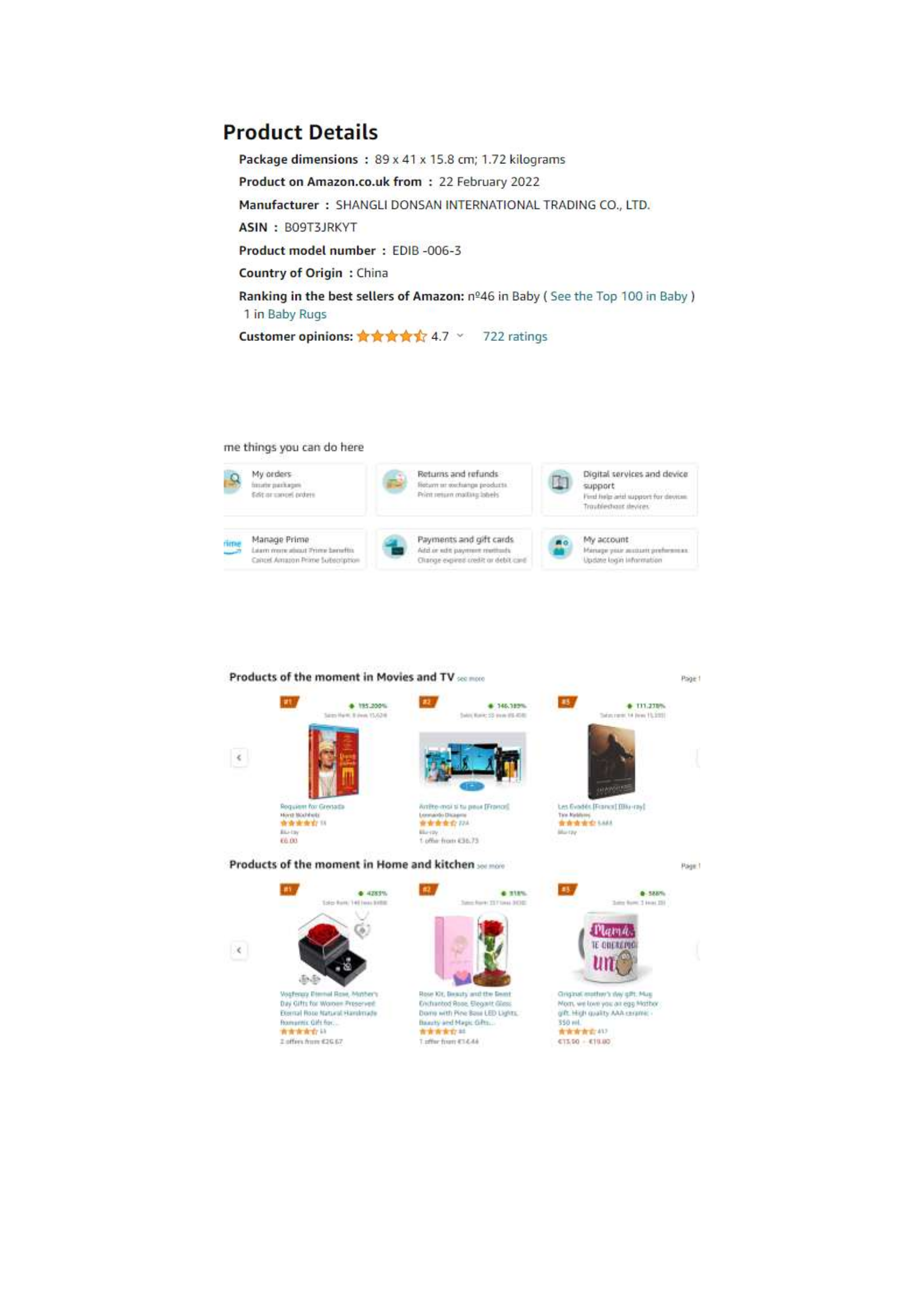
Figure 1.6: Social Proof (Amazon).
Figure 1.7: Loss Aversion (Amazon).
Figure 1.8: Primary Effect (Amazon).

Figure 1.9: Reciprocity Bias (Amazon).
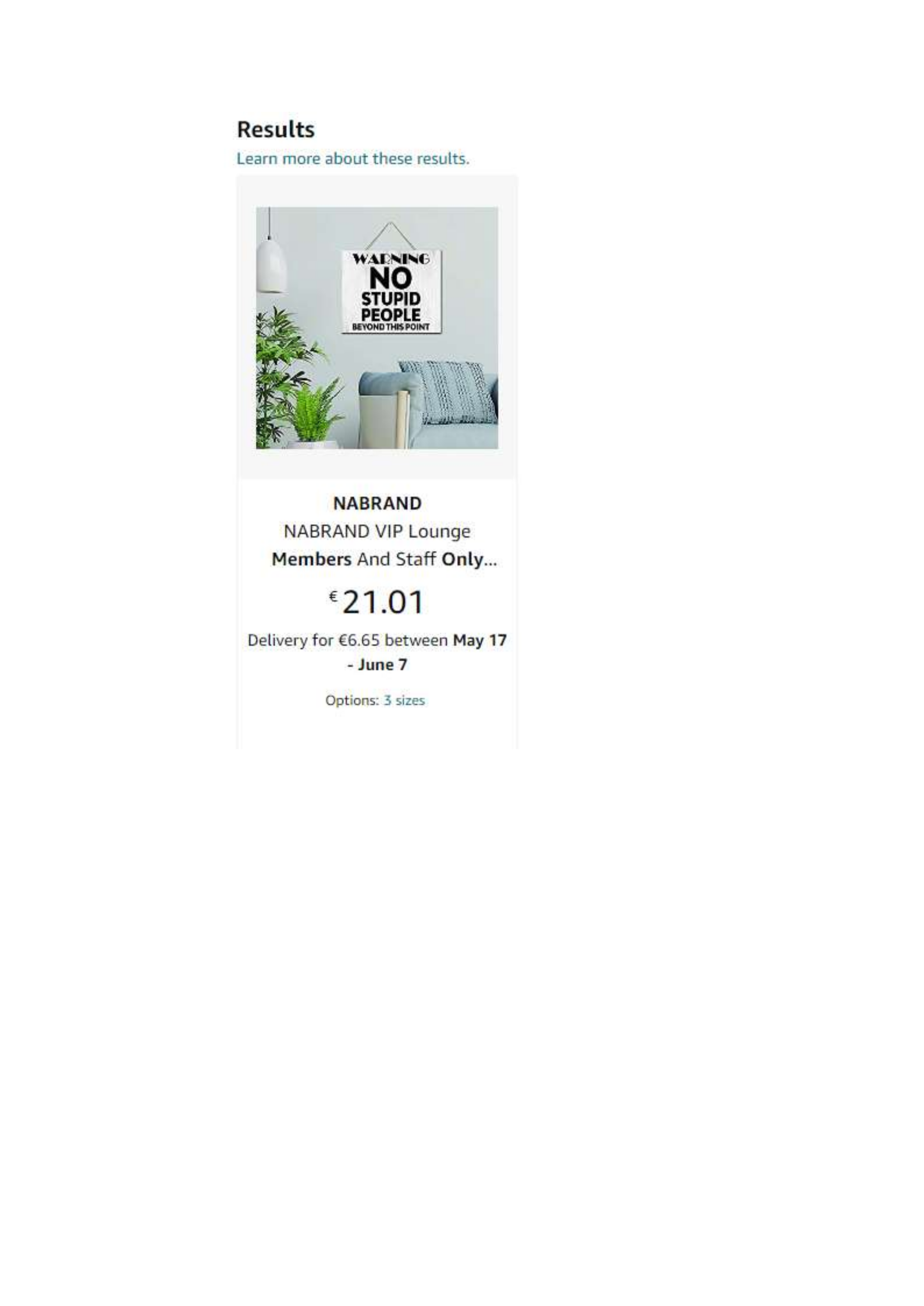
Figure 1.9:
Reciprocity Bias (Amazon).
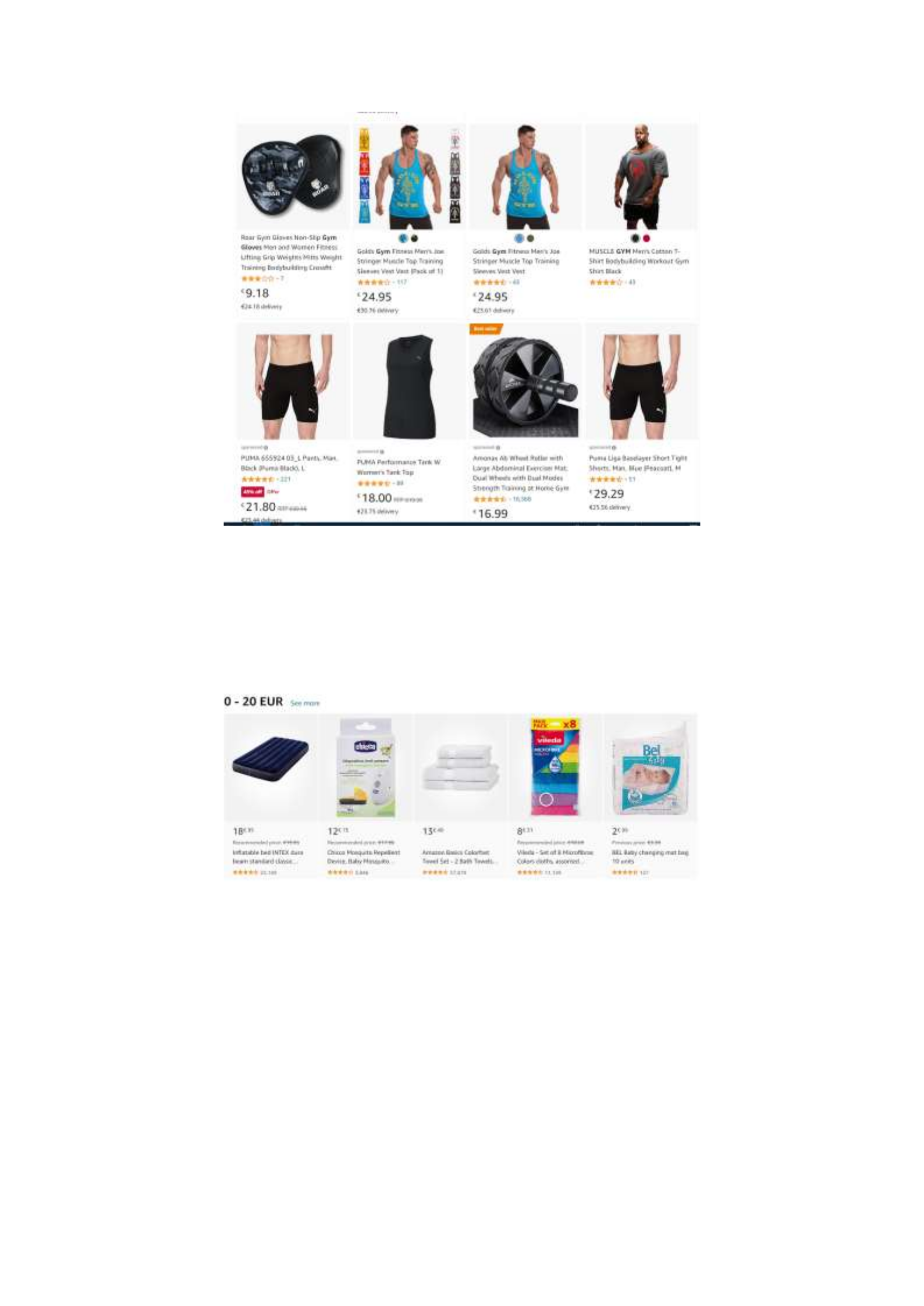
Figure 1.10: Authority Bias (Amazon).
Stage 2: Information Search
Figure 2.1: Confirmation Bias (Amazon).

Figure 2.2: Framing Effects Bias (Amazon).
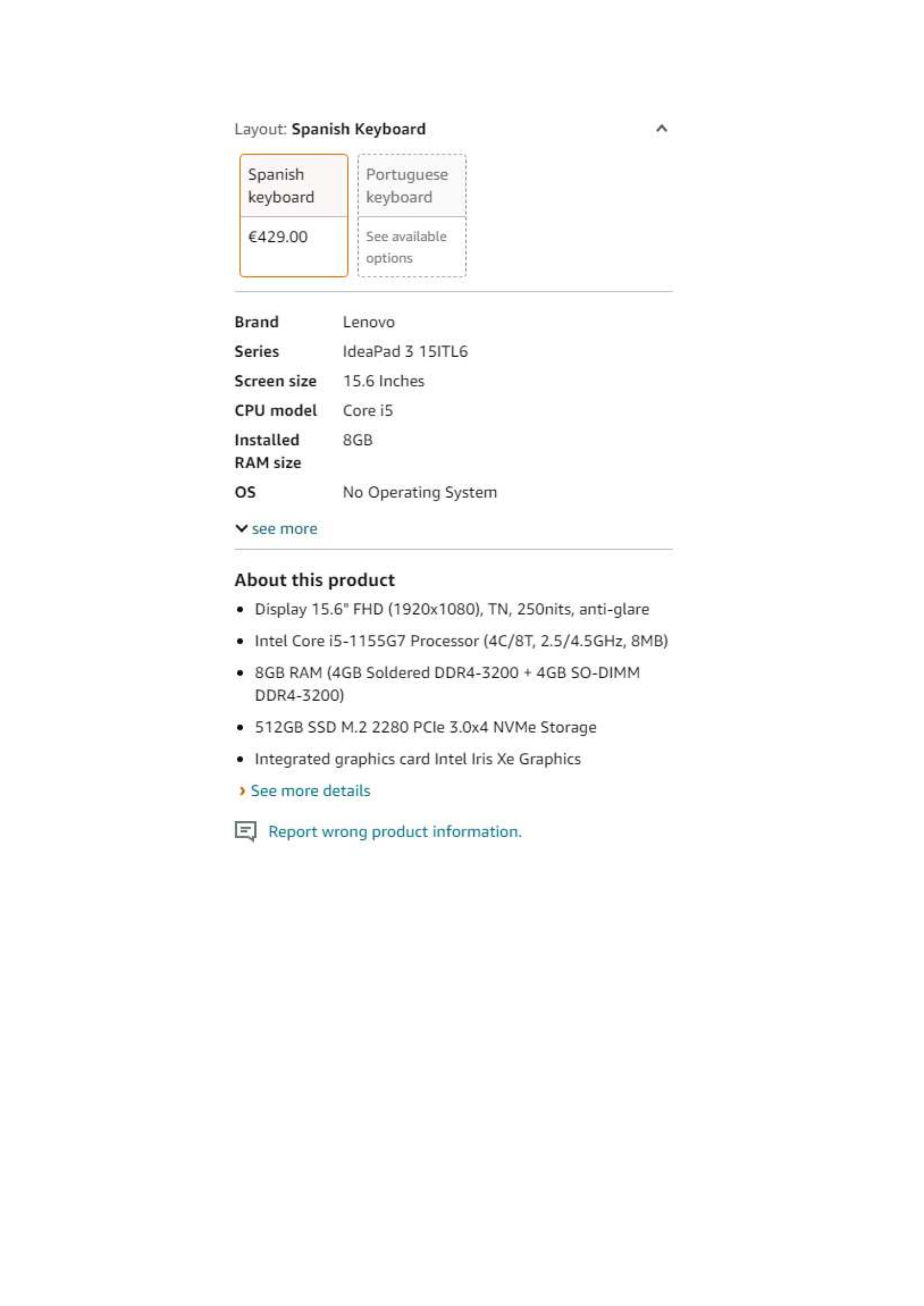
Figure 2.2: Framing Effects Bias (Amazon).
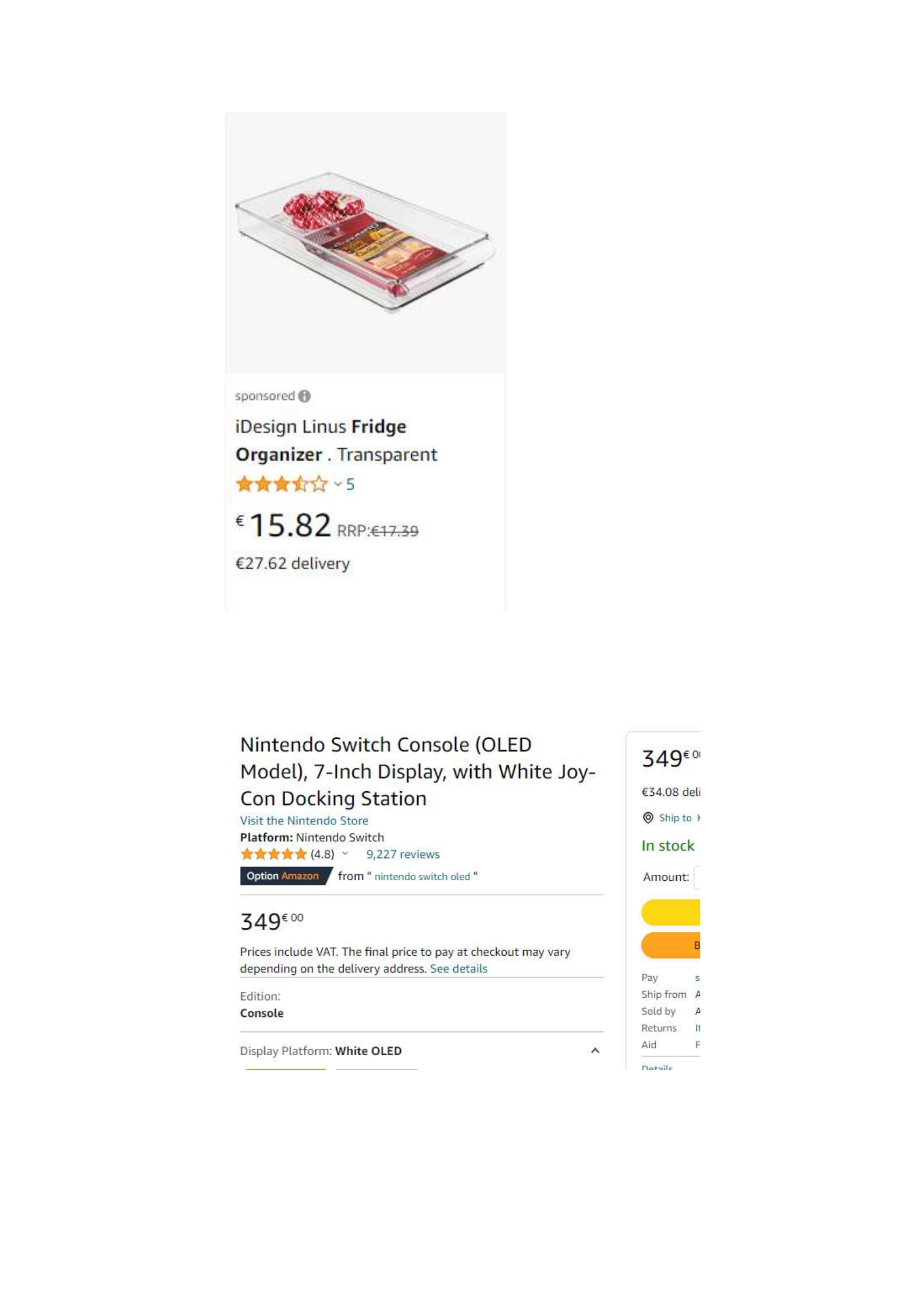
Figure 2.3:
Anchoring Bias (Amazon).
Figure 2.4: Social Proof Bias (Amazon).

Figure 2.5: Authority Bias (Amazon).
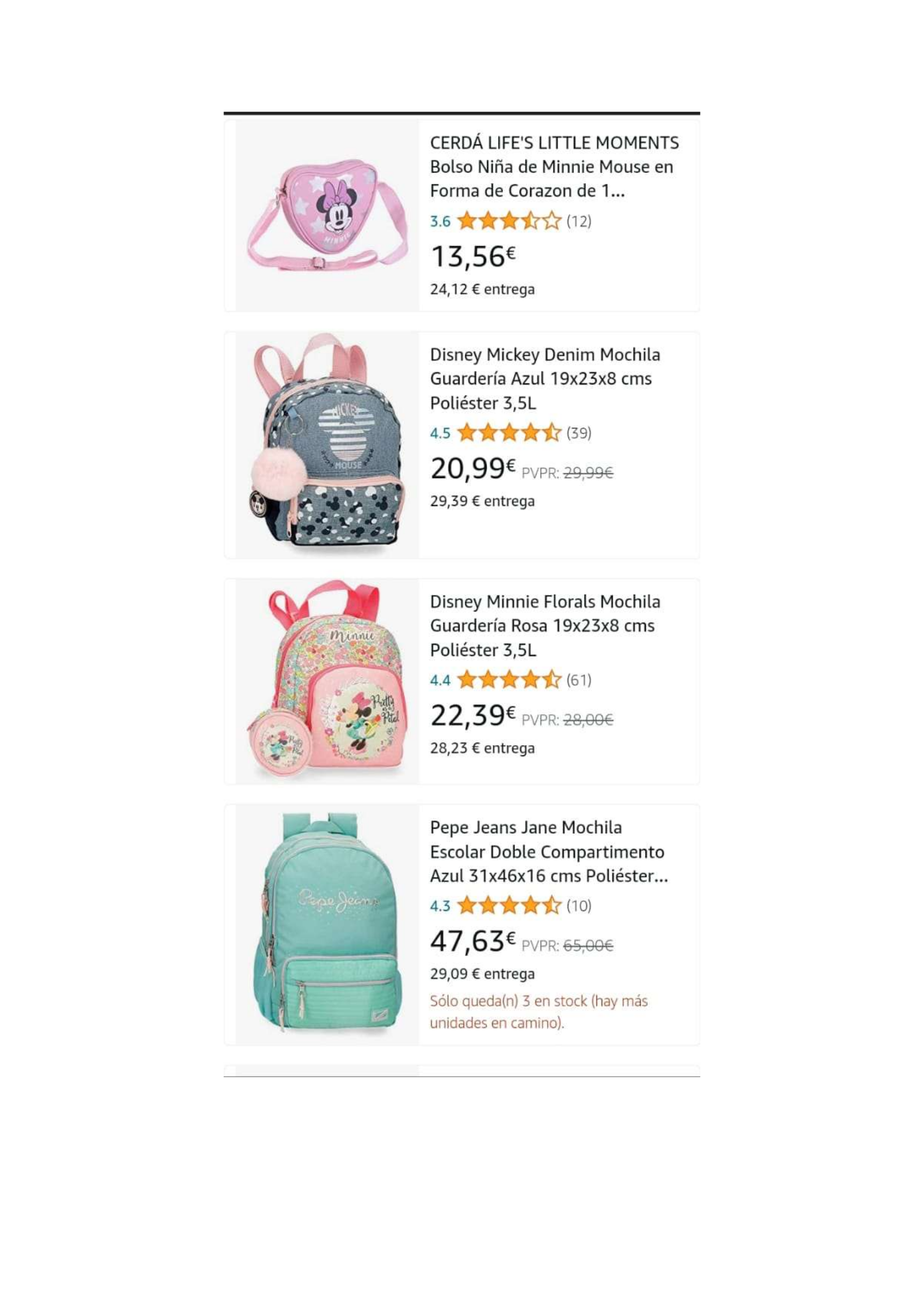
Figure 2.6: Decoy Effects Bias (Amazon).
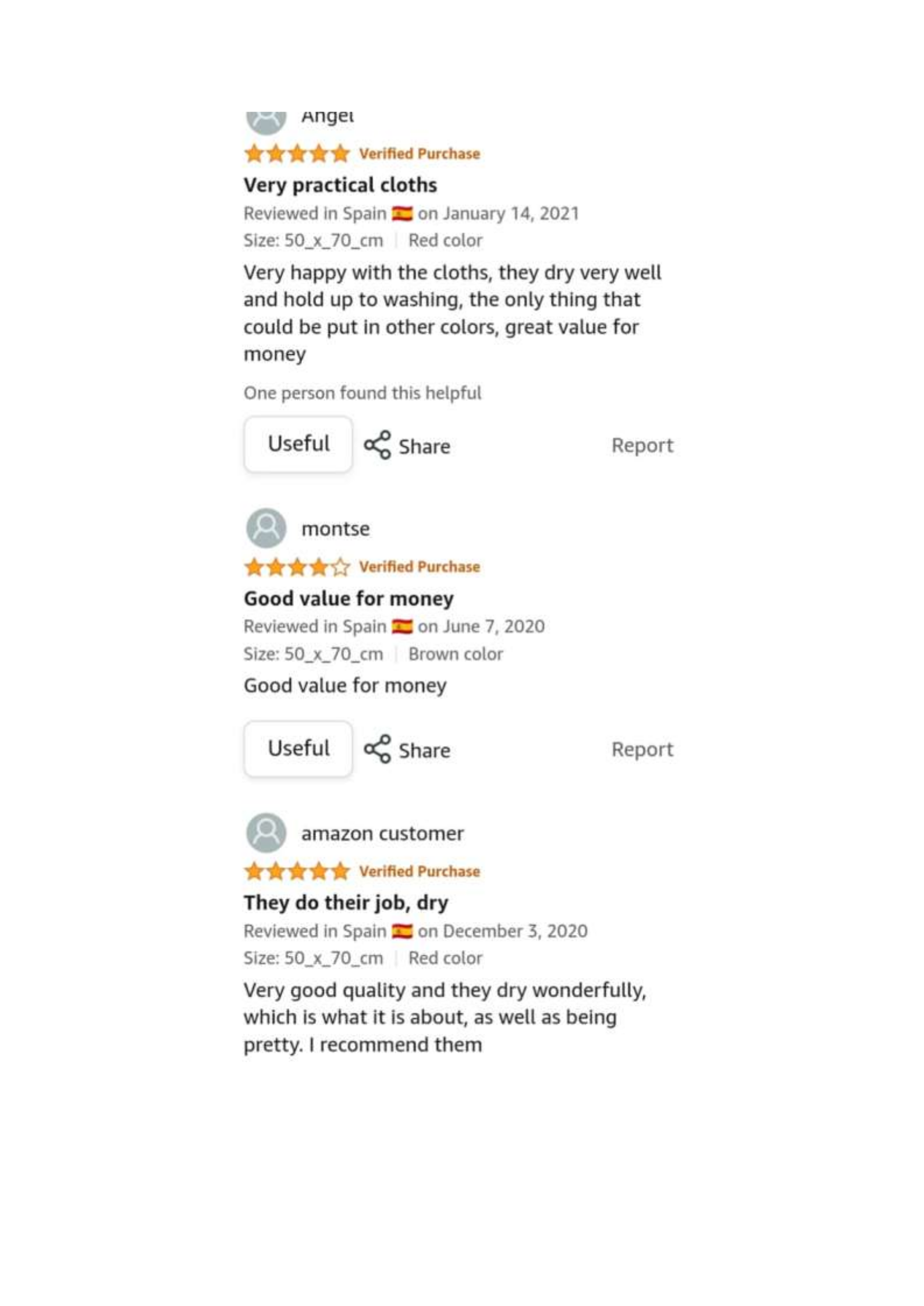
Figure 2.7: Bandwagon Effect (Amazon).
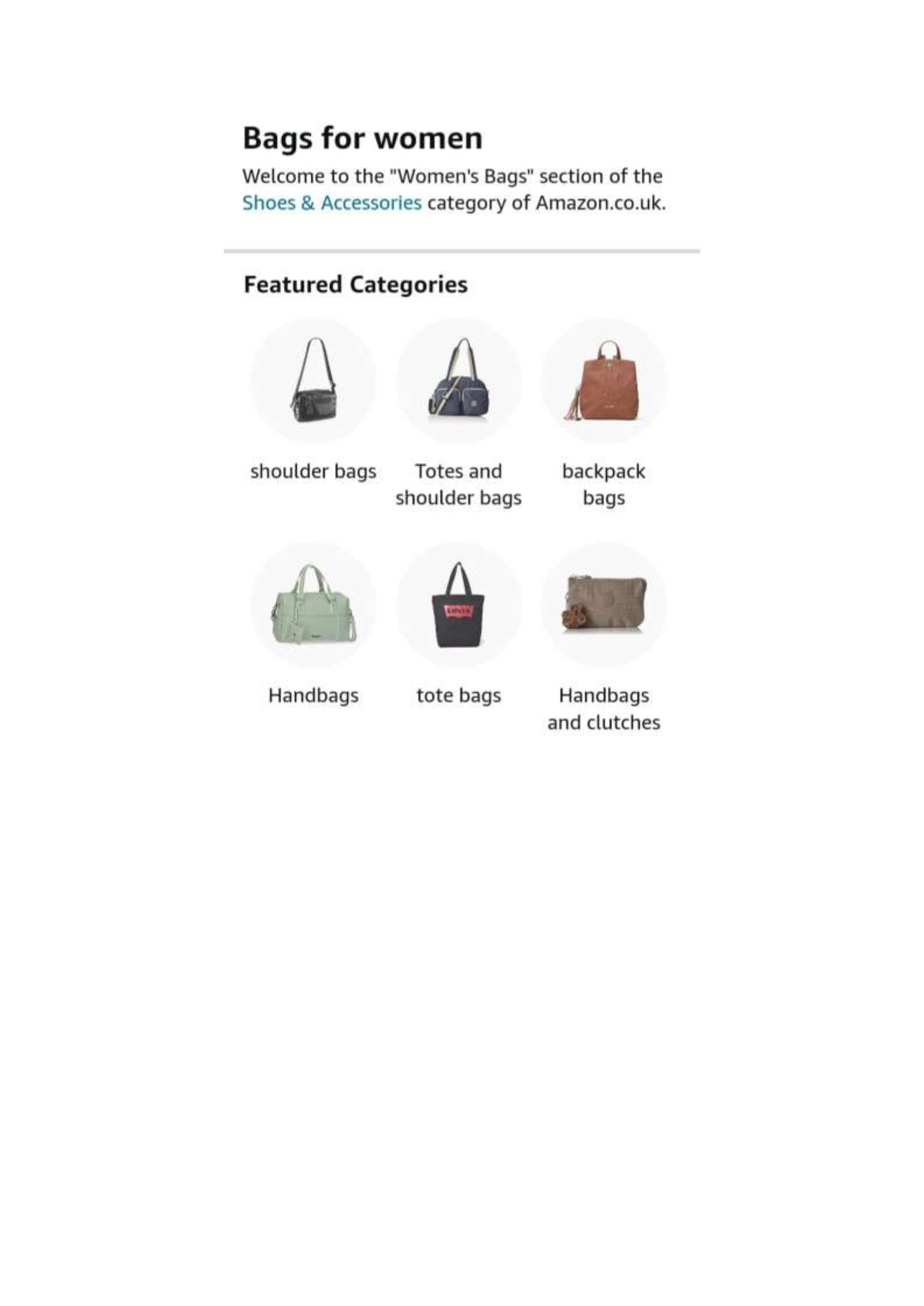
Figure 2.8: Availability Heuristic (Amazon).

Figure 2.9 Scarcity Bias (Amazon).
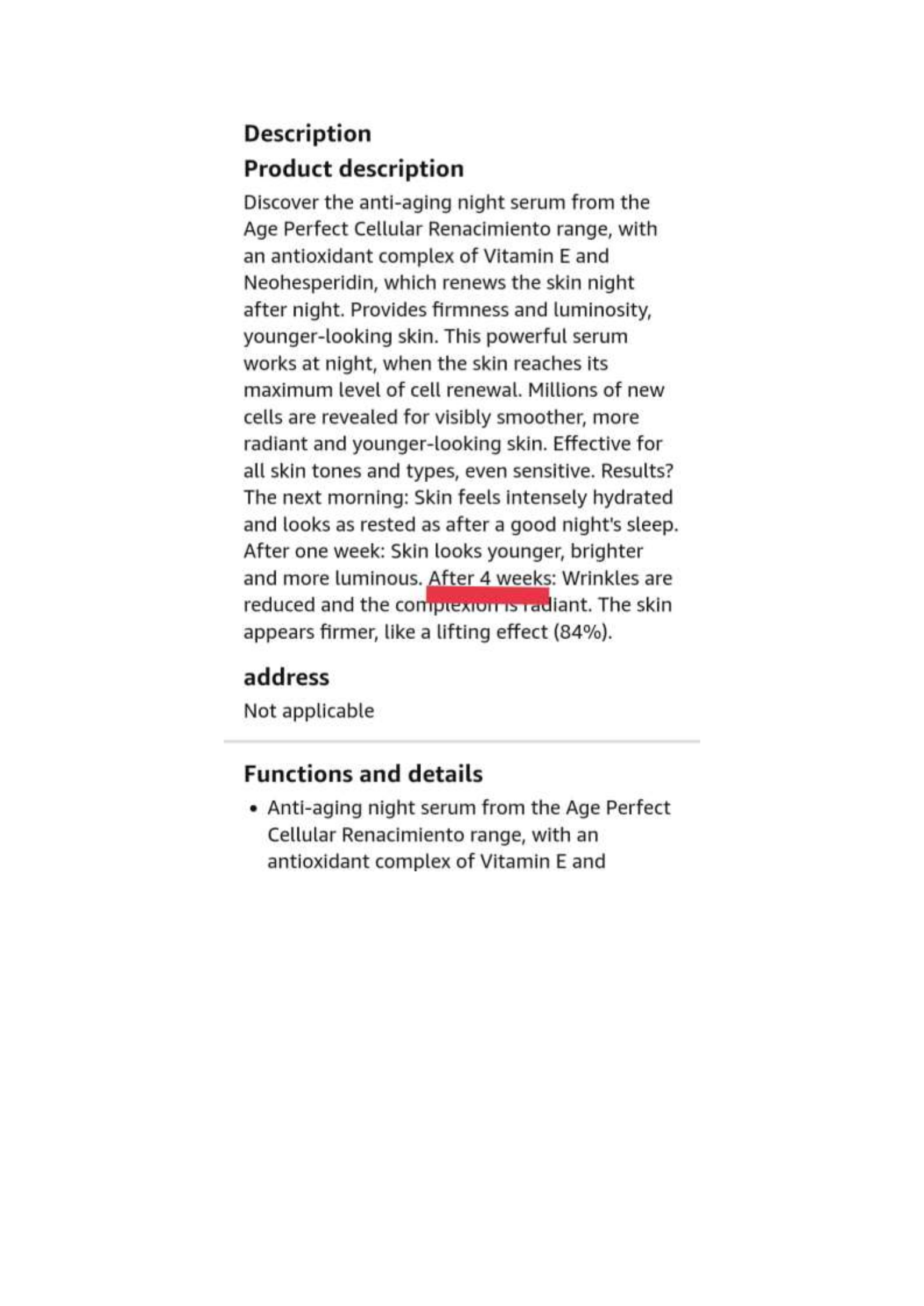
Figure 2.10 Default Bias (Amazon).
Stage 3: Alternative Evaluation
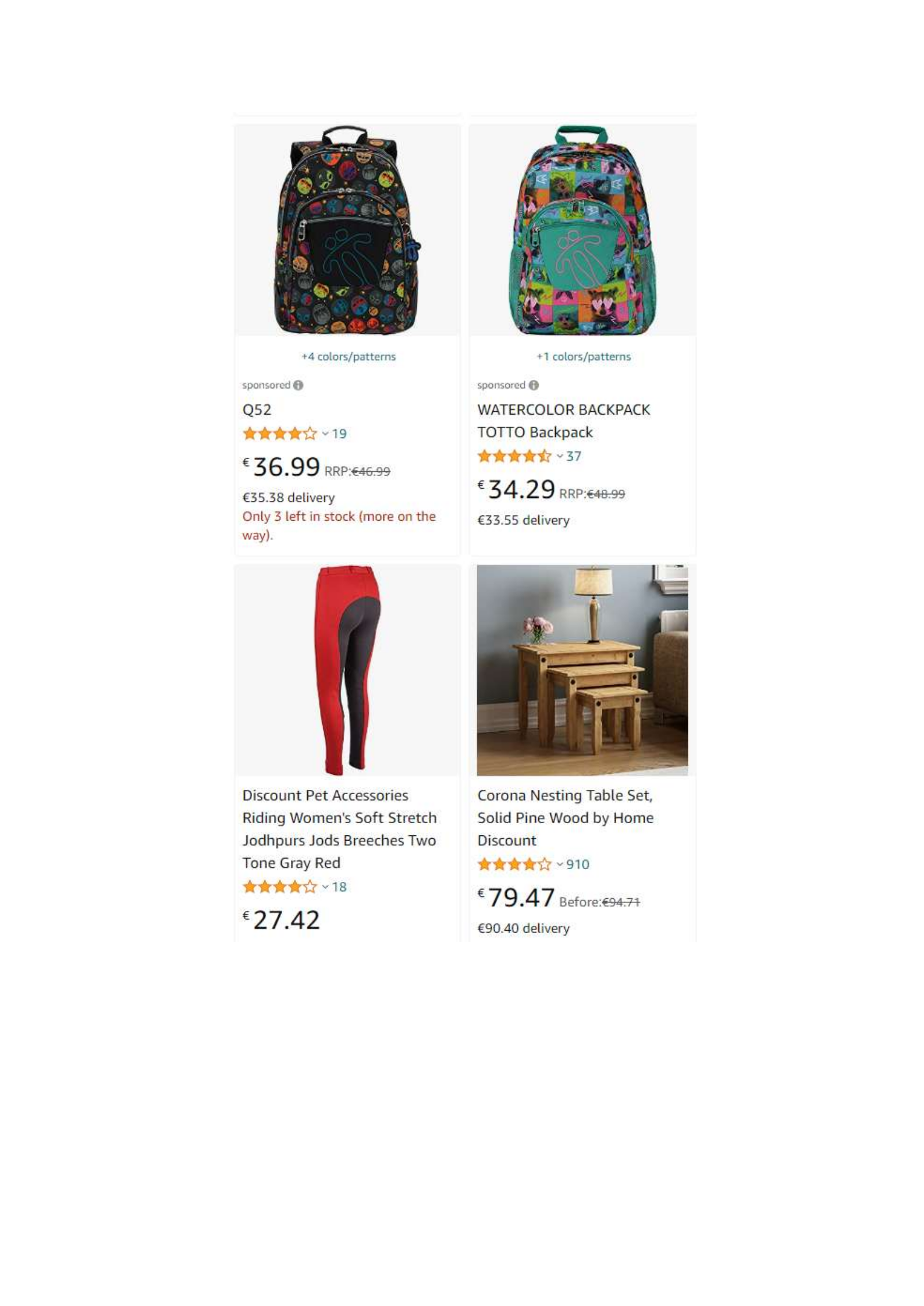
Figure 3.1: Anchoring Bias (Amazon).
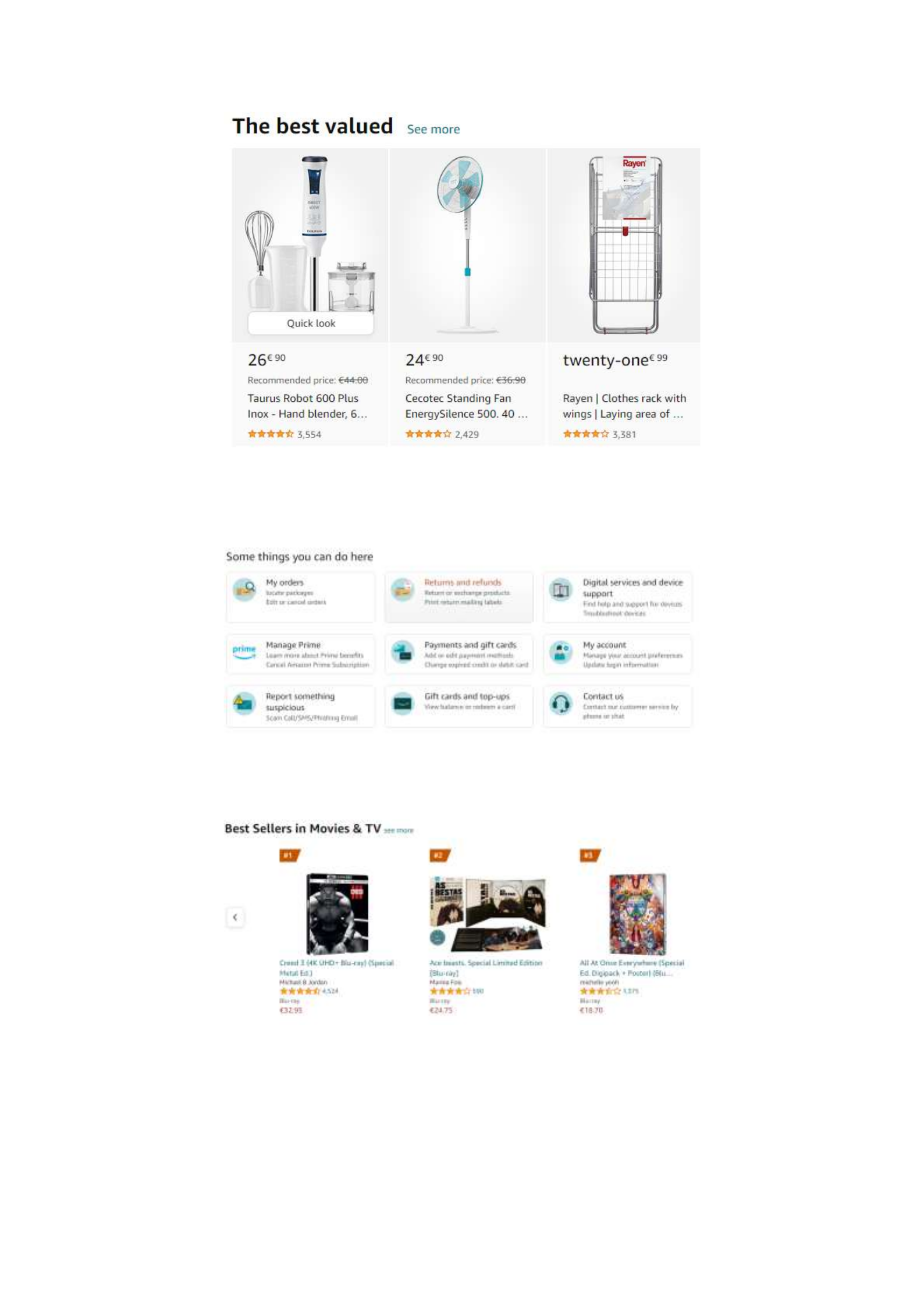
Figure 3.2: Endowment Effect (Amazon).
Figure 3.3: Decoy Effect (Amazon).
Figure 3.4: Confirmation Bias (Amazon).
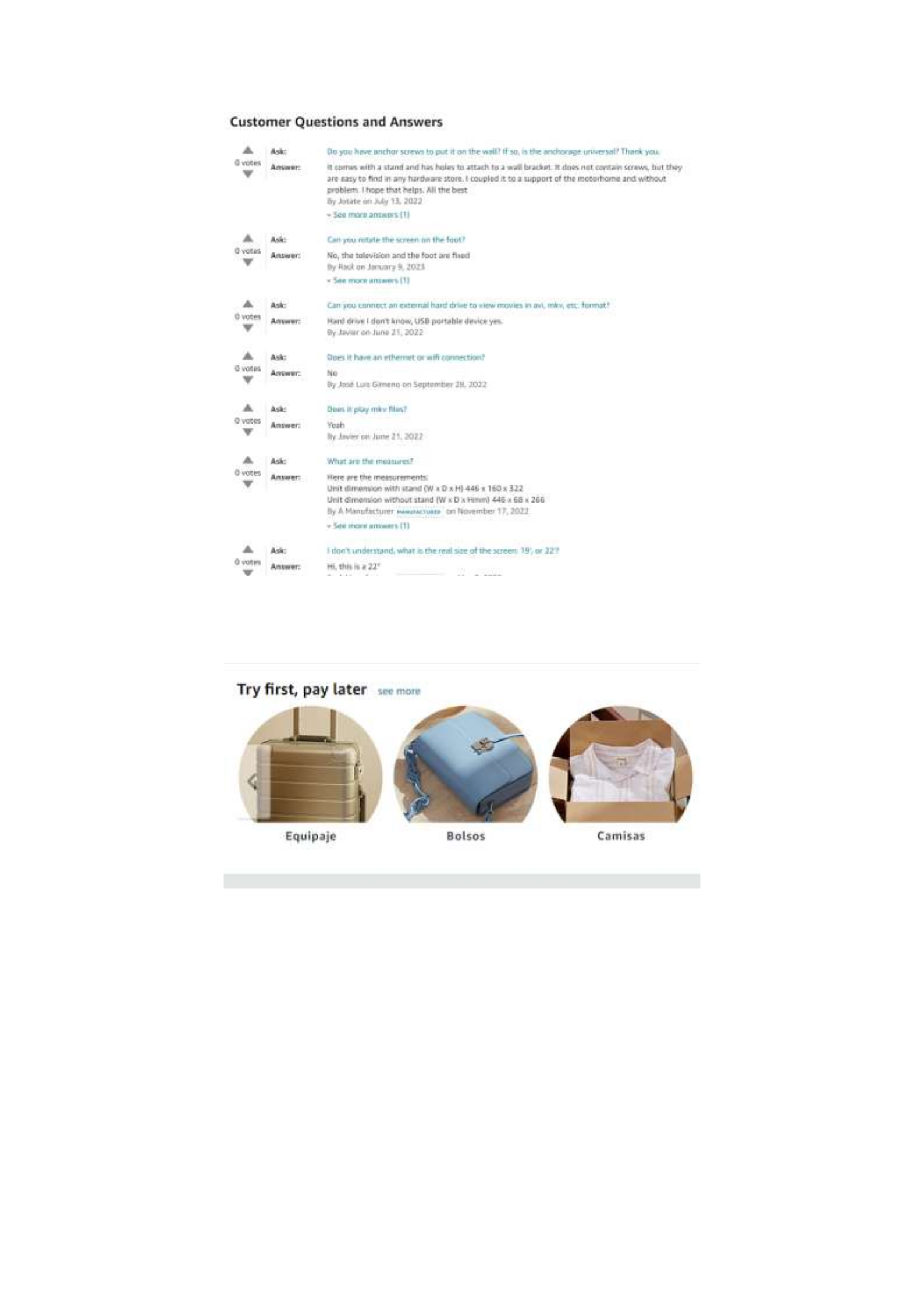
Figure 3.5: Negative Bias (Amazon).
Figure 3.6: Framing Effect (Amazon).
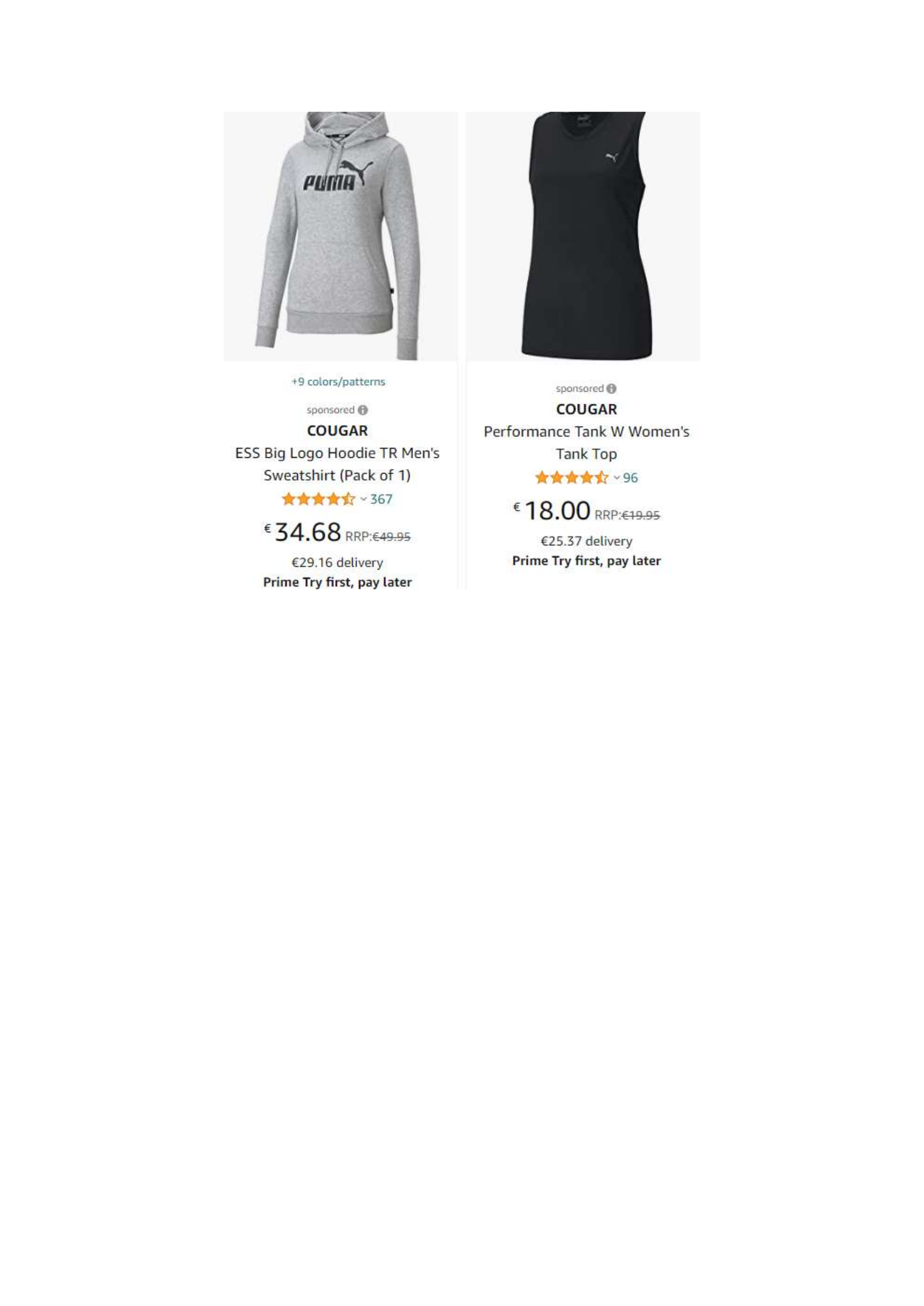
Figure 3.7: Bandwagon Effect (Amazon).
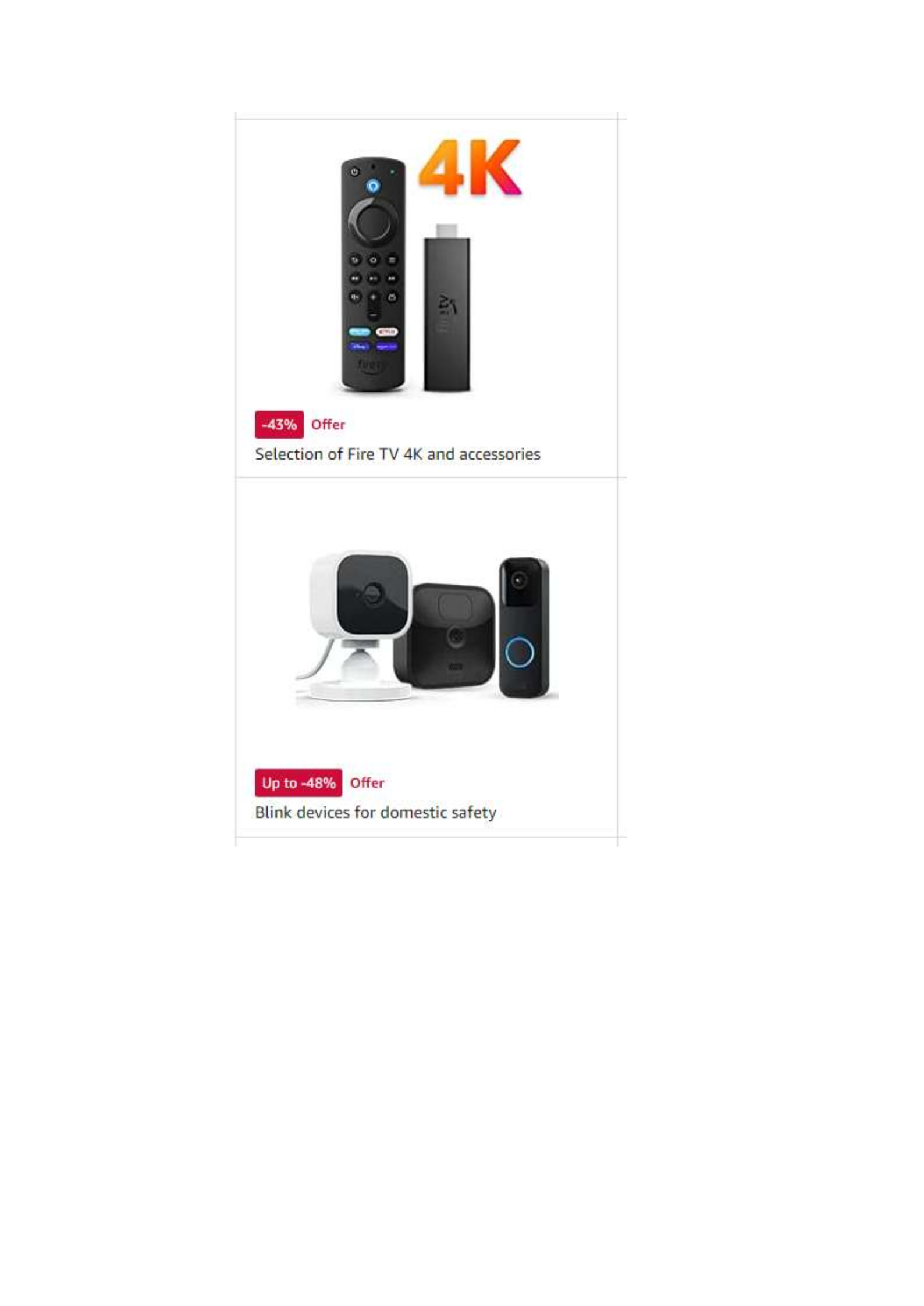
Figure
3.8: Availability Bias (Amazon).

Figure 3.9: Halo
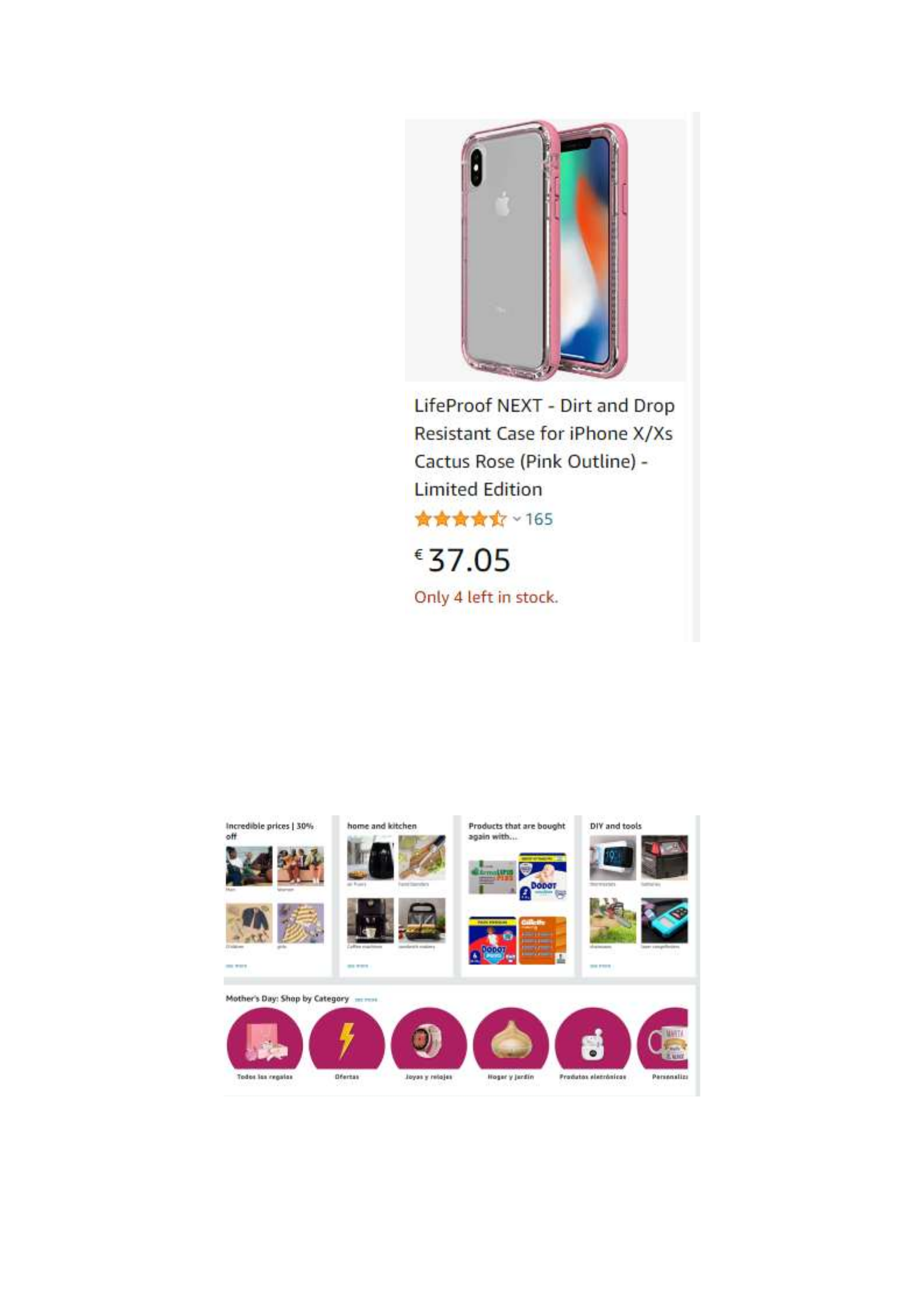
Effect (Amazon).
Figure 3.10: Scarcity Bias (Amazon).
Stage 4: Purchase Decision
Figure 4.1: Default Bias (Amazon).
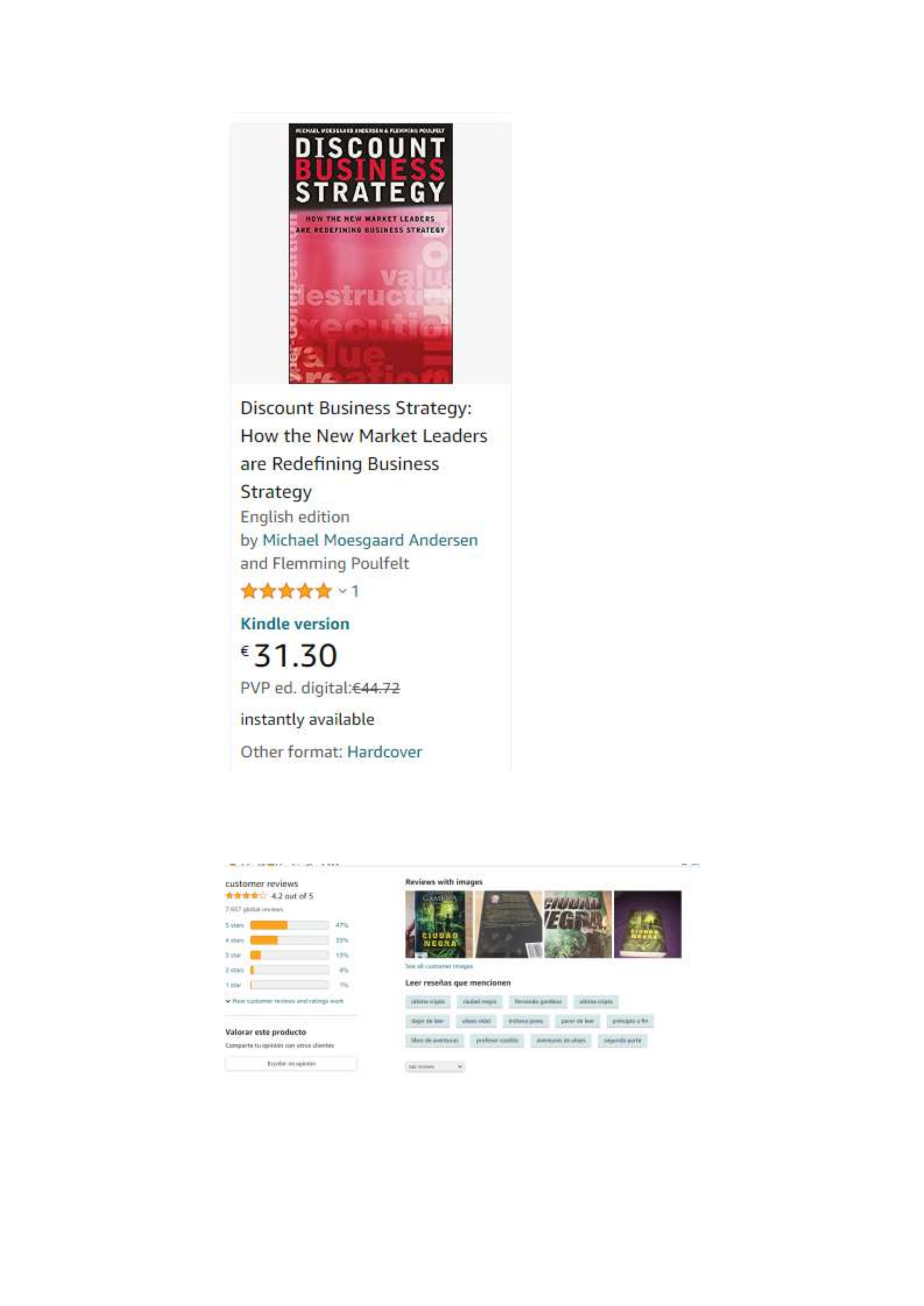
Figure 4.2:
Anchoring Bias (Amazon).
Figure 4.3: Confirmation Bias (Amazon).

Figure 4.4 Decoy Effect (Amazon).
Figure 4.5: Endowment Effect (Amazon).
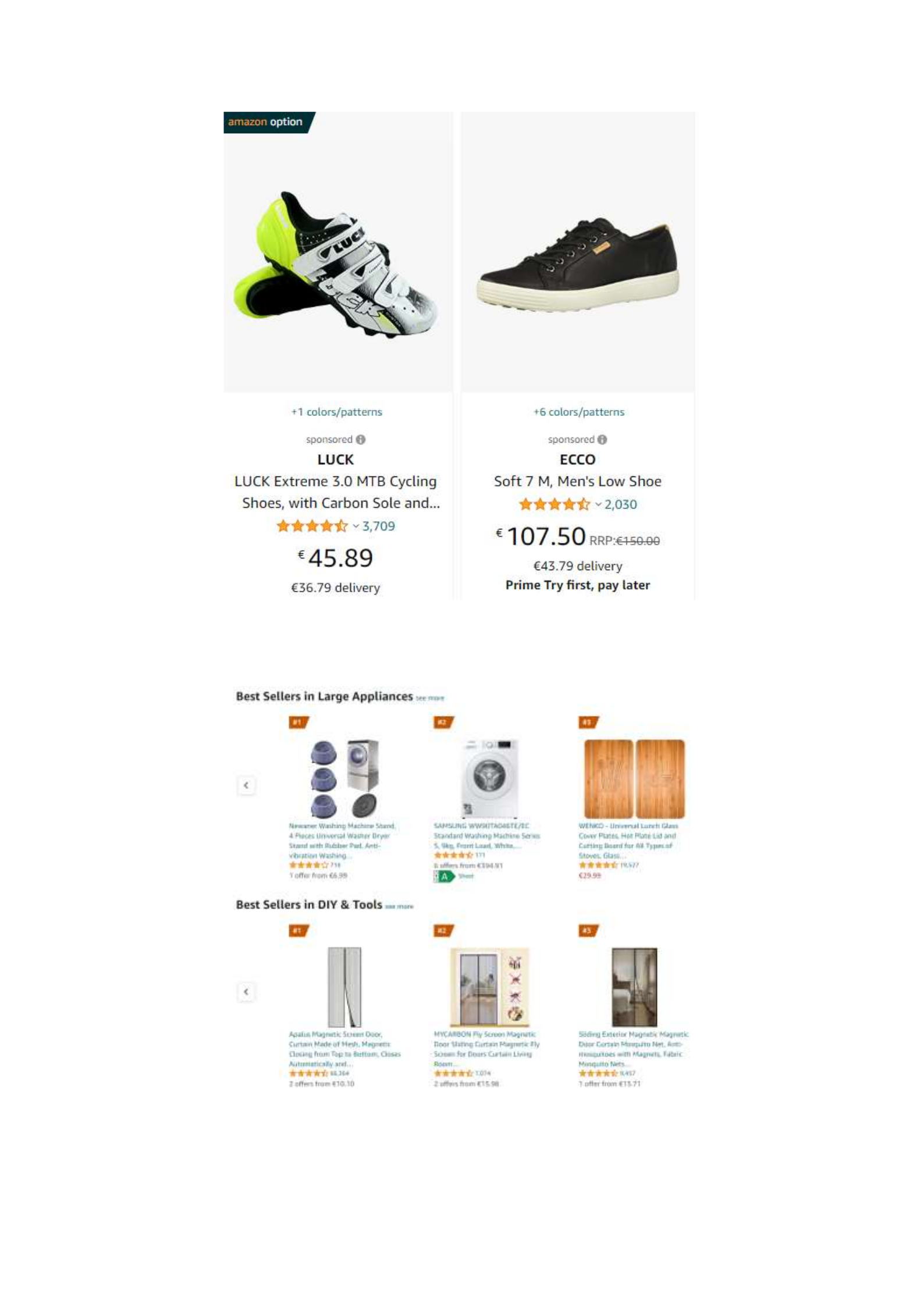
Figure 4.6: Social Proof (Amazon).
Figure 4.7: Hindsight Bias (Amazon).
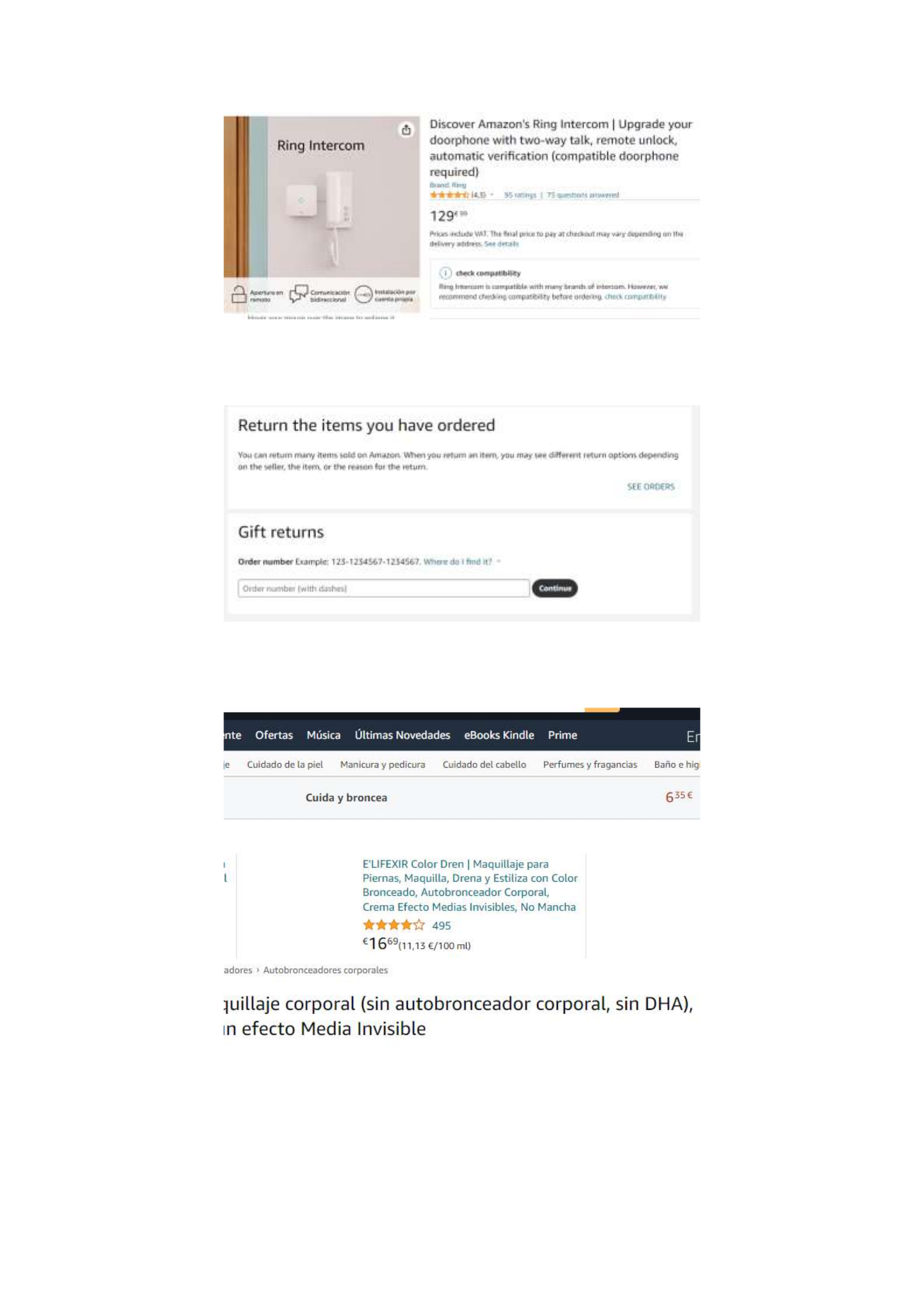
Figure 4.8: Self-Serving Bias (Amazon).
Figure 4.9: Loss Aversion (Amazon).
Figure 4.10: Status Quo Bias (Amazon).
Stage 5: Post-Purchase Evaluation
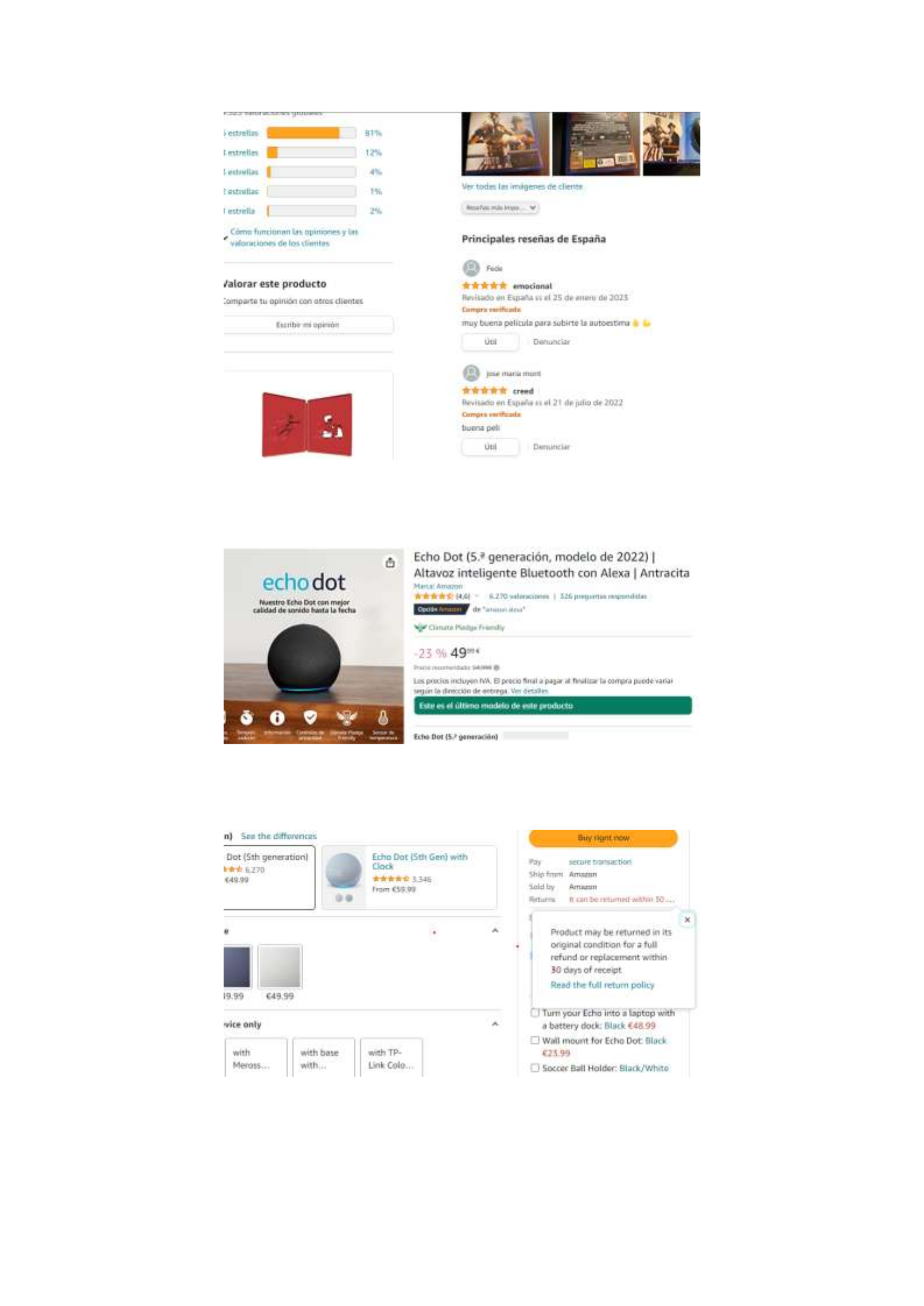
Figure 5.1: Confirmation Bias (Amazon).
Figure 5.2: Hindsight Bias (Amazon).
Figure 5.3: Loss Aversion Bias (Amazon).
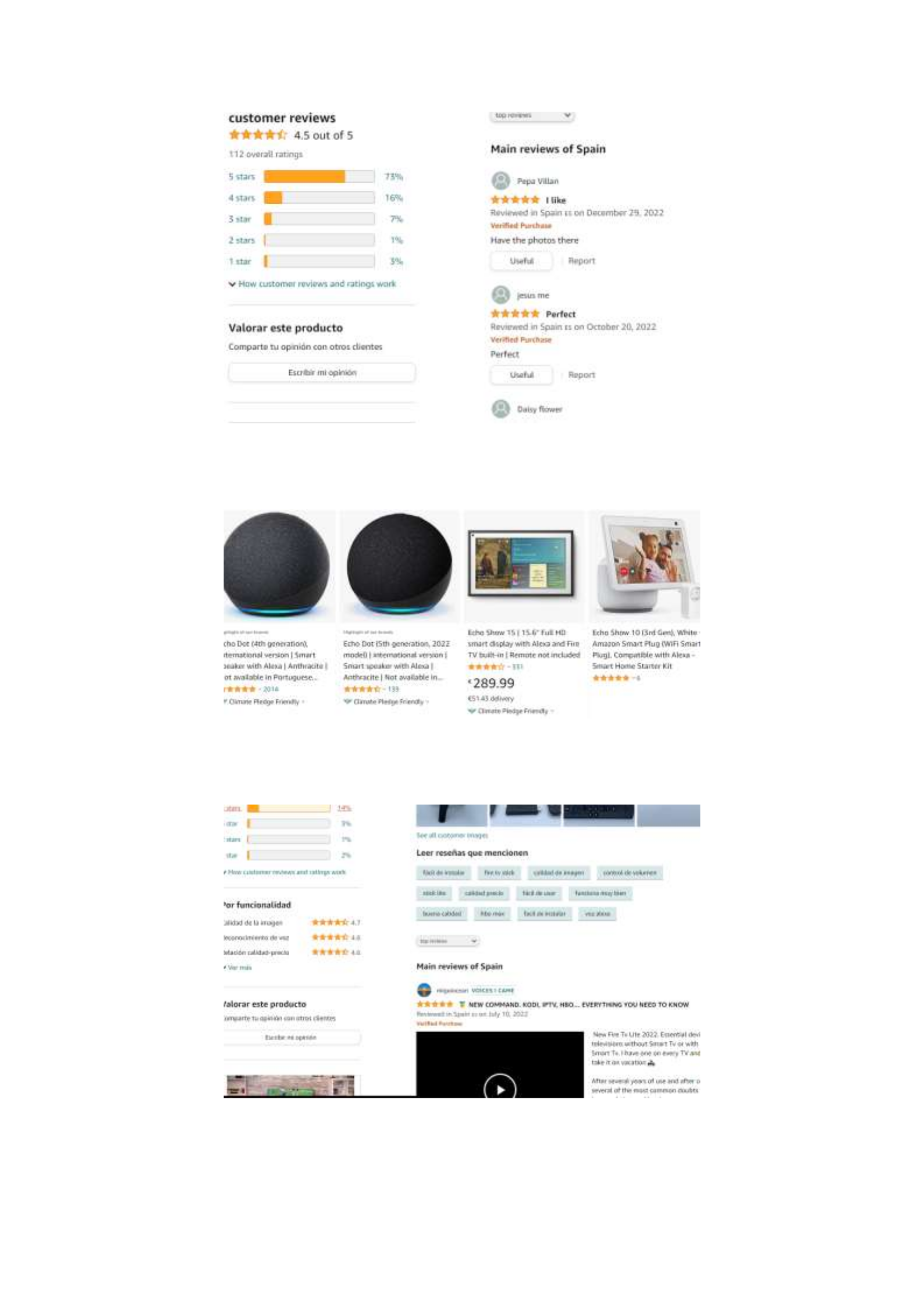
Figure 5.4: Negative Bias (Amazon).
Figure 5.5: Positive Bias (Amazon).
Figure 5.6: Social Proof Bias (Amazon).
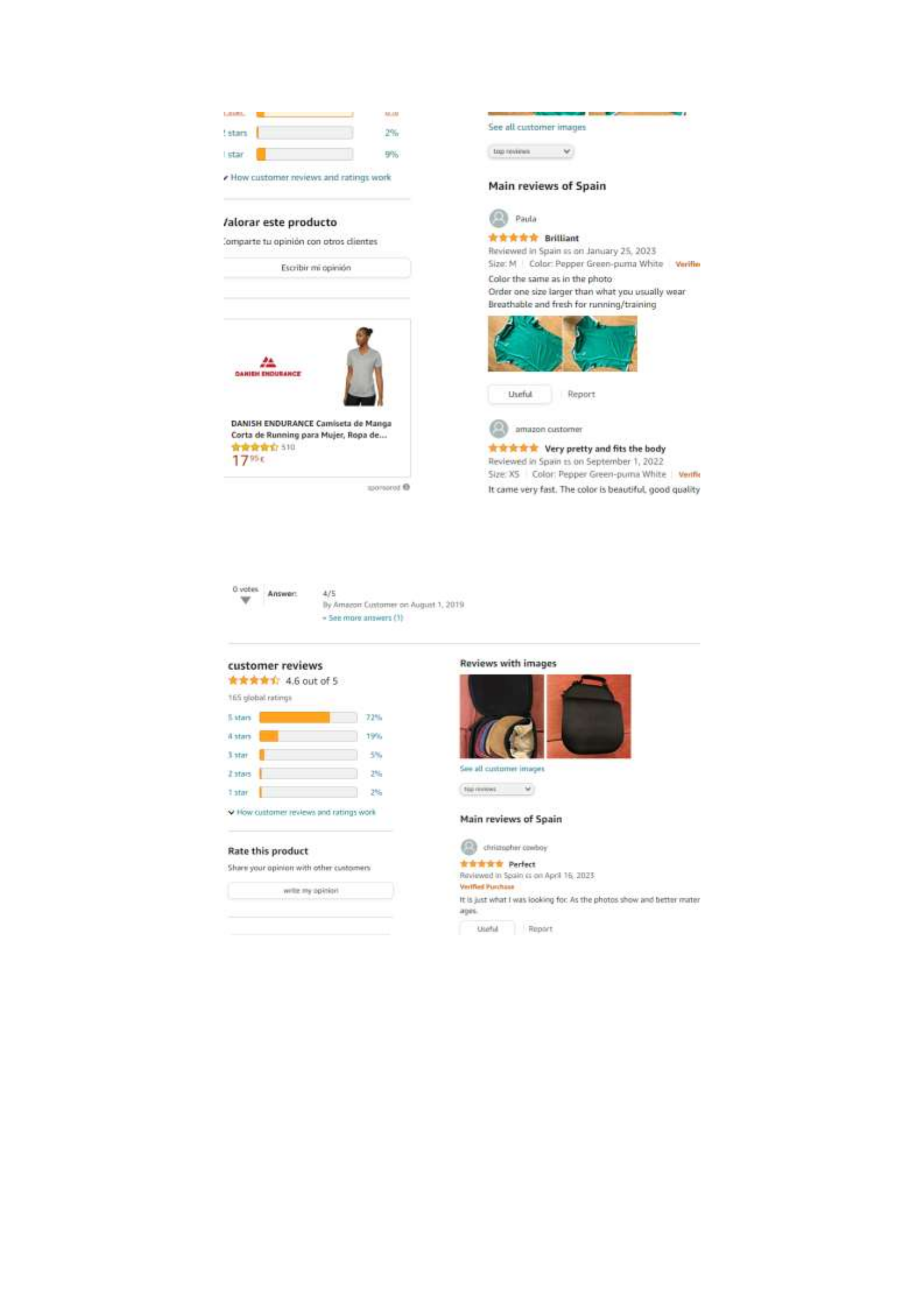
Figure 5.7: Endowment Bias (Amazon).
Figure 5.8: Choice-Supportive Bias (Amazon).
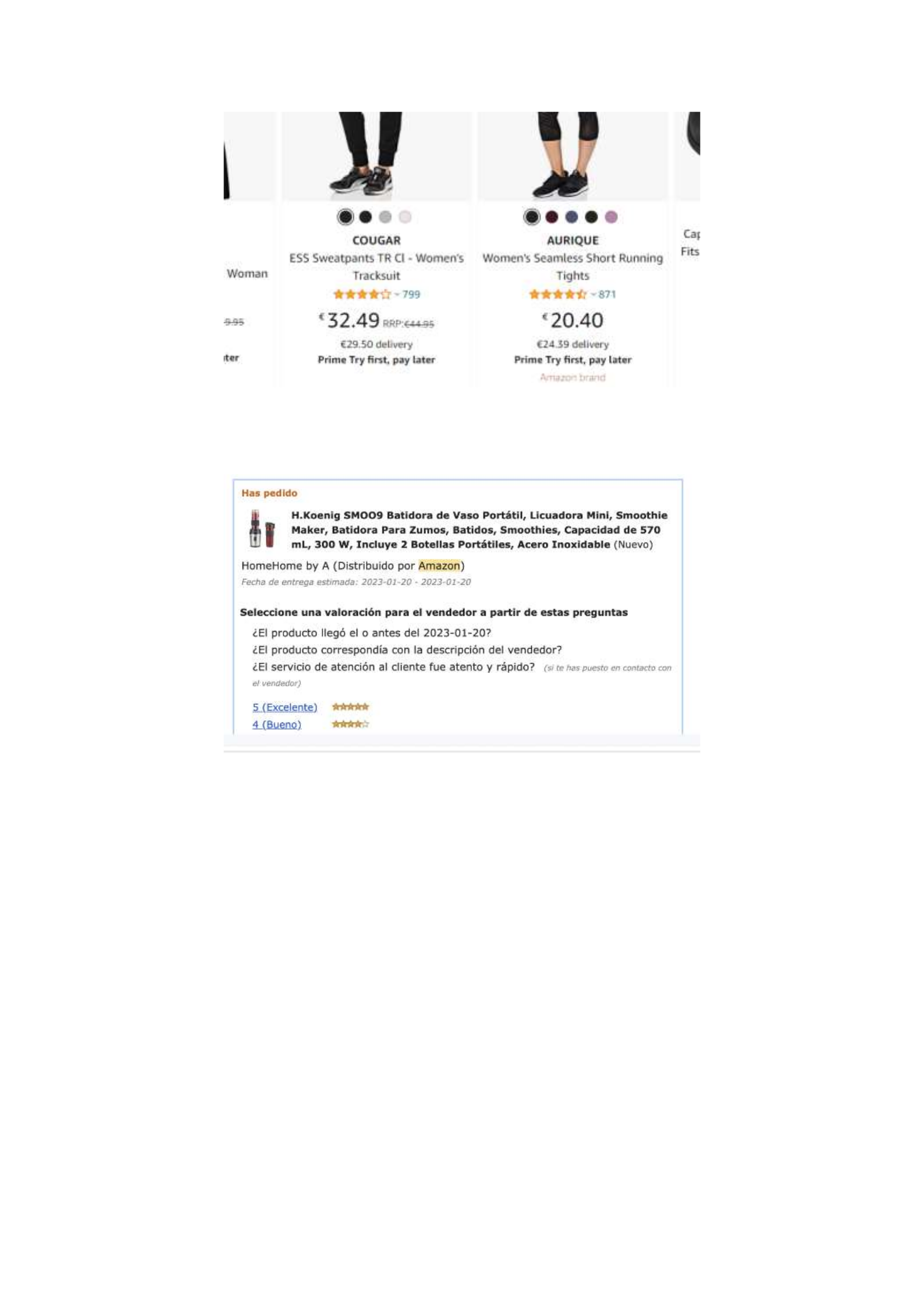
Figure 5.9: Omission Bias (Amazon).
Figure 5.10 Voluntary Response Bias (Amazon).

