


Family and Child Development Milestones
Introduction
In this family and child developmental case study, I have chosen a
family close to my residence. As required by the syllabus, I have been
able to stay with the family and enquire deeply into Jessica’s
development. Prior to the stay, I had read a few articles and books on
developmental milestones. Mary Sheridan’s book “From birth to five
years” and an article on the Child Development Programme by the
Centre for Child and Adolescent Services Research Centre provided
me all the necessary information to make suitable inquiries with the
family. I was already armed with a set of questions to be asked when I
reached for the stay.
The Family structure
Jessica Ray is an infant of one year and nine months of age. She has
an elder brother, Ryan, of age four years and six months. They have
their mother Cathy and father, Peter, with them at home. The maternal
grandparents, John and Louise are also living with them. They are a
close-knit extended family with plenty of bonding with each other and
the children. Peter and Cathy have full-time jobs. Peter is aged 31 and
is a software engineer in the Wachovia Bank. Cathy is 30 and a staff
nurse in the Hayes Hospital in town.
Ryan, the elder child, is 3 years and 6 months of age. He is attending a
day-care center close to his house. Louise takes him to and from it.
Jessica is just 1 year and nine months.

The older Rays are essentially farmers who had moderate holdings.
Now the two brothers work there. The McKennas are also middle-
class and held Government jobs. Both have accepted voluntary
retirement and are living with Peter and Cathy to help them.
Louise has Non-Insulin-dependent diabetes mellitus which is well
controlled and she enjoys fairly good health as she conforms strictly to
her diet and exercises apart from her medicines. John is absolutely
healthy, jovial, and keeps the atmosphere bonhomie. The
grandchildren are really fond of him.
Both John and Louise understand that their grandchildren need their
attention and guidance badly as Cathy and Peter are busy. Louise is
the carer and child rearer. John is a disciplinarian and maintenance
person. He makes sure that groceries and baby food are always
sufficient. Peter is the decision-maker and plays the role of the
primary breadwinner. Cathy is the person who looks after the health of
the children and family members. She always is on the dot where her
children’s immunizations are due. Both Cathy and Peter are ardent
workers and responsible parents.
Relationship with family members
William and Marie, the paternal grandparents, live just around the
corner and visit this family frequently. The grandchildren are lucky to
have two sets of doting grandparents. Cathy’s sister Anne’s family
lives twenty miles from them. Her two girls are extremely fond of the
children here and insist on seeing them almost every weekend if they
had their way. Peter’s unmarried brothers live together in the

countryside where they have a fruit orchard. Their visits are few and
far between but they are there when an occasion arises.
Relationship with others
The family is religious and attends Church on Sundays no matter what
happens. They have good relationships with the neighbors and there is
a community hall where they meet for various purposes, charitable
and otherwise. Elaine and her child come over once in a while.
Louise, Cathy, and Jessica return these visits. Father Richard visits
them occasionally. Religion may not be the only matter discussed on
these visits.
The parents and grandparents (McKennas) have interactions at the
mother-baby clinic where the children are taken for immunizations
and the ‘Littlebabes’ day-care center which Ryan goes to.
Cathy’s pregnancy with Jessica
Cathy had an uneventful pregnancy. She availed of the regular
antenatal services provided by the hospital where she works.
Antenatal care in Australia is frequently reviewed and the evidence-
based approach to develop guidelines has been promoted (Hunt and
Lumley, 2002). Cathy made visits every four weeks till she reached
the 28th week, every two weeks till she reached 36 weeks and every
week till her delivery at the 42nd week. This is the regime followed in
her hospital and reflects the standard protocol.
(Hunt and Lumley, 2002). The World Health Organisation after a
systematic review has pointed out that reduced schedules of visits are

‘not associated with worse outcomes for mothers or babies’ (Carroli,
2001)
She was checked for gestational diabetes at her first visit, at 24 weeks,
26 weeks, and at 28 weeks. Gestational diabetes usually presents
between the 26th and 28th weeks of gestation (Hunt and Lumley,
2002). Cathy had the glucose challenge and tolerance tests, the
HbA1c, and the random blood sugar tests. She was normal for all.
The Royal Australian and New Zealand College of Obstetricians and
Gynaecologists (RANZCOG) however does not recommend routine
screening for diabetes (Hunt and Lumley, 2002). Screening for and
managing gestational diabetes has not been demonstrated to have
improved the outcomes of mothers and babies (Walkinshaw, 2001;
Wen et al, 2000). Also, labeling them as high risk and managing them
with diet, exercise and insulin may have adverse effects (Enkin, 2000;
Wen et al, 2000)
Screening for syphilis and HIV was done routinely at her first visit.
Her hospital does routine HIV screening for antenatal whereas many
in Australia do not (Hunt and Lumley, 2002). RANZCOG has
included syphilis screening as routine but recommends HIV screening
after appropriate counseling.
Cathy was earlier found to be positive for Hepatitis B surface antigen.
However, she tested negative for the Hepatitis C test done at her first
visit. The risk of transmission vertically is 6% if a woman is HCV

RNA positive. There are no interventions to prevent or reduce the
mother-to-baby transmission (Hunt and Lumley, 2002).
The inquiry was made about smoking but Cathy did not smoke. Many
hospitals advise quitting smoking however only very few actually give
written advice (Hunt and Lumley, 2002). No national guidelines are
provided for smoking.
Cathy was strict about her diet and kept close to it with Louise’s help.
She had a well-balanced and healthy diet with complex carbohydrates
and protein. In the first trimester, she reduced the nausea of morning
sickness by frequent small meals rich in B group vitamins and low in
spice and fat (Morning Sickness, Baby Center). Her mother Louise
advised her to sniff a cut lemon when feeling nauseous (Morning
Sickness, Baby Center)
She took 400 micrograms of folic acid from before her pregnancy all
through the first trimester in order to ensure that her child does not get
any neural defects or spina bifida. (10 steps to a healthy pregnancy,
Babycentre). Cathy had calcium supplements too. Louise made sure
that Cathy would have fish frequently in her meals but ensured that it
would be of the smaller variety and preferably canned (so that it
contains lesser mercury). Fish helps the birth weight of the child to be
normal and also helps in the development of the baby’s brain and
nerves in the 3rd trimester (10 steps to a healthy pregnancy,
Babycentre).

Cathy avoided iron supplements as she was not anemic. Her exercise
program included mild exercise and pelvic floor exercises to help her
carry the baby and to handle distress in labor (10 steps to a healthy
pregnancy, Babycentre). Cathy gained about 12 kgs during her
pregnancy (10 steps to healthy pregnancy, Babycentre). She went
through labor fairly fast and had a normal delivery.
Jessica as a newborn
Jessica was born in normal labor after 42 weeks of gestation and she
was assessed as AGA (10-90th percentile). She weighed 4.0 kgs and
her APGAR score was 8 at one minute and nine at 5minutes. Her
length was 52.5cms.and head circumference 37 cms. ‘A lively,
kicking child bawling out loudly’ was how her gynaecologist
described the newborn Jessica.
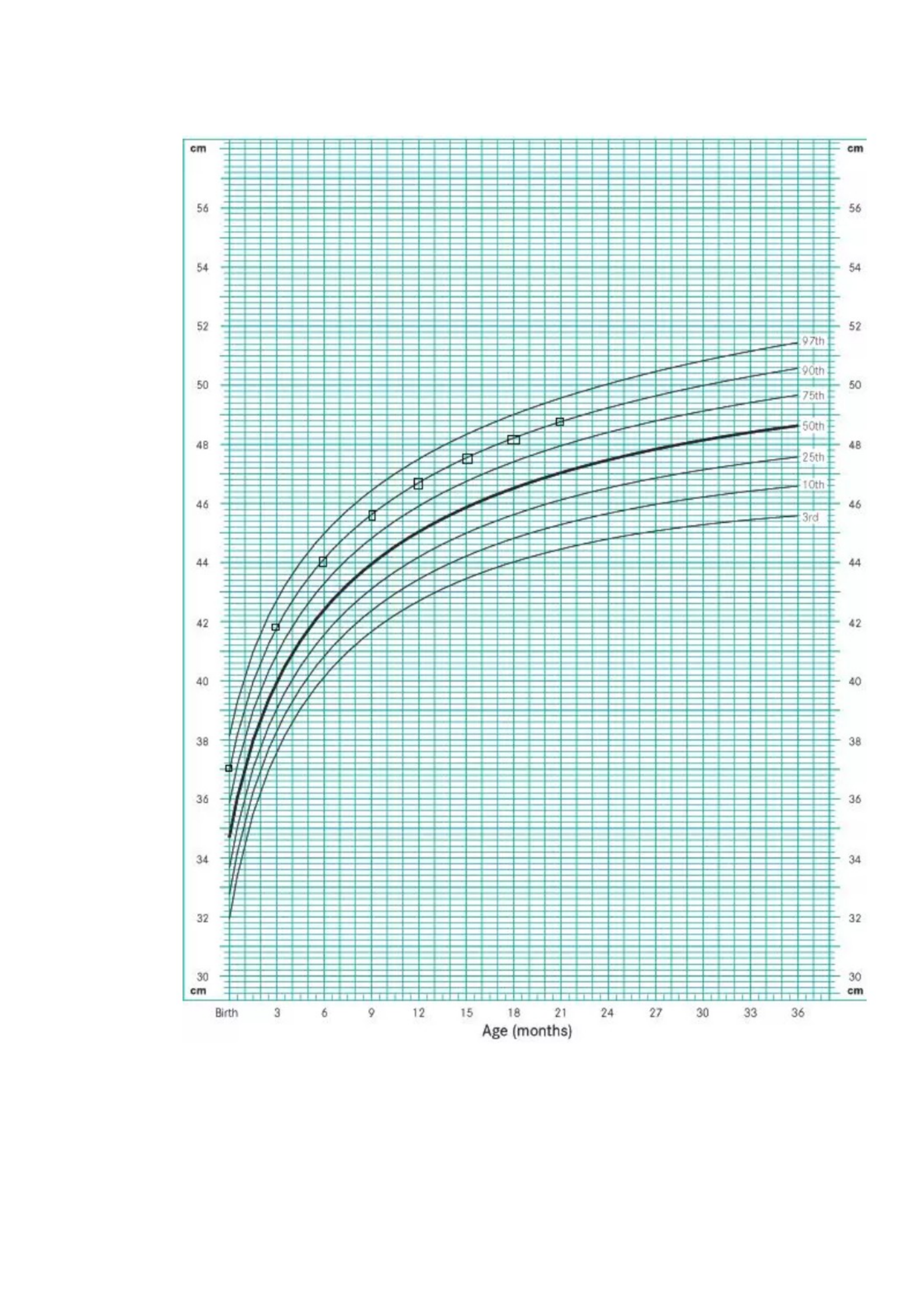
From the table above, we may assume that Jessica had a very normal
life till now. Her results for the 3 parameters coincide with the normal
charts of the three (Revised Growth Charts, 2005). She maintains the
90th percentile for all three parameters.
Head circumference is thought to correlate with brain volume
(Mannerkoski, 2008). Increased head circumference is associated with
autism and Asperger. Developmental problems and lower cognitive
ability are seen in a child with 2 lesser or more than the normal head

circumference. Normal head circumference is related to high IQ more
than a height difference (Mannerkoski, 2008).
The length-for-age percentiles Jessica’s changes from birth to 21
months.

The weight for age percentiles Jessica’s changes from birth to 21
months.

The head circumference-for-age percentiles Jessica’s changes from
birth to 21 months.
Jessica’s Immunisations
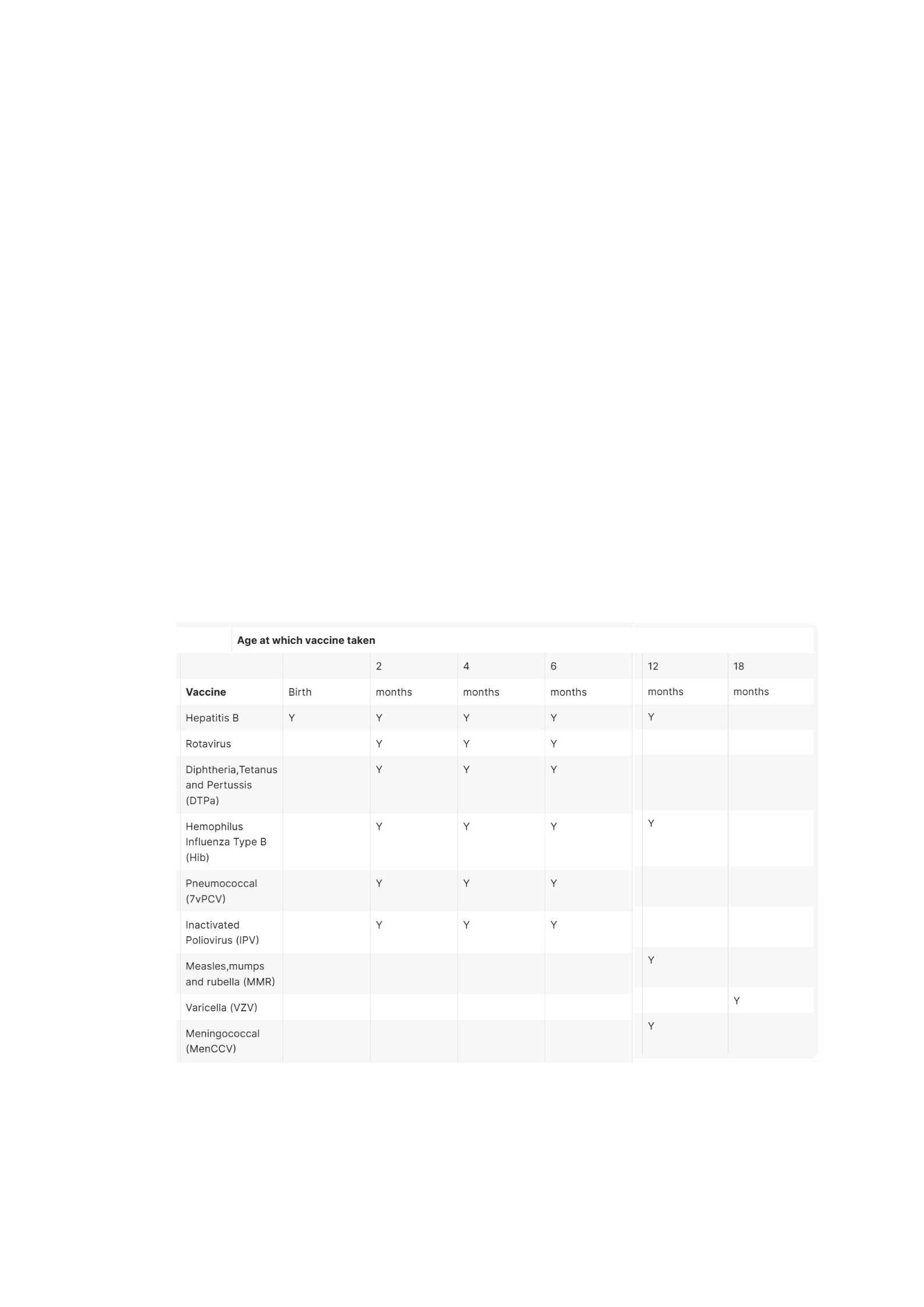
Jessica’s immunisations have all been taken at timely intervals. As
Cathy was positive for Hepatitis B surface Antigen, Jessica received
her HepB and 0.5 ml.of Hepatitis B immunoglobulin about five hours
after her birth (Recommended Immunization Schedules, US). She has
had the 3 doses of Rota, the 3 doses of DTaP and its 1st booster , the 3
doses and 1st booster of Hib (Hemophilus influenza type B),
Inactivated Poliovirus (3 doses), Pneumococcal conjugate vaccine (3
doses), MMR, Varicella vaccine and the Meningococcal vaccine. Her
parents have been vigilant in this respect. Her schedule was as
follows.
Jessica’s Immunization schedule (National Immunisation Schedule,
Immunise Australia Programme).
Her next immunization would be at the age of 4 when she would
receive the boosters for DTPa, Inactivated Poliovirus and MMR.

Jessica as she was
Cathy has a record of the developmental milestones of Jessica. Jessica
recognized her mother early and thoroughly enjoyed breastfeeding.
Cathy did not introduce a pacifier to her. She believed that breast
feeding led to effective mother-infant bonding and that human milk is
the best nutrition for all infants (Joanna Briggs Institute, 2005).
Pacifiers are known to cause Sudden Infant Death Syndrome and
studies have associated the two. Gastro-intestinal infection and dental
caries are also associated but effective research has still to connect
them with the pacifier (Joanna Briggs Institute, 2005). The use of the
pacifier is considered a barrier to effective breast feeding. Jessica was
lucky in that Cathy breastfed her till she was one.
At six weeks she started smiling at her mummy. By then she held up
her head too. Cathy fed her at regular intervals and in between Jessica
was a contented baby. Her cooing and other sounds thrilled the elders
galore. Louise always used to sing her favourite lullabies for Jessica.
The soft music of which John is crazy about also used to evoke some
interest in Jessica. She never used to wake up at night after her 10
o’clock feed. She sat with support at 6 months of age (Sheridan,
2007).
By then she was also focusing her eyes. At this time she would search
for the toys and stretch out to grasp them, very close to her palm
(Sheridan, 2007). This indicated the development of fine movements.
The sound of her family approaching her resulted in her chuckling and

sometimes squealing aloud. She used both hands to play. Playing with
even unfamiliar and new visitors was not a problem to her (Sheridan,
2007).
Her first tooth appeared at 7 months of age. Louise recalls how Jessica
used to put something in her mouth frequently to chew. Her family
had to go on watching to see that she did not put anything into her
mouth (Sheridan, 2007). Solid foods were introduced at the eighth
month. Her behaviour developed a shyness to strangers.
At nine months she was crawling. Toys would be handled with both
hands and transferred to and fro. She was also using the pincer grasp
for holding the strings which were attached to some toys, an
improvement in fine movements (Sheridan, 2007). Sometimes she
threw the toys afar and then went crawling to look for them. Slowly
she pulled herself to standing position (Sheridan, 2007). She had
started dressing and needed help only at times. Granny and Jessica
used to play peek-a-boo frequently. Louise remembers that she used to
hide her face from strangers (Sheridan, 2007).
She started walking at age 1. In fact she took her first step on her first
birthday (Childhood Development, CASRC). The family had come
together to celebrate it. She was on all fours and moving towards her
mummy when her daddy held out a toy. She held onto her mummy’s
chair and rose up. On reaching out for the toy, she inadvertently took a
step forward and clutched her toy, simultaneously dropping down to
sit. Peter gave a whoop of joy. He had missed capturing that first step
on video. Her milestones of development were well within normal

limits. This gives her a chance to do well in her education
(Mannerkoski, 2008). Her dolls were frequently carried and used to be
cast off afar when she got angry.
Jessica as she is now
Jessica is 1 year and nine months now. Her locomotor milestones are
within the normal range. She walks fairly well still with a broad base
but her legs are closer now than before. Her arms are no longer held
extended to balance her walk (Sheridan, 2007). The first 5 years of
infant life are packed with extraordinary physical growth and
increasing complexity of function. Jessica is no different. She walks
and fairly well now at this age (Childhood Development, CASRC).
Both Ryan and Jessica love climbing the stairs and then coming down.
Stair climbing is considered a major milestone in the motor
development literature (Berger, 2007). Jessica wants help but she still
enjoys it (Sheridan, 2007). Louise remembers when she crawled
upstairs the first time and gleefully called her from the fourth step
(Berger, 2007). Ryan jumps from the third stair now. It is difficult to
keep him still. John has attached baby gates at the bottom of the stairs
to prevent Jessica and Ryan from climbing without the elders’
supervision (Childhood Development, CASRC). Stair climbing
illustrates how multiple factors contribute to the acquisition of
milestones (Berger, 2007).
Jessica, I notice, is a contented child but has begun showing
independence in selecting the color of the cereal which she wants to
consume for a meal which she has sometimes. She usually joins the

family at the table for all their 3 meals. Her special penchant for
‘cheeky chikin fly’ is a point of humor for the family. Louise makes a
preparation of it so that Jessica can chew it easily and swallow. A
bread-spread using butter and yoghurt is another favorite of hers
(Childhood Development, CASRC).
Jessica loves her pink toothbrush and so brushing her tiny teeth is a
pleasure to her for the time being and she does it in the morning and
before sleeping. Louise helps out. The child got compliments from the
dentist at her last visit. Cathy has given her a pretty spoon ‘specially
made’ (that is what she has told her) for her to consume her food. She
is learning to handle it (Sheridan, 2007). Her fingers hold it a little
distance from the broader scooped end.
Nevertheless she is able to spoon her bowl contents into her mouth, of
course spilling some of it. In the corner of her play room, there is a
bucket which holds her toys which range from plastic spoons to
picture postcards. Louise has taught her how to drop things in her
bucket but she does not always bother (Childhood Development,
CASRC). A favorite hobby of hers is to ‘draw’ with the crayons that
her cousin left for her.
She makes criss-cross marks on the drawing paper and the wall when
her granny is not looking. Ryan meanwhile manages to make pictures
of cats and dogs and houses more successfully. Jessica likes to arrange
her playthings one on top of each other (Sheridan, 2007). I joined in
her game and I could understand that she was well in the path of
development. She could arrange six layers of cubes before they get

toppled. Her gleeful laughter when the whole stack tumbles down is
indicative of her healthy disposition. Ryan sometimes helps her build
towers and they have great fun watching the tower topple (Childhood
Development, CASRC).
Jessica wears her squeaky shoes when she is taken ‘for a walk’ in the
lawn outside for some exercise. Pink is the color of her dress and it
needs to have frills. Both grandparents are receptive to the idea that
talking frequently and teaching Jessica and Ryan as and when they
communicate. Jessica keeps pointing at things or articles which catch
her attention (Sheridan, 2007). One of them names it and says some
more or tells a nonsense tale attached to it.
Jessica looks at herself in the mirror and points to her body parts and
John would be ready to help her name them (Childhood Development,
CASRC). Her vocabulary has reached around 30 words by her
granny’s assessment (Sheridan, 2007). She has recently started waving
good bye to her parents every morning after climbing on the sofa
outside on the verandah and wishing them ‘ave a nice day’ (Sheridan,
2007).. It thrills them a lot.
Every day after breakfast, she has a bath. Now her granny is having a
problem soaping her as she wants to do it herself and she wheels some
toys into her bath too(Sheridan, 2007). She soaps her toy doggie and
‘bathes’ him. Dressing has become a tedious affair with Jessica
selecting her own dress, a pink one with frills almost daily. On top of
that she keeps changing her selection at least twice (Childhood
Development, CASRC).

Louise has to be patient and slowly ‘wean’ her away. Then she slowly
turns the pages of her picture book which Cathy got for her. She does
not allow Louise to do it. She compares the colors of her dress or
Louise’s with the colors in her book and keeps shrieking in delight
(Childhood Development, CASRC).. Another favourite pastime is
tending to her ‘Barbie’ doll which she has named Lucy.
She feeds her with a spoon, combs her hair, changes her clothes and
what not. The other day she dipped her in the bucket of water saying
she is ‘smelly’. This is symbolic play (Goldson, 2007). Play is a
significant means of learning. It is a very complex process which
involves the practice and rehearsal of roles, skills, and relationships. It
is a way to integrate the child’s life experiences. There is emotional
development, cognitive development and social/motor development.
Play has a developmental progression. If last year, peek-a-boo was her
favourite game, this year she is playing by herself or with her
imaginary friends (Goldson, 2007). Next year she would have her pre-
school friends. It is all social development.
Jessica has a habit of making monosyllable answers to the parents’
and grandparents’ queries. Sometimes several ‘nos’ make things
difficult (Childhood Development, CASRC). Cathy commented to her
mother that the word ‘no’ needs to be removed from their family
dictionary till Jessica forgets it. Now she asks for ‘sumthin to dink’
and ‘I thirsty or ‘wanna eat’. Cathy’s neighbor Elaine brings her two
and a half year old child over occasionally.

Jessica immediately runs close to her granny and sits on her lap till the
other child leaves (Childhood Development, CASRC). Maybe she is
worried that she may lose the attention of her granny in the presence
of others or it is that she is not that social yet. This is definitely normal
going by the milestones. Cathy recites nursery rhymes to her just
before she sleeps. She loves ‘Mary had a little lamb’. Louise keeps
asking her to show the doggie, kitty etc from her picture books and
Jessica happily obliges.
She has learnt the left-to-right technique of going through her pictures.
Jessica has her tantrums when Louise restricts her running out of the
front door or wishing to play under the tap in the bathroom. Jessica
has been introduced to her potty training (Childhood Development,
CASRC). She likes it because there are some musical sounds coming
from her potty. Brain maturation permits infants to sense full rectum
or bladder and also controls the bowel and bladder sphincters
(Goldson, 2007). Jessica for one feels proud when she has been able to
inform her granny in time for her to use her potty. Louise makes it a
point to praise her ‘accomplishment’. Cathy has specifically advised
her parents not to be too strict over this (Goldson, 2007). Jessica was
to decide when to go. She reminds them about her son who used to
make a big issue due to frequent restrictions by the grandparents.
Sleep is a restful period for Jessica. Though it is accepted that 17% of
infants have moderate sleep problems, Jessica is not affected. This is
probably because Jessica’s parents are both mentally and physically
healthy (Fauroux et al, 2008). Jessica lies on her side (prone position)
while sleeping. The supine position is associated with delays in motor

development and thereby a delay in the motor milestones (Fauroux et
al, 2008). There is a hypothesis that says that children who have
greater activity during the night in their sleep and increased sleep
disturbances tend to show a delay in the onset of locomotor milestones
(McKay, 2006). Thankfully Jessica does not fall in this category.
In the recent times, evidence has emerged which says that earlier
motor development is associated with better scholastic performance,
better educational outcomes in adulthood and better cognitive
functions (Murray et al, 2006). Murray’s study found that “infant
motor development was an independent predictor of adult cognition”
in some aspects like adolescent behavioural problems.
Jessica’s Colic
Jessica has colic occasionally. She would cry incessantly holding onto
her abdomen. It has been estimated that 40% of male and female
infants suffer from colic (Joanna Briggs Institute, 2008). Food
allergies, gastrointestinal causes, behavioural symptoms, change in
bowel or urine excretion patterns, dietary patterns should be taken into
consideration. Jessica has only very few colic episodes after Louise
reduced cow’s milk from her diet and tried a soy-based formula and
then a fibre-enriched formula both of which failed to provide relief to
Jessica.
Then at the advice of the paediatrician, Jessica has been started on the
hypoallergenic formula (Joanna Briggs Institute, 2008).. Special
attention is taken to give sufficient fresh fruit and juices to Jessica so
that she does not have constipation. When her symptoms are severe

enough she is taken to Cathy’s hospital where the paediatrician
advises some antispasmodic injection for relief. However such visits
are few and far between now that Jessica is growing up and her diet is
well adjusted.
Analysis of Jessica’s development
Jessica is healthy child conforming to the changes of weight, length
and head circumference to the 90th percentile of each parameter in the
Revised Growth Charts of Victoria. Her mother had a normal
pregnancy which terminated in a normal delivery.
Jessica had no congenital or other abnormalities. She had a fairly
normal neonatal and infant period. Her milestones of development
were all within normal limits. She has been immunized to most
childhood illnesses as indicated in the immunization schedule of
Australia. Her mental, locomotor and social developments are
appropriate. Her IQ is normal and she is expected to do well in her
education. Her warmth reflects the strong interactions among the
family members and with the rest of the world.
Reflections
I visited the Ray family on the 25th of August, 2008 and spent about
two days in their home. They welcomed me warmly into the family
and permitted me to stay in their guest room. I was surprised that they
allowed me to move fairly freely with them and also to join in looking
after Jessica. Jessica too took to me and invited me to play with her. I
had no difficulties. All my qualms about family nursing practice flew
away at their response. I was lucky to get a good start. This has

confirmed my option to choose family nursing. I am aware that this
may not be the situation in all families. However my mind is made up.
Conclusion
Having never directly faced the clients before, I was a little
apprehensive of things. However, I was lucky to get a warm family.
The questions that I had prepared came in handy and I could extract
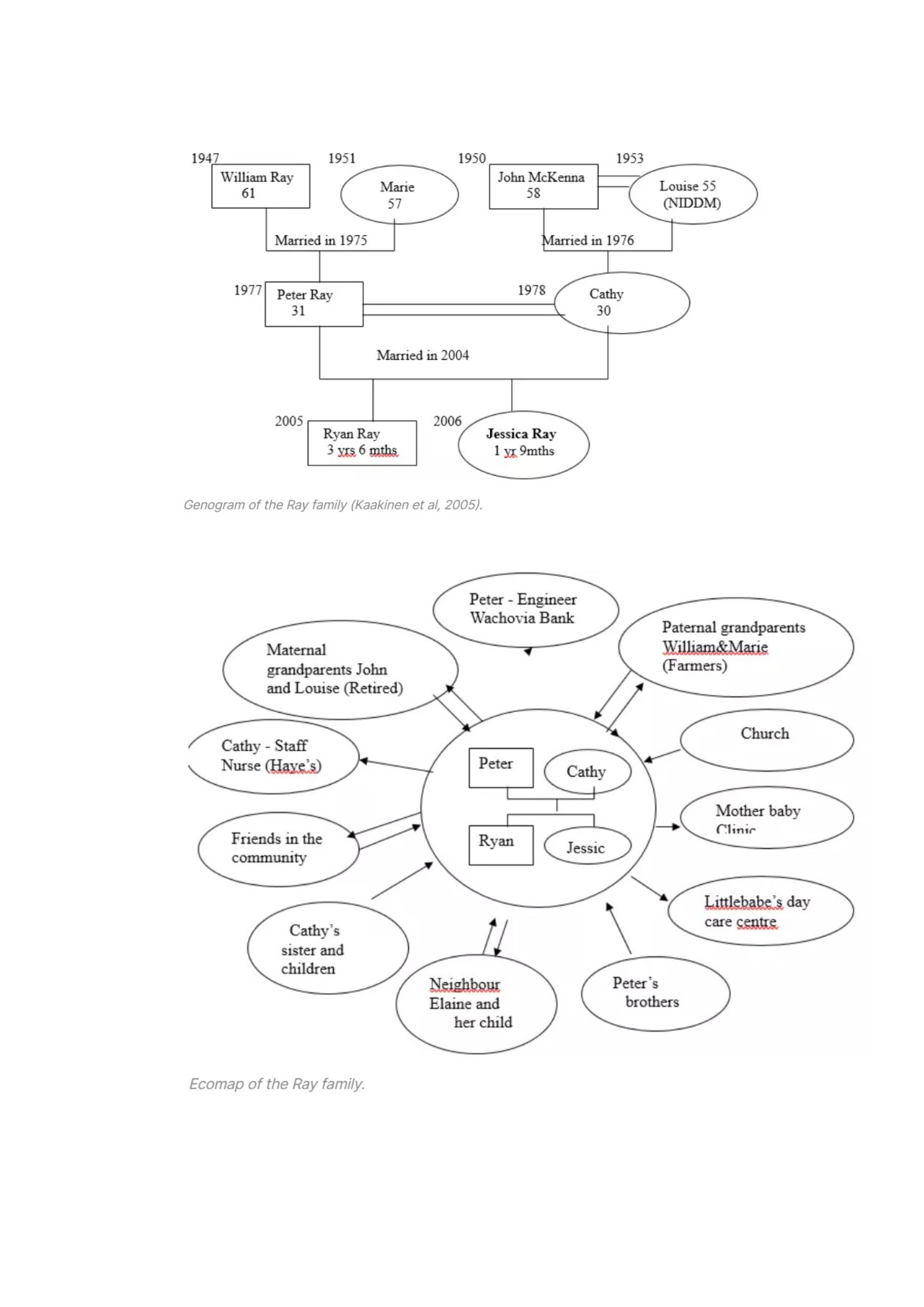
plenty of information for my case study. I was able to do the
genogram and ecomap of the family and include the maximum
information that I gathered. The Calgary Family Assessment Model
guided me in putting on paper what I had learned.
I have attempted to include many facets of Jessica’s developmental
milestones but I had to limit my findings to stay within the length of
paper allowed. I realized that assessing the family as a whole is
essential in assessing a child. My confidence has been lifted with this
assignment. I have also been able to look for good references. With
sufficient preparation, I should be able to face clients and really be
efficient in getting the maximum information for study. Interacting
with the family has changed my outlook and I expect to go through
my study with flying colours.
Appendix A
Appendix B
References

Berger, Sarah E., (2007), “How and when infants learn to climb”,
Infant Behaviour and Development, Vol. 30, Pgs 36-49.,
ScienceDirect, Elsevier.
Carroli, G.; Villar, J.; Piaggio et al, (2001), “WHO Systematic
Reviews of randomized controlled trials of routine antenatal care”,
Lancet, Vol 357, Pgs. 1565 – 1570.
Child Development Programme, Child and Adolescent services
Research center. Web.
CASRC Enkin, M. et al, (2000), “A guide to effective care in
pregnancy and childhood”, 3rd Ed., Oxford: Oxford University Press,
2000.
Fauroux, Brigitte et al, (2008), “What’s new in paediatric sleep in
2007), Paediatric Respiratory News, Vol 9, Pgs. 139-143, Elsevier.
Goldson, Edward and Reynolds, Ann; (2007), “Normal Development’
in Chapter 2, Current Paediatric diagnosis and treatment, 18th ed, The
McGraw Hill Companies.
Hunt, Jennifer M. and Lumley, Judith; (2002), “Are recommendations
about routine Antenatal care in Australia consistent and evidence-
based”, Medical Journal of Australia (MJA), Vol 176, Pgs 255-259.

Joanna Briggs Institute, (2005), Early childhood pacifier use in
relation to Breastfeeding, SIDS, Infection and Dental malocclusion,
Best Practice, Vol 9, Issue 3, page 1-6.
Joanna Briggs Institute, (2008), The effectiveness of interventions for
infant colic”, Best Practice, Vol 12, Issue 6, Pgs. 1-4.
Kaakinen et al, (2005), “Family Nursing Assessment and
Intervention”, Chapter 8 of Family Health Care Nursing: Theory,
Practice and Research by Shirley M.H.Hanson, Joanna Rowe
Kaakinen and Vivian Gedaly Duff, 3rd Ed., F.A.Davis Company.
Mannerkoski, M. et al, (2008), Childhood Growth and Development
associated with the need for full time special education at school age,
European Journal of Paediatric Neurology.
McKay, Sandra M., (2006), “Longitudinal assessment of leg motor
activity and sleep patterns in infants with and without Down’s
syndrome”, Infant Behaviour and Development Vol 29, Pgs 153-168.
“Morning Sickness’, Babycentre, Australia Medical Advisory Board,
BabyCentre LLC. Web.
Murray, G.K. et al, (2006), Infant motor development and adult
cognitive functions, Schizophrenia Research, Vol 81, Pgs 65-74,
ScienceDirect, Elsevier.

National Immunisation Schedule, Immunise Australia Programme ,
Recommended Immunisation Schedules for 0-6 years, Advisory
Committee on Immunisation Practices, Department of Health and
Human Services, Centre for Disease Control and Prevention, 2008.
Revised CDC Growth Charts, (2005), Department of Education and
Early Childhood Development, Government of Australia, Victoria.
Web.
Sheridan, Mary D. et al; (2007). From birth to five years : children’s
developmental progress, Hawthorn: Australian Council for
Educational Research.
“10 steps to healthy pregnancy”, Babycentre, Australia Medical
Advisory Board, BabyCentre LLC. Web.
Wen, S.W. et al, (2000), Impact of prenatal glucose on the diagnosis
of gestational diabetes and on pregnancy outcomes”, American
Journal of Epidemiology, Vol 152, Pgs 1009-1014.
Walkinshaw, S., (2001), “Dietary regulation for gestational diabetes”,
(Cochrane Review), In: The Cochrane Library, Issue 2, 2001, Oxford:
Update software.
Wright, L.M. and Leahy, M.; (2005), “Calgary Family Assessment
Model” in Nurses and Families: A Guide to family Assessment and
Intervention, 4th Ed., Philadelphia, F.A.Davis.

