


Running head: ROY ADAPTATION MODEL 1
Roy Adaptation Model
Student’s Name
Institutional Affiliation

ROY ADAPTATION MODEL 2
Nursing Theory Analysis Paper
Overview/Description:
The purpose of this assignment is to describe, evaluate and discuss application of
a nursing grand or mid-range theory. This assignment also provides the learner an opportunity
to connect theory and research to nursing phenomena. Learners will develop an 8-10 page
paper (excluding the title page and references) using APA style to address the elements listed
below.
Theory/Author Name and Background
1. Select a Grand or Mid-Range Theory that is appropriate to your practice setting.
2. Describe the theorist's background in detail and discuss how their experiences have impacted
the theory development.
3. Examine crucial references for the original and/or current work of the theorist and other
authors writing about the selected theory.
4. Identify the phenomenon of concern or problems addressed by the theory.
Theory Description
1. Explain whether the theory uses deductive, inductive or reproductive reasoning. Provide
evidence to support your conclusion.
2. Describe the major concepts of the theory. How are they defined? (theoretically and/or
operationally) Is the author consistent in the use of the concepts and other terms in the theory?
3. Interpret how the concepts are defined. Implicitly or explicitly?
4. Examine the relationships (propositions) among the major concepts.
Evaluation
1. Identify explicit and implicit assumptions (values/beliefs) underlying the theory. On what
assumptions does the theory build?
2. Examine if the theory has a description of the four concepts of the nursing metaparadigm. If so,
how are they explained in the theory? If the metaparadigm is not explained, what elements do
you see as relevant to the theory and why?
3. Discuss the clarity of the theory. Did it have lucidness and consistency?
Application:
1. Examine how the theory would guide nursing actions.
2. Describe specifically how you can use this theory in your area of nursing (Practice, Education,
Informatics or Administration).
Download the Theory Critique Template.
APA Style/Format
Submit your document to the Submissions Area by the due date assigned.
Roy Adaptation Model
The application of models and theories in nursing allows nurses to concentrate not only
on the medical practice but also on the role of nursing and its applications. Besides, nursing
theories help deliver effective, focused, and systematic patient care. The adaptation model of

ROY ADAPTATION MODEL 3
Callista Roy is considered one of the most frequently used nursing models these days. In
accordance with it, the major goal of nursing lies in the increased life expectancy and
compliance. It evaluates the patient in self-assessment, physiological, interdependent, and role-
play modes aimed at providing a holistic care. Being one of the most useful conceptual
frameworks that influence education, direct research and help nursing practice, the Roy
adaptation model is organized around adaptive behavior and processes, through which people
adapt to various environmental stimuli.
Selecting a grand or mid-range nursing theory that aligns with your practice setting requires
careful consideration of various factors, including the population you serve, the healthcare
context, and the theoretical framework that resonates with your nursing philosophy. Here are a
few examples of grand and mid-range nursing theories along with potential practice settings
where they might be applicable:
Jean Watson's Theory of Human Caring:
Background: Developed by Jean Watson, this theory emphasizes the importance of the nurse-
patient relationship, caring consciousness, and transpersonal caring.
Applicability: This theory can be applied in various practice settings such as acute care hospitals,
long-term care facilities, community health centers, and hospice care where holistic patient care
and therapeutic nurse-patient relationships are prioritized.
Hildegard Peplau's Interpersonal Relations Theory:
Background: Hildegard Peplau's theory focuses on the nurse-client relationship and the
therapeutic process of interpersonal interactions.

ROY ADAPTATION MODEL 4
Applicability: It is relevant in psychiatric-mental health nursing settings, outpatient mental health
clinics, rehabilitation centers, and any setting where establishing a therapeutic relationship is
crucial for patient care outcomes.
Madeleine Leininger's Theory of Culture Care Diversity and Universality:
Background: Madeleine Leininger's theory emphasizes the importance of cultural competence in
nursing care and understanding the impact of culture on health and healing practices.
Applicability: This theory is particularly relevant in multicultural healthcare settings, community
health nursing, public health initiatives, and international nursing contexts where diverse cultural
backgrounds intersect.
Katharine Kolcaba's Comfort Theory:
Background: Kolcaba's Comfort Theory focuses on promoting comfort as a fundamental aspect
of nursing care, addressing physical, psychospiritual, social, and environmental comfort needs.
Applicability: It can be applied across various settings including hospitals, nursing homes,
palliative care units, and home health care where enhancing patient comfort and well-being is a
priority.
Dorothy Johnson's Behavioral System Model:
Background: Dorothy Johnson's model focuses on the individual's behavioral system and the
influence of stressors on adaptive behaviors.
Applicability: It can be applied in medical-surgical nursing, critical care settings, rehabilitation
centers, and any setting where understanding patient adaptation to stressors is essential for
providing effective nursing care.

ROY ADAPTATION MODEL 5
Consider the unique needs of your practice setting, the theoretical underpinnings that resonate
with your nursing philosophy, and the potential for application and implementation when
selecting a grand or mid-range nursing theory for your analysis paper.
Jean Watson's Theory of Human Caring:
Background: Jean Watson's theory is grounded in the philosophy of human caring and
emphasizes the importance of nurturing the nurse-patient relationship. It views nursing as a
deeply interpersonal and transpersonal process.
Key Concepts: Caritas processes (caring factors), transpersonal caring relationships, humanistic-
altruistic system of values, cultivation of a caring environment, and promotion of healing and
wholeness.
Hildegard Peplau's Interpersonal Relations Theory:
Background: Peplau's theory focuses on the therapeutic relationship between the nurse and the
patient, highlighting the phases of orientation, identification, exploitation, and resolution.
Key Concepts: Nurse-client relationship, phases of the nurse-patient interaction, therapeutic
communication, role of the nurse as a counselor and facilitator of patient growth and
development.
Madeleine Leininger's Theory of Culture Care Diversity and Universality:
Background: Leininger's theory emphasizes the importance of cultural competence in nursing
care and understanding the influence of culture on health and healing practices.
Key Concepts: Cultural care diversity, cultural competence, ethnonursing, transcultural nursing,
cultural assessment, and culturally congruent care.
Katharine Kolcaba's Comfort Theory:

ROY ADAPTATION MODEL 6
Background: Kolcaba's theory focuses on addressing the holistic comfort needs of patients,
including physical, psychospiritual, social, and environmental comfort.
Key Concepts: Three forms of comfort (relief, ease, transcendence), comfort interventions,
comfort care outcomes, comfort assessment, and the nurse's role in promoting comfort.
Dorothy Johnson's Behavioral System Model:
Background: Johnson's model explores the behavioral responses of individuals to stressors and
the role of nursing in promoting adaptive behaviors.
Key Concepts: Behavioral subsystems (attachment-affiliative, dependency, ingestive-
eliminative, aggressive-protective, and sexual subsystems), stressors, equilibrium, and nursing
interventions to restore balance.
These theories offer different perspectives on nursing practice and can be applied in various
healthcare settings to guide nursing care delivery, enhance patient outcomes, and promote
professional growth. When selecting a theory for your analysis paper, consider its relevance to
your practice setting, its alignment with your nursing philosophy, and its potential for facilitating
quality patient care.
Jean Watson's Theory of Human Caring:
Background: Jean Watson, a nursing theorist, developed the Theory of Human Caring, which
emphasizes the significance of interpersonal relationships and caring for both the patient and the
nurse. It is rooted in existential-phenomenological thought and emphasizes holistic care.
Key Concepts: The theory introduces the concept of carative factors, which are intended to
promote healing and wholeness. It emphasizes the importance of transpersonal caring
relationships, involving the nurse's ability to connect with patients on a deeper level beyond the
physical aspects of care.

ROY ADAPTATION MODEL 7
Applicability: Watson's theory is applicable across various healthcare settings, particularly those
where patient-centered care and holistic nursing practice are valued.
Hildegard Peplau's Interpersonal Relations Theory:
Background: Hildegard Peplau's Interpersonal Relations Theory focuses on the therapeutic
relationship between the nurse and the patient. Peplau believed that nurses should assume
different roles to effectively meet the needs of patients throughout the therapeutic process.
Key Concepts: The theory outlines phases of the nurse-patient relationship, including orientation,
identification, exploitation, and resolution. It emphasizes the importance of therapeutic
communication, empathy, and mutual understanding.
Applicability: Peplau's theory is particularly relevant in psychiatric and mental health nursing
settings, where establishing rapport and facilitating therapeutic communication are crucial
components of care.
Madeleine Leininger's Theory of Culture Care Diversity and Universality:
Background: Madeleine Leininger's Theory of Culture Care Diversity and Universality
highlights the significance of cultural competence in nursing practice. Leininger emphasized the
importance of understanding and integrating cultural beliefs, values, and practices into patient
care.
Key Concepts: The theory introduces the concept of cultural care, which encompasses the
culturally based care beliefs, values, and practices that influence individuals' health and well-
being. Leininger proposed three modes of nursing actions: cultural care preservation, cultural
care accommodation, and cultural care restructuring.

ROY ADAPTATION MODEL 8
Applicability: Leininger's theory is applicable in diverse healthcare settings, particularly those
serving multicultural and diverse populations. It emphasizes the need for nurses to be culturally
sensitive and competent in delivering culturally congruent care.
Background
Theorist’s Background
Callista Roy is a highly respected researcher, nurse theorist, teacher, and writer. She
received the Bachelor of Arts degree in nursing in 1963 and the master’s degree in 1966 (“Roy
adaptation model,” n.d.). However, Callista was interested not only in nursing but also in
sociology. Thus, she started studying sociology and received the master’s degree in 1973 and
later the doctorate in sociology (“Roy adaptation model,” n.d.). Callista Roy began to develop the
adaptation model when she entered the Master’s Program of Pediatric Nursing in 1964 (“Roy
adaptation model,” n.d.). At that time, Dorothy E. Johnson was her faculty member and advisor
and she had a considerable impact on the subsequent development of the adaptation model (“Roy
adaptation model,” n.d.). Dorothy Johnson spoke and wrote on the necessity to determine the
purpose of nursing as a way to concentrate the development of nursing knowledge for practice.
Even though, Callista Roy was not quite aware on the concept of adaptation, she was impressed
by the stability of children she cared for in her practice (“Roy adaptation model,” n.d.). At the
seminar on pediatric nursing, Roy suggested that the promotion of patient adaptation should be
the most important goal of nursing. Throughout her work, Dorothy Johnson encouraged her to
continue developing this model as the basis for nursing (“Roy adaptation model,” n.d.). As
defined by von Bertalanffy, the application of the system theory was a significant early concept,
as the Helson’s work was (“Roy adaptation model,” n.d.). She determined adaptation as a process

ROY ADAPTATION MODEL 9
of positive response to various environmental changes. Helson made a description of three types
of stimuli: residual, contextual, and focal (“Roy adaptation model,” n.d.). Roy made certain
conclusions from these concepts for application in describing situations associated with diseases
and human health. In addition, other authors including Selye, Dohrenwend, Mechanic, and
Lazarus influenced and made a contribution to the development of the key concepts of
adaptation model (“Roy adaptation model,” n.d.). In such a way, all these authors and nurses had
a great impact on the development of the adaptive model proposed by Callista Roy.
The second stage of the model development included 17 years of work (“Roy adaptation
model,” n.d.). The model was the basis for the integrated curriculum grounded on nursing
services. Subsequently, four adaptive regimens were added as ways of manifesting adaptation
and the basis for assessing nursing. Authors of the theoretical development of adaptive regimes
included Mary Tedrou and Joyce Wang Landing ham for interdependence, Brooke Rundell for
role-playing function, and Marie Driver for an independent concept (“Roy adaptation model,”
n.d.). Through a consultation on educational programs throughout the United States and around
the world, Callista Roy got information on the application of the model in practice and
education. By 1987, more than 100,000 nurses had been educated in programs using the
adaptation model (“Roy adaptation model,” n.d.). Later on, the theory was widely applied in the
nursing practice.
Jean Watson:
Background: Jean Watson, born in 1940, is an American nursing theorist known for her Theory
of Human Caring. She obtained her Bachelor of Science in Nursing (BSN) from the University
of Colorado and continued her education, earning a Master's degree in psychiatric-mental health
nursing and a Ph.D. in educational psychology and counseling.

ROY ADAPTATION MODEL 10
Impact of Experiences on Theory Development: Watson's experiences as a nurse, educator, and
researcher greatly influenced the development of her theory. Early in her career, she worked as a
staff nurse, which provided her with direct insights into the challenges and complexities of
patient care. Additionally, her background in psychiatric-mental health nursing contributed to her
understanding of the importance of holistic care and therapeutic relationships in nursing practice.
Watson's experiences as an educator allowed her to integrate philosophical and theoretical
perspectives into nursing education, fostering a deeper understanding of nursing as a caring
science. Her doctoral studies provided her with a solid foundation in psychology and counseling,
which she incorporated into her theory's framework, emphasizing the importance of
understanding human experiences and consciousness in nursing care.
Hildegard Peplau:
Background: Hildegard Peplau (1909-1999) was an American nurse and the first published
nursing theorist since Florence Nightingale. She received her nursing diploma from Pottstown
Hospital School of Nursing in Pennsylvania and later earned a Bachelor of Arts in Interpersonal
Psychology from Bennington College. Peplau completed her Master of Arts in psychiatric
nursing at Columbia University and a Doctorate in Nursing Education from Teachers College,
Columbia University.
Impact of Experiences on Theory Development: Peplau's experiences as a psychiatric nurse and
her educational background in interpersonal psychology significantly influenced the
development of her Interpersonal Relations Theory. Working in psychiatric settings, Peplau
observed the dynamics of nurse-patient interactions and recognized the importance of
interpersonal relationships in facilitating patient growth and healing.

ROY ADAPTATION MODEL 11
Her educational pursuits in interpersonal psychology provided her with a theoretical framework
for understanding human behavior and the therapeutic process. Peplau's experiences as a
clinician, educator, and researcher fueled her passion for advancing the nursing profession and
led her to develop a theory that emphasized the nurse's role in promoting positive interpersonal
relationships and facilitating patient-centered care.
In summary, both Jean Watson and Hildegard Peplau drew upon their diverse experiences as
nurses, educators, and researchers to develop theories that emphasize the importance of human
relationships, holistic care, and the therapeutic process in nursing practice. Their backgrounds in
nursing, psychology, and education provided them with the knowledge and insight needed to
create theories that continue to shape contemporary nursing practice and education.
Jean Watson:
Background: Jean Watson was born in 1940 in West Virginia, USA. She pursued her nursing
education at the Lewis Gale School of Nursing in Roanoke, Virginia, and later obtained a
Bachelor of Science in Nursing (BSN) from the University of Colorado. Watson continued her
education and earned a Master's degree in psychiatric-mental health nursing and a Ph.D. in
educational psychology and counseling from the University of Colorado.
Experiences: Watson's clinical experiences as a psychiatric-mental health nurse were pivotal in
shaping her understanding of the human experience and the significance of holistic care. Her
work with patients experiencing mental health challenges provided her with insights into the
complexities of human consciousness, emotions, and healing processes.
Impact on Theory Development: Watson's experiences as a nurse, educator, and researcher
deeply influenced the development of her Theory of Human Caring. She integrated insights from
her clinical practice, educational background, and personal philosophy to articulate a holistic

ROY ADAPTATION MODEL 12
framework that emphasizes the importance of human-to-human relationships, compassion, and
caring consciousness in nursing practice.
Hildegard Peplau:
Background: Hildegard Peplau was born in 1909 in Reading, Pennsylvania, USA. She received
her nursing diploma from the Pottstown Hospital School of Nursing and went on to pursue
further education in nursing and psychology. Peplau obtained a Bachelor of Arts in Interpersonal
Psychology from Bennington College and completed her Master's and Doctoral degrees in
psychiatric nursing and nursing education from Teachers College, Columbia University.
Experiences: Peplau's early experiences as a nurse during the Great Depression provided her
with firsthand insights into the challenges faced by patients and nurses within the healthcare
system. Her work in psychiatric nursing settings, including positions at the Sheppard and Enoch
Pratt Hospital and the Army Nurse Corps, exposed her to the complexities of mental health care
and the importance of therapeutic relationships.
Impact on Theory Development: Peplau's experiences as a psychiatric nurse, educator, and
researcher served as the foundation for her Interpersonal Relations Theory. Drawing from her
background in psychology and nursing, Peplau emphasized the nurse's role in facilitating
therapeutic interpersonal relationships with patients to promote healing, growth, and well-being.
In summary, both Jean Watson and Hildegard Peplau were deeply influenced by their diverse
clinical experiences, educational backgrounds, and personal philosophies. Their theories reflect a
commitment to understanding the human experience and promoting compassionate, patient-
centered care within the nursing profession.
Jean Watson:

ROY ADAPTATION MODEL 13
Background: Jean Watson, born in 1940, is an American nursing theorist whose work has
significantly influenced the field of nursing. She received her Bachelor of Science in Nursing
(BSN) from the University of Colorado and went on to obtain a Master's degree in psychiatric-
mental health nursing and a Ph.D. in educational psychology and counseling from the same
institution.
Experiences: Watson's experiences as a nurse, educator, and researcher have profoundly shaped
her understanding of nursing practice. She worked in various clinical settings, including medical-
surgical units and psychiatric hospitals, where she developed a deep appreciation for the
importance of human connection and caring relationships in patient care.
Impact on Theory Development: Watson's Theory of Human Caring emerged from her belief in
the transformative power of caring interactions between nurses and patients. Drawing from her
clinical experiences and background in psychology, she conceptualized caring as the essence of
nursing and proposed carative factors to guide nurses in fostering healing and promoting holistic
well-being.
Hildegard Peplau:
Background: Hildegard Peplau (1909-1999) was an American nurse and one of the most
influential figures in psychiatric nursing. She obtained her nursing diploma from the Pottstown
Hospital School of Nursing and later pursued advanced studies in nursing and psychology.
Peplau earned a Bachelor of Arts in Interpersonal Psychology from Bennington College and
completed her Master's and Doctoral degrees in psychiatric nursing and nursing education from
Teachers College, Columbia University.
Experiences: Peplau's early experiences as a nurse during the Great Depression shaped her
understanding of the challenges faced by patients and healthcare professionals. Her work in

ROY ADAPTATION MODEL 14
psychiatric nursing, particularly at the Sheppard and Enoch Pratt Hospital, provided her with
insights into the dynamics of therapeutic relationships and the importance of interpersonal
interactions in mental health care.
Impact on Theory Development: Peplau's Interpersonal Relations Theory revolutionized
psychiatric nursing by emphasizing the nurse-client relationship as a central component of
therapeutic interventions. Grounded in principles of interpersonal psychology, her theory focused
on the stages of nurse-client interaction and the nurse's role in promoting patient understanding
and empowerment.
Both Jean Watson and Hildegard Peplau were pioneers in nursing theory, and their work
continues to shape nursing education, research, and practice. Their theories emphasize the
significance of human connection, caring relationships, and therapeutic communication in
promoting health and well-being across diverse healthcare settings.
The Phenomenon of Concern
The adaptation model examines a person considering his/her social and individual
characteristics. According to this concept, there is a state of relative equilibrium for both
psychological and physiological systems; there are certain ranges when people can adequately
cope with their experiences (Alligood, 2014). This range is unique for every person. Callista Roy
identifies three factors, which can affect a level of adaptation and they are called stimuli –
residual that is a result of relationships, beliefs, and past experiences, focal, which is surrounded
by the person, and situational occurring when nursing care is provided near the focal affecting it
(Alligood, 2014). Combined with situational and focal, the residual stimulus has an impact on

ROY ADAPTATION MODEL 15
the level of adaptation (Alligood, 2014). Therefore, Roy determines that the main problem is the
ability to find a balance and concentrate on these factors.
Jean Watson's Theory of Human Caring:
Original Work:
Watson, J. (1979). Nursing: The philosophy and science of caring. Little, Brown & Co.
Watson, J. (1985). Nursing: Human science and human care: A theory of nursing. National
League for Nursing Press.
Current Work:
Watson, J. (2008). Nursing: The philosophy and science of caring (Revised ed.). University Press
of Colorado.
Watson, J. (2018). Nursing: The philosophy and science of caring (Revised ed.). University Press
of Colorado.
Other Authors:
Marilyn A. Ray: Ray has written extensively on Watson's theory and its application in nursing
practice and education.
Anne M. Parker: Parker's work explores the integration of Watson's caring theory into various
healthcare settings and its impact on patient outcomes.
Hildegard Peplau's Interpersonal Relations Theory:
Original Work:
Peplau, H. E. (1952). Interpersonal relations in nursing: A conceptual frame of reference for
psychodynamic nursing. Springer Publishing Company.
Peplau, H. E. (1991). Interpersonal relations in nursing: A conceptual frame of reference for
psychodynamic nursing (Revised ed.). Springer Publishing Company.

ROY ADAPTATION MODEL 16
Current Work:
Peplau, H. E. (2009). Interpersonal relations in nursing: A conceptual frame of reference for
psychodynamic nursing (50th anniversary ed.). Springer Publishing Company.
Peplau, H. E. (2019). Interpersonal relations in nursing: A conceptual frame of reference for
psychodynamic nursing (Revised ed.). Springer Publishing Company.
Other Authors:
Joyce J. Fitzpatrick: Fitzpatrick has authored numerous publications exploring Peplau's theory
and its application in contemporary nursing practice.
Mary E. Moller: Moller's work focuses on integrating Peplau's interpersonal relations theory into
psychiatric nursing education and practice.
These references provide foundational and contemporary insights into the theories of Jean
Watson and Hildegard Peplau, as well as the contributions of other authors who have advanced
understanding and application of these theories in nursing practice, education, and research.
Theory Description
Concepts
A logical form of the adaptation model is both deductive and inductive. On the one hand,
this theory is derived from the Helson’s psycho-physical theory. Deductive reasoning works from
general to concrete. Callista Roy revised the concepts of residual, contextual, and focal stimuli,
which Henson developed in the nursing field to form a typology of factors connected with
human adaptation levels (Roy, 2014). On the other hand, the adaptation model is also inductive
and it is associated with the fact that it passes from concrete observations to broader theories and
generalizations. Roy applied this approach when developing four adaptive ways from nursing

ROY ADAPTATION MODEL 17
research and practice (Roy, 2014). She formed the conceptual framework of adaptation creating
a step-by-step model, with the help of which nurses could apply the nursing process to help them
be adapted to diseases (Roy, 2014). In such a way, this model provides logical conclusions and if
to accept an idea of a person as a system, the failure of one part of the system results in the
disease. Therefore, both deductive and inductive reasoning forms the adaptation model.
Roy’s concepts are operationally and theoretically defined. A system represents a set of
parts, which is connected to the function as a whole and is operatively defined as an integer with
outputs and feedback processes (Roy, 2014). In general, there are several major concepts in Roy
adaptation model. Firstly, every person represents an adaptive system. Callista Roy composes a
human system in a holistic perspective because holism flows from the basic philosophical
supposition of the theory (Roy, 2014). Holism represents an aspect of the single significance of
human behavior when the human system is considered greater than the sum of single parts. The
adaptive system of the person has adaptation levels and stimulus inputs (Roy, 2014). In addition,
Roy determines acquired and innate coping mechanisms, ineffective responses, and adaptive
responses as the main concepts of the model.
At the same time, there are four ways of adaptation that greatly affect human behavior: a
self-concept, a physiological-physical system, an interdependence, and a role-function (Roy,
2014). Self-concept represents a person’s desire to understand himself/herself both physically
and spiritually. This system of adaptation also has boundaries, within which a person can cope
with changes in the physical and psychological “I” (Roy, 2014). This system is particularly
significant when preparing a person for operations that can change a body such as stoma
imposition, mastectomy, and limb amputation. A physiological-physical system includes the
reaction of the man to humidity, temperature, atmospheric pressure, carbon dioxide, oxygen,

ROY ADAPTATION MODEL 18
fluid, food, and other sensory stimuli (Roy, 2014). The ability to cope with new, unusual
physiological stimuli depends on the capabilities of the physiological system of adaptation of a
particular man. Interdependence is a system that implies the desire of people to attain a state of
relative balance in relationships, for instance, teacher-student, husband-wife, mother-son, nurse-
patient, and doctor-patient (Roy, 2014). Medical personnel have to consider the restricted
adaptation options in cases where a patient suffers from loneliness, pressure, rejection, contempt,
and familiarity. Role-function is a system involving the change of the person’s role under the
influence of different circumstances, for example, when a physically active person should adapt
to a passive role of the patient in hospital (Roy, 2014). It is necessary to remember that people
can go beyond their possibilities of adaptation.
Defining the major concepts of the model, its author is consistent because they are clearly
connected with each other. Linkage in the theory is simple and clear. The input or stimuli
directly impacts the coping mechanism. In turn, the coping mechanism induces the adaptive
modes or effectors to have an output that is ineffective or adaptive response. Callista Roy defines
all the concepts in the model explicitly.
To determine whether a nursing theory such as Jean Watson's Theory of Human Caring or
Hildegard Peplau's Interpersonal Relations Theory utilizes deductive, inductive, or reproductive
reasoning, we need to understand the nature of these types of reasoning and how they apply to
theory development.
Deductive Reasoning:
Deductive reasoning starts with a general principle or theory and then applies it to specific
situations to draw conclusions.
It moves from the general to the specific.

ROY ADAPTATION MODEL 19
In the context of nursing theory, deductive reasoning involves developing a theory based on
existing knowledge, principles, or philosophical frameworks and applying it to nursing practice.
Evidence to support deductive reasoning would include the systematic development of the theory
based on established principles, logic, and philosophical underpinnings.
Inductive Reasoning:
Inductive reasoning starts with specific observations or data and then seeks to derive general
principles or theories from them.
It moves from the specific to the general.
In nursing theory development, inductive reasoning involves gathering empirical evidence or
observations from clinical practice and using them to formulate theories or hypotheses.
Evidence to support inductive reasoning would include empirical data, qualitative research
findings, and observations from nursing practice that inform theory development.
Reproductive Reasoning:
Reproductive reasoning involves reproducing existing knowledge, theories, or practices without
significant modification or innovation.
It typically maintains the status quo and does not involve substantial theory development or
original contributions.
In nursing theory, reproductive reasoning would involve reiterating existing theories or concepts
without significant expansion or refinement.
Now, let's analyze the reasoning used in Jean Watson's Theory of Human Caring and Hildegard
Peplau's Interpersonal Relations Theory:
Jean Watson's Theory of Human Caring: Watson's theory predominantly employs deductive
reasoning. She draws upon existing philosophical frameworks, including existentialism and

ROY ADAPTATION MODEL 20
phenomenology, to develop her theory. Watson's carative factors and emphasis on humanistic,
holistic care stem from broader philosophical principles that she applies to nursing practice. The
systematic development of her theory is based on established principles of caring and human
connection.
Hildegard Peplau's Interpersonal Relations Theory: Peplau's theory primarily utilizes inductive
reasoning. Her theory emerged from her observations and experiences in psychiatric nursing,
where she noted the importance of interpersonal relationships in patient care. Peplau gathered
data and insights from her clinical practice to formulate her theory, moving from specific
interactions with patients to the development of broader principles regarding nurse-client
relationships.
In summary, Jean Watson's Theory of Human Caring relies more on deductive reasoning, while
Hildegard Peplau's Interpersonal Relations Theory leans towards inductive reasoning. Both
approaches have contributed to the development of these influential nursing theories, enriching
the understanding and practice of nursing care.
Jean Watson's Theory of Human Caring:
Deductive Reasoning: Jean Watson's theory is primarily based on deductive reasoning. She
begins with broad philosophical concepts, such as caring, humanism, and phenomenology, and
applies them to the nursing context. Watson draws upon existential philosophy, psychology, and
holistic nursing principles to articulate her theory.
Evidence for Deductive Reasoning: Watson's theory is systematically structured around the ten
carative factors, which she derived from her philosophical understanding of human caring. These
factors serve as guiding principles for nurses to foster healing, promote well-being, and establish
meaningful connections with patients. Watson's emphasis on the transpersonal nature of caring

ROY ADAPTATION MODEL 21
and the interconnectedness of mind, body, and spirit reflects her deductive approach to theory
development.
Hildegard Peplau's Interpersonal Relations Theory:
Inductive Reasoning: Hildegard Peplau's theory is primarily grounded in inductive reasoning.
She based her theory on her observations and experiences as a psychiatric nurse, where she
interacted closely with patients and recognized the central role of interpersonal relationships in
mental health care.
Evidence for Inductive Reasoning: Peplau's theory emerged from her clinical encounters and
interactions with patients, where she observed patterns of behavior, communication, and
therapeutic outcomes. Her theory evolved from specific observations of nurse-client interactions
to the development of broader principles guiding the therapeutic process. Peplau's emphasis on
the phases of the nurse-client relationship, including orientation, identification, exploitation, and
resolution, reflects her inductive approach to theory development.
In summary, Jean Watson's Theory of Human Caring relies on deductive reasoning, starting from
general philosophical principles and applying them to nursing practice. In contrast, Hildegard
Peplau's Interpersonal Relations Theory is based on inductive reasoning, where she derived
general principles from specific observations and experiences in psychiatric nursing. Both
deductive and inductive reasoning have contributed to the development of these influential
nursing theories, offering valuable insights into the nature of caring and therapeutic relationships
in nursing practice.
Jean Watson's Theory of Human Caring:
Deductive Reasoning: Jean Watson's Theory of Human Caring primarily employs deductive
reasoning. She begins with broad philosophical concepts related to caring, compassion, and

ROY ADAPTATION MODEL 22
humanistic principles. These concepts are rooted in existential philosophy, phenomenology, and
transpersonal psychology.
Evidence for Deductive Reasoning: Watson systematically develops her theory by extrapolating
these philosophical principles into the nursing domain. She articulates carative factors and
clinical caritas processes as guiding frameworks for nursing practice, derived from her
philosophical understanding of human caring. These concepts form the foundation of her theory,
which is then applied in various clinical settings.
Impact and Application: Watson's deductive approach provides a structured framework for
nurses to integrate caring behaviors into their practice. By emphasizing the transpersonal nature
of caring relationships, Watson's theory encourages nurses to connect with patients on a deeper
level, fostering healing and holistic well-being.
Hildegard Peplau's Interpersonal Relations Theory:
Inductive Reasoning: Hildegard Peplau's Interpersonal Relations Theory predominantly utilizes
inductive reasoning. Peplau's theory emerged from her extensive clinical experiences in
psychiatric nursing, where she observed the dynamic interactions between nurses and patients.
Evidence for Inductive Reasoning: Peplau's theory is grounded in empirical observations and
qualitative data collected from her interactions with patients. She identified recurring patterns in
nurse-patient relationships and formulated her theory based on these observations. Peplau's
emphasis on the phases of the nurse-client relationship, such as orientation, identification, and
resolution, reflects her inductive reasoning process.
Impact and Application: Peplau's inductive approach highlights the importance of therapeutic
communication, empathy, and patient engagement in nursing practice. Her theory provides a

ROY ADAPTATION MODEL 23
framework for nurses to develop therapeutic relationships with patients, promoting positive
outcomes in psychiatric and mental health settings.
In summary, Jean Watson's Theory of Human Caring relies on deductive reasoning, starting from
broad philosophical principles and applying them to nursing practice. In contrast, Hildegard
Peplau's Interpersonal Relations Theory is based on inductive reasoning, deriving general
principles from specific clinical observations and interactions. Both approaches have
significantly influenced nursing theory and practice, offering valuable insights into the nature of
caring and interpersonal relationships in healthcare.
Diagram
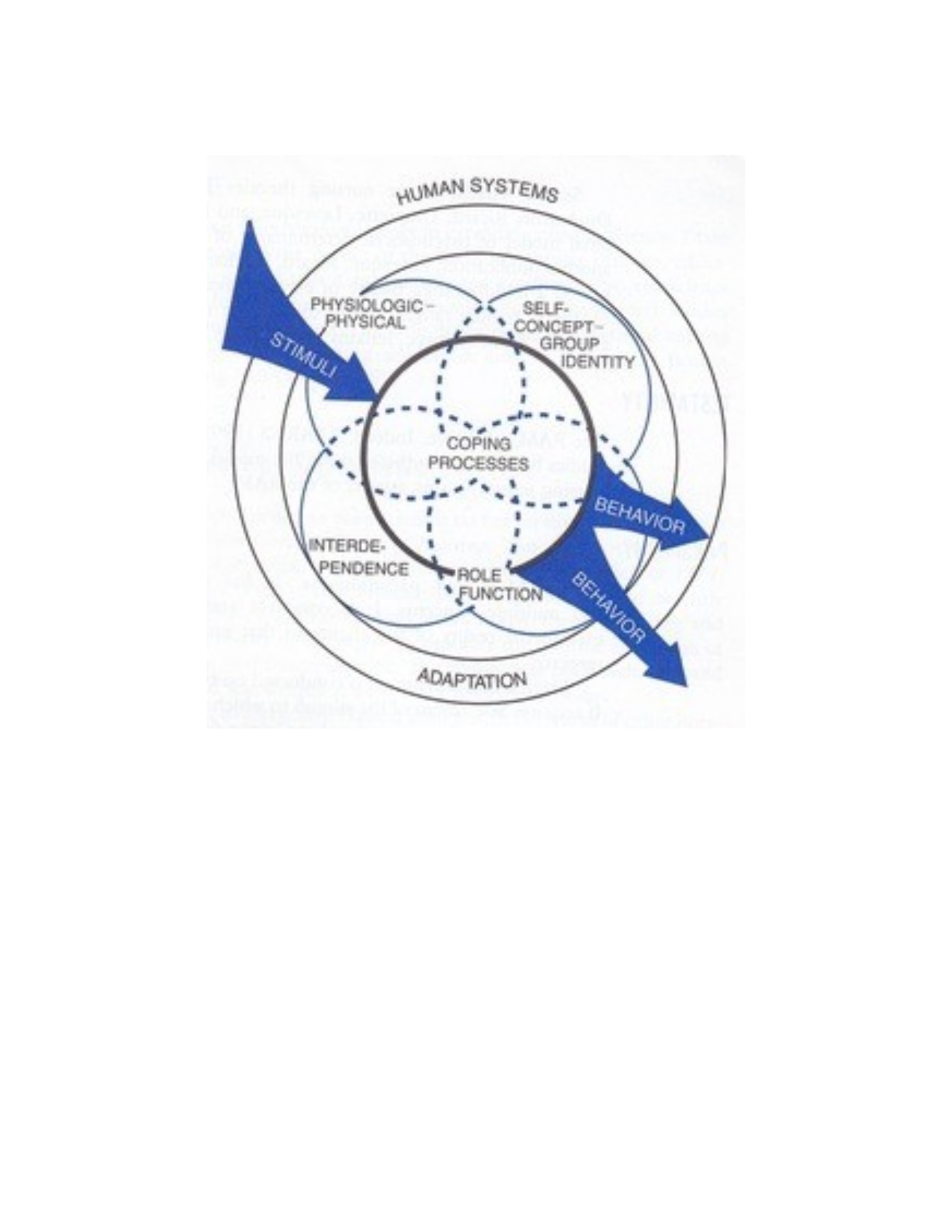
This model includes a diagram to introduce a theory (Appendix A). Human systems
represent the whole diagram, while adaptation serves as the first circle around four interrelated
adaptive codes. A coping process with interdependence, role-function, self-concept, and a
physiological-physical system is at the center. The stimulus comes from one side, while the
reaction comes from the opposite side, which means an inefficient overcoming or adaptation.
Assumption
Callista Roy has a number of philosophical and scientific assumptions. Some of the most
important philosophical assumptions include the fact that a person has mutual relationships with
God and the world (Alligood, 2014). Thus, a person applies abilities of faith, enlightenment, and
awareness. A person is also accountable for transforming, sustaining, and deriving the universe
(Alligood, 2014). Some of scientific assumptions include such concepts as “feeling and thinking
are human actions” and “awareness of the environment and self is rooted in feeling and thinking”.
Metaparadigm

ROY ADAPTATION MODEL 24
The concepts of the metaparadigm of the adaptation model are nursing, health, people,
and the environment. The model defines nursing as a science and adaptation of knowledge into
practice (Ursavas, Karayurt & Iseri, 2014). The main goal of nursing is to provide adaptation.
The increase in adaptation improves the interaction between human systems and the environment
thus improving health. In turn, health represents the expected dimension of human life
representing a continuum of health and diseases (Ursavas, Karayurt, & Iseri, 2014). Callista Roy
determines the concept of health as a process of being and becomes a complete and integrated
person (Ursavas, Karayurt, & Iseri, 2014). The environment includes residual, contextual, and
focal stimuli. The first one includes closed factors that affect the current situation. They are
beliefs, personal experience, and behavior. Residual stimuli come from the past and have an
impact on the response to treatment. A focal stimulus includes the confrontation with the
external and internal environment. People immediately resist these external and internal stimuli.
Nurses manage the focal stimulus first and then proceed with the contextual ones (Ursavas,
Karayurt, & Iseri, 2014). The latter ones contribute to focal stimuli and affect the current
situation. The adaptation model considers a person as a biopsychosocial being in the interaction
with the constantly changing environment (Ursavas, Karayurt, & Iseri, 2014). Therefore, the four
concepts of metaparadigm of the adaptation model proposed by Callista Roy include nursing,
people, health and the environment.
Jean Watson's Theory of Human Caring:
Person: In Watson's theory, the concept of "person" is central to the idea of caring. She views
individuals as holistic beings encompassing mind, body, and spirit. Watson emphasizes the
interconnectedness of individuals with their environment and stresses the importance of

ROY ADAPTATION MODEL 25
understanding each person's unique experiences, values, and beliefs. In her theory, caring is not
just a task performed by nurses but a fundamental aspect of human existence and healing.
Environment: Watson's theory acknowledges the influence of the environment on human
experiences and well-being. She considers the physical, social, cultural, and spiritual aspects of
the environment as integral to the nursing care process. Watson advocates for creating caring and
supportive environments that promote healing, comfort, and holistic well-being for patients.
Health: Within Watson's theory, health is conceptualized as more than the absence of illness; it
encompasses the promotion of well-being and the enhancement of the individual's physical,
emotional, and spiritual harmony. Caring interactions between nurses and patients are seen as
essential components of promoting health and facilitating healing processes.
Nursing: Nursing, according to Watson, is an art and science dedicated to caring for individuals
in their journey towards health and well-being. She emphasizes the importance of developing
caring relationships, practicing authentic presence, and integrating humanistic values into
nursing care. Nursing, in Watson's view, involves honoring the inherent dignity and worth of
each individual and fostering their innate capacity for healing.
Hildegard Peplau's Interpersonal Relations Theory:
Person: Peplau's theory places significant emphasis on the concept of "person" within the nurse-
client relationship. She views individuals as active participants in their own care and emphasizes
the importance of understanding their unique perspectives, experiences, and needs. Peplau's
theory encourages nurses to engage with clients as partners in the therapeutic process, respecting
their autonomy and promoting their self-awareness and growth.
Environment: While Peplau's theory does not explicitly address the environment as a separate
concept, she acknowledges the contextual factors that influence nurse-client interactions. The

ROY ADAPTATION MODEL 26
therapeutic environment, including the physical setting, social dynamics, and cultural
considerations, can impact the quality and effectiveness of interpersonal relationships in nursing
practice.
Health: In Peplau's theory, health is viewed within the context of the nurse-client relationship
and the client's journey towards improved well-being and self-actualization. She recognizes that
health encompasses physical, emotional, social, and psychological dimensions, and emphasizes
the role of the nurse in promoting holistic health through therapeutic communication, emotional
support, and collaboration with clients.
Nursing: Nursing, according to Peplau, is fundamentally about facilitating interpersonal
relationships and promoting therapeutic communication. She defines nursing as a helping
profession focused on understanding and addressing the needs of clients within the context of
their social and psychological environments. Peplau emphasizes the nurse's role in providing
emotional support, guidance, and education to clients, empowering them to achieve optimal
health outcomes.
In summary, both Jean Watson's Theory of Human Caring and Hildegard Peplau's Interpersonal
Relations Theory incorporate elements of the nursing metaparadigm, albeit in slightly different
ways. While Watson's theory explicitly addresses the four concepts of person, environment,
health, and nursing, Peplau's theory focuses more directly on the interpersonal dynamics between
nurses and clients, with implicit considerations for the broader context of care. Both theories
emphasize the importance of holistic care, therapeutic relationships, and patient-centered
approaches in nursing practice.
Jean Watson's Theory of Human Caring:

ROY ADAPTATION MODEL 27
Person: In Watson's theory, the concept of "person" is central and encompasses the holistic
nature of individuals. She views each person as a complex being with physical, emotional,
spiritual, and social dimensions. Watson emphasizes the interconnectedness of individuals with
their environment and with others. Within the caring relationship, the nurse and the patient both
contribute to and are influenced by this interconnectedness.
Environment: Watson acknowledges the influence of the environment on human experiences and
healing processes. The environment includes physical surroundings, but also social, cultural, and
spiritual dimensions. She advocates for creating caring and healing environments that support
patients' well-being and promote health. This aligns with the belief that the environment can
significantly impact an individual's sense of comfort, safety, and healing potential.
Health: In Watson's theory, health is viewed holistically and goes beyond the absence of illness.
It encompasses physical, emotional, spiritual, and social well-being. Caring interactions between
nurses and patients are seen as essential components of promoting health and facilitating healing
processes. Watson emphasizes the importance of promoting a sense of harmony, balance, and
well-being in individuals' lives.
Nursing: Nursing, according to Watson, is both an art and a science dedicated to caring for
individuals in their pursuit of health and well-being. Nurses are called to cultivate authentic
caring relationships with patients, acknowledging their inherent worth and dignity. Nursing
involves not only the provision of physical care but also the provision of emotional support,
spiritual presence, and compassionate understanding.
Hildegard Peplau's Interpersonal Relations Theory:
Person: Peplau's theory focuses on the interpersonal relationship between the nurse and the
patient. The concept of "person" is central to understanding the dynamics of this relationship.

ROY ADAPTATION MODEL 28
Each person, whether nurse or patient, brings their unique experiences, needs, and perspectives
to the therapeutic encounter. Peplau emphasizes the importance of understanding and respecting
the individuality of each person involved.
Environment: While Peplau's theory does not explicitly delineate the concept of environment, it
implicitly acknowledges the influence of the social and contextual factors surrounding the nurse-
patient interaction. The therapeutic environment, including physical settings, cultural norms, and
interpersonal dynamics, can significantly impact the quality and effectiveness of the therapeutic
relationship.
Health: Health, within Peplau's theory, is viewed as the outcome of effective interpersonal
relationships and collaborative efforts between the nurse and the patient. Peplau recognizes that
health encompasses physical, emotional, social, and psychological dimensions. The therapeutic
relationship plays a crucial role in promoting the patient's well-being, facilitating growth, and
fostering positive health outcomes.
Nursing: Nursing, according to Peplau, is fundamentally about facilitating therapeutic
relationships and promoting effective communication. Nurses are seen as active participants in
the therapeutic process, providing support, guidance, and assistance to patients as they navigate
their health challenges. Nursing involves the promotion of self-awareness, empowerment, and
growth in patients, with the ultimate goal of improving their health and well-being.
In summary, both Jean Watson's Theory of Human Caring and Hildegard Peplau's Interpersonal
Relations Theory address the concepts of the nursing metaparadigm, albeit from slightly
different perspectives. While Watson's theory emphasizes holistic care, interconnectedness, and
nurturing relationships, Peplau's theory focuses more specifically on the interpersonal dynamics

ROY ADAPTATION MODEL 29
between nurses and patients and the role of the therapeutic relationship in promoting health and
well-being.
Jean Watson's Theory of Human Caring:
Person: Within Watson's theory, the concept of person is deeply holistic, encompassing physical,
emotional, spiritual, and social dimensions. Individuals are viewed as unique beings with
inherent worth and dignity. Watson emphasizes the importance of understanding each person's
subjective experiences, beliefs, and values. The caring relationship between the nurse and the
person is central to promoting healing and well-being.
Environment: Watson acknowledges the significance of the environment in influencing human
experiences and healing processes. The environment includes physical, social, cultural, and
spiritual aspects. Nurses are called to create caring and healing environments that promote
comfort, safety, and growth for individuals. This nurturing environment enhances the therapeutic
relationship and supports the holistic well-being of patients.
Health: In Watson's theory, health is viewed as a dynamic process of achieving harmony and
balance within the mind, body, and spirit. Health encompasses physical wellness, emotional
stability, spiritual fulfillment, and social connectedness. Caring interactions between nurses and
individuals are integral to promoting health and facilitating healing processes. Nurses are
encouraged to honor the innate healing capacities of individuals and support their journey
towards wholeness.
Nursing: Nursing, according to Watson, is both an art and a science grounded in the philosophy
and practice of human caring. Nurses are called to practice with compassion, authenticity, and
mindfulness. Caring moments are seen as transformative opportunities for healing and growth.

ROY ADAPTATION MODEL 30
Nursing involves nurturing caring relationships, honoring diversity, promoting social justice, and
advocating for the well-being of individuals and communities.
Hildegard Peplau's Interpersonal Relations Theory:
Person: Peplau's theory focuses on the interpersonal relationship between the nurse and the
person seeking care. The concept of person emphasizes the unique experiences, needs, and
perspectives of individuals. Peplau highlights the importance of recognizing the person's
autonomy, agency, and inherent capacity for growth and self-actualization. The therapeutic
relationship serves as a platform for mutual understanding, support, and empowerment.
Environment: While Peplau's theory does not explicitly delineate the concept of environment, it
acknowledges the contextual factors that influence the therapeutic relationship. The environment
encompasses physical, social, and cultural dimensions that shape the dynamics of nurse-client
interactions. Nurses are encouraged to create supportive and nurturing environments that foster
trust, openness, and collaboration.
Health: Health, within Peplau's theory, is viewed as the outcome of effective interpersonal
relationships and therapeutic interventions. Health encompasses physical well-being, emotional
stability, social connectedness, and psychological resilience. The therapeutic relationship
facilitates the client's journey towards improved health outcomes, self-awareness, and personal
growth.
Nursing: Nursing, according to Peplau, is fundamentally about establishing therapeutic
relationships and promoting positive interactions between nurses and clients. Nurses assume
roles as counselors, educators, and facilitators of change. Nursing involves active listening,
empathic communication, and collaborative problem-solving. Nurses support clients in

ROY ADAPTATION MODEL 31
understanding their health challenges, making informed decisions, and achieving their health-
related goals.
Evaluation
Clarity
Under clarity, one understands how well the model can be perceived and how its concepts
are sequenced. Arrangements of concepts are believable, although the elaboration of definitions
is not adequate enough compared to the original format (Fawcett, 2016). Moreover, concepts and
terms adopted from other disciplines are not limited to nursing. Callista Roy considers that
people have a simultaneous, integral, and mutual relation with God and the universe (Fawcett,
2016). The model is not stingy, as it contains many basic concepts, subconcepts, and structures.
The adaptation model explains the reality of patients and, thus, nursing activities can be
expressly planned to satisfy their needs.
Congruence
The adaptation model satisfies modern standards of nursing. The model is constantly
updated and continues to change with the purpose to correspond to the current needs for nursing
research, education, and practice. About 160 studies have been published applying the adaptation
model as the basis for the research in more than 40 international journals that use English as the
main language (Fawcett, 2016). These days, the model is applied in the neonatal intensive care
unit, a rehab center for patient care, an acute surgical ward to document compliance with the care
process, and various hospital departments to administer the practice of orthopedic hospital.

ROY ADAPTATION MODEL 32
Both Jean Watson's Theory of Human Caring and Hildegard Peplau's Interpersonal Relations
Theory demonstrate clarity and consistency in their respective frameworks, albeit with
differences in their approaches and emphasis.
Jean Watson's Theory of Human Caring:
Clarity: Watson's theory is renowned for its clarity and coherence. She articulates her concepts,
such as carative factors and clinical caritas processes, in a structured and accessible manner.
Watson's use of language is clear, concise, and reflective of her philosophical underpinnings.
Consistency: The core principles of Watson's theory remain consistent throughout her work. She
consistently emphasizes the importance of humanistic, holistic care, and the transformative
power of caring relationships. The carative factors provide a consistent framework for nursing
practice and education, guiding nurses in fostering healing and promoting well-being.
Hildegard Peplau's Interpersonal Relations Theory:
Clarity: Peplau's theory is also characterized by clarity and precision. She delineates the phases
of the nurse-client relationship and the roles of the nurse within this interpersonal dynamic.
Peplau's writing style is straightforward, making her theory accessible to nurses and scholars
alike.
Consistency: Peplau maintains consistency in her focus on the interpersonal dynamics of nursing
practice. The core concepts of her theory, including orientation, identification, exploitation, and
resolution, are consistently applied across various contexts. Peplau's emphasis on the therapeutic
relationship as central to nursing practice remains consistent throughout her work.
Jean Watson's Theory of Human Caring:
Clarity:

ROY ADAPTATION MODEL 33
Jean Watson's Theory of Human Caring is known for its clarity and simplicity of expression. She
presents her ideas in a manner that is accessible to both scholars and practitioners in the field of
nursing.
Watson's use of language is precise and evocative, which enhances understanding and facilitates
application in clinical practice. Her concepts, such as the ten carative factors and clinical caritas
processes, are clearly defined and illustrated with practical examples.
Watson's writing style is reflective and imbued with empathy, resonating with the compassionate
nature of nursing practice.
Consistency:
Throughout her work, Jean Watson maintains consistency in her emphasis on the importance of
human caring as the essence of nursing. Her theory remains grounded in humanistic and
existential philosophies, providing a consistent framework for understanding the healing
potential of caring interactions.
The carative factors and clinical caritas processes serve as consistent guiding principles for
nurses, promoting holistic care and healing within the context of the nurse-patient relationship.
Watson's commitment to the art and science of nursing, rooted in compassion and reverence for
human dignity, permeates her theory and remains consistent across her writings and teachings.
Hildegard Peplau's Interpersonal Relations Theory:
Clarity:
Hildegard Peplau's Interpersonal Relations Theory is noted for its clarity and straightforward
presentation. She articulates her concepts in a manner that is easily understandable, even for
those new to nursing theory.

ROY ADAPTATION MODEL 34
Peplau's theory is structured around the phases of the nurse-client relationship, providing a clear
framework for understanding the dynamics of interpersonal interactions in nursing practice.
Her writing is characterized by clarity of expression and logical organization, which enhances
comprehension and facilitates application in clinical settings.
Consistency:
Peplau maintains consistency in her focus on the therapeutic relationship as the cornerstone of
nursing practice. Her theory delineates the sequential stages of orientation, identification,
exploitation, and resolution, which remain consistent across her work.
The roles and responsibilities of the nurse within the therapeutic relationship are consistently
defined and elaborated upon throughout Peplau's writings.
Peplau's commitment to promoting patient-centered care and empowering individuals to
participate actively in their healing process remains consistent across her theoretical framework.
Jean Watson's Theory of Human Caring:
Clarity:
Watson's theory is renowned for its clarity in articulating the fundamental concepts of human
caring. She employs language that is accessible and understandable to nurses, scholars, and
students alike.
The carative factors and clinical caritas processes are clearly defined and elaborated upon in
Watson's writings. Each component of the theory is explicated with examples and anecdotes,
enhancing clarity and comprehension.
Watson's emphasis on the transpersonal nature of caring relationships, the importance of
authenticity, and the promotion of healing environments contributes to the overall clarity of her
theory.

ROY ADAPTATION MODEL 35
Consistency:
Throughout her work, Watson maintains consistency in her focus on the humanistic aspects of
nursing care. Her theory remains grounded in the philosophical underpinnings of humanism,
existentialism, and phenomenology.
The carative factors serve as consistent guiding principles for nurses, promoting holistic care and
nurturing relationships with patients. Watson's commitment to fostering compassion,
understanding, and empathy in nursing practice remains unwavering across her writings.
Despite evolving her theory over time, Watson has upheld the core principles of human caring
and the transformative power of authentic relationships, ensuring consistency in her theoretical
framework.
Hildegard Peplau's Interpersonal Relations Theory:
Clarity:
Peplau's Interpersonal Relations Theory is characterized by its clarity and straightforwardness in
delineating the dynamics of nurse-client relationships.
The phases of the nurse-client relationship, including orientation, identification, exploitation, and
resolution, are clearly defined and sequenced in Peplau's theory. Nurses can easily grasp the
progression of interactions within the therapeutic relationship.
Peplau's emphasis on therapeutic communication, role clarification, and patient empowerment
enhances the clarity of her theory and provides practical guidance for nurses in clinical practice.
Consistency:
Peplau maintains consistency in her theoretical framework by focusing on the interpersonal
dynamics between nurses and clients. Her theory provides a consistent structure for
understanding and facilitating therapeutic relationships.

ROY ADAPTATION MODEL 36
The roles and responsibilities of the nurse are consistently articulated throughout Peplau's work,
emphasizing the nurse's role as a facilitator of growth, change, and healing in clients.
Despite variations in application and interpretation, Peplau's core principles of interpersonal
relations and therapeutic communication remain consistent across different contexts and settings.
In summary, both Jean Watson's Theory of Human Caring and Hildegard Peplau's Interpersonal
Relations Theory demonstrate clarity and consistency in their formulation and presentation.
These theories have provided valuable insights into the nature of nursing practice and the
dynamics of nurse-client relationships, contributing to the advancement of nursing theory and
education.
Both Jean Watson's Theory of Human Caring and Hildegard Peplau's Interpersonal Relations
Theory demonstrate clarity and consistency in their respective frameworks, albeit with
differences in their approaches and emphasis.
Jean Watson's Theory of Human Caring:
Clarity: Watson's theory is renowned for its clarity and coherence. She articulates her concepts,
such as carative factors and clinical caritas processes, in a structured and accessible manner.
Watson's use of language is clear, concise, and reflective of her philosophical underpinnings.
Consistency: The core principles of Watson's theory remain consistent throughout her work. She
consistently emphasizes the importance of humanistic, holistic care, and the transformative
power of caring relationships. The carative factors provide a consistent framework for nursing
practice and education, guiding nurses in fostering healing and promoting well-being.
Hildegard Peplau's Interpersonal Relations Theory:
Clarity: Peplau's theory is also characterized by clarity and precision. She delineates the phases
of the nurse-client relationship and the roles of the nurse within this interpersonal dynamic.

ROY ADAPTATION MODEL 37
Peplau's writing style is straightforward, making her theory accessible to nurses and scholars
alike.
Consistency: Peplau maintains consistency in her focus on the interpersonal dynamics of nursing
practice. The core concepts of her theory, including orientation, identification, exploitation, and
resolution, are consistently applied across various contexts. Peplau's emphasis on the therapeutic
relationship as central to nursing practice remains consistent throughout her work.
Jean Watson's Theory of Human Caring:
Clarity:
Jean Watson's Theory of Human Caring is known for its clarity and simplicity of expression. She
presents her ideas in a manner that is accessible to both scholars and practitioners in the field of
nursing.
Watson's use of language is precise and evocative, which enhances understanding and facilitates
application in clinical practice. Her concepts, such as the ten carative factors and clinical caritas
processes, are clearly defined and illustrated with practical examples.
Watson's writing style is reflective and imbued with empathy, resonating with the compassionate
nature of nursing practice.
Consistency:
Throughout her work, Jean Watson maintains consistency in her emphasis on the importance of
human caring as the essence of nursing. Her theory remains grounded in humanistic and
existential philosophies, providing a consistent framework for understanding the healing
potential of caring interactions.
The carative factors and clinical caritas processes serve as consistent guiding principles for
nurses, promoting holistic care and healing within the context of the nurse-patient relationship.

ROY ADAPTATION MODEL 38
Watson's commitment to the art and science of nursing, rooted in compassion and reverence for
human dignity, permeates her theory and remains consistent across her writings and teachings.
Hildegard Peplau's Interpersonal Relations Theory:
Clarity:
Hildegard Peplau's Interpersonal Relations Theory is noted for its clarity and straightforward
presentation. She articulates her concepts in a manner that is easily understandable, even for
those new to nursing theory.
Peplau's theory is structured around the phases of the nurse-client relationship, providing a clear
framework for understanding the dynamics of interpersonal interactions in nursing practice.
Her writing is characterized by clarity of expression and logical organization, which enhances
comprehension and facilitates application in clinical settings.
Consistency:
Peplau maintains consistency in her focus on the therapeutic relationship as the cornerstone of
nursing practice. Her theory delineates the sequential stages of orientation, identification,
exploitation, and resolution, which remain consistent across her work.
The roles and responsibilities of the nurse within the therapeutic relationship are consistently
defined and elaborated upon throughout Peplau's writings.
Peplau's commitment to promoting patient-centered care and empowering individuals to
participate actively in their healing process remains consistent across her theoretical framework.
Jean Watson's Theory of Human Caring:
Clarity:

ROY ADAPTATION MODEL 39
Watson's theory is renowned for its clarity in articulating the fundamental concepts of human
caring. She employs language that is accessible and understandable to nurses, scholars, and
students alike.
The carative factors and clinical caritas processes are clearly defined and elaborated upon in
Watson's writings. Each component of the theory is explicated with examples and anecdotes,
enhancing clarity and comprehension.
Watson's emphasis on the transpersonal nature of caring relationships, the importance of
authenticity, and the promotion of healing environments contributes to the overall clarity of her
theory.
Consistency:
Throughout her work, Watson maintains consistency in her focus on the humanistic aspects of
nursing care. Her theory remains grounded in the philosophical underpinnings of humanism,
existentialism, and phenomenology.
The carative factors serve as consistent guiding principles for nurses, promoting holistic care and
nurturing relationships with patients. Watson's commitment to fostering compassion,
understanding, and empathy in nursing practice remains unwavering across her writings.
Despite evolving her theory over time, Watson has upheld the core principles of human caring
and the transformative power of authentic relationships, ensuring consistency in her theoretical
framework.
Hildegard Peplau's Interpersonal Relations Theory:
Clarity:
Peplau's Interpersonal Relations Theory is characterized by its clarity and straightforwardness in
delineating the dynamics of nurse-client relationships.

ROY ADAPTATION MODEL 40
The phases of the nurse-client relationship, including orientation, identification, exploitation, and
resolution, are clearly defined and sequenced in Peplau's theory. Nurses can easily grasp the
progression of interactions within the therapeutic relationship.
Peplau's emphasis on therapeutic communication, role clarification, and patient empowerment
enhances the clarity of her theory and provides practical guidance for nurses in clinical practice.
Consistency:
Peplau maintains consistency in her theoretical framework by focusing on the interpersonal
dynamics between nurses and clients. Her theory provides a consistent structure for
understanding and facilitating therapeutic relationships.
The roles and responsibilities of the nurse are consistently articulated throughout Peplau's work,
emphasizing the nurse's role as a facilitator of growth, change, and healing in clients.
Despite variations in application and interpretation, Peplau's core principles of interpersonal
relations and therapeutic communication remain consistent across different contexts and settings.
In summary, both Jean Watson's Theory of Human Caring and Hildegard Peplau's Interpersonal
Relations Theory demonstrate clarity and consistency in their formulation and presentation.
These theories have provided valuable insights into the nature of nursing practice and the
dynamics of nurse-client relationships, contributing to the advancement of nursing theory and
education.
Application
Level
The theory describes three levels, namely: compromised, compensatory, and integrated
(Fawcett, 2016). From time to time, the integrated life process changes into the compensatory

ROY ADAPTATION MODEL 41
one that attempts to restore the adaptation (Fawcett, 2016). Besides, in cases where the
compensatory process appears to be a bad choice, the compromised one is used.
Use
The model is widely applied to organize nursing education and guide practice. A clear
benefit of the theories created from the Roy’s model is the broad coverage. The theories can be
applicable to different clinical conditions in nursing practice (Meleis, 2011). A number of
qualitative and quantitative papers suggest that the adaptation model is highly useful and
significant for nurses who want to learn more about the attitude of the model to nursing practice
(Meleis, 2011). As the model is extremely useful and helpful, it has been adopted as a
component of curriculum care for such broad nursing and college departments as the University
of Texas at Austin School of Nursing, Mount Saint Mary’s College Department of Nursing,
Boston College School of Nursing, and others (Meleis, 2011). The adaptation model has been
implemented in many countries to provide health professionals and students with basic nursing
practice and help them receive additional knowledge. Nurses with extended practice apply the
model to develop protocols for nursing practice and guide research (Meleis, 2011). In addition,
they use it to guide education for nursing students and that of their patients. I can use this model
to increase my professional autonomy, improve compliance with documentation and patients
care; what is more, I can apply it to expand my knowledge in nursing theory.
Weaknesses
In general, there are more strengths of this model than weaknesses. In spite of this, there
are still certain shortcomings. The first one is the existence of multiple concepts, numerous
elements, structures, and systems (Fawcett, 2016). It leads to the fact that the painstaking usage
of the adaptation model requires the great contribution of effort and time. Because the major

ROY ADAPTATION MODEL 42
drawback of the model lies in the fact that its usage requires much effort and time, its application
to emergency situations that need quick actions is highly complicated.
Future
In the future, the advanced practice nursing will use the concept and the care process of
the adaptation model because of its clarity and simplicity. Nurses applying best practices can
continue training their patients and developing protocols and laws for the care of patients.
(Meleis, 2011). Nurses with extended practice will continue to apply the adaptation model to
train future nurses.
Conclusion
The adaptation model treats patients as individuals and takes into account their social and
personal characteristics. According to the concept of the model for both physiological and
psychological systems, there is a state of relative equilibrium that all people strive to achieve. It
displays the states where people are able cope with their experiences. Callista Roy developed this
model in the second half of the XX century and such theorists and nurses as Johnson, von
Bertalanffy, and Helson made considerable contribution on the development of the model. These
days, the adaptation model is spread all over the world. Despite the fact that there are certain
weaknesses, this model is extremely useful because it is applicable for different spheres of
nursing including theory and practice.
References

ROY ADAPTATION MODEL 43
Alligood, M. R. (2014). Nursing theorists and their work. St. Louis, MI: Elsevier Health
Sciences.
Fawcett, J. (2016). Applying conceptual models of nursing: Quality improvement, research, and
practice. New York, NY: Springer.
Meleis, A. I. (2011). Theoretical nursing: Development and progress. Philadelphia, PA:
Lippincott Williams & Wilkins.
Roy, C. (2014). Generating middle range theory: From evidence to practice. New York, NY:
Springer.
Roy adaptation model. (n.d.) Retrieved from https://www.msmu.edu/about-the-mount/nursing-
theory/roy-adaptation-model/
Ursavas, F. E., Karayurt, O., & Iseri, O. (2014). Nursing approach based on Roy adaptation
model in a patient undergoing breast conserving surgery for breast cancer. The Journal of
Breast Health, 10(3): 134–140.
Appendix A
ROY ADAPTATION MODEL 44
The diagram of Roy adaptation model
Retrieved from http://nursingtheories.weebly.com/sister-callista-roy.html

