


https://atlas.strategiced.com/app#offering/8627488/course/7084253/preview/courseguide
1/32
HSA315
Preview: HSA315 : Health Information Systems
Course Guide
Prerequisites
Course Description
This course provides an overview of current information systems including topics such as locating,
collecting, analyzing, utilizing and reporting of health statistics to solve common workplace issues.
Students will learn basic concepts of data quality and methods of presentation. Data systems issues
as well as health indicators, metrics and measurements are covered to support informed decision
making in a healthcare organization.
Instructional Materials
Required Resources
Nadinia A. Davis. 2021. Foundations of Health Information Management. HSA315 Blackboard
Course. https://www.strayerbookstore.com
Jotform. 2021. Medical Application Forms. https://www.jotform.com/form-templates/patient-
encounter-form-template
Susan Ladika. March 27, 2020. The Health Care Industry: Can Newer Models Improve Care & Cut
Costs. http://library.cqpress.com.libdatab.strayer.edu/cqresearcher/document.php?
id=cqresrre2020032700&type=hitlist&num=2
Moritz Lehne. 2019. Why Digital Medicine Depends on
Interoperability. https://www.nature.com/articles/s41746-019-0158-1
No author. 2020. Big Data in Healthcare: Breaking Through the
Noise. https://www.himss.org/resources/big-data-healthcare-breaking-through-noise
Ⓒ 2020 Strayer University. All Rights Reserved. This document contains Strayer University Confidential and Proprietary
information and may not be copied, further distributed, or otherwise disclosed in whole or in part, without the expressed written
permission of Strayer University.

https://atlas.strategiced.com/app#offering/8627488/course/7084253/preview/courseguide
2/32
Art Papler. May 27, 2021. Using Data to Improve Patient Satisfaction and Diagnostic
Accuracy. https://www.mgma.com/resources/health-information-technology/using-data-to-improve-
patient-satisfaction-and-dia
Find a Code. 2021. https://www.findacode.com/index.html
Elizabeth Davis. 2020. Diagnostic Related Grouping and How It
Works. https://www.verywellhealth.com/drg-101-what-is-a-drg-how-does-it-work-3916755
Sumit Aneja. 2021. 3 Best Practices for Improving HCAPS Survey Data and Patient Care.
https://www.mgma.com/resources/quality-patient-experience/3-best-practices-for-improving-
hcahps-survey-data
National Center for Health Statistics. 2020. FastStats. https://www.cdc.gov/nchs/fastats/
Kenneth L. Johnson. 2021. Healthcare in the United States: Clinical, Financial, and Operational
Dimensions. https://web-p-ebscohost-com.libdatab.strayer.edu/ehost/ebookviewer/ebook?
sid=f59be0eb-9b07-42ad-b2ac-42fcf54ffee1%40redis&ppid=pp_i&vid=0&format=EB
Susan Ladika. 2020. The Health Care Industry: Can Newer Models improve Care & Cut
Costs. http://library.cqpress.com.libdatab.strayer.edu/cqresearcher/document.php?
id=cqresrre2020032700&type=hitlist&num=2
U.S. Department of Health and Human Services. 2021. Health Information
Privacy. https://www.hhs.gov/hipaa/index.html
Jasmine Fisher. 2019. Health Care Data Privacy Trends: Risks and Costs of Third-Party Data
Collection and Cyberattacks. https://web-p-ebscohost-com.libdatab.strayer.edu/ehost/detail/detail?
vid=0&sid=ed131564-cadc-4f08-8d84-
619500678d7f%40redis&bdata=JnNpdGU9ZWhvc3QtbGl2ZSZzY29wZT1zaXRl#AN=135700650&
db=bth
American Hospital Association. 2021. Guidelines for Releasing Patient Information to Law
Enforcement. https://www.aha.org/standardsguidelines/2018-03-08-guidelines-releasing-patient-
information-law-enforcement
American Medical Association. 2021. Telehealth Resource Center:
Definitions. https://healthcareexecutive.org/archives/september-october-2020/telemedicine-center-
quality-and-safety
Ⓒ 2020 Strayer University. All Rights Reserved. This document contains Strayer University Confidential and Proprietary
information and may not be copied, further distributed, or otherwise disclosed in whole or in part, without the expressed written
permission of Strayer University.

https://atlas.strategiced.com/app#offering/8627488/course/7084253/preview/courseguide
3/32
Jeff Rakover. 2021. Telemedicine: Center Quality and Safety. Healthcare
Executive. https://healthcareexecutive.org/archives/september-october-2020/telemedicine-center-
quality-and-safety
Christian Green. October 20, 2021. Despite Uncertainty, Patient Demand for Telehealth Expected to
Remain Strong. https://www.mgma.com/resources/resources/quality-patient-experience/despite-
uncertainty,-patient-demand-for-telehealth
Centers for Medicare and Medicaid Services. 2021. List of Telehealth
Services. https://www.cms.gov/Medicare/Medicare-General-Information/Telehealth/Telehealth-
Codes
HealthIT.gov. 2019. What is Telehealth? How is Telehealth Different from
Telemedicine? https://www.healthit.gov/faq/what-telehealth-how-telehealth-different-telemedicine
Lynne Feehan. 2018. Accuracy of Fitbit Devices: Systematic Review and Narrative Syntheses of
Quantitative Data. JMIR mHealth and uHealth. https://eds-s-ebscohost-
com.libdatab.strayer.edu/eds/detail/detail?vid=0&sid=ea1c9b68-6af2-49b0-8e28-
0f1375bb33b5%40redis&bdata=JnNpdGU9ZWRzLWxpdmUmc2NvcGU9c2l0ZQ%3d%3d#AN=eds
doj.97bb786b455140199b1149bd1599d9e9&db=edsdoj
American Academy of Family Physicians. 2021. Telehealth and
Telemedicine. https://www.aafp.org/about/policies/all/telehealth-
telemedicine.html#Telehealth%20and%20Telemedicine.
American Medical Association. 2021. AMA Telehealth Policy, Coding & Payment. https://www.ama-
assn.org/practice-management/digital/ama-telehealth-policy-coding-payment
Ghazal Irfan. June 22, 2021. Telehealth Coding and Billing
Compliance. https://journal.ahima.org/telehealth-coding-and-billing-compliance/
United Healthcare. 2021. Telehealth/Telemedicine Policy,
Professional. https://www.uhcprovider.com/content/dam/provider/docs/public/policies/medadv-
reimbursement/MEDADV-Telehealth-and-Telemedicine-Policy.pdf
Kevin Galpin. 2021. Expert Consensus: Telehealth Skills for Health Care
Professionals. https://www.liebertpub.com/doi/10.1089/tmj.2020.0420
Ⓒ 2020 Strayer University. All Rights Reserved. This document contains Strayer University Confidential and Proprietary
information and may not be copied, further distributed, or otherwise disclosed in whole or in part, without the expressed written
permission of Strayer University.

https://atlas.strategiced.com/app#offering/8627488/course/7084253/preview/courseguide
4/32
Tetine Sentell. 2021. Organizational Health Literacy: Opportunities for Patient-Centered Care in the
Wake of COVID-
19. https://journals.lww.com/qmhcjournal/Fulltext/2021/01000/Organizational_Health_Literacy__Op
portunities_for.8.aspx
Durate Dias. 2018. Wearable Health Devices-Vital Sign Monitoring, Systems and
Technologies. https://www.mdpi.com/1424-8220/18/8/2414
American Medical Association. 2021. Special Coding Advice During COVID-19 Public Health
Emergency. https://www.ama-assn.org/system/files/covid-19-coding-advice.pdf
American Medical Association. 2021 CPT Overview. https://www.ama-assn.org/amaone/cpt-current-
procedural-terminology
Jasmin Collier. 2018. mHealth: What Is It and How Can it Help
Us? https://www.medicalnewstoday.com/articles/322865
Mary K. Pratt. January 15, 2019. The Digital Future of
Healthcare. https://www.cio.com/article/3332919/the-digital-future-of-healthcare.html
World Health Organization. 2019. Who Releases First Guideline on Digital Health
Interventions. https://www.who.int/news/item/17-04-2019-who-releases-first-guideline-on-digital-
health-interventions
Mayo Clinic Staff. 2020. Telehealth: Technology Meets Health
Care. https://www.mayoclinic.org/healthy-lifestyle/consumer-health/in-depth/telehealth/art-20044878
Optional Resources
NEJM Catalyst Innovations in Care Delivery. No date. https://catalyst.nejm.org/
Agency for Health Research and Quality. No date. Data
Resources. https://www.ahrq.gov/data/resources/index.html
Praxis. 2021 Top EHR Software Vendors of 2021 Comparison. https://www.praxisemr.com/top-ehr-
vendors.html
Science Direct. No date. ScienceDirect Search.
Ⓒ 2020 Strayer University. All Rights Reserved. This document contains Strayer University Confidential and Proprietary
information and may not be copied, further distributed, or otherwise disclosed in whole or in part, without the expressed written
permission of Strayer University.

https://atlas.strategiced.com/app#offering/8627488/course/7084253/preview/courseguide
Course Learning Outcomes
1Analyze the structure, content, and data required for accurately documented
health records.
2Analyze the importance of coding and classification systems in delivering
healthcare services, regulatory compliance, and reimbursement.
3Assess how administrative, legal, regulatory, and professional standards
impact patient care delivery and outcomes.
4Propose strategies to use telehealth to improve healthcare delivery and
outcomes.
Ⓒ 2020 Strayer University. All Rights Reserved. This document contains Strayer University Confidential and Proprietary
information and may not be copied, further distributed, or otherwise disclosed in whole or in part, without the expressed written
permission of Strayer University.
Weekly Course Schedule
W 1 - T D L
Learn: Read Chapters 1 and 2 in Foundations
of
Health
Information
Management.
Learn: Review the Promoting Health with Informatics multimedia as an introduction to the course.
Discuss: Introduce yourself and complete the discussion, The Importance of a Data Set in
Healthcare.
W 2 - T D L
Learn: Read Chapter 3 in Foundations
of
Health
Information
Management.
Discuss: Complete the discussion, Patient Registration and the Delivery of Healthcare.
W 3 - T D L
Learn: Read Chapter 4 in Foundations
of
Health
Information
Management.
Discuss: Complete the discussion, Ms. Cherita Bell Scenario.
5/32

https://atlas.strategiced.com/app#offering/8627488/course/7084253/preview/courseguide
6/32
W 3 - T D L
Activity: Complete the activity, Data Quality and Data Collection.
W 4 - T D L
Learn: Read Chapter 5 in Foundations
of
Health
Information
Management.
Discuss: Complete the discussion, Understanding Coding, ICD-10-CM, and CPT.
Assignment: Complete the assignment, Dataset Reporting.
W 5 - T D L
Learn: Read Chapter 6 in Foundations
of
Health
Information
Management.
Discuss: Complete the discussion, Relationship Between HIM and Patient Accounts.
Activity: Complete the activity, Key Coding and Classification Systems.
W 6 - T D L
Learn: Read Chapter 7 in Foundations
of
Health
Information
Management.
Discuss: Complete the discussion, COO Scenario: Reportable Data and Monitoring Healthcare
Operations.
Assignment: Complete the assignment, The Relationship Between Coding and Reimbursement.
W 7 - T D L
Learn: Read Chapters 8 and 9 in Foundations
of
Health
Information
Management.
Discuss: Complete the discussion, Communicating with Patients and Reporting the Information.
W 8 - T D L
Learn: Read Chapter 10 in Foundations
of
Health
Information
Management.
Ⓒ 2020 Strayer University. All Rights Reserved. This document contains Strayer University Confidential and Proprietary
information and may not be copied, further distributed, or otherwise disclosed in whole or in part, without the expressed written
permission of Strayer University.

https://atlas.strategiced.com/app#offering/8627488/course/7084253/preview/courseguide
7/32
W 8 - T D L
Discuss: Complete the discussion, Data Gathering Tools.
Assignment: Complete the assignment, Health Information Committee.
Prepare: Review the Week 9 activity, Benefits of Telehealth Proposal Submission to get a head
start on submitting the proposal document.
W 9 - T D L
Learn: Read the provided resources on telehealth and telemedicine.
Discuss: Complete the discussion, Improving Health Through Technology.
Activity: Complete the activity, Benefits of Telehealth Proposal.
Prepare: Review the Week 10 Assignment, Benefits of Telehealth to get a head start.
W 10 - T D L
Learn: Read the provided resources on telehealth and telemedicine.
Discuss: Complete the discussion, Soliciting Feedback for Your Telehealth Project.
Assignment: Complete the assignment, Benefits of Telehealth.
W 11 - T D L
Learn: Read Chapters 1–10 Professional Profile and Career Tips in Foundations
of
Health
Information
Management.
Discuss: Complete the discussion, Looking Back and Looking Ahead.
Grading Scale
P
T P % G
Discussion Participation
275 27.5%
Ⓒ 2020 Strayer University. All Rights Reserved. This document contains Strayer University Confidential and Proprietary
information and may not be copied, further distributed, or otherwise disclosed in whole or in part, without the expressed written
permission of Strayer University.
https://atlas.strategiced.com/app#offering/8627488/course/7084253/preview/courseguide
8/32
A
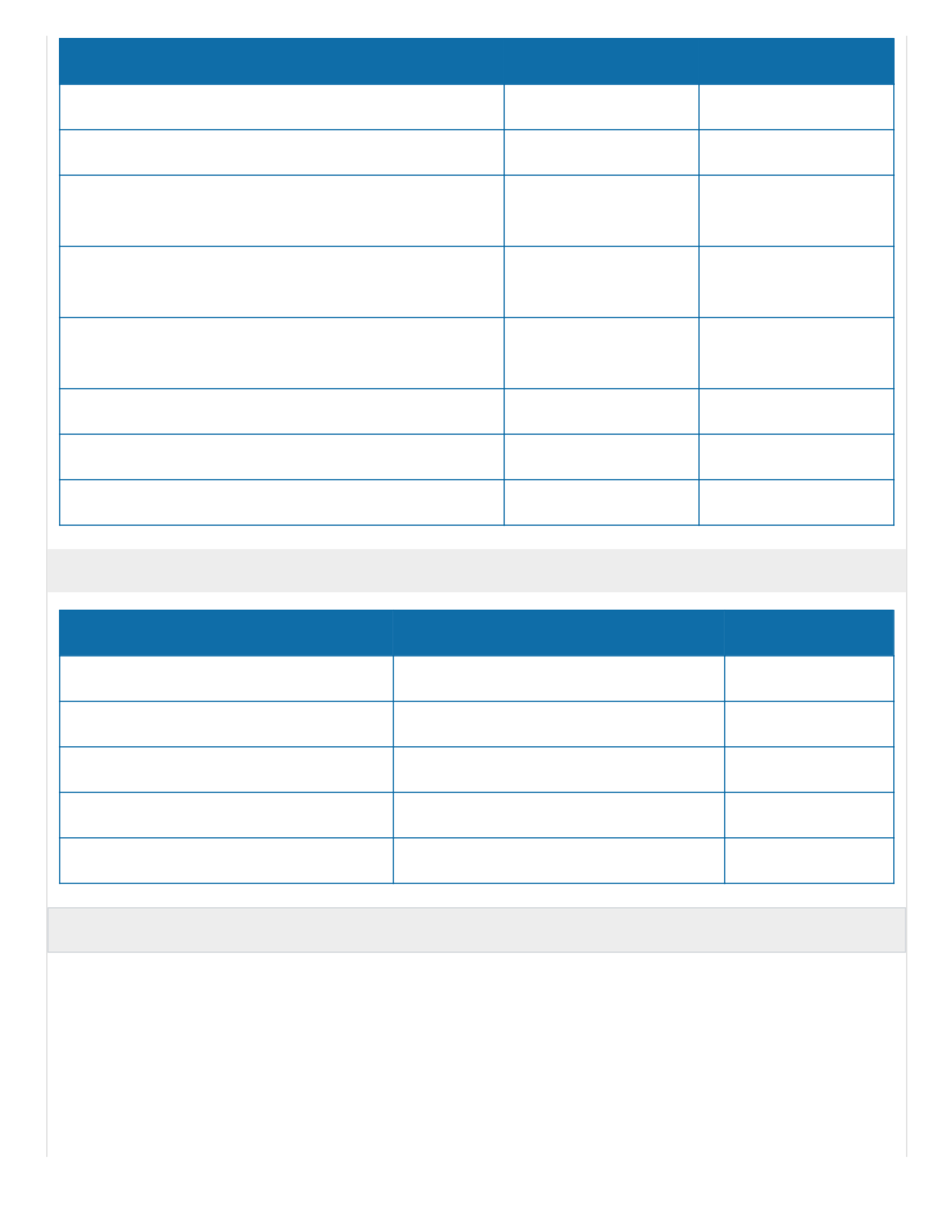
TT P P %% G G
A
Week 3 Activity - Data Quality and Data Collection
75 7.5%
Week 4 Assignment - Dataset Reporting
100 10%
Week 5 Activity - Key Coding and Classification
Systems
100 10%
Week 6 Assignment - The Relationship Between
Coding and Reimbursement
100 10%
Week 8 Assignment - Health Information
Committee
125 12.5%
Week 9 Activity - Benefits of Telehealth Proposal
100 10%
Week 10 Assignment - Benefits of Telehealth
125 12.5%
Totals 1000 100%
Final Course Grade
P P G
900 - 1000 90% - 100%
A
800 - 899 80% - 89%
B
700 - 799 70% - 79%
C
600 - 699 60% - 69%
D
0 - 599 59% and below
F
Unique Course Features
Grading Scale Notation
Ⓒ 2020 Strayer University. All Rights Reserved. This document contains Strayer University Confidential and Proprietary
information and may not be copied, further distributed, or otherwise disclosed in whole or in part, without the expressed written
permission of Strayer University.

https://atlas.strategiced.com/app#offering/8627488/course/7084253/preview/courseguide
9/32
Please consult the University Catalog and your academic advisor to determine the final grade needed
in this class to satisfy your specific degree conferral requirements.
Academic Integrity
Please be sure to review the entire Academic Integrity Policy in the Student Handbook before
submitting anything in this course. In order to enforce its Academic Integrity Policy, the University
reserves the right to review any work (draft or otherwise) or exam submitted by a student during his or
her entire academic career at Strayer.
Assignments
W 3 A - D Q D C
Summary
Click the linked activity title to access this activity.
Text
Overview
The readings for Weeks 1 and 2 centered around gathering accurate patient data, and how this data
is reported to various outside agencies. We have discussed the importance of data sets, and why
the function of patient registration is key to obtaining accurate patient information. In your first
activity, you will identify patient data and enter it into the appropriate patient medical record. This
activity will provide you with hands-on experience in accurately building a patient medical record
from data that has been provided: Demographic Data, Socioeconomic Data, Financial Data, and
Administrative Data. This information will build a patient medical record and a patient profile.
Preparation
Download and review the Patient Medical Record Template [XLSX] and data. You will submit this
document once you have completed entering the information from the provided data tables.
Instructions
Ⓒ 2020 Strayer University. All Rights Reserved. This document contains Strayer University Confidential and Proprietary
information and may not be copied, further distributed, or otherwise disclosed in whole or in part, without the expressed written
permission of Strayer University.

https://atlas.strategiced.com/app#offering/8627488/course/7084253/preview/courseguide
10/32
Review the data listed in each category and create a patient medical record by entering the
appropriate patient information into the correct field of the patient medical record.
Select one patient in each category to create a patient profile in the Patient Medical Record
Template [XLSX].
Complete the Patient Demographic record with the provided data.
Complete the Patient Socioeconomic record with the provided data.
Complete the Patient Financial record with the provided data.
Complete the Patient Administrative record with the provided data.
Review the Patients’ Clinical information (the data has already been entered).
Scoring Guide
Complete the Patient Demographic record with the correct information. 25 %
Unacceptable
(Below 60%)
Did not complete
the Patient
Demographic
record.
Needs
Improvement (60-
69%)
Created the
Patient
Demographic
record but the
information is
incomplete.
Satisfactory (70-
79%)
Completed the
Patient
Demographic
record but the
information is
incorrect.
Competent (80-
89%)
Completed the
Patient
Demographic
record but there
are minor errors.
Exemplary (90-
100%)
Completed the
Patient
Demographic
record with the
correct
information.
Complete the Patient Socioeconomic record with the correct information. 25 %
Unacceptable
(Below 60%)
Did not complete
the Patient
Socioeconomic
record.
Needs
Improvement (60-
69%)
Created the
Patient
Socioeconomic
record but the
information is
incomplete.
Satisfactory (70-
79%)
Completed the
Patient
Socioeconomic
record but the
information is
incorrect.
Competent (80-
89%)
Completed the
Patient
Socioeconomic
record but there
are minor errors.
Exemplary (90-
100%)
Completed the
Patient
Socioeconomic
record with the
correct
information.
Ⓒ 2020 Strayer University. All Rights Reserved. This document contains Strayer University Confidential and Proprietary
information and may not be copied, further distributed, or otherwise disclosed in whole or in part, without the expressed written
permission of Strayer University.

https://atlas.strategiced.com/app#offering/8627488/course/7084253/preview/courseguide
11/32
Complete the Patient Financial record with the correct information. 25 %
Unacceptable
(Below 60%)
Did not complete
the Patient
Financial record.
Needs
Improvement (60-
69%)
Created the
Patient Financial
record but the
information is
incomplete.
Satisfactory (70-
79%)
Completed the
Patient Financial
record but the
information is
incorrect.
Competent (80-
89%)
Completed the
Patient Financial
record but there
are minor errors.
Exemplary (90-
100%)
Completed the
Patient Financial
record with the
correct
information.
Complete the Patient Administrative record with the correct information. 25 %
Unacceptable
(Below 60%)
Did not complete
the Patient
Administrative
record.
Needs
Improvement (60-
69%)
Created the
Patient
Administrative
record but the
information is
incomplete.
Satisfactory (70-
79%)
Completed the
Patient
Administrative
record but the
information is
incorrect.
Competent (80-
89%)
Completed the
Patient
Administrative
record but there
are minor errors.
Exemplary (90-
100%)
Completed the
Patient
Administrative
record with the
correct
information.
W 4 A - D R
Summary
Click the linked activity title to access this assignment.
Text
Overview
Collecting patient demographic, administrative, financial, and clinical data in healthcare is important.
Numerous organizations and regulatory agencies require the reporting of specific information on a
regularly scheduled basis. There are several organizations that are required to report specific
data, for example hospital (UHDDS), ambulatory services (UACDS), long-term care (MDS), and
several others.
Ⓒ 2020 Strayer University. All Rights Reserved. This document contains Strayer University Confidential and Proprietary
information and may not be copied, further distributed, or otherwise disclosed in whole or in part, without the expressed written
permission of Strayer University.

https://atlas.strategiced.com/app#offering/8627488/course/7084253/preview/courseguide
12/32
Instructions
For this assignment you will use the Data Reporting [DOCX] template to reflect on the work you did
in the Week 3 activity and write a two-page summary that briefly discusses what you learned
about the following:
Provide a summary of what information each
of the key patient medical record categories contain: patient demographic, socioeconomic, ad
ministrative, financial, and clinical data.
Explain the importance of ensuring the information entered into a medical record is correct and
complete and meets data quality standards.
Identify two regulatory organizations that collect patient medical record information and how
they use the data.
As a healthcare manager, it is important to understand the coding process and what different codes
mean.
For this assignment, use Data Reporting [DOCX] to enter the following information in the provided
table:
1. Define what each category below is and how it is used.
2. Identify three diagnosis codes for each category below.
DRG.
ICD-10.
HCPCS.
NDC.
CPT.
MCS.
This course requires the use of Strayer Writing Standards. For assistance and information, please
refer to the Strayer Writing Standards link in the left-hand menu of your course. Check with your
professor for any additional instructions.
The specific course learning outcomes associated with this assignment are:
Analyze the structure, content, and data required for accurately documented health records.
Analyze the importance of coding and classification systems in delivering healthcare. services,
regulatory compliance, and reimbursement.
Ⓒ 2020 Strayer University. All Rights Reserved. This document contains Strayer University Confidential and Proprietary
information and may not be copied, further distributed, or otherwise disclosed in whole or in part, without the expressed written
permission of Strayer University.

https://atlas.strategiced.com/app#offering/8627488/course/7084253/preview/courseguide
13/32
Scoring Guide
Provide a summary of what information each of the key patient medical record categories contain. 20
%
Unacceptable
(Below 60%)
Did not provide a
summary of what
information each
of the key patient
medical record
categories
contain.
Needs
Improvement (60-
69%)
Provided a
summary of what
information each
of the key patient
medical record
categories
contain, but the
summary is
incomplete.
Satisfactory (70-
79%)
Provided a
summary of what
information each
of the key patient
medical record
categories
contain, but the
summary is
incorrect.
Competent (80-
89%)
Provided a
summary of what
information each
of the key patient
medical record
categories
contain, but the
content lacked
clarity.
Exemplary (90-
100%)
Provided a
summary of what
information each
of the key patient
medical record
categories
contain.
Explain the importance of ensuring the information entered into a medical record is correct and
complete and meets data quality standards. 20 %
Unacceptable
(Below 60%)
Did not explain
the importance of
ensuring the
information
entered into a
medical record is
correct and
complete and
meets data
quality
standards.
Needs
Improvement (60-
69%)
Explained the
importance of
ensuring the
information
entered into a
medical record is
correct and
complete and
meets data
quality
standards, but
the explanation
is incomplete.
Satisfactory (70-
79%)
Explained of
ensuring the
information
entered into a
medical record is
correct and
complete and
meets data
quality
standards, but
the explanation
is incorrect.
Competent (80-
89%)
Explained the
importance of
ensuring the
information
entered into a
medical record is
correct and
complete and
meets data
quality
standards, but
the explanation
lacked clarity.
Exemplary (90-
100%)
Explained the
importance of
ensuring the
information
entered into a
medical record is
correct and
complete and
meets data
quality
standards.
Ⓒ 2020 Strayer University. All Rights Reserved. This document contains Strayer University Confidential and Proprietary
information and may not be copied, further distributed, or otherwise disclosed in whole or in part, without the expressed written
permission of Strayer University.

https://atlas.strategiced.com/app#offering/8627488/course/7084253/preview/courseguide
14/32
Identify two regulatory organizations that collect patient medical record information, and how they useIdentify two reg
the data. 20 %
Unacceptable
(Below 60%)
Did not identify
two regulatory
organizations
that collect
patient medical
record
information, and
how they use the
data.
Needs
Improvement (60-
69%)
Identified one
regulatory
organization that
collects patient
medical record
information, and
how they use the
data.
Satisfactory (70-
79%)
Identified two
regulatory
organizations
that collect
patient medical
record
information, and
how they use the
data but one or
both regulatory
organizations
identified are
incorrect .
Competent (80-
89%)
Identified two
regulatory
organizations
that collect
patient medical
record
information, and
how they use the
data, but there
are minor errors.
Exemplary (90-
100%)
Identified two
regulatory
organizations
that collect
patient medical
record
information, and
how they use the
data.
Define what each category is and how it is used. 15 %
Unacceptable
(Below 60%)
Did not define
what each
category is and
how it is used.
Needs
Improvement (60-
69%)
Defined what
each category is
and how it is
used, but the
definitions are
incomplete.
Satisfactory (70-
79%)
Defined what
each category
code is and how
it is used, but
some of the
definitions are
incorrect.
Competent (80-
89%)
Defined what
each category is
and how it is
used, but the
definitions lacked
clarity.
Exemplary (90-
100%)
Defined what
each category is
and how it is
used.
Ⓒ 2020 Strayer University. All Rights Reserved. This document contains Strayer University Confidential and Proprietary
information and may not be copied, further distributed, or otherwise disclosed in whole or in part, without the expressed written
permission of Strayer University.

https://atlas.strategiced.com/app#offering/8627488/course/7084253/preview/courseguide
15/32
Identify three diagnosis codes for each category. 15 %
Unacceptable
(Below 60%)
Did not identify
codes for each
category.
Needs
Improvement (60-
69%)
Identified one
diagnosis code
for each
category.
Satisfactory (70-
79%)
Identified two
diagnosis codes
for each
category.
Competent (80-
89%)
Identified three
diagnosis codes
for each
category, but
there are minor
errors.
Exemplary (90-
100%)
Identified three
diagnosis codes
for each
category.
Clarity, writing mechanics, and SWS formatting requirements. 10 %
Unacceptable
(Below 60%)
More than 8
errors present.
Needs
Improvement (60-
69%)
7–8 errors
present.
Satisfactory (70-
79%)
5–6 errors
present.
Competent (80-
89%)
3–4 errors
present.
Exemplary (90-
100%)
0–2 errors
present.
W 5 A - K C C S
Summary
Click the linked activity title to access this activity.
Text
Overview
In healthcare, it is important to understand the use of classification systems, nomenclature, and
clinical vocabularies. In this activity, you will learn about the key coding and classification systems
used by clinicians, insurance carriers, state and federal regulatory organizations, and researchers.
Instructions
For this activity, you will need to understand the uses for coded clinical data, why it is
important that coding be accurate, the purpose of the coding system, and the purpose of coding
compliance. The resources provided for this activity will provide the information you need to
Ⓒ 2020 Strayer University. All Rights Reserved. This document contains Strayer University Confidential and Proprietary
information and may not be copied, further distributed, or otherwise disclosed in whole or in part, without the expressed written
permission of Strayer University.

https://atlas.strategiced.com/app#offering/8627488/course/7084253/preview/courseguide
16/32
understand these concepts and complete the information requested in the Coding
Table [DOCX] document.
1. Explain the purpose of each code listed in the table, briefly.
2. Demonstrate your understanding of the coding system by providing the name of the code.
Example Code: E10.641 Name: Type 1 diabetes mellitus with hypoglycemia with coma).
Scoring Guide
Explain the purpose of each code listed in the table. 45 %
Unacceptable
(Below 60%)
Did not explain
the purpose of
each code listed
in the table.
Needs
Improvement (60-
69%)
Explained the
purpose of each
code listed in the
table, but the
explanation was
incomplete.
Satisfactory (70-
79%)
Explained the
purpose of each
code listed in the
table, but the
explanation was
incorrect.
Competent (80-
89%)
Explained the
purpose of each
code listed in the
table, but the
explanation
lacked clarity.
Exemplary (90-
100%)
Explained the
purpose of each
code listed in the
table.
Demonstrate an understanding of the coding system by providing the correct names of the codes in
the table. 45 %
Unacceptable
(Below 60%)
Did not provide
names of the
codes in the
table.
Needs
Improvement (60-
69%)
Demonstrated
some
understanding of
the coding
system by
providing names
of the codes in
the table, but not
all of them.
Satisfactory (70-
79%)
Demonstrated
some
understanding of
the coding
system, by
providing some
but not all of the
names are
correct.
Competent (80-
89%)
Demonstrated
understanding of
the coding
system by
providing names
of the codes in
the table, but
there are minor
errors.
Exemplary (90-
100%)
Demonstrated
your
understanding of
the coding
system by
providing the
correct names of
the codes in the
table.
Ⓒ 2020 Strayer University. All Rights Reserved. This document contains Strayer University Confidential and Proprietary
information and may not be copied, further distributed, or otherwise disclosed in whole or in part, without the expressed written
permission of Strayer University.

https://atlas.strategiced.com/app#offering/8627488/course/7084253/preview/courseguide
17/32
Clarity, writing mechanics, and SWS formatting requirements. 10 %
Unacceptable
(Below 60%)
More than 8
errors present.
Needs
Improvement (60-
69%)
7–8 errors
present.
Satisfactory (70-
79%)
5–6 errors
present.
Competent (80-
89%)
3–4 errors
present.
Exemplary (90-
100%)
0–2 errors
present.
W 6 A - T R B C R
Summary
Click the linked activity title to access this assignment.
Text
Overview
As a healthcare leader, it is important to understand the relationship between coding and
reimbursement. This assignment is designed to illustrate this relationship using key inpatient and
outpatient reporting documents.
Instructions
Write a 3-page summary that addresses the topics below:
Discuss when or where the revenue cycle process begins for inpatient and
outpatient/ambulatory services.
Describe how inpatient charges are captured in an inpatient setting.
Describe how ambulatory charges are captured in an ambulatory setting.
Describe the importance of the information in the physician office encounter form.
Analyze the similarities and differences between the UB-04 and the CMS-1500.
Discuss one reason a medical claim would be denied?
This course requires the use of Strayer Writing Standards. For assistance and information, please
refer to the Strayer Writing Standards link in the left-hand menu of your course. Check with your
professor for any additional instructions.
Ⓒ 2020 Strayer University. All Rights Reserved. This document contains Strayer University Confidential and Proprietary
information and may not be copied, further distributed, or otherwise disclosed in whole or in part, without the expressed written
permission of Strayer University.

https://atlas.strategiced.com/app#offering/8627488/course/7084253/preview/courseguide
18/32
The specific course learning outcome associated with this assignment is:
Analyze the importance of coding and classification systems in delivering healthcare services,
regulatory compliance, and reimbursement.
Scoring Guide
Discuss when or where the revenue cycle process begins for inpatient and outpatient/ ambulatory
services. 15 %
Unacceptable
(Below 60%)
Did not discuss
when or where
the revenue
cycle process
begins for
inpatient and
outpatient/
ambulatory
services.
Needs
Improvement (60-
69%)
Discussed when
or where the
revenue cycle
process begins
for inpatient and
outpatient/
ambulatory
services, but the
discussion is
incomplete.
Satisfactory (70-
79%)
Discussed when
or where the
revenue cycle
process begins
for inpatient and
outpatient/
ambulatory
services, but the
content is
incorrect.
Competent (80-
89%)
Discussed when
or where the
revenue cycle
process begins
for inpatient and
outpatient/
ambulatory
services, but the
content lacked
clarity.
Exemplary (90-
100%)
Discussed when
or where the
revenue cycle
process begins
for inpatient and
outpatient/
ambulatory
services.
Describe how inpatient charges are captured in an inpatient setting. 15 %
Unacceptable
(Below 60%)
Did not describe
how inpatient
charges are
captured in an
inpatient setting.
Needs
Improvement (60-
69%)
Described how
inpatient charges
are captured in
an inpatient
setting, but the
description is
incomplete.
Satisfactory (70-
79%)
Described how
inpatient charges
are captured in
an inpatient
setting, but the
description is
incorrect.
Competent (80-
89%)
Described how
inpatient charges
are captured in
an inpatient
setting, but the
description
lacked clarity.
Exemplary (90-
100%)
Described how
inpatient charges
are captured in
an inpatient
setting.
Ⓒ 2020 Strayer University. All Rights Reserved. This document contains Strayer University Confidential and Proprietary
information and may not be copied, further distributed, or otherwise disclosed in whole or in part, without the expressed written
permission of Strayer University.

https://atlas.strategiced.com/app#offering/8627488/course/7084253/preview/courseguide
19/32
Describe how ambulatory charges are captured in an ambulatory setting. 15 %
Unacceptable
(Below 60%)
Did not describe
how ambulatory
charges are
captured in an
ambulatory
setting.
Needs
Improvement (60-
69%)
Described how
ambulatory
charges are
captured in an
ambulatory
setting, but the
description is
incomplete.
Satisfactory (70-
79%)
Described how
ambulatory
charges are
captured in an
ambulatory
setting, but the
description is
incorrect.
Competent (80-
89%)
Described how
ambulatory
charges are
captured in an
ambulatory
setting, but the
description
lacked clarity.
Exemplary (90-
100%)
Described how
ambulatory
charges are
captured in an
ambulatory
setting.
Describe the importance of the information in the physician office encounter form. 15 %
Unacceptable
(Below 60%)
Did not describe
the importance of
the information in
the physician
office encounter
form.
Needs
Improvement (60-
69%)
Described the
importance of the
information in the
physician office
encounter form,
but the
description is
incomplete.
Satisfactory (70-
79%)
Described the
importance of the
information in the
physician office
encounter form,
but the
description is
incorrect.
Competent (80-
89%)
Described the
importance of the
information in the
physician office
encounter form,
but the
description
lacked clarity.
Exemplary (90-
100%)
Described the
importance of the
information in the
physician office
encounter form.
Ⓒ 2020 Strayer University. All Rights Reserved. This document contains Strayer University Confidential and Proprietary
information and may not be copied, further distributed, or otherwise disclosed in whole or in part, without the expressed written
permission of Strayer University.

https://atlas.strategiced.com/app#offering/8627488/course/7084253/preview/courseguide
20/32
Analyze the similarities and differences between the UB-04 and the CMS-1500. 15 %
Unacceptable
(Below 60%)
Did not analyze
the similarities
and differences
between the UB-
04 and the CMS-
1500.
Needs
Improvement (60-
69%)
Analyzed the
similarities and
differences
between the UB-
04 and the CMS-
1500, but the
analysis is
incomplete.
Satisfactory (70-
79%)
Analyzed the
similarities and
differences
between the UB-
04 and the CMS-
1500, but the
analysis is
incorrect.
Competent (80-
89%)
Analyzed the
similarities and
differences
between the UB-
04 and the CMS-
1500, but the
analysis lacked
clarity.
Exemplary (90-
100%)
Analyzed the
similarities and
differences
between the UB-
04 and the CMS-
1500.
Discuss one reason why a medical claim would be denied. 15 %
Unacceptable
(Below 60%)
Did not discuss
one reason why
a medical claim
would be denied.
Needs
Improvement (60-
69%)
Discussed one
reason why a
medical claim
would be denied,
but the
discussion is
incomplete.
Satisfactory (70-
79%)
Discussed one
reason why a
medical claim
would be denied,
but the
discussion
content is
incorrect.
Competent (80-
89%)
Discussed one
reason why a
medical claim
would be denied,
but the
discussion
lacked clarity.
Exemplary (90-
100%)
Discussed one
reason why a
medical claim
would be denied.
Clarity, writing mechanics, and SWS formatting requirements. 10 %
Unacceptable
(Below 60%)
More than 8
errors present.
Needs
Improvement (60-
69%)
7–8 errors
present.
Satisfactory (70-
79%)
5–6 errors
present.
Competent (80-
89%)
3–4 errors
present.
Exemplary (90-
100%)
0–2 errors
present.
W 8 A - H I C
Ⓒ 2020 Strayer University. All Rights Reserved. This document contains Strayer University Confidential and Proprietary
information and may not be copied, further distributed, or otherwise disclosed in whole or in part, without the expressed written
permission of Strayer University.

https://atlas.strategiced.com/app#offering/8627488/course/7084253/preview/courseguide
21/32
Summary
Click the linked activity title to access this assignment.
Text
Overview
This assignment covers all the regulations, policies, and laws that govern healthcare—medical and
health records—and regulatory compliance. For this assignment, you will develop a report that will
cover information regarding HIPAA, patient privacy, release of information, healthcare licensing,
accreditation, safety, and risk assessment. It is important to understand how all these components
work together to protect the healthcare provider and the patient.
Instructions
View the Health Information Committee Scenario for Central City hospital and then develop a five-
page report detailing each of the components listed below.
Explain the importance of being accredited by The Joint Commission.
Discuss the difference between licensing and accreditation.
Explain the difference between privacy, confidentiality, and security in the healthcare setting.
Discuss the importance of PHI and the function of the HIPAA Privacy rule.
Explain the importance of patients knowing their health information will not be shared without
the Authorization for Release of Information.
Discuss the importance of ethics and ethical behavior in healthcare.
Explain risk management and why it is important in healthcare.
For help with research, writing, and citation, access the library or review library guides.
This course requires the use of Strayer Writing Standards. For assistance and information, please
refer to the Strayer Writing Standards link in the left-hand menu of your course. Check with your
professor for any additional instructions.
The specific course learning outcome associated with this assignment is:
Assess how administrative, legal, regulatory, and professional standards impact patient care
delivery and outcomes.
Ⓒ 2020 Strayer University. All Rights Reserved. This document contains Strayer University Confidential and Proprietary
information and may not be copied, further distributed, or otherwise disclosed in whole or in part, without the expressed written
permission of Strayer University.

https://atlas.strategiced.com/app#offering/8627488/course/7084253/preview/courseguide
22/32
Scoring Guide
Explain the importance of being accredited by The Joint Commission. 10 %
Unacceptable
(Below 60%)
Did not explain
the importance of
being accredited
by The Joint
Commission.
Needs
Improvement (60-
69%)
Explained the
importance of
being accredited
by The Joint
Commission, but
the explanation
is incomplete.
Satisfactory (70-
79%)
Explained the
importance of
being accredited
by The Joint
Commission, but
the explanation
is incorrect.
Competent (80-
89%)
Explained the
importance of
being accredited
by The Joint
Commission, but
the explanation
lacked clarity.
Exemplary (90-
100%)
Explained the
importance of
being accredited
by The Joint
Commission.
Discuss the difference between licensing and accreditation. 10 %
Unacceptable
(Below 60%)
Did not discuss
the difference
between
licensing and
accreditation.
Needs
Improvement (60-
69%)
Discussed the
difference
between
licensing and
accreditation, but
the discussion is
incomplete.
Satisfactory (70-
79%)
Discussed the
difference
between
licensing and
accreditation, but
the discussion is
incorrect.
Competent (80-
89%)
Discussed the
difference
between
licensing and
accreditation, but
the discussion
lacked clarity.
Exemplary (90-
100%)
Discussed the
difference
between
licensing and
accreditation.
Ⓒ 2020 Strayer University. All Rights Reserved. This document contains Strayer University Confidential and Proprietary
information and may not be copied, further distributed, or otherwise disclosed in whole or in part, without the expressed written
permission of Strayer University.

https://atlas.strategiced.com/app#offering/8627488/course/7084253/preview/courseguide
23/32
Explain the difference between privacy, confidentiality, and security in the healthcare setting. 10 %
Unacceptable
(Below 60%)
Did not explain
the difference
between privacy,
confidentiality,
and security in
the healthcare
setting.
Needs
Improvement (60-
69%)
Explained the
difference
between privacy,
confidentiality,
and security in
the healthcare
setting, but the
explanation is
incomplete.
Satisfactory (70-
79%)
Explained the
difference
between privacy,
confidentiality,
and security in
the healthcare
setting, but the
explanation is
incorrect.
Competent (80-
89%)
Explained the
difference
between privacy,
confidentiality,
and security in
the healthcare
setting, but the
explanation
lacked clarity.
Exemplary (90-
100%)
Explained the
difference
between privacy,
confidentiality,
and security in
the healthcare
setting.
Discuss the importance of PHI and the function of the HIPAA Privacy rule. 15 %
Unacceptable
(Below 60%)
Did not discuss
the importance of
PHI and the
function of the
HIPAA Privacy
rule.
Needs
Improvement (60-
69%)
Discussed the
importance of
PHI and the
function of the
HIPAA Privacy
rule, but the
discussion is
incomplete.
Satisfactory (70-
79%)
Discussed the
importance of
PHI and the
function of the
HIPAA Privacy
rule, but the
discussion is
incorrect.
Competent (80-
89%)
Discussed the
importance of
PHI and the
function of the
HIPAA Privacy
rule, but the
discussion
lacked clarity.
Exemplary (90-
100%)
Discussed the
importance of
PHI and the
function of the
HIPAA Privacy
rule.
Ⓒ 2020 Strayer University. All Rights Reserved. This document contains Strayer University Confidential and Proprietary
information and may not be copied, further distributed, or otherwise disclosed in whole or in part, without the expressed written
permission of Strayer University.

https://atlas.strategiced.com/app#offering/8627488/course/7084253/preview/courseguide
24/32
Explain the importance of patients knowing their health information will not be shared without the
Authorization for Release of Information. 15 %
Unacceptable
(Below 60%)
Did not explain
the importance of
patients knowing
their health
information will
not be shared
without the
Authorization for
Release of
Information.
Needs
Improvement (60-
69%)
Explained the
importance of
patients knowing
their health
information will
not be shared
without the
Authorization for
Release of
Information, but
the explanation
is incomplete.
Satisfactory (70-
79%)
Explained the
importance of
patients knowing
their health
information will
not be shared
without the
Authorization for
Release of
Information, but
the explanation
is incorrect.
Competent (80-
89%)
Explained the
importance of
patients knowing
their health
information will
not be shared
without the
Authorization for
Release of
Information, but
the explanation
lacked clarity.
Exemplary (90-
100%)
Explained the
importance of
patients knowing
their health
information will
not be shared
without the
Authorization for
Release of
Information.
Discuss the importance of ethics and ethical behavior in healthcare. 15 %
Unacceptable
(Below 60%)
Did not discuss
the importance of
ethics and ethical
behavior in
healthcare.
Needs
Improvement (60-
69%)
Discussed the
importance of
ethics and ethical
behavior in
healthcare, but
the discussion is
incomplete.
Satisfactory (70-
79%)
Discussed the
importance of
ethics and ethical
behavior in
healthcare, but
the discussion is
incorrect.
Competent (80-
89%)
Discussed the
importance of
ethics and ethical
behavior in
healthcare, but
the discussion
lacked clarity.
Exemplary (90-
100%)
Discussed the
importance of
ethics and ethical
behavior in
healthcare.
Ⓒ 2020 Strayer University. All Rights Reserved. This document contains Strayer University Confidential and Proprietary
information and may not be copied, further distributed, or otherwise disclosed in whole or in part, without the expressed written
permission of Strayer University.

https://atlas.strategiced.com/app#offering/8627488/course/7084253/preview/courseguide
25/32
Explain risk management and why it is important in healthcare. 15 %
Unacceptable
(Below 60%)
Did not explain
risk management
and why it is
important in
healthcare.
Needs
Improvement (60-
69%)
Explained risk
management
and why it is
important in
healthcare, but
the explanation
is incomplete.
Satisfactory (70-
79%)
Explained risk
management
and why it is
important in
healthcare, but
the explanation
is incorrect.
Competent (80-
89%)
Explained risk
management
and why it is
important in
health care, but
the explanation
lacked clarity.
Exemplary (90-
100%)
Explained risk
management
and why it is
important in
healthcare.
Clarity, writing mechanics, and SWS formatting requirement. 10 %
Unacceptable
(Below 60%)
More than 8
errors present.
Needs
Improvement (60-
69%)
7–8 errors
present.
Satisfactory (70-
79%)
5–6 errors
present.
Competent (80-
89%)
3–4 errors
present.
Exemplary (90-
100%)
0–2 errors
present.
W 9 A - B T P
Summary
Click the linked activity title to access this activity.
Text
Overview
This week, you will submit your telehealth device proposal for the Week 10 assignment. Review
the Week 10 assignment to get a head start. Your proposal will need to be submitted and approved
before the final assignment is accepted.
Instructions
You will use the provided Proposal [DOCX] document to complete this activity.
Ⓒ 2020 Strayer University. All Rights Reserved. This document contains Strayer University Confidential and Proprietary
information and may not be copied, further distributed, or otherwise disclosed in whole or in part, without the expressed written
permission of Strayer University.

https://atlas.strategiced.com/app#offering/8627488/course/7084253/preview/courseguide
26/32
1. Complete the proposal for a specific telehealth device, program, or service.
2. Submit a proposal to the instructor that is complete, accurate, and clear for approval.
Note: Only five students will be approved to use a telemedicine device as their chosen electronic
device.
This course requires the use of Strayer Writing Standards. For assistance and information, please
refer to the Strayer Writing Standards link in the left-hand menu of your course. Check with your
professor for any additional instructions.
Scoring Guide
Complete the proposal for a specific telehealth device, program, or service. 50 %
Unacceptable
(Below 60%)
Did not complete
the proposal for
a specific
telehealth
device, program,
or service.
Needs
Improvement (60-
69%)
Completed the
proposal for a
specific
telehealth
device, program,
or service, but
the proposal is
incomplete and
was returned to
be completed.
Satisfactory (70-
79%)
Completed the
proposal for a
specific
telehealth
device, program,
or service, but
the proposal is
incorrect and
was returned for
corrections.
Competent (80-
89%)
Completed the
proposal for a
specific
telehealth
device, program,
or service, but
the proposal
lacked clarity and
was returned for
additional clarity.
Exemplary (90-
100%)
Completed the
proposal for a
specific
telehealth
device, program,
or service.
Submit the proposal to the instructor. 50 %
Unacceptable
(Below 60%)
Did not submit
the proposal to
the instructor.
Needs
Improvement (60-
69%)
Submitted the
proposal to the
instructor, but it
was incomplete.
Satisfactory (70-
79%)
Submitted the
proposal to the
instructor, but it
was incorrect.
Competent (80-
89%)
Submitted the
proposal to the
instructor but it
lacked clarity.
Exemplary (90-
100%)
Submitted the
proposal to the
instructor.
Ⓒ 2020 Strayer University. All Rights Reserved. This document contains Strayer University Confidential and Proprietary
information and may not be copied, further distributed, or otherwise disclosed in whole or in part, without the expressed written
permission of Strayer University.

https://atlas.strategiced.com/app#offering/8627488/course/7084253/preview/courseguide
27/32
W 10 A - B T
Summary
Click the linked activity title to access this assignment.
Text
Overview
This assignment focuses on identifying a program, situation, clinical service, or public awareness
initiative that will benefit from the use of telehealth. This assignment will integrate concepts learned
in prior assignments.
Submit your Proposal
If you have not submitted a Proposal [DOCX] document for a specific telehealth device, program, or
service as the subject of your presentation you need to submit the proposal to the instructor for
approval before starting this assignment.
Instructions
You will develop a 15-slide PowerPoint presentation addressing the
following components of the proposal. Include a minimum of seven resources with in-text citations
and a resource page.
Explain how a specific program, situation, clinical service, or public awareness initiative would
benefit from the integration of a telehealth device.
Describe the specific telehealth device you selected to resolve your specific situation.
Include the name of the manufacturer and an image or link to an image of the telehealth device
you are proposing.
Explain where the telehealth device will be used.
Examples include hospital, outpatient, ambulatory surgery, long-term care, hospice, physician
private practice, in a home, remote area, or on a person.
Explain the type of clinical information that will be gathered using the telehealth device.
Select at least one clinical data point.
Ⓒ 2020 Strayer University. All Rights Reserved. This document contains Strayer University Confidential and Proprietary
information and may not be copied, further distributed, or otherwise disclosed in whole or in part, without the expressed written
permission of Strayer University.

https://atlas.strategiced.com/app#offering/8627488/course/7084253/preview/courseguide
28/32
Explain how consent for treatment, service, or use will be obtained for telehealth services or
device use, and how the information generated from the use of the telehealth device will be
protected.
Discuss at least one perceived risk and ethical issue associated with the telehealth device you
have selected.
Summarize your findings in the final slide and include detailed speaker notes for each slide.
This course requires the use of Strayer Writing Standards. For assistance and information, please
refer to the Strayer Writing Standards link in the left-hand menu of your course. Check with your
professor for any additional instructions.
The specific course learning outcome associated with this assignment is:
Propose strategies to use telehealth to improve healthcare delivery and outcomes.
Scoring Guide
Explain how a specific program, situation, clinical service, or public awareness initiative would benefit
from the integration of a telehealth device. 15 %
Unacceptable
(Below 60%)
Did not explain
how a specific
program,
situation, clinical
service, or public
awareness
initiative would
benefit from the
integration of a
telehealth
device.
Needs
Improvement (60-
69%)
Explained how a
specific program,
situation, clinical
service, or public
awareness
initiative would
benefit from the
integration of a
telehealth
device, but the
explanation was
incorrect.
Satisfactory (70-
79%)
Explained how a
specific program,
situation, clinical
service, or public
awareness
initiative would
benefit from the
integration of a
telehealth
device, but the
explanation was
incomplete.
Competent (80-
89%)
Explained how a
specific program,
situation, clinical
service, or public
awareness
initiative would
benefit from the
integration of a
telehealth
device, but the
explanation
lacked clarity.
Exemplary (90-
100%)
Explained how a
specific program,
situation, clinical
service, or public
awareness
initiative would
benefit from the
integration of a
telehealth
device.
Ⓒ 2020 Strayer University. All Rights Reserved. This document contains Strayer University Confidential and Proprietary
information and may not be copied, further distributed, or otherwise disclosed in whole or in part, without the expressed written
permission of Strayer University.

https://atlas.strategiced.com/app#offering/8627488/course/7084253/preview/courseguide
29/32
Describe the specific telehealth device you selected, including the name of the manufacturer and an
image or link to the image. 15 %
Unacceptable
(Below 60%)
Did not describe
the specific
telehealth device
you selected,
include the name
of the
manufacturer
and an image or
link to the image.
Needs
Improvement (60-
69%)
Described the
specific
telehealth device
you selected,
include the name
of the
manufacturer
and an image or
link to the image,
but the
description was
incorrect.
Satisfactory (70-
79%)
Described the
specific
telehealth device
you selected,
include the name
of the
manufacturer
and an image or
link to the image,
but the
description was
incomplete.
Competent (80-
89%)
Described the
specific
telehealth device
you selected,
include the name
of the
manufacturer
and an image or
link to the image,
but the
description
lacked clarity.
Exemplary (90-
100%)
Described the
specific
telehealth device
you selected,
include the name
of the
manufacturer
and an image or
link to the image.
Explain where the telehealth device will be used. 15 %
Unacceptable
(Below 60%)
Did not explain
where the
telehealth device
will be used.
Needs
Improvement (60-
69%)
Explained where
the telehealth
device will be
used, the
explanation was
incorrect.
Satisfactory (70-
79%)
Explained where
the telehealth
device will be
used, but the
explanation was
incomplete.
Competent (80-
89%)
Explained where
the telehealth
device will be
used, but the
explanation
lacked clarity.
Exemplary (90-
100%)
Explained where
the telehealth
device will be
used.
Ⓒ 2020 Strayer University. All Rights Reserved. This document contains Strayer University Confidential and Proprietary
information and may not be copied, further distributed, or otherwise disclosed in whole or in part, without the expressed written
permission of Strayer University.

https://atlas.strategiced.com/app#offering/8627488/course/7084253/preview/courseguide
30/32
Explain the type of clinical information that will be gathered and one data point using the telehealth
device. 15 %
Unacceptable
(Below 60%)
Did not explain
the type of
clinical
information that
will be gathered
and one data
point using the
telehealth
device.
Needs
Improvement (60-
69%)
Explained the
type of clinical
information that
will be gathered
and one data
point using the
telehealth
device, but the
explanation was
incorrect.
Satisfactory (70-
79%)
Explained the
type of clinical
information that
will be gathered
and one data
point using the
telehealth
device, but the
explanation was
incomplete.
Competent (80-
89%)
Explained the
type of clinical
information that
will be gathered
and one data
point using the
telehealth
device, but the
explanation
lacked clarity.
Exemplary (90-
100%)
Explained the
type of clinical
information that
will be gathered
and one data
point using the
telehealth
device.
Ⓒ 2020 Strayer University. All Rights Reserved. This document contains Strayer University Confidential and Proprietary
information and may not be copied, further distributed, or otherwise disclosed in whole or in part, without the expressed written
permission of Strayer University.

https://atlas.strategiced.com/app#offering/8627488/course/7084253/preview/courseguide
31/32
Explain how consent for treatment, service, or use will be obtained and how the information generated
using telehealth services or device will be protected. 15 %
Unacceptable
(Below 60%)
Did not explain
how consent for
treatment,
service, or use
will be obtained
and how the
information
generated using
telehealth
services or
device will be
protected.
Needs
Improvement (60-
69%)
Explained how
consent for
treatment,
service, or use
will be obtained
and how the
information
generated using
telehealth
services or
device will be
protected, but
the explanation
is incorrect.
Satisfactory (70-
79%)
Explained how
consent for
treatment,
service, or use
will be obtained
and how the
information
generated using
telehealth
services or
device will be
protected, but
the explanation
was incomplete.
Competent (80-
89%)
Explained how
consent for
treatment,
service, or use
will be obtained
and how the
information
generated using
telehealth
services or
device will be
protected, but
the explanation
lacked clarity.
Exemplary (90-
100%)
Explained how
consent for
treatment,
service, or use
will be obtained
and how the
information
generated using
telehealth
services or
device will be
protected.
Discuss at least one perceived risk and one ethical issue associated with the telehealth device
selected. 15 %
Unacceptable
(Below 60%)
Did not discuss
at least one
perceived risk
and one ethical
issue associated
with the
telehealth device
selected.
Needs
Improvement (60-
69%)
Discussed at
least one
perceived risk
and but not one
ethical issue
associated with
the telehealth
device selected.
Satisfactory (70-
79%)
Discussed at
least one
perceived risk
and one ethical
issue associated
with the
telehealth device
selected, but the
discussion was
incomplete.
Competent (80-
89%)
Discussed at
least one
perceived risk
and one ethical
issue associated
with the
telehealth device
selected, but the
discussion
lacked clarity.
Exemplary (90-
100%)
Discussed at
least one
perceived risk
and one ethical
issue associated
with the
telehealth device
selected.
Ⓒ 2020 Strayer University. All Rights Reserved. This document contains Strayer University Confidential and Proprietary
information and may not be copied, further distributed, or otherwise disclosed in whole or in part, without the expressed written
permission of Strayer University.

https://atlas.strategiced.com/app#offering/8627488/course/7084253/preview/courseguide
32/32
Summarize the findings in the final slide, include a minimum of seven resources with intext citation,
and a resource page and include detailed speaker notes for each slide. 10 %
Unacceptable
(Below 60%)
Did not
summarize the
findings in the
final slide,
include a
minimum of
seven resources
with intext
citation, and a
resource page
and did not
include detailed
speaker notes for
each slide.
Needs
Improvement (60-
69%)
Summarized the
findings in the
final slide, but
only included
one to two
resources with
intext citation,
and a resource
page, and did not
include detailed
speaker notes for
each slide.
Satisfactory (70-
79%)
Summarized the
findings in the
final slide, but
only included
three to four
resources with
intext citation,
and a resource
page and the
speaker notes for
each slide were
incomplete.
Competent (80-
89%)
Summarized the
findings in the
final slide, but
only included five
to six resources
with intext
citation, and a
resource page
and the speaker
notes for some of
the slides were
incorrect.
Exemplary (90-
100%)
Summarized the
findings in the
final slide,
included a
minimum of
seven resources
with intext
citation, and a
resource page
and included
detailed speaker
notes for each
slide.
Ⓒ 2020 Strayer University. All Rights Reserved. This document contains Strayer University Confidential and Proprietary
information and may not be copied, further distributed, or otherwise disclosed in whole or in part, without the expressed written
permission of Strayer University.
© 2021 Strategic Education, Inc.

