


EDU571
Preview: EDU571 : Evaluating School Programs
Course Guide
Prerequisites
Course Description
Instructional Materials
Ⓒ 2021 Strategic Education, Inc., Version 2
This course is designed to provide you with the knowledge, skills, and strategies involved to conduct or
participate in an evaluation in their schools, their organizations, and their communities. Evaluations
serve the interests of many people who want to ensure their schools, corporations, non-profit
organizations, and governments are held accountable. The focus of this course introduces the different
approaches and methods for conducting an evaluation. This course covers methodologies used in
evaluations to ensure accountability by measuring performance and outcomes to assess an
organization's needs to enhance learning.
Required Resources
Susan P. Giancola. 2020. Program Evaluation: Embedding Evaluation Into Program Design and
Development. EDU571 Blackboard Course.
NOAA Performance, Risk & Social Science Office. No date. Types of Program Evaluations.
https://www.performance.noaa.gov/program_evaluation_guide_types/
My-Peer. No date. Types of Evaluation. https://mypeer.org.au/monitoring-evaluation/types-of-evaluation/
No author. No date. What Works Clearinghouse. ies.ed.gov/ncee/wwc/
Ⓒ 2020 Strayer University. All Rights Reserved. This document contains Strayer University Confidential and Proprietary
information and may not be copied, further distributed, or otherwise disclosed in whole or in part, without the expressed written
permission of Strayer University.
Course Learning Outcomes
Weekly Course Schedule
W 1 - T D L
Learn: Read Chapter 1 in Program
Evaluation:
Embedding
Evaluation
into
Program
Design
and
Development
and its associated PowerPoint presentation.
Discuss: Introduce yourself and participate in the discussion, Program Evaluation Targets.
Prepare: Preview next week's activity, Selecting a Suitable Program for Evaluation.
W 2 - T D L
Learn: Read Chapter 2 in Program
Evaluation:
Embedding
Evaluation
into
Program
Design
and
Development
and its associated PowerPoint presentation.
Discuss: Participate in the discussion, Debate It: Expertise Versus a Consumer-Oriented Approach.
Assignment: Submit the activity, Selecting a Suitable Program for Evaluation.
Prepare: Preview next week's assignment, Project Part 1: Program Description and Initial
Assessment.
W 3 - T D L
Ⓒ 2021 Strategic Education, Inc., Version 2
Analyze elements of an educational program relevant to an evaluation.
1
Recommend an evaluation approach that is appropriate for a selected
program.
2
Create aspects of an evaluation plan that addresses program needs.
3
Create a data collection and reporting plan that analyzes data sources,
potential issues, and collection and reporting methods.
4
Ⓒ 2020 Strayer University. All Rights Reserved. This document contains Strayer University Confidential and Proprietary
information and may not be copied, further distributed, or otherwise disclosed in whole or in part, without the expressed written
permission of Strayer University.

W 3 - T D L
Learn: Read Chapter 3 in Program
Evaluation:
Embedding
Evaluation
into
Program
Design
and
Development
and its associated PowerPoint presentation.
Discuss: Participate in the discussion, Decision-Oriented Approaches.
Assignment: Submit the assignment, Project Part 1: Program Description and Initial Assessment.
W 4 - T D L
Learn: Read Chapter 4 in Embedding
Evaluation
into
Program
Design
and
Development
and its
associated PowerPoint presentation.
Prepare: Reflect on a design ideology to prepare for this week's discussion.
Discuss: Participate in the discussion, Impacts of a Change in Design Ideology.
Prepare: Preview next week's assignment, Project Part 2: Evaluation Approach.
W 5 - T D L
Learn: Read Chapter 5 in Program
Evaluation:
Embedding
Evaluation
into
Program
Design
and
Development
and its associated PowerPoint presentation.
Discuss: Participate in the discussion, Theory of Change or Theory of Action.
Assignment: Submit the assignment, Project Part 2: Evaluation Approach.
W 6 - T D L
Learn: Read Chapter 6 in Program
Evaluation:
Embedding
Evaluation
into
Program
Design
and
Development
and its associated PowerPoint presentation.
Discuss: Participate in the discussion, Looking Ahead with Quickbooks.
Prepare: Prepare for next week's activity, Evaluation Goal Analysis.
W 7 - T D L
Ⓒ 2021 Strategic Education, Inc., Version 2
Ⓒ 2020 Strayer University. All Rights Reserved. This document contains Strayer University Confidential and Proprietary
information and may not be copied, further distributed, or otherwise disclosed in whole or in part, without the expressed written
permission of Strayer University.

W 7 - T D L
Learn: Read Chapter 7 in Program
Evaluation:
Embedding
Evaluation
into
Program
Design
and
Development
and its associated PowerPoint presentation.
Discuss: Participate in the discussion, Evaluation Question Strategies.
Assignment: Submit the activity, Evaluation Goal Analysis.
W 8 - T D L
Learn: Read Chapter 8 in Program
Evaluation:
Embedding
Evaluation
into
Program
Design
and
Development
and its associated PowerPoint presentation.
Discuss: Participate in the discussion, Evaluation Designs.
W 9 - T D L
Learn: Read Chapter 9 in Program
Evaluation:
Embedding
Evaluation
into
Program
Design
and
Development
and its associated PowerPoint presentation.
Discuss: Participate in the discussion, Implementing Evaluations.
Prepare: Preview next week's assignment, Project Part 3: Evaluation Plan and Design.
W 10 - T D L
Learn: Read Chapter 10 in Program
Evaluation:
Embedding
Evaluation
into
Program
Design
and
Development
and its associated PowerPoint presentation.
Discuss: Participate in the discussion, Data Analysis.
Assignment: Submit the assignment, Project Part 3: Evaluation Plan and Design.
W 11 - T D L
Discuss: Participate in the discussion, Reflection.
Grading Scale
Ⓒ 2021 Strategic Education, Inc., Version 2
Ⓒ 2020 Strayer University. All Rights Reserved. This document contains Strayer University Confidential and Proprietary
information and may not be copied, further distributed, or otherwise disclosed in whole or in part, without the expressed written
permission of Strayer University.
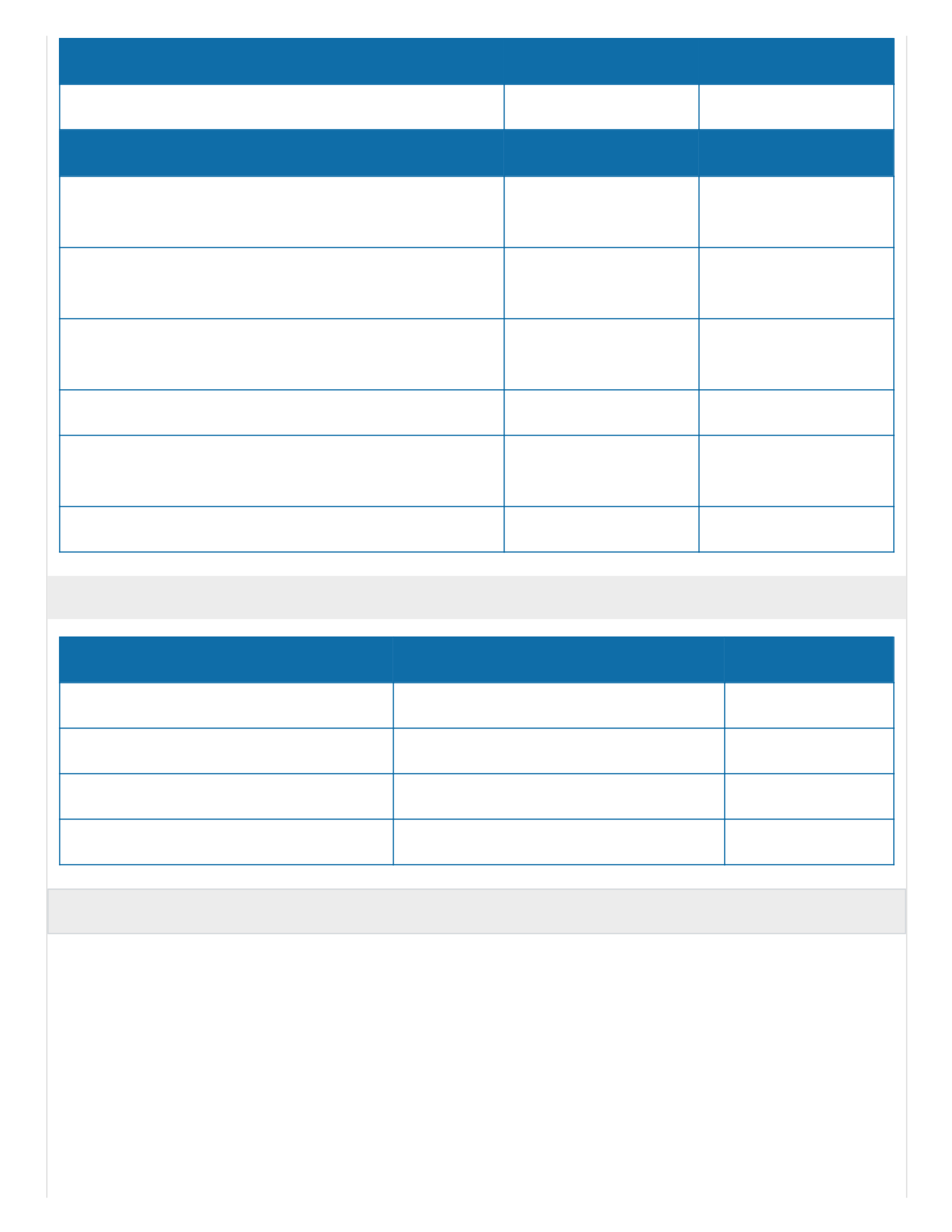
P T P % G P T P % G
Discussion Participation 330 33%
A T P % G
Week 2 Activity: Selecting a Suitable Program for
Evaluation
50 5%
Week 3 Assignment - Project Part 1: Program
Description and Initial Assessment
150 15%
Week 5 Assignment - Project Part 2: Evaluation
Approach
150 15%
Week 7 Activity: Evaluation Goal Analysis 50 5%
Week 10 Assignment - Project Part 3: Evaluation
Plan and Design
270 27%
Totals 1000 100%
Final Course Grade
P P G
900 - 1000 90% - 100% A
800 - 899 80% - 89% B
700 - 799 70% - 79% C
0 - 699 69% and below F
Unique Course Features
Grading Scale Notation
Please consult the University Catalog and your academic advisor to determine the final grade needed in
this class to satisfy your specific degree conferral requirements.
Ⓒ 2021 Strategic Education, Inc., Version 2
Ⓒ 2020 Strayer University. All Rights Reserved. This document contains Strayer University Confidential and Proprietary
information and may not be copied, further distributed, or otherwise disclosed in whole or in part, without the expressed written
permission of Strayer University.
Academic Integrity
Please be sure to review the entire Academic Integrity Policy in the Student Handbook before submitting
anything in this course. In order to enforce its Academic Integrity Policy, the University reserves the right
to review any work (draft or otherwise) or exam submitted by a student during his or her entire academic
career at Strayer.
Assignments
Ⓒ 2021 Strategic Education, Inc., Version 2
W 2 A : S S P E
Summary
Click the linked activity title to access this activity.
Text
Overview
In next week's assignment you start the first of your four–part Program Evaluation Plan by describing
and analyzing important aspects of your chosen program. This activity requires you to first choose a
program and then describe it.
Preparation
Selecting the proper program to evaluate is a critical step in creating a successful evaluation plan.
Select a K-12 program that you are interested in, would like to see evaluated, and most importantly, is
accessible—that is, one that you are able to readily obtain information about that will allow you to
complete all aspects of the project as described in the Course Project description. Failing to do this
will likely make your work more difficult.
Possible programs include, but are not limited to:
Student or teacher assessment.
Pay for student achievement.
New teacher or employee training.
Online learning.
Ⓒ 2020 Strayer University. All Rights Reserved. This document contains Strayer University Confidential and Proprietary
information and may not be copied, further distributed, or otherwise disclosed in whole or in part, without the expressed written
permission of Strayer University.
Ⓒ 2021 Strategic Education, Inc., Version 2
Anti-bullying.
Gender equity for girls in math and science.
School-to-work, retention of at-risk students.
Schools of choice (charter schools).
The following resources provide information on types of program evaluations:
Types of Program Evaluations.
Types of Evaluation.
Instructions
Identify your program (and provide a Web link to it if available) in a Word document, and briefly
describe it, making sure to include the following:
Program Type: Formative, summative, process, outcomes, and impact.
Target Population: Grade, age, gender, ethnicity, and special needs.
Mission and Philosophy.
Program Leadership: Briefly list major program stakeholders and their credentials.
Program partners, if any.
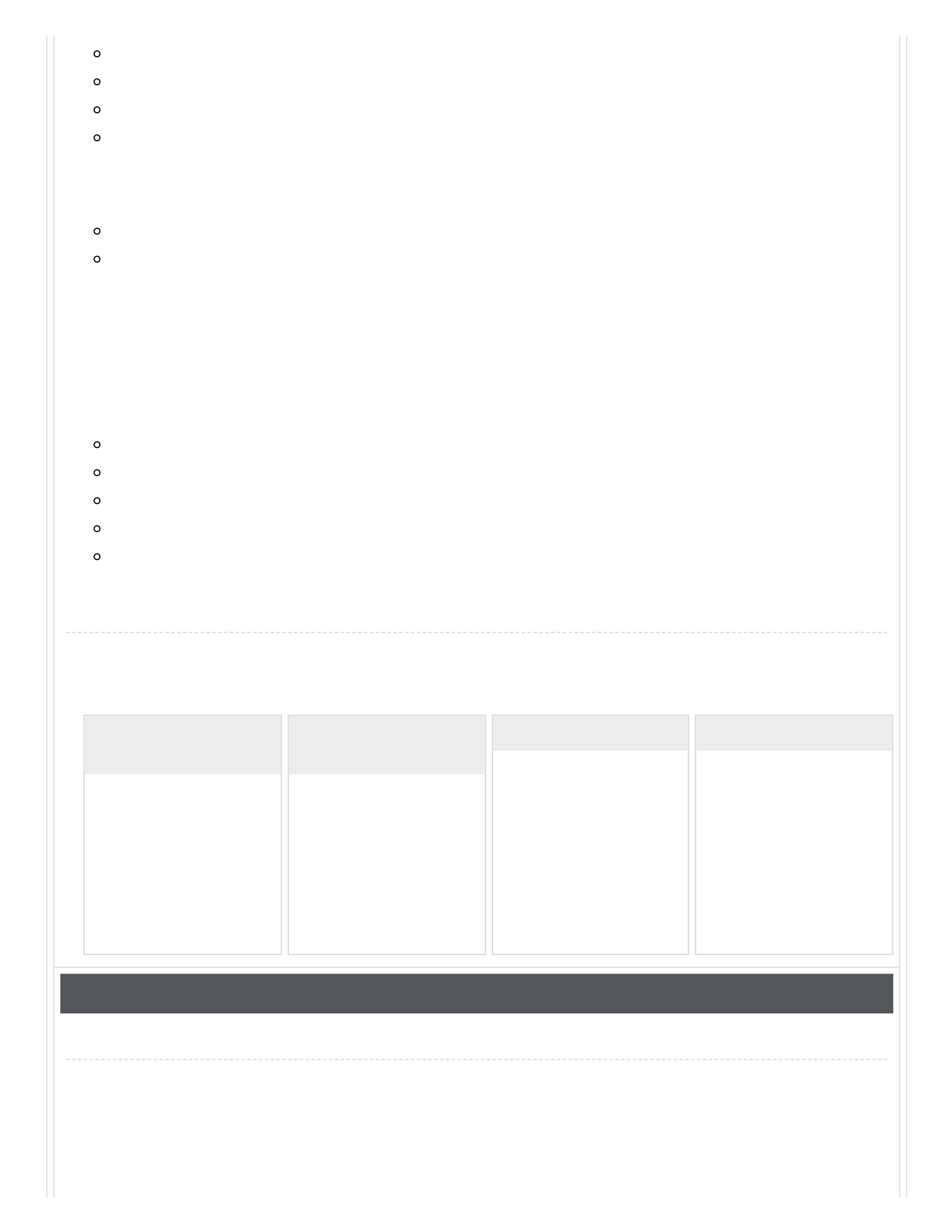
Scoring Guide
Describe each specified program element to provide an accurate and detailed program
description. 100 %
Unacceptable (Below
70%)
Did not provide a
program description,
or provided one that
did not reflect the
program.
Needs Improvement (70-
79%)
Described some of
the specified program
elements to provide an
inaccurate or very
limited program
description.
Competent (80-89%)
Described some of
the specified program
elements to provide an
accurate program
description.
Exemplary (90-100%)
Described each of the
specified program
elements to provide an
accurate and detailed
program description.
W 3 A - P P 1: P D I A
Summary
Ⓒ 2020 Strayer University. All Rights Reserved. This document contains Strayer University Confidential and Proprietary
information and may not be copied, further distributed, or otherwise disclosed in whole or in part, without the expressed written
permission of Strayer University.
Ⓒ 2021 Strategic Education, Inc., Version 2
Click the linked activity title to access this activity.
Text
Overview
In last week's activity, you identified and provided a brief description of your chosen program. In this
assignment, Part 1 of your Evaluation Project, you drill down to create a more detailed description and
an initial assessment of your chosen program.
Instructions
Provide a 3–4 page description and initial assessment of your chosen program and the challenges
and opportunities facing it. Do the following:
Describe the program's primary purpose and expected outcomes.
Create a detailed and accurate depiction of the department or entity responsible for
administering the program by describing each of the following elements:
Role—how the department of entity fits into the larger organization.
Staffing—personnel, duties, and qualifications.
Scope of Work—describe the work needed to accomplish the mission.
Funding—briefly identify budget and sources available to the program.
Analyze the program to describe two primary ways it could benefit from an evaluation.
Describe the most significant challenge to conducting your evaluation and an effective way to
address it.
Resources
One of your resources should be your textbook.
Use at least three sources to support your writing. Choose sources that are credible, relevant,
and appropriate. Cite each source listed on your source page at least one time within your
assignment. For help with research, writing, and citations, access the library or review library
guides.
This course requires the use of Strayer Writing Standards. For assistance and information, please
refer to the Strayer Writing Standards link in the left-hand menu of your course. Check with your
professor for any additional instructions.
Ⓒ 2020 Strayer University. All Rights Reserved. This document contains Strayer University Confidential and Proprietary
information and may not be copied, further distributed, or otherwise disclosed in whole or in part, without the expressed written
permission of Strayer University.
Ⓒ 2021 Strategic Education, Inc., Version 2
The specific course learning outcome associated with this assignment is:
Justify the selection of a program to undergo a program evaluation.
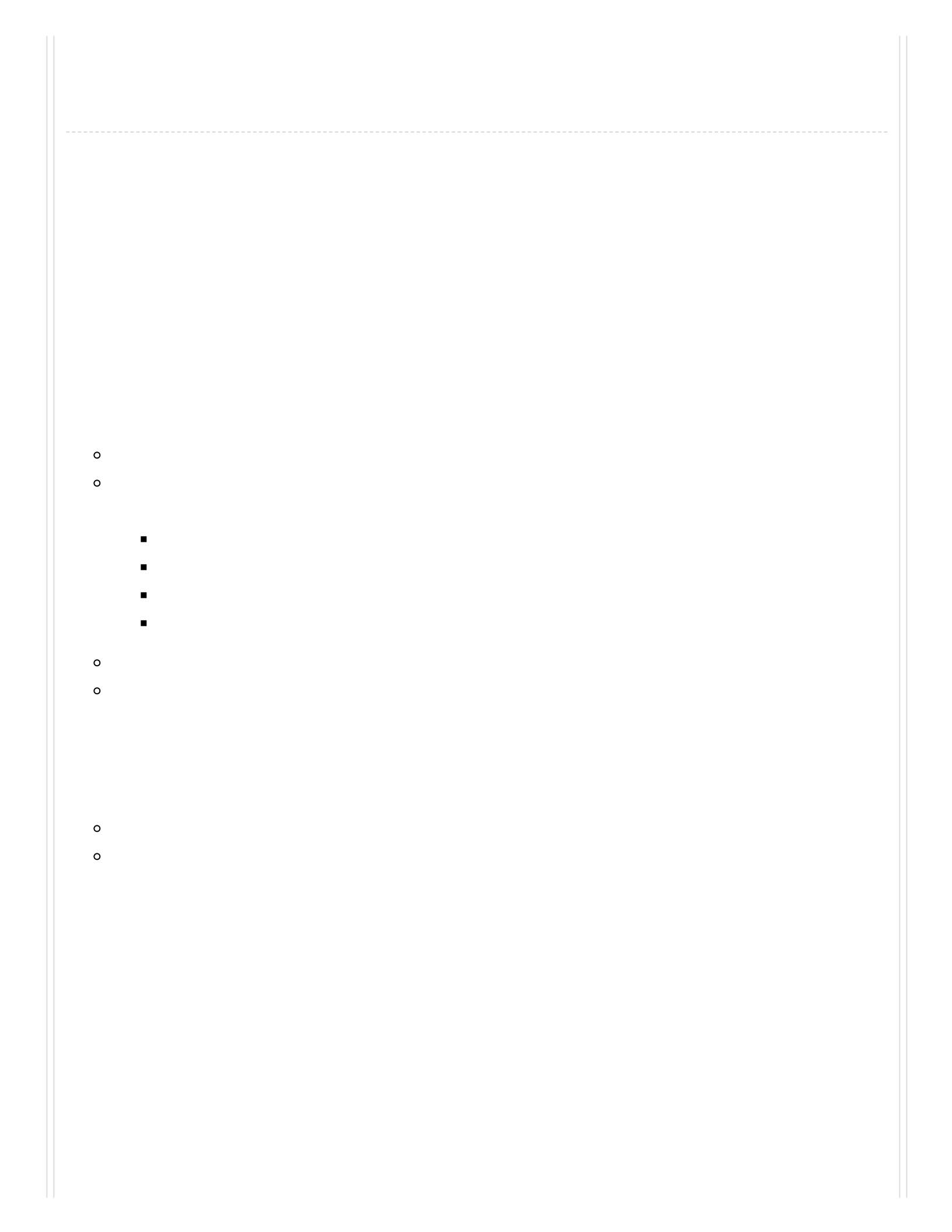
Scoring Guide
Describe the program's primary purpose and expected outcomes to accurately reflect the
program. 15 %
Unacceptable (Below
70%)
Did not describe the
program's primary
purpose and expected
outcomes, or did so
with more than four
errors or omissions.
Needs Improvement (70-
79%)
Described the
program's primary
purpose and expected
outcomes with 3–4
errors or omissions.
Competent (80-89%)
Described the
program's primary
purpose and expected
outcomes with 1–2
errors or omissions.
Exemplary (90-100%)
Described the
program's primary
purpose and expected
outcomes to
accurately reflect the
program.
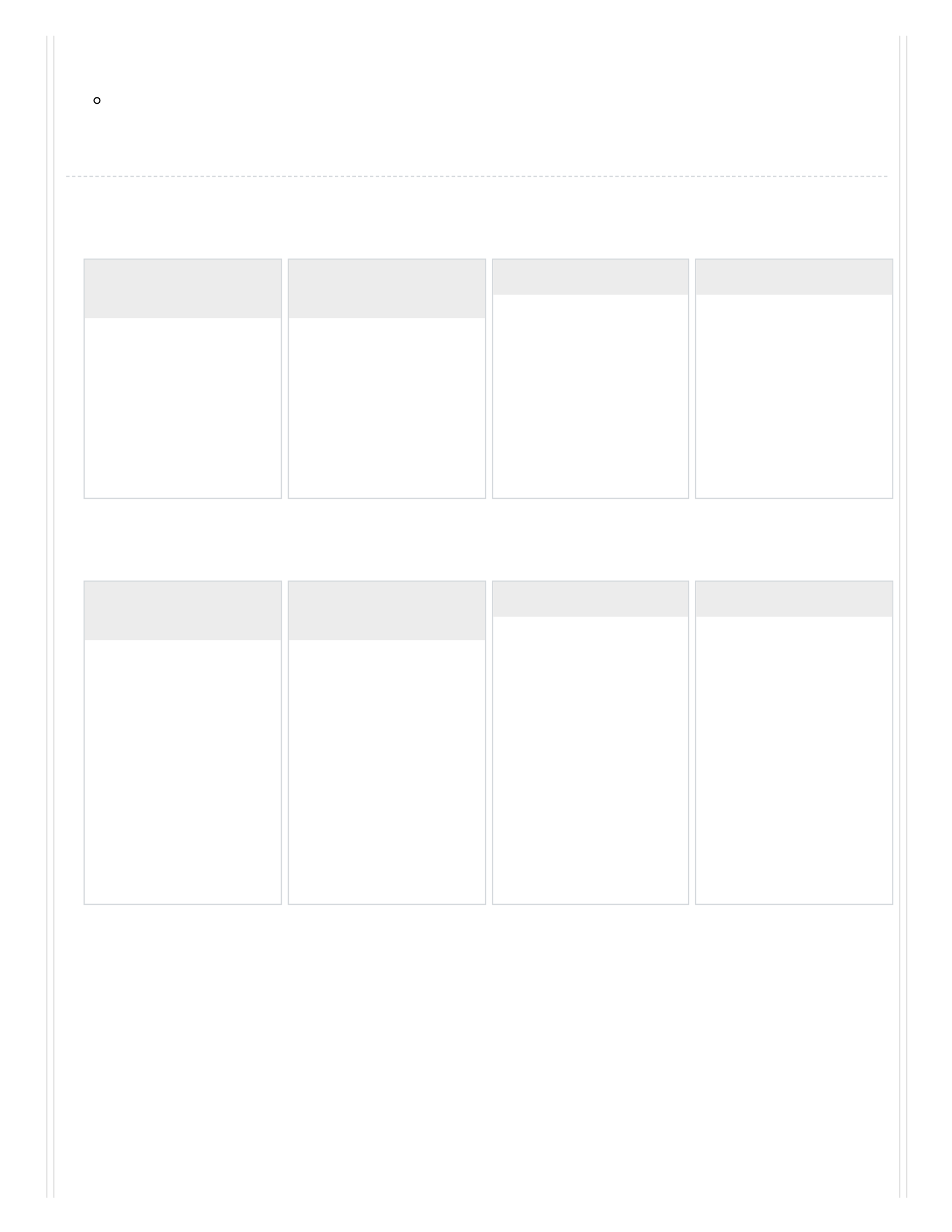
Create a detailed and accurate depiction of the department or entity responsible for
administrating the program by describing each specified element. 25 %
Unacceptable (Below
70%)
Did not create a
depiction of the
department or entity
responsible for
administering the
program.
Needs Improvement (70-
79%)
Created a depiction of
the department or
entity responsible for
administering the
program by describing
each specified
element that lacked
both detail and
accuracy.
Competent (80-89%)
Created a depiction of
the department or
entity responsible for
administering the
program by describing
each specified
element that lacked
either detail or
accuracy.
Exemplary (90-100%)
Created a detailed
and accurate
depiction of the
department or entity
responsible for
administering the
program by describing
each specified
element.
Ⓒ 2020 Strayer University. All Rights Reserved. This document contains Strayer University Confidential and Proprietary
information and may not be copied, further distributed, or otherwise disclosed in whole or in part, without the expressed written
permission of Strayer University.

Ⓒ 2021 Strategic Education, Inc., Version 2
Analyze the program to describe two primary ways it could benefit from an evaluation. 25 %
Unacceptable (Below
70%)
Did not identify ways
the program could
benefit from an
evaluation, or listed
ways the would not be
beneficial.
Needs Improvement (70-
79%)
Analyzed the program
to describe ways that
would be unlikely to
benefit from an
evaluation, or merely
identified ways the
program would likely
benefit.
Competent (80-89%)
Analyzed the program
but described only one
way it could benefit
from an evaluation.
Exemplary (90-100%)
Analyzed the program
to describe two
primary ways it could
benefits from an
evaluation.
Justify an effective approach to addressing a significant challenge to conducting the evaluation.
20 %
Unacceptable (Below
70%)
Did not describe an
approach to
addressing a
significant challenge to
conducting the
evaluation.
Needs Improvement (70-
79%)
Described an
approach to
addressing a
significant challenge to
conducting the
evaluation that would
likely be ineffective.
Competent (80-89%)
Described, but did not
justify, an effective
approach to
addressing a
significant challenge to
conducting the
evaluation.
Exemplary (90-100%)
Justified an effective
approach to
addressing a
significant challenge to
conducting the
evaluation.
Appropriate use of in-text citations and sources. 5 %
Unacceptable (Below
70%)
Lack of in-text sources
and lack of reference
section.
Needs Improvement (70-
79%)
In-text citations and
sources are provided,
but they are only
partially formatted
correctly.
Competent (80-89%)
Most in-text citations
and sources are
provided, and they are
generally formatted
correctly.
Exemplary (90-100%)
In-text citations and
sources are error-free
or almost error-free
and consistently
formatted correctly.
Ⓒ 2020 Strayer University. All Rights Reserved. This document contains Strayer University Confidential and Proprietary
information and may not be copied, further distributed, or otherwise disclosed in whole or in part, without the expressed written
permission of Strayer University.
Ⓒ 2021 Strategic Education, Inc., Version 2
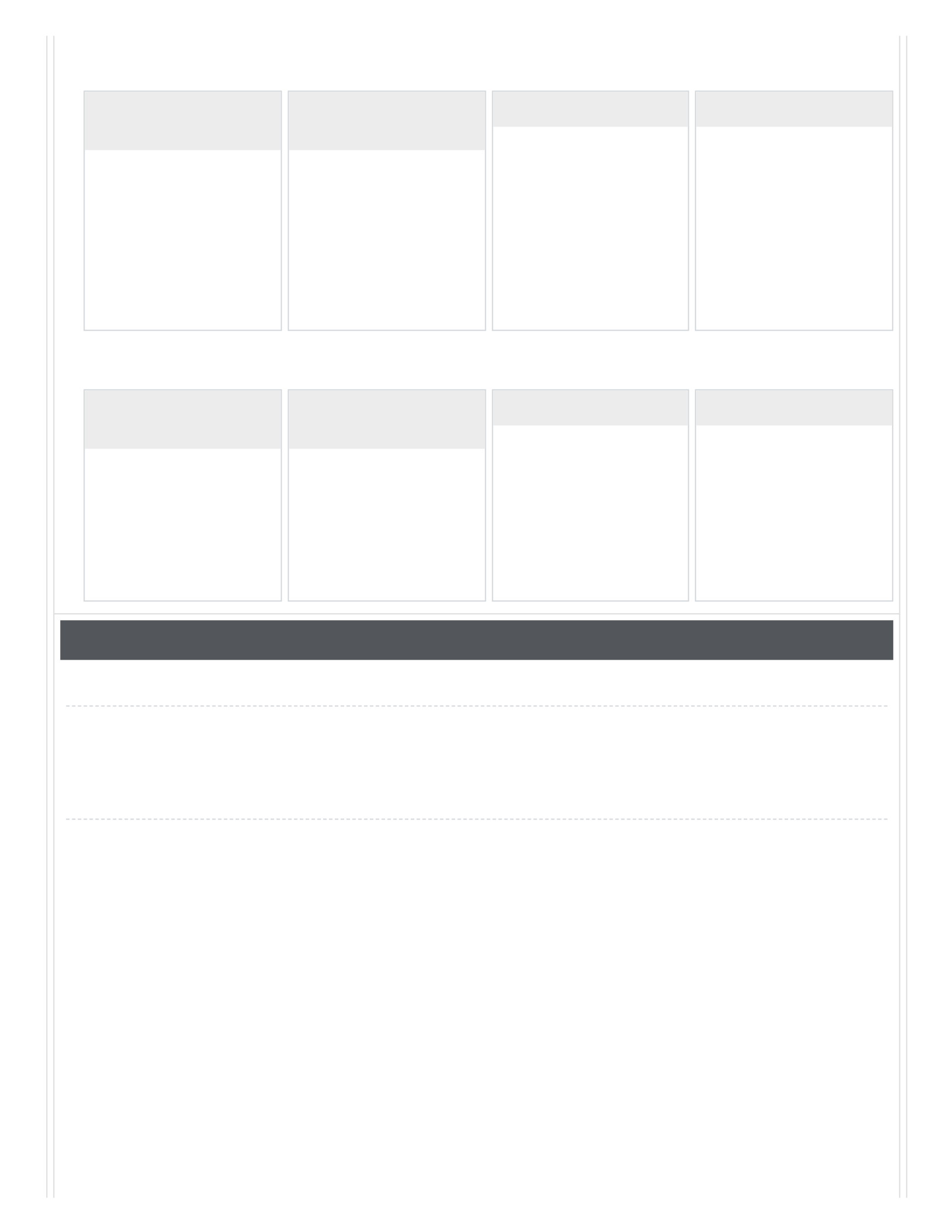
Information literacy and integration of sources. 5 %
Unacceptable (Below
70%)
Serious errors in the
integration of sources,
such as intentional or
accidental plagiarism,
or failure to use in-text
citations.
Needs Improvement (70-
79%)
Sources are partially
integrated using
effective techniques of
quoting, paraphrasing,
and summarizing.
Competent (80-89%)
Sources are mostly
integrated using
effective techniques of
quoting, paraphrasing,
and summarizing.
Exemplary (90-100%)
Sources are
consistently integrated
using effective
techniques of quoting,
paraphrasing, and
summarizing.
Writing contains no grammar, mechanics, or spelling errors. 5 %
Unacceptable (Below
70%)
Contains excessive
grammar, mechanics,
or spelling errors that
impede the reading of
the assignment.
Needs Improvement (70-
79%)
Contains 3–5
grammar, mechanics,
and spelling errors.
Competent (80-89%)
Contains 1–2
grammar, mechanics,
and spelling errors.
Exemplary (90-100%)
Writing contains no
grammar, mechanics,
and spelling errors.
W 5 A - P P 2: E A
Summary
Click the linked activity title to access this activity.
Text
Overview
In your previous assignment, you completed Part 1 of your Evaluation Project by providing a basic
description and conducting an initial assessment of your chosen program. Part 2 of your project (this
assignment) asks you to recommend an evaluation approach that is appropriate for your selected
program, identify guiding questions, and anticipate how stakeholders might be impacted.
Ⓒ 2020 Strayer University. All Rights Reserved. This document contains Strayer University Confidential and Proprietary
information and may not be copied, further distributed, or otherwise disclosed in whole or in part, without the expressed written
permission of Strayer University.
Ⓒ 2021 Strategic Education, Inc., Version 2
Make sure you have a sound understanding of the four approaches to program evaluation: Outcome,
process, impact, and summative.
Instructions
Recommend an evaluation approach that is appropriate for your chosen program. Make sure to
include support for your arguments. Do the following in 3–4 pages:
Justify an evaluation approach that is appropriate for the program.
Justify three guiding questions intended to drive the evaluation plan, including why they are
appropriate for the selected approach.
Describe how three key stakeholders may plausibly be impacted by the evaluation approach.
Requirements
3–4 pages in length.
One of your resources should be your textbook.
Use at least three sources to support your writing. Choose sources that are credible, relevant,
and appropriate. Cite each source listed on your source page at least one time within your
assignment. For help with research, writing, and citations, access the library or review library
guides.
This course requires the use of Strayer Writing Standards. For assistance and information, please
refer to the Strayer Writing Standards link in the left-hand menu of your course. Check with your
professor for any additional instructions.
The specific course learning outcome associated with this assignment is:
Analyze elements of an educational program relevant to an evaluation.
Scoring Guide
Ⓒ 2020 Strayer University. All Rights Reserved. This document contains Strayer University Confidential and Proprietary
information and may not be copied, further distributed, or otherwise disclosed in whole or in part, without the expressed written
permission of Strayer University.

Ⓒ 2021 Strategic Education, Inc., Version 2
Justify an evaluation approach that is appropriate for the program. 30 %
Unacceptable (Below
70%)
Did not describe an
evaluation approach
for the program.
Needs Improvement (70-
79%)
Described an
evaluation approach
that is for the program
that is not supportable.
Competent (80-89%)
Described but did not
justify an evaluation
approach that is
appropriate for the
program.
Exemplary (90-100%)
Justified an evaluation
approach that is
appropriate for the
program.
Justify guiding questions intended to drive the evaluation plan and why they are appropriate for
the selected approach. 25 %
Unacceptable (Below
70%)
Did not list guiding
questions intended to
drive the evaluation
plan.
Needs Improvement (70-
79%)
Listed, but did not
describe, guiding
questions intended to
drive the evaluation
plan.
Competent (80-89%)
Described, but did not
justify, guiding
questions intended to
drive the evaluation
plan.
Exemplary (90-100%)
Justified guiding
questions intended to
drive the evaluation
plan and why they are
appropriate for the
selected approach.
Describe how key stakeholders may be plausibly impacted by the evaluation approach. 30 %
Unacceptable (Below
70%)
Did not list ways
stakeholders might be
impacted by the
evaluation approach.
Needs Improvement (70-
79%)
Listed implausible
ways key stakeholders
may be impacted by
the evaluation
approach, or
misidentified key
stakeholders.
Competent (80-89%)
Listed ways key
stakeholders may be
plausibly impacted by
the evaluation
approach.
Exemplary (90-100%)
Described how key
stakeholders may be
plausibly impacted by
the evaluation
approach.
Ⓒ 2020 Strayer University. All Rights Reserved. This document contains Strayer University Confidential and Proprietary
information and may not be copied, further distributed, or otherwise disclosed in whole or in part, without the expressed written
permission of Strayer University.
Ⓒ 2021 Strategic Education, Inc., Version 2
Use at least three peer-reviewed academic resources in this assignment. 5 %
Unacceptable (Below
70%)
No sources provided.
Needs Improvement (70-
79%)
Does not meet the
required number of
sources; some or all
references poor-
quality choices.
Competent (80-89%)
Meets number of
required sources;
most references are
high-quality choices.
Exemplary (90-100%)
Meets number of
required sources; all
references are high-
quality choices.
Writing contains accurate grammar, mechanics, and spelling in accordance with SWS style. 5 %
Unacceptable (Below
70%)
Contains more than
five grammar,
mechanics, and
spelling errors.
Needs Improvement (70-
79%)
Contains 3–5
grammar, mechanics,
and spelling errors.
Competent (80-89%)
Contains 1–2
grammar, mechanics,
and spelling errors.
Exemplary (90-100%)
Writing contains no
grammar, mechanics,
and spelling errors.
Information literacy and integration of sources. 5 %
Unacceptable (Below
70%)
Serious errors in the
integration of sources,
such as intentional or
accidental plagiarism,
or failure to use in-text
citations. Contain
more that six errors or
omissions.
Needs Improvement (70-
79%)
Sources are
integrated using
techniques of quoting,
paraphrasing, and
summarizing with 4–6
errors or omissions.
Competent (80-89%)
Sources are
integrated using
techniques of quoting,
paraphrasing, and
summarizing with 1–3
errors or omissions.
Exemplary (90-100%)
Sources are fully
integrated using
effective techniques of
quoting, paraphrasing,
and summarizing.
W 7 A : E G A
Summary
Click the linked activity title to access this activity.
Ⓒ 2020 Strayer University. All Rights Reserved. This document contains Strayer University Confidential and Proprietary
information and may not be copied, further distributed, or otherwise disclosed in whole or in part, without the expressed written
permission of Strayer University.
Ⓒ 2021 Strategic Education, Inc., Version 2
Text
Overview
In your week 10 assignment you will be designing your evaluation plan. The first step in that process is
to identify your primary goals for the evaluation. This is a very important step that will guide your
evaluation planning. In this activity, formulate and analyze the goals of the evaluation.
Instructions
Write one page explaining your three, primary program evaluation goals. Justify why they are
appropriate and likely to serve as effective guides for program enhancements.
Include introductory and summary paragraphs.
Use Strayer Writing Standards.
The Strayer Writing Standards (SWS) is a brief set of guidelines that helps students ensure their
writing is professional, avoids plagiarism, and gives credit to other people’s ideas used in their work.
SWS uses the terms 'in-text citation' and 'source list' when referring to other works.
Scoring Guide
Describe three primary program evaluation goals and justify why they are appropriate and likely
to serve as effective guides for program enhancements. 100 %
Unacceptable (Below
70%)
Does not list primary
evaluation goals.
Needs Improvement (70-
79%)
Identified three
primary program
evaluation goals.
Competent (80-89%)
Described primary
program evaluation
goals but did not justify
why they are
appropriate and likely
to serve as effective
guides for program
enhancements.
Exemplary (90-100%)
Described three
primary program
evaluation goals and
justified why they are
appropriate and likely
to serve as effective
guides for program
enhancements.
W 10 A - P P 3: E P D
Ⓒ 2020 Strayer University. All Rights Reserved. This document contains Strayer University Confidential and Proprietary
information and may not be copied, further distributed, or otherwise disclosed in whole or in part, without the expressed written
permission of Strayer University.
Ⓒ 2021 Strategic Education, Inc., Version 2
Summary
Click the linked activity title to access this activity.
Text
Overview
In Part 2 of your Project Plan, you recommended an evaluation approach. In this assignment, Part 3 of
your Project Plan, you will share your analysis of aspects of your evaluation, identify milestones for its
completion, specify data collection techniques, and describe how you will communicate your work to
stakeholders.
Instructions
Note on Data Collection: Be aware that there are often multiple methods of data collection
(observations, surveys, and focus groups) employed in a robust program evaluation. In this
assignment, you are asked to focus on a single method that you believe would best inform your
evaluation. Review the resources related to data collection as you consider your approach to data
gathering.
Write 5–7 pages in which you:
Analyze the program to explain three significant cultural or political issues that are likely to be
encountered during the evaluation. Describe ways to effectively address them.
Provide a timeline with significant milestones (include brief descriptors where necessary) that
represent a complete program evaluation plan.
Dates: Use dates that are reasonable approximations of how long each milestone should
take. Use today’s date as a starting point.
Milestones: List all significant evaluation milestones. Make sure to include the next three
bullet points as milestones since they represent important elements of a full evaluation plan.
Justify your data collection methodology (observations, surveys, and focus groups.) Make sure to
describe how it aligns to your chosen approach.
Describe three issues that may likely be encountered during collection, compilation,
interpretation, or reporting of the data.
Justify your methods for communicating evaluation data and findings to stakeholders. Make sure
to identify your chosen stakeholders and why your reporting is appropriate for the audience.
Ⓒ 2020 Strayer University. All Rights Reserved. This document contains Strayer University Confidential and Proprietary
information and may not be copied, further distributed, or otherwise disclosed in whole or in part, without the expressed written
permission of Strayer University.
Ⓒ 2021 Strategic Education, Inc., Version 2
Stakeholders include school administration, teachers, parents, school board members,
and community partners.
Communication methods could be emails, meetings, presentations, mailed reports, and
roundtables.
Resources
Use at least three sources to support your writing. Choose sources that are credible, relevant, and
appropriate. Cite each source listed on your source page at least one time within your assignment. For
help with research, writing, and citations, access the library or review the library guides.
This course requires the use of Strayer Writing Standards. For assistance and information, please
refer to the Strayer Writing Standards link in the left-hand menu of your course. Check with your
professor for any additional instructions.
The specific course learning outcomes associated with this assignment are:
Create aspects of an evaluation plan that addresses program needs.
Create a data collection and reporting plan that analyzes data sources, potential issues,
collection, and reporting methods.
Scoring Guide
Explain three significant cultural or political issues that are likely to be encountered during the
evaluation. 20 %
Unacceptable (Below
70%)
Did not Identify cultural
or political issues that
are likely to be
encountered during
the evaluation, or
identified issues that
are not likely to be
encountered.
Needs Improvement (70-
79%)
Identified cultural or
political issues that
are likely to be
encountered during
the evaluation.
Competent (80-89%)
Explained cultural or
political issues that
are likely to be
encountered during
the evaluation in a way
that lacked detail or
insight to reveal the
true nature of the
issues.
Exemplary (90-100%)
Explained three
significant cultural or
political issues that
are likely to be
encountered during
the evaluation.
Ⓒ 2020 Strayer University. All Rights Reserved. This document contains Strayer University Confidential and Proprietary
information and may not be copied, further distributed, or otherwise disclosed in whole or in part, without the expressed written
permission of Strayer University.

Ⓒ 2021 Strategic Education, Inc., Version 2
Provide a timeline that includes specified elements that represent a complete and effective
program evaluation plan. 20 %
Unacceptable (Below
70%)
Did not provide a
program evaluation
timeline
Needs Improvement (70-
79%)
Provided a timeline
that omits significant
specified elements
that represent a
complete program
evaluation plan, or
projects unreasonable
timelines.
Competent (80-89%)
Provided a timeline
that omits some
specified elements
that represent a
complete and effective
program evaluation
plan.
Exemplary (90-100%)
Provided a timeline
that includes specified
elements that
represent a complete
and effective program
evaluation plan.
Justify a selected data collection methodology. 20 %
Unacceptable (Below
70%)
Did not identify a data
collection
methodology.
Needs Improvement (70-
79%)
Identified, but did not
describe, a selected
data collection
methodology. Or,
described one that
was inappropriate.
Competent (80-89%)
Described, but did not
justify, a selected data
collection
methodology.
Exemplary (90-100%)
Justified a selected
data collection
methodology.
Ⓒ 2020 Strayer University. All Rights Reserved. This document contains Strayer University Confidential and Proprietary
information and may not be copied, further distributed, or otherwise disclosed in whole or in part, without the expressed written
permission of Strayer University.

Ⓒ 2021 Strategic Education, Inc., Version 2
Describe three issues that may likely be encountered during collection, compilation,
interpretation, or reporting of the data. 15 %
Unacceptable (Below
70%)
Did not identify issues
that may be
encountered during
collection, compilation,
interpretation, or
reporting of the data.
Needs Improvement (70-
79%)
Identified, but did not
describe, issues that
may be encountered
during collection,
compilation,
interpretation, or
reporting of the data.
Or, described issues
in vague terms that do
little to relate their true
challenges.
Competent (80-89%)
Described less than
three issues that may
likely be encountered
during collection,
compilation,
interpretation, or
reporting of the data.
Exemplary (90-100%)
Described three
issues that may likely
be encountered during
collection, compilation,
interpretation, or
reporting of the data.
Justify selected methods for effectively reporting or communicating evaluation data and findings
to stakeholders. 15 %
Unacceptable (Below
70%)
Did not identify
methods for reporting
or communicating
evaluation data and
findings to
stakeholders.
Needs Improvement (70-
79%)
Identified, but did not
describe, selected
methods for reporting
or communicating
evaluation data and
findings to
stakeholders.
Competent (80-89%)
Described, but did not
justify, selected
methods for reporting
or communicating
evaluation data and
findings to
stakeholders. Or
described methods
that are unlikely to be
effective.
Exemplary (90-100%)
Justified selected
methods for effectively
reporting or
communicating
evaluation data and
findings to
stakeholders.
Ⓒ 2020 Strayer University. All Rights Reserved. This document contains Strayer University Confidential and Proprietary
information and may not be copied, further distributed, or otherwise disclosed in whole or in part, without the expressed written
permission of Strayer University.

Ⓒ 2021 Strategic Education, Inc., Version 2
Use at least three reviewed academic resources in this assignment. 5 %
Unacceptable (Below
70%)
No sources provided.
Needs Improvement (70-
79%)
Does not meet the
required number of
sources; some or all
references poor-
quality choices.
Competent (80-89%)
Meets number of
required sources;
most references high-
quality choices.
Exemplary (90-100%)
Meets number of
required sources; all
references high-quality
choices.
Writing contains no grammar, mechanics, or spelling errors. 5 %
Unacceptable (Below
70%)
Contains excessive
grammar, mechanics,
or spelling errors that
impede the reading of
the assignment.
Needs Improvement (70-
79%)
Contains 3–5
grammar, mechanics,
and spelling errors.
Competent (80-89%)
Contains 1–2
grammar, mechanics,
and spelling errors.
Exemplary (90-100%)
Writing contains no
grammar, mechanics,
and spelling errors.
Ⓒ 2020 Strayer University. All Rights Reserved. This document contains Strayer University Confidential and Proprietary
information and may not be copied, further distributed, or otherwise disclosed in whole or in part, without the expressed written
permission of Strayer University.

