


EDU512
Preview:
EDU512
:
Diversity
in
K-12
Education
Course
Guide
Prerequisites
Course
Description
Introduces
students
to
classroom
teaching
strategies
that
respond
positively
to
the
personal
and
cultural
diversity
of
the
learner.
Course
focuses
on
ways
in
which
race,
class,
gender,
ethnicity,
and
other
cultural
differences
impact
global
education
and
learning.
Explores
teaching
techniques,
differential
learning,
and
curricular
directions
designed
to
improve
school
experiences
for
the
diverse
student
population.
Instructional
Materials
Required
Resources
James
A.
Banks.
2020.
Multicultural
Education:
Issues
and
Perspectives.
EDU512
Blackboard
Course.
Paul
Reville.
March
5,
2021.
This
Could
Be
the
Moment
to
Help
the
Poorest
Among
Us:
Our
Nation's
Children.
https:/(www.edweek.org/leadership/opinion-this-could-be-the-moment-to-help-the-poorest-
among-us-our-nations-children/2021/03
Terryl
Ross.
August
30,
2012.
Dr.
James
A.
Banks—Founder
of
Multicultural
Education.
https://www.youtube.com/watch?
V=wzK8Jj5WV048&index=3&list=PLAJvIRSSep_IB84bBGvDV3aqyf3FgzCXvU
Larry
Ferlazzo.
April
2,
2020.
Author
Interview:
Cultural
Competence
Now.
https://www.edweek.org/teaching-learning/opinion-author-interview-cultural-competence-
now/2020/04
Stephen
Sawchuk.
August
5,
2019.
Americans
Say
Civics
Is
a
Must
and
Religion
a
Maybe
in
Schools.
https://www.edweek.org/leadership/americans-say-civics-is-a-must-and-religion-a-maybe-
in-schools/2019/08
Rutherford
Institute.
2007.
Brittany
McComb
Valedictorian
Speech.
https://youtu.be/kqzflitfHjU
Paul
C.
Gorski.
2018.
Case
6.6:
Build
the
Wall.
https://search-ebscohost-
com.libdatab.strayer.edu/login.aspx?direct=true&db=nlebk&AN=1
729169&site=ehost-
live&scope=site&ebv=EB&ppid=pp_57
CQ
Press.
2021.
The
Supreme
Course
Collection:
Freedom
of
Religion.
http://library.cqpress.com.libdatab.strayer.edu/scc/scaz5e_
413.1
Evie
Blad.
February
5,
2018.
In
a
First,
a
State
May
Ban
Its
Schools
from
Teaching
About
Gender
Identity.
https://www.edweek.org/leadership/in-a-first-a-state-may-ban-its-schools-from-teaching-
about-gender-identity/2018/02
Education
Week.
No
date.
https://www.edweek.org/
Larry
Ferlazzo.
February
5,
2020.
Educators
Must
Disrupt
"Colorblind
Ideologies."
https://www.edweek.org/teaching-learning/opinion-educators-must-disrupt-colorblind-
ideologies/2020/02
Brain
Highways.
August
28,
2015.
Dear
Teacher:
Heartfelt
Advice
for
Teachers
From
Students.
https://www.youtube.com/watch?
v=ITMLzXzgB_s&feature=youtu.be&list=PLAJvIRSSep_IB84bBGvDV3qyf3FgzCXvU+
International
Society
for
Technology
in
Education.
2021.
https://www.iste.org/
Suggested
Resources
Accredited
Schools
Online.
2020.
Innovative
Technology
for
K-12
&
College Classrooms.
https://www.accreditedschoolsonline.org/resources/educational-technology/
Sara
McGuire.
No
date.
10
Technology
Tools
to
Engage
Students
in
the
Classroom.
https://www.teachthought.com/technology/9-technology-tools-engage-students-classroom/
Cassandra
Willer.
2020.
27
Tech
Tools
Teachers
Can
Use
to
Inspire
Classroom
Creativity.
https://ozobot.com/blog/27-tech-tools-teachers-can-use-to-inspire-classroom-creativity
Kaltura.
No
date.
Creating
an
ePortfolio
Using
Google
Drive.
https://cdnapisec.kaltura.com/index.php/extwidget/preview/partner_id/956951/uiconf_id/43830551/e
ntry_id/1_cb1tk727/embed/dynamic
Microsoft.
2021.
PowerPoint
for
Windows
Training.
https://support.microsoft.com/en-
us/office/powerpoint-for-windows-training-40e8c930-cb0b-40d8-82c4-bd53d3398/787?
wt.mc_id=otc_home
Course
Learning
Outcomes
©
Assess
the
importance
of
addressing
diversity
for
its
impact
on
a
student's
experience
in
a
K-12
classroom.
@
Evaluate
instructional
strategies
that
positively
impact
diverse
student
populations.
©
Create
a
multicultural
education
unit
with
resources,
strategies,
and
evaluation
criteria
for
integration
into
a
curriculum.
Weekly
Course
Schedule
Week
1
-
To
Do
List
Learn:
Read
Chapters
1
and
2
in
Multicultural
Education:
Issues
and
Perspectives.
Learn:
Read
the
article
from
Education
Week.
Learn:
Watch
the
video,
Dr.
James
A.
Banks—Founder
of
Multicultural
Education.
Learn:
Watch
the
video,
Introducing
Education
Week,
and
explore
the
articles
available
on
the
link
for
EdWeek.
Discuss:
Introduce
yourself
and
complete
the
discussion,
Education,
Society,
and
Social
Action.
Week
2
-
To
Do
List
Week
2
-
To
Do
List
Learn:
Read
Chapter
3
in
Multicultural
Education:
Issues
and
Perspectives.
Learn:
Read
the
article
from
Education
Week.
Discuss:
Complete
the
discussion,
Cultural
and
Instructional
Delivery.
Activity:
Complete
the
learning
activity,
The
Five
Dimensions
of
Diversity.
Prepare:
Read
the
instructions
to
prepare
for
your
assignment
due
in
Week
3.
Week
3
-
To
Do
List
Learn:
Read
Chapter
4
in
Multicultural
Education:
Issues
and
Perspectives.
Learn:
Read
the
article
from
Education
Week.
Learn:
Watch
the
video,
Brittany
McComb
Valedictorian
Speech.
Discuss:
Complete
the
discussion,
Religion
and
Schools.
Assignment:
Complete
the
assignment,
Build
the
Wall
Case
Study.
Week
4
-
To
Do
List
Learn:
Read
Chapters
5
and
6
in
Multicultural
Education:
Issues
and
Perspectives.
Discuss:
Complete
the
discussion,
Single-Sex
Schools.
Week
5
-
To
Do
List
Learn:
Read
Chapter
7
in
Multicultural
Education:
Issues
and
Perspectives.
Learn:
Read
the
article
from
Education
Week.
Discuss:
Complete
the
discussion,
Recognizing
Gender
Diversity.
Activity:
Complete
the
learning
activity,
Instructional
Strategies
in
Multicultural
Education.
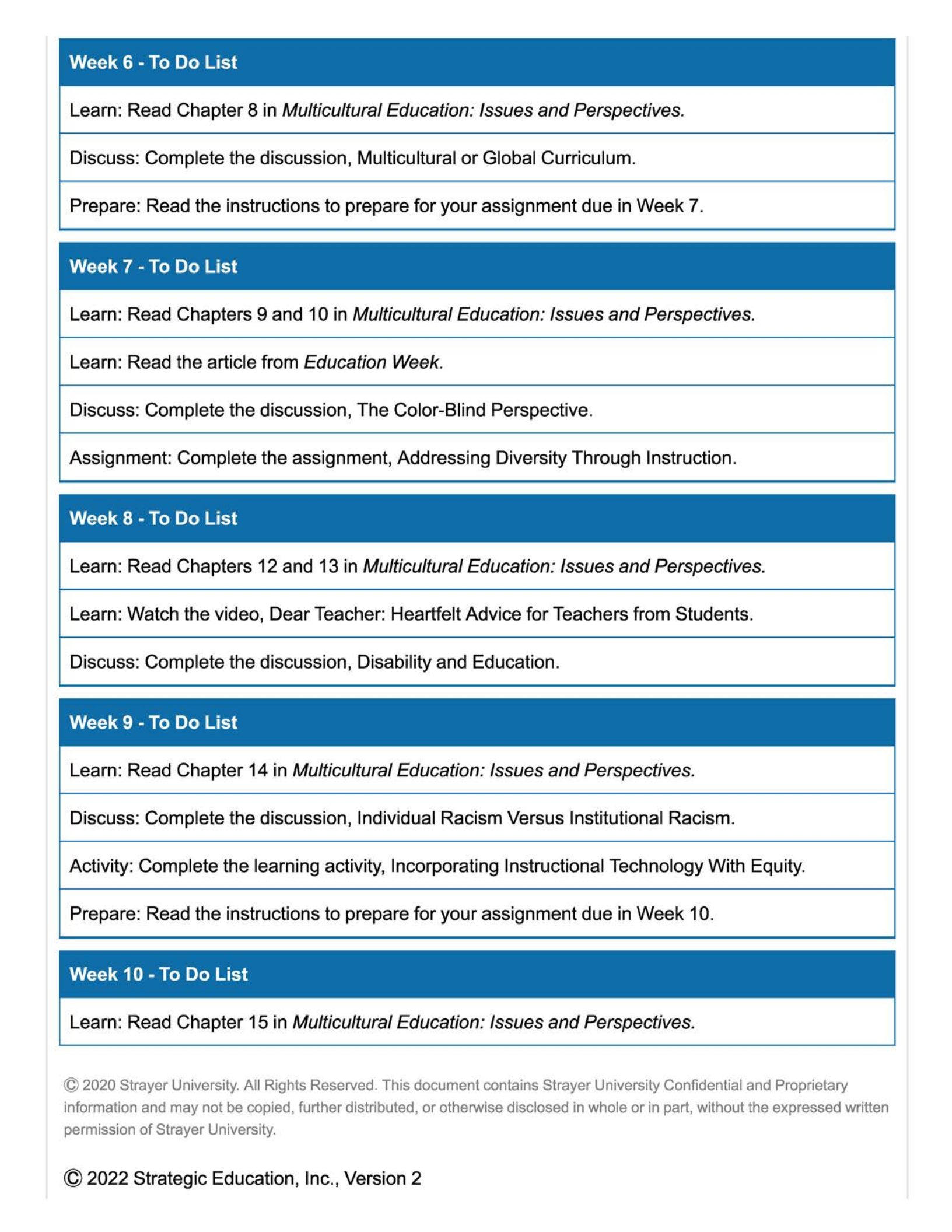
Week
6
-
To
Do
List
Learn:
Read
Chapter
8
in
Multicultural
Education:
Issues
and
Perspectives.
Discuss:
Complete
the
discussion,
Multicultural
or
Global
Curriculum.
Prepare:
Read
the
instructions
to
prepare
for
your
assignment
due
in
Week
7.
Week
7
-
To
Do
List
Learn:
Read
Chapters
9
and
10
in
Multicultural
Education:
Issues
and
Perspectives.
Learn:
Read
the
article
from
Education
Week.
Discuss:
Complete
the
discussion,
The
Color-Blind
Perspective.
Assignment:
Complete
the
assignment,
Addressing
Diversity
Through
Instruction.
Week
8
-
To
Do
List
Learn:
Read
Chapters
12
and
13
in
Multicultural
Education:
Issues
and
Perspectives.
Learn:
Watch
the
video,
Dear
Teacher:
Heartfelt
Advice
for
Teachers
from
Students.
Discuss:
Complete
the
discussion,
Disability
and
Education.
Week
9
-
To
Do
List
Learn:
Read
Chapter
14
in
Multicultural
Education:
Issues
and
Perspectives.
Discuss:
Complete
the
discussion,
Individual
Racism
Versus
Institutional
Racism.
Activity:
Complete
the
learning
activity,
Incorporating
Instructional
Technology
With
Equity.
Prepare:
Read
the
instructions
to
prepare
for
your
assignment
due
in
Week
10.
Week
10
-
To
Do
List
Learn:
Read
Chapter
15
in
Multicultural
Education:
Issues
and
Perspectives.
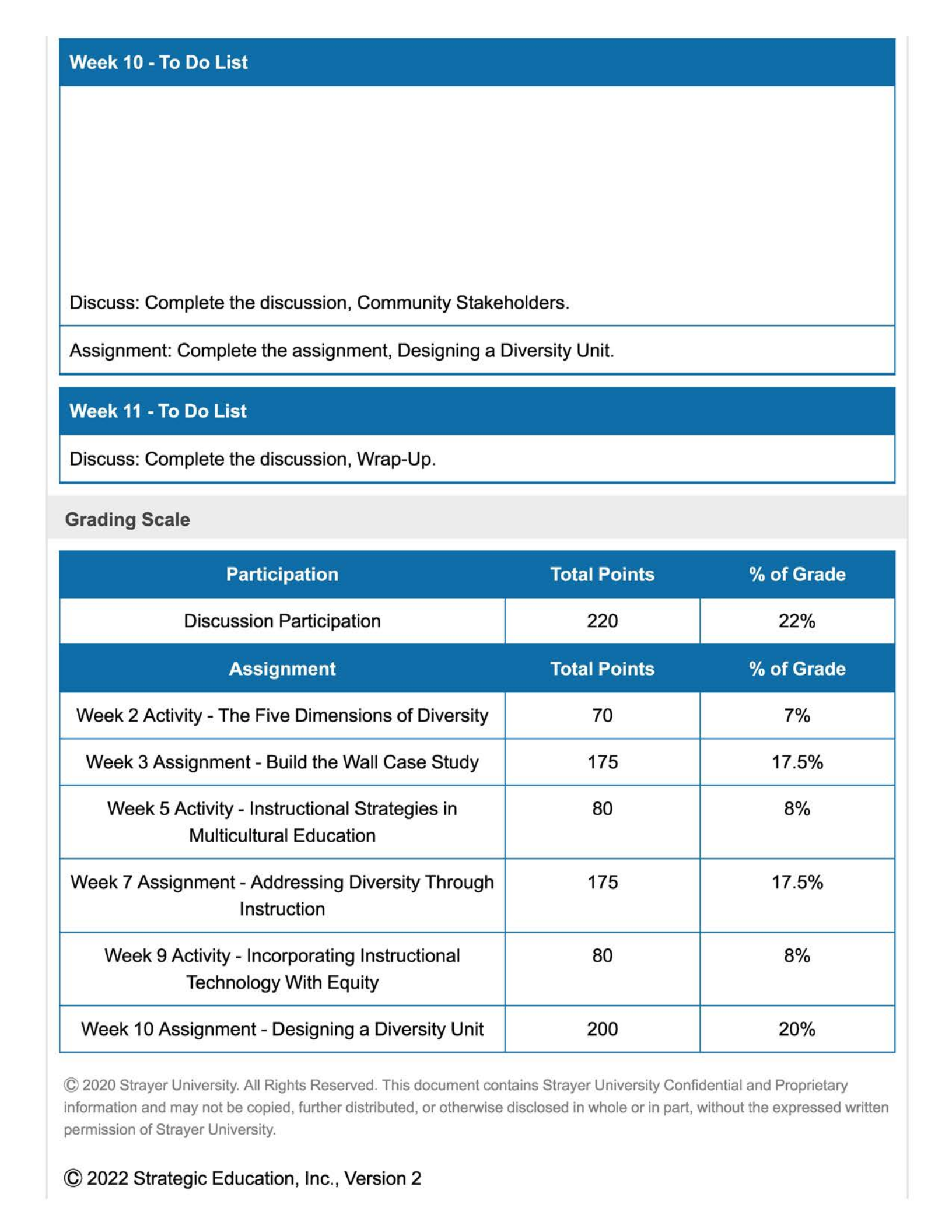
Week
10
-
To
Do
List
Discuss:
Complete
the
discussion,
Community
Stakeholders.
Assignment:
Complete
the
assignment,
Designing
a
Diversity
Unit.
Week
11
-
To
Do
List
Discuss:
Complete
the
discussion,
Wrap-Up.
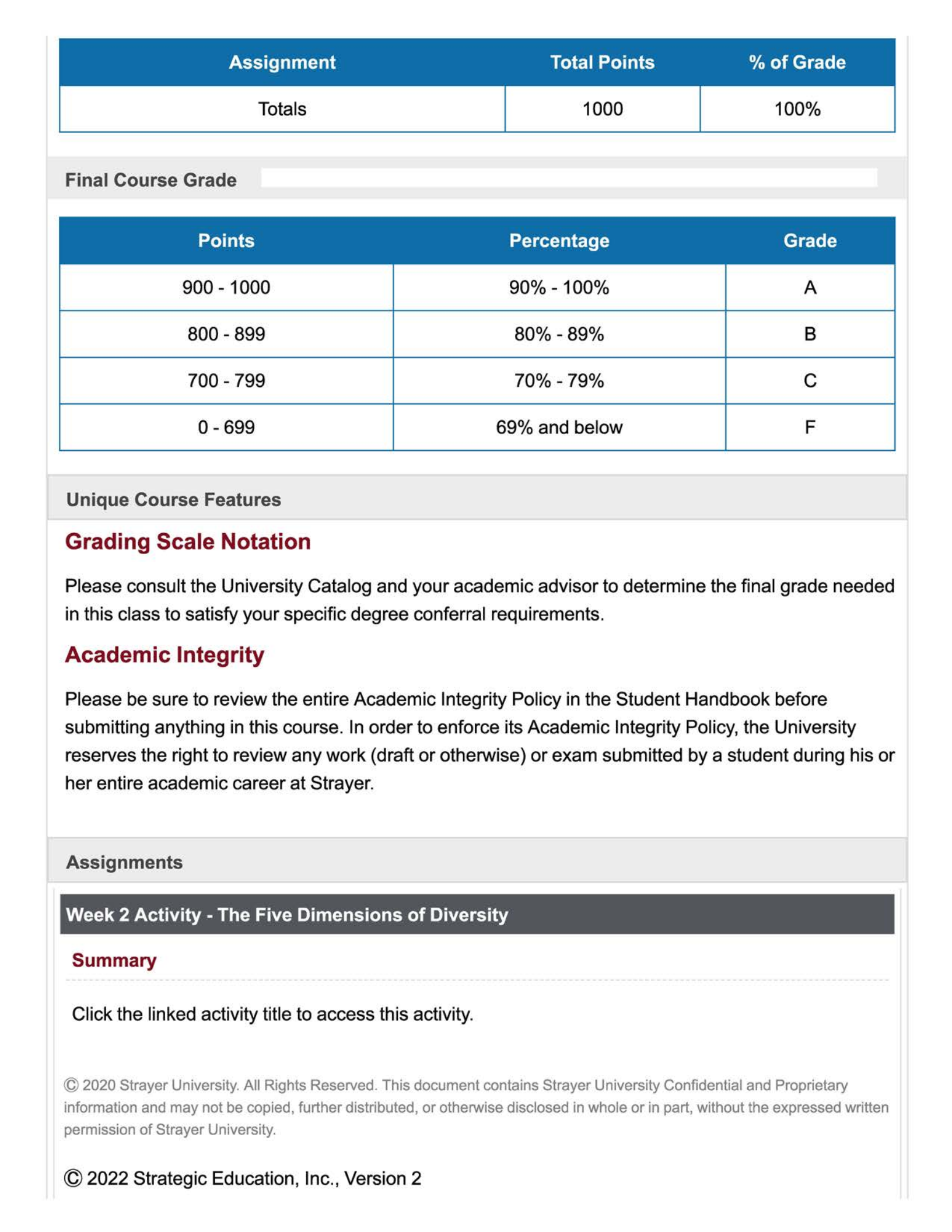
Grading
Scale
Participation
Total
Points
wey
mel
e-(o
(=)
Discussion
Participation
220
Assignment
Total
Points
“%
of
Grade
Week
2
Activity
-
The
Five
Dimensions
of
Diversity
70
7%
Week
3
Assignment
-
Build
the
Wall
Case
Study
175
17.5%
Week
5
Activity
-
Instructional
Strategies
in
Multicultural
Education
80
8%
Week
7
Assignment
-
Addressing
Diversity
Through
Instruction
175
17.5%
Week
9
Activity
-
Incorporating
Instructional
Technology
With
Equity
80
8%
Week
10
Assignment
-
Designing
a
Diversity
Unit
200
20%
Assignment
Total
Points
“%
of
Grade
Totals
1000
100%
Final
Course
Grade
exe)
Ta
Percentage
900
-
1000
90%
-
100%
A
800
-
899
80%
-
89%
B
700
-
799
70%
-
79%
C
0
-
699
69%
and
below
F
Unique
Course
Features
Grading
Scale
Notation
Please
consult
the
University
Catalog
and
your
academic
advisor
to
determine
the
final
grade
needed
in
this
class
to
satisfy
your
specific
degree
conferral
requirements.
Academic
Integrity
Please
be
sure
to
review
the
entire
Academic
Integrity
Policy
in
the
Student
Handbook
before
submitting
anything
in
this
course.
In
order
to
enforce
its
Academic
Integrity
Policy,
the
University
reserves
the
right
to
review
any
work
(draft
or
otherwise)
or
exam
submitted
by
a
student
during
his
or
her
entire
academic
career
at
Strayer.
Assignments
Week
2
Activity
-
The
Five
Dimensions
of
Diversity
Summary
Click
the
linked
activity
title
to
access
this
activity.
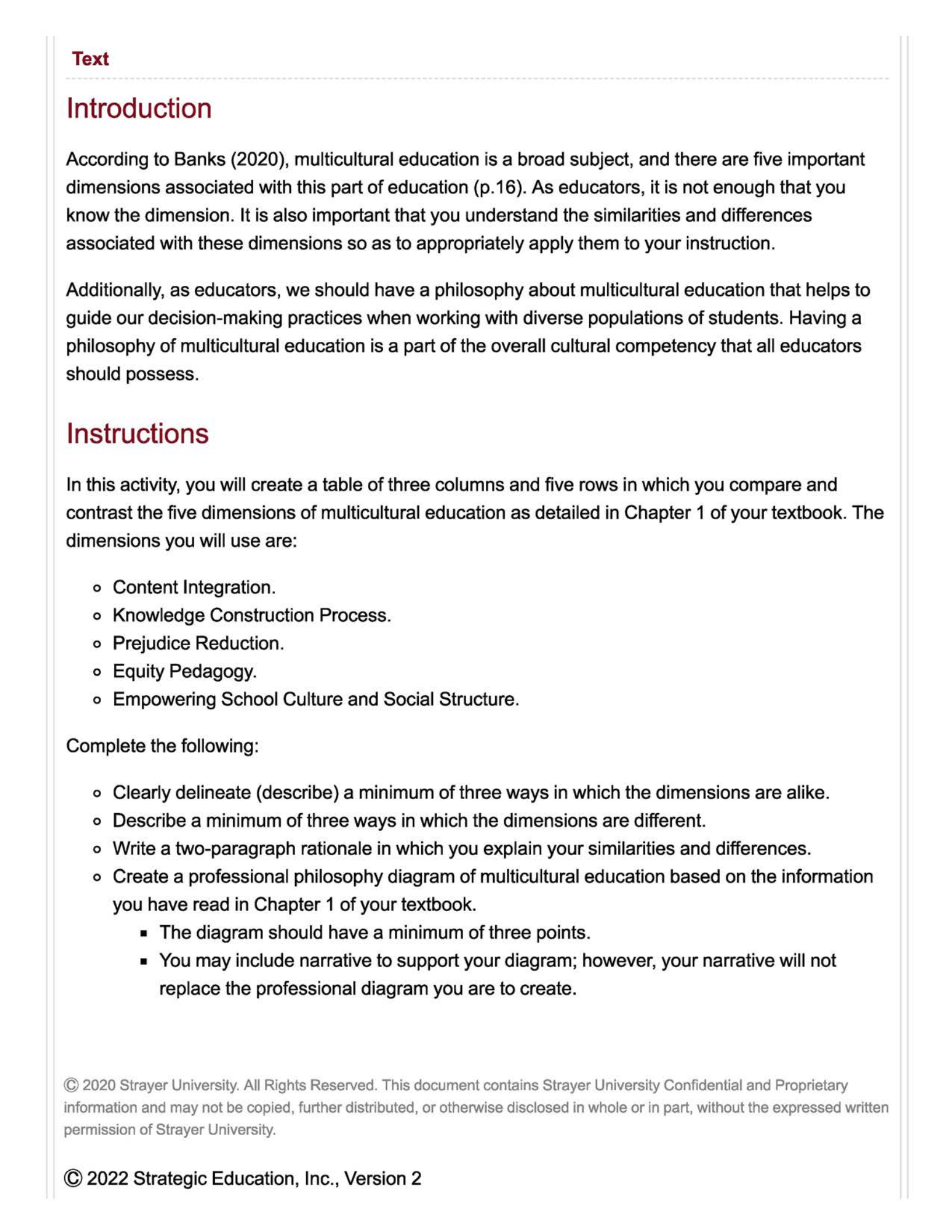
Text
Introduction
According
to
Banks
(2020),
multicultural
education
is
a
broad
subject,
and
there
are
five
important
dimensions
associated
with
this
part
of
education
(p.16).
As
educators,
it
is
not
enough
that
you
know
the
dimension.
It
is
also
important
that
you
understand
the
similarities
and
differences
associated
with
these
dimensions
so
as
to
appropriately
apply
them
to
your
instruction.
Additionally,
as
educators,
we
should
have
a
philosophy
about
multicultural
education
that
helps
to
guide
our
decision-making
practices
when
working
with
diverse
populations
of
students.
Having
a
philosophy
of
multicultural
education
is
a
part
of
the
overall
cultural
competency
that
all
educators
should
possess.
Instructions
In
this
activity,
you
will
create
a
table
of
three
columns
and
five
rows
in
which
you
compare
and
contrast
the
five
dimensions
of
multicultural
education
as
detailed
in
Chapter
1
of
your
textbook.
The
dimensions
you
will
use
are:
°
Content
Integration.
°
Knowledge
Construction
Process.
°
Prejudice
Reduction.
°
Equity
Pedagogy.
°
Empowering
School
Culture
and
Social
Structure.
Complete
the
following:
°
Clearly
delineate
(describe)
a
minimum
of
three
ways
in
which
the
dimensions
are
alike.
°
Describe
a
minimum
of
three
ways
in
which
the
dimensions
are
different.
°
Write
a
two-paragraph
rationale
in
which
you
explain
your
similarities
and
differences.
°
Create
a
professional
philosophy
diagram
of
multicultural
education
based
on
the
information
you
have
read
in
Chapter
1
of
your
textbook.
=»
The
diagram
should
have
a
minimum
of
three
points.
=»
You
may
include
narrative
to
support
your
diagram;
however,
your
narrative
will
not
replace
the
professional
diagram
you
are
to
create.
»
Your
diagram
should
be
a
reflection
of
your
perspective.
Be
creative
in
your
design.
See
Philosophy
Diagram
Examples
[PDF]
for
inspiration.
o
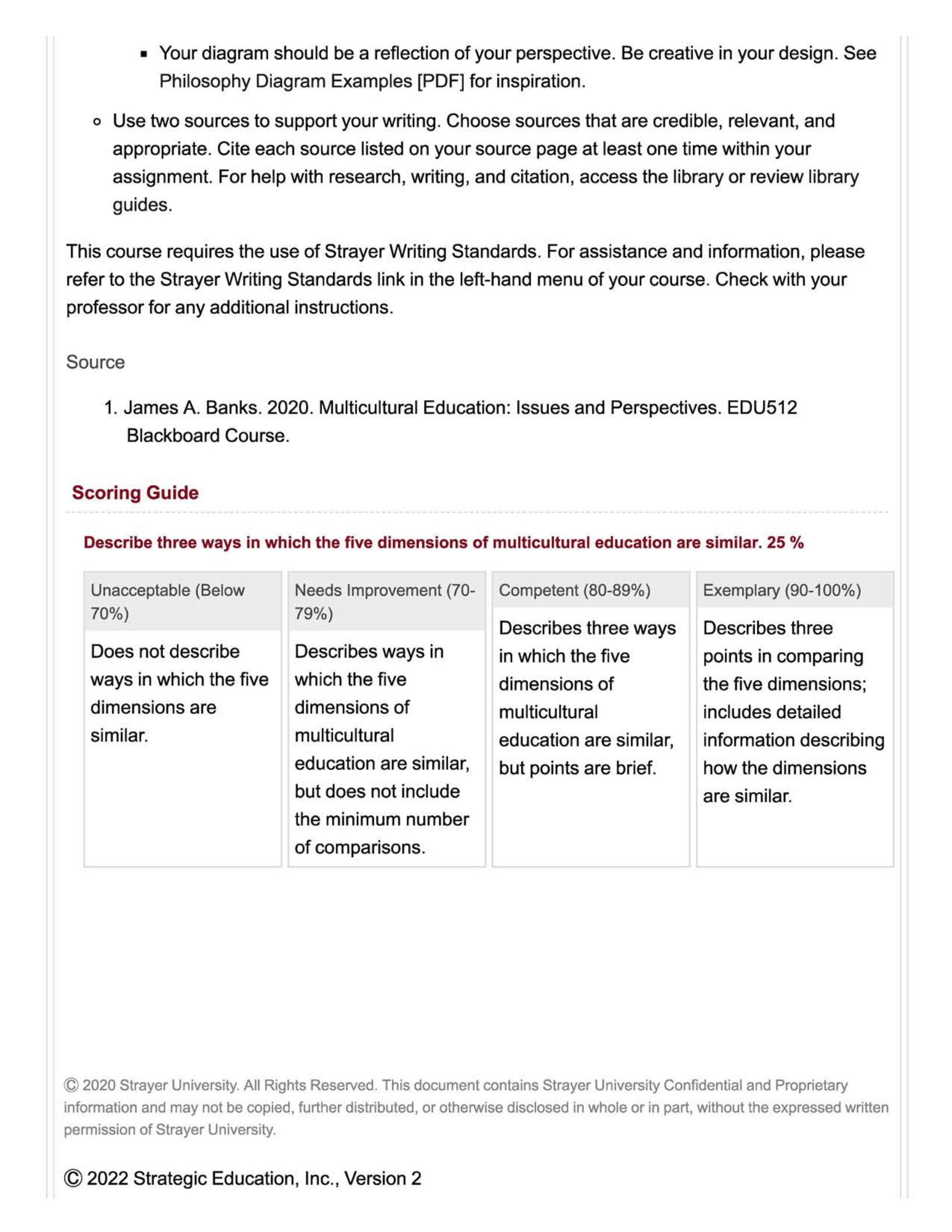
Use
two
sources
to
support
your
writing.
Choose
sources
that
are
credible,
relevant,
and
appropriate.
Cite
each
source
listed
on
your
source
page
at
least
one
time
within
your
assignment.
For
help
with
research,
writing,
and
citation,
access
the
library
or
review
library
guides.
This
course
requires
the
use
of
Strayer
Writing
Standards.
For
assistance
and
information,
please
refer
to
the
Strayer
Writing
Standards
link
in
the
left-hand
menu
of
your
course.
Check
with
your
professor
for
any
additional
instructions.
Source
1.
James
A.
Banks.
2020.
Multicultural
Education:
Issues
and
Perspectives.
EDU512
Blackboard
Course.
scoring
Guide
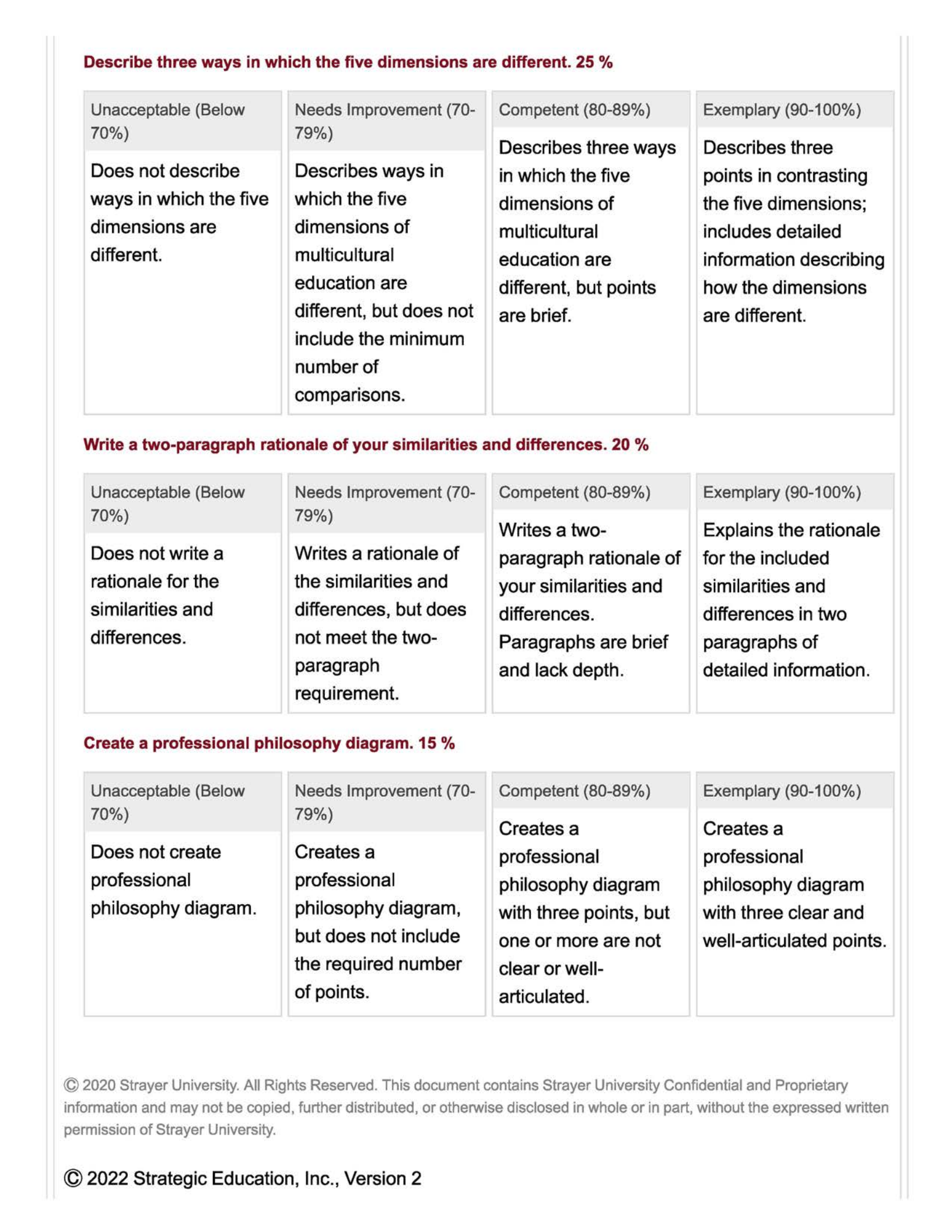
Describe
three
ways
in
which
the
five
dimensions
of
multicultural
education
are
similar.
25
%
Unacceptable
(Below
70%)
Does
not
describe
ways
in
which
the
five
dimensions
are
similar.
Needs
Improvement
(70-
79%)
Describes
ways
in
which
the
five
dimensions
of
multicultural
education
are
similar,
but
does
not
include
the
minimum
number
of
comparisons.
Competent
(80-89%)
Describes
three
ways
in
which
the
five
dimensions
of
multicultural
education
are
similar,
but
points
are
brief.
Exemplary
(90-100%)
, ,
Describes
three
points
in
comparing
the
five
dimensions:
includes
detailed
information
describing
how
the
dimensions
are
similar.
Describe
three
ways
in
which
the
five
dimensions
are
different.
25
%
Unacceptable
(Below
70%)
Does
not
describe
ways
in
which
the
five
dimensions
are
different.
Needs
Improvement
(70-
79%)
Describes
ways
in
which
the
five
dimensions
of
multicultural
education
are
different,
but
does
not
include
the
minimum
number
of
comparisons.
Competent
(80-89%)
Describes
three
ways
in
which
the
five
dimensions
of
multicultural
education
are
different,
but
points
are
brief.
Exemplary
(90-100%)
Describes
three
points
in
contrasting
the
five
dimensions;
includes
detailed
information
describing
how
the
dimensions
are
different.
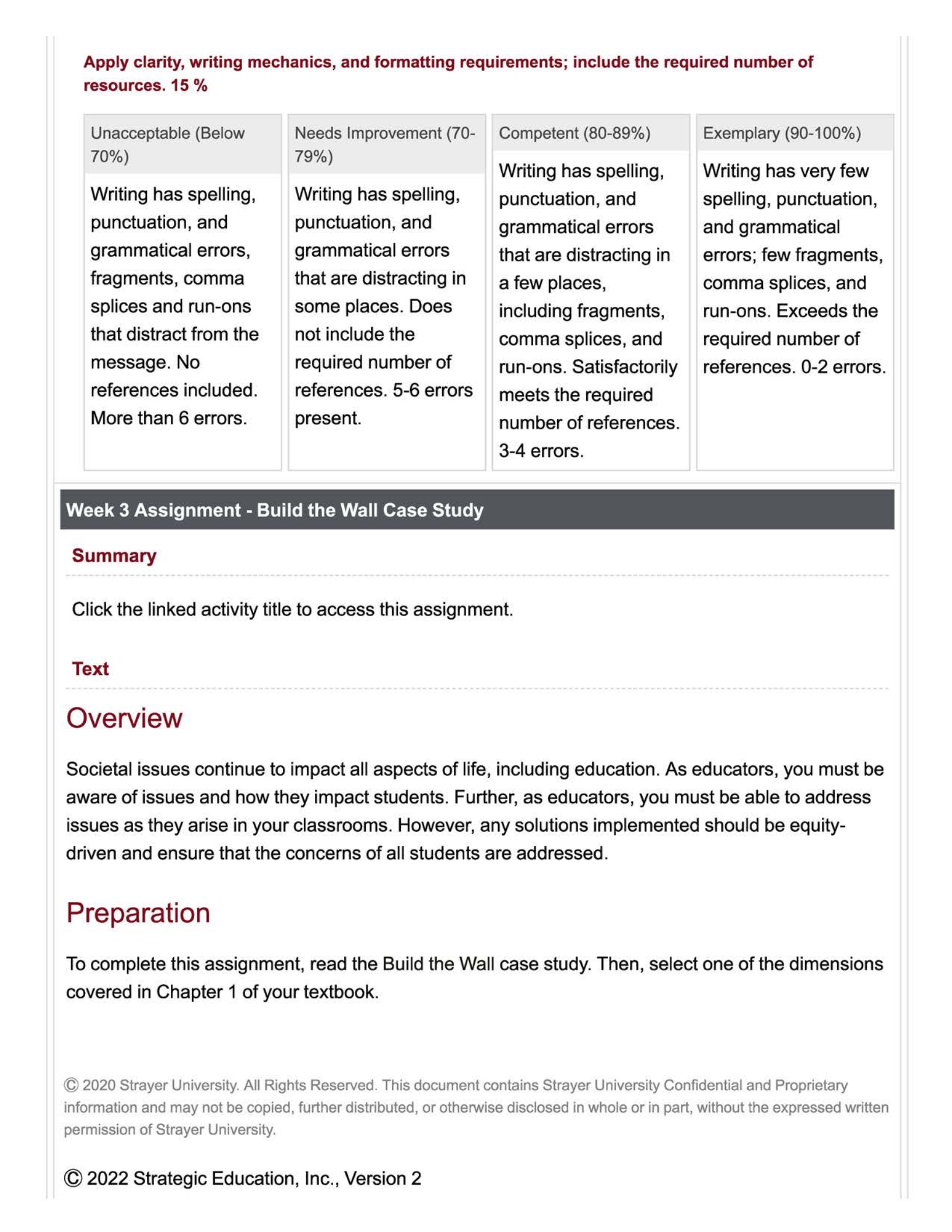
Write
a
two-paragraph
rationale
of
your
similarities
and
differences.
20
%
Unacceptable
(Below
70%)
Does
not
write
a
rationale
for
the
similarities
and
differences.
Needs
Improvement
(70-
79%)
Writes
a
rationale
of
the
similarities
and
differences,
but
does
not
meet
the
two-
paragraph
requirement.
Competent
(80-89%)
Writes
a
two-
paragraph
rationale
of
your
similarities
and
differences.
Paragraphs
are
brief
and
lack
depth.
Exemplary
(90-100%)
Explains
the
rationale
for
the
included
similarities
and
differences
in
two
paragraphs
of
detailed
information.
Create
a
professional
philosophy
diagram.
15
%
Unacceptable
(Below
70%)
Does
not
create
professional
philosophy
diagram.
Needs
Improvement
(70-
79%)
Creates
a
professional
philosophy
diagram,
but
does
not
include
the
required
number
of
points.
Competent
(80-89%)
Creates
a
professional
philosophy
diagram
with
three
points,
but
one
or
more
are
not
clear
or
well-
articulated.
Exemplary
(90-100%)
Creates
a
professional
philosophy
diagram
with
three
clear
and
well-articulated
points.
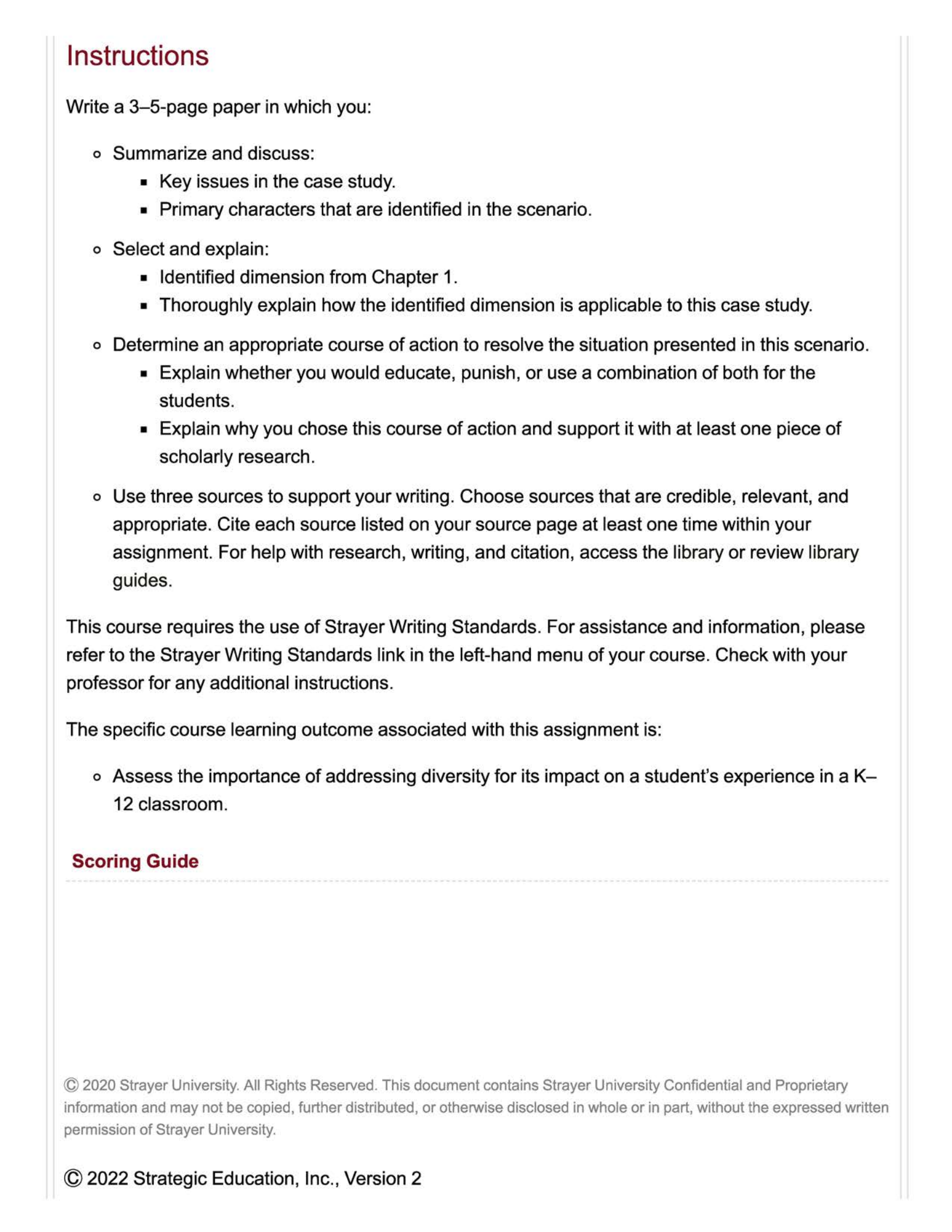
Apply
clarity,
writing
mechanics,
and
formatting
requirements;
include
the
required
number
of
resources.
15
%
Unacceptable
(Below
10%)
Writing
has
spelling,
punctuation,
and
grammatical
errors,
fragments,
comma
splices
and
run-ons
that
distract
from
the
message.
No
references
included.
More
than
errors.
Needs
Improvement
(70-
19%)
Writing
has
spelling,
punctuation,
and
grammatical
errors
that
are
distracting
in
some
places.
Does
not
include
the
required
number
of
references.
5-6
errors
present.
Competent
(80-89%)
Writing
has
spelling,
punctuation,
and
grammatical
errors
that
are
distractingin
—_q
few
places,
including
fragments,
comma
splices,
and
run-ons.
Satisfactorily
meets
the
required
number
of
references.
3-4
errors.
Exemplary
(90-100%)
“4:
.
“4:
Writing
has
very
few
spelling,
punctuation,
and
grammatical
errors;
few
fragments,
comma
splices,
and
run-ons.
Exceeds
the
required
number
of
references.
0-2
errors.
Week
3
Assignment
-
Build
the
Wall
Case
Study
Summary
Click
the
linked
activity
title
to
access
this
assignment.
Text
Overview
Societal
issues
continue
to
impact
all
aspects
of
life,
including
education.
As
educators,
you
must
be
aware
of
issues
and
how
they
impact
students.
Further,
as
educators,
you
must
be
able
to
address
issues
as
they
arise
in
your
classrooms.
However,
any
solutions
implemented
should
be
equity-
driven
and
ensure
that
the
concerns
of
all
students
are
addressed.
Preparation
To
complete
this
assignment,
read
the
Build
the
Wall
case
study.
Then,
select
one
of
the
dimensions
covered
in
Chapter
1
of
your
textbook.
Instructions
Write
a
3—5-page
paper
in
which
you:
o
Summarize
and
discuss:
=
Key
issues
in
the
case
study.
»
Primary
characters
that
are
identified
in
the
scenario.
o
Select
and
explain:
=
Identified
dimension
from
Chapter
1.
=
Thoroughly
explain
how
the
identified
dimension
is
applicable
to
this
case
study.
o
Determine
an
appropriate
course
of
action
to
resolve
the
situation
presented
in
this
scenario.
=»
Explain
whether
you
would
educate,
punish,
or
use
a
combination
of
both
for
the
students.
=»
Explain
why
you
chose
this
course
of
action
and
support
it
with
at
least
one
piece
of
scholarly
research.
o
Use
three
sources
to
support
your
writing.
Choose
sources
that
are
credible,
relevant,
and
appropriate.
Cite
each
source
listed
on
your
source
page
at
least
one
time
within
your
assignment.
For
help
with
research,
writing,
and
citation,
access
the
library
or
review
library
guides.
This
course
requires
the
use
of
Strayer
Writing
Standards.
For
assistance
and
information,
please
refer
to
the
Strayer
Writing
Standards
link
in
the
left-hand
menu
of
your
course.
Check
with
your
professor
for
any
additional
instructions.
The
specific
course
learning
outcome
associated
with
this
assignment
is:
o
Assess
the
importance
of
addressing
diversity
for
its
impact
on
a
student's experience
in
a
K—
12
classroom.
Scoring
Guide
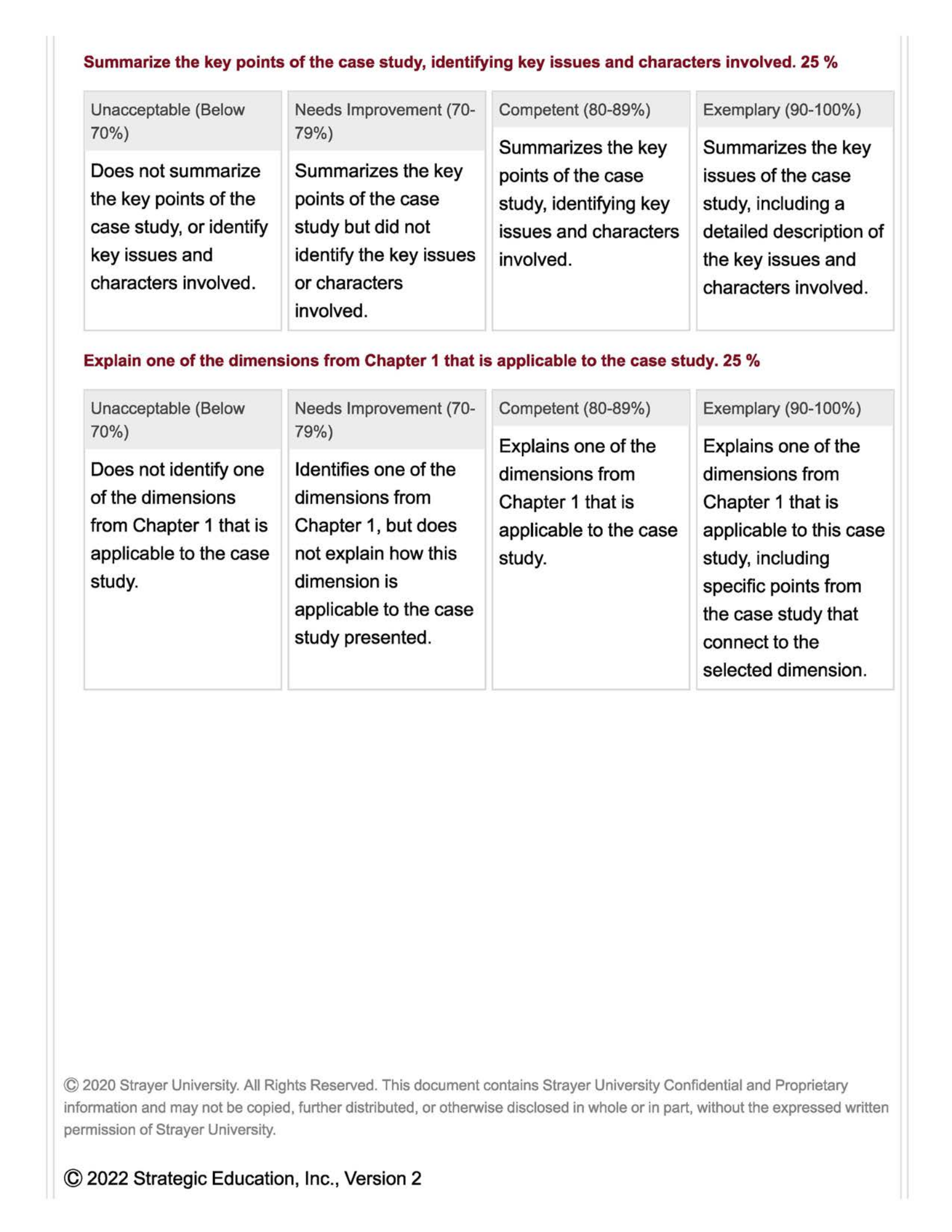
Summarize
the
key
points
of
the
case
study,
identifying
key
issues
and
characters
involved.
25
%
Unacceptable
(Below
70%)
Does
not
summarize
the
key
points
of
the
case
study,
or
identify
key
issues
and
characters
involved.
Needs
Improvement
(70-
79%)
Summarizes
the
key
points
of
the
case
study
but
did
not
identify
the
key
issues
or
characters
involved.
Competent
(80-89%)
Summarizes
the
key
points
of
the
case
study,
identifying
key
issues
and
characters
involved.
Exemplary
(90-100%)
Summarizes
the
key
issues
of
the
case
study,
including
a
detailed
description
of
the
key
issues
and
characters
involved.
Explain
one
of
the
dimensions
from
Chapter
1
that
is
applicable
to
the
case
study.
25
%
Unacceptable
(Below
70%)
Does
not
identify
one
of
the
dimensions
from
Chapter
1
that
is
applicable
to
the
case
study.
Needs
Improvement
(70-
79%)
Identifies
one
of
the
dimensions
from
Chapter
1,
but
does
not
explain
how
this
dimension
is
applicable
to
the
case
study
presented.
Competent
(80-89%)
Explains
one
of
the
dimensions
from
Chapter
1
that
is
applicable
to
the
case
study.
Exemplary
(90-100%)
Explains
one
of
the
dimensions
from
Chapter
1
that
is
applicable
to
this
case
study,
including
specific
points
from
the
case
study
that
connect
to
the
selected
dimension.
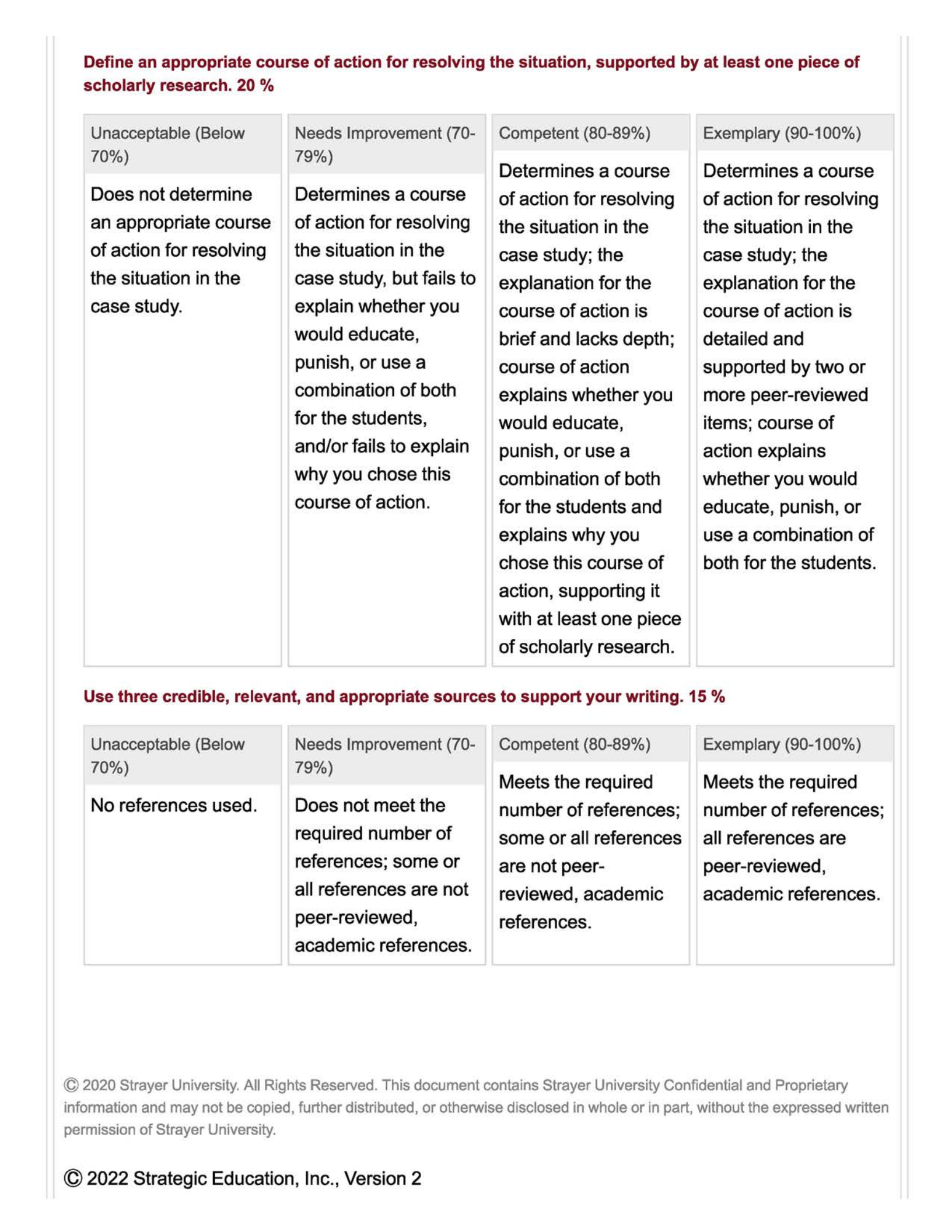
Define
an
appropriate
course
of
action
for
resolving
the
situation,
supported
by
at
least
one
piece
of
scholarly
research.
20
%
Unacceptable
(Below
70%)
Does
not
determine
an
appropriate
course
of
action
for
resolving
the
situation
in
the
case
study.
Needs
Improvement
(70-
79%)
Determines
a
course
of
action
for
resolving
the
situation
in
the
case
study,
but
fails
to
explain
whether
you
would
educate,
punish,
or
use
a
combination
of
both
for
the
students,
and/or
fails
to
explain
why
you
chose
this
course
of
action.
Competent
(80-89%)
Determines
a
course
of
action
for
resolving
the
situation
in
the
case
study;
the
explanation
for
the
course
of
action
is
brief
and
lacks
depth;
course
of
action
explains
whether
you
would
educate,
punish,
or
use
a
combination
of
both
for
the
students
and
explains
why
you
chose
this
course
of
action,
supporting
it
with
at
least
one
piece
of
scholarly
research.
Exemplary
(90-100%)
Determines
a
course
of
action
for
resolving
the
situation
in
the
case
study;
the
explanation
for
the
course
of
action
is
detailed
and
supported
by
two
or
more
peer-reviewed
items;
course
of
action
explains
whether
you
would
educate,
punish,
or
use
a
combination
of
both
for
the
students.
Use
three
credible,
relevant,
and
appropriate
sources
to
support
your
writing.
15
%
Unacceptable
(Below
70%)
No
references
used.
Needs
Improvement
(70-
79%)
Does
not
meet
the
required
number
of
references;
some
or
all
references
are
not
peer-reviewed,
academic
references.
Competent
(80-89%)
Meets
the
required
number
of
references;
some
or
all
references
are
not
peer-
reviewed,
academic
references.
Exemplary
(90-100%)
Meets
the
required
number
of
references;
all
references
are
peer-reviewed,
academic
references.
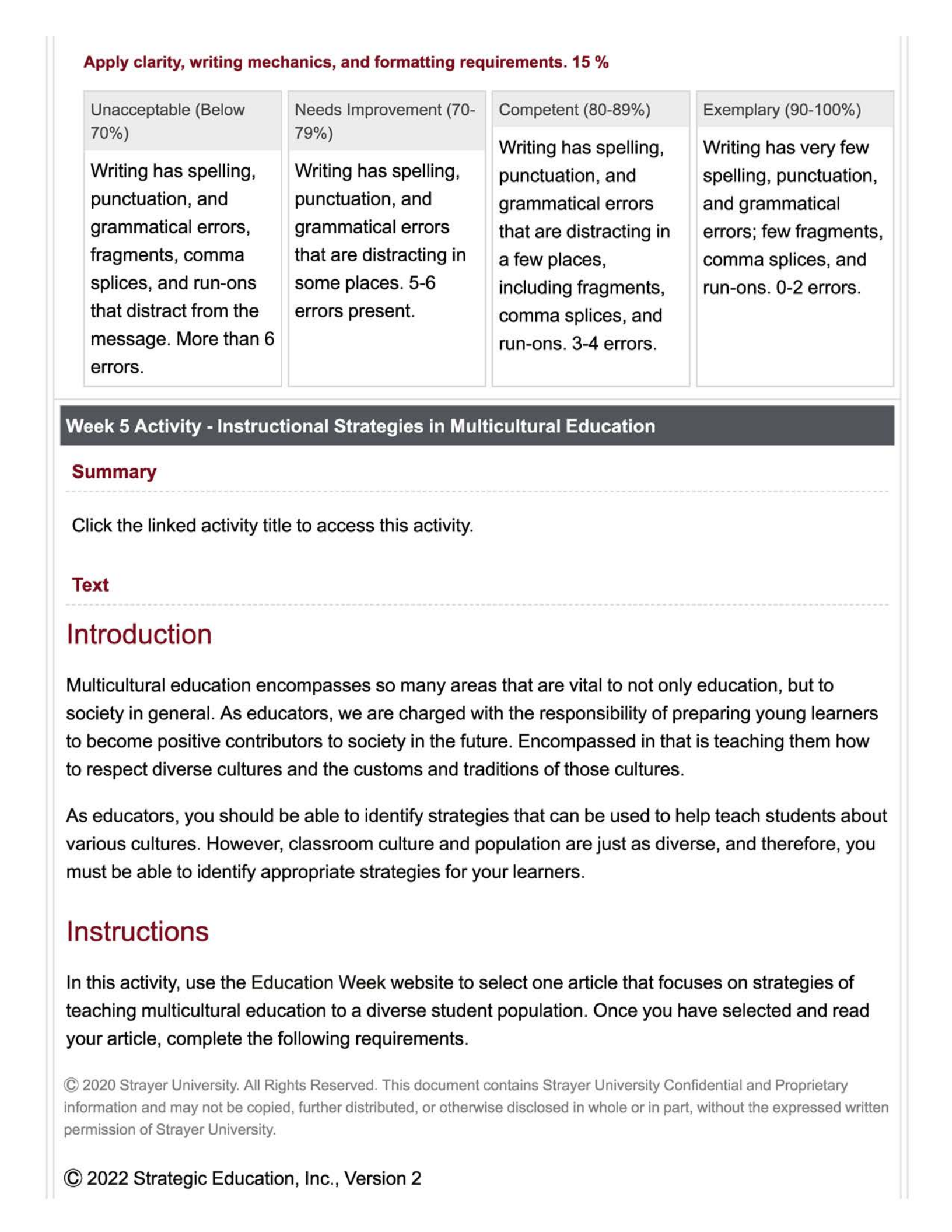
Apply
clarity,
writing
mechanics,
and
formatting
requirements.
15
%
Unacceptable
(Below
70%)
Writing
has
spelling,
punctuation,
and
grammatical
errors,
fragments,
comma
splices,
andrun-ons
that
distract
from
the
message.
More
than
6
errors.
Needs
Improvement
(70-
19%)
Writing
has
spelling,
punctuation,
and
grammatical
errors
that
are
distracting
in
some
places.
5-6
errors
present.
Competent
(80-89%)
4:
Writing
has
spelling,
punctuation,
and
grammatical
errors
that
are
distracting
in
—_—_q
few
places,
including
fragments,
comma
splices,
and
run-ons.
3-4
errors.
Exemplary
(90-100%)
4:
Writing
has
very
few
spelling,
punctuation,
and
grammatical
errors;
few
fragments,
comma
splices,
and
run-ons.
0-2
errors.
Week
5
Activity
-
Instructional
Strategies
in
Multicultural
Education
Summary
Click
the
linked
activity
title
to
access
this
activity.
Text
Introduction
Multicultural
education
encompasses
so
many
areas
that
are
vital
to
not
only
education,
but
to
society
in
general.
As
educators,
we
are
charged
with
the
responsibility
of
preparing
young
learners
to
become
positive
contributors
to
society
in
the
future.
Encompassed
in
that
is
teaching
them
how
to
respect
diverse
cultures
and
the
customs
and
traditions
of
those
cultures.
As
educators,
you
should
be
able
to
identify
strategies
that
can
be
used
to
help
teach
students
about
various
Cultures.
However,
classroom
culture
and
population
are
just
as
diverse,
and
therefore,
you
must
be
able
to
identify
appropriate
strategies
for
your
learners.
Instructions
In
this
activity,
use
the
Education
Week
website
to
select
one
article
that
focuses
on
strategies
of
teaching
multicultural
education
to
a
diverse
student
population.
Once
you
have
selected
and
read
your
article,
complete
the
following
requirements.
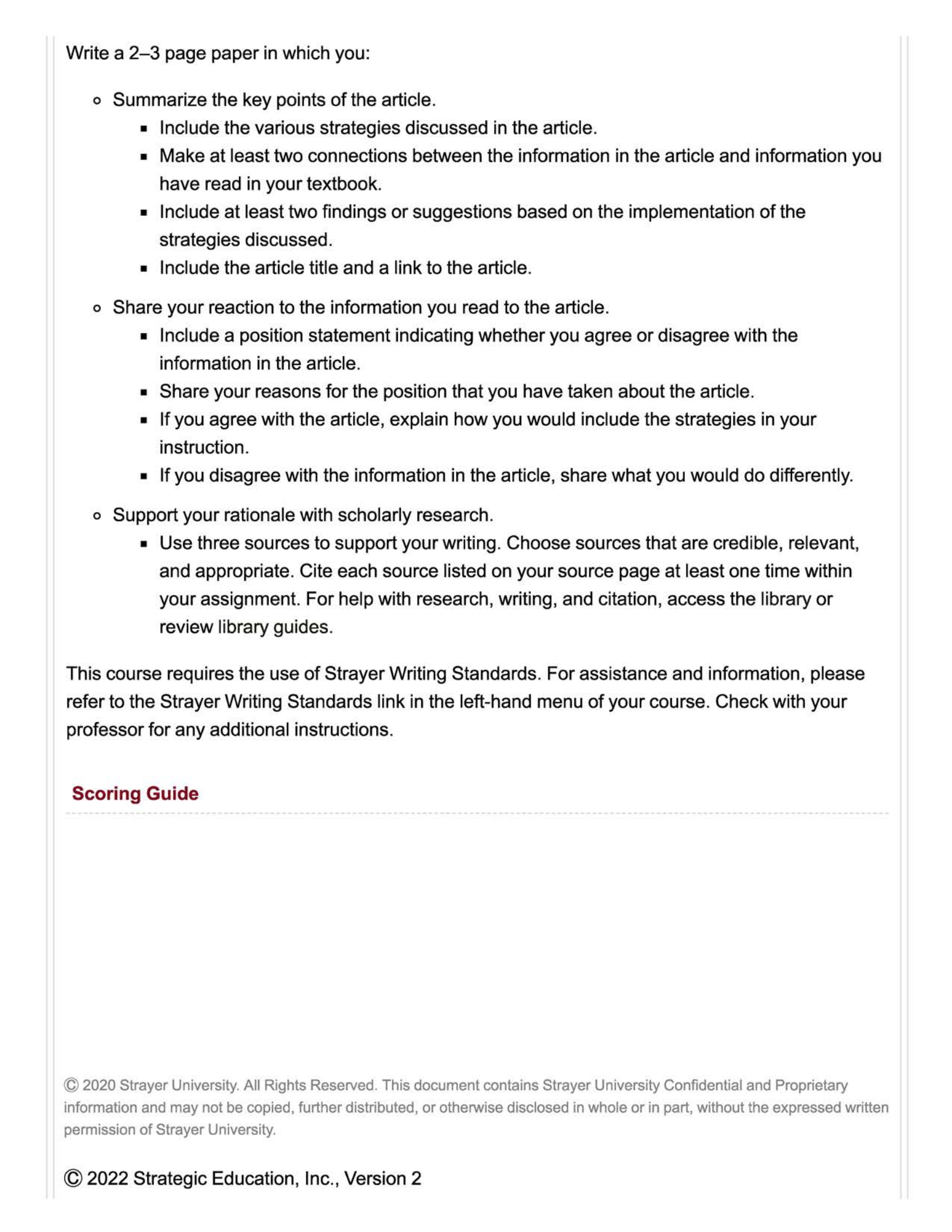
Write
a
2-3
page
paper
in
which
you:
o
Summarize
the
key
points
of
the
article.
=
Include
the
various
strategies
discussed
in
the
article.
=
Make
atleast
two
connections
between
the
information
in
the
article
and
information
you
have
read
in
your
textbook.
s
Include
at
least
two
findings
or
suggestions
based
on
the
implementation
of
the
strategies
discussed.
»
Include
the
article
title
and
a
link
to
the
article.
o
Share
your
reaction
to
the
information
you
read
to
the
article.
»
Include
a
position
statement
indicating
whether
you
agree
or
disagree
with
the
information
in
the
article.
=
Share
your
reasons
for
the
position
that
you
have
taken
about
the
article.
=
|f
you
agree
with
the
article,
explain
how
you
would
include
the
strategies
in
your
instruction.
»
If
you
disagree
with
the
information
in
the
article,
share
what
you
would
do
differently.
o
Support
your
rationale
with
scholarly
research.
»
Use
three
sources
to
support
your
writing.
Choose
sources
that
are
credible,
relevant,
and
appropriate.
Cite
each
source
listed
on
your
source
page
at
least
one
time
within
your
assignment.
For
help
with
research,
writing,
and
citation,
access
the
library
or
review
library
guides.
This
course
requires
the
use
of
Strayer
Writing
Standards.
For
assistance
and
information,
please
refer
to
the
Strayer
Writing
Standards
link
in
the
left-hand
menu
of
your
course.
Check
with
your
professor
for
any
additional
instructions.
Scoring
Guide
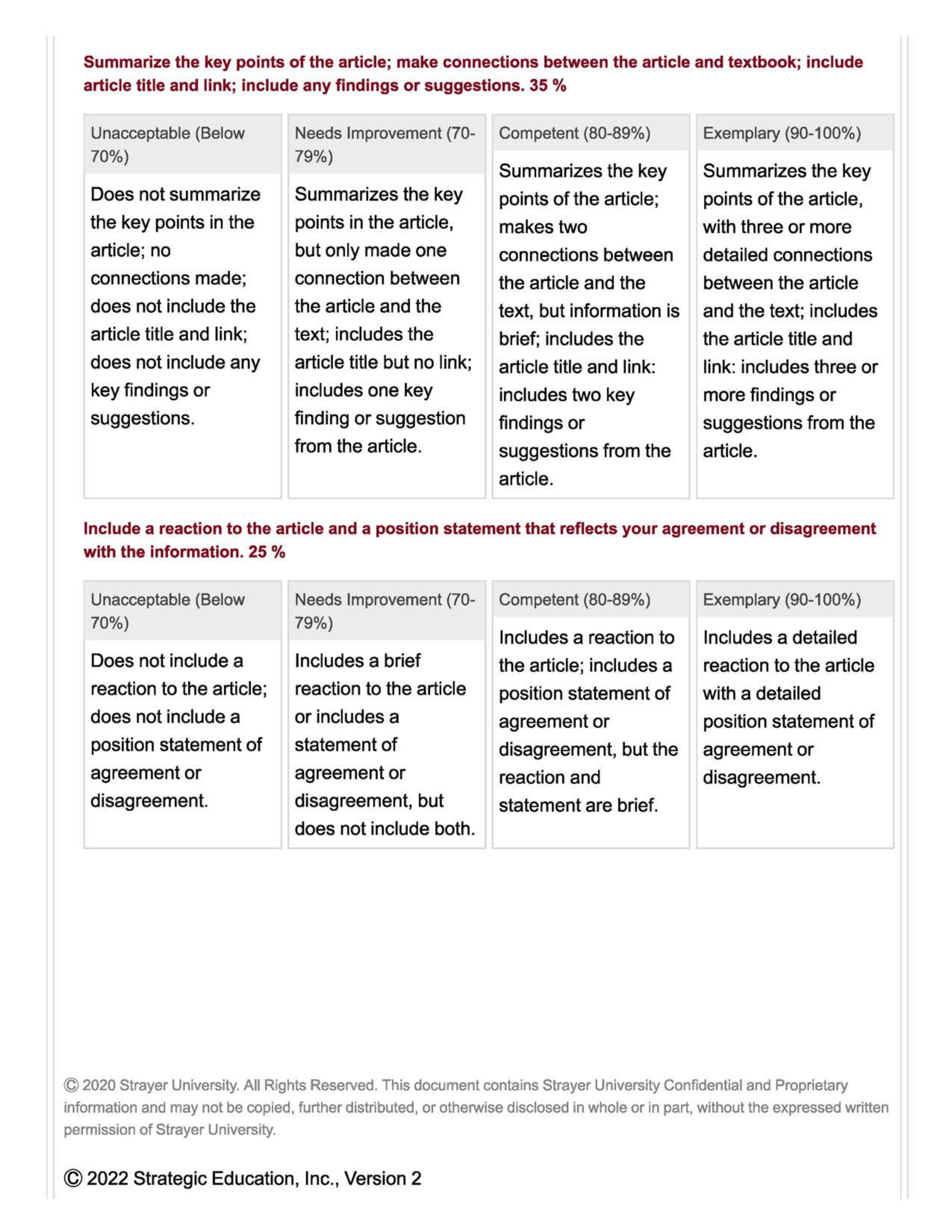
Summarize
the
key
points
of
the
article;
make
connections
between
the
article
and
textbook;
include
article
title
and
link;
include
any
findings
or
suggestions.
35
%
Unacceptable
(Below
70%)
Does
not
summarize
the
key
points
in
the
article;
no
connections
made;
does
not
include
the
article
title
and
link;
does
not
include
any
key
findings
or
suggestions.
Needs
Improvement
(70-
79%)
Summarizes
the
key
points
in
the
article,
but
only
made
one
connection
between
the
article
and
the
text;
includes
the
article
title
but
no
link;
includes
one
key
finding
or
suggestion
from
the
article.
Competent
(80-89%)
Summarizes
the
key
points
of
the
article;
makes
two
connections
between
the
article
and
the
text,
but
information
is
brief;
includes
the
article
title
and
link:
includes
two
key
findings
or
suggestions
from
the
article.
Exemplary
(90-100%)
Summarizes
the
key
points
of
the
article,
with
three
or
more
detailed
connections
between
the
article
and
the
text;
includes
the
article
title
and
link:
includes
three
or
more
findings
or
suggestions
from
the
article.
Include
a
reaction
to
the
article
and
a
position
statement
that
reflects
your
agreement
or
disagreement
with
the
information.
25
%
Unacceptable
(Below
70%)
Does
not
include
a
reaction
to
the
article;
does
not
include
a
position
statement
of
agreement
or
disagreement.
Needs
Improvement
(70-
79%)
Includes
a
brief
reaction
to
the
article
or
includes
a
statement
of
agreement
or
disagreement,
but
does
not
include
both.
Competent
(80-89%)
Includes
a
reaction
to
the
article;
includes
a
position
statement
of
agreement
or
disagreement,
but
the
reaction
and
statement
are
brief.
Exemplary
(90-100%)
Includes
a
detailed
reaction
to
the
article
with
a
detailed
position
statement
of
agreement
or
disagreement.
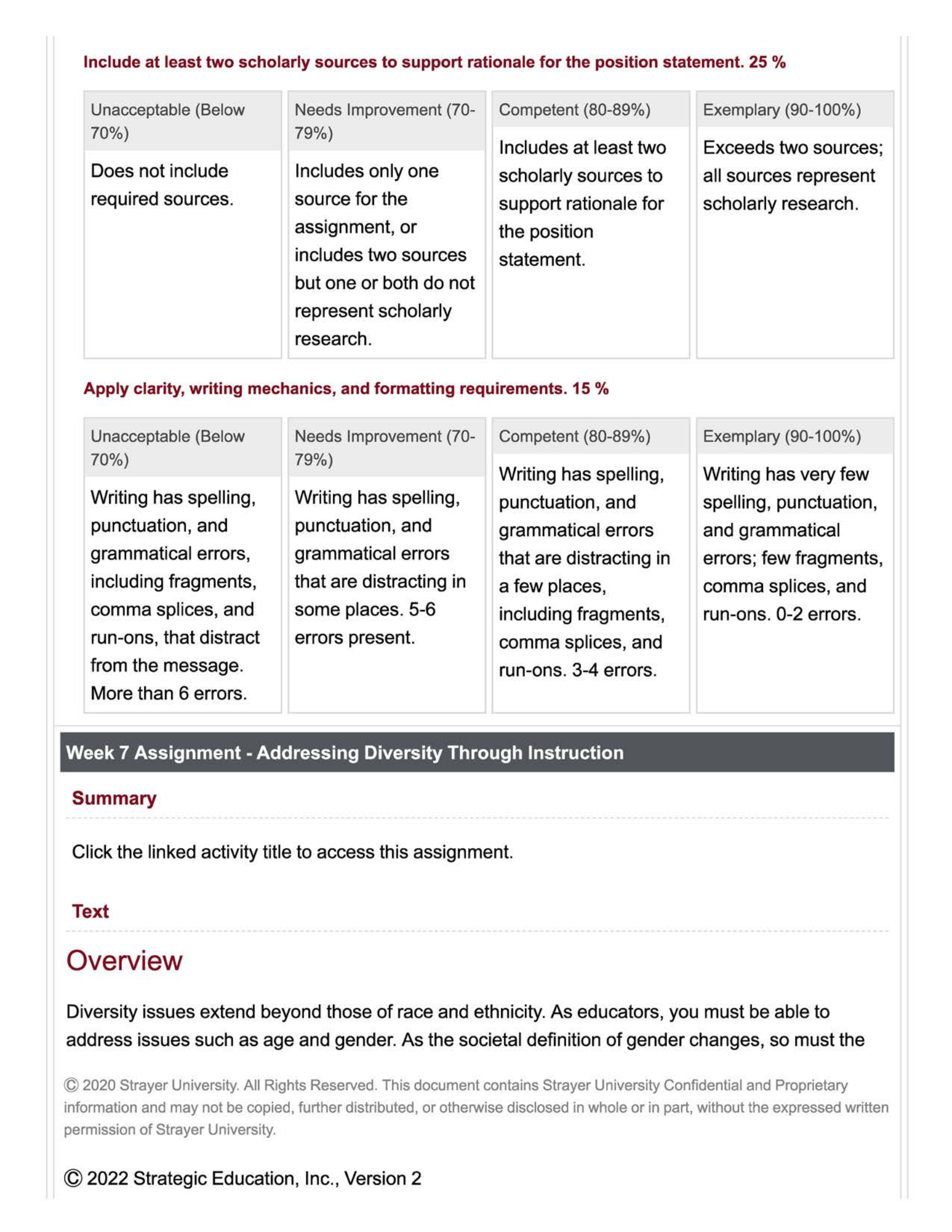
Include
at
least
two
scholarly
sources
to
support
rationale
for
the
position
statement.
25
%
Unacceptable
(Below
70%)
Needs
Improvement
(70-
79%)
Competent
(80-89%)
Exemplary
(90-100%)
Includes
at
least
two
scholarly
sources
to
support
rationale
for
the
position
Exceeds
two
sources;
_all
sources
represent
scholarly
research.
Does
not
include
required
sources.
Includes
only
one
source
for
the
assignment,
or
but
one
or
both
do
not
represent
scholarly
research.
includes
two
sources
statement.
Apply
clarity,
writing
mechanics,
and
formatting
requirements.
15
%
Unacceptable
(Below
70%)
Writing
has
spelling,
punctuation,
and
grammatical
errors,
including
fragments,
comma
splices,
and
run-ons,
that
distract
from
the
message.
More
than
6
errors.
Needs
Improvement
(70-
79%)
Writing
has
spelling,
punctuation,
and
grammatical
errors
that
are
distracting
in
some
places.
5-6
errors
present.
Competent
(80-89%)
Writing
has
spelling,
punctuation,
and
grammatical
errors
that
are
distractingin
—__q
few
places,
including
fragments,
comma
splices,
and
run-ons.
3-4
errors.
Exemplary
(90-100%)
4:
|
a:
Writing
has
very
few
spelling,
punctuation,
and
grammatical
errors;
few
fragments,
comma
splices,
and
run-ons.
0-2
errors.
Week
7
Assignment
-
Addressing
Diversity
Through
Instruction
Summary
Click
the
linked
activity
title
to
access
this
assignment.
Text
Overview
Diversity
issues
extend
beyond
those
of
race
and
ethnicity.
As
educators,
you
must
be
able
to
address
issues
such
as
age
and
gender.
As
the
societal
definition
of
gender
changes,
so
must
the
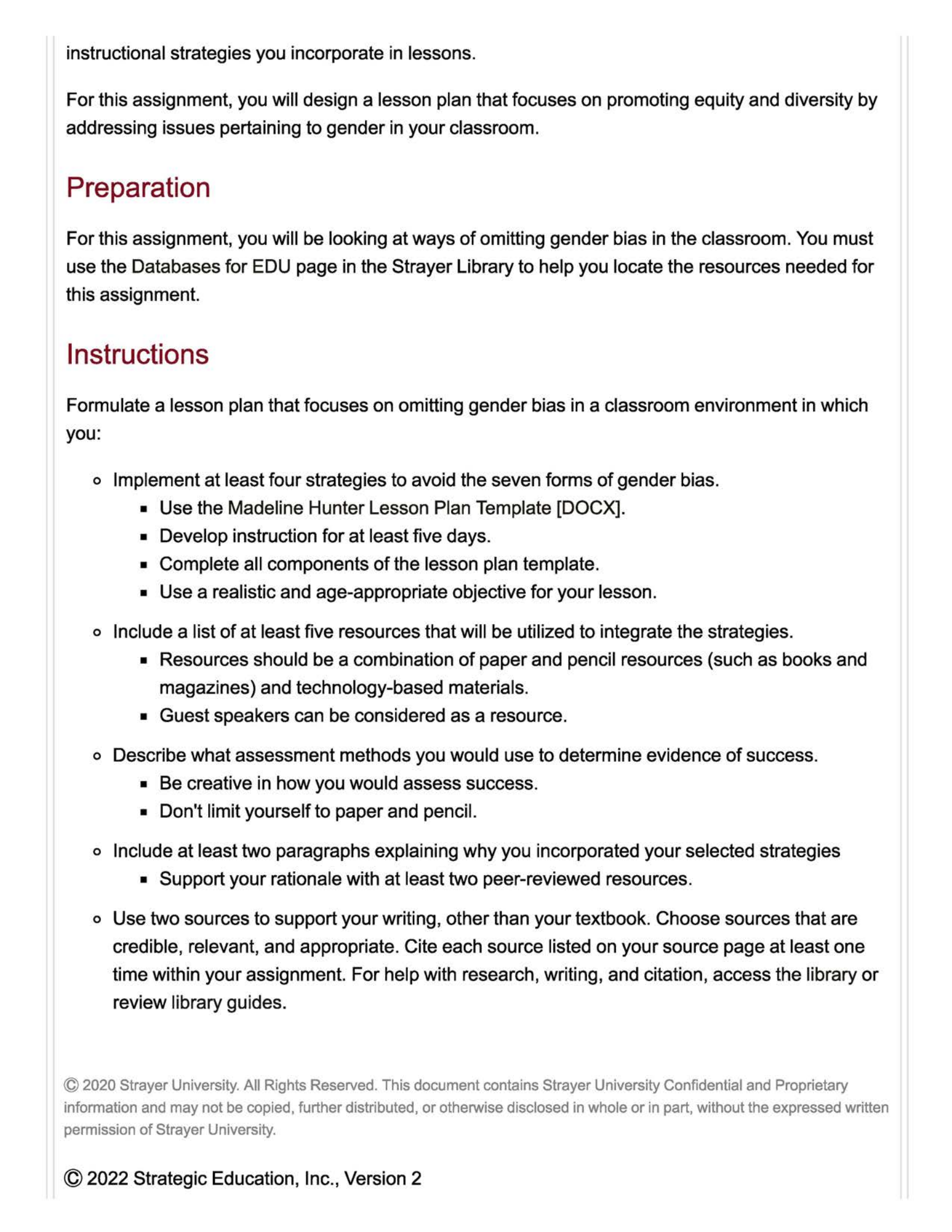
instructional
strategies
you
incorporate
in
lessons.
For
this
assignment,
you
will
design
a
lesson
plan
that
focuses
on
promoting
equity
and
diversity
by
addressing
issues
pertaining
to
gender
in
your
classroom.
Preparation
For
this
assignment,
you
will
be
looking
at
ways
of
omitting
gender
bias
in
the
classroom.
You
must
use
the
Databases
for
EDU
page
in
the
Strayer
Library
to
help
you
locate
the
resources
needed
for
this
assignment.
Instructions
Formulate
a
lesson
plan
that
focuses
on
omitting
gender
bias
in
a
classroom
environment
in
which
you:
o
Implement
at
least
four
strategies
to
avoid
the
seven
forms
of
gender
bias.
=»
Use
the
Madeline
Hunter
Lesson
Plan
Template
[DOCX].
=
Develop
instruction
for
at
least
five
days.
=»
Complete
all
components
of
the
lesson
plan
template.
=»
Use
a
realistic
and
age-appropriate
objective
for
your
lesson.
o
Include
a
list
of
at
least
five
resources
that
will
be
utilized
to
integrate
the
strategies.
=»
Resources
should
be
a
combination
of
paper
and
pencil
resources
(such
as
books
and
magazines)
and
technology-based
materials.
=»
Guest
speakers
can
be
considered
as
a
resource.
o
Describe
what
assessment
methods
you
would
use
to
determine
evidence
of
success.
=
Be
creative
in
how
you
would
assess
success.
=
Don't
limit
yourself
to
paper
and
pencil.
o
Include
at
least
two
paragraphs
explaining
why
you
incorporated
your
selected
strategies
=
Support
your
rationale
with
at
least
two
peer-reviewed
resources.
o
Use
two
sources
to
support
your
writing,
other
than
your
textbook.
Choose
sources
that
are
credible,
relevant,
and
appropriate.
Cite
each
source
listed
on
your
source
page
at
least
one
time
within
your
assignment.
For
help
with
research,
writing,
and
citation,
access
the
library
or
review
library
guides.
This
course
requires
the
use
of
Strayer
Writing
Standards.
For
assistance
and
information,
please
refer
to
the
Strayer
Writing
Standards
link
in
the
left-hand
menu
of
your
course.
Check
with
your
professor
for
any
additional
instructions.
The
specific
course
learning
outcome
associated
with
this
assignment
is:
o
Evaluate
instructional
strategies
that
positively
impact
diverse
student
populations.
Scoring
Guide
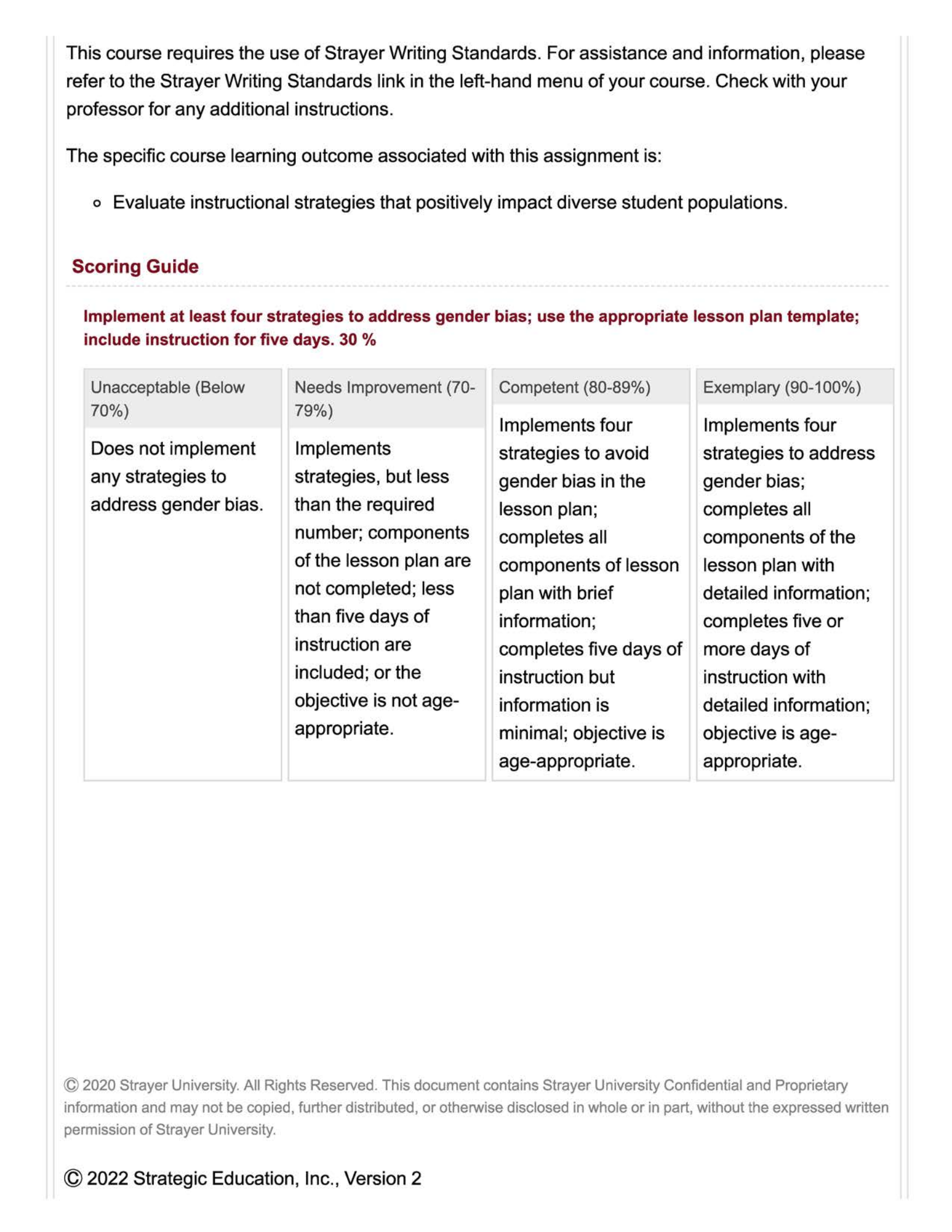
Implement
at
least
four
strategies
to
address
gender
bias;
use
the
appropriate
lesson
plan
template;
include
instruction
for
five
days.
30
%
Unacceptable
(Below
70%)
Does
not
implement
any
strategies
to
address
gender
bias.
Needs
Improvement
(70-
79%)
Implements
strategies,
but
less
than
the
required
number;
components
of
the
lesson
plan
are
not
completed;
less
than
five
days
of
instruction
are
included;
or
the
objective
is
not
age-
appropriate.
Competent
(80-89%)
Implements
four
strategies
to
avoid
gender
bias
in
the
lesson
plan;
completes
all
components
of
lesson
plan
with
brief
information;
completes
five
days
of
instruction
but
information
is
minimal;
objective
is
age-appropriate.
Exemplary
(90-100%)
Implements
four
strategies
to
address
gender
bias;
completes
all
components
of
the
lesson
plan
with
detailed
information:
completes
five
or
more
days
of
instruction
with
detailed
information;
objective
is
age-
appropriate.
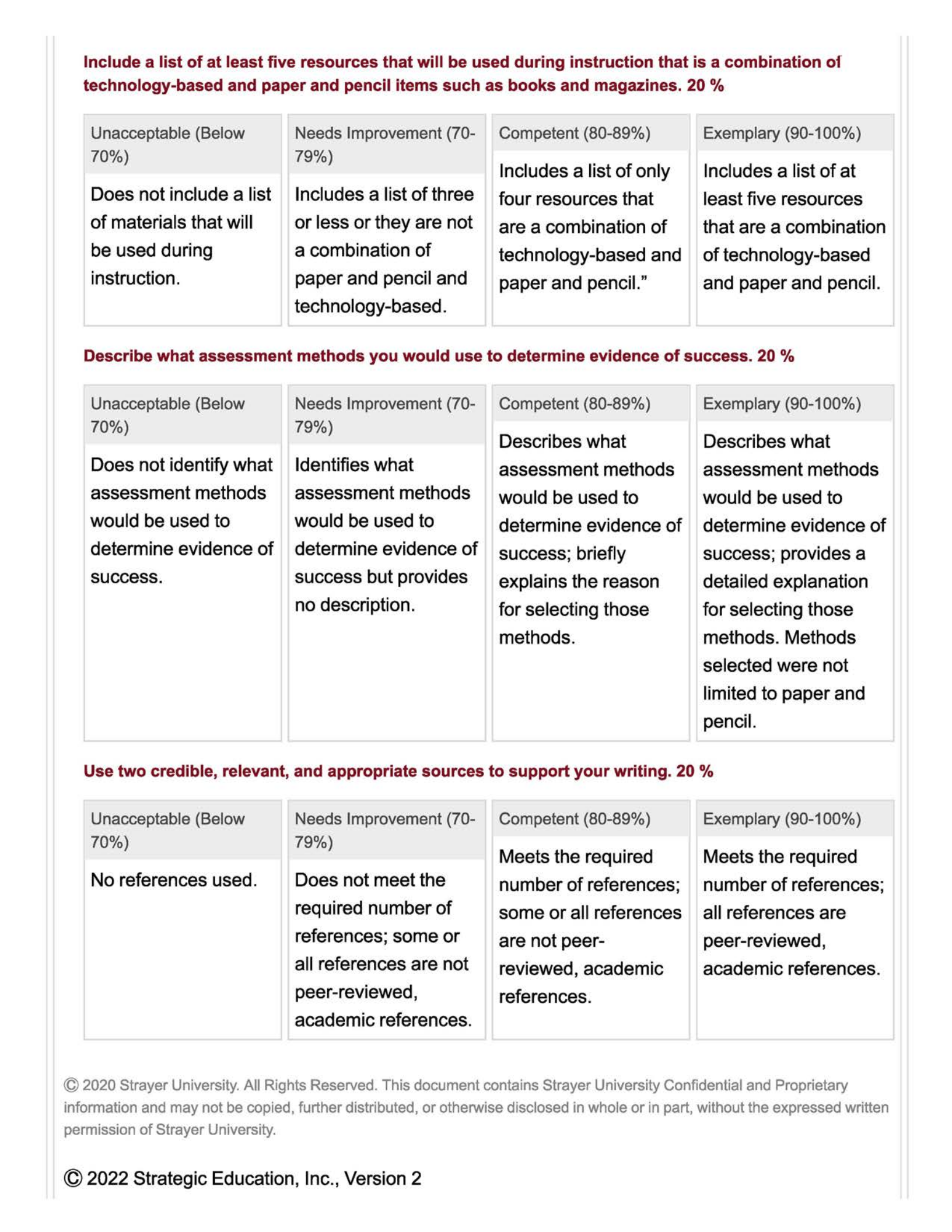
Include
a
list
of
at
least
five
resources
that
will
be
used
during
instruction
that
is
a
combination
of
technology-based
and
paper
and
pencil
items
such
as
books
and
magazines.
20
%
Unacceptable
(Below
70%)
Does
not
include
a
list
of
materials
that
will
be
used
during
instruction.
Needs
Improvement
(70-
79%)
Includes
a
list
of
three
or
less
or
they
are
not
a
combination
of
paper
and
pencil
and
technology-based.
Competent
(80-89%)
Includes
a
list
of
only
four
resources
that
are
a
combination
of
technology-based
and
paper
and
pencil.”
Exemplary
(90-100%)
Includes
a
list
of
at
least
five
resources
that
are
a
combination
of
technology-based
and
paper
and
pencil.
Describe
what
assessment
methods
you
would
use
to
determine
evidence
of
success.
20
%
Unacceptable
(Below
70%)
Does
not
identify
what
assessment
methods
would
be
used
to
determine
evidence
of
SUCCESS.
Needs
Improvement
(70-
79%)
Identifies
what
assessment
methods
would
be
used
to
determine
evidence
of
success
but
provides
no
description.
Competent
(80-89%)
Describes
what
assessment
methods
would
be
used
to
determine
evidence
of
success;
briefly
explains
the
reason
for
selecting
those
methods.
Exemplary
(90-100%)
Describes
what
assessment
methods
would
be
used
to
determine
evidence
of
success;
provides
a
detailed
explanation
for
selecting
those
methods.
Methods
selected
were
not
limited
to
paper
and
pencil.
Use
two
credible,
relevant,
and
appropriate
sources
to
support
your
writing.
20
%
Unacceptable
(Below
70%)
No
references
used.
Needs
Improvement
(70-
79%)
Does
not
meet
the
required
number
of
references;
some
or
all
references
are
not
peer-reviewed,
academic
references.
Competent
(80-89%)
Meets
the
required
number
of
references;
some
or
all
references
are
not
peer-
reviewed,
academic
references.
Exemplary
(90-100%)
Meets
the
required
number
of
references;
all
references
are
peer-reviewed,
academic
references.
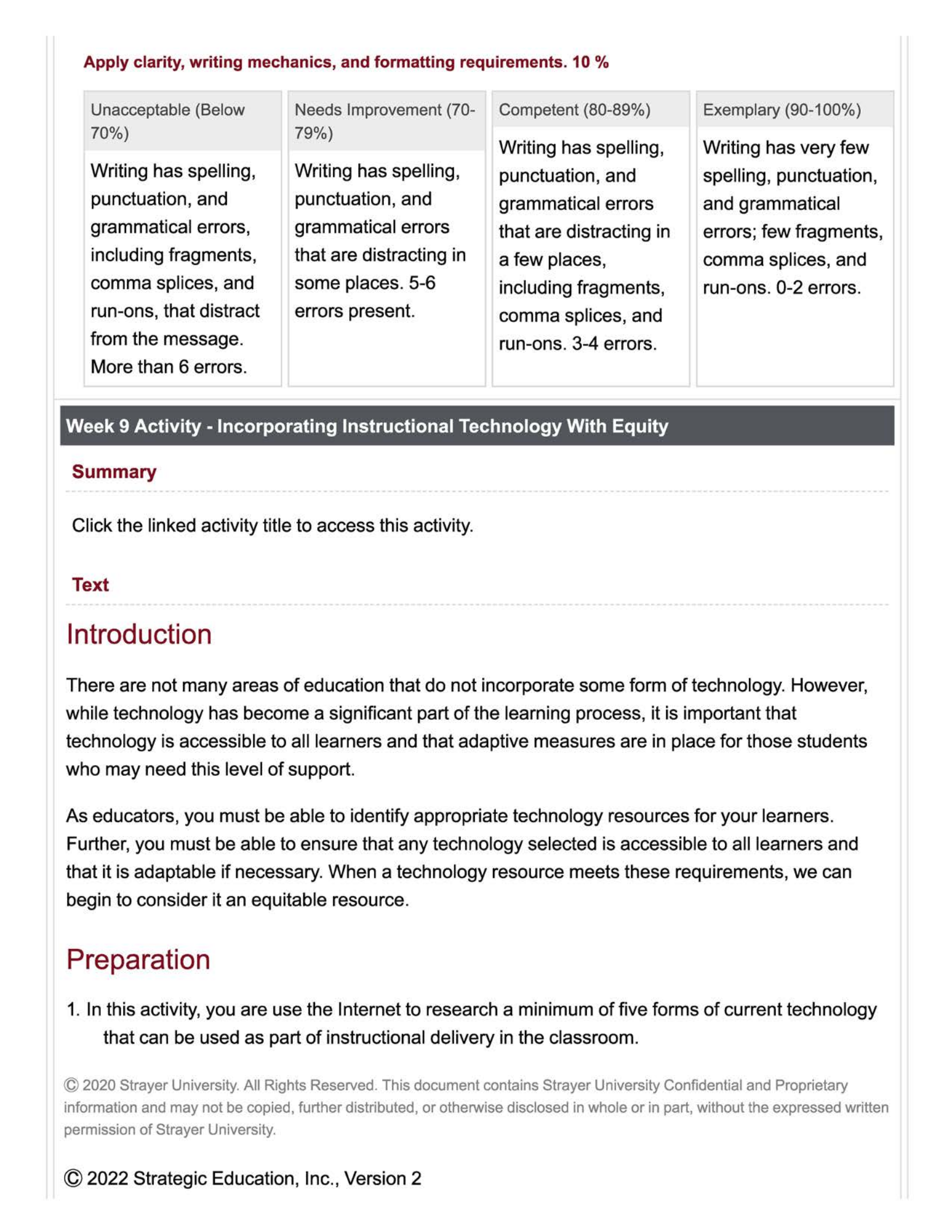
Apply
clarity,
writing
mechanics,
and
formatting
requirements.
10
%
Unacceptable
(Below
70%)
Writing
has
spelling,
punctuation,
and
grammatical
errors,
including
fragments,
comma
splices,
and
run-ons,
that
distract
from
the
message.
More
than
6
errors.
Needs
Improvement
(70-
19%)
Writing
has
spelling,
punctuation,
and
grammatical
errors
that
are
distracting
in
some
places.
5-6
errors
present.
Competent
(80-89%)
4:
Writing
has
spelling,
punctuation,
and
grammatical
errors
that
are
distracting
in
a
few
places,
including
fragments,
comma
splices,
and
run-ons.
3-4
errors.
Exemplary
(90-100%)
4:
Writing
has
very
few
spelling,
punctuation,
and
grammatical
errors;
few
fragments,
comma
splices,
and
run-ons.
0-2
errors.
Week
9
Activity
-
Incorporating
Instructional
Technology
With
Equity
Summary
Click
the
linked
activity
title
to
access
this
activity.
Text
Introduction
There
are
not
many
areas
of
education
that
do
not
incorporate
some
form
of
technology.
However,
while
technology
has
become
a
significant
part
of
the
learning
process,
it
is
important
that
technology
is
accessible
to
all
learners
and
that
adaptive
measures
are
in
place
for
those
students
who
may
need
this
level
of
support.
As
educators,
you
must
be
able
to
identify
appropriate
technology
resources
for
your
learners.
Further,
you
must
be
able
to
ensure
that
any
technology
selected
is
accessible
to
all
learners
and
that
it
is
adaptable
if
necessary.
When
a
technology
resource
meets
these
requirements,
we
can
begin
to
consider
it
an
equitable
resource.
Preparation
1.
In
this
activity,
you
are
use
the
Internet
to
research
a
minimum
of
five
forms
of
current
technology
that
can
be
used
as
part
of
instructional
delivery
in
the
classroom.
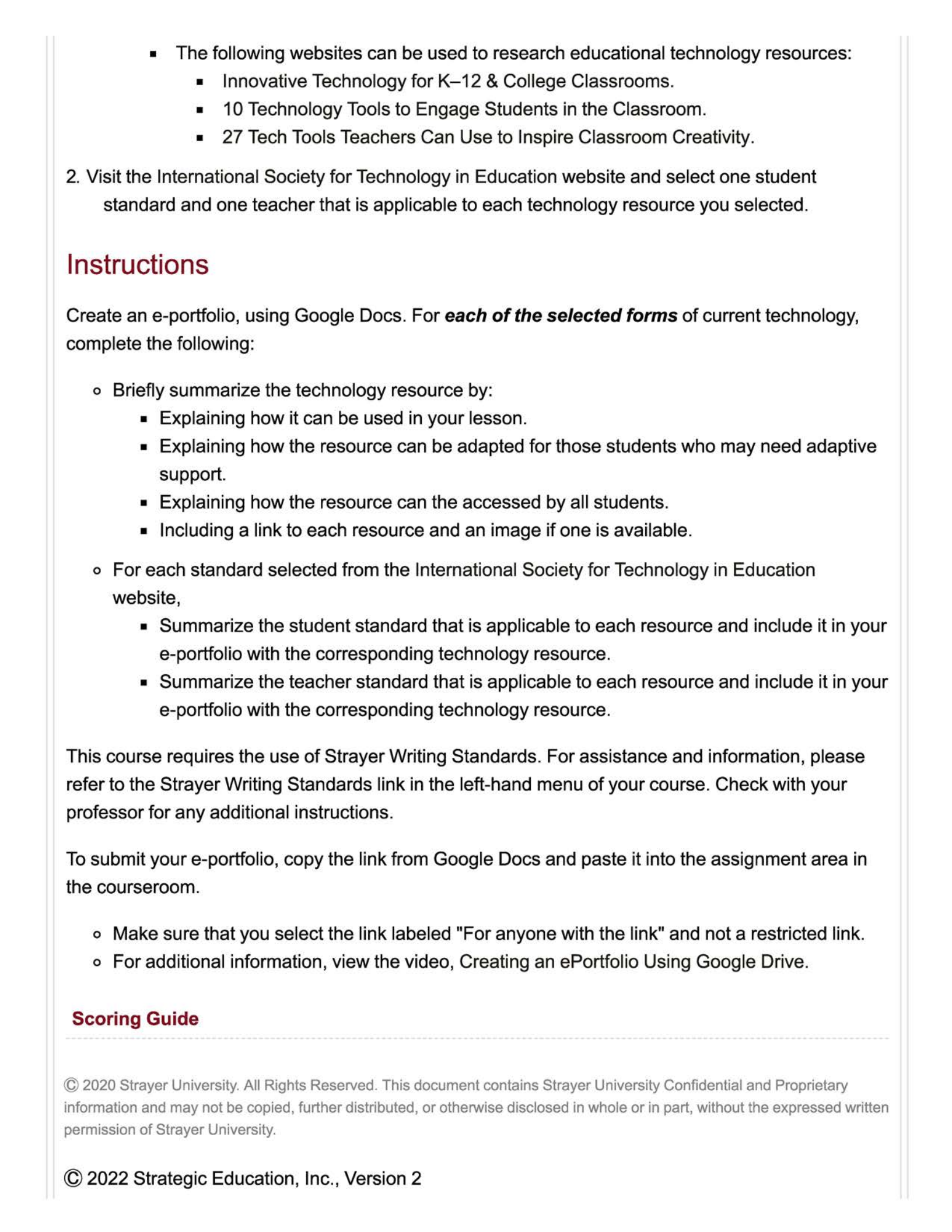
=
The
following
websites
can
be
used
to
research
educational
technology
resources:
»
Innovative
Technology
for
K-12
&
College
Classrooms.
»
10
Technology
Tools
to
Engage
Students
in
the
Classroom.
=»
2/7
Tech
Tools
Teachers
Can
Use
to
Inspire
Classroom
Creativity.
2.
Visit
the
International
Society
for
Technology
in
Education
website
and
select
one
student
standard
and
one
teacher
that
is
applicable
to
each
technology
resource
you
selected.
Instructions
Create
an
e-portfolio,
using
Google
Docs.
For
each
of
the
selected
forms
of
current
technology,
complete
the
following:
o
Briefly
summarize
the
technology
resource
by:
=»
Explaining
how
it
can
be
used
in
your
lesson.
=»
Explaining
how
the
resource
can
be
adapted
for
those
students
who
may
need
adaptive
support.
=»
Explaining
how
the
resource
can
the
accessed
by
all
students.
s
Including
a
link
to
each
resource
and
an
image
if
one
is
available.
o
For
each
standard
selected
from
the
International
Society
for
Technology
in
Education
website,
»
Summarize
the
student
standard
that
is
applicable
to
each
resource
and
include
it
in
your
e-portfolio
with
the
corresponding
technology
resource.
»
Summarize
the
teacher
standard
that
is
applicable
to
each
resource
and
include
it
in
your
e-portfolio
with
the
corresponding
technology
resource.
This
course requires
the
use
of
Strayer
Writing
Standards.
For
assistance
and
information,
please
refer
to
the
Strayer
Writing
Standards
link
in
the
left-hand
menu
of
your
course.
Check
with
your
professor
for
any
additional
instructions.
To
submit
your
e-portfolio,
copy
the
link
from
Google
Docs
and
paste
it
into
the
assignment
area
in
the
courseroom.
o
Make
sure
that
you
select
the
link
labeled
"For
anyone
with
the
link"
and
not
a
restricted
link.
o
For
additional
information,
view
the
video,
Creating
an
ePortfolio
Using
Google
Drive.
Scoring
Guide
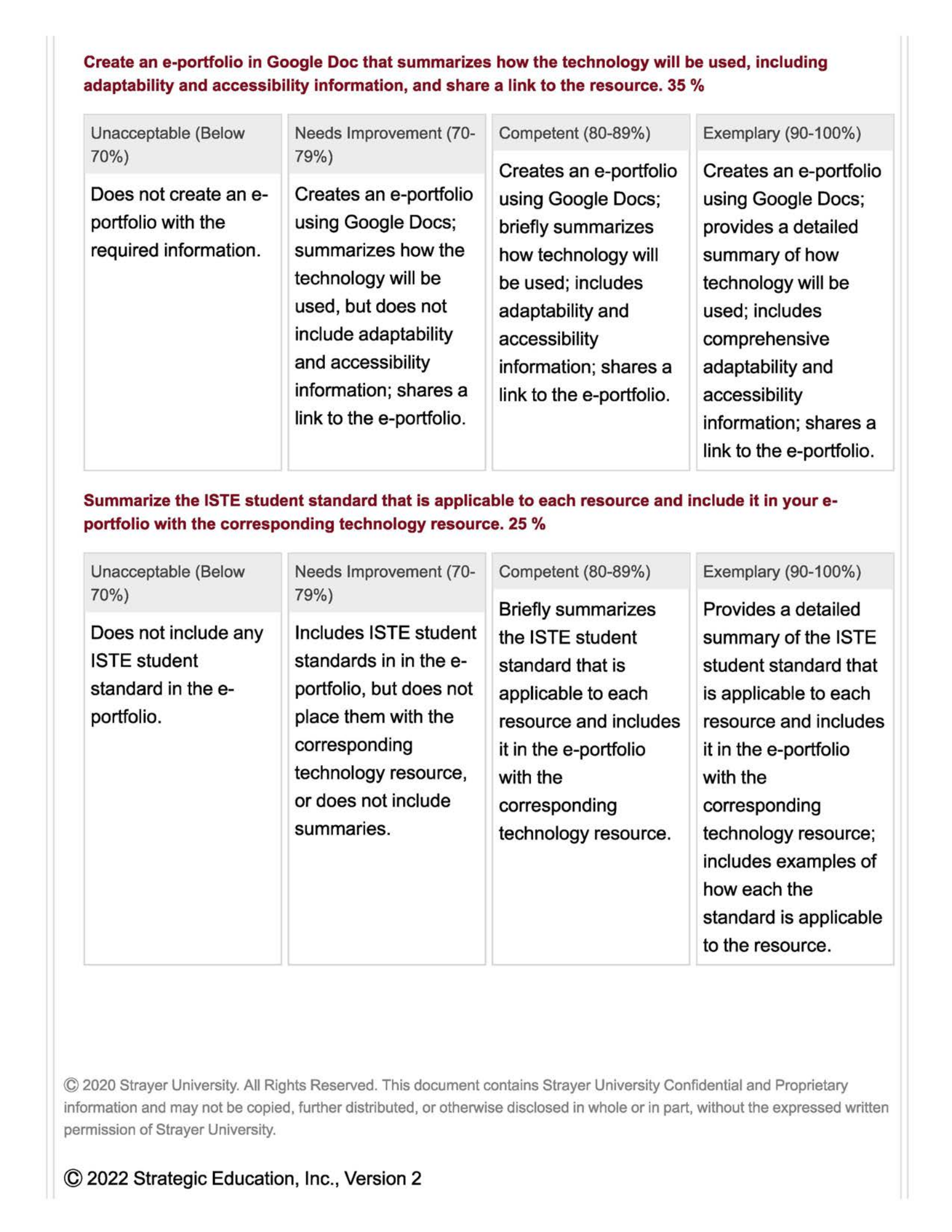
Create
an
e-portfolio
in
Google
Doc
that
summarizes
how
the
technology
will
be
used,
including
adaptability
and
accessibility
information,
and
share
a
link
to
the
resource.
35
%
Unacceptable
(Below
70%)
Does
not
create
an
e-
portfolio
with
the
required
information.
Needs
Improvement
(70-
79%)
Creates
an
e-portfolio
using
Google
Docs;
summarizes
how
the
technology
will
be
used,
but
does
not
include
adaptability
and
accessibility
information;
shares
a
link
to
the
e-portfolio.
Competent
(80-89%)
Creates
an
e-portfolio
using
Google
Docs;
briefly
summarizes
how
technology
will
be
used;
includes
adaptability
and
accessibility
information;
shares
a
link
to
the
e-portfolio.
Exemplary
(90-100%)
Creates
an
e-portfolio
using
Google
Docs;
provides
a
detailed
summary
of
how
technology
will
be
used;
includes
comprehensive
adaptability
and
accessibility
information;
shares
a
link
to
the
e-portfolio.
Summarize
the
ISTE
student
standard
that
is
applicable
to
each
resource
and
include
it
in
your
e-
portfolio
with
the
corresponding
technology
resource.
25
%
Unacceptable
(Below
70%)
Does
not
include
any
ISTE
student
standard
in
the
e-
portfolio.
Needs
Improvement
(70-
79%)
Includes
ISTE
student
standards
in
in
the
e-
portfolio,
but
does
not
place
them
with
the
corresponding
technology
resource,
or
does
not
include
summaries.
Competent
(80-89%)
Briefly
summarizes
the
ISTE
student
standard
that
is
applicable
to
each
resource
and
includes
it
in
the
e-portfolio
with
the
corresponding
technology
resource.
Exemplary
(90-100%)
Provides
a
detailed
summary
of
the
ISTE
student
standard
that
is
applicable
to
each
resource
and
includes
it
in
the
e-portfolio
with
the
corresponding
technology
resource;
includes
examples
of
how
each
the
standard
is
applicable
to
the
resource.
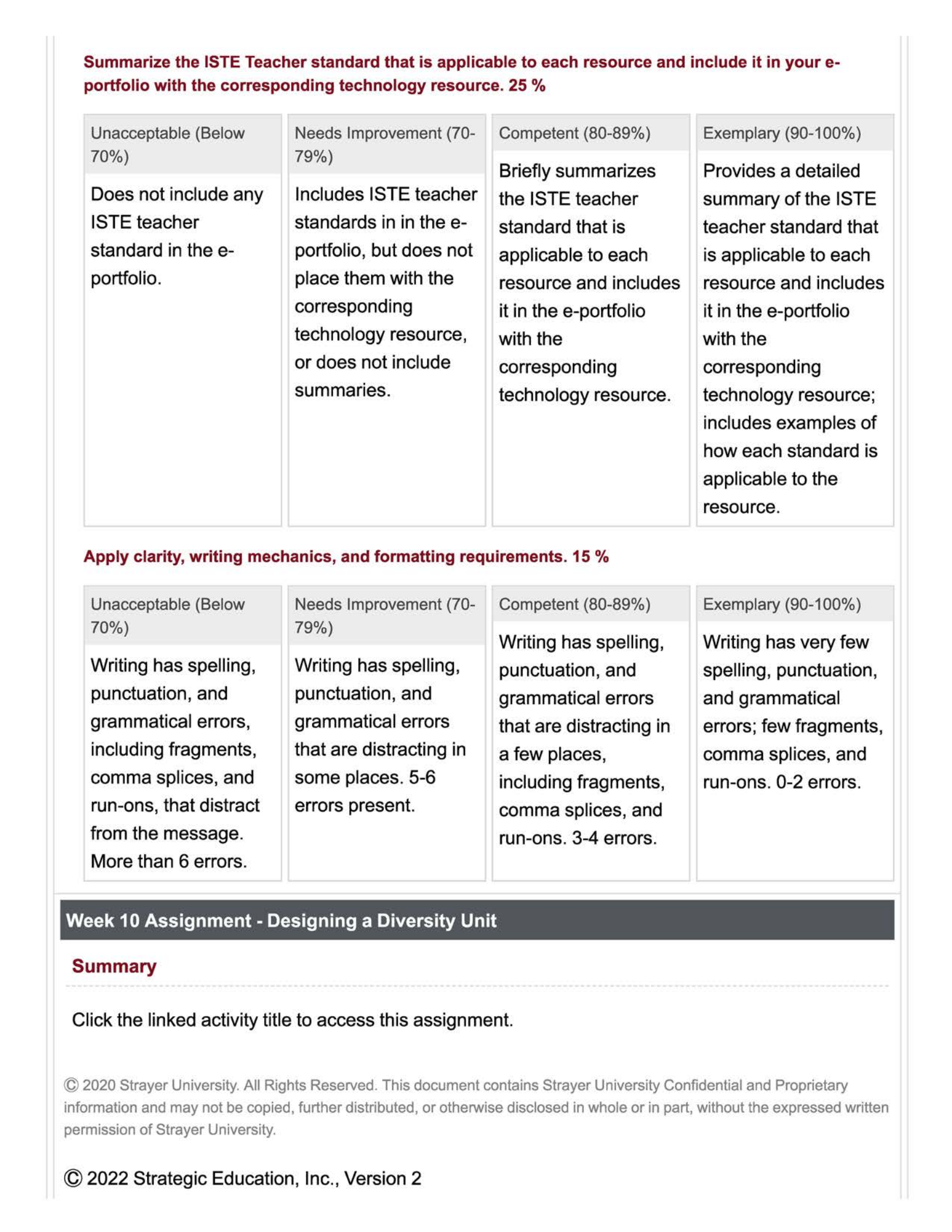
Summarize
the
ISTE
Teacher
standard
that
is
applicable
to
each
resource
and
include
it
in
your
e-
portfolio
with
the
corresponding
technology
resource.
25
%
Unacceptable
(Below
70%)
Does
not
include
any
ISTE
teacher
standard
in
the
e-
portfolio.
Needs
Improvement
(70-
79%)
Includes
ISTE
teacher
standards
in
in
the
e-
portfolio,
but
does
not
place
them
with
the
corresponding
technology
resource,
or
does
not
include
summaries.
Competent
(80-89%)
Briefly
summarizes
the
ISTE
teacher
standard
that
is
applicable
to
each
resource
and
includes
it
in
the
e-portfolio
with
the
corresponding
technology
resource.
Exemplary
(90-100%)
Provides
a
detailed
summary
of
the
ISTE
teacher
standard
that
is
applicable
to
each
resource
and
includes
it
in
the
e-portfolio
with
the
corresponding
technology
resource;
includes
examples
of
how
each
standard
is
applicable
to
the
resource.
Apply
clarity,
writing
mechanics,
and
formatting
requirements.
15
%
Unacceptable
(Below
70%)
Writing
has
spelling,
punctuation,
and
grammatical
errors,
including
fragments,
comma
splices,
and
run-ons,
that
distract
from
the
message.
More
than
6
errors.
Needs
Improvement
(70-
79%)
Writing
has
spelling,
punctuation,
and
grammatical
errors
that
are
distracting
in
some
places.
5-6
errors
present.
Competent
(80-89%)
Writing
has
spelling,
punctuation,
and
grammatical
errors
that
are
distracting
in
a
few
places,
including
fragments,
comma
splices,
and
run-ons.
3-4
errors.
Exemplary
(90-100%)
Writing
has
very
few
spelling,
punctuation,
and
grammatical
errors;
few
fragments,
comma
splices,
and
run-ons.
Q-2
errors.
Week
10
Assignment
-
Designing
a
Diversity
Unit
Summary
Click
the
linked
activity
title
to
access
this
assignment.
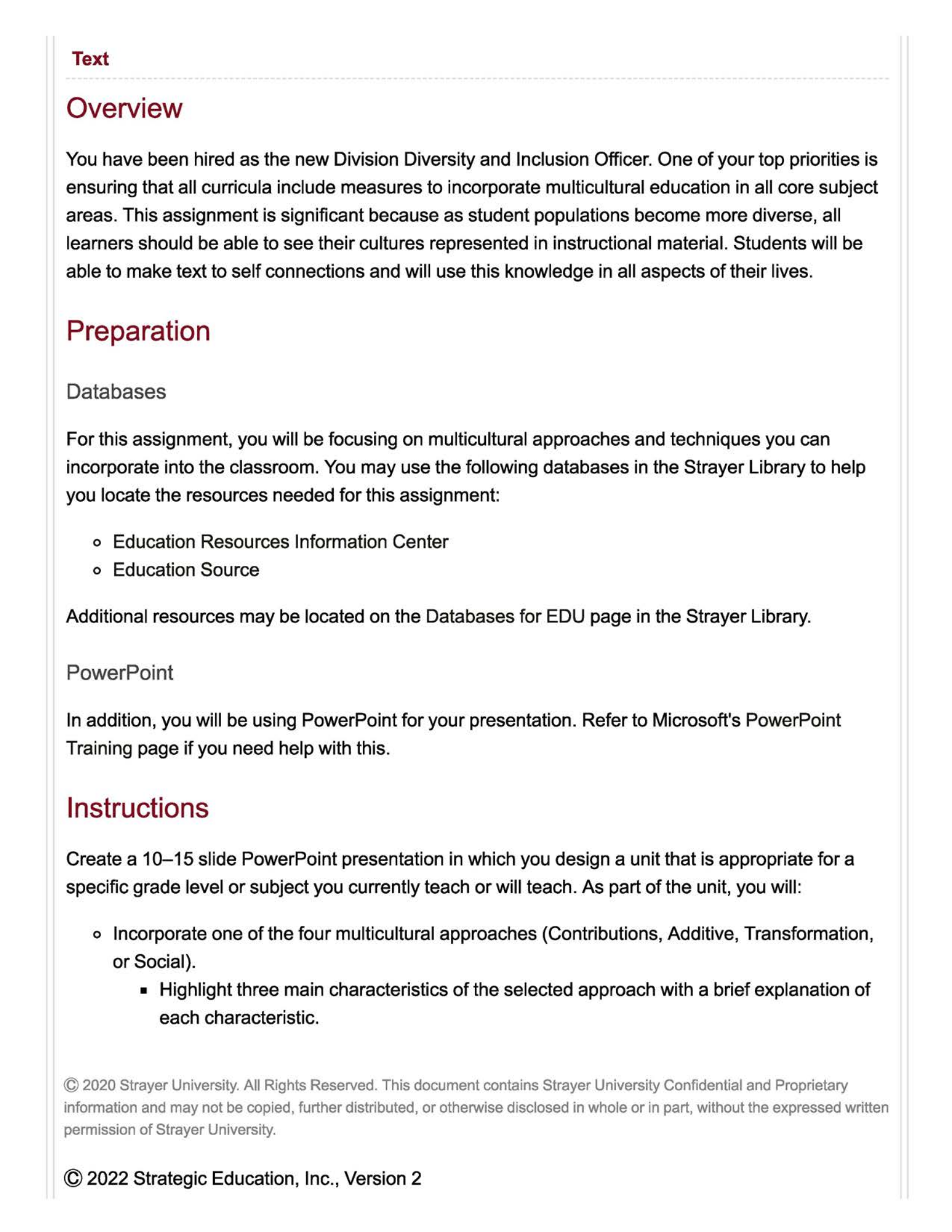
Text
Overview
You
have
been
hired
as
the
new
Division
Diversity
and
Inclusion
Officer.
One
of
your
top
priorities
is
ensuring
that
all
curricula
include
measures
to
incorporate
multicultural
education
in
all
core
subject
areas.
This
assignment
is
significant
because
as
student
populations
become
more
diverse,
all
learners
should
be
able
to
see
their
cultures
represented
in
instructional
material.
Students
will
be
able
to
make
text
to
self
connections
and
will
use
this
knowledge
in
all
aspects
of
their
lives.
Preparation
Databases
For
this
assignment,
you
will
be
focusing
on
multicultural
approaches
and
techniques
you
can
incorporate
into
the
classroom.
You
may
use
the
following
databases
in
the
Strayer
Library
to
help
you
locate
the
resources
needed
for
this
assignment:
o
Education
Resources
Information
Center
o
Education
Source
Additional
resources
may
be
located
on
the
Databases
for
EDU
page
in
the
Strayer
Library.
PowerPoint
In
addition,
you
will
be
using
PowerPoint
for
your
presentation.
Refer
to
Microsoft's
PowerPoint
Training
page
if
you
need
help
with
this.
Instructions
Create
a
10—15
slide
PowerPoint
presentation
in
which
you
design
a
unit
that
is
appropriate
for
a
specific
grade
level
or
subject
you
currently
teach
or
will
teach.
As
part
of
the
unit,
you
will:
o
Incorporate
one
of
the
four
multicultural
approaches
(Contributions,
Additive,
Transformation,
or
Social).
=
Highlight
three
main
characteristics
of
the
selected
approach
with
a
brief
explanation
of
each
characteristic.
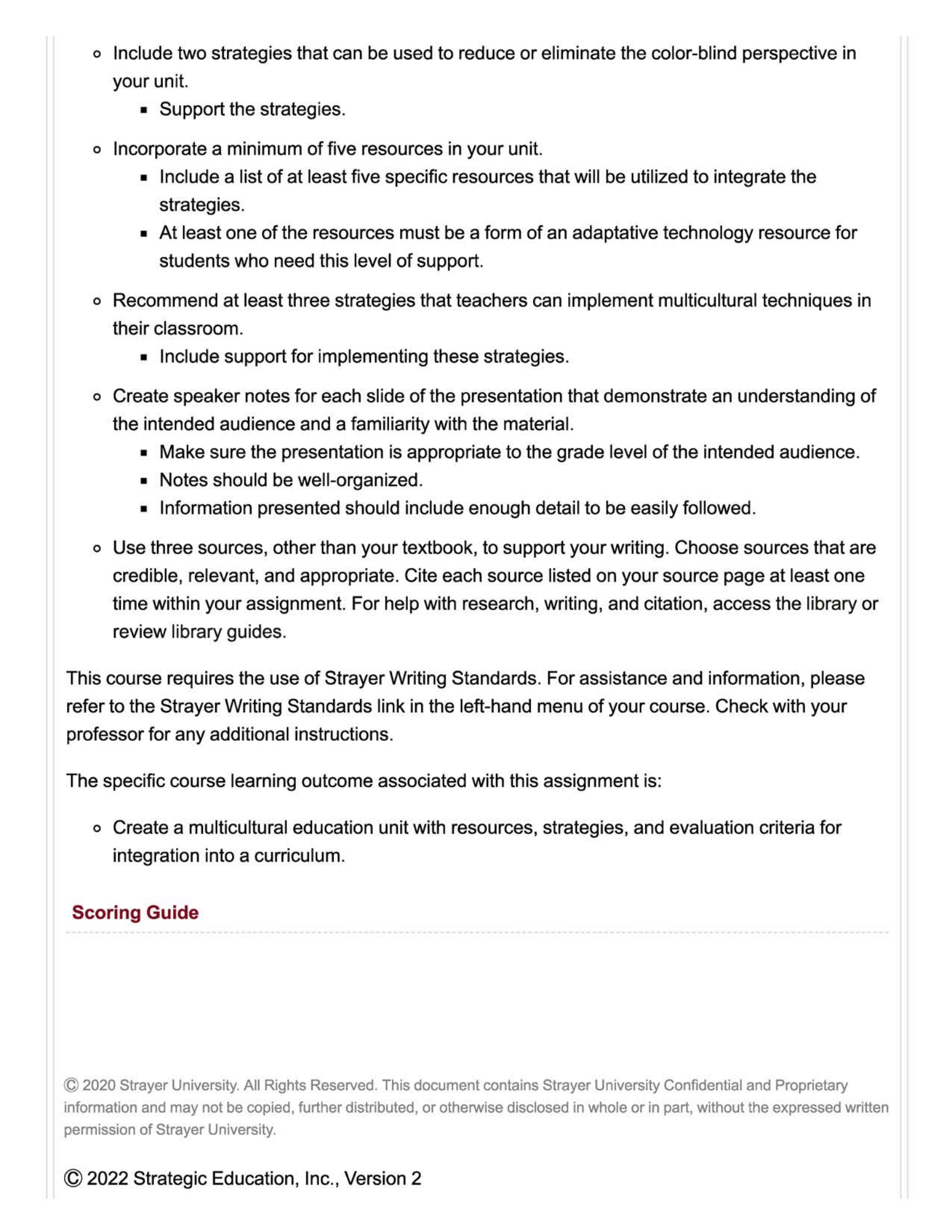
o
Include
two
strategies
that
can
be
used
to
reduce
or
eliminate
the
color-blind
perspective
in
your
unit.
=
Support
the
strategies.
o
Incorporate
a
minimum
of
five
resources
in
your
unit.
s
Include
list
of
at
least
five
specific
resources
that
will
be
utilized
to
integrate
the
strategies.
s
Atleast
one
of
the
resources
must
be
a
form
of
an
adaptative
technology
resource
for
students
who
need
this
level
of
support.
o
Recommend
at
least
three
strategies
that
teachers
can
implement
multicultural
techniques
in
their
classroom.
=
Include
support
for
implementing
these
strategies.
o
Create
speaker
notes
for
each
slide
of
the
presentation
that
demonstrate
an
understanding
of
the
intended
audience
and
a
familiarity
with
the
material.
=
Make
sure
the
presentation
is
appropriate
to
the
grade
level
of
the
intended
audience.
=»
Notes
should
be
well-organized.
=
Information
presented
should
include
enough
detail
to
be
easily
followed.
o
Use
three
sources,
other
than
your
textbook,
to
support
your
writing.
Choose
sources
that
are
credible,
relevant,
and
appropriate.
Cite
each
source
listed
on
your
source
page
at
least
one
time
within
your
assignment.
For
help
with
research,
writing,
and
citation,
access
the
library
or
review
library
guides.
This
course
requires
the
use
of
Strayer
Writing
Standards.
For
assistance
and
information,
please
refer
to
the
Strayer
Writing
Standards
link
in
the
left-hand
menu
of
your
course.
Check
with
your
professor
for
any
additional
instructions.
The
specific
course
learning
outcome
associated
with
this
assignment
is:
o
Create
a
multicultural
education
unit
with
resources,
strategies,
and
evaluation
criteria
for
integration
into
a
curriculum.
Scoring
Guide
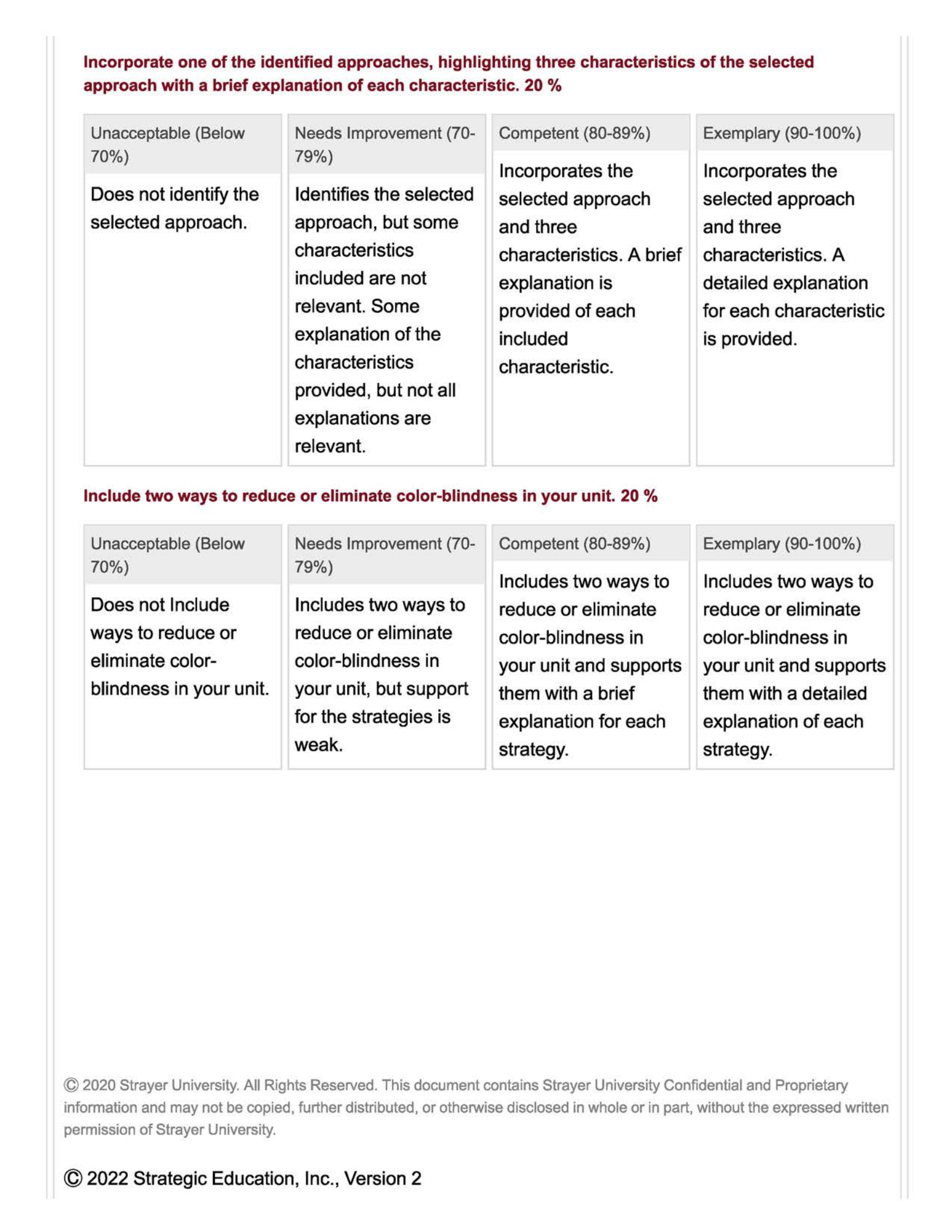
Incorporate
one
of
the
identified
approaches,
highlighting
three
characteristics
of
the
selected
approach
with
a
brief
explanation
of
each
characteristic.
20
%
Unacceptable
(Below
70%)
Does
not
identify
the
selected
approach.
Needs
Improvement
(70-
79%)
Identifies
the
selected
approach,
but
some
characteristics
included
are
not
relevant.
Some
explanation
of
the
characteristics
provided,
but
not
all
explanations
are
relevant.
Competent
(80-89%)
Incorporates
the
selected
approach
and
three
characteristics.
A
brief
explanation
is
provided
of
each
included
characteristic.
Exemplary
(90-100%)
Incorporates
the
selected
approach
and
three
characteristics.
A
detailed
explanation
for
each
characteristic
is
provided.
Include
two
ways
to
reduce
or
eliminate
color-blindness
in
your
unit.
20
%
Unacceptable
(Below
70%)
Does
not
Include
ways
to
reduce
or
eliminate
color-
blindness
in
your
unit.
Needs
Improvement
(70-
79%)
Includes
two
ways
to
reduce
or
eliminate
color-blindness
in
your
unit,
but
support
for
the
strategies
is
weak.
Competent
(80-89%)
Includes
two
ways
to
reduce
or
eliminate
color-blindness
in
your
unit
and
supports
them
with
a
brief
explanation
for
each
strategy.
Exemplary
(90-100%)
Includes
two
ways
to
reduce
or
eliminate
color-blindness
in
your
unit
and
supports
them
with
a
detailed
explanation
of
each
strategy.
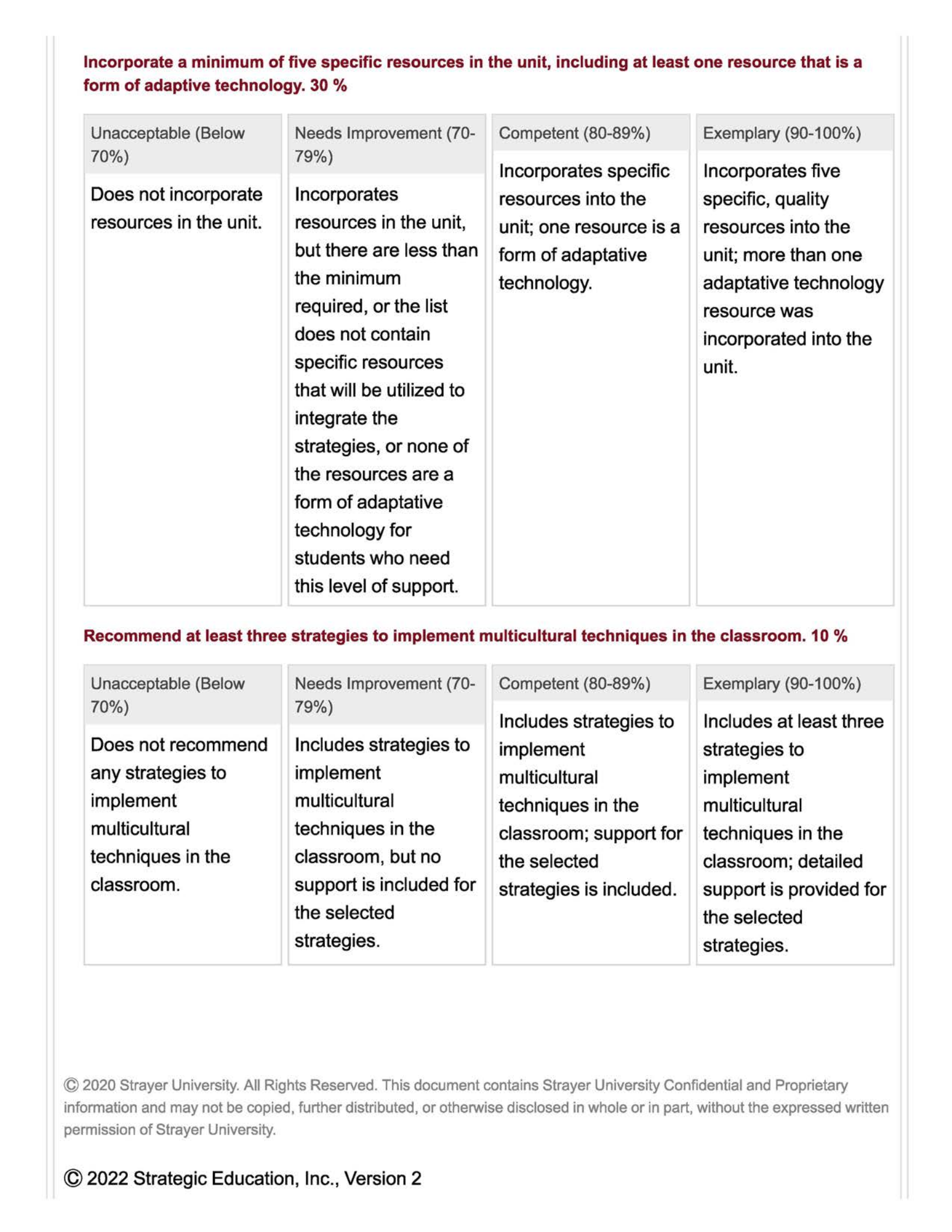
Incorporate
a
minimum
of
five
specific
resources
in
the
unit,
including
at
least
one
resource
that
is
a
form
of
adaptive
technology.
30
%
Unacceptable
(Below
70%)
Does
not
incorporate
resources
in
the
unit.
Needs
Improvement
(70-
79%)
Incorporates
resources
in
the
unit,
but
there
are
less
than
the
minimum
required,
or
the
list
does
not
contain
specific
resources
that
will
be
utilized
to
integrate
the
strategies,
or
none
of
the
resources
are
a
form
of
adaptative
technology
for
students
who
need
this
level
of
support.
Competent
(80-89%)
Incorporates
specific
resources
into
the
unit;
one
resource
is
a
form
of
adaptative
technology.
Exemplary
(90-100%)
Incorporates
five
specific,
quality
resources
into
the
unit;
more
than
one
adaptative
technology
resource
was
incorporated
into
the
unit.
Recommend
at
least
three
strategies
to
implement
multicultural
techniques
in
the
classroom.
10
%
Unacceptable
(Below
70%)
Does
not
recommend
any
strategies
to
implement
multicultural
techniques
in
the
classroom.
Needs
Improvement
(70-
79%)
Includes
strategies
to
implement
multicultural
techniques
in
the
classroom,
but
no
support
is
included
for
the
selected
strategies.
Competent
(80-89%)
Includes
strategies
to
implement
multicultural
techniques
in
the
classroom;
support
for
the
selected
strategies
is
included.
Exemplary
(90-100%)
Includes
at
least
three
strategies
to
implement
multicultural
techniques
in
the
classroom;
detailed
support
is
provided
for
the
selected
strategies.
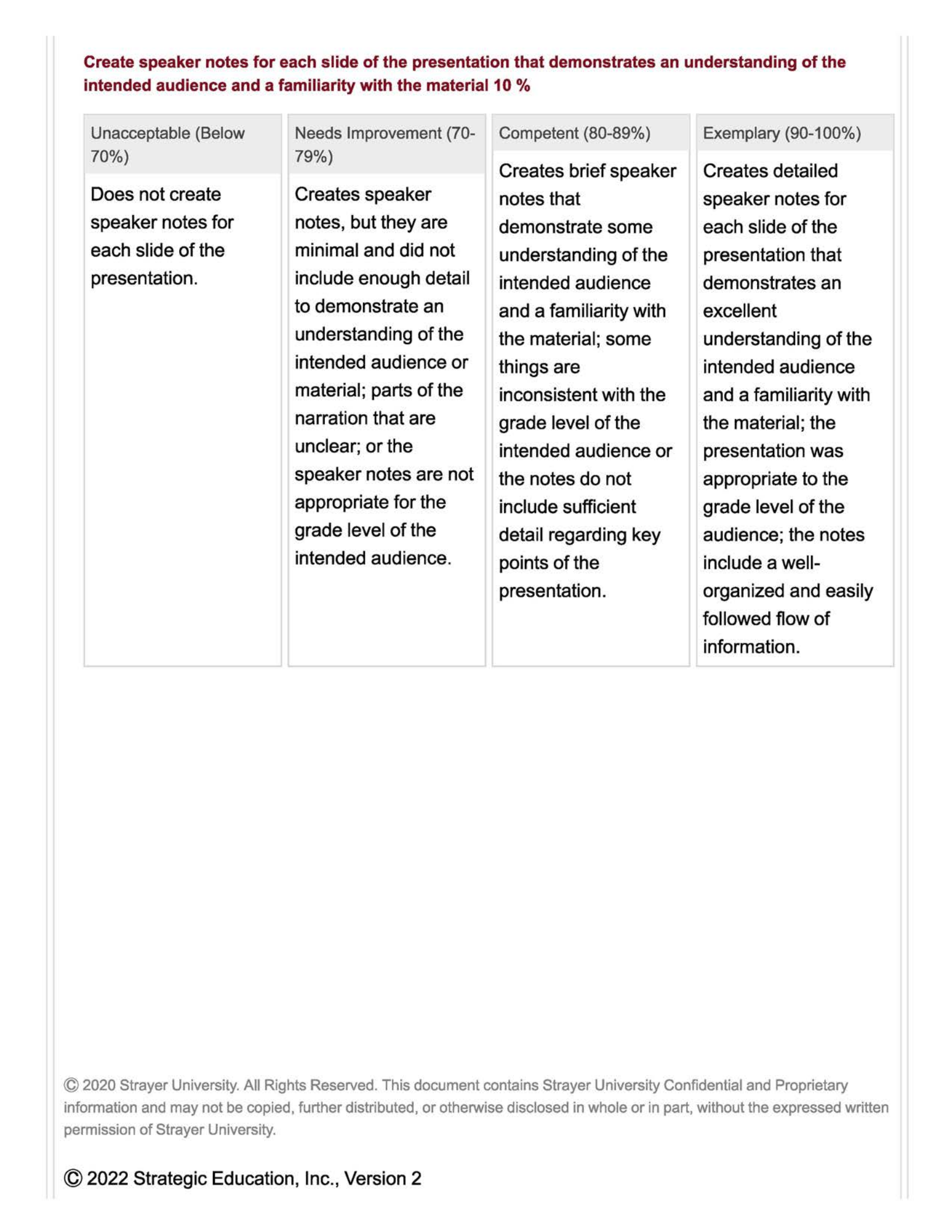
Create
speaker
notes
for
each
slide
of
the
presentation
that
demonstrates
an
understanding
of
the
intended
audience
and
a
familiarity
with
the
material
10
%
Unacceptable
(Below
70%)
Does
not
create
speaker
notes
for
each
slide
of
the
presentation.
Needs
Improvement
(70-
79%)
Creates
speaker
notes,
but
they
are
minimal
and
did
not
include
enough
detail
to
demonstrate
an
understanding
of
the
intended
audience
or
material;
parts
of
the
narration
that
are
unclear;
or
the
speaker
notes
are
not
appropriate
for
the
grade
level
of
the
intended
audience.
Competent
(80-89%)
Creates
brief
speaker
notes
that
demonstrate
some
understanding
of
the
intended
audience
and
a
familiarity
with
the
material;
some
things
are
inconsistent
with
the
grade
level
of
the
intended
audience
or
the
notes
do
not
include
sufficient
detail
regarding
key
points
of
the
presentation.
Exemplary
(90-100%)
Creates
detailed
speaker
notes
for
each
slide
of
the
presentation
that
demonstrates
an
excellent
understanding
of
the
intended
audience
and
a
familiarity
with
the
material;
the
presentation
was
appropriate
to
the
grade
level
of
the
audience;
the
notes
include
a
well-
organized
and
easily
followed
flow
of
information.
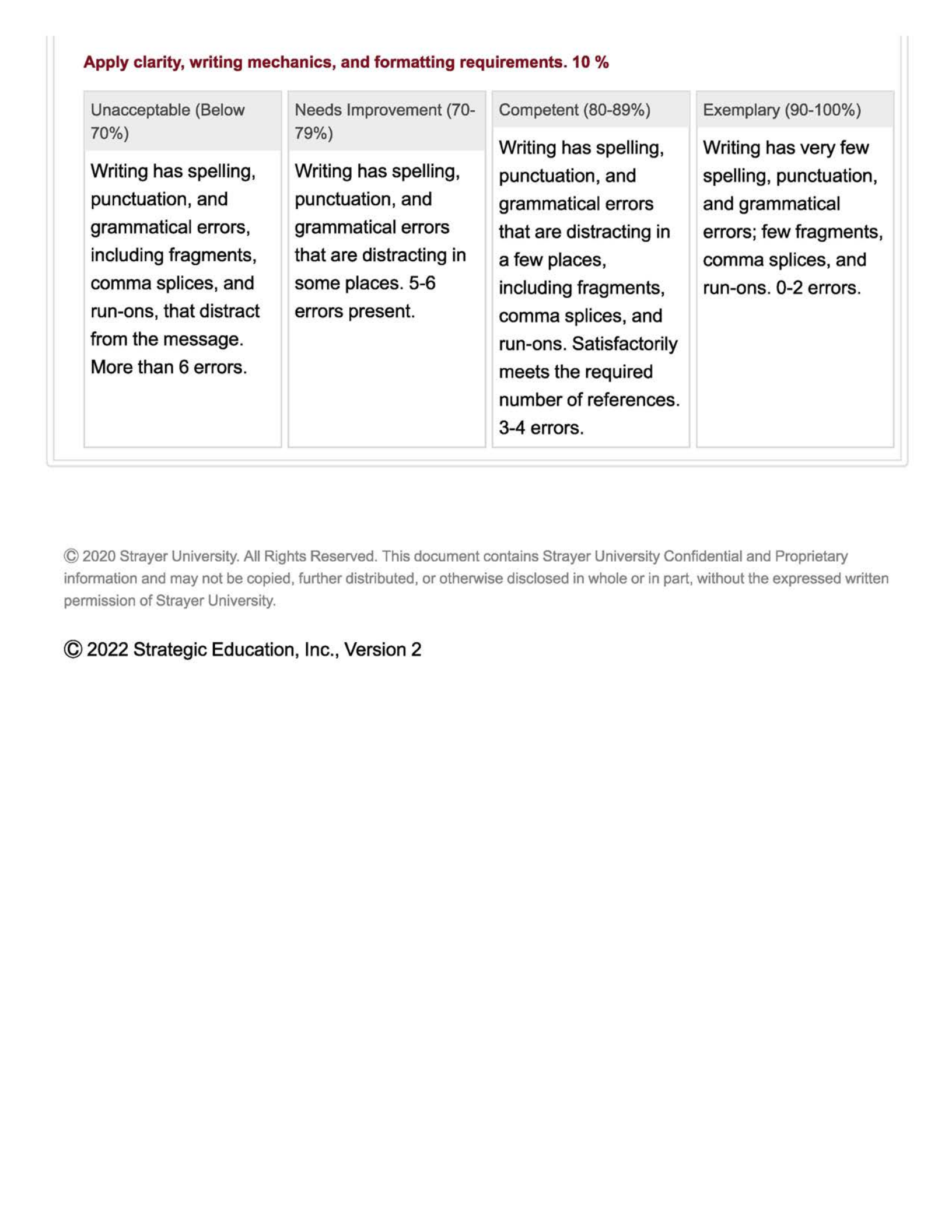
Apply
clarity,
writing
mechanics,
and
formatting
requirements.
10
%
Unacceptable
(Below
70%)
Writing
has
spelling,
punctuation,
and
grammatical
errors,
including
fragments,
comma
splices,
and
run-ons,
that
distract
from
the
message.
More
than
errors.
Needs
Improvement
(70-
79%)
Writing
has
spelling,
punctuation,
and
grammatical
errors
that
are
distracting
in
some
places.
5-6
errors
present.
Competent
(80-89%)
Writing
has
spelling,
punctuation,
and
grammatical
errors
that
are
distracting
in
a
few
places,
including
fragments,
comma
splices,
and
run-ons.
Satisfactorily
meets
the
required
number
of
references.
3-4
errors.
Exemplary
(90-100%)
Writing
has
very
few
spelling,
punctuation,
and
grammatical
errors;
few
fragments,
comma
splices,
and
run-ons.
0-2
errors.
©
2020
Strayer
University.
All
Rights
Reserved.
This
document
contains
Strayer
University
Confidential
and
Proprietary
information
and
may
not
be
copied,
further
distributed,
or
otherwise
disclosed
in
whole
or
in
part,
without
the
expressed
written
permission
of
Strayer
University.
©
2022
Strategic
Education,
Inc.,
Version
2

