


https://atlas.strategiced.com/app#offering/9226618/course/8649951/preview/courseguide
1/49
CIS446
Preview: CIS446 : Enterprise Resource Planning Systems
Course Guide
Prerequisites
Course Description
Instructional Materials
CIS210
This course examines the key business processes supported by modern Enterprise Resource
Planning (ERP) systems. Students will explore the full cycle of the ERP across the functional areas
with an emphasis on coordinating activities among diverse process groups.
Required Resources
Ellen Monk. 2013. Concepts in Enterprise Resource Planning. CIS446 Cengage Learning 4th
edition textbook available at https://www.strayerbookstore.com
Amazon.com. No date. https://www.amazon.com/
Microsoft Office: Visio, Project, or their equivalents:
Apache OpenOffice. No date. Apache OpenOffice Official Site.
https://www.openoffice.org/
Dia. No date. Dia Diagram Editor. http://dia-installer.de/
Open Project. No date. Collaborative Project Management. https://www.openproject.org/
Salesforce. No date. Salesforce: We Bring Companies and Customers Together.
https://www.salesforce.com/
Ⓒ 2020 Strayer University. All Rights Reserved. This document contains Strayer University Confidential and Proprietary
information and may not be copied, further distributed, or otherwise disclosed in whole or in part, without the expressed
written permission of Strayer University.

https://atlas.strategiced.com/app#offering/9226618/course/8649951/preview/courseguide
2/49
Michael Krigsman. 2011. CIO Backgrounder: Understanding Packaged Solutions.
https://www.zdnet.com/article/cio-backgrounder-understanding-packaged-solutions/
Apple, Inc. No date. Apple. https://www.apple.com/
Cisco Systems. No date. How Cisco IT Upgraded Its ERP Purchasing Module.
https://www.cisco.com/c/dam/en_us/about/ciscoitatwork/downloads/ciscoitatwork/pdf/Cisco_IT
_Case_Study_Oracle11i_Everest_Summary.pdf
Christian Koch. 2001. ERP-Supported Teamworking in Danish Manufacturing?
http://libdatab.strayer.edu/login?url=https://search.ebscohost.com/login.aspx?
direct=true&db=lxh&AN=5587918&site=eds-live&scope=site
Zoonky Lee. 2000. An ERP Implementation Case Study From a Knowledge Transfer
Perspective. http://libdatab.strayer.edu/login?url=https://search.ebscohost.com/login.aspx?
direct=true&db=bth&AN=4176560&site=eds-live&scope=site
Supplemental Resources
GCN. 2017. ERP Meets SOA. http://gcn.com/Articles/2007/03/01/ERP-meets-SOA.aspx?
Page=1
IDG Communications. No date. CIO. https://www.cio.com
IDG Communications. No date. InfoWorld. https://www.infoworld.com/
IEEE Explore. No date. Information Architecture of ERP Systems at Globalised Enterprises in
a Small EU Member State. https://ieeexplore.ieee.org/document/5974013
Informa. No date. InformationWeek. https://www.informationweek.com/
Katherine Walsh. 2008. The ERP Security Challenge. https://search-ebscohost-
com.libdatab.strayer.edu/login.aspx?direct=true&db=edo&AN=31414057&site=eds-
live&scope=site
Lockheed Martin. No date. Lockheed Martin Corporation | Lockheed Martin.
https://www.lockheedmartin.com/en-us/index.html
Managing Imports & Exports Staff. 2007. New Study Explores Role of ERP in Global Market
Expansion. http://libdatab.strayer.edu/login?url=https://search.ebscohost.com/login.aspx?
direct=true&db=bth&AN=26265878&site=eds-live&scope=site
Microsoft. No date. Office Quick Starts. https://support.microsoft.com/en-us/office/office-quick-
starts-25f909da-3e76-443d-94f4-6cdf7dedc51e?wt.mc_id=otc_home
Mike Verdeyen. 2008. Peaceful Coexistence: How SOA Enables ERP and Execution
Platforms to Work Together. https://www.industryweek.com/leadership/companies-
executives/article/21934802/peaceful-coexistence-how-soa-enables-erp-and-execution-
platforms-to-work-together
Oracle. No date. Oracle. https://www.oracle.com/index.html
SAP. No date. SAP Software Solutions. https://www.sap.com/index.html
Ⓒ 2020 Strayer University. All Rights Reserved. This document contains Strayer University Confidential and Proprietary
information and may not be copied, further distributed, or otherwise disclosed in whole or in part, without the expressed
written permission of Strayer University.
https://atlas.strategiced.com/app#offering/9226618/course/8649951/preview/courseguide
3/49
Course Learning Outcomes
Weekly Course Schedule
Week 1 - To Do List
Learn: Read Chapter 1 from Concepts
in
Enterprise
Resource
Planning.
Learn: Read the PowerPoint presentation and notes.
Discuss: Introduce yourself and complete the discussion, Business Process and Functions.
Week 2 - To Do List
Southwest Airlines. No date. https://www.southwest.com/
Wal-Mart. No date. Walmart.com | Save Money. Live Better. https://www.walmart.com/
Assess the viability of implementing an integrated information system into an
organization.
1
Evaluate the strengths and weaknesses of introducing packaged solutions for
enterprise software customers.
2
Propose an ERP solution to solve a business problem.
3
Evaluate the benefits and challenges associated with ERP implementation.
4
Design a comprehensive ERP solution that includes an ROI analysis, a
systems architecture model, a project charter, and an implementation plan
and involves emerging ERP technologies.
5
Ⓒ 2020 Strayer University. All Rights Reserved. This document contains Strayer University Confidential and Proprietary
information and may not be copied, further distributed, or otherwise disclosed in whole or in part, without the expressed
written permission of Strayer University.

https://atlas.strategiced.com/app#offering/9226618/course/8649951/preview/courseguide
4/49
Week 2 - To Do List
Learn: Read Chapter 2 from Concepts
in
Enterprise
Resource
Planning.
Learn: Read the PowerPoint presentation and notes.
Discuss: Complete the discussion, ERP Implementation.
Assignment: Complete the assignment, Integrated Information Systems.
Week 3 - To Do List
Learn: Read Chapter 3 from Concepts
in
Enterprise
Resource
Planning.
Learn: Read the PowerPoint presentation and notes.
Discuss: Complete the discussion, ERP CRM.
Assignment: Complete the assignment, Packaged Solutions.
Week 4 - To Do List
Learn: Read Chapter 4 from Concepts
in
Enterprise
Resource
Planning.
Learn: Read the PowerPoint presentation.
Ⓒ 2020 Strayer University. All Rights Reserved. This document contains Strayer University Confidential and Proprietary
information and may not be copied, further distributed, or otherwise disclosed in whole or in part, without the expressed
written permission of Strayer University.
https://atlas.strategiced.com/app#offering/9226618/course/8649951/preview/courseguide
5/49
Week 4 - To Do List
Discuss: Complete the discussion, Supply Chain Management.
Assignment: Complete the assignment, CRM and Social Media.
Week 5 - To Do List
Learn: Read the case studies to prepare for this week's discussion.
Discuss: Complete the discussion, Risks in ERP Implementation .
Week 6 - To Do List
Learn: Read Chapter 5 from Concepts
in
Enterprise
Resource
Planning.
Learn: Read the PowerPoint presentation and notes.
Discuss: Complete the discussion, ERP and XBRL.
Assignment: Complete the assignment, ERP Implementation.
Week 7 - To Do List
Learn: Read Chapter 6 from Concepts
in
Enterprise
Resource
Planning.
Learn: Read the PowerPoint presentation and notes.
Ⓒ 2020 Strayer University. All Rights Reserved. This document contains Strayer University Confidential and Proprietary
information and may not be copied, further distributed, or otherwise disclosed in whole or in part, without the expressed
written permission of Strayer University.

https://atlas.strategiced.com/app#offering/9226618/course/8649951/preview/courseguide
6/49
Week 7 - To Do List
Discuss: Complete the discussion, Talent Management.
Week 8 - To Do List
Learn: Read Chapter 7 from Concepts
in
Enterprise
Resource
Planning.
Learn: Read the PowerPoint presentation and notes.
Discuss: Complete the discussion, Process Improvement.
Assignment: Complete the assignment, ERP Solutions and the Sarbanes-Oxley Act.
Week 9 - To Do List
Learn: Read Chapter 8 from Concepts
in
Enterprise
Resource
Planning.
Learn: Read the PowerPoint presentation and notes.
Discuss: Complete the discussion, Big Data.
Assignment: Complete the assignment, ERP Solutions and the Workforce.
Week 10 - To Do List
Learn: Read the supplemental articles.
Ⓒ 2020 Strayer University. All Rights Reserved. This document contains Strayer University Confidential and Proprietary
information and may not be copied, further distributed, or otherwise disclosed in whole or in part, without the expressed
written permission of Strayer University.
https://atlas.strategiced.com/app#offering/9226618/course/8649951/preview/courseguide
7/49
Week 10 - To Do List
Discuss: Complete the discussion, Globalization.
Assignment: Complete the assignment, ERP Solution Architect.
Week 11 - To Do List
Discuss: Participate in the discussion, Your Next Step.
Grading Scale
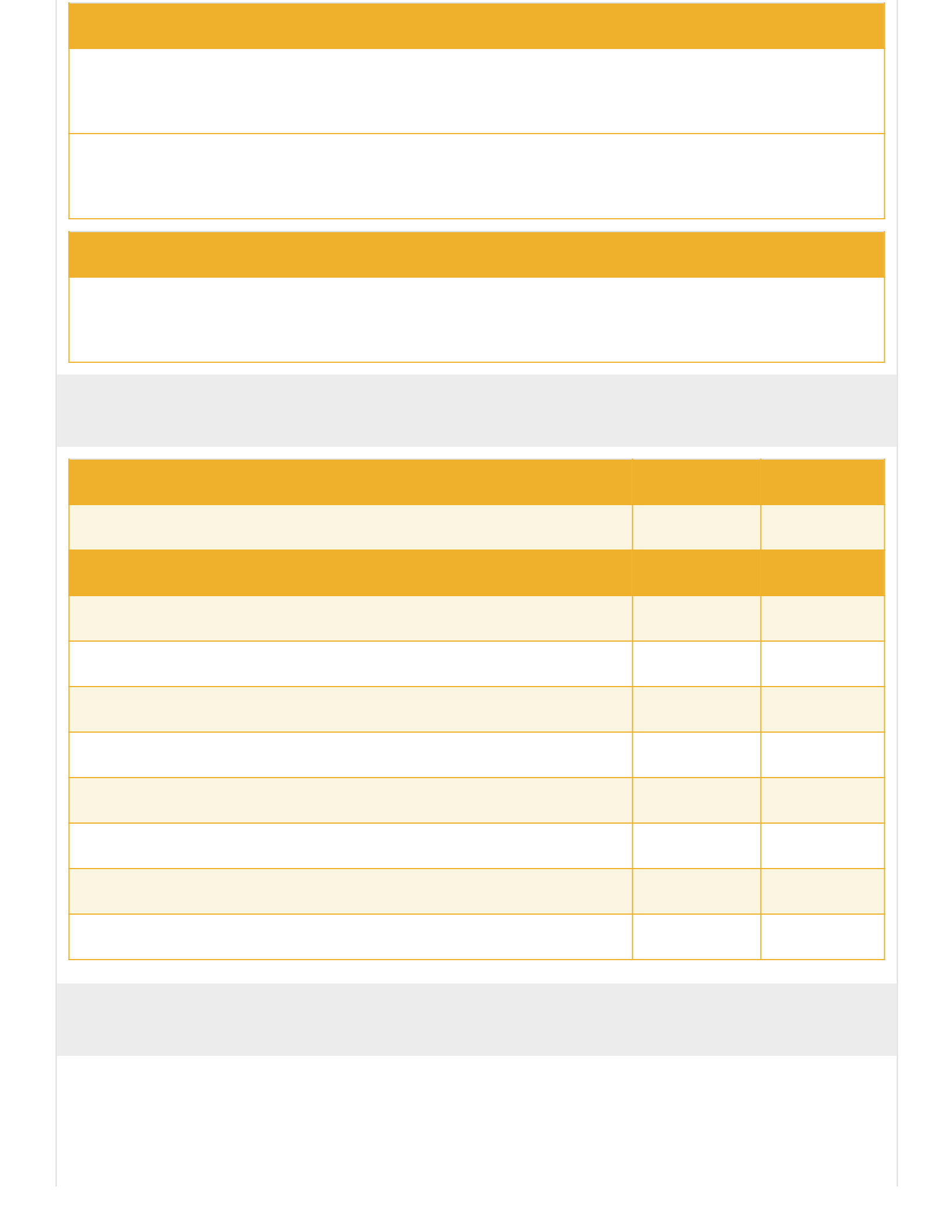
Participation Total Points % of Grade
Discussion Participation 220 22%
Assignment Total Points % of Grade
Week 2 Assignment - Integrated Information Systems 100 10%
Week 3 Assignment - Case Study: Packaged Solutions 100 10%
Week 4 Assignment - CRM and Social Media 100 10%
Week 6 Assignment - Case Study: ERP Implementation 100 10%
Week 8 Assignment - ERP Solutions and the Sarbanes-Oxley Act 100 10%
Week 9 Assignment - ERP Solutions and the Workforce 100 10%
Week 10 Assignment - ERP Solution Architect 180 18%
Totals 1000 100%
Final Course Grade
Ⓒ 2020 Strayer University. All Rights Reserved. This document contains Strayer University Confidential and Proprietary
information and may not be copied, further distributed, or otherwise disclosed in whole or in part, without the expressed
written permission of Strayer University.
https://atlas.strategiced.com/app#offering/9226618/course/8649951/preview/courseguide
8/49
Points Percentage GradePoints Percentage Grade
900 - 1000 90% - 100% A
800 - 899 80% - 89% B
700 - 799 70% - 79% C
600 - 699 60% - 69% D
0 - 599 59% and below F
Unique Course Features
Grading Scale Notation
Please consult the University Catalog and your academic advisor to determine the final grade needed
in this class to satisfy your specific degree conferral requirements.
Assignments
Writing Assignments
The objective of the School of Information Systems’ writing assignments is to promote attitudes and
skills that will improve a student’s ability to communicate in writing, develop research skills and
documentation techniques, and encourage critical analysis of data and conclusions specific to the
course learning outcomes in the information systems and technology domain.
Week 2 Assignment - Integrated Information Systems
Summary
Click the linked activity title to access this assignment.
Text
Overview
Ⓒ 2020 Strayer University. All Rights Reserved. This document contains Strayer University Confidential and Proprietary
information and may not be copied, further distributed, or otherwise disclosed in whole or in part, without the expressed
written permission of Strayer University.

https://atlas.strategiced.com/app#offering/9226618/course/8649951/preview/courseguide
9/49
In this assignment, you will use one industry example to explain why a company of your choice needs
an integrated information system, such as an enterprise resource planning (ERP) system. Some
industry examples are Southwest Airlines, Wal-Mart, and Lockheed Martin.
Instructions
Write a 3–4 page paper in which you:
1. Provide a brief background of the company and its likely ERP operations.
2. Determine the master data of the chosen company.
3. Identify the key functional areas and key business processes of the chosen company.
4. Explain how the functional areas interact with each other and what the major process inputs,
transformations, and outputs from those functional areas are.
5. Create diagrams or tables to show the differences and similarities of the identified functional
areas using graphical tools in Microsoft Word or Visio, or an open-source alternative such as
Dia. Note: The graphically depicted solution is not included in the required page length.
6. Determine the benefits of having an integrated information system for the chosen company.
7. Speculate the technical issues of having an integrated information system for the company and
provide strategies to mitigate those issues.
8. Use Basic Search: Strayer University Online Library to find at least three academic resources.
Note: Wikipedia and similar websites are not considered quality references.
This course requires the use of Strayer Writing Standards. For assistance and information, please
refer to the Strayer Writing Standards link in the left-hand menu of your course. Check with your
professor for any additional instructions.
The specific course learning outcome associated with this assignment is:
Assess the viability of implementing an integrated information system into an organization.
Scoring Guide
Provide a brief background of the company
and its likely ERP operations. 10 %
Ⓒ 2020 Strayer University. All Rights Reserved. This document contains Strayer University Confidential and Proprietary
information and may not be copied, further distributed, or otherwise disclosed in whole or in part, without the expressed
written permission of Strayer University.

https://atlas.strategiced.com/app#offering/9226618/course/8649951/preview/courseguide
10/49
Unacceptable
(Below 60%)
Did not submit or
incompletely
provided a brief
background of
the company and
its likely ERP
operations.
Needs
Improvement (60-
69%)
Insufficiently
provided a brief
background of
the company and
its likely ERP
operations.
Satisfactory (70-
79%)
Partially
provided a brief
background of
the company and
its likely ERP
operations.
Competent (80-
89%)
Sufficiently
provided a brief
background of
the company and
its likely ERP
operations.
Exemplary (90-
100%)
Thoroughly
provided a brief
background of
the company and
its likely ERP
operations.
Determine the master data of the chosen
company. 10 %
Unacceptable
(Below 60%)
Did not submit or
incompletely
determined the
master data of
the chosen
company.
Needs
Improvement (60-
69%)
Insufficiently
determined the
master data of
the chosen
company.
Satisfactory (70-
79%)
Partially
determined the
master data of
the chosen
company.
Competent (80-
89%)
Sufficiently
determined the
master data of
the chosen
company.
Exemplary (90-
100%)
Thoroughly
determined the
master data of
the chosen
company.
Identify the key functional areas and key
business processes of the chosen company.
10 %
Unacceptable
(Below 60%)
Did not submit or
incompletely
identified the key
functional areas
and key
business
processes of the
chosen
company.
Needs
Improvement (60-
69%)
Insufficiently
identified the key
functional areas
and key
business
processes of the
chosen
company.
Satisfactory (70-
79%)
Partially
identified the key
functional areas
and key
business
processes of the
chosen
company.
Competent (80-
89%)
Sufficiently
identified the key
functional areas
and key
business
processes of the
chosen
company.
Exemplary (90-
100%)
Thoroughly
identified the key
functional areas
and key
business
processes of the
chosen
company.
Explain how the functional areas interact with
each other and what the major process
Ⓒ 2020 Strayer University. All Rights Reserved. This document contains Strayer University Confidential and Proprietary
information and may not be copied, further distributed, or otherwise disclosed in whole or in part, without the expressed
written permission of Strayer University.

https://atlas.strategiced.com/app#offering/9226618/course/8649951/preview/courseguide
11/49
inputs, transformations, and outputs from
those functional areas are. 15 %
Unacceptable
(Below 60%)
Did not submit or
incompletely
explained how
the functional
areas interact
with each other
and what the
major process
inputs,
transformations,
and outputs from
those functional
areas are.
Needs
Improvement (60-
69%)
Insufficiently
explained how
the functional
areas interact
with each other
and what the
major process
inputs,
transformations,
and outputs from
those functional
areas are.
Satisfactory (70-
79%)
Partially
explained how
the functional
areas interact
with each other
and what the
major process
inputs,
transformations,
and outputs from
those functional
areas are.
Competent (80-
89%)
Sufficiently
explained how
the functional
areas interact
with each other
and what the
major process
inputs,
transformations,
and outputs from
those functional
areas are.
Exemplary (90-
100%)
Thoroughly
explained how
the functional
areas interact
with each other
and what the
major process
inputs,
transformations,
and outputs from
those functional
areas are.
Create diagrams or tables to show the
differences and similarities of the identified
functional areas using graphical tools in
Microsoft Word or Visio, or an open-source
alternative such as Dia. 15 %
Ⓒ 2020 Strayer University. All Rights Reserved. This document contains Strayer University Confidential and Proprietary
information and may not be copied, further distributed, or otherwise disclosed in whole or in part, without the expressed
written permission of Strayer University.

https://atlas.strategiced.com/app#offering/9226618/course/8649951/preview/courseguide
12/49
Unacceptable
(Below 60%)
Did not submit or
incompletely
created
diagrams or
tables to show
the differences
and similarities
of the identified
functional areas
using graphical
tools in Microsoft
Word or Visio, or
an open-source
alternative such
as Dia.
Needs
Improvement (60-
69%)
Insufficiently
created
diagrams or
tables to show
the differences
and similarities
of the identified
functional areas
using graphical
tools in Microsoft
Word or Visio, or
an open-source
alternative such
as Dia.
Satisfactory (70-
79%)
Partially created
diagrams or
tables to show
the differences
and similarities
of the identified
functional areas
using graphical
tools in Microsoft
Word or Visio, or
an open-source
alternative such
as Dia.
Competent (80-
89%)
Sufficiently
created
diagrams or
tables to show
the differences
and similarities
of the identified
functional areas
using graphical
tools in Microsoft
Word or Visio, or
an open-source
alternative such
as Dia.
Exemplary (90-
100%)
Thoroughly
created
diagrams or
tables to show
the differences
and similarities
of the identified
functional areas
using graphical
tools in Microsoft
Word or Visio, or
an open-source
alternative such
as Dia.
Determine the benefits of having an
integrated information system for the chosen
company. 10 %
Unacceptable
(Below 60%)
Did not submit or
incompletely
determined the
benefits of
having an
integrated
information
system for the
chosen
company.
Needs
Improvement (60-
69%)
Insufficiently
determined the
benefits of
having an
integrated
information
system for the
chosen
company.
Satisfactory (70-
79%)
Partially
determined the
benefits of
having an
integrated
information
system for the
chosen
company.
Competent (80-
89%)
Sufficiently
determined the
benefits of
having an
integrated
information
system for the
chosen
company.
Exemplary (90-
100%)
Thoroughly
determined the
benefits of
having an
integrated
information
system for the
chosen
company.
Speculate the technical issues of having an
integrated information system for the
company and provide strategies to mitigate
those issues. 15 %
Ⓒ 2020 Strayer University. All Rights Reserved. This document contains Strayer University Confidential and Proprietary
information and may not be copied, further distributed, or otherwise disclosed in whole or in part, without the expressed
written permission of Strayer University.

https://atlas.strategiced.com/app#offering/9226618/course/8649951/preview/courseguide
13/49
Unacceptable
(Below 60%)
Did not submit or
incompletely
speculated the
technical issues
of having an
integrated
information
system for the
company and did
not submit or
incompletely
provided
strategies to
mitigate those
issues.
Needs
Improvement (60-
69%)
Insufficiently
speculated the
technical issues
of having an
integrated
information
system for the
company and
insufficiently
provided
strategies to
mitigate those
issues.
Satisfactory (70-
79%)
Partially
speculated the
technical issues
of having an
integrated
information
system for the
company and
partially provided
strategies to
mitigate those
issues.
Competent (80-
89%)
Sufficiently
speculated the
technical issues
of having an
integrated
information
system for the
company and
satisfactorily
provided
strategies to
mitigate those
issues.
Exemplary (90-
100%)
Thoroughly
speculated the
technical issues
of having an
integrated
information
system for the
company and
thoroughly
provided
strategies to
mitigate those
issues.
Three references. 5 %
Unacceptable
(Below 60%)
No references
provided.
Needs
Improvement (60-
69%)
Does not meet
the required
number of
references; all
references are
poor-quality
choices.
Satisfactory (70-
79%)
Does not meet
the required
number of
references;
some references
are poor-quality
choices.
Competent (80-
89%)
Meets the
required number
of references; all
references are
high-quality
choices.
Exemplary (90-
100%)
Exceeds the
required number
of references; all
references are
high-quality
choices.
Clarity, writing mechanics, and formatting
requirements. 10 %
Unacceptable
(Below 60%)
More than eight
errors present.
Needs
Improvement (60-
69%)
7–8 errors
present.
Satisfactory (70-
79%)
5–6 errors
present.
Competent (80-
89%)
3–4 errors
present.
Exemplary (90-
100%)
0–2 errors
present.
Ⓒ 2020 Strayer University. All Rights Reserved. This document contains Strayer University Confidential and Proprietary
information and may not be copied, further distributed, or otherwise disclosed in whole or in part, without the expressed
written permission of Strayer University.

https://atlas.strategiced.com/app#offering/9226618/course/8649951/preview/courseguide
14/49
Week 3 Assignment - Case Study: Packaged Solutions
Summary
Click the linked activity title to access this assignment.
Text
Preparation
Read CIO Backgrounder: Understanding Packaged Solutions to complete this assignment.
Instructions
Write a 3–4 page paper in which you:
1. Define packaged solution for enterprise software customers.
2. Determine the organizational support needed for enabling a packaged solution with an ERP
software vendor, such as SAP.
3. Determine the organizational, master, and transactional data in an ERP context.
4. Analyze how a packaged solution eases the difficulties of data integration across the company.
Provide an example to support your answer.
5. Speculate the pitfalls of using packaged solutions for an enterprise and how to avoid those
pitfalls.
6. Use Basic Search: Strayer University Online Library to find at least three academic resources.
Note: Wikipedia and similar websites are not considered quality references.
This course requires the use of Strayer Writing Standards. For assistance and information, please
refer to the Strayer Writing Standards link in the left-hand menu of your course. Check with your
professor for any additional instructions.
The specific course learning outcome associated with this assignment is:
Evaluate the strengths and weaknesses of introducing packaged solutions for enterprise
software customers.
Scoring Guide
Define packaged solution for enterprise
software customers. Determine the
Ⓒ 2020 Strayer University. All Rights Reserved. This document contains Strayer University Confidential and Proprietary
information and may not be copied, further distributed, or otherwise disclosed in whole or in part, without the expressed
written permission of Strayer University.

https://atlas.strategiced.com/app#offering/9226618/course/8649951/preview/courseguide
15/49
organizational support needed for enabling a
packaged solution with an ERP software
vendor, such as SAP. 25 %
Unacceptable
(Below 60%)
Did not submit or
incompletely
defined
packaged
solution for
enterprise
software
customers. Did
not submit or
incompletely
determined the
organizational
support needed
for enabling a
packaged
solution with an
ERP software
vendor, such as
SAP.
Needs
Improvement (60-
69%)
Insufficiently
defined
packaged
solution for
enterprise
software
customers.
Insufficiently
determined the
organizational
support needed
for enabling a
packaged
solution with an
ERP software
vendor, such as
SAP.
Satisfactory (70-
79%)
Partially defined
packaged
solution for
enterprise
software
customers.
Partially
determined the
organizational
support needed
for enabling a
packaged
solution with an
ERP software
vendor, such as
SAP.
Competent (80-
89%)
Sufficiently
defined
packaged
solution for
enterprise
software
customers.
Satisfactorily
determined the
organizational
support needed
for enabling a
packaged
solution with an
ERP software
vendor, such as
SAP.
Exemplary (90-
100%)
Thoroughly
defined
packaged
solution for
enterprise
software
customers.
Thoroughly
determined the
organizational
support needed
for enabling a
packaged
solution with an
ERP software
vendor, such as
SAP.
Determine the organizational, master, and
transactional data in an ERP context. 15 %
Unacceptable
(Below 60%)
Did not submit or
incompletely
determined the
organizational,
master, and
transactional
data in an ERP
context.
Needs
Improvement (60-
69%)
Insufficiently
determined the
organizational,
master, and
transactional
data in an ERP
context.
Satisfactory (70-
79%)
Partially
determined the
organizational,
master, and
transactional
data in an ERP
context.
Competent (80-
89%)
Sufficiently
determined the
organizational,
master, and
transactional
data in an ERP
context.
Exemplary (90-
100%)
Thoroughly
determined the
organizational,
master, and
transactional
data in an ERP
context.
Ⓒ 2020 Strayer University. All Rights Reserved. This document contains Strayer University Confidential and Proprietary
information and may not be copied, further distributed, or otherwise disclosed in whole or in part, without the expressed
written permission of Strayer University.

https://atlas.strategiced.com/app#offering/9226618/course/8649951/preview/courseguide
16/49
Analyze how a packaged solution eases the
difficulties of data integration across the
company. Provide an example to support your
answer. 25 %
Unacceptable
(Below 60%)
Did not submit or
incompletely
analyzed how a
packaged
solution eases
the difficulties of
data integration
across the
company. Did
not submit or
incompletely
provided an
example to
support your
answer.
Needs
Improvement (60-
69%)
Insufficiently
analyzed how a
packaged
solution eases
the difficulties of
data integration
across the
company.
Insufficiently
provided an
example to
support your
answer.
Satisfactory (70-
79%)
Partially
analyzed how a
packaged
solution eases
the difficulties of
data integration
across the
company.
Partially
provided an
example to
support your
answer.
Competent (80-
89%)
Sufficiently
analyzed how a
packaged
solution eases
the difficulties of
data integration
across the
company.
Satisfactorily
provided an
example to
support your
answer.
Exemplary (90-
100%)
Thoroughly
analyzed how a
packaged
solution eases
the difficulties of
data integration
across the
company.
Thoroughly
provided an
example to
support your
answer.
Speculate the pitfalls of using packaged
solutions for an enterprise and how to avoid
those pitfalls. 20 %
Unacceptable
(Below 60%)
Did not submit or
incompletely
speculated the
pitfalls of using
packaged
solutions for an
enterprise and
how to avoid
those pitfalls.
Needs
Improvement (60-
69%)
Insufficiently
speculated the
pitfalls of using
packaged
solutions for an
enterprise and
how to avoid
those pitfalls.
Satisfactory (70-
79%)
Partially
speculated the
pitfalls of using
packaged
solutions for an
enterprise and
how to avoid
those pitfalls.
Competent (80-
89%)
Sufficiently
speculated the
pitfalls of using
packaged
solutions for an
enterprise and
how to avoid
those pitfalls.
Exemplary (90-
100%)
Thoroughly
speculated the
pitfalls of using
packaged
solutions for an
enterprise and
how to avoid
those pitfalls.
Three references. 5 %
Ⓒ 2020 Strayer University. All Rights Reserved. This document contains Strayer University Confidential and Proprietary
information and may not be copied, further distributed, or otherwise disclosed in whole or in part, without the expressed
written permission of Strayer University.

https://atlas.strategiced.com/app#offering/9226618/course/8649951/preview/courseguide
17/49
Unacceptable
(Below 60%)
No references
provided.
Needs
Improvement (60-
69%)
Does not meet
the required
number of
references; all
references are
poor-quality
choices.
Satisfactory (70-
79%)
Does not meet
the required
number of
references;
some references
are poor-quality
choices.
Competent (80-
89%)
Meets the
required number
of references; all
references are
high-quality
choices.
Exemplary (90-
100%)
Exceeds the
required number
of references; all
references are
high-quality
choices.
Clarity, writing mechanics, and formatting
requirements. 10 %
Unacceptable
(Below 60%)
More than eight
errors present.
Needs
Improvement (60-
69%)
7–8 errors
present.
Satisfactory (70-
79%)
5–6 errors
present.
Competent (80-
89%)
3–4 errors
present.
Exemplary (90-
100%)
0–2 errors
present.
Week 4 Assignment - CRM and Social Media
Summary
Click the linked activity title to access this assignment.
Text
Overview
As CIO of a large restaurant chain (such as Applebee’s) you have been commissioned by your chief
marketing officer to implement a new marketing campaign. You realize that social media, such as
Facebook, is playing an important role in your marketing strategies. Your company has already
implemented the SAP CRM module and is also using SAS to perform data analysis. You want to
leverage the data from social media to enhance your marketing campaign.
Instructions
Write a 3-4 page paper in which you:
Ⓒ 2020 Strayer University. All Rights Reserved. This document contains Strayer University Confidential and Proprietary
information and may not be copied, further distributed, or otherwise disclosed in whole or in part, without the expressed
written permission of Strayer University.
https://atlas.strategiced.com/app#offering/9226618/course/8649951/preview/courseguide
18/49
1. Develop an ERP solution that can fully leverage the power of social media.
2. Use graphical tools such as Microsoft Word, Visio, or an open-source alternative such as Dia to
create a system diagram to show the interaction among SAP CRM, social media, and other
key marketing-related applications such as SAS. Note: The graphically depicted solution is not
included in the required page length.
3. Describe the key processes in the ERP CRM module such as input and output.
4. Choose at least three social media channels that can be used for the marketing campaign and
explain why they are appropriate.
5. Suggest a method to measure the effectiveness of the company’s new campaign strategy and
determine how to refine the technology components of the marketing campaign in the future.
6. Explain the organizational and technical support to enable the success of the social media
marketing campaign.
7. Use Basic Search: Strayer University Online Library to find at least three academic resources.
Note: Wikipedia and similar websites are not considered quality references.
This course requires the use of Strayer Writing Standards. For assistance and information, please
refer to the Strayer Writing Standards link in the left-hand menu of your course. Check with your
professor for any additional instructions.
The specific course learning outcome associated with this assignment is:
Propose an ERP solution to solve a business problem.
Scoring Guide
Develop an ERP solution that can fully
leverage the power of social media. 15 %
Unacceptable
(Below 60%)
Did not submit or
incompletely
developed an
ERP solution that
can fully leverage
the power of
social media.
Needs
Improvement (60-
69%)
Insufficiently
developed an
ERP solution that
can fully leverage
the power of
social media.
Satisfactory (70-
79%)
Partially
developed an
ERP solution that
can fully leverage
the power of
social media.
Competent (80-
89%)
Sufficiently
developed an
ERP solution that
can fully leverage
the power of
social media.
Exemplary (90-
100%)
Thoroughly
developed an
ERP solution that
can fully leverage
the power of
social media.
Use graphical tools such as Microsoft Word,
Visio, or an open-source alternative such as
Ⓒ 2020 Strayer University. All Rights Reserved. This document contains Strayer University Confidential and Proprietary
information and may not be copied, further distributed, or otherwise disclosed in whole or in part, without the expressed
written permission of Strayer University.

https://atlas.strategiced.com/app#offering/9226618/course/8649951/preview/courseguide
19/49
Dia to create a system diagram to show the
interaction among SAP CRM, social media, and
other key marketing-related applications such
as SAS. 15 %
Unacceptable
(Below 60%)
Did not submit or
incompletely
used graphical
tools such as
Microsoft Word,
Visio, or an
open-source
alternative such
as Dia to create
a system
diagram to show
the interaction
among SAP
CRM, social
media, and other
key marketing-
related
applications
such as SAS.
Needs
Improvement (60-
69%)
Insufficiently
used graphical
tools such as
Microsoft Word,
Visio, or an
open-source
alternative such
as Dia to create
a system
diagram to show
the interaction
among SAP
CRM, social
media, and other
key marketing-
related
applications
such as SAS.
Satisfactory (70-
79%)
Partially used
graphical tools
such as
Microsoft Word,
Visio, or an
open-source
alternative such
as Dia to create
a system
diagram to show
the interaction
among SAP
CRM, social
media, and other
key marketing-
related
applications
such as SAS..
Competent (80-
89%)
Sufficiently used
graphical tools
such as
Microsoft Word,
Visio, or an
open-source
alternative such
as Dia to create
a system
diagram to show
the interaction
among SAP
CRM, social
media, and other
key marketing-
related
applications
such as SAS.
Exemplary (90-
100%)
Thoroughly used
graphical tools
such as
Microsoft Word,
Visio, or an
open-source
alternative such
as Dia to create
a system
diagram to show
the interaction
among SAP
CRM, social
media, and other
key marketing-
related
applications
such as SAS.
Describe the key processes in the ERP CRM
module such as input and output. Choose at
least three social media channels that can be
used for the marketing campaign and explain
why they are appropriate. 20 %
Ⓒ 2020 Strayer University. All Rights Reserved. This document contains Strayer University Confidential and Proprietary
information and may not be copied, further distributed, or otherwise disclosed in whole or in part, without the expressed
written permission of Strayer University.

https://atlas.strategiced.com/app#offering/9226618/course/8649951/preview/courseguide
20/49
Unacceptable
(Below 60%)
Did not submit or
incompletely
described the
key processes in
the ERP CRM
module such as
input and output.
Did not submit or
incompletely
chose at least
three social
media channels
that can be used
for the marketing
campaign and
did not submit or
incompletely
explained why
they are
appropriate.
Needs
Improvement (60-
69%)
Insufficiently
described the
key processes in
the ERP CRM
module such as
input and output.
Insufficiently
chose at least
three social
media channels
that can be used
for the marketing
campaign and
insufficiently
explained why
they are
appropriate.
Satisfactory (70-
79%)
Partially
described the
key processes in
the ERP CRM
module such as
input and output.
Partially chose at
least three social
media channels
that can be used
for the marketing
campaign and
partially
explained why
they are
appropriate.
Competent (80-
89%)
Sufficiently
described the
key processes in
the ERP CRM
module such as
input and output.
Satisfactorily
chose at least
three social
media channels
that can be used
for the marketing
campaign and
satisfactorily
explained why
they are
appropriate.
Exemplary (90-
100%)
Thoroughly
described the
key processes in
the ERP CRM
module such as
input and output.
Thoroughly
chose at least
three social
media channels
that can be used
for the marketing
campaign and
thoroughly
explained why
they are
appropriate.
Suggest a method to measure the
effectiveness of the company’s new campaign
strategy and determine how to refine the
technology components of the marketing
campaign in the future. 20 %
Ⓒ 2020 Strayer University. All Rights Reserved. This document contains Strayer University Confidential and Proprietary
information and may not be copied, further distributed, or otherwise disclosed in whole or in part, without the expressed
written permission of Strayer University.

https://atlas.strategiced.com/app#offering/9226618/course/8649951/preview/courseguide
21/49
Unacceptable
(Below 60%)
Did not submit or
incompletely
suggested a
method to
measure the
effectiveness of
the company’s
new campaign
strategy. Did not
submit or
incompletely
determined how
to refine the
technology
components of
the marketing
campaign in the
future.
Needs
Improvement (60-
69%)
Insufficiently
suggested a
method to
measure the
effectiveness of
the company’s
new campaign
strategy.
Insufficiently
determined how
to refine the
technology
components of
the marketing
campaign in the
future.
Satisfactory (70-
79%)
Partially
suggested a
method to
measure the
effectiveness of
the company’s
new campaign
strategy. Partially
determined how
to refine the
technology
components of
the marketing
campaign in the
future.
Competent (80-
89%)
Sufficiently
suggested a
method to
measure the
effectiveness of
the company’s
new campaign
strategy.
Satisfactorily
determined how
to refine the
technology
components of
the marketing
campaign in the
future.
Exemplary (90-
100%)
Thoroughly
suggested a
method to
measure the
effectiveness of
the company’s
new campaign
strategy.
Thoroughly
determined how
to refine the
technology
components of
the marketing
campaign in the
future.
Explain the organizational and technical
support to enable the success of the social
media marketing campaign. 15 %
Unacceptable
(Below 60%)
Did not submit or
incompletely
explained the
organizational
and technical
support to
enable the
success of the
social media
marketing
campaign.
Needs
Improvement (60-
69%)
Insufficiently
explained the
organizational
and technical to
enable the
success of the
social media
marketing
campaign.
Satisfactory (70-
79%)
Partially
explained the
organizational
and technical
support to
enable the
success of the
social media
marketing
campaign.
Competent (80-
89%)
Sufficiently
explained the
organizational
and technical
support to
enable the
success of the
social media
marketing
campaign.
Exemplary (90-
100%)
Thoroughly
explained the
organizational
and technical
support to
enable the
success of the
social media
marketing
campaign.
Ⓒ 2020 Strayer University. All Rights Reserved. This document contains Strayer University Confidential and Proprietary
information and may not be copied, further distributed, or otherwise disclosed in whole or in part, without the expressed
written permission of Strayer University.

https://atlas.strategiced.com/app#offering/9226618/course/8649951/preview/courseguide
22/49
Three references. 5 %
Unacceptable
(Below 60%)
No references
provided.
Needs
Improvement (60-
69%)
Does not meet
the required
number of
references; all
references are
poor-quality
choices.
Satisfactory (70-
79%)
Does not meet
the required
number of
references;
some references
are poor-quality
choices.
Competent (80-
89%)
Meets the
required number
of references; all
references are
high-quality
choices.
Exemplary (90-
100%)
Exceeds the
required number
of references; all
references are
high-quality
choices.
Clarity, writing mechanics, and formatting
requirements. 10 %
Unacceptable
(Below 60%)
More than eight
errors present.
Needs
Improvement (60-
69%)
7–8 errors
present.
Satisfactory (70-
79%)
5–6 errors
present.
Competent (80-
89%)
3–4 errors
present.
Exemplary (90-
100%)
0–2 errors
present.
Week 6 Assignment - Case Study: ERP Implementation
Summary
Click the linked activity title to access this assignment.
Text
Preparation
Read Hatsun Agro Product Limited Integrates Its Entire Supply Chain With IBM and SAP [PDF] to
prepare for this assignment.
Instructions
Write a 3–4 page paper in which you:
1. Identify the issues and challenges associated with ERP implementation in the case of Hatsun
Agro.
Ⓒ 2020 Strayer University. All Rights Reserved. This document contains Strayer University Confidential and Proprietary
information and may not be copied, further distributed, or otherwise disclosed in whole or in part, without the expressed
written permission of Strayer University.
https://atlas.strategiced.com/app#offering/9226618/course/8649951/preview/courseguide
23/49
2. Diagram the solution that IBM implemented for Hatsun Agro using graphical tools such as
Microsoft Word, Visio, or an open-source alternative such as Dia. Note: The graphically
depicted solution is not included in the required page length.
3. Explain the rationale behind IBM's solution.
4. Determine and graphically depict the inputs, transformations, and outputs of the business
processes impacted by the SAP Supply Chain module and explain how it is integrated with
IBM's solution.
5. Determine the business values that IBM and SAP Supply Chain provided for the company.
6. Speculate any future improvement opportunities with other SAP modules for this company.
7. Use Basic Search: Strayer University Online Library to find at least three academic resources.
Note: Wikipedia and similar websites are not considered quality references.
This course requires the use of Strayer Writing Standards. For assistance and information, please
refer to the Strayer Writing Standards link in the left-hand menu of your course. Check with your
professor for any additional instructions.
The specific course learning outcome associated with this assignment is:
Evaluate the benefits and challenges associated with ERP implementation.
Scoring Guide
Identify the issues and challenges associated
with ERP implementation in the case of
Hatsun Agro. 10 %
Unacceptable
(Below 60%)
Did not submit or
incompletely
identified the
issues and
challenges
associated with
ERP
implementation
in the case of
Hatsun Agro.
Needs
Improvement (60-
69%)
Insufficiently
identified the
issues and
challenges
associated with
ERP
implementation
in the case of
Hatsun Agro.
Satisfactory (70-
79%)
Partially
identified the
issues and
challenges
associated with
ERP
implementation
in the case of
Hatsun Agro.
Competent (80-
89%)
Sufficiently
identified the
issues and
challenges
associated with
ERP
implementation
in the case of
Hatsun Agro.
Exemplary (90-
100%)
Thoroughly
identified the
issues and
challenges
associated with
ERP
implementation
in the case of
Hatsun Agro.
Diagram the solution that IBM implemented
Ⓒ 2020 Strayer University. All Rights Reserved. This document contains Strayer University Confidential and Proprietary
information and may not be copied, further distributed, or otherwise disclosed in whole or in part, without the expressed
written permission of Strayer University.

https://atlas.strategiced.com/app#offering/9226618/course/8649951/preview/courseguide
24/49
for Hatsun Agro using graphical tools such as
Microsoft Word, Visio, or an open-source
alternative such as Dia. 15 %
Unacceptable
(Below 60%)
Did not submit or
incompletely
diagrammed the
solution that IBM
implemented for
Hatsun Agro
using graphical
tools such as
Microsoft Word,
Visio, or an
open-source
alternative such
as Dia.
Needs
Improvement (60-
69%)
Insufficiently
diagrammed the
solution that IBM
implemented for
Hatsun Agro
using graphical
tools such as
Microsoft Word,
Visio, or an
open-source
alternative such
as Dia.
Satisfactory (70-
79%)
Partially
diagrammed the
solution that IBM
implemented for
Hatsun Agro
using graphical
tools such as
Microsoft Word,
Visio, or an
open-source
alternative such
as Dia.
Competent (80-
89%)
Sufficiently
diagrammed the
solution that IBM
implemented for
Hatsun Agro
using graphical
tools such as
Microsoft Word,
Visio, or an
open-source
alternative such
as Dia.
Exemplary (90-
100%)
Thoroughly
diagrammed the
solution that IBM
implemented for
Hatsun Agro
using graphical
tools such as
Microsoft Word,
Visio, or an
open-source
alternative such
as Dia.
Explain the rationale behind IBM's solution. 15
%
Unacceptable
(Below 60%)
Did not submit or
incompletely
explained the
rationale behind
IBM's solution.
Needs
Improvement (60-
69%)
Insufficiently
explained the
rationale behind
IBM's solution.
Satisfactory (70-
79%)
Partially
explained the
rationale behind
IBM's solution.
Competent (80-
89%)
Sufficiently
explained the
rationale behind
IBM's solution.
Exemplary (90-
100%)
Thoroughly
explained the
rationale behind
IBM's solution.
Determine and graphically depict the inputs,
transformations, and outputs of the business
processes impacted by the SAP Supply Chain
module and explain how it is integrated with
IBM's solution. 15 %
Ⓒ 2020 Strayer University. All Rights Reserved. This document contains Strayer University Confidential and Proprietary
information and may not be copied, further distributed, or otherwise disclosed in whole or in part, without the expressed
written permission of Strayer University.

https://atlas.strategiced.com/app#offering/9226618/course/8649951/preview/courseguide
25/49
Unacceptable
(Below 60%)
Did not submit or
incompletely
determined and
graphically
depicted the
inputs,
transformations,
and outputs of
the business
processes
impacted by the
SAP Supply
Chain module,
and did not
submit or
incompletely
explained how it
is integrated with
IBM's solution.
Needs
Improvement (60-
69%)
Insufficiently
determined and
graphically
depicted the
inputs,
transformations,
and outputs of
the business
processes
impacted by the
SAP Supply
Chain module,
and insufficiently
explained how it
is integrated with
IBM's solution.
Satisfactory (70-
79%)
Partially
determined and
graphically
depicted the
inputs,
transformations,
and outputs of
the business
processes
impacted by the
SAP Supply
Chain module,
and partially
explained how it
is integrated with
IBM's solution.
Competent (80-
89%)
Sufficiently
determined and
graphically
depicted the
inputs,
transformations,
and outputs of
the business
processes
impacted by the
SAP Supply
Chain module,
and sufficiently
explained how it
is integrated with
IBM's solution.
Exemplary (90-
100%)
Thoroughly
determined and
graphically
depicted the
inputs,
transformations,
and outputs of
the business
processes
impacted by the
SAP Supply
Chain module,
and thoroughly
explained how it
is integrated with
IBM's solution.
Determine the business values that IBM and
SAP Supply Chain provided for the company.
15 %
Unacceptable
(Below 60%)
Did not submit or
incompletely
determined the
business values
that IBM and
SAP Supply
Chain provided
for the company.
Needs
Improvement (60-
69%)
Insufficiently
determined the
business values
that IBM and
SAP Supply
Chain provided
for the company.
Satisfactory (70-
79%)
Partially
determined the
business values
that IBM and
SAP Supply
Chain provided
for the company.
Competent (80-
89%)
Sufficiently
determined the
business values
that IBM and
SAP Supply
Chain provided
for the company.
Exemplary (90-
100%)
Thoroughly
determined the
business values
that IBM and
SAP Supply
Chain provided
for the company.
Speculate any future improvement
opportunities with other SAP modules for this
Ⓒ 2020 Strayer University. All Rights Reserved. This document contains Strayer University Confidential and Proprietary
information and may not be copied, further distributed, or otherwise disclosed in whole or in part, without the expressed
written permission of Strayer University.

https://atlas.strategiced.com/app#offering/9226618/course/8649951/preview/courseguide
26/49
company. 15 %
Unacceptable
(Below 60%)
Did not submit or
incompletely
speculated any
future
improvement
opportunities
with other SAP
modules for this
company.
Needs
Improvement (60-
69%)
Insufficiently
speculated any
future
improvement
opportunities
with other SAP
modules for this
company.
Satisfactory (70-
79%)
Partially
speculated any
future
improvement
opportunities
with other SAP
modules for this
company.
Competent (80-
89%)
Satisfactorily
speculated any
future
improvement
opportunities
with other SAP
modules for this
company.
Exemplary (90-
100%)
Thoroughly
speculated any
future
improvement
opportunities
with other SAP
modules for this
company.
Three references. 5 %
Unacceptable
(Below 60%)
No references
provided.
Needs
Improvement (60-
69%)
Does not meet
the required
number of
references; all
references are
poor-quality
choices.
Satisfactory (70-
79%)
Does not meet
the required
number of
references;
some references
are poor-quality
choices.
Competent (80-
89%)
Meets the
required number
of references; all
references are
high-quality
choices.
Exemplary (90-
100%)
Exceeds the
required number
of references; all
references are
high-quality
choices.
Clarity, writing mechanics, and formatting
requirements. 10 %
Unacceptable
(Below 60%)
More than eight
errors present.
Needs
Improvement (60-
69%)
7–8 errors
present.
Satisfactory (70-
79%)
5–6 errors
present.
Competent (80-
89%)
3–4 errors
present.
Exemplary (90-
100%)
0–2 errors
present.
Week 8 Assignment - ERP Solutions and the Sarbanes-Oxley Act
Summary
Click the linked activity title to access this assignment.
Ⓒ 2020 Strayer University. All Rights Reserved. This document contains Strayer University Confidential and Proprietary
information and may not be copied, further distributed, or otherwise disclosed in whole or in part, without the expressed
written permission of Strayer University.

https://atlas.strategiced.com/app#offering/9226618/course/8649951/preview/courseguide
27/49
Text
Scenario
Imagine that you are the chief financial officer of a publicly traded retail company such as Target. You
are required to follow Sarbanes-Oxley Act (SOX) for your financial reporting. You must ensure that
your company passes external independent audits for your quarterly reports every year. You are
considering using an ERP system to accomplish your goal.
Instructions
Write a 3–4 page paper in which you:
Explain what SOX requires of the information systems for a publicly traded company.
Explain how a vendor ERP system such as Oracle ERP financial module helps the company
meet SOX requirements.
Determine the inputs, transformations, outputs, and key processes of the ERP financial
module.
Create a diagram to show how the inputs, transformations, outputs, and key processes of the
ERP financial module interact with sales and supply chain systems of the company using
graphical tools such as Microsoft Word, Visio, or an open-source alternative such as Dia.
Note: The graphically depicted solution is not included in the required page length.
Determine the organizational technical factors that are important for the success of this ERP
implementation.
Take a position on whether training is an important factor in this ERP implementation and
explain why or why not.
Speculate on the ethical implications related to this ERP implementation and determine how
to mitigate the associated risks.
Use Basic Search: Strayer University Online Library to find at least three academic resources.
Note: Wikipedia and similar websites are not considered quality references.
This course requires the use of Strayer Writing Standards. For assistance and information, please
refer to the Strayer Writing Standards link in the left-hand menu of your course. Check with your
professor for any additional instructions.
The specific course learning outcome associated with this assignment is:
Propose an ERP solution to solve a business problem.
Scoring Guide
Ⓒ 2020 Strayer University. All Rights Reserved. This document contains Strayer University Confidential and Proprietary
information and may not be copied, further distributed, or otherwise disclosed in whole or in part, without the expressed
written permission of Strayer University.

https://atlas.strategiced.com/app#offering/9226618/course/8649951/preview/courseguide
28/49
Explain what SOX requires of the information
systems for a publicly traded company. 10 %
Unacceptable
(Below 60%)
Did not submit or
incompletely
explained what
SOX requires of
the information
systems for a
publicly traded
company.
Needs
Improvement (60-
69%)
Insufficiently
explained what
SOX requires of
the information
systems for a
publicly traded
company.
Satisfactory (70-
79%)
Partially
explained what
SOX requires of
the information
systems for a
publicly traded
company.
Competent (80-
89%)
Satisfactorily
explained what
SOX requires of
the information
systems for a
publicly traded
company.
Exemplary (90-
100%)
Thoroughly
explained what
SOX requires of
the information
systems for a
publicly traded
company.
Explain how a vendor ERP system such as
Oracle ERP financial module helps the
company meet SOX requirements. 15 %
Unacceptable
(Below 60%)
Did not submit or
incompletely
explained how a
vendor ERP
system such as
Oracle ERP
financial module
helps the
company meet
SOX
requirements.
Needs
Improvement (60-
69%)
Insufficiently
explained how a
vendor ERP
system such as
Oracle ERP
financial module
helps the
company meet
SOX
requirements.
Satisfactory (70-
79%)
Partially
explained how a
vendor ERP
system such as
Oracle ERP
financial module
helps the
company meet
SOX
requirements.
Competent (80-
89%)
Satisfactorily
explained how a
vendor ERP
system such as
Oracle ERP
financial module
helps the
company meet
SOX
requirements.
Exemplary (90-
100%)
Thoroughly
explained how a
vendor ERP
system such as
Oracle ERP
financial module
helps the
company meet
SOX
requirements.
Determine the inputs, transformations,
outputs, and key processes of the ERP
financial module. 15 %
Ⓒ 2020 Strayer University. All Rights Reserved. This document contains Strayer University Confidential and Proprietary
information and may not be copied, further distributed, or otherwise disclosed in whole or in part, without the expressed
written permission of Strayer University.

https://atlas.strategiced.com/app#offering/9226618/course/8649951/preview/courseguide
29/49
Unacceptable
(Below 60%)
Did not submit or
incompletely
determined the
inputs,
transformations,
outputs, and key
processes of the
ERP financial
module.
Needs
Improvement (60-
69%)
Insufficiently
determined the
inputs,
transformations,
outputs, and key
processes of the
ERP financial
module.
Satisfactory (70-
79%)
Partially
determined the
inputs,
transformations,
outputs, and key
processes of the
ERP financial
module.
Competent (80-
89%)
Satisfactorily
determined the
inputs,
transformations,
outputs, and key
processes of the
ERP financial
module.
Exemplary (90-
100%)
Thoroughly
determined the
inputs,
transformations,
outputs, and key
processes of the
ERP financial
module.
Create a diagram to show how the inputs,
transformations, outputs, and key processes
of the ERP financial module interact with sales
and supply chain systems of the company
using graphical tools such as Microsoft Word,
Visio, or an open-source alternative such as
Dia. 15 %
Ⓒ 2020 Strayer University. All Rights Reserved. This document contains Strayer University Confidential and Proprietary
information and may not be copied, further distributed, or otherwise disclosed in whole or in part, without the expressed
written permission of Strayer University.

https://atlas.strategiced.com/app#offering/9226618/course/8649951/preview/courseguide
30/49
Unacceptable
(Below 60%)
Did not submit or
incompletely
created a
diagram to show
how the inputs,
transformations,
outputs, and key
processes of the
ERP financial
module interact
with sales and
supply chain
systems of the
company using
graphical tools
such as
Microsoft Word,
Visio, or an
open-source
alternative such
as Dia.
Needs
Improvement (60-
69%)
Insufficiently
created a
diagram to show
how the inputs,
transformations,
outputs, and key
processes of the
ERP financial
module interact
with sales and
supply chain
systems of the
company using
graphical tools
such as
Microsoft Word,
Visio, or an
open-source
alternative such
as Dia..
Satisfactory (70-
79%)
Partially created
a diagram to
show how the
inputs,
transformations,
outputs, and key
processes of the
ERP financial
module interact
with sales and
supply chain
systems of the
company using
graphical tools
such as
Microsoft Word,
Visio, or an
open-source
alternative such
as Dia.
Competent (80-
89%)
Satisfactorily
created a
diagram to show
how the inputs,
transformations,
outputs, and key
processes of the
ERP financial
module interact
with sales and
supply chain
systems of the
company using
graphical tools
such as
Microsoft Word,
Visio, or an
open-source
alternative such
as Dia.
Exemplary (90-
100%)
Thoroughly
created a
diagram to show
how the inputs,
transformations,
outputs, and key
processes of the
ERP financial
module interact
with sales and
supply chain
systems of the
company using
graphical tools
such as
Microsoft Word,
Visio, or an
open-source
alternative such
as Dia.
Determine the organizational technical factors
that are important for the success of this ERP
implementation. Take a position on whether
training is an important factor in this ERP
implementation and explain why or why not.
15 %
Ⓒ 2020 Strayer University. All Rights Reserved. This document contains Strayer University Confidential and Proprietary
information and may not be copied, further distributed, or otherwise disclosed in whole or in part, without the expressed
written permission of Strayer University.

https://atlas.strategiced.com/app#offering/9226618/course/8649951/preview/courseguide
31/49
Unacceptable
(Below 60%)
Did not submit or
incompletely
determined the
organizational
technical factors
that are
important for the
success of this
ERP
implementation.
Did not submit or
incompletely
took a position
on whether
training is an
important factor
in this ERP
implementation
did not submit or
incompletely
explained why or
why not.
Needs
Improvement (60-
69%)
Insufficiently
determined the
organizational
technical factors
that are
important for the
success of this
ERP
implementation.
Insufficiently took
a position on
whether training
is an important
factor in this
ERP
implementation
and insufficiently
explained why or
why not.
Satisfactory (70-
79%)
Partially
determined the
organizational
technical factors
that are
important for the
success of this
ERP
implementation.
Partially took a
position on
whether training
is an important
factor in this
ERP
implementation
and partially
explained why or
why not.
Competent (80-
89%)
Sufficiently
determined the
organizational
technical factors
that are
important for the
success of this
ERP
implementation.
Sufficiently took
a position on
whether training
is an important
factor in this
ERP
implementation
and satisfactorily
explained why or
why not.
Exemplary (90-
100%)
Thoroughly
determined the
organizational
technical factors
that are
important for the
success of this
ERP
implementation.
Thoroughly took
a position on
whether training
is an important
factor in this
ERP
implementation
and thoroughly
explained why or
why not.
Speculate on the ethical implications related
to this ERP implementation and determine
how to mitigate the associated risks. 15 %
Ⓒ 2020 Strayer University. All Rights Reserved. This document contains Strayer University Confidential and Proprietary
information and may not be copied, further distributed, or otherwise disclosed in whole or in part, without the expressed
written permission of Strayer University.

https://atlas.strategiced.com/app#offering/9226618/course/8649951/preview/courseguide
32/49
Unacceptable
(Below 60%)
Did not submit or
incompletely
speculated on
the ethical
implications that
are related to
this ERP
implementation
and did not
submit or
incompletely
determined how
to mitigate the
associated risks.
Needs
Improvement (60-
69%)
Insufficiently
speculated on
the ethical
implications that
are related to
this ERP
implementation
and insufficiently
determined how
to mitigate the
associated risks.
Satisfactory (70-
79%)
Partially
speculated on
the ethical
implications that
are related to
this ERP
implementation
and partially
determined how
to mitigate the
associated risks.
Competent (80-
89%)
Sufficiently
speculated on
the ethical
implications that
are related to
this ERP
implementation
and sufficiently
determined how
to mitigate the
associated risks.
Exemplary (90-
100%)
Thoroughly
speculated on
the ethical
implications that
are related to
this ERP
implementation
and thoroughly
determined how
to mitigate the
associated risks.
Three references. 5 %
Unacceptable
(Below 60%)
No references
provided.
Needs
Improvement (60-
69%)
Does not meet
the required
number of
references; all
references are
poor-quality
choices.
Satisfactory (70-
79%)
Does not meet
the required
number of
references;
some references
are poor-quality
choices.
Competent (80-
89%)
Meets the
required number
of references; all
references are
high-quality
choices.
Exemplary (90-
100%)
Exceeds the
required number
of references; all
references are
high-quality
choices.
Clarity, writing mechanics, and formatting
requirements. 10 %
Unacceptable
(Below 60%)
More than eight
errors present.
Needs
Improvement (60-
69%)
7–8 errors
present.
Satisfactory (70-
79%)
5–6 errors
present.
Competent (80-
89%)
3–4 errors
present.
Exemplary (90-
100%)
0–2 errors
present.
Ⓒ 2020 Strayer University. All Rights Reserved. This document contains Strayer University Confidential and Proprietary
information and may not be copied, further distributed, or otherwise disclosed in whole or in part, without the expressed
written permission of Strayer University.
https://atlas.strategiced.com/app#offering/9226618/course/8649951/preview/courseguide
33/49
Week 9 Assignment - ERP Solutions and the Workforce
Summary
Click the linked activity title to access this assignment.
Text
Scenario
Imagine that you are the senior vice president for human resources in a large telecommunication
company. Your company has a very diverse workforce including engineers, salespeople,
accountants, and call center representatives in the United States, Asia, and South America.
You believe that the company's greatest asset is its employees and contractors. However, you are
under pressure to control and reduce overhead costs while increasing the productivity of the
workforce. You are considering ERP solutions to address these concerns for your company.
Note: You may make any assumptions needed to complete this assignment.
Instructions
Write a 6–7 page paper in which you:
Determine the necessary business processes and functions needed to meet the goals of the
head of the human resources department.
Determine the data needed for the ERP solution.
Choose the vendor product (such as SAP or Oracle) to implement in the company and provide
a rationale for the ERP solution.
Explain whether to consider an on-demand solution such as SuccessFactors and specify the
pros and cons of this kind of solution.
Explain how the HR ERP system would interact with other ERP modules such as those
implemented in the sales and accounting departments.
Diagram the interaction among other ERP systems in the company using graphical tools such
as Microsoft Word, Visio, or an open-source alternative such as Dia. Note: The graphically
depicted solution is not included in the required page length.
Speculate the potential ethical implementations in the implementation and how to mitigate the
associated risks (e.g., privacy).
Use Basic Search: Strayer University Online Library to find at least three academic resources.
Note: Wikipedia and similar websites are not considered quality references.
Ⓒ 2020 Strayer University. All Rights Reserved. This document contains Strayer University Confidential and Proprietary
information and may not be copied, further distributed, or otherwise disclosed in whole or in part, without the expressed
written permission of Strayer University.
https://atlas.strategiced.com/app#offering/9226618/course/8649951/preview/courseguide
34/49
This course requires the use of Strayer Writing Standards. For assistance and information, please
refer to the Strayer Writing Standards link in the left-hand menu of your course. Check with your
professor for any additional instructions.
The specific course learning outcome associated with this assignment is:
Propose an ERP solution to solve a business problem.
Scoring Guide
Determine the necessary business processes
and functions needed to meet the goals of
the head of the human resources department.
10 %
Unacceptable
(Below 60%)
Did not submit or
incompletely
determined the
necessary
business
processes and
functions needed
to meet the goals
of the head of the
human resources
department.
Needs
Improvement (60-
69%)
Insufficiently
determined the
necessary
business
processes and
functions needed
to meet the goals
of the head of the
human resources
department.
Satisfactory (70-
79%)
Partially
determined the
necessary
business
processes and
functions needed
to meet the goals
of the head of the
human resources
department.
Competent (80-
89%)
Sufficiently
determined the
necessary
business
processes and
functions to meet
the goals of the
head of the
human resources
department.
Exemplary (90-
100%)
Thoroughly
determined the
necessary
business
processes and
functions needed
to meet the goals
of the head of the
human resources
department.
Determine the data needed for the ERP
solution. 10 %
Unacceptable
(Below 60%)
Did not submit or
incompletely
determined the
data needed for
the ERP solution.
Needs
Improvement (60-
69%)
Insufficiently
determined the
data needed for
the ERP solution.
Satisfactory (70-
79%)
Partially
determined the
data needed for
the ERP solution.
Competent (80-
89%)
Sufficiently
determined the
data needed for
the ERP solution.
Exemplary (90-
100%)
Thoroughly
determined the
data needed for
the ERP solution.
Choose the vendor product (such as SAP or
Ⓒ 2020 Strayer University. All Rights Reserved. This document contains Strayer University Confidential and Proprietary
information and may not be copied, further distributed, or otherwise disclosed in whole or in part, without the expressed
written permission of Strayer University.

https://atlas.strategiced.com/app#offering/9226618/course/8649951/preview/courseguide
35/49
Oracle) to implement in the company and
provide a rationale for the ERP solution. 10 %
Unacceptable
(Below 60%)
Did not submit or
incompletely
chose the vendor
product (such as
SAP or Oracle)
to implement in
the company and
did not submit or
incompletely
provided a
rationale for the
ERP solution.
Needs
Improvement (60-
69%)
Insufficiently
chose the vendor
product (such as
SAP or Oracle)
to implement in
the company and
insufficiently
provided a
rationale for the
ERP solution.
Satisfactory (70-
79%)
Partially chose
the vendor
product (such as
SAP or Oracle)
to implement in
the company and
partially provided
a rationale for
the ERP solution.
Competent (80-
89%)
Sufficiently
chose the vendor
product (such as
SAP or Oracle)
to implement in
the company and
satisfactorily
provided a
rationale for the
ERP solution.
Exemplary (90-
100%)
Thoroughly
chose the vendor
product (such as
SAP or Oracle)
to implement in
the company and
thoroughly
provided a
rationale for the
ERP solution.
Explain whether to consider an on-demand
solution such as SAP SuccessFactors and
specify the pros and cons of this kind of
solution. 15 %
Unacceptable
(Below 60%)
Did not submit or
incompletely
explained
whether to
consider an on-
demand solution
such as SAP
SuccessFactors.
Did not submit or
incompletely
specified the
pros and cons of
this kind of
solution.
Needs
Improvement (60-
69%)
Insufficiently
explained
whether to
consider an on-
demand solution
such as SAP
SuccessFactors.
Insufficiently
specified the
pros and cons of
this kind of
solution.
Satisfactory (70-
79%)
Partially
explained
whether to
consider an on-
demand solution
such as SAP
SuccessFactors.
Partially
specified the
pros and cons of
this kind of
solution.
Competent (80-
89%)
Sufficiently
explained
whether to
consider an on-
demand solution
such as SAP
SuccessFactors.
Sufficiently
specified the
pros and cons of
this kind of
solution.
Exemplary (90-
100%)
Thoroughly
explained
whether to
consider an on-
demand solution
such as SAP
SuccessFactors.
Thoroughly
specified the
pros and cons of
this kind of
solution.
Ⓒ 2020 Strayer University. All Rights Reserved. This document contains Strayer University Confidential and Proprietary
information and may not be copied, further distributed, or otherwise disclosed in whole or in part, without the expressed
written permission of Strayer University.

https://atlas.strategiced.com/app#offering/9226618/course/8649951/preview/courseguide
36/49
Explain how the HR ERP system would interact
with other ERP modules such as those
implemented in the sales and accounting
departments. 15 %
Unacceptable
(Below 60%)
Did not submit or
incompletely
explained how
HR ERP system
would interact
with other ERP
modules such as
those
implemented in
the sales and
accounting
departments.
Needs
Improvement (60-
69%)
Insufficiently
explained how
HR ERP system
would interact
with other ERP
modules such as
those
implemented in
the sales and
accounting
departments.
Satisfactory (70-
79%)
Partially
explained how
HR ERP system
would interact
with other ERP
modules such as
those
implemented in
the sales and
accounting
departments.
Competent (80-
89%)
Sufficiently
explained how
HR ERP system
would interact
with other ERP
modules such as
those
implemented in
the sales and
accounting
departments.
Exemplary (90-
100%)
Thoroughly
explained how
HR ERP system
would interact
with other ERP
modules such as
those
implemented in
the sales and
accounting
departments.
Diagram the interaction among other ERP
systems in the company using graphical tools
such as Microsoft Word, Visio, or an open-
source alternative such as Dia. 15 %
Ⓒ 2020 Strayer University. All Rights Reserved. This document contains Strayer University Confidential and Proprietary
information and may not be copied, further distributed, or otherwise disclosed in whole or in part, without the expressed
written permission of Strayer University.

https://atlas.strategiced.com/app#offering/9226618/course/8649951/preview/courseguide
37/49
Unacceptable
(Below 60%)
Did not submit or
incompletely
diagrammed the
interaction
among other
ERP systems in
the company
using graphical
tools such as
Microsoft Word,
Visio, or an
open-source
alternative such
as Dia.
Needs
Improvement (60-
69%)
Insufficiently
diagrammed the
interaction
among other
ERP systems in
the company
using graphical
tools such as
Microsoft Word,
Visio, or an
open-source
alternative such
as Dia.
Satisfactory (70-
79%)
Partially
diagrammed the
interaction
among other
ERP systems in
the company
using graphical
tools such as
Microsoft Word,
Visio, or an
open-source
alternative such
as Dia.
Competent (80-
89%)
Sufficiently
diagrammed the
interaction
among other
ERP systems in
the company
using graphical
tools such as
Microsoft Word,
Visio, or an
open-source
alternative such
as Dia.
Exemplary (90-
100%)
Thoroughly
diagrammed the
interaction
among other
ERP systems in
the company
using graphical
tools such as
Microsoft Word,
Visio, or an
open-source
alternative such
as Dia.
Speculate the potential ethical
implementations in the implementation and
how to mitigate the associated risks (for
instance, privacy). 10 %
Unacceptable
(Below 60%)
Did not submit or
incompletely
speculated the
potential ethical
implementations
in the
implementation
and how to
mitigate the
associated risks
(for instance,
privacy).
Needs
Improvement (60-
69%)
Insufficiently
speculated the
potential ethical
implementations
in the
implementation
and how to
mitigate the
associated risks
(for instance,
privacy).
Satisfactory (70-
79%)
Partially
speculated the
potential ethical
implementations
in the
implementation
and how to
mitigate the
associated risks
(for instance,
privacy).
Competent (80-
89%)
Sufficiently
speculated the
potential ethical
implementations
in the
implementation
and how to
mitigate the
associated risks
(for instance,
privacy).
Exemplary (90-
100%)
Thoroughly
speculated the
potential ethical
implementations
in the
implementation
and how to
mitigate the
associated risks
(for instance,
privacy).
Three references. 5 %
Ⓒ 2020 Strayer University. All Rights Reserved. This document contains Strayer University Confidential and Proprietary
information and may not be copied, further distributed, or otherwise disclosed in whole or in part, without the expressed
written permission of Strayer University.
https://atlas.strategiced.com/app#offering/9226618/course/8649951/preview/courseguide
38/49
Unacceptable
(Below 60%)
No references
provided.
Needs
Improvement (60-
69%)
Does not meet
the required
number of
references; all
references are
poor-quality
choices.
Satisfactory (70-
79%)
Does not meet
the required
number of
references;
some references
are poor-quality
choices.
Competent (80-
89%)
Meets the
required number
of references; all
references are
high-quality
choices.
Exemplary (90-
100%)
Exceeds the
required number
of references; all
references are
high-quality
choices.
Clarity, writing mechanics, and formatting
requirements. 10 %
Unacceptable
(Below 60%)
More than eight
errors present.
Needs
Improvement (60-
69%)
7–8 errors
present.
Satisfactory (70-
79%)
5–6 errors
present.
Competent (80-
89%)
3–4 errors
present.
Exemplary (90-
100%)
0–2 errors
present.
Week 10 Assignment - ERP Solution Architect
Summary
Click the linked activity title to access this assignment.
Text
Overview
This assignment consists of three sections that must be submitted as separate files due to their
technical requirements. Label each file name according to its corresponding section in the
assignment:
Section 1: Written ERP Solution.
Section 2: ROI Analysis PowerPoint Presentation.
Section 3: Project Plan.
You may make any assumptions needed to complete this assignment.
Ⓒ 2020 Strayer University. All Rights Reserved. This document contains Strayer University Confidential and Proprietary
information and may not be copied, further distributed, or otherwise disclosed in whole or in part, without the expressed
written permission of Strayer University.

https://atlas.strategiced.com/app#offering/9226618/course/8649951/preview/courseguide
39/49
Instructions
Imagine that you are a solution architect who specializes in ERP solutions and implementation. You
are assigned to work in a midsize company that has over 50 grocery stores in eight states in the
United States.
This company started as a single store in a small town and grew quickly over 10 years with its
competitive price and excellent service. However, over the past two years, its profit margin shrank,
the vendor base increased by 50 percent, and store gross sales declined. Executives have been
considering many options to improve their earnings, one of which is to implement an ERP solution to
provide a holistic view of the company’s performance, such as its supply chain, marketing
effectiveness, customer services, and so on.
Your main task is to find and quantify an ERP solution for this company and help the management
team establish a project plan to implement your solution. You need to consider its organizational
maturity and in-house skill sets since it is not a technology company. You must also evaluate new
technologies to accelerate the implementation with less cost. Since this company does not have a
formal project management office, you need to develop a project plan to demonstrate the key tasks,
milestones, expected timelines, deliverables, and high-level costs and resources plans. As part of
the assignment, you must include the project charter and conduct a return on investment (ROI)
analysis. Finally, you are required to construct a system architecture that shows the interactions
among the ERP modules and other existing systems.
Section 1: Written ERP Solution
Write a 10–15 page paper in which you:
Conduct a strengths, weaknesses, opportunities, and threats (SWOT) analysis to identify the
value of using ERP solutions to turn around this company.
Establish the project charter.
Choose the ERP modules for this company and explain the assumptions and rationale for
each module.
Determine inputs, transformations, outputs, and business processes from each ERP module
in the solution.
Identify at least two new ERP technologies or innovative ideas, and detail their pros and cons
in the context of this assignment.
Determine at least two ERP vendors (for example, SAP, Oracle) that are the best of the new
trends identified and explain why they are the leaders in the field.
Ⓒ 2020 Strayer University. All Rights Reserved. This document contains Strayer University Confidential and Proprietary
information and may not be copied, further distributed, or otherwise disclosed in whole or in part, without the expressed
written permission of Strayer University.
https://atlas.strategiced.com/app#offering/9226618/course/8649951/preview/courseguide
40/49
Determine the high-level system architecture to implement the technologies and solutions
identified.
Explain how to integrate data and enable analytics for the company in the overall solutions.
Speculate and suggest the organizational changes needed for the successful implementation
of the solution.
Speculate on the ethical implications in the solution and how to mitigate the associated risks.
Explain the production support model that is necessary to support the ERP system.
Use Basic Search: Strayer University Online Library to find at least five academic resources.
Note: Wikipedia and similar websites are not considered quality references.
Your assignment must follow these formatting requirements:
Submit your paper as a Microsoft Word document.
This course requires the use of Strayer Writing Standards. For assistance and information,
please refer to the Strayer Writing Standards link in the left-hand menu of your course. Check
with your professor for any additional instructions.
Section 2: ROI Analysis PowerPoint Presentation
In addition to your written ERP solution, you must present your ROI analysis to the executive team
which, along with the written ERP solution, will convince the group that your solution is optimal.
Create an 8–10 slide PowerPoint presentation in which you:
Produce an ROI analysis to convince the executive team that the solution and project will help
the company financially in the long run.
Present the qualitative features and benefits of the solution.
Include bulleted presenter's notes in the Notes section of each slide. Note: You may create or
assume any fictitious names, data, or scenarios that have not been established in this
assignment for a realistic flow of communication.
Use a professional technical writing style to graphically convey the information.
Section 3: Project Plan
Use Microsoft Project to develop your project plan. The project plan should:
Record all tasks, subtasks, resources, and time related to the project.
Outline the planning, analysis, design, and implementation phases.
Identify the key milestones of the ERP project.
The specific course learning outcome associated with this assignment is:
Ⓒ 2020 Strayer University. All Rights Reserved. This document contains Strayer University Confidential and Proprietary
information and may not be copied, further distributed, or otherwise disclosed in whole or in part, without the expressed
written permission of Strayer University.
https://atlas.strategiced.com/app#offering/9226618/course/8649951/preview/courseguide
41/49
Design a comprehensive ERP solution that includes an ROI analysis, a systems architecture
model, a project charter, and an implementation plan that involves emerging ERP
technologies.
Scoring Guide
Conduct a strengths, weaknesses,
opportunities, and threats (SWOT) analysis to
identify the value of using ERP solutions to
turn around this company. 5 %
Unacceptable
(Below 60%)
Did not submit or
incompletely
conducted a
strengths,
weaknesses,
opportunities,
and threats
(SWOT) analysis
to identify the
value of using
ERP solutions to
turn around this
company..
Needs
Improvement (60-
69%)
Insufficiently
conducted a
strengths,
weaknesses,
opportunities,
and threats
(SWOT) analysis
to identify the
value of using
ERP solutions to
turn around this
company.
Satisfactory (70-
79%)
Partially
conducted a
strengths,
weaknesses,
opportunities,
and threats
(SWOT) analysis
to identify the
value of using
ERP solutions to
turn around this
company.
Competent (80-
89%)
Sufficiently
conducted a
strengths,
weaknesses,
opportunities,
and threats
(SWOT) analysis
to identify the
value of using
ERP solutions to
turn around this
company.
Exemplary (90-
100%)
Thoroughly
conducted a
strengths,
weaknesses,
opportunities,
and threats
(SWOT) analysis
to identify the
value of using
ERP solutions to
turn around this
company.
Establish the project charter. 5 %
Unacceptable
(Below 60%)
Did not submit or
incompletely
established the
project charter.
Needs
Improvement (60-
69%)
Insufficiently
established the
project charter.
Satisfactory (70-
79%)
Partially
established the
project charter.
Competent (80-
89%)
Sufficiently
established the
project charter.
Exemplary (90-
100%)
Thoroughly
established the
project charter.
Choose the ERP modules for this company
and explain the assumptions and rationale for
each module. 5 %
Ⓒ 2020 Strayer University. All Rights Reserved. This document contains Strayer University Confidential and Proprietary
information and may not be copied, further distributed, or otherwise disclosed in whole or in part, without the expressed
written permission of Strayer University.
https://atlas.strategiced.com/app#offering/9226618/course/8649951/preview/courseguide
42/49
Unacceptable
(Below 60%)
Did not submit or
incompletely
chose the ERP
modules for this
company, and
did not submit or
incompletely
explained the
assumptions and
rationale for
each module.
Needs
Improvement (60-
69%)
Insufficiently
chose the ERP
modules for this
company, and
insufficiently
explained the
assumptions and
rationale for
each module.
Satisfactory (70-
79%)
Partially chose
the ERP
modules for this
company, and
partially
explained the
assumptions and
rationale for
each module.
Competent (80-
89%)
Sufficiently
chose the ERP
modules for this
company, and
satisfactorily
explained the
assumptions and
rationale for
each module.
Exemplary (90-
100%)
Thoroughly
chose the ERP
modules for this
company, and
thoroughly
explained the
assumptions and
rationale for
each module.
Determine inputs, transformations, outputs,
and business processes from each ERP
module in the solution. 5 %
Unacceptable
(Below 60%)
Did not submit or
incompletely
determined
inputs,
transformations,
outputs, and
business
processes from
each ERP
module in the
solution.
Needs
Improvement (60-
69%)
Insufficiently
determined
inputs,
transformations,
outputs, and
business
processes from
each ERP
module in the
solution.
Satisfactory (70-
79%)
Partially
determined
inputs,
transformations,
outputs, and
business
processes from
each ERP
module in the
solution.
Competent (80-
89%)
Sufficiently
determined
inputs,
transformations,
outputs, and
business
processes from
each ERP
module in the
solution.
Exemplary (90-
100%)
Thoroughly
determined
inputs,
transformations,
outputs, and
business
processes from
each ERP
module in the
solution.
Identify at least two new ERP technologies or
innovative ideas and detail their pros and
cons in the context of this assignment. 5 %
Ⓒ 2020 Strayer University. All Rights Reserved. This document contains Strayer University Confidential and Proprietary
information and may not be copied, further distributed, or otherwise disclosed in whole or in part, without the expressed
written permission of Strayer University.
https://atlas.strategiced.com/app#offering/9226618/course/8649951/preview/courseguide
43/49
Unacceptable
(Below 60%)
Did not submit or
incompletely
identified at least
two new ERP
technologies or
innovative ideas,
and did not
submit or
incompletely
detailed their
pros and cons in
the context of this
assignment.
Needs
Improvement (60-
69%)
Insufficiently
identified at least
two new ERP
technologies or
innovative ideas,
and insufficiently
detailed their
pros and cons in
the context of this
assignment.
Satisfactory (70-
79%)
Partially
identified at least
two new ERP
technologies or
innovative ideas,
and partially
detailed their
pros and cons in
the context of this
assignment.
Competent (80-
89%)
Sufficiently
identified at least
two new ERP
technologies or
innovative ideas,
and satisfactorily
detailed their
pros and cons in
the context of this
assignment.
Exemplary (90-
100%)
Thoroughly
identified at least
two new ERP
technologies or
innovative ideas,
and thoroughly
detailed their
pros and cons in
the context of this
assignment.
Determine at least two ERP vendors that are
the best of the new trends identified and
explain why they are the leaders in the field. 5
%
Unacceptable
(Below 60%)
Did not submit or
incompletely
determined at
least two ERP
vendors that are
the best of the
new trends
identified and
did not submit or
incompletely
explained why
they are the
leaders in the
field.
Needs
Improvement (60-
69%)
Insufficiently
determined at
least two ERP
vendors that are
the best of the
new trends
identified and
insufficiently
explained why
they are the
leaders in the
field.
Satisfactory (70-
79%)
Partially
determined at
least two ERP
vendors that are
the best of the
new trends
identified and
partially
explained why
they are the
leaders in the
field.
Competent (80-
89%)
Sufficiently
determined at
least two ERP
vendors that are
the best of the
new trends
identified and
satisfactorily
explained why
they are the
leaders in the
field.
Exemplary (90-
100%)
Thoroughly
determined at
least two ERP
vendors that are
the best of the
new trends
identified and
thoroughly
explained why
they are the
leaders in the
field.
Determine the high-level system architecture
Ⓒ 2020 Strayer University. All Rights Reserved. This document contains Strayer University Confidential and Proprietary
information and may not be copied, further distributed, or otherwise disclosed in whole or in part, without the expressed
written permission of Strayer University.

https://atlas.strategiced.com/app#offering/9226618/course/8649951/preview/courseguide
44/49
to implement the technologies and solutions
identified. 5 %
Unacceptable
(Below 60%)
Did not submit or
incompletely
determined the
high-level system
architecture to
implement the
technologies and
solutions
identified.
Needs
Improvement (60-
69%)
Insufficiently
determined the
high-level system
architecture to
implement the
technologies and
solutions
identified.
Satisfactory (70-
79%)
Partially
determined the
high-level system
architecture to
implement the
technologies and
solutions
identified.
Competent (80-
89%)
Sufficiently
determined the
high-level system
architecture to
implement the
technologies and
solutions
identified.
Exemplary (90-
100%)
Thoroughly
determined the
high-level system
architecture to
implement the
technologies and
solutions
identified.
Explain how to integrate data and enable
analytics for the company in the overall
solutions. 5 %
Unacceptable
(Below 60%)
Did not submit or
incompletely
explained how to
integrate data
and enable
analytics for the
company in the
overall solutions.
Needs
Improvement (60-
69%)
Insufficiently
explained how to
integrate data
and enable
analytics for the
company in the
overall solutions.
Satisfactory (70-
79%)
Partially
explained how to
integrate data
and enable
analytics for the
company in the
overall solutions.
Competent (80-
89%)
Sufficiently
explained how to
integrate data
and enable
analytics for the
company in the
overall solutions.
Exemplary (90-
100%)
Thoroughly
explained how to
integrate data
and enable
analytics for the
company in the
overall solutions.
Speculate and suggest the organizational
changes needed for the successful
implementation of the solution. 5 %
Ⓒ 2020 Strayer University. All Rights Reserved. This document contains Strayer University Confidential and Proprietary
information and may not be copied, further distributed, or otherwise disclosed in whole or in part, without the expressed
written permission of Strayer University.
https://atlas.strategiced.com/app#offering/9226618/course/8649951/preview/courseguide
45/49
Unacceptable
(Below 60%)
Did not submit or
incompletely
speculated and
suggested the
organizational
changes needed
for the successful
implementation
of the solution.
Needs
Improvement (60-
69%)
Insufficiently
speculated and
suggested the
organizational
changes needed
for the successful
implementation
of the solution.
Satisfactory (70-
79%)
Partially
speculated and
suggested the
organizational
changes needed
for the successful
implementation
of the solution.
Competent (80-
89%)
Sufficiently
speculated and
suggested the
organizational
changes needed
for the successful
implementation
of the solution.
Exemplary (90-
100%)
Thoroughly
speculated and
suggested the
organizational
changes needed
for the successful
implementation
of the solution.
Speculate on the ethical implications in the
solution and how to mitigate the associated
risks. 5 %
Unacceptable
(Below 60%)
Did not submit or
incompletely
speculated on
the ethical
implications in
the solution and
how to mitigate
the associated
risks.
Needs
Improvement (60-
69%)
Insufficiently
speculated on
the ethical
implications in
the solution and
how to mitigate
the associated
risks.
Satisfactory (70-
79%)
Partially
speculated on
the ethical
implications in
the solution and
how to mitigate
the associated
risks.
Competent (80-
89%)
Sufficiently
speculated on
the ethical
implications in
the solution and
how to mitigate
the associated
risks.
Exemplary (90-
100%)
Thoroughly
speculated on
the ethical
implications in
the solution and
how to mitigate
the associated
risks.
Explain the production support model
necessary to support the ERP system. 5 %
Ⓒ 2020 Strayer University. All Rights Reserved. This document contains Strayer University Confidential and Proprietary
information and may not be copied, further distributed, or otherwise disclosed in whole or in part, without the expressed
written permission of Strayer University.
https://atlas.strategiced.com/app#offering/9226618/course/8649951/preview/courseguide
46/49
Unacceptable
(Below 60%)
Did not submit or
incompletely
explained the
production
support model
necessary to
support the ERP
system.
Needs
Improvement (60-
69%)
Insufficiently
explained the
production
support model
necessary to
support the ERP
system.
Satisfactory (70-
79%)
Partially
explained the
production
support model
necessary to
support the ERP
system.
Competent (80-
89%)
Satisfactorily
explained the
production
support model
necessary to
support the ERP
system.
Exemplary (90-
100%)
Thoroughly
explained the
production
support model
necessary to
support the ERP
system.
Produce an ROI analysis to convince the
executive team that the solution and project
will help the company financially in the long
term. 5 %
Unacceptable
(Below 60%)
Did not submit or
incompletely
produced an ROI
analysis to
convince the
executive team
that the solution
and project will
help the
company
financially in the
long term.
Needs
Improvement (60-
69%)
Insufficiently
produced an ROI
analysis to
convince the
executive team
that the solution
and project will
help the
company
financially in the
long term.
Satisfactory (70-
79%)
Partially
produced an ROI
analysis to
convince the
executive team
that the solution
and project will
help the
company
financially in the
long term.
Competent (80-
89%)
Sufficiently
produced an ROI
analysis to
convince the
executive team
that the solution
and project will
help the
company
financially in the
long term.
Exemplary (90-
100%)
Thoroughly
produced an ROI
analysis to
convince the
executive team
that the solution
and project will
help the
company
financially in the
long term.
Present the qualitative features and benefits
of the solution. 5 %
Ⓒ 2020 Strayer University. All Rights Reserved. This document contains Strayer University Confidential and Proprietary
information and may not be copied, further distributed, or otherwise disclosed in whole or in part, without the expressed
written permission of Strayer University.

https://atlas.strategiced.com/app#offering/9226618/course/8649951/preview/courseguide
47/49
Unacceptable
(Below 60%)
Did not submit or
incompletely
presented the
qualitative
features and
benefits of the
solution.
Needs
Improvement (60-
69%)
Insufficiently
presented the
qualitative
features and
benefits of the
solution.
Satisfactory (70-
79%)
Partially
presented the
qualitative
features and
benefits of the
solution.
Competent (80-
89%)
Sufficiently
presented the
qualitative
features and
benefits of the
solution.
Exemplary (90-
100%)
Thoroughly
presented the
qualitative
features and
benefits of the
solution.
Include bulleted presenter's notes in the
Notes section of each slide. 5 %
Unacceptable
(Below 60%)
Did not submit or
incompletely
included bulleted
presenter's notes
in the Notes
section of each
slide.
Needs
Improvement (60-
69%)
Insufficiently
included bulleted
presenter's notes
in the Notes
section of each
slide.
Satisfactory (70-
79%)
Partially included
bulleted
presenter's notes
in the Notes
section of each
slide.
Competent (80-
89%)
Sufficiently
included bulleted
presenter's notes
in the Notes
section of each
slide.
Exemplary (90-
100%)
Thoroughly
included bulleted
presenter's notes
in the Notes
section of each
slide.
Use a professional technical writing style to
graphically convey the information. 5 %
Unacceptable
(Below 60%)
Did not submit or
incompletely
used a
professional
technical writing
style to
graphically
convey the
information.
Needs
Improvement (60-
69%)
Insufficiently
used a
professional
technical writing
style to
graphically
convey the
information.
Satisfactory (70-
79%)
Partially used a
professional
technical writing
style to
graphically
convey the
information.
Competent (80-
89%)
Sufficiently used
a professional
technical writing
style to
graphically
convey the
information.
Exemplary (90-
100%)
Thoroughly used
a professional
technical writing
style to
graphically
convey the
information.
Record all tasks, subtasks, resources, and
time related to the project. 5 %
Ⓒ 2020 Strayer University. All Rights Reserved. This document contains Strayer University Confidential and Proprietary
information and may not be copied, further distributed, or otherwise disclosed in whole or in part, without the expressed
written permission of Strayer University.

https://atlas.strategiced.com/app#offering/9226618/course/8649951/preview/courseguide
48/49
Unacceptable
(Below 60%)
Did not submit or
incompletely
recorded all
tasks, subtasks,
resources, and
time related to
the project.
Needs
Improvement (60-
69%)
Insufficiently
recorded all
tasks, subtasks,
resources, and
time related to
the project.
Satisfactory (70-
79%)
Partially
recorded all
tasks, subtasks,
resources, and
time related to
the project.
Competent (80-
89%)
Sufficiently
recorded all
tasks, subtasks,
resources, and
time related to
the project.
Exemplary (90-
100%)
Thoroughly
recorded all
tasks, subtasks,
resources, and
time related to
the project.
Outline the planning, analysis, design, and
implementation phases. 5 %
Unacceptable
(Below 60%)
Did not submit or
incompletely
outlined the
planning,
analysis, design,
and
implementation
phases.
Needs
Improvement (60-
69%)
Insufficiently
outlined the
planning,
analysis, design,
and
implementation
phases.
Satisfactory (70-
79%)
Partially outlined
the planning,
analysis, design,
and
implementation
phases.
Competent (80-
89%)
Sufficiently
outlined the
planning,
analysis, design,
and
implementation
phases.
Exemplary (90-
100%)
Thoroughly
outlined the
planning,
analysis, design,
and
implementation
phases.
Identify the key milestones of the ERP project.
5 %
Unacceptable
(Below 60%)
Did not submit or
incompletely
identified the key
milestones of the
ERP project.
Needs
Improvement (60-
69%)
Insufficiently
identified the key
milestones of the
ERP project.
Satisfactory (70-
79%)
Partially
identified the key
milestones of the
ERP project.
Competent (80-
89%)
Sufficiently
identified the key
milestones of the
ERP project.
Exemplary (90-
100%)
Thoroughly
identified the key
milestones of the
ERP project.
Five references. 5 %
Ⓒ 2020 Strayer University. All Rights Reserved. This document contains Strayer University Confidential and Proprietary
information and may not be copied, further distributed, or otherwise disclosed in whole or in part, without the expressed
written permission of Strayer University.

https://atlas.strategiced.com/app#offering/9226618/course/8649951/preview/courseguide
49/49
© 2021 Strategic Education, Inc.
Unacceptable
(Below 60%)
No references
provided.
Needs
Improvement (60-
69%)
Does not meet
the required
number of
references; all
references are
poor-quality
choices.
Satisfactory (70-
79%)
Does not meet
the required
number of
references;
some references
are poor-quality
choices.
Competent (80-
89%)
Meets the
required number
of references; all
references are
high-quality
choices.
Exemplary (90-
100%)
Exceeds the
required number
of references; all
references are
high-quality
choices.
Clarity, writing mechanics, and formatting
requirements. 5 %
Unacceptable
(Below 60%)
More than eight
errors present.
Needs
Improvement (60-
69%)
7–8 errors
present.
Satisfactory (70-
79%)
5–6 errors
present.
Competent (80-
89%)
3–4 errors
present.
Exemplary (90-
100%)
0–2 errors
present.
Ⓒ 2020 Strayer University. All Rights Reserved. This document contains Strayer University Confidential and Proprietary
information and may not be copied, further distributed, or otherwise disclosed in whole or in part, without the expressed
written permission of Strayer University.

