


Walter L. Emmanuel
Southern New Hampshire University
SCI219- Environmental Issues
Invasive Zebra Mussels' Effects on water quality in Texas

Environmental Issue: Invasive Zebra Mussels Effects on water quality in Texas
I. Environmental Issue:
Zebra mussels are a species native to Caspian and Black Seas which were first located in
Texas back in 2009 (The Zebra Mussel Threat, n.d.). Biofouling occurs when Zebra mussels
attach to native mussels in large amounts which can prevent natives from feeding, moving to
reproduce, or regulating water properly (Invasive Zebra Mussels (U.S. National Park Service),
n.d.). This type of organism that causes biofouling is known as a calcareous organism. The zebra
mussel species are filter feeders which siphon particles of plankton from the water very
efficiently and large populations can easily clear water of its floating particles (Invasive Zebra
Mussels (U.S. National Park Service), n.d.). This change can cause fluctuations in local food
webs by robbing food from their natives who feed on plankton and by increasing water clarity.
This makes it easier for visual predators to hunt. Water pollution and the overuse of flocculants
are human activities that cause biofouling (2021). The contamination of water sources with
biomass and fertilizers leads to microbial metabolites causing biofouling. The treating of water
or purification with flocculants results in the effect of biofouling (2021).
The discovery of invasive zebra mussels is an environmental issue that plagues the state
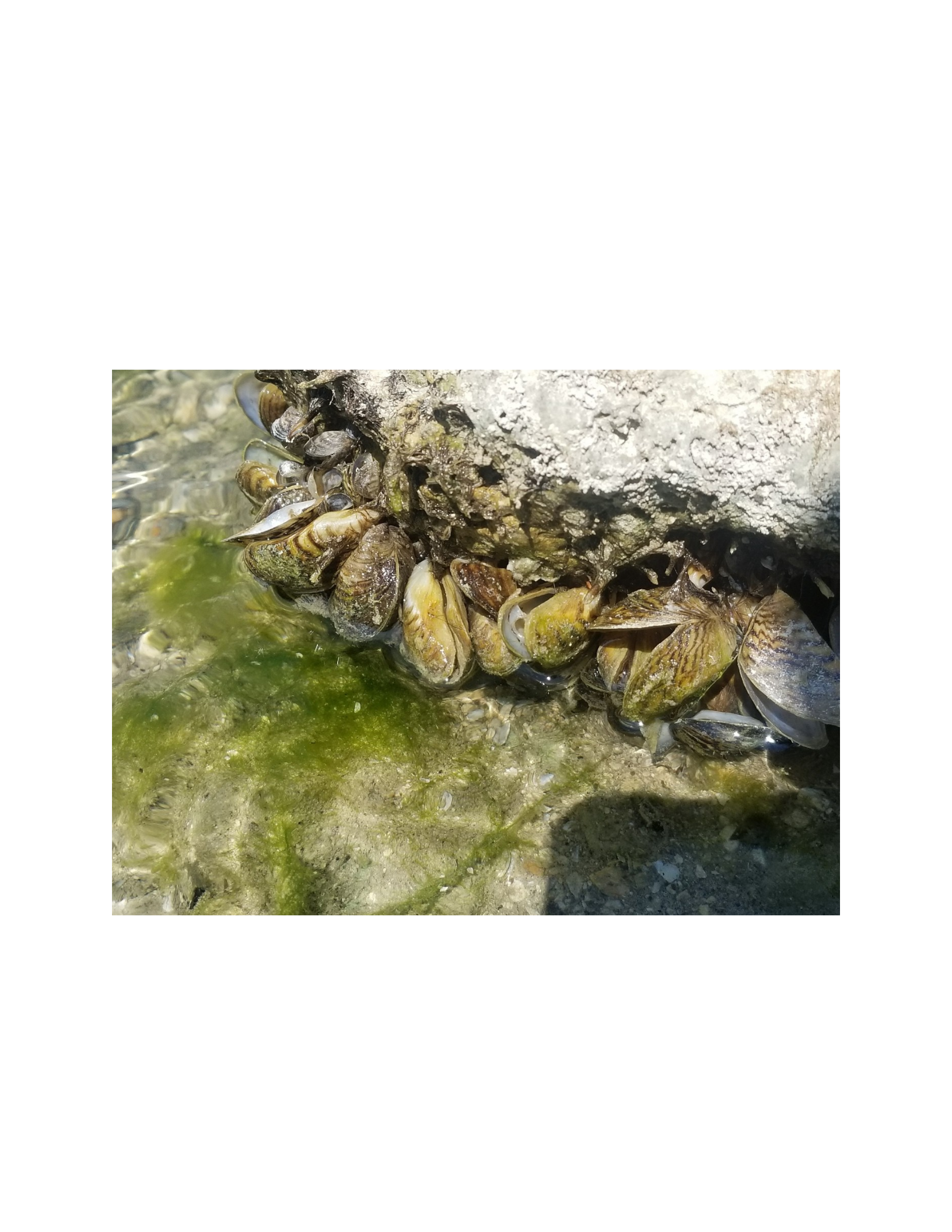
of Texas, the towns of Killeen, and Belton specifically. Zebra mussels get attached to hard
surfaces including reservoir pipes, jetties, and buoys forming a thick layer being packed on top
of one another.

II. Human Impact
Zebra mussels filter out alae that their natives need for food, and they attach to and
incapacitate native mussels. After consuming the algae, it deposits its feces on the floor of the
lake. This fertilizer provides nutrients for the bottom-feeding species and ultimately for the fish
which feed on them (Legend Boats, 2013). Despite this process appearing to be helpful by
increasing water clarity and water pollution, it starves native species which rely heavily on the
algae as a source of food (Legend Boats, 2013). It also allows more sunlight to penetrate the
water column forcing the fish to find a new habitat. Native mussel populations have decreased
threatening to be endangered because of being outnumbered by zebra mussels. Many fish species
which live in open waters have also suffered (Zebra Mussel Fact Sheet, 2022). Oxygen levels
have decreased which has various effects on different species. Once zebra mussels get attached
to a surface in the ideal environment, they multiply at high rates forming densely packed
colonies as opposed to sparse populations under conditions that aren't ideal (Zebra Mussel Fact
Sheet, 2022).
The impacts to boating are that the invasive species infiltrate cooling systems and intakes,
engine compartments, and bilges. Most importantly any part of a boat or watercraft which meets
waters infested with these mollusks can retain the invasive species (Legend Boats, 2013). Zebra
mussels are usually found in fresh waters of temperatures between 68F and 77F (New
Hampshire Department of Environmental Services, 2019). Sources of water pollution due to
human activities like oil spills can compromise the DNA of a zebra mussel species population.
According to a "BioMed Research International" report which investigated cellular and
molecular levels after exposure to municipal wastewater, zebra mussels of the cellular level
population showed a significantly higher level of DNA damage than the levels of the DP

population (Thomas et al., 2014). The alteration of DNA influences the primary production and
reproduction of these species.
Human activity is one of the main causes of Water pollution globally. Water
contamination affects the ecosystem. A case in point is the movement of nutrients downstream
increases the growth of algae and other aquatic organisms which the native species feed on
biodiversity (Rinkesh, 2022c). These species are a major threat to freshwater habitats and have
caused decreases in biodiversity and ecological health with the subsequent spread throughout the
eastern United States but more specifically to Texas (Patino, 2017). The negligence on fisher
folks’ part by not using the “clean, drain, dry” method, allows for the retention of species on
watercraft or vessels. This allows a perfect habitat for primary reproduction (Clean, Drain &
Dry: Stop Zebra Mussels!, n.d).
III. Potential Solutions
The environmental issue of zebra mussel species is of a broad spectrum. Some ways of
mitigating this environmental issue are the use of radio waves and exposure to serotonin
(Possible Solutions, n.d.). Mathew f. Ryan a researcher at Purdue University and his colleagues
discovered a possible way to kill the species using the low frequency of electromagnetic radio
waves (Possible Solutions, n.d.). On the other hand, Rebecca M. Heltsley a biologist at the
National Institute of Standards and Technology was testing the effectiveness of compromising
the reproduction of zebra mussels using the chemical fluoxetine hydrochloride (Possible
Solutions, n.d.).
The outlook of the serotonin exposure solution looks grim, however, there's hope
(Possible Solutions, n.d.). Local mussel populations are harmed as well as the natives creating a

lesser population (Possible Solutions, n.d.). The disadvantage to exposure to serotonin is the
release of larvae which is a pollutant itself (Possible Solutions, n.d.). Concerning the introduction
of electromagnetic waves, there are no detrimental effects on other forms of aquatic or marine
life (Possible Solutions, n.d.). Exposing the mussels to radio waves also forces the mollusks to
emit minerals that are essential for the maintenance of their shells eventually killing them
(Leutwyler, 2001). The advantages outweigh the disadvantages concerning the use of radioactive
waves on the zebra mussels species.
Ecological evidence would indicate that recreational boating is the principal cause or
vector of dispersal for several freshwater invasive species (Timar et al, 2009). Understanding
boating behavior and the way behavior responds to policy changes is central to understanding
how the efforts to halt or slow down the spread of aquatic invasives are effective (Timar et al,
2009). The framework of a recreational model for boating behavior describing the temporal and
spatial spread of aquatic invasives allows the public to link invasion risk probabilities directly to
policy levers, boat behaviors, and behavior changes stemming from policy shocks (Timar et al,
2009).
The pressure washing of watercraft and equipment will wipe the surfaces of all zebra
mussels attached. Boaters would have to ensure that this cleaning is done thoroughly. After the
pressure washing is done, another boater nearby can inspect the watercraft and equipment for
any inconsistencies. Another pair of eyes is always better than a single pair. Some areas might
have been overlooked which might be spotted by the person inspecting the equipment and
watercraft.

IV. Reducing Personal Impact
The personal habits and daily activities which impact the ecological processes related to
the larger environmental issue are recreational fishing and surfing. Zebra mussels love hard
surfaces. The watercraft's surface is the perfect surface to thrive on. Primary reproduction is
therefore accelerated with the frequent voyages of watercraft and surfing. Water pollution from
the indirect disposal of waste compromises the aquatic ecosystem and biodiversity harming
invasive species.
My daily fishing habits primarily contribute to this environmental issue. The use of the
boat provides the breeding ground for these invasive species through the boat's surface. In
freshwaters and the right temperature, primary reproduction skyrockets. The throwing away of
garbage improperly eventually leads to water sources. The solid waste then attaches to the
species through the surfaces of the waste.
Recreational fishing has a greater impact on invasive zebra mussels as opposed to the
indirect disposal of waste. According to a report when recreational boats are transported
overland, they are often accompanied by zebra mussels which are attached to the hull (Invasive
mussels: Stowaways on transported boats, 2015). Aquatic ecologist Nora Weissert lamented that
on average, sixty percent of boats which are kept in the water all year round are infested with
zebra mussels, however boats with dry berths are rarely affected (Invasive mussels: Stowaways
on transported boats, 2015).
The cleaning of boats, drying of boats and trailers, and the prevention of transporting
water from live wells and bait buckets from one water body to the other will help mitigate or
eradicate these invasive species. According to the Wisconsin Department of Natural Resources,

to remove zebra mussels, every inch of the vessel should be inspected and hand-plunked if any
adult mollusks which is found (Cleaver, 2022).
Proper disposal of waste, recycling, and being more responsible can help mitigate the
habit of garbage finding its way to water sources which these invasive species frequent. Zebra
mussels are filter feeders and attach themselves to any hard or solid surface (Government of
Canada, Fisheries and Oceans Canada, Communications Branch, 2021). In this case, the solid
surfaces include surfboards, watercraft, and solid waste all exposed to fresh water.
Boats and other watercrafts inclusive of kayaks and canoes easily carry invasive species
from one water body to the next (Invasive Species Council of British Columbia, 2021). The more
methods we have in place to mitigate the spread of these species the safer and cleaner our
freshwater sources will be. As individuals, marinas recreationists, and stewardship groups, we
collectively can help reduce the spread of aquatic invasive species, in this case, zebra mussels
(Invasive Species Council of British Columbia, 2021). Additionally, to prevent the introduction
and spread of aquatic invasive species through recreational and water-based activities, many
governments and non-government organizations encourage owners and operators to Clean,
Drain, and Dry (CDD) their watercraft, equipment, and trailers (DFO, 2021). An additional step
of decontamination treatment can be very useful as well. The clean dry drain program along with
the electromagnetic waves and serotonin exposure can together help mitigate and alleviate the
spread of invasive plants and organisms (Invasive Species Council of British Columbia, 2021). It
is up to the citizenry to stay disciplined and responsible in creating and maintaining change for
the betterment of our livelihoods and the future generation.

With all these recommendations, I will inspect my watercraft before and after use every
time to make sure no invasive species are attached to them. The little sacrifices can go a long
way if we collectively follow suit. Using the Clean, Drain, Dry method specifically and
strategically will help me avoid the transportation of Zebra Mussels. Educating myself on ways
to avoid transporting zebra mussels and their dangers would also be beneficial to me. Sharing the
information which I possess can help the community combat this environmental issue.
Collectively being responsible, empathic, and caring for the environment will help mitigate and
eventually alleviate or irradicate the issue of zebra mussels.

References
The Zebra Mussel Threat.
(n.d.).Hhttps://tpwd.texas.gov/huntwild/wild/species/exotic/zebramusselmap.phtml
Clean, Drain & Dry: Stop Zebra
Mussels!H(n.d.).Hhttps://www.texasinvasives.org/cleandraindry/
Invasive Zebra Mussels (U.S. National Park Service).
(n.d.).Hhttps://www.nps.gov/articles/zebra-mussels.htm
A., & A. (2021, July 2).HWhat is Biofouling? Causes, Effects, and Solutions. Envpk.com -
Pakistan’s Best Environmental News and Articles Website.Hhttps://www.envpk.com/what-is-
biofouling-causes-effects-and-solutions/
Zebra Mussel Fact Sheet. (2022, July 15). Cary Institute of Ecosystem
Studies.Hhttps://www.caryinstitute.org/news-insights/2-minute-science/zebra-mussel-fact-
sheet
New Hampshire Department of Environmental Services. (2019).HEnvironmental Fact Sheet :
Zebra Mussels. Retrieved March 31, 2023,
fromHhttps://www.des.nh.gov/sites/g/files/ehbemt341/files/documents/2020-01/bb-17.pdf
Thomas, E., Šrut, M., Štambuk, A., Klobučar, G., Seitz, A., & Griebeler, E. M. (2014).
Effects of Freshwater Pollution on the Genetics of Zebra Mussels (Dreissena polymorpha) at
the Molecular and Population Level.HBioMed Research International,H2014, 1–
11.Hhttps://doi.org/10.1155/2014/795481
Rinkesh. (2022c, July 29).HHow Does Water Pollution Affect Biodiversity? - Conserve
Energy Future. Conserve Energy Future.Hhttps://www.conserve-energy-future.com/how-
does-water-pollution-affect-biodiversity.php
Patino, R. (2017, August 1).HQuantifying zebra mussel impacts on harmful algal bloom
species in Texas reservoirs using environmental DNA
surveys.Hhttps://ttu-ir.tdl.org/handle/2346/7319

Clean, Drain & Dry: Stop Zebra
Mussels!H(n.d.).Hhttps://www.texasinvasives.org/cleandraindry/
Possible Solutions. (n.d.).Hhttps://people.uwec.edu/piercech/zebra/index_files/Page418.htm
Leutwyler, K. (2001, August 29).HRadio Waves Capable of Killing Off Pesky Zebra Mussels.
Scientific American.Hhttps://www.scientificamerican.com/article/radio-waves-capable-of-ki/
Timar, L. T., & Phaneuf, D. P. (2009, June 9).HModeling the Human-Induced Spread of an
Aquatic Invasive: The Case of the Zebra
Mussel^.Hhttps://citeseerx.ist.psu.edu/viewdoc/download;jsessionid=71669BC615E2CED336
64409B5C2E8760?doi=10.1.1.575.5918&rep=rep1&type=pdf
Invasive mussels: Stowaways on transported boats. (2015, June 15).
ScienceDaily.Hhttps://www.sciencedaily.com/releases/2015/06/150625081254.htm
Cleaver, K. P., & K. (2022, February 20).HHow to Remove Zebra Mussels From Your Boat.
MotorBiscuit.Hhttps://www.motorbiscuit.com/remove-zebra-mussels-boat/
Government of Canada, Fisheries and Oceans Canada, Communications Branch. (2021,
March 26).HZebra Mussel.Hhttps://www.dfo-mpo.gc.ca/species-especes/profiles-profils/
zebramussel-moulezebree-eng.html
Invasive Species Council of British Columbia. (2021, April 21).HClean Drain Dry - Invasive
Species Council of British Columbia.Hhttps://bcinvasives.ca/play-your-part/clean-drain-dry/
DFO. 2021. Science Advice on “Clean, Drain, Dry and Decontaminate” treatments and
protocols to prevent the introduction and spread of aquatic invasive species. DFO Can. Sci.
Advis. Sec. Sci. Advis. Rep. 2021/043. (Erratum: July 2022).
Legend Boats. (2013, November 4).HZebra Mussels and their effects on boating and fishing -
Legend Boats.Hhttps://www.legendboats.com/?blog=1851-zebra-mussels-affects-boating-
fishing

