


2
Behavior Modification Project: Baseline Phase Report
Target Behavior
Focused and purposeful study involves taking the time to understand course material,
review lectures, and get ready for tests. This includes both regular study sessions and more
casual study sessions where you are actively engaged with educational material. The operational
definition allows you to measure the amount of time you spend on academic activities, including
reading, solving problems, and reviewing concepts (Adams & Blair, 2019; Eneogu et al., 2023).
Studies show that more time spent studying leads to higher grades. Students who spend more
time studying have a better understanding of their subject matter and better retention of
information.
Observation period and Dimensions
The baseline observation phase took place over a period of four weeks, from [1/1/23] to
[1/22/23]. The selection of Frequency and Duration offers a multi-faceted view of the goal,
“Increasing Study Time.” Frequency measures the regularity and frequency of study sessions
over the week, providing insight into the study behavior pattern. This dimension helps to identify
trends, for example, whether the participant attends study sessions on a daily basis or clusters
them on particular days. Durations, on the other hand, measure the duration of each study session
in minutes. It provides insight into the intensity and scope of each study period, allowing for the
evaluation of the participant’s ability to maintain focused and purposeful study over long periods
of time. This dimension also provides valuable information about the quality of the study time,
as it helps to determine whether shorter, more often, or longer, less often sessions are more
successful in increasing study time. The ecological validity of a study is enhanced when
observations are made in a natural environment, i.e., the participant's normal study environment.
This ensures that the behaviors observed are closely related to real-world scenarios and capture
the nuances of the study habits within their habitual study environment.
Results
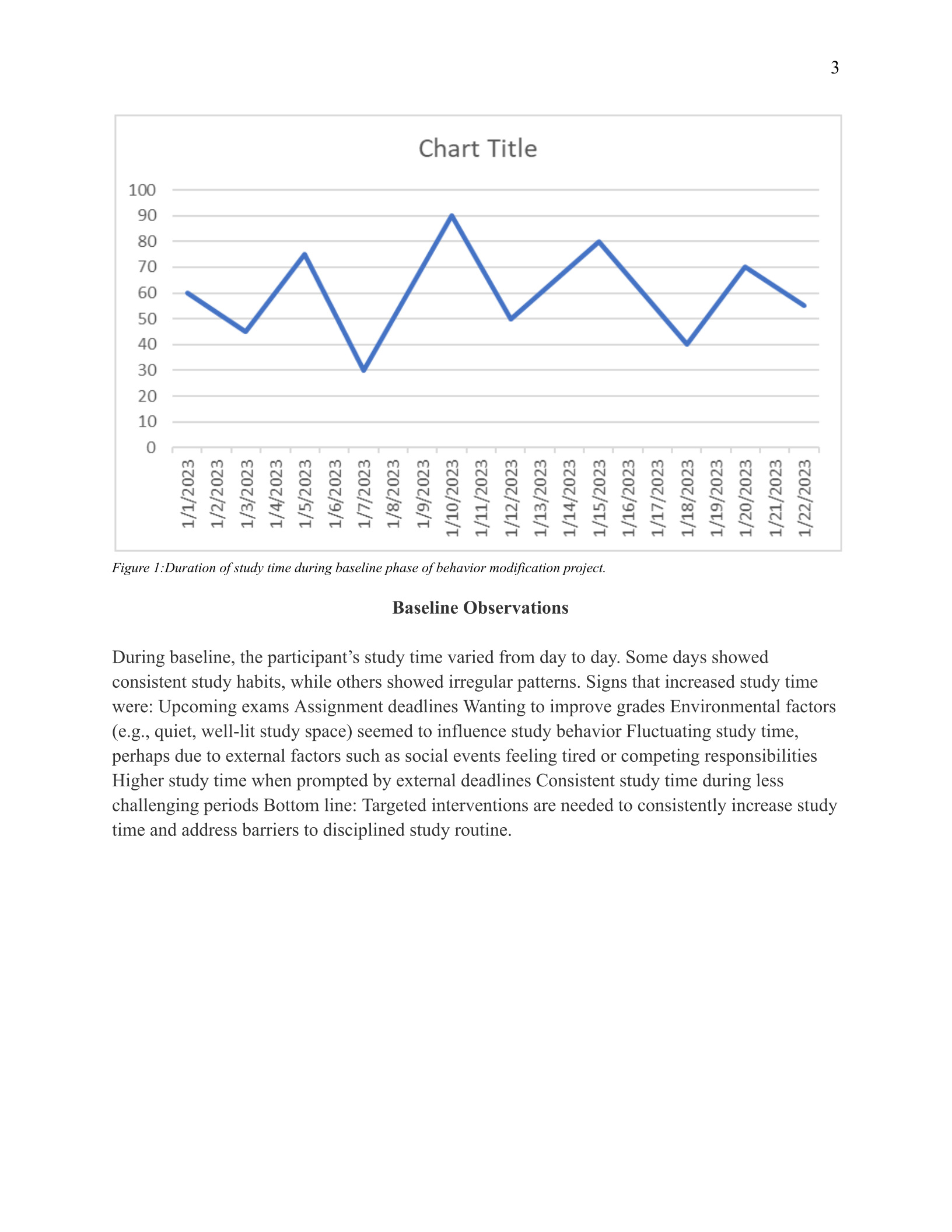
The graph below depicts the baseline data, with dates on the x-axis and study time in minutes on
the y-axis.
3
Figure 1:Duration of study time during baseline phase of behavior modification project.
Baseline Observations
During baseline, the participant’s study time varied from day to day. Some days showed
consistent study habits, while others showed irregular patterns. Signs that increased study time
were: Upcoming exams Assignment deadlines Wanting to improve grades Environmental factors
(e.g., quiet, well-lit study space) seemed to influence study behavior Fluctuating study time,
perhaps due to external factors such as social events feeling tired or competing responsibilities
Higher study time when prompted by external deadlines Consistent study time during less
challenging periods Bottom line: Targeted interventions are needed to consistently increase study
time and address barriers to disciplined study routine.
4
References
Adams, R. V., & Blair, E. (2019). Impact of Time Management Behaviors on
Undergraduate Engineering Students’ Performance. SAGE Open, 9(1).
https://doi.org/10.1177/2158244018824506
Eneogu, N.D., Ugwuanyi, C.K. & Ugwuanyi, C.S. Efficacy of Cognitive Behavioral
Therapy on Academic Stress Among Rural Community Secondary School
Economics Students: A Randomized Controlled Evaluation. J Rat-Emo
Cognitive-Behav Ther (2023). https://doi.org/10.1007/s10942-023-00508
Powered by TCPDF (www.tcpdf.org)

