


Calculating with Vectors
!
First: What is a vector?
Has magnitude (size) + direction.
Ex: 5 m north, 20 N to the right.
→→ (long arrow) = big magnitude
→ (short arrow) = small magnitude
Adding vectors
Draw head-to-tail.
Then connect start → end.
That new arrow = resultant.
(looks like a triangle most times)
⁃
⁃
⁃
⁃
⁃
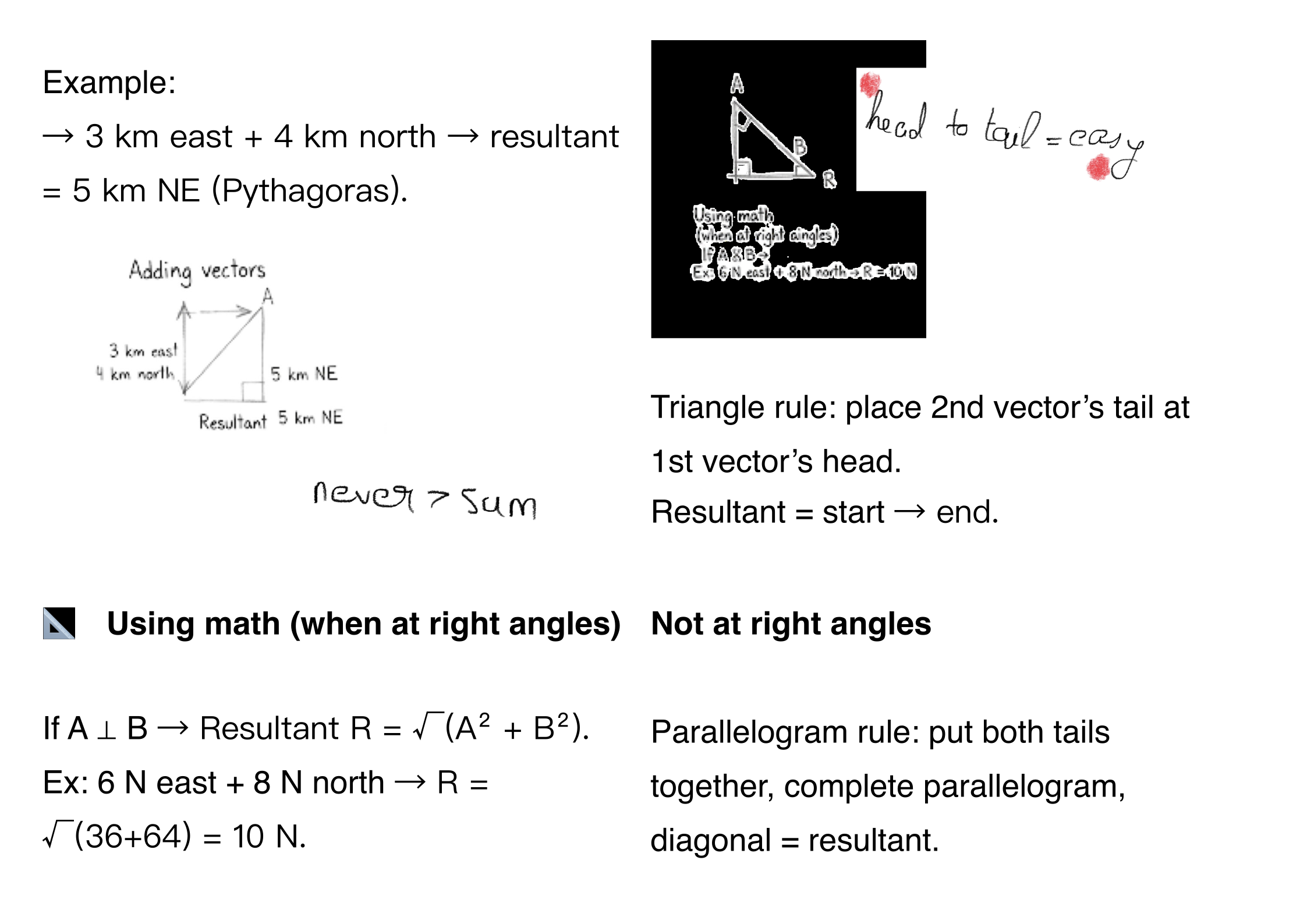
Example:
→ 3 km east + 4 km north → resultant
= 5 km NE (Pythagoras).
!
Using math (when at right angles)
If A ⟂ B → Resultant R = √(A² + B²).
Ex: 6 N east + 8 N north → R =
√(36+64) = 10 N.
Triangle rule: place 2nd vector’s tail at
1st vector’s head.
Resultant = start → end.
Not at right angles
Parallelogram rule: put both tails
together, complete parallelogram,
diagonal = resultant.
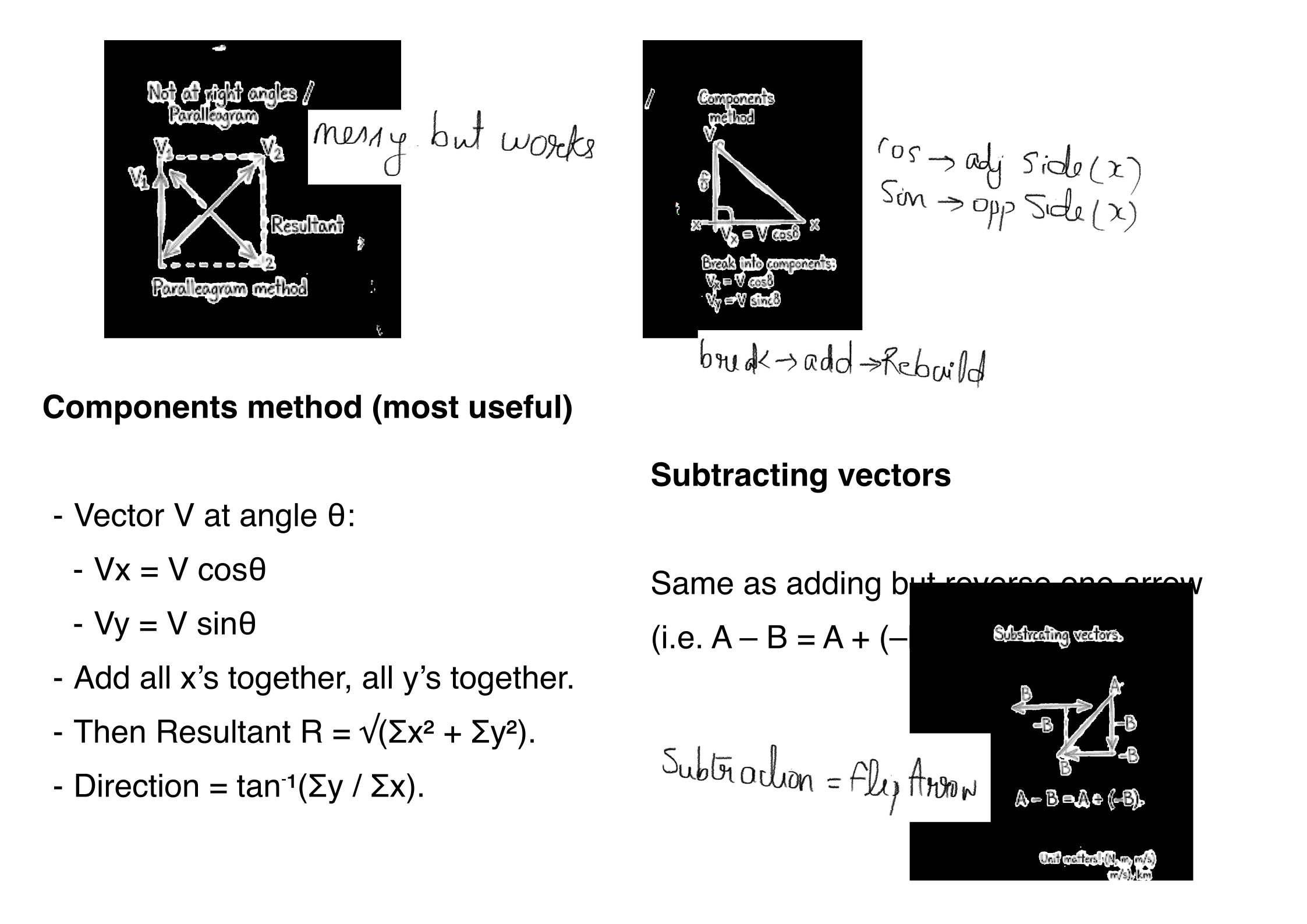
Components method (most useful)
Vector V at angle θ:
Vx = V cosθ
Vy = V sinθ
Add all x’s together, all y’s together.
Then Resultant R = √(Σx² + Σy²).
Direction = tan⁻¹(Σy / Σx).
⁃
⁃
⁃
⁃
⁃
⁃
Subtracting vectors
Same as adding but reverse one arrow
(i.e. A – B = A + (–B)).
"
Quick reminders (margin notes):
“Always draw arrows to scale → avoid
silly mistakes.”
“Resultant shorter than sum, longer
than each.”
“Think of vectors as ‘moves’ on a
map.”
“Break into x, y… life becomes
easier.”
Unit matters! (N, m/s, km…)”
⁃
⁃
⁃
⁃
⁃

