


1
www.researchjournali.com
Assessing Barriers To Implementation Of Nursing
Process Among Nurses Working At A Tertiary Hospital In
Kenya

2
www.researchjournali.com
ABSTRACT
Background: Nursing process (NP) is a global concept, which forms the foundation of nursing as a
profession, it is a scientific method for delivering holistic and quality nursing care and its effective
implementation is critical for improved quality of nursing care. However, its implementation in most hospitals
especially in low and middle-income countries reportedly remains a challenge despite efforts being made.
Objective: To assess barriers to implementation of nursing process among nurses. Methods: A descriptive
cross-sectional study was carried out where 134 nurses were recruited in the study. Data was collected
through self-administered questionnaires. Results: One-third (33.1%) of nurses reported that they were
actively implementing the nursing process but only 8.2 %( n=11) nurses correctly listed all the steps of the
nursing process. Nursing process implementation was significantly associated with nurse’s demographics (age
p <0.001, experience p = 0.001), training (p = 0.013), institutional factors (p = 0.048). Social (p>0.05) and
cultural (p = 0.993) factors were not significantly associated with nursing process implementation.
Conclusion: The Nursing Process implementation among nurses is significantly influenced by their
demographic characteristics which include age and experience, training on nursing process and institutional
factor like availability of relevant resources for NP implementation.
Key words: Nursing Process, Barriers, Machakos Level 5 Hospital
1. INTRODUCTION
Nursing process (NP) is a global concept, which forms the foundation of nursing as a profession. It is a widely
accepted scientific method to guide procedures and quality nursing care (Pokorski, et al., 2009). It identifies,
prevent and treat actual or potential health problems and promote wellness of clients (Carlson,
2010).Implementation nursing process in clinical settings facilitates high quality nursing care, improves client
health outcomes and promotes nursing as a professional scientific discipline (Hagos et al., 2014) .According
to Manal and Hala, (2014), barriers to nursing process implementation in most of the health care institutions
can be related to nurse’s perception, experience, work, resources, and others related to administration of the
health care institutions. From a study by Potter and Perry, (2007) lack of adequate time, poor nurse patient
ratio, high patient turn over and lack of equipment and supplies are highlighted as key hindrances to
implementation of the nursing process at clinical setting. Akbari and Shamsi, (2011) also cited inadequate
knowledge and incompetence as barriers to nursing process implementation in clinical setting. Despite nurse
knowledge on nursing process, its use in most hospitals globally and regionally is lagging behind despite all
the effort of nursing professionals to implement it (Momoh & Chukwu, 2010). In Kenya establishing nursing
process within clinical settings faces the same challenges resulting to low quality of health care service
(Department of Nursing, 2009). These challenges have been attributed to negative attitudes, incompetence and
lack of resources

3
www.researchjournali.com
(Mahmoud and Bayoumy, 2014). Demographic characteristics of nurses like age, work experience and level
of education has shown to have a significant impact on nursing process implementation, nurse educational
status has a direct statistical significance relationship with the knowledge of nurses on nursing process (Manal
& Hala, 2014).According to Queiroz et al., (2012), lack of awareness of nursing process steps, lack of training
of the nurses concerned, and lack of time to perform nursing process serves as key barriers in its
implementation at clinical set up.
2. METHODS
A descriptive cross-sectional study design was used to carry out the study at Machakos Level 5 Hospital in
Machakos County, Kenya. The study participants were nurses working in medical units, surgical unit,
maternity unit, theatre, Psychiatry unit Accident and Emergency departments. Simple random sampling was
used to get a sample size of 134 nurses. Practising nurses who consented were included in the study, student
nurses and non-consenting nurses were excluded. Semi structured questionnaire was administered to the
nurses to gather information on barriers affecting nursing process implementation. Key informant interview
was conducted on the nurse managers to determine institutional support to the nurses implementing nursing
process. Study instruments were pretested in medical ward. Audio tapes were transcribed. Analysis of data
was done using Statistical Package for Scientific Solutions (SPSS) version 20.0. Results were expressed in
frequencies and presented in tables, graphs and charts. Inferential statistics, such as test of significance and
coefficient correlations was used to compare variables. Level of significance was set at a p value of less than
or equal to 0.05.
The study received ethical approval from Kenyatta National Hospital/University of Nairobi (KNH/UON),
Ethics and Research Committee. Permission to conduct the study was granted by Machakos County
administration and written informed consent was sought from all study participants before participation.
3. RESULTS
3. 1 DESCRIPTIVE ANALYSIS
The characteristics of the nurses participating in the study are summarized in Table 1. The mean age of the
participants was 34.3 years. Most participants 50% (n=67) were aged between 21 and 30 years of age.
Females accounted for 66.4% (n=89) of the nurses participating giving a male to female ratio of 1: 2.
Table 1: Distribution of respondents by Gender, Age and Marital Status
Frequency (n) Percent (%)
Gender
Male 45 33.6
Female 89 66.4
Total 134 100
Age
4
www.researchjournali.com
21-30 67 50.0
31-40 29 21.6
41-50 25 18.7
51-60 13 9.7
Total 134 100
Marital status
Single 56 41.8
Married 74 55.2
Widowed 4 3
Total 134 100
Table 2 shows that 57.5% (n=77) of the nurses in Machakos L5 Hospital were diploma holders, and 30.6%
(n=41) nurses had undergraduate training in nursing (BScN). Approximately 10% of nurses had certificate
training and 2 (1.5%) had post graduate qualifications.
Table 2: Academic qualification and experience of nurses
Frequency (n) Percent (%)
Academic qualification
Certificate 14 10.4
Diploma 77 57.5
BScN 41 30.6
MScN 2 1.5
Total 134 100
Experience
Below 5 49 36.6
5-10 31 23.1
11-15 17 12.7
16-20 12 9
21-25 11 8.2
26-30 11 8.2
Above 30 3 2.2
Total 134 100
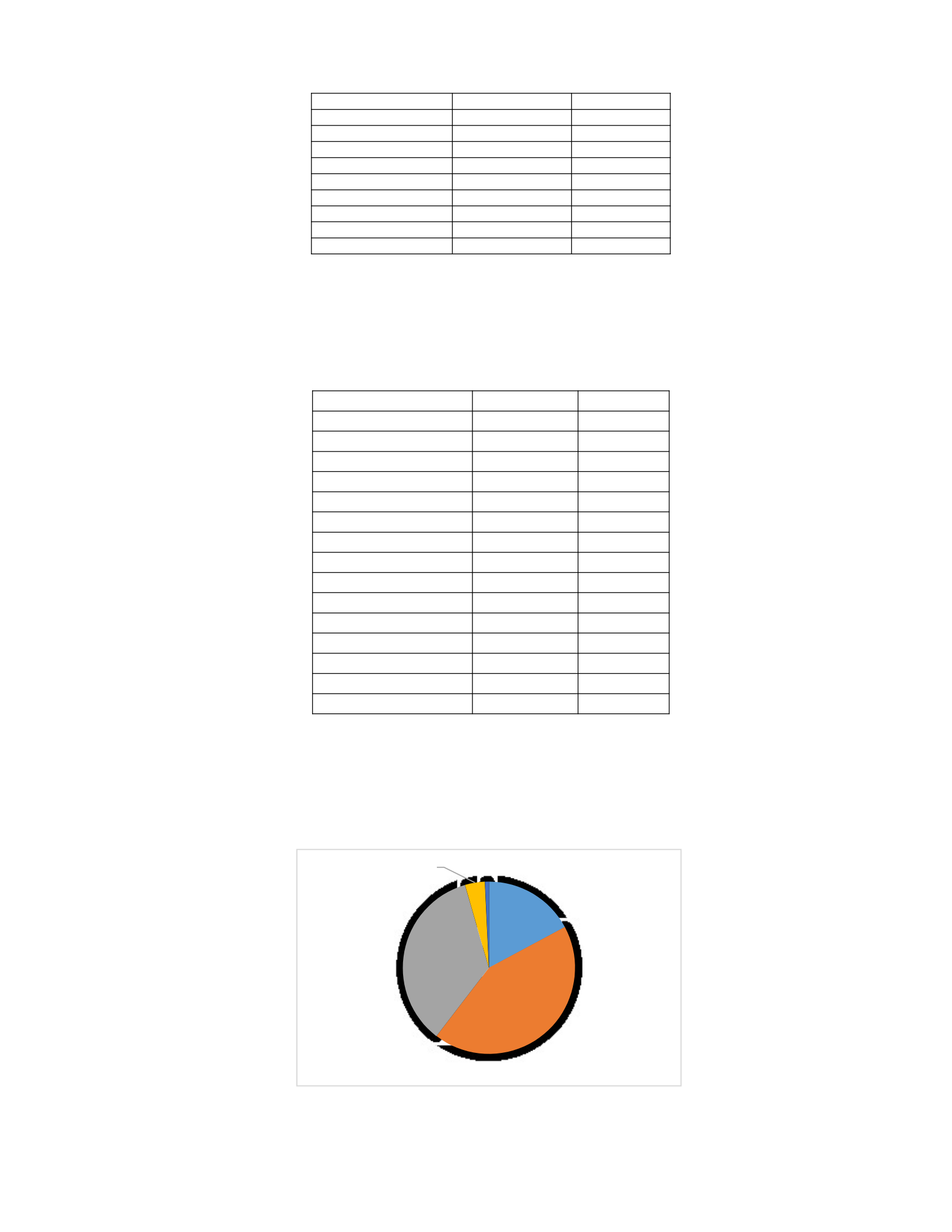
Nearly half nurses 43.3% (n=58) rated their understanding of nursing process as being good, 35% (n=47)
rated average, 17.2% (n=23) rated very good, 3.7 %( n= 5) rated poor while 0.7 %( n=1) rated very poor as
shown in figure 1.
Figure 1: Nurse self-rated understanding of Nursing Process
Poor,5,(3.7%Very poor,1,Very
)(0.7%)good,23,
(17.2%)
Average,47, (35.7%)
Good,58,(43.
3%)

5
www.researchjournali.com
Of the nurses participating in the interview, a total of 109 (81.3%) reported that they had ever had any training
on the nursing process (Table 3). Most of the nurses who had been trained, 61.2 % (n=82), reported receiving
training on nursing process in college Twenty-one (15.57%) nurses were trained during seminars and 20
(14.9%) during Ministry of Health organized training. The nurses who reported that training enables them to
competently practice nursing process were 77 (70.6%) compared to 32 (29.4%) who reported that training did
not enable them to competently practice nursing process.
Table 3: Nursing process training among nurses in Machakos Level 5 Hospital
Frequency (n) Percent (%)
Ever trained on nursing process
Yes 109 81.3
No 25 18.7
Total 134 100
Where trained on Nursing process
College 82 61.2
Seminar 21 15.7
On job training 11 8.2
MOH NP training 20 14.9
Total 134 100
Training enables nurse to competently
practice Nursing Process
Yes 77 70.6
No 32 29.4
Total 109 100
The implementation of nursing process was assessed by asking for evidence of preparation and
implementation of nursing care plans for patients in the one week period prior to the interview. As shown in
Table 4, 44 (33.1%) of nurses reported that they were actively practicing the nursing process. Of these nurses
reporting that they practiced the nursing process, 11 (8.2%) of could list all the steps of the nursing process.
Table 4: implementation of nursing process among nurses in Machakos Level 5 Hospital
Frequency (n) Percent (%)
Developed a nursing care plan in the last one
week
Yes 44 33.1
No 89 66.9
Total 133 100
List the steps of the Nursing process
followed in preparing care plan
Able to list all the steps 11 8.2
Unable to list all the steps 123 91.8
Total 134 100
Table 5 shows how the hospital management supports the implementation of nursing process. Most 105
(78.9%) nurses reported that hospital administration recognized nursing process as a framework for quality
nursing care delivery. One-half 67 (50%) of nurses stated that the hospital administration supports
implementation nursing

6
www.researchjournali.com
process, 42 (31.8%) reported that management monitors nursing process and 20 (14.9%) indicated that
management recognizes staff applying the nursing process. Only 6(8%) nurses in this study reported that
management rewards staff applying nursing process. 101(75.4%) participants reported that the hospital
administration supplies relevant equipment to enable staff implement nursing process.
Table 5: Institutional Support
Frequency (n) Percent (%)
Hospital administration recognized NP as framework
for quality nursing care delivery
Yes 105 78.9
No 28 21.1
Hospital administration supports implementation of NP
Yes 67 50
No 67 50
Management monitors implementation of NP
Yes 42 31.8
No 90 68.2
Management recognizes staff for applying NP
Yes 20 14.9
No 114 85.1
Incentive given by management in recognition of NP
application
Rewarding 6 8
NP implementation forms part of annual performance
appraisal objectives
Yes 47 35.3
No 84 63.2
Institution supplies relevant tools to enable staff
implement NP
Yes 101 75.4
No 33 24.6
3.2 BIVARIATE ANALYSIS
3.2.1 ASSOCIATION BETWEEN DEMOGRAPHIC FACTORS AND NURSING PROCESS
IMPLEMENTATION
There was a significant association between nursing plan implementation and nurses’ age (p < 0.001) and also
nursing plan implementation and nurses experience (p = 0.001), Table 9. The younger nurses aged between 21
and 30 years were more likely to practice nursing process 33 (49.3%) compared to nurses aged 31-40 years
(24.1%), 41-40 years (8%) and 51-60 years (15.4%). Recently qualified nurses with experience less than 5
years and experience between 5 and 10 years were more likely to implement nursing process at 38.8% and
54.8%, respectively compared to 11-15 years (23.5%) and 16 or more years (10.8%).
Table 6: Nurse demographic characteristics and implementation of nursing process
Nursing plan implementation
Yes No Chi square P value
Age
21-30 33(49.3) 33(49.3)
18.5 <0.001*
31-40 7(24.1) 22(75.9)
41-50 2(8.0) 23(92.0)
51-60 2(15.4) 11(84.6)

7
www.researchjournali.com
Academic qualification
Certificate 2(14.3) 12(85.7) 5.5 0.141
Diploma 24(31.2) 52(67.5)
BScN 18(43.9) 23(56.1)
MScN 0(0.0) 2(100.0)
Experience
Below 5 years 19(38.8) 30(61.2) 17.2 0.001*
5-10 years 17(54.8) 13(41.9)
11-15 years 4(23.5) 13(76.5)
16 years and above 4(10.8) 33(89.2)
Hospital unit of deployment
Medical 10(43.5) 13(56.5) 9.3 0.235
Pediatric 11(39.3) 17(60.7)
Obstetrics 14(40.0) 20(57.1)
Surgical 4(21.1) 15(78.9)
Accident and Emergency 2(40.0) 3(60.0)
Theatre 0(0.0) 7(100.0)
Out patient 2(18.2) 9(81.8)
Other 1(16.7) 5(83.3)
4.REFERENCES
Akbari M. (2009). The effect of nursing process education to nurses on quality of nursing cares (MSc Thesis) Tehran: Branch of
Medicine, Islamic Azad University; p. 5
Carlson S. (2010). A practical approach to the nursing process. The American Journal of Nursing, 72, 1589–91.
Clarke SP, Aiken LH (2003) Failure to rescue. American Journal of Nursing 103: 42-47.
Retrieved from http://www.ncbi.nlm.nih.gov/pubmed/12544057
Delgado and Mendes M.R.(2009).The nursing process presented as routine care actions:
building its meaning in clinical nurses' perspective. Revista Latino-Americanade Enfermagem, vol. 17, no. 3, pp. 328–334.
Department of Nursing (2009). Nursing sub-sector strategic plan 2008–2013: Nurses can make a difference in ‘‘Reversing the
Trends’’. Kenya: Afya House-Ministry of health.
Fisseha, H., Fessehaye, A., Fikadu, B., Semarya, B., &Alemseged, A. (2014). Application of Nursing Process and its Affecting Factors
among Nurses Working in Mekelle Zone Hospitals, Northern Ethiopia. Retrieved from http://dx.doi.org/10.1155/2014/675212

Researchjournali’s Journal of Public Health
Vol. 4 | No. 1 January | 2018
8
www.resea
V
r
ie
c
w
h
pub
j
li
o
cat
u
ion
r
s
n
tat
a
s
li.com
Florance, O.A. and Adenike A.E.O (2013): Factors affecting the use of nursing process in health institutions in Ogbomoso Town,Oyo
State.Intern J Med. Pharm Sc.,3(1):91-98.
Hagos, F., Alemseged, F., Balcha, F., Berhe, S., & Aregay, A. (2014). Application of
nursing process and its affecting factors among nurses working in Mekelle Zone Hospitals, Northern Ethiopia. Nursing Research and
Practice, 8. http://dx.doi.org/ 0.1155/2014/675212.
Lukes E. (2010). The nursing process and program planning. AAOHN ; 58:5–7.
Mahmoud, M. H., & Bayoumy, H. M. (2014). Barriers and facilitators for execution of
nursing process from nurses’ perspective ISSN 2320–5407. International Journal of Advanced Research, 2(2), 300–315.
Manal, H.M., & Hala, M.B. (2014). Barriers and facilitators for execution of nursing process from nurses’ perspective International
Journal of Advanced Research, 2(2), 300-315.
Momoh, M. A. and Chukwu, D.O. (2010). Factors that militate against the use of nursing process: a hospital based study. Continental
J. Pharmaceutical Sciences, 4, 6-9.
Pokorski, S., Moraes, M.A., Chiarelli, R., Costanzi, A.P. and Rabelo, E. R. (2009). Nursing process: From literature to practice. What
are we actually doing? Rev Latino-am Enfermagem, maio-junho, 17(3), 302-307.
Potter, P. A., & Perry, A. G. (2007). Basic nursing (6th ed.). St. Louis: Mosby.
Queiroz, O.C.A., Sant'Ana, R.S.E., Oliveira, S.C., Moinhos, A.S. and Santos, L.S. (2012): Nurse's perception in front of the
implementation of nursing diagnosis and prescription. Nursing Journal. UFPE on line, 6(7), 1347-51.
Zewdu Shewangizaw, Abera Mersha. Determinants towards Implementation of Nursing Process. American Journal of Nursing Science.
Vol. 4, No. 3, 2015, pp. 45-49. doi: 10.11648/j.ajns.20150403.11

