


NURS 115- Test Four Study Guide
This is a guide for student preparation for testing in NURS 115. It is understood that the student is responsible for
all course material designated each test including course readings, in/out of class study/ activities and lecture
material
Cardiac
Know about cardiac tamponade, and cardiomyopathies
Cardiac tamponade: slow or rapid compression of the heart due to accumulation of fluid,
pus, or blood in the pericardial sac; if attached to an ekg, rhythm never changes but don’t
have a pulse electrically the nodes are still firing but no way for the ventricles to fill so
mechanically doesn’t work
Cardiomyopathies: disease processes related to heart muscle
oDilated: larger chamber, muscle gets thin not enough oomph to push blood out
where it needs to go; frequently involving more than 1 chamber, most common
type, systolic dysfunction – circulation is a problem
oHypertrophic: bigger muscle; LV has to overcome the resistance (afterload) and
builds up muscle so size of ventricle gets smaller which drops CO; backs up into
the lungs; see this in cardiomegaly
oRestrictive: small volume; can’t fill so issue with diastole; muscle wall is stiff
Know about stable vs nonstable angina, printzmetal’s and silent myocardial ischemia
stable angina: the initial manifestation of ischemic heart disease in approx. half the
persons with CHD.
nonstable angina
ocauses: atherosclerotic plaque, platelet aggregation, secondary hemostasis
ocharacteristics: occurs at rest lasting at least 20 min (may or may not be relieved
by nitroglycerin), frank pain of new onset, more severe pain and more often than
previously experienced
printzmetal’s: variant angina, caused by a vasospasm in the coronary artery causing a
reduction in laminar flow
silent myocardial ischemia
Know about Myocardial Infarction, signs and symptoms, treatment, complications and patient
teaching post MI
myocardial infarction:
osigns/symptoms: abrupt onset; severe and crushing pain substernal – radiating to
left arm, neck, or jaw; GI upset- nausea, vomiting; complaints of fatigue &
weakness; tachycardia, anxiety, restlessness, feelings of doom; pale, cool, moist
skin
odiagnosis: x rays, blood draw, listen to heart
otreatment: thrombolytic therapy, revascularization interventions-- percutaneous
coronary intervention (through femoral artery and apply a stent), CABG,
atherectomy (surgical removal of plaque)
MONA B: morphine, oxygen, nitroglycerin, aspirin, beta blockers (NEED
AN ORDER FOR ALL)
Nitrate rule: if chest pain occurs, take 1 wait 5 min, if hasn’t
subsided take 1 wait 5 min, if still hasn’t subsided take 1 more and
wait 5 min call 911
oComplications: Post infarction recovery period often times will develop re
perfusion dysrhythmias (may kill them): vessels have been plugged and cells in
heart muscle that weren’t fed—given thrombolytic and now blood flowing again,
automatistic cells now getting fed which interferes with normal rhythm
If MI caused by a broken pump then look for problems with CHF
Valve disorders these are the valves in the high-pressure pump!
Mitral valve stenosis: narrowing/stiffening so it doesn’t open properly
Mitral valve regurgitation: leakage or backflow of blood
Mitral valve prolapse
Aortic valve stenosis
Aortic valve regurgitation
Know how to read and interpret EKG strips
Hemostasis, Hematology, Anemias
Know signs and symptoms of anemia: SOB, dizziness/faint, weakness, fatigue, angina (not
enough oxygen to meet the demands), compensatory mechanism – tachycardia, palpitations;
reduction in RBC indices, decreased RBC, Hgb, Hct lab values, pallor – look at mucous
membranes, nailbeds, palms of hands or soles of feet, look at sclera
Know the function of blood components, RBC, WBC, Platelets
Know the RBC indices, characteristics, and relationships to anemia types, signs and
symptomology.
Mean corpuscular volume (MCV): measure of the average volume or size of a single
RBC, used to categorize anemias; increase alcoholism, pernicious anemia (B12
deficiency), folic acid deficiency; decrease iron deficiency anemia, thalassemia
Mean corpuscular hemoglobin (MCH): measure of the average amount (weight) of
hemoglobin within an RBC; increase macrocytic anemia; decrease microcytic anemia
Mean corpuscular hemoglobin concentration (MCHC): measure of the average
concentration/percentage of hemoglobin within a single RBC; increase intravascular
hemolysis; decrease iron deficiency anemia, thalassemia
Red blood cell distribution width (RDW): indication of variations in RBC size; increase
iron deficiency anemias, B12 or folate deficiency anemia, sickle cell disease, hemolytic
anemias
Clotting cascade
Must have calcium circulating in order for this to work
Requirements for the process: platelets, Von Willebrand factor, calcium (factor IV),
Vitamin K- for factor synthesis in the liver
5 step cascade:
Vessel spasm reduces blood flow outside of the vessel
platelet plug damaged cells release factors (von willebrand and factor 8) to get
more sticky until you get a mass of sticky platelets
fibrin clot & blood coagulation calcium converts factor X to factor Xa, which
turns prothrombin to thrombin, which turns fibrinogen to fibrin
oextrinsic: faster
ointrinsic: slow
clot retraction vessel wall edges seal
clot dissolution fibrinolysis, allows blood flow to continue;
Renal Function
Function of glomerulus, loop of Henle
glomerulus: makes up key unit of nephron
loop of henle: sodium and water reabsorption from urine
Common lab tests for renal function, how and why we use them
Renin release and RAAS
Erythropoietin
Diuretics
Fluid and Electrolytes
Know all electrolytes- what they do-function, levels, Know all fluid compartments, ICF, ECF
and associated electrolytes.
Sodium: 135-145 mEq/L, cation, extracellular, presence helps to govern concentration of
a solute (osmolarity), helps to control osmosis of water, governs body water distribution,
facilitates transmission of nerve and muscle impulses through Na-K pump, regulation of
acid-base balance Na + Cl and bicarbonate (HCo3) changes pH, ingested in most foods
and liquids, IV fluids (0.9% NaCl—isotonic (same concentration as blood), thirst controls
water intake (Na+ follows water)
Potassium: 3.5-5 mEq/L, cation, intracellular, regulates cell excitability (skeletal muscle
contraction), permeates cell membranes, affecting the cell’s electrical status (heart beat
and nerve conduction) by maintaining neutrality, helps control ICF osmolality
(concentrationof a solution = to the solute to water ratio), intake in the diet, need 40 mEq
daily—bananas, oranges, strawberries, potato skin
Calcium: cation, extracellular, 8.5-10.5 mg/ dL, found in ECF and ICF, major cation in
teeth and bones, found in cell membranes (helps them keep their shape), helps muscles
contract, aids in coagulation, role of vitamin D and parathyroid hormone—if you have
low levels of parathyroid hormone you have low levels of calcium, intake- dietary (milk
and dairy products 800 – 1000 mg/day), inverse relationship w/ phosphorus, increase
skeletal muscle contraction, increases cardiac muscle contraction, helps regulate nerve
impulses, assists in blood clotting, provides bone strength and density
Magnesium: cation, intracellular, second most plentiful cation, very low in blood – 1.8-
3.0 mg/dL, stimulates nerve impulse and skeletal muscle contractions (lack of Mg causes
nerves to get really twitchy, too much and nerve impulses really slow down), participates
in carbohydrate and protein metabolism, activates B complex vitamins and ATP, enhances
protein and DNA synthesis, facilitates Na and K across cell membranes, influences
intracellular Ca through effect on PTH low Mg impairs action of PTH
Chloride: anion, extracellular, 98-106 mEq/L, “the tag along”, assists in the conduction of
nerve and muscle transmissions, binds with hydrogen in the stomatch to make HCL,
maintains fluid in blood vessels
Phosphorus/phosphate: anion, intracellular, 2.5-4.5 mg/dL, lagely ICF, incorporated into
nucleic acids and ATP, phosphate excess occurs with renal failure and PTH deficit, assoc.
w/ decreased calcium levels, essential in bone formation (phosphate drives calcium into
bones), ingested in diet: milk and meats, metabolic processes- metabolism of fat, glucose,
protein, incorporated in cells: DNA, RNA and phospholipids layer of cell membranes,
serves as acid base buffer in ECF and in renal excretion of hydrogen ion, needed for
normal RBC, WBC, and platelet function
Bicarbonate: anion, extracellular
Know about sensible and insensible water loss
Sensible: losses that we know about and can measure defecate, urinate, vomit
Insensible: more difficult to measure perspire, respirations,
Relationship between electrolytes
Difference of water in the body of males and females
Males:
Females: lower water content
How electrolytes are absorbed
Specific gravity of urine urine osmolarity= 1.010- 1.025 (if dehydrated, it will be higher)
Hypovolemia/ hypervolemia
Know labs such as creatinine, BUN as related to renal function
BUN- blood urea nitrogen: 7-20 mg/dL; by-product of protein metabolism, eliminated
entirely by kidneys, levels may be affected by: protein intake, GI bleed, dehydration; 2/3
of renal function must be lost before you see an increase in BUN
Creatinine: 0.6-1.2 mg/dL; reflects GFR, formation and release is relatively constant; not
reabsorbed; if creatinine is 2x normal range, you’ve lost ½ renal function; levels of
10mg/dl or more, you’ve lost 90% of renal function
Relationship of aldosterone and ADH to NA and K+
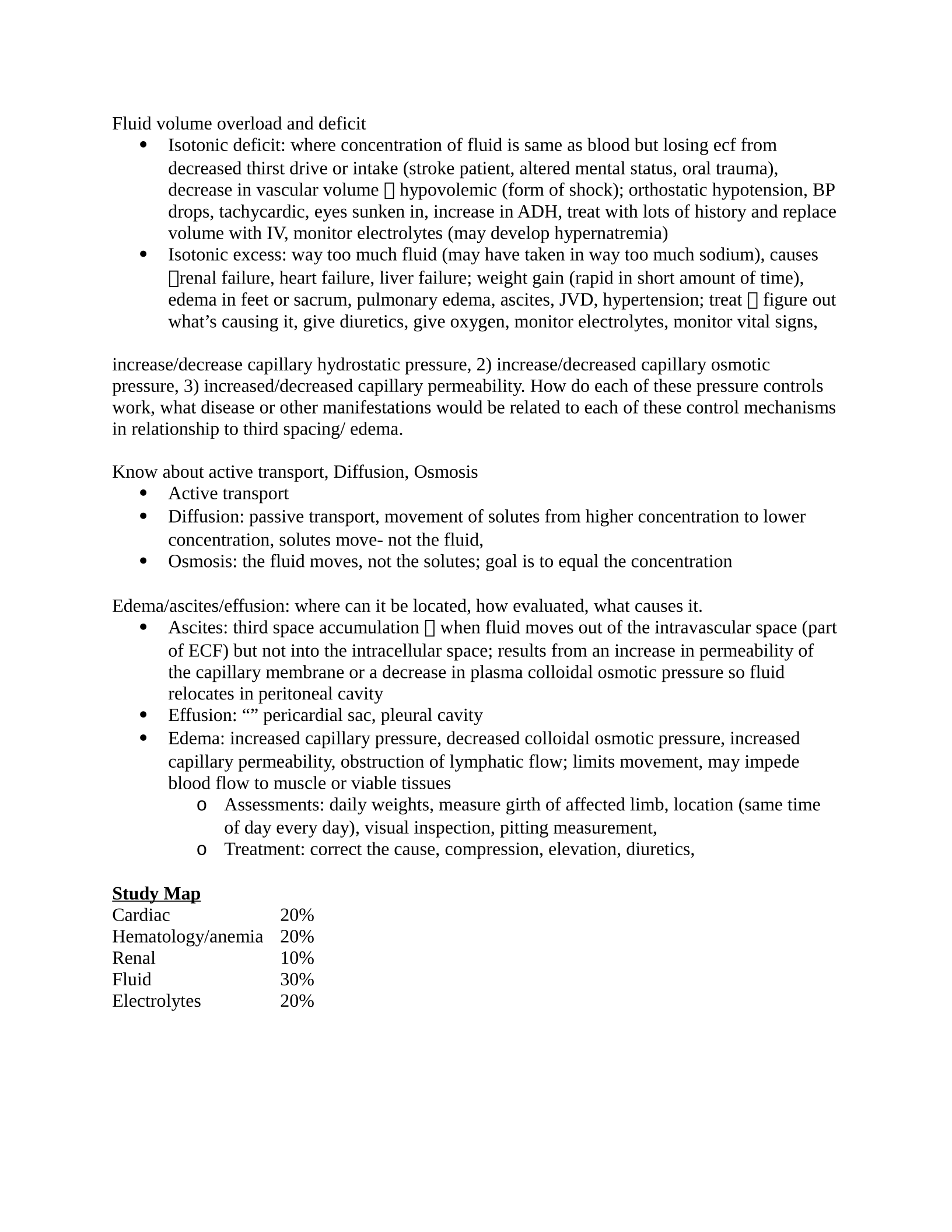
Fluid volume overload and deficit
Isotonic deficit: where concentration of fluid is same as blood but losing ecf from
decreased thirst drive or intake (stroke patient, altered mental status, oral trauma),
decrease in vascular volume hypovolemic (form of shock); orthostatic hypotension, BP
drops, tachycardic, eyes sunken in, increase in ADH, treat with lots of history and replace
volume with IV, monitor electrolytes (may develop hypernatremia)
Isotonic excess: way too much fluid (may have taken in way too much sodium), causes
renal failure, heart failure, liver failure; weight gain (rapid in short amount of time),
edema in feet or sacrum, pulmonary edema, ascites, JVD, hypertension; treat figure out
what’s causing it, give diuretics, give oxygen, monitor electrolytes, monitor vital signs,
increase/decrease capillary hydrostatic pressure, 2) increase/decreased capillary osmotic
pressure, 3) increased/decreased capillary permeability. How do each of these pressure controls
work, what disease or other manifestations would be related to each of these control mechanisms
in relationship to third spacing/ edema.
Know about active transport, Diffusion, Osmosis
Active transport
Diffusion: passive transport, movement of solutes from higher concentration to lower
concentration, solutes move- not the fluid,
Osmosis: the fluid moves, not the solutes; goal is to equal the concentration
Edema/ascites/effusion: where can it be located, how evaluated, what causes it.
Ascites: third space accumulation when fluid moves out of the intravascular space (part
of ECF) but not into the intracellular space; results from an increase in permeability of
the capillary membrane or a decrease in plasma colloidal osmotic pressure so fluid
relocates in peritoneal cavity
Effusion: “” pericardial sac, pleural cavity
Edema: increased capillary pressure, decreased colloidal osmotic pressure, increased
capillary permeability, obstruction of lymphatic flow; limits movement, may impede
blood flow to muscle or viable tissues
oAssessments: daily weights, measure girth of affected limb, location (same time
of day every day), visual inspection, pitting measurement,
oTreatment: correct the cause, compression, elevation, diuretics,
Study Map
Cardiac 20%
Hematology/anemia 20%
Renal 10%
Fluid 30%
Electrolytes 20%
Powered by TCPDF (www.tcpdf.org)

