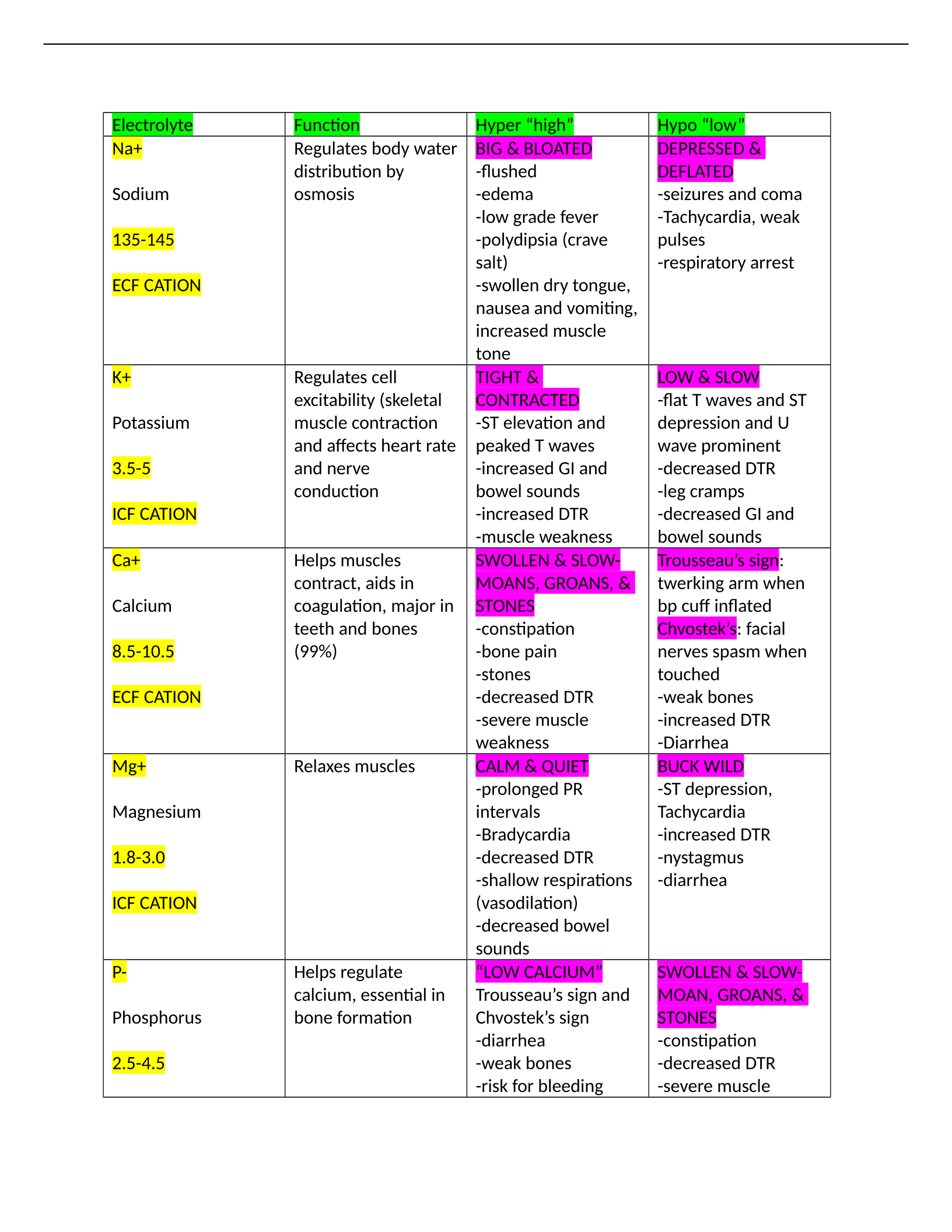
Electrolyte Function Hyper “high” Hypo “low”
Na+
Sodium
135-145
ECF CATION
Regulates body water
distribution by
osmosis
BIG & BLOATED
-flushed
-edema
-low grade fever
-polydipsia (crave
salt)
-swollen dry tongue,
nausea and vomiting,
increased muscle
tone
DEPRESSED &
DEFLATED
-seizures and coma
-Tachycardia, weak
pulses
-respiratory arrest
K+
Potassium
3.5-5
ICF CATION
Regulates cell
excitability (skeletal
muscle contraction
and affects heart rate
and nerve
conduction
TIGHT &
CONTRACTED
-ST elevation and
peaked T waves
-increased GI and
bowel sounds
-increased DTR
-muscle weakness
LOW & SLOW
-flat T waves and ST
depression and U
wave prominent
-decreased DTR
-leg cramps
-decreased GI and
bowel sounds
Ca+
Calcium
8.5-10.5
ECF CATION
Helps muscles
contract, aids in
coagulation, major in
teeth and bones
(99%)
SWOLLEN & SLOW-
MOANS, GROANS, &
STONES
-constipation
-bone pain
-stones
-decreased DTR
-severe muscle
weakness
Trousseau’s sign:
twerking arm when
bp cuff inflated
Chvostek’s: facial
nerves spasm when
touched
-weak bones
-increased DTR
-Diarrhea
Mg+
Magnesium
1.8-3.0
ICF CATION
Relaxes muscles CALM & QUIET
-prolonged PR
intervals
-Bradycardia
-decreased DTR
-shallow respirations
(vasodilation)
-decreased bowel
sounds
BUCK WILD
-ST depression,
Tachycardia
-increased DTR
-nystagmus
-diarrhea
P-
Phosphorus
2.5-4.5
Helps regulate
calcium, essential in
bone formation
“LOW CALCIUM”
Trousseau’s sign and
Chvostek’s sign
-diarrhea
-weak bones
-risk for bleeding
SWOLLEN & SLOW-
MOAN, GROANS, &
STONES
-constipation
-decreased DTR
-severe muscle