


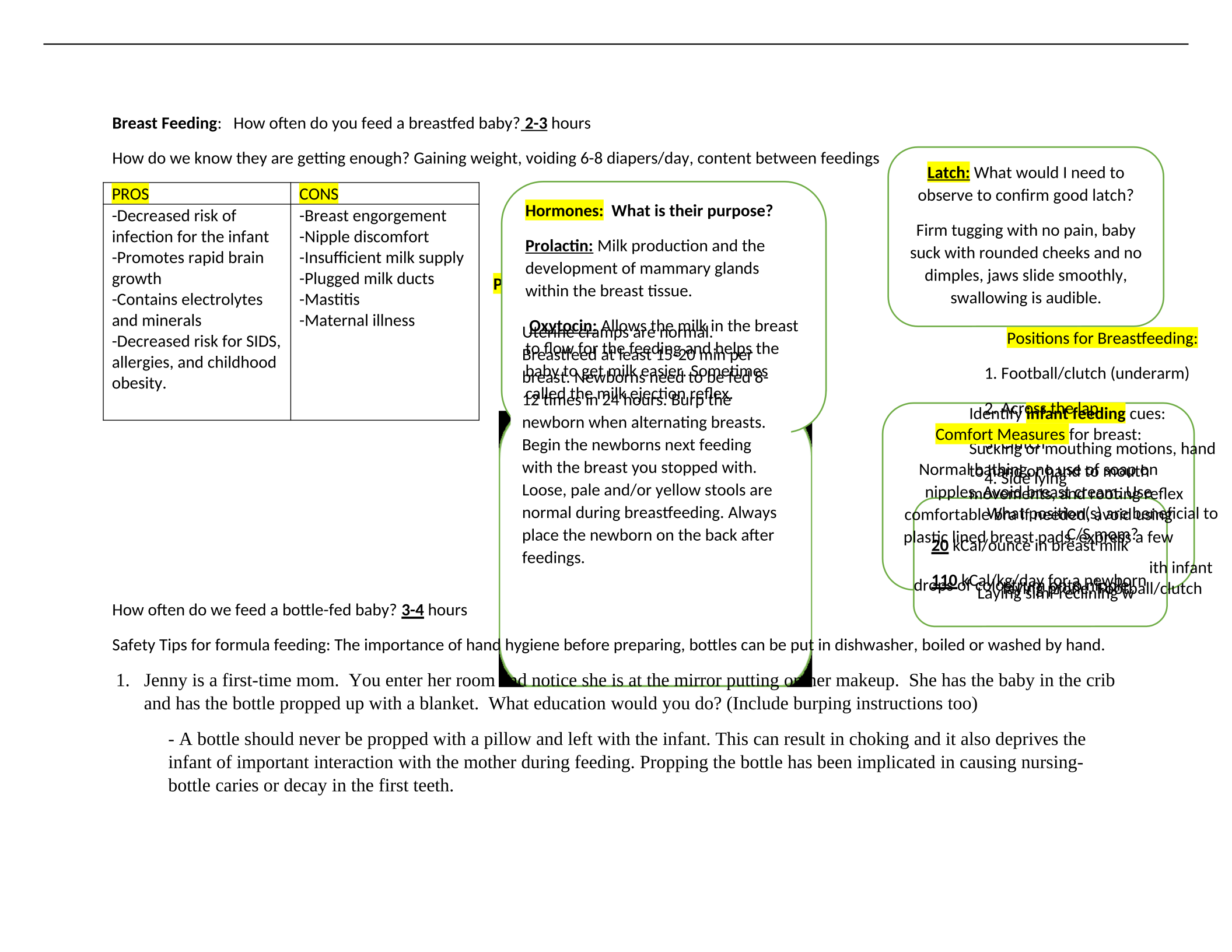
Breast Feeding: How often do you feed a breastfed baby? 2-3 hours
How do we know they are getting enough? Gaining weight, voiding 6-8 diapers/day, content between feedings
Patient Education:
How often do we feed a bottle-fed baby? 3-4 hours
Safety Tips for formula feeding: The importance of hand hygiene before preparing, bottles can be put in dishwasher, boiled or washed by hand.
1. Jenny is a first-time mom. You enter her room and notice she is at the mirror putting on her makeup. She has the baby in the crib
and has the bottle propped up with a blanket. What education would you do? (Include burping instructions too)
- A bottle should never be propped with a pillow and left with the infant. This can result in choking and it also deprives the
infant of important interaction with the mother during feeding. Propping the bottle has been implicated in causing nursing-
bottle caries or decay in the first teeth.
Latch: What would I need to
observe to confirm good latch?
Firm tugging with no pain, baby
suck with rounded cheeks and no
dimples, jaws slide smoothly,
swallowing is audible.
Hormones: What is their purpose?
Prolactin: Milk production and the
development of mammary glands
within the breast tissue.
Oxytocin: Allows the milk in the breast
to flow for the feeding and helps the
baby to get milk easier. Sometimes
called the milk ejection reflex.
20 kCal/ounce in breast milk
110 kCal/kg/day for a newborn
Identify infant feeding cues:
Sucking or mouthing motions, hand
to hand or hand to mouth
movements, and rooting reflex
Positions for Breastfeeding:
1. Football/clutch (underarm)
2. Across the lap
3. Clutch
4. Side lying
What position(s) are beneficial to
C/S mom?
Laying simi-reclining w
ith infant
laying prone. Football/clutch
Uterine cramps are normal.
Breastfeed at least 15-20 min per
breast. Newborns need to be fed 8-
12 times in 24 hours. Burp the
newborn when alternating breasts.
Begin the newborns next feeding
with the breast you stopped with.
Loose, pale and/or yellow stools are
normal during breastfeeding. Always
place the newborn on the back after
feedings.
Comfort Measures for breast:
Normal bathing, no use of soap on
nipples. Avoid breast cream. Use
comfortable bra if needed, avoid using
plastic lined breast pads, express a few
drops of colostrum onto nipple.
PROS CONS
-Decreased risk of
infection for the infant
-Promotes rapid brain
growth
-Contains electrolytes
and minerals
-Decreased risk for SIDS,
allergies, and childhood
obesity.
-Breast engorgement
-Nipple discomfort
-Insufficient milk supply
-Plugged milk ducts
-Mastitis
-Maternal illness
https://www.coursehero.com/file/221840485/Breastfeeding-Concept-Map-and-Questionsdocx/

2. Ashley is a first-time mom that is breastfeeding… she is concerned with knowing if the baby is getting enough breastmilk… what
education would you do?
- Breastfeeding should occur 8-12 times within 24 hours or at least every 3 hours during the day and every 4 hours during the
night until the newborn is feeding well and gaining weight adequately. Latches without difficulty, audible swallowing is
present, infant appears content and easily releases breast after feeding. The infant has at least three substantive bowel
movements and 6-8 wet diapers every 24 hours after day 4.
3. Jillian is in the chair breastfeeding. She is drinking a cup of coffee. What safety instructions would you give her? What other
safety instructions would you include at discharge?
- To use caution with the hot coffee while holding the infant. Caffeine intake of 300-500 mg/day appears safe for normal full-
term infants; mothers of preterm infants and younger newborns should consume lower levels of caffeine. Caffeine can cause
infant jitteriness, irritability, and poor sleep patterns.
4. Sarah has had a cesarean 3 days ago. She is upset when you enter the room. She states that her breasts are swollen and painful.
What info can we give her on breast engorgement treatments?
- To feed 8-12 times in 24 hours, softening at least one breast and pumping or hand expressing the other breast as needed to
soften it. Use of cold packs or warm compresses, anti-inflammatory medications, breast massage, hand expression or pumping,
and reverse pressure softening. Use of ultrasound, acupressure, acupuncture, and Gua sha. Use of fresh, raw cabbage leaves
placed over the breast between feedings can help relieve engorgement.
5. Jamie is not breastfeeding and is asking about her milk drying up. What do we need to tell her at discharge to help her with this
issue?
- Breasts will start to make milk in the first couple of days after giving birth. This happens even if breastfeeding is not done.
Milk leaks from the breasts, and the breasts may feel sore and swollen which is engorgement. Use of cold packs or warm compresses,
anti-inflammatory medications, breast massage, hand expression can help with the pain. Over time, the body will stop making milk if
not breastfeeding or pumping and can take up to several weeks.
6. Miranda calls you to come check her nipple. It is bleeding and cracked. What instructions could we give her to help nipple
soreness?
- Start the feeding on the less-sore nipple. Treatment will include principles of moist, closed wound healing. Use of an oil-
based emollient nipple balm followed by covering with a nonstick gauze or hydrogel pad. Also, assist in proper technique of
breastfeeding to ensure proper latching is being obtained and help identify the cause of the nipples damaged tissue integrity.
https://www.coursehero.com/file/221840485/Breastfeeding-Concept-Map-and-Questionsdocx/

7. Samantha calls 10 days after discharge from the hospital. She is a breastfeeding mom. She states that her breast is painful and hard
on the upper half of the left breast. She says she has a temp of 102 with chills. What instructions can we give her?
- To come in to be treated for Mastitis. The treatment would include bed rest, antibiotics (dicloxacillin, cephalexin, or
clindamycin), anti-inflammatory medications and cold compresses, and continued lactation. Complete emptying of the breasts
through breastfeeding, hand expression, or pumping is important. The infection cannot be transmitted to the infant. Adequate
fluid intake and a balanced diet are important for the mother.
https://www.coursehero.com/file/221840485/Breastfeeding-Concept-Map-and-Questionsdocx/
Powered by TCPDF (www.tcpdf.org)

