


Chapter 7
7.1
Linear Equations
•Linear Equations in One Variable
oAn equation in the variable x is linear if it can be written in
the form Ax + By= C, where A, B, and C are real numbers with
A ≠ 0.
•Addition Property of Equality
oFor all real numbers A, B, and C, the equations A=B and
A+C= B+C are equivalent.
o(The same number may be added to both sides of an
equation without changing the solution set).
•Multiplication Property of Equality
oFor all real numbers A, B, and C, where C ≠ 0 the equations A=B
and AC= BC are equivalent.
o(The same number may be multiplied to both sides of
an equation without changing the solution set).
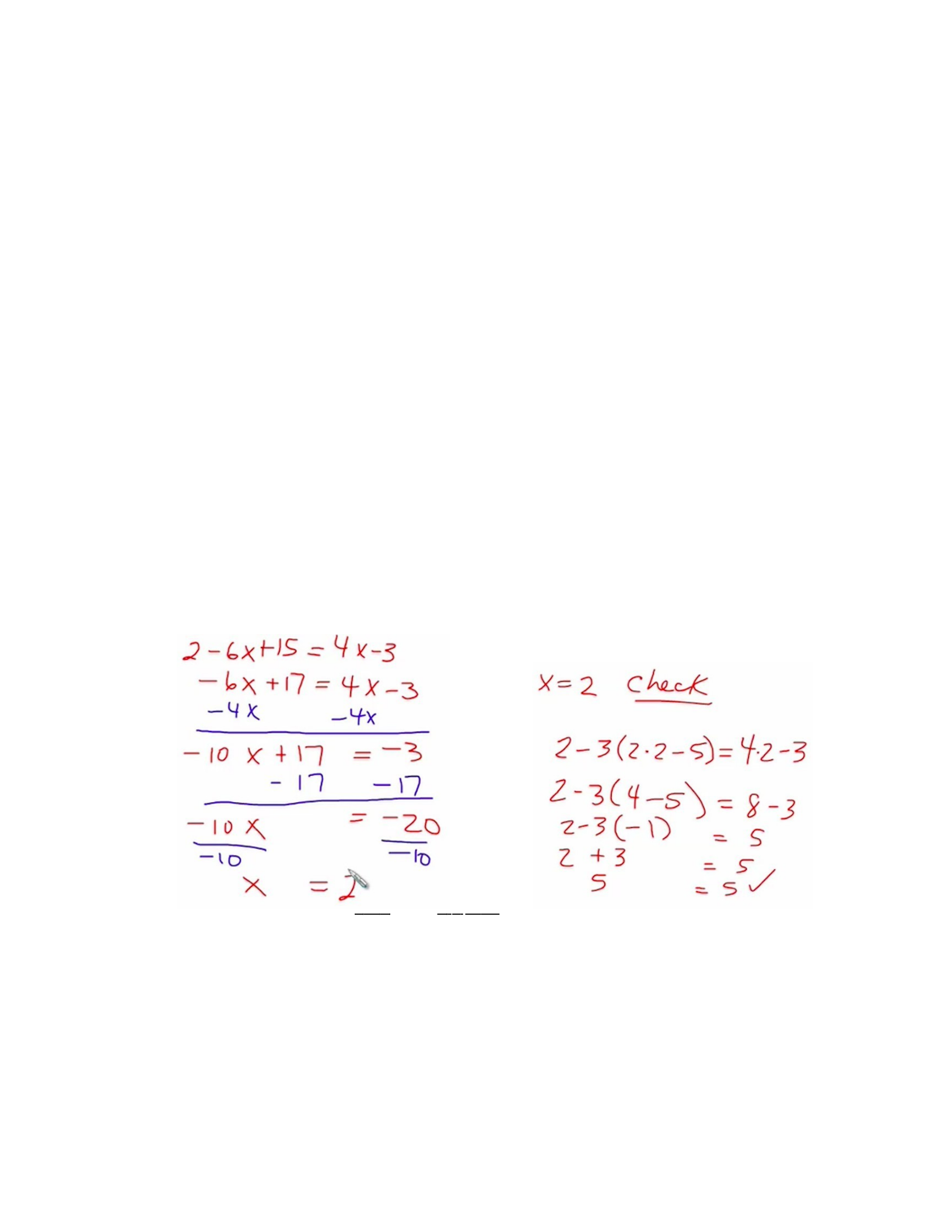
•Example 1: Solve: 2-3 (2x-5) = 4x-3
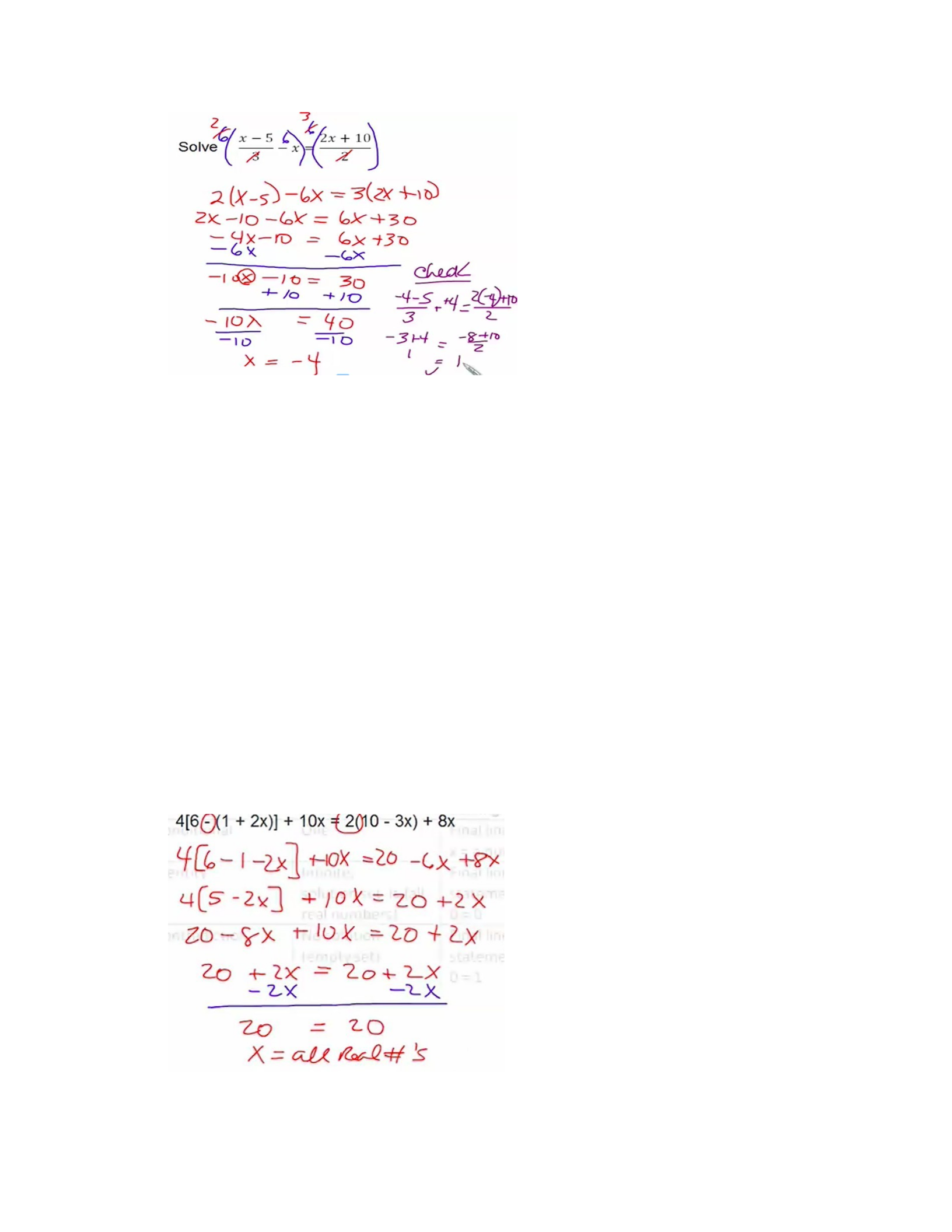
•Example 2: Solve: x
−
5
−x=2
x +10
3 2
•Solving a Linear Equation in One Variable
oStep 1: Clear fractions. Eliminate any fractions by multiplying
both sides of the equation by a common denominator.
oStep 2: Simplify each side separately. Use the distributive
property to clear parentheses, and combine like terms as
needed.
oStep 3: Isolate the variable terms on one side. Use the addition
property of equality to transform the equation so that all terms
with variables are on one side and all numbers are on the
other.
oStep 4: Transform so that the coefficient of the variable is 1.
Use the multiplication property of equality to obtain an
equation with only the variable (with coefficient 1) on one side.
oStep 5: Check. Substitute the solution into the original equation.
•Example 3: Solve:
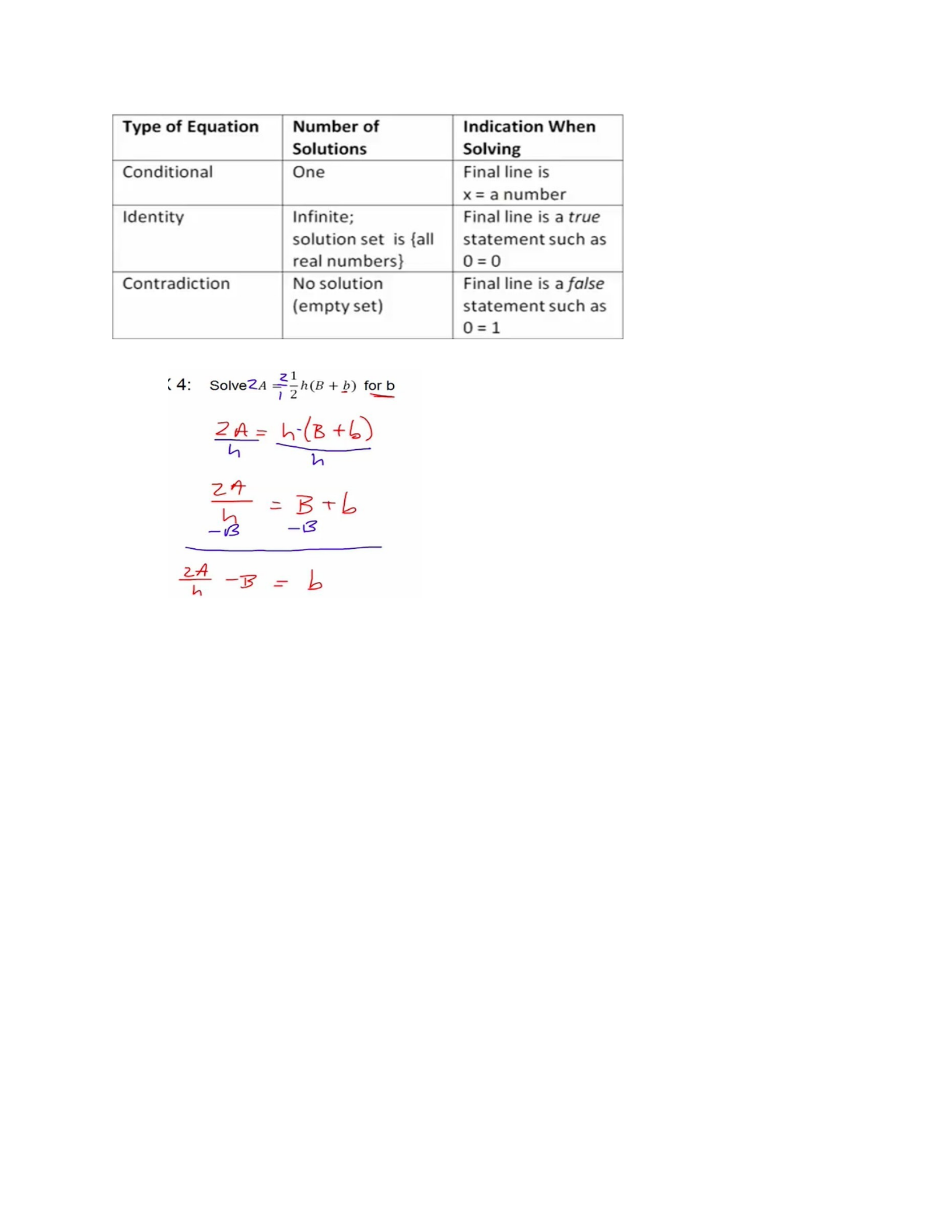
•Example 4: Solve:
7.2
Applications of Linear Equations
•Solving an Applied Problem
oStep 1: Read the problem carefully until you understand what
is given and what is to be found.
oStep 2: Assign a variable to represent the unknown value,
using diagrams or tables as needed. Write down what the
variable represents. If necessary, express any other unknown
values in terms of the variable.
oStep 3: Write an equation using the variable expression(s)
oStep 4: Solve the equation
oStep 5: State the answer. Does it seem reasonable?
oStep 6: Check the answer in the words of the original problem.
•Key Words
oThe key words of times, multiplied by, and the product refer
to multiplication. The key words of quotient, divided by, or
ratio represent division.

oThe key words of sum, more than, plus, added to, and
increased by refer to addition. The key words of less than,
minus, decreased by, and difference between, represent
subtraction.
oThe word “ratio” represents a quotient.
oExample:
▪The product of 6 less than a number and 8 more than
a number.
•(x-6) (x+8)
▪The ratio of 20 and a nonzero number, b.
20
b
▪If 7 is added to five times a number, the result is equal to
9 more than four times the number. Find the number.
•7+5x=9+4x
ox=2
▪If 4 is subtracted from a number and this difference is
tripled, the result is 4 more than the number. Find
the number.
•3(x-4) = x+4
ox=8
▪If 9 is added to twice a number and this sum is multiplied
by 6, the result is the same as if the number is multiplied
by 6 and 12 is added to the product. What is the
number?
•6(9+2x) =6x+12
ox= -7
▪The sum of three times a number and 4 more than
the number is the same as the difference between -14
and twice the number. What is the number?
•3x+4+x= -14-2x
ox= -3
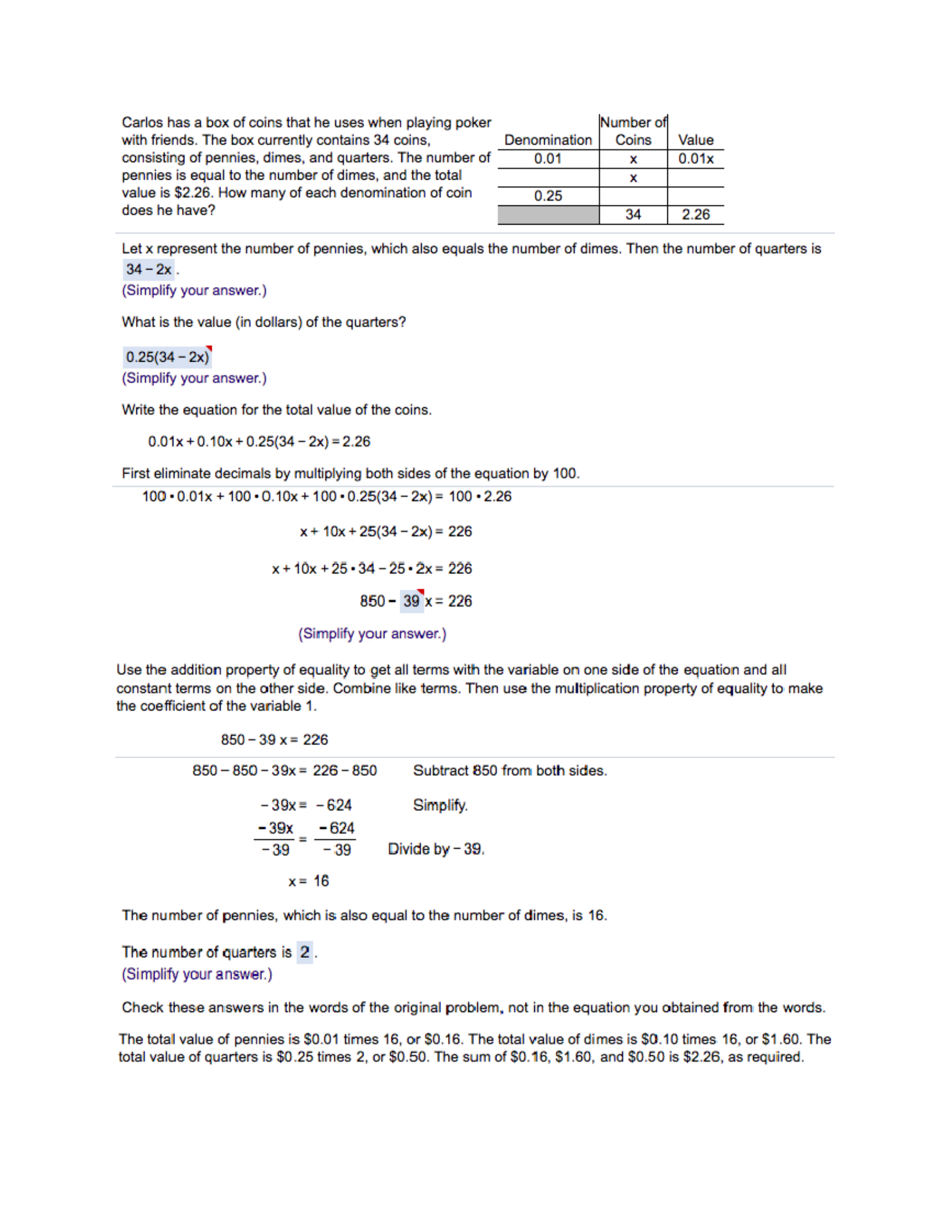
Example box of coins
•
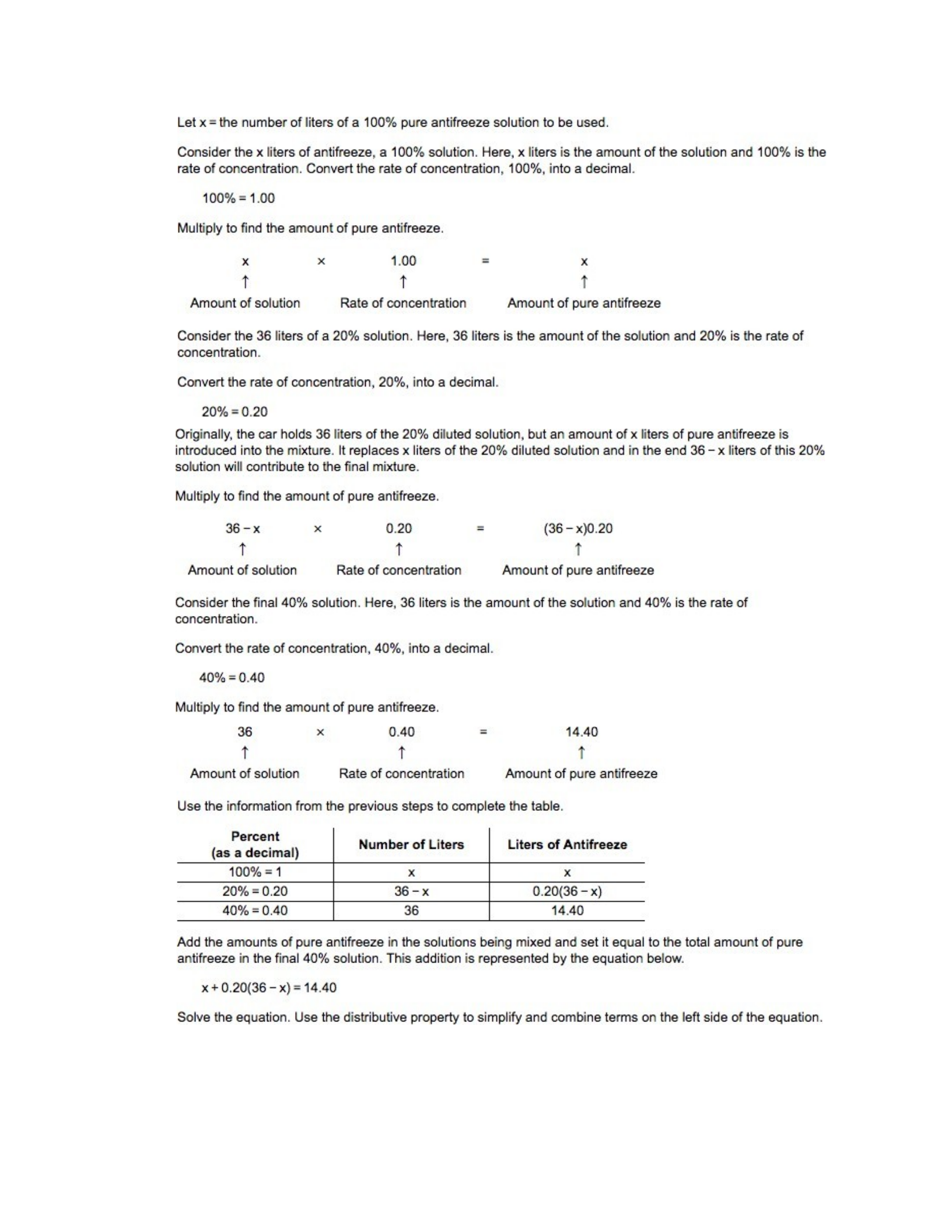
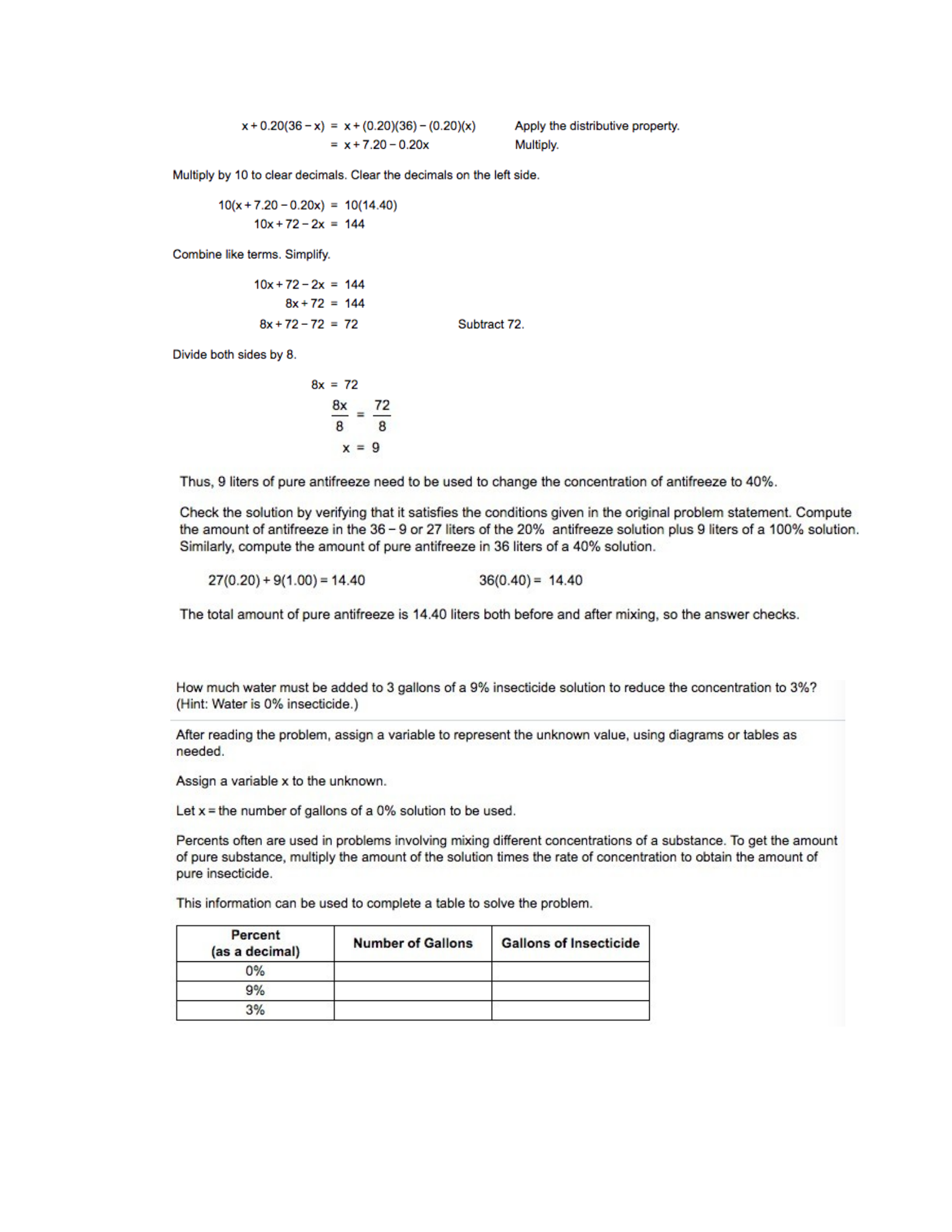
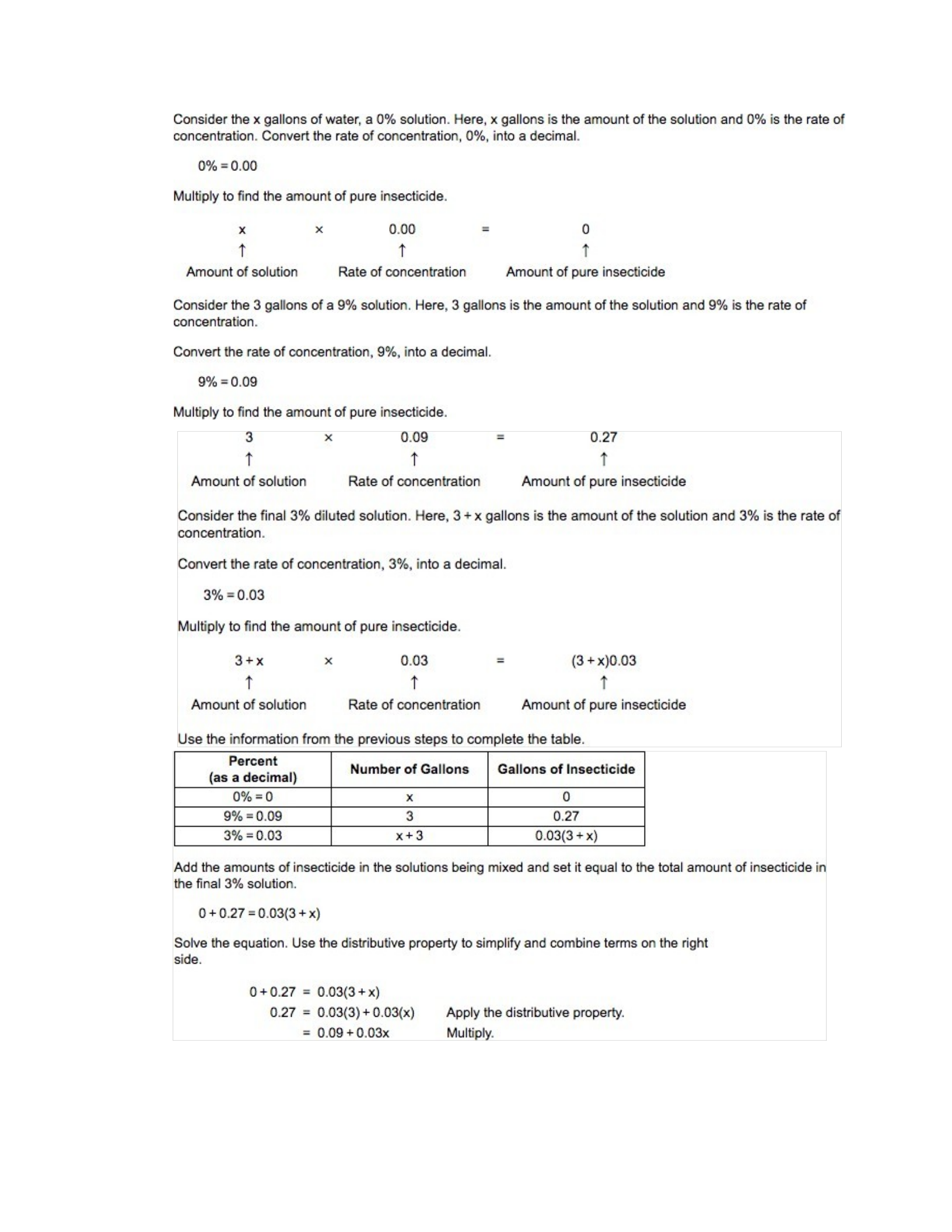
•Mixture Problems
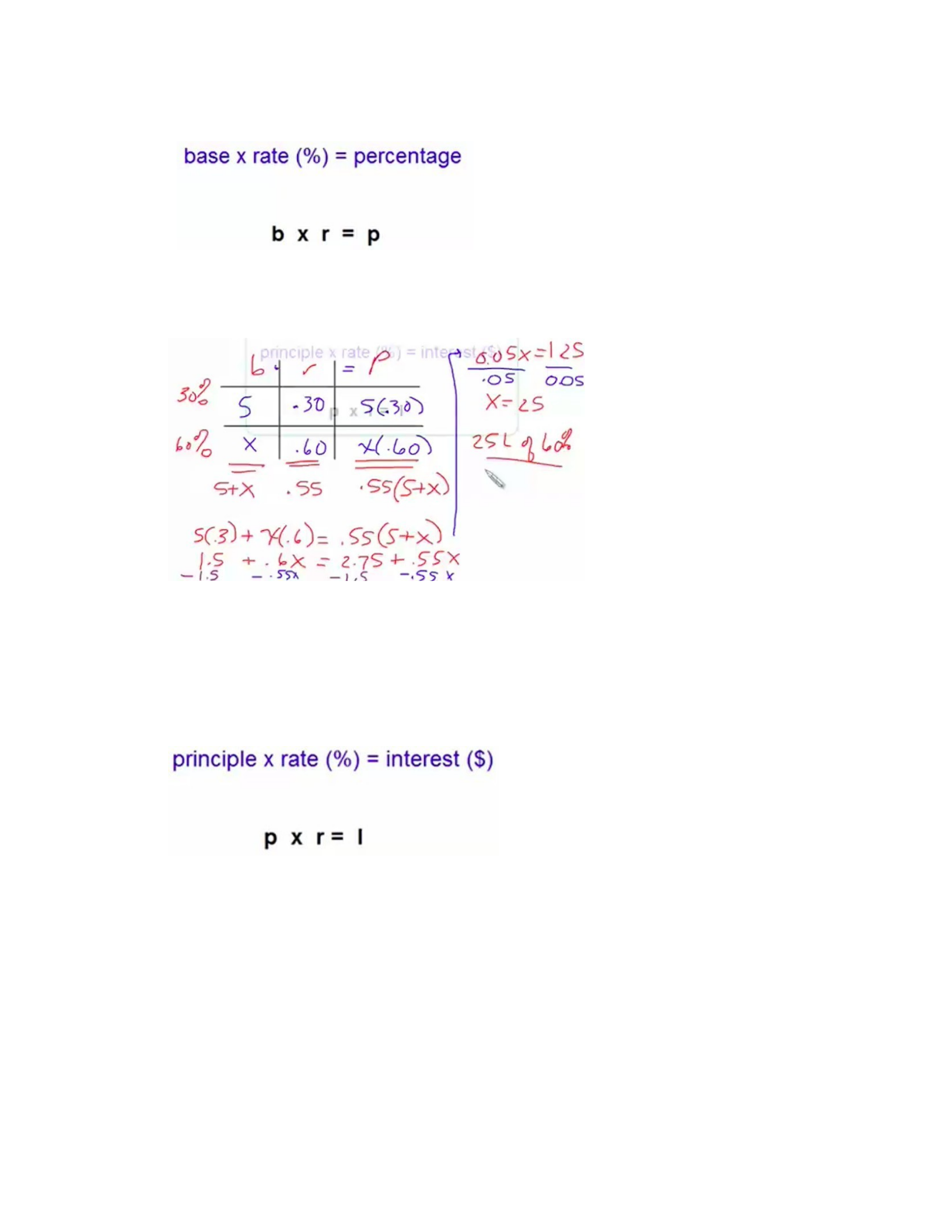
•Example 1: A chemist mixes 5L of a 30% saline solution with some
60% saline solution to create a mixture of 55% saline solution. How
much 60% solution is needed?
Example: How much pure acid is in 780 milliliters of a 17% solution?
Amount=percent times base amount= .17 is percent times
780ml, which equals 132.6ml of pure acid
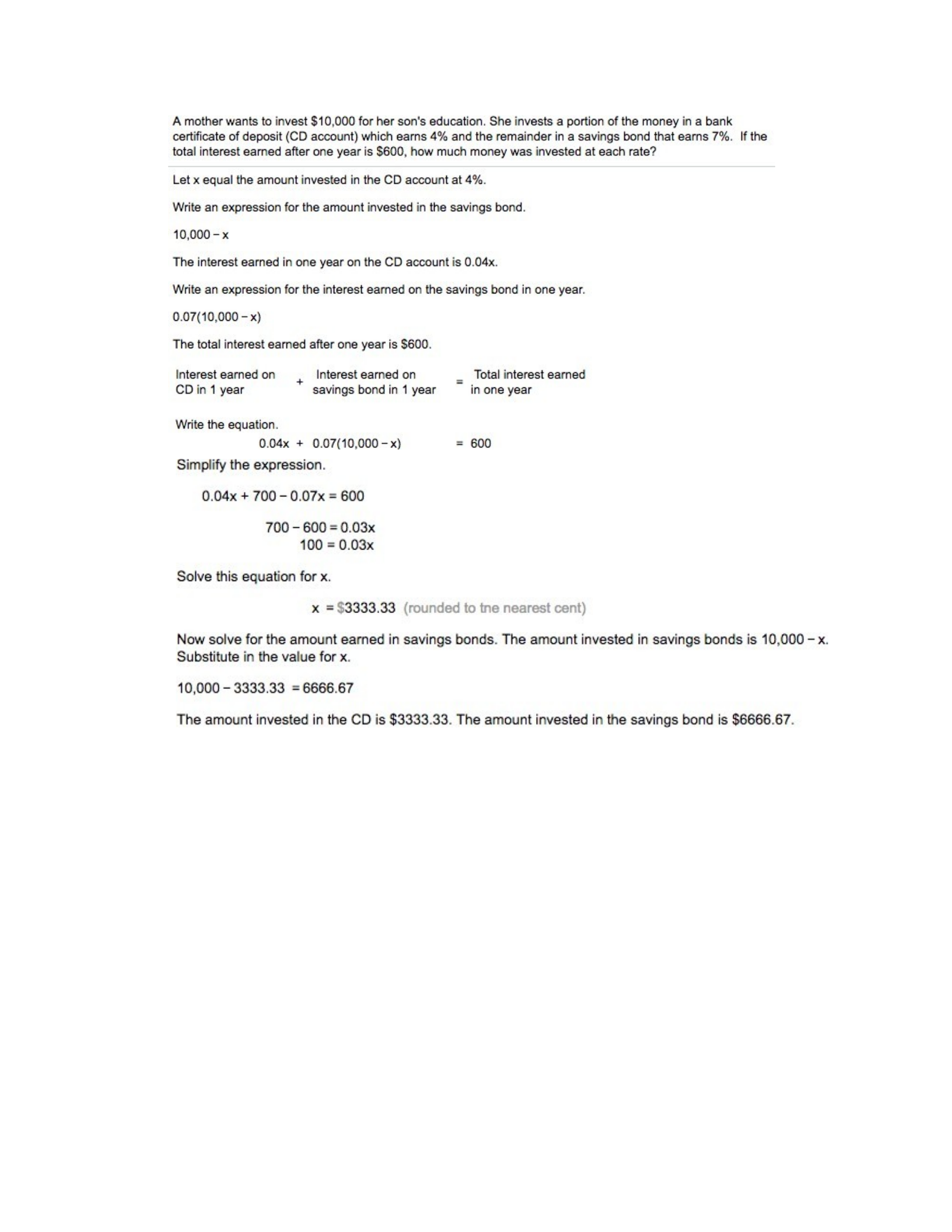
•Investment Problems
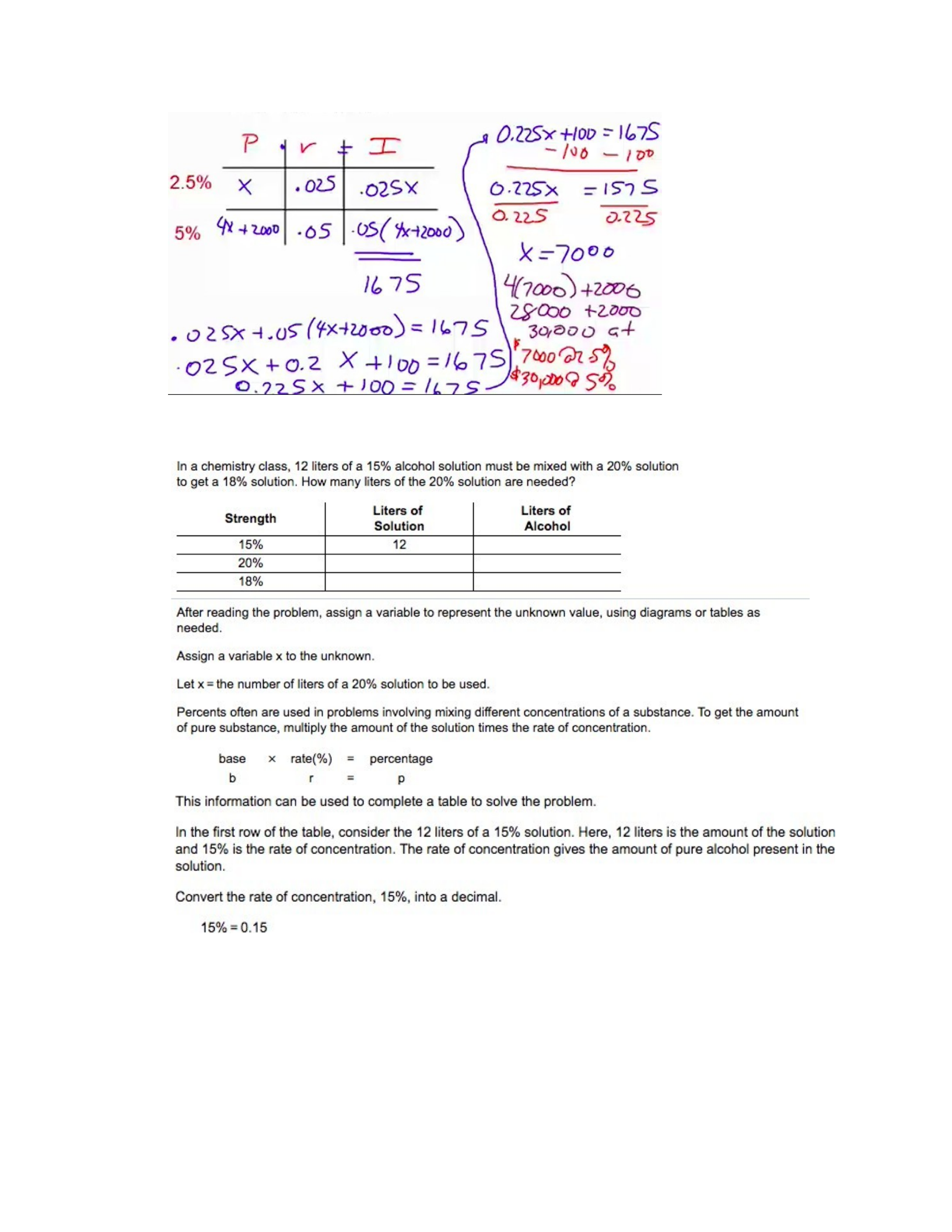
•Example 2: Carol invested some money at 2.5% simple interest and
$2000 more than 4 times this amount at 5%. She earned $1675 in
interest. How much did she invest at each rate?
Example
Another example
And another example
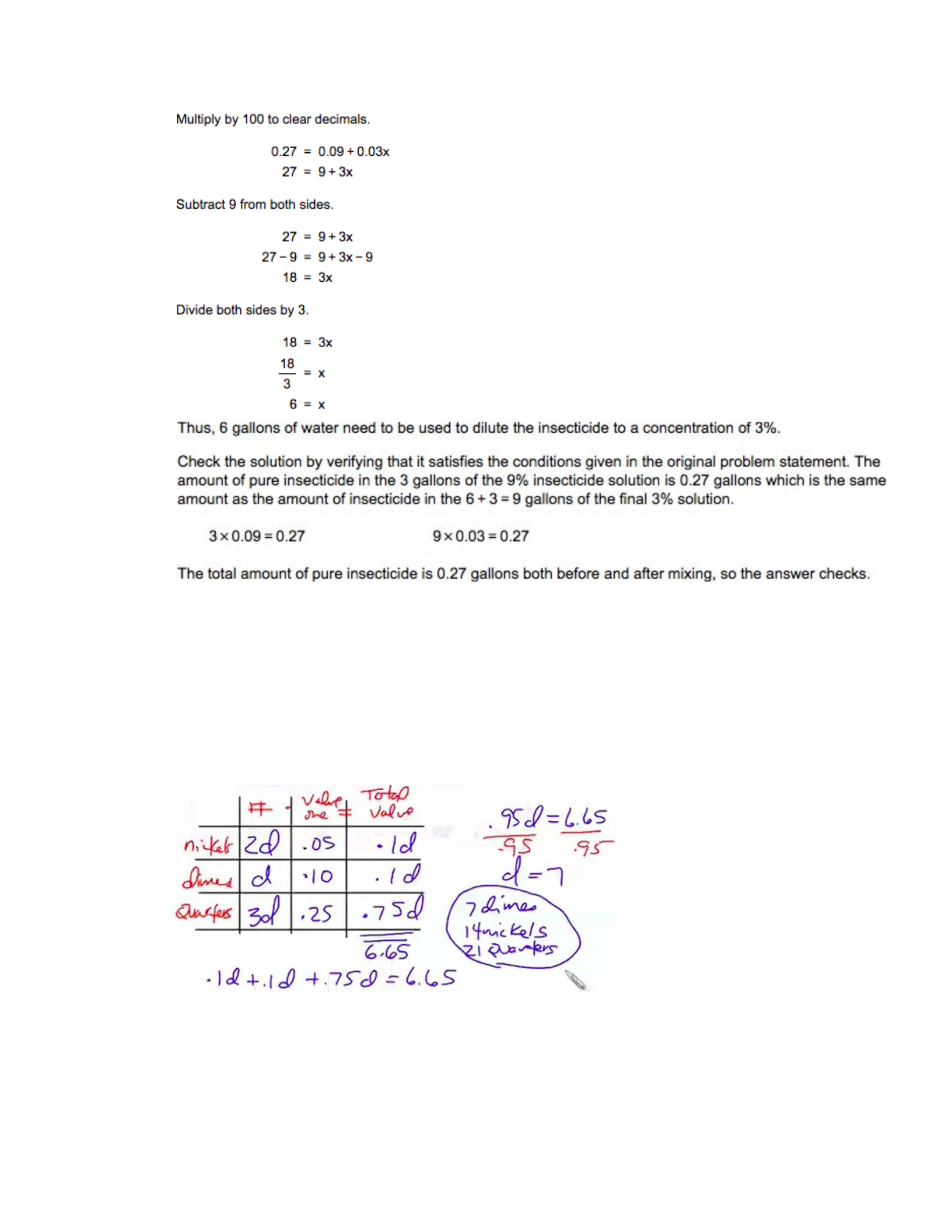
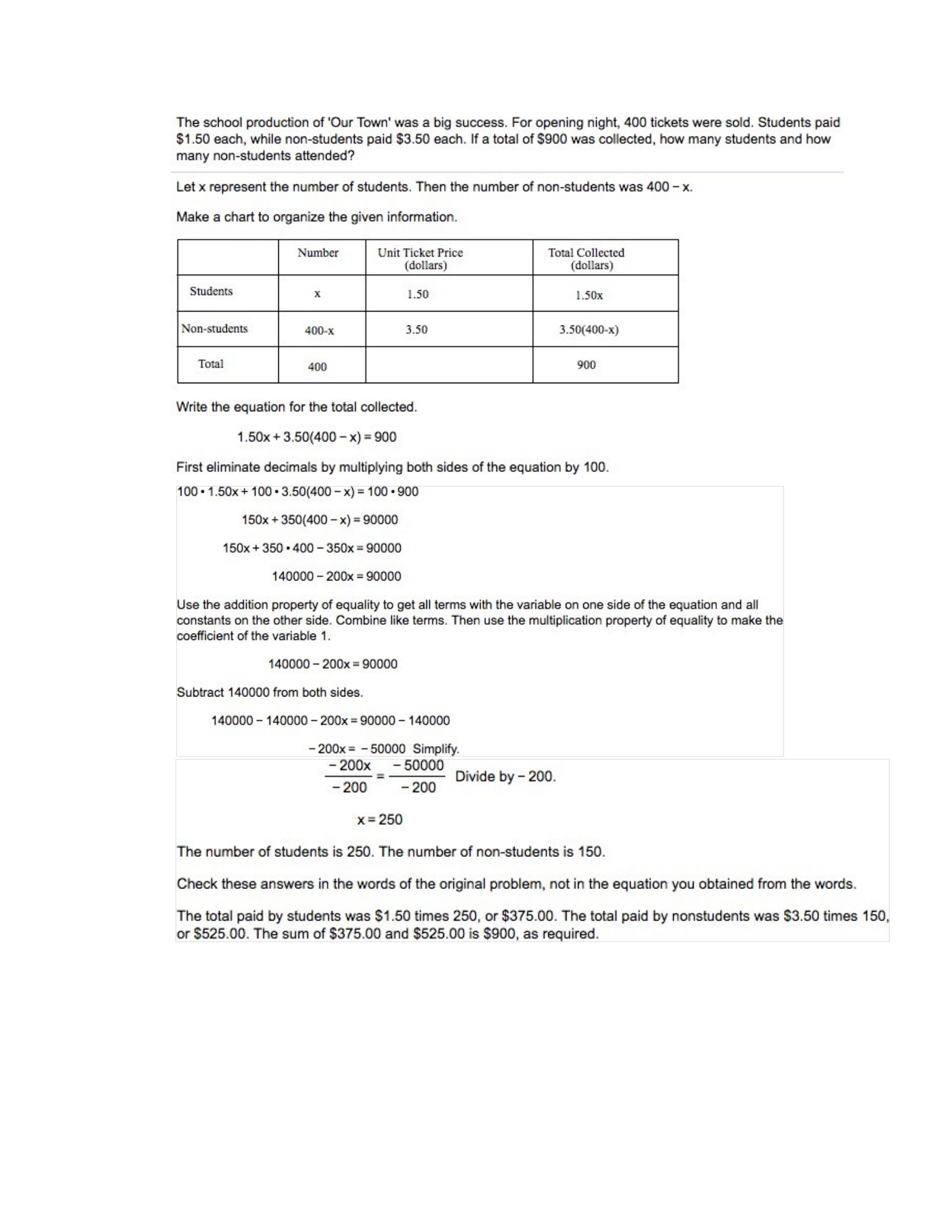
•Money Denomination Problems
oNumber x value of one = total value
•Example 3: Brue emptied out his coin jar that contained nickels,
dimes, and quarters. He counted twice as many nickels as dimes, and
three times as many quarters as dimes. If he had a total of $6.65 in
coins, how many of each type of coin did Bruce have?
Example
Another Example
•Motion Problems
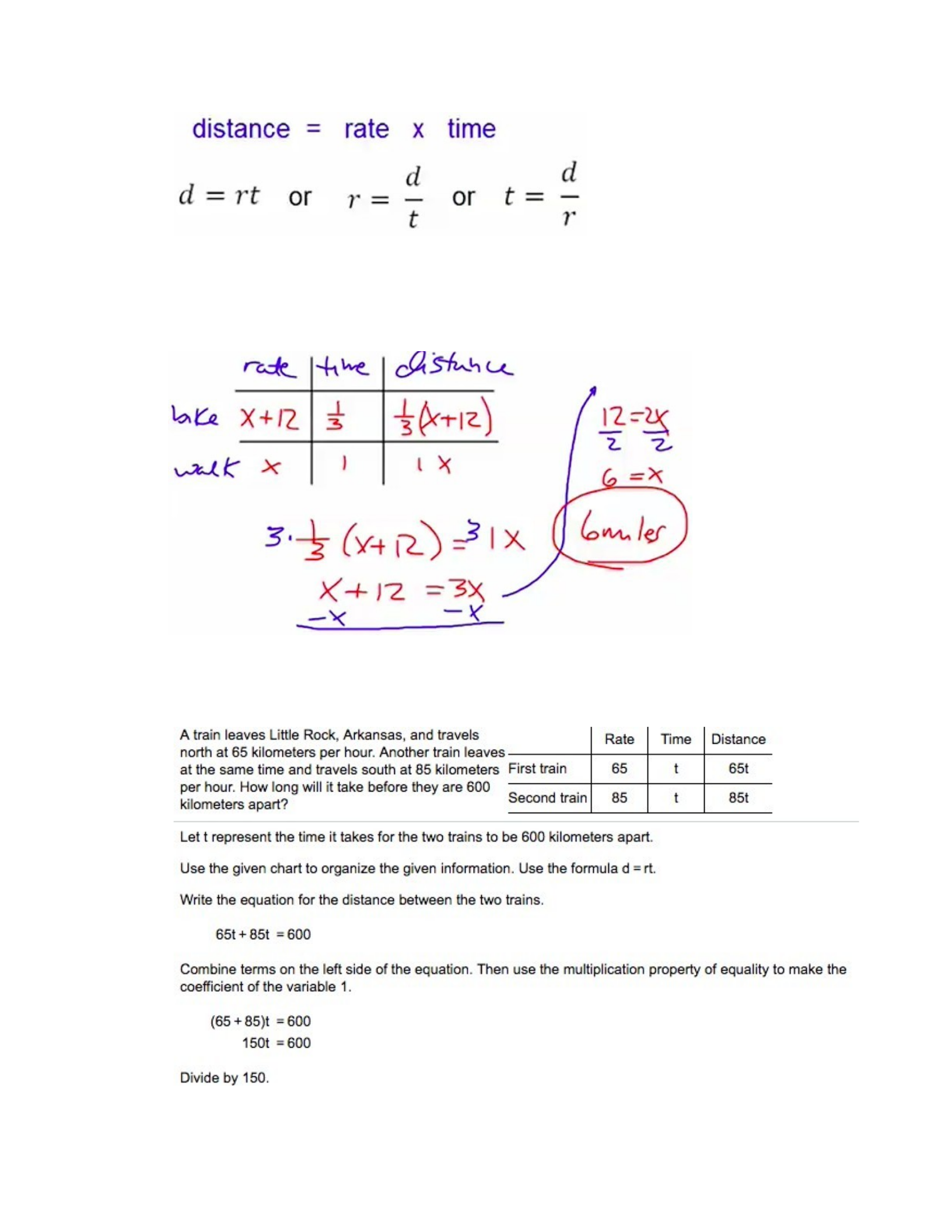
•Example 4: Joshua can get to school in 20 minutes if he rides his bike.
It takes him 1 hour if he walks. His speed when walking is 12 miles per
hour slower than his speed when riding. How far does Joshua travel
to school?
o6miles because the distances in this situation are the same.
Another Example
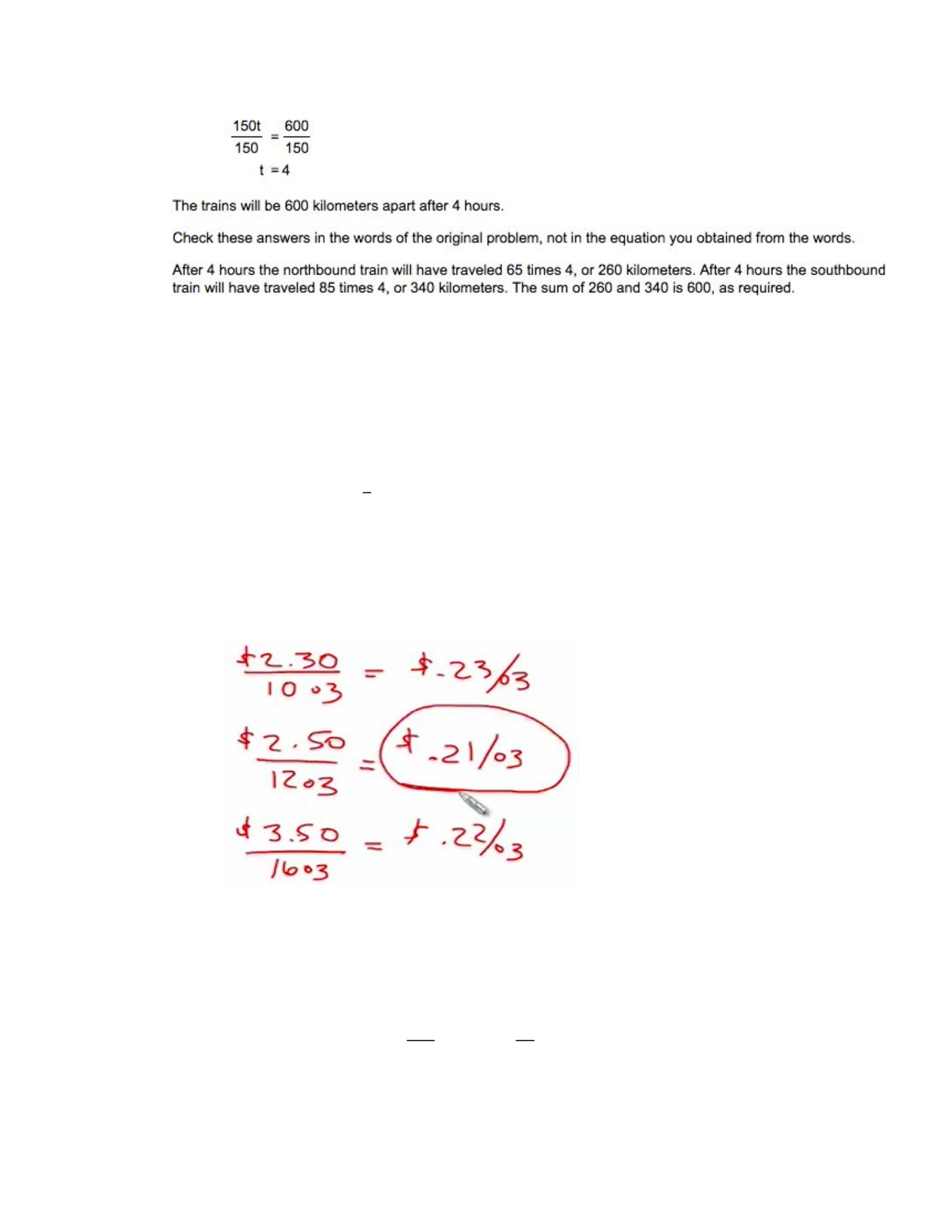
b
7.3
Ratio, Proportion, and Variation
•Ratio
oA ratio is a quotient of two quantities. The ratio of the number a
to the number b is written:
▪A to b,
a ,𝗏a : b
oExample 1: Which is the better buy (the better unit price)?
▪A 10oz jar of spaghetti sauce for $2.30.
▪A 12oz jar of spaghetti sauce for $2.50.
▪A 16oz jar of spaghetti sauce for $3.50.
•She is written per oz. (/oz.)
oExample
▪Determine the ratio and write it in lowest terms.
•228 inches to 2 feet.
o
Convert 2 feet to inches 24 inches.
o228 turns into 19
24 2
▪Determine the ratio and write it in lowest terms.
•2 days to 16 hours.
o
Convert 2 days to hours 48 hours.
o48 turns into 3
•Proportion 16 1
oA proportion is a statement that says that two ratios are equal.
oWays to solve
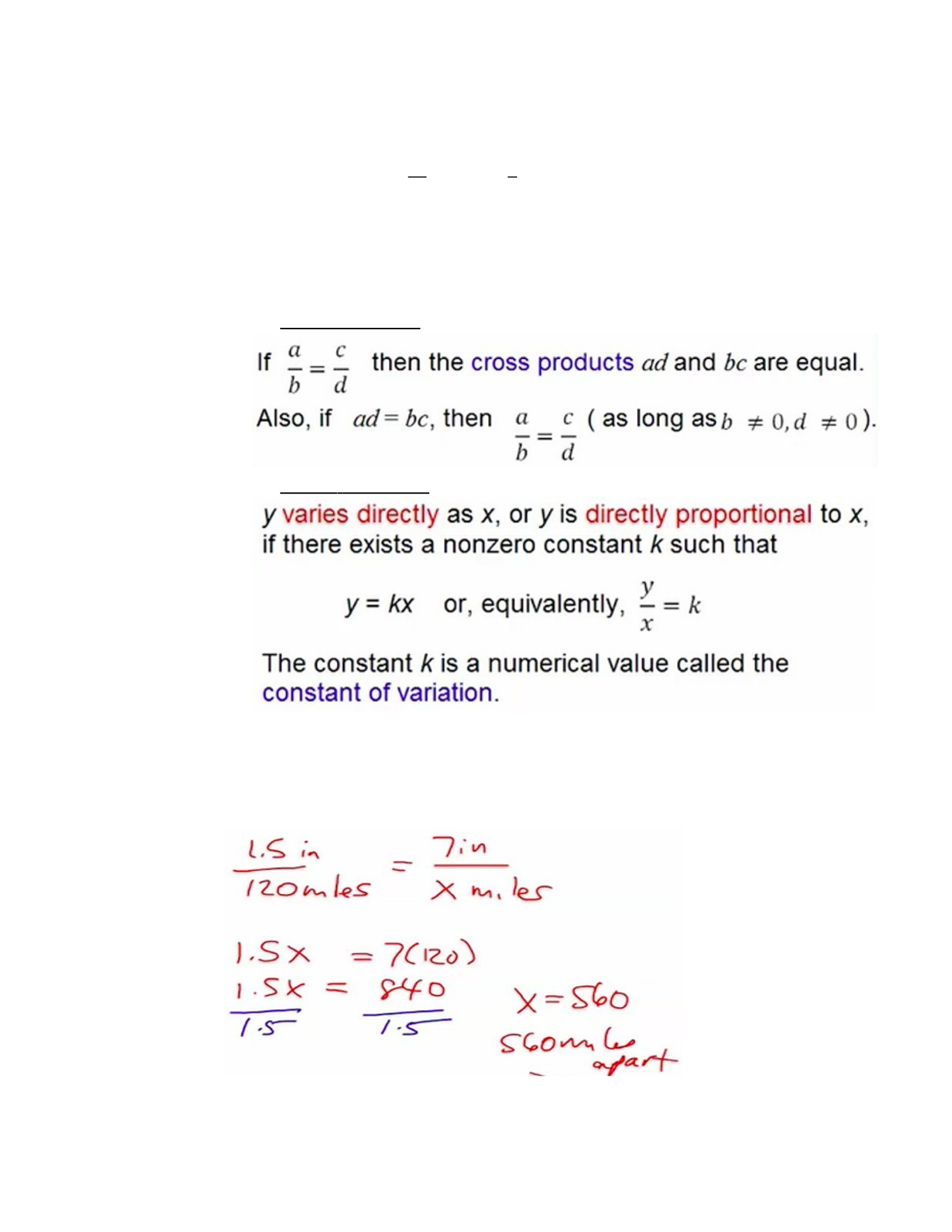
▪Cross Products
▪Direct Variation
•Example 2: Cross Products
oOn a certain map, 1.5 inches represents 120 miles. If the
distance between two cities is measured to be 7 inches on
the map, how far apart are the two cities in miles?
Example:
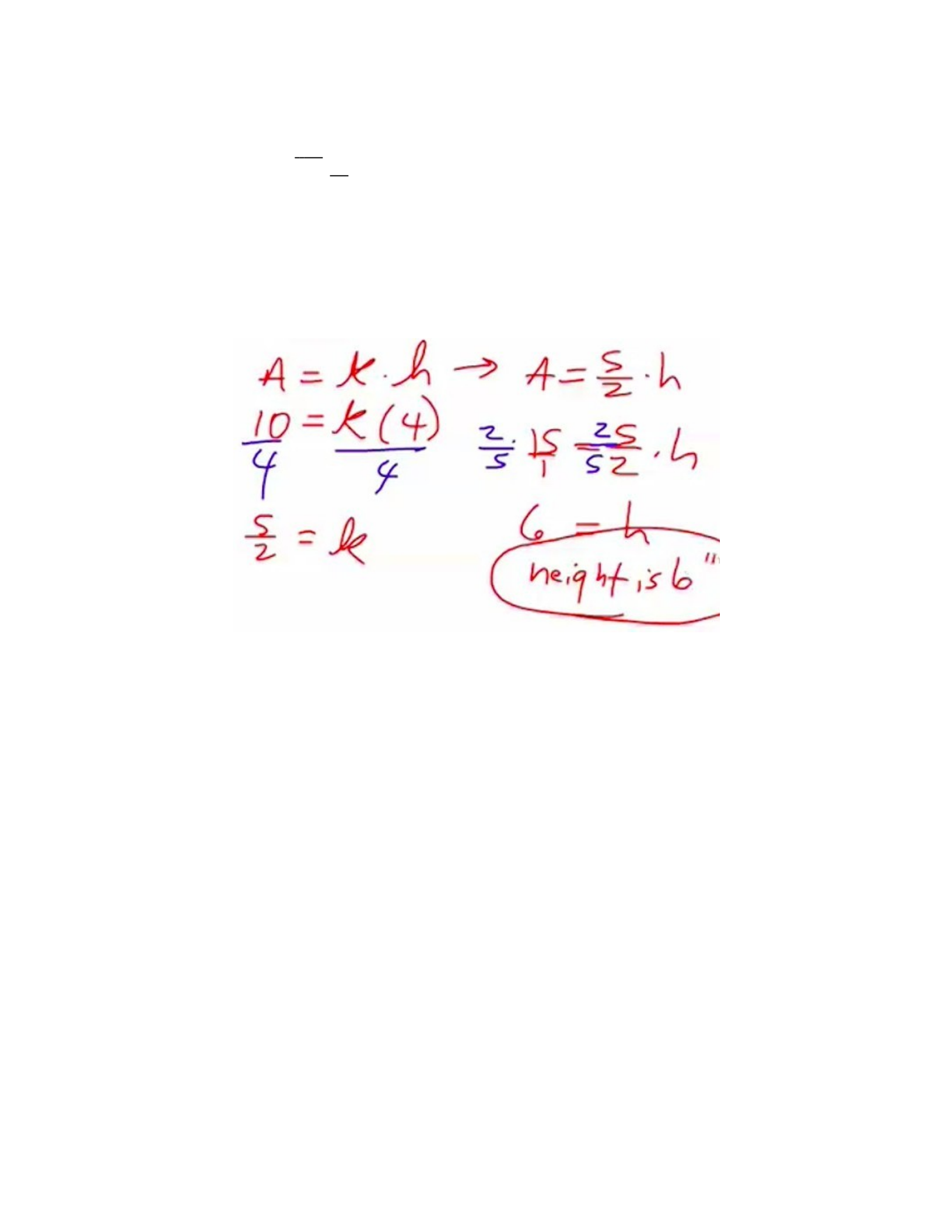
The tax on a $60 item is $3.60. Find the tax on a $90 item.
60
3.60 =
90
x
use cross product to get $5.40 in tax.
•Example 3: Direct Variation
oFor a constant base, the area of a triangle varies directly as its
height. If the area is 10 square inches of a triangle whose
height is 4 inches, find the height of the triangle whose area is
15 square inches.
•Solving a Variation Problem
oStep 1: Write the variation equation.
oStep 2: Substitute the initial values and solve for k.
oStep 3: Rewrite the variation equation with the value of k
from Step 2.
oStep 4: Substitute the remaining values, solve for the
unknown, and find the required answer.
•Inverse Variation
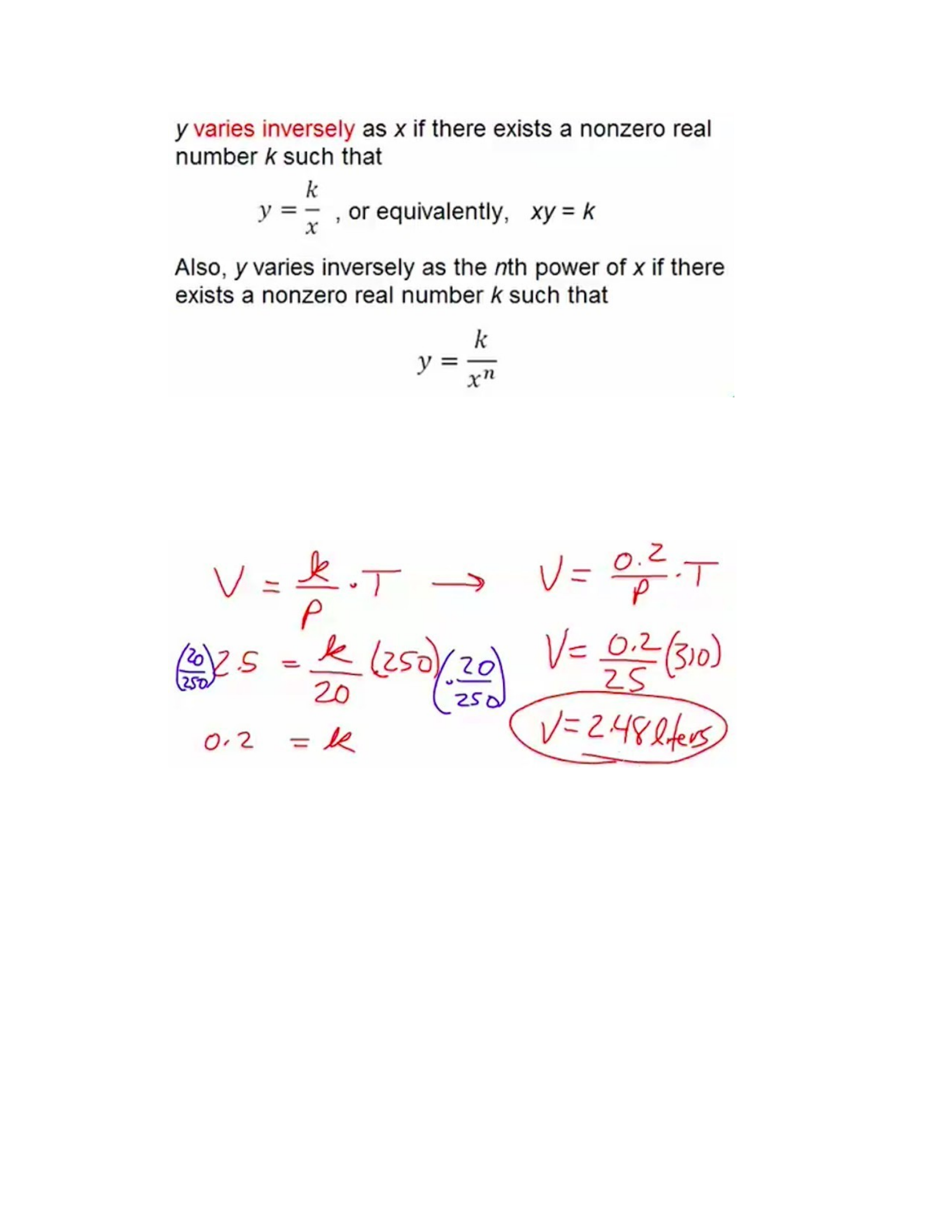
•Example 4: The volume of gas varies inversely as the pressure and
directly as the temperature. (Temperature must be measured in
Kelvin (K), a unit of measurement used in physics). If a certain gas
occupies a volume of 2.5 liters at 250 K and a pressure of 20 newtons,
find the volume at 310 K and a pressure of 25 newtons.
Trout Example
Trout caught and tagged (250) times trout caught (240) divided by
trout tagged (6).
7.4
Linear Inequalities
•Addition Property of Inequality
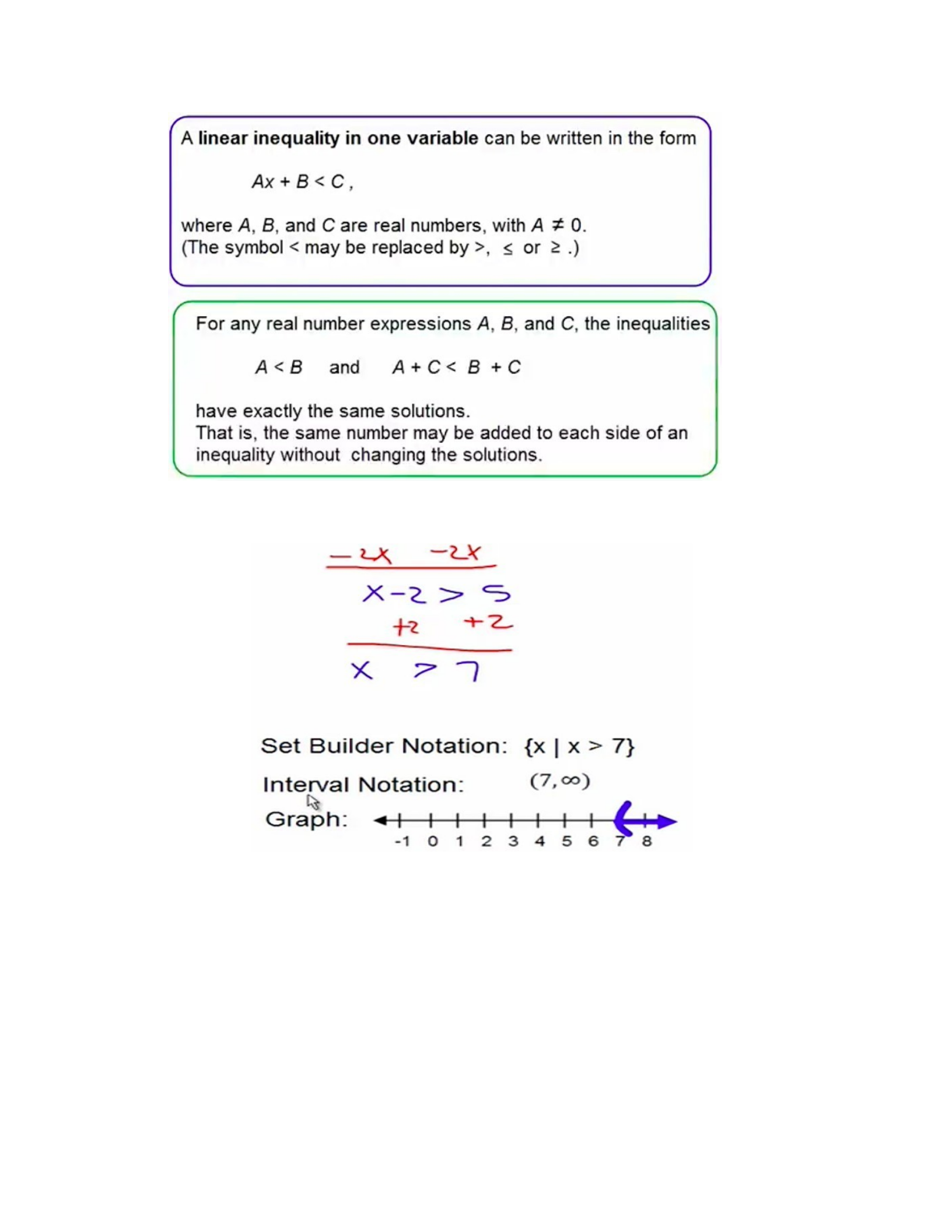
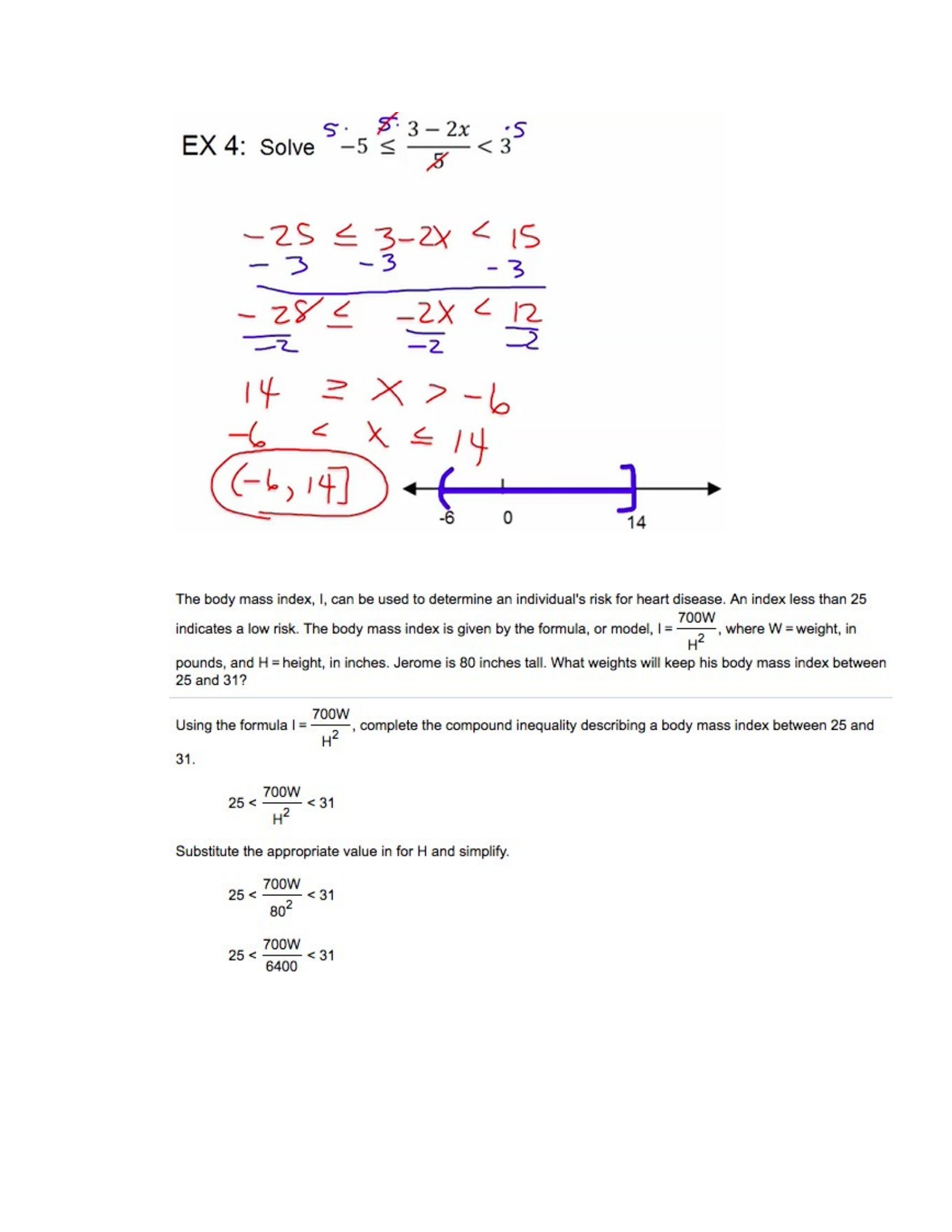
•Example 1: Solve
o 3x-2 ¿ 2x+5
•Interval Notation and Graphs for Inequalities
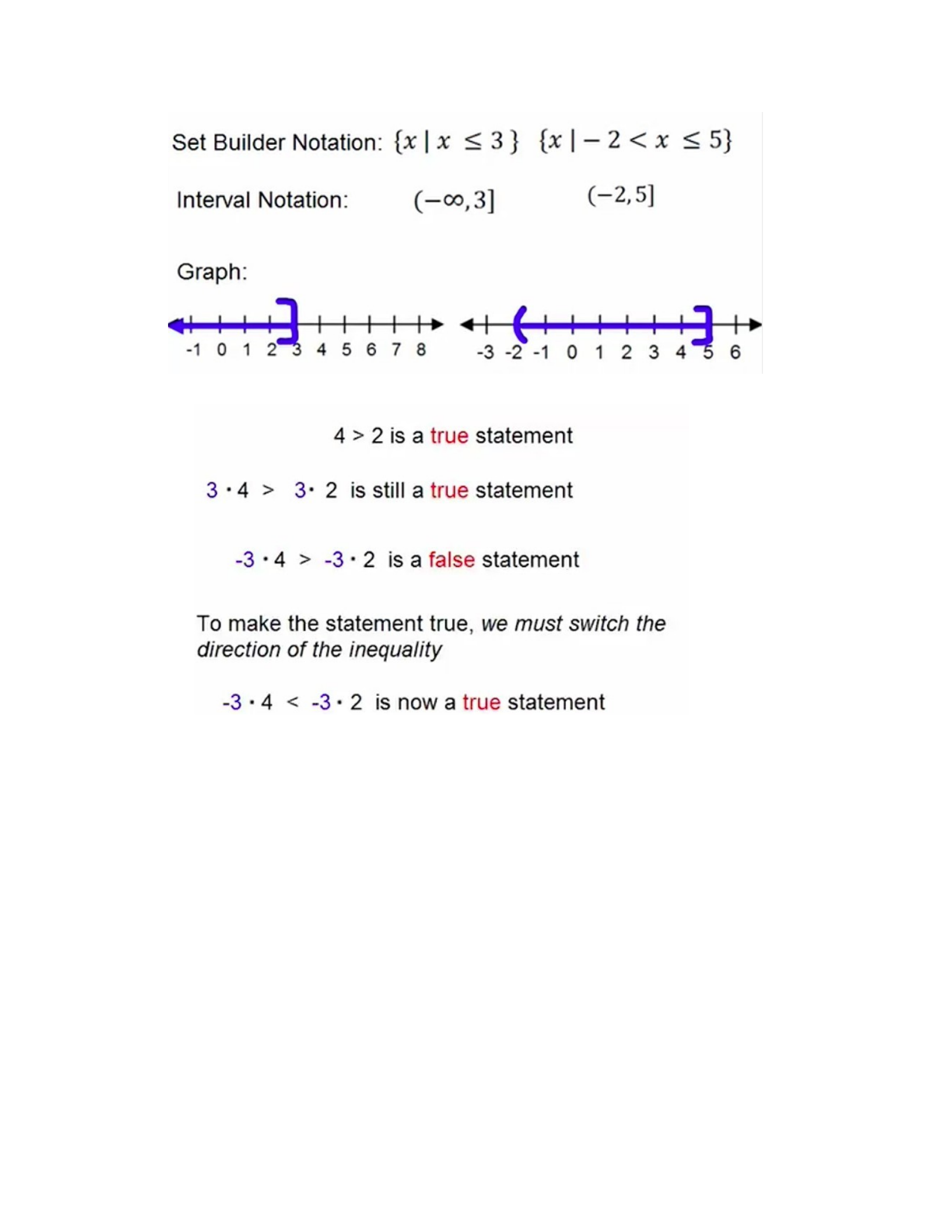
•Multiplication Property of Inequality
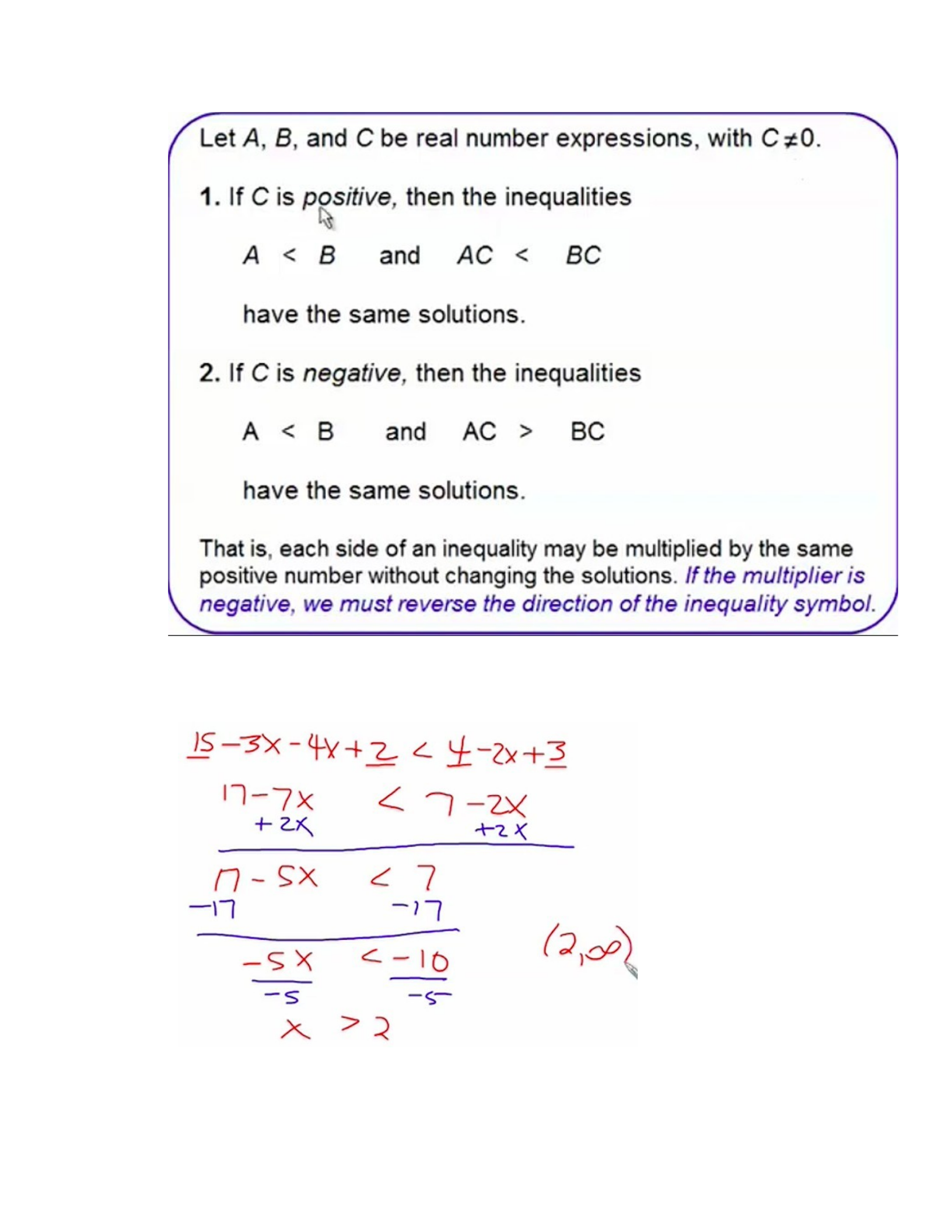
•Multiplication Property of Inequality
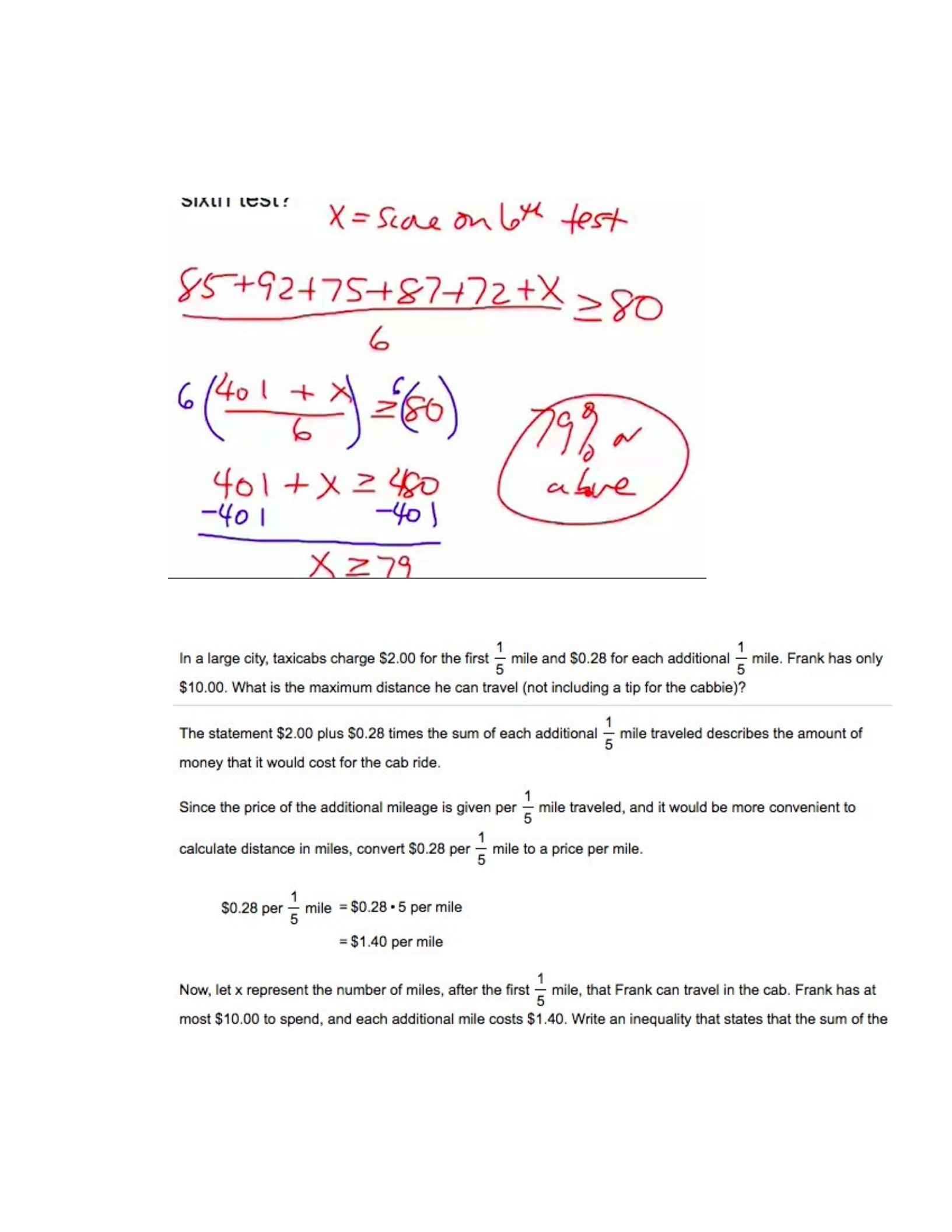
•Example 2: Solve 3(5-x)- 4x+2 ¿4- (2x-3) and give your solution
set in interval notation.
•Example 3: Carter scored 85, 92, 75, 87, and 72 on the first five tests.
If he wants to earn a B, which is 80% or above, what score does he
need to get on the sixth test?
Example
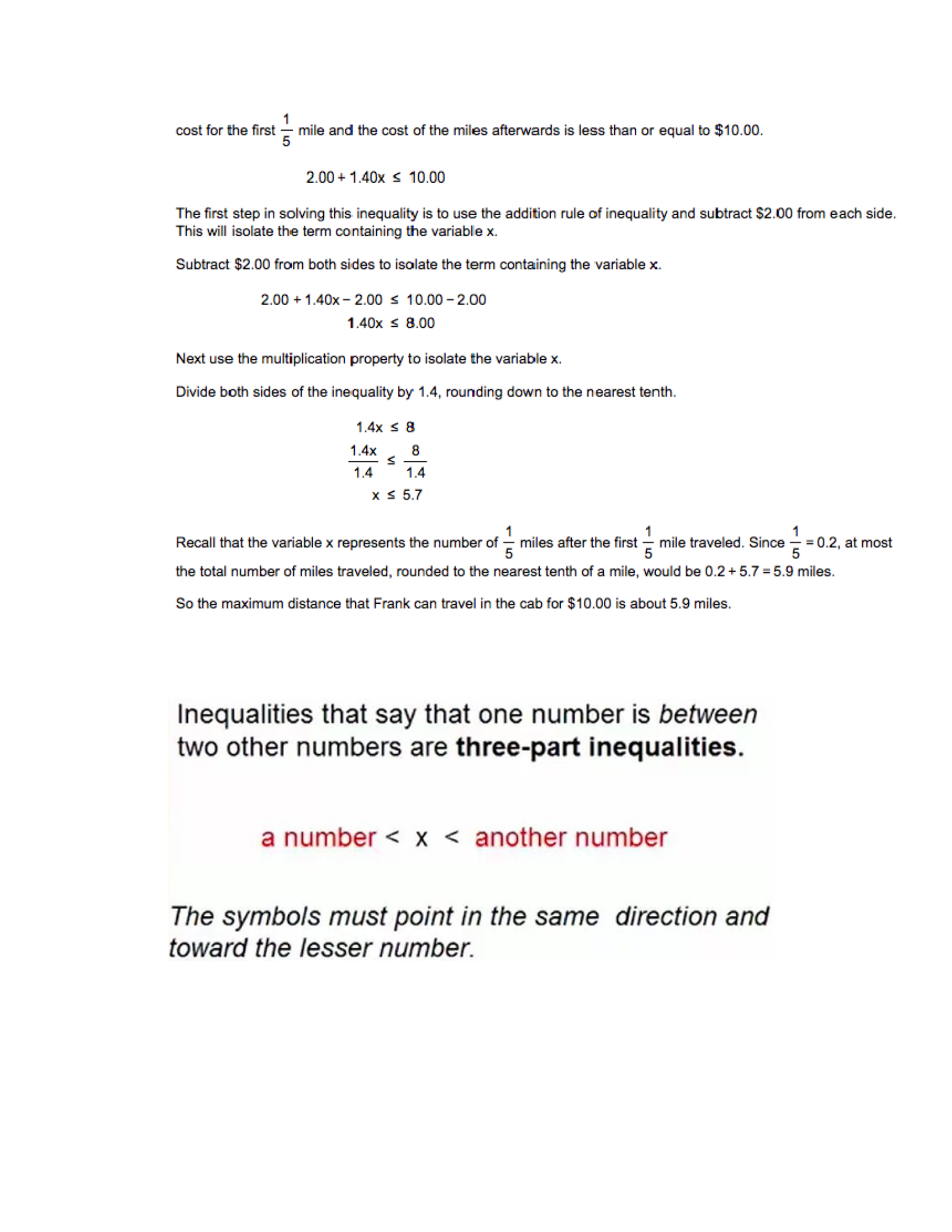
DON’T ROUND!!!!
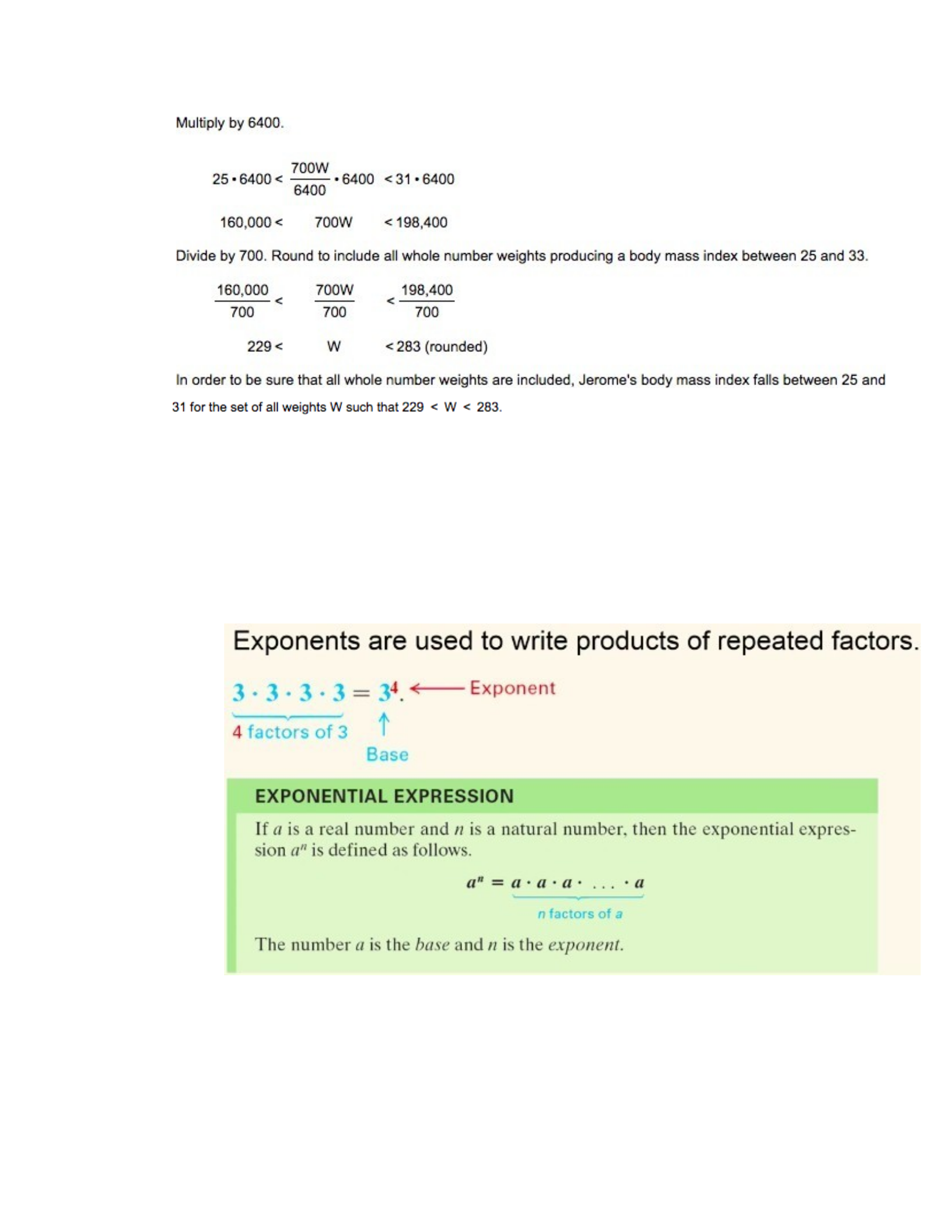
•Three Part Inequalities
Example
7.5
Properties of Exponents and Scientific Notation
•Identify the base and the exponent in an exponential expression,
and evaluate exponential expressions with natural number
exponents.
oDefinitions
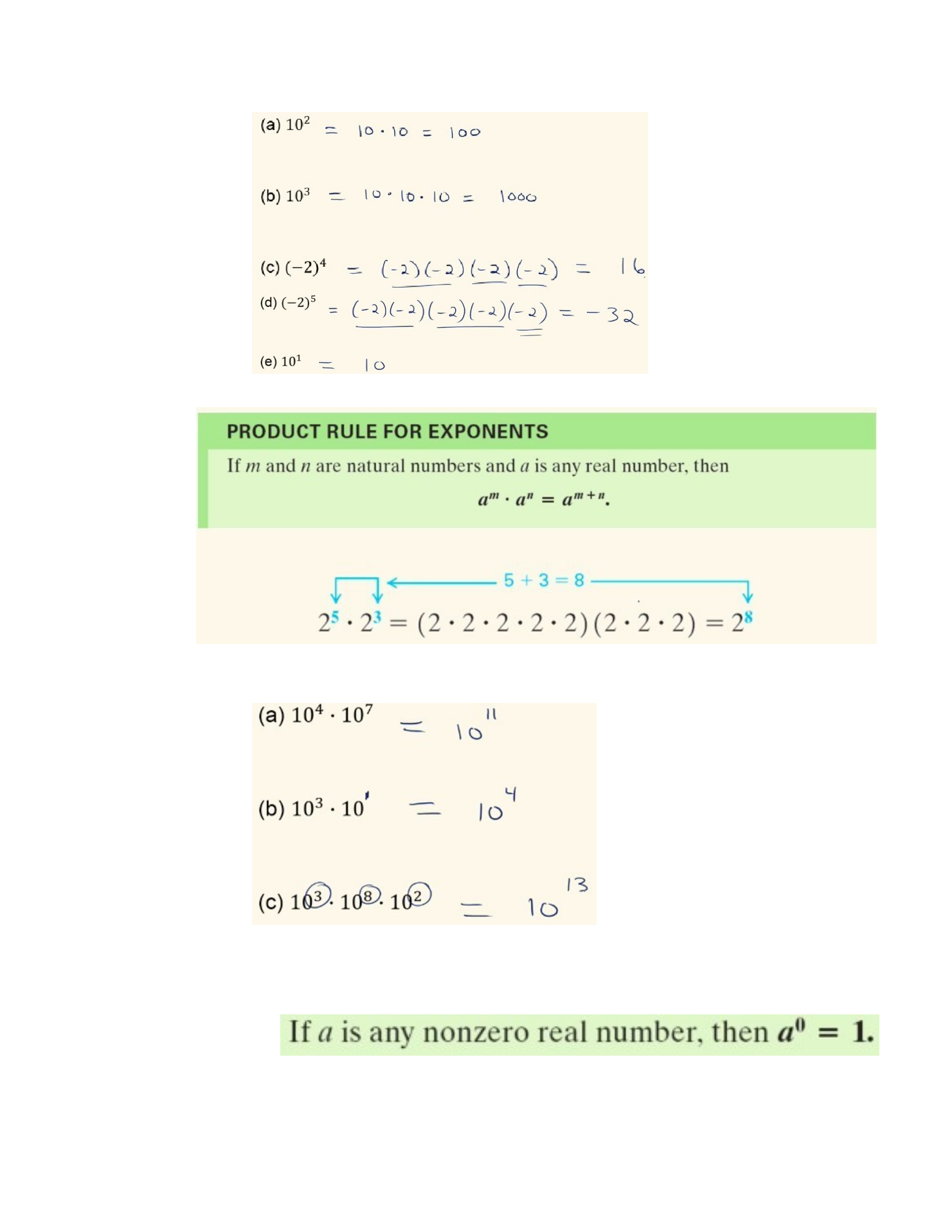
oExample Evaluating Exponential
Expressions
▪Evaluate each exponential expression.
oDefinitions
oExample Applying the Product Rule
▪Apply the product rule for exponents in each case.
•Interpret the use of zero and negative integer exponents
oDefinitions
▪Zero Exponent
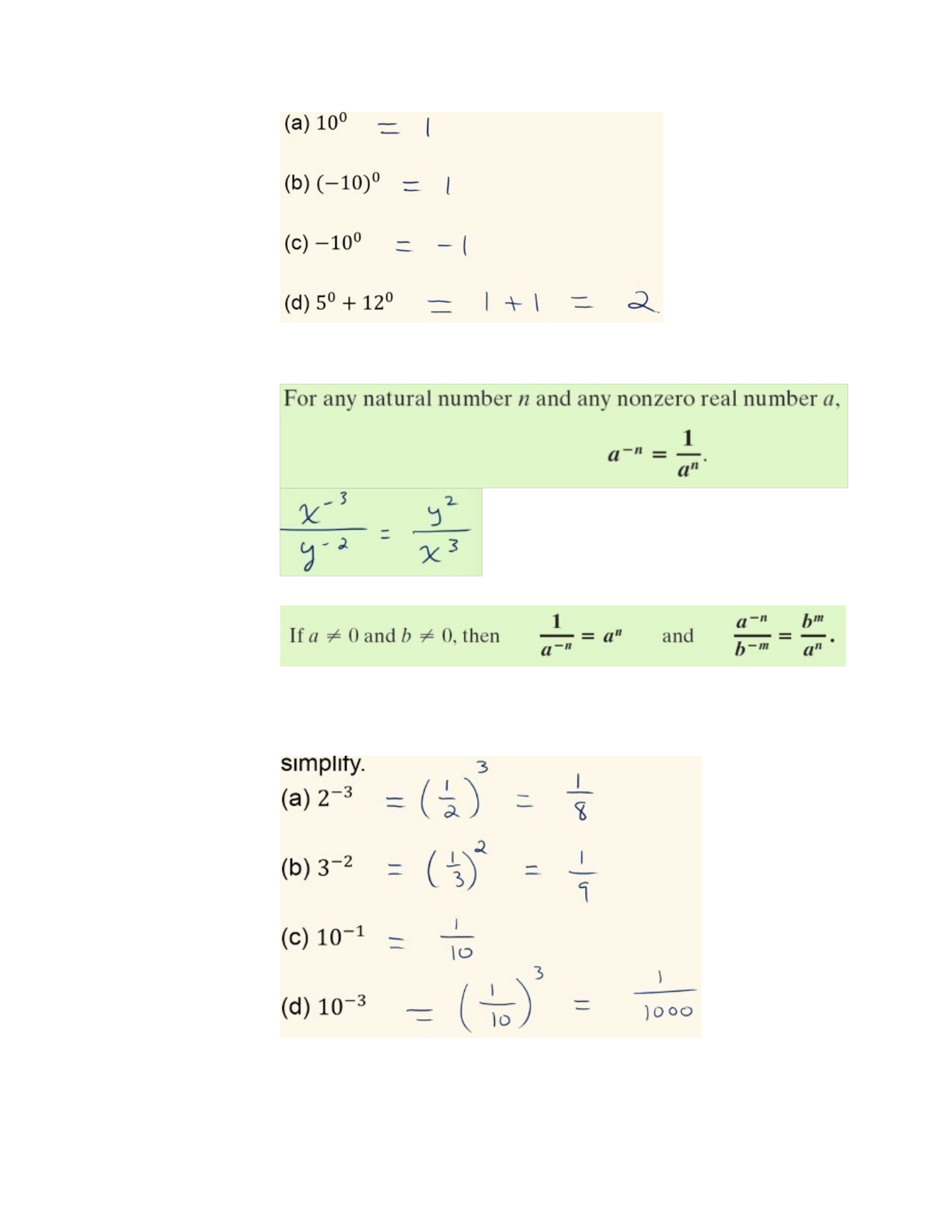
oExample Applying the Definition of Zero Exponent
▪Evaluate each expression
oDefinitions
▪Negative Exponent
▪Special Rules for Negative Exponents
oExample Applying the Definition of Negative Exponents
▪Write the following expressions with only
positive exponents and simplify.
•Apply the product, quotient, power, and special rules for exponents.
oDefinitions
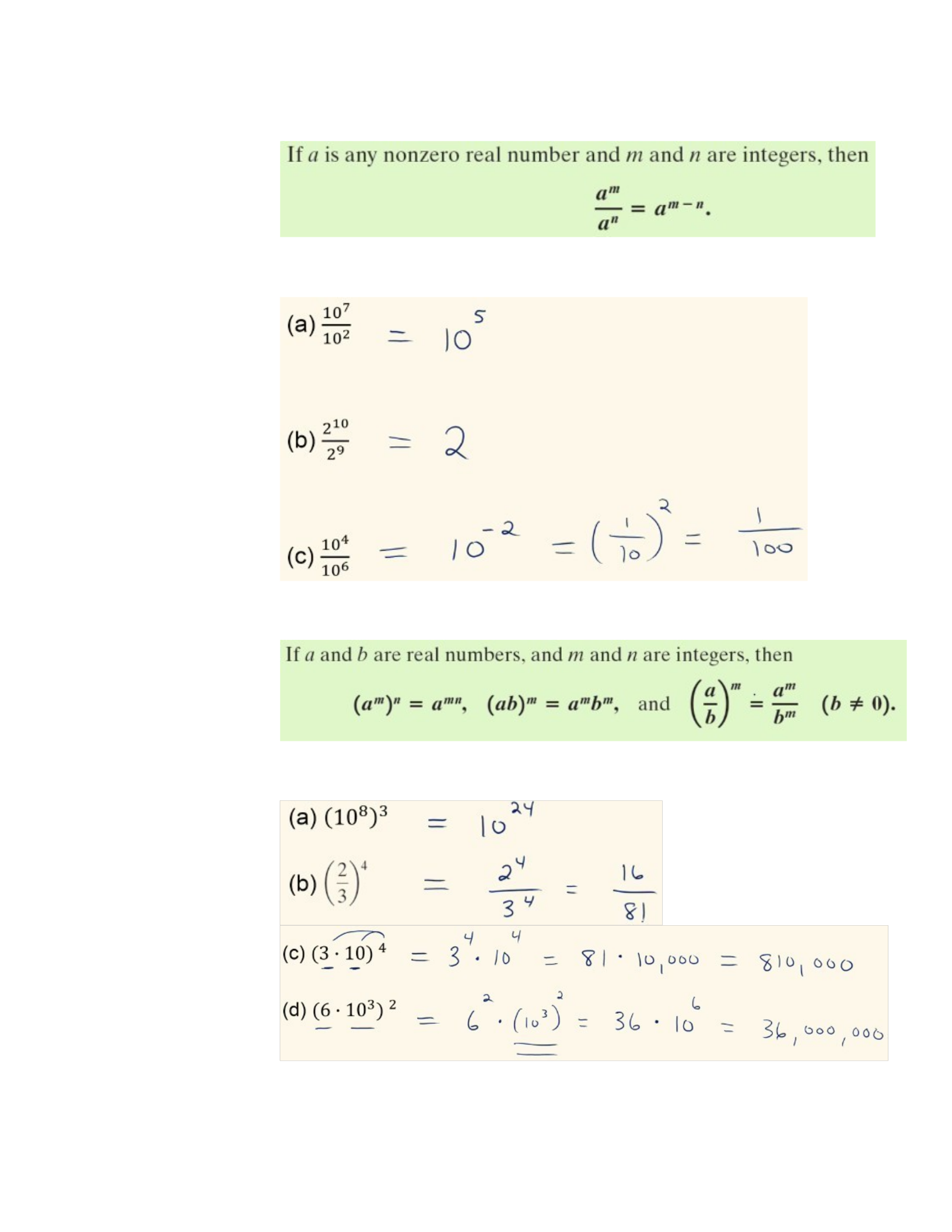
▪Quotient Rule for Exponents
oExample Applying the Quotient Rule
▪Apply the quotient rule for exponents in each case.
oDefinitions
▪Power Rules for Exponents
oExample Applying the Power Rules
▪Use one or more power rules in each case.
oDefinitions
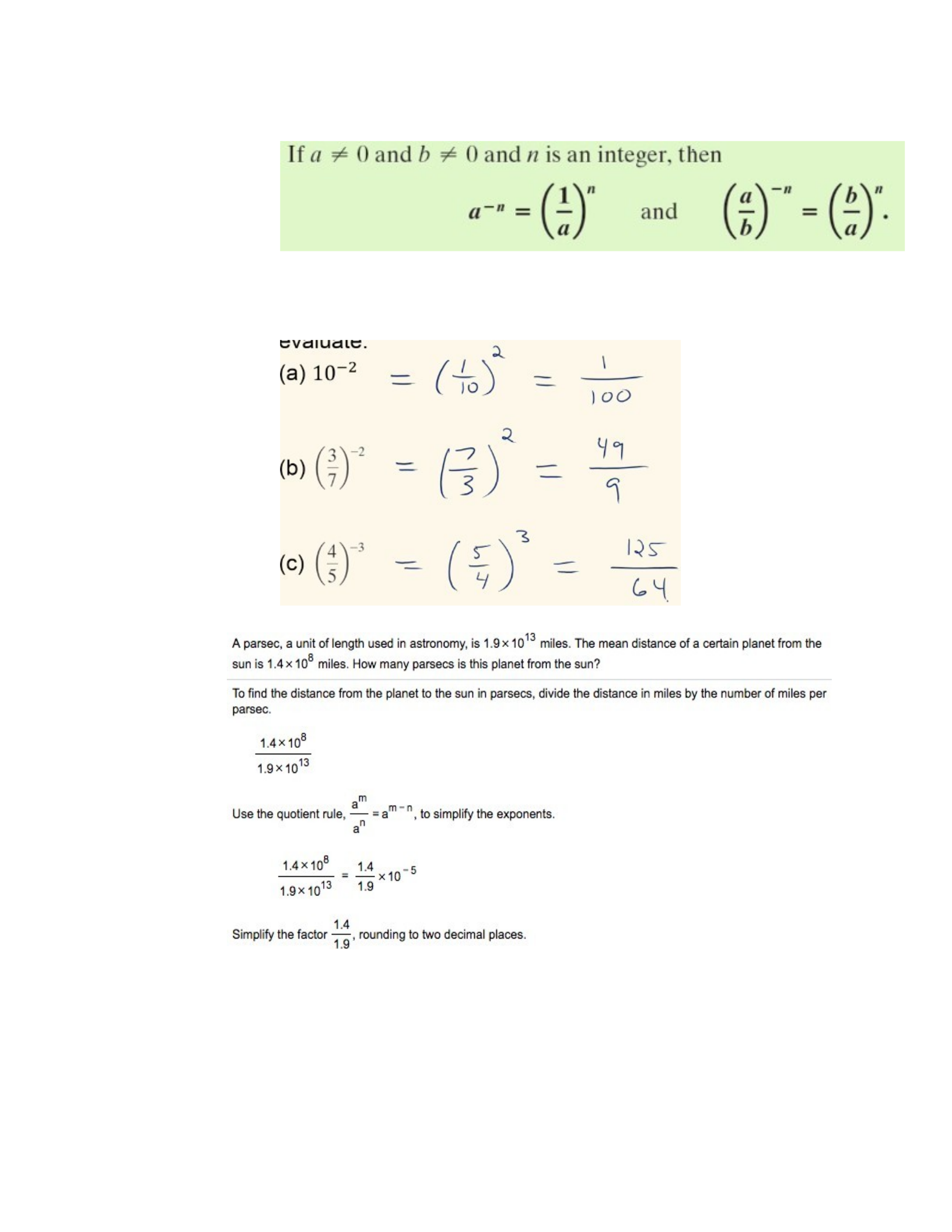
▪Special Rules for Negative Exponents
oExample Applying Special Rules for Negative Exponents
▪Write each expression with only positive exponents,
and then evaluate.
Example
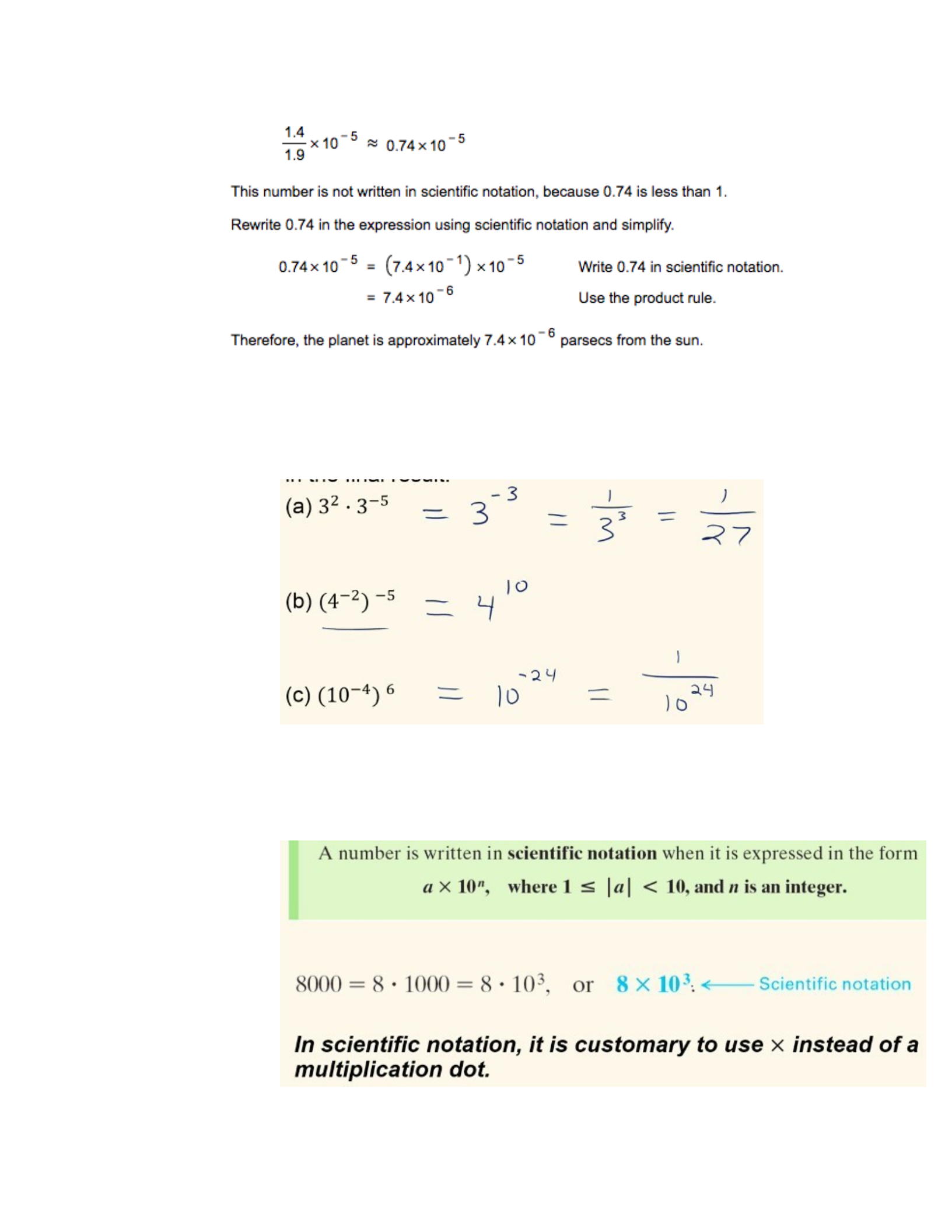
oExample Writing Expressions with No Negative Exponents
▪Simplify each expression so that no negative
exponents appear in the final result.
•Convert a number in standard notation to scientific notation and
a number in scientific notation to standard notation.
oDefinitions
▪Scientific Notation
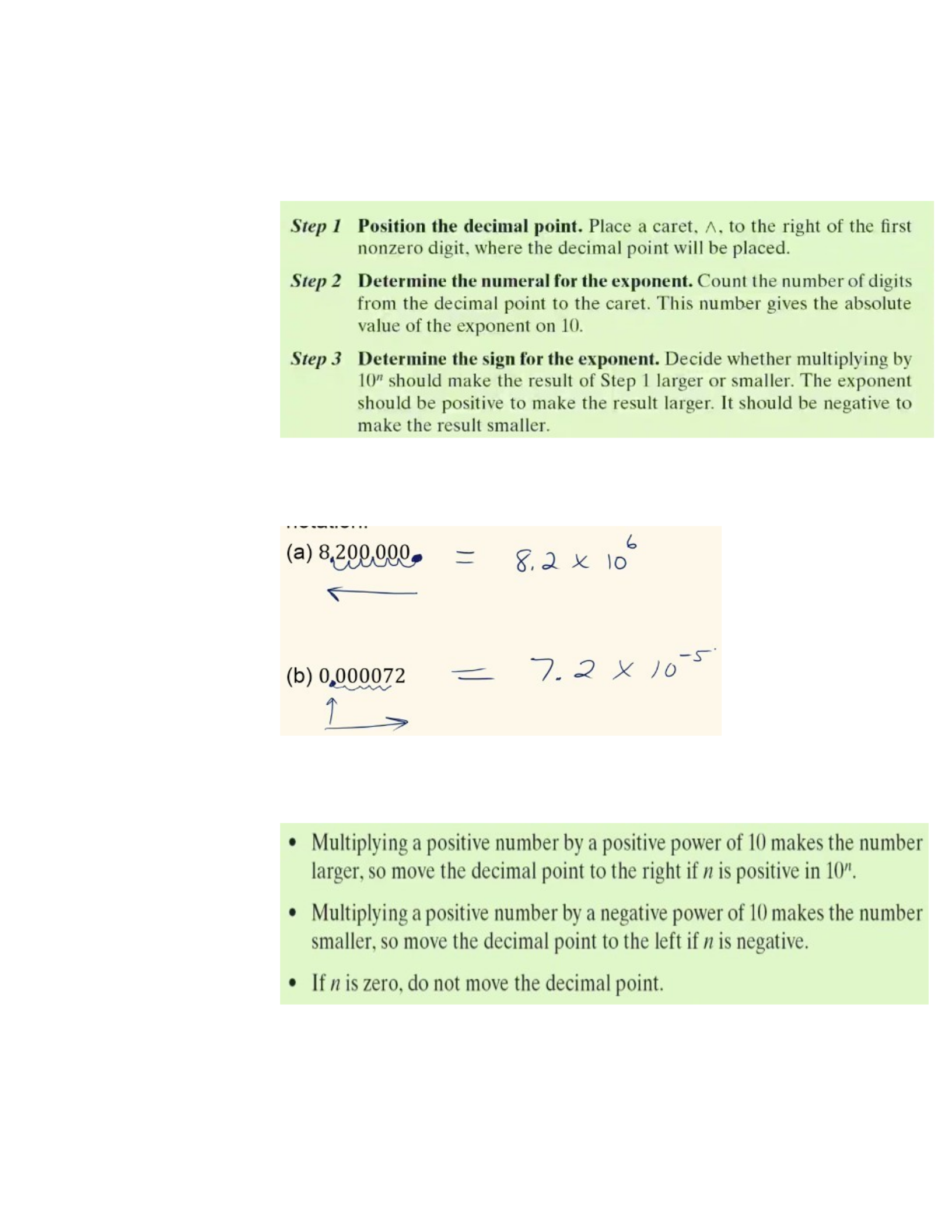
▪
oDefinitions
▪Converting a Positive Number to Scientific Notation
oExample Converting to Scientific Notation
▪Convert each number from standard notation to
scientific notation.
oDefinitions
▪Converting a Positive Number from Scientific Notation
to Standard Notation
oExample Converting from Scientific Notation
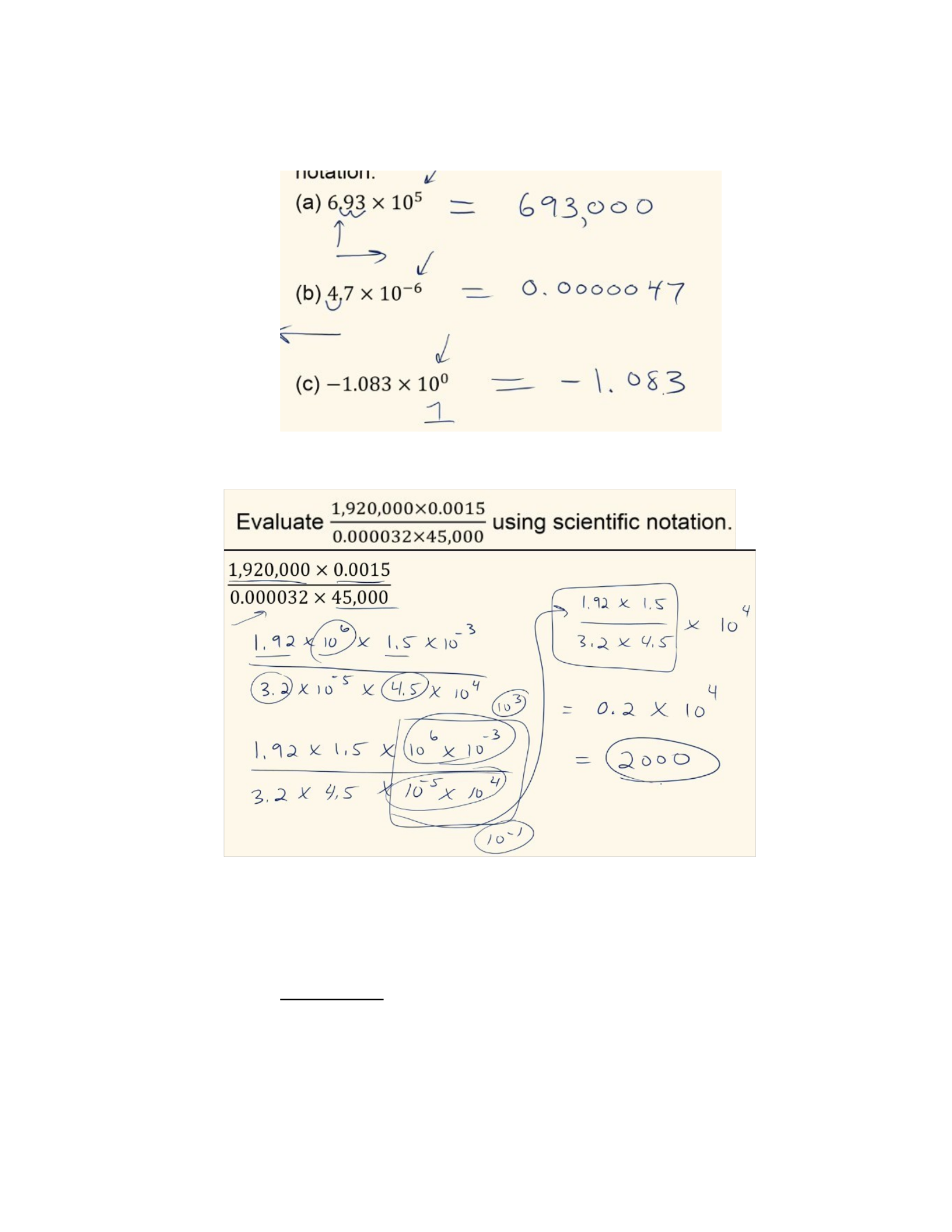
▪Convert each number from scientific notation to
standard notation.
•Compute with numbers in scientific notation
oExample Using Scientific Notation Computation
7.6
Polynomials and Factoring
•Know the basic terminology of polynomials
oDefinitions
▪Monomial: defined to be a number, a variable, or
a product of numbers and variables.
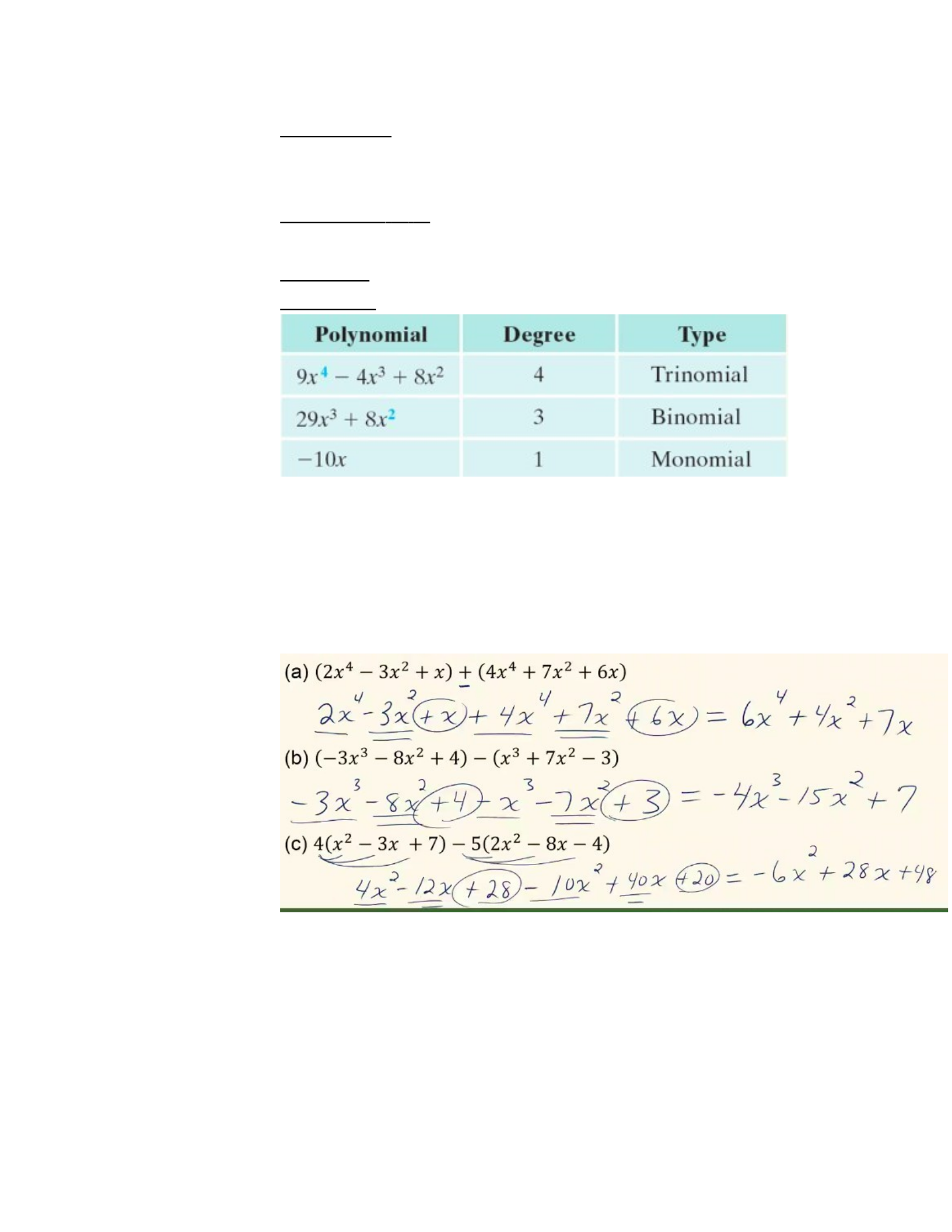
▪Polynomial: a term, or a finite sum or difference of terms,
with only nonnegative integer exponents permitted on
the variables.
▪Polynomial in x: terms of a polynomial contain only the
variable x.
▪Binomial: a polynomial containing exactly two terms.
▪Trinomial: a polynomial containing exactly three terms.
▪Like terms are terms that have the exact same
variable factors.
▪Polynomials are added by adding coefficients of like terms
and subtracted by subtracting coefficients of like terms.
oExample Adding and Subtracting Polynomials
▪Add or subtract, as indicated.
•Multiplying Polynomials
oDefinitions
▪The associative and distributive properties, together
with the properties of exponents, can also be used to
find the product of two polynomials.
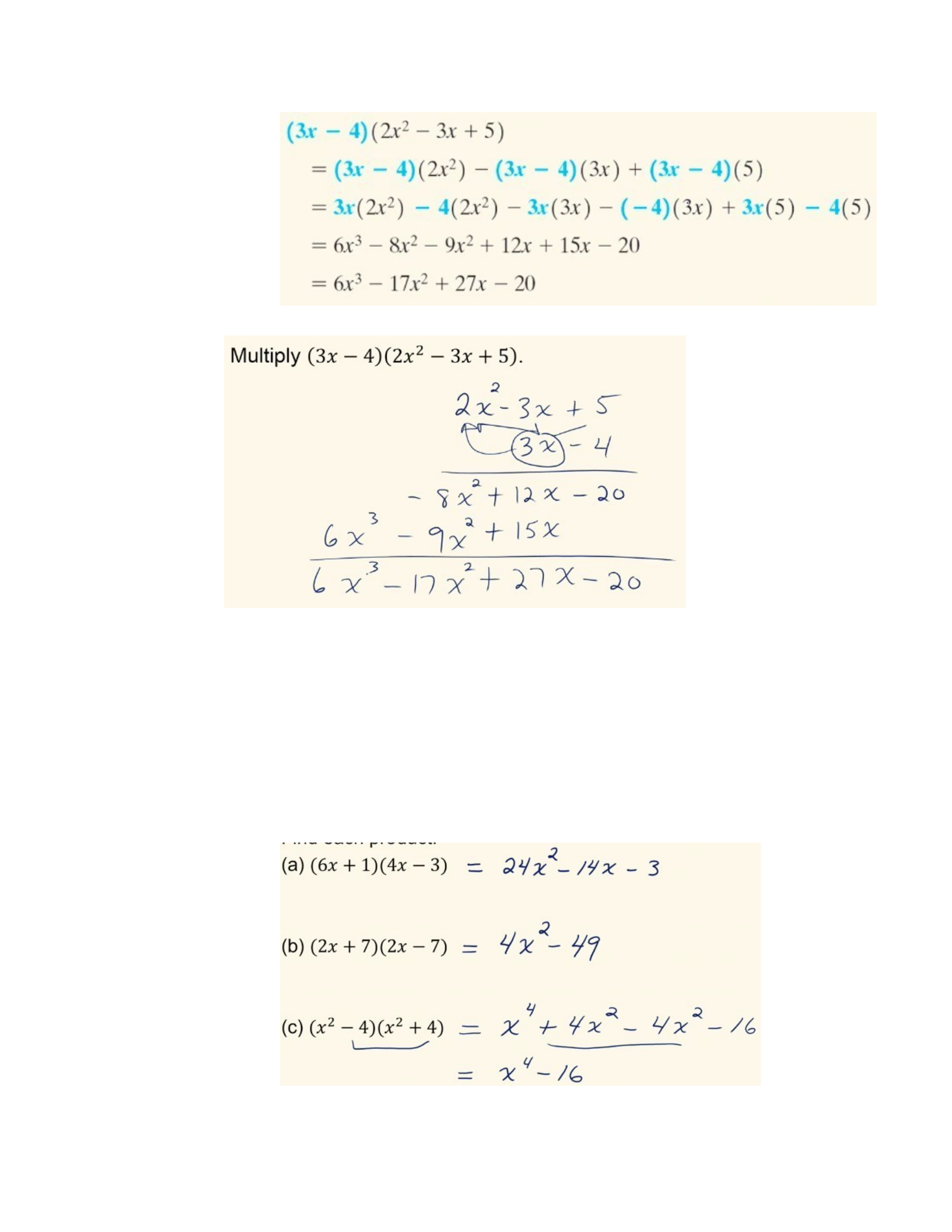
oExample Multiplying Polynomials Vertically
•Multiply two binomials using the FOIL method
oDefinitions
▪“FOIL” is a memory aid to find the product of
two binomials.
▪FOIL stands for “First, Outside, Inside, Last” and gives the
pairs of terms to be multiplied to get the product.
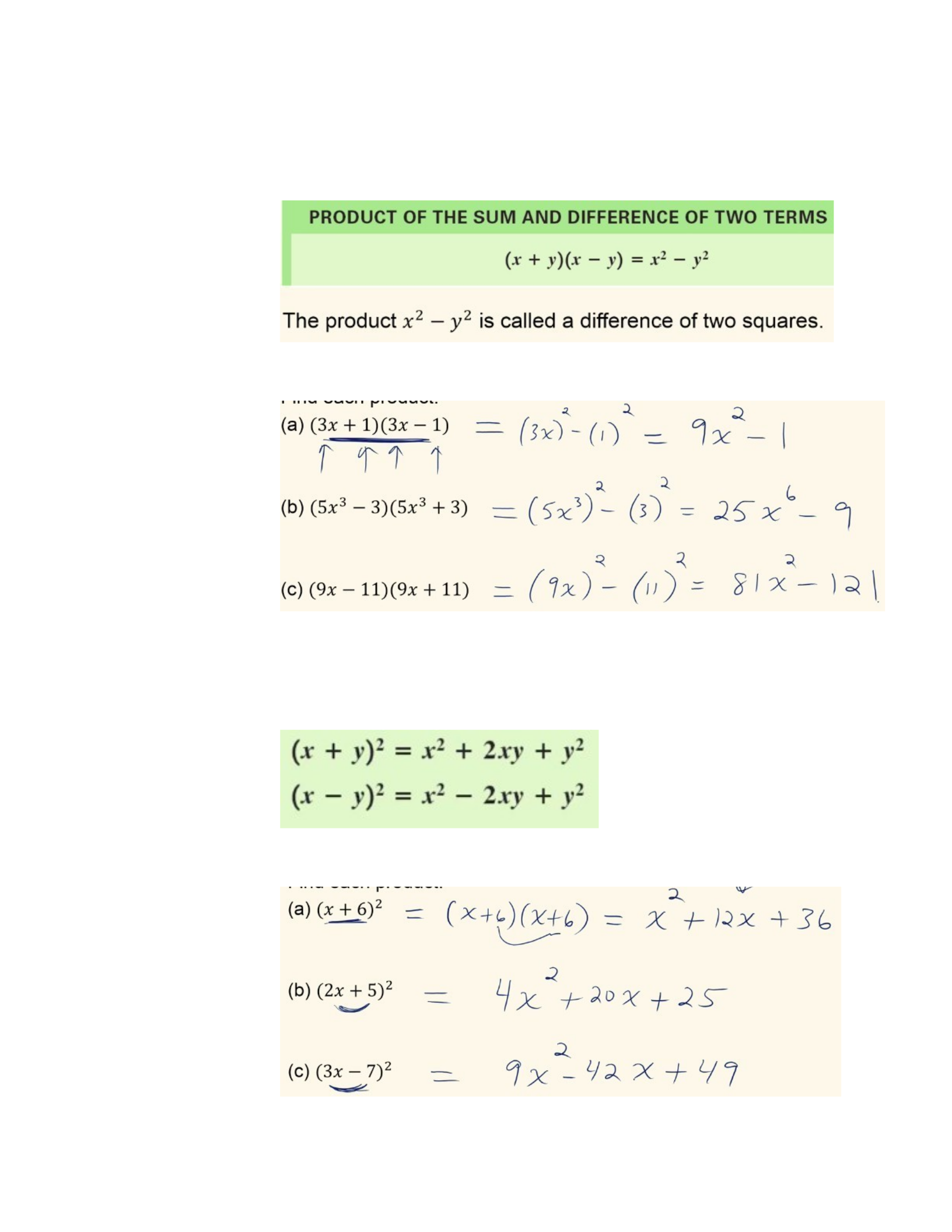
oExample Using the FOIL Method
▪Find each product.
•Find special products of binomials
oDefinitions
▪The product of two binomials of the forms x +y and x-y
is always a binomial.
oExample Multiplying (x +y) (x-y)
▪Find each product.
oDefinitions
▪Squares of binomials are also special products. These
are verified by first writing as two factors and then using
the FOIL method.
oExample Squaring Binomials
▪Find each product.
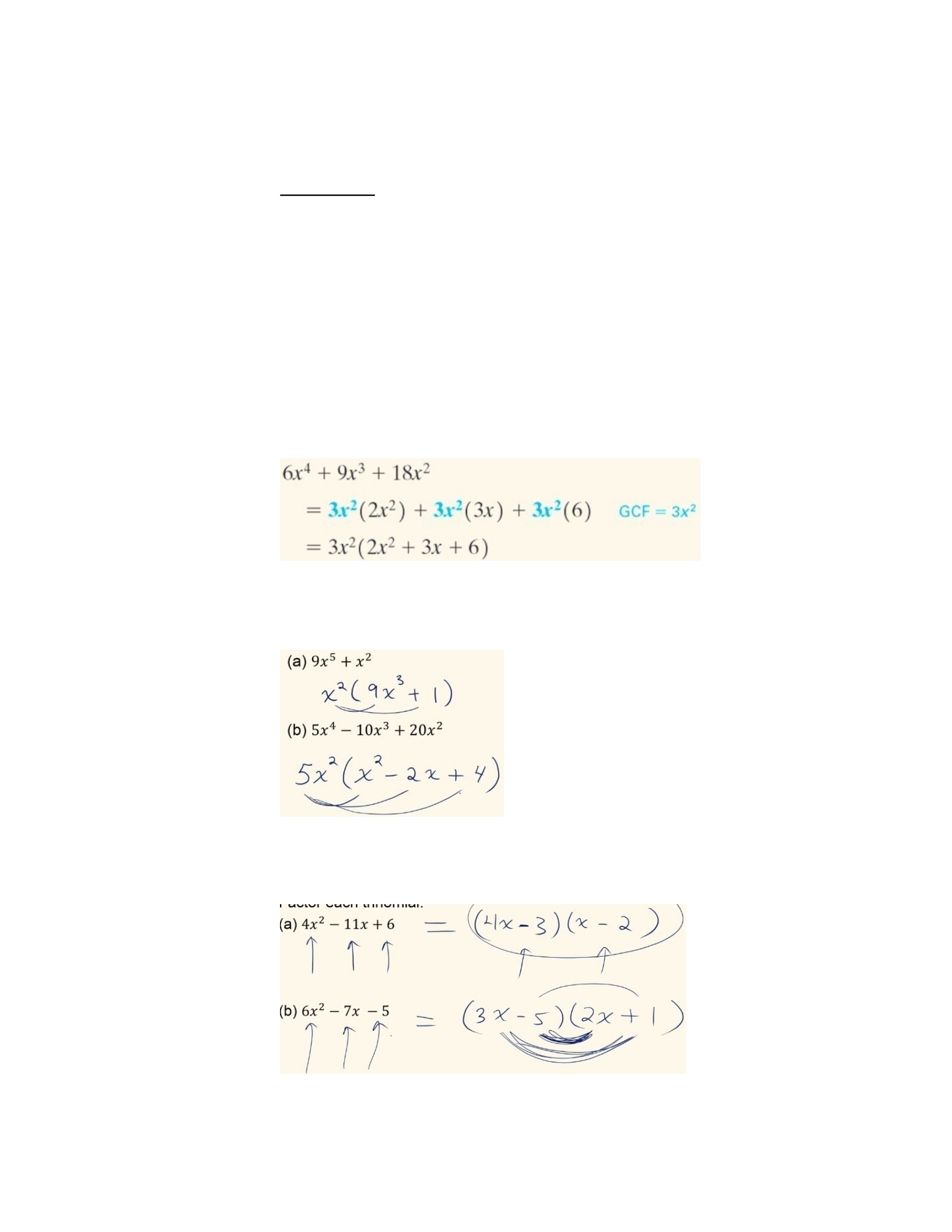
•Factor the greatest common factor from a polynomial
oDefinitions
▪Factoring: process of finding polynomials whose
product equals a given polynomial.
▪A polynomial is factored completely when it is written as a
product of prime polynomials with integer coefficients.
▪Factoring is the inverse of multiplying, so a check
requires that the product of the factored form yield the
original polynomial.
▪When factoring a polynomial, we first look for a monomial
that is the greatest common factor (GCF) of all the terms of
the polynomial.
oExample Factoring Out the Greatest Common Factor
▪Factor out the greatest common factor from
each polynomial.
•Factor a trinomial using the FOIL method in reverse
oExample Factoring Trinomials
▪Factor each trinomial
•Factor a perfect square trinomial and a difference of squares
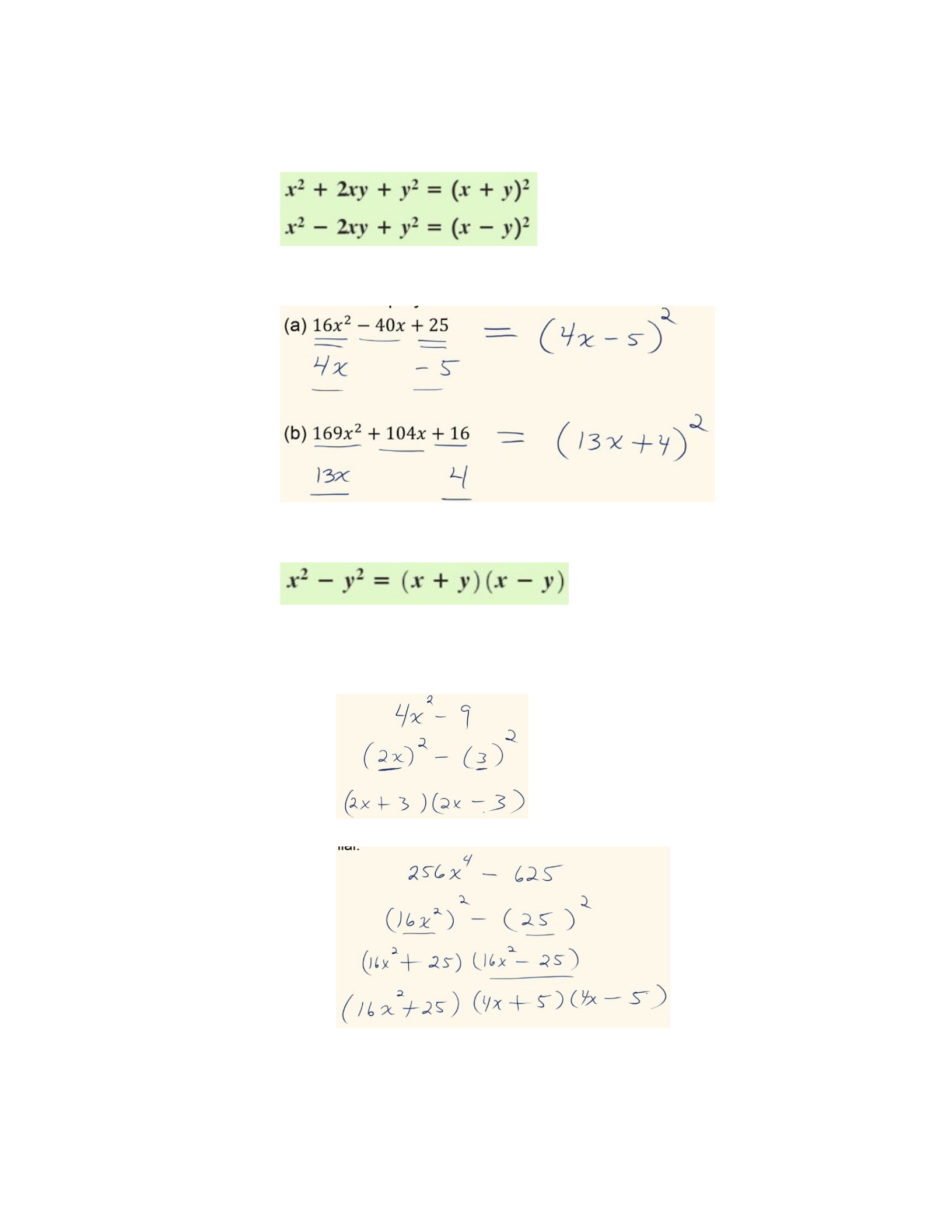
oDefinitions
▪Perfect Square Trinomials
oExample Factoring Perfect Square Trinomials
▪Factor each polynomial
oDefinitions
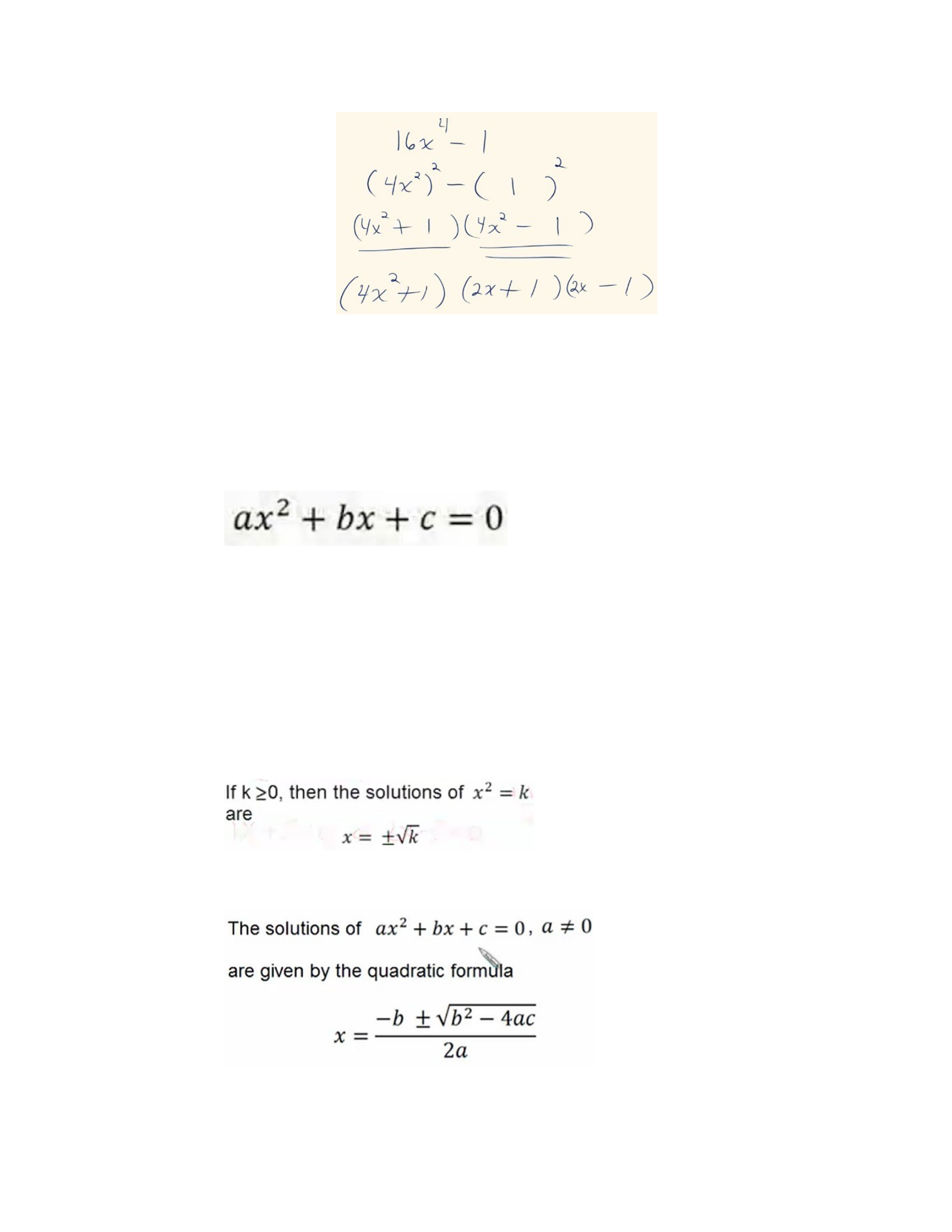
▪Difference of Squares
oExample Factoring Differences of Squares
▪Factor each polynomial
•4 x2−9
•256 x4−625
•16 x4−1
7.7
Quadratic Equations and Applications
•Quadratic Equation
oAn equation that can be written in the form:
oWhere a, b, and c are real numbers, with, a ≠ 0 is a quadratic
equation. The form of the equation given above is called
standard form.
•Solving Quadratics
oZero-Factor Property
▪If ab=0, then a=0 or b=0 or both
oThe Square Root Property
oThe Quadratic Formula
•Example 1: Solve using the zero-factor property
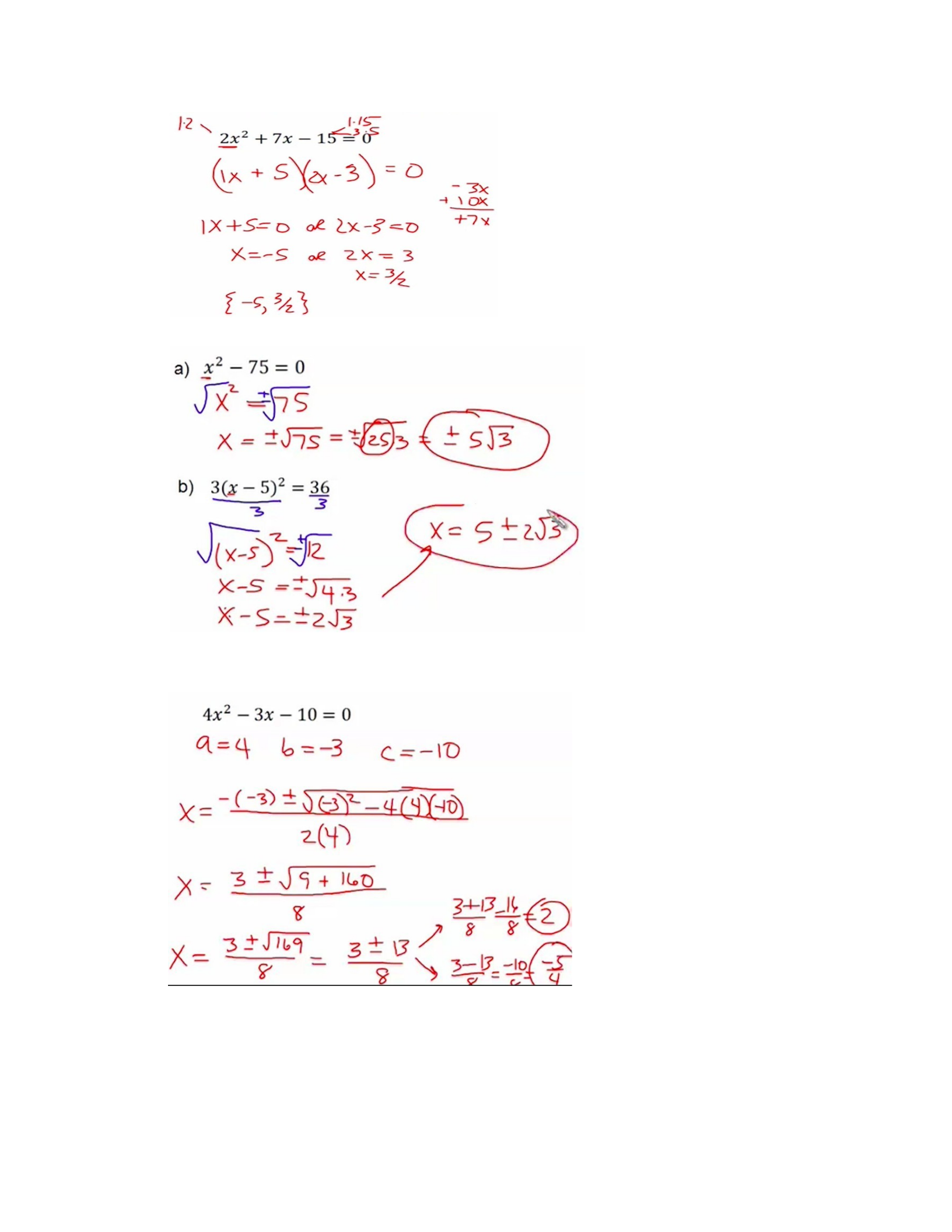
•Example 2: Solve using the square root property
•Example 3: Solving using the quadric formula
Example
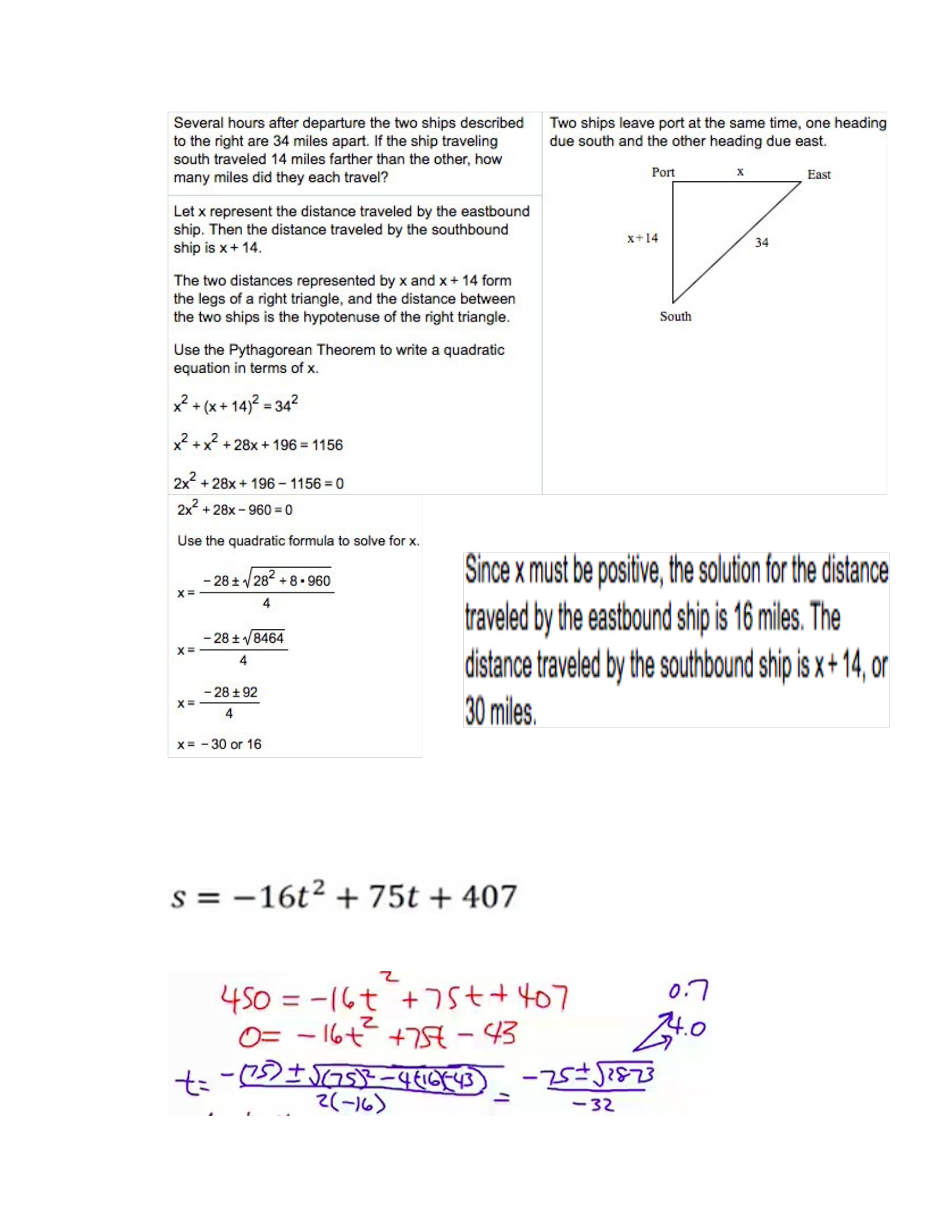
•Example 4: A high-rise condominium building is 407 feet high.
Suppose that a ball is projected upward from the top and its position
s in feet above the ground is given by the equation:
Where t is the number of seconds elapsed. How long will it take for the
ball to reach a height of 450 feet above the ground?
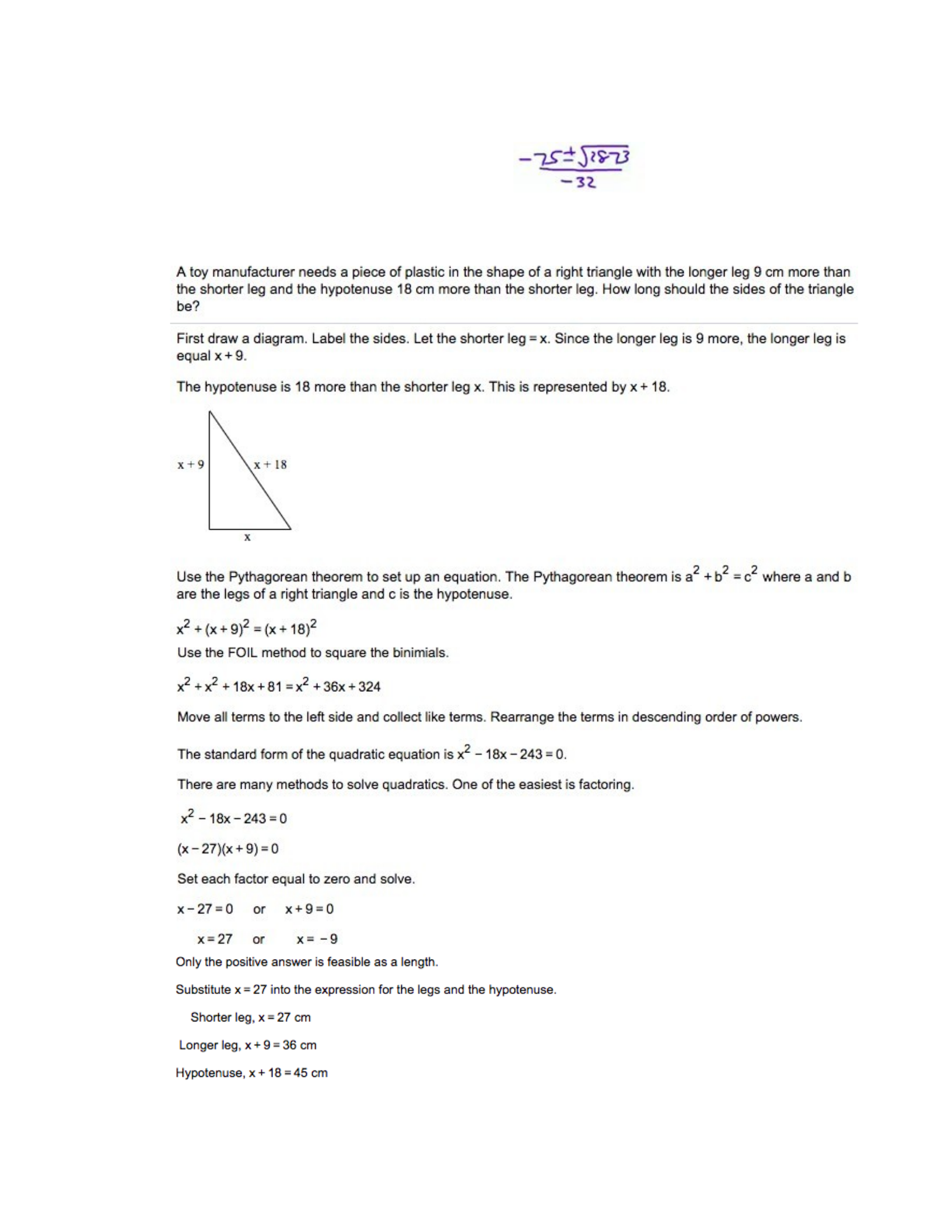
oThe ball reaches a height of 450 ft. after .7seconds and 4 seconds
Example
▪Got answer by plugging back into
the equation.
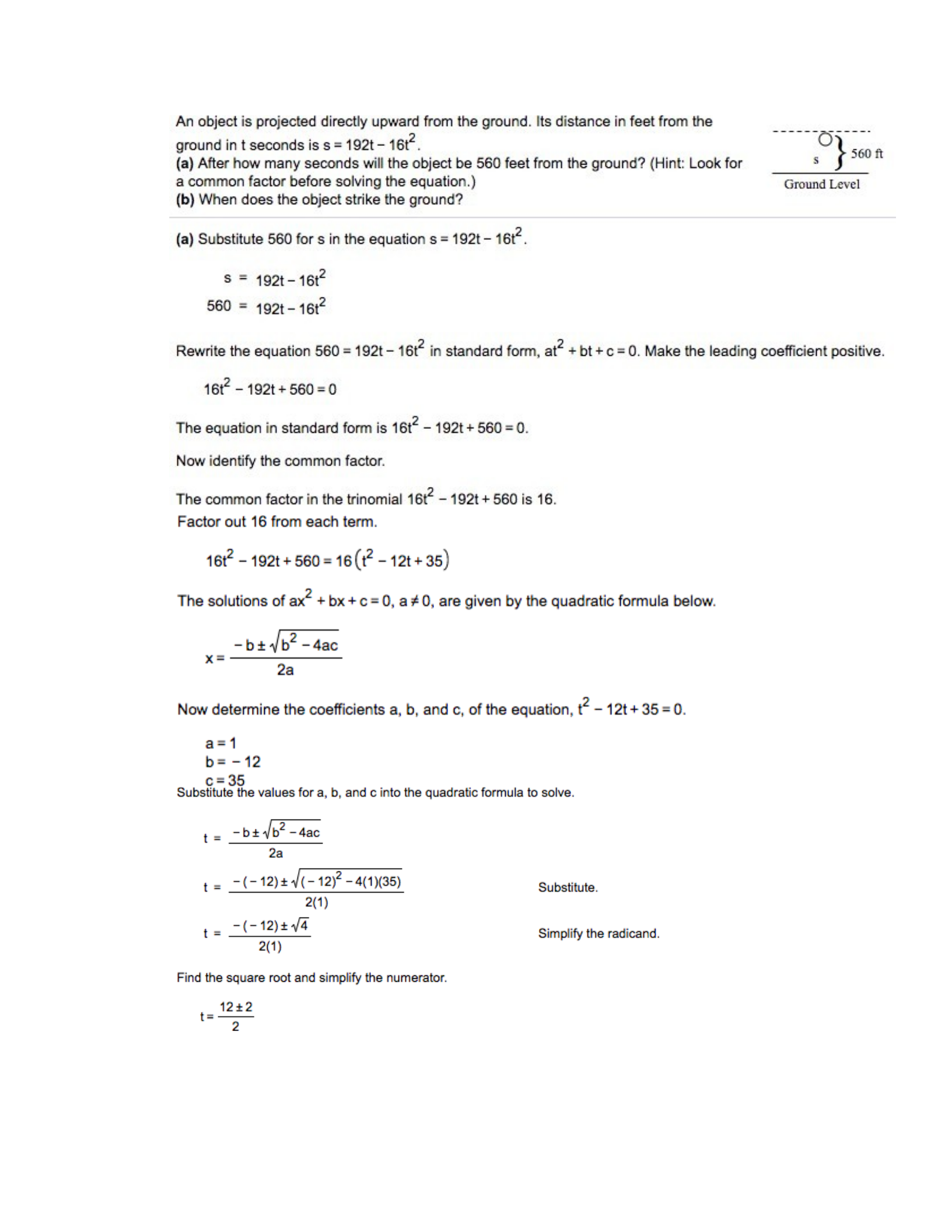
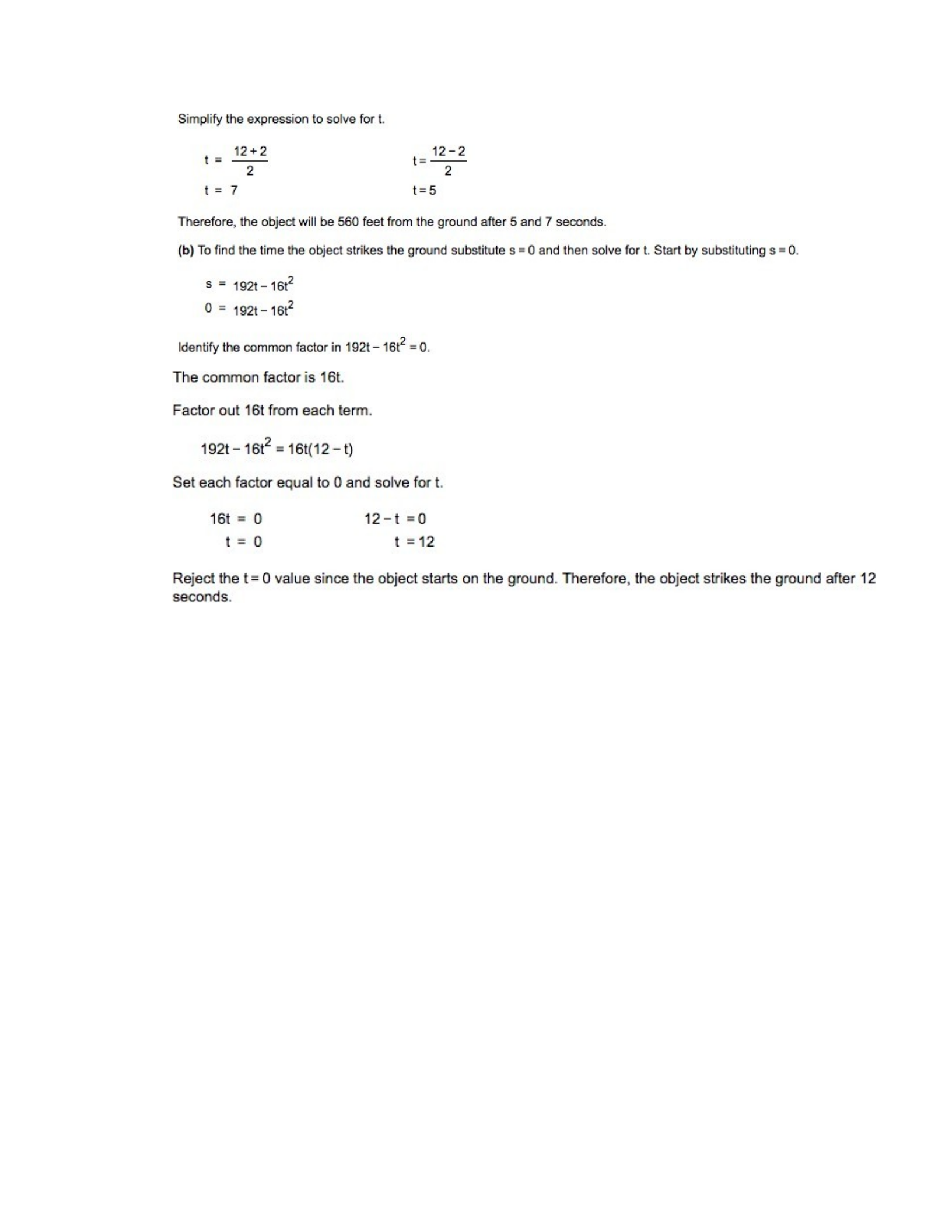
Another Example
.

