


LING 301
HOMEWORK: SEMANTICS ASSIGNMENT INSTRUCTIONS
OVERVIEW
This assignment reviews semantic concepts like polysemy, homonymy, semantic relations,
thematic roles, semantic ambiguity, and semantic features covered in this unit of the course.
INSTRUCTIONS
Each exercise below provides specific instructions. Please read the instructions carefully and
answer each question completely. Type your answers in the table provided, or when no table is
present, type your answer below each question. If an exercise is reference inside parentheses,
then it has been taken from your textbook. The total point value for this assignment is 60 points.
1. We have discussed semantic distinctions between polysemy and homonymy in this course.
Which of these two relations, polysemy or homonymy, is exemplified by the forms below? Place
an X in the column for your answer.
Word and usage Polysemy Homonymy
a. Leech: a bloodsucking worm; a hangar-on who seeks
advantage
X
b. Range: a cooking stove; a series of mountains X
c. Key: an instrument used to apply to a lock; an answer
sheet for a test or assignment
X
d. Race: the act of running competitively; people belonging
to the same genetic grouping
X
2. Three semantic relations among sentences were also discussed in this course: paraphrase,
entailment, and contradiction. Which of these relations is exemplified in the following pairs of
sentences? Place an X in the column for your answer.
Sentence pairs Paraphrase Entailment Contradiction
a. I saw Timothy at the anniversary party.
It was Timothy that I saw at the
anniversary party.
X
b. Jules is Mary’s husband.
Mary is married.
X
c. My pet cobra likes the taste of chocolate
fudge.
My pet cobra finds chocolate fudge tasty.
X
Page 1 of 5
LING 301
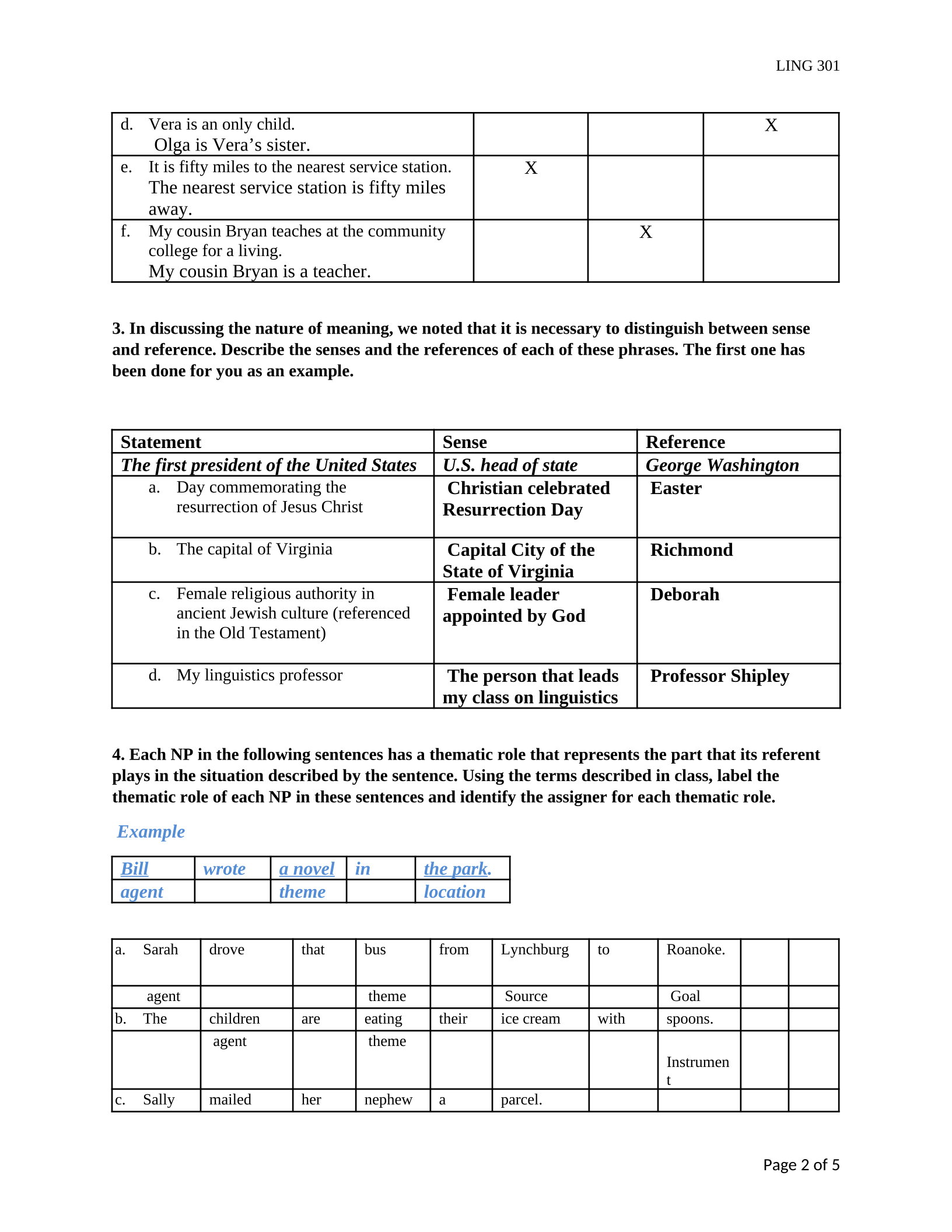
d. Vera is an only child.
Olga is Vera’s sister.
X
e. It is fifty miles to the nearest service station.
The nearest service station is fifty miles
away.
X
f. My cousin Bryan teaches at the community
college for a living.
My cousin Bryan is a teacher.
X
3. In discussing the nature of meaning, we noted that it is necessary to distinguish between sense
and reference. Describe the senses and the references of each of these phrases. The first one has
been done for you as an example.
Statement Sense Reference
The first president of the United States U.S. head of state George Washington
a. Day commemorating the
resurrection of Jesus Christ
Christian celebrated
Resurrection Day
Easter
b. The capital of Virginia Capital City of the
State of Virginia
Richmond
c. Female religious authority in
ancient Jewish culture (referenced
in the Old Testament)
Female leader
appointed by God
Deborah
d. My linguistics professor The person that leads
my class on linguistics
Professor Shipley
4. Each NP in the following sentences has a thematic role that represents the part that its referent
plays in the situation described by the sentence. Using the terms described in class, label the
thematic role of each NP in these sentences and identify the assigner for each thematic role.
Example
Bill wrote a novel in the park.
agent theme location
a. Sarah drove that bus from Lynchburg to Roanoke.
agent theme Source Goal
b. The children are eating their ice cream with spoons.
agent theme
Instrumen
t
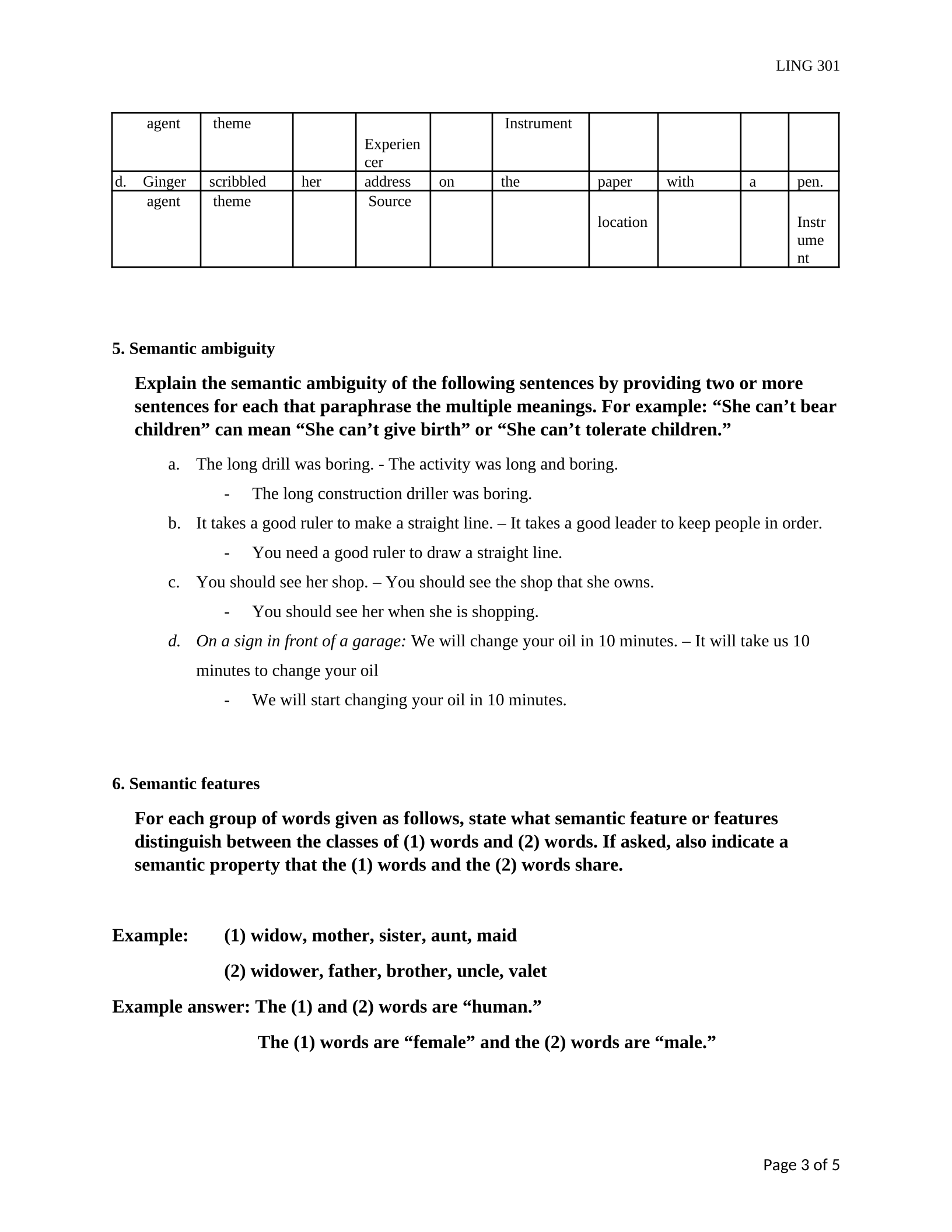
c. Sally mailed her nephew a parcel.
Page 2 of 5
LING 301
agent theme
Experien
cer
Instrument
d. Ginger scribbled her address on the paper with a pen.
agent theme Source
location Instr
ume
nt
5. Semantic ambiguity
Explain the semantic ambiguity of the following sentences by providing two or more
sentences for each that paraphrase the multiple meanings. For example: “She can’t bear
children” can mean “She can’t give birth” or “She can’t tolerate children.”
a. The long drill was boring. - The activity was long and boring.
- The long construction driller was boring.
b. It takes a good ruler to make a straight line. – It takes a good leader to keep people in order.
- You need a good ruler to draw a straight line.
c. You should see her shop. – You should see the shop that she owns.
- You should see her when she is shopping.
d. On a sign in front of a garage: We will change your oil in 10 minutes. – It will take us 10
minutes to change your oil
-We will start changing your oil in 10 minutes.
6. Semantic features
For each group of words given as follows, state what semantic feature or features
distinguish between the classes of (1) words and (2) words. If asked, also indicate a
semantic property that the (1) words and the (2) words share.
Example: (1) widow, mother, sister, aunt, maid
(2) widower, father, brother, uncle, valet
Example answer: The (1) and (2) words are “human.”
The (1) words are “female” and the (2) words are “male.”
Page 3 of 5
LING 301
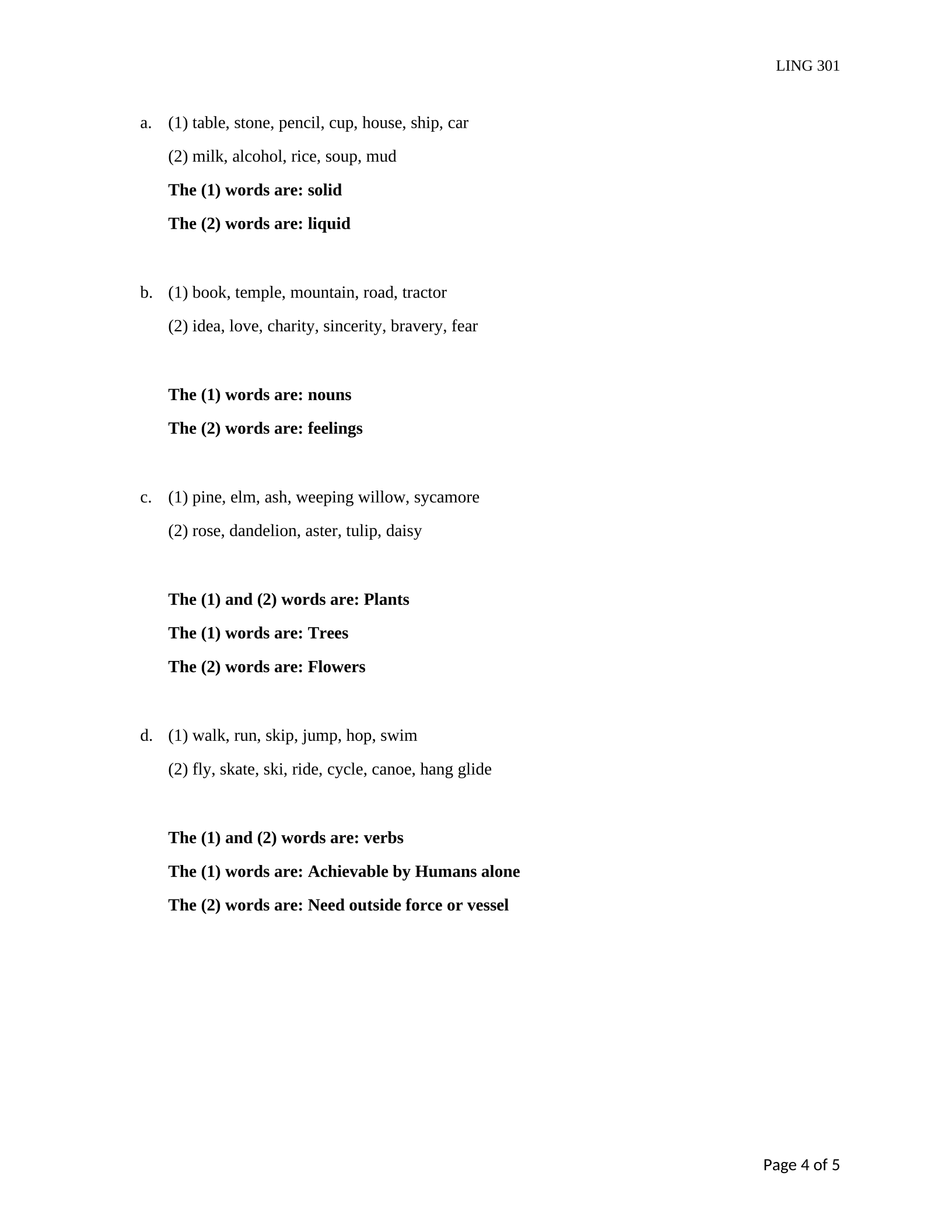
a. (1) table, stone, pencil, cup, house, ship, car
(2) milk, alcohol, rice, soup, mud
The (1) words are: solid
The (2) words are: liquid
b. (1) book, temple, mountain, road, tractor
(2) idea, love, charity, sincerity, bravery, fear
The (1) words are: nouns
The (2) words are: feelings
c. (1) pine, elm, ash, weeping willow, sycamore
(2) rose, dandelion, aster, tulip, daisy
The (1) and (2) words are: Plants
The (1) words are: Trees
The (2) words are: Flowers
d. (1) walk, run, skip, jump, hop, swim
(2) fly, skate, ski, ride, cycle, canoe, hang glide
The (1) and (2) words are: verbs
The (1) words are: Achievable by Humans alone
The (2) words are: Need outside force or vessel
Page 4 of 5

