


Research and Design Bibliography 2
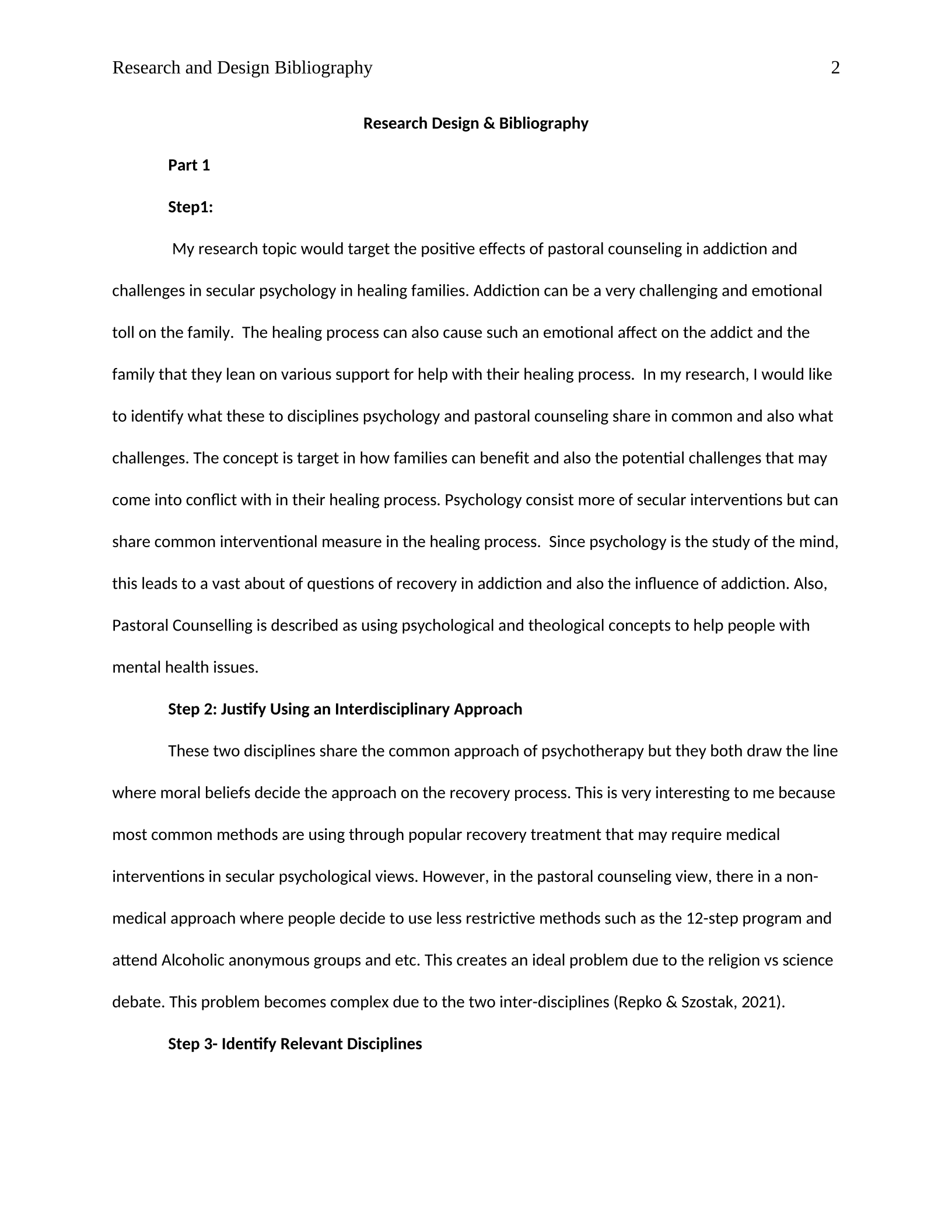
Research Design & Bibliography
Part 1
Step1:
My research topic would target the positive effects of pastoral counseling in addiction and
challenges in secular psychology in healing families. Addiction can be a very challenging and emotional
toll on the family. The healing process can also cause such an emotional affect on the addict and the
family that they lean on various support for help with their healing process. In my research, I would like
to identify what these to disciplines psychology and pastoral counseling share in common and also what
challenges. The concept is target in how families can benefit and also the potential challenges that may
come into conflict with in their healing process. Psychology consist more of secular interventions but can
share common interventional measure in the healing process. Since psychology is the study of the mind,
this leads to a vast about of questions of recovery in addiction and also the influence of addiction. Also,
Pastoral Counselling is described as using psychological and theological concepts to help people with
mental health issues.
Step 2: Justify Using an Interdisciplinary Approach
These two disciplines share the common approach of psychotherapy but they both draw the line
where moral beliefs decide the approach on the recovery process. This is very interesting to me because
most common methods are using through popular recovery treatment that may require medical
interventions in secular psychological views. However, in the pastoral counseling view, there in a non-
medical approach where people decide to use less restrictive methods such as the 12-step program and
attend Alcoholic anonymous groups and etc. This creates an ideal problem due to the religion vs science
debate. This problem becomes complex due to the two inter-disciplines (Repko & Szostak, 2021).
Step 3- Identify Relevant Disciplines
Research and Design Bibliography 3
Since psychology has its secular views, its overall objective to reach their goal in healing that end
in helping the person with or without religious influence. Pastoral counseling however believes in
spirituality influencing a person healing process towards their goal. This is the problem between these
two disciplines that reach a moral implication on the route of a person healing and psychological
views. An approach to this would be to integrate Nouthetic counseling commonly used in pastoral
counseling techniques along with the Step 12 model and CBT. It can help focus on helping people on
confronting their issues in a loving manner so that they can help make those changes that God requires.
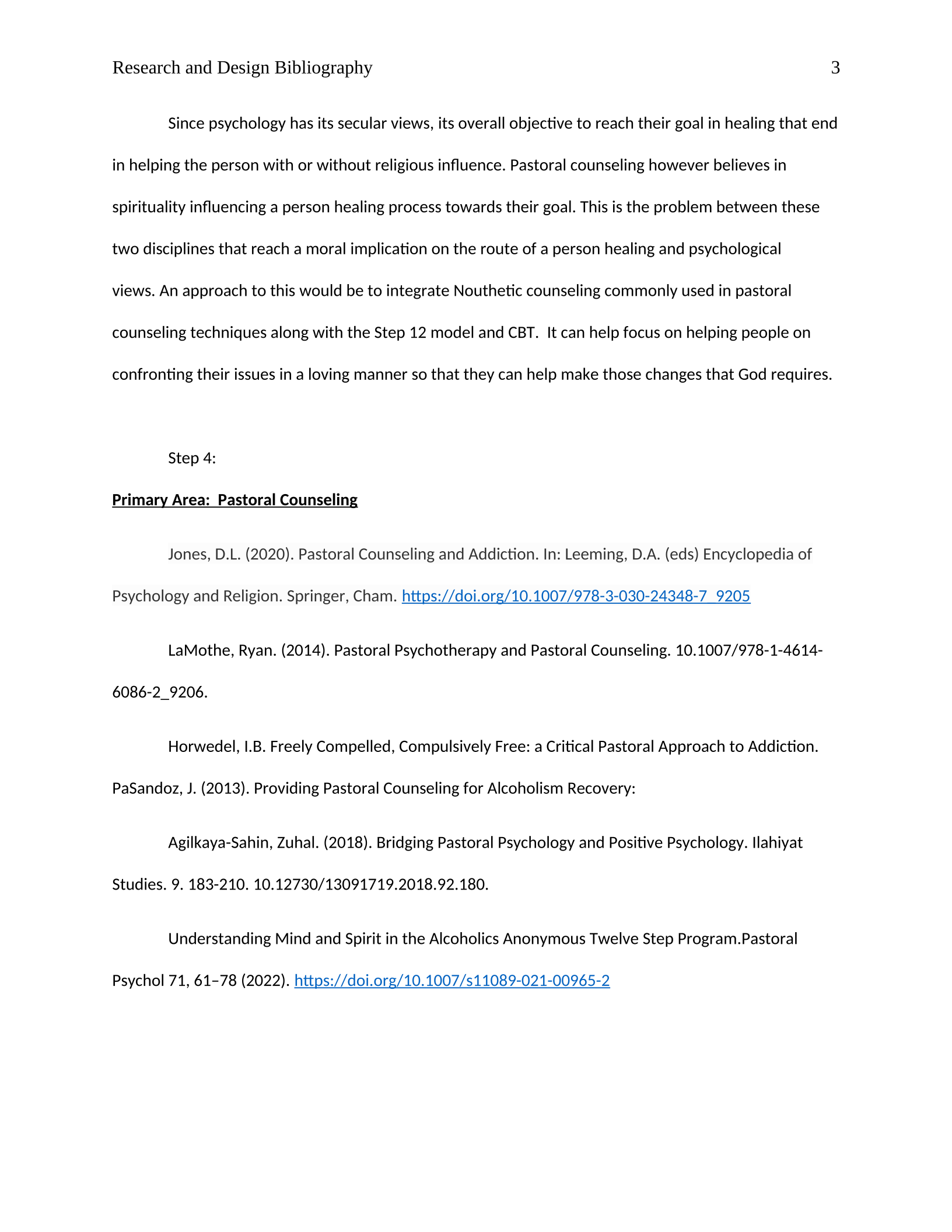
Step 4:
Primary Area: Pastoral Counseling
Jones, D.L. (2020). Pastoral Counseling and Addiction. In: Leeming, D.A. (eds) Encyclopedia of
Psychology and Religion. Springer, Cham. https://doi.org/10.1007/978-3-030-24348-7_9205
LaMothe, Ryan. (2014). Pastoral Psychotherapy and Pastoral Counseling. 10.1007/978-1-4614-
6086-2_9206.
Horwedel, I.B. Freely Compelled, Compulsively Free: a Critical Pastoral Approach to Addiction.
PaSandoz, J. (2013). Providing Pastoral Counseling for Alcoholism Recovery:
Agilkaya-Sahin, Zuhal. (2018). Bridging Pastoral Psychology and Positive Psychology. Ilahiyat
Studies. 9. 183-210. 10.12730/13091719.2018.92.180.
Understanding Mind and Spirit in the Alcoholics Anonymous Twelve Step Program.Pastoral
Psychol 71, 61–78 (2022). https://doi.org/10.1007/s11089-021-00965-2
Research and Design Bibliography 4
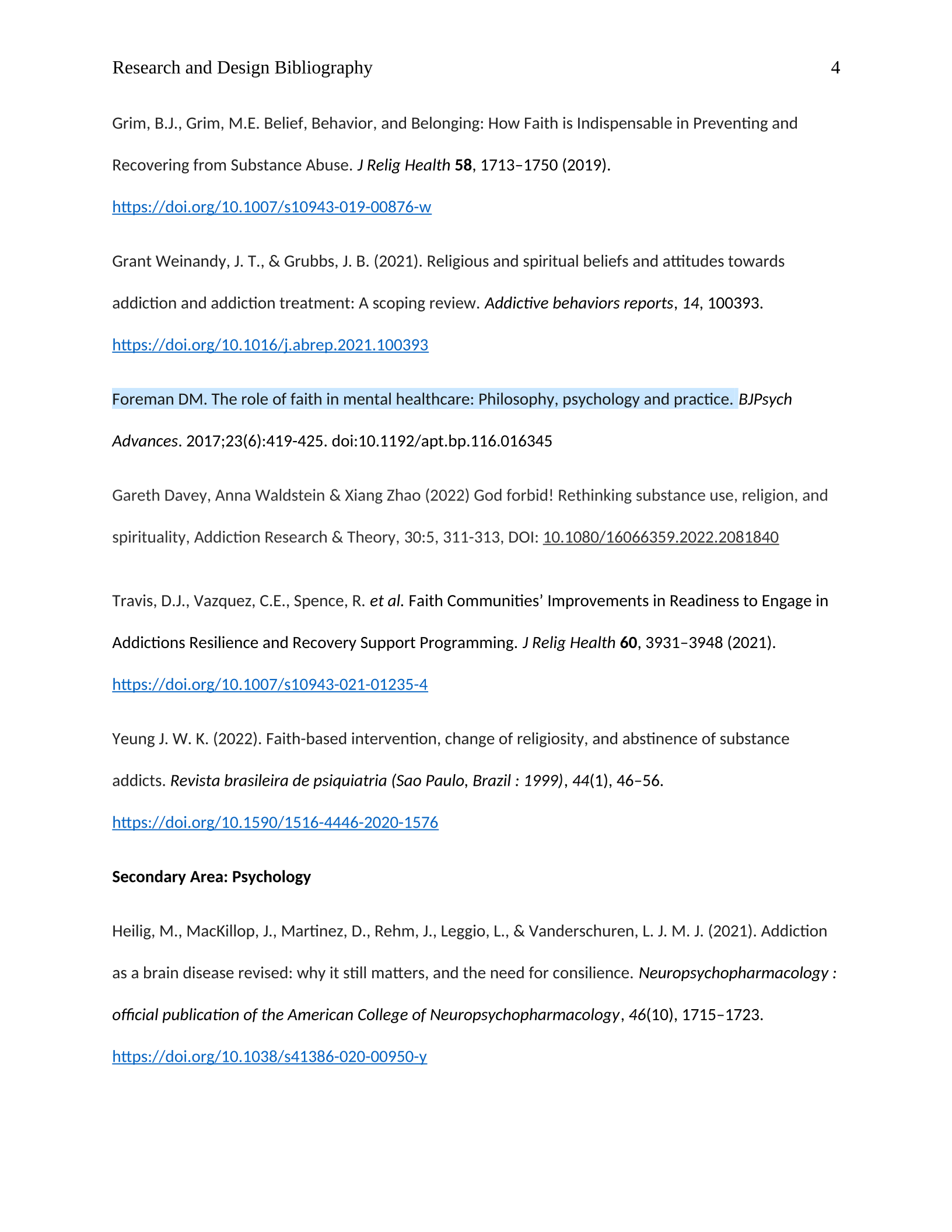
Grim, B.J., Grim, M.E. Belief, Behavior, and Belonging: How Faith is Indispensable in Preventing and
Recovering from Substance Abuse. J Relig Health 58, 1713–1750 (2019).
https://doi.org/10.1007/s10943-019-00876-w
Grant Weinandy, J. T., & Grubbs, J. B. (2021). Religious and spiritual beliefs and attitudes towards
addiction and addiction treatment: A scoping review. Addictive behaviors reports, 14, 100393.
https://doi.org/10.1016/j.abrep.2021.100393
Foreman DM. The role of faith in mental healthcare: Philosophy, psychology and practice. BJPsych
Advances. 2017;23(6):419-425. doi:10.1192/apt.bp.116.016345
Gareth Davey, Anna Waldstein & Xiang Zhao (2022) God forbid! Rethinking substance use, religion, and
spirituality, Addiction Research & Theory, 30:5, 311-313, DOI: 10.1080/16066359.2022.2081840
Travis, D.J., Vazquez, C.E., Spence, R. et al. Faith Communities’ Improvements in Readiness to Engage in
Addictions Resilience and Recovery Support Programming. J Relig Health 60, 3931–3948 (2021).
https://doi.org/10.1007/s10943-021-01235-4
Yeung J. W. K. (2022). Faith-based intervention, change of religiosity, and abstinence of substance
addicts. Revista brasileira de psiquiatria (Sao Paulo, Brazil : 1999), 44(1), 46–56.
https://doi.org/10.1590/1516-4446-2020-1576
Secondary Area: Psychology
Heilig, M., MacKillop, J., Martinez, D., Rehm, J., Leggio, L., & Vanderschuren, L. J. M. J. (2021). Addiction
as a brain disease revised: why it still matters, and the need for consilience. Neuropsychopharmacology :
official publication of the American College of Neuropsychopharmacology, 46(10), 1715–1723.
https://doi.org/10.1038/s41386-020-00950-y
Research and Design Bibliography 5
Lander, L., Howsare, J., & Byrne, M. (2013). The impact of substance use disorders on families
and children: from theory to practice. Social work in public health, 28(3-4), 194–205.
https://doi.org/10.1080/19371918.2013.759005
Mardani, M., Alipour, F., Rafiey, H. et al. Challenges in addiction-affected families: a systematic
review of qualitative studies. BMC Psychiatry 23, 439 (2023). https://doi.org/10.1186/s12888-023-
04927-1
Coffman, E., & Swank, J. (2021). Attachment Styles and the Family Systems of Individuals
Affected by Substance Abuse. The Family Journal, 29(1), 102-108.
https://doi.org/10.1177/1066480720934487
Dennis C. Daley, Family and social aspects of substance use disorders and treatment, Journal of
Food and Drug Analysis, Volume 21, Issue 4, Supplement, 2013, Pages S73-S76, ISSN 1021-9498,
https://doi.org/10.1016/j.jfda.2013.09.038.
(https://www.sciencedirect.com/science/article/pii/S1021949813001026)
Step 5: Entwistle, D. N. (2015). Integrative approaches to psychology and
Christianity: An
introduction to worldview issues, philosophical foundations, and models of
integration (3rd ed.).
Wipf & Stock Publishers. ISBN: 9781498223485. Note: The Jerry Falwell Library (JFL)
can
provide this text as a free e-book.
My two areas of study are Pastoral Counseling and Psychology. In pastoral counseling, it
emphasizes the importance of major’s theories and concepts that center around integrating theology
and psychology. Adequacy is defines as understanding the problems of the disciplines and its methods
Research and Design Bibliography 6
of the disciplines that are based on the problems is important because it shows an understanding on the
disciplines and the problems that they will interface (Repko & Szostak, 2021). Pastoral counseling shows
an example of this by discussing the challenges that can happen in Psychology and Theology. The book
that gave me the most critical information in understanding the Psychology and Theology was
Integrative approaches to psychology and Christianity: An introduction to worldview issues,
philosophical foundations, and models of integration by Entwistle which was published in 2015. In my
courses, Entwistle was commonly used in learning about integrating theology, spirituality and
Psychology. Entwistle informs that when you are trying to understand the way of human nature that
there is a crossroads between psychology and theology (Entwistle,2015). Also, he described six types of
models called Enemies, spies, colonial, rebuilders, neutral, parties, and Allies model. I like the Allies
model. The Allies model is described an integral approach of both psychology and theology while
maintaining a balancing of the worldview but concludes Gods as the truth to all things.
Since biblical counseling was pioneered by Jay Adams. Adams approach in his nouthetic counseling. This
a popular model uses in pastoral counseling because it can provide a more informal approach in that is
require in secular psychology settings.
Psychology helps us to understand the behavior of addiction and how we can provide
therapeutic techniques in the healing process from different concepts. Certain theories such as
Attachment theories or Learning Theory has developed an outcome on how addiction is developed and
understanding its concepts. Additionally, psychology has it owns various theories and concepts such as
Cognitive Behavioral, Behavioral Therapy and the 12-step model that is commonly used in the addiction
techniques. These will also be discussing in my research topic using the scholarly sources provided in
step 4 as a part of the research. The psychological process of addiction is a brain disease that has to have
a life changing style that is therapeutic for the addict and the family.
Research and Design Bibliography 8
References
Entwistle, D. N. (2015). Integrative approaches to psychology and
Christianity: An
introduction to worldview issues, philosophical foundations, and models of
integration (3rd ed.).
Wipf & Stock Publishers. ISBN: 9781498223485. Note: The Jerry Falwell Library (JFL)
can
provide this text as a free e-book.
Repko, Allen F., and Rick Szostak. Interdisciplinary Research: Process and Theory.
SAGE, 2021
Powered by TCPDF (www.tcpdf.org)

