


HLTH 645 – Effective Weight Loss
Liberty University
Non-Degree Seeking
HLTH 645
Effective Weight Loss for Athletes Assignment
Kendra L. Gillis
ID: L00099267
December 11, 2022
Words: 647
1
HLTH 645 – Effective Weight Loss
EFFECTIVE WEIGHT LOSS FOR ATHLETES ASSIGNMENT
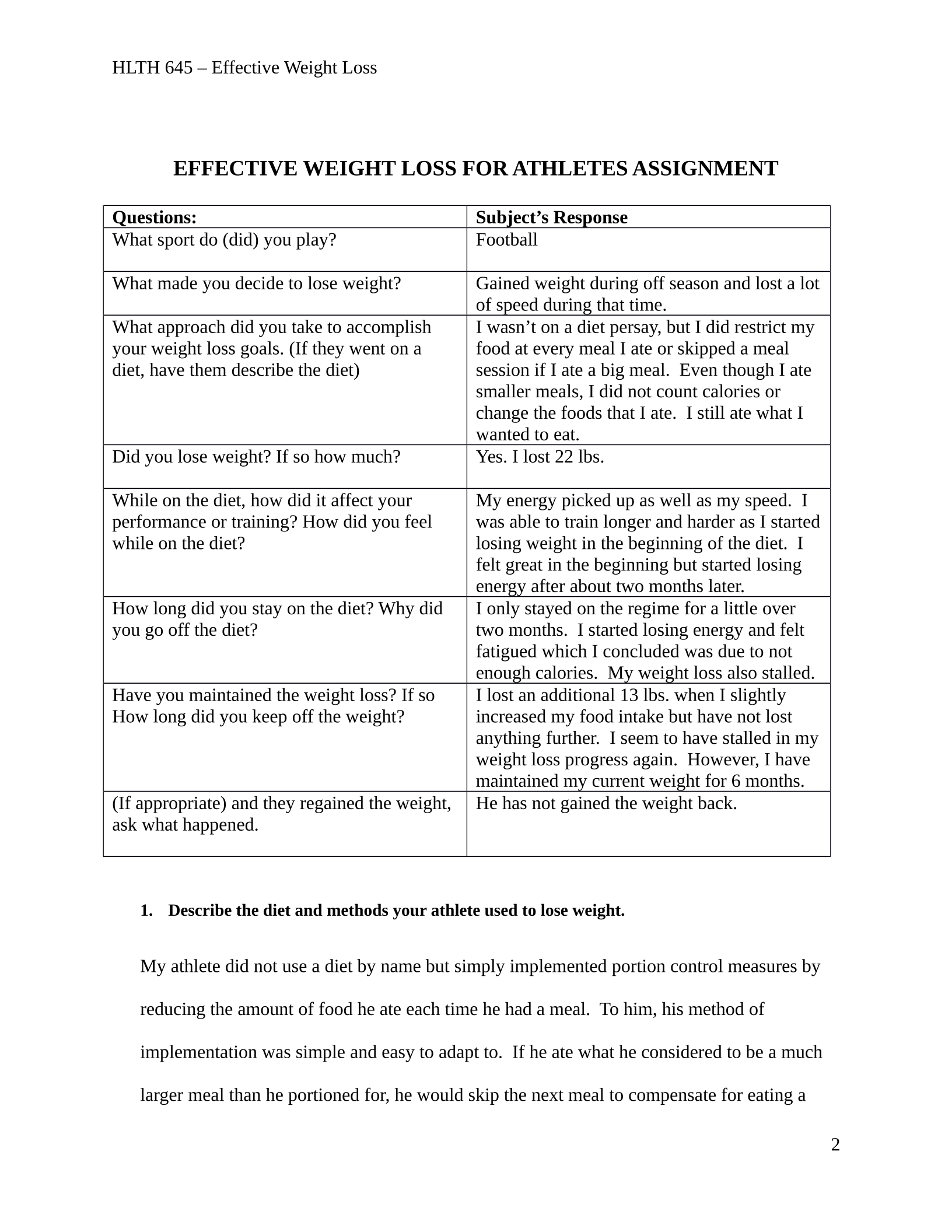
Questions: Subject’s Response
What sport do (did) you play? Football
What made you decide to lose weight? Gained weight during off season and lost a lot
of speed during that time.
What approach did you take to accomplish
your weight loss goals. (If they went on a
diet, have them describe the diet)
I wasn’t on a diet persay, but I did restrict my
food at every meal I ate or skipped a meal
session if I ate a big meal. Even though I ate
smaller meals, I did not count calories or
change the foods that I ate. I still ate what I
wanted to eat.
Did you lose weight? If so how much? Yes. I lost 22 lbs.
While on the diet, how did it affect your
performance or training? How did you feel
while on the diet?
My energy picked up as well as my speed. I
was able to train longer and harder as I started
losing weight in the beginning of the diet. I
felt great in the beginning but started losing
energy after about two months later.
How long did you stay on the diet? Why did
you go off the diet?
I only stayed on the regime for a little over
two months. I started losing energy and felt
fatigued which I concluded was due to not
enough calories. My weight loss also stalled.
Have you maintained the weight loss? If so
How long did you keep off the weight?
I lost an additional 13 lbs. when I slightly
increased my food intake but have not lost
anything further. I seem to have stalled in my
weight loss progress again. However, I have
maintained my current weight for 6 months.
(If appropriate) and they regained the weight,
ask what happened.
He has not gained the weight back.
1. Describe the diet and methods your athlete used to lose weight.
My athlete did not use a diet by name but simply implemented portion control measures by
reducing the amount of food he ate each time he had a meal. To him, his method of
implementation was simple and easy to adapt to. If he ate what he considered to be a much
larger meal than he portioned for, he would skip the next meal to compensate for eating a
2

HLTH 645 – Effective Weight Loss
larger meal previously. If he missed a meal, he would eat a larger portion the next meal
unless it was the last meal of the day which he added more fluids to make him feel fuller and
satisfied. He concluded that eating a heavier meal at the end of the day would cause him to
either gain weight or not lose any at all.
2. You may use references from a diet book (e.g. Omega Z Diet Book) and your text
book to determine if this was a healthy approach? Why or Why not? Part of your
answer should explain the metabolic response. Discuss any risks with this approach
such as eating disorders, nutrient deficiencies or metabolic disturbances.
Losing weight through portion control is a very healthy way of losing weight if done
correctly. The issue that comes into play is the number of calories that he is consuming. For
an athlete, it isn’t just about losing the weight but eating enough calories for fuel production.
Without having an eating plan long-term, he could very well be restricting food intake that is
not allowing his body to get all the right nutrients as well as an adequate number of calories.
A diet too low in calories is bad due to increased risk of lowering basal metabolic rate,
decreasing the likelihood of adherence, and increased risk of muscle loss and nutrient
deficient.1 He could develop nutritional deficiencies that causes fatigue, slower recovery
times, reduced ability to rebuild muscles, and immunity concerns. Without micronutrients
such as calcium & potassium that support muscle contraction and sodium & chloride that
support electrolyte balance, he could develop injuries that will cause him to be sidelined from
football for a while.
3. What changes or recommendations would you make to help this athlete lose weight?
Provide your rationale.
3

HLTH 645 – Effective Weight Loss
One of the first changes that I would advise is that he look at the foods that he is eating to
ensure that he is getting an adequate number of calories. He says that he has stalled in his
weight loss two times. Considering minimum carbohydrate, protein, and fat guidelines, it is
generally recommended that athletes who want to lose body fat not restrict energy intake to
less than 30 kcal/kg daily.2 The rationale is that he will be getting enough calories to sustain
him, but he will also be able to lose weight as well.
Within him analyzing his food choices, I would recommend that he choose foods that are
nutrient dense. The rationale is that he may not need to eat as many foods throughout the day
to meet his calorie requirement, but he will also be getting proper macronutrient and
micronutrient supply to accommodate the demand of football.
4


