


Case Study Part 2
Brittany Horvath
Liberty University
HLTH 645
December 18, 2020

1. Review General Description of athlete and sport
The athlete I will be creating a meal plan for is Macie Ray. Macie is caucasian and has been
cheering at the college level for 3 years at The College Of New Jersey in Ewing. Macie grew up
in Freehold, New Jersey and has been cheering for 15 years, from pop warner to competitive and
now in college. Macie has participated in various positions over her years of cheerleading, but
the position she finds herself in the most is the main base position. The main base is the primary
base underneath the flyer. This base needs to have a strong upper body as well as core and lower
body, in addition to great body control and awareness. Her goals for the season are to
continuously become stronger in every aspect of the sport, but in her stunting specifically. Macie
is a sideline cheerleader as well as a competitive cheerleader. The menus that I have decided to
discuss are on a training/practice day and on an event day where she is performing 1-2 short
(2:30 minutes each) routines.
2. Menu charts
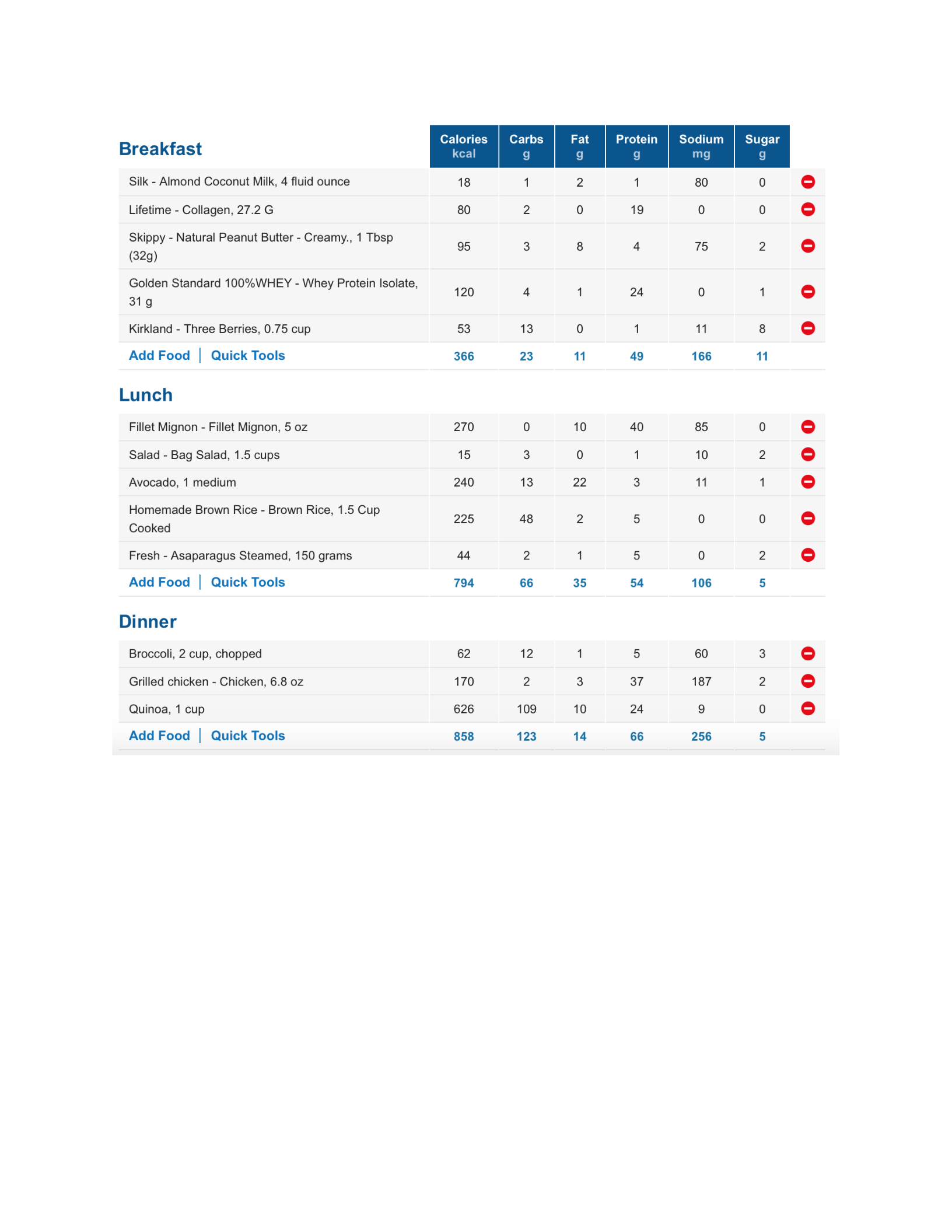
TRAINING DAY (Website used: MyFitnessPal.com)
For reference of carbohydrates, fats and proteins before and after training, practices this day were
11am-2pm (between breakfast and lunch) and 4pm-6pm (before dinner). I feel that she did not
need a significantly high amount of carbohydrates before practice since she usually has a high
carbohydrate meal for dinners, which would help supplement the missing carbohydrates from
breakfast. After practice, the carbohydrate amount is higher to help replace the glycogen and
carbohydrates used and burned during the event, but also high in protein to help refuel from
weightlifting.
Breakfast
Silk
-
Almond
Coconut
Milk,
4
fluid
ounce
Lifetime
-
Collagen,
27.2
G
Skippy
-
Natural
Peanut
Butter
-
Creamy.,
1
Tbsp
(32g)
Golden
Standard
100%WHEY
-
Whey
Protein
Isolate,
31g
Kirkland
-
Three
Berries,
0.75
cup
Add
Food
|
Quick
Tools
Lunch
Fillet
Mignon
-
Fillet
Mignon,
5
oz
Salad
-
Bag
Salad,
1.5
cups
Avocado,
1
medium
Homemade
Brown
Rice
-
Brown
Rice,
1.5
Cup
Cooked
Fresh
-
Asaparagus
Steamed,
150
grams
Add
Food
|
Quick
Tools
Dinner
Broccoli,
2
cup,
chopped
Grilled
chicken
-
Chicken,
6.8
oz
Quinoa,
1
cup
Add
Food
|
Quick
Tools
Calories
Carbs
Protein
kcal
g
|
18
1
2
1
80 0
80
95
120
53
366
270
15
240
225
44
794
62
170
626
858
2
13
23
13
48
66
12
109
123
0
11
10
22
35
10
14
19
24
49
40
54
37
24
66
0
75
11
166
85
10
11
106
60
187
256
0
11
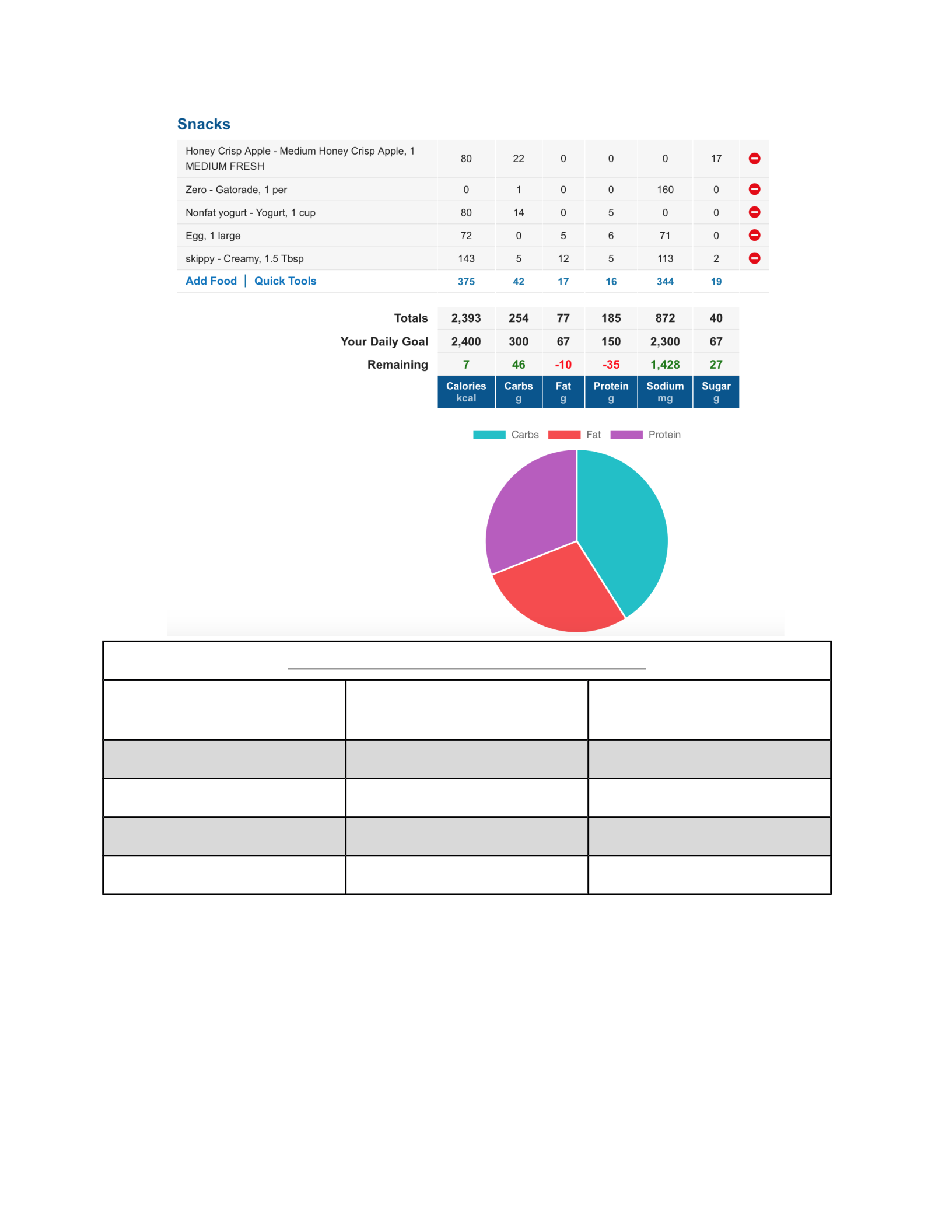
Nutrient Totals and Goals for a Training Day
Nutrient Amount Met/Not Met- if not met, by
how much?
Calories 2400 calories No-under by 8 calories
Grams of Carbohydrates 300 gram No-under by 94 grams
Grams of Protein 150 grams Yes-over by 47 grams
Grams of Fat 67 grams Yes-Over by 8 grams
*Nutrient adequacy- Little needs to be done to improve this training day of eating. The athlete
could have consumed slightly more carbohydrates and slightly less protein. This could be done
possibly by removing the hard boiled eggs and replacing them with a banana or other similar
fruit.
EVENT DAY (Website used: MyFitnessPal.com)
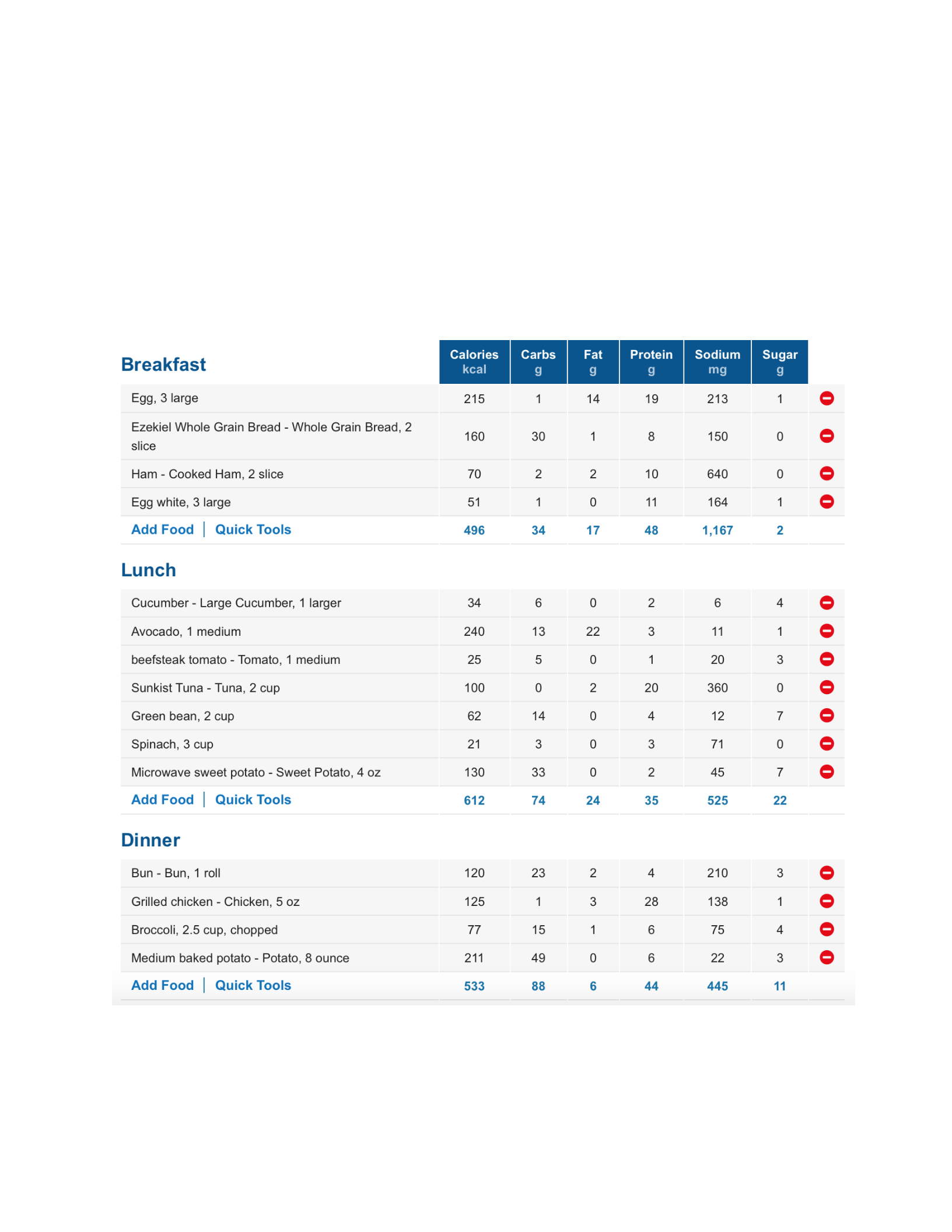
For reference, the event this day occurred between 2-3 so you can view the amount of
carbohydrates, proteins and fats before and after the event in each meal. Macie had a generally
large breakfast preparing to burn a lot of carbohydrates between lunch and dinner. Before her
event this day, she had roughly 100 grams of carbohydrates and about 88 grams after the event.
This is going to significantly help her body refuel.
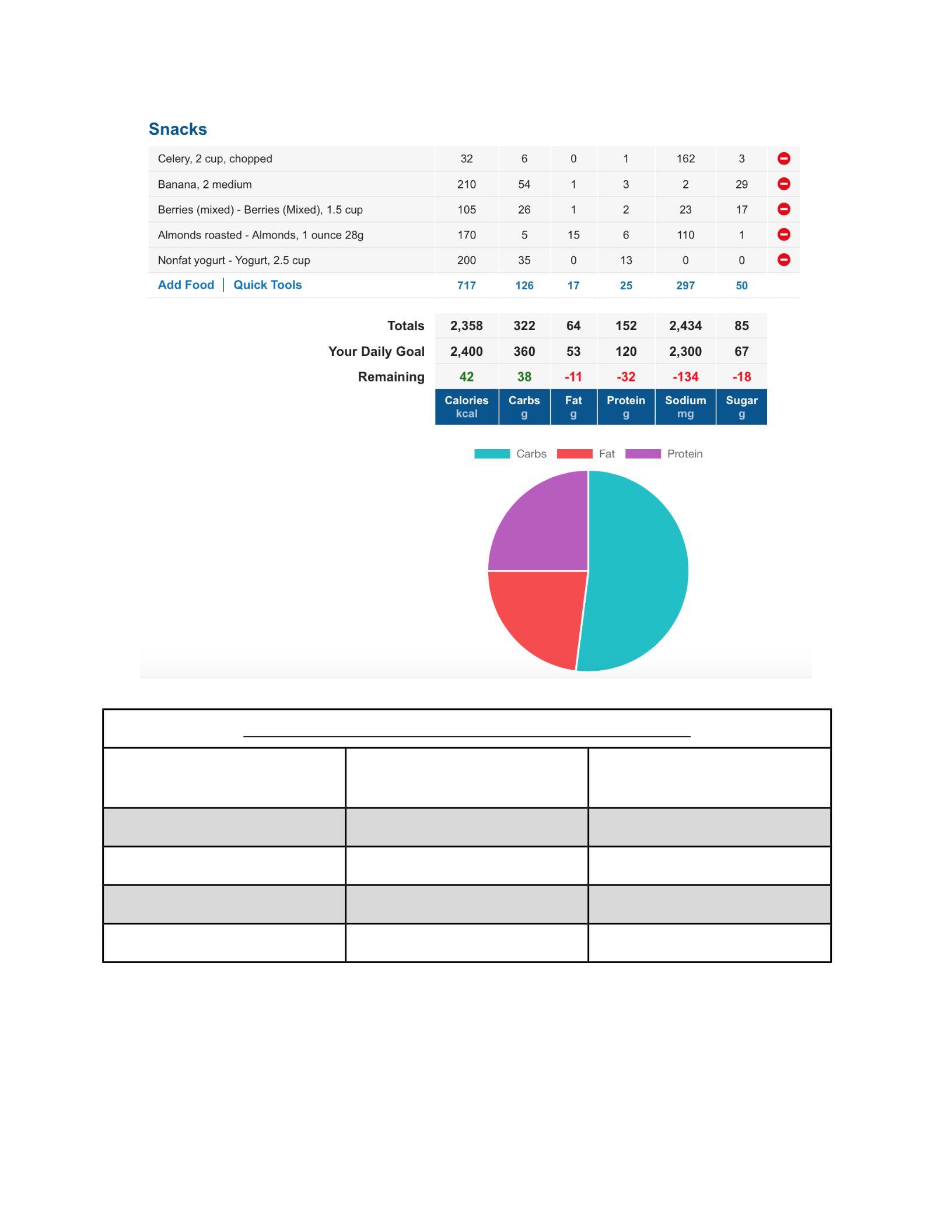
Nutrient Totals and Goals for Day of Event/Competition
Nutrient Amount Met/Not Met- if not met, by
how much?
Calories 2400 calories No-under by 24 calories
Grams of Carbohydrates 360 gram No-under by 38 grams
Grams of Protein 120 grams Yes-over by 32 grams
Grams of Fat 53 grams Yes-Over by 11 grams
*Looking at the nutrients here, some changes that need to be made are lower amounts of sodium
in the daily intake. The sodium seems to be coming from the ham, eggs, tuna, chicken, almonds
and celery. This could be eliminated or changed by replacing these foods with lower sodium
content foods such as bananas, yogurt and cucumbers. Macie also needed to have slightly less
protein after the event. This could be done by eliminating some higher protein foods such as

celery and egg whites. Macie’s diet was slightly over with sugar, but since this was an event day,
she will likely benefit from the sugar since she will need to replenish her glycogen stores so I am
not very concerned with those numbers since it is only about 20 grams over. Her carbohydrates
were slightly lower than they should have been for a training day, but since her sugar was a little
bit high, I feel like it pretty much evens out.
3. Dietary guidelines/needs and rationale for pre, event, and post times based on
workouts discussed previously (show calculations for determining calorie and
protein needs)
Based on the amount of physical activity that Macie endures, she would need about 2400 calories
a day to refuel her body properly. Macie is a main base and she wants to become stronger, which
is why her caloric allowance is so high. She is working on increasing her muscle mass. Before
her training and events, it is important to eat carbohydrates to be broken down into energy during
her training. For a regular training day, she needs to eat around 300 grams of protein. During an
event day, she needs to slightly up this intake in order to replenish carbohydrates lost during
performance, which is why on the event/competition day, you can see her carbohydrates are up
to 360 grams for the day. This will help her replenish the glycogen lost during high intensity
exercises performed during the competition. I also made sure that Macie was consuming protein
in order to increase her muscle mass through weight lifting in addition to the high amounts of
(human) lifting she will be performing at practice. Protein recommendations are best made based
on the individual circumstances of each athlete.³ On the training day, Macie practices 2-3 times a
day for approximately 2 hours at a time. After each training session, she replenishes her lost
electrolytes and carbohydrates with gatorade in addition to water for hydration. She also makes
sure her meal is slightly more carbohydrate and protein heavy after training. Overall, I believe if
she hits her macronutrient and micronutrient numbers throughout the day, the exact timing will
not be as crucial on a training day as it will be on an event day. On an event day where the event
occurs around 2-3pm, Macie finishes her day with a carbohydrate heavy meal to replenish

glycogen stores and replace lost carbohydrates from the event. She also needs to maintain her
hydration throughout the day.
Calorie Calculations for Training Day:
Body weight in lbs= 143 lbs
Body weight in kg= 65kgs
65 x .9= 58.5
58.5 x 24 = 1404 x .95 = 1333 BMR
1333 x 1.8 = 2399 calories
Protein Calculation:
Body weight in kg x 2= 150 grams
Carbohydrates Calculation:
3-10grams per body weight in kg
65 x 4 = 260 grams
65 x 5 = 325 grams
*I chose to go in between both of these numbers and settle at 300 grams*
Fat Calculation:
20-30% of daily calories
2400 x .25 = 600 calories from fat
4. Hydration guidelines/needs and rationale for pre, event, and post times.
It is important that athletes are hydrating themselves before, during and after big events. Before
exercise, an athlete may want to consume a beverage, snack or meal 1 to 4 hours prior to the
activity. The goal of this is to relieve hunger and to help with hydration.¹ A meal before an event
should be high in carbohydrates, moderate in protein, and low in fat and fiber. During activity,
athletes may want to replace lost fluids with carbohydrates. For events longer than 30 minutes,
about 30 to 60 grams of carbohydrates an hour can be needed to contribute to muscle fuel needs
and blood glucose regulation.¹ After exercise is completed, the goals is to consume foods and
beverages that are going to replace and replenish the foods lost during exercise in order to speed

up recovery. Actually, the most important meal of the competition day is the post-game meal. We
want to immediately begin repairing the metabolic and soft-tissue damage caused by the game.²
Athletes can focus on using carbohydrates to replenish muscle glycogen (~1.0 to 1.2 g/kg/h
during the early recovery phase, fluids to restore hydration with about 1.5 liters for every kg of
body weight lost, electrolytes such as sodium can be used to replace sweat and protein will be
necessary to repair skeletal muscle tissue (~15 to 25 g of protein).¹ Cheerleaders perform a short
2 and a half minute routine.¹ When they are done, they need to be rehydrating with gatorades and
fluids.
5. Specific nutrition information and recommendations to help prevent, reduce, or
alleviate issues presented in Part 1.
Since cheerleading is a sport that is looked upon by others in terms of their physical fitness, it is
important that athletes are properly fueling their bodies and not under eating. Nutrition is
important not only during training but also during the off season where athletes will be more
likely to put on weight by experiencing the other social aspects of college. Careful consideration
of the competitive goals and training demands should be an important aspect of any nutritional
recommendation. ³ Some of the other concerns include proper hydration (discussed above) and
recovery. It is important that after workouts athletes are properly recovering with electrolytes
(such as gatorades) and proteins. If the athlete is not properly fueling their bodies, some risks that
the athlete might experience as a result of not recovering properly are injuries, strains and
possibly fatigue during the next event or training day.¹ Consistent lack of nutrition may also lead
to chronic fatigue.¹
6. Any supplements or ergogenic aids that would be beneficial . These
recommendations may be included as bullet points.
For this particular athlete, I recommended (and added in her nutrition plans) protein
supplements. I chose protein powder because the athlete is looking to increase her strength and

increase by weight lifting. Implementing protein powder is an easy way to increase her protein
intake to help her reach her goals. Another possible supplement I was considering was BCAAs to
help restore and rebuild the protein after it is broken down. If this was implemented, it would
help by improving recovery time and decreasing muscle soreness and fatigue.

WORKS CITED
1. Dunford M, Doyle JA. Nutrition for Sport and Exercise. Boston, MA: Cengage; 2019.
2. Riley D, Arapoff J. Game-day meal plan. Coach and Athletic Director. 1998;68(5):8-12.
3. Tipton K, Witard O. Protein Requirements and Recommendations for Athletes:
Relevance of Ivory Tower Arguments for Practical Recommendations. School of Sport
and Exercise Sciences, University of Birmingham, Edgbaston, Birmingham B29 5SA,
United Kingdom, 2007. p17-36.
Caloric Calculations: https://diabetesstrong.com/how-to-find-your-daily-calorie-need/

