


Midterm Essay Exam
Moniek van Aarle
April 20, 2018
HLTH 511
Issues in Public and Community Health
Liberty University
Master of Public Health Program
Word Count:
2
Midterm Essay Exam
Part I
The following scenarios of medical deception are ranked from least inappropriate behavior to
inappropriate behavior for a physician.
1. A physician recognizes the patient has psychosomatic symptoms and prescribes a
placebo pill in hopes that the emotional relief of the placebo will help the patient recover
(thus saving the patient from possible treatments which would be more invasive and/or
extensive).
The physician is acting through “their therapeutic privilege”, which states that the doctor
knows what the best is for the patient and he or she can act up on this without informing the
patient1. If the physician is really acting with the best interest of the patient and there are no risks
involved, I think this kind of medical deception is not ideal but the least inappropriate of all three
scenarios.
2. A physician does not provide full disclosure of a surgical procedure because he/she
suspects the patient is not emotionally stable enough to handling all the details of the
surgery, treatment and recovery.
This type of medical deception brings a lot of medical risks with it and the physician suspects
something but does not verify this. These two reasons are why I ranked this one lower on the list,
and I believe this is inappropriate behavior and should not happen. When the operation goes
wrong or there a complication during this, without informing the patient about the possibility is
against the rights of the patient. Also, by just suspecting/assuming a patient is emotionally
unstable you never know if that is the case. You should always strive to talk with the patient
about how they are really feeling before judging by yourself1.
2
3
Midterm Essay Exam
3. A physician intentionally submits faulty information to an insurance company in an
attempt to help a sick patient pay for needed healthcare services.
This is not only ethically wrong, but also illegal for the physician to do. That is why this one
is ranked the most inappropriate of all the scenarios. I do understand that a physician wants to
help and provide the best medical care for all his or her patients. However, by submitting faulty
information he or she crosses the line; even when the intentions are to help the sick patient. A
doctor should not lie to help a patient, this is illegal and it causes more difficulties because for
which person do you lie and when is someone really in need.
Part II
The following scenarios are ranked from least ethical wrong to most ethically wrong actions of
physicians.
1. A physician treating a patient with a terminal illness fails to disclose secondary
ailments/diseases which may arise (in an attempt to protect the patient’s emotional
stability and will to fight).
A physician should always inform their patients with the information that is needed, this
includes disclosure about secondary diseases that may or may not occur. The physician is this
scenario is using benevolent deception1, which in rare cases can be justified. When a physician
deceives a patient, he or she should be aware that when the patient finds out that you did not
disclose all the information, it will be very hard for him/her to trust you anymore.
2. When prescribing pain medication, some physicians may “undertreat” a patient if they
sense their patient may have a propensity for addiction.
3
4
Midterm Essay Exam
I believe it is equally wrong to undertreat a to “overtreat” a patient, in both cases you are
hurting the patient, which is not in line with the oath of Hippocrates2. When the physician is
sensing their patient may have a propensity for addiction, he or she should provide information
for them about this subject and check up on them regularly. I think it does not justify to
undertreat the patient to protect them. This way the patient will suffer physical and unnecessary
pain, and this is not ethically correct.
3. Physicians accept pharmaceutical perks if they recommend a specific drug for treatment.
This scenario is in all ways possible wrong and unethical. Physicians should always act in the
best interest of the patient, not in their own best interest or the pharmaceuticals’ interest2.
Accepting pharmaceutical perks is not helping the patient, while it is only helping the
pharmaceutics with creating more profit by selling more through the physicians who promote
their products for them.
Part III
Luckily, I have never been lied to or mislead by a health car clinician, or in the position
that the physician should have tried to deceive me for my own benefit. An example from the
book goes the following: “A physician decides not to tell the parents of an infant who died
shortly after birth that the cause of death was an unpredictable genetic condition, because he
does not wish to diminish their desire to have another child”. I think this scenario is the perfect
example that good intentions from the physician are not enough reason to deceive a patient. Even
if it is by non-disclosure, which still is intentionally not telling the patient certain information1.
When the physician decides not to tell the parents they will have a lot of questions
and maybe even feel guilty for the unfortunate death of their newly born child. Parents need time
4
5
Midterm Essay Exam
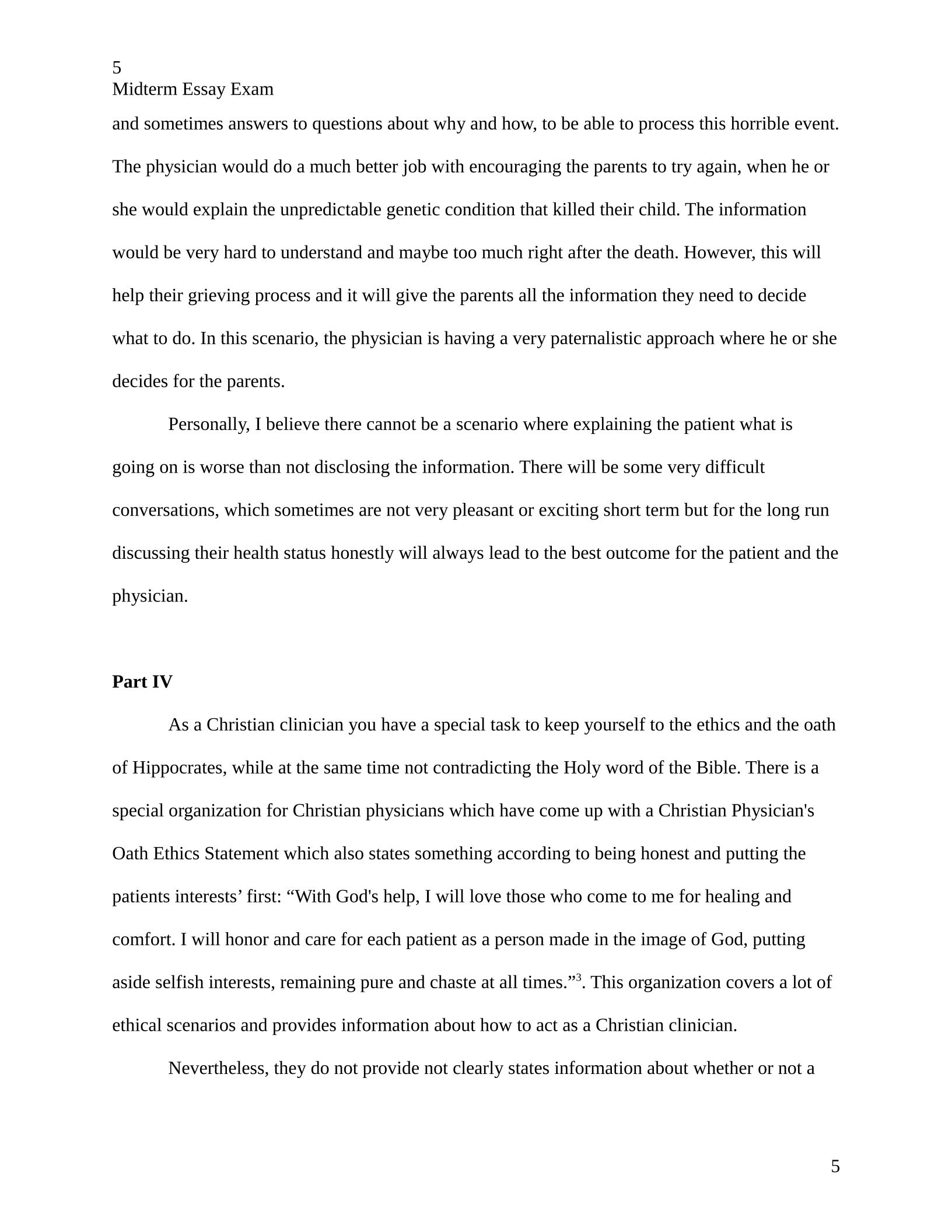
and sometimes answers to questions about why and how, to be able to process this horrible event.
The physician would do a much better job with encouraging the parents to try again, when he or
she would explain the unpredictable genetic condition that killed their child. The information
would be very hard to understand and maybe too much right after the death. However, this will
help their grieving process and it will give the parents all the information they need to decide
what to do. In this scenario, the physician is having a very paternalistic approach where he or she
decides for the parents.
Personally, I believe there cannot be a scenario where explaining the patient what is
going on is worse than not disclosing the information. There will be some very difficult
conversations, which sometimes are not very pleasant or exciting short term but for the long run
discussing their health status honestly will always lead to the best outcome for the patient and the
physician.
Part IV
As a Christian clinician you have a special task to keep yourself to the ethics and the oath
of Hippocrates, while at the same time not contradicting the Holy word of the Bible. There is a
special organization for Christian physicians which have come up with a Christian Physician's
Oath Ethics Statement which also states something according to being honest and putting the
patients interests’ first: “With God's help, I will love those who come to me for healing and
comfort. I will honor and care for each patient as a person made in the image of God, putting
aside selfish interests, remaining pure and chaste at all times.”3. This organization covers a lot of
ethical scenarios and provides information about how to act as a Christian clinician.
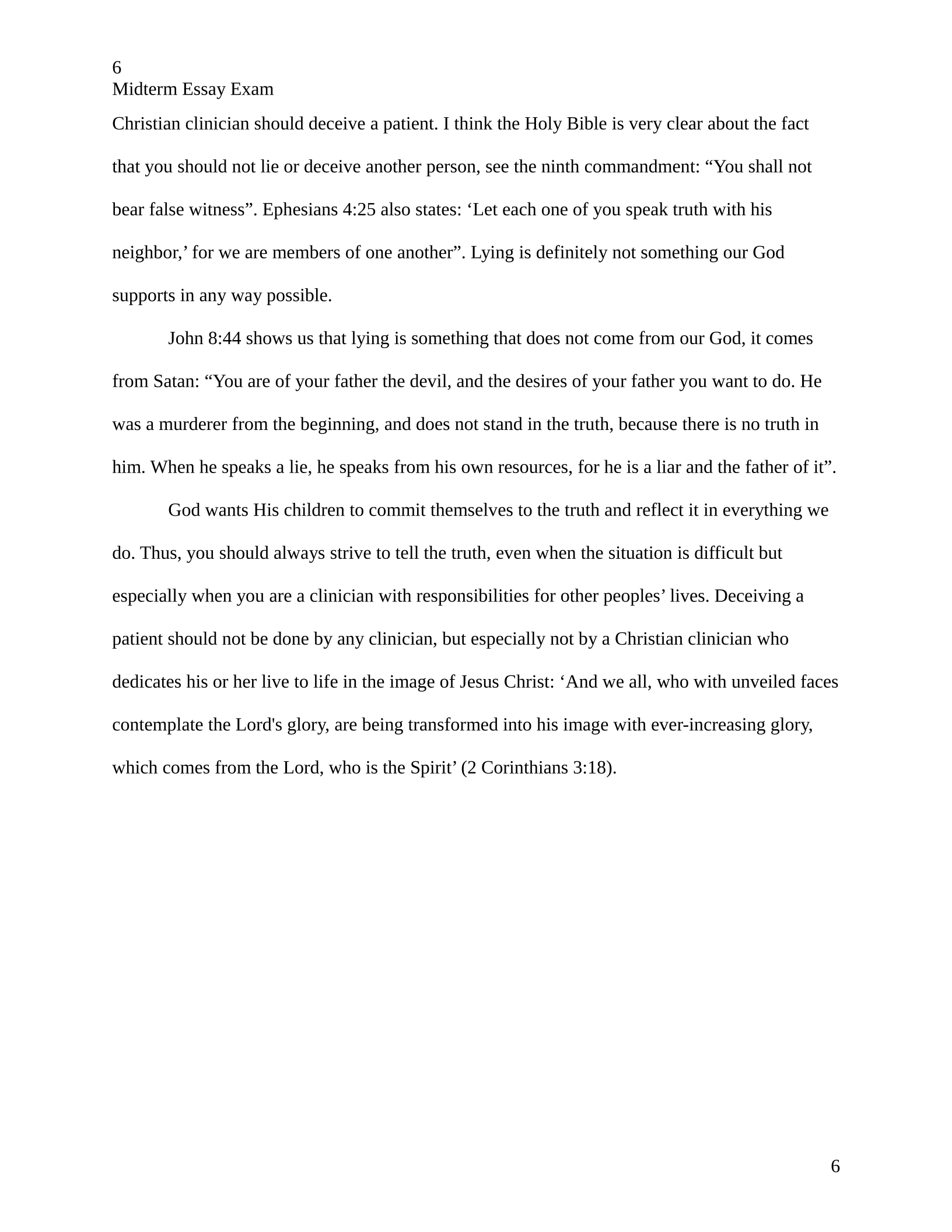
Nevertheless, they do not provide not clearly states information about whether or not a
5
6
Midterm Essay Exam
Christian clinician should deceive a patient. I think the Holy Bible is very clear about the fact
that you should not lie or deceive another person, see the ninth commandment: “You shall not
bear false witness”. Ephesians 4:25 also states: ‘Let each one of you speak truth with his
neighbor,’ for we are members of one another”. Lying is definitely not something our God
supports in any way possible.
John 8:44 shows us that lying is something that does not come from our God, it comes
from Satan: “You are of your father the devil, and the desires of your father you want to do. He
was a murderer from the beginning, and does not stand in the truth, because there is no truth in
him. When he speaks a lie, he speaks from his own resources, for he is a liar and the father of it”.
God wants His children to commit themselves to the truth and reflect it in everything we
do. Thus, you should always strive to tell the truth, even when the situation is difficult but
especially when you are a clinician with responsibilities for other peoples’ lives. Deceiving a
patient should not be done by any clinician, but especially not by a Christian clinician who
dedicates his or her live to life in the image of Jesus Christ: ‘And we all, who with unveiled faces
contemplate the Lord's glory, are being transformed into his image with ever-increasing glory,
which comes from the Lord, who is the Spirit’ (2 Corinthians 3:18).
6
7
Midterm Essay Exam
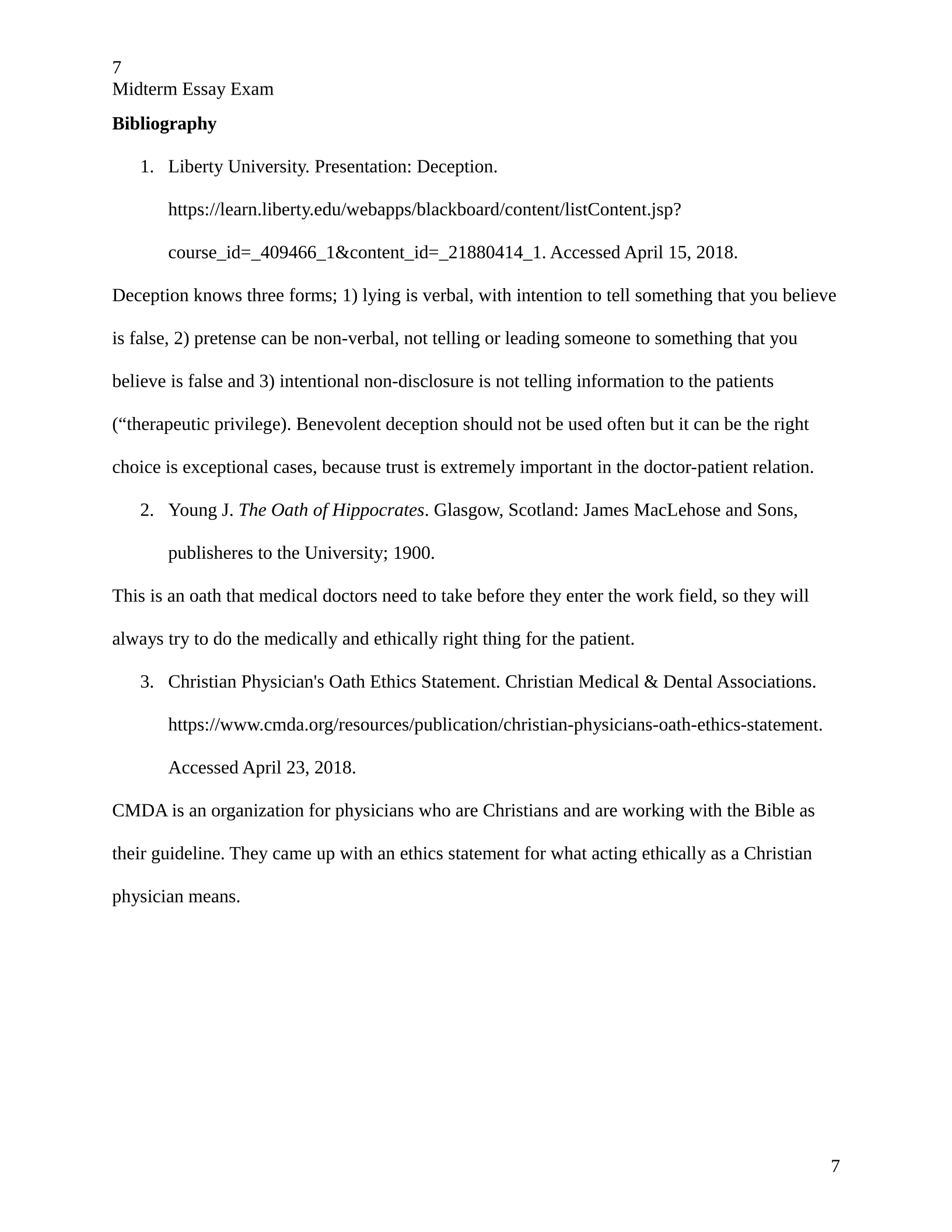
Bibliography
1. Liberty University. Presentation: Deception.
https://learn.liberty.edu/webapps/blackboard/content/listContent.jsp?
course_id=_409466_1&content_id=_21880414_1. Accessed April 15, 2018.
Deception knows three forms; 1) lying is verbal, with intention to tell something that you believe
is false, 2) pretense can be non-verbal, not telling or leading someone to something that you
believe is false and 3) intentional non-disclosure is not telling information to the patients
(“therapeutic privilege). Benevolent deception should not be used often but it can be the right
choice is exceptional cases, because trust is extremely important in the doctor-patient relation.
2. Young J. The Oath of Hippocrates. Glasgow, Scotland: James MacLehose and Sons,
publisheres to the University; 1900.
This is an oath that medical doctors need to take before they enter the work field, so they will
always try to do the medically and ethically right thing for the patient.
3. Christian Physician's Oath Ethics Statement. Christian Medical & Dental Associations.
https://www.cmda.org/resources/publication/christian-physicians-oath-ethics-statement.
Accessed April 23, 2018.
CMDA is an organization for physicians who are Christians and are working with the Bible as
their guideline. They came up with an ethics statement for what acting ethically as a Christian
physician means.
7
8
Midterm Essay Exam
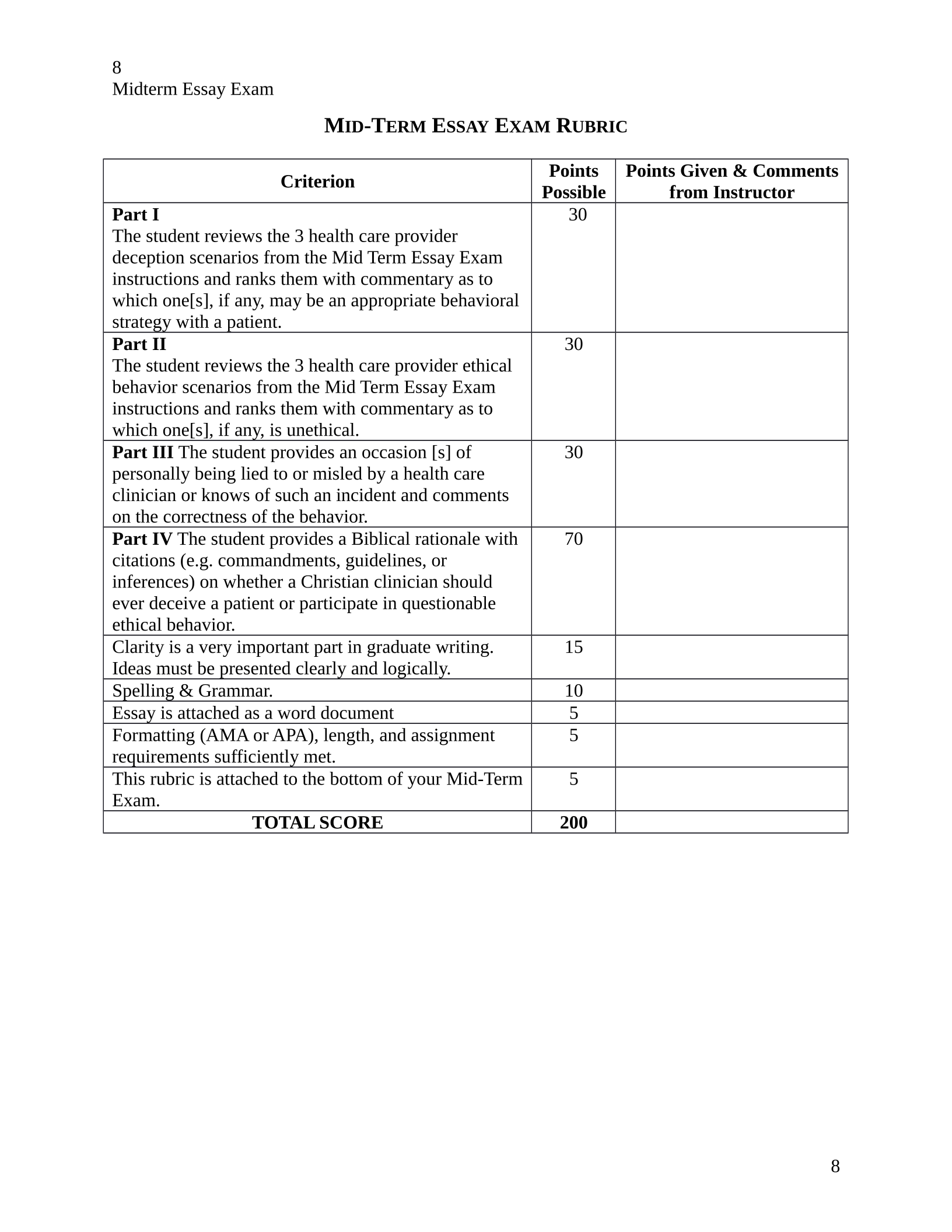
MID-TERM ESSAY EXAM RUBRIC
Criterion Points
Possible
Points Given & Comments
from Instructor
Part I
The student reviews the 3 health care provider
deception scenarios from the Mid Term Essay Exam
instructions and ranks them with commentary as to
which one[s], if any, may be an appropriate behavioral
strategy with a patient.
30
Part II
The student reviews the 3 health care provider ethical
behavior scenarios from the Mid Term Essay Exam
instructions and ranks them with commentary as to
which one[s], if any, is unethical.
30
Part III The student provides an occasion [s] of
personally being lied to or misled by a health care
clinician or knows of such an incident and comments
on the correctness of the behavior.
30
Part IV The student provides a Biblical rationale with
citations (e.g. commandments, guidelines, or
inferences) on whether a Christian clinician should
ever deceive a patient or participate in questionable
ethical behavior.
70
Clarity is a very important part in graduate writing.
Ideas must be presented clearly and logically.
15
Spelling & Grammar. 10
Essay is attached as a word document 5
Formatting (AMA or APA), length, and assignment
requirements sufficiently met.
5
This rubric is attached to the bottom of your Mid-Term
Exam.
5
TOTAL SCORE 200
8
Powered by TCPDF (www.tcpdf.org)

