HORIZONTAL MAPPING PROJECT 2
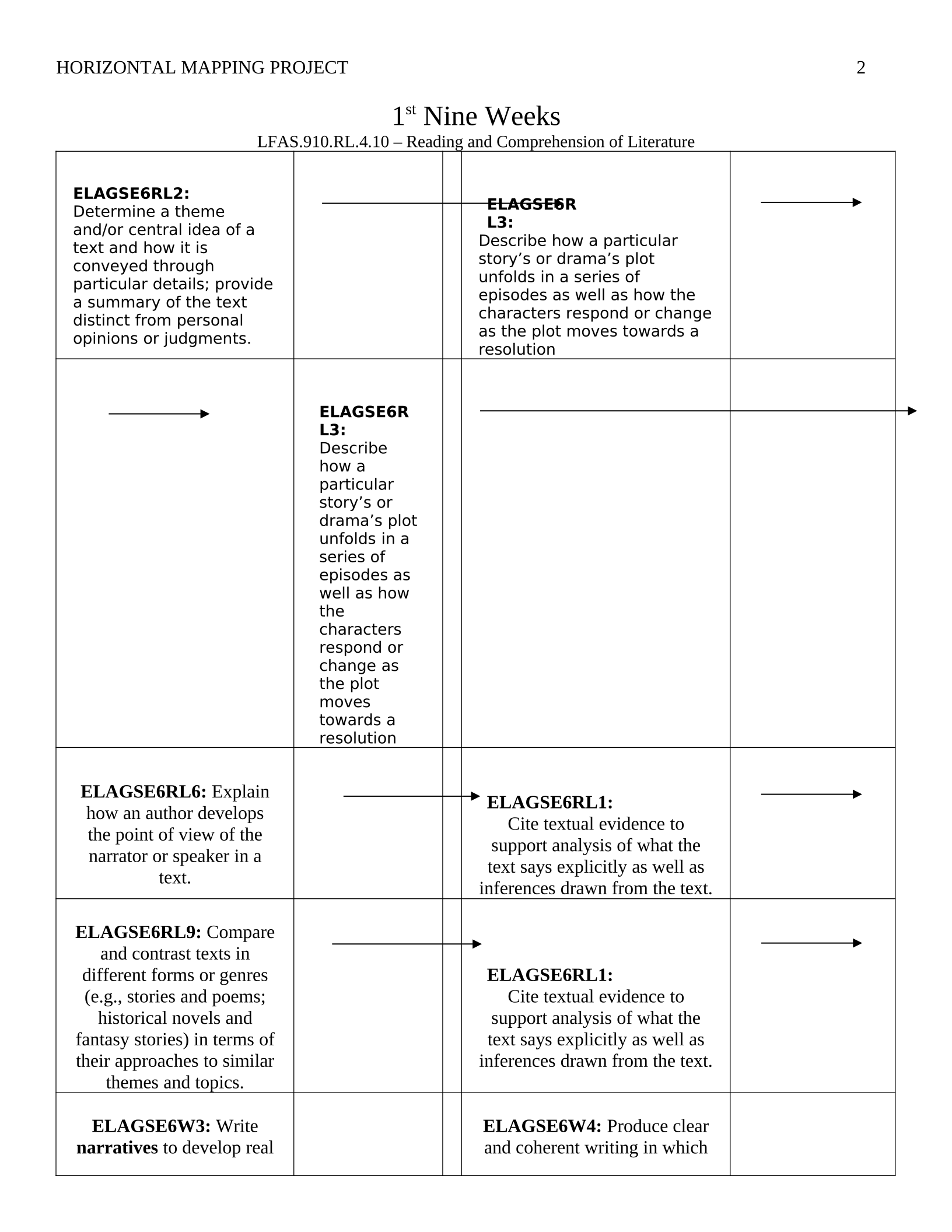
1st Nine Weeks
LFAS.910.RL.4.10 – Reading and Comprehension of Literature
ELAGSE6RL2:
Determine a theme
and/or central idea of a
text and how it is
conveyed through
particular details; provide
a summary of the text
distinct from personal
opinions or judgments.
ELAGSE6R
L3:
Describe how a particular
story’s or drama’s plot
unfolds in a series of
episodes as well as how the
characters respond or change
as the plot moves towards a
resolution
ELAGSE6R
L3:
Describe
how a
particular
story’s or
drama’s plot
unfolds in a
series of
episodes as
well as how
the
characters
respond or
change as
the plot
moves
towards a
resolution
ELAGSE6RL6: Explain
how an author develops
the point of view of the
narrator or speaker in a
text.
ELAGSE6RL1:
Cite textual evidence to
support analysis of what the
text says explicitly as well as
inferences drawn from the text.
ELAGSE6RL9: Compare
and contrast texts in
different forms or genres
(e.g., stories and poems;
historical novels and
fantasy stories) in terms of
their approaches to similar
themes and topics.
ELAGSE6RL1:
Cite textual evidence to
support analysis of what the
text says explicitly as well as
inferences drawn from the text.
ELAGSE6W3: Write
narratives to develop real
ELAGSE6W4: Produce clear
and coherent writing in which
HORIZONTAL MAPPING PROJECT 3
or imagined experiences or
events using effective
technique, relevant
descriptive details, and
well structured event
sequences.
the development, organization,
and style are appropriate to
task, purpose, and audience.
(Grade-specific expectations
for writing types are defined in
Standards 1–3 above).
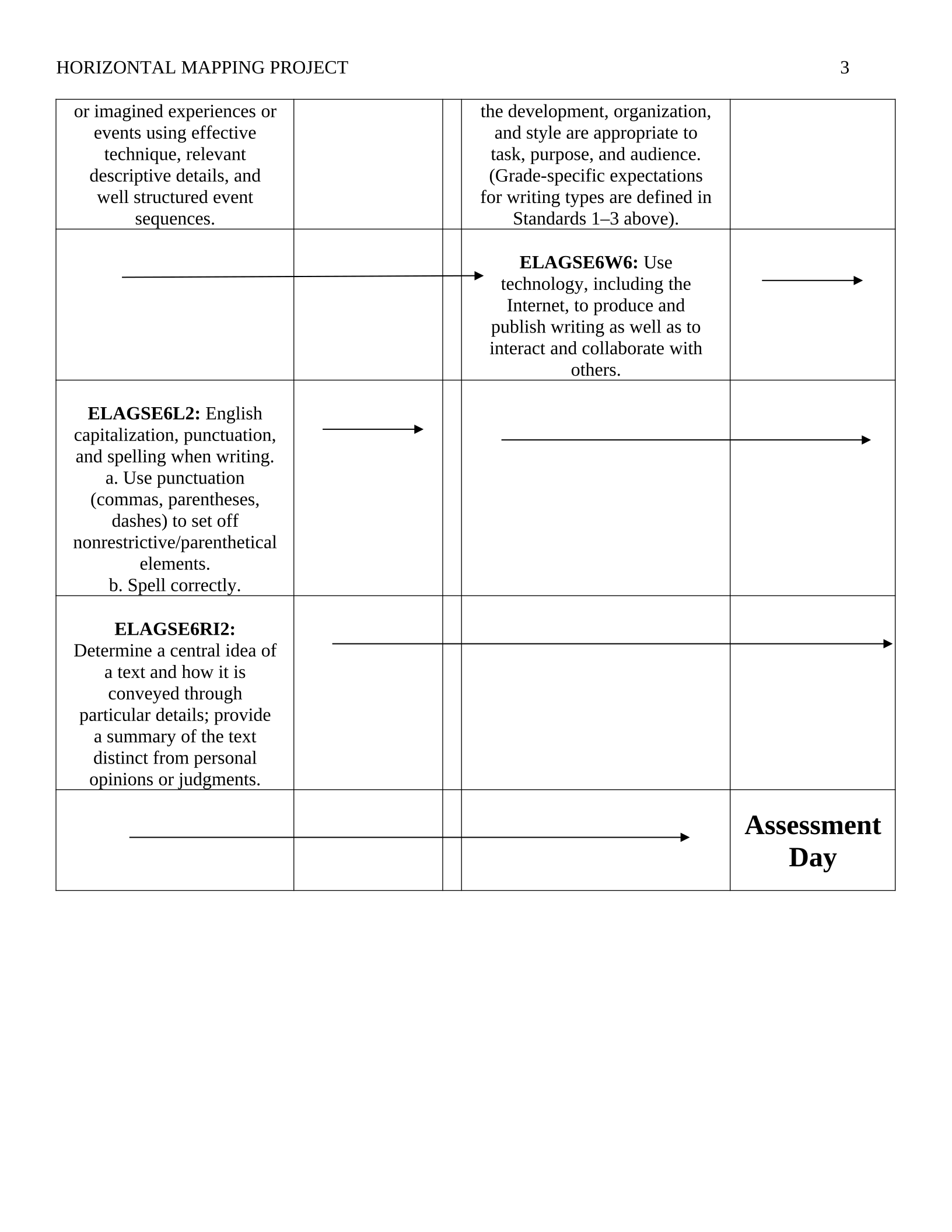
ELAGSE6W6: Use
technology, including the
Internet, to produce and
publish writing as well as to
interact and collaborate with
others.
ELAGSE6L2: English
capitalization, punctuation,
and spelling when writing.
a. Use punctuation
(commas, parentheses,
dashes) to set off
nonrestrictive/parenthetical
elements.
b. Spell correctly.
ELAGSE6RI2:
Determine a central idea of
a text and how it is
conveyed through
particular details; provide
a summary of the text
distinct from personal
opinions or judgments.
Assessment
Day
HORIZONTAL MAPPING PROJECT 4
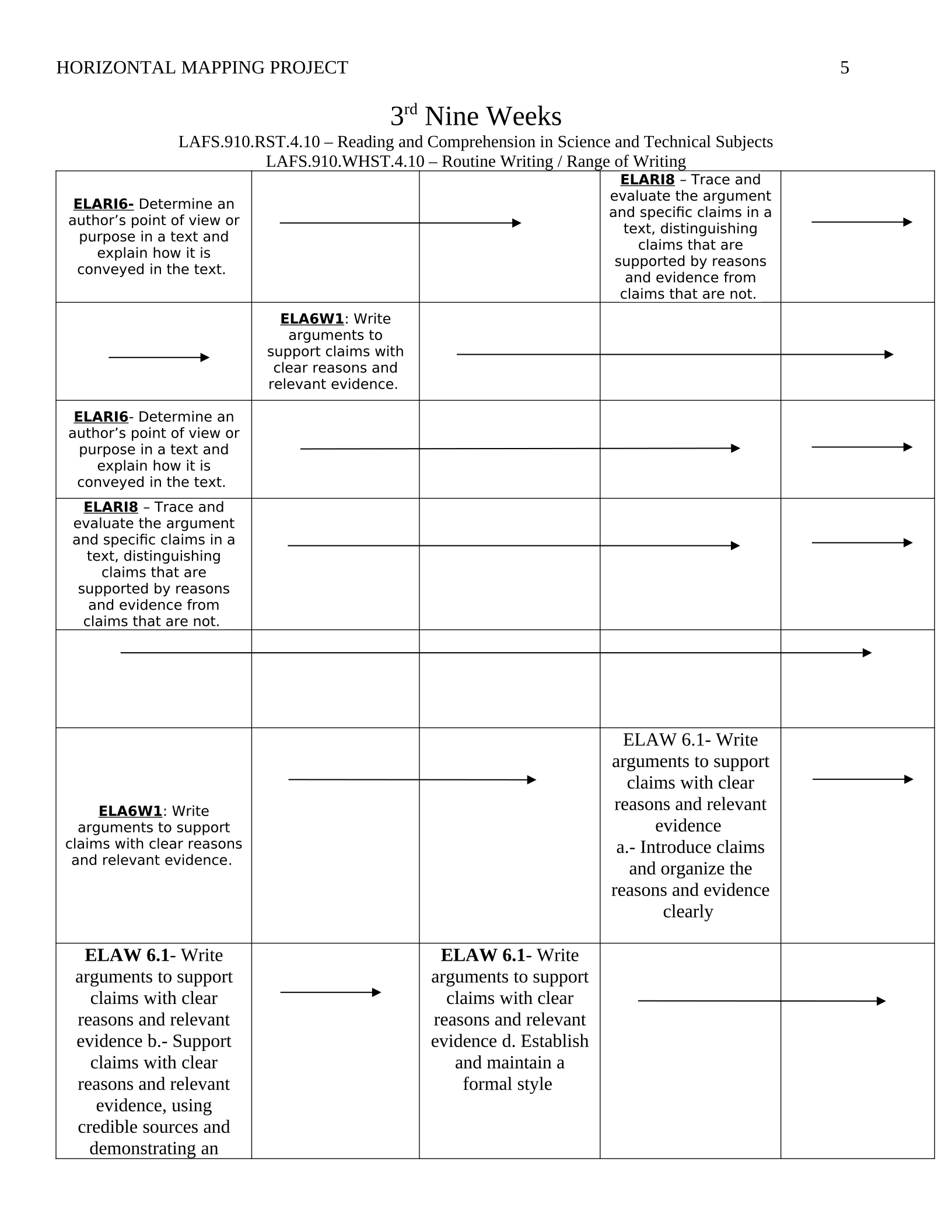
2nd Nine Weeks
LFAS.910.RI.4.10 – Reading and Comprehension of Non-Fiction
ELAR.L 6.2- Determine a
theme and/or central
idea of a text and how it
is conveyed through
particular details;
provide a summary of
the text distinct from
personal opinions or
judgments
ELARL. 6.6- Explain
how an author
develops the point
of view of the
narrator or speaker
in a text.
ELARL6.9
Compare and
contrast texts in
different forms
or genres in
terms of their
approaches to
similar themes
and topics
ELAW 6.5- With some
guidance and support
from peers and adults,
develop and strengthen
writing as needed by
planning, revising,
editing, rewriting, or
trying a new approach.
ELASL 6.1-
engage effectively
in a range of
collaborative
discussions (one-
on-one, in groups,
and teacher-led)
with diverse
partners on grade 6
topics, texts, and
issues, building on
others’ ideas and
expressing their
own clearly.C
ELAL 6.5-
demonstrate
understanding of
figurative language
word relationships and
nuances in wordsC
ELAL6.6-
Acquire and
accurately use
grade-appropriate
general academic
and domain
specific words and
phrases; gather
vocabulary
knowledge when
considering a word
or phrase
important to
comprehension or
expressionC
ASSESSMENT
DAY
HORIZONTAL MAPPING PROJECT 5
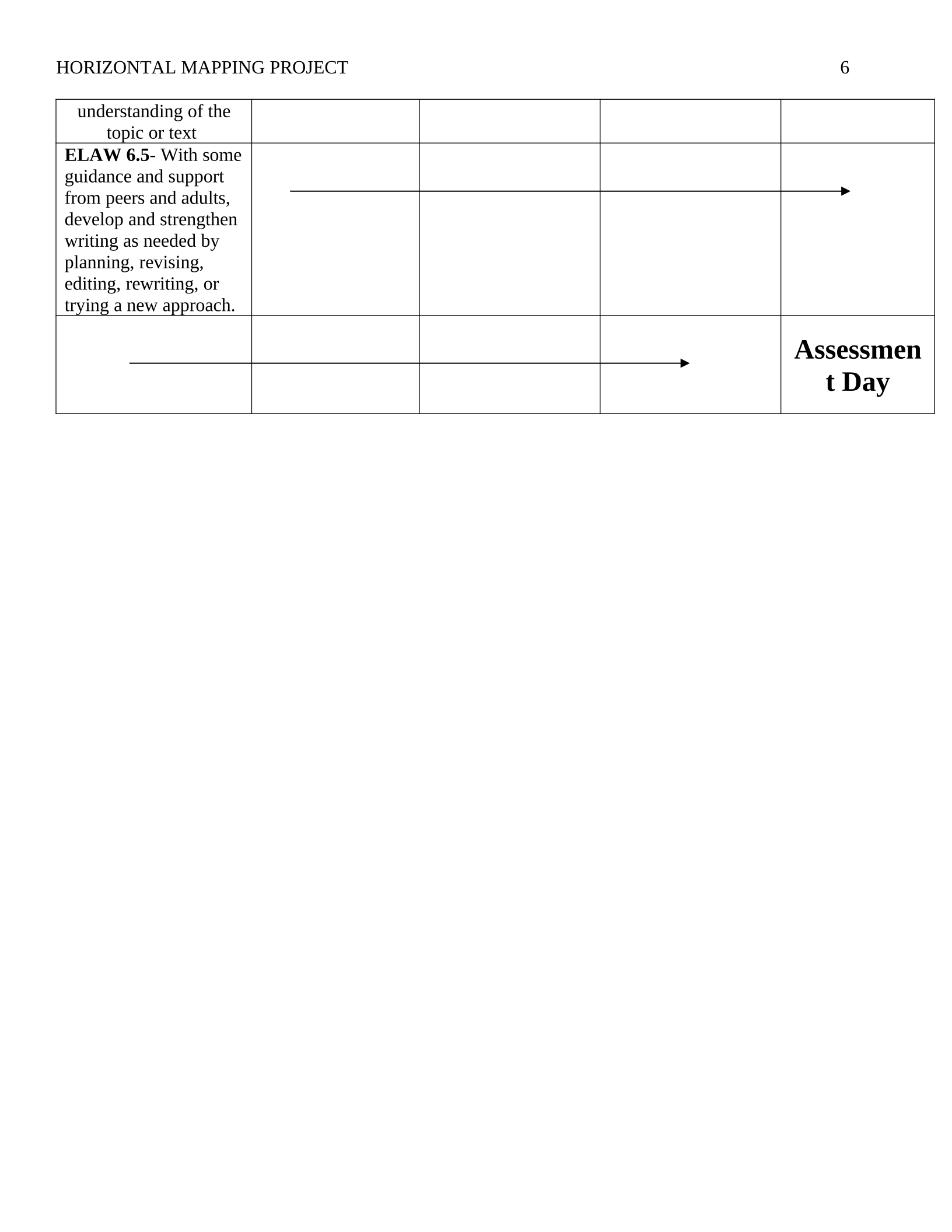
3rd Nine Weeks
LAFS.910.RST.4.10 – Reading and Comprehension in Science and Technical Subjects
LAFS.910.WHST.4.10 – Routine Writing / Range of Writing
ELARI6- Determine an
author’s point of view or
purpose in a text and
explain how it is
conveyed in the text.
ELARI8 – Trace and
evaluate the argument
and specific claims in a
text, distinguishing
claims that are
supported by reasons
and evidence from
claims that are not.
ELA6W1: Write
arguments to
support claims with
clear reasons and
relevant evidence.
ELARI6- Determine an
author’s point of view or
purpose in a text and
explain how it is
conveyed in the text.
ELARI8 – Trace and
evaluate the argument
and specific claims in a
text, distinguishing
claims that are
supported by reasons
and evidence from
claims that are not.
ELA6W1: Write
arguments to support
claims with clear reasons
and relevant evidence.
ELAW 6.1- Write
arguments to support
claims with clear
reasons and relevant
evidenceC
a.- Introduce claims
and organize the
reasons and evidence
clearlyC
ELAW 6.1- Write
arguments to support
claims with clear
reasons and relevant
evidenceCb.- Support
claims with clear
reasons and relevant
evidence, using
credible sources and
demonstrating an
ELAW 6.1- Write
arguments to support
claims with clear
reasons and relevant
evidenceCd. Establish
and maintain a
formal styleC
HORIZONTAL MAPPING PROJECT 7
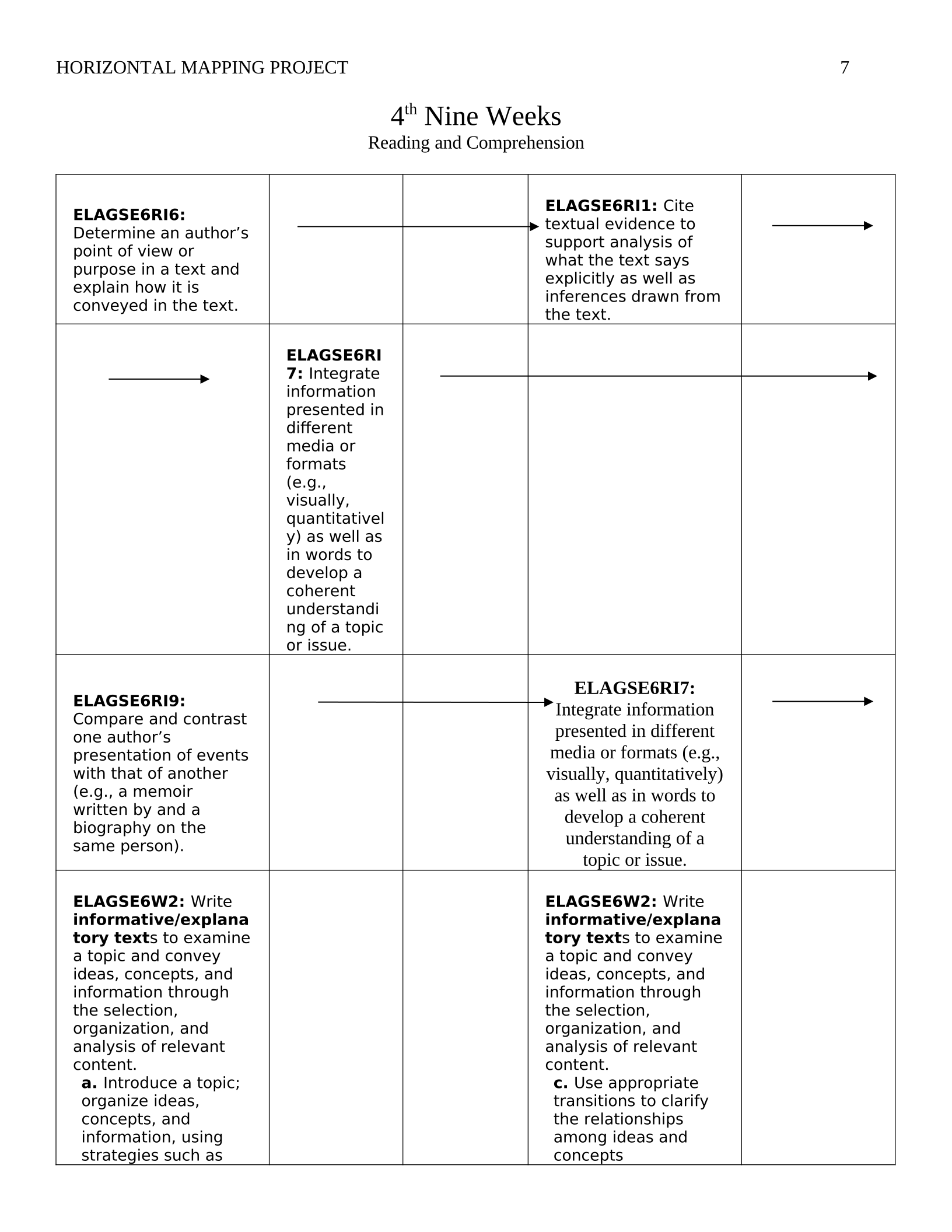
4th Nine Weeks
Reading and Comprehension
ELAGSE6RI6:
Determine an author’s
point of view or
purpose in a text and
explain how it is
conveyed in the text.
ELAGSE6RI1: Cite
textual evidence to
support analysis of
what the text says
explicitly as well as
inferences drawn from
the text.
ELAGSE6RI
7: Integrate
information
presented in
different
media or
formats
(e.g.,
visually,
quantitativel
y) as well as
in words to
develop a
coherent
understandi
ng of a topic
or issue.
ELAGSE6RI9:
Compare and contrast
one author’s
presentation of events
with that of another
(e.g., a memoir
written by and a
biography on the
same person).
ELAGSE6RI7:
Integrate information
presented in different
media or formats (e.g.,
visually, quantitatively)
as well as in words to
develop a coherent
understanding of a
topic or issue.
ELAGSE6W2: Write
informative/explana
tory texts to examine
a topic and convey
ideas, concepts, and
information through
the selection,
organization, and
analysis of relevant
content.
a. Introduce a topic;
organize ideas,
concepts, and
information, using
strategies such as
ELAGSE6W2: Write
informative/explana
tory texts to examine
a topic and convey
ideas, concepts, and
information through
the selection,
organization, and
analysis of relevant
content.
c. Use appropriate
transitions to clarify
the relationships
among ideas and
concepts
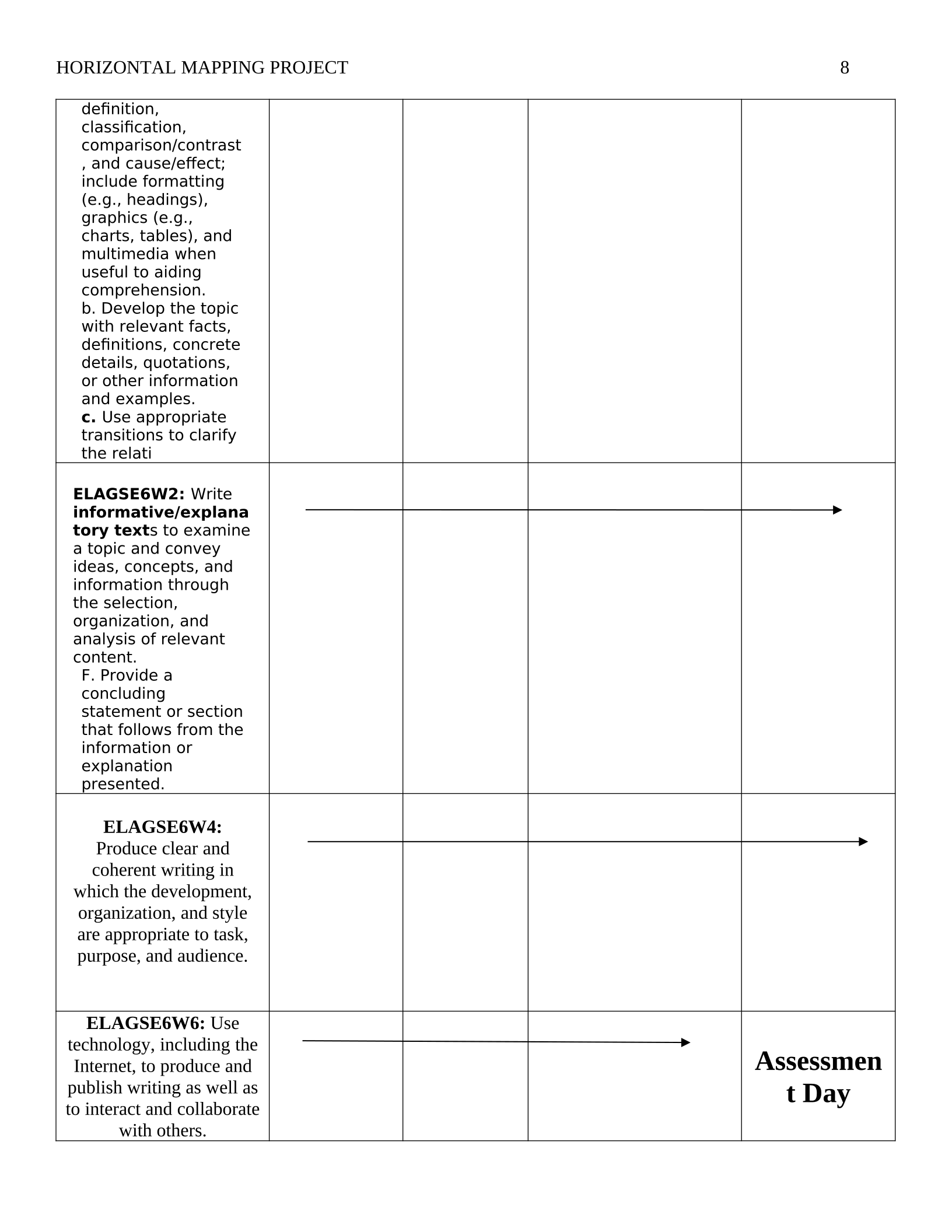
HORIZONTAL MAPPING PROJECT 8
definition,
classification,
comparison/contrast
, and cause/effect;
include formatting
(e.g., headings),
graphics (e.g.,
charts, tables), and
multimedia when
useful to aiding
comprehension.
b. Develop the topic
with relevant facts,
definitions, concrete
details, quotations,
or other information
and examples.
c. Use appropriate
transitions to clarify
the relati
ELAGSE6W2: Write
informative/explana
tory texts to examine
a topic and convey
ideas, concepts, and
information through
the selection,
organization, and
analysis of relevant
content.
F. Provide a
concluding
statement or section
that follows from the
information or
explanation
presented.
ELAGSE6W4:
Produce clear and
coherent writing in
which the development,
organization, and style
are appropriate to task,
purpose, and audience.
ELAGSE6W6: Use
technology, including the
Internet, to produce and
publish writing as well as
to interact and collaborate
with others.
Assessmen
t Day