


EDUC 621
TEST REVIEW TEMPLATE
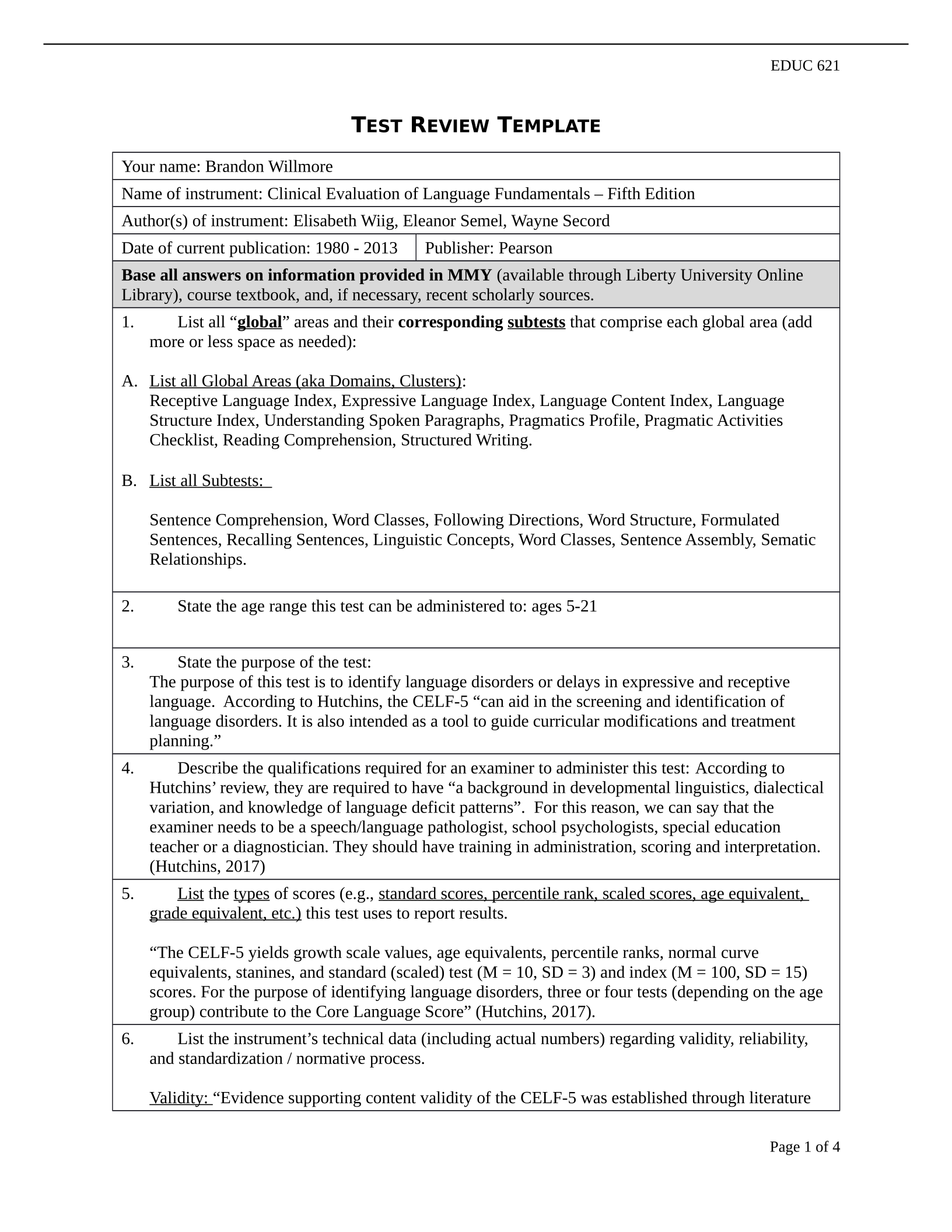
Your name: Brandon Willmore
Name of instrument: Clinical Evaluation of Language Fundamentals – Fifth Edition
Author(s) of instrument: Elisabeth Wiig, Eleanor Semel, Wayne Secord
Date of current publication: 1980 - 2013 Publisher: Pearson
Base all answers on information provided in MMY (available through Liberty University Online
Library), course textbook, and, if necessary, recent scholarly sources.
1. List all “global” areas and their corresponding subtests that comprise each global area (add
more or less space as needed):
A. List all Global Areas (aka Domains, Clusters) :
Receptive Language Index, Expressive Language Index, Language Content Index, Language
Structure Index, Understanding Spoken Paragraphs, Pragmatics Profile, Pragmatic Activities
Checklist, Reading Comprehension, Structured Writing.
B. List all Subtests:
Sentence Comprehension, Word Classes, Following Directions, Word Structure, Formulated
Sentences, Recalling Sentences, Linguistic Concepts, Word Classes, Sentence Assembly, Sematic
Relationships.
2. State the age range this test can be administered to: ages 5-21
3. State the purpose of the test:
The purpose of this test is to identify language disorders or delays in expressive and receptive
language. According to Hutchins, the CELF-5 “can aid in the screening and identification of
language disorders. It is also intended as a tool to guide curricular modifications and treatment
planning.”
4. Describe the qualifications required for an examiner to administer this test: According to
Hutchins’ review, they are required to have “a background in developmental linguistics, dialectical
variation, and knowledge of language deficit patterns”. For this reason, we can say that the
examiner needs to be a speech/language pathologist, school psychologists, special education
teacher or a diagnostician. They should have training in administration, scoring and interpretation.
(Hutchins, 2017)
5. List the types of scores (e.g., standard scores, percentile rank, scaled scores, age equivalent,
grade equivalent, etc.) this test uses to report results.
“The CELF-5 yields growth scale values, age equivalents, percentile ranks, normal curve
equivalents, stanines, and standard (scaled) test (M = 10, SD = 3) and index (M = 100, SD = 15)
scores. For the purpose of identifying language disorders, three or four tests (depending on the age
group) contribute to the Core Language Score” (Hutchins, 2017).
6. List the instrument’s technical data (including actual numbers) regarding validity, reliability,
and standardization / normative process.
Validity: “Evidence supporting content validity of the CELF-5 was established through literature
Page 1 of 4
EDUC 621
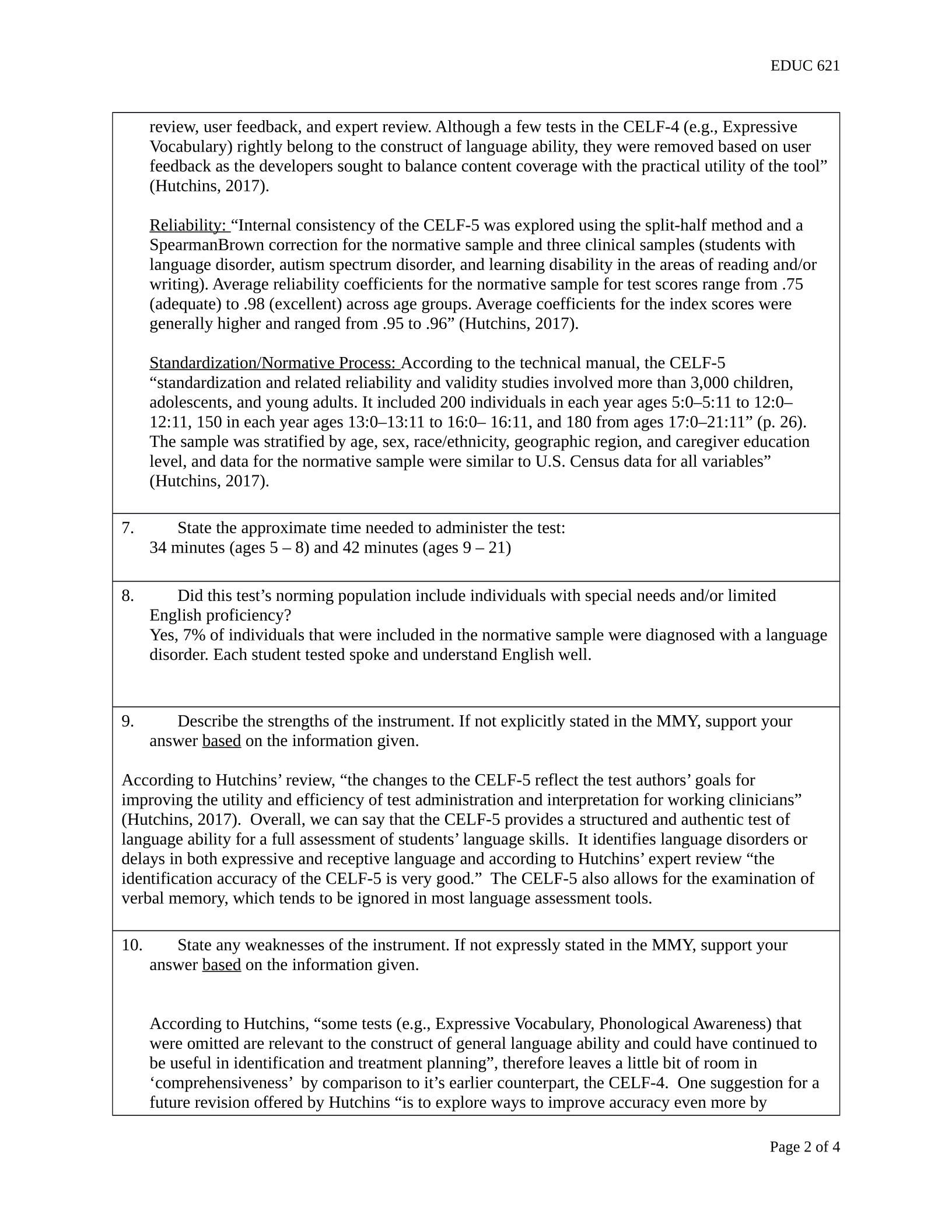
review, user feedback, and expert review. Although a few tests in the CELF-4 (e.g., Expressive
Vocabulary) rightly belong to the construct of language ability, they were removed based on user
feedback as the developers sought to balance content coverage with the practical utility of the tool”
(Hutchins, 2017).
Reliability: “Internal consistency of the CELF-5 was explored using the split-half method and a
SpearmanBrown correction for the normative sample and three clinical samples (students with
language disorder, autism spectrum disorder, and learning disability in the areas of reading and/or
writing). Average reliability coefficients for the normative sample for test scores range from .75
(adequate) to .98 (excellent) across age groups. Average coefficients for the index scores were
generally higher and ranged from .95 to .96” (Hutchins, 2017).
Standardization/Normative Process: According to the technical manual, the CELF-5
“standardization and related reliability and validity studies involved more than 3,000 children,
adolescents, and young adults. It included 200 individuals in each year ages 5:0–5:11 to 12:0–
12:11, 150 in each year ages 13:0–13:11 to 16:0– 16:11, and 180 from ages 17:0–21:11” (p. 26).
The sample was stratified by age, sex, race/ethnicity, geographic region, and caregiver education
level, and data for the normative sample were similar to U.S. Census data for all variables”
(Hutchins, 2017).
7. State the approximate time needed to administer the test:
34 minutes (ages 5 – 8) and 42 minutes (ages 9 – 21)
8. Did this test’s norming population include individuals with special needs and/or limited
English proficiency?
Yes, 7% of individuals that were included in the normative sample were diagnosed with a language
disorder. Each student tested spoke and understand English well.
9. Describe the strengths of the instrument. If not explicitly stated in the MMY, support your
answer based on the information given.
According to Hutchins’ review, “the changes to the CELF-5 reflect the test authors’ goals for
improving the utility and efficiency of test administration and interpretation for working clinicians”
(Hutchins, 2017). Overall, we can say that the CELF-5 provides a structured and authentic test of
language ability for a full assessment of students’ language skills. It identifies language disorders or
delays in both expressive and receptive language and according to Hutchins’ expert review “the
identification accuracy of the CELF-5 is very good.” The CELF-5 also allows for the examination of
verbal memory, which tends to be ignored in most language assessment tools.
10. State any weaknesses of the instrument. If not expressly stated in the MMY, support your
answer based on the information given.
According to Hutchins, “some tests (e.g., Expressive Vocabulary, Phonological Awareness) that
were omitted are relevant to the construct of general language ability and could have continued to
be useful in identification and treatment planning”, therefore leaves a little bit of room in
‘comprehensiveness’ by comparison to it’s earlier counterpart, the CELF-4. One suggestion for a
future revision offered by Hutchins “is to explore ways to improve accuracy even more by
Page 2 of 4
EDUC 621
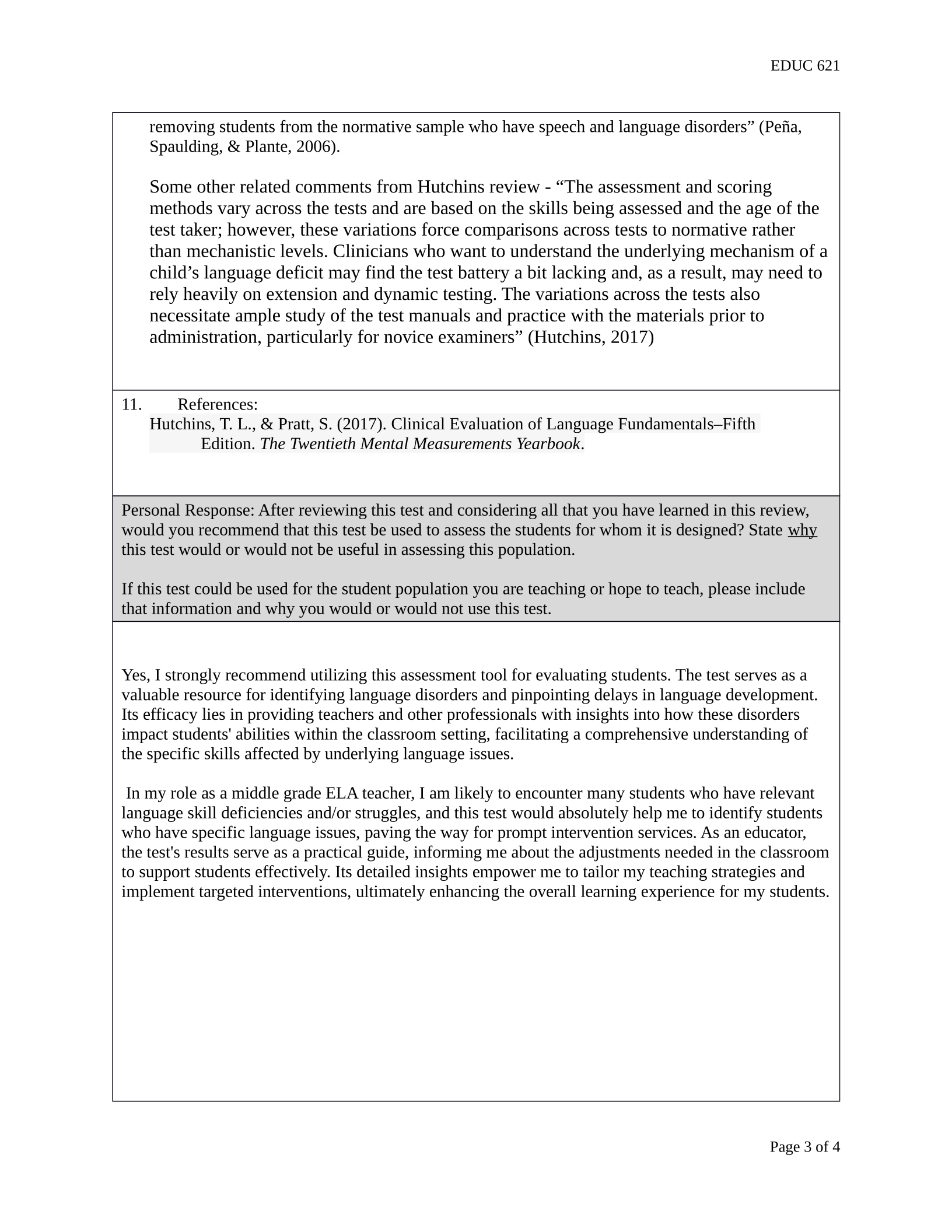
removing students from the normative sample who have speech and language disorders” (Peña,
Spaulding, & Plante, 2006).
Some other related comments from Hutchins review - “The assessment and scoring
methods vary across the tests and are based on the skills being assessed and the age of the
test taker; however, these variations force comparisons across tests to normative rather
than mechanistic levels. Clinicians who want to understand the underlying mechanism of a
child’s language deficit may find the test battery a bit lacking and, as a result, may need to
rely heavily on extension and dynamic testing. The variations across the tests also
necessitate ample study of the test manuals and practice with the materials prior to
administration, particularly for novice examiners” (Hutchins, 2017)
11. References:
Hutchins, T. L., & Pratt, S. (2017). Clinical Evaluation of Language Fundamentals–Fifth
Edition. The Twentieth Mental Measurements Yearbook.
Personal Response: After reviewing this test and considering all that you have learned in this review,
would you recommend that this test be used to assess the students for whom it is designed? State why
this test would or would not be useful in assessing this population.
If this test could be used for the student population you are teaching or hope to teach, please include
that information and why you would or would not use this test.
Yes, I strongly recommend utilizing this assessment tool for evaluating students. The test serves as a
valuable resource for identifying language disorders and pinpointing delays in language development.
Its efficacy lies in providing teachers and other professionals with insights into how these disorders
impact students' abilities within the classroom setting, facilitating a comprehensive understanding of
the specific skills affected by underlying language issues.
In my role as a middle grade ELA teacher, I am likely to encounter many students who have relevant
language skill deficiencies and/or struggles, and this test would absolutely help me to identify students
who have specific language issues, paving the way for prompt intervention services. As an educator,
the test's results serve as a practical guide, informing me about the adjustments needed in the classroom
to support students effectively. Its detailed insights empower me to tailor my teaching strategies and
implement targeted interventions, ultimately enhancing the overall learning experience for my students.
Page 3 of 4

