


INTERVIEW ASSIGNMENT 2
Interview Assignment
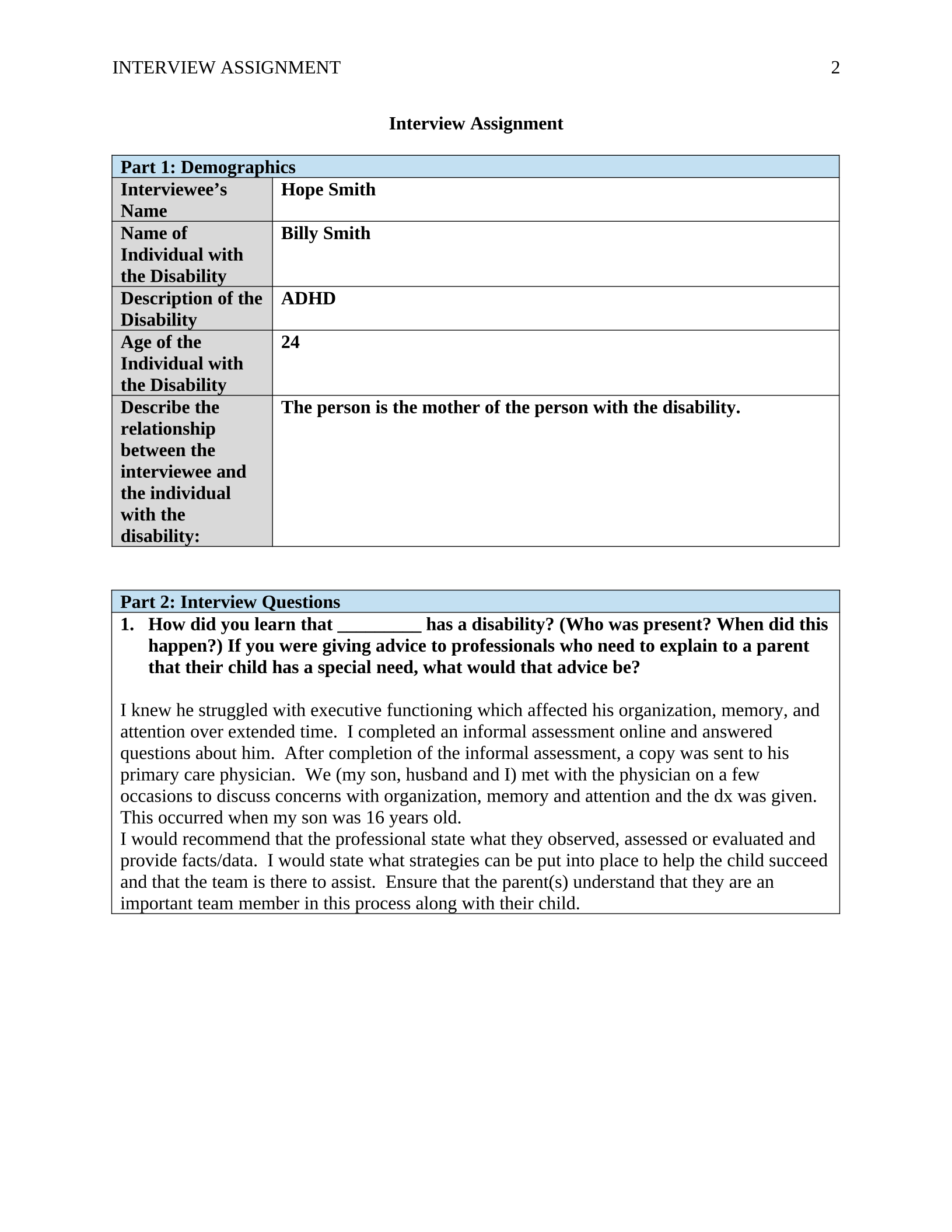
Part 1: Demographics
Interviewee’s
Name
Hope Smith
Name of
Individual with
the Disability
Billy Smith
Description of the
Disability
ADHD
Age of the
Individual with
the Disability
24
Describe the
relationship
between the
interviewee and
the individual
with the
disability:
The person is the mother of the person with the disability.
Part 2: Interview Questions
1. How did you learn that _________ has a disability? (Who was present? When did this
happen?) If you were giving advice to professionals who need to explain to a parent
that their child has a special need, what would that advice be?
I knew he struggled with executive functioning which affected his organization, memory, and
attention over extended time. I completed an informal assessment online and answered
questions about him. After completion of the informal assessment, a copy was sent to his
primary care physician. We (my son, husband and I) met with the physician on a few
occasions to discuss concerns with organization, memory and attention and the dx was given.
This occurred when my son was 16 years old.
I would recommend that the professional state what they observed, assessed or evaluated and
provide facts/data. I would state what strategies can be put into place to help the child succeed
and that the team is there to assist. Ensure that the parent(s) understand that they are an
important team member in this process along with their child.
INTERVIEW ASSIGNMENT 3
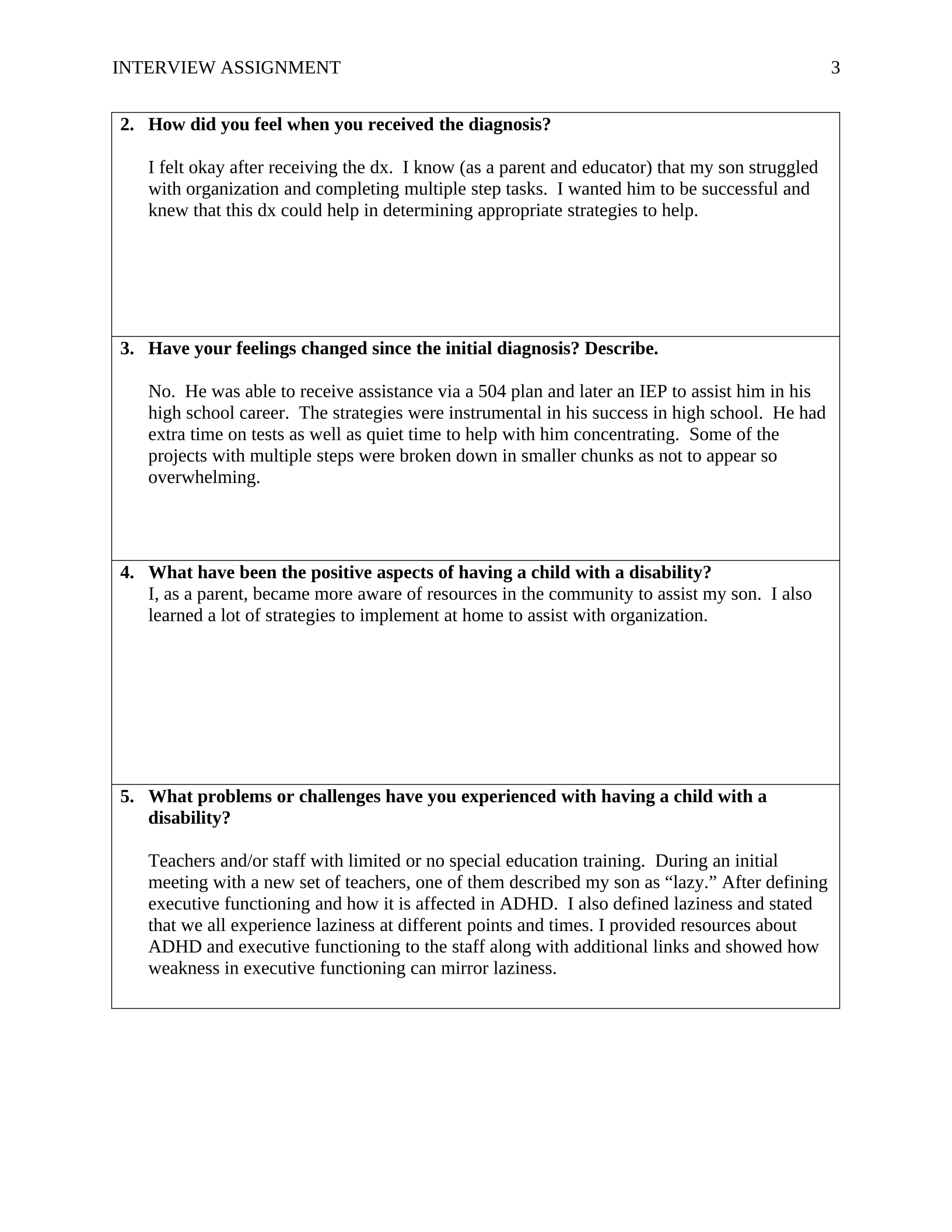
2. How did you feel when you received the diagnosis?
I felt okay after receiving the dx. I know (as a parent and educator) that my son struggled
with organization and completing multiple step tasks. I wanted him to be successful and
knew that this dx could help in determining appropriate strategies to help.
3. Have your feelings changed since the initial diagnosis? Describe.
No. He was able to receive assistance via a 504 plan and later an IEP to assist him in his
high school career. The strategies were instrumental in his success in high school. He had
extra time on tests as well as quiet time to help with him concentrating. Some of the
projects with multiple steps were broken down in smaller chunks as not to appear so
overwhelming.
4. What have been the positive aspects of having a child with a disability?
I, as a parent, became more aware of resources in the community to assist my son. I also
learned a lot of strategies to implement at home to assist with organization.
5. What problems or challenges have you experienced with having a child with a
disability?
Teachers and/or staff with limited or no special education training. During an initial
meeting with a new set of teachers, one of them described my son as “lazy.” After defining
executive functioning and how it is affected in ADHD. I also defined laziness and stated
that we all experience laziness at different points and times. I provided resources about
ADHD and executive functioning to the staff along with additional links and showed how
weakness in executive functioning can mirror laziness.
INTERVIEW ASSIGNMENT 4
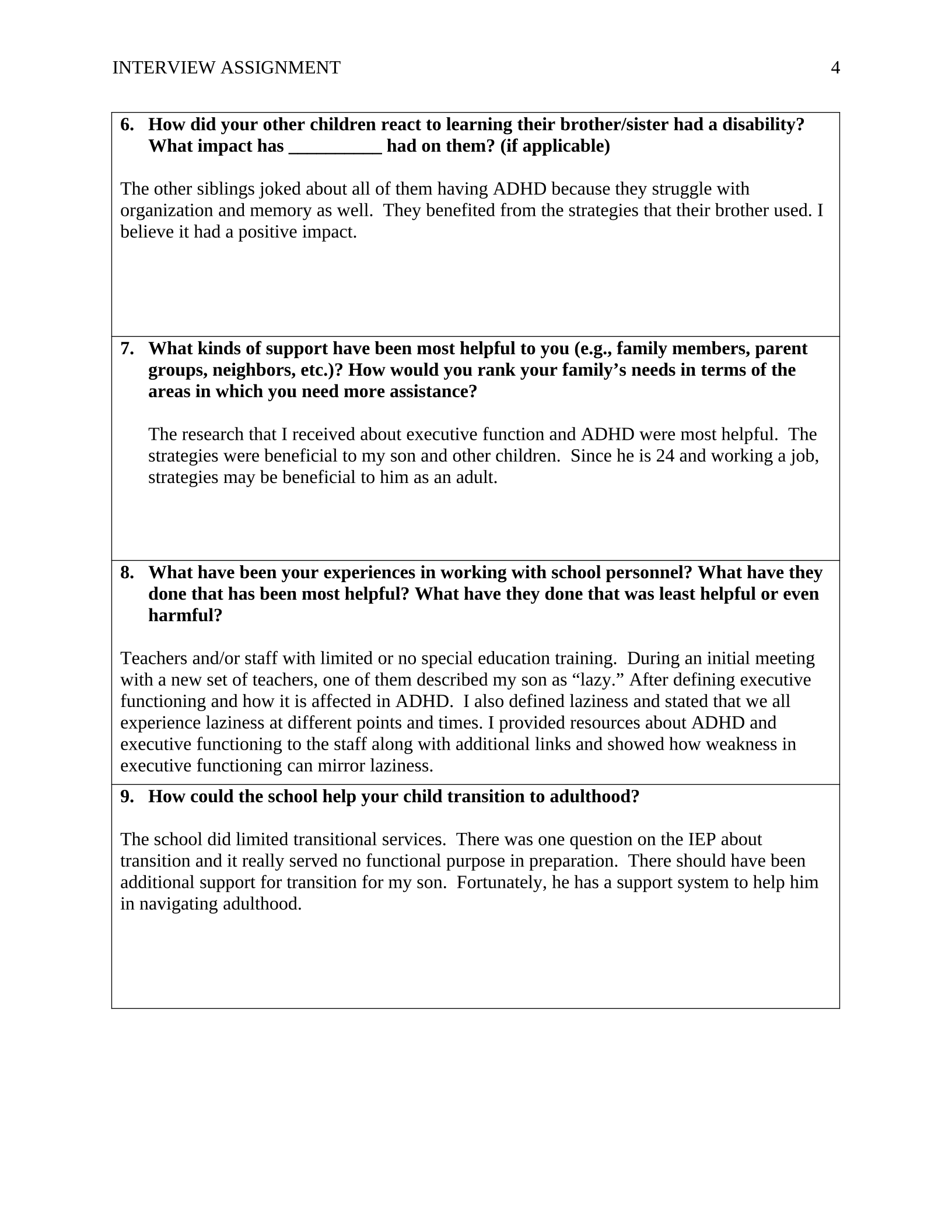
6. How did your other children react to learning their brother/sister had a disability?
What impact has __________ had on them? (if applicable)
The other siblings joked about all of them having ADHD because they struggle with
organization and memory as well. They benefited from the strategies that their brother used. I
believe it had a positive impact.
7. What kinds of support have been most helpful to you (e.g., family members, parent
groups, neighbors, etc.)? How would you rank your family’s needs in terms of the
areas in which you need more assistance?
The research that I received about executive function and ADHD were most helpful. The
strategies were beneficial to my son and other children. Since he is 24 and working a job,
strategies may be beneficial to him as an adult.
8. What have been your experiences in working with school personnel? What have they
done that has been most helpful? What have they done that was least helpful or even
harmful?
Teachers and/or staff with limited or no special education training. During an initial meeting
with a new set of teachers, one of them described my son as “lazy.” After defining executive
functioning and how it is affected in ADHD. I also defined laziness and stated that we all
experience laziness at different points and times. I provided resources about ADHD and
executive functioning to the staff along with additional links and showed how weakness in
executive functioning can mirror laziness.
9. How could the school help your child transition to adulthood?
The school did limited transitional services. There was one question on the IEP about
transition and it really served no functional purpose in preparation. There should have been
additional support for transition for my son. Fortunately, he has a support system to help him
in navigating adulthood.

INTERVIEW ASSIGNMENT 5
10. If I were to be __________’s teacher next year, what advice would you want to give
me so that he/she has an optimal learning experience?
I would be open to listening to the student’s standpoint. Speak to the teen to hear their
suggestions on what is helpful in their learning profile. Also, be open to ideas and suggestions
and have researched based resources to develop strategies.
11. What would you want me to do/not do in terms of my interactions with you if I were
__________’s teacher?
Provide updates throughout the semester via email or phone call to me as the parent. Ask for
help if needed or solicite advise from the student or his parents.
12. I am just learning about students with disabilities and how to work effectively with
them in my classroom. What other information would you like me—and my
classmates—to know about working with children with special needs?
-Each student is an individual
-Include the student in their plan-listen to their suggestions
-Be open to feedback, be flexible
-Be open to change and try something new
Part 3: Summary of Research-Based Strategies
As for these four children, God gave them knowledge and skill in all learning and
wisdom: and Daniel had understanding in all visions and dreams. (King James Version, 1988,
Daniel 1: 17). Teaching comes with patients and kindness. I believe that God has a purpose for
each one of us and within that purpose we have a duty to serve and share his love by teaching
young and old, male, and female, black, white, purple, and blue nationalities. Some children
with ADHD struggle most with attention and focus but do not seem to be hyperactive or to have
INTERVIEW ASSIGNMENT 6
excess energy. Other children are little dynamos whose energy seems to be impossible to
contain. (Kirk et al., 2020, pp 324). It took Mrs. Smith several years to notice that her son had
been struggling in school and once she did notice what was going on she reach out to get the
proper help that he needed in order to be successful in school. Section 504 is often a good
choice for students to be successful in school with minor changes and accommodations while
eligibility through IDEA 2004 may be better for individual with more intense or wider -range
needs for support (Kirk et al., 2020, pp.341). In order to help your student successed we must
help them from being distracted by moving them to an area in the clsssroom that would be less
distractions and close to the teachers. Remind the student to stay on task or frequently visit
student desk to make sure he is doing what he is supposed to be doing. Break up the assignments
into smaller portions so that the child don’t seem to overwhelmed. These are some things that
will help a student to succeed in class.
We have learned that we can utilize each one of these theories though out our time in the
classroom. We must always remember that we are all unique and our learning technique and
teaching technique will forever be the same but in different forms. God gave us all a purpose in
life, some are still working on their purpose others know what their purpose in life. As an adult
and or teacher we must help our children to be the best they can be and give them the best
education as possible. Be patient and love them just as God love us. Offer help to not just your
children offer help to all of them for God not just love one person he loved us all.
Part 4: Conclusion – Reflection and Discussion
It is important not to just people before you know them. Mrs. Smith agreed to do this
interview with me while on her way to the airport to watch one of her son’s graduate from
INTERVIEW ASSIGNMENT 7
college. Mrs. Smith is a married person with three boys. One of which was diagnois with
ADHD while in high school. Two parents come from different backgrounds and different
financial backgrounds. Mom has a Doctorate Degree and dad drive’s semi trucks for a living.
Children always has havrr two parents at home and parents both very active in the community
and in the church. Fron what I gather from parents at this interview both parents are two
awesome people that are very normal. They believe in God and all he has to offer. The children
were brought up in the church, they are very attive in their children lives. ADHD didn’t stop
them from doing what was right for their son and getting him the help that he needed. I believe
that it is because she was a little more familiar than other parents out there with children that
have no means of getting information that can help their child and/or children the resourses
needed to help in and outside of school. From speaking to Mrs. Smith I see that no matter what
she kept her patients and allowed God to guide her and here family. It also taught me that each
child is different. Listen to them and do not judge them for who are what they come from. Be
open to feedback from parents, guardians, and teachers that are familiar with children with
disabilities. Provide updates thoughout the semester via email and/or phone call. Ask for help if
needed or solicite advise and most of all love them just as God loves us. As a father shows
compassion to his children, so the Lord shows compassion to those who fear him. (King James
Version, 1988, Psalm 103:13)
INTERVIEW ASSIGNMENT 8
References
King James Version (1988, Pslams 103:13) People’s Parallel Edition (1988)
King James Version (1988, Daniel 1:17) People’s Parallel Edition (1988)
Kirk, Gallagher, & Coleman, Mindtap, 2020, pp. 324).
Kirk, Gallaghner, & Colman, Mindtap, 2020, pp.341).
Powered by TCPDF (www.tcpdf.org)

