2
Test
Name: Date:
Class: Grade:
Do you know the attributes?
Multiple Choice: #1-3
Directions: Read the following questions about attributes and circle the correct answer.
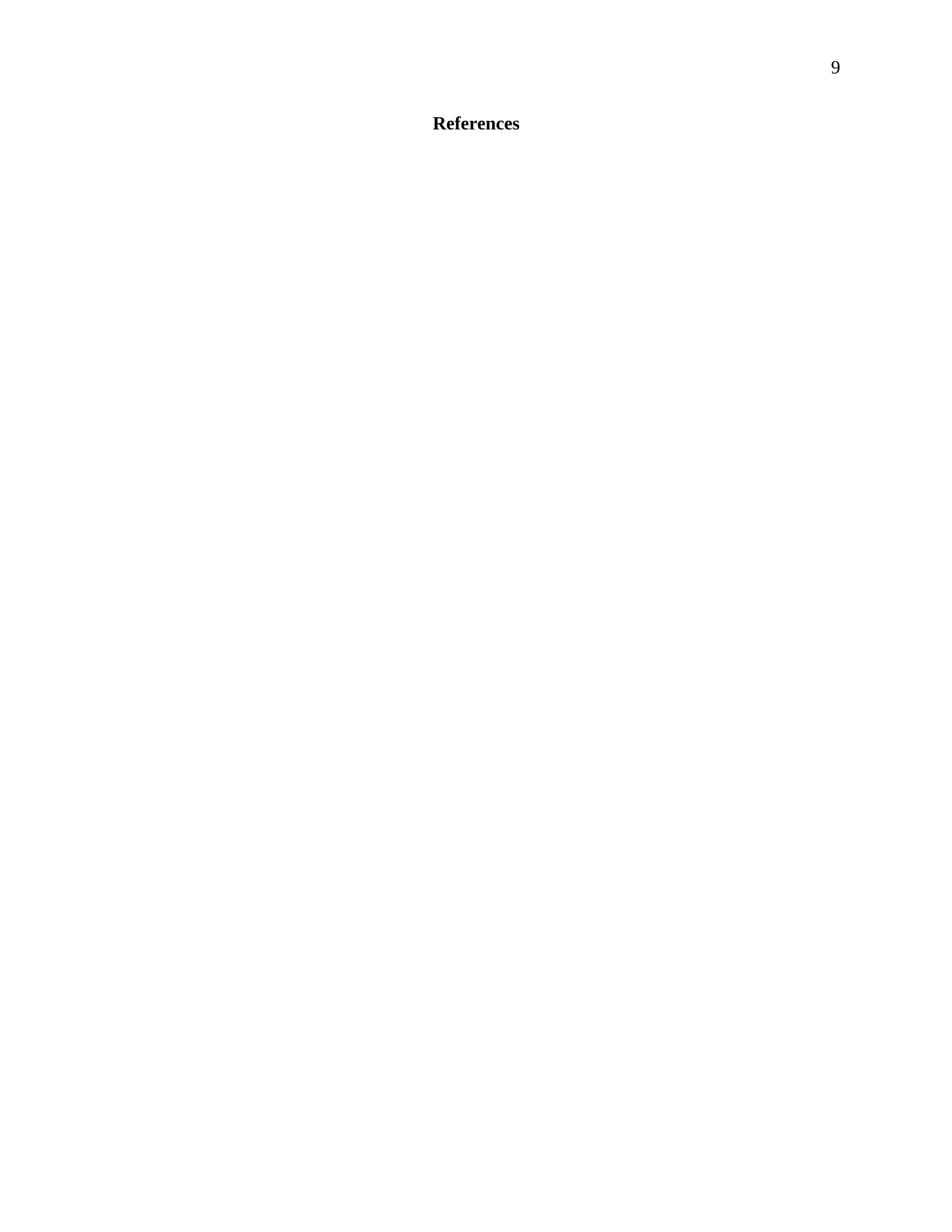
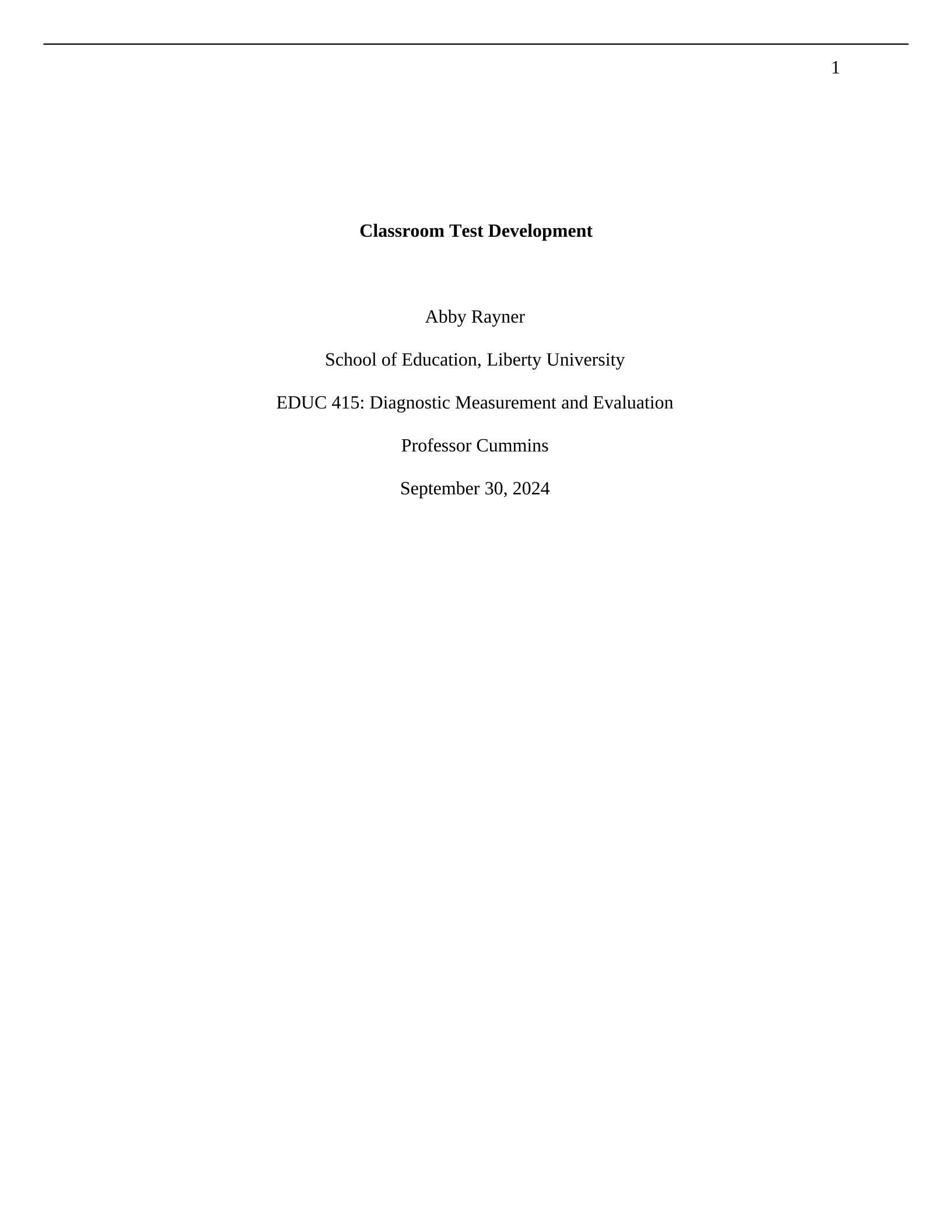
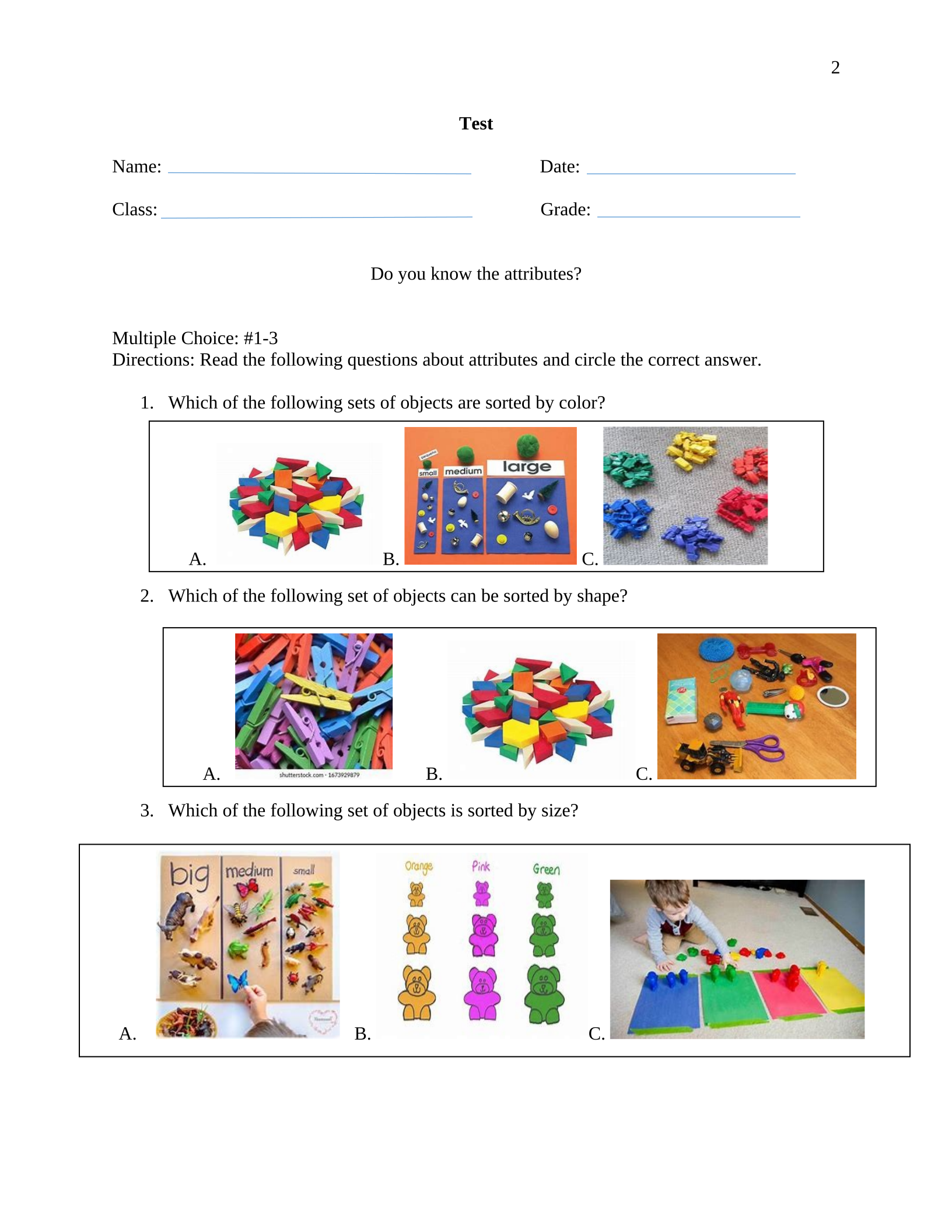
1. Which of the following sets of objects are sorted by color?
2. Which of the following set of objects can be sorted by shape?
3. Which of the following set of objects is sorted by size?
A. B. C.
A. B. C.
A. B. C.
3
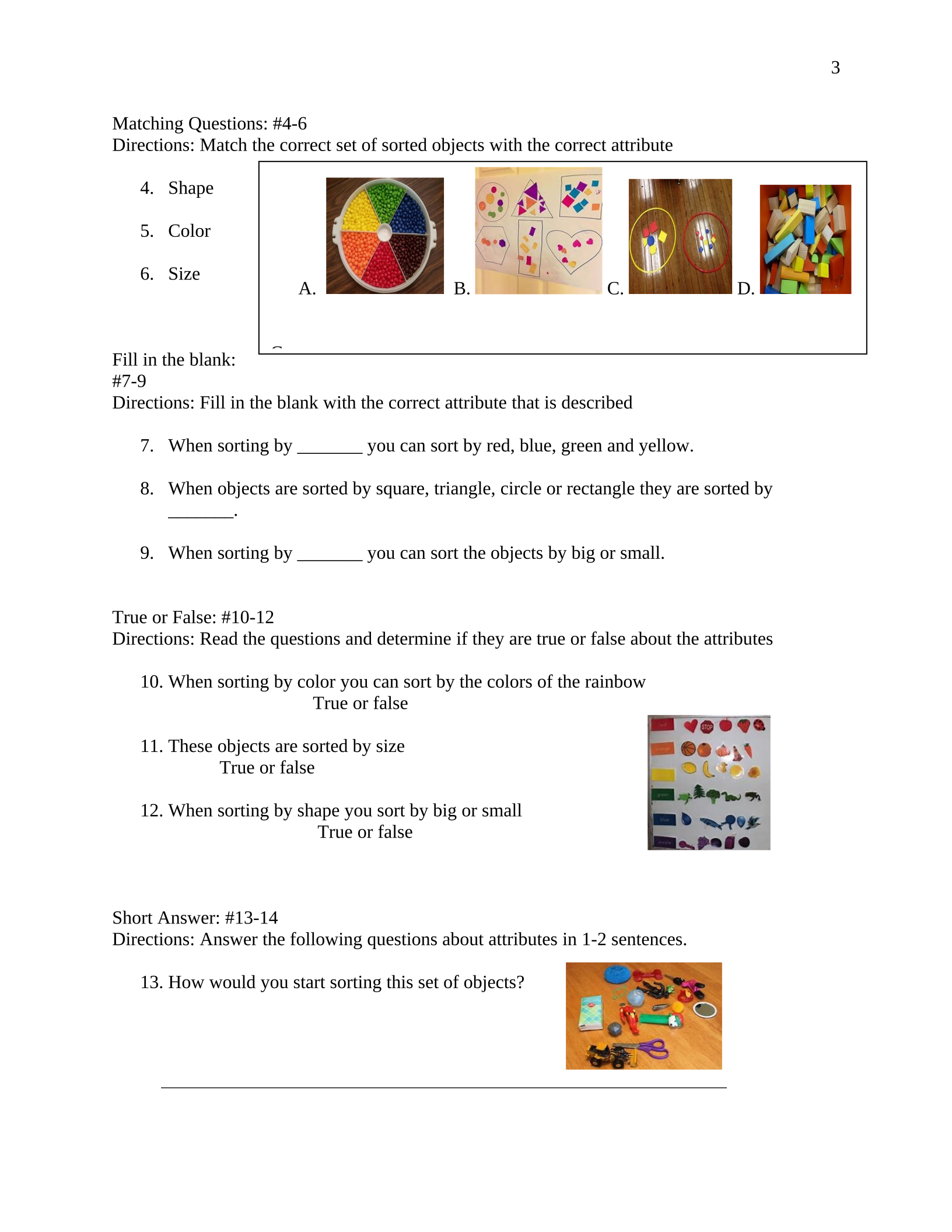
Matching Questions: #4-6
Directions: Match the correct set of sorted objects with the correct attribute
4. Shape
5. Color
6. Size
Fill in the blank:
#7-9
Directions: Fill in the blank with the correct attribute that is described
7. When sorting by _______ you can sort by red, blue, green and yellow.
8. When objects are sorted by square, triangle, circle or rectangle they are sorted by
_______.
9. When sorting by _______ you can sort the objects by big or small.
True or False: #10-12
Directions: Read the questions and determine if they are true or false about the attributes
10. When sorting by color you can sort by the colors of the rainbow
True or false
11. These objects are sorted by size
True or false
12. When sorting by shape you sort by big or small
True or false
Short Answer: #13-14
Directions: Answer the following questions about attributes in 1-2 sentences.
13. How would you start sorting this set of objects?
A. B. C. D.
C.
5
Answer Key
Multiple Choice: Questions 1-3 (1 point each, 3 points total)
1. C
2. B
3. A
My multiple choice questions follow the rules of construct because all of the answers
along with their questions are about the same length, the questions are ordered from easy to more
difficult. My answers do not use any sort of pattern for students to be able to guess.
The connected learning standard is K.PS.1 a) Sort and classify concrete objects into
appropriate subsets (categories) based on one attribute (e.g., size, shape, color, thickness).
The Blooms Level is comprehension because the questions are asking the students to pick
which attribute goes with each what is being asked.
Matching: Questions 4-6 ( 1 point each, 3 points total)
4. B
5. A
6. C
My matching questions follow the rules of construct because all of the pictures fit into the
attributes, there are extra elements to avoid “perfect matching” and all of the premises are
numbered while the responses have letters.
My connected learning standard is K.PS.1 a) Sort and classify concrete objects into
appropriate subsets (categories) based on one attribute (e.g., size, shape, color, thickness).
The Blooms Level is an application because students are asked to apply their knowledge
to match the pictures to the correct attribute.
Fill in the blank: Questions 7-9 ( 2 points each, 6 points total)
7. Color
8. Shape
9. Size
My fill in the blank questions follow the rules of construct because all of the blanks are
the same length, no sentences are copied from any practices/work we have done, and my
directions are simple and to the point.
My connected learning standard is K.PS.1 a) Sort and classify concrete objects into
appropriate subsets (categories) based on one attribute (e.g., size, shape, color, thickness). b)
Describe and label attributes (e.g., size, color, shape) of a set of objects (e.g., coins, counters,
buttons) that has been sorted.
6
My Blooms Level is analysis because it asks students to analyze the sentence for clues on
what attribute goes in the blank.
True or false: Questions 10-12 ( 2 points each, 6 points total)
10. True
11. False
12. False
My true or false questions follow the rules of construct because the word lengths of all
the questions are the same whether they are true or false and the answers are not in any order or
pattern that can be easily guessed.
My connected learning standard is K.PS.1 b) Describe and label attributes (e.g., size,
color, shape) of a set of objects (e.g., coins, counters, buttons) that has been sorted.
My Blooms Level is analysis because students are being asked to analyze the statement to
see if it is true or false.
Short answer: Questions 13-14 (6 points each, 12 points total)
13. I would start by looking to see if there are a lot of colors that can be sorted.
14.I would start by sorting the objects by the different colors.
My short answer questions follow the rules of construct because in the directions it states
how long the students answer should be. There are a variety of answers that would be accepted,
there is no one right answer.
My connected learning standard is K.PS.1 b) Describe and label attributes (e.g., size,
color, shape) of a set of objects (e.g., coins, counters, buttons) that has been sorted. d) Determine
the data needed to answer a posed question, and collect the data using various
methods (e.g., counting objects, drawing pictures).
My Blooms Level is evaluation because the questions are asking how the student would
sort objects given and when sorting by a certain attribute.
Essay: Question 15 (n/a)
15. I Chose not to include an essay in my test. I chose to do this, and I know I will loose
points on it but I think I needed to make a test that the students who would be taking it
would be able to understand and be able to do it well. This test is based on a SOL for
kindergarten. I do not believe that kindergarteners would be able to write an essay over
8
Reflection
This assignment taught me a lot. Test creation process is difficult and demanding. You
have to have an understanding of what is needed from the students but also know your standard
of learning and objective. There are a lot of components that can go into making a test. I believe
my test is a reliable one, I did not use any resources, but I did try my best to think of what a
kindergartner would be able to do. I believe that I did well in the variety of questions. It can be
hard to come up with new ways to ask the same question and I believe I did. I need to improve
my creativity. I can get stuck in not knowing because I am not in the classroom with students yet
but I cannot let that stop me from trying different things and not always doing what is easiest. I
had a friend that is a former teacher take my test. She thought it was good for the grade level it
would be for but thought that my directions may need a little more detail. She understood why I
did not include an essay in this test and said my short answer questions were good and would
challenge some kindergarteners. Overall, she thought it was a good test and a great start to my
test creating. I thought her feedback was useful and will remember it for my future test making.