


2
Writing to Learn in Social Studies
Introduction
In the secondary classroom, writing is used to further expand on information the student
needs to know and fully understand. We, as teachers, assign different writing activities to
develop an understanding of the content. Writing to learn is fundamental in almost every content
area, but especially in the Social studies group of classes. The ability to write should have been
formed in grade school, and as students transition through middle and high school grades, the
demand for writing grows. The fact is that people use writing throughout their lives.
Evidence, Examples & Support
The differences between learning to write and writing to learn are significant. Students
should learn to write and understand how to read in elementary school. Once students have those
skills, they move on to writing in middle school. This transition brings with it a difference from
learning to write to writing to learn. At this stage, students are introduced to book reports in their
reading class and essays for their history class. Once they are in high school, this type of writing
continues with more in-depth writing.
In the article in the Review of Educational Research, it is noted that “one of the earliest
theories championing the view that writing inherently elicits learning was offered by Britton et
al. (1975), who placed special emphasis on the role of language in learning, arguing that
language facilitates learning and that writing was a form of language (a derivative of expressive
speech).’ (Kiuhara; MacKay, 2020). This article quotes, “According to Britton, writing about
content material most likely influences learning when it involves an authentic and personal act of
meaning-making. He placed special emphasis on expressive writing.” (Kiuhara; MacKay, 2020)
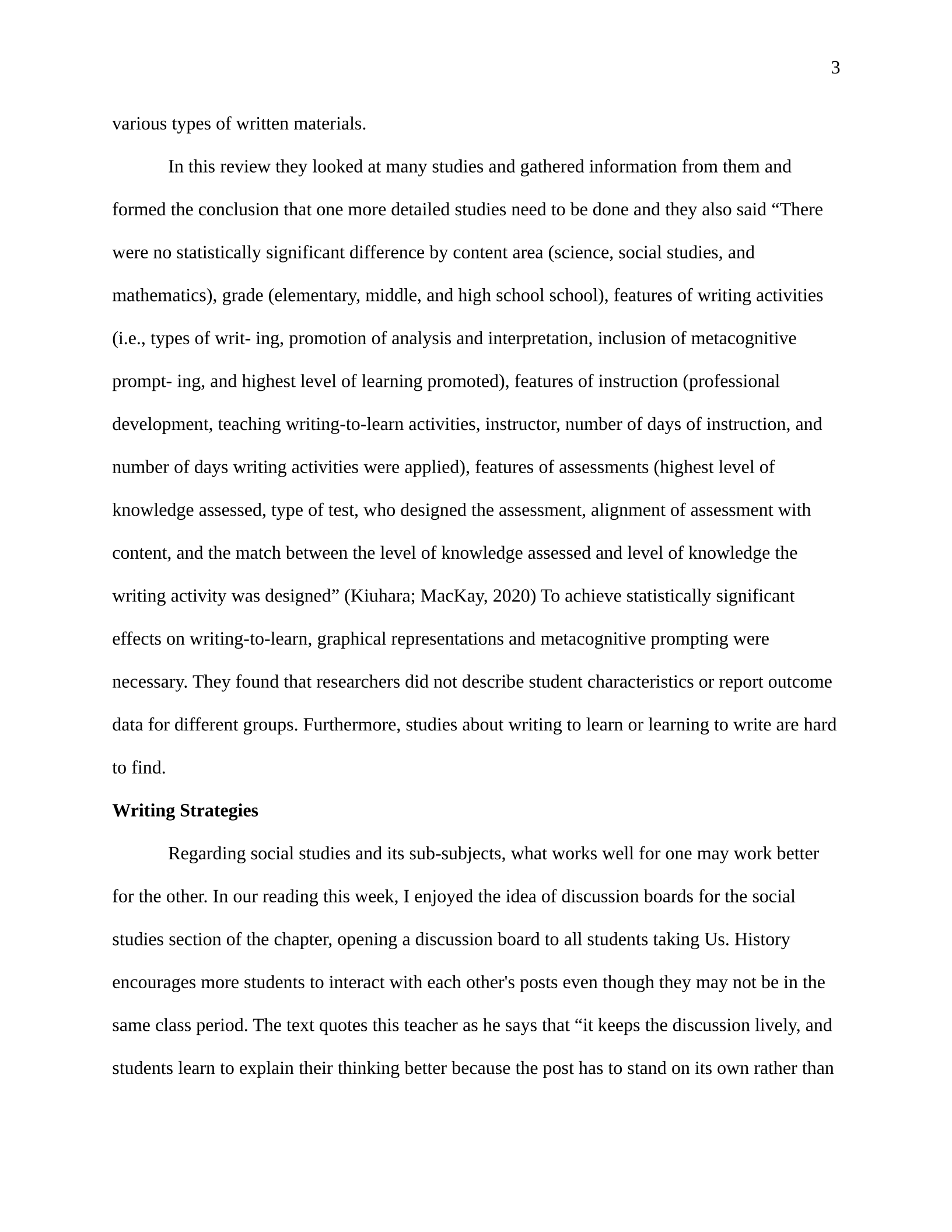
We, as secondary educators, believe our students know how to write and expect them to deliver
3
various types of written materials.
In this review they looked at many studies and gathered information from them and
formed the conclusion that one more detailed studies need to be done and they also said “There
were no statistically significant difference by content area (science, social studies, and
mathematics), grade (elementary, middle, and high school school), features of writing activities
(i.e., types of writ- ing, promotion of analysis and interpretation, inclusion of metacognitive
prompt- ing, and highest level of learning promoted), features of instruction (professional
development, teaching writing-to-learn activities, instructor, number of days of instruction, and
number of days writing activities were applied), features of assessments (highest level of
knowledge assessed, type of test, who designed the assessment, alignment of assessment with
content, and the match between the level of knowledge assessed and level of knowledge the
writing activity was designed” (Kiuhara; MacKay, 2020) To achieve statistically significant
effects on writing-to-learn, graphical representations and metacognitive prompting were
necessary. They found that researchers did not describe student characteristics or report outcome
data for different groups. Furthermore, studies about writing to learn or learning to write are hard
to find.
Writing Strategies
Regarding social studies and its sub-subjects, what works well for one may work better
for the other. In our reading this week, I enjoyed the idea of discussion boards for the social
studies section of the chapter, opening a discussion board to all students taking Us. History
encourages more students to interact with each other's posts even though they may not be in the
same class period. The text quotes this teacher as he says that “it keeps the discussion lively, and
students learn to explain their thinking better because the post has to stand on its own rather than

4
be contextualized in our class period.” (Fisher; Frey,2019)
Writing prompts are another way to encourage writing to learn. We are using it in the US.
History class, a writing prompt can write a 150-word essay on what led to the Great Depression.
This encourages students to learn more about the Great Depression as the class moves through
that module. It promotes a deeper understanding of the past, hoping future generations will avoid
repeating the same mistakes.
Conclusion
In conclusion, it is clear that if enacted correctly, writing to learn is a positive tool to
promote learning in just about any content area. Specifically in Social Studies, I plan on taking a
cue from our text and opening a discussion board on current events for my classroom and all Us.
History students to discuss current events. It promotes a deeper understanding, and it frees up
valuable time that otherwise would be devoted to discussing current events. The teachers can
moderate the discussion board but don’t necessarily have to spend that time in class. I will also
include writing prompts in my class. It is an excellent way to get students to write when their
topic is chosen.
Word Count: 863
5
References
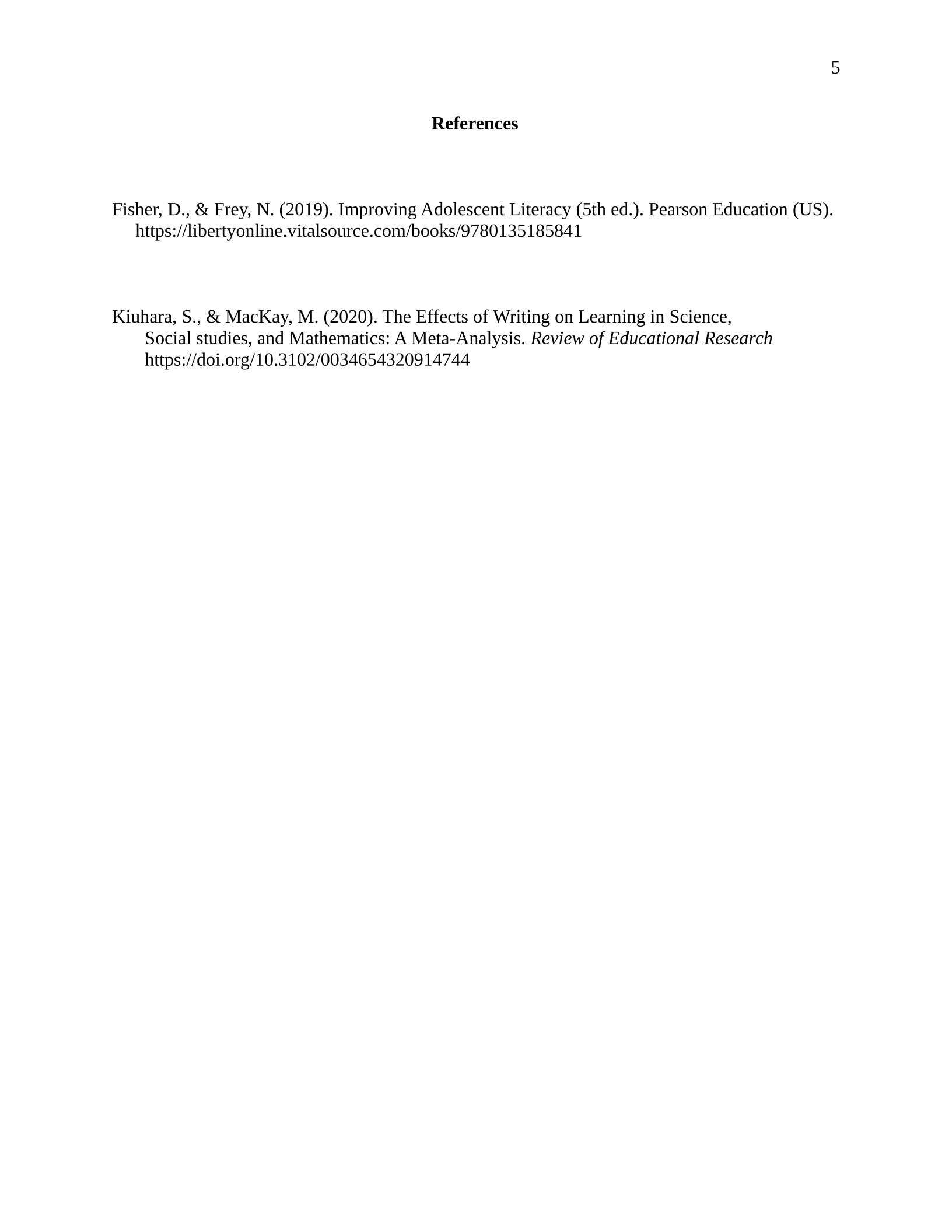
Fisher, D., & Frey, N. (2019). Improving Adolescent Literacy (5th ed.). Pearson Education (US).
https://libertyonline.vitalsource.com/books/9780135185841
Kiuhara, S., & MacKay, M. (2020). The Effects of Writing on Learning in Science,
Social studies, and Mathematics: A Meta-Analysis. Review of Educational Research
https://doi.org/10.3102/0034654320914744
Powered by TCPDF (www.tcpdf.org)

