


2
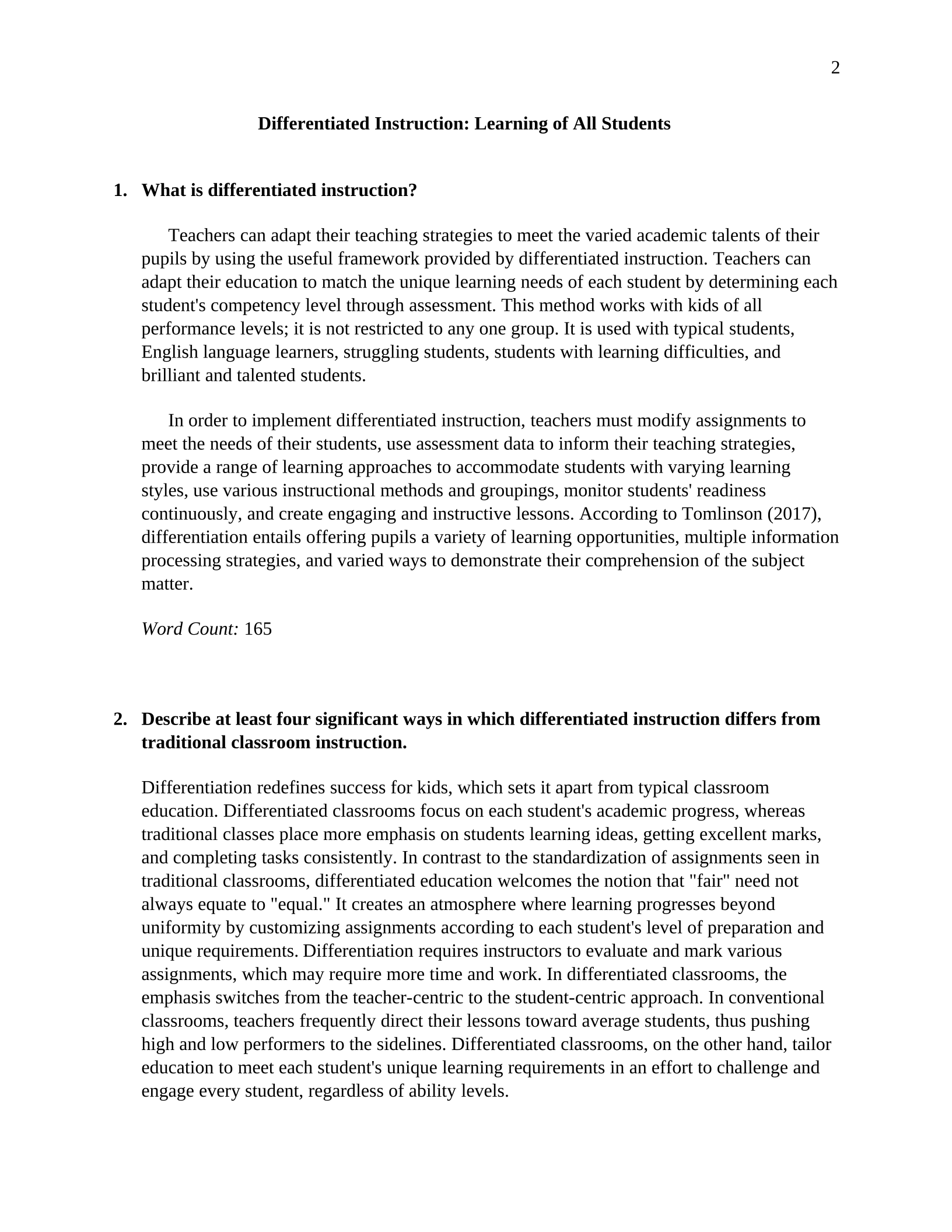
Differentiated Instruction: Learning of All Students
1. What is differentiated instruction?
Teachers can adapt their teaching strategies to meet the varied academic talents of their
pupils by using the useful framework provided by differentiated instruction. Teachers can
adapt their education to match the unique learning needs of each student by determining each
student's competency level through assessment. This method works with kids of all
performance levels; it is not restricted to any one group. It is used with typical students,
English language learners, struggling students, students with learning difficulties, and
brilliant and talented students.
In order to implement differentiated instruction, teachers must modify assignments to
meet the needs of their students, use assessment data to inform their teaching strategies,
provide a range of learning approaches to accommodate students with varying learning
styles, use various instructional methods and groupings, monitor students' readiness
continuously, and create engaging and instructive lessons. According to Tomlinson (2017),
differentiation entails offering pupils a variety of learning opportunities, multiple information
processing strategies, and varied ways to demonstrate their comprehension of the subject
matter.
Word Count: 165
2. Describe at least four significant ways in which differentiated instruction differs from
traditional classroom instruction.
Differentiation redefines success for kids, which sets it apart from typical classroom
education. Differentiated classrooms focus on each student's academic progress, whereas
traditional classes place more emphasis on students learning ideas, getting excellent marks,
and completing tasks consistently. In contrast to the standardization of assignments seen in
traditional classrooms, differentiated education welcomes the notion that "fair" need not
always equate to "equal." It creates an atmosphere where learning progresses beyond
uniformity by customizing assignments according to each student's level of preparation and
unique requirements. Differentiation requires instructors to evaluate and mark various
assignments, which may require more time and work. In differentiated classrooms, the
emphasis switches from the teacher-centric to the student-centric approach. In conventional
classrooms, teachers frequently direct their lessons toward average students, thus pushing
high and low performers to the sidelines. Differentiated classrooms, on the other hand, tailor
education to meet each student's unique learning requirements in an effort to challenge and
engage every student, regardless of ability levels.
3
Word Count: 161
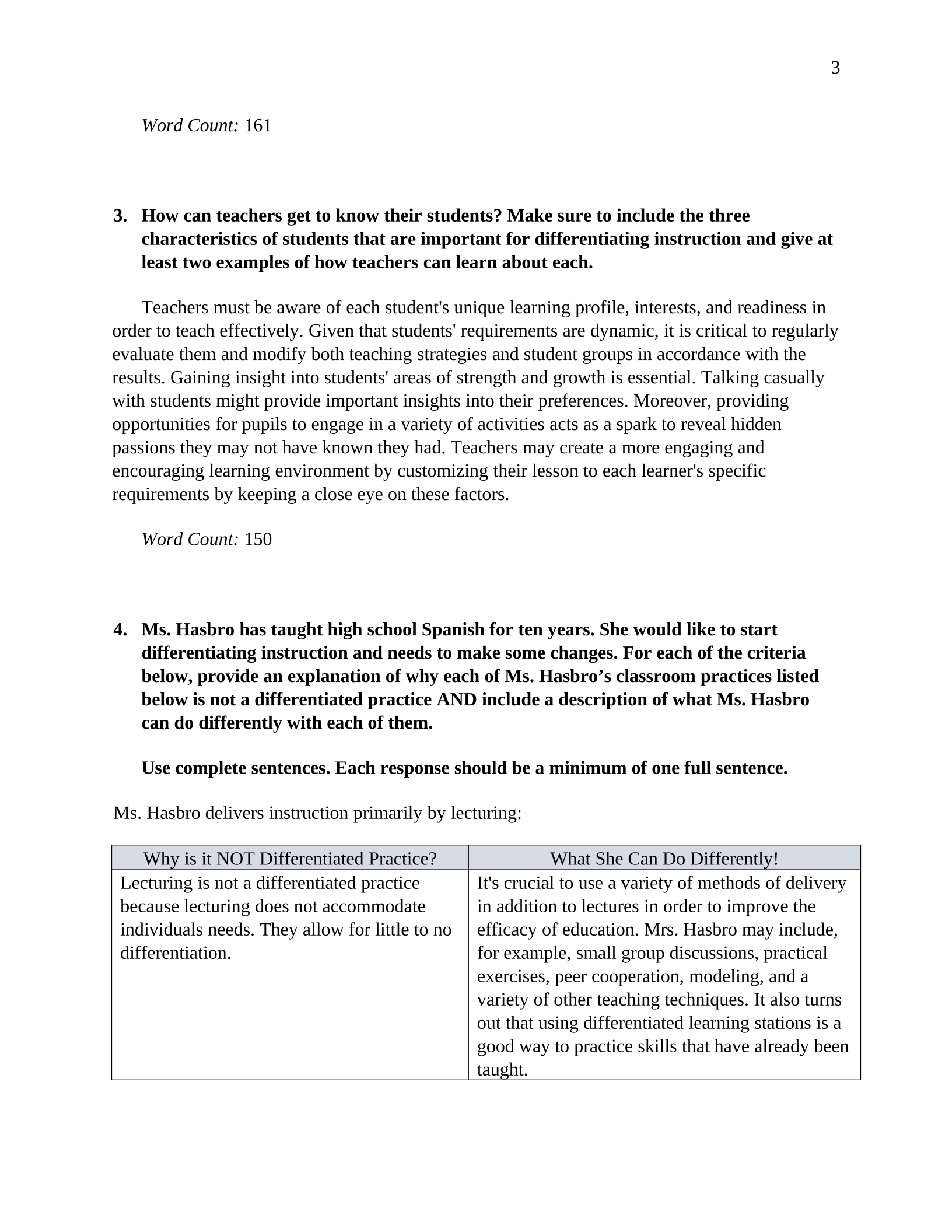
3. How can teachers get to know their students? Make sure to include the three
characteristics of students that are important for differentiating instruction and give at
least two examples of how teachers can learn about each.
Teachers must be aware of each student's unique learning profile, interests, and readiness in
order to teach effectively. Given that students' requirements are dynamic, it is critical to regularly
evaluate them and modify both teaching strategies and student groups in accordance with the
results. Gaining insight into students' areas of strength and growth is essential. Talking casually
with students might provide important insights into their preferences. Moreover, providing
opportunities for pupils to engage in a variety of activities acts as a spark to reveal hidden
passions they may not have known they had. Teachers may create a more engaging and
encouraging learning environment by customizing their lesson to each learner's specific
requirements by keeping a close eye on these factors.
Word Count: 150
4. Ms. Hasbro has taught high school Spanish for ten years. She would like to start
differentiating instruction and needs to make some changes. For each of the criteria
below, provide an explanation of why each of Ms. Hasbro’s classroom practices listed
below is not a differentiated practice AND include a description of what Ms. Hasbro
can do differently with each of them.
Use complete sentences. Each response should be a minimum of one full sentence.
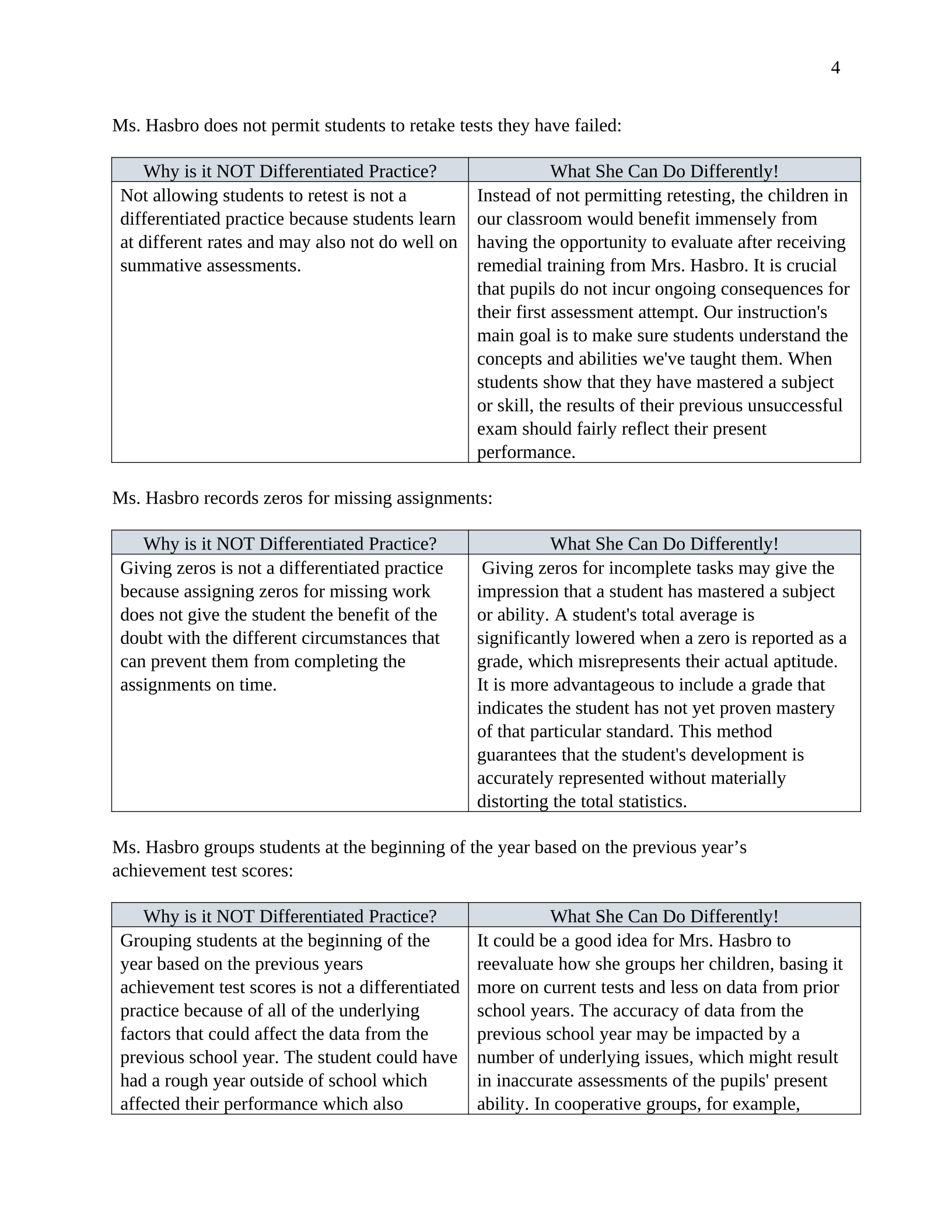
Ms. Hasbro delivers instruction primarily by lecturing:
Why is it NOT Differentiated Practice? What She Can Do Differently!
Lecturing is not a differentiated practice
because lecturing does not accommodate
individuals needs. They allow for little to no
differentiation.
It's crucial to use a variety of methods of delivery
in addition to lectures in order to improve the
efficacy of education. Mrs. Hasbro may include,
for example, small group discussions, practical
exercises, peer cooperation, modeling, and a
variety of other teaching techniques. It also turns
out that using differentiated learning stations is a
good way to practice skills that have already been
taught.
4
Ms. Hasbro does not permit students to retake tests they have failed:
Why is it NOT Differentiated Practice? What She Can Do Differently!
Not allowing students to retest is not a
differentiated practice because students learn
at different rates and may also not do well on
summative assessments.
Instead of not permitting retesting, the children in
our classroom would benefit immensely from
having the opportunity to evaluate after receiving
remedial training from Mrs. Hasbro. It is crucial
that pupils do not incur ongoing consequences for
their first assessment attempt. Our instruction's
main goal is to make sure students understand the
concepts and abilities we've taught them. When
students show that they have mastered a subject
or skill, the results of their previous unsuccessful
exam should fairly reflect their present
performance.
Ms. Hasbro records zeros for missing assignments:
Why is it NOT Differentiated Practice? What She Can Do Differently!
Giving zeros is not a differentiated practice
because assigning zeros for missing work
does not give the student the benefit of the
doubt with the different circumstances that
can prevent them from completing the
assignments on time.
Giving zeros for incomplete tasks may give the
impression that a student has mastered a subject
or ability. A student's total average is
significantly lowered when a zero is reported as a
grade, which misrepresents their actual aptitude.
It is more advantageous to include a grade that
indicates the student has not yet proven mastery
of that particular standard. This method
guarantees that the student's development is
accurately represented without materially
distorting the total statistics.
Ms. Hasbro groups students at the beginning of the year based on the previous year’s
achievement test scores:
Why is it NOT Differentiated Practice? What She Can Do Differently!
Grouping students at the beginning of the
year based on the previous years
achievement test scores is not a differentiated
practice because of all of the underlying
factors that could affect the data from the
previous school year. The student could have
had a rough year outside of school which
affected their performance which also
It could be a good idea for Mrs. Hasbro to
reevaluate how she groups her children, basing it
more on current tests and less on data from prior
school years. The accuracy of data from the
previous school year may be impacted by a
number of underlying issues, which might result
in inaccurate assessments of the pupils' present
ability. In cooperative groups, for example,
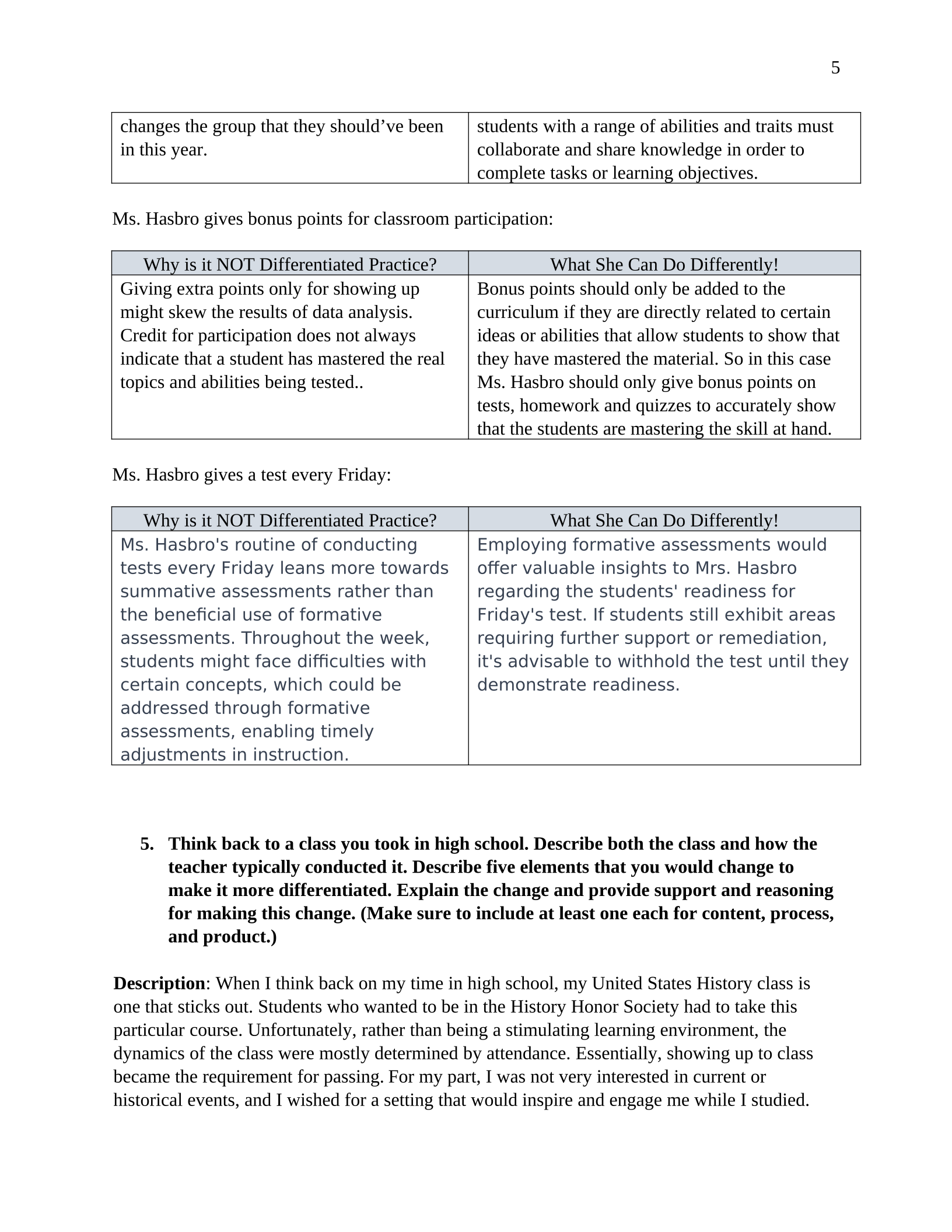
5
changes the group that they should’ve been
in this year.
students with a range of abilities and traits must
collaborate and share knowledge in order to
complete tasks or learning objectives.
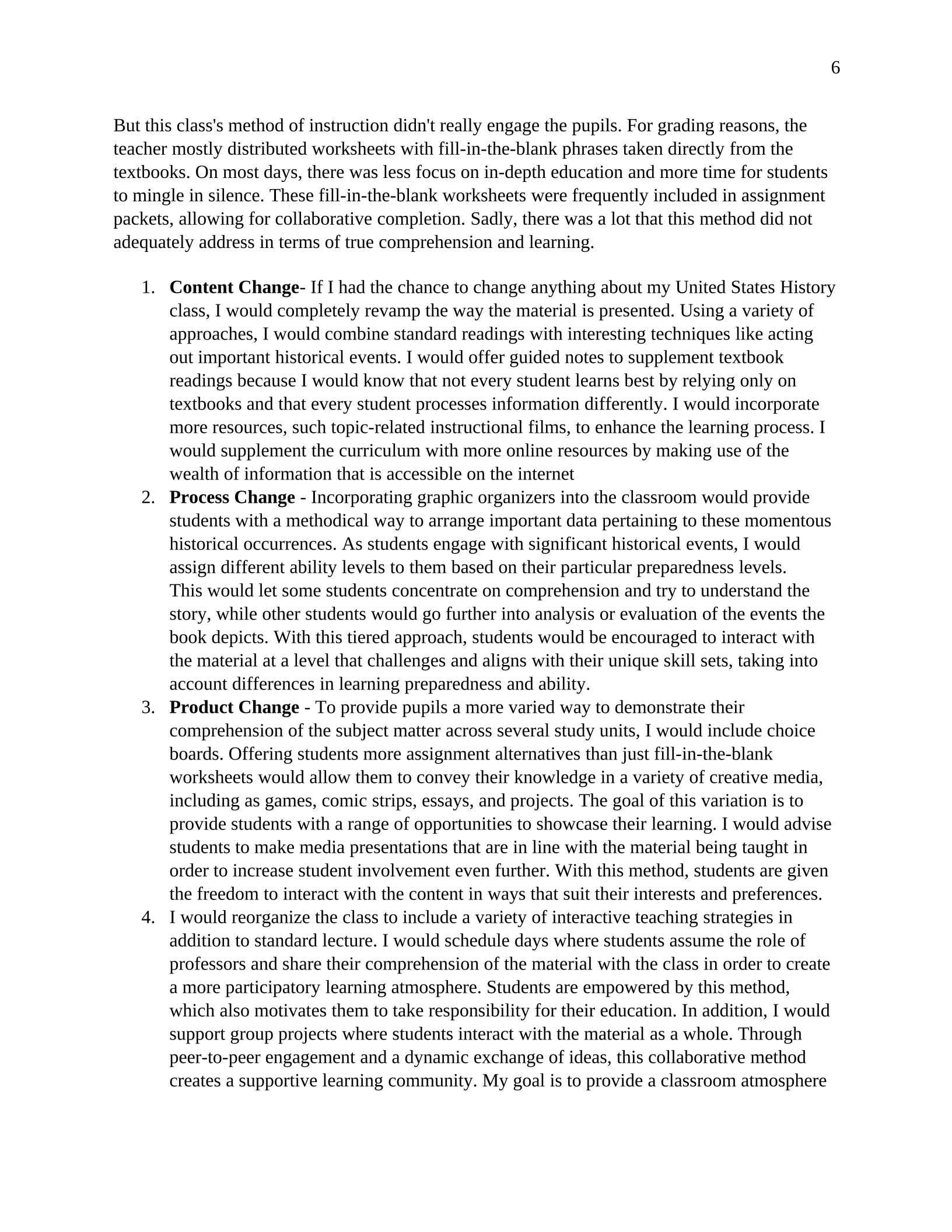
Ms. Hasbro gives bonus points for classroom participation:
Why is it NOT Differentiated Practice? What She Can Do Differently!
Giving extra points only for showing up
might skew the results of data analysis.
Credit for participation does not always
indicate that a student has mastered the real
topics and abilities being tested..
Bonus points should only be added to the
curriculum if they are directly related to certain
ideas or abilities that allow students to show that
they have mastered the material. So in this case
Ms. Hasbro should only give bonus points on
tests, homework and quizzes to accurately show
that the students are mastering the skill at hand.
Ms. Hasbro gives a test every Friday:
Why is it NOT Differentiated Practice? What She Can Do Differently!
Ms. Hasbro's routine of conducting
tests every Friday leans more towards
summative assessments rather than
the beneficial use of formative
assessments. Throughout the week,
students might face difficulties with
certain concepts, which could be
addressed through formative
assessments, enabling timely
adjustments in instruction.
Employing formative assessments would
offer valuable insights to Mrs. Hasbro
regarding the students' readiness for
Friday's test. If students still exhibit areas
requiring further support or remediation,
it's advisable to withhold the test until they
demonstrate readiness.
5. Think back to a class you took in high school. Describe both the class and how the
teacher typically conducted it. Describe five elements that you would change to
make it more differentiated. Explain the change and provide support and reasoning
for making this change. (Make sure to include at least one each for content, process,
and product.)
Description: When I think back on my time in high school, my United States History class is
one that sticks out. Students who wanted to be in the History Honor Society had to take this
particular course. Unfortunately, rather than being a stimulating learning environment, the
dynamics of the class were mostly determined by attendance. Essentially, showing up to class
became the requirement for passing. For my part, I was not very interested in current or
historical events, and I wished for a setting that would inspire and engage me while I studied.
6
But this class's method of instruction didn't really engage the pupils. For grading reasons, the
teacher mostly distributed worksheets with fill-in-the-blank phrases taken directly from the
textbooks. On most days, there was less focus on in-depth education and more time for students
to mingle in silence. These fill-in-the-blank worksheets were frequently included in assignment
packets, allowing for collaborative completion. Sadly, there was a lot that this method did not
adequately address in terms of true comprehension and learning.
1. Content Change- If I had the chance to change anything about my United States History
class, I would completely revamp the way the material is presented. Using a variety of
approaches, I would combine standard readings with interesting techniques like acting
out important historical events. I would offer guided notes to supplement textbook
readings because I would know that not every student learns best by relying only on
textbooks and that every student processes information differently. I would incorporate
more resources, such topic-related instructional films, to enhance the learning process. I
would supplement the curriculum with more online resources by making use of the
wealth of information that is accessible on the internet
2. Process Change - Incorporating graphic organizers into the classroom would provide
students with a methodical way to arrange important data pertaining to these momentous
historical occurrences. As students engage with significant historical events, I would
assign different ability levels to them based on their particular preparedness levels.
This would let some students concentrate on comprehension and try to understand the
story, while other students would go further into analysis or evaluation of the events the
book depicts. With this tiered approach, students would be encouraged to interact with
the material at a level that challenges and aligns with their unique skill sets, taking into
account differences in learning preparedness and ability.
3. Product Change - To provide pupils a more varied way to demonstrate their
comprehension of the subject matter across several study units, I would include choice
boards. Offering students more assignment alternatives than just fill-in-the-blank
worksheets would allow them to convey their knowledge in a variety of creative media,
including as games, comic strips, essays, and projects. The goal of this variation is to
provide students with a range of opportunities to showcase their learning. I would advise
students to make media presentations that are in line with the material being taught in
order to increase student involvement even further. With this method, students are given
the freedom to interact with the content in ways that suit their interests and preferences.
4. I would reorganize the class to include a variety of interactive teaching strategies in
addition to standard lecture. I would schedule days where students assume the role of
professors and share their comprehension of the material with the class in order to create
a more participatory learning atmosphere. Students are empowered by this method,
which also motivates them to take responsibility for their education. In addition, I would
support group projects where students interact with the material as a whole. Through
peer-to-peer engagement and a dynamic exchange of ideas, this collaborative method
creates a supportive learning community. My goal is to provide a classroom atmosphere
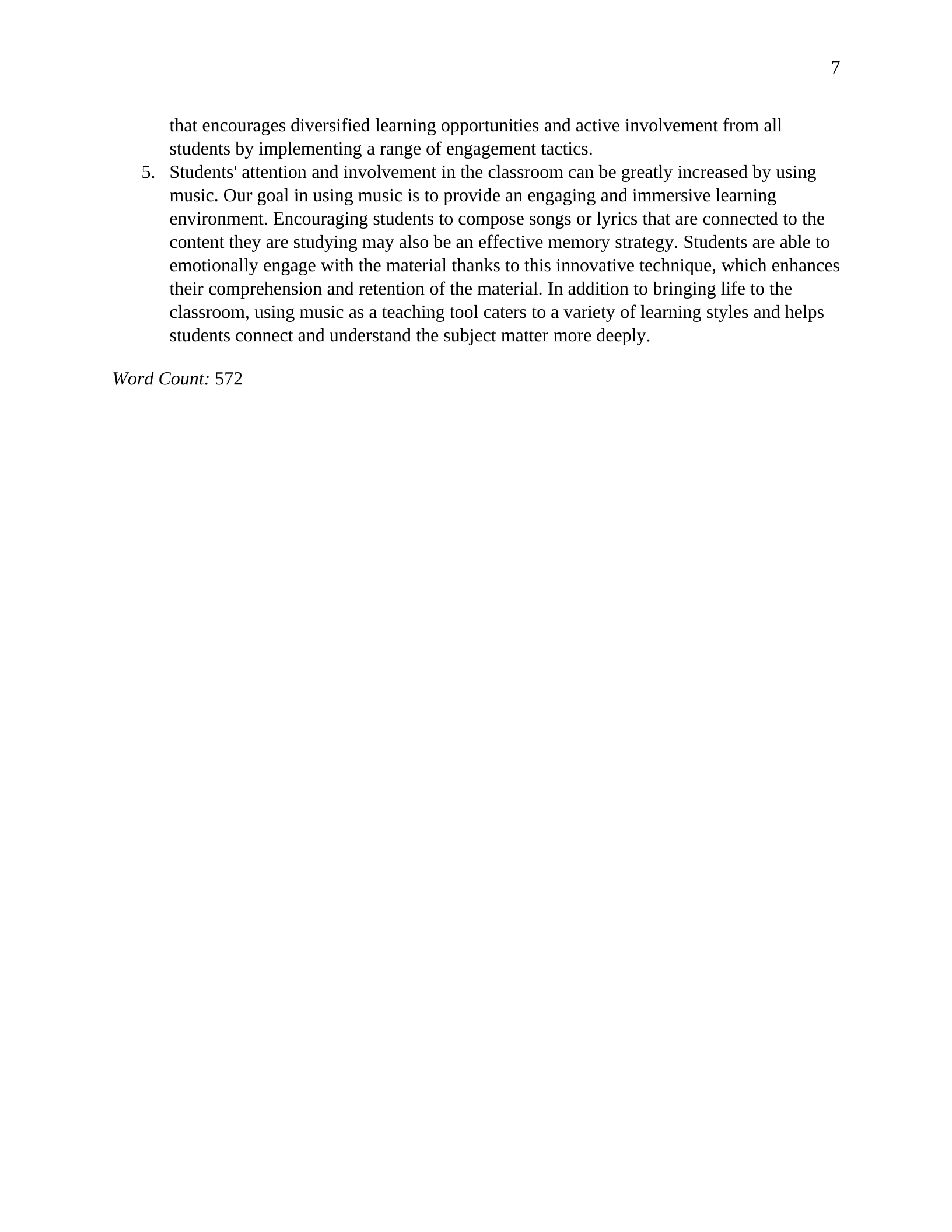
7
that encourages diversified learning opportunities and active involvement from all
students by implementing a range of engagement tactics.
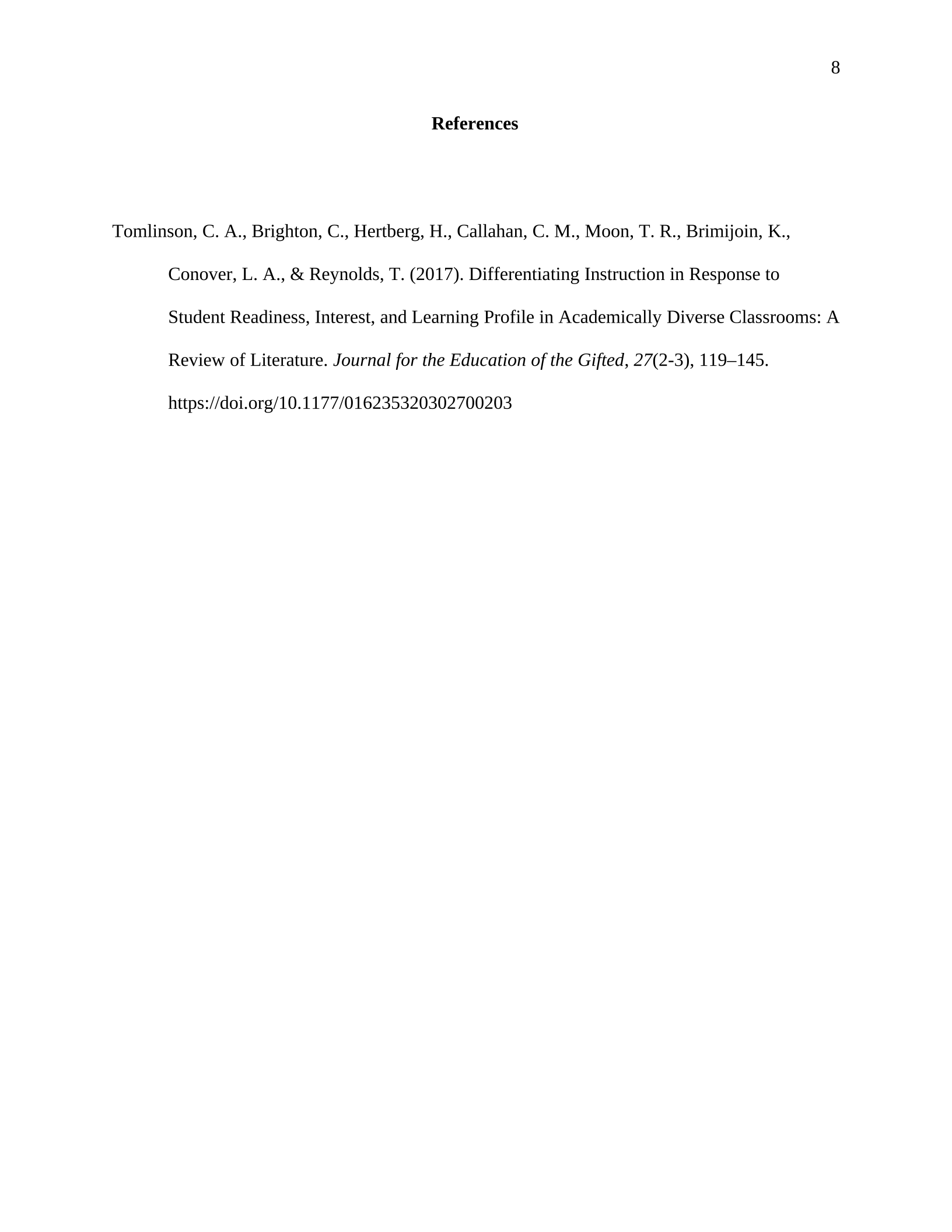
5. Students' attention and involvement in the classroom can be greatly increased by using
music. Our goal in using music is to provide an engaging and immersive learning
environment. Encouraging students to compose songs or lyrics that are connected to the
content they are studying may also be an effective memory strategy. Students are able to
emotionally engage with the material thanks to this innovative technique, which enhances
their comprehension and retention of the material. In addition to bringing life to the
classroom, using music as a teaching tool caters to a variety of learning styles and helps
students connect and understand the subject matter more deeply.
Word Count: 572
8
References
Tomlinson, C. A., Brighton, C., Hertberg, H., Callahan, C. M., Moon, T. R., Brimijoin, K.,
Conover, L. A., & Reynolds, T. (2017). Differentiating Instruction in Response to
Student Readiness, Interest, and Learning Profile in Academically Diverse Classrooms: A
Review of Literature. Journal for the Education of the Gifted, 27(2-3), 119–145.
https://doi.org/10.1177/016235320302700203
Powered by TCPDF (www.tcpdf.org)

