


EDLC 530
LESSON PLAN TEMPLATE
DAILY LESSON PLAN TEMPLATE
PRELIMINARY INFORMATION
Candidate Name: Grade Level: 8
Candidate’s Endorsement: Special
Education Secondary Highly
Qualified- Mathematics
Central Focus: To create a better understanding of
the coordinate plane, to understand that
transformation means the changes that a shape goes
through. This lesson will help in our Social and
Emotion lesson, when we discuss our lives have
transformed from being a little kid to the young
adult- somethings are the same, and somethings are
so different. Much like the same shape just sized
differently and in a different location.
Subject: Math Learning Segment Theme: Thinking Algebraically
and Geometric Concepts
Where in the learning segment
does this lesson occur?
☐Beginning ☒Middle
☐End
Lesson Structure or Grouping:
☒Whole Class ☐Small Group ☐1:1
Other (specify): Click or tap here to enter text.
STUDENT ASSETS (KNOWLEDGE OF STUDENTS)
Complete this section if you are in a practicum setting. If you are not in a practicum setting,
please list N/A.
Personal (Interests, family
backgrounds, experiences, etc.)
N/A
Cultural (Traditions, dialects,
worldview, literature, arts, etc.)
N/A
Community (Landmarks,
community events, etc.)
N/A
Developmental (Cognitive,
physical, social, and emotional)
N/A
CONTENT STANDARDS
State Standards 8.MG.3 The student will apply translations and
reflections to polygons in the coordinate
plane.
a) Sketch the image of a polygon that has been
translated vertically, horizontally, or a
combination of both.
National Standards CCSS.MATH.CONTENT.8.G.A.3
Describe the effect of dilations, translations, rotations,
and reflections on two-dimensional figures using
coordinates.
InTASC Standards Standard #8: Instructional Strategies
The teacher understands and uses a variety of
instructional strategies to encourage learners to
develop deep understanding of content areas and
their connections, and to build skills to apply
Page 1 of 17
EDLC 530
knowledge in meaningful ways.
LEARNING OBJECTIVE(S)
These must be behavioral and measurable.
Statements of what students will know, understand, and be able to do at the end of the lesson
(consider all three domains). Include condition, performance, and criterion.
By the end of the lesson students will be able to apply knowledge of translations in order
to sketch an image that has been translated both vertically and horizontally, with 100%
accuracy.
BEGINNING: LAUNCH/HOOK/ANTICIPATORY SET
How will you get the lesson started? What questions, texts, inquiry, modeling, and/or other
techniques will you use to engage students?
The class would begin the transformation video from Generation Genius:
Transformations: Reflections & Translations. (n.d.). Generation Genius.
https://www.generationgenius.com/videolessons/transformations-reflections-
translations/
MIDDLE: INSTRUCTIONAL STRATEGIES TO FACILITATE STUDENT LEARNING
For example: How will you engage students with ideas/texts to develop understanding? What
questions will you ask? How will you promote question generation/discussion? What activities
will you use to engage students in learning—for individuals, small groups, or the whole class?
How will you incorporate technology? How will you address the academic language demands?
Detail your plan. Note: For math lesson plans, please write or attach every task/problem
students will solve during the lesson—with the correct answers.
Instruction/Modeling Teacher will say: Today we are going to discuss
transformations, reflections, across the x-axis,
across the y-axis and the coordinate plain. We will
use the vocabulary we learn today throughout the
rest of the unit. Lets define those new vocab terms
and add them to our word wall. Please get out your
math notebooks
Today, our main focus is going to be about
transformations.
Teacher continues with: Please get out your iPads
and open Canvas to get the Desmos join code.
~Teacher has the Desmos Activity on the
Smartboard.
(You Do) Teacher freezes the Desmos activity to the
1st slide: Ok class, everyone drag your points and
Page 2 of 17

EDLC 530
create a new shape. ~The teacher watches iPad
Screens and the SmartBoard. The students’ new
shape will be on SmartBoard when they are done.
~ Desmos Activity is real time, so the teacher can
view all screens and student work at the same time.
The teacher can even turn on alias mode, so
students do not know whose work is whose.
The teachers continues to the next slide and the
students see their transformation.
(We DO) Teacher says: Class what happened?
Students can enter their answer in the text box or
just say it whole class.
The teacher and class discuss the transformation.
The teacher discusses that transformation means
movement and change. That they are watching how
their shape moved and changed.
Guided Practice (You Do) Teacher resets the lock range to
Transformation 2 and Transformation 3 (slide 4-5)
Teacher says: OK class, complete the next two
slides, then we will discuss. ~ Teacher watches iPad
Screens and the SmartBoard (briefly).
The teacher confers with students on what they are
noticing about the transformation, maybe helping
with putting the verbalized words into written
responses.
(We do) Teacher says: Ok class what did you
notice?
Class discusses what they noticed.
The teacher says: Sounds like we are on the right
track. Now let’s finish the next few slides of this
activity.
Class finishes the activity.
~ The next few slides are a bit more difficult. The
teacher will need to work with students that are
struggling and encourage elbow partner conferring.
Teacher say: Ok everyone please get out your math
notebooks and lets take some notes and review
Page 3 of 17

EDLC 530
some vocabulary. Then we will complete our
independent practice.
(We Do- Direct Instruction) Teacher says:
Translation means (students copy board), taking a
shape and sliding the shape to a new location.
Students write the notes and draw a triangle with
an arrow pointing the right and drawing a new
triangle to show movement.
Reflection means (students copy board), is taking a
shape and flipping it. Students draw two triangles
with a dotted line between them to represent a
mirror reflection
Rotation means (students copy the board) turning a
shape about a point and a number of degrees (90,
180, 270 or 360).
Students draw an upright triangle then a tilted
triangle to show rotation.
Coordinate plane means (students copy board), the
x and y axis that divides up 4 quadrants. ~ what we
use to make our graphs. Students draw the
coordinate plane and label the quadrants
Transformations means (students copy board), the
changes that are done to the shape on a coordinate
plane by rotation, reflection or translation.
Students draw a coordinate plane and then draw a
triangle reflecting over the y-axis, then draw a
triangle tilted, draw the tilted triangle rotated.
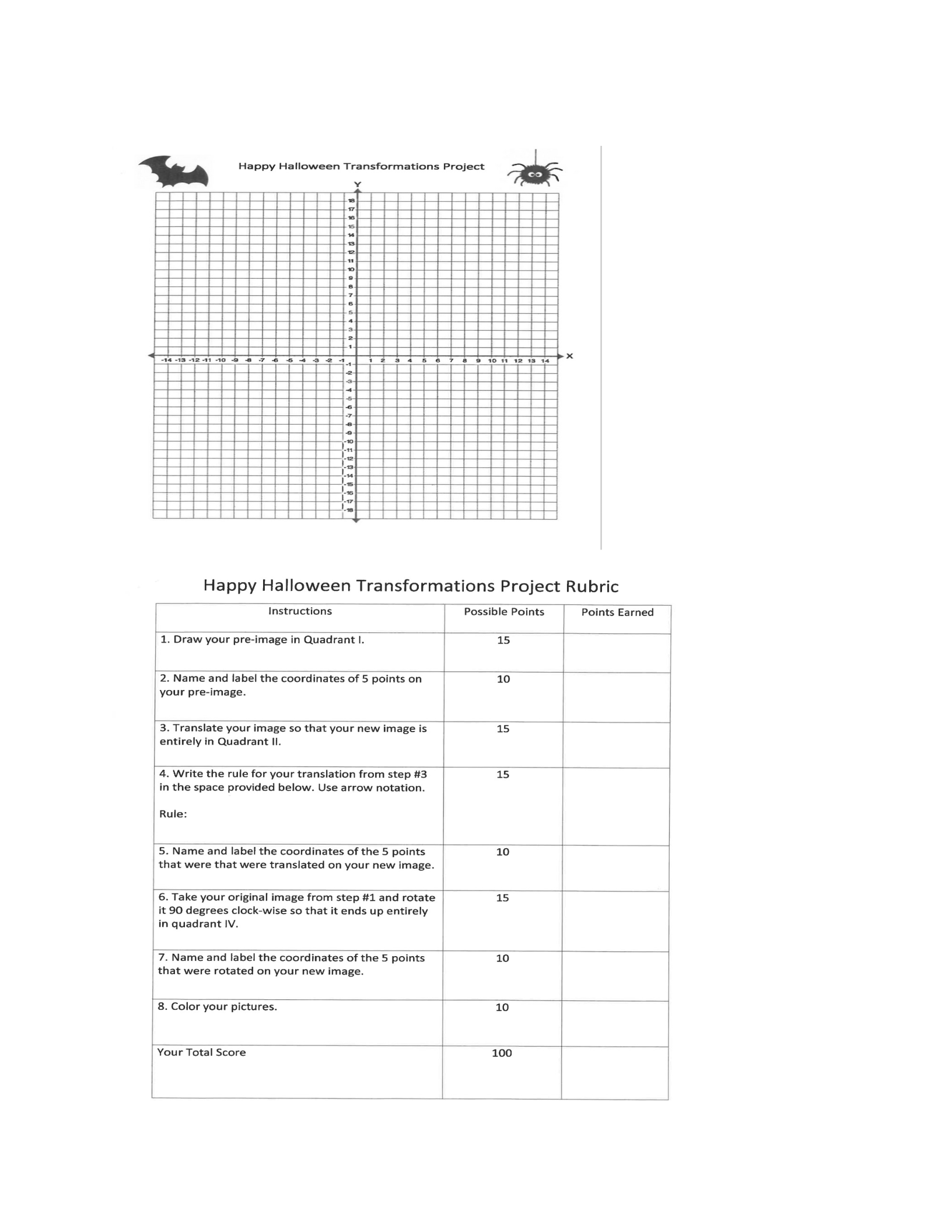
Independent Practice (You Do): Teacher says: To practice
transformations and to decorate for our Harvest
Party- we are going to complete a Halloween Spider
Transformation.
The teacher continues saying: While this is an
individual project, I encourage you to work in your
table groups.
Teacher walks around the classroom, conferring
with students as they complete their spider activity.
The teacher is checking for understanding and use
of academic language. Teacher will use the data
from conferring with students to decide if a small
group revisiting the information is needed.
Page 4 of 17
EDLC 530
END: CLOSURE
How will you end the lesson in a way that promotes student learning and retention?
Once students have completed the spider transformation project, they may complete
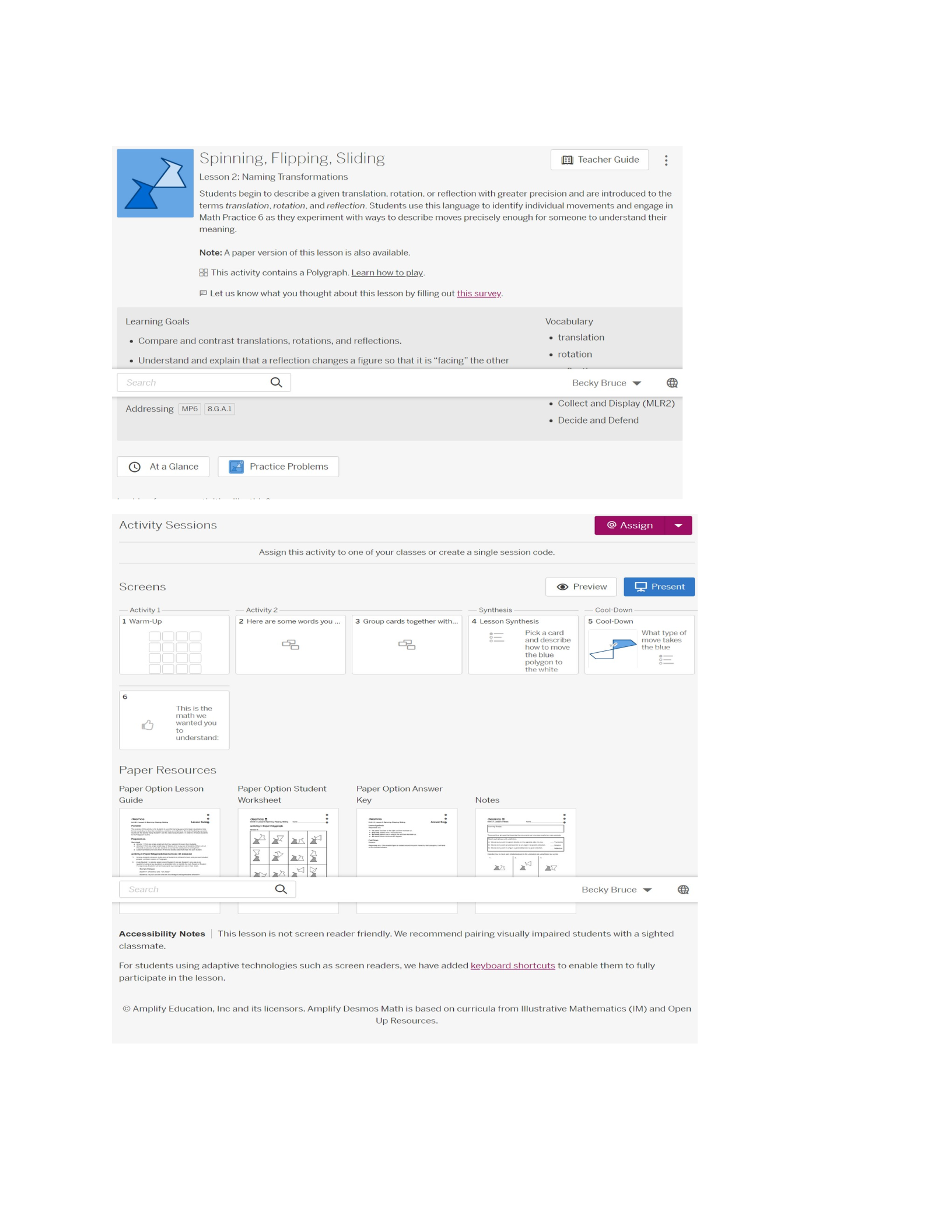
another Desmos Activity: Spinning, Flipping, Sliding, with a partner. Or challenge
themselves to the transformation mystery project. Whatever the student chooses is great,
just that the spider transformation is completed.
EVIDENCE AND ASSESSMENT OF STUDENT LEARNING
How will you know whether your students are meeting your learning objective? What tools
will you use to measure their progress? How will you provide feedback to promote student
learning?
Diagnostic/Pre-assessment(s)
(could be prior to the lesson)
Prior to this lesson the students have been graphing
points, creating lines, and plotting various shapes.
Formative Assessments/
Feedback to Learners (part of the
activities in the lesson)
The formative assessment will come from the
Desmos activity. The teacher will confirm that the
students are understanding transformations of
shapes. The teacher is also conferring with students
during the spider activity and the following Desmos
activity that they are building and strengthening
their understanding of the new skills.
Summative Assessment (matches
the objective)
The Halloween Spider is the student’s formative
assessment.
ACADEMIC LANGUAGE DEMANDS
Language Demand(s) In this lesson there is a considerable amount of
vocabulary and new terms such as reflective,
transformation, and transformation. The teacher
will need to take a few minutes and have the
students do coral reading or I Say You Say,
practice with the vocabulary.
Language Support(s) The teacher will need to add these to the word wall
with definitions and Spanish spellings as well. The
teacher may need to take a few extra minutes and
have the students practice with their table partners
with sharing the vocabulary and definitions.
Essential Vocabulary Translation, Rotation, Coordinate plane
Transformations, reflection
including a review of :
X and Y axis
Coordinate Point
Page 5 of 17
EDLC 530
LU SOE-SPECIFIC LESSON REQUIREMENTS
Character Education Academic Perseverance. There a lot of new
vocabulary terms (such as transformations) and
several that students probably already knew (such
as reflection) but never realized that those words
were math terms. That while this lesson may seem
hard and complicated, if they try, this is not a
difficult task. Like so many other things in life that
seem impossible, just try and you (they) will find
that the task really is not impossible.
Materials SmartBoard for Desmos Activity
Halloween Spider Activity
Pencils/Erasers
Student iPad
Student Math notebooks
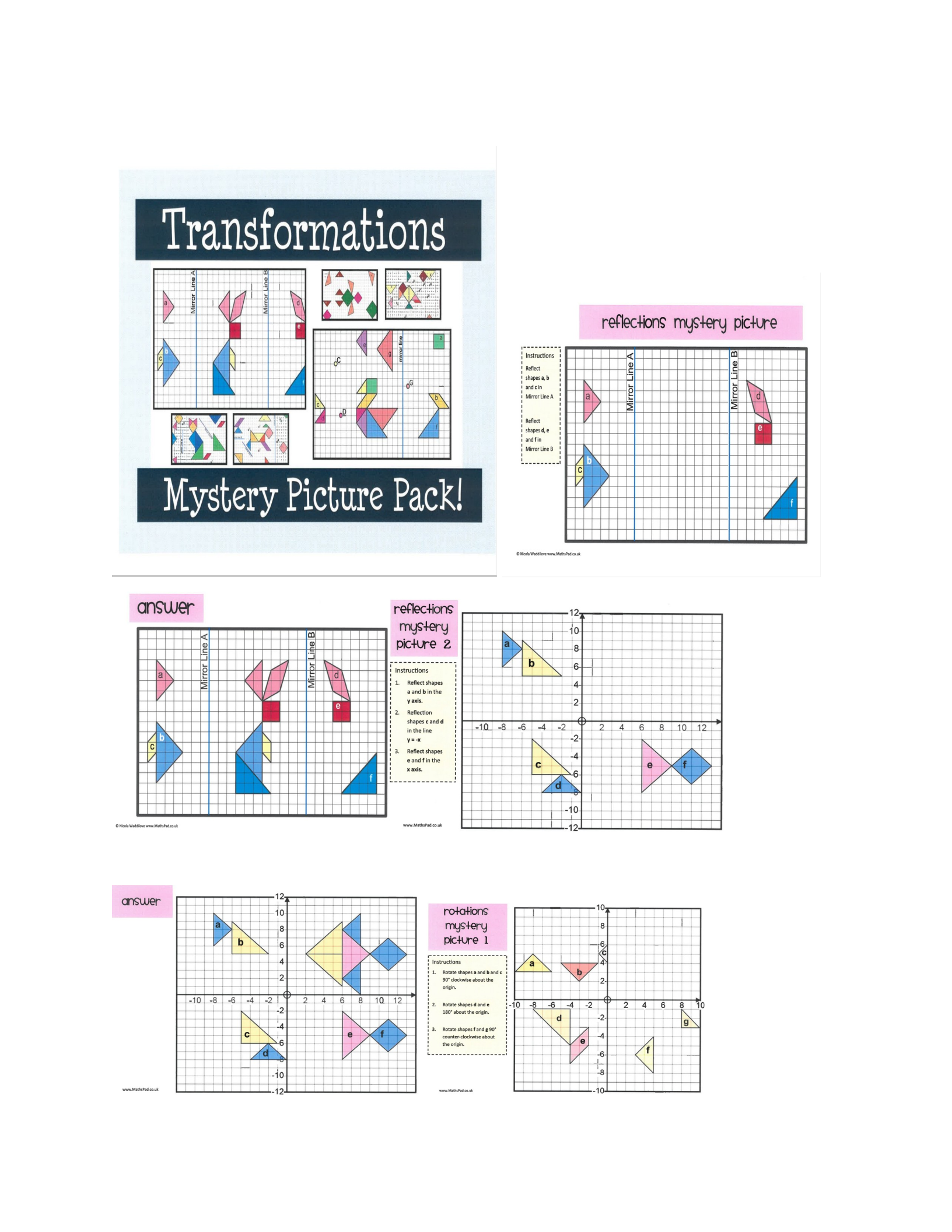
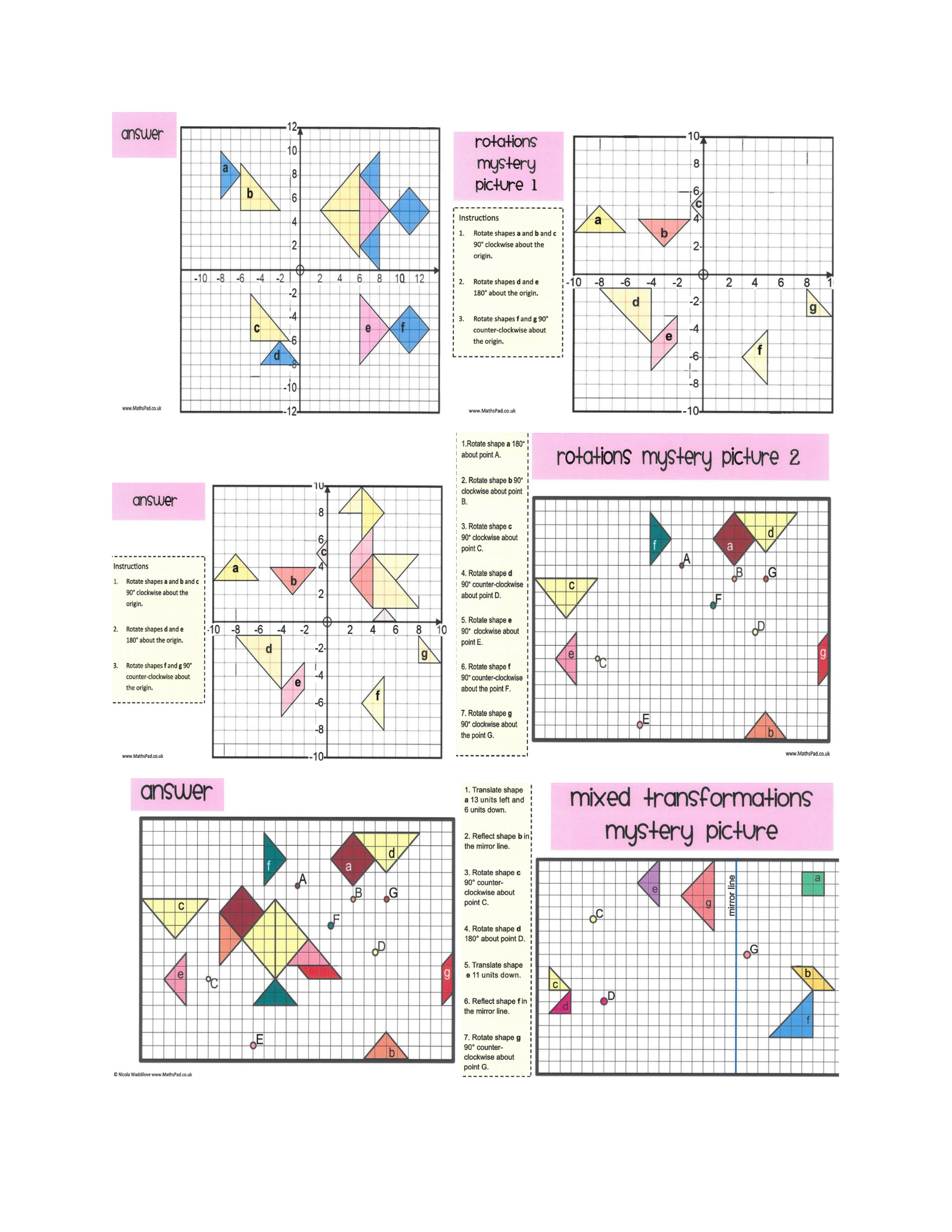
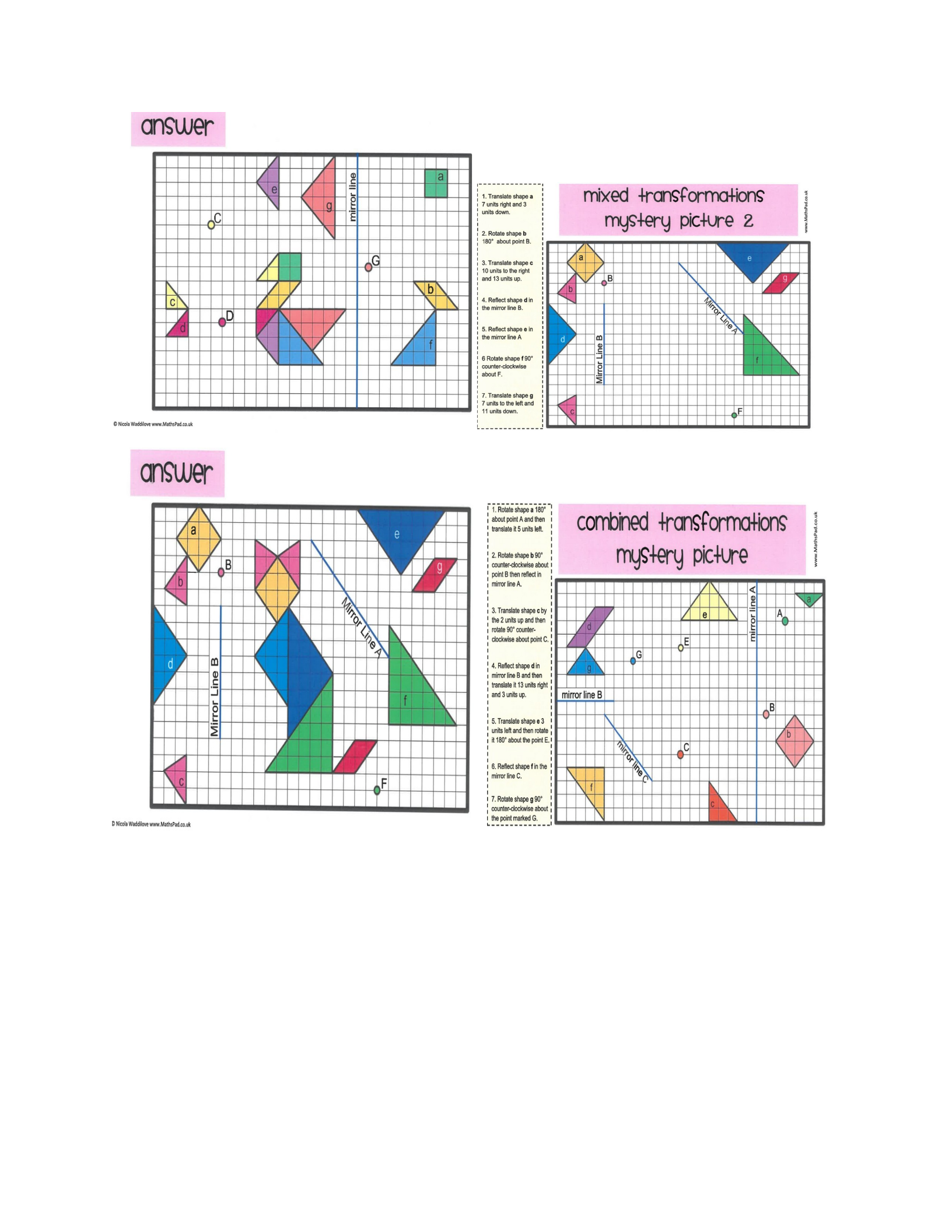
If needed: The Transformations Mystery Pack
Technology Connection Use of Desmos Activities, students will need their
iPads and have access to the class’s canvas page
CONSIDER THE FOLLOWING QUESTION FOR THE NEXT SECTION OF THIS FORM:
How will you support students to meet your goals? EXPLICITLY describe what you will do!
List planned supports (instructional strategies, learning tasks and materials, and other
resources deliberately designed to facilitate student learning of the central focus).
Planned Supports I chose to begin the lesson with the video from
Generation Genisus to introduce the vocabulary,
before we discussed anything to help build
background knowledge.
I also started the lesson with a Desmos activity so
that the students can experience transforming
shapes and learning about the vocabulary, without
knowing what they were doing. I like doing Desmos
Activities in class because it teaches students by
exploring, then learning the how and why.
I have the word wall with the vocabulary math
terms and the students math notebooks. By having
the students write the notes and draw the pictures
to match the terms they are using AVID WICOR
strategies, which helps to increase engagement and
understanding to the lesson. The W is for Writing
and the R is for reading.
Page 6 of 17

EDLC 530
The Desmos activity I choose to begin the lesson is
the teacher directed to stop at particular parts of
the lesson to allow for discussions and light bulb
moments.
The teacher will also confer with students and table
groups as they work through the spider project.
For my more struggling students, I will aid them in
“seeing” how reflecting over a or axis, a point leads
to a new point, but it has the same distance. Just
trying to help ease the confusion and
overwhelmingness of the lesson.
For my more gifted students, or those that can see
the pattern, I have planned another Desmos
Activity, I also have another graphing
transformation packet where the transformations
create pictures of animals and flowers. I tend to use
that as more of a chose project than an assessment.
SUPPORTS: DIFFERENTIATION/EXTENSION
How will you provide successful access to the key concepts to all the students at their ability
levels?
Exceptionalities (special needs
[IEPs/504 plans], gifted and talented,
accommodations, etc.)
While I am conferring with the table groups and
individual students, I am noticing who might need
small group instruction to revisit the material or
who might be ready to be challenged.
The graphing transformation packet that I have is
something I use more as a challenge project for
students who are ready to move on, while I work
with those students who need to revisit the material.
ELL Since this lesson has a lot of new or newly defined
vocabulary, I have incorporated the dual language
word wall and an I Say, You say moment. If need
be, I will also use google translate, in the past when
I have lessons like this, with a lot of vocabulary, I
ask to have a translator in my class.
Learning Styles/Student
Engagement
I have the students grouped in table groups of four,
this helps with student collaboration. It is also
beneficial when I am conferring with students, so
that I can discuss with several students at once.
Page 7 of 17
EDLC 530
Extension The second Desmos Activity is called Spinning,
Flipping, Sliding, it is the second lesson in the
Desmos Activities. This lesson builds on the first, it
is a great way to reinforce their learning of
transformation. I have also incorporated the
graphing transformation mystery packet.
REFERENCES: RESOURCES
Cite all sources used in the development of the lesson materials and resources, including URLs
or other references.
Kuhn, L. (n.d.) Halloween Transformation Project. Teachers Pay Teachers. Halloween
Transformations Project by Lou Kuhn | TPT (teacherspayteachers.com)
Spinning, Flipping, Sliding. Activity Builder by Desmos Classroom. (n.d.). Desmos Teacher
Activity.https://teacher.desmos.com/activitybuilder/custom/5cf439026394da6faf473a5
0?r=w.hd&collections=5f8a43dd06b0d9a8bd84c3d0%2C5f8a441e06b0d9a8bd84c3d1
Transformers. Activity Builder by Desmos Classroom. (n.d.). Desmos Teacher
Activity.https://teacher.desmos.com/activitybuilder/custom/5d1a77ed2dda5c4672e151
05?
r=w.hd&collections=5f8a43dd06b0d9a8bd84c3d0%2C5f8a441e06b0d9a8bd84c3d1
Transformations: Reflections & Translations. (n.d.). Generation Genius.
https://www.generationgenius.com/videolessons/transformations-reflections-
translations
Waddilove, N. (n.d.) Transformations mystery picture pack. Transformations Mystery Picture
Pack (Reflection, Rotation, Translation) (teacherspayteachers.com)
This activity is used as an extension project activity. In the past I have had several students
enjoy completing this project, however, I have found that it tends to be a bit more advanced
than my LD students like. My LD, or generally lower students, seem to prefer working
Page 8 of 17
EDLC 530
through the Desmos Activities.
REFERENCES: RESEARCH TO SUPPORT INSTRUCTIONAL DESIGN
Cite all research used to support instructional design, including URLs or other references.
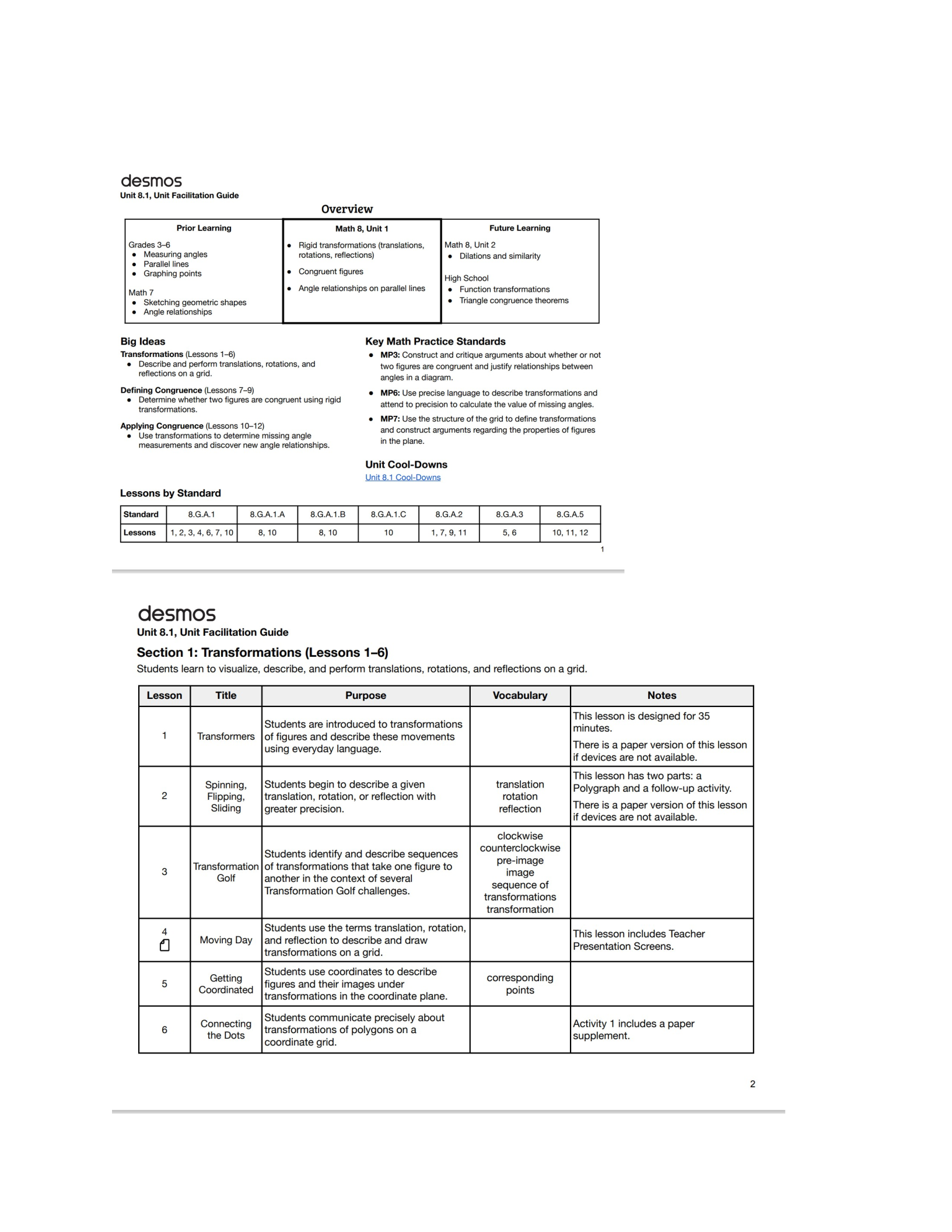
Desmos Activities. (2024). Desmos Unit 1 Grade 8: Rigid Transformation. (2024).
https://teacher.desmos.com/desbook-asset/assets/desbook/8/1/8.1-unit-facilitation-
guide.pdf
I use this as a guide to go along with my scope and sequence. Desmos also have paper pencil
activities for a small group extension activity, as well as family activities that I will send home
if needed.
WICOR ® (Writing, Inquiry, Collaboration, Organization, and Reading). (n.d.).
https://avidopenaccess.org/wp-content/uploads/2021/08/AVID-WICOR-flyer-
080521_proofed.pdf
Page 9 of 17
EDLC 530
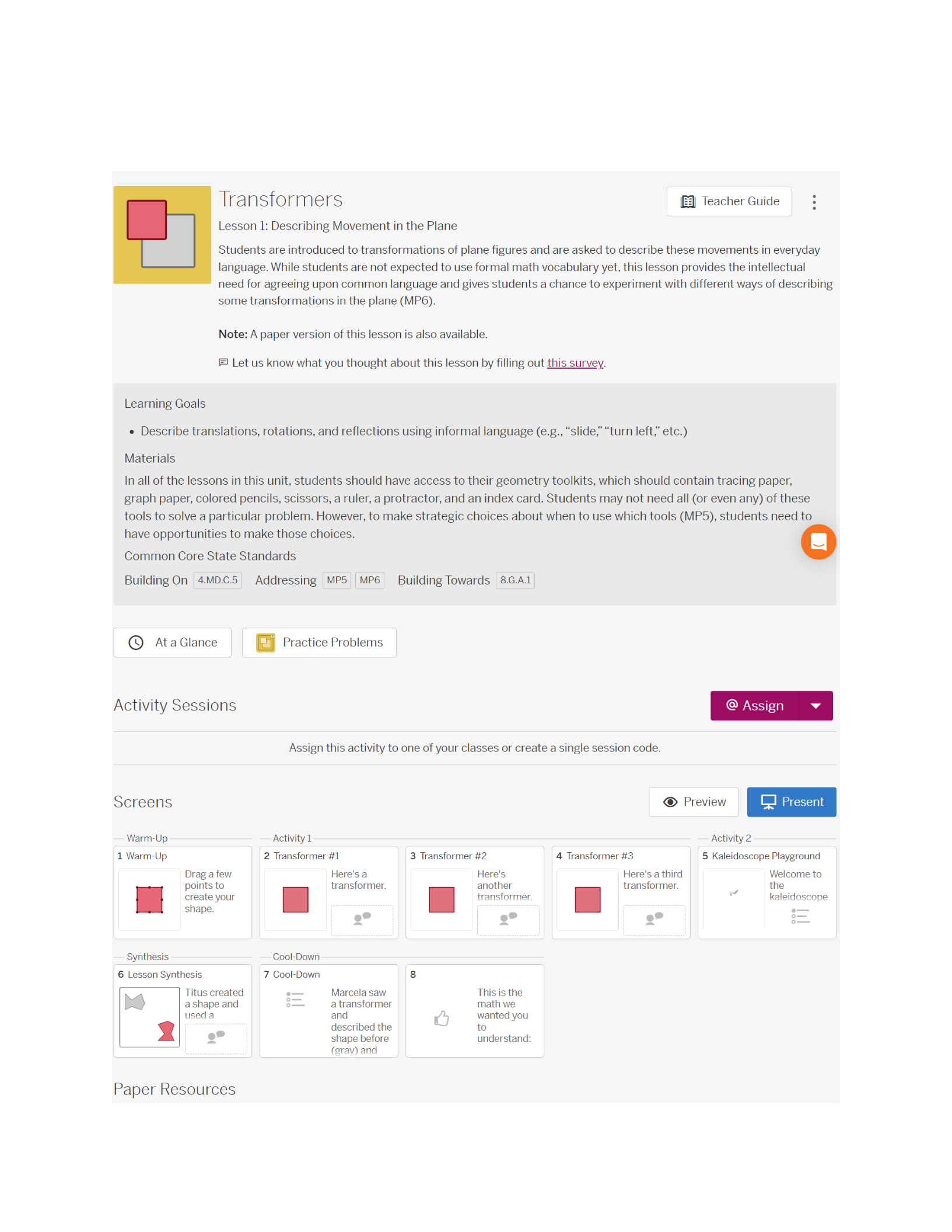
To introduce the lesson I would use this Desmos Activity; it would be posted to Canvas, for the
students to open as well as I would have it on the posted to the Smartboard.
Page 10 of 17
EDLC 530
This is the transformation activity.
Page 11 of 17
EDLC 530
The Desmos Teacher Guide. I use this to match up with my school’s scope and sequence of the
transformation unit.
Page 12 of 17
EDLC 530
The Desmos Activity: Spinning, Flipping, Sliding Lesson 2: Naming Transformations
Page 13 of 17
EDLC 530
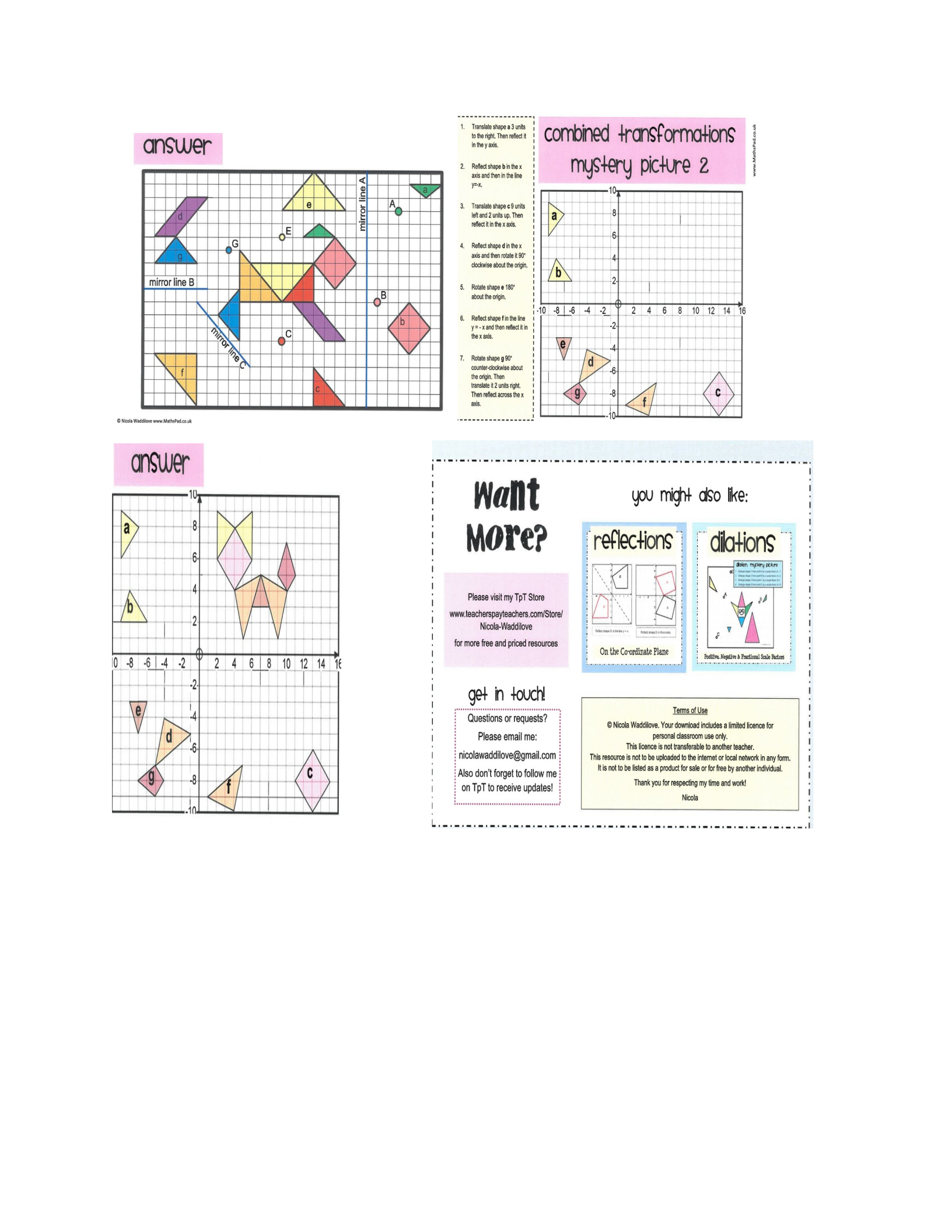
This is the Transformation Mystery Pack that I use for a challenge project.
Page 14 of 17
EDLC 530
Page 15 of 17
EDLC 530
Page 16 of 17
EDLC 530
Page 17 of 17

