


1
Threat Model Assignment
Threat Model Assignment: Customer Interactive Tracker
Brandon Cook
Liberty University
CSIS 643-D01
Dr. Mary Cecil
11/26/2023

2
Threat Model Assignment
Table of Contents
Abstract................................................................................................................................3
Introduction..........................................................................................................................3
Threat Models......................................................................................................................4
Conclusion and Biblical Analysis........................................................................................8
Appendices..........................................................................................................................9
References..........................................................................................................................11

3
Threat Model Assignment
Abstract
In the dynamic realm of online business, safeguarding sensitive client information and
ensuring the trustworthiness of digital transactions are paramount imperatives. This research
explores "Shades of Light's" proactive cybersecurity approach, focusing on fortifying its
Customer Interactive Tracker (CIT) system through the strategic integration of three prominent
threat models—STRIDE, PASTA, and OCTAVE. The STRIDE model, chosen for its maturity
and systematic risk reduction methodology, provides a comprehensive framework utilizing data
flow diagrams to identify and address cybersecurity threats within the CIT system. PASTA's
rigorous seven-step procedure, emphasizing the strategic elevation of threat modeling, aligns
business goals with technological specifications, ensuring a comprehensive and attacker-focused
risk management approach. OCTAVE, known for scalability and adaptability, suits the CIT
system's dynamic nature with a three-step methodology emphasizing asset-centric threat profiles.
This essay concludes by emphasizing the biblical principles of responsible management and
conscientiousness, underscoring "Shades of Light's" commitment to cybersecurity preparedness
and its alignment with timeless values of diligence, collaboration, and preparedness in the ever-
changing landscape of e-commerce.
Introduction
In the ever-changing world of online business, it is crucial to prioritize the protection of
sensitive client information and maintain the trustworthiness and dependability of digital
transactions. In recognition of this urgent requirement, "Shades of Light" has adopted a
proactive approach by integrating sophisticated threat modeling frameworks to strengthen its
Customer Interactive Tracker (CIT) system. The CIT system requires a strong cybersecurity

4
Threat Model Assignment
architecture to handle the intricacies of contemporary online transactions, as it is crucial for the
organization's operations.
This analysis examines three notable threat models—STRIDE, PASTA, and OCTAVE—
selected for their specific characteristics and applicability to the complex realm of e-commerce.
The choice of these models is not random; instead, it is based on their distinct strengths and skills
that perfectly match the operational intricacies of the CIT system. The objective of this study is
to examine the complexities of STRIDE, PASTA, and OCTAVE threat models, to get a thorough
comprehension of their strategic use in strengthening the CIT system against various cyber
threats. This study highlights the dedication of "Shades of Light" to enhance its cybersecurity
architecture. The selected threat models are not just abstract concepts but practical instruments
that, once put into action, will effectively tackle various threats, prioritize the reduction of risks,
and promote cooperation among those involved. As "Shades of Light" embarks on this
endeavor to strengthen its cybersecurity measures, the findings of this study are expected to not
only enhance the organization's ability to handle cyber threats but also contribute to the wider
discussion on cybersecurity in the ever-changing world of online commerce.
Threat Models
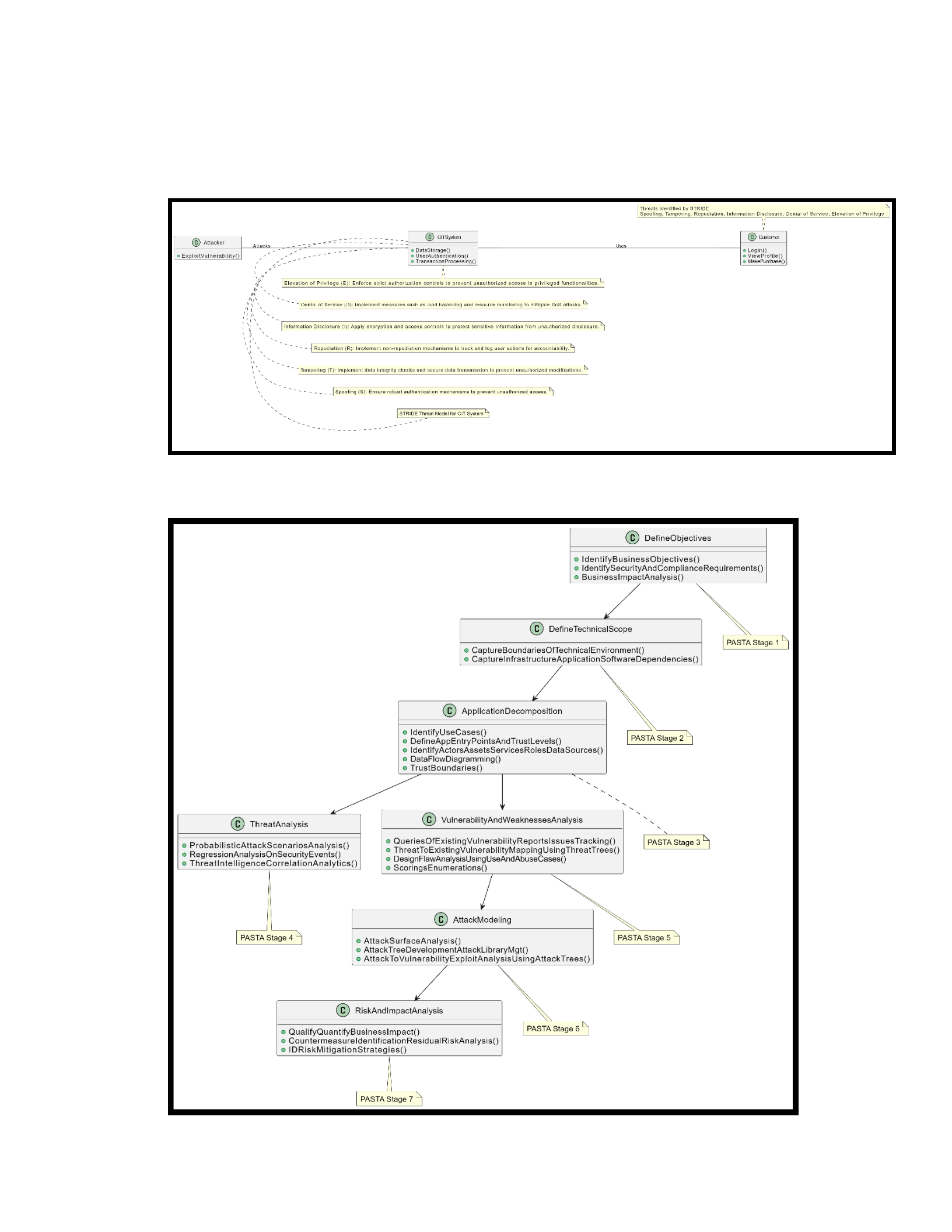
STRIDE - See Appendix A
The STRIDE threat model is a fundamental decision for strengthening the cybersecurity
position of the Customer Interactive Tracker (CIT) system within "Shades of Light." The
model, created by Loren Kohnfelder and Praerit Garg, has evolved and remains applicable
because of its thorough method for recognizing and reducing risks (Shostack, 2014). The
rationale for employing the STRIDE threat model in the context of the CIT system lies in its
capacity to methodically assess and tackle security issues in the system's intricate design.

5
Threat Model Assignment
According to Shevchenko et al. (2018), STRIDE assesses risks by following two main
steps: system modeling and threat identification. During the system modeling phase, the model
utilizes data flow diagrams (DFDs) to identify entities, events, and system boundaries.
Understanding the structure of the CIT system is essential at this stage. The following phase of
threat identification uses the STRIDE acronym, which represents Spoofing identity, Tampering
with data, Repudiation, Information disclosure, Denial of service, and Elevation of privilege.
These threat categories act as a mnemonic device for identifying threats when navigating the
system model.
Specific mitigation measures are implemented to handle each identified threat, such as
Spoofing, Tampering, Repudiation, Information Disclosure, Denial of Service, and Elevation of
Privilege. For example, the model suggests adopting strong authentication techniques to combat
Spoofing threats and applying stringent authorization rules to mitigate Elevation of Privilege.
The selection of STRIDE is additionally bolstered by its effective implementation in both
cyber-only and cyber-physical systems (Shevchenko et al., 2018). Although the STRIDE
method may require a significant amount of time and provide difficulties in handling an
increasing number of threats due to system complexity, it is well-suited to meet the CIT system's
requirement for a comprehensive and methodical approach to threat modeling.
The use of the STRIDE threat model for the CIT system is justified due to its maturity,
methodical approach to identifying threats, and successful application in similar situations. This
provides "Shades of Light" with a strong basis for solving cybersecurity concerns.
PASTA - See Appendix B
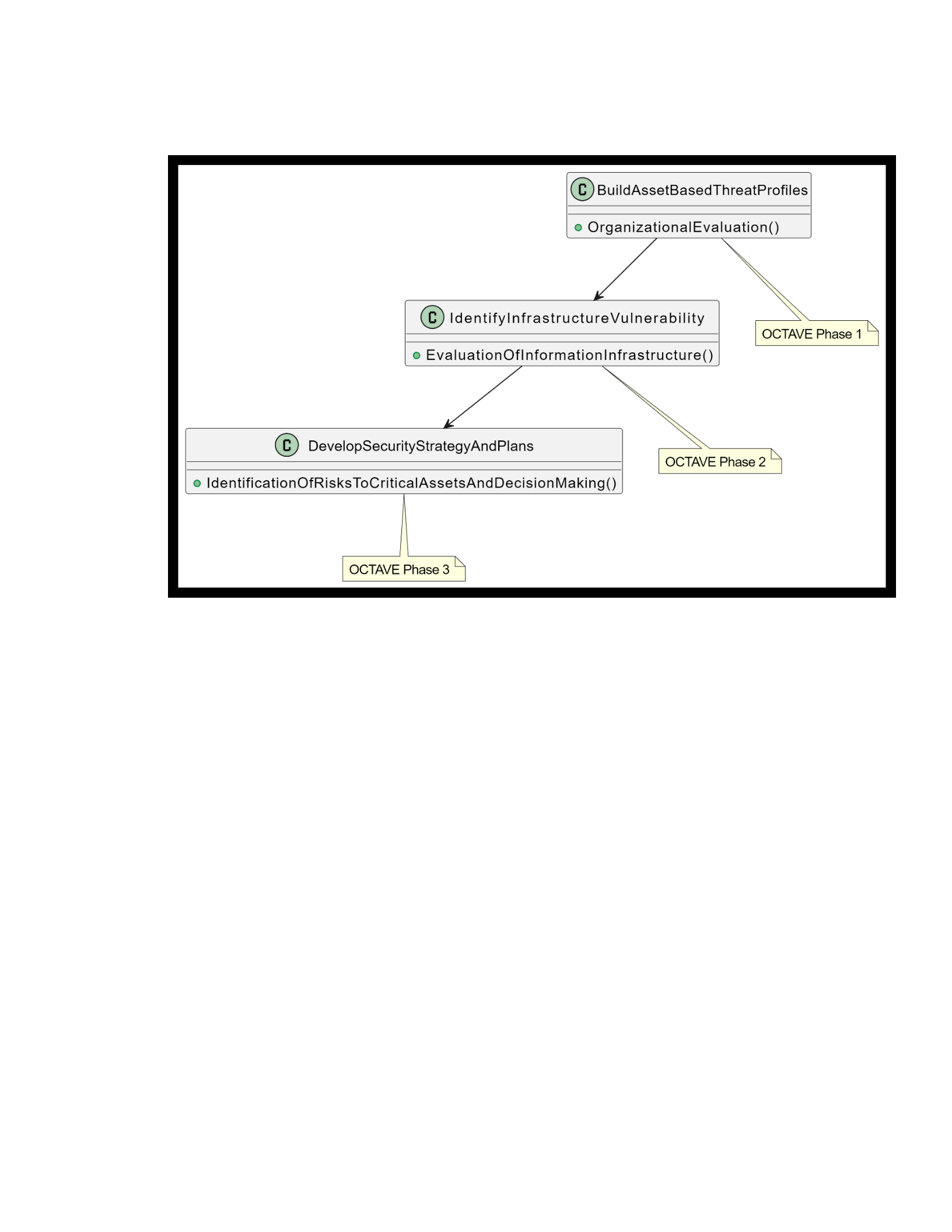
The choice to utilize PASTA for the CIT system is based on its rigorous seven-step
procedure, with each step encompassing numerous tasks. Appendix B depicts the sequential

6
Threat Model Assignment
phases, commencing with the establishment of goals and concluding with the evaluation of risks
and impacts. This comprehensive strategy guarantees a meticulous incorporation of business
goals with technological specifications, offering a comprehensive perspective of the CIT
system's environment.
PASTA's emphasis on risk is demonstrated by its elevation of the threat modeling process
to a strategic level. PASTA incorporates important decision-makers from many departments
such as operations, governance, architecture, and development to ensure that security
considerations are integrated into all aspects of the company. This contributes to a strong
approach to managing risks.
PASTA stands out for its focus on attackers and their perspective, which is in line with
the changing threats in the e-commerce industry. The method generates an output that focuses
on assets, making it easier to prioritize solutions for mitigating threats.
Although threat modeling can be time-consuming, the comprehensive documentation of
PASTA, created by UcedaVélez and Marco Morana, is a significant resource for enterprises as
they navigate the intricacies of the process. This documentation facilitates cooperation among
parties and fosters a comprehensive comprehension of potential threats. The CIT system
successfully incorporates the PASTA model, which offers a strategic and comprehensive
framework for managing risks specific to e-commerce cybersecurity.
OCTAVE – See Appendix C
The decision to use the Operationally Critical Threat, Asset, and Vulnerability Evaluation
(OCTAVE) threat model for the Customer Interactive Tracker (CIT) system is based on its
capacity to scale, its contribution to risk management, and its adaptability to the ever-changing
nature of e-commerce. OCTAVE, created by the CERT Division of the Software Engineering

7
Threat Model Assignment
Institute, is a cybersecurity framework that emphasizes corporate risk assessment and offers a
strategic approach.
OCTAVE's scalability is in line with the dynamic nature of the CIT system, allowing for
seamless adaptation to ongoing interactions and evolving demands. The ability to adapt is
essential in an e-commerce setting when the operating environment is continuously changing.
According to Beyst (2016), it is crucial to choose a threat modeling method that is suitable for
the organization's specific needs and scalability requirements. In the case of "Shades of Light"
and the CIT system, OCTAVE is considered an appropriate solution.
OCTAVE's significance in risk management is emphasized by its three-step methodology:
constructing asset-centric threat profiles, pinpointing infrastructure weaknesses, and formulating
security strategies and plans. This systematic procedure assists in detecting, prioritizing, and
minimizing potential risks to the important assets of the CIT system. Stanganelli (2016)
emphasizes the importance of choosing a threat risk model that is in line with the organization's
risk management goals. The author validates the usefulness of OCTAVE for addressing the risks
related to e-commerce systems.
Although OCTAVE may require a significant investment of time and effort due to its
extensive documentation, its ability to consistently produce repeatable results makes it a highly
desirable option for enterprises in need of a thorough and dependable risk assessment
framework. The decision to implement OCTAVE by "Shades of Light" demonstrates a
deliberate dedication to cybersecurity, guaranteeing that the CIT system is adequately prepared to
handle the changing risks in the e-commerce environment.

8
Threat Model Assignment
Conclusion and Biblical Analysis
"Shades of Light's" dedication to enhancing its cybersecurity is in accordance with the
biblical values of responsible management and conscientiousness. The Bible promotes the idea
of believers being diligent in their job, as mentioned in Proverbs 12:24. This diligence also
applies to the responsibility of protecting the resources that have been entrusted to them. Within
the framework of "Shades of Light," safeguarding client data and ensuring the reliability of
transactions can be viewed as a conscientious management of the confidence bestowed upon the
business.
Furthermore, the focus on managing and preparing for risks in response to changing
threats aligns with the biblical concept of being watchful and ready for difficulties (Matthew
24:42). "Shades of Light" showcases its dedication to carefully managing resources and
information by implementing proactive cybersecurity measures. This reflects the biblical ideals
of diligence, collaboration, and preparedness.
Within the dynamic realm of e-commerce, "Shades of Light" acknowledges the utmost
significance of protecting sensitive client data and assuring the dependability of digital
transactions within its Customer Interactive Tracker (CIT) system. The utilization of
sophisticated threat modeling frameworks such as STRIDE, PASTA, and OCTAVE demonstrates
a proactive dedication to strengthening cybersecurity measures.
9
Threat Model Assignment
Appendices
Appendix A
Appendix B
L
©
BuildAssetBasedThreatProfiles
©
OrganizationalEvaluation()
®©
IdentifyInfrastructureVulnerability
OCTAVE
Phase
1
©
EvaluationOfInformationInfrastructure()
®©
DevelopSecurityStrategyAndPlans
OCTAVE
Phase
2
@
IdentificationOfRisks
ToCriticalAssetsAndDecisionMaking()
OCTAVE
Phase
3
10
Threat Model Assignment
Appendix C

11
Threat Model Assignment
References
Shevchenko, N., Chick, T.A., O’Raige. P., Scanlon, T.P., & Woody, C. (2018).
Threat Modeling: A Summary of Available Methods.
Shostack, A. Threat Modeling: Designing for Security. Wiley, 2014. ISBN 978-1118809990
Stanganelli, J. Selecting a Threat Risk Model for Your Organization, Part Two. eSecurity Planet.
September 27, 2016. https://www.esecurityplanet.com/network-security/selecting-athreat-risk-
model-for-your-organization-part-two.html
UcedaVélez, T. & Morana, M. M. Risk Centric Threat Modeling: Process for Attack Simulation
and Threat Analysis. Wiley. 2015. ISBN 978-0-470-50096-5

