


Quiz 3 couc 546
Question 1
1.6 out of 1.6 points
All of the following are found in the somatic symptom disorders chapter in the DSM-5 EXCEPT:
Selected
Answer:
c.
hypochondriasis.
Question 2
1.6 out of 1.6 points
Older people are likely to underreport __________, perhaps because of beliefs
that these are inevitable parts of life.
Selected
Answer:
b.
somatic symptoms
Question 3
1.6 out of 1.6 points
Conversion disorder occupies a central place in psychodynamic theory because
it provides a clear example of the role of
Selected
Answer:
b.
the unconscious.
Question 4
1.6 out of 1.6 points
Which of the following statements is true regarding gender differences in eating
disorders?
Selected
Answer:
c.
Women are more likely to have both bulimia and anorexia than men.
Question 5
1.6 out of 1.6 points
After being released from a brief hospitalization for minor surgery, 70-year-old
Mrs. Bee seemed distractible and disoriented. She did not even recognize her
husband when he came to pick her up from the hospital. After they returned
home, they discussed their plans for the weekend and Mrs. Bee seemed fine,
but as night came on, she could not sleep and began accusing Mr. Bee of
throwing away her belongings while she was away. Which of the following
disorders best fits Mrs. Bee's symptoms?
Selected
Answer:
c.
delirium
Question 6
1.6 out of 1.6 points
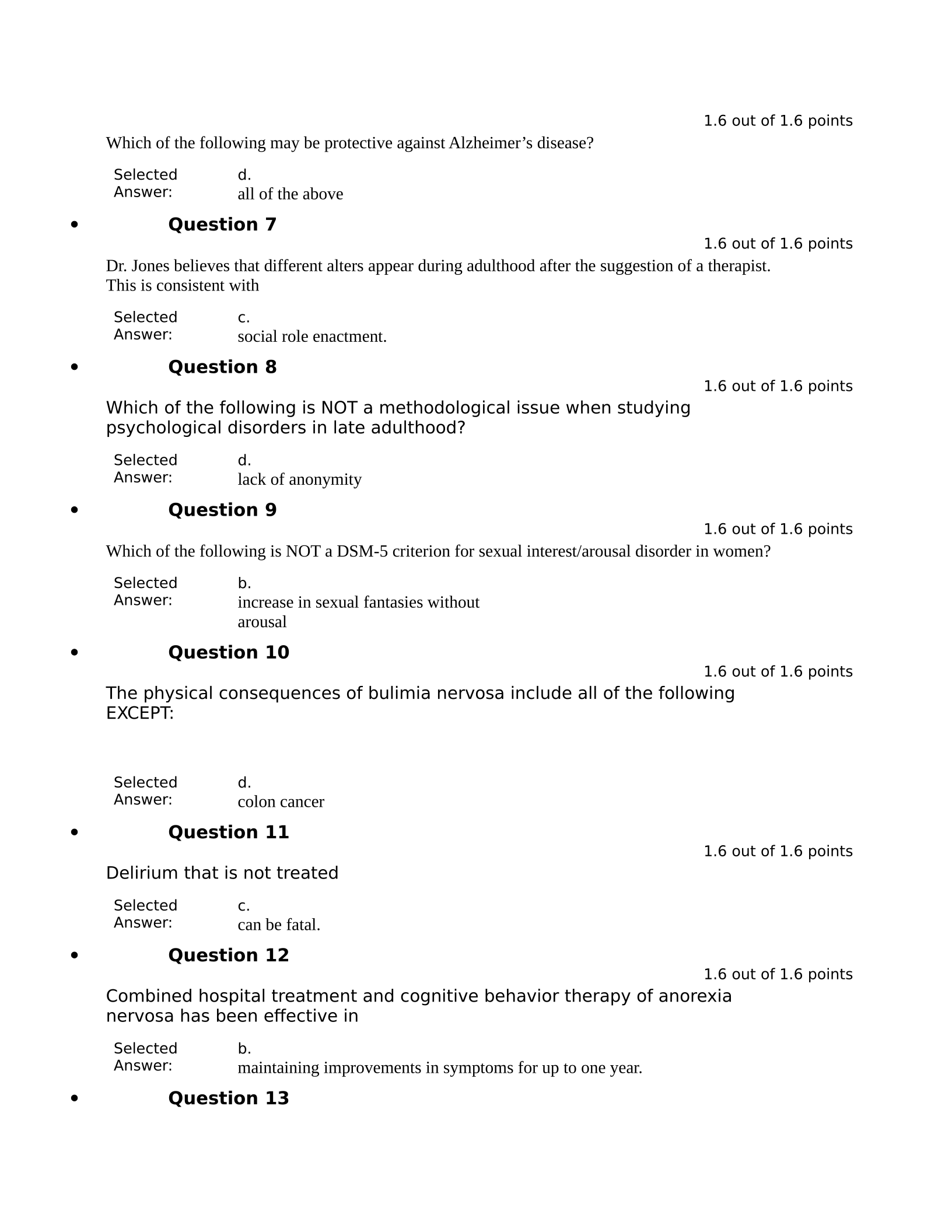
Which of the following may be protective against Alzheimer’s disease?
Selected
Answer:
d.
all of the above
Question 7
1.6 out of 1.6 points
Dr. Jones believes that different alters appear during adulthood after the suggestion of a therapist.
This is consistent with
Selected
Answer:
c.
social role enactment.
Question 8
1.6 out of 1.6 points
Which of the following is NOT a methodological issue when studying
psychological disorders in late adulthood?
Selected
Answer:
d.
lack of anonymity
Question 9
1.6 out of 1.6 points
Which of the following is NOT a DSM-5 criterion for sexual interest/arousal disorder in women?
Selected
Answer:
b.
increase in sexual fantasies without
arousal
Question 10
1.6 out of 1.6 points
The physical consequences of bulimia nervosa include all of the following
EXCEPT:
Selected
Answer:
d.
colon cancer
Question 11
1.6 out of 1.6 points
Delirium that is not treated
Selected
Answer:
c.
can be fatal.
Question 12
1.6 out of 1.6 points
Combined hospital treatment and cognitive behavior therapy of anorexia
nervosa has been effective in
Selected
Answer:
b.
maintaining improvements in symptoms for up to one year.
Question 13
1.6 out of 1.6 points
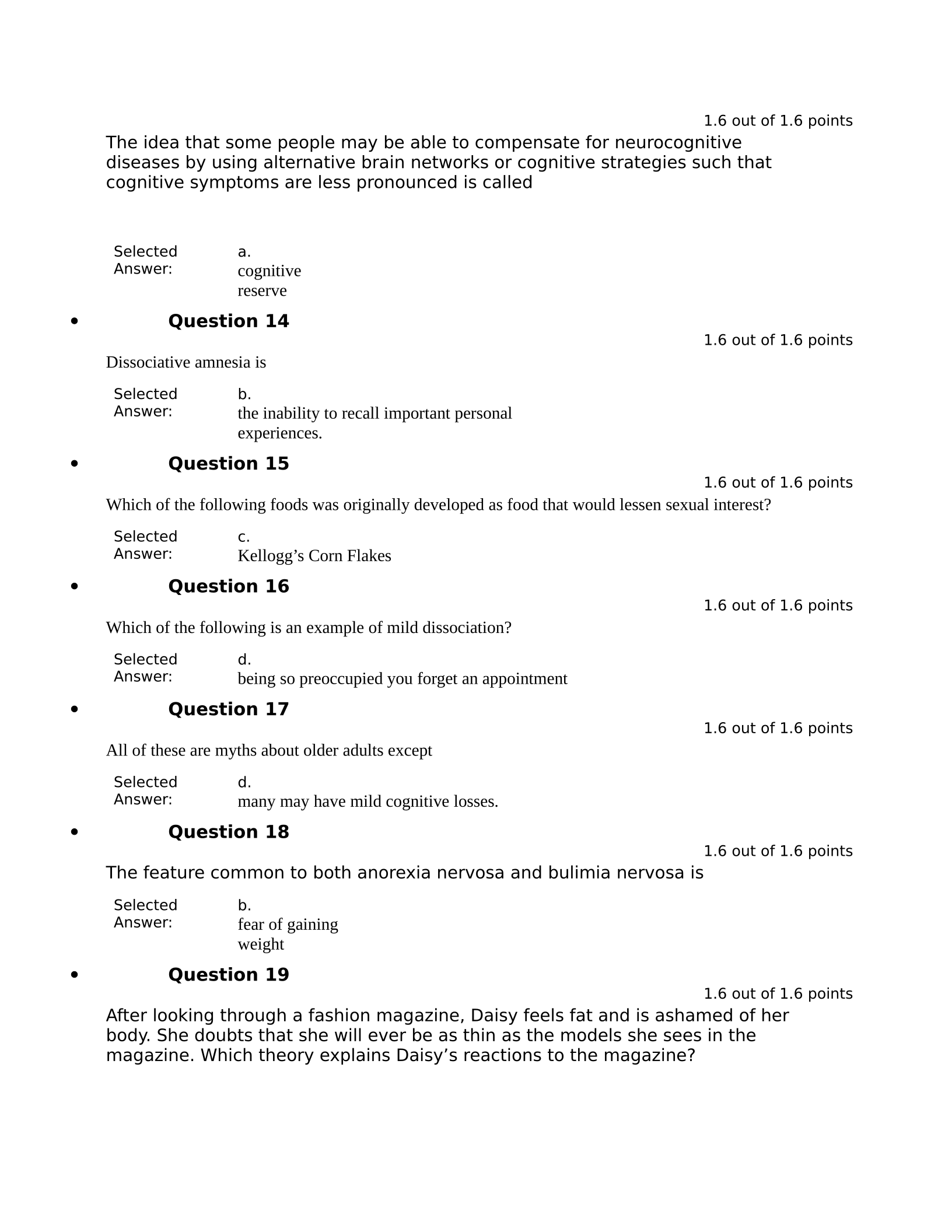
The idea that some people may be able to compensate for neurocognitive
diseases by using alternative brain networks or cognitive strategies such that
cognitive symptoms are less pronounced is called
Selected
Answer:
a.
cognitive
reserve
Question 14
1.6 out of 1.6 points
Dissociative amnesia is
Selected
Answer:
b.
the inability to recall important personal
experiences.
Question 15
1.6 out of 1.6 points
Which of the following foods was originally developed as food that would lessen sexual interest?
Selected
Answer:
c.
Kellogg’s Corn Flakes
Question 16
1.6 out of 1.6 points
Which of the following is an example of mild dissociation?
Selected
Answer:
d.
being so preoccupied you forget an appointment
Question 17
1.6 out of 1.6 points
All of these are myths about older adults except
Selected
Answer:
d.
many may have mild cognitive losses.
Question 18
1.6 out of 1.6 points
The feature common to both anorexia nervosa and bulimia nervosa is
Selected
Answer:
b.
fear of gaining
weight
Question 19
1.6 out of 1.6 points
After looking through a fashion magazine, Daisy feels fat and is ashamed of her
body. She doubts that she will ever be as thin as the models she sees in the
magazine. Which theory explains Daisy’s reactions to the magazine?

Selected
Answer:
c.
objectification theory
Question 20
1.6 out of 1.6 points
The Greek word hystera means
Selected
Answer:
b.
womb
Question 21
1.6 out of 1.6 points
Persistent and troubling attractions to unusual sexual activities or objects is called
Selected
Answer:
c.
paraphilia.
Question 22
0 out of 1.6 points
Which of the following is most prevalent?
Selected
Answer:
b.
anorexia nervosa, binge-eating/purging type
Question 23
1.6 out of 1.6 points
Recent research has begun to focus on the role of __________ in eating behavior.
Selected
Answer:
c.
dopamine
Question 24
1.6 out of 1.6 points
As compared to anorexia nervosa, the diagnosis of bulimia nervosa is associated with
Selected
Answer:
b.
lower mortality
rates
Question 25
1.6 out of 1.6 points
Nina has illness anxiety disorder. She notices a red splotch on her face that
seems to be getting larger each day. Nina will most likely believe that this
symptom
Selected
Answer:
b.
is due to a serious underlying
disease.
Powered by TCPDF (www.tcpdf.org)

