


Police
-
Police
spent
little
time
directly
protecting
society
¢
Studies
show
that
police
directly
protect
society
less
than
1%
of
the
time
-
An
officer’s
job
is
best
described
as
“hour
upon
hour
of
boredom,
interrupted
by
moments
of
sheer
terror”
-
Police
have
little
direct
impact
on
crime
-
Studies
of
increased
police
numbers
show
very
little
impact
on
crime
rates
-
Techniques
such
as
“target
hardening”
(making
an
object
less
attractive
to
a
possible
criminal)
is
more
likely
to
have
positive
effects
on
crime
rates
than
increased
police
numbers

Police
«
Police
officers
have
the
initial
discretion
-
Discretion
is
the
ability
to
make
decisions
on
whether
or
not
a crime
has
occurred
-
Discretion
is
often
used
when
they
frequent
“hot-spots”
-
“Hot
spots”
are
areas
regularly
patrolled
because
police
believe
they
will
find
criminal
activity
there
e
Usually
these
neighborhoods
are
poor
areas
-
This
kind
of
discretion
perpetuates
inequality
in
the
system
-
Racial
profiling
(a
type
of
discretion)
occurs
when
police
target
certain
groups
based
on
race
¢
Racial
profiling
increases
the
odds
that
minority
criminals
will
get
caught
and
makes
it
less
likely
that
white
criminals
will
be
brought
to justice

_
Courts
-
The
court
system
consists
of:
»
Prosecutors
-
Defendants
-
Judges

Courts
--
prosecutors
-
The
prosecuting
attorney
¢
Official
duty
is
to
conduct
criminal
proceedings
on
behalf
of
the
state
or
the
plaintiffs
¢
Often
elected
or
works
for
an
elected
district
attorney
-
In
the
court
system,
no
one
has
more
discretion
than
the
prosecuting
attorney
-
After
an
arrest,
the
district
attorney's
office
decides
what
the
official
charges
are
-
They
have
power
to
accept
plea
bargains
-
Out-of-court
agreements
between
prosecutor
and
defense
attorney
that
involve
concessions
by
prosecution
to
obtain
a
guilty
plea

Courts
--
defendants
«
Defense
counsel
-
Attorneys
hired
or
appointed
by
the
court
to
provide
legal
defense
for
the
accused
-
The
right
to
a
defense
attorney
is
part
of
the
suspect’s
Miranda
rights
and
guaranteed
by
the
court
-
There
is
great
disparity
among
types
of
defense
counsels
-
Private
attorneys
who
specialize
in
criminal
law
and
provide
good
results
are
costly
-
Public
defenders
who
are
paid
to
provide
defense
services
to
indigent
people
tend
to
have
large
caseloads
*
Conviction
rates,
including
plea
bargains,
are
higher
for
public
defenders
versus
private
attorneys
¢
The
poor
with
public
defenders
are
more
likely
to
be
convicted
than
the
rich
who
can
afford
private
attorneys

Ce
Courts
--
judges
-
The
judge’s
role
is
to
ensure
that
proceedings
are
held
in
accordance
with
the
legal
system
-
Exercise
discretion
over
what
should
and
should
not
be
admitted
into
the
case
-
May
have
power
over
the
outcome,
depending
on
the
state
and
situation

Criminal
justice
--
outline
»
Models
of
law
creation
-
Punishment
-
Branches
of
the
criminal
justice
system
*
Sentencing
-
The
corrections
system
*
Sociological
perspectives
on
criminal
sentencing
»
Death
penalty

Sentencing
—
philosophies
*
Sentencing
philosophies
-
Philosophy
of
retribution
--
calls
for
punishment
predicated
upon
the
need
for
revenge
-
Power
of
the
state
is
used
to
punish
offender
-
Philosophy
of
just
deserts
--
criminal
offenders
deserve
the
punishment
they
receive
at
the
hands
of
the
law
¢
Punishments
should
be
appropriate
to
the
type
and
severity
of
the
crime
committed
(see
proportionality
sentencing)
-
Both
philosophies
contend
that
the
primary
goal
of
the
criminal
justice
system
is
to
exert
power
over
offenders
and
punish
them
for
their
crimes
-
Discussion:
Which
philosophy
shapes
the
US
criminal
justice
system?

Sentencing
-
Proportionality
sentencing
principle
-
States
that
the
severity
of
sanctions
should
bear
a
direct
relationship
to
the
seriousness
of
the
crime
-
The
offender
is
given
a
fixed-term
sentence
that
may
be
reduced
by
°
good
time
¢
Time
deducted
from
a
prison
sentence
for
good
behavior
°
Gain
time
¢
Time
deducted
for
participation
in
special
programs
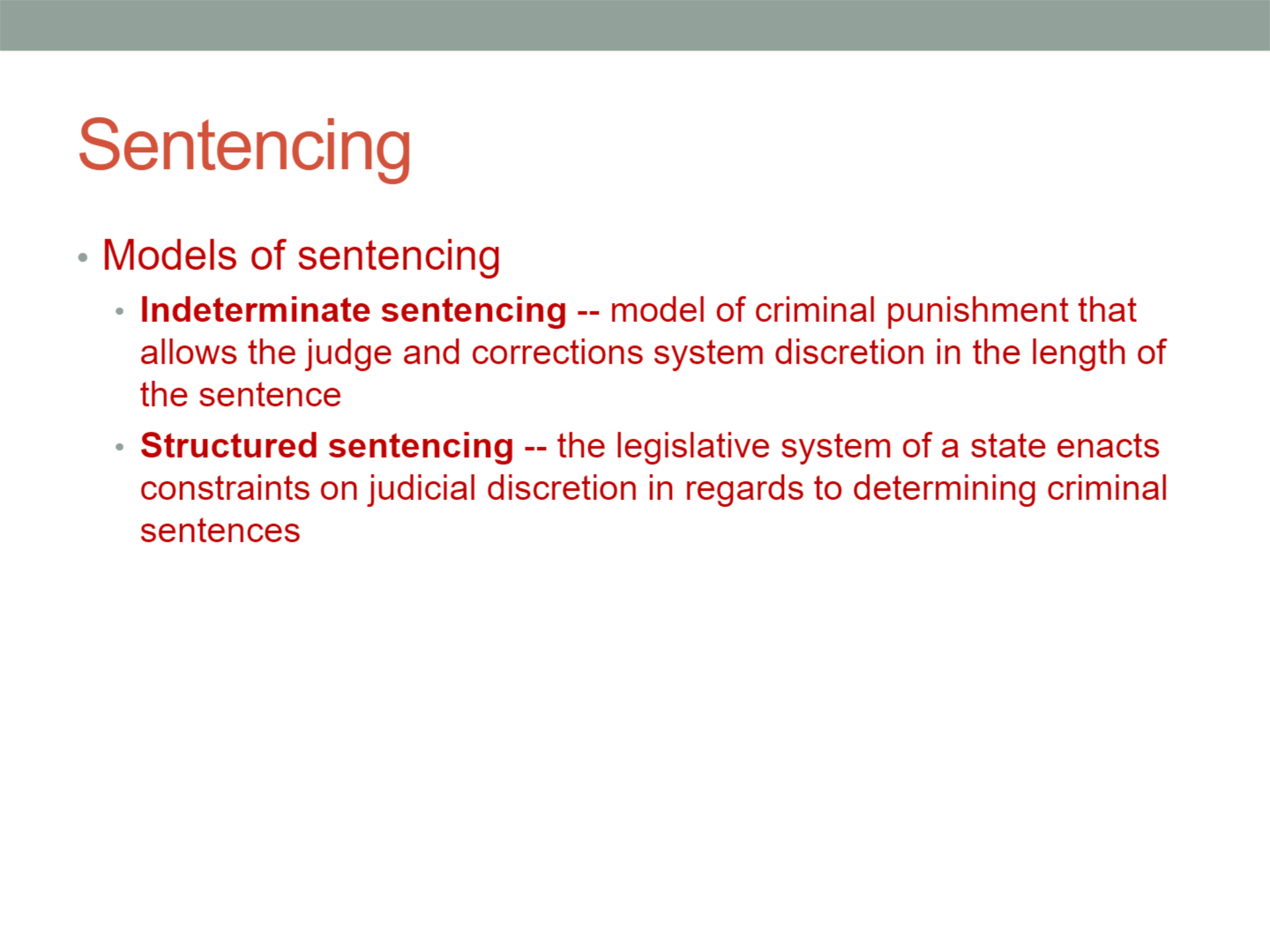
Sentencing
»
Models
of
sentencing
-
Indeterminate
sentencing
--
model
of
criminal
punishment
that
allows the
judge
and
corrections
system
discretion
in
the
length
of
the
sentence
-
Structured
sentencing
--
the
legislative
system
of
a
state
enacts
constraints
on
judicial
discretion
in
regards
to
determining
criminal
sentences

