


Assignment Title: Examples of church communications
Course: CHMN 699 - Internship
Student: Kristine Sage
Date: January 29, 2022
Professor: Dr. Mary Smith
Liberty University
Examples of church communications
Let's look at some examples of how a local church can use the integrated communications strategy.
Pretend that the 'Big Idea' of this example is "to spread the worship of Jesus in the city of 'XYZ' by
increasing the depth and breadth of disciples."
Church's Website Strategy
Church websites are a hugely important aspect of any church communication plan. This is the
online medium through which first-time guests learn new information about your church, its mission, its
message, and its "Big Idea." This is especially the case because the average website visitor views, says
Babcock, only 1 or 2 pages of the website for a very brief amount of time. So brevity is key. With our "Big
Idea" above, the church website should have an about page that states the "Big Idea" explicitly, making
available information about small groups that exist. It should also share how the mission relates to what
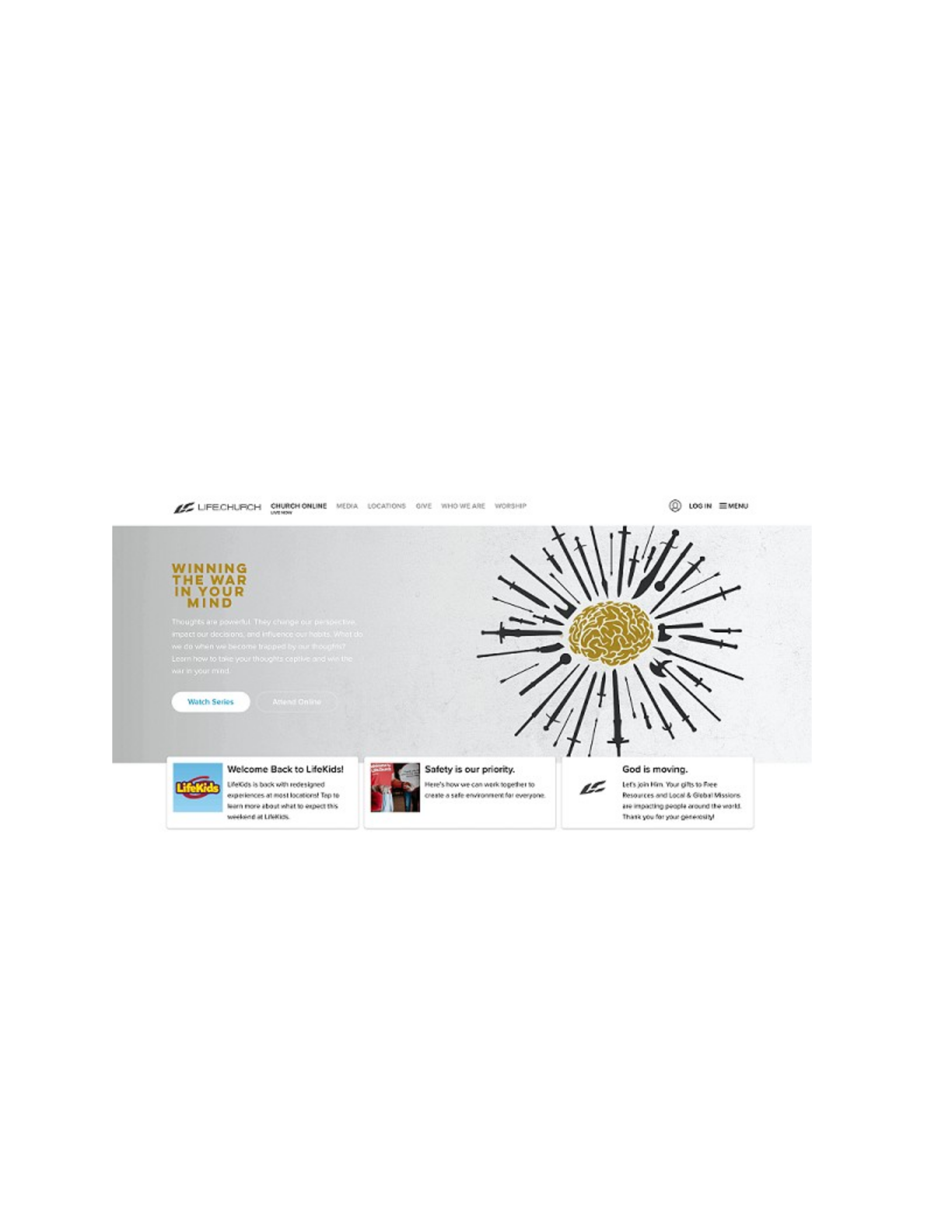
Jesus wants in city "XYZ." Look at this good and simple example of the landing page at www.life.church.
It uses images and banners to point new people directly to areas about the church's mission.
Lan
ding page at www.life.church is clear, succinct and interesting.
Social Media Strategy
The "Big Idea" approach translates directly to your church's social media strategy, content, and
messaging. In the book, Social Media Strategy, Keith Quesenberry suggests that:
Social media big ideas must be unifying but also interesting and engaging.
Keith Quesenberry
So, how does your church make your message unifying? Well, your social media strategy can support
your "Big Idea" by having some specific objectives, like:

Building Awareness: of your mission and message. (i.e. telling people you run small groups in
the city).
Increasing Engagement: with your church's communications and community (i.e. showing fun
events and activities that are happening in your city that you are engaging with).
Raising Conversion: having non-members of the community see, hear, and respond. (i.e. asking
for a response with questions or offering prayer or items that require action).
Sharing Vision & Values: see people adopt your message and encourage others to do the same.
(i.e. reward and encourage people who are loyal to your mission and message).
These objectives help you target a focused subset of the demographic of "everyone" (discussed above).
Each objective relates to the "Big Idea" but can be employed on its own with dedicated social media
posts at different times.
Here are some examples of Instagram screenshots from theway_vancouver. They do a great job
integrating building awareness and sharing vision through integrated communications.
theway_vancouver does a great job integrating communications of its mission and message using social
media posts on Instagram.
Social Media Best Practices
This is how you can make your big idea interesting and engaging! Some best practices of how to roll out
your engaging "Big Idea" on social media include:
1. Post more videos: if a picture is worth 1000 words, how many words is a video worth.
2. Use interesting pictures: the background, lighting, and colour of a photo are important.
3. Tie the description to the photo: Far too often a video or picture isn't related to the description
or objective of the approach. The post becomes less interesting and engaging when it isn't
unified with itself!
4. Use a social media calendar: your church can leverage events in your city and culture by posting
about how the "Big Idea" relates to that time. (i.e. if your big idea is "to spread the worship of
Jesus" then on something like 'Valentines Day' you could post about how worshipping Jesus is
the ultimate form of love).
5. Subscribe to social media management software: all of the above best practices can be
challenging to employ manually, say if you're sharing with a team manually in a google doc.
Hootsuite is an excellent platform for scheduling this automatically.
Template for church communications
It highlights the message, methods and timing, and the medium. All of which are tied to the integrated
approach described above.
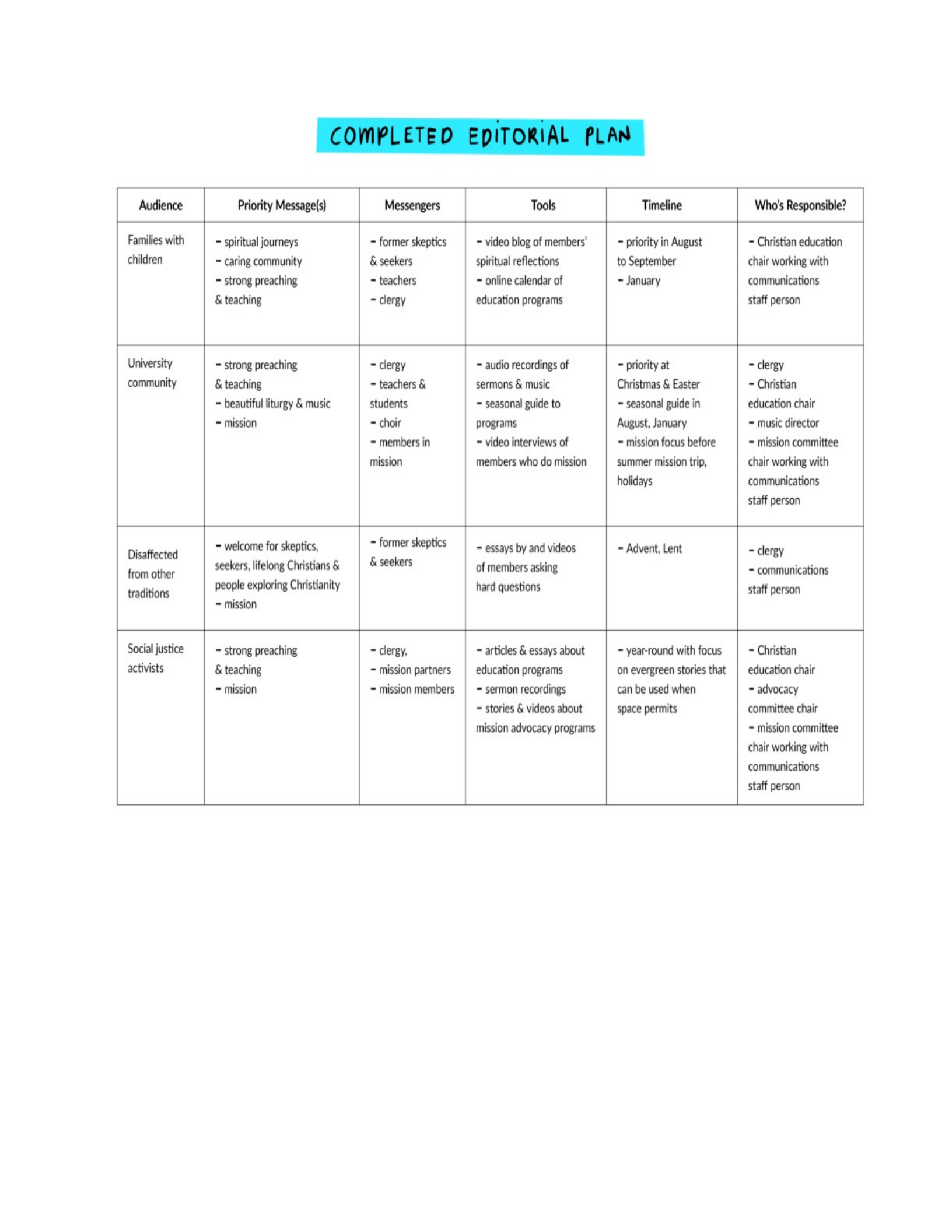
An example of a completed editorial plan.

