



Discussion Thread: Prioritizing Projects 1
Discussion Thread: Prioritizing Projects
Netasha Jones
Liberty University
BUSI 680 Advanced Project Management I
Dr. Wolemonwu
February 8, 2026

Discussion Thread: Prioritizing Projects 2
Prioritizing Projects
When an organization is not clear about its mission and long-term goals, project
selection can start to feel random. A project might seem exciting or “good enough” financially,
but still pull the organization away from its overall goals. That is where prioritization really
matters. Larson, Gray, and Sirisomboonsuk (2024) explain that portfolio management exists to
prevent this problem by forcing organizations to evaluate projects in relation to one another and
in relation to strategy, not in isolation.
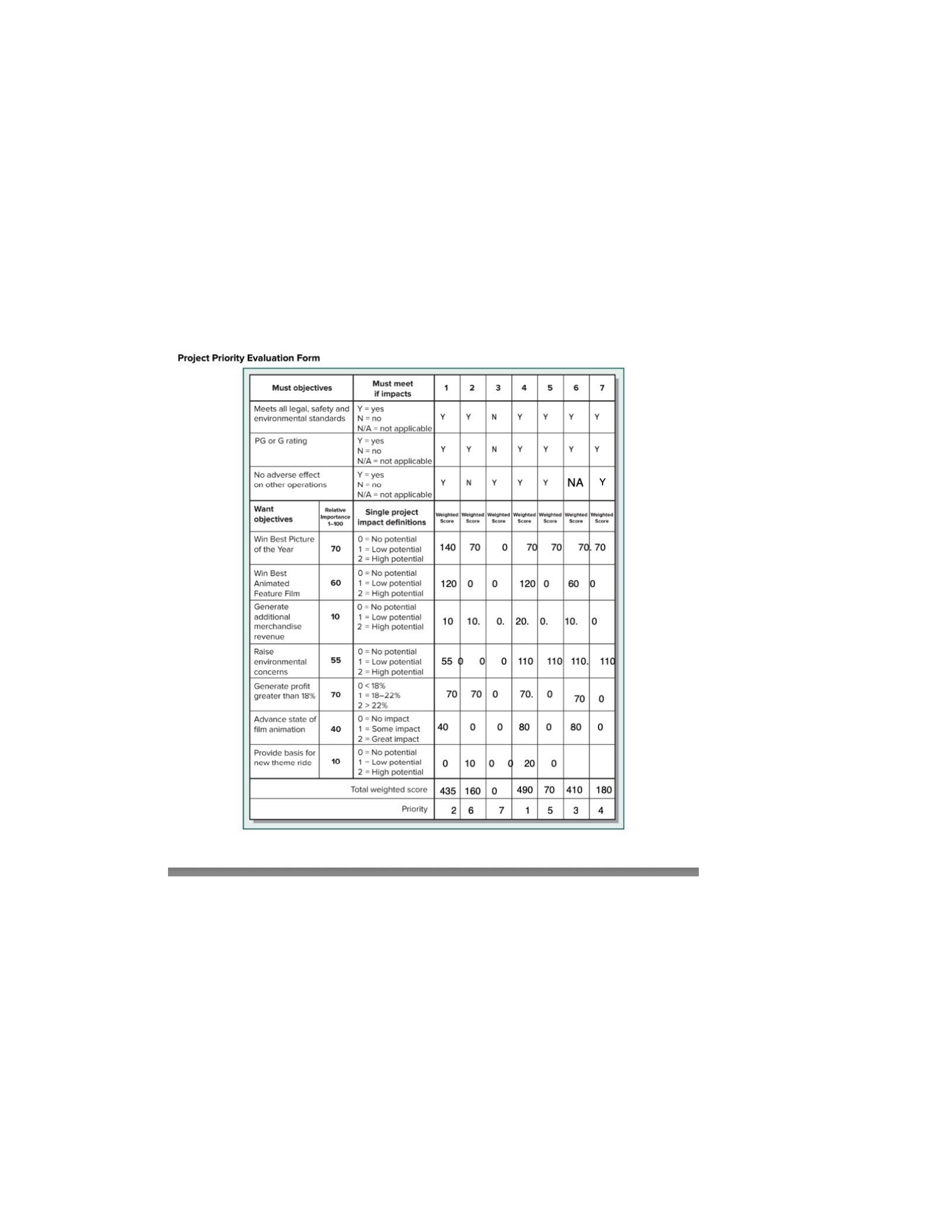
The goal of this assignment was to evaluate multiple film proposals and decide which
ones should be prioritized based on the organization’s objectives. Instead of choosing projects
only on potential profit or personal preference, the Project Priority Evaluation Form required
using both company must objectives and want objectives. The must objectives work like a gate:
projects must meet baseline expectations related to legal standards, content ratings (PG or
lower), and operational impact before they should even be considered. The want objectives,
which are weighted, help compare the remaining proposals by looking at strategic value—
profitability, merchandising potential, environmental awareness, innovation, and fit with the
company’s brand direction.
After reviewing the proposals and applying those criteria, Project Proposal #1, My Life
with Dalai Lama, ranked first. I ranked it highest because it checks multiple priority boxes
without obvious drawbacks. Because it is animated, it fits the family-friendly brand and gives
clear merchandising options (toys and DVDs). It also feels like a manageable financial bet since
there is a 50% probability of generating an ROI of 18% or higher. For me, that mix of brand fit,
marketability, and acceptable return is what made it the strongest overall choice.
Project Proposal #2, Heidi, ranked second. Even though it does not strongly advance
animation innovation, it stands out because it has broad family appeal and a well-known story.
The music component is also a practical advantage because it adds revenue opportunities
beyond the film itself (CDs or soundtrack-related merchandise). Financially, it looks promising,

Discussion Thread: Prioritizing Projects 3
with a 50% probability of achieving an ROI of 20% or higher. I kept Heidi near the top because it
feels like a relatively stable option—strong audience fit, multiple revenue channels, and a solid
return profile.
Project Proposal #4, Escape from Rio Japuni, ranked third. This project scored well for me
because it connects with environmental goals and has strong merchandising potential as an
animated film. It also has favorable financial projections, including a 50% probability of
achieving a 20% ROI or higher. I ranked it slightly below the top two mainly because it does not
seem to have the same built-in brand familiarity or “prestige” angle as the first two. Even with
strong numbers and good alignment, familiarity and brand fit still matter when the organization
cares about long-term reputation and audience trust.
Project Proposal #7, Grand Island, ranked fourth. I placed it in the middle because it
directly supports the want objective of raising public awareness about environmental issues,
and it could reasonably meet a PG or lower rating. While it does not offer as much
merchandising potential or innovation as the animated projects, I still see value in having at
least one project that clearly reinforces mission and values. In a portfolio, not every project has
to be a top revenue driver—some projects strengthen identity and credibility.
The remaining projects ranked lower because they did not align as strongly with the
organization’s highest priorities. Project Proposal #5, Nadia!, is inspirational and appears to
meet content expectations, but it offers limited pathways for long-term revenue growth (like
merchandising or brand extensions). Project Proposal #6, Keiko—One Whale of a Story, supports
environmental awareness and includes animation elements, but I ranked it lower due to greater
financial uncertainty compared to my higher-ranked choices.
Finally, Project Proposal #3, The Year of the Echo, ranked last because it does not meet
the “must” objective of PG or lower due to content involving sex and drugs. It also does not
align well with the highest-weighted want objectives and has a low probability of achieving
acceptable returns.
Discussion Thread: Prioritizing Projects 4
Overall, this assignment reinforced why organizations should evaluate projects as a
portfolio instead of treating each proposal as a stand-alone decision. A structured prioritization
method helps leaders defend decisions, allocate resources more effectively, and stay aligned
with strategy (Larson et al., 2024). It also connects well with Proverbs 21:5: “the plans of the
diligent lead surely to abundance,” which highlights the value of careful planning and disciplined
choices over impulsive decision-making (New International Version).
References
Larson, E. W., Gray, C. F., & Sirisomboonsuk, P. (2024). Project management: A sociotechnical
approach (9th ed.). McGraw Hill.
The Holy Bible, New International Version. (2011). Zondervan.

