


Chapter1-2Review
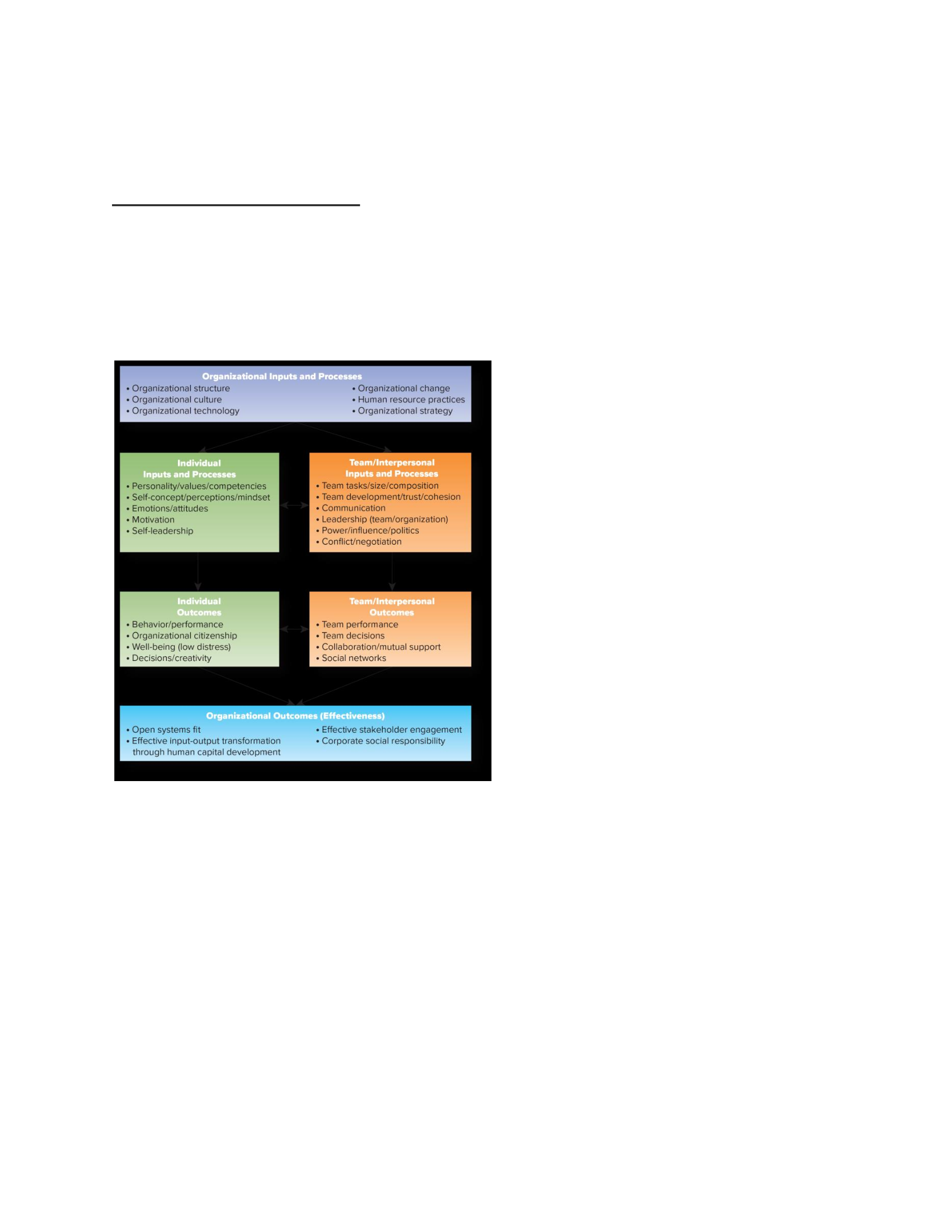
Organizationaleffectivenessisdirectlyaffectedbyindividualandteam/interpersonal
outcomes?
Allstockholdersarestakeholders,butnotallstakeholdersarestockholders. An
integrative model of Organizational Behavior:
Chapter1-3:AnchorsofOrganizationalBehaviorKnowledge
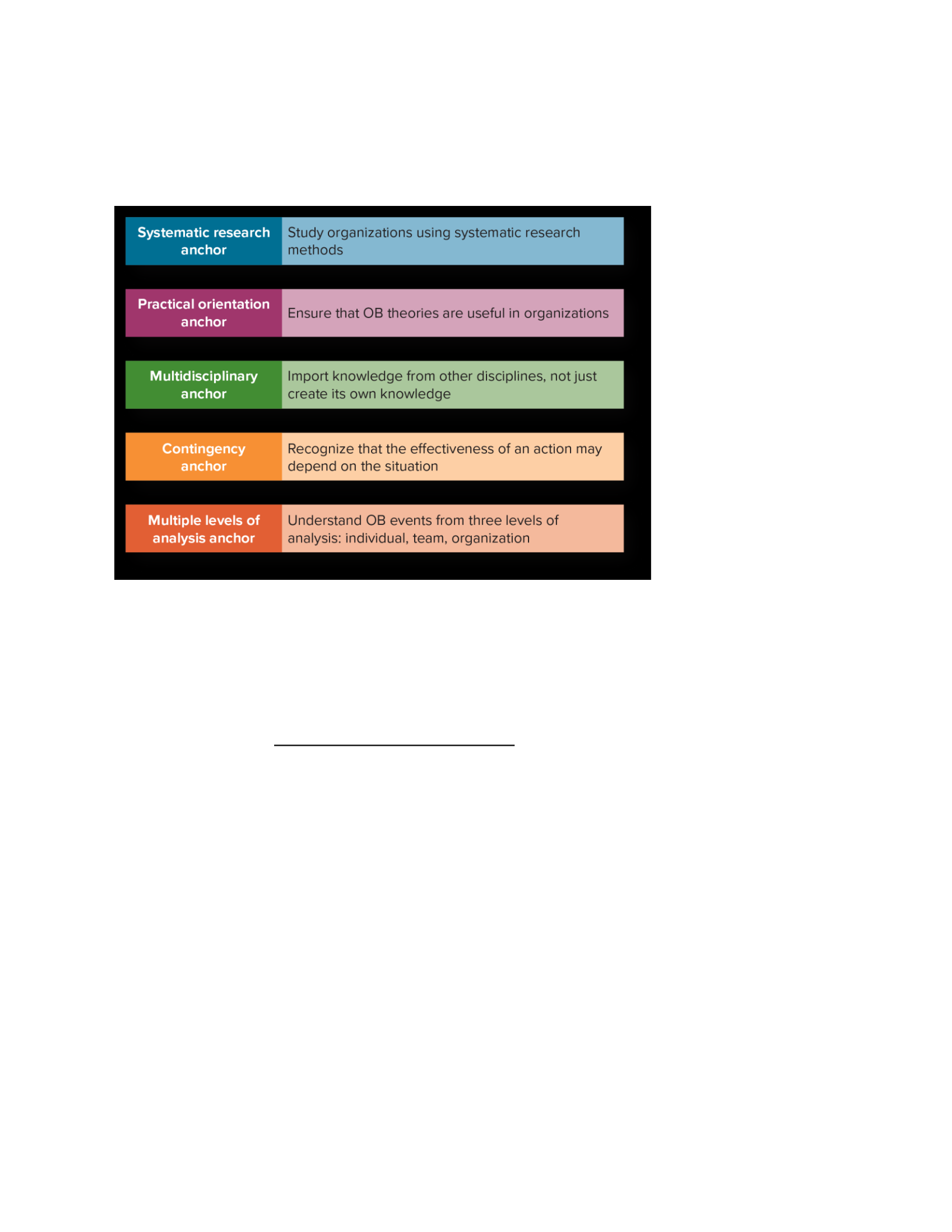
ThefieldofOBreliesonasetofbasicbeliefs.Theseconceptualanchorsrepresent the
principles on which OB knowledge is developed and refined:
TheSystematicResearchanchor
- OBknowlegeshouldbebasedonsystematicresearch,whichinvolvesforming
research questions, systematically collecting data, and testing hypotheses
against those data
- Isthebasisforevidence-basedmanagement,thepracticeofmakingdecisions and
taking actions based on research evidence.
- Management practice should be founded on the best available systematic
knowledge,yetcorporateleadersoftenembracefads,untestedmodels,andtheir own
pet beliefs
Suggestions to create a more evidence-based organization
- Be skeptical of hype
- Embracecollectiveexpertiseratherthanrelyoncharismaticstarsand
management gurus
- Storiesprovideusefulillustrations,butshouldneverbecomethemainfoundation to
support management action.
- Takeaneutralstanceonpopulartrendsandideologies

TheMultidisciplinaryAnchor
- Thefieldshouldwelcometheoriesandknowledgefromotherdisciplines,notjust from
its own isolated research base
- Psychological research has aided our understanding of individual and
interpersonalbehavior.Sociologistshavecontributedtoourknowledgeofteam
dynamics,organizationalsocialization,organizationalpower,andotheraspects of
the social system
- Benefitedfromknowledgeinemergingfieldssuchascommunications,
marketing, and information systems.
TheContingencyanchor
- ContingenciesareidentifiedinmanyOBtheories,suchasthebestleadership style,
the best conflict-handling style, and the best organizational structure
- Thesameactioninadifferentsituationcanyielddifferentconsequences.
TheMultipleLevelsofAnalysisAnchor
- Whatgoesoninorganizationscanbeplacedintothreelevelsofanalysis:
individual, team (including interpersonal), and organization.
- Example:Communicationislocatedasateamprocess,butalsoincludes
individual and organization processes
- ThinkabouteachOBtopicattheindividual,team,andorganizationallevels,not just at
one of these levels
Chapter1-4TheEmergingWorkplaceLandscape
Fourofthemostsignificantchangesthataredevelopingintheworkplaceasaresultof
gloablization, technological change, and other external forces
DiversityandtheInclusiveWorkplace
- Diversity is a competitive advantage for companies and can attract talent globally
- Organizationstrytocreateaninclusiveworkplace,whichisonethatvalues
people of all identities and allows them to be fully themselves
- Inclusive organixations view diversity as a valued resource
- Whendiversityismentioned,mostpeoplethinkaboutsurface-leveldiversity- the
observable demographic and other overt differences among members of a
group, such as their race, ethnicity, gender, age, and physical capabilities

- Deep-leveldiversityincludesthedifferencesinthepsychologicalcharacteristics of
employees (personalities, beliefs, values, and attitudes)
- Cannotdirectlyseethistype,butitisevidentintheperson’swords,decisions, and
actions (ex. Different conflict-handling styles, ethical prinicples)
- Multigenerational workforce is an example of both surface and deep level
Work-LifeIntegration
- Oneofthemostvaluedfeaturesinajobistheabilitytoeffectivelyintegratework with
nonwork activities
- Work-
lifeintegrations:thedegreethatpeopleareeffectivelyengagedintheirvarious
work and nonwork roles and have a low degree of role conflict acrossthose life
domains
- Replacedwork-lifebalance,incorrectlyimpliesthatworkandnonworkrolesare
completely separate and opposing
- Gettoapointatwhichworkandlifeintegrate,howtomakethosetwowork together
- Theresourcesgeneratedandconsumedbyoneroleenhanceorstarveother roles
- Ex.Peoplewithfulfillinghomelifedevelopsupportwhichcanenrichtheirwork
Practicing Work-life integration
- Meetings during an exercise walk
- Flexible work scheduling
- Engage in some degree of “boundary management”
RemoteWork
- Information technology
- Whenemployeesperformtheirjobathomeorsomeothernon-clientsiteaway from
the company’s traditional offices
- Workersexperiencebetter work-lifeintegration becausethey havemore time
- Social isolation, lower team cohesion
EmploymentRelationships
- Historically,mostworkershavebeeninfull-time,permanentjobs
- Thelargestlabormarketgrowthhasbeenindirect(outsourced/agency)and
contract work
- Increasingpercentageoftheworkforcehasmorefragiledirectemployment
relationships (part-time, on-call, seasonal)

- Indirectemployment:occurswhenpeopleholdpositionsinanagencyandare
temporarily assign or indefinitely “leased” to client firms
- Directproduceshigherworkqualitybecauseoflowerturnover,higher
commitment
Chapter1-5MARSModelofINdividualBehaviorand
Performance
MARS
- Depictsfourvariables:motivation,ability,roleperceptions,andsituational factors
- Allfourfactorsarecriticalinfluencesonanindividual’svoluntarybehaviorand
performance, if one is low, the employee performs the task poorly
Motivation
- Motivationrepresentstheforceswithinapersonthataffecthisorherdirection,
intensity, and persistence of effort for voluntary behavior
- Direction:the path along which people steer their effor
- Goal-directednotrandom;Peoplehavechoicesaboutwhattheyaretryingto
achieve
- Intensity:theamountofeffortallocatedtothegoal;howmuchpeoplepush
themselves
- Persistence:thelengthoftimethattheindividualcontinuestoexertefforttoward an
objective
Ability
- Includeboththenaturalaptitudesandthelearnedcapabilitiesrequiredto
successfully complete a task
- Aptitudes:naturaltalentsthathelpemployeeslearnspecifictasksmorequickly and
perform them better
- Learnedcapabilities:thephysicalandmentalskillsandknowledgeyouhave
accuired
- Botharethemainelementsofcompetencieswhicharecharacteristicsofa
person that result in superior performance
RolePerceptions
- How clearly people understand their job duties
- Range from role clarity to role ambiguity (may be a serious problem)

- Role clarity exists in 3 forms
- Employeeshaveclearroleperceptionswhentheyunderstandthespecific
duties or consequences
- Employeesunderstandthepriorityoftheirvarioustasksandperformance
expectations
- Understandingthepreferredbehaviorsorproceduresforaccomplishing
tasks
- Roleambiguitywasteconsiderabletimeandenergyperformingthewrongtasks or in
the wrong way
Situationalfactors
- Individualbehaviorandperformancedependonthesituation(anycontext
beyond the employee’s immediate control)
- Twomaininfluences:
- the work context constrains or facilitates behavior and performance.
Employees will perform poorly if they lack time, budget, etc.
- Theworkenvironmentprovidescuestoguideandmotivatepeople.Ex.
companies install barriers and warning signs in dangerous areas
Chapter1-6TypesofIndividualBehavior
Varietiesofindividualbehavior:
- Taskperformance,organizationalcitizenship,counterproductiveworkbehaviors,
joining and staying with the organization, and maintaining work attendance
Task Performance
- Theindividual’svoluntarygoal-directedbehaviorsthatcontributeto
organizational objectives
- Three types
- Proficient:perfmoringtheworkefficientlyandaccurately,abovethe
expected standards of quality, quantity
- Adaptive:howwellemployeesmodifytheirthoughtsandbehaviortoalign with
and support a new or changing environment, how well employees
respond to change
- Proactive:howwellemployeestaketheinitiativetoanticipateand
introduce new work patterns that benefit the organization

OrganizationalCitizenship
- Organizational Citizenship Behaviors (OCBs): are various forms of cooperation
andhelpfulnesstoothersthatsupporttheorganization’ssocialandpsychological
context
- EX.assistingcoworkerswiththeirworkproblems,adjustingyourworkschedules,
showing genuine courtesy
- Otherbehaviorsrepresentcooperationandhelpfulnesstowardtheorganization
(supporting the company’s public image, attending events that support the
organization)
CounterproductiveWorkBehaviors
- Dysfuncational activities known as counterproductive work behaviors (CWBs)
- CWBs:voluntarybehaviorsthathavethepotentialtodirectlyorindirectlyharm the
organization or its stakeholders
- Includesbehaviors,intentionalandunintentional,suchasharassingcoworkers,
creating unnecessary conflict)
JoiningandStayingwiththeOrganization
- Shortage of skilled employees for specific job
- Evenwhencompanieshirequalifiedstaff,theyneedtoensuretheseemployees stay
- Companiesfailiftheydonotretainenoughemployeeswiththenecessaryskills and
knowledge
- HCisthemainsourceofcompetitiveadvantage,thosewholeaveremove
valuable knowledge and kills
- Employee turnover - replacing an employee with a new one
- Overallnegativeeffectonorganizationaleffectiveness
- Hassomebenefits,includingopeningippositionsfornewhireswithfresh ideas
MaintainingworkAttendance
- Organizations need everyone to show up for work at scheduled times
- Main causes of absenteeism and lateness:
- Situationalfactors:badweather,transitstrike,illness,familydemands
- Employeesneedot getaway fromworkplace bullying,difficult cutomers
- Absenteeims is also higher in organizations with generous sick leave
- Theperson’svaluesandpersonality,strongabsencenorms-members
tolerate and expect coworkers to take time off

- Presenteeism:showingupforworkwhenunwell,injured,preoccupiedby
personal problems, may worsen their own health
- More common among employees with low job security (new and temp staff)

