


12/2/21, 10:36 AM
Smart Form
1/7
Survey Complete
Personality measurement can be fun and informative—but it can also
be challenging if the results are not as you might expect. There has
been a great deal of research and thought given to how best to
categorize persons in personality terms. Much of this research and
writing has coalesced around the view that the most helpful
categorization scheme involves five dimensions of personality. These
have come to be known as “The Big Five.”
L R Goldberg, J A Johnson, H W Eber, R Hogan,M C Ashton,
C R Cloninger, & H C Gough “The International Personality Item Pool
and the Future of Public-domain Personality Measures,”
40 (2006), pp. 84–96.
Source:
Journal of
Research in Personality
Read each statement in the survey and select the rating that reflects
the extent to which you agree or disagree with the scenario in the
statement. There are no right or wrong answers. After completing the
self-assessment, read the feedback that explains how to understand
your score and interpret your results.
You must respond to all statements in order to receive full credit for
this self-assessment activity.
Extraversion
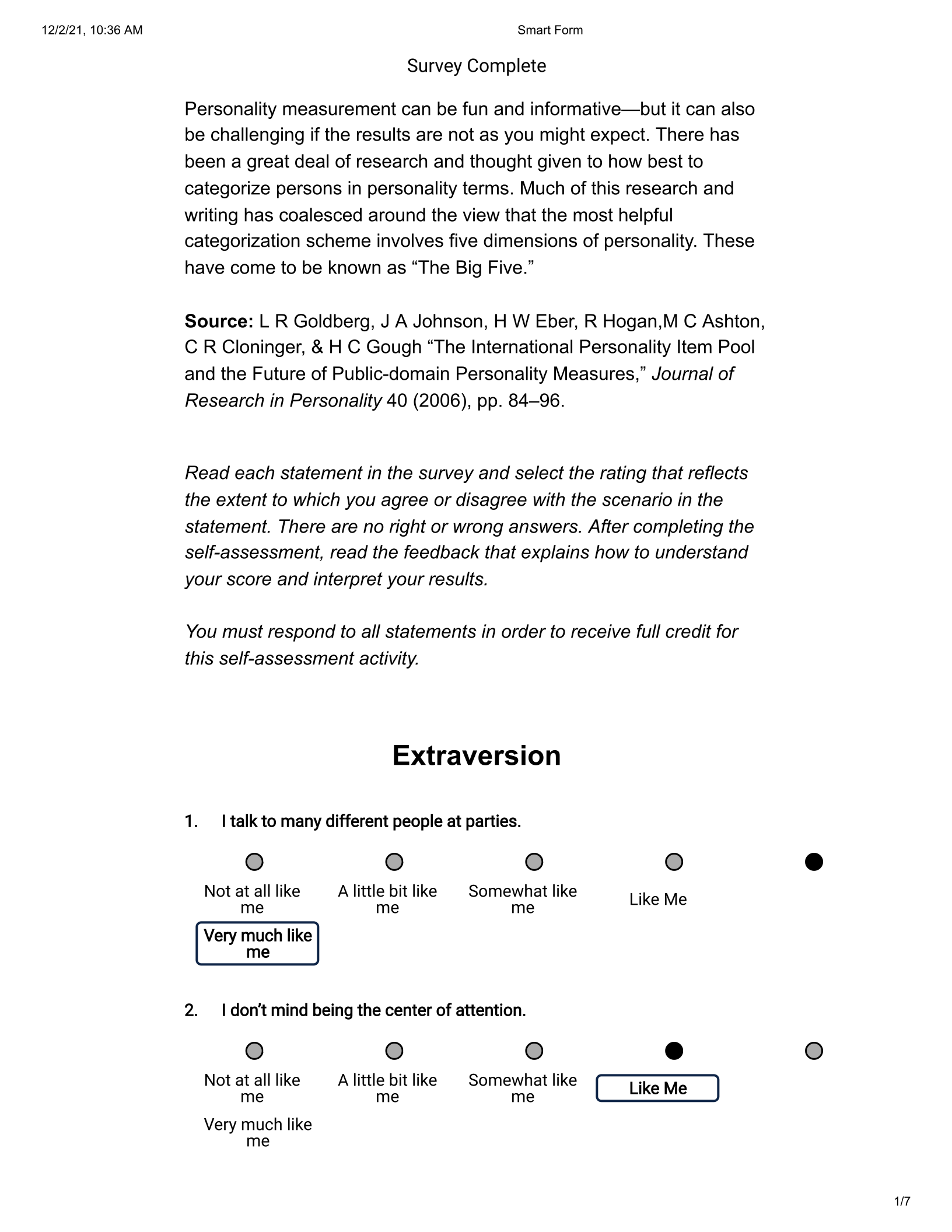
I talk to many different people at parties.1.
Not at all like
me
A little bit like
me
Somewhat like
me Like Me
Very much like
me
I don’t mind being the center of attention.2.
Not at all like
me
A little bit like
me
Somewhat like
me Like Me
Very much like
me
12/2/21, 10:36 AM
Smart Form
2/7
Agreeableness
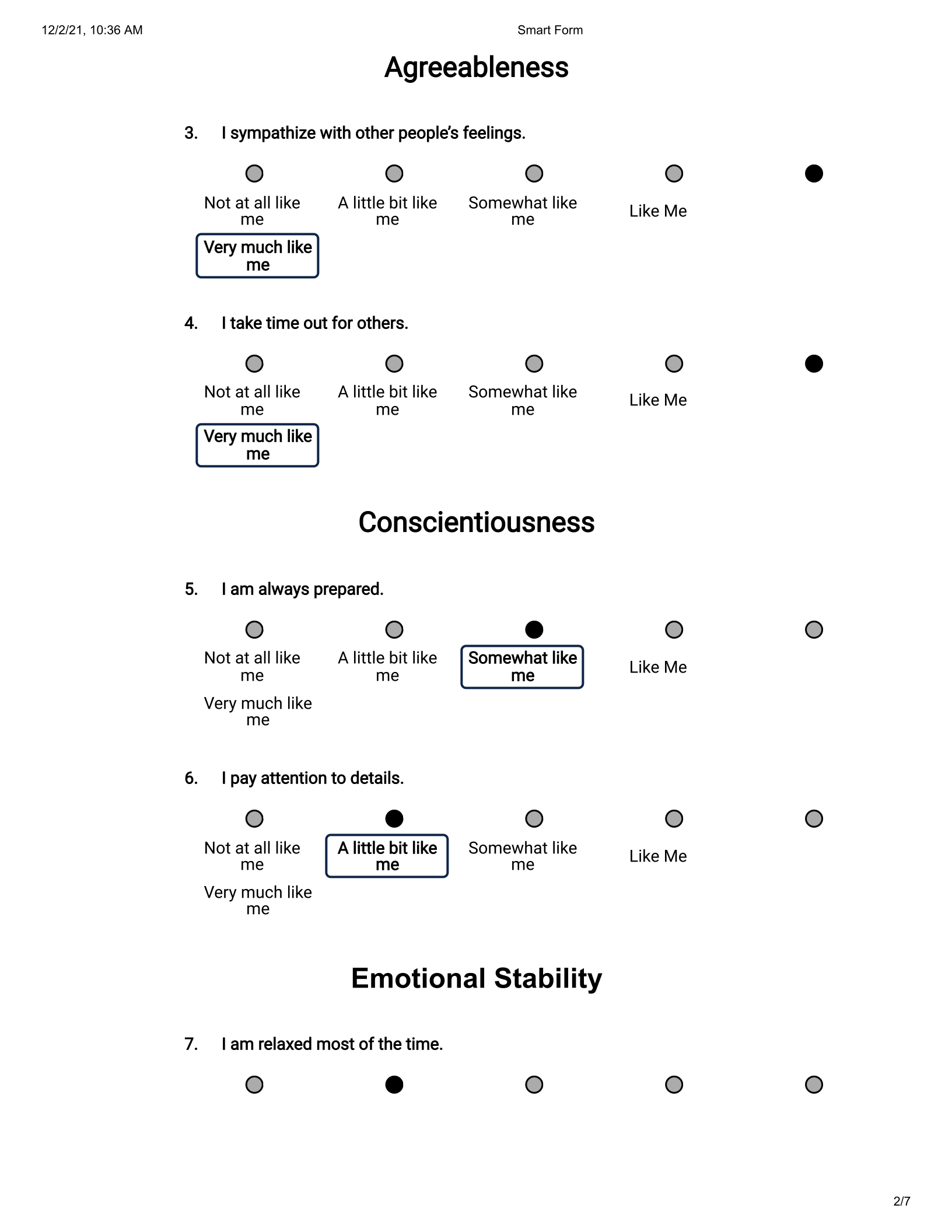
I sympathize with other people’s feelings.3.
Not at all like
me
A little bit like
me
Somewhat like
me Like Me
Very much like
me
I take time out for others.4.
Not at all like
me
A little bit like
me
Somewhat like
me Like Me
Very much like
me
Conscientiousness
I am always prepared.5.
Not at all like
me
A little bit like
me
Somewhat like
me Like Me
Very much like
me
I pay attention to details.6.
Not at all like
me
A little bit like
me
Somewhat like
me Like Me
Very much like
me
Emotional Stability
I am relaxed most of the time.7.
12/2/21, 10:36 AM
Smart Form
3/7
Not at all like
me
A little bit like
me
Somewhat like
me Like Me
Very much like
me
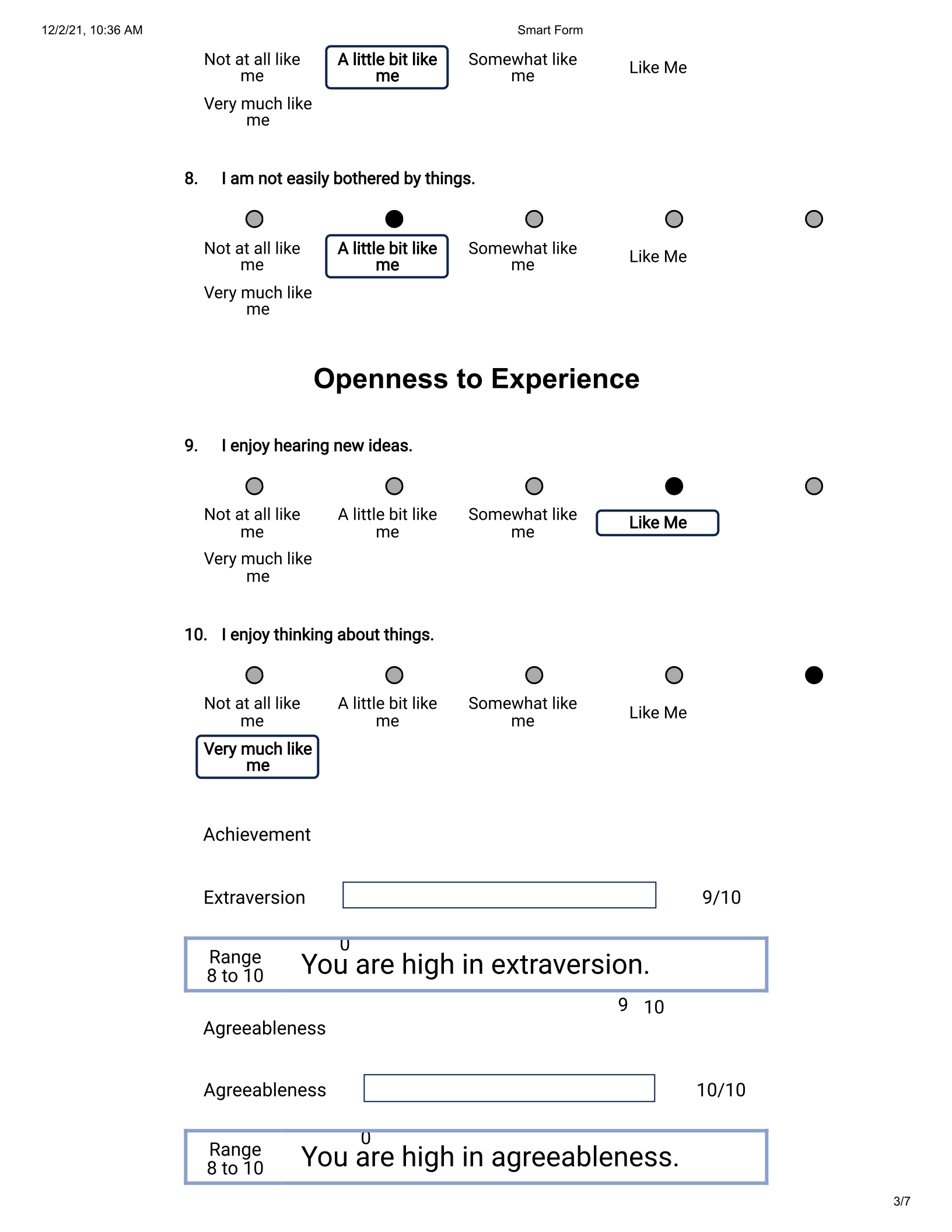
I am not easily bothered by things.8.
Not at all like
me
A little bit like
me
Somewhat like
me Like Me
Very much like
me
Openness to Experience
I enjoy hearing new ideas.9.
Not at all like
me
A little bit like
me
Somewhat like
me Like Me
Very much like
me
I enjoy thinking about things.10.
Not at all like
me
A little bit like
me
Somewhat like
me Like Me
Very much like
me
Achievement
Extraversion
0
10
9
9/10
Range
8 to 10 You are high in extraversion.
Agreeableness
Agreeableness
0
10/10
Range
8 to 10 You are high in agreeableness.
12/2/21, 10:36 AM
Smart Form
4/7
10
10
Conscientiousness
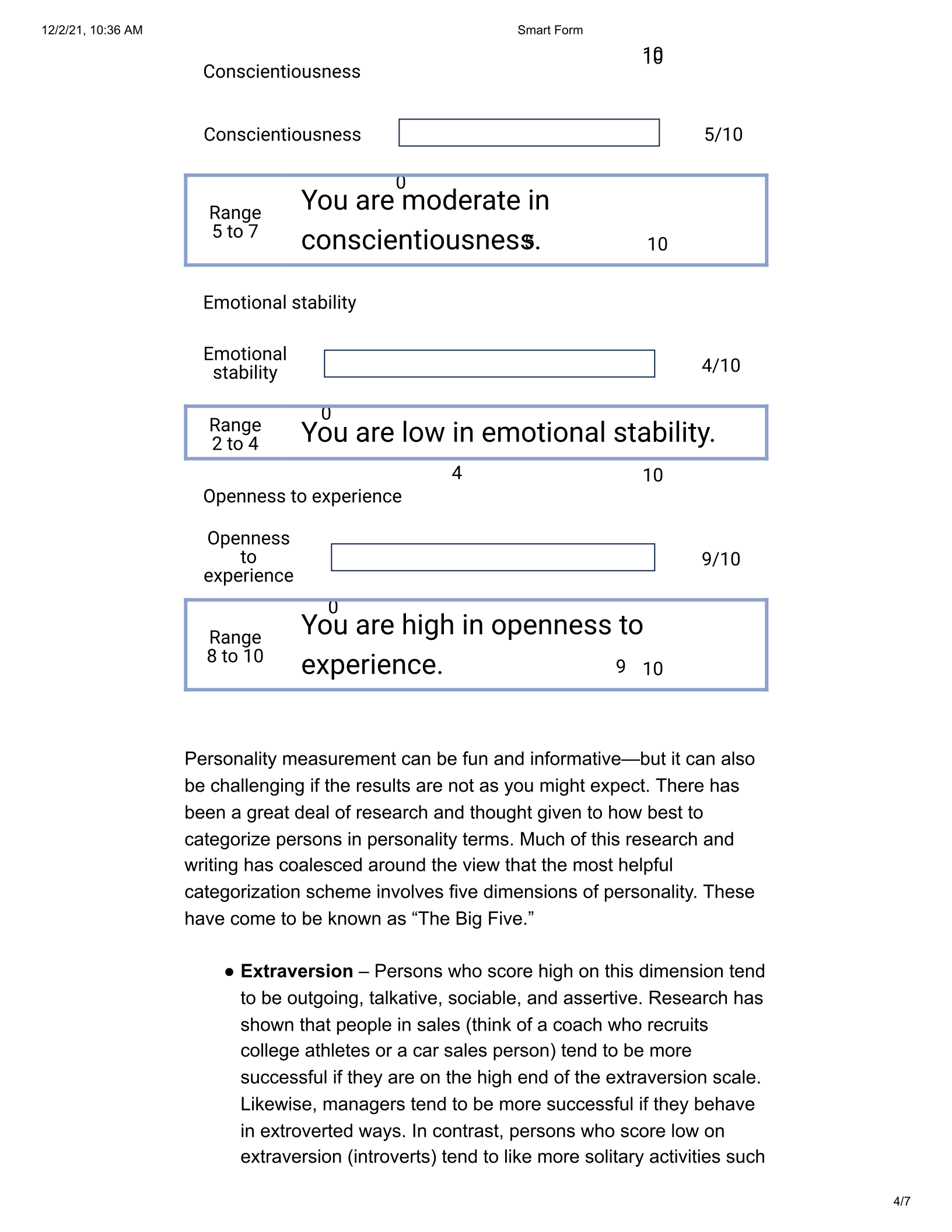
Conscientiousness
0
10
5
5/10
Range
5 to 7
You are moderate in
conscientiousness.
Emotional stability
Emotional
stability
0
10
4
4/10
Range
2 to 4 You are low in emotional stability.
Openness to experience
Openness
to
experience
0
10
9
9/10
Range
8 to 10
You are high in openness to
experience.
Personality measurement can be fun and informative—but it can also
be challenging if the results are not as you might expect. There has
been a great deal of research and thought given to how best to
categorize persons in personality terms. Much of this research and
writing has coalesced around the view that the most helpful
categorization scheme involves five dimensions of personality. These
have come to be known as “The Big Five.”
● – Persons who score high on this dimension tend
to be outgoing, talkative, sociable, and assertive. Research has
shown that people in sales (think of a coach who recruits
college athletes or a car sales person) tend to be more
successful if they are on the high end of the extraversion scale.
Likewise, managers tend to be more successful if they behave
in extroverted ways. In contrast, persons who score low on
extraversion (introverts) tend to like more solitary activities such
Extraversion
12/2/21, 10:36 AM
Smart Form
5/7
as doing office support, research and development work,
working with data, and so on.
● – Persons who score high on this dimension
tend to be trusting, good-natured, cooperative, and soft-
hearted. Surprisingly, while all of us would like to have work
colleagues who are agreeable, research shows agreeableness
is less connected to general work success than are
extroversion and conscientiousness. Of course, this does not
mean you should not work at being as agreeable as you can
be!
Agreeableness
● – Persons who score high on this
dimension tend to be dependable, responsible, achievement-
oriented, and persistent. Research shows people who score
high in conscientiousness tend to be more successful in all
types of employment settings than their less conscientious co-
workers. It is easy to see why. What employer would want to
hire someone who sees themselves not always prepared (item
5) or someone who does not pay attention to details (item 6)? If
your score on this dimension is not as high as you would like,
you can expect a high payoff from working on becoming
stronger in this area.
Conscientiousness
● – Persons who score high on emotional
stability tend to be relaxed, secure, and unworried. In contrast,
persons who score low tend to experience more highs and lows
in terms of their emotional life. Research shows this dimension
has less to do with success at work than extraversion and
emotional stability.
Emotional stability
● – Persons who score high on this
dimension tend to be intellectual, imaginative, curious, and
broadminded. Research shows there is not a strong relationship
between scores on this dimension and success at work.
However, certain types of jobs are certainly better fits for people
who are strong in this area. For example, people who have to
work across cultures are likely to be more successful if they are
more open to experience because it is easier for them to
imagine that people are different from them without having to
draw conclusions about whether these differences are good or
bad.
Openness to experience
There are many, many resources you can use to follow up on these
results. Informally, you can talk with your friends and family members
12/2/21, 10:36 AM
Smart Form
6/7
to see if your self-assessment is consistent with their assessment of
you. There are many on-line resources including longer versions of the
Big Five assessment as well as a great deal of information on other
types of personality assessments (such as the popular Myers-Briggs
Type Indicator). More formally, your campus probably has a career
development office. Typically, professionals in those offices are familiar
with the connections between personality and the kinds of jobs you
might find to be most suitable. Finally, if you find you are struggling to
cope with either short-term or long-term emotional issues, we strongly
encourage you to seek support from a campus counseling office, a
religious professional, or a close confidant who can help you work
through the issues you face.
Remember, the personality dimension which has the strongest
relationship with job performance is conscientiousness. Employers like
employees who are dependable, responsible, achievement-oriented,
and persistent. This is something you can work on improving in
yourself. For example, if you notice you have a tendency to
procrastinate in completion of certain kinds of tasks, you can work on
fighting that tendency by working on those tasks first so they are no
longer hanging over you. Then, you are in a position to derive greater
enjoyment from doing tasks you more naturally want to do. Setting
goals and action plans to achieve those goals are proven ways to
improve your chances of success in any endeavor. College is a great
setting in which to begin to develop strong and positive lifetime habits.
Don’t miss the opportunity!
If you introverted (that is, low is extroversion) you have a particular
challenge when it comes to management and leadership. Successful
managers and leaders are often seen to be outgoing and talkative.
This is not a natural tendency for introverts. However, there are plenty
of introverts who are quite successful in management and leadership
positions. Typically, these folks learn to act energetically even when
they may not feel that way, particularly in important business and work
meetings. So, if you are introverted, do not write off the possibility of
being in management and leadership. You will just need to work at
some aspects of the work more than others. However, you may well
have analytic and vision casting abilities that will more than
compensate for this particular characteristic.
Remember your score on this self-assessment, while useful for self-
understanding, should not be over-interpreted. First, every person is
12/2/21, 10:36 AM
Smart Form
7/7
complex and it is impossible to fully capture your uniqueness in a short
self-assessment. Second, you may well find your personality may
change over time, or you may come to understand what your
personality actually is only later in life. Third, this self-assessment is
useful to the extent it helps you to understand both your own
personality as well as the fact that other people will get different
patterns of results. Good managers understand people are different,
unique and complex, and therefore try to get to know their employees
as well as possible.
Powered by TCPDF (www.tcpdf.org)

