


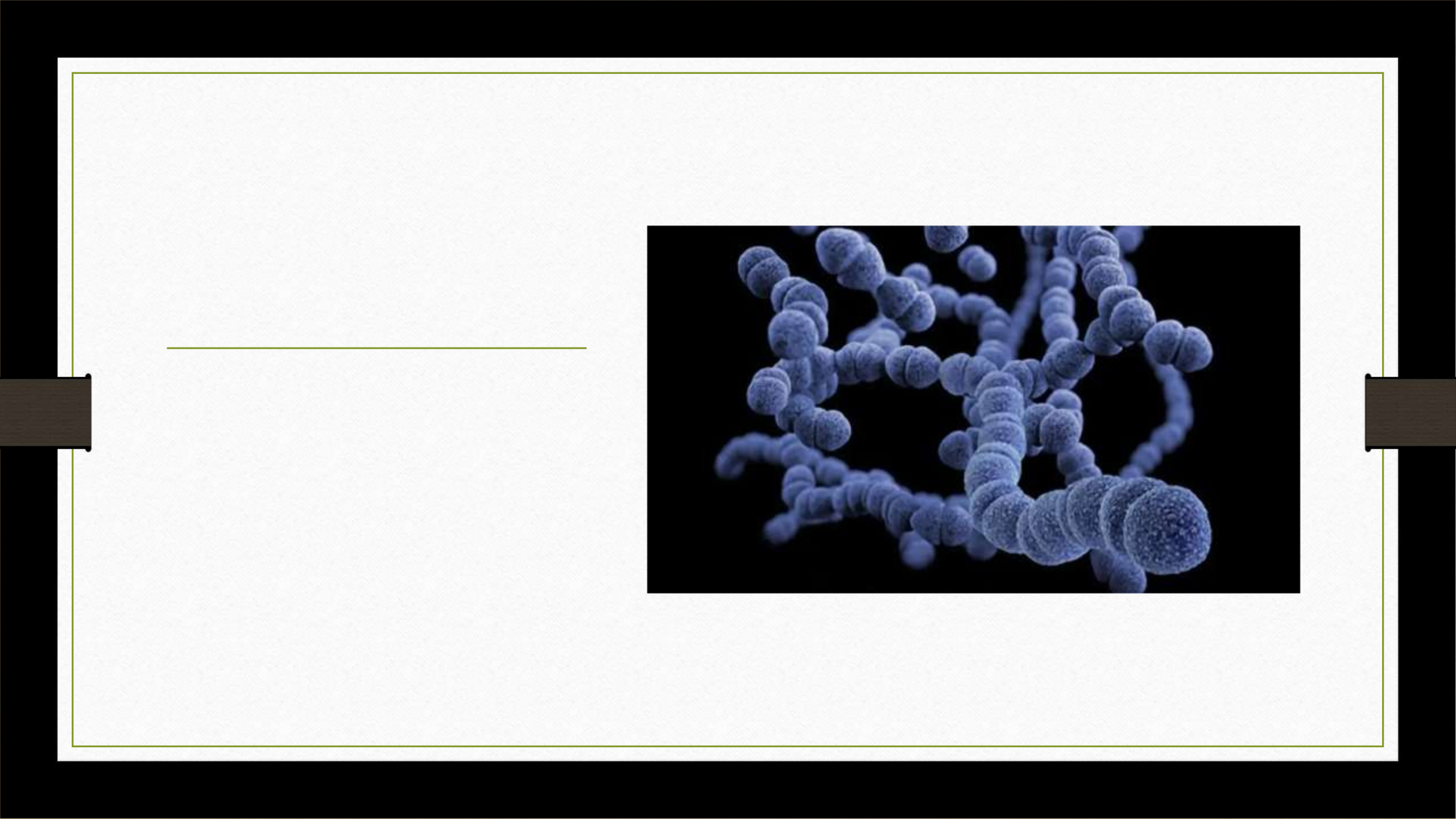
Streptococcus
pneumoniae
Crispa Pope
Liberty University
https://www.technologynetworks.com/immunology/news/healthy-adults-may-act-as-
infection-reservoirs-of-pneumococcal-bacteria-350604

Introduction
We focus on a pathogen that poses a significant health threat to humans in the
United States: Streptococcus pneumonia
Streptococcus pneumoniae is a pathogen that belongs to the bacterial kingdom.
It is responsible for a range of infections, including pneumonia, meningitis, and
middle ear infections (Dion & Ashurst, 2023).
Our objective is to explore the major characteristics of this bacterium, its mode
of infection, the diseases it causes, and preventive measures that can be taken to
reduce its spread.

Streptococcus pneumoniae
P : S pneumoniae
C : B
S pneumoniae a Gram-p ,
it retain cr violet dye during Gram
. T proper is due to the thic
la in its cell wa (D & Ashurst, 2023).

Streptococcus pneumoniae
Characteristics
The size of Streptococcus pneumoniae ranges from 0.5 to 1.25
micrometers in diameter.
It typically appears as a spherical or ovoid-shaped bacterium, occurring
singly, in pairs (diplococci), or in short chains.
The bacterium has a capsule
Streptococcus pneumoniae possesses a cell wall composed of
peptidoglycan (Dion & Ashurst, 2023)

Pathogen Infection
Streptococcus pneumoniae primarily resides in the upper respiratory tract
of humans
Transmission from person to person through respiratory droplets or direct
contact with respiratory secretions (Weiser et al., 2018).
The pathogen invades the respiratory epithelial cells, causing
inflammation and damage to lung tissue.
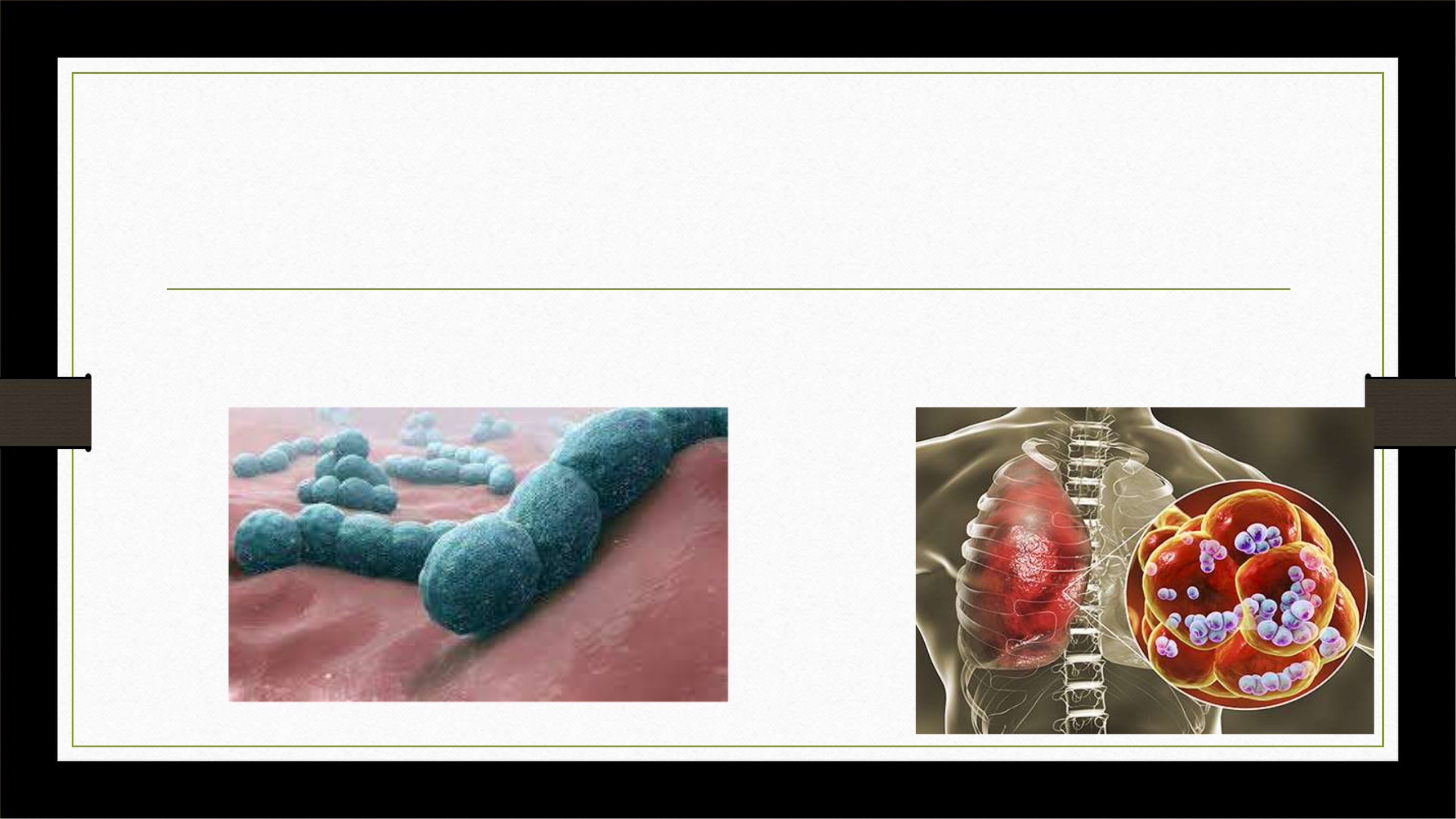
Illustration
•https://www.uab.edu/news/research/item/12122-s-pneumoniae-sticks-to-
dying-lung-cells-worsening-secondary-infection-following-flu

Diseases Caused
Streptococcus pneumoniae can cause a range of infections, primarily
affecting the respiratory system.
The most common diseases associated with this pathogen include
pneumonia, sinusitis, and otitis media (Weiser et al., 2018).
Understanding the diseases caused by Streptococcus pneumoniae, their
signs, symptoms, and potential complications is crucial for prompt
diagnosis, appropriate treatment, and prevention of severe outcomes.

Risk Factors
A
P ha e.g.
U M Condit
G location and Climatic (C et al., 2021)

Detection and Diagnosis
Clinical examination is an essential step in the detection and diagnosis of
diseases caused by Streptococcus pneumonia.
Laboratory tests are commonly used to confirm the presence of
Streptococcus pneumonia e.
Imaging techniques, such as chest X-rays and sinus X-rays or CT scans,
can support the diagnosis of Streptococcus pneumoniae infections.
Rapid diagnostic tests (Cools et al., 2021)

Treatment Options
Antibiotics are the mainstay of treatment for infections caused by
Streptococcus pneumonia (Cools et al., 2021)
Supportive care measures aim to alleviate symptoms and promote
recovery.
Severe cases of Streptococcus pneumoniae infection may require
hospitalization for intensive treatment and monitoring.

Preventative Measures
V
H
P
L
C

Body's Defense Mechanisms
Physical Barriers
Innate Immune Response
Adaptive Immune Response (Institute for Quality and Efficiency in Health
Care, 2020)
Immune Surveillance

Conclusion
Streptococcus pneumoniae is a bacterium that causes infections such as pneumonia,
meningitis, and middle ear infections.
It is classified as a gram-positive bacterium and possesses a distinct polysaccharide capsule
that aids in its virulence.
Streptococcus pneumoniae primarily colonizes the respiratory tract and can be transmitted
through respiratory droplets.
The bacterium targets specific cells and organs, leading to various diseases.
Risk factors for Streptococcus pneumoniae infections include age, certain medical conditions,
and lifestyle factors.
Treatment options include antibiotics, and prevention is achieved through vaccination and
good hygiene practices.


References
•Dion, C. F., & Ashurst, J. V. (2023). Streptococcus Pneumoniae. PubMed; StatPearls Publishing.
https://pubmed.ncbi.nlm.nih.gov/29261971/#:~:text=Streptococcus%20pneumoniae%20is%20the%20ba
cterium
•Weiser, J. N., Ferreira, D. M., & Paton, J. C. (2018). Streptococcus pneumoniae: transmission,
colonization and invasion. Nature Reviews Microbiology, 16(6), 355–367.
https://doi.org/10.1038/s41579-018-0001-8
•Institute for Quality and Efficiency in Health Care. (2020). The innate and adaptive immune systems.
Nih.gov; Institute for Quality and Efficiency in Health Care (IQWiG).
https://www.ncbi.nlm.nih.gov/books/NBK279396/
•Cools, F., Delputte, P., & Cos, P. (2021). The search for novel treatment strategies for Streptococcus
pneumoniae infections. FEMS Microbiology Reviews. https://doi.org/10.1093/femsre/fuaa072

